Blog

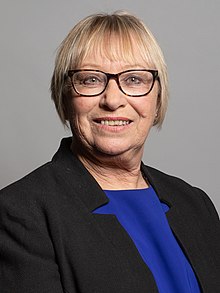
  • Jane Hunt – 2022 Speech on the Protection from Redundancy (Pregnancy and Family Leave) Bill

    Jane Hunt – 2022 Speech on the Protection from Redundancy (Pregnancy and Family Leave) Bill

    The speech made by Jane Hunt, the Conservative MP for Loughborough, in the House of Commons on 21 October 2022.

    Gosh—follow that! That was extremely moving from my hon. Friend the Member for West Bromwich West (Shaun Bailey). I am grateful to him for his articulation of his experience, which was superb.

    I very much thank the hon. and gallant Member for Barnsley Central (Dan Jarvis) for introducing this important Bill, which will ensure better protections for women and families with new babies. It was a pleasure to work with him, albeit briefly, to help drive this Bill forward in my former role as the Parliamentary Under-Secretary of State, and I would like to emphasise my continued full support for it.

    The hon. Member talked about being proud of this Bill, and I feel sure he is quite right to be so. I certainly feel proud to have been involved. The current Minister has done a huge amount of work to support it, as indeed did the previous Minister, my hon. Friend the Member for Sutton and Cheam (Paul Scully). He did a great deal of work on this, and also on many other Bills, which I will refer to a bit later. What we are looking at in the Bill is part of a matrix of workers’ rights, and it is right, good and proper that we are doing so.

    It is shocking that, in 2022, new parents—mothers in particular—are still being forced out of their jobs through either dismissal or compulsory redundancy when others in the workplace do not face that, or are being treated so poorly that they feel they have no choice but to leave. A 2020 survey by Pregnant Then Screwed found that 11.2% of women on maternity leave had been made redundant, or expected to be made redundant, and 60.7% of them believed that their maternity leave was a factor in the decision. A more recent 2021 survey found that 20% of mothers have experienced discrimination from an employer.

    I turn to the background to the Bill. Research published in 2016 commissioned by the Department for Business, Innovation and Skills and the Equality and Human Rights Commission found that about one in nine mothers—11%—reported that they were either dismissed, made redundant or treated poorly and therefore had to leave their job. The publication of that research was followed by a Women and Equalities Committee inquiry and report on pregnancy and maternity discrimination in August 2016. One of its key findings was that mothers returning from maternity leave still faced discrimination. It therefore recommended that the Government should take steps to provide

    “additional protection from redundancy for new and expectant mothers”.

    It recommended that enhanced protections should apply throughout pregnancy and for six months after a woman’s return to work.

    The Government published their response to the report in 2017. They acknowledged the scale of pregnancy and maternity discrimination experienced by new and expectant mothers and committed to

    “consider further and bring forward proposals to ensure that the protections in place for those who are pregnant or returning from maternity leave are sufficient.”

    The Committee said:

    “We are persuaded that additional protection from redundancy for new and expectant mothers is required. The Government should implement a system similar to that used in Germany—

    that was referred to earlier—

    “under which such women can be made redundant only in specified circumstances. This protection should apply throughout pregnancy and maternity leave and for six months afterwards. The Government should implement this change within the next two years.”

    In January 2019, the Government published a consultation seeking views on extending current redundancy protections for pregnant women and new parents. It recommended that the Government extend the current redundancy protection afforded to women during maternity leave under the Maternity and Paternity Leave etc. Regulations 1999 to cover a woman’s pregnancy and a period of up to six months after returning to work. The consultation also acknowledged that those returning from forms of leave comparable to maternity leave may have been away from work for long periods and therefore might similarly face discrimination or be prone to less favourable treatment.

    The Government response, published in July 2019, made two commitments: to extend the redundancy protection period to include pregnancy and six months after a new mother has returned to work; and to provide the same enhanced protections to those returning from adoption leave and, crucially, shared parental leave.

    It is unacceptable that anyone should be penalised for deciding to have a family. I welcome the fact that the Government have acknowledged the scale of pregnancy and maternity discrimination experienced by new and expectant mothers. Given the scale of the problem, it is clear that current legislation does not go far enough to protect new parents. We have talked about that in earlier speeches and interventions. The Bill caters for pregnant women working in all types of employment. There are women throughout the whole of the workplace, and all such people will benefit from the Bill.

    I am particularly grateful that the Bill covers those on adoption leave and shared parental leave. The Bill dovetails wonderfully with the Neonatal Care (Leave and Pay) Bill introduced in July by the Scottish National party hon. Member for Cumbernauld, Kilsyth and Kirkintilloch East (Stuart C. McDonald), working closely with the Government and BEIS, as well as with the Fertility Treatment (Employment Rights) Bill from my hon. Friend the Member for Cities of London and Westminster (Nickie Aiken), which has yet to have its Second Reading, and the shared parental leave Bill that we have discussed. There is a matrix being formed of support and business guidance to ensure that businesses are helped to do the right thing to support their employees, women and parents. There should be no barrier to any parent having the opportunity to get to know their child and bond with them at the earliest opportunity.

    I welcome the fact that in 2019 the Government consulted on the proposals to extend redundancy protections for pregnant women and new parents. The majority of responses showed support for measures to extend the redundancy protection period once a new mother had returned to work, and to extend protections to adoption and shared parental leave. That consultation was undertaken in January 2019 and BEIS reported

    “that 6 months would be an adequate period of ‘return to work’ for redundancy protection purposes”,

    and

    “that protection should be extended to parents who have taken adoption leave and shared parental leave”,

    which I think is crucial.

    The Government responded to the consultation on 22 July 2019, including a series of commitments to increasing redundancy protections in this area, first to

    “ensure the redundancy protection period applies from the point the employee informs the employer that she is pregnant, whether orally or in writing;”

    secondly, to

    “extend the redundancy protection period for six months once a new mother has returned to work. We expect that this period will start immediately once maternity leave is finished;”

    thirdly, to

    “extend redundancy protection into a period of return to work for those taking adoption leave following the same approach as the extended protection being provided for those returning from maternity leave—it will be for six months;”,

    and fourthly, to

    “extend redundancy protection into a period of return to work for those taking shared parental leave, taking account of the following key principles and issues: the key objective of this policy is to help protect pregnant women and new mothers from discrimination; the practical and legal differences between shared parental leave and maternity leave mean that it will require a different approach; the period of extended protection should be proportionate to the amount of leave and the threat of discrimination; a mother should be no worse off if she curtails her maternity leave and then takes a period of Shared Parental Leave; the solution should not create any disincentives to take Shared Parental Leave”.

    The Bill before us would enact those crucial changes and clearly has the backing of many. I recognise the cross-party agreement we have seen across the House; in my opinion, we are at our best when we have that. The Bill is a welcome extension of the framework of workers’ rights in general and crucially allows family leave to be included in legislation. The German model is a good one, but I believe we must reach a compromise between the needs of businesses and the needs of families and pregnant mothers.

    Shaun Bailey

    Looking at other models and the broader matrix my hon. Friend talks about, does she also believe that the legislative framework we are trying to bring in needs to be an evolving one? The likelihood is that we will need secondary legislation or even further primary legislation, but as part of that we must ensure that the framework continues to evolve and adapt as the workplace landscape changes.

    Jane Hunt

    I could not agree more with my hon. Friend. This Bill provides a framework that the Secretary of State can adapt to meet future needs for both pregnant women and those on adoption or shared parental leave. It sets up a matrix that can be filled as required.

    In conclusion, I welcome this Bill. I truly believe it is something we should do and are able to do. I feel that the Minister will do a wonderful job in bringing this all together and I wholeheartedly thank the hon. Member for Barnsley Central for bringing the Bill forward.

  • Shaun Bailey – 2022 Speech on the Protection from Redundancy (Pregnancy and Family Leave) Bill

    Shaun Bailey – 2022 Speech on the Protection from Redundancy (Pregnancy and Family Leave) Bill

    The speech made by Shaun Bailey, the Conservative MP for West Bromwich West, in the House of Commons on 21 October 2022.

    It is a pleasure to follow the powerful speech by the hon. Member for Hampstead and Kilburn (Tulip Siddiq), who gave examples of lived experiences. The experience she highlighted of her children’s godmother is horrendous. These experiences are brushed under the carpet, and that is disgraceful. I hope that, through the Bill, we will ensure that that does not happen again, because it cannot. I commend the hon. and gallant Member for Barnsley Central (Dan Jarvis) for bringing in the Bill. It should not be necessary to do so, but clearly it is. We have to do this, and it is the right thing to do. What has struck me today is the way in which we have come together as a House to support the Bill and its aims.

    The background to this area astonishes me, and we have heard about it in contributions from Members across the House. In 2022, it should not be an impediment to someone to want to have a family, so that they cannot at the same time pursue a career—that is crazy. The hon. and gallant Member for Barnsley Central touched on the report of the Equality and Human Rights Commission, and some of the figures in that were horrendous. When scaled up, the figures show that something like 54,000 women could experience discrimination as a result of either being pregnant or having had children. That astounds me.

    Jane Hunt

    I absolutely agree with what my hon. Friend is saying. We see headlines these days about the lack of labour in the market and needing people to fill jobs, yet 54,000 people are either being made redundant or feeling the need to leave their jobs. That is a disgrace, is it not?

    Shaun Bailey

    My hon. Friend is absolutely right: it is a disgrace. I think about my own experiences. Before I entered this place, I was a lawyer; that is what I trained to do. I was fortunate to work in some great firms and meet some fantastic, intelligent people. I know that people sometimes typecast lawyers as all sorts and do not trust us, but the people I worked with were fantastic, intelligent, hard-working and inspirational. However, let us look at the figures in the sector, and I am thinking in particular about the gender pay gap and how the issues we are debating contribute to that.

    A London School of Economics study found that even though today 62% of new entrants into law firms are women, by the time we get to partner level only 28% of women are partners. That is absolutely crazy, given the proportion of women at entry level. What we are seeing is that women want to go and have a family and a personal life, which we are all entitled to, but they are being impeded. That might not all be down to the discrimination we have been talking about, but what I hope the Bill achieves is a cultural change. That is what we have to drive forward. It amazes me that we actually have to say this today, but a woman can have a career and a family at the same time, and an employer that enables that to happen.

    Thinking of my own office, 80% of my staff are women. I have no problem if they need to take time out because they have to go and look after their family or collect their kids. To me, that is just basic decency as an employer. Surely it is a two-way street as an employer: what we do is get the talent and ability of the people we employ, and in turn we give something back.

    Jane Hunt

    Does my hon. Friend agree that this Bill is very helpful because it also includes shared parental leave? Those partners, both male and female, who are impacted by shared parental leave will also be able to take advantage of the redundancy scheme.

    Shaun Bailey

    My hon. Friend articulates it so well. She is absolutely right; shared parental leave is now such a key part of the broader landscape of family and employment rights—I do not want to just say maternity rights. We now know that the idea that mum goes off for a year and looks after the baby while dad works is ridiculous—it is rubbish. Both parents need to be playing an active role. We say that both parents need to be playing an active role in the life of their child, but if we have an employment structure that does not allow us to do that, then it is all good words but absolutely no action. My hon. Friend is right to draw out with her intervention the point about shared parental leave. What I am encouraged by is the recognition that shared parental leave needs to become the norm. From what I have seen at the moment, we are seeing that transition; we are seeing that more organisations are getting that. But there is still more to do.

    The other point I will touch on is the societal impact. I talk about this from my personal experience. What we do not want to do is frame this in the context of mum, dad and 2.4 children, because actually families do not operate like that; there are many shades of grey. If someone is a single mother, or a single woman who is pregnant, and runs the risk of redundancy as a result of that, where does that leave them?

    Lee Anderson

    Does my hon. Friend agree with me that the threat of redundancy, or actual redundancy, for a pregnant woman can have a serious impact on her health and the health of the baby?

    Shaun Bailey

    My hon. Friend is absolutely right, and the academic studies have shown that. We have the data showing the mental health impact on women who are having to worry about the risk of redundancy in their job. Of course it is not right—I am framing this in the context of a mother who is giving care to a child—that they should have to worry about their employment and everything that interconnects with that, and at the same time have to raise a child.

    I have not had children, but for those who have—I am probably going to get interventions from hon. Friends across the House now—that initial period of time, and I will not say how long it is because I am sure it might vary, is probably one of the most stressful points in a mother’s life. They are getting to grips with realising that there is no handbook, and that everything they were told was going to go this way or that way actually does not—children do not work like that and there is no button to push. They are balancing that—a new person they have brought into the world and have to care for—and at the same time having to worry about how they are going to put food on the table, and go back into a career that they love, are passionate about and have maybe trained for years to do but now are at risk of losing because their organisation has potentially decided, “No, goodbye, see you later.” It seriously blows my mind that we even have to be here having this conversation.

    Jane Hunt

    Does my hon. Friend agree that the six-month window at the end of this part of the Bill is also very important? I hate to use this phrase, but it is almost an “out of sight, out of mind” situation. When a woman is on maternity leave or a person is on shared parental leave, they are no longer in the workplace. They need that window of opportunity to get back into the workplace and into the swing of things, so they can show their value to the business.

    Shaun Bailey

    My hon. Friend raises a good point, and I was hoping to touch on the transitional period later. We know how important it is to have the opportunity to transition back into the workplace and get back into the flow of things. Going through a life-changing event such as having a child changes the whole dynamic in someone’s life. I think that window is a really important opportunity for them. I hope I have not misunderstood my hon. Friend, but I agree that having that period of time means the individual is able to contribute in the way they know they can.

    It all comes back to realising people’s potential. That is another part of this issue. It is not about saying to someone, “Okay, you’ve had a child; you’re done.” It is not like that at all. I have been very fortunate in the organisations I have worked in, out in what we call the real world—certainly more real at times than this place has been, particularly over the last week. I have seen organisations that get this issue, already have processes in place and are developing a culture that understands that it is not just about, for instance, the amount someone bills every month, but the contribution they make as a person.

    As my hon. Friend the Member for Loughborough (Jane Hunt) just described, the provision for that period of time is a crucial part of this legislation. We are on Second Reading today, but the Bill represents part of a broader landscape, and what my hon. Friend is saying on its provisions is vital. It comes back to a point that right hon. and hon. Members across the House have raised—including the hon. and gallant Member for Barnsley Central, my hon. Friend the Member for Loughborough, and a few hon. Members from a sedentary position—which is that we are currently losing skillsets from the workforce as a result of this issue. How daunting must it be for someone who has taken an extended period of time to go and have a child to come back and worry about not having the protections they should be afforded?

    Lee Anderson

    My hon. Friend is making some brilliant points. When employers sack pregnant women or women on maternity leave, as well as losing these skilled workers are they not also losing other women who might want to come into the workplace but have been put off by the treatment of their friends?

    Shaun Bailey

    My hon. Friend is absolutely right. Why would someone want to join such an organisation, having seen how it operates and what its practices are? Talented individuals who know they have something to bring to the table, and know their worth, particularly in the climate we are in, are going to vote with their feet, are they not? And they should. They will be empowered to know that they can now go to organisations that will treat them as individuals who deserve respect. These organisations will understand that people are allowed to have a family life and balance. People should be able to have an employer who contributes toward that balance and is part of a partnership with them.

    As I understand it, the whole point of the employer-employee relationship is that it is a contract and partnership—an understanding between two people in an organisation. The balance of power has at times gone completely off.

    Jane Hunt

    My hon. Friend is being generous with his time; I promise that this is my last intervention. Just to balance it out, he is absolutely right in what he just said, but this Bill is absolutely brilliant in bringing up one segment of the business sector. Many businesses already meet these and further requirements, but we need everybody to do the same, because that 54,000 figure should not exist.

    Shaun Bailey

    My hon. Friend is absolutely right. To reiterate her point, I certainly do not want to give the impression that I am typecasting every business in that regard. As I have said, many businesses are getting this right and are going above and beyond—but that should not be above and beyond; it should be the standard.

    I return to the idea that not every family is black and white, with 2.4 children and a mum and dad—I apologise to hon. Members for segueing away from that point. I speak as someone who was brought up in a single-parent family with a sole breadwinner who at times was working three jobs in order to put food on the table, and doing a part-time university degree. My mum went back to work six weeks after she had me, because she needed to, and it was similar with my sister. If someone is a sole parent on their own income and is pregnant with another child, or if there has been a family breakdown, the last thing they need is to have that threat of, “If I have a child, or if there’s anything connected to that child, I’m going to lose my job.” It does not bear thinking about—it blows my mind.

    The societal impact of what we are talking about goes much further than the scope of the Bill’s provisions, and that is why it is so important. When we pass legislation in this House, particularly legislation such as this, it is not just about the Bill or the laws that we implement; it is about the message we send about society. We have seen that throughout history, particularly with legislation that has passed as a result of private Members’ Bills, such as women’s rights legislation. Lord Steel was a big advocate of women’s rights and the work of those organisations when he was on the Liberal Benches. We are sending a broader message that we need a society that understands that balancing work and family life is key.

    Bob Stewart

    My hon. Friend may not have had children yet; I have had six. One point that has not been talked about today is that when a woman is pregnant, it is often traumatic and frightening for her. It is often not an easy time. Some people may find it joyous—it is joyous, of course—but it is difficult for some women. If we put that on top of the fact that they might lose their jobs, it is just another pressure. I make that point because it is valid.

    Shaun Bailey

    I thank my right hon. and gallant Friend for that powerful intervention, to which I cannot add any more. He is right that it can be a traumatic experience. The Bill also seeks to address when someone has a miscarriage or loses a baby, which is a horrific time in the lives of both parents. It is important to consider how we support someone who has gone through that, particularly a woman, who feels that loss acutely and painfully. Unless someone has gone through that experience, I do not think that they can truly understand the pain that is felt as a result.

    Again, talking about what this Bill does, its broader messages and what it seeks to achieve in supporting people at the most vulnerable points in their lives is absolutely key. Surely it is incumbent on all of us in this House to support people when they most need it and at the times in their lives when they are most vulnerable, particularly during pregnancy. That is the point in their life when a person is most exposed to both physical and mental challenges, as well as in other ways.

    I am conscious that I should conclude my comments, but I really want to say that I am so proud to be able to support this Bill. I really do commend the hon. and gallant Member for Barnsley Central for the work he has done on it. What this Bill seeks to do, as was articulated so brilliantly by my hon. Friend the Member for Loughborough, is to set what is currently seen as the exceptional standard as the norm, and that is right because it is what we should be doing.

    The Bill will ensure that we do not lose brilliant people from our workforce. We should enable everyone who has the passion and drive and who wants to contribute to do so. We should back up the mantra we have been churning out from this House for decades about how we want to encourage the family base and encourage people to have families. Families are the core of society, and we should follow that up with tangible action. This place is very good at talking, but we need to follow through with tangible legislation. We must have the tangible means by which we can follow up on our good sentiments, and that is one thing this Bill does.

    The Bill also ensures that in situations a bit like my mum’s and other people’s, when single mums are trying to get on with life and secure a life for their kids, whether or not they have been born, they can do so without worrying about how they are going to do it. They, too, can contribute, because this is surely about lifting people up, is it not? If they fear that they are going to lose their job or that they cannot progress up the ladder because they have had a child, that just should not be happening.

    Finally, the Bill will ensure that, at what for many is the most exciting time of their lives, but also a time when they are at their most vulnerable and most exposed, people get the support that we should rightly be giving them. I fully endorse the aims of the Bill, and if the hon. Member for Barnsley Central is looking for someone to serve on his Bill Committee, I would be honoured to do so, because this is absolutely one of the reasons why I came into this place. [Interruption.] I can see he is already putting my name down—brilliant—so I expect the email in due course.

    I just think back to the reason why I came into the place. I always say, whenever I am asked, that it is for people like my mum. With this Bill today, I think of her and what she went through as a single mum bringing me up and enabling me to get here. I will always owe her for that, because I would not be here had she not made the sacrifices that she had to make to get me—a lad from a council house who was told he probably would not amount to anything—to be a Member of Parliament. If we can ensure we get a few more young people like me from such backgrounds into this place by agreeing to the provisions of this Bill today, as far as I am concerned that is exactly why we are all here.

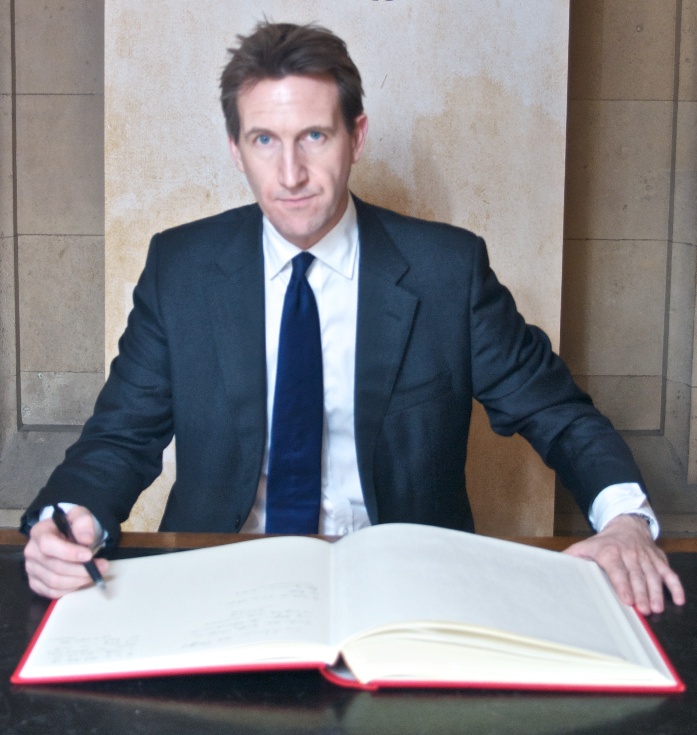
  • Dan Jarvis – 2022 Speech on the Protection from Redundancy (Pregnancy and Family Leave) Bill

    Dan Jarvis – 2022 Speech on the Protection from Redundancy (Pregnancy and Family Leave) Bill

    The speech made by Dan Jarvis, the Labour MP for Barnsley Central, in the House of Commons on 21 October 2022.

    I beg to move, That the Bill be now read a Second time.

    I begin by acknowledging that the House was originally due consider the Bill on Friday 9 September. I was looking over my speech the day before when I learned, with the greatest sadness, that Her late Majesty Queen Elizabeth II had passed away. I am grateful that we can proceed with Second Reading today.

    I welcome the new Minister to his post. I also thank the previous Ministers—the hon. Member for Loughborough (Jane Hunt), who is in her place, and the hon. Member for Sutton and Cheam (Paul Scully)—for their support for the Bill at an early stage. They were both incredibly helpful and supportive and I am grateful to them.

    I pay tribute to the officials at the Department for Business, Energy and Industrial Strategy for their excellent work in supporting the Bill. I also say a big “thank you” to the Clerks of the House, who have done excellent work, as they always do, to ensure that we can proceed with Second Reading today. I put on record my sincere gratitude to the Equality and Human Rights Commission, the TUC, the Royal College of Midwives, my union Unison, Maternity Action, Pregnant Then Screwed, The Fawcett Society and the Chartered Institute of Personnel and Development, all of which have offered invaluable support to the process over the last few months.

    There is no more important or gratifying experience than raising a family. Children provide hope for the future and bring joy to our lives, although I can say as a parent, as I am sure other hon. Members will, that on occasion that has been tested to the full in my household—but that is teenagers. Despite its importance, however, raising a family has never been more challenging. The scarcity of affordable housing, sky-high childcare costs and now soaring inflation make the decision to start or grow a family simply unaffordable for many. This Bill seeks to alleviate some of that hardship by increasing security in the workplace for pregnant women and new parents by extending redundancy protections. I am proud to be bringing forward the Bill in the House today.

    The current safeguards afforded under the Equality Act 2010 and the Maternity and Parental Leave etc. Regulations 1999—the MAPLE regulations—are not being applied correctly, and are sometimes not being observed at all. As it stands under the law, a woman on maternity leave is entitled to be offered a suitable alternative vacancy if her role is at risk, but a lack of clarity coupled with poor compliance means that new mums are often first rather than last to be shown the door. The sheer scale of the problem makes the case for reform irrefutable.

    Each year, there are somewhere in the region of half a million pregnant women in the workplace. A Human Rights Commission survey, commissioned by the Department for Business, Energy and Industrial Strategy and published in 2016, found that a majority—three in four—experience pregnancy and maternity discrimination, while some 54,000 women a year lose their job just for getting pregnant. A few months on from that survey, the Women and Equalities Committee, then chaired by the right hon. Member for Basingstoke (Dame Maria Miller), advocated for a comprehensive ban on redundancies. In response to her inquiry’s report, the Government stated that the situation was “clearly unacceptable”.

    Two years on, the Government launched a consultation, and in reply they pledged to extend existing protections to pregnancy and a period of six months following a return to work. The 2019 Queen’s Speech was set to deliver these commitments through an employment Bill, but that was not brought forward, and then the pandemic hit. As with everything, covid exposed and amplified every pre-existing inequality and prejudice, and expectant and new parents in the workplace were not an exception.

    Analysis by the Institute for Fiscal Studies found that mothers were more likely than fathers to have lost their job or to have quit during lockdown. The Office for National Statistics reported that parents were twice as likely to have been furloughed compared with workers without children. A TUC survey revealed a significant number of pregnant women and new mums had experienced unfair treatment or discrimination at work—findings backed up by two damning reports published by the Petitions Committee.

    Behind those numbers are scores of soon-to-be mums and new parents fighting to keep their jobs, struggling to support a young family and now doing so against the backdrop of a cost of living crisis. This debate is therefore not over the level of injustice—we know what that is—but about how we can correct it.

    Let me explain to the House what the Bill will do. Clause 1 provides a new power to enable provision to be made by regulations about protection from redundancy during and after pregnancy. Clause 2 amends existing powers to make regulations to enable protection from redundancy on return to work from maternity, adoption or shared parental leave.

    Jane Hunt (Loughborough) (Con)

    The hon. Member is making an excellent speech on his excellent Bill. Yes, this is about pregnant women, but it is also about family leave, which is superb news. Could he elaborate a little more on that, please?

    Dan Jarvis

    I am very grateful to the hon. Member for her question. As I said earlier, she was incredibly helpful at the early stages of the Bill, and she is absolutely right to make that point. The benefit of the Bill will be felt across hundreds of thousands of households and families right across the country. Although the focus of my remarks to date has been on the impact it will have on women who are pregnant and new mums, the reality is that the benefits of the Bill extend right across the family unit. We know the official numbers are that 54,000 women lose their jobs every single year just because they are pregnant. As we can all imagine, that has a devastating impact on them, but also of course on the wider family unit. The hon. Member raises a very important question, and I completely agree with what she said.

    I know there are some right hon. and hon. Members here today, and certainly a number of people and campaigners watching the debate, who would like—and this policy was previously advocated by the right hon. Member for Basingstoke—an outright ban on redundancies, as we have seen implemented in Germany. Not everybody will necessarily be familiar with the German model, so let me briefly explain it.

    There are five pillars of the Maternity Protection Act that underwrite the ban in Germany. First, protection from redundancy begins the moment the employer knows that the employee is pregnant. Secondly, if an employer makes a pregnant worker redundant not knowing they are pregnant but then this information is disclosed, they must be reinstated and the protections apply. Thirdly, the local health authority must review each request from an employer to make a pregnant worker or a new mother redundant. This usually takes about three weeks in practice, and while this review takes place the pregnant woman will remain in employment. Fourthly, an employer cannot dismiss a pregnant worker or a new mother without permission from the health authority. Lastly, protections for mothers on maternity and parental leave extend to four months after it has been taken. That also extends to women who, very sadly, have experienced a miscarriage.

    Although it may not be wholly translatable to the British system, there is little doubt over confusion and compliance under those rules. The Government have decided that, for the moment, they do not want to apply similar regulations here.

    Theresa Villiers (Chipping Barnet) (Con)

    I want to express enthusiastic support for the Bill. It will plug an important gap in protection. Looking back at the proposals from my right hon. Friend the Member for Basingstoke (Dame Maria Miller), we want to avoid a situation where, if there was a complete ban on all redundancies under any circumstances, that could mean that employers were having to retain employees when there was no longer work for them to do. The Bill is a reasonable compromise, as it is perhaps more difficult to take forward the previous proposals of my right hon. Friend.

    Dan Jarvis

    I am grateful to the right hon. Lady. She makes a helpful contribution. As she and other right hon. and hon. Members will understand, including the right hon. Member for Basingstoke, there are different views about this matter. In the end we have arrived at a reasonable and sensible compromise. The debate on that particular issue will continue, and if the Bill is successful there will be a further opportunity to debate such matters in Committee.

    Bob Stewart (Beckenham) (Con)

    I thank the hon. and gallant Gentleman for giving way. I have never heard of the German proposals before, and I really like them. I think they are flipping good, if I can say that, and it makes sense that we go some of the way down that road.

    Dan Jarvis

    I am grateful to the right hon. and gallant Gentleman for his intervention. I had not expected us to get into a debate today about what is going on in Germany, but he raises a valuable point. It is always important to look at how things work in different countries. The German model has been looked at closely, and a number of campaign organisations are strongly supportive of it. I have had those conversations with Ministers and a range of organisations, and there is merit in the German model, which, for the record, is my preference. I understand, however, the concerns that have been raised, and I think the Bill has currently got to the right place. I am grateful for the right hon. Gentleman’s support today.

    We are now six years on from the shocking findings by the Equality and Human Rights Commission about the industrial scale discrimination that expectant and new mums face at work. This is a timely opportunity to make progress. I confess that I was taken aback by the level of discrimination faced by pregnant women in the workplace. Perhaps I had made an assumption that such practices had been consigned to history, but that is not the case, and as I said, 54,000 women are directly affected as a consequence, with the wider impact that will have on their families.

    Lee Anderson (Ashfield) (Con)

    This is an excellent debate, and I thank the hon. Gentleman for introducing the Bill. He suggested that more than 50,000 women in this country lose their jobs as a result of being pregnant, which has a terrific impact on family and social welfare. Are employers also missing a trick? They are losing their most valuable resource—those women—who can provide fantastic work in the workplace.

    Dan Jarvis

    The hon. Member makes an excellent point. He is absolutely right that some employers are missing a trick here. As I said, I did not expect to get into a debate about Germany, but he makes an interesting point. There are so many amazing examples of extraordinary women who can excel at what they do—of course there are—so it seems incredibly strange that employers would want to discriminate against women in such a way.

    I am sure the hon. Member will agree that that says something about the nature of our society. All of us recognise the importance of children and families—they are the bedrock and foundation of our society—so it cannot be right that women are treated in such a way and on this scale. That must be consigned to the past. We must move forward, and the Bill provides a really good opportunity to do that. I would be the first to admit that the Bill is not a panacea, but it is a good step in the right direction and I am grateful for the support offered for it.

    Having made some remarks about the example that I referenced and the enforcement mechanism used in Germany, I am sure the Minister agrees that there is merit in us continuing to work closely together through the Bill’s passage to look at how, on a cross-party basis, we can seek to address some of the current safeguards’ shortcomings, namely around the confusion and compliance that I referred to.

    On the former, now is the time to end the inconsistency of when and how regulation 10 of the MAPLE regulations is applied. For instance, when a firm is reducing its number of roles, many employers see their obligations to women on maternity leave as a two-stage process, initially by forcing them to compete for their job against colleagues and only then seeking to find them suitable alternative vacancies if they are unsuccessful in retaining their role. That is deeply unfair. Women on maternity leave are at a massive disadvantage, as they might have been out of the workplace for months—obviously, they have been focused on caring for their newborn child. It is also highly irrational. If a new mum has been selected for redundancy, there is little or no chance of their being offered a suitable alternative vacancy, because they will have been filled. As it stands, many workers do not know their rights under the existing regulations, businesses apply them in different ways, and even case law is conflicting.

    Wendy Chamberlain (North East Fife) (LD)

    I have been reflecting on what the hon. Member has been saying about his very good Bill, which may fill some of the gaps that we have been talking about. I also heard what he said about the evolution of society, and hopefully that—as well as his Bill—will go some way towards helping. My employer before I was elected introduced parental leave allowing both parents to take six months of paid leave. I accept that not every employer can do that, but when we get to the place where, regardless of a person’s gender and their parenting role, they are entitled to rights, employers may stop looking at women as the first place to go when making people redundant. It would no longer be an easy choice for them.

    Dan Jarvis

    The hon. Lady raises a really helpful point, following the one made by the hon. Member for Ashfield (Lee Anderson). The nature of the Bill, and what we seek to achieve through its passage, speaks to the decency that I think we all want to see in our society. In the Bill, we have something in front of the House that is good for pregnant mums, good for new mums and good for families. It is also good for business, as it is in businesses’ own interest to be responsible employers and to make the most of their employees.

    I very much hope that the Bill will get support from across the House. I sense that it will, and I am encouraged by that. I have spent a lot of time thinking about what the critique of the Bill would be and whether any right hon. or hon. Members would have issues or problems with it. I have tried as much as I possibly can to get around as many hon. Members as possible and have those conversations, but nobody has been able to say that they think there is anything wrong with the Bill. The only debate is around the extent of its ambition and whether the protections could be greater and longer. That is potentially a point of debate, but I hope that we now have the basis of a Bill that all decent right hon. and hon. Members will be able to support—fingers crossed.

    Theresa Villiers

    An important potential positive consequence of the hon. Gentleman’s Bill and further protection for women in the workplace is helping us to tackle our productivity problem in this country. If we can monopolise the vast resource of women in the workplace, including pregnant women and new mums, it will make us a more competitive nation, help us to plug skills gaps and make us more productive, which ultimately will raise living standards.

    Dan Jarvis

    The right hon. Lady’s point is spot on and she has made it very eloquently. I can see there is consensus. She is right that for a very long time we have grappled with the productivity challenge, and we are still grappling with it. This is part of how we can seek to address the complicated and difficult productivity challenge that we all know we face as a country. I am grateful to her for that useful intervention.

    It would be helpful at this point to inject some real-life experiences into the debate so that the House can better understand what this Bill, if successful, might mean for women in the workplace. I am in receipt of a number of real-life cases of women who have suffered injustice simply because they were pregnant. There are many, and I must say some of them are genuinely shocking.

    Emily got in touch with me a few weeks ago. She was made redundant from her job more than halfway through her pregnancy and just days before she would have qualified for statutory maternity pay. She is now attempting to appeal the decision on the grounds of pregnancy discrimination and is feeling targeted not only for being pregnant, but for working part time. Her company told Emily it would be making several people redundant, but instead it laid only her off. It did not follow a fair process and she was not offered any alternative employment. Stories such as Emily’s form part of the wider issues surrounding the inconsistent implementation of regulation 10.

    Nickie Aiken (Cities of London and Westminster) (Con)

    I welcome this Bill. Does the hon. Gentleman agree that it is so important because many women are putting off having babies until later in life? When I had my first child at 35, the average age in the Chelsea and Westminster hospital was 39. That means women are further on in their careers, and a Bill of this type will support women who are further into their careers as well as those who may be at the beginning.

    Dan Jarvis

    That is an excellent point that has attracted support from right across the Chamber. The hon. Lady is absolutely right. We must make sure that women are making decisions about their professional careers without having to weigh up all sorts of factors of unfairness. There must be a level playing field and we must make sure that women are not disadvantaged in the workplace, so I completely agree with her and very much hope this Bill will go some way to achieving that ambition.

    I was referring to Emily, whose story highlights the need for consistency and the devastating consequences of what can happen when regulation 10 is not applied correctly. Confusion should never be an excuse for discrimination in the workplace. I have been working closely with the TUC and Unison on the Bill, along with the Chartered Institute of Personnel and Development, which has been incredibly helpful. It has offered to inform all its 160,000 members of the changes that the Bill will introduce, if it is successful. Will the Minister say how, if the Bill is successful, he plans to communicate the changes to workers and how he will clarify to employers their what their legal obligations will be?

    On compliance, some firms simply do not offer an alternative role by falsely claiming that one does not exist. Others engineer situations to force new mums out the door. When a business flouts the rules, the onus is on the woman—who, remember, is on maternity leave—to take the matter to an employment tribunal. That highly stressful and costly decision must be made within three months. However, the 2016 findings showed that less than 1% of women lodged a complaint with an employment tribunal.

    When we look into that worryingly low statistic, it is painfully obvious why the figure is so small. The scale of the challenge that such women face is almost insurmountable. Sarah, for example, was made redundant by e-mail six months into her pregnancy. Not wanting to be saddled with a gruelling legal battle during the final months of her pregnancy, she decided against taking legal action at that point. After her baby was born, she sought legal advice, only to be told that she no longer had a case because she had not raised her unfair dismissal within the three-month window. She told me that she never realised how vulnerable pregnant women are until it happened to her.

    There is also Natasha: after telling her employer that she was pregnant during the pandemic, she was made redundant while other members of her team stayed on. Shortly after, Natasha suffered the heartbreak of a miscarriage. She lost her baby and she lost her job. I know that many across the House have experienced the pain and trauma of a miscarriage and know only too well its profound and devastating impact.

    Lee Anderson

    Those are shocking stories; I cannot believe that is happening in this day and age. Does the hon. Member think that some women are perhaps living in fear when they fall pregnant, and that some ladies’ fear of losing their job may lead to them doing the unthinkable, which is to have an abortion?

    Dan Jarvis

    I think all of us can completely agree that that is not the kind of society in which we want to live. We should value people who do the right thing and step forward to enter the workplace. Collectively, we all have a responsibility to put in place legislation that will provide protections to ensure that people are not treated in that way.

    To go back to the hon. Member’s previous point, there is a big responsibility on business. In my experience, the overwhelming majority of the business community are sensible, decent employers. They want to do the right thing. As he said, it is in their interest to do the right thing, value their staff and invest in their workforce—not least a cohort of the workforce that, in every respect, are effective and efficient, to go back to the point about productivity. We have an opportunity to take a step forward today. As I said, this is not a panacea. There is a debate about whether we should go further and be more ambitious, but this is a good step in the right direction and I very much hope that we take it.

    Bob Stewart

    I thank the hon. Gentleman—my friend—for giving way. It seems to me that in the Bill Committee, we could put in a clause that makes it incumbent on employers to give a sheet of paper to women who are packing up their job because they are pregnant stating what their rights are. That might already be in the Bill—I do not know—but it seems to make sense and that would make it clear to women leaving their jobs exactly what their rights are.

    Dan Jarvis

    That is an excellent suggestion. The right hon. Member mentioned the Bill Committee. If the Bill is successful in its passage today, we will look for Members to sit on the Committee. I have a form here that I can perhaps give to him—I would be incredibly grateful.

    He will remember the expression, “Never volunteer for anything,” even better than I do, but in good faith he may have just volunteered to serve on the Bill Committee. Fingers crossed and touch wood, if we get to that point I will be knocking on his door with the form.

    I was making the point about employment tribunals and about Natasha. When she finally felt able to take her employer to a tribunal, she was told—[Interruption.] That is the office of the right hon. Member for Beckenham (Bob Stewart) calling to make sure they have the date of the Bill Committee in his diary—[Laughter.] Natasha was told that it was too late and that she should have applied within the three-month window. Extending the time limit to bring forward a claim to six months was supported by every single stakeholder I engaged with. That is an important point.

    Nickie Aiken

    The hon. Gentleman is making an excellent point. What has shocked me in the work I have been doing on my own private Member’s Bill on employment rights for those undertaking fertility treatment is that it is not just small and medium businesses that can have questionable policies on pregnant women or women who are trying to get pregnant, but even the larger ones, including some of the biggest businesses in the country and even major banks. I have been appalled by some of the stories that I have heard from women who have had to take their employer to a tribunal. Does he agree that, through his Bill and my Bill—which will come to the Chamber soon—it is important to give women confidence that their job is secure when they are pregnant or trying to get pregnant?

    Dan Jarvis

    I agree with the hon. Lady’s excellent point, to the extent that I wonder whether she might also be available to sit on the Bill Committee. If we are successful today, I may be knocking on her door. There is an absolute responsibility on business to look at their practices and ensure that they are doing the right thing. My overwhelming experience of the business community is that that is what they want to do, but it is clearly not happening everywhere. For all businesses and companies, particularly the larger ones that she referenced, I hope that their minds will be focused on the issue as part of this process.

    Legislation and direction from national Government is an important element, but some of it is cultural. It is about leadership in the business community and senior management looking at their own organisations and satisfying themselves that they are doing the right thing. As parliamentarians, we interact regularly with the business community, and I hope that we will have the conversations with senior business leaders in the weeks and months to come. I hope that those conversations will be well received by business. I am grateful for her intervention and hope to see her in Committee.

    I was just making the point about the support that I have encountered for expanding the time limit. It is widely supported by stakeholders and that reform has also been advocated by the Equality and Human Rights Commission, the Women and Equalities Committee, the Petitions Committee and the Law Commission. The Government have acknowledged the problem and I have had good conversations about it, but so far they have not made a commitment. I hope that will be a further point of debate, because advising women to make an out-of-time application will not cut it.

    I asked the Ministry of Justice how many exceptions had been granted, and in a written answer it said that it did not have that information—I suspect it is very few. Indeed, I have had anecdotal accounts of law firms refusing to represent women if their claim has not been lodged within the current limit, as judges often do not use their discretion. Improving access to justice is an important part of this issue.

    Bad employers must know that there will be consequences to their discriminatory treatment. I would be grateful if the Minister would look at when the Government are planning to implement the Law Commission’s April 2020 recommendations and extend the time limit for all employment tribunal claims to six months.

    I said earlier that there is no more important job than raising a family. It seems only fair that no one should be penalised for doing so by losing their job. I also said that three in four pregnant women in the workplace experience pregnancy and maternity discrimination, and that 54,000 women a year lose their job just for getting pregnant. We have had a good debate about this. By any metric, ensuring that women are treated decently and fairly should be a foundation of a civilised society, rather than just an aspiration. If we are serious about tackling discrimination in the workplace, providing parity and equality and ensuring that employers fulfil their obligation, we need laws to support that ambition that are fit for the 21st century and the modern workplace. The Bill will not fix everything, but if it is passed, it will be an important step towards providing working families with more security and dignity in the workplace, which they both need and deserve.

    Let me say, once again, how grateful I am to all those who have offered support and to all right hon. and hon. Members present. I very much hope that the Bill will have support from the Government and all parties, and I commend it to the House.


  • Gregory Campbell – 2022 Statement on Threats to Jimmy Nesbitt

    Gregory Campbell – 2022 Statement on Threats to Jimmy Nesbitt

    The statement made by Gregory Campbell, the DUP MP for East Londonderry, on 20 October 2022.

    Jimmy Nesbitt is a local lad who has invested in his own community. Those painting threatening graffiti such as this should stop. Their actions are wrong and to be condemned.

    I fundamentally disagree with Mr Nesbitt’s position on Northern Ireland’s future but he has every right to express his political views in whatever forum he wishes. He should be able to do so free from fear. That’s a democracy and it’s why I have opposed Sinn Fein all my life as they believed you could justify violence at the same time as doing politics.

    We must be consistent in always opposing violence as well as any threat of violence and attempted intimidation.

  • PRESS RELEASE : DUP Leader pays tribute to Baroness May Blood [October 2022]

    PRESS RELEASE : DUP Leader pays tribute to Baroness May Blood [October 2022]

    The press release issued by the DUP on 21 October 2022.

    DUP Leader Sir Jeffrey Donaldson has paid tribute to Baroness May Blood who passed away today.

    He said, “May was a fearless and tireless campaigner to make Northern Ireland a better and more peaceful place. She was someone steeped in the community and focused entirely on making their lives better.

    May leaves a lasting legacy, not just amongst the many people her work directly helped, but right across Northern Ireland.”

    East Belfast MP Gavin Robinson added, “Only last week I was asking after May and her health. She was one of Belfast’s true characters – with classic “city” charm, she strived for social justice, scorned sectarianism and as small as she was, stood up to anyone who strayed in her way.

    We had wonderful times at Westminster that I will remember fondly. The rights of women, the quest for children to learn together and for society to grow together are all the better as a result of May Blood. Firmly rooted in the Shankill, the legacy she leaves are the seeds she sowed across our country.”

  • Sheryll Murray – 2022 Comments on Boris Johnson Returning as Prime Minister

    Sheryll Murray – 2022 Comments on Boris Johnson Returning as Prime Minister

    The comments made by Sheryll Murray, the Conservative MP for South East Cornwall, on Twitter on 21 October 2022.

    The candidate with a Democratic mandate. I’m backing Boris [Johnson].

  • Anneliese Dodds – 2022 Comments on the Death of May Blood, Baroness Blood

    Anneliese Dodds – 2022 Comments on the Death of May Blood, Baroness Blood

    The comments made by Anneliese Dodds, the Chair of the Labour Party, on 21 October 2022.

    Sad to see the passing of Baroness Blood, a political giant and tireless campaigner for women and on integration in Northern Ireland. She will be greatly missed.

  • Julian Sturdy – 2022 Comments on Rishi Sunak Becoming Prime Minister

    Julian Sturdy – 2022 Comments on Rishi Sunak Becoming Prime Minister

    The comments made by Julian Sturdy, the Conservative MP for York Outer, on Twitter on 21 October 2022.

    For the avoidance of doubt, my views have not changed since summer.

    Rishi [Sunak] has the experience we need to take our economy forward & bring stability to Govt. He has a strong track record of facing challenges head on & getting things done.

    He’ll have my full support once again!

  • Chris Philp – 2022 Comments on Rishi Sunak Becoming Prime Minister

    Chris Philp – 2022 Comments on Rishi Sunak Becoming Prime Minister

    The comments made by Chris Philp, the Conservative MP for Croydon South, on Twitter on 21 October 2022.

    After a lot of thought I’ve decided to support and nominate Rishi [Sunak] as the next PM. I think he will serve our country’s national interest very well in the months and years ahead, through globally turbulent times. I hope the party unites around whoever wins, in the national interest.

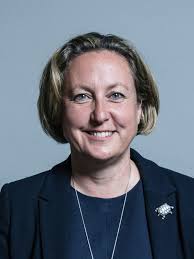
  • Anne-Marie Trevelyan – 2022 Statement on the Transport Strikes Bill

    Anne-Marie Trevelyan – 2022 Statement on the Transport Strikes Bill

    The statement made by Anne-Marie Trevelyan, the Secretary of State for Transport, in the House of Commons on 20 October 2022.

    The Government are today introducing the Transport Strikes (Minimum Service Levels) Bill. This meets the Prime Minister’s commitment to introduce this Bill within her first 30 days of Parliament sitting and delivers on a commitment in the 2019 Conservative party manifesto.

    The Bill paves the way for the introduction of minimum levels of service on transport services, like those already seen in other countries, including France and Spain. The Bill will ensure that specified transport services—which could include, for example, rail, tubes and buses—will not completely shut down when unions impose strikes. This Bill will balance the right to strike with ensuring commuters can get to their place of work and people can continue to make vital journeys to access education and healthcare during strikes.

    The Bill sets out the legal framework for establishing minimum service levels. It will allow relevant employers and trade unions to negotiate and reach agreement between themselves on minimum service levels referred to as minimum service agreements (MSAs), provide for circumstances in which the MSA can be changed and include enforcement arrangements to ensure parties follow due process in their negotiations.

    The Bill also provides for an independent determination process should employers and unions fail to reach agreement on an appropriate minimum service level after three months, whereby if an agreement has not been reached the Central Arbitration Committee will determine the minimum service level.

    The Bill also includes a power for the Secretary of State to set interim minimum service levels by regulations which will apply where neither an MSA has been agreed nor an independent determination reached. These regulations will also be consulted upon and will need to be agreed by both Houses of Parliament before they are made. Under the Bill there will also have to be a minimum three-month gap between these regulations being made and their coming into force.

    The specific details of how minimum service levels would apply to transport services will be set out in secondary legislation following appropriate consultation. A minimum service level would only be applied to an individual transport service once that secondary legislation has been agreed by Parliament.

    The provisions of the Bill extend and apply to England, Wales and Scotland. The Bill’s provisions relate to the reserved matter of employment rights and duties and industrial relations, and the subject matter of the Trade Union and Labour Relations (Consolidation) Act 1992, and do not engage the legislative consent process.