Blog

  • PRESS RELEASE : EU provides €1 million in funding to the Office of the Envoy on Technology of the UN’s Secretary-General [October 2022]

    PRESS RELEASE : EU provides €1 million in funding to the Office of the Envoy on Technology of the UN’s Secretary-General [October 2022]

    The press release issued by the European Commission on 28 October 2022.

    The EU will provide €1 million to support the work of the Envoy on Technology of the UN’s Secretary-General over the next two years. This contributes to the financing of the Office’s work as well as the Envoy’s outreach activities.

    This will be done under a cooperation agreement signed between the Commission ant the Office of the Envoy on Technology.

    This agreement reflects the commitment by the EU and its Member States to support the UN Envoy on Technology in implementing the digital aspects of the UN Secretary-General’s ‘Our Common Agenda’, notably the development of a Global Digital Compact and the promotion of the multi-stakeholder model of internet governance. EU Member States will also offer their support to the Office of the Envoy on Technology in a Team Europe spirit.

    Executive Vice-President Margrethe Vestager said: “The European Union is committed to contribute to an Open Internet, and to a global digital transition firmly grounded in human rights and freedoms. All this in line with Sustainable Development Goals. This is at the heart of our digital ambition, and of the cooperation agreement we signed with the UN. I am looking forward to working with the new UN Tech envoy on ensuring that many more people benefit from the digital transformation.”

    High Representative/Vice-President Josep Borrell said: “Every day, we see a battle of narratives and values. This battle is waged using and misusing all the advances of technologies and digital space. Digital issues are not just technical matters, they affect every single aspect of our lives. So it is crucial that we build a set of shared principles for an open, free and secure digital future for all: a Global Digital Compact. This is the task of the UN Tech Envoy, and the EU will be supporting very closely this work as part of our digital diplomacy.”

    The Office of the Envoy on Technology aims to play an advocacy role in the global debate on digital transitions, helping advance a digital transformation in line with Sustainable Development Goals, while putting the emphasis on the open internet and human rights as cornerstones of digitalisation.

    The EU and its Member States advocate for a global multi-stakeholder effort to close the digital divides across the world. The free, open, secure and un-fragmented internet, underpinned by a concern for Human Rights, should be at the very centre of the digital transition, upholding the right to privacy, free speech and data protection, addressing arbitrary and mass surveillance while actively combatting internet shutdowns, online censorship, hate speech online, disinformation and cybercrime.

  • Ursula von der Leyen – 2022 Speech on her Official Visit to Albania

    Ursula von der Leyen – 2022 Speech on her Official Visit to Albania

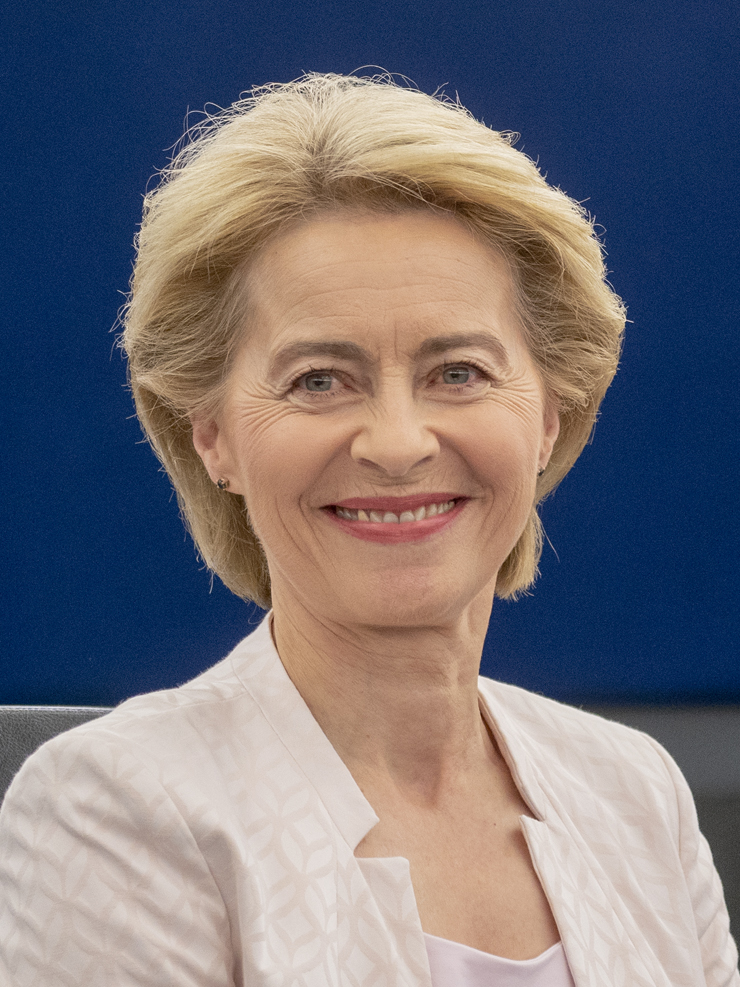
    The speech made by Ursula von der Leyen, the President of the European Commission, on 27 October 2022.

    Thank you very much, dear Prime Minister, dear Edi,

    It is very good to be back here in Tirana. So much has happened since my last visit. It is just a year ago, I think, since I came last time to Tirana. In July, you started the accession negotiations with the European Union. And I was very glad to be with you in this historic moment. It was a touching moment, a very special moment. But let me repeat what I said at that time: It is your success. It is the result of many years of hard work done by Albania and the Albanian people. Years of patience, too. I remember that vividly, of course. You maintained a very strong focus on the European path, on the process. And therefore, this is now paying off with the accession negotiations. You have shown time and again your commitment to the values of the European Union. You are fully aligned with the European Union’s response to Russia’s brutal war of aggression. I must say it is exemplary how Albania has been actively defending the rules-based international order in the UN Security Council. I really thank you for this clear commitment. This honours you. It shows time and again that we are a community of shared values.

    Albania is now firmly moving forward on its European Union’s path. The screening process that has started is on track. The latest enlargement report that has just recently been published shows all the progress that Albania is making. You are strengthening the rule of law, with important reforms of your judicial system, for which you actually managed to build a cross-party consensus, and I really thank you for that. Because we know by experience that this is a precondition, but it is not easy, it takes a lot of strength to do that. And it is the right way to go forward. You have adopted new measures to ensure equality and inclusion in your society. Your economy has come back strong after COVID. These are all very tangible and very visible achievements. And these are achievements in a very challenging time. I am talking of course about Russia’s war of aggression against Ukraine, the terrible cruelty and destruction that it is bringing to the Ukrainian people. Russia is breaking international law and disrespecting the UN Charter. And we also see and feel that Russia is using energy as a weapon, and by that it is manipulating the market. And of course, we all feel the knock-on effects of the rising energy prices and the unstable security of supply of energy. Fortunately, as you have said, Albania is completely independent from Russian gas, due to your hydropower system. But of course, the electricity that comes to Albania is influenced by the disturbances that we see in the energy market – the skyrocketing prices. And thus, it is also affecting your country; it is also affecting Albania. In the European Union, we have decided that the only possible response is unity and solidarity. As we are in this together, the response, together with Albania, is unity and solidarity.

    We are in an Energy Union already. We are putting forward now an energy support package for the Western Balkans. We are doing the same in the European Union. It includes, first of all, direct budget support to address the impact of high energy prices that it has on families and businesses as you have said. There will be EUR 80 million of grants. And if I understood it correctly, you have a system in place that is good to support families and small and medium enterprises in this difficult time. The second part is not looking at the immediate support that will be accessible from January on. But the second part looks into the mid and long term – the support for the energy system: Here, we are talking about EUR 500 million in grants to invest in energy infrastructure for the whole region. It is going to be channelled through the Economic and Investment Plan for the Western Balkans. And it is already at work here. Indeed, I saw the beginning of the railway that is being built. But for me, it is also very important that we invest in renewable energy. Because renewable energy is home-grown; it gives us independence; it creates good jobs here in the region; and it is good for the climate. Investment will go into the floating solar power plant in Vau i Dejës. The modernisation of the Fierza hydroelectric power plant. I was stunned to see that it produces one quarter of the overall electricity production, and also to see for example the energy renovation of the campus of the University of Tirana. These are only few examples. But they show the direction of travel.

    Dear Prime Minister, dear Edi, I think, once again, Albania can be proud of its achievements. Because indeed, from your words, but more from your deeds, you prove that your people have shown not only vision but also resilience. You are on track on your way to the European Union. And therefore, from my part also: Congratulations to the fact that on 6 December, we are going to meet again, here in Tirana, with the European Council and we will have the Western Balkans Summit here in Tirana. It is going to be a very important meeting. I am very much looking forward to that. And many thanks again for the hospitality today.

  • PRESS RELEASE : Executive Vice-President Timmermans’ and Commissioner Sinkevičius’ remarks on the new legislative proposals: the Zero Pollution Package [October 2022]

    PRESS RELEASE : Executive Vice-President Timmermans’ and Commissioner Sinkevičius’ remarks on the new legislative proposals: the Zero Pollution Package [October 2022]

    The press release issued by the European Commission on 26 October 2022.

    Executive Vice-President Timmermans

    Onto our proposals to tackle pollution, to have less people die prematurely, and with which billions of euros can be saved.

    The European Green Deal aims for an environment that’s free of harmful pollution by 2050. Because getting to climate neutrality is about more than pushing down greenhouse gas emissions. That’s why we call it climate neutrality and not just carbon neutrality.

    To have a zero-pollution environment in 2050, we need to step up action today.

    We have ample reason to do so.

    Each year about 300.000 Europeans die prematurely as a result of air pollution. Many more suffer from lung diseases or pollution-induced cancers. So, this is also completely in line with our strategy to attack cancer and to make sure that we have a European policy on cancer. This is very dear as you know to our President.

    Day in, day out, we get new information about the degree to which public health is directly endangered by pollution. Babies now have microplastics in their blood. And there’s PFAS in self-caught fish and homegrown vegetables.

    The directives we are revising now are outdated, one even 30 years old. Scientific knowledge and technology have advanced, and we need to bring our legislation up to par.

    Moreover, we pay for pollution.

    With taxes, health, and human lives – we pay.

    And the longer we wait to reduce this pollution, the higher the costs to society.

    Today’s proposals tackle pollution at both sides: first we prevent, and when pollution does occur, those who created it should pay for cleaning up.

    Let me give you a little more detail on each of the three proposals.

    First, we need to bring our air pollution norms in line with the new WHO standards. Already now, this will take well over a decade to achieve. We will set stricter norms for fine particulate matter, or PM 2.5 – cutting the maximum allowed level by more than half by 2030. Air pollution standards to date have not been easily enforceable, so we’re also tackling this and ensuring there will be easier access to justice for those affected by poor air quality.

    We also need to update our frameworks for water pollution and urban wastewater. The massive death of fish this summer in the Oder river shows how the combination of climate extremes and pollution can create tipping points for biodiversity.

    In our proposals today, we add 25 new substances to the directive on integrated water management. They all have carefully calibrated limit values which stipulate maximum levels for substances that pollute our waters. These norms will also take into account combination effects, reflecting scientific progress.

    On urban wastewater, we start to monitor microplastics release and create the European framework to routinely monitor pathogens like covid-19. This is something we have learned during the pandemic: wastewaters were a great indicator and a great way of pinpointing where we needed to be active to combat these pathogens.

    So, we will provide rules to stimulate the recovery of crucial minerals and nutrients from sludge and make wastewater treatment plants a source of renewable energy. It is a good business model.

    And we introduce the polluter pays principle. Right now, residues from pharmaceutical products and cosmetics cause 73% of pollution in urban wastewater. The costs of removing these are borne by water companies and ultimately of course by taxpayers.

    Let me finish by emphasizing that a toxic-free environment demands that all related policies maintain and deliver the required level of ambition. A healthy, zero-pollution future is possible if we say goodbye to fossil fuels, move to clean mobility, sustainable agriculture, healthy diets, etcetera.

    In the end, this is about protecting our health and that of the environment, against costs that are already borne by society.

    And if we learned one thing from the pandemic, our citizens want us to do this. That is why the Commission today is delivering on this.

    —–

    Commmissioner Sinkevičius

    Good afternoon everyone.

    Today we took another big step forward for citizens’ health, health of our environment, sustainable development of our economy and for the European Green Deal.

    As you know, this Commission has a zero pollution ambition, as part of the deal. We have already delivered half of actions foreseen in the Zero Pollution Action Plan.

    But if we want to see pollution come down to levels that no longer harm human health or the environment, there is still a huge amount of work to do.

    What we are presenting today has three major components, one to improve air quality, one to address freshwater quality, and one to modernise wastewater treatment.

    Let’s start with the air.

    This is an area where we have already seen major improvements thanks to EU policies. Nevertheless air pollution is still the largest environmental threat to our health and a serious challenge to our economies.

    The impacts are worst for the most vulnerable ones, notably children, the elderly, people with certain medical conditions and the economically disadvantaged. It’s clear that we need to do more here, and that we need to act with determination.

    What we propose is to set interim 2030 targets, to align EU air quality standards more closely with the recommendations of the World Health Organisation. At the same time, we are setting the EU on a trajectory to achieve zero pollution for air at the latest by 2050, through regular reviews of those standards to take into account scientific and technological progress.

    When you add this revision to existing policies, the result will be at least 70% less premature deaths from bad air quality in the next ten years.

    Nearly 300,000 Europeans die prematurely each year as a result of air pollution, so this is a huge number of lives we aim to save.

    These new rules will be easier to enforce, and – very importantly – will provide citizens with strong tools to claim justice.

    Because fresh air should not be something luxurious. It must be taken as a basic human right.

    Thus we want to give citizens a collective right to claim compensation when their health has suffered as a result of laws not being enforced, for air and waste water.

    At the same time we’re harmonising the rules for competent authorities, so that they can impose more dissuasive penalties against polluters who breach air quality measures at the national or local level.

    We are also proposing to strengthen the rules for monitoring and modelling air quality, and improve the framework for air quality plans. And we are strengthening the way Member States need to cooperate in tackling cross-border cases.

    As I said, this is good for human health and the environment.

    And it will also relieve the economy of the cost burden from illness, lower productivity, loss of crop yields and damages to materials and ecosystems. The benefits are at least 7 times greater than the costs.


    The second proposal is for freshwater.

    Indeed, the incident in Oder river is a good example what can happen if you fail to protect a river from pollution in times of drought. Reducing pollution means making rivers more resilient.

    Today it’s still a case that pharmaceuticals, pesticides and PFAS, the ‘forever chemicals’ can be found in Europe’s freshwaters, at levels that endanger the aquatic environment.

    So we’re raising the standards for rivers, lakes and groundwaters, as part of our drive towards zero pollution.

    Key changes include tackling new pollution threats by bringing their concentrations down to safe levels, introducing an early warning mechanism for water pollution, increasing the availability and transparency of pollution data and requiring Member States to alert each other about pollution events, avoiding situations like we saw with the Oder.

    The benefits will be significant, for water, soil, and human health.


    The third proposal is for a revision of a major piece of legislation, which has already brought enormous benefits to European citizens – the Urban Wastewater Treatment Directive.

    What we propose will save energy and produce renewable energy, including “green” biogas, and reduce the sector’s emissions by almost fifty percent by 2040.

    As a matter of fact, our goal is energy neutrality for the sector by 2040.

    We’re also bringing in new rules to reduce micropollutant emissions, in line with the ones identified in the freshwater proposal.

    And I want to stress what Frans already said – for two categories which typically reach freshwaters from waste water treatment plants – pharmaceuticals and personal care products – producers will be required to contribute to the cost of cleaning waste water.

    That way we avoid taxpayers having to pay those costs in full.

    High standards for air and water quality are wonderful. But on their own, they’re not enough. We have to make sure that they are implemented effectively on the ground.

    So all three of these proposals share one common feature.

    And that is, they all come with suggestions for improving their enforcement.

    The result should be laws that are more effective, with what actually amounts to a reduction in the administrative burden for Member States.

    Delivering zero pollution is not getting any easier in the geo-political context of today. But we cannot afford to be distracted. If we did start to deviate from our long-term path to zero pollution, the consequences would be very serious and very real.

    Europe needs these improvements. Our citizens and science ask for them and so I’m very proud to put this proposal forward.

    Thank you.

  • PRESS RELEASE : State aid – Commission approves €1.25 billion Hungarian scheme to support companies in context of Russia’s war against Ukraine [October 2022]

    PRESS RELEASE : State aid – Commission approves €1.25 billion Hungarian scheme to support companies in context of Russia’s war against Ukraine [October 2022]

    The press release issued by the European Commission on 26 October 2022.

    The European Commission has approved a €1.25 billion Hungarian loan and guarantee scheme to support small and medium enterprises (‘SMEs’) and large companies in the context of Russia’s war against Ukraine. The scheme was approved under the State aid Temporary Crisis Framework, adopted by the Commission on 23 March 2022 and amended on 20 July 2022, based on Article 107(3)(b) of the Treaty on the Functioning of the European Union (‘TFEU’), recognising that the EU economy is experiencing a serious disturbance.

    Executive Vice-President Margrethe Vestager, in charge of competition policy, said: “This €1.25 billion scheme will enable Hungary to provide them with liquidity support necessary for the continuation of their activities. We continue to stand with Ukraine and its people. At the same time, we continue working closely with Member States to ensure that national support measures can be put in place in a timely, coordinated and effective way, while protecting the level playing field in the Single Market.

    The Hungarian measure

    Hungary notified to the Commission, under the Temporary Crisis Framework, a €1.25 billion loan and guarantee scheme to provide liquidity support to SMEs as well as to large companies in the context of Russia’s war against Ukraine.

    Under this measure, the aid will take the form of (i) loans with subsidised interest rates; and (ii) guarantees on loans granted by the Export-Import Bank Private Limited Company Eximbank (“Eximbank”), the State-owned export credit agency.

    The measure will be open to companies active across sectors affected by the current geopolitical crisis, with the exception of financial institutions.

    The Commission found that the Hungarian scheme is in line with the conditions set out in the Temporary Crisis Framework. In particular, when it comes to aid in the form of guarantees: (i) the maturity of the guarantees cannot exceed six years; (ii) the maximum coverage cannot exceed 90% of the underlying loan; and (iii) the guarantee premiums respect the minimum levels set out in the Temporary Crisis Framework. When it comes to aid in the form of loans: (i) the maturity of the loans cannot exceed eight years; and (ii) the interest rates on the loans respect the minimum levels (modulated by an increase reflecting the duration of the guaranteed loans) set out in the Temporary Crisis Framework; and (iii) for indirect loans, the financial intermediary will pass on the advantage to the beneficiary to the largest extent possible. Finally, the loans and guarantees will be granted no later than 31 December 2022.

    The Commission concluded that the Hungarian scheme is necessary, appropriate and proportionate to remedy a serious disturbance in the economy of a Member State, in line with Article 107(3)(b) TFEU and the conditions set out in the Temporary Crisis Framework.

    On this basis, the Commission approved the aid measure under EU State aid rules.

  • PRESS RELEASE : European Green Deal – Commission proposes rules for cleaner air and water [October 2022]

    PRESS RELEASE : European Green Deal – Commission proposes rules for cleaner air and water [October 2022]

    The press release issued by the European Commission on 26 October 2022.

    Today the Commission is proposing stronger rules on ambient air, surface and groundwater pollutants, and treatment of urban wastewater. Clean air and water are essential for the health of people and ecosystems. Air pollution alone means nearly 300,000 Europeans die prematurely each year, and the proposed new rules will reduce deaths resulting from levels of the main pollutant PM2.5 above World Health Organization guidelines by more than 75% in ten years. Across air and water, all of the new rules provide clear return on investment thanks to benefits in health, energy savings, food production, industry, and biodiversity. Learning the lessons from current laws, the Commission proposes to both tighten allowed levels of pollutants and to improve implementation to ensure pollution reduction goals are more often reached in practice. Today’s proposals are a key advance for the European Green Deal‘s zero pollution ambition of having an environment free of harmful pollution by 2050. They also respond to specific demands of the Conference on the Future of Europe.

    Executive Vice-President for the European Green Deal, Frans Timmermans, said: “Our health depends on our environment. An unhealthy environment has direct and costly consequences for our health. Each year, hundreds of thousands Europeans die prematurely and many more suffer from heart- and lung diseases or pollution-induced cancers. The longer we wait to reduce this pollution, the higher the costs to society. By 2050, we want our environment to be free of harmful pollutants. That means we need to step up action today. Our proposals to further reduce water and air pollution are a crucial piece of that puzzle.

    Commissioner for the Environment, Oceans and Fisheries, Virginijus Sinkevičius, said: “The quality of the air we breathe and the water we use is fundamental for our lives and the future of our societies. Polluted air and water harm our health and our economy and the environment, affecting the vulnerable most of all. It is therefore our duty to clean up air and water for our own and future generations. The cost of inaction is far greater than the cost of prevention. That is why the Commission is acting now to ensure coordinated action across the Union to better tackle pollution at source – locally and cross-border.”

    Cleaner ambient air by 2030, zero pollution aim by 2050

    The proposed revision of the Ambient Air Quality Directives will set interim 2030 EU air quality standards, aligned more closely with World Health Organization guidelines, while putting the EU on a trajectory to achieve zero pollution for air at the latest by 2050, in synergy with climate-neutrality efforts. To this end, we propose a regular review of the air quality standards to reassess them in line with latest scientific evidence as well as societal and technological developments. The annual limit value for the main pollutant – fine particulate matter (PM2.5) – is proposed to be cut by more than half.

    The revision will ensure that people suffering health damages from air pollution have the right to be compensated in the case of a violation of EU air quality rules. They will also have the right to be represented by non-governmental organisation through collective actions for damage compensation. The proposal will also bring more clarity on access to justice, effective penalties, and better public information on air quality. New legislation will support local authorities by strengthening the provisions on air quality monitoringmodelling, and improved air quality plans.

    Today’s proposals leave it to national and local authorities to determine the specific measures they would take to meet the standards. At the same time, existing and new EU policies in environment, energy, transport, agriculture, R&I and other fields will make a significant contribution, as detailed in the factsheet.

    Today’s proposal will help achieve dramatic improvement in air quality around Europe by 2030, leading to gross annual benefits estimated at €42 billion up to €121 billion in 2030, for less than a €6 billion costs annually.

    (WHO guidelines: <5 µg/m³, annual; 2030 proposal: <10 µg/m³; current directive: <25 µg/m³)[i]

    Air pollution is the greatest environmental threat to health and a leading cause of chronic diseases, including stroke, cancer and diabetes. It is unavoidable for all Europeans and disproportionately affects sensitive and vulnerable social groups. Polluted air also harms the environment causing acidification, eutrophication and damage to forests, ecosystems and crops.

    Better and more cost-effective treatment of urban wastewater

    The revised Urban Wastewater Treatment Directive will help Europeans benefit from cleaner rivers, lakes, groundwaters and seas, while making wastewater treatment more cost-effective. To make the best possible use of wastewater as a resource, it is proposed to aim for energy-neutrality of the sector by 2040, and improve the quality of sludge to allow for more reuse contributing thus to a more circular economy.

    Several improvements will support health and environmental protection. These include obligations to recover nutrients from wastewater, new standards for micropollutants and new monitoring requirements for microplastics. Obligations to treat water will be extended to smaller municipalities with 1,000 inhabitants (from 2,000 inhabitants currently). To help manage heavy rains, made more frequent by climate change, there is a requirement to establish integrated water management plans in larger cities. Finally, building upon the Covid-19 experience, the Commission proposes to systematically monitor wastewater for several viruses, amongst which CoV-SARS-19, and anti-microbial resistance.

    EU countries will be required to ensure access to sanitation for all, in particular vulnerable and marginalised groups.

    As 92% toxic micro-pollutants found in EU wastewaters come from pharmaceuticals and cosmetics, a new Extended Producer Responsibility scheme will require producers to pay for the cost of removing them. This is in line with the ‘polluter pays’ principle and it will also incentivise research and innovation into toxic-free products, as well as making financing of wastewater treatment fairer.

    The wastewater sector has significant untapped renewable energy production potential, for example from biogas.  EU countries will be required to track industrial pollution at source to increase the possibilities of re-using sludge and treated wastewater, avoiding the loss of resources. Rules on recovering phosphorus from sludge will support their use to make fertiliser, benefiting food production.

    The changes are estimated to increase costs by 3.8% (to €3.8 billion a year in 2040) for a benefit of over €6.6 billion a year, with a positive cost-benefit ratio in each Member State.

    Protection of surface and groundwater against new pollutants

    Based on up-to-date scientific evidence, the Commission is proposing to update lists of water pollutants to be more strictly controlled in surface waters and groundwater.

    25 substances with well-documented problematic effects on nature and human health will be added to the lists. These include:

    • PFAS, a large group of “forever chemicals” used among others in cookware, clothing and furniture, fire-fighting foam and personal care products;
    • a range of pesticides and pesticide degradation products, such as glyphosate;
    • Bisphenol A, a plasticiser and a component of plastic packaging;
    • some pharmaceuticals used as painkillers and anti-inflammatory drugs, as well as antibiotics.

    The substances and their standards have been selected in a transparent and science-driven process.

    In addition, learning the lessons from incidents such as the mass death of fish in the Oder river, the Commission proposes mandatory downstream river basin warnings after incidents. There are also improvements to monitoring, reporting, and easier future updates of the list to keep up with science.

    The new rules recognise the cumulative or combined effects of mixtures, broadening the current focus which is on individual substances solely.

    In addition, standards for 16 pollutants already covered by the rules, including heavy metals and industrial chemicals, will be updated (mostly tightened) and four pollutants that are no longer an EU-wide threat will be removed.

    Next steps

    The proposals will now be considered by the European Parliament and the Council in the ordinary legislative procedure. Once adopted, they will take effect progressively, with different targets for 2030, 2040, and 2050 – giving industry and authorities time to adapt and invest where necessary. 

  • PRESS RELEASE : Opening remarks by Commissioner Simson at the press conference of the Energy Council [October 2022]

    PRESS RELEASE : Opening remarks by Commissioner Simson at the press conference of the Energy Council [October 2022]

    The press release issued by the European Commission on 25 October 2022.

    Thank you, Jozef, and good afternoon, everyone.

    Exactly a week ago, the Commission presented the most recent package of proposals to tackle the energy crisis, dedicated to gas prices in particular. Following the endorsement and guidance of the European Council last week, we now had a more detailed discussion with the ministers on how to move forward.

    The package has a number of important elements that we will jointly work on, to be ready for adoption at the next Extraordinary Council.

    First, making joint purchasing of gas a reality. There was strong support for this idea among the ministers and a keen interest in the details of the set-up. It is clear that combining our strength on the global market is to our advantage. If the proposed two-step model will be agreed at the November Council, we will be ready to jointly buy gas to refill the storage after this heating season.

    This process will cover at least 13.5 billion cubic meters of gas, enough to be attractive to the suppliers and meaningful for the market. In parallel, we will continue negotiations with our partners to secure necessary supplies for this winter and beyond. I will be in Norway after tomorrow for a High-Level Energy Dialogue.

    Second, addressing the high gas prices. With our proposal, we ask ACER to develop by 31 March a new complementary EU gas benchmark that adequately reflects the current market situation. There is a broad consensus that this is a useful step to take to increase transparency and predictability of prices.

    While the new benchmark will be ready by the next filling season, we have also proposed to establish a dynamic cap on TTF that can be used immediately to address excessively high gas prices. Based on the constructive discussion today, the Commission will swiftly work on the details of the proposal. As we develop this short-term tool, we must ensure security of supply and avoid increasing gas consumption.

    In addition to these two measures, the Commission has tasked ESMA with developing circuit breakers for intra-day derivatives trading.

    The third pillar of the package is strengthening solidarity between Member States in case of severe supply disruption in the coming winter. Our proposal includes default rules that will apply in case there is no bilateral solidarity agreement in place. We will also propose a mechanism for the allocation of gas between Member States for which an emergency has been declared.

    Following the European Council conclusions, we will further examine the cap on gas used for electricity production, including a cost-benefit analysis. The Member States have received a Commission analysis of the measure as input for today’s discussions.

    The European Council conclusions also invite a fast-track simplification of permitting procedures for renewables and grids, including through emergency measures.  As you know, the Commission already proposed in May measures to streamline and speed up the permitting process. I am calling on both the Council and the European Parliament to have their position ready by early November.

    As we are tackling the current energy crisis, we cannot forget about our longer-term plans. I therefore very much welcome today’s discussion on the hydrogen and gas markets decarbonisation package. Scaling up green hydrogen and biomethane will help us to phase out Russian fossil gas fully and for good. Today’s discussion makes me confident that the Council can agree on its position by December.

    We took one step closer to a more energy-efficient future with the Council reaching a political agreement on the Energy Performance of Buildings Directive. Buildings consume 53% of gas in the EU, making it a key sector for decarbonisation and energy security, as well as reducing energy bills. Today’s agreement is less ambitious than the original Commission proposal. But it is a step forward and a basis for engaging in the negotiations with the Parliament as soon as possible – to give the necessary certainty to people and businesses involved.

    Finally, today’s Council gave me the opportunity to inform Ministers about the critical energy situation of two countries in our European family.

    In Ukraine, Russia’s recent shelling has targeted energy infrastructure and caused severe damage. 30% of Ukrainian equipment, such as transformers, circuit breakers and power lines have been destroyed, causing mass outages.

    It is urgent that the EU steps up its support to quickly replace the damaged infrastructure. What is at stake, is the protection and well-being of tens of thousands of households, vulnerable people, children and elderly this coming winter. I have written to all the ministers and called for their urgent support in this.

    As you remember, we have set up months ago a fund at the Energy Community Secretariat, dedicated to repairing specific energy infrastructure in Ukraine. We have now collected 20.5 million euros in donations, but we clearly need more. I recalled that Member States have another option available to help Ukraine’s energy repair and reconstruction. This is to donate energy equipment through Commission’s Emergency Response Coordination Centre. This mechanism has already facilitated more than 60 energy-related donations.

    Private companies have also been generous and delivered supplies worth over 10 million euros. We are encouraging them to do even more and can help with transporting the donated equipment to Ukraine. Besides energy equipment, we need to continue supplies of gasoline and diesel.

    In Moldova, the situation is also increasingly challenging. Moldova relied on Ukraine for 30% of its electricity imports. The forced suspension of electricity exports from Ukraine poses a major problem for Moldova

    Last week, Moldova was also informed that gas flows from Gazprom will be further reduced and so will the electricity supplies from Transnistria. This is another clear example that Russia is weaponising energy supplies. Moldova has secured some alternative supplies from Romania for a limited period, but this is not enough.

    We are working with the Energy Community to ensure Moldova can import gas and electricity from alternative sources other than Transnistria. But the challenge is not only the access to supply, but the financing as well.

    We are looking into ways of stepping up the EU support.

    This Council was in the end about solidarity and a united response to the crisis. I am glad that today’s discussions, and the decisions taken on the EPBD, show that we remain united both in driving forward our Green Deal agenda and in shaping effective solutions to the energy crisis, both for the EU Member States  and our neighbours.

  • Ursula von der Leyen – 2022 Press Conference at International Expert Conference on the Recovery, Reconstruction and Modernisation of Ukraine

    Ursula von der Leyen – 2022 Press Conference at International Expert Conference on the Recovery, Reconstruction and Modernisation of Ukraine

    The press conference held by Ursula von der Leyen, the President of the European Commission, in Berlin on 25 October 2022.

    Good morning,

    This is a very interesting conference. And thank you again, Chancellor, for enabling us to organise it together. It’s a pleasure, Denys, to have you here. It’s very important for us to approach the reconstruction of Ukraine in a structured way. And that is why this conference is so important in order to bring together – and learn from – the world’s very best experts on reconstruction on such a scale, which is a colossal task.

    It’s pleased me greatly that we agree on so much at this conference. And, above all, on the three main themes. Firstly, the here and now: what is important in order to support Ukraine. Above all, there is a strong consensus that Ukraine now needs regular, grass-roots financial support. That means, quite simply, salaries for teachers, doctors, but also soldiers and police officers, for example, as well as the pensions that have to be paid – in other words, the absolute minimum. But things that are necessary. And that is why we, within the European Union, have been discussing – and will continue to discuss – how we can make our fair contribution to this. I know, Prime Minister, dear Denys, that it is very important for you that a reliable and stable financial contribution is possible from January onwards, so that Ukraine can be confident that it can bear the financial burdens of everyday life in these days of war.

    Secondly, all of us here at the conference are of course aware that we cannot wait for this terrible war to be over to begin the reconstruction. Some of it has to start right now. We call it ‘rehabilitation’ because we can see that President Putin is specifically targeting civilian infrastructure in order to paralyse Ukraine and terrorise its people. We will not let that happen. So we are also looking at what can already be repaired, schools for example. Many schools have been so devastated that the pupils have had to be moved far away. So we are providing school buses, for example – very practical things. We are also providing support and funding to repair the energy infrastructure that Russia is targeting with its bombs, and support for the winter too, for example, creating accommodation for people who have lost their belongings, their home and a roof over their head.

    Then the third big task is indeed to rebuild. The aim of this conference is above all to shed light on what the best structure is for getting as much as possible into this platform, how to organise the platform to ensure that it is reliable and predictable and that the funding is used well and properly. And lastly to decide which step we need to take first and where, and then to build on that for the further recovery.

    It is heartening to see the broad consensus we have reached, because the fact is that we need everyone on board. This is a huge task. And the right approach is to invite all friends of Ukraine. Because we all know that the brave people of Ukraine are fighting not only for freedom and independence and the integrity of their country, but also for our values. They are fighting for compliance with international rules. They are fighting to ensure that the UN Charter is observed. In other words, they are fighting for all of us. And so the least we can do is to stand by them and support them for as long as necessary.

  • Ursula von der Leyen – 2022 Closing Remarks at the International Expert Conference on the Recovery, Reconstruction and Modernisation of Ukraine

    Ursula von der Leyen – 2022 Closing Remarks at the International Expert Conference on the Recovery, Reconstruction and Modernisation of Ukraine

    The closing remarks made by Ursula von der Leyen, the President of the European Commission, on 25 October 2022.

    Ladies and Gentlemen,

    This was an excellent conference and I really thank you for all the contributions, all the wisdom, all the expertise that you brought to the table. The main message of the day for me today is that Ukraine has everything it takes for a successful reconstruction. It has determination; it has a vibrant civil society; many friends around the globe who want to support – this was visible today; and an impressively resilient economic base despite this atrocious war – for example the Ukrainian banking sector or the IT sector.

    For me, dear Denys, the level of digitalisation that you have in Ukraine is always impressive. Listen to this: After Estonia, Ukraine is probably the most digitised country in Europe – and that is something. This really allows public services to function despite the war. And this is our daily experience in the Commission when we work together with you: You have a functioning administration despite a war around you. This is basically because you are so much digitised. I do not want to reflect on the topics that we have mentioned this morning in the welcome addresses anymore. But allow me to focus on a few takeaways from today’s discussion.

    The first one is: Give ownership to the locals, creating trust in the reconstruction process. It was interesting for me to hear that the original Marshall Plan was successful because independent experts were embedded into ministries. They ensure transparency over key decisions. And we know money cannot solve everything, you need the right institutions. So scrutiny is not only needed to ensure good governance but also – and that was interesting for me – to monitor the influence of donors. And Ukraine’s civil society is well equipped to take over this role.

    My second takeaway: To tap into the full power of Ukraine’s human capital and to accelerate the green and the digital transition, there should be continuity of decentralisation. Because the regions and the municipalities are also economic powerhouses. This decentralisation, together with the necessary judicial and anti-corruption reforms, would of course also facilitate private investment across the country.

    The third point: Reconstruction linked with a dynamic EU accession process can function as a catalyst, as it was said here today, for necessary reforms and at the same time – and this is certainly true – as a strong motivator to implement these reforms. Because there is a goal you want to go to and therefore you understand why you have to do these reforms.

    The fourth point, which is self-explanatory, a new Marshall Plan for Ukraine has to match the European Green Deal. This is the opportunity to leapfrog into a modern, competitive and sustainable economy.

    I like the fifth point that I came across: Donors’ coordination should prevail over donors’ competition. And the better the reconstruction plan is explained, the easier it is for donors to contribute.

    Finally, today, and that is absolutely clear, we saw that we will be in this for a long time. Support fatigue might be a challenge. But one participant brought up an interesting counter-argument, it is about the importance of communication. She mentioned that politics cannot and should not be separated from the reconstruction process.

    Putin’s brutality is causing tremendous suffering and destruction in Ukraine. But at the same time, these ruthless deeds are backfiring. People’s disgust with Putin is a powerful recruiter for Ukraine’s rehabilitation efforts. It fuels the new Marshall Plan. And Denys, I must say that, when I listened to you this morning, I was again really moved and touched by the pictures, the videos you showed us. This is the reality on the ground that you are experiencing every day. But when you see it again, it really touches you. And the way President Zelenskyy and you are communicating to the public is contributing a lot to keep Ukraine on top of the world’s agenda and to mobilise lasting support for your country on the world stage. And Ukraine deserves it.

    Slava Ukraini.

  • Jake Berry – 2022 Comments on Suella Braverman Breaking the Ministerial Code on Numerous Occasions

    Jake Berry – 2022 Comments on Suella Braverman Breaking the Ministerial Code on Numerous Occasions

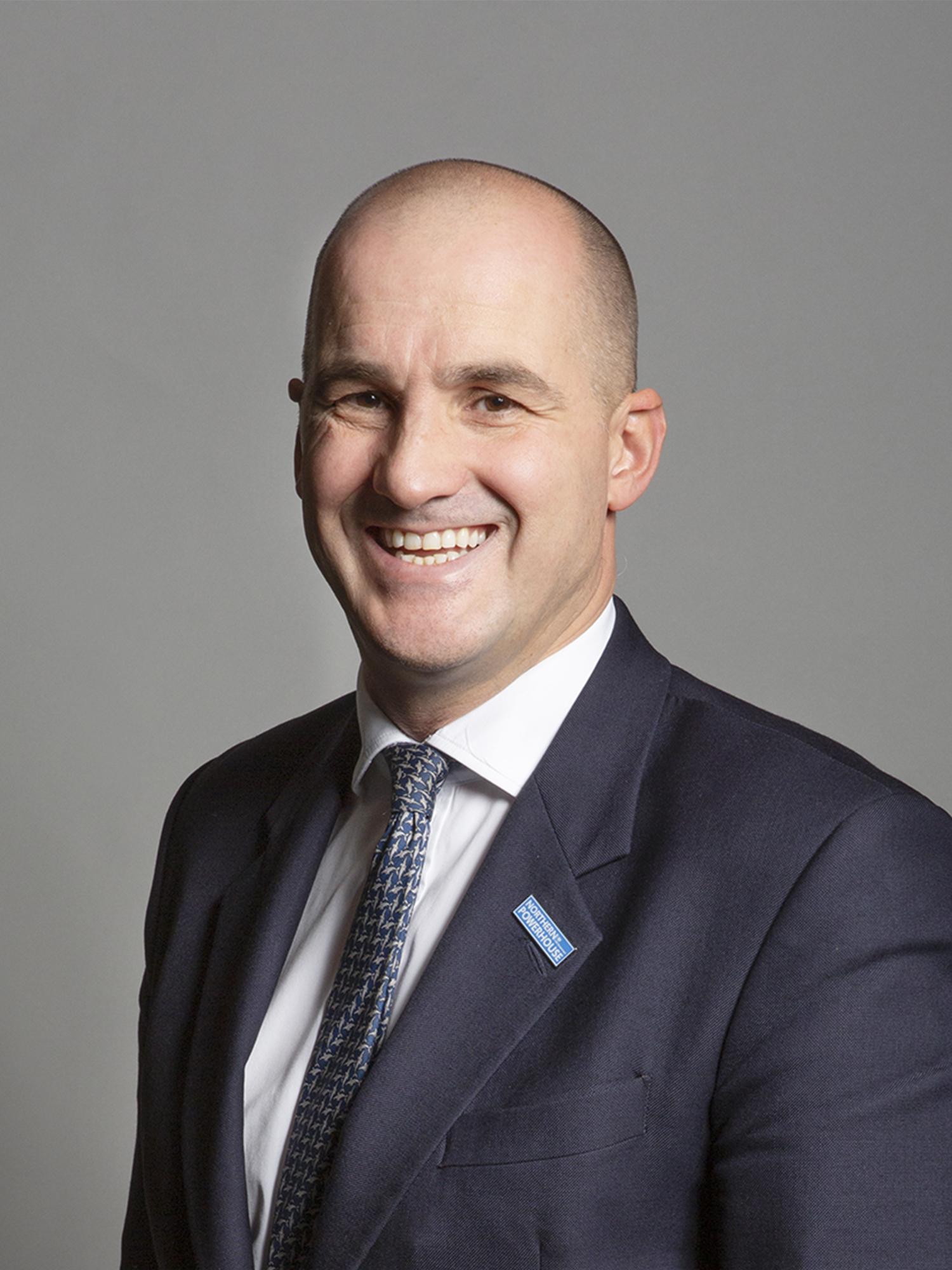
    The comments made by Jake Berry, the outgoing Chair of the Conservative Party, on Piers Morgan Uncensored on 26 October 2022.

    INTERVIEWER:

    [Was it right that Suella Braverman came back to the Cabinet?]

    JAKE BERRY:

    Six days is a long time in politics. It’s for the new Prime Minister and he must be free to appoint whoever he wants. However, what I would say is from my own knowledge, there were multiple breaches of the ministerial code

    INTERVIEWER:

    [Multiple?]

    JAKE BERRY:

    Multiple breaches of ministerial code. It was sent from a private email address to another Member of Parliament, she then sought to copy in that individual’s wife and accidentally sent it to a staffer in Parliament. To me, that seems a really serious breach and especially when it was documents relating to cybersecurity as I believe that seems a really serious breach. The cabinet secretary had his say at the time, I doubt he’s changed his mind in the last six days, but that’s a matter for the new Prime Minister

    INTERVIEWER:

    [Did she hold her hands up to it?]

    JAKE BERRY:

    I wasn’t at the meeting, but as I understand it the evidence was put to her and she accepted the evidence rather than the other way around.

  • PRESS RELEASE : EU increases support for border and migration management in the Western Balkans [October 2022]

    PRESS RELEASE : EU increases support for border and migration management in the Western Balkans [October 2022]

    The press release issued by the European Commission on 25 October 2022.

    The Commission adopted a recommendation to the Council to authorise the opening of negotiations of upgraded European Border and Coast Guard Agency’s (Frontex) status agreements between the EU and Albania, Serbia, Montenegro, as well as with Bosnia and Herzegovina. The Commission is also adopting today a new assistance package worth €39.2 million under the Instrument for Pre-Accession Assistance (IPA III) to strengthen border management in the Western Balkans.

    Commissioner for Home Affairs, Ylva Johansson, said: “We are committed to supporting our partners in the Western Balkans and strengthening our cooperation on migration management on the ground. Therefore, we propose to negotiate status agreements under the new legal framework that would allow for the deployment of Frontex to all four partner countries with the full power of its mandate, to ensure that their borders continue to be respected and protected in line with European best practices.”

    Commissioner for Neighbourhood and Enlargement, Olivér Várhelyi, said: “This package is timely, as migration remains an area where we need to work even more closely with our Western Balkan partners. Given the increased migratory pressure in the region, we are focusing on strengthening border protection, fighting the smuggling networks and stepping up returns from region. To this end, we will provide increased political and financial help. Between 2021 and 2024, we intend to increase our funding by 60% in total, to at least €350 million for our Western Balkan partners. This will support the Western Balkans in all areas of developing effective migration management systems, including asylum and reception, border security and returns. We count on the commitment our Western Balkan partners to make these actions a success.”

    With today’s proposal, the Commission with the support of Frontex will strengthen the capacity of the Western Balkans’ partners in their migration management, fight against smuggling and ensuring security. Under the currently existing status agreements between Frontex and Albania, Serbia and Montenegro, deployment of the standing corps may only take place at the countries’ borders with the EU and without exercising executive powers. Under the new legal framework, the status agreement will allow Frontex standing corps to be deployed in the third country both at the EU border and at the borders with the third countries and exercise the executive powers. Therefore, new status agreements will better support and strengthen cooperation on border management in the Western Balkans.

    The assistance package adopted today follows a detailed assessment of needs established with the Western Balkan authorities. The support targets the region’s border management capacities mainly through the provision of specialised equipment. It includes mobile surveillance systems, unmanned aerial vehicles, biometric devices, training and support to establish and operationalise National Coordination Centres. The support also covers the operationalisation of migration facilities, including reception and detention facilities. This package brings the total bilateral and regional support adopted in this area under IPA III to €171.7 million.