Blog

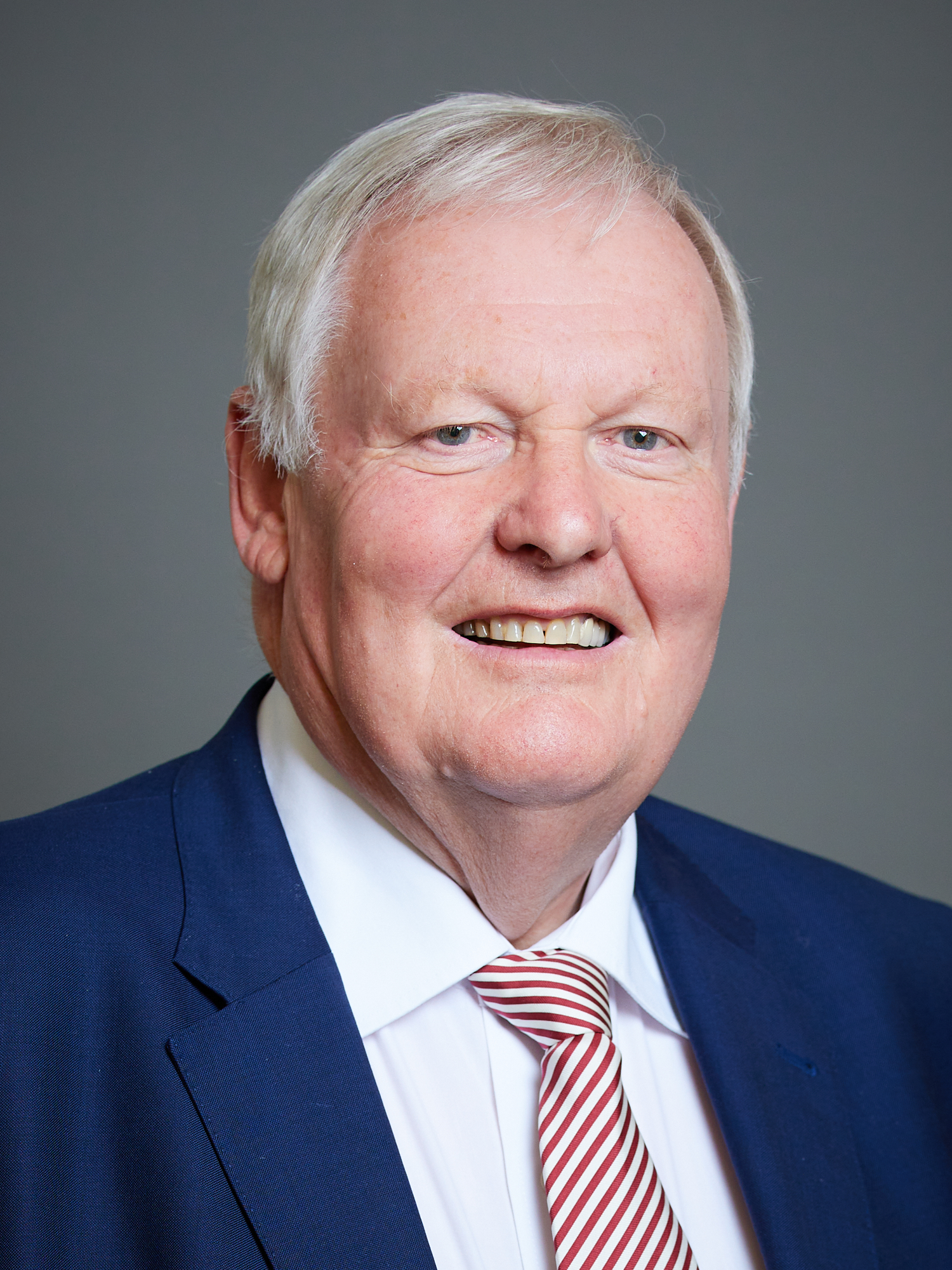
  • Wallace Browne – 2022 Speech on British Passports for Irish who have Lived in Northern Ireland (Lord Browne of Belmont)

    Wallace Browne – 2022 Speech on British Passports for Irish who have Lived in Northern Ireland (Lord Browne of Belmont)

    The speech made by Wallace Browne, Lord Browne of Belmont, in the House of Lords on 26 October 2022.

    My Lords, I am pleased to welcome the Minister to his post, and I know that he will bring a wealth of experience and knowledge to this House. I congratulate my noble friend Lord Hay of Ballyore on securing this short, but nevertheless important, debate. This issue, I know, is incredibly personal for him, but, more importantly, for the many thousands of others living in Northern Ireland.

    It is wrong that many Irish-born citizens, who have been living, working and paying their taxes in Northern Ireland and in the United Kingdom for years, have so many hurdles to go through before they can officially be recognised as British. They may have identified as British for years, or even for decades; but a costly, overly bureaucratic and uniquely discriminatory process has meant that, in the eyes of the law, they are technically not yet fully recognised as British citizens. Many of these people feel very strongly that holding a British passport should come naturally to them, as they have been law-abiding, taxpaying residents of this United Kingdom. As it stands, they feel, understandably, that they are being blocked in respect of this.

    This process is set in stark contrast to the simple and easy way of applying for an Irish passport for those born and living in Northern Ireland, whereby some who have never been to, or lived in, the Republic of Ireland can quickly apply for and receive Irish passports. Indeed, all they have to do is simply go along to their local post office, ask for an Irish passport application, fill it out and attach a relatively small fee of 80 euros; and the passport, when determined, will be delivered to the home by the post in a relatively short period of time. This is all under the terms of the Belfast agreement.

    Yet, those born a few miles across the border who are resident in the UK must pay £1,300 to register their citizenship, and then apply for a British passport. In terms of UK citizenship, it is clear that the people in this situation are still somewhat disadvantaged. Certain financial and bureaucratic barriers still exist that make it difficult for Irish-born residents of the United Kingdom to attain British citizenship or a British passport.

    It is false to claim that changing this would have any impact whatever on the Belfast agreement. Indeed, for true parity of esteem to exist, those Irish-born citizens who live and work in Northern Ireland should be able to avail of a British passport in the same way as Northern Irish-born British citizens can avail of an Irish passport. It is a curious situation that we presently have two groups: those who were born in the Irish Republic and live in Northern Ireland, who cannot easily obtain British passports; and those who were born in, have relatives in or live in Northern Ireland, who can easily and cheaply obtain Irish passports.

    Last year, the chief commissioner of the Northern Ireland Human Rights Commission called on the Government to fix this anomaly. He said categorically that,

    “the Belfast agreement presented no impediment to slightly changing the law, if the UK Government decided to exercise its discretion to do it.”

    If certain criteria were set, surely this could be resolved with relative ease.

    I, too, welcome the findings in the report published by the Northern Ireland Affairs Committee in the other place last year. I concur with the recommendations made in the report that the fees and the current unwieldly process should be abolished. Does the Minister agree with the findings, and will he commit to look at this further?

    The Government should take the opportunity presented today to look seriously at a different approach to this unique situation, which has created an unfair process. The issue has been overlooked for too long. As has been alluded to, this unique situation, which has been outlined today by my noble friend Lord Hay, goes directly against the grain of the Belfast agreement. Routes to British citizenship for those who have spent the vast majority of their lives contributing to British life or communities, and the tax base in the United Kingdom, should not be fraught with difficulty and uncertainty.

    It is right and proper that this issue should be addressed as a matter of urgency. It is wrong that successive Governments have failed so far to deal with this issue. I trust that today’s debate will help move us towards righting this wrong.
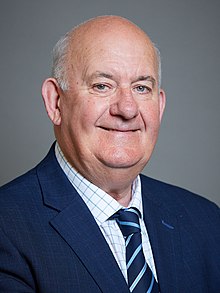
  • Willie Hay – 2022 Speech on British Passports for Irish who have Lived in Northern Ireland (Baron Hay of Ballyore)

    Willie Hay – 2022 Speech on British Passports for Irish who have Lived in Northern Ireland (Baron Hay of Ballyore)

    The speech made by Willie Hay, Baron Hay of Ballyore, in the House of Lords on 26 October 2022.

    To ask His Majesty’s Government what plans they have, if any, to grant an automatic right to a British Passport to people born in the Republic of Ireland who have lived in Northern Ireland for 50 years or more.

    My Lords, I welcome the Minister to the Dispatch Box and I wish him well in his new role. I am grateful to have the opportunity to hold this debate in your Lordships’ House. This is a very personal issue to me and to many out there who believe that this is a serious anomaly that needs to be addressed.

    I will give a brief history of how we got here. When the Irish Republic—previously known as the Irish Free State—left the Commonwealth in 1949, the British Government at the time allowed those who had been born in the Republic and had moved to Northern Ireland or elsewhere in the United Kingdom prior to that date to retain their British citizenship. That all changed after 1949: for people born in the Republic of Ireland after 1949, that right was taken away from them. Since 1949, many individuals who have lived here in the United Kingdom for many years, voted in UK elections and paid their taxes have found themselves disadvantaged by a bureaucratic and lengthy process.

    Indeed, instead of an application fee of £100, there is a large fee to apply for citizenship of around £1,300. These costs put many people off. There is also a requirement for Irish citizens who have been resident here in the UK for many years then to pass a Life in the UK Test. This is a discriminatory process for those who have been living and working in Northern Ireland, in the United Kingdom, for years, who find when they go to apply for British citizenship that they have many hurdles to clear that simply do not exist for others. They look around and see that many with no prior connection to the United Kingdom or Ireland find the process of applying for a British passport much quicker and far less hassle. Those Irish-born citizens who have lived, worked and voted in Northern Ireland and paid their taxes for many years—for many decades in some cases—have every right to British citizenship, to be an equal part of this United Kingdom and to hold a British passport. I question the very logic of this process. It impacts many thousands of people, and I question the hurdles that have been introduced.

    One point worth noting is that last February, the Court of Appeal found that similar fees of £1,000 for children to register as British citizens were unlawful and must be reconsidered by the Home Office. The current application process can be an increasingly long and frustrating one for many. It is especially challenging for those from lower-income backgrounds.

    The process of British citizenship applications can take six months, but usually it takes much longer. It has several steps and can be a major hurdle to people who genuinely want to apply for British citizenship. As part of the process, applicants are required to pay £350 simply for the privilege of a decisions report, where somebody will tell them whether they can apply and whether they qualify for British citizenship. That will cost £350, whether it is a “yes” or a “no” answer. In many instances, another frustration exists whereby even if registered as a British citizen and successful, this does not automatically entitle an individual to a British passport; it entitles them only to apply for a British passport.

    This is an insensitive situation for those who have paid taxes and national insurance contributions here for many years. Present census figures indicate that it affects approximately 40,000 people living in Northern Ireland, and this number is growing year on year. This is a huge number of people who cannot avail themselves of a British passport without navigating a long and winding process. It is quite clear that barriers exist in their route to citizenship.

    Of course, this is against the backdrop of a process that has been simplified in respect of Irish passport applications for people living in Northern Ireland. The Irish Government reviewed the whole process of application in 2011 and came up with a simple way of applying for an Irish passport for those living on the island of Ireland. If you apply for an Irish passport, the application is around €80 in total. Anyone born or living in Northern Ireland, or anyone who has a parent or grandparent living on the island of Ireland, is automatically entitled to apply for Irish citizenship. They have thrown the net so wide. Applicants do not need to have been born on the island of Ireland if their father, mother or a grandparent was born there; they are entitled to an Irish passport and Irish citizenship. It is a simple and quick process. When you apply for an Irish passport, you can trace the whole process, and online applications are completed in approximately 20 working days. This is a sharp contrast to the long and costly process that some Irish-born people living in Northern Ireland face when applying for British citizenship.

    There are ways to remove the financial and bureaucratic barriers in relation to this, if the will exists from government and the Home Office. There is a solution; a modest change in current practice could affect that group of 40,000 people. This is a sensitive matter that affects many and requires only a slight adjustment to be resolved. If an individual born in the Irish Republic after 1949 can prove that they have been living in Northern Ireland for between five and 10 years, have been working, voting and paying taxes and national insurance contributions, and are genuinely a part of that community, surely there ought to be a practical, sensible, streamlined way forward in this process.

    I welcome the report published by the Northern Ireland Affairs Committee in the other place last year and concur with its recommendations that these fees and this cumbersome process should be abolished. That committee has unionist, Conservative, Labour, Alliance and SDLP members, so there is unanimity in trying to resolve this issue not only in this House— I hope—but in the other.

    The great irony is that when we hear people in the media and Members of this House and the other House talk about the Belfast agreement, they often say “parity of esteem”: two communities working together and recognising whether someone is Irish, British or both. The extraordinary situation I have outlined today goes directly against the grain of the Belfast agreement. Let us not forget that the agreement is held up because it recognises the birthright of people living in Northern Ireland to identify themselves and be accepted as Irish, British or both. We are talking about people living in Northern Ireland for 30, 40 or 50 years, who were born five miles across the border in the Republic but have lived in Northern Ireland for virtually all their lives. To date, there has been a reluctance by government to act in relation to this. I welcome the opportunity to have this debate and trust that noble Lords will concur that this is an unfair process that could be remedied with minimal change.

    A number of Members in the other place agree with the recommendations that the lengthy process required and the payment of associated fees should be waived in the applications of long-term residents of Northern Ireland who were born in the Republic of Ireland and wish to access their British identity by holding a British passport. Other representations have been made to the Home Office in respect of this issue, which goes back as far as 2004 or 2005, when it was raised in the House of Commons by my colleague Gregory Campbell. For whatever reason, the Government have refused to address it.

    There should be real parity of esteem for people living in Northern Ireland who were born in the Republic. That is not the case. For many decades, the Government have failed to consider the history of the personal ties of thousands of people in this unique situation. This issue unites all backgrounds and traditions in Northern Ireland. That does not happen often, but on this issue, it is the case. I hope today’s debate will move us some way towards finally bringing a resolution.

    Does the Minister agree that this issue must be addressed? Will he commit seriously to doing so? It directly affects a large number of taxpaying residents in our United Kingdom. It is so bad in Northern Ireland at the minute that the number of people applying for British passports has dropped by 30%, while the number applying for Irish passports has gone up by 27%.

  • PRESS RELEASE : NALC highlights to the government the role local councils can have in net-zero [October 2022]

    PRESS RELEASE : NALC highlights to the government the role local councils can have in net-zero [October 2022]

    The press release issued by the National Association of Local Councils on 28 October 2022.

    The National Association of Local Councils (NALC) highlighted the role local (parish and town) councils could play in decarbonisation.

    NALC responded this week to the Business, Energy and Industrial Strategy (BEIS) independent review of net zero. NALC urged the government to recognise the role local councils can play to help the government meet its net-zero targets and not just factor in the private sector.

    NALC highlighted that local councils could achieve this by:

    • Showing leadership through using low-carbon and environmentally sympathetic practices in their day-to-day activities.
    • Encouraging residents and businesses to adopt lower-carbon practices.
    • Undertaking new initiatives which use low-carbon technology.

    Full Response (in .pdf format)

  • PRESS RELEASE : Humanitarian Teams Deployed in Philippines as Storm Hits [October 2022]

    PRESS RELEASE : Humanitarian Teams Deployed in Philippines as Storm Hits [October 2022]

    The press release issued by Save the Children on 29 October 2022.

    At the onset of tropical storm Paeng -international name, Nalgae – Save the Children Philippines immediately deployed humanitarian response teams on Friday 28 October, to conduct rapid assessment on impacted areas in Cagayan Valley, Central Luzon, Bicol, Eastern Samar, Panay Island, and the Bangsamoro Autonomous Region in Muslim Mindanao.

    Around 4.5 million people, of which 1.4 million are children, have been affected based on initial reports. The figures are expected to increase as Nalgae is poised to strengthen and become the 16th typhoon to hit the Philippines in 2022.

    In Maguindanao, Save the Children’s response teams are on the ground assessing the scale of the devastation and the needs of those affected. . So far, 67 of the 72 recorded deaths are in Maguindanao where about  78,000 families were reportedly affected by severe flooding.

    Meanwhile, Save the Children’s response teams in Luzon and Visayas, along with teams from civil society organisation partners, are currently monitoring and responding to the urgent needs of the affected children and their families..

    Jerome Balinton, Humanitarian Manager at Save the Children Philippines, said: “We are working to help affected families recover as fast as possible and putting in place disaster preparedness measures to reduce the impact of the storms. No child must be left behind, especially in times of emergencies.”

    Atty. Alberto Muyot, CEO of Save the Children Philippines, said: “In any crisis, children are always the most vulnerable. The message is loud and clear: children are most impacted by the climate crisis. That is why the whole of society must act now to safeguard future generations.”

    Save the Children stands ready to respond with the immediate dispatch of prepositioned relief items. These include plastic sheets that can be used as temporary shelters to displaced families, vital household items and family hygiene kits to prevent the spread of diseases, school supplies for children and teachers, and temporary learning spaces to safely resume classes.

  • PRESS RELEASE : Her Royal Highness The Princess Royal, Patron of Save the Children UK, has met families in Kyangwali Refugee Settlement in Uganda [October 2022]

    PRESS RELEASE : Her Royal Highness The Princess Royal, Patron of Save the Children UK, has met families in Kyangwali Refugee Settlement in Uganda [October 2022]

    The press release issued by Save the Children on 27 October 2022.

    Her Royal Highness The Princess Royal, Patron of Save the Children UK, has met families in Kyangwali Refugee Settlement in Uganda, to learn more about the impact conflict in the Democratic Republic of Congo (DRC) has had on children’s lives.

    Uganda currently hosts 5 million refugees – the largest refugee population in Africa. Due to the ongoing conflict in the DRC, thousands of refugees have crossed the border into Uganda this year.[1]

    In March 2020, schools across the country shut down as the Covid-19 pandemic took hold. Uganda kept schools fully or partly closed for over a year and a half, meaning children in Uganda faced the world’s longest school closure due to the pandemic.[2] To help children successfully return to school, Save the Children launched Catch-up clubs to accelerate the recovery of lost learning.

    Her Royal Highness visited a school in Kyangwali Refugee Settlement where she joined a Save the Children Catch-up Club and took part in an activity with children to work together and build a story from pictures. Later that day, The Princess also met children who have fled their homes due to the ongoing conflict in the DRC and are being supported by Save the Children’s child protection activities at a Child Friendly Space.

    Dragana Strinic, Country Director of Save the Children Uganda said:

    “It was an honour to host Her Royal Highness The Princess Royal today to raise awareness of the impact that conflict and Covid-19 school closures are having on millions of children in Uganda. Due to the ongoing conflict, Save the Children’s Catch-up Clubs have been a lifeline for children growing up in Kyangwali refugee settlement, without these clubs, some of these children may never have returned to school.”

    Her Royal Highness The Princess Royal has supported Save the Children for over fifty years. Queen Elizabeth II was a patron of the charity for 65 years, during this time they have both inspired thousands of supporters, volunteers, and staff, and highlighted the needs of some of the most disadvantaged children.

    HRH The Princess Royal became the Patron of Save the Children UK in 2017 after serving as the charity’s President since 1970. The Princess Royal spends a significant amount of time visiting Save the Children’s projects, both overseas and in the UK. She has travelled to Bangladesh, Sierra Leone, South Africa, Mozambique, Ethiopia, and Bosnia and Herzegovina.

    Over a quarter of a billion children are out of school globally and a record number of children – 1 in 6 – are living in war zones around the world.  The Children’s Emergency Fund allows Save the Children to support children growing up in conflict and help children keep learning in times of crises.

  • PRESS RELEASE : Cholera Outbreak in Syria and Lebanon [October 2022]

    PRESS RELEASE : Cholera Outbreak in Syria and Lebanon [October 2022]

    The press release issued by Save the Children on 27 October 2022.

    As Syria’s first major outbreak of cholera in over a decade spreads, thousands of children in neighbouring countries are also at risk from the deadly disease, with Lebanon’s recorded cases nearly doubling since last week, Save the Children warned today.

    A global shortage of cholera vaccines may exacerbate the outbreak, with the World Health Organization recently announcing that the standard two-dose vaccination will be suspended temporarily to allow for the available doses to be used in more countries.

    Lebanon’s first cholera case since 1993 was recorded on 6 October in the rural northern governorate of Akkar. According to the Ministry of Public Health, there are now 803 suspected and confirmed cases, with at least 11 deaths reported. Children are most at risk from the deadly disease, with those under 14 making up more than 50% of cases.

    With the country steeped in an unprecedented socio-economic crisis – plunging three-quarters of its population into poverty, with frequent power cuts and a worsening cash crisis deteriorating living conditions for millions of people – communities are being forced to rely on poor water sources to survive, as bottled water costs soar three to five times higher than last year. Years of underinvestment in water and sanitation infrastructure have also left systems and services ill-equipped to cope.

    Lebanon shares a long border with Syria, where the number of suspected and confirmed cholera cases continue to increase. As of 15 October, 20,014  suspected cases have been reported and 75 deaths confirmed, according to the World Health Organization. Cases have been confirmed now in all 14 governorates in Syria.

    Save the Children said that Syria’s cholera outbreak likely started due to communities consuming contaminated water and food irrigated by the Euphrates River, which is experiencing historic low water levels mainly due to Syria’s worst drought in decades.

    Nadia* in Raqqa, Syria, is a mother of five children, two of whom were previously sick with diarrhoea and bowel inflammation after consuming contaminated water.

    “I’m very concerned that my children may get cholera. I try to buy them bottled mineral water, but it is very expensive for us, especially since we are a displaced family with very limited means. I hope the water becomes safe for us and our children,” said Nadia. 

    Hamdan Alsallan, Save the Children’s Area Manager in Raqqa, North East Syria, said:

    “We are expecting cholera to continue to spread if adequate measures are not taken. Millions of people depend on the Euphrates River for their water needs, which is also being used to grow and water crops.”

    Meanwhile, Iraq saw cholera cases skyrocket this summer to 865 confirmed cases[i]. People displaced within the country were particularly affected by the outbreak, thought to be caused by vegetables irrigated with sewage water due to drought in major rivers[ii].

    The outbreak predominantly affected the north of the country. However, since prolonged drought is still affecting irrigation systems, there are concerns there will be a renewed cholera outbreak in the coming weeks. Movement of people across borders could accelerate a potential outbreak.

    Climate change, lack of food and access to health services have left millions of children in countries like Iraq, Lebanon, and Syria in poor health. They are the most vulnerable to the spread of this preventable disease, which is likely to continue spreading in countries with strained health and water systems.

    There are also fears of a potential cholera outbreak in neighbouring Jordan, where authorities have taken measures on its borders with Iraq and Syria, including cholera surveillance and checking food entering the country.

    Cholera surveillance is also ongoing in the Za’atari refugee camp, where about half the population are children. Save the Children, in partnership with UNHCR, is prioritising community health and hygiene education activities in the refugee camp.

    Dr Ibrahim Shihab, Save the Children’s Regional Health Advisor for the Middle East, North Africa and Eastern Europe, said:

    “The spread of this disease could be a catastrophe for the region, where medical and sanitation infrastructures are already fragile. Children are particularly vulnerable to cholera outbreaks.

    “In Syria, almost 35% of cases are among those below the age of 10. Cholera infection can have a very negative impact on pregnant women and children under 5 years old who are already suffering from other diseases, malnutrition, and lack of access to quality health care.

    “Without appropriate and proper control and containment measures, we might see the outbreak extend to nearby countries.  We  are calling on donors to mobilise additional funding to address the outbreak and limit its impact on children”.

    ENDs

    1. https://www.emro.who.int/images/stories/homepage/WHO-Iraq-SitRep_Week-32.pdf?ua=1
    2. https://reliefweb.int/report/iraq/iraq-cholera-epidemic-emergency-plan-action-epoa-dref-ndeg-mdriq015
  • PRESS RELEASE : Save the Children on Global Poverty [October 2022]

    PRESS RELEASE : Save the Children on Global Poverty [October 2022]

    The press release issued by Save the Children on 26 October 2022.

    An estimated 774 million children across the world – or one third of the world’s child population – are living with the dual impacts of poverty and high climate risk, according to a new report by Save the Children.

    The country with the highest percentage of children impacted by this double burden is South Sudan (87%), followed by the Central African Republic (85%) and Mozambique (80%).

    Generation Hope: 2.4 billion reasons to end the global climate and inequality crisisfound that while 80% of children are estimated to be affected by at least one extreme climate event a year, some are at particular risk because they also face poverty. This means they have less capacity to protect themselves and recover.

    The analysis revealed that India has the highest total number of children both living in poverty and bearing the brunt of the climate crisis, at 223 million. Nigeria and Ethiopia follow, with 58 million and 36 million children, respectively, living with this double burden.

    The report used climate modelling from researchers at the Vrije Universiteit Brussel (VUB) and found that a significant number of children – 121 million – experiencing the double threat of high climate risk and poverty live in higher income countries. Twenty-eight million live in the world’s most affluent countries, with more than two out of five of these children (12.3 million) living in the US or the UK.

    In the UK, it is estimated 3.2 million children out of 14.2 are in poverty and affected by a least one climate change event per year.

    Globally, 183 million children face the triple threat of high climate risk, poverty and conflict. Out of the total child population experiencing this triple burden, children in Burundi (63%), Afghanistan (55%) and the Central African Republic (41%) are the most affected.

    The climate and inequality crisis erodes children’s and communities’ resilience to shocks. If not urgently addressed, the frequency and severity of humanitarian and cost of living crises are set to increase in the years ahead.

    Drawing on insights from the 54,000 children in a major consultation conducted earlier this year, the report also shows how these multiple, overlapping risks are linked to and exacerbate the current global food, nutrition and cost of living crisis that is causing 345 million people in 82 countries to face a severe lack of food.

    Luciano, 12, lives in a displacement camp in Malawi. His family lost their home after cyclone Ana ripped through their island in January 2022. His family climbed out of the house and onto a tree, but Luciano’s younger brother was washed away by the floods. Luciano said:

    “We moved to the camp because water flooded on the other side of the river and it surprised us at night, when we were sleeping. All we managed to save was a few of our clothes. We tried to save more items, but we couldn’t. My little brother was on top of the house. Whilst he was on top, the house collapsed, and suddenly he was gone.

    “At the camp we do not eat enough food. When I used to live on the other side of the river, I was not like this. Now I have lost some weight. But I have hope and I would like to live the life I lived before the floods, again.

    “I am always anxious that the floods will hit again because when they hit last time, they created a stream near our house that can easily flood when it rains.”

    Gwen Hines, CEO of Save the Children UK, said:

    “Across the world, inequalities are deepening the climate emergency and its impacts, most notably for children and low-income households. 

    “Given the scale of the challenge, it would be easy to fall into despair. But we, as today’s generation of adults, must learn from children and dig deep into our reserves of hope for a greener and more just world. We must use this hope to drive action with children, putting our capacity for creativity and collaboration to work to end the climate and inequality crisis and push for the protection and fulfilment of children’s rights.

    “As leaders prepare to travel to the COP27 and G20 summits, they should have the rights and voices of children at the front of their minds. It is imperative that they secure ambitious outcomes, ensuring children have safe and meaningful ways to input into decision making. In particular, the world’s richest countries, whose historic emissions have driven the climate and inequality crisis, must lead the way in unlocking financing for countries that are struggling to protect children from its impacts, including through fixing the global debt relief system and through climate finance – particularly for adaptation and loss and damage”. 

    The new report builds on ground-breaking research published by Save the Children  in partnership with Vrije Universiteit Brussel in 2021, which found that children born in 2020 will on average face seven times more scorching heatwaves during their lives than their grandparents, and newborns across the globe will on average live through 2.6 times more droughts.

    The report comes as families across the world battle the worst global hunger crisis this century, fueled by a deadly mix of poverty, conflict, climate change, and economic shocks, with the lingering impacts of the COVID-19 pandemic and the crisis in Ukraine further driving up food prices and the cost of living. One million people are facing famine across five countries, with estimates that one person is dying every four seconds of hunger.

    Save the Children is calling on the UK government to step up their action to address the climate and inequality crisis by meeting its fair share of the $100 billion international climate finance commitment and mobilising support for a new international commitment in the scale of trillions to match the problem. The aid agency is also calling on the government to ensure children’s rights are at the heart of climate finance by ensuring the services children rely on are resilient during times of climate disasters, including education, health and social protection.

  • PRESS RELEASE : Child sexual exploitation crimes up 10% in the last year [October 2022]

    PRESS RELEASE : Child sexual exploitation crimes up 10% in the last year [October 2022]

    The press release issued by the NSPCC on 28 October 2022.

    We’re launching our Full Story campaign to connect more young people at risk of, or experiencing, sexual exploitation with Childline.

    New analysis of police-recorded crime data reveals the number of child sexual exploitation crimes has increased by 10% within the last year.

    During 2021/22 in England and Wales there were 17,486 crimes logged by police where children had been sexually exploited – an average of 48 offences a day.

    We’re revealing this data alongside the launch of the Full Story campaign in a bid to encourage more children and teenagers at risk of or suffering sexual exploitation to use Childline for immediate, confidential help.

    Over the last year, our helpline has heard from thousands of young people about sexual exploitation with some being manipulated into performing sexual activities after being given money, drugs or love and affection.

    Others have been sexually exploited after being trafficked from their home after being threatened with violence or the promise of a better life elsewhere.

    The number of Childline counselling sessions on sexual exploitation and abuse has increased from 5,962 to 6,230 this year (April 2021 – March 2022).

    The campaign has created a series of short films showing five different scenarios of sexual exploitation, taken from real Childline calls.

    As well as helping children and young people gain an understanding of what sexual exploitation is and what a healthy relationship looks like, we are focused on getting more young people to connect with us so we can offer immediate help and confidential support.

    This week, the service has unveiled posters at bus stops, motorway service stations, cinemas, colleges, Pupil Referral Units, youth centres, youth hostels, children’s homes, GPs, and sexual health clinics.

    Although more children are reaching out for support on this issue, our counsellors know that there are many barriers and reasons which prevent some children from speaking out and getting help.

    For some children, they may be being exploited by a family member or someone in a position of authority, other cases it may be a girlfriend or boyfriend. The grooming methods used can be subtle, so often they don’t recognise anything is wrong or that they’re in danger.

    While others might blame themselves for what they are experiencing, some are being blackmailed or threatened by their abuser causing them to remain silent due to fear.

    Darren Worth, Service Head of Childline, said:

    “Sexual exploitation is a complex crime and often when children describe what is happening in their relationship, they don’t realise they are being groomed and abused.

    “Our counsellors have heard from children who have said they didn’t realise what they experienced in a relationship or friendship was wrong until they were much older, and some said at the time they thought their abuser was someone they could trust.

    “Others said they thought they were to blame for what had happened and were scared about what would happen if they did speak out.

    “This is why this campaign is so important as it’s essential that all children and young people have an awareness of this issue and know that no matter what the circumstances are, that sexual exploitation is never a child’s fault and there are people like Childline who can help.”

    Sir Peter Wanless, NSPCC CEO said:

    “Child sexual exploitation casts a dark shadow across our society, inflicting fear and pain on a rising number of children and young people.

    “Greater public and professional awareness of this problem is vital, along with places like Childline which offers free and confidential help to those that are struggling, suffering or are confused at what is being done to them.

    “Government must also provide high-quality sex and relationships education to all children and young people, giving them a better understanding of what is and is not a healthy relationship. At the same time our political leaders must make child safety a key priority and commit to fundamental reform of the wider child protection system.”

  • PRESS RELEASE : Save taxpayers £60 billion with a new approach to university funding, says new research [October 2022]

    PRESS RELEASE : Save taxpayers £60 billion with a new approach to university funding, says new research [October 2022]

    The press release issued by the IEA on 28 October 2022.

    A new approach to university funding, contingent on student earnings, could save taxpayers £60 billion, says new research

    This would also stop the scandal whereby students are encouraged to take on debt in return for poor quality, unhelpful university degree courses.

    The Higher Education funding system is failing students and taxpayers and is not sustainable.

    Public funding is at risk from the large taxpayer losses on student loans (ca. £10.5 billion per year).

    Meanwhile, the proposed tuition fee freeze until 2024-5, in the context of high inflation, will put universities under severe financial stress.

    Universities are paid for enrolling as many students as possible, rather than on the basis of the outcomes they deliver for graduates. This has resulted in abuses of the system such as the mismatch of students and courses, an explosion in the number of unconditional offers and the launch of courses with poor academic and economic value.

    Many students are getting a poor deal, and a large proportion will suffer an effective earnings loss from attending university due to low earnings and increasing loan costs, with a liability that can last 40 years and a capital repayment value that grows with inflation.

    The author’s proposal would allow universities to raise tuition fees above the frozen levels while requiring them to lend the difference to their students by means of risk and income sharing schemes. This would secure the extra resources they need while creating incentives for institutions to improve graduate outcomes and ensure courses are relevant.

    This would be a win-win all-round. Freezing the state loan at current levels could save taxpayers £60bn over twenty years. Universities new freedom to set tuition fee levels ensures they have the resources they need to teach and compete internationally. Students will gain from better courses now the interests of the institution are aligned with theirs.

    The IEA’s new paper, Setting Universities Free: How to deliver a sustainable student funding system, by Peter Ainsworth, Managing Director at Consulting AM and Tom McKenzie, Professor of Economics at CBS International Business School, argues that the university funding model is broken and needs fundamental reform.

    Students are experiencing a declining earnings premium, higher borrowing costs and, for many, poor quality courses. Universities are struggling with reduced revenues while academics complain about poor pay and working arrangements. The government has consistently sought to minimise the growing student debt that will be written off – and essentially funded by the taxpayer.

    The central problem, according to Ainsworth and McKenzie, is that universities are remunerated on the basis of how many students they can enrol, rather than on the basis of graduate outcomes. This incentivises the expansion of mass-market, low-quality courses that fail to prepare students for the workforce.

    The paper proposes an alternative funding model in which the university’s income is contingent on future earnings, thus marrying the long-term interests of students with those of the university. This will make universities more responsive to student demands, while forcing them to consider the suitability of the courses they offer and the students they enrol.

    The authors also propose lifting the tuition fee cap, to help universities prosper and compete both domestically and internationally allowing for new investment and higher productivity to ensure better value for money in the long-term.

    Freezing state support for higher education would also save taxpayers £60bn over 20 years and slowly phase out universities’ reliance on the state as inflation erodes the government’s contribution to tuition fee loans.

    Overhauling our current system is necessary to ensure that universities can match their foreign competitors, that they are accountable to students, that taxpayers are given value for money, and that universities’ success is tied to the success of its students rather than the number of students they can recruit. Implementing Ainsworth and McKenzie’s recommendations would be a strong first step in such an overhaul.

    Commenting on the report, author Peter Ainsworth, said:

    “In his first major speech as Chancellor Jeremy Hunt referred to our universities as one of the country’s great strengths. They will not stay that way without more money. Our scheme secures for them the extra resources they need without a single extra penny being required of the taxpayer. Students gain from the partnership this system ensures, so the institution will be invested in their success. It’s good for all parties and is the sustainable funding system that thus far has eluded the UK.”

    Co-author Tom McKenzie, said:

    “Discussion of higher-education funding tends to centre around access to university rather than what a university education actually does for a student. The system we propose both encourages access based on merit and incentivises institutions to consider employability as more than just another league-table statistic.”

  • PRESS RELEASE : Further windfall taxes are not the solution to rising energy bills [October 2022]

    PRESS RELEASE : Further windfall taxes are not the solution to rising energy bills [October 2022]

    The press release issued by the IEA on 27 October 2022.

    Commenting on demands for further windfall taxes on oil and gas companies, Andy Mayer, Chief Operating Officer and Energy Analyst at free market think tank the Institute of Economic Affairs, said:

    “Demanding a new windfall tax every time a company posts a profit is the politics of a banana republic. Few companies will invest where politicians are hostile to development before it happens, then punish success after the event.

    “Meanwhile we have a global energy crisis. The only near-term solution is to increase supply. The UK response has been to slap three windfall taxes on the North Sea, ban fracking, and promote ‘fairytale’ energy plans for alternatives, all of which still rely on 20-30 years further supplies of fossil fuels.

    “These policies drive away investment, increase our reliance on expensive dirtier imports, and undermine the tax base needed to fund a low carbon transition. If the imports are disrupted, with all countries chasing the same resources, the situation is perilous, with an elevated winter risk of the lights going out and elderly freezing to death in their homes.

    “This is not a situation in which Parliament should be prioritising juvenile anti-business posing and cowardly virtue signalling to nimbies.”