Blog

  • Jacob Rees-Mogg – 2022 Comments on Johnson Campaign Running Out of Steam

    Jacob Rees-Mogg – 2022 Comments on Johnson Campaign Running Out of Steam

    The comments made by Jacob Rees-Mogg, the Conservative MP for North East Somerset in the Spectator on 31 October 2022.

    On the way back from Coventry, the news that Liz Truss was resigning came through. Liz is an admirable person and I supported what she wanted to do. Unfortunately, it did not work. The moment she went, the telephone started buzzing with potential candidates and slates. I wanted Boris back, as he had the mandate and his removal was a mistake. His campaign started well but then ran out of steam. This was clear by Sunday morning, when my slumbers were disturbed by the great man himself prior to the Laura Kuenssberg programme. Unlike the famous farmer, the lark is not my morning alarmer, so I was not entirely gruntled by so early a call.

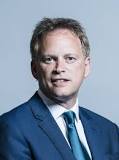
  • Grant Shapps – 2022 Statement on the Bulb Energy Administration and Energy Bill Relief Scheme

    Grant Shapps – 2022 Statement on the Bulb Energy Administration and Energy Bill Relief Scheme

    The statement made by Grant Shapps, the Secretary of State for Business, Energy and Industrial Strategy, in the House of Commons on 31 October 2022.

    I am today updating the House on the mergers and acquisition process for Bulb Energy Ltd (‘Bulb’) in special administration.

    Bulb Energy Ltd (‘Bulb’) was taken into special administration by an order of the court on 24 November 2021. Ofgem applied to court, with the consent of my predecessor but one, my right hon. Friend the Member for Spelthorne (Kwasi Kwarteng), based on their determination that the special administration regime (SAR) was the most appropriate route for protecting Bulb’s circa l.5 million customers in the circumstances prevailing at that time—a recommendation which had subsequent BEIS accounting officer and ministerial concurrence.

    The court appointed three individuals from Teneo Financial Advisory Ltd (‘Teneo’) as joint energy administrators and, following an application by Teneo, directed they enter into the circa £l.7 billion funding agreement with BEIS to support the achievement of their statutory objective of ensuring continuity of supply to Bulb’s customers at the lowest practicable cost until such time as the company may be rescued, or the business transferred to another company or companies. Bulb’s parent company, Simple Energy, was taken into “normal”—not special—administration on the same date by their secured creditors.

    The energy administrators and their MSA advisers have delivered a competitive and extensive sales process over recent months, culminating in their recommendation to transact Octopus Energy’s bid as the optimal way to achieve their statutory objectives. Their recommendation has been reached after an extensive negotiation process to secure the best terms in the circumstances and detailed analysis of the counterfactual options, all of which show less favourable anticipated outcomes and carry significant operational and execution risks.

    I have therefore approved the Octopus bid transaction and associated amendments to the existing funding facility and establishment of their new loan facility.

    The BEIS-led consultation process on the energy transfer scheme (ETS) has commenced. Subject to Government approval, the energy administrators will arrange for a court hearing date for commencement of the ETS and to enable the completion of the transaction as all agreements take effect by mid-November.

    Energy bill relief scheme (EBRS)

    Vital businesses, charities, schools and hospitals up and down the country have seen an unprecedented rise in energy prices following Putin’s illegal war in Ukraine, and this new Government will take the difficult decisions when necessary to support our essential British businesses and public sector services. Support has already been introduced to help families with their energy bills this winter, and this new measure will help support growth, prevent unnecessary insolvencies and protect jobs.

    The energy bill relief scheme (EBRS) will provide a price reduction for all eligible businesses and other non-domestic customers such as charities, schools and hospitals, who have recently experienced unprecedented rises in gas and electricity prices. The EBRS is a significant Government intervention reflecting the seriousness of the situation we face. It aims to support growth, prevent unnecessary insolvencies and protect jobs.

    Subject to the will of Parliament, the price reduction will come into force at the beginning of November 2022 in time to cover energy consumed in October and will apply to the non-domestic customer’s actual gas and electricity consumption. It is intended to run for six months from 1 October 2022 until 31 March 2023. The price reduction will be linked to the wholesale element of a non-domestic customer’s gas and electricity bill. The actual price reduction received will vary depending on the contract type that a non-domestic customer is on, as well as the tariff and volume used. Government will reimburse suppliers in accordance with the scheme.

    Funding for the EBRS will be sought through the estimates process. Any future costs for the delivery of the EBRS can only be projections and will depend upon energy usage levels and changes to the wholesale price of energy. As a result, the EBRS will give rise to an uncapped contingent liability. A review of the EBRS will be published after three months to assess effectiveness of the scheme and consider how support might be extended, further targeted, or revised beyond the initial six-month period for non-domestic customers most at risk from inflated energy prices. The Treasury-led review will determine support from April 2023—an update will be provided in due course.

    I have laid before Parliament a Departmental minute describing contingent liabilities arising from the energy bill relief scheme (EBRS). It is normal practice when a Government Department proposes to undertake a contingent liability of £300,000 and above, for which there is no specific statutory authority, for the Department concerned to present Parliament with a minute giving particulars of the liability created and explaining the circumstances. If the liability is called, provision for any payment will be sought through the normal supply procedure.

    I regret that due to the urgency of this scheme, I have not been able to follow the usual timelines for issuing notice at least 14 parliamentary sitting days before the liability begins to be incurred.

    The Treasury has approved spending for this proposal in principle. I will continue to update Parliament on this scheme.

  • James Bevan – 2022 Speech on Brexit

    James Bevan – 2022 Speech on Brexit

    The speech made by James Bevan, the Chief Executive of the Environment Agency, on 1 November 2022.

    Everyone has a plan until they get punched in the mouth. And in my experience everyone dislikes regulation until they need it, and then they want even more of it than we regulators can supply. All the politicians I meet, all the media that scrutinise us, and all the local communities in which we operate want more not less regulatory action from the Environment Agency (EA) to tackle things like waste dumps, smelly factories, dirty rivers and so on.

    It’s a good problem to have. And a reminder that the answer you get to any question often depends on how you ask it. Does any of us want red tape and bureaucracy? No. Do we want clean water, air that’s safe to breathe, a green country, jobs and growth? Yes – and those are some of the things you get from regulation when it’s done right.

    My pitch to you today is this: good regulation is essential for most of the things we all want. The report we are launching today “Regulating for people, the environment and growth” – the clue is in the title – sets out what the EA does to support those things.

    But no regulatory system is perfect, including ours. Brexit is a massive opportunity to rethink how we do regulation in this country. The government has embarked on that process, and we welcome the debate. Today I want to suggest some pointers about where that debate might usefully take us and the key principles that I think should guide it.

    Regulation works

    Let me start with an important fact: regulation works. Examples:

    Water security: the EA regulates the abstraction of water in this country. If you want to take more than 20 cubic meters a day out of a river or the ground, you need an EA licence. The EA has been reviewing, changing and in some cases revoking these licences to bring them into line with what is sustainable. That has removed the risk of the abstraction of some 1.7 trillion litres of water. That’s enough water to supply London for two years. Nature, wildlife and all of us are better off as a result.

    Water quality: in 2021, due to the EA’s regulation of water companies, a record 99% of bathing waters around England’s coasts met or exceeded the minimum quality standard. That is the highest level it has been since new tougher standards were introduced in 2015. Thirty years ago most of our bathing waters would have failed to meet even the minimum standards we have now. Regulation did that.

    Air quality: since 2010, emissions of nitrogen oxides (NOx) from the industrial sites we regulate have decreased by 72%, sulphur oxides (SOx) by 90%, and small particulate matter (PM10) by 52%. So our air is cleaner than it was, and cleaner air means people live longer and healthier lives. Regulation did that too.

    Waste: I have called waste crime “the new narcotics”: it harms people, places and the economy, including by undercutting the legitimate waste industry. Our regulation of the sector ensures waste is managed safely and our fight against the criminals helps the economy: every £1 we spend on it brings at least £4 of benefit to the economy. The right regulation helps deliver growth.

    Climate: in 2021 the climate change emissions trading and energy efficiency schemes that the EA manages delivered a nine million tonne reduction of CO2 compared to 2020. And since 2010, emissions of greenhouse gases from the sites we regulate have decreased by 50%. The planet is better off as a result. Regulation works.

    Rethinking regulation

    But no regulatory system is perfect. Both the regulations themselves and how regulators behave need to move with the times. They need to reflect changes in technology, in the needs of business, in the risks we are trying to manage, in public demand, in government policy and the law, and in the wider world around us.

    Brexit is a massive opportunity to rethink how we do regulation in this country.

    The government has embarked on an exercise to remove, revise or retain the body of EU-derived law currently in force, much of which is the basis for most environmental regulation in this country. We welcome that. We think it is a great opportunity to deliver better regulation and better outcomes – for people, for business and for nature.

    There is already a big debate as to what pieces of legislation should be retained, what should be reformed and what should be repealed. And there should be a debate, because this really matters and because if we make the right calls we can do what the Environment Agency exists to do: create a better place.

    There will be examples of laws we find we don’t really need. There will be examples where changing the law will allow us to achieve better outcomes for the environment and nature and support economic growth. And there will be some laws that it will make eminent sense to keep.

    Let me give you a real-life example of each. These are my personal views, not those of the EA or the government, but the point I want to illustrate is that we should not regard the current body of laws as sacrosanct.

    I would repeal the Floods Directive. This requires EU member states to carry out flood risk assessments, create maps of flood risk and flood risk management plans. That is all very sensible, which is why the UK was already doing those things before the Directive arrived and why the EA will carry on doing them now, because they are good practice and policy. But the purpose of the Directive was to drive cooperation between continental EU member states that share river basins – clearly we are not in that category.

    I would reform the Water Framework Directive (WFD) in order to drive better environmental outcomes. Each time I say this I get flak from everyone, so let me say again for the avoidance of doubt, I’d reform it in order to enhance water quality and restore nature, not degrade them. The WFD rightly sets high standards for water quality in rivers, lakes, estuaries and groundwater. But the way it requires us to categorise the status of those waters is complex, and can be misleading about the real state of those waters, both for better and for worse. And because the Directive stipulates that waters can only get “good” status if they tick all of several different boxes, it can force regulators to focus time and resources on indicators that may not make much difference to the actual water quality, taking focus away from things that would. I wouldn’t repeal the WFD. But I would reform it, to ensure it drives action that will deliver the clean and plentiful water we all want.

    I would keep the Bathing Waters Directive, which protects public health and the environment by keeping coastal waters free from pollution. It has done exactly that, driving the water companies, the regulators, the local authorities and local communities to make huge improvements in water quality at most of our beaches. High quality bathing water benefits health and wellbeing as well as boosting local economies. According to Visit Britain, the 135 million day visits taken to the seaside in England in 2019 were worth £4.4 billion to the economy. A great example of good law and good regulation producing better outcomes for nature, people and the economy.

    Principles of good regulation

    As we have this debate about what kind of regulation we want for the future, let’s be guided by a few principles. Mine would be:

    • Reframe how we think: good regulation is not red tape. It’s what gets you green growth and a blue planet.
    • Focus on outcomes. Start and finish with the ones we want: safe and healthy people, nature restored (not just protected or its degradation slowed), sustainable and inclusive growth.
    • Believe in better. The test for any regulatory change should be whether it will produce better outcomes.
    • Less is more: have fewer regulations, better targeted. Regulate only the things that need regulating.
    • Do it right: when you do have to regulate, do it well. Good regulation is proportionate, risk-based, evidence-driven, outcome focused, and (provided businesses do the right things) business-friendly.
    • Strong regulation needs strong regulators: if regulators are going to do their jobs they need the right powers, the right resources, the right laws and the right support.

    Conclusion

    Ronald Reagan said that Government’s traditional view of the economy could be summed up in a few short phrases: “If it moves, tax it. If it keeps moving, regulate it. And if it stops moving, subsidise it”. He was, it is pretty safe to say, not a natural fan of regulation or indeed of government. But he also said: “Government exists to protect us from each other. Where government has gone beyond its limits is in deciding to protect us from ourselves.”

    That’s a good distinction. Regulation doesn’t exist to protect us from ourselves. It exists to protect the things we value – people, nature, our economy – that would otherwise be harmed. So let’s have no more regulation than we need, and let’s have the right kind. But when we need it, let’s make sure we have it.


  • PRESS RELEASE : RPEG – Strong regulation helping to protect environment [November 2022]

    PRESS RELEASE : RPEG – Strong regulation helping to protect environment [November 2022]

    The press release issued by the Environment Agency on 1 November 2022.

    Environmental regulation is helping businesses to protect the environment and tackle the climate crisis, a new report reveals today (1 November), with more work needed to reduce serious water pollution incidents.

    Some 97% of industrial sites overseen by the Environment Agency are in the top compliance bands when it comes to protecting the environment, based on a five-year moving average, helping to ensure our air, land, and water is protected from harm.

    The data is revealed in the EA’s Regulating for People, Environment and Growth report (RPEG) 2021, which shows improving trends in environmental compliance.

    Since 2010, there has been a 72% decrease in NOx emissions, and a 90% decrease in SOx emissions, from sites the EA regulates. There has also been a 50% decrease in emissions of greenhouse gases from sites the EA regulates during the same period.

    And last year, the Environment Agency’s regulation led to the closure of 561 illegal waste sites and uncovered 445 new sites. It also ensured a nine million tonne reduction of CO2 compared to 2020 through the climate change emissions trading and energy efficiency schemes it manages.

    This is alongside a record 99% of bathing waters in England meeting or exceeding the minimum quality standard last year.

    The report comes as Sir James Bevan, chief executive of the Environment Agency, delivered a speech on the future of regulation to the Whitehall and Industry Group today.

    Sir James said:

    Do we want clean water, air that’s safe to breathe, a green country, jobs and growth? Yes – and those are some of the things you get from regulation when it’s done right.

    Good regulation is essential for most of the things we all want. The report we are launching today, Regulating for People, the Environment and Growth sets out what the EA does to support those things.

    But no regulatory system is perfect, including ours. Brexit is a massive opportunity to rethink how we do regulation in this country. The government has embarked on that process, and we welcome the debate.

    As an example of improving the regulatory system in a post-Brexit UK, he said opportunities lie in repealing the Floods Directive and reforming Water Framework Directive.

    He said:

    There will be examples of laws we find we don’t really need. There will be examples where changing the law will allow us to achieve better outcomes for the environment and nature and support economic growth. And there will be some laws that it will make eminent sense to keep.

    The RPEG report, comprising data from regulatory activities in 2021, also reveals:

    • Fines totalling £105 million were issued by the courts as a result of over 100 environmental prosecution cases brought by the EA in 2021
    • Environmental groups have received £15 million over the past five years as a result of enforcement undertakings accepted by the EA
    • Last year, we saw a reduction in CO2 of 9 million tonnes compared to 2020
    • Since 2010, emissions of greenhouse gases from the sites we regulate under the Environmental Permitting Regulations (EPR) have decreased by 50%. Methane emissions from these sites have decreased by 51%
    • Since 2017, through reviewing, changing and revoking abstraction licences, we have removed the risk of the potential abstraction of 1.7 trillion litres of water from the environment

    However, the report also showed that in 2021, the environmental performance of England’s water and sewerage companies was the worst seen for years. Serious pollution incidents increased to their highest total since 2013, while monitors on storm overflows – installed at Environment Agency insistence – are highlighting that untreated sewage flows into our rivers too frequently.

    Sir James has also welcomed the record £90 million fine imposed on Southern Water for widespread pollution last July; a clear signal that this is not what the EA or the public expect from companies whose job it is to treat sewage and protect the environment.

    Sir James added:

    Strong regulation needs strong regulators. If regulators are going to do their jobs they need the right powers, the right resources, the right laws and the right support.

    Regulation doesn’t exist to protect us from ourselves. It exists to protect things we value – people, nature, our economy – that would not otherwise be protected. Let’s have no more regulation than we need, and let’s have the right kind. But when we need it, let’s make sure we have it.
    The Environment Agency’s vision of promoting green growth and a sustainable future is a key strand of the EA’s five-year action plan, entitled ‘EA2025’.

  • PRESS RELEASE : Trade Secretary sets out plan to ‘future-proof UK economy’ [November 2022]

    PRESS RELEASE : Trade Secretary sets out plan to ‘future-proof UK economy’ [November 2022]

    The press release issued by the Department for International Trade on 1 November 2022.

    • Gateshead goes green as the North East hosts top global execs at landmark Trade Expo to secure new investment in UK industries of the future
    • Trade Secretary says “now is the time to future-proof our economy” and hails £20 billion of job-creating, decarbonising investment in past two years
    • Announcements at the Expo include £26 million finance package to export Northern Ireland-built zero-emission buses around the world

    Trade Secretary Kemi Badenoch MP will call investment in clean energy “the future-proofing force that will help us create a better tomorrow” at a landmark trade event in the North East of England.

    Speaking to an audience of global investors and executives at the Green Trade and Investment Expo in Gateshead, she will set out a three-pronged approach to using trade to ensure the UK is ready to tackle crucial global challenges.

    Growing and innovating industries to combat climate change, protect our energy security and create high-paying jobs in industries of the future will form the core of UK’s green trade approach, backed by significant international investment.

    The speech will celebrate figures which show the UK’s progress toward clean and sustainable energy is delivering huge economic benefits for the UK. In the past two years, the Government has secured £19.8 billion in new investment, creating over 11,000 new jobs. Total foreign investment has created nearly 85,000 new jobs for people across the UK in 2021-2022 alone. An unprecedented £100 billion of private sector investment is expected to support nearly 500,000 new jobs by 2030.

    Ahead of the speech, Trade Secretary Kemi Badenoch said:

    We know trade and investment grows our economy, creates jobs, and puts money in people’s pockets – but it also has the power to tackle the challenges we see around the world.

    Now is the time to future-proof our economy by investing in cutting-edge green technology, protecting our long-term energy security and creating thousands of jobs in industries of the future.

    In just two years we’ve helped to secure £20 billion in green investment from everywhere from Spain to South Korea, creating over 11,000 jobs. I am committed to continuing to bang the trading drum for Britain to boost economic growth and level up the UK for generations to come.

    Hosted by the Department for International Trade (DIT) and the Department for Business, Energy and Industrial Strategy (BEIS), the Expo brings together UK businesses and global investors to capitalise on the commercial opportunities stemming from the UK’s journey to net zero.

    Minister of State for Climate Change Graham Stuart said:

    The UK is number one in Europe for renewable investment opportunities, with the highest offshore wind capacity, one of the largest potential CO2 storage bases, and a fast-emerging centre of excellence for hydrogen propulsion and EV batteries.

    The deals struck here in Gateshead will not just bolster our country’s green transition and energy security, but will grow the UK’s economy – supporting livelihoods and helping in our fight against climate change.

    Announcements expected at the Expo include Northern Ireland-based bus manufacturer Wrightbus who have secured an £18 million Green Trade Loan and £8 million Green Bank Guarantee, with an 80 percent guarantee from UK Export Finance (UKEF). This will enable them to export cutting-edge net-zero buses to new export markets, building on their existing contracts across the globe, including to Australia and Germany.

    Joerg Hofmann, CEO at Wrightbus, said:

    At Wrightbus, we are entering the next stage of our ambitious growth plan, significantly growing our export volume from our UK base and becoming one of the leading battery electric and hydrogen bus manufacturers in Europe. UKEF’s support will strongly help us on our future global growth path.

    Flogas will confirm a £50 million investment to upgrade Avonmouth terminal to store liquid petroleum gas and future-proofing the site to handle renewable biogas and hydrogen, opening up a potential global supply of renewable fuels to the UK.

    Ivan Trevor, Managing Director, Flogas Britain Ltd, said:

    The £100 million investment into the Avonmouth LNG Terminal and pipeline near Bristol will link the UK to an unparalleled supply of off-grid gas, providing security and affordability for off-grid homes and businesses across the UK.

    With plans to handle fully renewable green gas alternatives and enable emerging fuels to be imported and exported more easily, it will also play a vital role in creating a lower carbon future and help the Government meet its net zero emissions target.

    GTIE falls on day two of International Trade Week, a week-long series of business and sector-led activities, events and workshops available to businesses of all sizes and sectors across the UK, completely free of charge. The week is aimed at businesses looking to maximise their global potential, giving them the advice and confidence they need to take the next steps to grow their business and access new international markets.

    24 businesses will be showcasing at the Expo, from North East powerhouse Rolls Royce to Proto, a North East England hub for innovation that is opening the first digital production facility in Europe to help organisations to transition to Net Zero using new technology.

    The Green Trade and Investment Expo will be sponsored by Principal Partners bp and SSE, and Official Partners, Amazon, Barclays and Atkins, who are crucial stakeholders in the UK’s transition to secure, clean and affordable energy.

    Tom Samson, CEO of Rolls-Royce SMR, said:

    For the first time in over 20 years, the UK has a domestic nuclear energy technology supplier and the GTIE presents a fantastic opportunity for Rolls-Royce SMR to showcase this industry leading decarbonisation solution. Rolls-Royce SMR has an ambition to build factories and strengthen the UK nuclear supply chain to deliver significant and sustained levelling up and energy security benefits.

    We welcome the Government’s leadership on net zero and its support to deliver 24GW of nuclear capacity by 2050.

    Alex Cook, Innovation Manager at PROTO, said:

    We were delighted to be able to work with Invest North East England and local tech businesses MAADigital, FuzzyLogic and AIS Survivex to create a strong submission for the Expo, and we look forward to showcasing our selection of immersive demonstrators.

    The North East is home to an exciting cluster of immersive tech companies and our showcase will allow investors to experience first-hand how these technologies can have a real impact in the energy sector by streamline processes, reducing emissions and allowing companies to de-risk hazardous training exercises by training staff in virtual environments.

  • PRESS RELEASE : Free legal advice piloted to help people facing financial difficulties [November 2022]

    PRESS RELEASE : Free legal advice piloted to help people facing financial difficulties [November 2022]

    The press release issued by the Ministry of Justice on 1 November 2022.

    • Free early legal advice for thousands facing debt, housing and welfare benefit difficulties
    • Legal advice to help stop people falling into further debt and having to appear in court
    • Five-month pilot test phase launched in Manchester and Middlesbrough

    The pilot in Middlesbrough and Manchester expands the scope of legal aid funding to more people who previously would not have been eligible for free legal advice, to help them address issues before they become more complex or costly.

    The aim is to ensure people have a better chance of swiftly resolving legal problems, stopping them from spiralling into further difficulties.

    Currently, many people do not access legal advice until too late, causing further problems, such as having to appear in court, increased debt, and even homelessness. The pilot will explore if these issues can be avoided by providing legal advice earlier.

    The pilot advice will be offered to individuals struggling with housing issues, paying bills or experiencing problems with their benefits, with no means or merits tests required. To understand what difference the pilot service makes, participants of the pilot will either receive up to three hours of free legal advice and support or be signposted to existing advice services.

    Justice Minister Lord Bellamy KC said:

    Early legal advice can be invaluable for people that find themselves in difficult and stressful situations, helping struggling individuals avoid falling further into debt or ending up in court.

    Through this pilot we are paving the way for more people to receive free legal advice, at an earlier point in time so that their problems can be addressed before they worsen.

    A legal adviser can explain issues like council tax arrears, and provide further information about housing rights and how to apply for Universal Credit, if required.

    Invitations to the scheme will be sent out to people who have fallen behind on council tax payments by Manchester City Council and Middlesbrough Council. Invitees will then be asked to complete a confidential survey to determine whether they have a legal issue that requires support.

    After the 5-month initial testing phase, the Ministry of Justice will review evidence collected through the evaluation and use this to inform the design of a future larger-scale pilot.

  • PRESS RELEASE : New £155m facilities management contract comes into service in Gibraltar [November 2022]

    PRESS RELEASE : New £155m facilities management contract comes into service in Gibraltar [November 2022]

    The press release issued by the Ministry of Defence on 1 November 2022.

    The £155 million contract, which provides maintenance work, repairs, servicing, and hard facilities management to the MOD’s estate in Gibraltar, was awarded to Mitie in May by the Defence Infrastructure Organisation (DIO). It will cover every part of the MOD estate in Gibraltar, from the harbour and the runway to offices and accommodation.

    It is the first contract to come into service under DIO’s new Overseas Prime Contracts (OPC) programme, which will also see further contracts come into force at Defence sites including Cyprus, Germany, the Falkland Islands and Ascension Island. The contract is for an initial period of seven years and aims to be more flexible and responsive to the needs of service personnel and staff in Gibraltar, allowing them to focus on their work in the knowledge that they have safe and resilient infrastructure to work from.

    The new contracts have been developed taking into account recommendations for improvements to the current arrangements and will mean a better service for hundreds of military personnel based overseas. They seek to provide better value for money and quicker repairs, reducing bureaucracy and unnecessary processes to keep the estate operational.

    Greater alignment to current industry standards will mean increased collaboration between DIO and its suppliers and allow for services to be better tailored to the requirements of specific sites. A new, integrated software system will enable information to be shared more effectively.

    The contracts have been designed to promote more efficient processes and the quicker delivery of high volume, lower value works, ensuring increased value for money. Performance targets will encourage a high standard of repairs and reduce the need for repeat visits.

    The contract is expected to directly sustain around 200 jobs in Gibraltar.

    DIO’s Chief Operating Officer David Brewer said:

    DIO is committed to supporting people across the Armed Forces who depend on us to provide facilities and essential services which allow them to work safely and securely.

    This important milestone follows years of hard work to design a contract that builds on the successes of existing hard facilities management arrangements while adding additional services and improvements to improve the quality of life for our Armed Forces in Gibraltar.

    Commodore Tom Guy, Commander British Forces Gibraltar, said:

    I look forward to the new contract coming into effect, and the benefits it will bring to our people, both uniformed and civilian, here in Gibraltar. I am particularly pleased to hear of the promised improvements, which I hope will do two things: firstly help us to execute our mission effectively, while preparing Gibraltar better for the future, and secondly, to improve the daily lived experience for all our people.

    Brian Talbot, Managing Director, Central Government & Defence, Mitie, said:

    As proud supporters of the British Armed Forces, we are delighted to be running the new Overseas Prime Contract for Gibraltar. We are committed to working with the Defence Infrastructure Organisation to improve services for our Armed Forces based in Gibraltar, delivered by our exceptional colleagues and building on the technology solutions we have implemented on our Future Defence Infrastructure Services contract in Scotland and Northern Ireland.

    The next OPC contract to be awarded will be for hard facilities management in Cyprus in early 2023, with the final contract to be the South Atlantic Islands in summer 2024.

  • Roger Gale – 2022 Comments on Not Trusting the Home Secretary on Manston

    Roger Gale – 2022 Comments on Not Trusting the Home Secretary on Manston

    The comments made by Sir Roger Gale, the Conservative MP for North Thanet, on Times Radio on 1 November 2022.

    Her language yesterday, I’m afraid, suggested that she [Suella Braverman] is only really interested in playing the right wing. I understand that, I’ve received a certain amount of abuse on the stand that I’ve taken. I’m not in support of illegal migration, bit I’m in support of humane treatment for those who have crossed the channel and have a right to be properly processed by us. The fact of the matter is that, of course, I’m also defending my constituents’ interest because the facility at Manston was designed to turn people around in 24 hours, maximum 48 hours, and move them on, it’s a processing centre, not a refugee camp.

    I was given a clear undertaking by Priti Patel as home secretary and by her Minister of State that that is what would happen and that there would be no expansion of the facility. Over the last few days, we have seen an almost doubling of the size of the number of people in Manston and a massive building of further accommodation, and that is not acceptable. This is in breach of the undertakings that I was given and I’m not prepared to accept it. I don’t accept or trust this Home Secretary’s work.

    ………………..

    I share Mrs Braverman’s desire to see this ended. It is criminal, it is trading in human misery and it’s quite wrong. When you’ve seen, as I have, two or three-year-old toddlers at Manston in the processing centre, kids slightly younger, actually, than my own grandchildren, who have crossed the channel in open boats, you realise just how pernicious and how dangerous this is, and it has to be brought to a halt, that I agree with entirely.

    Where I think we as a party have gone wrong, and indeed the Labour Party hasn’t offered any solutions either so let’s not be holier than thou about this, is that we’ve taken the wrong approach. Instead of trying to work with the French authorities and the European authorities to reach a pan-European solution to what is a pan-European problem, we’ve chosen to play to the gallery.

    I have a lot of time for some of the things that Priti Patel has done, but I part company with her over the Rwanda idea, it’s dog whistle politics as it won’t work and it’s playing to the gallery. It’s not practical and very expensive anyway, as well as being immoral.

    Are we going to get to grips with this? Well, I hope that the prime minister’s approach to President Macron will yield results. If it does, that’s a very good thing. That is the right approach and the right direction of travel. The home secretary’s approach is the wrong direction of travel, I believe.

  • NEWS STORY : Robert Jenrick Interview on Language Used by Suella Braverman

    NEWS STORY : Robert Jenrick Interview on Language Used by Suella Braverman

    STORY

    Robert Jenrick, the Immigration Minister, has said that it’s important for Ministers to “choose language carefully” when discussing immigration, but added that Suella Braverman, the Home Secretary, was trying to convey the scale of the problem which the Government was facing.

    RESOURCES

    Interview with BBC Radio 4’s Today Programme

    EXTERNAL NEWS LINKS

    BBC News

    Guardian

    Sky News


  • Robert Jenrick – 2022 Comments on BBC Radio 4’s Today Programme on Language Used by Suella Braverman

    Robert Jenrick – 2022 Comments on BBC Radio 4’s Today Programme on Language Used by Suella Braverman

    The comments made by Robert Jenrick, the Minister of State at the Home Office, on BBC Radio 4’s Today Programme on 1 November 2022.

    INTERVIEWER

    [Asked if the migrants crossing the Channel were invaders in the way that Suella Braverman had referred to those people as]

    ROBERT JENRICK

    The expression that the Home Secretary made yesterday was a way of conveying to the public the sheer scale of the challenge that we’re now facing as a country. 40,000 people have chosen to cross the channel this year alone in small boats, arriving on beaches on the south coast of this country or hooked out of the sea by Border Force, the RNLI or the Royal Navy. That is a very significant challenge to this country, which is putting immense pressure….

    INTERVIEWER

    [But you used the word invasion you mean people who are coming to do you harm?]

    ROBERT JENRICK

    Well, I think in this job, you do have to choose your language carefully, but you also have to accept that many millions of people across this country are rightfully extremely concerned.

    INTERVIEWER

    [Said that the interview would return to that, but asked if Jenrick would use the word]

    ROBERT JENRICK

    It’s not a phrase that I’ve used, but I do understand the need to be straightforward with the general public about the challenge that we as ministers face because the issues that we will discuss like Manston are very important. But, they are the symptoms of a major problem that we’re facing as a country. We might find, because November is historically a time when a record number of individuals cross the channel, that we end up with 50,000 people who have made this perilious journey. That, as a number of independent experts have said, is causing our system to be overwhelmed. It is putting huge pressure on the asylum system, on social housing, on hotel accommodation and it’s very hard to plan efficiently and effectively for that. We have to grip this challenge because it’s a first order priority of a Government to secure our borders and ensure the public can have faith in the asylum system.

    INTERVIEWER

    [Asked if people were being held at Manston for more than 24 hours]

    ROBERT JENRICK

    The law is very clear that we should not be holding people for more than 24 hours. We need to make sure that this site operates legally and so we need to make sure that people are moved out of the site as swiftly as we can. There is also a competing legal obligation on us not to leave people destitute and it would be quite wrong of me as the Immigration Minister, indeed of the Home Secretary, to leave people on the streets of Kent without support and care.

    As you heard from the doctor who spoke very movingly a moment ago, to leave those individuals who are sometimes bewildered to be in a foreign country having been through an extraordinary experience of crossing the Channel in a small boat to leave them without support. So we have to balance those two competing duties. What I’m clear on as Immigration Minister, and I’ve only been doing the job for five days, but that I’m clear on is that we will get the hotels procured and we will get the individuals out of Manston as quickly as we can.