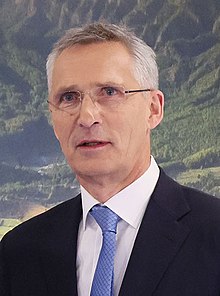
The statement made by Jens Stoltenberg, the NATO Secretary General, on 16 November 2022.
Good afternoon.
We have just finished a meeting of the North Atlantic Council.
We addressed yesterday’s explosion in the east of Poland, on the border with Ukraine.
Our top military commander General Cavoli briefed Allies.
And the Polish ambassador updated us on the incident, and the ongoing investigation.
Yesterday’s explosion took place as Russia launched a massive wave of rocket attacks across Ukraine.
Since the start of Russia’s illegal war in Ukraine, NATO has increased vigilance across our eastern flank.
And we are monitoring the situation on a continuous basis.
An investigation into this incident is ongoing, and we need to await its outcome.
But we have no indication that this was the result of a deliberate attack.
And we have no indication that Russia is preparing offensive military actions against NATO.
Our preliminary analysis suggests that the incident was likely caused by a Ukrainian air defence missile fired to defend Ukrainian territory against Russian cruise missile attacks.
But let me be clear.
This is not Ukraine’s fault.
Russia bears ultimate responsibility, as it continues its illegal war against Ukraine.
In the meeting today, NATO Allies offered their deepest condolences on the tragic loss of life.
They expressed their strong solidarity with our valued Ally Poland.
And made clear that we will continue to support Ukraine in its right to self-defence.
Russia must stop this senseless war.
Last night, I spoke with the Polish President Andrzej Duda and with US President Joe Biden.
We agreed that we need to stay vigilant, calm and closely coordinated.
We will continue to consult.
And monitor the situation very closely.
NATO stands united.
And we will always do what is necessary to protect and defend all Allies.
NATO Secretary General Jens Stoltenberg:
And with that I’m ready to take your questions.
NATO Spokesperson Oana Lungescu: Polish radio [indaudible]
Polish Radio:
Thank you. Polish radio public broadcaster [inaudible]. Secretary General what could be the outcome, concrete, in concrete terms of today’s meeting? Can we expect enhancing the Europe’s air defence; especially in the countries bordering Ukraine because as long as the war continues there will be Russian rockets striking Ukrainian citizen. There is a risk that such situation can happen again, thank you very much.
NATO Secretary General Jens Stoltenberg:
In the meeting today, NATO Allies expressed their strong support and solidarity with our Ally, Poland. They also expressed their deepest condolences for the tragic loss of life. And NATO has significantly increased its presence in the eastern part of the Alliance, in particular since the invasion of Ukraine in February. With more troops on land, ground troops, but also with significant substantial air and naval power. And this has of course, both increased our air defence capabilities, but also our capabilities to monitor, to have a full picture of what’s going on, on the border between NATO Allies like Poland and Ukraine, and we are constantly assessing what more we need to do. We also have made important decisions at our Summit in Madrid to further strengthen our presence in the eastern part of the Alliance.
NATO Spokesperson: BBC.
BBC:
Thank you, Jessica Parker for BBC News. I just wanted to ask, given the incident that happened last night, do you think this was perhaps the most tense moment for NATO? In this conflict so far? Thank you.
NATO Secretary General:
I’m always careful to rank different incidents and situations. It demonstrates that the war in Ukraine, which is President Putin’s responsibility, continues to create dangerous situations. At the same time you have to remember that this happened at the same time as Russia launched a wave of new indiscriminate missile and air attacks on Ukrainian cities. Attacking critical civilian infrastructure, hitting civilian targets. Then it’s nothing strange, then, of course, that is in itself a very dangerous situation. And then, that we then also see that there may be also consequences on NATO territory is a consequence of the war that Russia wages against Ukraine
NATO Spokesperson: Then we go to the Ukrainian News Agency in the middle.
Ukrainian News Agency:
Thank you for the floor, [inaudible] national News Agency of Ukraine. I just want to mention that Ukrainians do understand the pain now of the Polish people and have the greatest sympathy with them. My question is how that incident will be reflected on the assistance that Allies provided for Ukraine in air defence. Where will be some kind of new systems to cover the Ukrainian sky? Thanks.
NATO Secretary General:
There will be a meeting today in the Contact Group for Ukraine to coordinate the support that NATO Allies and partners and others are providing to Ukraine. And the main focus of all our efforts over the last month has been on air defence. Especially since Russia started to launch these indiscriminate attacks on Ukrainian cities a few weeks ago. And I welcome that more and more Allies and partners are providing advanced air defence systems to Ukraine. NASAMS, HAWK batteries from Spain and others and I also know that Sweden has made the new announcement of additional support also with air defences to Ukraine. So we are mobilising additional support, especially when it comes to different types of air defences. NATO is also providing counter drones systems. We need many different systems to protect against cruise missiles, ballistic missiles, but also drones. We need a layered defence of Ukraine. That’s exactly what Allies are providing in different ways.
NATO Spokesperson: Bloomberg.
Bloomberg:
Does this incident, will this for more air defence for Allies on the eastern border, I mean you said, there has been a step up since beginning of the war, but does more need to be done? Thank you.
NATO Secretary General:
We’re constantly assessing our presence in the eastern part of the Alliance. We have significantly increased our presence on land, at sea and in the air, and that has significantly increased our air defence capabilities, especially in the eastern part of the Alliance. At the same time, we have no indication that this incident was a result of a deliberate attack on NATO territory. And we have no indications that Russia is planning offensive military actions against NATO Allies. I think this demonstrates the dangers connected to the ongoing war in Ukraine. But it hasn’t changed our fundamental assessment of the threat against that NATO Allies. It shows the importance of monitoring, of being vigilant, of the presence, and we made decisions for long term adaptation or NATO’s deterrence and defence at the Summit in Madrid in June, and that includes partly more presence in the east, partly more pre-positioned equipment, in particular in the eastern part of the Alliance and partly earmarked forces, so we can quickly scale up the battle groups we have in the eastern part of the Alliance. And of course all of this will also further strengthen our air defence capabilities. Then air defence is partly land based but air defence is also very often air-based, also aircraft and naval-based, based on our ships, and of course, Air Forces and Naval Forces is something we very quickly move in. SACEUR, Supreme Allied Commander in Europe has already authorities to move in additional forces, including air and naval forces to augment our air defences quickly if needed.
NATO Spokesperson: Frankfurter Allgemeine.
FAZ:
Secretary General, a few factual questions if I may. First of all, the debris found near the border of Poland and Ukraine. Is this debris only from an Ukrainian rocket launched to intercept Russian missile? Or is there also debris of a Russian missile? Secondly, what is what was the likely trajectory of the Russian missile that was meant to intercept by Ukraine? And thirdly, did NATO forces present at the eastern flank, activate their air defence systems yesterday? Because they saw an incoming, potentially incoming, missile? Thank you.
NATO Secretary General:
We have air defence systems in place, that are active 24/7, all the time. We have AWACS planes, we have aircraft, we have land based systems and we have naval-based systems. So we have air defences, which operate constantly throughout the Alliance. Then of course, we have a significant focus and in particular increased our presence in the eastern part of the Alliance and this also includes Poland. Then on the details of the findings and the ongoing investigation, it will not be right if I go into those details, but as I said, our preliminary findings are that this is likely caused by a Ukrainian air defence missile, and we have no indication that it wasn’t a deliberate attack on NATO.
NATO Spokesperson: Politico.
Thank you very much. Just a brief question. Has there been any communication between NATO and the Russian authorities, even on a technical level over the past 24 hours regarding Russian activity close to NATO’s border? Thank you.
NATO Secretary General:
We have major lines of communication, so we’re able to communicate with Russia in different ways as NATO and as Allies, but I cannot go into the details of exactly what kind of a contact there has been over the last 24 hours.
NATO Spokesperson: Deutsche Welle.
Deutsche Welle:
I thank you. Does the fact that the Polish government, even after hours of assessing what had happened was still ready as of this morning, as I understand it, to possibly ask for Article 4 consultations. Does that indicate to you that they do not feel reassured despite all of these measures that have already been taken? And you said that you’re constantly assessing and you’ve got things on tap. Are military planners making any additional plans at this very moment? To send more to Poland to reassure them? Because obviously this is a credible scenario since they had an article four teed up, even after investigations were underway. Thanks.
NATO Secretary General:
So I spoke to President Duda last night, we agreed on the importance of waiting the outcome of the investigation. We don’t have the final outcome of the ongoing investigation, but all Allies agree on the assessment I just shared, That we have no indication that this was a deliberate attack and of course that has consequences for what kind of responses that we need to take. Since we have no indication of this was a deliberate attack or that Russia is planning any offensive military actions against NATO Allies. But we’ve also agreed that Russia bears the ultimate responsibility. They are responsible for the war in Ukraine that has caused this situation. And if it hadn’t been for the war, of course, we wouldn’t have been in this situation with the two casualties and the incident we saw in Poland yesterday, But Allies agree on the approach. There’s been no call for an Article 4 meeting. That’s based on the findings, based on the analysis and based on the results so far of the ongoing investigation.
NATO Spokesperson: Ok, Spiegel.
Der Spiegel:
Secretary General, as you said that everything would be done to protect the allies. Now, the village where the missile hit yesterday was very close to the Ukrainian border. So in order to effectively protect Poland, from incidents like these in the future, would it not be conceivable or make sense from your point of view to extend the NATO air defense umbrella into Ukrainian territory in order to intercept missiles, which might be headed to potential targets near the Ukrainian-Poland border.
NATO Secretary General:
NATO allies are not part to the conflict in Ukraine. NATO and NATO Allies provide support to Ukraine. We help Ukraine to uphold the rights for self defense. That is a right, which is enshrined in the UN Charter. And of course, Ukraine has the right to defend itself against Russia’s illegal war of aggression against Ukraine. And our main priority now, or one of the top priority now is to provide more air defense systems for Ukraine. Our air defense systems are set up to defend against attacks around the clock. But we have no indication this was the result of a deliberate attack and this incident does not have the characteristics of an attack. And that also explains why the reactions were as they were last night because this was not a deliberate attack and didn’t have the characteristics of a deliberate attack against NATO territory.
NATO Spokesperson: ARD
ARD:
[inaudible] Two questions if I may. The first one is a more personal one. Everybody was very scared. I think yesterday evening everybody understood that could be potentially a very dangerous situation. How was your personal reaction when you first heard about it? And the second one is about, you said that debris that was found is probably from a Ukrainian air defense missile. The Ukrainian foreign minister said this is a Russian conspiracy theory and it’s not true. How do you judge that, that he made this judgement on the origin? Thank you.
NATO Secretary General:
Last question?
ARD:
Kuleba said is it is the Russian conspiracy theory that it is Ukrainian air defense missile, but your preliminary findings are apparently very different. Thank you.
NATO Secretary General:
Well, the investigations are not finally concluded. But based on what is so far now, this is most likely Ukrainian air defense systems or missiles. But again, this is not Ukraine’s fault. Russia bears responsibility for what happened in Poland yesterday because this is a direct result of the ongoing war and the wave of attacks from Russia against Ukraine yesterday. And of course Ukraine has the right to shoot down those missiles that are targeting Ukrainian citizens and critical Ukrainian infrastructure. NATO is prepared for situations like this. We are exercising, we are preparing, for instance for accidents like this to first and foremost to prevent them from happening. But if they happen, to ensure that they don’t spiral out of control. So yes, of course we were concerned when we got reports yesterday, and especially, we were saddened by the fact that there were two casualties but at the same time, we are monitoring we are following very closely. And therefore we are prepared to handle situations like this in a firm, calm, resolute way, but also in a way that prevent further escalation.
NATO Spokesperson: Agence France-Presse
AFP:
Thank you very much. Secretary General, you’ve said repeatedly that NATO has all the capabilities along the eastern front and that you’re ready for these sorts of incidents at any moment. So what’s this a failure of NATO’s defenses that this missile was able to hit Polish territory?
NATO Secretary General:
Well the air defense systems, they are set up to defend us against attacks and attack missiles, cruise missiles, ballistic missiles, they have special characteristics, which we then follow up and we monitor and then we make a judgement whether it’s an attack or whether it is something else. As I said this was most likely a Ukrainian air defense missile [inaudible] and of course, that missile doesn’t have the characteristics of an attack. And therefore that explains also why the actions were as they were. And that doesn’t say anything about our ability to defend against deliberate attacks against the NATO territory.
NATO Spokesperson: Wall Street Journal
Wall Street Journal:
Dan Michaels, Wall Street Journal. Just a couple more factual questions, if possible, if the analysis yet shows this. Do you know if there was a Russian missile in the immediate area that the Ukrainians were specifically trying to target? And do you know, if the Ukrainian missile exploded on the ground, if it exploded potentially in the air and in contact with the Russian missile and if what was on the ground was just shrapnel or debris from that? Thank you very much.
NATO Secretary General:
Although there are relevant questions, I will not go into details, partly because there is an ongoing investigation. And, we had to decide later on how many details we can reveal. But anyway, there are ongoing investigations. So it’s an ongoing investigation that will look into those issues.
NATO Spokesperson: TV2, lady over there.
TV2 Norway:
[inaudible] from TV2 Norway. Mr. Secretary General, the France president, Emmanuel Macron, he urged China to play a greater mediation role during this conflict. Do you see a greater role for you for China? And second question, do you see any possibilities for peace negotiations in the near future?
NATO Secretary General:
First and foremost, I believe that China should clearly condemn the invasion of Ukraine, which is a blatant violation of international law and the sovereignty and territorial integrity of Ukraine and, for instance, in the different votes in the UN, China has not voted in favor of those resolutions clearly condemning the invasion. Actually, China is also sharing much of the Russian narrative about the war and that’s a narrative which is not correct. It is Russia and President Putin that are responsible for the war and they can also end the war. We have to remember this is this is a war of aggression, where one country, Russia, invades another country and tried to control and take territory from that country. And of course, Ukraine has right to defend itself against the invasion, against the Russian aggression. If President Zelensky and Ukrainians stop the fight, of course, then then then Russia will win and they will achieve their military goals. So the reality is that if President Putin and Russia stops fighting, then we will have peace. But if President Zelensky and Ukrainians stop fighting then Ukraine will cease to exist as an independent sovereign nation. They have the right to defend themselves as an independent nation. Most likely this war, whether that’s on stage and at the negotiating table. At the same time, we know that the outcome of those negotiations is closely and fundamentally linked to the strength on the battlefield. So the best way we can ensure, maximize, the likelihood for a peaceful negotiated solution is to support Ukrainians on the battlefield, because that will maximize the probability for them achieving an acceptable negotiated solution on the negotiating table. So yes, we all want peace. We all want this war to end. That’s the best way we can contribute to a peace which ensures that Ukraine remains a independent sovereign nation, is deployed the military support Ukraine, so there can be an acceptable negotiated solution at the end of this war.
NATO Spokesperson: Ok one final question, TVN24 Poland.
TVN24 Poland:
Thank you, Secretary General, as you said, it’s too early to assess whether it was an accident or not. But for sure it was a stress test for the whole NATO. Could you assess that and the first reaction of the Polish government the channel of communications, and the reaction of the NATO. Any room for improvement and any lesson learned for future?
NATO Secretary General:
NATO allies and Poland reacted in a calm and measured and well-coordinated way. We coordinate our responses. So we, we spoke together of course, during the evening yesterday, and also our military commanders informed. I spoke with the Supreme Allied Commander, both yesterday and this morning. And he also came to NATO Allies to the North Atlantic Council here in the NATO Headquarters this morning and briefed the Allies. So the coordination, the exchange of information, and then measured responses and also the message that we need to establish the facts before we draw any final conclusions on the incident in Poland, that shows that NATO Allies reacted in a prudent and responsible way. I think we have to understand that to manage this kind of incidence is partly about being firm and reacting quickly. But it’s also about being calm and preventing unnecessary escalation. And we always need to find that balance. Therefore it’s also important to have the best possible picture of actually what happened. Therefore, we actually said yesterday that we need some time to look into the incident. We did that over the course of the night. And then we have a clearer picture today. A picture that also stated that we have no indication that this was a deliberate attack and no indication that this was something that was targeted on NATO territory, and no indication that Russia is planning any aggressive military actions… but what we do know is that is that the whole incident is caused by Russia’s brutal war in Ukraine. So the best way of preventing anything like this from happening again, is for Russia to stop this war.



![PRESS RELEASE : Chancellor delivers plan for stability, growth and public services [November 2022]](https://www.ukpol.co.uk/wp-content/uploads/2022/08/hmtreasury.png)