Blog

  • PRESS RELEASE : Countries agree concrete change to end sexual violence in conflict [November 2022]

    PRESS RELEASE : Countries agree concrete change to end sexual violence in conflict [November 2022]

    The press release issued by the Foreign Office on 29 November 2022.

    More than 50 countries and the UN agreed urgent action to end sexual violence in conflict at the UK-hosted PSVI Conference this week.

    • More than 50 countries have signed a UK-led declaration to end the scourge of sexual violence in conflict.
    • Around 40 countries, including the UK, have also made national commitments outlining the steps they will take to tackle sexual violence in conflict.
    • On the first day of the UK’s Preventing Sexual Violence in Conflict conference (Monday 29 November) the First Lady of Ukraine, Olena Zelenska, said sexual violence is being used “systematically and openly”.

    More than 50 countries and the UN have agreed urgent action to end sexual violence in conflict, by signing up to a new declaration at a UK-hosted summit this week.

    The countries agreed to take action to address triggers such as gender inequality, remove the stigma faced by victims, and make sure national laws are in place to prosecute perpetrators.

    Around 40 countries, including Colombia, Bosnia & Herzegovina and Japan have also gone further, and set out national commitments on the practical steps they will take to tackle these crimes and make a difference on the ground.

    For example, Nigeria has committed to champion the Murad Code, a UK-backed code of conduct to ensure that the experiences of survivors of sexual violence in conflict are documented ethically and effectively.

    The USA has committed $10 million over two years to support civil society organisations to document sexual violence in conflict in line with the Murad Code.

    President Biden has also issued a memorandum setting out the USA’s intention to promote accountability for conflict-related sexual violence, including through economic sanctions, visa restrictions, and additional measures and authorities.

    After Russia’s full-scale invasion of Ukraine, reports of sexual violence committed by Russian soldiers against civilians escalated. In addition, assessments conducted in Moldova, Poland, and Romania revealed high risks of organised trafficking and sexual exploitation and abuse of women and children.

    Foreign Secretary James Cleverly said:

    Rape in war violates international values as severely as the use of chemical weapons. We must hold perpetrators to account and deliver justice for those affected.

    By signing this declaration, we are clear that sexual violence in conflict is a line that should never be crossed. Now is the time to take real action globally to end this horrific crime.

    When opening the conference, the Foreign Secretary announced a three-year strategy to tackle sexual violence in conflict which will be backed by up to £12.5 million of new funding.

    Minister of State at the Foreign Commonwealth & Development Office and the Prime Minister’s Special Representative on Preventing Sexual Violence in Conflict, Lord (Tariq) Ahmad of Wimbledon said:

    In the last 10 years, we have come a long way, but we know that much more must be done, both to help survivors and to prevent others from suffering such violence. Rape, torture, sexual violence is real, it is happening today. It is a shocking reality of our world in 2022.

    Our aim is to make a long-lasting, tangible change in the lives of survivors, while preventing others from going through similar horrific ordeals in the future. We owe it to the courageous survivors who are an inspiration to us all.

    Representatives from around 40 countries attended the two-day conference in London, which brought the international community together to take action to end these horrific crimes.

    The conference heard from survivors whose moving testimony demonstrated how sexual violence in war and conflict can shatter lives.

  • PRESS RELEASE : Serious Fraud Office on track to implement Calvert-Smith review recommendations [November 2022]

    PRESS RELEASE : Serious Fraud Office on track to implement Calvert-Smith review recommendations [November 2022]

    The press release issued by the Attorney General on 29 November 2022.

    The Serious Fraud Office (SFO) has made significant progress towards better record keeping, case assurance and resourcing, following recommendations made by Sir David Calvert-Smith, the Attorney General’s Office (AGO) has announced today.

    Following the Court of Appeal’s judgment in the Unaoil case (R. v Akle & Anor) in December 2021, the then Attorney General, the Rt Hon. Suella Braverman KC MP, commissioned Sir David Calvert-Smith to conduct an independent review into the SFO’s handling of the case.

    Sir David’s review, and a response to his 11 recommendations, were published on 21 July 2022. Following the commitment made when the review was published, the Attorney General, the Rt Hon. Victoria Prentis MP today updated parliament on the progress that has been made in delivering Sir David’s recommendations. The AGO has also published a detailed progress update.

    At the same time, the SFO has also today published an update on its progress to date against the recommendations set out in Brian Altman KC’s independent review of R. v Woods & Marshall, which was also published on 21 July 2022.

    Commenting on the updates, the Solicitor General, Michael Tomlinson MP said:

    The Attorney General and I are pleased to see real progress being made in line with Sir David’s review. The Serious Fraud Office has put measures in place for nine of his 11 recommendations and in the longer term, work has begun on the remaining two to make sure these important changes are completed to a high standard.

    We also welcome the SFO’s further improvement work, highlighted today, in bringing forward and implementing the recommendations set out in Brian Altman’s KC’s review of R. v Woods & Marshall.

    Continued work to deliver and embed the recommendations of both reviews will remain a key priority for both the Law Officers and the Director of the SFO.

    Commenting on the updates, Director of the Serious Fraud Office, Lisa Osofsky said:

    We haven’t stopped fighting serious economic crime, as shown by the recent sentencing of Glencore Energy UK Ltd for seven counts of bribery and a record-breaking penalty, which the company paid in full last week.

    “Thanks to the dedication and persistence of my team, we are on track to embed the organisational improvements that will ensure our continued success.”


  • PRESS RELEASE : Mobile and broadband firms meet with ministers to look at further support to help people facing cost of living difficulties [November 2022]

    PRESS RELEASE : Mobile and broadband firms meet with ministers to look at further support to help people facing cost of living difficulties [November 2022]

    The press release issued by the Department for Digital, Culture, Media and Sport on 29 November 2022.

    The UK’s biggest broadband and mobile operators have today met with the government to follow up on commitments agreed in the summer to support customers with the cost of living.

    • Summit comes as the government launches a public awareness campaign to raise awareness of cut-price social tariffs
    • Attendees identified the barriers for those not currently taking up social tariffs starting at £10
    • Minister urged telecoms companies to consider the impact price rises may have on struggling households

    The UK’s biggest broadband and mobile operators have today met with the government to follow up on commitments agreed in the summer to support customers with the cost of living.

    Digital minister Julia Lopez called together leaders from the telecoms sector – including BT, Virgin Media, O2, Sky, Vodafone, TalkTalk, Three Mobile, Hyperoptic and Ofcom – at the Department for Digital, Culture, Media and Sport (DCMS) for an update on work to boost awareness of social tariffs.

    Minister Lopez urged the sector to commit to raising awareness of these affordable deals available for people in receipt of Universal Credit, which could save them up to £180 per year when compared to the average tariff.

    An Ofcom report in September found that only 31 per cent of eligible groups were aware that social tariffs were available, despite them being available in 99 per cent of the UK to reach those who need the support most.

    The meeting took place on the day the government launched a UK-wide public awareness campaign as part of its Help for Households programme. The campaign aims to help people through the cost of living this winter and will help increase awareness and uptake of the cut-price broadband and mobile deals available to help those struggling with bills.

    As well as agreeing to make vital steps to make sure eligible customers know about social tariffs starting from as little as £10, the industry agreed to share insight into the barriers beyond consumer awareness that are preventing households from taking up social tariffs.

    The Minister also reminded broadband and mobile companies to be mindful of the impact price rises have on households struggling with the global rise in the cost of living.

    In a move welcomed by the government, attendee Hyperoptic also marked the occasion by announcing that they will be dropping the price of their fastest speed social tariff from £25 to just £20.

    Digital Infrastructure Minister Julia Lopez, said:

    Helping families manage the cost of living is a priority for this winter and beyond. It is vital to find out what more we and the telecoms industry can do to support families worried about their bills.

    Everyone should have access to affordable mobile and broadband services. Today we agreed that more has to be done to raise awareness of social tariffs and stressed the impact price increases have on people and families up and down the country.

    Minister for Social Mobility, Youth and Progression Mims Davies said:

    We have already made it easier for vulnerable families receiving certain benefits to access cheaper broadband rates through our automatic verification system. I do welcome today’s discussion which further shows our commitment to working innovatively with industry to keep low-income families connected and able to progress as a result of this support.

    Social tariffs are just one of the ways we are assisting households at this challenging time, with millions already receiving £1,200 in direct payments and more on the way next year. I encourage anyone who thinks they might be entitled to further support to check their eligibility via our online benefits calculator.

    The move follows a roundtable in June where the Government and operators agreed a raft of new commitments to support people with rising costs, including more manageable payments and switching to a cheaper deal free-of-charge.

    Following this, the Department for Work and Pensions also launched a new service to verify – with customers’ permission – whether they are in receipt of a relevant benefit and therefore eligible for extra financial support such as a social tariff. The new system will simplify the process by removing the need for customers to prove their entitlement to broadband providers as regularly as every month.

  • Iain Duncan Smith – 2001 Speech on Care Homes

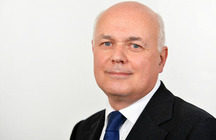
    Iain Duncan Smith – 2001 Speech on Care Homes

    The speech made by Iain Duncan Smith, the then Leader of the Opposition, on 12 December 2001.

    Thank you all for coming here today. Improving our public services is at the heart of my policy agenda, and improving the way in which we treat the sick and elderly is my personal priority.

    It is becoming clearer with every day that Labour’s mismanagement of the NHS has plunged both the care of the elderly, and care homes in particular, into crisis.

    It is clear to anyone with any common sense that a thriving care home sector is pivotal to the overall well-being of the health service. There are patients lying in hospital who are fit enough to be discharged, but remain in hospital solely because there is nowhere to discharge them to.

    And why is this the case? Because under Labour, a combination of ineptitude and mismanagement has seen the closure of almost 50,000 care home beds since 1997. At any one time, over 6,000 hospital beds are occupied by patients whose discharge has been delayed. The Department of Health state that 680,000 patients have their discharges delayed every year.

    That patients remain in hospital when they could – and should – be elsewhere means that they occupy, through no fault of their own, precious beds that would otherwise be given to patients requiring operations. No wonder the waiting lists remain stubbornly high: Not only is there a queue to get into hospital, but Labour have now brought us the queue to get out of the hospital.

    It speaks volumes about their approach to health more generally. They will never deliver necessary reform because they have a deep-rooted antipathy towards private providers.

    The Government seems unable to understand that the system of healthcare in this country needs reform.

    They talk about working with the private sector, but here is an area in which there is a longstanding relationship between the public and private sectors, and the Government is making a mess of it.

    Massive over-regulation, and a cavalier disregard for the basic economics of operating care homes, have seen care homes close at an alarming rate. Homes have faced financial ruin because of the extra costs imposed as a result of the Care Standards Act. Homes that cannot comply with the new regulations have had to close, and the number of available places will continue to diminish at an alarming rate. It is widely known that the costs of a place in a local authority home can be significantly higher than those in privately-run homes.

    No wonder we have a situation where in some health trusts, such as Brent and Harrow or North & Mid Hampshire, over 18% of their beds are blocked.

    Labour seem to have forgotten that ‘care’ is about treating people with the dignity to which they are naturally entitled, and not about quibbling over square inches and room sizes. The nature of a person’s care and treatment must be determined by their need, not by the administrative convenience of the Labour Party.

    Labour’s only solution is to spend more money. But they will do so without reforming the system: indeed they will make it worse through constant interference from the centre. We will all pay more, but get less.

    Health care in Britain, and long term care in particular, needs fresh thinking, and it is that fresh thinking that the Conservative Party is going to provide. The crisis in the care homes sector, and its implications for the care of the elderly generally, is one of our top priorities.

    Unlike Labour, we are not bound by dogma, nor will we handcuff ourselves to a status quo which becomes daily more indefensible. We are free to find solutions which address the real problems people face, not the fantasy view of the NHS which ministers seem to have. We need solutions which deliver better care, not more problems.

    I sincerely hope that by working with the experts gathered here today, we will be able to work together for the benefit of everyone who relies on the NHS and social services.

  • Iain Duncan Smith – 2002 Speech in Birmingham

    Iain Duncan Smith – 2002 Speech in Birmingham

    The speech made by Iain Duncan Smith, the then Leader of the Opposition, in Birmingham on 17 January 2002.

    Some people say that the world changed on September 11th. They say that we have entered a new era – that a period of peace and order has been shattered by a wholly new and unexpected threat.

    And they say that out of this, a different world must be born. A world in which everyday behaviour must change. A world which demands a seismic shift in the powers between Government and people. A world that requires the dissolution of old alliances and their replacement with new ones.

    They also say that it is a world that promises a new order. One in which the threat of terror can finally be subdued in favour of a permanent peace. In which alliances that have been forged to root out a specific enemy can be turned to a broader and permanent purpose.

    I do not see September 11th in those terms. I don’t believe that the world before September 11th was as benign as others, then or now, would have us believe. The end of the Cold War did not represent the triumph of reason and goodwill but a victory for a decades-long policy of credible and effective opposition to those who would destroy us. A victory for practicality, not pipe dreams.

    And as the communist threat ended, it was replaced by a myriad of other threats. That’s why, when fashionable opinion regarded a policy of strengthening our defences as being somehow unnecessary I was more determined of the need to defend against different threats. I have spoken often about the threat of rogue states and their connection with terrorism. I have also pointed out that their terror feeds off organised crime and, as a result, links right through to the drug dealers on our street corners and schools.

    And because I don’t believe that the period between the end of the Cold War and September 11th ushered in a new era of consensus, ‘the end of history’ as some have put it, I am concerned that there are some who say a new global settlement should be the principal goal of the Government.

    Conservatives take the world as it is, not as we would prefer it to be. Those on the Left are always prone to policies that rely on a view of the world as they would wish it to be. So-called ethical foreign policies, or public dreams of pivotal roles take us nowhere if they are built, not on a shrewd understanding of the world as it is, but on a refusal to contemplate a world that eludes attempts to control and order it.

    “Instead of aiming for an all-encompassing consensus built on a vision of a new world order, my instincts are always to build from the bottom up: to derive policy from the instincts and values of the people we represent, guided by our own values.

    To me the grandeur of the response to September 11th lies in the sum of instinctive reactions by a whole host of unrelated people and groups whose behaviour is impelled more by their values than by the deliberate enactment of an ambitious plan. The dying who sustained the lives of their loved ones with a final telephone call. The firefighters who instinctively plunged into the burning buildings to rescue others.

    The Mayor and the President who, in very different ways, found in themselves the ability to lead their people. The ties of history that caused Britain instantly and unswervingly to commit our help to our American friends in the fight against terrorism.

    Perhaps most of all the way sovereign nations came together for a singular, and very specific, purpose that has been conspicuous in its success.

    The steps that these thousands of individuals took were not grounded in some abstract theory, but in values and instincts expressed through actions.

    In Britain today the Government seems to be constantly finding ways to prevent people’s own instincts and values from guiding their behaviour. Whether it is in the public services, in companies or in local and national government, people’s actions are increasingly justified by, or even dictated by, policies with which they must comply. If there’s a single word that has gained currency over the last 30 years, and encapsulates much of what is going wrong, it is ‘compliance’.

    It is dangerous for at least two reasons. First, the more pervasive is the compliance mentality, the more we degrade the capacity of our employees and our neighbours to exercise personal influence and responsibility. We dumb down the individual.

    Second, it implies that the official view that replaces individual discretion will be wiser and more effective. We need more, not less discretion, as individuals, as teachers, as doctors, as social workers, as neighbours.

    My colleague Oliver Letwin, the Shadow Home Secretary, spoke last week about how we need to support and help families, schools, and communities in building the values that sustain a neighbourly society. An ethos of public service is one such value. Labour claim that the value of public service is incompatible with the private sector. But it is their own remorseless centralisation that is the gravest threat to the notion of public service. Our teachers, our nurses and our police officers will progressively lose their sense of vocation if all they are permitted to do is to follow detailed instructions from Whitehall. Labour are destroying, not building, the neighbourly society by not allowing people the freedom to express their values through their actions.

    At the heart of my politics is a belief that people’s values should be free to drive their behaviour. That applies to political parties as it does to individuals.

    I was recently asked in an interview whether there is a Conservative equivalent of Clause IV in the Labour Party’s constitution: an article of faith that we have to repeal to be seen as a modern party.

    The answer is that it is unimaginable that the Conservative Party should be faced with such a dilemma, because the idea of a Clause IV is inconceivable for us. Labour draw their policies from a blueprint for society. They have a top-down approach to policy which leaves them always susceptible to the glamour of grand schemes and global solutions.

    Blair may have removed Cause IV from Labour’s constitution, but he could not remove it from their hearts. He executed a coup de theâtre – milking the applause that were given to a symbolic clash of personalities, the repudiation the old and its replacement with the new.

    Characteristically, though, all of his efforts were focussed on changing the superficial expression, rather than the underlying instincts. Labour remain hostile by instinct to solutions that do not involve heavy state direction. It is no surprise that when Labour’s policies are tested by crisis they fall apart amid chaos and recriminations.

    Stephen Byers, once New Labour’s leading cheerleader for modernisation, now says that there is too much private sector in the Third Way.

    The Health Secretary, Alan Milburn said that he would ‘come down like a ton of bricks on anyone who has anything to do with the private sector’. He said, just six months ago, ‘thankfully we have one monopoly provider and that is the National Health Service and as long as there is a Labour government in power that will remain the case’. On Tuesday, in blind panic at the impossibility of delivering health improvements, he said that he wanted to see the end of the NHS as a ‘centrally run, monopoly provider of services’. When their rhetoric rails against their own instincts it is inevitable, that they should suffer the political equivalent of a nervous breakdown. They have no basis of principle for their policies, so they have nowhere to go, nowhere to turn. So they barricade themselves against reality with 5, 10 and even 20-year plans – each one more ludicrous than the last.

    John Prescott unveiled a 10-year plan for the railways in 1999. In 2000 we had a 10-year NHS National Plan. Last November the Chancellor announced a 20-year plan for the NHS. On Monday Stephen Byers rushed in another 10-year plan. Two year, two portfolios, four 10-year plans.

    Always a new plan – they never get shorter, and the Government never talks of being four years into a plan.

    They also have a cynical purpose. They take refuge in the abstract to distract people from what is all too real. They go to enormous lengths to prevent themselves from being judged.

    David Blunkett tries to turns the clock back to zero by blaming their failure on crime on his predecessor, Jack Straw. John Prescott said ‘judge us on transport after 5 years’. Five years come and Stephen Byers says it will take another 10. If anyone personifies Labour’s failure to hide behind plans rather than take responsibility it is Stephen Byers.

    This whole approach is alien to Conservatives. We have never believed in new world orders or domestic blueprints. We have always been the practical party, because we have never tried to cut ourselves loose from our principles, but instead have expressed them through our policies.

    Conservatives have been successful when we have articulated a clear view of the problems that Britain faces, and have found ways to solve them that rely on empowering people rather than pushing them around. ‘Trust the people’ has always been a powerful Conservative rallying cry. It has never let us down in the past, and it will not now. We have embarked on the most far-reaching renewal of our policies for a generation. It is our opportunity to refresh our sense of purpose, and to make connections way beyond our usual supporters.

    The first thing this requires is to be clear about our priorities. We can’t concentrate on everything at once, and nor should we. To govern is to choose, and as we prepare for government we will not flinch from making choices.

    We choose to concentrate on the issues that make most difference to people’s lives. So our efforts will be focussed on solving the crisis in our public services – the health service that makes people afraid to fall sick; schools that deprive millions of children of the opportunities that a first class education offers; a transport system that makes travelling in or between our cities an ordeal.

    And we will focus on the problems – and they include our public services – that are hardening the arteries of our economy turning it from one of the most flexible and dynamic in the Western world into one of the most overburdened, conformist and bureaucratic.

    We understand instinctively that the quality of our lives is influenced more by our families, our communities and our environment than by the economic forces that those on the Left think determine our well being. So we will sweep aside Labour’s ludicrous assertion that Britain’s streets are becoming safer than ever. We all know from experience that is not true, and we will look for the means to revive the neighbourliness that stops the conveyor belt of crime from ever taking hold. And we will address the concerns of a new generation for the condition of our environment. It is fertile territory for Conservative thinking. The best traditions of Conservatism are about our duties as stewards of an unending inheritance, rather than revolutionaries seeking to impose a new order.

    During the years ahead, people can count on the Conservatives always to have, at the forefront of our minds, the same concerns that they do.

    As we renew our policies we will not be content to listen only to the usual voices. I mean to expand the range of people and organisations that influence us.

    But the way we develop policy will be characterised by leadership and direction, and based firmly on Conservative values. Our values have stood the test of time. The problems may have changed, but the values that underpin our solutions are as relevant as ever.

    By their nature, Conservative values are not easy to capture in distilled form. Their true expression is through our policies and how we conduct ourselves. But as we renew our policies, and expose the failures of this government, these are the themes that will be consistently expressed.

    The first is that our policies will clearly help people to be more independent of the state. Labour is making Britain a nation of supplicants. Every time the Chancellor presents a budget, he draws more people into dependence on his largesse.

    Forty per cent of our fellow citizens will rely on means-tested benefits by 2003 – up from 25 per cent in 1997. When more and more people have to rely on the Government for their living we compromise their dignity and damage our economy and our democracy.

    We in Britain do not save enough – and societies saving as little as ours are heading for long-term welfare dependency.

    And we must go further. It’s not just a matter of increasing people’s independence, our policies must reduce the power of the state over people – and that is our second principle. Because I trust the people, I want people to have more freedom to shape their own lives.

    We have a Government of control freaks. For Labour, control is not a means to an end, but an end in itself.

    It was explicit in the old Clause IV, and is implicit in everything they do in Government. Their first instinct was to take the railways back into state control – without any idea of how this would help or even of what to do next. The chaos and misery that passengers are suffering is as nothing to them, compared with the self-satisfaction they feel from being in control.

    They bombard our teachers with orders and directives, and destroying their ability to act according to their instincts as professionals and as individuals. They attach so many strings to taxpayers’ money spent on health that hospitals have even less money to spend according to doctors’ priorities than before.

    And they take every opportunity to emasculate the institutions, like Parliament, that exist to hold them to account.

    Our policies will reduce compulsion by the state, and ensure that whenever the government exercises power it is effectively scrutinised, and that the rights of individuals are protected.

    As we reduce compulsion, so we increase the choices available to our citizens – and that is our third principle.

    Because Labour cannot bring themselves to trust people’s instincts, they are against choice. Among their first acts was to remove choice in our education system, by banning Grant Maintained schools – themselves established by parental choice – and scrapping the assisted places scheme.

    As a country, we have always been stubbornly varied. Our great cities still find their characters in the urban villages that make them up. Our counties are proud of how they differ from their neighbours. They embody a diversity that runs with the grain of Britain’s history and our character. But that diversity cannot be imposed. That is why the Government’s bogus regional agenda seeks to replace what is organic and historical, with something that is alien and unworkable. The only diversity that this Government will permit is one of its own design – a diversity that is not the outcome of choice, but its reverse – the attempted imposition of order.

    Choice does not equal insecurity. Indeed the opposite is true, which is why the fourth characteristic of our policies must be that they provide greater security for our fellow citizens.

    As we have grown more prosperous as a nation, we have lost some of the things that made us feel secure.

    It is a paradox that many of the very institutions that were meant to increase our sense of security have become some of the prime sources of insecurity in our lives. The NHS was conceived as a safeguard on which we could all rely. But for many – especially our most vulnerable citizens – the possibility of falling seriously ill and having to rely on the NHS is a nightmare. It adds to their worries, rather than reduces them.

    The Prime Minister said in the House of Commons last week that crime is falling. That is not the experience of millions of our fellow citizens, who feel less and less secure in our streets. Muggings are up by 40 per cent. Violent assaults are up by 20 per cent. And, as with our public services, it is the most vulnerable in our society who bear the brunt of the effect of crime.

    The only credible solution is decisive action to tackle at source the causes of these insecurities. Palliative measures offer only false comfort. In the late 1970s we recognised that the growing power of the trades unions was a source of increasing national insecurity – compromising our ability to earn a living. A decade of policies to mollify the threat of ever worsening industrial relations failed absolutely to resolve the insecurity that it bred. People predicted that the consequences of decisive action would be destabilising. They did the same when we reformed the British economy during the 1980s.

    But in both cases, the result of decisive action to address the causes, not mitigate the symptoms, was to restore a more fundamental security to our national life.

    Essential to the confidence that comes from competitiveness is our fifth principle – that our policies should remove obstacles to enterprise, both at home and abroad.

    Our businesses resent the fact that in more and more areas they must, in effect, obtain a licence to trade from the Government. It sometimes seems that what is not illegal is becoming compulsory.

    A government which says it sees the virtue of eliminating rules, taxes and regulations on international trade is oblivious of the fact that precisely these measures are taking over our own domestic economy. They have identical effects: impediments to trade whether in Britain or internationally impoverish us all and our policies will be characterised by removing them.

    The CBI itself puts the increased burden of business taxes at £5 billion a year. The Institute of Directors has put the added cost to business of regulations at a further £5 billion. And in the year 2000 alone 3,864 new regulations were introduced – the highest figure on record. No wonder our businesses have to struggle harder and harder to compete.

    The Government says it wants a new relationship with the private sector to pay for public service projects. But it will never work because they lack the basic instincts to avoid interference and control. Just look at the railways.

    Four things are needed when private capital is brought into public projects: clear information, on which customers and suppliers can make a choice; freedom for customers to choose; freedom for providers to manage their businesses; and sanctity of contracts.

    Labour lacks the most elementary appreciation of each of these. Take the health service, for example. Information about cost and performance is not available.

    Customers – GPs or patients are not free to choose their health provider. Private providers are not free to manage their businesses, but have to abide by NHS practices. Characteristically, the Government insists on total control.

    And if private capital providers can’t rely on the Government to keep to the terms of the deal – if the Government doesn’t hold to the sanctity of contracts – then there will be a huge risk premium on providing capital for public projects. After the Railtrack debacle what is the risk premium on dealing with this Government now?

    All of our policies will be informed by a vision of what our country is like at its best. They will be marked by more self-confidence in Britain than any of our opponents dare display.

    This Government has always been embarrassed by our traditions and our ways of doing things. They have tried to promote bogus makeovers for Britain as a nation – do you remember ‘Cool Britannia’? And when that failed, they have tried, as in their approach to Europe, to submerge the things that make us distinctive as a nation.

    Conservatives are confident about Britain’s future because we are comfortable with our past. Labour is neither.

    People don’t want grand schemes and elegant theories. What people want, in fact expect, from our democracy is something much more simple and yet far more difficult to achieve. They want us to give them the freedom to make life better, to help them when required and to get out of the way when we are not.

    So our policies will result in less politics in people’s lives, whereas the Government wants more. Policy renewal is inseparable from effective opposition. Our first duty is to expose the problems people in Britain face, especially where, as in so many areas, the Government attempts to disguise the scale of its failure by a culture of deceit.

    But the way that we oppose must also convey our own principles, and exemplify, rather than detract from, our own approach.

    Oliver Letwin’s analysis of crime is based on precisely the Conservative principles I have described of recognising the importance of allowing people’s values to govern their behaviour. He is showing that our approach is principled, intelligent and humane. The proposals that we announced this week to replace the House of Lords with a directly-elected Senate, standing above political patronage, shows that our principles can have striking expression. They underline the fact that we can recognise when the time has come for change, and we will embrace it in a way that reflects principle, not self-interest.

    In the months to come more flesh will be put on these bones of these principles for a distinctively Conservative approach to government. But within that skeleton, this backbone will be particularly important. For even before our far-reaching policy review has come up with its results, Labour will certainly try to discredit it, and us.

    Of course, that’s what politics is often about. And there’s nothing wrong with heated debates, or even the occasional polemic, as long as the issues are fully exposed as a result. But my distaste for New Labour’s political style is quite different.

    The Prime Minister used to say that the problem with Old Labour was that it confused means with ends. The problem with New Labour is that it its only purpose is to stay in power.

    This Government has impoverished politics. They have weakened all the institutions that could check or effectively scrutinise their actions – the Lords neutered, the Commons ignored, the media alternately cosseted and intimidated.

    The Prime Minister has appointed more peers more quickly than any holder of his office in history.

    Wasn’t it typical of New Labour that their plan for the House of Lords was to take the 80 per cent appointed House they created in 1999 and offer to turn it into an 80 per cent appointed House, with a further 20 per cent chosen by party bosses through closed lists?

    No wonder the sense of alienation with politics grows by the day.

    I am determined that the next Conservative Government will not just implement different policies that reflect our principles. Our whole approach to government will be fundamentally different. We will check the obsessive media manipulation, the suppression of debate, the erosion of constitutional checks and balances. We will stop burying bad news, adjusting targets and double counting public spending figures.

    We seek power for a purpose, we will pursue policy based on principle, and this will give our government clear direction.

    And we will conduct ourselves in opposition as we mean to conduct ourselves in government. Honest, principled politics is important. Because we trust people, we know the importance of persuading them to trust us.

  • Diane Abbott – 2022 Speech on Manston

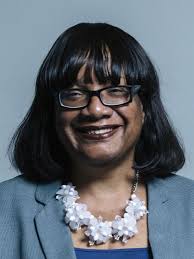
    Diane Abbott – 2022 Speech on Manston

    The speech made by Diane Abbott, the Labour MP for Hackney North and Stoke Newington, in the House of Commons on 28 November 2022.

    Ms Diane Abbott (Hackney North and Stoke Newington) (Lab)

    I am grateful to the Minister for coming before the House with his statement, but does he not agree that it should not have taken a death to make Ministers focus properly on issues relating to infectious diseases at Manston? It is not as if the possibilities relating to infectious disease have not been raised and written about. Does he not agree that it is quite wrong that it took a death for him to come before us and talk about new guidance: new guidance that nobody presenting with symptoms will be progressed on; new guidance about ensuring that asylum accommodation providers get the very latest public health advice; and new guidance about co-operating with the French about infectious disease in northern France? It took a death for the Minister to come before us with that new guidance.

    The Minister has also said that there is no risk to the wider population and the House is grateful to hear that. However, does he not accept that, whether these people are deemed to be legal or illegal, we have a basic responsibility for their health? It should not have taken Ministers so long to focus on the well-reported dangers of infectious disease.

    Robert Jenrick

    I respect the right hon. Lady’s point of view and experience, but it has not taken a death for the Home Office to focus on this issue. This individual’s death is deeply regrettable, but we have been working on, and alive to, this issue for many months—indeed, for years. The Home Office has had in place procedures to deal with covid since the start of the pandemic. The hotels I mentioned earlier, which we will use to transfer people with diphtheria symptoms, were the locations the Home Office used for those who tested positive for covid.

    The UKHSA has been publishing guidance on the treatment and support of asylum seekers and refugees for many months—it may even be years. The latest guidance on this issue was published by Dame Jenny Harries and her colleagues two weeks ago, prior to the sad death of this individual. I am afraid that the connection that the right hon. Lady seeks to draw is not correct. We do not take this issue lightly, and we will continue to follow it and to put in place whatever measures we need to.

  • PRESS RELEASE : Green Party reaction to government go ahead for Sizewell C nuclear power plant [November 2022]

    PRESS RELEASE : Green Party reaction to government go ahead for Sizewell C nuclear power plant [November 2022]

    The press release issued by the Green Party on 29 November 2022.

    Responding to the government’s decision to give the go ahead to the Sizewell C nuclear power plant in Suffolk [1], Green Party co-leader Adrian Ramsay said:

    “This is an ideological decision driven by a misguided energy policy. It is clear there are cleaner, quicker and much less expensive options to meet our electricity needs. Investment in renewable energy and insulation at scale are what is needed to tackle both the climate emergency and cost of living crisis with the urgency needed.

    “The design of Sizewell C will follow the much criticised Hinkley Point C scheme in Somerset which has been delayed by years and beset by technical difficulties and mushrooming costs. It is clear that large nuclear reactors are far too slow to help solve our climate crisis and way too expensive to address sky-high energy bills.”

    Notes

    1.  https://www.theguardian.com/business/2022/nov/29/sizewell-c-nuclear-plant-confirmed-edf-suffolk-jobs-uk

  • PRESS RELEASE : Greens call for winter rent freeze and ban on evictions [November 2022]

    PRESS RELEASE : Greens call for winter rent freeze and ban on evictions [November 2022]

    The press release issued by the Green Party on 24 November 2022.

    The Green Party of England and Wales is calling for the government to urgently bring forward its promised Renters Reform Bill in time to stave off a winter of evictions and homelessness.

    The call came as new figures showed so-called no fault evictions leaping 76 per cent [1}

    Carla Denyer, co-leader of the Green Party of England and Wales, said the Bill must include:

    “An immediate cap on rent increases until at least the end of March 2023, as well as a ban on no-fault evictions over the same period to prevent landlords evicting tenants in order to raise rents.”

    In Scotland, where the Scottish Greens are in government with the SNP, similar measures have already become law [2].

    Average rental prices outside London have hit a high of £1,162 a month, jumping 11% in the past year [3].

    The UK government produced a White Paper in June [4] and Housing Minister Andrew Stephenson told Parliament in October the legislation was still a “priority.” [5]

    Carla Denyer added:

    “Knowing that you have a secure home over winter is vital for both physical and mental health. Households already face soaring energy and food costs; the last thing they need, on top of everything else they have to contend with, is unaffordable rent rises and the fear of being evicted.

    “Rising private rents and increasing evictions have also been cited as major causes of a dramatic increase in homelessness in London and other cities. The number of people sleeping rough on the capital’s streets has jumped by a shocking 24% in the past year [6]

    “We are calling on the government to introduce an immediate freeze on rent rises and a ban on evictions by landlords who simply want to increase rents between tenancies. The Scottish government has introduced legislation to safeguard tenants this winter. We want to see the Housing Minister introduce similar measures in England, and for the Senedd to use its devolved powers to do so in Wales [6].”

    Notes

    [1] https://www.bbc.co.uk/news/uk-england-63719126

    [2] Cost of living: rent and eviction – gov.scot (www.gov.scot)

    [3] Average rent climbs to £1,162, according to Rightmove, up 11% in a year – as charities warn tenants are struggling to make ends meet (msn.com)

    [4] A fairer private rented sector

    [5] Housing Minister Andrew Stephenson

    [6] Number of people sleeping rough in London up 24% in a year | Homelessness | The Guardian

    [7] Rent freeze call by Plaid Cymru voted down by Labour – BBC News

  • PRESS RELEASE : UK Attorney General signs statement of international unity in securing justice for war crimes in Ukraine [November 2022]

    PRESS RELEASE : UK Attorney General signs statement of international unity in securing justice for war crimes in Ukraine [November 2022]

    The press release issued by the Attorney General on 29 November 2022.

    Justice Ministers from across G7 nations signed a pledge of unwavering solidarity to the war-torn country.

    The UK commitment to securing justice for the atrocities being committed in Ukraine was reaffirmed today as Justice Ministers from across G7 nations signed a pledge of unwavering solidarity to the war-torn country.

    The Attorney General, Victoria Prentis MP, led the UK justice response in Berlin as signatory to a renewed commitment to international co-operation.

    The Berlin Declaration seeks to strengthen cross-border responses to Russian war crimes at an international level to increase effectiveness and communication between investigative authorities.

    The Attorney General, Victoria Prentis MP, said:

    The conflict in Ukraine has had a devastating impact on the lives of innocent people. Like many UK families, we have invited a Ukrainian citizen into our home and heard first-hand how lives have been ruined and futures compromised by Russia’s illegal invasion.

    The UK is proud of the support it has given harnessing the breadth of our legal capabilities and expertise to seek justice, but the growing importance of G7 unity is clear if we are to see accountability for the atrocities being committed. Our individual efforts must be coordinated at an international level.

    Proposals in the declaration include the nomination of national contact points for coordination of the prosecution of international crimes to complement the work of existing well-established mechanisms, including Eurojust and the Genocide Network.

    The declaration also recognises the vital role of non-governmental organisations (NGOs) in supporting survivors at the scene of war crimes and helping to document offences and the accounts of local people. It commits to further improving networking among criminal prosecution authorities and NGOs to streamline information flow and, in some cases, improve standards in collecting evidence and avoiding the retraumatisation of witnesses.

    Deputy Prime Minister, Lord Chancellor and Justice Secretary Dominic Raab said:

    War criminals should know they cannot act with impunity and we are united with international partners to ensure those responsible are held to account.

    The UK has been at the forefront of the global response in assisting the International Criminal Court’s investigations, providing extra funding and expertise, and we will continue to work with likeminded countries until justice is served.

    The UK has already committed a strong package of support to aid justice in Ukraine, providing £1 million and offering specialist legal and police assistance to the International Criminal Court’s investigations.

  • Pope Francis – 2022 Comments on Russian Invasion of Ukraine

    Pope Francis – 2022 Comments on Russian Invasion of Ukraine

    The comments made by Pope Francis in an interview published in America Magazine on 28 November 2022.

    When I speak about Ukraine, I speak of a people who are martyred. If you have a martyred people, you have someone who martyrs them. When I speak about Ukraine, I speak about the cruelty because I have much information about the cruelty of the troops that come in. Generally, the cruelest are perhaps those who are of Russia but are not of the Russian tradition, such as the Chechens, the Buryati and so on. Certainly, the one who invades is the Russian state. This is very clear. Sometimes I try not to specify so as not to offend and rather condemn in general, although it is well known whom I am condemning. It is not necessary that I put a name and surname.