Blog

  • Kevin Foster – 2022 Speech on the Avian Influenza Outbreak

    Kevin Foster – 2022 Speech on the Avian Influenza Outbreak

    The speech made by Kevin Foster, the Conservative MP for Torbay, in the House of Commons on 30 November 2022.

    It is a pleasure to serve under your chairmanship, Sir George. I congratulate my right hon. Friend the Member for Maldon (Sir John Whittingdale) on securing this debate on an issue that affects many businesses and communities.

    Avian flu is not just about commercial poultry farms or agricultural interests; it has the potential to strike at the heart of the work being done to conserve some of the most endangered species on our planet. The Government must ensure that the approach taken, and the policy structure around it, is suitable for all situations in which avian flu may strike.

    Some Members may be aware that Paignton zoo, which is part of the Wild Planet Trust and located in the heart of my Torbay constituency, was recently the site of the first avian flu outbreak at a zoo in England. It is highly unlikely to be the last. Zoos are innately open places. Local wildlife and human visitors are able to access them, and wild birds can mingle with some of the zoo’s stock, especially those species that do not need to be kept in an aviary. It will be obvious to Members that, in breeding birds, zoos have a very different purpose from that of commercial poultry operations. That means that the response to avian flu at a zoo that is focused on conservation objectives needs to be very different from that at a farm that is focused on egg or meat production.

    It was late August when avian influenza arrived at Paignton zoo. At the onset of the outbreak, on the late August bank holiday Sunday, the zoo was ordered to close at no notice and with immediate effect. Thankfully, the outbreak was successfully contained and the zoo was permitted to reopen, with the birds under quarantine clearing through the surveillance regime, yet the zoo was closed to visitors for 10 days.

    The approach to culling that would normally be taken at a poultry farm would have had a devastating effect at the zoo. I pass on the gratitude of the team at the zoo for the Secretary of State’s intervention, which prevented the unnecessary culling of healthy birds that posed no risk of disease spread. However, the zoo derives much of its revenue from the peak tourism season, so the final week of the school holidays is one of its biggest trading periods. The revenue lost from the enforced closure and additional related costs came to just under £1 million. The loss of a week’s trade for a zoo is not a simple one-out-of-52 loss; a week lost in summer can be equivalent to losing five to six weeks at another time of the year.

    As I said, the normal approach to culling would have been devastating, and I am grateful that it was not applied, but the situation where a zoo is affected highlights a tension between the two fundamental strands of the current avian flu strategy—those relating to wild birds and to captive birds. The wild birds strategy is to monitor, because little can be done, while the captive birds approach is to stamp the flu out.

    There are inherent tensions in simultaneously applying two fundamentally different approaches to the same disease, which can lead to practical challenges and inconsistencies on the ground in the case of a zoo. A more nuanced approach that recognises the challenges for a range of stakeholders impacted by the disease would help to mitigate the tensions, especially at a zoo such as Paignton, where, inevitably, both wild and captive birds are present on the same site.

    The compensation scheme is similarly designed for the poultry industry, where the biggest impact for the business concerned is likely to be the value of the birds—their lost sale value. Despite the £1 million impact in lost sales and costs from the outbreak, Paignton zoo was offered £207—the value of the birds—as compensation. The £1 million loss will have a material impact on the charity and constrain investment plans focused on animal welfare and support for the zoo’s biodiversity protection programmes. Following the impact of the human pandemic, which heavily affected tourism, that is a bitter pill to swallow.

    It is always easy to outline the problems, but it is vital we also highlight how the situation can be solved. Following the outbreak, the Wild Planet Trust conducted an after-action review. In addition to internal learnings, the review identified two important issues that merit further attention: ensuring fairness in financial compensation for zoos, and making changes to outbreak response arrangements that will help to deliver better outcomes in such circumstances.

    First, the compensation scheme should be revised to ensure fairness and equitable loss-of-revenue treatment for all entities that are required to close as a result of a bird flu outbreak. That would recognise that compensation simply for the value of the bird does not reflect the overall impact on zoos. Secondly, decentralising testing capabilities and promoting delegated outbreak management decision making would allow more flexibility when dealing with unique locations. Thirdly, we should adapt the avian flu strategy to the new reality and ensure that lessons learned in a specific location such as a zoo are identified, and improvements are embedded, in parallel with continuing to conduct outbreak response operations.

    Sadly, we are likely to see the experience of Paignton zoo repeated at zoos elsewhere. I hope that the Minister will take the lessons learned from the outbreak at the zoo, which the trust and I will be happy to share with him directly, and embed them in our future approach to dealing with avian flu. We simply cannot allow vital conservation work at our zoos to be the next victim.
  • Tim Farron – 2022 Speech on the Avian Influenza Outbreak

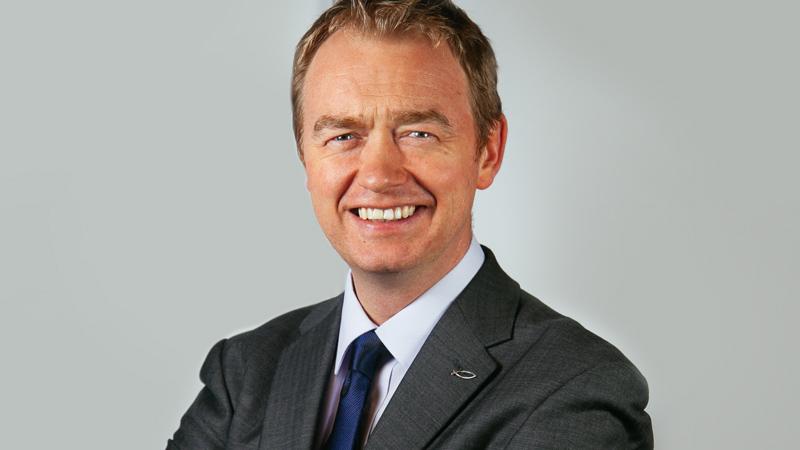
    Tim Farron – 2022 Speech on the Avian Influenza Outbreak

    The speech made by Tim Farron, the Liberal Democrat MP for Westmorland and Lonsdale, in the House of Commons on 30 November 2022.

    It is an honour to serve under your guidance, Sir George. I want to pay a genuine and heartfelt tribute to the right hon. Member for Maldon (Sir John Whittingdale), who has successfully secured this debate on a hugely important and significant issue for us all, particularly in communities such as mine.

    Animal diseases pose an enormous threat to UK farming, trade and rural communities. We are in the midst of the worst outbreak of avian influenza that we have ever seen. H5N1 has stayed with us all year round for the first time ever, and it is more virulent than previous strains. Yesterday, the Environment, Food and Rural Affairs Committee heard evidence on this; I am grateful for the work it does, and many of its members are here today. There have already been more than 140 confirmed avian influenza cases in poultry and captive birds in the UK—in previous years, getting to double figures was considered to be bad news. The fact that we are well into three figures is terrifying.

    As of 20 November, 1.6 million birds had been culled directly because of bird flu on farms. Half of the free range turkeys produced for Christmas in the UK have been culled, as we have heard. British farmers are under immense pressure, both emotional and financial. Poultry farmers often rely on the Christmas trade to pull their annual income out of the red and into the black, but that Christmas trade has been wiped out in an instant, and the small independent farmers, particularly in Westmorland, are bearing the brunt of it, fearing that their businesses will be wiped out completely.

    It is not just avian flu that we should worry about. The UK faces real threats from bovine tuberculosis, new diseases such as African swine fever and, of course, diseases affecting domestic pets, including rabies. These outbreaks do not just threaten our food security, trade and farming; they also threaten our natural environment. All birds are being culled, not just those sold for meat—the great skua population, for example, has declined by between 55% and 80% in the UK this year. The species has immediately been placed on the red list, and its population will not recover for decades. If the Government do not intervene effectively, the ecosystems and food chains we rely on—the very fabric of Britain’s countryside —will be changed forever.

    A report from the Public Accounts Committee this month found that the Animal and Plant Health Agency has been

    “left to deteriorate to an alarming extent.”

    It said that the Department for Environment, Food and Rural Affairs had “comprehensively failed” in its management of the agency’s Weybridge site. That is the site where the science happens—surveillance testing, disease tracking and so on.

    We have seen what the consequences of inaction and not learning from the past can be. The foot and mouth disease outbreak in 2001 devastated communities in Cumbria, not just financially and economically but socially and emotionally. A friend of mine who passed away just a month ago was among those 20-odd years ago who were involved in the large-scale culling in the Rusland valley. It broke him—and 20 years on, it continued to live with him.

    A year after foot and mouth happened, I remember the children of Kirkbie Kendal School doing a play they had written themselves about the emotional effect the outbreak had on them. One of them likened it to Nevil Shute’s “On the Beach”—waking every morning and thinking, had the disease got closer to them? Had it hit their valley yet? Those people are adults now, and the impact on them, on all of us and on our shared memory is huge. We must never think that animal disease outbreaks only affect animals; they have a huge impact on human beings as well.

    Cat Smith (Lancaster and Fleetwood) (Lab)

    I pay tribute to the hon. Gentleman for the contribution he is making, particularly on the impact of foot and mouth in Cumbria. I was one of those schoolchildren in Cumbria at that time. Given the closeness of Cumbria and north Lancashire to the Scottish border, does he share my concerns that, while we are housing birds in England we also need to see the devolved Governments following suit when it comes to biosecurity?

    Tim Farron

    I absolutely agree that this needs to be a whole-UK project. I thank my friend and neighbour for her contribution—not least for reminding me how much younger she is than me. If we had an outbreak of foot and mouth on the same scale today, it would have an economic impact of £12 billion. As I said, there are impacts that are not quantifiable but even more devastating.

    What do the Government need to do? I will briefly suggest three things. First, they should support our farmers through the current crisis. As the right hon. Member for Maldon rightly said, the compensation scheme is not fit for purpose, and the Government must bring it into the 21st century. The legislation that it was built on was introduced in 1981. It is practically prehistoric —like me. Farmers are able to receive compensation only for birds that are alive when the flock is seen by a vet.

    Helen Morgan (North Shropshire) (LD)

    As the representative of a constituency that has a large number of intensive poultry farms, and as someone who has kept a backyard flock and been the financial controller of a poultry farm, I have seen at first hand the difficulties of trying to house poultry. Most importantly, I have seen the difficulties that the farming industry faces when trying to insure against avian influenza. It used to be possible to obtain insurance, because the disease was an unlikely event—it was a peril that insurers would happily insure against—but now it is almost impossible. Does my hon. Friend agree that taking preventive action—

    Sir George Howarth (in the Chair)

    Order. If the hon. Lady wants to make a speech, she should indicate so. Interventions should be brief.

    Tim Farron

    I agree with my hon. Friend, and am grateful for her intervention. The uninsurability of flocks is a reminder of why the compensation scheme must work and be effective.

    In 1981, avian flu had a low pathogenicity. It did not kill the poultry, so farmers could get a vet to confirm an outbreak and command a cull before the livestock was dead. That is the crucial thing. Now, the disease has a high pathogenicity. Turkeys are dying within four days. The legislation was introduced to incentivise farmers to take their birds to be culled, and it is no longer serving that purpose. The Government must therefore intervene to correct the compensation scheme accordingly.

    Secondly, the Minister should take evidence-based decisions. Earlier, I mentioned that the Animal and Plant Health Agency is where the science happens. It is vital that our approach to the disease outbreaks is based on science. Scientists think that avian flu probably lasts for around six weeks after death, so why do farmers have to rest their sites for 12 months? Why are some being told to strip six inches of soil off their free-range paddocks? Farmers are ordered to move their bird flocks indoors, but it takes longer for avian influenza to spread among a flock if they are kept outside on the ranch.

    Thirdly, I ask that the Government ensure that they properly prepare for future outbreaks. I expect that the Minister might say that the Government are investing £2.8 billion to redevelop the Animal and Plant Health Agency. That is welcome, but the programme is not due to complete until 2036, and the Treasury has not yet agreed to fund it.

    I am grateful to the right hon. Member for Maldon for bringing forward the debate. It is a huge issue for farmers in my patch, for rural communities across the board and for the infrastructure of our natural environment across the UK. Action must happen now.

  • John Whittingdale – 2022 Speech on the Avian Influenza Outbreak

    John Whittingdale – 2022 Speech on the Avian Influenza Outbreak

    The speech made by Sir John Whittingdale, the Conservative MP for Maldon, in Westminster Hall, the House of Commons, on 30 November 2022.

    I beg to move,

    That this House has considered the avian influenza outbreak.

    It is a pleasure to serve under your chairmanship, Sir George, and I am grateful for the opportunity to debate avian influenza, which is an incredibly important issue. Avian influenza is not a new phenomenon—the industry and wild birds have been affected by it for a long time—but the current outbreak is by far the worst on record. Since the beginning of October, 136 cases of H5N1 have been identified, with millions of birds dying or being culled. The outbreak is affecting every part of the country, but particularly East Anglia. In my constituency of Maldon we have already had three cases in the past few weeks.

    The disease spreads rapidly, possibly because the mutated virus that is affecting the population has an increased ability to replicate, and is extending to infect a broader range of species. That issue is not specific to this country, but global. In America, a record outbreak has led to more than 49 million birds in 46 states either being culled or dying since the beginning of the year. Across Europe, the disease has been found in 37 countries, with about 48 million birds being culled. Every country across the globe is affected, including even penguins in South Africa.

    An epidemic on such a scale is a disaster for wildlife and agriculture. The Royal Society for the Protection of Birds reports that 65 species of wild bird have tested positive, with tens of thousands of birds dying every day. For a number of species, there is what the RSPB describes as a population impact, and guillemots, kittiwakes and Svalbard barnacle geese are all dying in such numbers that those species are being put at risk in this country.

    However, the disease is not only affecting wild birds; it is having a dramatic effect on the poultry industry—a major industry worth £2 billion to our economy. It employs more than 34,000 people and provides about half the meat consumed in Britain. The industry has already had to cope with serious challenges: the seasonal labour shortage, which came about immediately after we left the EU and remains a challenge, as the Minister is aware, and, following that, covid. Just as the industry was beginning to recover from those blows, along came avian influenza. It now faces an existential threat.

    We need a clear plan. The Government have rightly identified biosecurity as crucial in trying to stop the spread of the disease, and I welcome the move that has required mandatory housing of birds since the beginning of November, but the spread is extremely rapid, and a single wild bird can infect thousands in a short time. It is right that we have established protection zones around areas where the disease has been identified, and there are more measures that we can take, particularly around the collection and disposal of the carcases of wild birds—one infected wild bird can massively affect a flock in a short time. We probably need to improve oversight of those backyard businesses involving a small number of chickens that supply eggs for families or perhaps for neighbours. They are equally at risk and the disease is equally likely to spread from them. Those businesses need to be more visible to regulators.

    We have to accept that, although biosecurity is tremendously important, it will not stop the spread of this disease. The Government have instituted a policy of culling, which has already led to the death of thousands, if not millions, of birds. In the case of the very biggest producers, the entire flock in a shed will be culled if the disease is identified there, but at least they will have some remaining birds in other sheds, and of course compensation will help if there needs to be a cull.

    However, smaller producers can lose their entire flock overnight, and the compensation available is totally inadequate. Under the Animal Health Act 1981, compensation is payable following culling, but it was passed at a time when there was a relatively low pathogenic strain that did not kill all the birds in a very short time. That has now changed: birds die extremely rapidly, which means that smaller producers can lose almost their entire flock without being eligible for compensation.

    In my constituency, I have KellyBronze Turkeys—arguably the finest turkey producer in the country, as vouched for by Jamie Oliver, Nigella Lawson and so on. In one flock, it had 10,000 birds. It identified the disease on a Thursday evening, informed the Animal and Plant Health Agency, which said that it would send vets round, but by the time the vets arrived on Monday morning 9,850 of the 10,000 birds were dead. It was likely therefore to get compensation for the 150 remaining. That is the situation facing poultry farmers right across the country.

    The answer is that compensation needs to be payable from the moment of the identification of the disease or notification. The change that has taken place is welcome, but it will not make a great deal of difference: 48 hours post confirmation is simply not enough. We need compensation to be paid on the same basis as it is paid for four-legged species. I understand that that requires an amendment to the law, but it is absolutely essential if we are to preserve the poultry industry in this country.

    In the longer term, the answer is likely to be vaccination. At the moment, there is not an effective vaccination, but we need to work on that as rapidly as possible. We saw what could be done during the covid epidemic. We need to identify an effective vaccine, and we need to talk to our international partners to ensure that trade restrictions are lifted. This disease is affecting every country, and the answer is likely to be the same in every country. It is notable that the head of virology at the APHA, who previously was not in favour of vaccines, is now saying that we have to establish an effective vaccine rapidly.

    We are in the run-up to Christmas—a time when millions of families will want to eat turkey or goose. This year, we are already seeing dramatic shortages of turkeys, and geese are almost impossible to find. The situation next year is likely to be even more serious, because unless the Government give farmers some confidence, who will invest in a turkey flock for Christmas production when they could lose the entire thing due to an outbreak of disease and have no compensation payable?

    We have just emerged from the covid crisis; this is the equivalent of the covid crisis for birds. Biosecurity is important to stop its spread, but ultimately will not be successful. Vaccination is probably the key, and in the meantime the Government need to step in to support the businesses affected. Those things happened under covid. They now need to happen again if we are to have a viable poultry industry in this country.

  • George Freeman – 2022 Statement on the Government Response to the Criminal Legal Aid Independent Review Consultation

    George Freeman – 2022 Statement on the Government Response to the Criminal Legal Aid Independent Review Consultation

    The statement made by George Freeman, the Minister of State at the Department for Business, Energy and Industrial Strategy, in the House of Commons on 30 November 2022.

    Today I am publishing the Government’s full response to the criminal legal aid independent review (CLAIR).

    First, I would like to thank Lord Bellamy KC for his independent review of criminal legal aid and its recommendations. In March 2022, in response to Lord Bellamy’s independent review, we consulted on proposals that would mark the most significant reform to criminal legal aid in more than a decade, and would include an additional investment of around £135 million per year.

    We set out our immediate fee reforms in the interim response which was published on 20 July 2022. In this interim response, we committed to increase most fees by 15% and this came into force on 30 September 2022. We also extended the scope of payment for pre-charge engagement work to cover work done ahead of an agreement, or where an agreement is not reached, in appropriate cases, in line with the Attorney General’s disclosure guidelines.

    Following further discussions with stakeholders, we were also able to lay a statutory instrument in October 2022 to apply the 15% increase to cases that already had a representation order granted on or after 17 September 2020 but had not yet had a main hearing—with further reforms, including to remuneration for section 28 cases, to come.

    In this full consultation response, published today, we set out our plans for longer term systemic change. The full consultation covers the 203 responses received to 106 consultation questions. We have been working hard to analyse the responses of all stakeholders to ensure our decisions are rooted in evidence. We are committing to an increased investment of £138 million per year in total. This means that an extra £85 million for solicitors and £43 million for the Bar in legal aid payments, as well as an additional £11 million on expert fees, will eventually be spent every year to ensure long-term sustainability. Included in the full consultation response are details of the newly established Criminal Legal Aid Advisory Board (CLAAB), which brings together criminal justice system partners to discuss the operation of the criminal legal aid system and make recommendations to the Lord Chancellor. The board met for the first time at the end of October 2022 and will continue to meet quarterly.

    We have listened to consultation respondents and we propose reallocating money originally set aside to expand the Public Defender Service, to introduce training grants and for further reform of the litigators’ graduated fee scheme (LGFS). Instead, we are proposing structural reforms to police station fees and intend to consult further on a standard police station fee model, allocating £16 million to harmonising the fee scheme. This means that, when considered with the funding uplift that came into effect on 30 September, funding for the vital work undertaken by solicitors in the police station will increase by 30%. We are also continuing to look at how we can improve the uptake of legal advice in custody, in particular for children.

    We do not consider that structural reform of the magistrates’ court fee scheme beyond the 15% fee increase already implemented is necessary, and this is supported by consultation responses. However, on top of this uplift, we will allocate an additional £5 million towards youth court reform from the 2024-25 financial year, which is expected to particularly benefit both solicitors and some junior barristers, as well as children.

    My Department will model and consult on a revised LGFS scheme based on current data with a view to rely less heavily on pages of prosecution evidence (PPE) and instead focus more on fixed basic fees for each offence type.

    As we set out in October 2022, over the remainder of this spending review period, an additional £3 million of funding will be made available for case preparation like written work and special preparation, as well as a further £4 million for defence barristers involved in pre-recorded cross-examinations, which are used to reduce the trauma of a trial for vulnerable victims and witnesses, by early 2023.

    Our full consultation response also covers very high cost cases (VHCCs) and interim fixed fee offers (IFFOs) as well as fees for prison law and Criminal Cases Review Commission (CCRC) work. Further proposals will be developed after consultation on how to revise the IFFO fee calculator.

    Taken together, the reforms we have announced in the Government’s interim and full consultation responses will enable us to support a sustainable, diverse and stable criminal justice system in the long term. They will ensure that legal professionals are supported and remunerated fairly, in a way that reflects the development and changes that have occurred in our justice system since the initial conception of the fee schemes. Most importantly, they will ultimately benefit victims and everyone relying on the criminal justice system.

    Continuing to engage the criminal defence sector, including the Bar Council and Law Society, remains important as we develop our final policies. I look forward to continuing our constructive work with criminal legal aid practitioners on criminal justice issues.

  • Kemi Badenoch – 2022 Statement on the UK-Ukraine Digital Trade Agreement in Principle

    Kemi Badenoch – 2022 Statement on the UK-Ukraine Digital Trade Agreement in Principle

    The statement made by Kemi Badenoch, the Secretary of State for International Trade, in the House of Commons on 30 November 2022.

    Earlier this year, the Government launched negotiations on a digital trade agreement as part of our commitment to the people of Ukraine. I am pleased to report that we have now reached agreement in principle on a deal that supports Ukraine’s economy and the country’s reconstruction and further cements the UK’s position as a global leader in digital trade.

    The UK is steadfast in our support of the people of Ukraine in their brave struggle against Putin’s cruel and brutal war. We will continue to do everything in our power to support Ukraine’s fight and help ensure the long-term security and prosperity of Ukraine, as a free and sovereign nation. The UK-Ukraine digital trade agreement is one way we are achieving this.

    Greater digitalisation of the economy is a key priority for our Ukrainian partners. They rightly recognise the UK as a global leader in digital trade, which is why they are striking their first ever digital trade agreement with us. This agreement will boost productivity, jobs, and growth and allow us to help Ukraine deliver on their digital ambitions.

    The deal emulates the UK-led agreement on the G7 digital trade principles under our presidency last year, namely:

    Ensure open digital markets, including through crucial commitments such as a ban on imposing customs duties on electronic transmissions.

    Support cross-border data flows, including financial data, and prohibiting the unfair imposed localisation of data as well as committing to high standards of personal data protection.

    Champion digital trading systems to cut red tape and make trade cheaper, faster, and more secure for businesses.

    Uphold consumer benefits and business safeguards in digital trade. This includes important matters such as cyber-security, the protection of source code and online consumer protection.

    Our digital trade agreement with Ukraine will expand on the current UK-Ukraine free trade agreement by modernising our bilateral trade in the digital era and deepening our economic ties with Ukraine. The UK’s services exports to Ukraine are increasingly digitised, with UK exports of digitally-delivered services and goods in trade amounting to £132 million in 2020—73% of all UK services exports to Ukraine. This deal will enable UK and Ukrainian businesses to trade in each other’s markets more easily, and help Ukrainian businesses recover from the impact of this cruel war.

    Modern global trade is now digital. The UK is a forward-thinking trading partner in the modern global economy. This agreement sends a strong message to the people of Ukraine: we stand with you—now and throughout your economic reconstruction.

    Following the agreement in principle, the legal text will now be finalised and prepared for signature. Signature of the agreement will take place at a future date, after which the agreement will also be presented to Parliament for scrutiny in the usual way.

  • Paul Scully – 2022 Statement on Government Amendments to the Online Safety Bill

    Paul Scully – 2022 Statement on Government Amendments to the Online Safety Bill

    The statement made by Paul Scully, the Parliamentary Under-Secretary of State for Digital, Culture, Media and Sport, in the House of Commons on 30 November 2022.

    The Online Safety Bill is a vital piece of legislation, and this Government are committed to ensuring that it does more to protect children and ensure that any provisions for adults consider the importance of free speech. On 29 November, the Secretary of State for Digital, Culture, Media and Sport, my right hon. Friend the Member for Chippenham (Michelle Donelan), issued a written ministerial statement (WMS) setting out a number of policy changes to achieve this aim.

    The approach we are taking has three main aims. We are strengthening the protections for children in the Bill, ensuring that adults’ right to legal free speech is protected, and also creating a genuine system of transparency, accountability and control to give the British public more choice and power over their own accounts and experience. The Secretary of State’s WMS yesterday set out these changes in detail, alongside additional changes we are seeking to make.

    Given the Bill’s stage of passage, it is not possible to make the majority of these changes at Report stage, as the amendments relate to clauses that were debated on the first day of Report. Therefore, as mentioned in the Secretary of State’s WMS of 29 November, the Government intend to return a limited number of clauses to a Public Bill Committee. This process would allow the proposed changes to go through robust and thorough scrutiny in the Commons, and would provide for line-by-line scrutiny of the amendments being made. The recommitted clauses would then come back to the whole House for debate at a third day of Report stage. A vote on this recommitment motion will take place immediately after Report stage on 5 December.

    As amendments for consideration at Committee cannot be formally tabled before that vote has passed, I am therefore setting out alongside this statement indicative drafting to demonstrate the amendments we will be tabling should a Committee stage take place, so that parliamentary colleagues can consider them in detail and understand the Government’s intentions with the Bill. These amendments are substantively final and the policies that they reflect will not change; the draft amendment paper, attached as annex A, includes explanatory statements of each amendment. However, small tweaks to the drafting may be required before the amendments are formally tabled, to ensure that they are as clear and effective as possible. Amendments in the paper are based on the most recent Bill print, which follows amendments at the Bill’s previous Public Bill Committee stage.

    I am acutely aware of, and fully agree with, Parliament’s desire to see this legislation enacted. I will therefore be seeking to keep the recommittal process as short as possible within the bounds of allowing proper consideration of the changes, and anticipate that should the recommittal process proceed, the Bill will be passed to the House of Lords for consideration in January. I intend to work closely with Parliament to ensure that we are able to get this vital piece of legislation on to the statute book in this parliamentary Session.

    The attachment can be viewed online at: http://www.parliament.uk/business/publications/written-questions-answers-statements/written-statement/Commons/2022-11-30/HCWS403/.

  • Graham Stuart – 2022 Statement on the Energy Price Guarantee

    Graham Stuart – 2022 Statement on the Energy Price Guarantee

    The statement made by Graham Stuart, the Minister for Climate, in the House of Commons on 30 November 2022.

    I hereby give notice of the Department for Business, Energy and Industrial Strategy’s intention to seek an advance from the Contingencies Fund totalling £3,531,500,000 to enable initial expenditure on the Government’s energy price guarantee domestic scheme to be spent ahead of the passage of the Supply and Appropriation Act.

    The funding is urgently required for HM Government to provide domestic support for household energy bills.

    Parliamentary approval for additional resources of £3,531,500,000 for this new expenditure will be sought in a supplementary estimate for the Department for Business, Energy and Industrial Strategy. Pending that approval, urgent expenditure estimated at £3,531,500,000 will be met by repayable cash advances from the Contingencies Fund.

    The cash advances will be repaid upon receiving Royal Assent to the related Supply and Appropriation Bill.

    The amount requested provides for initial scheme expenditure only, in anticipation of Parliament voting for the resource required for this financial year through an out-of-turn estimate. Due to urgency, the Contingencies Fund advance provides the immediate cash requirement in the period between scheme start and Parliamentary approval.

    Further information can be found in the “Central Government Supply Estimates 2022-23, Out-of-Turn Supplementary Estimates, October 2022” available at www.gov.uk.

  • PRESS RELEASE : Rishi Sunak call with Prime Minister Edi Rama of Albania [December 2022]

    PRESS RELEASE : Rishi Sunak call with Prime Minister Edi Rama of Albania [December 2022]

    The press release issued by 10 Downing Street on 1 December 2022.

    The Prime Minister spoke to Albanian Prime Minister Edi Rama this afternoon.

    The leaders welcomed the longstanding close partnership between the UK and Albania and committed to strengthening collaboration on trade, investment and defence, including cyber security.

    The Prime Minister acknowledged the positive contribution of the Albanian community to life in the UK, but both leaders agreed that more needed to be done to address illegal migration and tackle organised crime together.

    They discussed plans to step up cooperation to address shared challenges, including closing loopholes that are preventing the rapid return of failed asylum seekers.

    The Prime Minister and Prime Minister Rama looked forward to working together to deal with those issues and deepen the broader UK-Albania relationship.

  • PRESS RELEASE : Paedophile Paul Cartwright duped by police sentenced to immediate imprisonment after referral to the Court of Appeal [December 2022]

    PRESS RELEASE : Paedophile Paul Cartwright duped by police sentenced to immediate imprisonment after referral to the Court of Appeal [December 2022]

    The press release issued by the Attorney General on 1 December 2022.

    A man who planned to sexually abuse a child has been sentenced to an immediate prison term after the case was referred to the Court of Appeal for being unduly lenient.

    Paul Cartwright, 56, believed he had been messaging the child’s aunt ‘Liv’ over a four-week period in which he persistently and graphically discussed sexual abuse of 11-year-old ‘Demi’.  He arranged to meet ‘Liv’ with a view to carrying out the abuse but was instead met by an undercover police officer.

    On 15 September 2022, he was sentenced to a 24-month jail sentence suspended for 2 years, ordered to carry out 200 hours unpaid work, attend 35 rehabilitation days and abstain from alcohol for 3 months. Cartwright was also ordered to register as a sex offender and be subject to the terms of a Sexual Harm Prevention Order for 10 years.

    Following the sentencing at St Alban’s Crown Court, it was referred to the Court of Appeal under the Unduly Lenient Sentence scheme for being too low.

    On 1 December 2022, the Court found Cartwright’s original sentence to be unduly lenient, and he was sentenced to an immediate prison term of 2 years and 6 months.

    Speaking after the hearing, Solicitor General Michael Tomlinson MP said:

    Thanks to police intervention no harm was caused to a child, but this tougher sentence is a better reflection of Cartwright’s clear intent to sexually abuse a child which will not be tolerated.

  • PRESS RELEASE : OSCE Ministerial Council Plenary 2022 – UK statement by the Foreign Secretary [December 2022]

    PRESS RELEASE : OSCE Ministerial Council Plenary 2022 – UK statement by the Foreign Secretary [December 2022]

    The press release issued by the Foreign Office on 1 December 2022.

    UK Foreign Secretary James Cleverley says the disaster in Ukraine will only end when Russia halts its barbaric war and withdraws fully and unconditionally.

    Thank you, Foreign Minister Rau.

    The tragic events of this year have shown the enduring value of the OSCE as a forum for dialogue, transparency, and confidence-building. Everything the OSCE does is based on the principles of sovereignty, territorial integrity and the non-use of force. These are the foundation stones of peace in our continent.

    Last year in Stockholm, the UK and many other countries warned Russia that any attack on Ukraine would be a ‘strategic mistake’. And yet, on 24 February, Russia – with the support of Belarus – invaded Ukraine.

    Our Ukrainian friends fought back with courage and tenacity, defeating Russian forces at the gates of Kyiv, repelling them from Kharkiv, and now expelling the aggressor from Kherson. Is there anyone anywhere – even in the abodes of the guilty – who would still doubt that Russia’s aggression was a strategic mistake as well as a crime?

    The reports of the Moscow Mechanism have detailed the atrocities of Russia’s armed forces in Ukraine, including torture, executing civilians, unlawful detention and enforced disappearances, and countless other breaches of international humanitarian law.

    No wonder that Russia tried to conceal these outrages, including by blocking the mandate renewal of the OSCE’s Border Observer Mission and the Special Monitoring Mission, by frustrating the work of OSCE human rights institutions, and stopping civil society meetings with all 57 states. The UK supports the continued OSCE presence in Ukraine and welcomes the efforts to ensure this continues. We commend the work of OSCE staff throughout the whole OSCE region who have been working in challenging circumstances this past year.

    This disaster will only end when Russia halts its barbaric war and withdraws its forces fully and unconditionally from the territory of Ukraine. Until that day comes, the UK will stand with Ukraine and provide humanitarian, economic, diplomatic and military support until our friends prevail – as they inevitably will – and their brave country is free once more.