Blog

  • PRESS RELEASE : Facilitating civil society access to enrich the work of the UN [December 2022]

    PRESS RELEASE : Facilitating civil society access to enrich the work of the UN [December 2022]

    The press release issued by the Foreign Office on 7 December 2022.

    Statement by Rebecca Russo, UK Senior Policy Advisor, at the ECOSOC meeting on non-governmental organizations.

    Thank you Madam President,

    The UK welcomes the decision tabled by the United States to provide accreditation to these nine additional NGOs. These are legitimate NGOs that have faced repeated arbitrary deferrals for politicised reasoning for years, one as long as 14 years! This is despite adequately answering every, often repetitive question. Such endless deferrals demonstrate that some Committee members continue to abuse its working methods – yet another example of reprisals against NGOs seeking to work with the UN. We are therefore grateful that these NGOs have been brought forward for decision.

    We were disappointed by the extensive misinformation that was spread ahead of today’s accreditation vote. ECOSOC is the parent body of the NGO Committee and therefore governs the Committee’s working methods. According to the rules and procedures, the Committee makes recommendations to ECOSOC for their consideration. Any suggestion that this decision bypasses or supersedes the NGO Committee is false. Tabling a decision in this way is a legitimate course of action with established precedent. The UK was therefore happy to cosponsor.

    We would have preferred that such action not be required, that we could have worked fairly through the Committee. But the actions of a minority of member states have made it impossible for the Committee to work effectively, time and again.

    Civil society voices are essential for the work we do at the UN and we will not tolerate attempts to shut them out.

    We therefore encourage member states to vote in support of this decision.

  • PRESS RELEASE : Defence Secretary joins AUKUS partners in landmark first meeting [December 2022]

    PRESS RELEASE : Defence Secretary joins AUKUS partners in landmark first meeting [December 2022]

    The press release issued by the Ministry of Defence on 7 December 2022.

    UK Defence leaders have visited Washington to hold talks with US and Australian partners.

    Defence Secretary Ben Wallace met with US Secretary of Defense Lloyd Austin and Deputy Prime Minister and Defence Minister of Australia Richard Marles today for the first meeting of the AUKUS defence ministers.

    AUKUS is a trilateral security partnership announced in September 2021, comprising Australia, the United Kingdom, and the United States.

    Meeting at the Pentagon in Washington D.C., all three nations reiterated their shared commitment to the partnership and reviewed progress on identifying a conventionally armed, nuclear‑powered submarine for the Royal Australian Navy.

    They also agreed plans for joint military exercises in 2023 and 2024 which will further enhance partners’ abilities to operate together.

    UK Secretary of State for Defence Ben Wallace said:

    This first trilateral meeting is a landmark moment in the AUKUS partnership.

    AUKUS reflects the unique level of trust and cooperation the UK shares with its US and Australian partners, and I look forward to enhancing our technologies and capabilities together.

    Discussions also covered the development of advanced capabilities including hypersonic weapons and undersea intelligence, surveillance and reconnaissance (ISR) capabilities.

    Deputy Prime Minister the Hon. Richard Marles of Australia said:

    AUKUS is a partnership built on trust, commitment and determination in the service of a secure and stable Indo-Pacific.

    Together we hope to be able to progress developments in advanced capabilities and discuss the optimal pathway for Australia to acquire nuclear-powered submarines.

    US Secretary of Defense Lloyd Austin said:

    We announced this historic endeavor in September 2021, and the need for AUKUS is even clearer today.

    More than ever, our three countries share a similar outlook on the key challenges and opportunities confronting our world.

    The Defence Secretary and his counterparts also committed to continued transparency with international partners on AUKUS, emphasising that the partnership will complement existing security partnerships in the Indo-Pacific such as the Association of Southeast Asia Nations (ASEAN) and engage closely with them.

    Joint Statement was issued following the meeting outlining AUKUS’ progress so far, as well as future commitments.

    Defence Secretary Ben Wallace also conducted bilateral talks with his US and Australian counterparts.

    Speaking with US Secretary of Defense Lloyd Austin, the Defence Secretary welcomed the publication of the new US National Defense Strategy which provides a narrative on Russia and China which strongly aligns with the UK’s own Integrated Review.

    The Defence Secretary thanked Deputy Prime Minister and Defence Minister of Australia Richard Marles for the decision to deploy Australian Defence Force personnel to the UK to support the UK-led training programme for the Armed Forces of Ukraine, which will commence in January 2023. The pair also discussed opportunities for even greater defence collaboration between the UK and Australia, in addition to the AUKUS partnership.

    The Chief of Defence Staff, Admiral Sir Tony Radakin, and the Ministry of Defence’ Permanent Secretary David Williams were also in Washington for the AUKUS trilateral meeting. Both had separate meetings with their counterparts to discuss US-UK nuclear cooperation, support to Ukraine, and progress on the AUKUS partnership.

  • PRESS RELEASE : Mortgage lenders’ commitments to borrowers [December 2022]

    PRESS RELEASE : Mortgage lenders’ commitments to borrowers [December 2022]

    The press release issued by the Treasury on 7 December 2022.

    Rising costs and interest rates across the economy are a cause of concern for consumers in many areas of their lives, but the government understands that mortgage borrowers may be particularly worried about increases to their monthly mortgage payment, which is likely to be their largest monthly outgoing payment.

    Today, 7th December, the Chancellor met with leaders of the UK’s major mortgage lenders, the Chair of the Financial Conduct Authority (FCA), and Martin Lewis of Money Saving Expert. They discussed how lenders provide support for those who encounter problems paying their mortgage.

    At the meeting, lenders committed to help all their customers by:

    • enabling customers who are up to date with payments to switch to a new competitive, mortgage deal without another affordability test (see further information 1)
    • providing well-timed information to help customers plan ahead should their current rate be due to end
    • offering tailored support to those who start to struggle with payments which will vary by lender, but may include extending the term of the mortgage to make monthly payments lower, a short term reduction in monthly payments or accepting interest-only payments for a period where appropriate (see further information 2)
    • ensuring highly trained and experienced staff are on hand to help where needed

    The government confirmed:

    • action to make Support for Mortgage Interest easier to access; if you are on Universal Credit you may be able to receive help with your mortgage interest payments after three months
    • record levels of funding for the Money and Pensions Service to provide debt advice in England

    The FCA announced:

    • a consultation on draft guidance clarifying how lenders can support borrowers impacted by the rising cost of living
    • information for borrowers on the options and support available if they are struggling with payment

    Sound money and a stable economy are the best ways to deliver lower mortgage rates, more jobs and long-term growth. Economic stability relies on fiscal sustainability and the Autumn Statement delivered on 17th November puts the public finances onto a sustainable footing, with debt falling.

    Mortgage lenders, the FCA and the government will continue working closely together to ensure that the mortgage market works well for all homeowners, in particular those facing financial difficulty. Discussions will continue to take place with lenders on what more they are able to do to inform and support their customers going forward. However, if you are worried about making your mortgage repayments, it is important to speak to your lender as soon as possible.

    Martin Lewis, founder of MoneySavingExpert.com, said:

    “The major concern for people’s mortgages – and the knock-on impact of mortgage increases on rents – is the situation in the spring, when we expect interest rates to be higher, energy prices to be rising, and other cost of living impacts.

    “So the most important thing is that now the conversations have started about what flexibility and forbearance measures can be put in place to help those struggling. The commitments today set a good direction, and after helpful conversations I’m hopeful that further progress will be made. For those worried about making mortgage repayments, the sooner you communicate with your lender the better.”

    Debbie Crosbie, CEO of Nationwide Building Society, said:

    “We are a mutual and helping members buy and stay in their home is central to what we do. We’ve reduced rates for those reaching the end of their deals so they can access a fixed rate below 5%, regardless of LTV or tenure. For additional support, our options include term extensions and forbearance tailored to individual circumstances. We’ve also given an additional £1 million to debt charities and partners to support people in financial hardship.”

    David Duffy, CEO of Virgin Money, said:

    “We know that many of our customers will have to make difficult decisions in the current economic environment, and we are being proactive in offering our support to those in need. Today’s commitments represent an important step in ensuring that consumers are well supported in the coming period.”

    Matt Hammerstein, CEO of Barclays UK, said:

    “We are committed to helping every borrower manage their repayments while adjusting to the current environment. The announcements made by the Government and mortgage lenders today to ensure support is available for those who may or do encounter challenges making mortgage payments, both now and in the future, are a critical part of that.

    “At Barclays, we always work with our customers to find any feasible way to keep them in their home, which is why we have a dedicated team who are trained to offer dedicated and tailored support to each individual borrower, using a wide range of support options. We also have a variety of tools and information available to help customers directly manage their finances and stay in control, as we know some prefer to do that on their own, including information on what steps to take if they are struggling. We also know some customers may be more comfortable speaking to an independent third party, so we also help customers be in touch with our debt advice partners, including Citizens Advice, StepChange and the National Debtline.”

    Mike Regnier, CEO of Santander UK, said:

    “We welcome HM Treasury’s involvement to support mortgage borrowers through the challenges posed by the increase in cost of living and are keen to continue to work collaboratively with the Government, supervisors, and the wider industry on this issue.

    “We remain fully committed to supporting customers who may face additional pressures on their finances over the months ahead.”

    Alison Rose, CEO of NatWest Group, said

    “Through these incredibly difficult times it is our priority to support people, families and businesses throughout the country and help navigate them through this economic uncertainty. We encourage anyone who is experiencing financial difficulty or is just worried about the future to get in touch and talk to us. We have highly trained colleagues who are there to listen, understand and work with them to find a way forward.

    “Support for our customers will be tailored to their individual needs, and could include such things as forbearance, breathing space, repayment plans, or if it’s right and affordable for the customer, extending a mortgage term to spread payments or a temporary switch to an interest only mortgage. We have proactively contacted customers 8 million times so far this year to help them to get more control over their finances, and we will continue to play an active role in supporting customers and communities across the country.”

    Jasjyot Singh OBE, CEO of Consumer Lending, Lloyds Banking Group, said:

    “We’re committed to making homeowners feel supported in the coming months. We want to talk to anyone who feel like they might be facing difficulty so that we can find appropriate, tailored solutions. The earlier we talk to someone who might be struggling, the more tools we have to help. We will continue to work closely with the Government and the FCA to ensure the best support for our mortgage customers.”

    Ian Stuart, CEO of HSBC UK, said:

    “HSBC UK has a programme in place for proactively reviewing where hardship might be on the horizon, and helping prevent customers from falling into financial difficulty. We also work closely with customers already experiencing financial difficulty to understand their individual circumstances and identify the right solution for them.

    “For mortgage customers experiencing financial difficulty we stand ready to help and have a number of options available that are tailored to individual circumstances. We would strongly encourage people not to wait until they are in financial difficulty before seeking help. The earlier they can engage with their lender the better.”

    Sheldon Mills, Executive Director of Consumers and Competition at the FCA, said:

    “Most borrowers are able to keep up with their mortgage payments and should continue to do so. But if you’re struggling to pay your mortgage, or are worried you might, you don’t need to struggle alone. Your lender has a range of tools available to help, so you should contact them as soon as possible.”

    Further information

    1 – Applies to 97% of the mortgage market, where customers are up to date with payments and not seeking to borrow more or change their repayment type or term.

    2 – For some customer solutions there may be an impact on the borrower’s credit rating.

  • PRESS RELEASE : Urging all Sudanese parties to unite behind a civilian-led government [December 2022]

    PRESS RELEASE : Urging all Sudanese parties to unite behind a civilian-led government [December 2022]

    The press release issued by the Foreign Office on 7 December 2022.

    Statement by Ambassador James Kariuki at the Security Council briefing on Sudan.

    Thank you President. And thank you also to SRSG Perthes for his briefing today and for the continued herculean efforts of UNITAMS. I also welcome the presence of the Permanent Representative of Sudan in our meeting

    President, first, I would like to welcome the signing of the political framework agreement as an important step toward a return to a civilian-led transitional government in Sudan.

    The efforts by all parties involved to agree on genuinely civilian-led transitional governance arrangements are commendable.

    But, there is much more to be done. We now urge all Sudanese parties to urgently unite behind a final agreement to form a civilian-led government.

    The United Kingdom condemns the killing of two more protestors in the reporting period and calls for the security forces to exercise maximum restraint and to respect the right to peaceful protest.

    Second, we should be clear that the consequences of delay in reaching a final agreement would be severe.

    Approximately one third of Sudan’s population is projected to be in need of humanitarian assistance in 2023. A concerted effort to finalise negotiations is essential to address Sudan’s urgent humanitarian and economic challenges.

    A civilian-led transitional government can put the country on the road to recovery and allow for the full resumption of international support. The United Kingdom is working with partners to coordinate significant economic support to a civilian-led transitional government once it is formed.

    Third, as SRSG Perthes told us, the security situation across Sudan also remains fragile. We reiterate our deep concern about the significant violence in Blue Nile State and West Kordofan.

    We urge the Sudanese authorities to implement the security arrangements of the Juba Peace Agreement, engage with the impacted communities to restore peace, and fulfil their responsibility to protect civilians.

    To conclude, President, the United Kingdom commends the compromises made by all parties to agree the initial political framework.

    We call for an inclusive dialogue on the outstanding issues to commence without delay, and support a strong role for UNITAMS, along with the AU and IGAD, in facilitating these Sudanese-led negotiations.

    The United Kingdom is committed to supporting Sudan’s journey to democracy, and the realisation of the Sudanese people’s calls for freedom, peace and justice.

    And we hope that the Council will be able to give collective public expression to the latest developments in a Press Statement shortly.

    Thank you.

  • PRESS RELEASE : Government to take no further action under NSI Act 2021 on Aveva group acquisition [December 2022]

    PRESS RELEASE : Government to take no further action under NSI Act 2021 on Aveva group acquisition [December 2022]

    The press release issued by the Department for Business, Energy and Industrial Strategy on 7 December 2022.

    The government has powers under the National Security and Investment Act 2021 to scrutinise and, if necessary, intervene in qualifying acquisitions on national security grounds.

    The acquisition by Ascot Acquisition Holdings Limited (an indirect subsidiary of Schneider Electric SE) of Aveva Group Plc was notified to the Investment Security Unit in October 2022.

    Following screening of the notification, the Business Secretary has decided that no further action will be taken under the Act in relation to the acquisition.

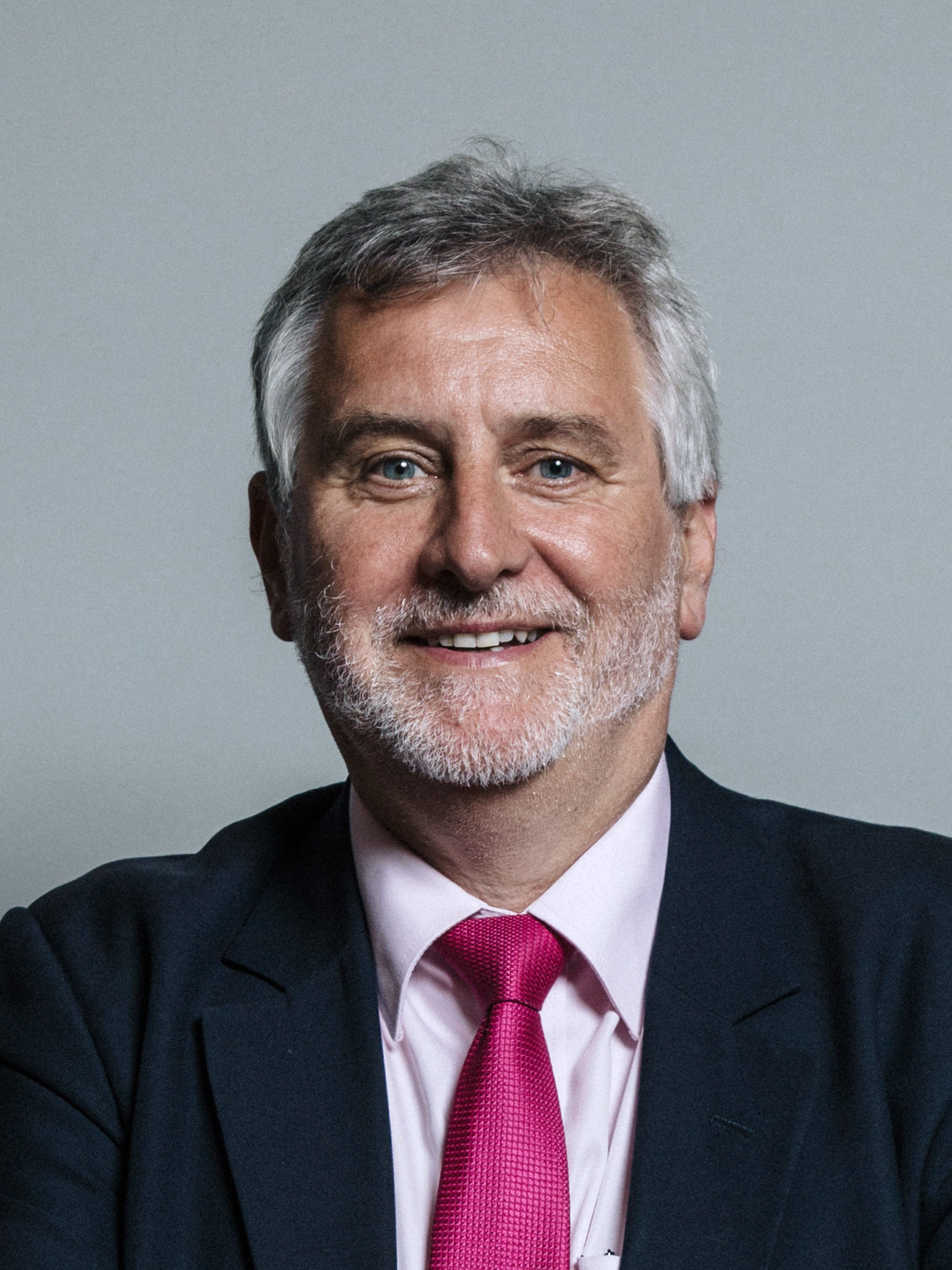
  • Louie French – 2022 Speech on Southeastern Railway Timetable Changes

    Louie French – 2022 Speech on Southeastern Railway Timetable Changes

    The speech made by Louie French, the Conservative MP for Old Bexley and Sidcup, in Westminster Hall, the House of Commons, on 6 December 2022.

    Thank you for chairing, Ms Harris, and I thank the hon. Member for Eltham (Clive Efford) for securing this important debate. Although we often differ in our views, when it comes to Southeastern trains we share frustrations over the timetable changes that will come into force next week. On my first anniversary of being sworn into Parliament, local residents will not be surprised to see me standing up and fighting against Southeastern for them again today.

    The issue of no consultation has been mentioned by several colleagues. The new Minister is already aware of how frustrated MPs and members of the public are over not being informed of the timetable changes by Southeastern until it was too late. In recent weeks, people in Bexley have experienced two transport shocks. First, Southeastern pushed through these changes under the guise that they are demand based, when they clearly go much further. Secondly, the Mayor of London ignored the wishes of the clear majority of Londoners who rejected his outrageous ULEZ—ultra low emission zone—tax raid on drivers in outer London. We have had no consultation on the trains, and a sham consultation by the Mayor. That helps explain my anger and that of local residents across Bexley.

    The Minister and many Members here will be aware that, since Southeastern’s announcement in late September, I have been running a constituent survey on the timetable changes. The thousands of responses to the survey highlight that the most impactful changes are the reduction in Albany Park station services in my constituency, the loss of off-peak Charing Cross services on the Bexleyheath line—we have heard about that from colleagues already—and the loss of the loop service on the Sidcup line, which I will talk about in turn.

    I echo the comments of my right hon. Friend the Member for Bexleyheath and Crayford (Sir David Evennett) on the loss of off-peak Charing Cross services and the impact on passengers travelling to the west end for leisure and work. As someone who commuted to the City for more than a decade from the likes of Welling and Sidcup train stations, I can confirm that Cannon Street services at those times are of minimal benefit to local residents and will force thousands of passengers to change trains at London Bridge. That is of particular concern, given the impact on the more vulnerable residents in our communities and the general increase in travel times that they will experience. I hope that the Minister will at least explain what support Southeastern is putting in place in the short term to help passengers forced to change at London Bridge station.

    The extent of the changes in the new timetable are arguably best reflected by the drastic, near 50% reduction in Albany Park services. Peak services have been reduced from seven trains per hour to four, and off-peak services from four trains per hour to two. That reduction has not only led to concerns about overcrowding and long waits in the event of cancellation, but resulted in the loss of direct services to Lewisham station, which is used by commuters from Albany Park to the DLR and Canary Wharf. I visited that station during my campaign against the timetable changes and I saw at first hand how busy it is, particularly during peak times on Tuesday to Thursday. I remain concerned that that is not fully accounted for in the passenger numbers.

    I raised those concerns with the Minister and at our latest meeting with Southeastern, with my right hon. Friend the Member for Bexleyheath and Crayford. I am grateful for Southeastern’s commitment to look at the live train-loading data for that station daily, and for the fact that it has since visited Albany Park station to reassess passenger numbers. I again request, through the Minister, that it provides the latest peak-time passenger numbers and capacity for the station, especially for Tuesday to Thursday. Furthermore, I would be grateful if the Minister can use his position to ask Southeastern again why there has been such a significant reduction in trains stopping at Albany Park station. Will he seek assurance about the future of the station, which is frequently used by commuters in a residential area with few alternative transport connections? There have been some silly rumours floating around locally that the station is closing. I hope the Minister will put them to bed by confirming that there are no plans to close it.

    At all meetings, I have expressed my considerable disappointment at the loss of the loop service on the Sidcup line, which is used by many constituents, including to connect to the Elizabeth line and for Charlton Athletic fixtures. It is also used by children and parents travelling to school. Again, I am concerned about the data that Southeastern used to inform that decision. The time period used to capture passenger numbers does not incorporate the increase in passengers on the service since the Elizabeth line was opened. It would be a shame for residents to lose that connecting service, especially given the four-year delay and the billions it has cost taxpayers and businesses in our area. I again urge Southeastern to provide more services to Abbey Wood on the Sidcup line, especially off peak and at weekends.

    As Members have said, Southeastern has consistently stated that the timetable changes have been demand-led, and that their purpose is to reduce crossovers in Lewisham, thereby improving reliability and reducing delays. I fundamentally disagree with that reasoning, especially given the consistent increase in passenger numbers since the pandemic and the £250 million investment in junction works at Lewisham over the past couple of years. Those engineering works, which have often required full and partial line closures, have been to improve track, signalling and capacity at Lewisham to meet demand “for decades ahead”. I am frustrated that my constituents have been negatively affected by regular disruption caused by union strikes and the works, which includes a planned nine-day full closure of the Bexleyheath line later this month, only a couple of weeks after the timetable changes.

    My constituents have tolerated that major disruption to their journeys over the past couple of years on the basis that the works are

    “to meet the demands of the railway today.”

    That is a real kick in the teeth, because they are now losing a substantial number of services and the choice of termini to reduce crossovers at Lewisham—the very issue the works were said to address. I hope the Minister will address that issue, because that could be a massive waste of taxpayers’ money. It should be a good thing for the area, not a bad thing.

    I emphasise again my disappointment and outrage at the lack of consultation for such drastic changes, which will have a detrimental impact on my constituents and their ability to travel for work, school and leisure. Given that Bexley does not benefit from direct access to the underground, rail services are the principal means of transport into and out of London, as well as for travelling to other areas in the south-east. It is therefore vital that the frequency and links to a range of central London stations are preserved. I continue to call for urgent concessions and reversals to many of the changes, particularly ahead of the new timetable in May.

  • Matt Hancock – 2022 Letter to the Prime Minister Confirming Not Standing for Re-Election

    Matt Hancock – 2022 Letter to the Prime Minister Confirming Not Standing for Re-Election

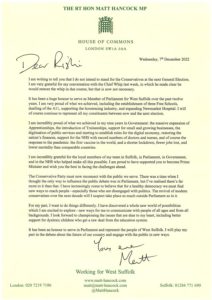
    The letter sent by Matt Hancock, the Conservative MP for West Suffolk, to Rishi Sunak, the Prime Minister, on 7 December 2022.

  • Matthew Pennycook – 2022 Speech on Southeastern Railway Timetable Changes

    Matthew Pennycook – 2022 Speech on Southeastern Railway Timetable Changes

    The speech made by Matthew Pennycook, the Labour MP for Greenwich and Woolwich, in Westminster Hall, the House of Commons on 6 December 2022.

    It is an absolute pleasure to serve with you in the Chair, Ms Harris, and I congratulate my hon. Friend the Member for Eltham (Clive Efford) on securing this important debate and on the powerful case he made in opening it.

    The deeper that I have dug into Southeastern’s stated rationale for its planned December timetable changes, the more convinced I have become that it simply does not add up. No one denies that we have seen a reduction in passenger numbers on Southeastern services post pandemic. However, given the difficulties inherent in determining levels of permanent demand reduction, not least given the fact that passenger numbers across the country continue to recover steadily, it beggars belief, quite honestly, that levels of demand as they were six months ago are being used to justify the kind of radical and disruptive change entailed by the timetable that is due to come into force next week.

    It is worth bearing in mind that Southeastern introduced a reduced timetable on the Greenwich line in November 2020, but it was forced to restore the full peak hour service in January of this year because of overcrowding. Yet we are now told that similar service reductions are essential and that despite there being 302 fewer weekday services and 426 fewer weekend services across the network, as well as extremely large gaps between services during peak periods, there will be more than enough space to meet demand.

    In the face of significant public anger, Southeastern has offered all manner of additional reasons why these planned timetable changes must be made. We are told by Southeastern representatives that the current timetable has:

    “several disbenefits which will only get worse as customers return to the railway.”

    That statement not only contains an implicit admission that demand is expected to continue to rise, but the company has also failed to make clear what those disbenefits are.

    We are also told that the timetable is needed to deal with:

    “the notorious bottleneck at Lewisham”.

    However, as several colleagues have already mentioned, once again no specific information about delays caused by conflicting movements at or outside Lewisham station has been presented.

    We are also told that Southeastern is an aberration for having metro trains that serve multiple London termini, yet Southern runs services into both Victoria and London Bridge, and Great Northern runs services into King’s Cross and Moorgate, both doing so without issue. We are told that the new timetable was based on feedback from customers and stakeholders, yet there was no engagement campaign with rail user groups and community groups prior to the cackhanded announcement of these changes in late September. Indeed, there has been none since.

    It is hard to escape the conclusion, particularly given that the new timetable closely reflects proposals made prior to the pandemic as part of the 2017 Southeastern franchise tendering exercise, that what we are witnessing is the implementation of plans drawn up long before anyone had heard of coronavirus, under the pretext of post-pandemic changes in travel patterns and ultimately being driven by a desire to cut costs.

    That would certainly explain why Southeastern sought to evade proper scrutiny about these planned changes by seeking and securing from the Department for Transport a formal derogation against the requirement to undertake a consultation exercise in respect of them.

    Responding to that charge, Southeastern has argued that it takes many months to design and consult on a timetable change, and the pace of events meant that it was unable to do so. Yet other train operating companies that are minded to make timetable changes, including South Western Railway and London North Eastern Railway, managed to undertake detailed consultations with their customers despite facing the same pressures.

    Despite the concerns raised by colleagues from across south-east London over several months, it is clear that the Government and the operator will plough ahead and introduce the new timetable on Sunday 11 December. That is deeply regrettable, because of the inconvenience that will be caused to all those passengers who will henceforth be forced to take multiple services to reach their intended destinations, but also because, as my hon. Friend the Member for Eltham mentioned, of the risk of severe overcrowding.

    The Minister owes it to concerned Southeastern passengers to make clear precisely what will happen if demand does exceed service capacity, as I fear it will, so I would be grateful to him if he could address the following questions. Given that departmental responses to written questions suggest that data on overcrowding on the rail network has been discontinued, how will pressure on Southeastern services be monitored in the weeks and months ahead? Assuming that it is monitored in some open and accessible form, what extent of overcrowding will trigger an internal review of the new timetable’s efficacy?

    How serious will matters have to become for services that are to be cut this weekend to be restored, and how quickly can any revisions be made? Indeed, can the Minister confirm that specific revisions to the planned timetable can be made, given that it is premised on significant alterations to termini on various lines? Finally, will the Minister today rule out issuing Southeastern with a further formal derogation and provide a commitment that there will be extensive public consultation ahead of any further timetable changes carried out next year?

    It is not enough for the Minister to argue, as he did in response to a question from my hon. Friend the Member for Eltham at Transport oral questions, that we should all

    “just wait and see how matters progress”.—[Official Report, 24 November 2022; Vol. 723, c. 437.]

    Concerned passengers in my constituency and many others rightly expect answers from the Government as the operator of last resort, and, most importantly, an indication that Ministers will move quickly to amend this new timetable if it proves as damaging as we all fear.

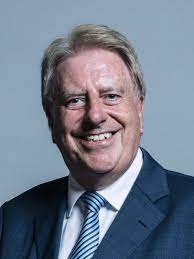
  • David Evennett – 2022 Speech on Southeastern Railway Timetable Changes

    David Evennett – 2022 Speech on Southeastern Railway Timetable Changes

    The speech made by David Evennett, the Conservative MP for Bexleyheath and Crayford, in Westminster Hall, the House of Commons, on 6 December 2022.

    It is a great pleasure to serve under your chairmanship, Ms Harris; it is the first time for me as well. I am particularly pleased to see my personal and political friend, the Minister of State, Department for Transport, my hon. Friend the Member for Bexhill and Battle (Huw Merriman) in his place to respond to the debate.

    I congratulate the hon. Member for Eltham (Clive Efford), from my neighbouring borough, on securing this important debate and thank him for doing so. He made a powerful case with the facts and figures on passenger numbers. That is very important and he has done a good job and a good service for us in south-east London by raising those figures.

    I am grateful for the opportunity to raise such an important issue on behalf of my constituents in Bexleyheath and Crayford. The decisions affect so much and so many people adversely. I am pleased to see present a number of colleagues from both the Conservative and Labour parties, singing from the same hymn sheet. It is important that these issues are considered to be cross-party. We are grateful to participate in the hon. Member for Eltham’s debate.

    Bexley is not on either the London underground or Docklands light railway network. Although the Elizabeth line was originally proposed to run through Bexley and hopefully to Ebbsfleet, it now terminates at Abbey Wood in Greenwich, so there are limited viable alternatives to Southeastern rail services for the people of our area to use to get into central London. For example, although it is fewer than 15 miles from my home in Bexleyheath to Westminster, to travel exclusively by bus would probably take two hours, which is just not practical in any day-to-day commute. My constituents are therefore more reliant than most on rail services to travel to central London, whether to commute, to go to health meetings or for social reasons. For hospitals, work and pleasure, they use the railway and they use those services.

    I know the hon. Member for Eltham is, like me, a regular commuter, as we often travel on the same train. As such, we know and appreciate constituents’ anger about the services that they pay for and share the view that Southeastern, having a monopoly, is failing its customers. However, rather than talk about the shocking service that we have suffered over many years, and which the hon. Gentleman and I have batted away regularly over the past five or six years at least, I shall focus today on the inconsiderate, unfair and damaging new timetable that Southeastern plans to implement later this month.

    The new timetable affects all three of the lines that go through my constituency, as the Bexleyheath, Sidcup and Woolwich lines all go through Bexleyheath and Crayford. My constituency of Bexleyheath and Crayford is currently served badly by those services, and the changes will be a disaster because the service will suffer, as the hon. Member for Eltham said in his excellent speech.

    The Bexleyheath line is served by Barnehurst and Bexleyheath stations in my constituency and by Welling station, which is in the constituency of my hon. Friend the Member for Old Bexley and Sidcup (Mr French) but is used by a number of my constituents. The changes will mean that the line will no longer enjoy off-peak or weekend services to Charing Cross. The services running will be only two trains per hour to Cannon Street and two trains per hour to Victoria.

    The Sidcup line, which serves Crayford station in my constituency, will lose the off-peak and weekend services to Cannon Street, with the majority of those services being transferred to Charing Cross, with the result that four trains per hour will go there. The timetable changes mean the loss of our loop line, with the end of the direct service to get on the Elizabeth line at Abbey Wood. That is a disadvantage for commuters who need to go to the Docklands or other places via the excellent Elizabeth line.

    The Woolwich line is served by Slade Green station in my constituency and by Erith station, which is used by a lot of my constituents in the Barnehurst and North End wards. The relevant services will go only to Cannon Street at both peak and off-peak times.

    The new timetable has met with huge dismay across our borough of Bexley, and indeed throughout other parts of south-east London. My constituents and I are bitterly disappointed by, and rather angry about, the lack of consultation on the dramatic changes that are taking place that will affect rail users and businesses across our south-east region.

    Southeastern has explained the reasons why it did not consult, which I do not accept—I know that my hon. Friend the Member for Old Bexley and Sidcup has been even more robust in that division. I advise Southeastern, and the Minister, that if it consulted on the timetable now, it would be amazed at the overwhelming opposition from people from all sections of the community, of all ages, and from all the travelling public. I remain totally unconvinced about why some of the Cannon Street services at off-peak times and at weekends cannot be substituted on the Bexleyheath line for some Charing Cross services instead.

    Southeastern has explained to me—very badly and disappointingly—that the reason for the new timetable is, as the hon. Member for Eltham said, to untangle the crossovers in the line at Lewisham and improve punctuality. I was at meetings with the hon. Gentleman about a previous consultation when that was disproved. I do not accept the views of Southeastern. It has failed to acknowledge the disruption and the added time that journeys will require in order for people to change at London Bridge, which will cause more inconvenience for our constituents when they travel.

    The Bexleyheath line has enjoyed direct services to Charing Cross since the Victoria era. A year or two ago, we celebrated the 150th anniversary of the Crayford line, which goes through Sidcup. The new timetable will see the Charing Cross to Bexleyheath line come to an end for off-peak services, with only two trains an hour at peak times, which is totally inadequate for the needs of constituents. Those commuting at that time often face delays that tend to originate from Dartford, at the kick-off, not from the crossover at Lewisham.

    The status given to Cannon Street as a major terminus area is absolute nonsense. Cannon Street is a commuter line. It is a ghost area outside the rush hour. Families would not take the train to Cannon Street to go to a Saturday afternoon matinee at the theatre or to an appointment with a doctor or consultant at a London hospital. It is unbelievably crass to suggest that that is fine. Barely anyone wants to travel to Cannon Street for non-work purposes, while Charing Cross is the most popular service for rail users travelling to London from Bexley for both work and leisure. The staff and the ambience at Charing Cross is very good, commensurate with safety and security, and there is a buzz there. I do not think there is that buzz at Cannon Street, even in the rush hour.

    Frankly, the changes are inconsiderate, totally unfair and lacking in logic. As I have mentioned, although it is a London borough, Bexley does not have a tube station. The residents therefore want a reliable, good service to get them to their place of work, hospital appointments and social events. We have fought on a bipartisan basis across my borough of Bexley and Greenwich, and also with Lewisham, to say that this is what people want and expect. In other parts of the country, such as on the Essex side of the Thames, the train service is so much better. I can never understand how it is that my personal assistant Perry Taylor can get in much quicker and easier from Billericay than we can from south-east London. We are closer to London than he is, and he is never late—I hope he will not be late tomorrow, at any rate.

    The train service available for rail users at London Bridge to get to their destinations is unacceptable. It will also add unnecessary stress and time for passengers. A number of people based at the House of Commons do not work peak times. They are going home, as we are, after 10 o’clock at night, which means that they have to change at London Bridge station. That makes things far worse and they will get home even later. I know we have more user-friendly hours in Parliament than we were used to in the past, but we were still here last night voting at 10 o’clock. The staff have to be here after that. A lot of them work in this property and are on our line down to Dartford.

    There are also vulnerable passengers, such as the elderly, those with mobility issues and parents with pushchairs, who have to navigate lifts, escalators and stairs to get on to the main concourse and on to the next line. Whereas, when they come to Charing Cross, they can go straight through to Eltham, Welling, Bexleyheath or wherever, without changing. Once they are on the train, they know they are there until they get to their destination station. Coming home late means more time, more hassle and more stress. We are here as representatives of the people to support constituents and the best service for them—not one that is convenient to civil servants and Southeastern, but one that is convenient to the people who pay the bills. That is why I am passionate and cross about the new timetable.

    One concern raised by people in Crayford is that they lose the loop around to Abbey Wood. Although that is not devastating, it is certainly disappointing, because people moved to our area in the belief that it meant that they could commute reasonably quickly into London, but that will not happen under these new proposals. A lack of connectivity with the Elizabeth line is a great disappointment, and I ask for that to be looked at again.

    Bexley borough generally has poor transport links from north to south. Buses and trains run more from east to west, though buses are impacted by traffic. There is considerably more traffic in Bexley now than there was a decade ago. We have been given no reasonable explanation why the connectivity service should be removed.

    I have had many meetings and discussions, as well as written communications, with Ministers present and past from the Department for Transport over the years, as has the hon. Member for Eltham. That includes the current Minister over the past month or two. I have also asked questions in Parliament, raised debates and collaborated with parliamentary neighbours and the leader of Bexley Council on transport issues affecting our borough. Yet we have seen no progress, despite the increasing cost of fares and the frustration for railway users.

    We need—we deserve—to see improvements finally, and we thought we were getting there with longer trains, more trains and newer trains. Does the hon. Member for Eltham remember that? We were going to get all those things. Well, they have not materialised. Now we are getting detrimental cuts to our services, just when we are trying to encourage people to go back to the office and other workplaces, and to go to the city and enjoy the recreational facilities in London, which is the greatest city in the world.

    I appreciate the time and sympathy that our new Rail Minister has given me and my parliamentary neighbour, my hon. Friend the Member for Old Bexley and Sidcup, and colleagues on the Labour Benches. He has listened and we appreciate that very much. However, the new timetable needs to be amended and changed, so that residents in south-east London—not just Bexley but all south-east London boroughs affected—have the benefit of a better service. They need to be consulted. This needs to be thought about again. We are being told that we cannot do anything because this has already been agreed with everybody, even though we did not agree with it and did not even know much about it until quite recently. We need to be consulted on changes for when the next timetables come in, because these new timetables are not fit for purpose.

  • Clive Efford – 2022 Speech on Southeastern Railway Timetable Changes

    Clive Efford – 2022 Speech on Southeastern Railway Timetable Changes

    The speech made by Clive Efford, the Labour MP for Eltham, in Westminster Hall, the House of Commons, on 6 December 2022.

    I beg to move,

    That this House has considered Southeastern railway timetable changes.

    It is genuinely a pleasure to serve under your chairmanship, Ms Harris, for the first time, I think. We are here because on 4 August Southeastern sought and got the Government’s permission to cut rail services without consultation. It is cutting two trains from the morning peak in my constituency on the New Eltham and Mottingham line, and three from the Eltham and Kidbrooke line. On the Bexleyheath line, which services Eltham and Kidbrooke, it is cutting three trains out of 15—a 20% cut in the morning peak capacity of trains that go via London Bridge. It is a similar cut in New Eltham and Mottingham, where the number of trains will go from 18 down to 16, but there is the welcome addition of one single train that goes to New Eltham via Blackfriars. Given an average of 10-car trains, the cuts on the Bexleyheath line amount to 3,000 passengers at peak time who have to find spaces on the remaining trains. It is a similar situation on the New Eltham line.

    Before the pandemic, we had PiXC—passengers in excess of capacity—on our lines. We campaigned previously for additional trains, particularly off peak, and were successful in getting them. Transport planners do not recognise that our part of south-east London is not served by the London underground and we rely very heavily on train services. The cuts take no account of that fact, nor of the fact that my constituency has a huge new development at Kidbrooke, which has had a considerable effect on the numbers of passengers getting on and off trains at Kidbrooke station.

    According to the Office of Rail and Road, there were 890,000 passenger exits and entrances at Kidbrooke station in 2010. That had risen by more than 42% to 1.5 million by 2018. During the pandemic, as we would expect, the number of exits and entrances went down to 429,000 in 2020, but it is already back over 1 million at Kidbrooke station and it is continuing to rise. There were also increases at Eltham station, but on nowhere near the scale of the increases at Kidbrooke station because of that development.

    The Kidbrooke development is approaching 7,000 homes, about half of which have been completed. Passenger entrances and exits had already increased by 640,000, as I said, but that was prior to the pandemic. Taking that as a guide, that means we will see a further 1.5 million entrances and exits at that station by the time all the properties are built. The proximity to the train station was used as justification by the developer Berkeley Homes, as well as by the Mayor of London and Transport for London, in respect of the development of 619 homes at Kidbrooke. Was that taken into consideration when the Government approved the cuts to train services?

    Back in September 2017 we all thought we had cracked the problem of overcrowding. We all campaigned to get extra trains and longer trains on the line and the Government allowed Southeastern to do that—we were told that we got 68 extra carriages. The then managing director, David Statham, said:

    “Longer trains will mean more seats, more space and more comfortable journeys…Southeastern has worked very closely with the Department for Transport and Govia Thameslink Railway to deliver this extra capacity for passengers.”

    The press release went on to say that trains to Hayes, Bexleyheath, Woolwich, Sidcup, Bromley South and Grove Park would be lengthened. We were told we were going to get extra capacity, not less. Now we are told there is a need to rationalise services post covid.

    A report on Southeastern published in July by the Office of Rail and Road shows that 2018-19 was its busiest year—but then, of course, the pandemic hit us. There were 183.2 million passenger journeys in 2018-19, but the number dropped to 40.2 million in 2019-20. In 2021-22, passenger journeys went up to 97.8 million, which is more than a 50% increase, and they are continuing to rise, so this is hardly the climate in which we should undertake cuts.

    Sir David Evennett (Bexleyheath and Crayford) (Con)

    The hon. Gentleman is doing a really good job of explaining the figures. In the London Borough of Bexley, a lot of new apartments and houses are being built and there will be increased demand.

    Clive Efford

    Absolutely. I do not think any account has been taken of the increased demand from the additional development in our part of London—certainly not the demand from the very big development at Kidbrooke. We are seeing considerable growth and no one can know where it will end.

    We see a similar pattern in passenger kilometres. Again, the highest number was in 2018-19. That dropped massively in 2020-21, but more than doubled in 2021-22. For planned trains—the trains agreed with Southeastern and Network Rail the night before they run—2018-19 was the busiest year, with 654,389 trains. The number dropped to 527,855 in 2020-21, then still further in 2021-22 to 523,965—that is a 20% drop in planned trains. If we look at the performance figures—bear in mind that the Government’s rationale is that running fewer trains makes the trains more efficient—we do not see the huge improvement in performance that we would expect from running considerably fewer trains, so the Government’s argument that fewer is better is not borne out by the facts.

    The rationale is the old chestnut that the all the trains crossing over west of Lewisham create too much congestion, which leads to knock-on effects and delays. That argument was rolled out several years ago when Southeastern wanted to take away the Victoria service from the Bexleyheath line. It was the same story: “It’s all those trains crossing over west of Lewisham.” Back then, I spoke to some rail experts about the problem and they told me that what Network Rail and Southeastern were saying was complete nonsense. There is not a problem with trains crossing over at that point unless there is bad maintenance and a lack of investment in the infrastructure.

    We need to be clear about what is happening. In Transport questions recently, the Minister said to me:

    “It is not just about taking down some costs; it is also about simplifying the line structure, so that at Lewisham, for example, there will not be as many trains crossing.”—[Official Report, 24 November 2022; Vol. 723, c. 436.]

    First, this is about cost cutting—the Minister has made that clear. There is then this issue of too many trains crossing. It might be fine to say that to people who still have trains, but we are having trains cut. Obviously, our trains cannot cross if they do not exist, so actually what the Minister says is true: the service will improve because the trains are not there. If we follow that logic, we should perhaps just get rid of all the trains; that would solve the problems on our railway.

    When I first asked questions about these cuts, I was told that cutting peak-time trains would reduce cancellations and delays. When I pressed further, I was told:

    “The number of train services in the new timetable is broadly very similar to the current timetable on both of these routes.”

    I pushed a bit further, because that answer denied that there are cuts on the Bexleyheath and Sidcup lines. The idea that the trains will run better becomes a self-fulfilling prophecy, because nobody can be criticised for a delayed train that does not exist. Given the logic of the solution that running a future railway should be based on cuts to services, I suspect we will be back here again listening to the Minister explain why we need to cut trains further because we still have a problem of poor maintenance and lack of investment in the infrastructure west of Lewisham.

    First, the Government tried to avoid admitting they had approved the cuts without consultation; I was told that they would reduce cancellations, which is not what I had asked. Then, the Government said there would be a similar number of trains, when I had asked how many cuts there would be. It has been a shameful attempt by the Government to avoid their responsibility for approving cuts to our services. Admitting now that there are cuts is a welcome step, but that will make everyone else’s trains run on time while we have to endure cuts.

    The new timetable has been imposed without listening to our constituents. It is too late to change that and the Government are determined to press ahead. What is the Minister going to do to monitor the situation so we do not go back to overcrowded trains and a poor service after the new timetable is introduced? That is what we endured before and I see nothing in the decision to cut our train services that is going to change it.