Blog

  • Richard Burgon – 2022 Speech on Voter ID at Elections

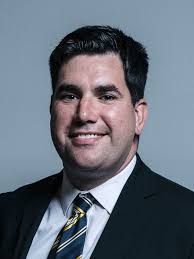
    Richard Burgon – 2022 Speech on Voter ID at Elections

    The speech made by Richard Burgon, the Labour MP for Leeds East, in the House of Commons on 12 December 2022.

    I have listened with great interest to the Minister’s assurances to the House and the country, but it will not surprise Conservative Members to learn that I am not assured, nor will my constituents be assured.

    Tony Benn talked of the importance of the vote. He talked very movingly of the way in which universal suffrage had helped to transfer power from the marketplace to the ballot box, giving our citizens the right to obtain through voting what they could not obtain through their wallets, whether it be free healthcare, free education, or a say in our country’s laws. That right is under threat from these regulations, which are littered with discriminatory inconsistencies. They are not, in fact, a sledgehammer to crack a nut, but, in my view, a deliberate voter suppression strategy—a strategy not to suppress just any voters, but to suppress certain groups of voters in particular.

    These regulations are straight out of the right-wing United States Republican playbook. Over there, they try to find ways of stopping people being able to vote. How else can we explain the way in which young people are discriminated against in the regulations? I believe they are a deliberate voter suppression strategy against working-class communities in particular, and, in particular, black and ethnic minority working-class communities and young working-class people, because the Conservatives have taken the view that those are the people who are less likely to vote for them.

    The regulations also have a broader context that should disturb all of us who are concerned about hard-won British democratic freedoms. In our society, there are three main ways for people to fight back against unpopular policies or express discontent with a Government they do not like, or an employer they do not like. There is the right to protest peacefully, the right to take industrial action and withdraw labour, and, of course, the right to vote. These regulations on voter ID need to be seen within the context of an authoritarian drift on the part of a Government who have in their sights the right to protest peacefully, the right to take strike action, and the right to vote with ease. That is profoundly disturbing. The Members on the other side of the debate are probably split between those who believe that this is necessary and desirable and those who do not really believe that it is necessary and desirable, but are going along with it because they are going along with that authoritarian drift.

    Even if we were to accept the introduction of voter ID, which I and others certainly do not, when we look at the inconsistencies in the regulations with regard to which voter ID is acceptable and which is not, we see that it is a real dog’s dinner—a real anti-democratic dog’s dinner. These regulations should send a shiver down the spines of all those who believe in civil and democratic liberties in our society. They should send a shiver down the spines of people, regardless of their political views, who believe that the right of every citizen to vote, the right of every worker to withdraw labour and the right of every citizen to engage in peaceful protest are rights that were hard won and should be cherished and defended. It is because we defend those hard-won civil liberties and principles that we oppose these regulations, and oppose this Government’s disgraceful authoritarian drift.
  • Ronnie Cowan – 2022 Speech on Voter ID at Elections

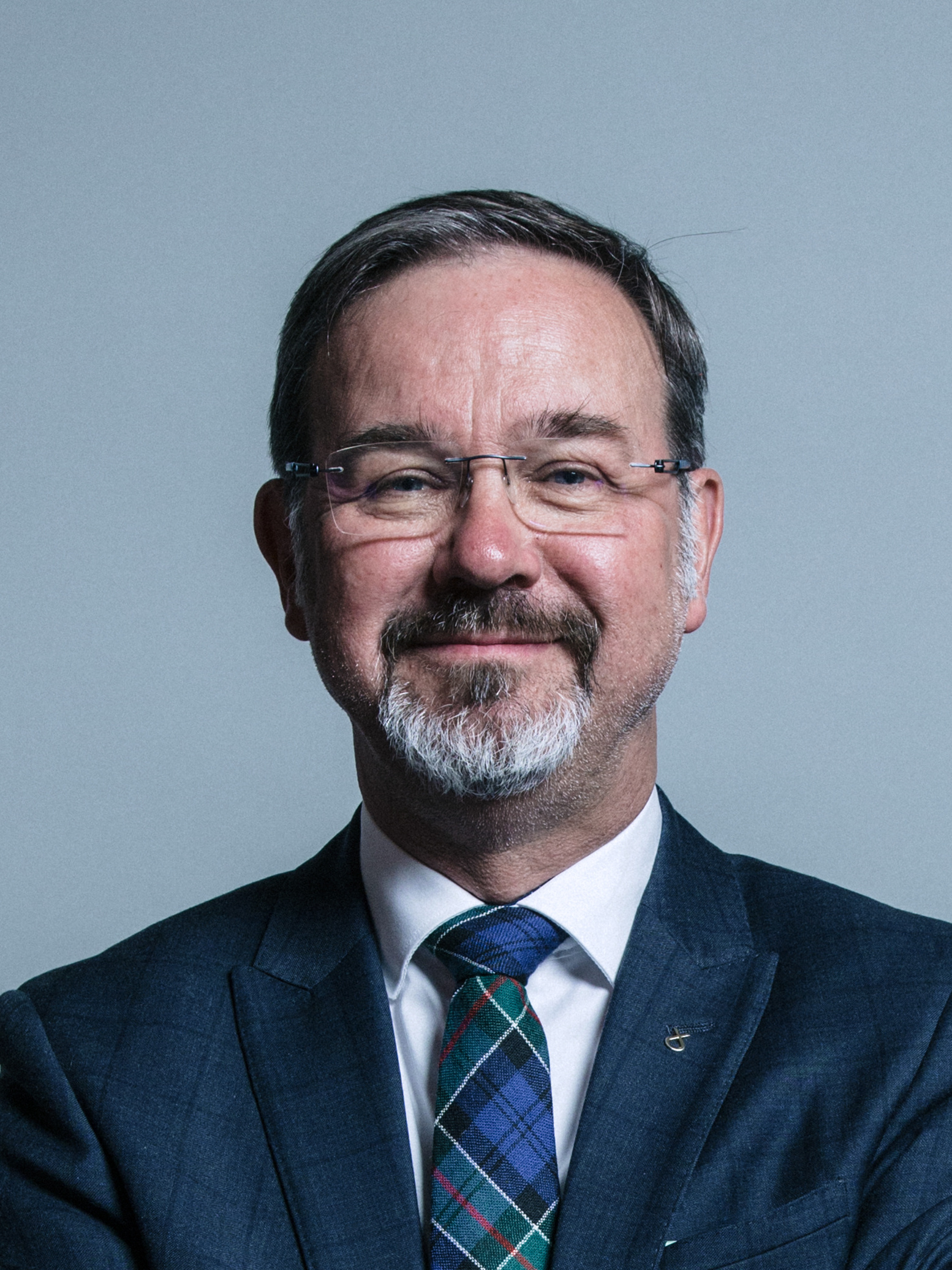
    Ronnie Cowan – 2022 Speech on Voter ID at Elections

    The speech made by Ronnie Cowan, the SNP MP for Inverclyde, in the House of Commons on 12 December 2022.

    When we stand for election, every one of us appeals to the electorate to get out and vote. We impress on them how important it is that they use their democratic right to express their will through the ballot box. We want bigger turnouts and we seek more and better engagement, yet voter ID will have a detrimental effect on turnouts. We know that because we can measure it.

    The UK Government have tried on several occasions to justify voter identification cards by stating that they already exist within the UK: they are used in Northern Ireland. What they cannot say with any conviction is that they have been a success in Northern Ireland. In fact, the turnout in the first election in Northern Ireland after photographic ID was introduced was 2.3% down. If we extrapolate from the data to a UK general election, approximately 1.1 million people would not vote. That would not fall evenly across the population, so who is it that we are disenfranchising?

    Angela Kitching, head of external affairs at Age UK, points out that the Government’s own research has found that 6% of people over 70 would have problems with presenting the right kind of ID. It is reasonable to believe that that estimate is low, because the UK Government did not include the 500,000 people in care homes and sheltered accommodation in their research. It is no surprise that Angela Kitching has described the idea as being “for the fairies”.

    The Royal National Institute of Blind People says that

    “this will disproportionately disenfranchise blind and partially sighted people, particularly older blind and partially sighted people.”

    The Royal Mencap Society has raised concerns that

    “voter ID could simply result in yet another barrier to people with a learning disability participating in elections.”

    Sense, the national charity that supports people with complex disabilities, has also raised concerns, saying:

    “Given the barriers that already face disabled people while voting, Sense is concerned that this could make it harder for some disabled people to vote.”

    Concerns have been raised by groups representing LGBTQ+ communities, including the LGBT Foundation, Mermaids and Stonewall. The Runnymede Trust has raised concerns that introducing a voter ID requirement would add further barriers to voting for black and ethnic minority groups.

    Those groups should not be disadvantaged. Their votes and their views are not worth less. Pilots have shown that 30% of people who had their ballot paper refused for lack of ID did not return later with an ID to vote. Were all those people trying to impersonate someone? I do not think so.

    As has been mentioned, this measure will disproportionately impact younger voters. ID such as an Oyster 60+ card is valid, but an Oyster 18+ card is not. Despite the calls for railcards or student IDs to be accepted, the Government have refused.

    Of course, change attracts a financial cost. Disappointingly, the UK Government do not know how much this change will cost. Their assessment is £150 million, based on an assumed take-up of 2%, but a UK Government survey found that 31% of people said they would apply for a voter ID card. The impact assessment estimates that an additional £10.2 million should be added for each additional percentage point, which brings the cost of that 31% to £450 million.

    In truth, we do not know, because the people surveyed were not informed of the existing photographic ID that would be acceptable, nor were they informed that out-of-date photographic ID would be acceptable. There is more confusion on which we are supposed to legislate: we need a clearer explanation of how having a period of validity for a voter card could work if its expiry date was not a bar to using it for its sole purpose at a polling station.

    What is driving this change? Photographic voter ID is supposed to be required to address the issue of personation —occasions when somebody pretends to be another elector and votes on their behalf. We are asking people who work a very long day in polling places to verify visually that each voter looks like the photo ID that they present and, if they are not happy, to refuse that person the right to vote. That is a burden that will weigh heavily on many of those who, until now, have diligently staffed polling places.

    For us to go to such lengths as introducing photographic voter ID, placing such a burden on electoral staff and risking disenfranchising 1.1 million voters, personation would have to be a massive problem. Yet, as the right hon. Member for Ashton-under-Lyne (Angela Rayner) said, with more than 58 million votes cast in elections in 2019, there were 33 counts of personation at a polling station. As we have heard, that comprises 0.000057%. When we consider the number of people cautioned for or convicted of personation, the proportion is reduced to 0.0000035% of votes cast. This is a sledgehammer looking for a nut to crack. It is a solution looking for a problem. The long and short of it is that this legislation has been pushed through with little substantial evidence of its value.

    For as long as Scotland remains part of the United Kingdom and Westminster has the power to affect the voting franchise and the electoral process in Scotland—even if that involves elections to this place—we in the Scottish National party will hold Westminster to account, and will demand that any changes must be transparent, considered, constructive and inclusive. The motion does not satisfy those criteria.

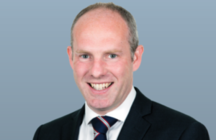
  • Justin Tomlinson – 2022 Speech on Voter ID at Elections

    Justin Tomlinson – 2022 Speech on Voter ID at Elections

    The speech made by Justin Tomlinson, the Conservative MP for North Swindon, in the House of Commons on 12 December 2022.

    I will make just a few quick comments. My seat of North Swindon, as part of the Swindon Borough Council area, was part of one of the initial pilots in 2017 or 2018, so I want to make a few observations. First, turnout was up, not down. Secondly, when the pilot came to an end and we were not made part of the bigger pilot, we were inundated with complaints, because people thought that the new system was far better. That is why I am very pleased to advocate this welcome change.

    I have a bit of a soft spot for the deputy leader of the Labour party, the right hon. Member for Ashton-under-Lyne (Angela Rayner), perhaps because we have similar music tastes. She talked about trusting people. I have now had not one, not two, not three, not four, but five Labour opponents. I can assure her that every single time one of them has been selected, the adverts for the selection meetings—in which, of course, we take a mild interest—very clearly say, “You must bring voter ID.”

    The whole thrust of the argument against the draft regulations is that the number of people looking to cheat the system is so small. That seems to indicate that the right hon. Lady believes that North Swindon Labour party members must all be truly terrible people—that the terrible people must all be consolidated there. I want to reassure her that that is not the case. They are actually very nice people.

    Lloyd Russell-Moyle (Brighton, Kemptown) (Lab/Co-op)

    The hon. Gentleman is misinterpreting the Labour rules, is he not? They do not require photo ID; they require any ID. They allow student ID, student bus cards and student railcards, all of which the Government have excluded in their gerrymandering efforts. Does he acknowledge that this Government have gerrymandered voter ID?

    Justin Tomlinson

    The hon. Gentleman, bless him, has got absolutely muddled. As he would have seen from the pilots if he had taken the time to look, anybody can access IDs. They are commissioned by the local authorities. It is straightforward.

    The proof of the pudding was that turnout in Swindon was up during the pilot. Sadly, that pilot came to an end and we were not part of the second pilot, so we were inundated with complaints. People want to have trust in our democracy. The regulations are a brilliant thing to have brought forward.

    Jamie Stone (Caithness, Sutherland and Easter Ross) (LD)

    The hon. Member talks about increased turnout. One of the highest turnouts in British history was for the 2014 Scottish independence referendum, which had a very clear result: Scotland voted to remain part of the United Kingdom. A conspiracy theory was circulated at the time that votes would be altered if people put their cross in the box with a pencil instead of a biro or a pen. That was rubbished by the general public and put in the dustbin where it belonged. Should we not trust the great British public to get these things right, as they have in the past?

    Justin Tomlinson

    Yes, it is about trust: trust in our world-leading democracy and trust in making sure that we can safeguard what matters. I will not stray into conspiracy theories about Scottish elections, but trust is the proof of the pudding. When there was a pilot in my constituency, voter turnout went up and people complained when the pilot came to an end. It is quite straightforward.

    Sarah Owen (Luton North) (Lab)

    The hon. Member talks about trust. Trust is incredibly important, so can he tell me why anybody should trust the Conservative party when it comes to voter fraud, given that its last leadership election—not the coronation that we have just had, but the leadership election—was delayed because of security fears and possible breaches of ballot paper processes?

    Justin Tomlinson

    If there is ever any question of any threat in any form, it should always be investigated. The sun comes up in the morning—it is that obvious.

    I say to the Minister: hold firm. This is what the public want. It has worked in the pilots, and proceeding with it is an absolute must.

  • Mick Lynch – 2022 Interview with Richard Madeley and Susanna Reid

    Mick Lynch – 2022 Interview with Richard Madeley and Susanna Reid

    The interview between Richard Madeley/Susanna Reid and Mick Lynch on Good Morning Britain on 13 December 2022.

    INTERVIEWER

    [Asked Lynch why he had changed his mind on keeping the Christmas period strike free]

    MICK LYNCH

    Something’s changed, Network Rail have decided from Wednesday to start imposing their unacceptable changes that our members have just voted against. They have told us that no matter what happens they will impose work-life balance changes, changes to the working practices and the cuts to the safety inspection regime on the railway by 50 percent. So we had to respond to that, so the additional strike action that we’re putting on is during the Christmas shutdown, as from Christmas Eve the railway shuts down for engineering work. During that period our members will take additional strike action which is frankly targeted at Network Rail’s engineering works rather than the passenger service.

    INTERVIEWER

    [Asked if the strike was just about pay]

    MICK LYNCH

    Network Rail are bringing a series of changes on what they call a modernising maintenance program that involves cutting 50 percent of maintenance scheduled tasks, so it will cut the safety regime and the inspection regime by 50 percent. They want to move our members to a far greater level of unsocial hours, so Saturday nights, weekend work, midweek nights, they’re seeking to change their competency levels as they want them to work outside their current skill levels and we’ll keep talking to the company on that, but at the moment their proposals
    are not acceptable. But that doesn’t mean that we can’t reach a compromise, so for many of our members in Network Rail pay is secondary to the changes to their working lives and the fact that they probably won’t see their families at the levels that they’re used to. The unsocial hours element is very important to them.

    On the train operating companies they want to shut every booking office in Britain, they want to bring in driver-only operation and many other changes to our people’s terms and conditions that are not acceptable at this stage, all at a cut price way below inflation pay
    increase on both of those companies.

    INTERVIEWER

    [Asked Lynch if some of his supporters were opposed to the strikes as they were almost sadists for the strike at this time of year? Why were strikes not in January?]

    MICK LYNCH

    We’re not targeting Christmas, it isn’t Christmas yet Richard I don’t know when your Christmas starts, but mine starts on Christmas Eve.

    INTERVIEWER

    [Called Lynch disingenuous]

    MICK LYNCH

    You’re ranting Richard. Have you finished? I have answered the question, if you give me a minute, I will answer.

    INTERVIEWER

    [Accused Lynch of talking nonsense, that Christmas doesn’t begin on Christmas Eve]

    MICK LYNCH

    Richard, why don’t you just interview yourself if you want to?

    INTERVIEWER

    [Said he was holding Lynch to account]

    MICK LYNCH

    Well you can’t interrupt me if you don’t let me talk.

    INTERVIEWER

    [Asked Lynch why action was being taken over the Christmas period]

    MICK LYNCH

    Are you going to let me speak now? I’ve told you that Network Rail will start imposing these changes from 15 December. They told us that three weeks ago, they told us that the consultation process had finished and they will move towards implementation so our strike action is
    is in response to that. The strike action we’re taking at Christmas is during the Christmas close down where there will be no passenger services running after the evening of 24 December, so that does not impact on Christmas because the railway is closed down from the 25th to
    the 26th into the 27th and that’s when we’re taking the action that you’re referring to. This week’s action was given with three weeks notice, well in advance so that we could get negotiations going and we haven’t actually had strike action for eight weeks, so there’s been plenty of time for the company to come up proposals that may be acceptable and our members have rejected those proposals on Network Rail on a turnout of 83%, two-thirds of them voted against the proposals, so we have to move this dispute forward.

    I have no intention of spoiling people’s Christmas, the government is is contributing to that, that spoiling of people’s Christmas because they’ve brought these strikes on by stopping the companies from making suitable proposals. That’s the position that we’re in and we’ll have to keep this dispute going until we get a reasonable settlement and a reasonable set of proposals that our members want to accept.

    [INTERVIEWER]

    [Asked Lynch if this was in the hands of the Government and do the RMT need public support for these strike actions?]

    MICK LYNCH

    Didn’t you run a poll on your show last week where two-thirds of the respondents said that they supported the strikes, that’s after we announced them? I saw a poll on Yougov last week that said that the public was still supporting our railway strikes.

    INTERVIEWER

    [Questioned whether that support was still present?]

    MICK LYNCH

    What did the poll that your program ran online last week say?

    INTERVIEWER

    [Said they didn’t know]

    MICK LYNCH

    Well, I know. It was on your programme  last week and we’ve got two-thirds of the support. We’ve still got plenty of time before the Christmas Eve strikes if Andrew Haines, the train operating companies, Hugh Merriman the Rail Minister and Mark Harper the Secretary of State, want to come to me with a set of serious proposals to improve their offer so that we can get a settlement to the dispute we’ll come over and see them as soon as possible. They’ve already invited me to a set of talks and we’ll attend those to try and get a settlement to this dispute. When our members decide that they want to accept it, that’s when the dispute will be finished.

  • PRESS RELEASE : Assembly stunt provides useful distraction for Sinn Fein – Gordon Lyons [December 2022]

    PRESS RELEASE : Assembly stunt provides useful distraction for Sinn Fein – Gordon Lyons [December 2022]

    The press release issued by the DUP on 7 December 2022.

    DUP MLA Gordon Lyons has said the recalled sitting of the Assembly was another political stunt and called on the UK Government to get on with delivering the UK-wide assistance to all parts of the UK, including the Energy Support Payments.

    Speaking after the Assembly sitting he said,

    “Each time the Assembly has been recalled it has been a political stunt, but this one had an additional benefit for Sinn Fein. It provided a useful attempt to distract from ongoing proceedings in the Special Criminal Court in Dublin and the allegations made there about Sinn Fein’s links to gangsterism and crime.

    The cost of living crisis is impacting every single person in Northern Ireland, but Sinn Fein also recognised how this could be best tackled when Conor Murphy said in July that “the levers which can make the biggest difference sit with the UK Government” when he penned a joint letter along with the Scottish and Welsh Finance Ministers.

    The United Kingdom Government has delivered additional support. Each of those has been delivered on a UK-wide basis, including the Energy Price Guarantee which was administered despite energy being devolved in Northern Ireland and the fact we have a different energy market to Great Britain. The Energy Support Payment is another UK Government scheme which they have promised to all citizens in the UK. They now need to get on with delivering it to all parts of the UK.

    The Government knows what needs to be done to restore devolution in Northern Ireland. Threatening an election doesn’t change anything, cutting salaries doesn’t change anything but what will unlock devolution is getting the Protocol sorted, restoring Northern Ireland’s place in the UK Internal Market and removing the democratic deficit.

    When that happens, we will not be found wanting. We will elect and Speaker and we will nominate Ministers.“

  • PRESS RELEASE : Call for Public Health co-operation on Strep A [December 2022]

    PRESS RELEASE : Call for Public Health co-operation on Strep A [December 2022]

    The press release issued by the DUP on 6 December 2022.

    East Belfast MP Gavin Robinson has encouraged co-operation amongst Public Health Agencies across the UK and called for resources to be made available if necessary in tackling incidences of Strep A.

    He raised the issue in the House of Commons today. Speaking afterwards the DUP MP said,

    “The commitment that antibiotics are available is welcome, but we know dangers that Strep A can pose. Tragically it has taken the life of a young girl who was a P2 pupil at Blackmountain Primary School. Everyone’s sympathies will be with the family dealing with this heart-breaking tragedy.

    It is important in tackling any incidences of Strep A that resources available where they are needed and for our Public Health Agencies to work together across the UK.”

  • Jeffrey Donaldson – 2022 Comments on the Irish Common Travel Area

    Jeffrey Donaldson – 2022 Comments on the Irish Common Travel Area

    The comments made by Sir Jeffrey Donaldson, the Leader of the DUP, on 6 December 2022.

    On 6th December 1922 the Common Travel Area came into being. It is so ingrained as part of life across these islands that we can sometimes overlook its significance. The House of Commons library estimated that the number of people living in the UK who were born in the Republic of Ireland is equivalent to around 1% of the Republic’s population. There are just over a quarter of a million people born in the UK and resident in the Republic.

    The Common Travel Area was a sensible and practical arrangement established between the United Kingdom and the then newly formed Irish Free State. It has worked to the benefit of both countries over the past 100 years and enjoys the support of people in both jurisdictions. This stands in stark contrast to the Northern Ireland Protocol which has not only failed in its objectives but also does not enjoy support across the community in Northern Ireland.

    The Common Travel Area long pre-dated the entry of either the UK or Ireland to the European Union. Whilst the Common Travel Area has been based on a concept designed to facilitate everyone, the Protocol has been based on punitive measures imposed against the UK under the cover of rhetoric about the Belfast Agreement. On this centenary we should return to the positive and practical principles demonstrated by the Common Travel Area and seek to emulate them in finding a solution to the Protocol.

  • PRESS RELEASE : Sir Jeffrey Donaldson – Emulate Common Travel Area in seeking Protocol solution [December 2022]

    PRESS RELEASE : Sir Jeffrey Donaldson – Emulate Common Travel Area in seeking Protocol solution [December 2022]

    The press release issued by the DUP on 6 December 2022.

    DUP Leader Sir Jeffrey Donaldson has said the centenary of the Common Travel Area should be used as an opportunity to emulate the positive and practical principles of the CTA and emulate them in finding a solution to the Northern Ireland Protocol.

    Sir Jeffrey said, “On 6th December 1922 the Common Travel Area came into being. It is so ingrained as part of life across these islands that we can sometimes overlook its significance. The House of Commons library estimated that the number of people living in the UK who were born in the Republic of Ireland is equivalent to around 1% of the Republic’s population. There are just over a quarter of a million people born in the UK and resident in the Republic.

    The Common Travel Area was a sensible and practical arrangement established between the United Kingdom and the then newly formed Irish Free State. It has worked to the benefit of both countries over the past 100 years and enjoys the support of people in both jurisdictions. This stands in stark contrast to the Northern Ireland Protocol which has not only failed in its objectives but also does not enjoy support across the community in Northern Ireland.

    The Common Travel Area long pre-dated the entry of either the UK or Ireland to the European Union. Whilst the Common Travel Area has been based on a concept designed to facilitate everyone, the Protocol has been based on punitive measures imposed against the UK under the cover of rhetoric about the Belfast Agreement. On this centenary we should return to the positive and practical principles demonstrated by the Common Travel Area and seek to emulate them in finding a solution to the Protocol.”

  • PRESS RELEASE : Online anonymity must be tackled – Carla Lockhart

    PRESS RELEASE : Online anonymity must be tackled – Carla Lockhart

    The press release issued by the DUP on 5 December 2022.

    Upper Bann MP Carla Lockhart has said that online anonymity remains the core issue to be tackled at the heart of social media abuse. She was speaking ahead of the Online Safety Bill being debated once again in the House of Commons.

    The DUP MP said, “This Bill has been through a huge amount of scrutiny and has undergone significant amendment since it was first brought forward. The core issue of online anonymity however remains outstanding.

    The Government’s decision to remove the proposed offence of harmful communications. This is not to say such behaviour doesn’t exist or that we should do nothing about it. However, it is difficult to tackle behaviour and content which is deemed harmful but not criminal. One way this area, and others could be addressed and improved however would be by looking at the issue of online anonymity and identity verification of those opening accounts.

    If the identity behind an account was known to the platform then taking action against harmful content obviously becomes easier and more direct. People who have been repeatedly targeted by trolling and other abuse deserve to know that it is being taken seriously. Whilst proposals in the Online Safety Bill make some progress, the core of the problem remains untouched.”

  • PRESS RELEASE : Strengthening the Union must include dealing with Protocol: Sir Jeffrey Donaldson [December 2022

    PRESS RELEASE : Strengthening the Union must include dealing with Protocol: Sir Jeffrey Donaldson [December 2022

    The press release issued by the DUP on 5 December 2022.

    DUP Leader Sir Jeffrey Donaldson has said the Labour Party plans to strengthen the Union must include dealing with the Northern Ireland Protocol.

    Sir Jeffrey said, “Any serious discussion on the future of the Union, cannot ignore the Northern Ireland Protocol and its impact on both the constitutional status of Northern Ireland and the operation of devolution. Whilst a legal requirement for Westminster to work with the devolved administrations is welcome, it is meaningless in Northern Ireland unless the basis for devolution to function at all is restored.

    The Labour Party could make a significant and positive contribution to this debate by making clear that the Northern Ireland Protocol must be replaced with arrangements that can secure unionist and nationalist support. Such progress can not only repair the damage inflicted on Northern Ireland’s place within the United Kingdom, but restore the devolved institutions.”