Blog

  • HISTORIC PRESS RELEASE : Taking the profit out of crime [June 1998]

    HISTORIC PRESS RELEASE : Taking the profit out of crime [June 1998]

    The press release issued by HM Treasury on 1 June 1998.

    A national confiscation agency, which would seize cash and property obtained from the proceeds of crime, is one of the ideas the Government is considering to take the profit out of crime.

    Speaking today to Commonwealth Finance and Law officials in London, Economic Secretary Helen Liddell outlined the UK response to the threat of money laundering.

    “Money laundering is a threat to our democracies and our people. The risk that dirty money may destabilise our economies and corrupt our financial and legal institutions is apparent to all. And unless we can successfully tackle the proceeds of crime, we are not going to be effective in combatting the criminals themselves.

    “The anti-money laundering systems in place in the UK have, on the whole, been successful, but there is room for improvement. Firstly, the Financial Services Authority, our new single regulator, will take a pro-active role in regulating compliance with money laundering requirements. This will be underpinned by a high level objective in primary legislation obliging the FSA to monitor, detect and prevent financial crime.

    “The FSA will have the power to make rules in relation to money laundering and bring criminal prosecutions for breaches of the UK’s money laundering regulations that are applicable to internal systems and training.

    “Secondly, we intend to introduce a system of civil penalties for behaviour which, though failing short of criminal, nevertheless damages, or has the potential to damage, financial markets.

    “Finally, our approach to asset confiscation has not been as successful as we had hoped. We are actively considering the idea of a national confiscation agency, that would have the remit to confiscate not only cash but also all property that might be derived from the proceeds of crime. These views are still at a tentative stage, but the Government is determined to do all it can to take the profit out of crime.”

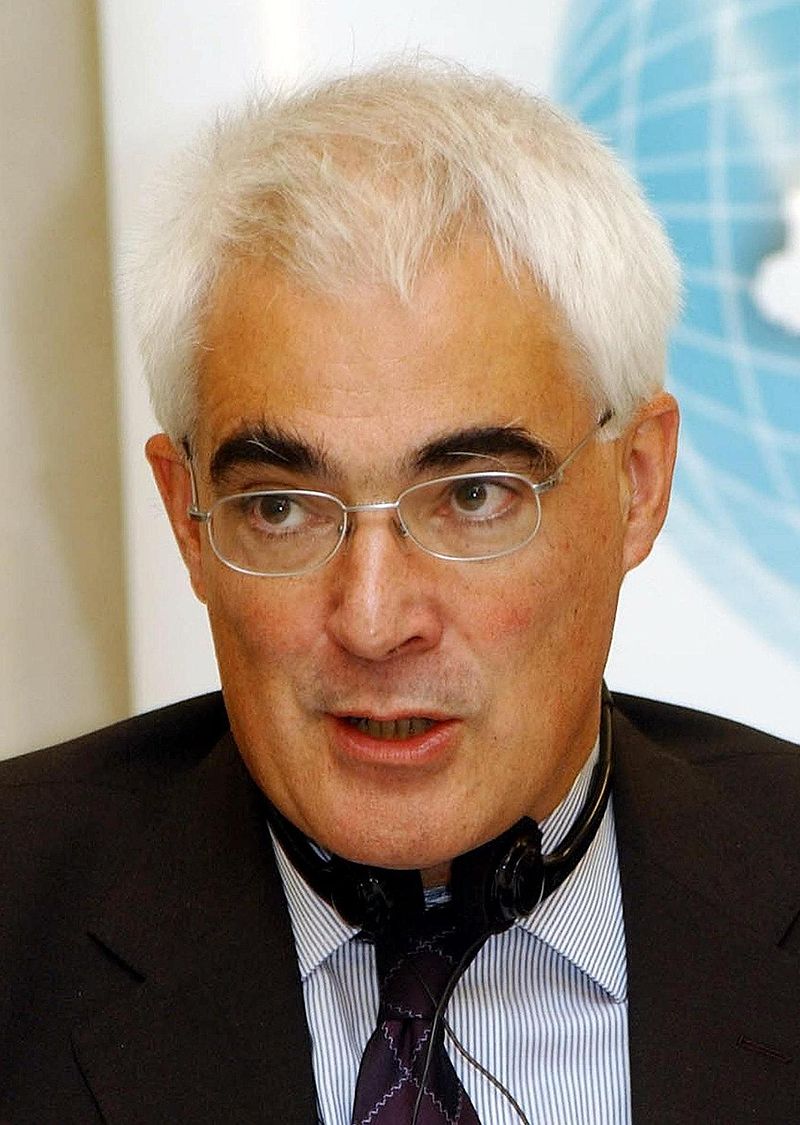
  • Alistair Darling – 1998 Speech to the FSA European Conference

    Alistair Darling – 1998 Speech to the FSA European Conference

    The speech made by Alistair Darling, the then Chief Secretary to the Treasury, to the FSA European Conference on 1 June 1998.

    Introduction

    1. The Financial Services industry is of immense importance, not just to the United Kingdom but throughout the world. It is a global industry with millions of people depending on it. It transcends political and geographical boundaries. It has brought immense benefits. And because of its nature, it brings new risks every day. That’s the nature of the industry. And that is why the way in which we regulate and supervise the Financial Services industry is so important. In a world where the markets are continually changing, we need a regulatory system that can develop with them.

    The Financial Services Industry

    2. Here in the UK, the industry accounts for 7% of our GDP. It employs over 1 million people. Many towns and cities depend on it for employment. Not just London, but throughout the country – Leeds and Manchester for example. And in terms of funds under management, Scotland ranks fourth in Europe. Edinburgh is the UK’s second financial centre. And of course millions of people rely on its services. The industry is an example of how the UK can compete on quality and excellence at home and throughout the world.

    3. Of course, at the heart of the UK’s financial services industry is the City of London, one of the world’s three leading financial centres. The London Stock Exchange is the largest trade centre for foreign equities in the world. The Foreign Exchange market here is the largest and most important in the world, with an average daily turnover of $464 billion. Net overseas earnings of the UK financial services industry amounted to 23 billion Pounds (in 1996) – equivalent to 3.5% of national income.

    4. The City has a critical mass of expertise. It is home to 520 foreign banks. It is a major insurance centre with Lloyd’s and the London Insurance Market. The Baltic Exchange is here, trading throughout the world.

    5. Their presence has built up a formidable range of expertise, attracting investment from all over the world. There are brokers, loss adjusters, risk managers, accountants, actuaries and of course lawyers. All of them providing quality employment and generating significant earnings. And supporting considerable expertise and skills.

    6. London’s success has been built on individual flair and innovation. No Government can do that – but it is for Government to complement that process. To create an environment where business can flourish. Where business can expand and where the public has confidence in the integrity of the system. That’s why getting the supervisory and regulatory regime right is so important. Not just in the UK – but in Europe and indeed throughout the world. Before I turn to our proposals here, I want to say a word about Europe, and its implications.

    Europe

    7. The introduction of the euro on 1 January next year will also have significant implications for the financial services industry.

    8. In October last year we became the first British Government to declare that in principle, a successful single currency, like the Single European Market, would be of benefit both to Europe and to the United Kingdom. We don’t believe there is any constitutional bar to membership: the test for us is what is in Britain’s best economic interest. That’s an important point. We are the first Government to declare in principle for support for the single currency.

    9. The fact is of course that it would not be in our economic interests to join next January as there is not the necessary convergence with the rest of Europe. To join now would be to accept a monetary policy which suited other European economies but not our own. Our official interest rate is 7.25% (base rate), while in Germany and France it is 3.3% (repo rate), reflecting the different stage of the economic cycle we are at compared with them.

    10. We need a period of stability and settled convergence before we can join, and our policies are designed to achieve that. And in order to ensure a genuine choice in the future, we must also make the necessary practical preparations now. We are working closely with business to do just that.

    11. The existence of the Euro will present a huge challenge to the Financial Markets. Not just in preparation but also because of increase competition for business.

    12. The industry and the City of London must maintain its competitive advantage. We cannot be complacent. There is a lot of business in Europe. There are plenty of people and institutions that would love to get some of the business now conducted in London. We need to anticipate that competition. Business comes to London because of our competitive advantage. But no one – no institution – can rest on its laurels. The Government is determined to do everything it can to enhance London’s reputation as one of the world’s foremost financial institutions.

    13. That is why we’re preparing Britain for the euro. Indeed, why we’re modernising the governance of London itself. Modernising the Underground system. And why we’re determined to put in place a regulatory environment fit for the 21st Century. London and the UK must be the market of choice for the global industry. All of us – Government and industry need to do what we can to achieve that goal.

    The Single Market in Financial Services

    14. I said that the Financial Services market was global. It needs to be. And the Government is committed to pursuing open markets in Europe and throughout the world. The European Single Market in financial services is not complete, but its evolution has been significant. Banks, investment firms and insurance companies now have a “passport” to sell across borders on the basis of their home state authorisation.

    15. But local rules, differences in implementation, and gaps in legislation mean that further action is needed to consolidate what has been achieved.

    16. Some new and amending legislation has been identified as necessary. For example, the Commission intends to update the UCITS directive and bring forward a new directive reducing the restrictions on investments by pension funds.

    17. The Prospectus Directive has been identified as a candidate for updating to enable firms to raise capital more easily and cheaply. Something that is particularly important for small firms.

    18. But legislation alone will not complete the single market. It has to be implemented in a consistent way across the Union if we are to benefit consumers and businesses that rely on financial markets to provide the dynamic which leads to higher growth and more employment.

    19. One of the most significant changes we have seen in recent years is the recognition that regulators need to exchange information with each other all the time. The industry is global. So must be the regulators.

    20. That cooperation will be key in completing the single market in financial services. We need to ask ourselves how we are facilitating the single market, breaking down barriers, and ensuring that the regulatory system complements this process, and that it doesn’t simply add another layer of bureaucracy.

    21. Within the UK, bringing together existing regulators will mean that rules and practices will be re-examined. In many areas the rules will be similar, in others they will be very different, but the objectives will be the same. There may be a logic to some rules being different to reflect sectoral or cultural differences but in many areas best practice can be identified and a common approach agreed. National legislation, including implementation of European legislation, will be updated. That process is going on here now.

    22. The same must apply in Europe. We have the bulk of the single market directives in place. The framework is in place but differences remain. We need to examine those differences, and ask ourselves how we can simplify the system and make it more effective.

    23. The Commission is well placed to facilitate consensus without the need for new legislation, although in examining implementation in member states and developments in financial markets it may identify areas where legislation needs to be updated through amending directives.

    24. The regulators will have to talk and exchange best practice, explain problems and accept change. Accepting change should be much easier when it is offered rather than imposed.

    25. Following the informal ECOFIN at York we are examining our implementation of the Prospectus Directive. The directive includes options which permit member states to review and update their implementation to meet tomorrows challenges. But that may not be enough and a new directive introducing the concept of a passport may be necessary.

    26. Over time we will need to examine other directives to ensure implementation keeps pace with developments in the markets and the demands of users of financial services. This is something all member states will need to do if their financial institutions are to prosper in the global marketplace.

    27. Global competition is intense but within Europe we are moving into a period of consolidation in the single market. But we must face up to the need to change and adapt if Europe as a whole is to remain competitive. It is in all our interests that the European as well as the UK market is as efficient as possible.

    The UK regulatory system – the case for reform

    28. Let me now turn to our approach here. We have in the front of our minds not just the global changes to the nature of the market I talked about but also the problems and failures of the regulatory system at home. We wanted to build a new modern regulatory system. One that would be designed for both our domestic and international needs. And we were determined that any reform would be managed efficiently and effectively.

    29. For some years now, a consensus has been developing for change. There is a recognition that change is necessary, both in terms of structure and, importantly, in terms of the nature of the regulatory system, at every level.

    30. Both the industry and the public have recognised that the present system, underpinned as it is by the somewhat misleading concept of “self regulation” could not continue. The system was not self-regulating in the proper sense. And serving two masters – the trade interest and the public interest – proved to be too difficult in many cases. The system pleased neither the industry or the consumer and general public.

    31. And reform is necessary not just because of the domestic needs of industry. As I have said, the need for international cooperation and a regulatory system that can deal with complex international dealings has become increasingly urgent.

    32. So, in the UK, it was clear that we needed a new system. One that had sufficient clout, and stature to command respect both in the domestic and international markets. One that enhanced the credibility of our financial services industry.

    33. There have been, of course, substantial changes in the structure of the industry here and elsewhere. The distinction between banks, insurance companies, building societies and other institutions is becoming so blurred that a regulatory system that is modelled on an old industrial structure that no longer exists is inappropriate.

    34. We have nine financial regulators at the moment. It isn’t uncommon for large institutions to find that they are regulated by many or most of them usually requiring several different systems to cope with their demands. The distinction between regulators, especially for consumers has become especially confusing. And the costs escalated.

    35. Many firms are currently subject to a range of statutory regimes, for insurance, investments and deposit taking. In many cases equivalent provisions relating to different kinds of business are subtly different – in some cases radically so. It is not in anyone’s interests for firms to have to consider in each case which regime they are operating under. Neither in theirs nor their customers.

    36. Also, the current system is riddled with many anomalies. Firms supervised by different regulators receive different disciplinary sanctions for similar offences. And perversely, punishment depends not on the offence but on the regulator. These anomalies are unfair and blatantly damage the credibility of the financial regulation.

    The case for a single regulator

    37. The case for a single regulator is clear. A single regulator will be able to provide effective and consistent regulation across the traditional financial services sectors. It can get away from outdated and increasingly irrelevant distinctions between business sectors.

    38. Firms will no longer be regulated by multiple bodies and have to deal with overlapping regulatory demands.

    39. A single regulator will be more effective because there will be no duplication of effort and no doubt about which body is responsible. There can be no passing the buck.

    40. Consumers will benefit because a single regulatory structure will be able to provide single points of access for the public for enquiries, complaints and compensation.

    41. Providers will benefit because bringing different regulators together should make regulation more cost effective.

    42. A single, efficient, transparent regulatory regime which commands the confidence of the industry and its customers will be of competitive advantage to the UK’s financial services industry in the global financial services market. The global market place is ever more sophisticated, changing ever more rapidly. Right regulatory structure will enhance prospects for growth in this global marketplace.

    43. But the new system will succeed only if it works in partnership with the financial services industry. And the new system of regulation must reflect the diverse nature of the industry.

    44. We promised reform at the election. And three weeks after the election we set out how we would deliver the radical overhaul to the regulatory system we promised.

    45. And in October the new Financial Services Authority was launched. It will take over the work of nine existing regulators – assuming responsibility for the supervision of banking, insurance (including Lloyd’s), investments and securities firms, investment exchanges and clearing houses, building societies and friendly societies.

    46. This is radical reform. The City of London and the UK market will be the only major financial centre in the world with a single supervisor.

    47. It will put the UK at the cutting edge of financial supervision. It will offer huge competitive advantages for us.

    48. I recognise that bringing together the supervision of banking, building and friendly societies, securities and insurance is a formidable challenge. The existing supervisors each have their own rules and culture.

    49. But the creation of a single body is the only answer to the challenge of supervising the modern financial services industry.

    The role of the regulator and the role of management

    50. It’s important to remember that regulation must be seen as a complement to business. It isn’t a substitute for individual judgement or good management. Far from it. It’s management that sets the ethos of a business. It’s management that should know the risks to which it is exposed.

    51. I have said many times before that it is not the Government’s job, nor it is the job of the regulators, to sit in the boardroom and try to run a business. Good regulation should be a complement to business and should create a climate where the industry and individuals can deal with each other with confidence and trust. That’s our objective.

    52. It’s also important to remember that the industry itself benefits from a decent regulatory system. It’s in the interests of the industry that investors, both domestically and internationally have confidence in the financial system to bring in their money.

    Flexibility

    53. It is important for the regulator to be flexible. Markets are changing rapidly and the statutory framework that underpins the regulatory system has to allow for continuous development and changes in the future. Development of over the counter products and derivatives, for example, have transformed the market. Selling to consumers has changed, with more telephone sales and direct selling.

    54. Regulation shouldn’t drive changes in the market. The market should provide what the consumer wants. And it is the job of the regulator to complement that and ensure that it doesn’t distort that process in harmful ways.

    55. One of the key functions of the regulator is to reconcile the balance of the cost of the regulatory regime and the perceived benefit. The cost of the regulatory system is borne by the industry, but ultimately of course, by the consumer. And the cost therefore must be clearly related to the benefit of the regulatory system.

    56. There is a balance between what is reasonable for the regulators to require and what becomes unreasonable because of the excessive cost compared to the gain.

    Single Regulator – what we’ve done so far

    57. For the first time ever, the regulator will have statutory objectives covering market confidence, consumer protection, consumer awareness and financial crime. The FSA will be required to pursue them in an efficient and economic way, which facilitates innovation and takes account of the international dimension.

    58. The Government is committed to strong consumer protection. But caveat emptor is an essential part of any regulatory system. It is no part of the regulator’s job to stand in the shoes of the consumer. But the regulatory system can ensure that the customer has sufficient information to make an informed decision. Customers should be aware of the risks attached to different products. And they should know what their investment will cost. And it is in the interests of the economy, the industry and the public that people have the confidence to buy the products they need.

    59. A vital part of the new single regulator’s job is to sustain confidence in the market, and assist in the detection and prevention of financial crime. We are determined to ensure that the financial markets remain open and clean places to do business.

    60. That is why we have announced a number of measures, including civil fines for market abuse and new prosecution powers, which will help ensure that those who abuse the markets, including insider dealers, do not get away with it.

    61. The powers of intervention and discipline given to the regulator will be tough and effective – and they will be exercised fairly. The Bill will create a new single Tribunal, which will be entirely independent of the FSA, to consider appeals against the exercise of its regulatory powers.

    62. Having a strong and effective regulator will further enhance the UK’s reputation as one of the best regulated and attractive financial markets in the world. We are determined to maintain the UK’s position as one of the world’s foremost centres. We value our reputation as a clean market to do business.

    Phase I – Bank of England

    63. Reform is being implemented in a manageable way. The first stage of reform, is already complete. The reforms to the Bank of England come into force today. The Bank of England Act which gave the Bank operational independence in monetary policy as well as moving banking supervision from the Bank to the FSA comes into force today. And as you know, the FSA has already started work – publishing a number of consultation documents following its launch last October. The progress that it has made and the ready acceptance of its very existence is due to a large extent to the work of Howard Davies and his colleagues not just in the FSA but in the existing SROs who are all working hard to make the new system work.

    Phase II – New Financial Services Legislation – moving on from here

    64. The next stage is the new Financial Services legislation which we will publish in draft in the summer. We will publish draft legislation in the summer. There is now consensus over the broad framework for financial regulation, but it is important to get the detail right. We are committed to reform and have set out our approach. But we are also committed to consulting as widely as possible. We want a system that will endure, and time listening is time well spent.

    65. Getting the detail right is as important as getting the overall framework right. The period of consultation on the Bill will allow us to get the detail right.

    66. There remains much work to be done to ensure the single regulator works. The Government and the FSA are determined to put in place long overdue reform, and to get it right. The consultation period for the Bill is one way in which the industry can help us make it work.

    Conclusion

    67. I have covered a wide field. But that is inevitable. Regulation of the financial markets – and the pursuit of open markets are, by their very nature, objectives which are no longer domestic concerns.

    68. The rationale for change is clear. The first stage in our reforms is already complete, and we will be publishing the new financial services legislation in the summer. It is important to get this right. We are creating a new regulator for the new millennium. A single regulator to replace the outdated divisions of responsibility in the past. A regulator capable of adapting to change – adapting to a single market and a single currency in Europe and a rapidly changing global industry beyond. A regulator that is outward looking and as international in outlook as the markets themselves. And a regulator which commands the respect of the industry and enhances public confidence.

    69. There’s a lot of work to do in the meantime. But we’re making good progress. I am confident that the FSA will become a role model for the future.

  • HISTORIC PRESS RELEASE : A new regulator for the new millennium [June 1998]

    HISTORIC PRESS RELEASE : A new regulator for the new millennium [June 1998]

    The press release issued by HM Treasury on 1 June 1998.

    The Government’s reforms of the financial services regulatory system are on track to deliver a new regulator for the new millennium said Alistair Darling, Chief Secretary to the Treasury today. He was speaking at the Financial Services Authority’s European Conference in London.

    On the day that the new Bank of England Act comes into force, he said;

    “The first stage of our reforms is already complete with the changes to the Bank of England coming into force today. These give the Bank operational independence in monetary policy as well as moving banking supervision to the FSA. The next stage is the new Financial Services legislation which we will publish in draft in the summer. There is now consensus over the broad framework, but it is important to get the detail right. We want a system that will endure, and time spent listening is time well spent.”

    Setting out the rationale for the Government’s reforms, Mr Darling said,

    “The case for a single regulator is clear. A single regulator will be more effective because there will be no duplication of effort and no doubt about which body is responsible. Consumers will benefit because there will be single points of access for enquiries, complaints and compensation. Providers will benefit because bringing different regulators together should make regulation more cost effective. And a single, efficient, transparent regulatory regime which commands the confidence of the industry and its customers will be of competitive advantage to the UK’s financial services industry in the global financial services market. The right regulatory structure will enhance prospects for growth in this global market place.”

    Concluding, he said,

    “We are creating a new regulator for the new millennium. A single regulator to replace the outdated divisions of responsibility in the past. A regulator capable of adapting to change – adapting to a single market and a single currency in Europe and a rapidly changing global industry beyond. A regulator that is outward looking and as international in outlook as the markets themselves. And a regulator which commands the respect of the industry and enhances public confidence. The Financial Services Authority will become the role model for the future.”

  • HISTORIC PRESS RELEASE : Chancellor announces new framework for Monetary Policy [May 1997]

    HISTORIC PRESS RELEASE : Chancellor announces new framework for Monetary Policy [May 1997]

    The press release issued by HM Treasury on 6 May 1997.

    STATEMENT FROM THE CHANCELLOR on the Central economic objectives of the new Government.

    The central economic objectives of the new government are high and stable levels of growth and employment. Our aim therefore is to rebuild British economic strength with a modern industrial base,high levels of investment and a culture of entrepreneurship  that, through economic opportunity for all, unlocks British economic potential.

    This can only happen if we build from solid foundations of prudent economic management and sound finance. The enemy of growth, and the investment necessary for it, is the instability of short periodic bursts of high growth followed by recession.

    So we must break from the short termism of the past – the  economic instability that has characterised the British economy not just in recent years but for most of the century. That is why I want British economic success to be built on the solid rock of prudent and consistent economic management, not the shifting sands of boom and bust.

    Now is the time for long-termism. This is the time to set the British economy on a new long term course that will deliver high levels of growth and employment through lasting stability.

    First interest rates.  Over the last few days, I have been scrutinising all the available economic data and taking a view on the economic outlook,informed by the latest Treasury forecast. Having looked at the latest internal information  now available to me, my judgement is that we have inherited a situation in which, in the absence of corrective action, inflation will overshoot the Government’s inflation target next year.  This view,in fact, confirms what the Bank of England has repeatedly advised over recent months, as reflected in the published minutes of the monthly monetary meetings.

    I have to make decisions on interest rates the results of which will only be clear eighteen months ahead.  In reaching my decision I am influenced by the forecasts I have now received for inflation in 1998.  But I have also been influenced by what we see in the economy today, which affects these forecasts:

    • recent rapid growth of consumer spending which has grown by 4 per cent over the last year;
    • house prices, which are currently rising at an annual rate of 6 to 9 per cent, and are rising particularly rapidly in the south east;
    • the recent pick up in average earnings, which are currently growing at 5 per cent a year;
    • and the rate of growth of broad money which has been above its monitoring range for over a year.

    Against these pressures, I have had to weigh the current strength of sterling, particularly against the Deutsche Mark.  And I have also taken into account the subdued level of producer price inflation, disappointing levels of manufacturing activity, the weakness of industrial investment and the reduced optimism about prospects for exports,all of which are associated with sterling’s strength.

    No one should doubt my determination to create the conditions in which British business, and manufacturing, can flourish. But because inflation is the enemy of investment, we must ensure that it is under control, as it has not been so often in the recent past. We want a stable and competitive pound over the medium-term, consistent with our objective of price stability. I am convinced that it is in the interests of industry that our commitment to low inflation is delivered in practice.

    Looking at all the evidence, I believe that the case for an immediate tightening of policy is conclusive.I have decided to raise interest rates by  1/4  per cent with immediate effect. The Governor has indicated his positive agreement with my decision.

    Price stability is, as I have said, an essential precondition for the Government’s objectives of high and sustainable levels of growth and employment. The question is how to achieve the long-term stability that we seek?

    As the Prime Minister and I have always made clear, this is a new Government that is going to move beyond the old dogmas of the past, and provide a modern and lasting framework for economic prosperity. I have said on repeated occasions that we must tackle the underlying weakness of the British economy- low investment, skill shortages and inadequate infrastructure – all of which have beset the British economy in recent years. These problems are themselves some of the underlying causes of inflation.

    I have also made clear that reform is required to put monetary policy on a stable, long-term footing. In a speech in May 1995 and subsequently in our 1995 policy document, A New Economic Future for Britain, I set out my view of the proper roles of the Government and the Bank of England in economic policy.

    Government has a responsibility to the public in setting the objectives of economic policy and that means that the Government rather than the Bank of England must set the targets for monetary policy.

    However, as I have repeatedly made clear since 1995, we will only build a fully credible framework for monetary policy if the long-term needs of the economy, not short-term political considerations, guide monetary decision-making. We must remove the suspicion that short-term party political considerations are influencing the setting of interest rates.

    As our election manifesto said:

    “We will reform the Bank of England to ensure
    that decision-making on monetary policy is more
    effective, open, accountable and free from
    short-term political manipulation.”

    It has become increasingly clear that the present arrangements for policy-making are not generating the confidence that is  necessary. That is one reason why Britain has higher long-term interest rates than most of our major competitors. And the perception that monetary policy decisions have been dominated by short-term political considerations has grown.

    I am now satisfied that we can put in place,with immediate effect, reforms of the Bank of England to ensure that it can discharge responsibilities for setting interest rates in an effective, open and accountable way.

    This is the time to take the tough decisions we need for the long-term interests and prosperity of the country.  I will not shrink from the tough decisions needed to deliver stability for long-term growth. I have therefore decided to give the Bank of England operational responsibility for setting interest rates, with immediate effect. The Government will continue to set the inflation target and the Bank will have responsibility for setting interest rates to meet the target.  The Government’s policy is set out in a letter I sent to the Governor yesterday, the text of which I am releasing now. It is the Government’s intention to legislate for these proposals as soon as possible.  In the interim, the Governor has agreed to put in place the arrangements that will apply once the legislation has been enacted.

    The main elements of the reforms are as follows. In place of the current personalised system of decision-making, decisions will be made by  a new nine-member Monetary Policy Committee, on the basis of a majority vote.  This is similar to arrangements in other countries including the USA and other G7 members. In addition to the Governor and two Deputy Governors, nominated by the Government, who will sit on the committee, the Government will also appoint four members of the Monetary Policy Committee from outside the Bank of England.

    Openness of decision-making will be ensured by the publication of minutes of proceedings and votes of the Monetary Policy Committee. There will be enhanced requirements for the Bank of England to report to the Treasury Select Committee of the House of Commons to explain and be questioned on their decisions. The Court of the Bank of England will review the performance of the Bank of England, including that of the Monetary Policy Committee. The Court will be substantially reformed to make it representative of the whole of the United Kingdom and to take account of the full range of Britain’s industrial and business sectors. These changes in accountability and the new breadth of representation on the Court amount to the most radical internal reform to the Bank of England since it was established in 1694 – over 300 years ago.

    Britain is, in fact, one of the few major industrial nations in which its Central Bank does not have operational responsibility for decisions on interest rates. And our record on inflation and interest rates over recent years is poor, while other countries with independent Central banks have performed better.

    Taken as a whole, these proposals will ensure that decisions are taken for the long-term interests of the economy and not on the basis of short-term political pressures. This is the way to create the stability we need for higher investment and high levels of growth and employment.

    The changes I have proposed are the right decisions: the right decisions for business which wants to plan ahead with confidence, the right decisions for families who have suffered enough from the uncertainties of short-term economic instability, and the right decisions for Britain.

    The specific reforms I am proposing are British solutions, designed to meet British domestic needs for long term stability. Our monetary reforms provide the platform for stability  and are the building block for  a new economic policy that will equip us for the challenges of the future: one that takes steps to ensure higher levels of investment, for which I will announce new measures in due course, and improving employment opportunity by the modernisation of the welfare state. These measures will be addressed in the coming Budget and future Budgets.

    But there is, as I have suggested today, a more long term context. In the last century, Britain was industrially pre-eminent. The history of this century has been one of economic decline, not least because of short termism and the pursuit of stop-go economics. I am determined that we make the right preparations for  long term national economic success, as we look to the century that lies ahead, so that we can move forward again economically. I am therefore setting in place a long term policy for long-term prosperity. The ultimate judgement of the success of this measure will not come next week , or indeed in the next year but in the long- term. I am convinced that this radical reform, together with measures we will announce to equip our economy for the challenges ahead, creates the platform of stability upon which Britain can build.

  • HISTORIC PRESS RELEASE : Robinson re-invigorates the PFI [June 1997]

    HISTORIC PRESS RELEASE : Robinson re-invigorates the PFI [June 1997]

    The press release issued by HM Treasury on 23 June 1997.

    Paymaster Accepts Bates Review in Full New Treasury Taskforce to Combine Project and Policy Expertise Private Finance Panel Stood Down and Executive Disbanded 27 Other Recommendations Promise Real Change

    Paymaster General Geoffrey Robinson today announced new institutional and policy changes to streamline the Private Finance Initiative:

    Launching his programme of action to re-invigorate PFI, he said:

    “We promised to re-invigorate the PFI and that is what we have done.  Malcolm Bates has applied a businessman’s mind to this policy and produced specific recommendations which I accept in full.  We have started work today on those where the Treasury leads and will pursue others as an agenda for action.  We will make a reality of the PFI idea.

    “Malcolm says the public sector structure must be simplified and responsibilities made entirely clear.  Departments and agencies must be accountable for their own procurement decisions. However, he has identified an immediate need for strong central input to ensure delivery of quality transactions that provide a sound basis for future business.

    “To meet this need, I am creating a new Treasury Private Finance Taskforce  – combining project and policy expertise. We will appoint a top class Chief Executive on the projects side who will report direct to me.

    “The new Chief Executive will focus on the quality of PFI transactions.  He will be supported by 6-8 Executives from the private sector with direct project management experience and financial skills.  Until now, the Treasury has been involved too late in the process, leading to frustration and increased costs.  The Taskforce will help central government departments and agencies  road-test significant projects for their  commercial viability before procurement begins.

    “The Taskforce’s policy side will also have its hands full. Malcolm’s review include specific recommendations to produce rapidly more standardised documentation for key stages of the procurement process.  We want greater certainty wherever it can be provided.

    “The Private Finance Panel will be stood down.  I have written to all members today thanking them for their past contribution.  Malcolm Bates acknowledges the immense value that high calibre members made in freely giving their time to meet key players, speak at conferences, write articles and support a growing band of Executives.  However, he felt their on-going role was unclear and was keen to simplify organisational structures.

    “Malcolm’s proposal to strengthen departmental Private Finance Unit’s alongside the  new Treasury Taskforce is directly in line with a key recommendation of the 12 point plan published in our business manifesto.  It also takes away the need for Private Finance Panel Executive.  I therefore accept his recommendation that it should be disbanded by the end of September.  Opportunities will, of course, exist within the new
    structure for those individuals currently with the Executive who have the skills and experience we now require.

    “The agenda for action is detailed, practical and full of common sense.  I am sure it will be welcomed as long overdue by companies and departments who have struggled for too long under previous management.  I am confident that at last we have the foundations on which public and private sectors in partnership can deliver an Initiative to be proud of.”

  • HISTORIC PRESS RELEASE : Head of Treasury enterprise and growth unit [June 1997]

    HISTORIC PRESS RELEASE : Head of Treasury enterprise and growth unit [June 1997]

    The press release issued by HM Treasury on 12 June 1997.

    Geoffrey Robinson, Paymaster General, today took the first step in creating a Treasury Enterprise and Growth Unit by  announcing the appointment of Harry Bush, a senior Treasury official, to head the team which will be working with the Paymaster and business on the development of policies to help promote growth and innovation.

    Notes to Editors

    1.   Increasing the sustainable rate of long-term growth is central to the Government`s economic policy.

    2.   In his speech to the CBI the Chancellor announced that the Paymaster General will head a new Enterprise and Growth Unit within the Treasury.

    3.   Growth is already a central part of the work of a number of  Treasury teams.  The  new Enterprise and Growth Unit will complement this and ensure that the whole Treasury puts promoting growth at the top of its agenda.  A biography of Mr Bush is
    attached.

    Biography

    Harry Bush, age 43, was educated at Quintin Kynaston School (north London) and Merton and Nuffield Colleges (Oxford).  He joined the Treasury in 1979.  Since then he has worked in a number of areas including export credit policy, press office, defence expenditure control and nationalised industries.  Most recently he has been working with other departments, industries, the City and overseas governments on privatisation issues.  Mr Bush will be taking up his new post immediately on promotion to Deputy Director (Grade 3).

  • HISTORIC PRESS RELEASE : Welfare to Work Task Force Gets Underway [June 1997]

    HISTORIC PRESS RELEASE : Welfare to Work Task Force Gets Underway [June 1997]

    The press release issued by HM Treasury on 5 June 1997.

    Chancellor Gordon Brown, Chair of the Welfare to Work Committee, today appointed Sir Peter Davis to Chair the Advisory Task Force on the New Deal for Young People and the Long-Term Unemployed.  Sir Peter is Group Chief Executive of the Prudential and Chairman of Business in the Community.

    The Task Force will be a powerful tool in helping to deliver the Government`s commitment to help 250,000 young unemployed people move from welfare to work and to provide new opportunities to the long-term unemployed.

    Making the announcement Mr Brown said:

    “This government is determined not to continue down the road of a permanent have-not class, unemployed and disaffected from society.  Our Welfare to Work
    programme, funded from the proceeds of the Windfall Levy, will break this cycle of despair and give hope and opportunity to a whole section of our society. The best form of welfare for people of working age is work.

    “For the programme to be a success, it is vital that there is an enthusiastic response from employers and the voluntary sector.  Sir Peter, who was knighted
    this year for services to training and industry, has the perfect blend of experience and skills to turn our ambitious plans into reality.  He and his Task Force will be bringing his considerable energy and business skills to bear on this priority task.  Sir Peter will get British business working to get the British back to work.”

    Looking forward to his challenge, Sir Peter said:

    “My work with both the Basic Skills Agency and Business in the Community has demonstrated to me the vital importance of getting unemployed people into work or proper training schemes.

    “I was pleased to accept this position but in order to make time available, I am giving up certain outside commitments.  I have therefore today told David Blunkett that I must stand down after eight years as Chairman of the Basic Skills Agency.”

  • HISTORIC PRESS RELEASE : Helen Liddell calls on companies to send their super people to SIB´s successor [June 1997]

    HISTORIC PRESS RELEASE : Helen Liddell calls on companies to send their super people to SIB´s successor [June 1997]

    The press release issued by HM Treasury on 5 June 1997.

    A call to city business to second their brightest staff to the proposed new Securities and Investment Board was issued today by Helen Liddell, Economic Secretary.

    Speaking at the Institute of Economic Affairs seminar, Mrs Liddell said that secondments of this sort were routine in the US and they must start to happen here.

    Mrs Liddell said:

    “Who can you second to this new purposeful regulator? It will need people who are knowledgable and streetwise. This will be no soft option. SIB can use your smartest and strongest.

    “Men and women of this calibre face a challenging environment with a unique opportunity to help shape the nature of regulation in the future. And when they return to you, … what a powerful resource you will have to help build your own business.”

    The Minister went on to set out the broad framework for reform of financial services regulation and how she wanted to see the City of London being a centre of excellence in this area. She said:

    “The UK financial services industry needs a regulator which is a world leader. We must seize the opportunity now to develop a modern regulatory structure to see us through well into the next century.

    “The enhanced SIB … will be a pace setting, world leading regulator, overseeing and helping generate an environment where business prospers and is able to compete at home and overseas, meeting the challenges ahead is essential for a world beating industry.”

    Mrs Liddell emphasised the Government’s commitment to openness and called on businesses to put forward their views in the future structure of regulation.

    The Minister said:

    “We recognise that we need to take the advice of those who do know how the industry works. If the industry ignores this opportunity to help shape the new regulatory regime, then they will have no one else to blame but themselves.

    “Together we have the opportunity to put in place the sort of regulation that will meet the industry and consumers’ needs. We have flagged up our intention now in order to take people with us. We are not in the business of developing an overbearing bureaucracy. What we want is a regulator that is appropriate, responsive and flexible, a regulator that recognises the varying levels of sophistication of the investing community”

  • HISTORIC PRESS RELEASE : Chancellor launches UK action plan to create lasting jobs in Europe [June 1997]

    HISTORIC PRESS RELEASE : Chancellor launches UK action plan to create lasting jobs in Europe [June 1997]

    The press release issued by HM Treasury on 4 June 1997.

    CHANCELLOR LAUNCHES UK ACTION PLAN TO CREATE LASTING JOBS IN EUROPE

    A new UK initiative to cut unemployment across Europe was launched today by Chancellor Gordon Brown.  Mr Brown has sent his proposed Action Plan to his Finance Minister colleagues in the EU.  He will raise it at the Economic and Finance Council in Luxembourg on Monday.

    Mr Brown commented: “Europe needs to create real and lasting jobs for all of its people.  We must act now to complete the single market and ensure that for those countries that join, EMU works on the basis of sustainable convergence.

    “As I said last week in describing the G8 jobs initiative, employability is the key to a cohesive  society which offers opportunity to all its citizens.  Better education and higher skills, combined with reduced burdens on business, are the way to guarantee the high and stable levels of growth and employment which are the core goals of our economic policy.

    “This is the new economic agenda.  It enables us to benefit from flexible labour markets, while ensuring that everyone can share in the rewards of a more dynamic economy.

    “We intend to make this a key theme of our Presidency of the G8 and of the European Union.

    “This approach is just as essential in Europe.  Something must be done urgently to increase the job creating potential of the European Union’s economies.  A new focus on creating lasting jobs is needed.  We need to increase the flexibility of Europe’s work force, look at how to combine an efficient welfare state with a dynamic job creating economy and remove the bureaucratic barriers keeping people from jobs.

    “My action plan for Europe involves the ECOFIN Council focusing on how to use best practice to cut unemployment across the community; seeks to extend and complete the single market so that its job creating force can be renewed, and focuses on how the small business sector can create more jobs in the context of the single market and EMU.

    “I intend to discuss these priorities with my ECOFIN colleagues in Luxembourg on Monday.

    “These are practical proposals.  We will be looking for concrete results by the end of the British Presidency of the European Union in a year’s time.”

  • HISTORIC PRESS RELEASE : Measures are put in place for the country´s long-term economic future [July 1997]

    HISTORIC PRESS RELEASE : Measures are put in place for the country´s long-term economic future [July 1997]

    The historic press release issued by HM Treasury on 31 July 1997.

    Key measures to improve the long-term performance of the UK economy became law today as the Finance (No2) Act 1997 received Royal Assent, reflecting the Government’s pledge to put its Manifesto promises into action.

    Commenting on the completion of the legislation required to implement the Summer Budget’s measures, Financial Secretary Dawn Primarolo said:

    ” We said we would introduce measures for long-term stability – and we have, with a 5 year deficit reduction plan.

    We said we would introduce measures to encourage investment – and we have.

    We said we would introduce a windfall tax to fund a comprehensive scheme to get people off welfare and into work – and we have.

    We said we would reduce VAT on fuel to 5% – and we have.

    And we have done so much more, including providing extra money for our priority areas of schools and the health service.

    This is a Government which keeps its promises. We are determined to equip the country properly for the future by putting in place the long-term framework for stability, investment and employment that it needs.”

    NOTES TO EDITORS

    The Summer Budget was on the 2 July 1997. The Finance Bill was published in draft on Friday 4 July. The Finance Bill was published on Tuesday 8 July. 2nd Reading of the Bill was on Thursday 10 July. Committee of the Whole House took place on 15-16 July. Standing Committee was from 17-23 July in 9 sittings.Report stage and Third Reading was on 28-29 July. The Bill went to the Lords on 31 July and was also enacted on that day.