Blog

  • Douglas Ross – 2022 Speech on Alcohol Duty

    Douglas Ross – 2022 Speech on Alcohol Duty

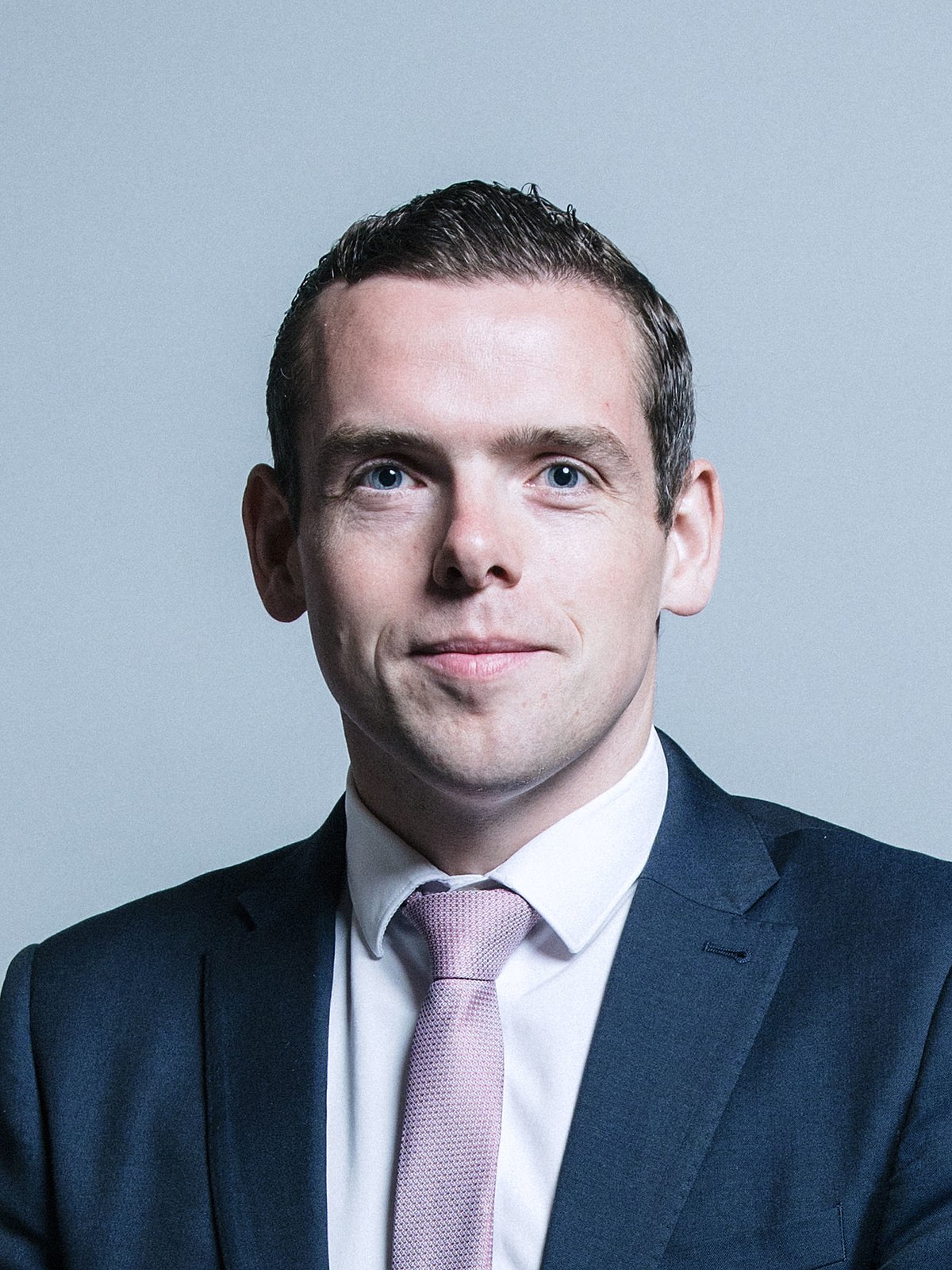
    The speech made by Douglas Ross, the Conservative MP for Moray, in the House of Commons on 19 December 2022.

    Douglas Ross (Moray) (Con)

    It is encouraging to hear support from across the House for these duty reforms, which were originally announced as a manifesto commitment at Roseisle distillery in my constituency. Of course, Moray is home to more Scotch whisky distilleries than any other constituency in the House. [Interruption.] As my hon. Friend the Member for Milton Keynes South (Iain Stewart) says, many are very good ones. I have been pressing both the Chancellor and the Prime Minister to maintain the freeze on duty for Scotch whisky for as long as possible, which is important for the entire industry and the jobs that rely on it. Will the Exchequer Secretary take on board what the Father of the House said? When it comes to the Budget in March, will the Government listen to the industry, which has time after time proven wrong Treasury officials who predicted that an increase in duty would increase revenue to the Treasury? In fact, a freeze in duty increases revenue to the Treasury and it would be welcome to see that continuing.

    James Cartlidge

    I am extremely grateful to my hon. Friend, who speaks with great knowledge on these matters. He has been a consistent champion for the Scotch whisky industry, standing up for it in this place, whether on tariffs or duties. I know that he was lobbying the Chancellor and the Prime Minster to continue the freeze, so I hope that he is pleased with the result. On what happens going forward, I will engage with the Scotch whisky industry and indeed all the other alcohol sectors. The clear point is that the extension of the freeze is good news for every single sector and I hope that colleagues welcome that.

  • Stewart Hosie – 2022 Speech on Alcohol Duty

    Stewart Hosie – 2022 Speech on Alcohol Duty

    The speech made by Stewart Hosie, the SNP MP for Dundee East, in the House of Commons on 19 December 2022.

    I welcome the statement. I have long supported an alcohol content duty regime, and I hope that it delivers the fairness that the sector needs. As a gentle aside, may I say that we did not need Brexit to bring in this regime? The UK could have applied for a derogation, but it chose, over decades, not to do that.

    I have some technical questions. The previous Chancellor, the right hon. Member for Spelthorne (Kwasi Kwarteng), announced a one-year freeze on alcohol duty in “The Growth Plan 2022”; that was due to cost £545 million in 2023-24. The current Chancellor scrapped that, but anticipates an additional yield of £1.3 billion in 2023-24; that was in the autumn statement 2022. First, how can a one-year freeze cost £500 million, while its cancellation in the same year suddenly generates £1.3 billion of additional yield? Also, we have been told that the freeze is being reintroduced and will last until August. How much will that cost the Exchequer?

    The proposals following the post-2021 Budget consultation have been reported as having a modest cost of only £25 million next year—that was in the autumn statement Green Book. But this statement seems to suggest that the cost to the Exchequer of the draught beer relief scheme alone will be £100 million a year. Will the Minister explain what the net cost of this measure will be either to the Exchequer, or to the industry? As things stand, the numbers are not clear and in some cases do not add up.

    James Cartlidge

    I am glad that the right hon. Gentleman supports the principle of the reform package that will come into place next August. I hope Members across the House can do so. The cost obviously depends on what decision is made in the Budget next year. That is a matter for the Chancellor at the time. We know that that will be on 15 March, so there is not too long to wait.

    The right hon. Gentleman made the point that it was not necessary to leave the European Union to make these changes. To be clear, EU law does not allow member states to differentiate beverages on qualitative characteristics such as whether the product is on draught. EU law actively discourages any attempt to support the on-trade through the duty system. That is also true for a system based on ABV; by and large, that would have been very difficult as well. The fact is that this is a radical reform and it has been made possible by Brexit.

  • Peter Bottomley – 2022 Speech on Alcohol Duty

    Peter Bottomley – 2022 Speech on Alcohol Duty

    The speech made by Sir Peter Bottomley, the Father of the House, in the House of Commons on 19 December 2022.

    Like the hon. Member for Erith and Thamesmead (Abena Oppong-Asare), who speaks for the Opposition, I support what has been announced today. I declare an interest: I drink most things, except super-strength draught cider.

    On wine, using an average rate of 12.5% is right; stepped rates would not have worked, because growers do not know what strength a wine will be—the strength fluctuates naturally. A revenue-neutral level makes sense. I hope that this approach will continue beyond the 18 months.

    I hope that the Minister will consider whether farm-gate concessions can be made for the growing number of vineyards in this country. I hope that between now and the Budget the Chancellor will calculate the price and tax elasticity, because often, when duty rates are frozen, revenue goes up. There have been times when the rate has gone up and the revenue has gone down, which is perverse.

    James Cartlidge

    I am grateful to the Father of the House for his question—I do not think that I will ever get another that mentions both elasticity and high-strength cider; it was an interesting combination of points. He made a very good point about wine. I have enjoyed engaging with all the main alcohol sectors, mainly in November, in the run-up to the making of this decision. As he knows, we are requiring all wine between 11.5% and 14.5% ABV to be treated as though it were 12.5% ABV for the purpose of calculating the duty rate. That will apply for 18 months, so there is a transition. We have to ask ourselves: if that were made permanent, would it not undermine a regime that is ultimately based on taxation by strength? I understand my hon. Friend’s point and will continue to engage with the sector on it.

  • HISTORIC PRESS RELEASE : Getting Ready for the Euro – Ministers to Oversee Public Sector Preparations for the Euro [July 1998]

    HISTORIC PRESS RELEASE : Getting Ready for the Euro – Ministers to Oversee Public Sector Preparations for the Euro [July 1998]

    The press release issued by HM Treasury on 1 July 1998.

    Ministers from each Government Department met for the first time today to discuss progress  in public sector planning for the introduction of the single currency on 1 January 1999.

    The meeting was chaired by Economic Secretary Helen Liddell, who said :

    “Whether or not Britain decides to join the single currency in the future, both business  and public sectors will be affected by the changes that the launch of the euro on 1  January 1999 will bring. These changes will offer both opportunities and challenges which we must all be ready for.

    “Government has a key role in ensuring that readiness. We are already committed to helping business to identify what it needs to do directly, and have taken steps to make sure that the necessary information is available.

    “We are also working to help public sector bodies – not just Government Departments but other bodies such as local authorities – to prepare themselves where their activities could be affected directly by the single currency.  They, too, will take every opportunity  to help business prepare. The Ministerial group will play a key part in coordinating activity within Government to achieve that.

    “The Government will do as much as possible to enable UK businesses to use the euro where this is relevant and beneficial for them. This includes reviewing legislation to see where we can ease the way for business. We have already identified a number of areas where action is required and are making the necessary changes.

    “There are also implications for Government Departments themselves, particularly those  which have significant overseas responsibilities. We shall look at all our policies to ensure that these reflect and take account of the changes ahead.

    “We shall continue to share experiences in preparing for the single currency, using the  Ministerial group as a forum to discuss and help to spread that knowledge  as widely as  possible to ensure that efficiency and competitiveness are sustained and enhanced.”

    The first meeting of the Ministerial group was given a presentation by Adair Turner, Director General of the CBI, on the impact of the launch of the euro on 1 January 1999 on UK business and the steps being taken to ensure that this is seen as a positive
    opportunity to benefit commercial activity.

    The Ministerial group will continue to look at all areas of Government activities and contribute to the analysis of public sector planning required to inform the programme of six monthly reports on progress in preparing for the single currency and the outline national changeover plan which will be published around the end of the year.

    1.   Departmental Ministers responsible for preparations for the single currency are:

    HM Treasury Helen Liddell
    DSS Keith Bradley
    MAFF Bernard Donoughue
    DfEE Andrew Smith
    Home Office Joyce Quin
    FCO Baroness Symons
    DTI Lord Simon
    DFID George Foulkes
    DCMS Mark Fisher
    DETR Angela Eagle
    MOD John Reid
    DoH Baroness Jay
    NIO Paul Murphy
    Welsh Office Peter Hain
    Scottish Office John Sewel
  • PRESS RELEASE : Appointment of Church Commissioner – Christopher “Kif” Hancock [December 2022]

    PRESS RELEASE : Appointment of Church Commissioner – Christopher “Kif” Hancock [December 2022]

    The press release issued by 10 Downing Street on 20 December 2022.

    The King has approved that Mr Christopher “Kif” Hancock be appointed a Church Commissioner for five years effective from 1 January 2023, in succession to Mr Duncan Owen who resigns on 31 December 2022.

    Background

    Christopher “Kif” Hancock is a partner and CIO International at Brown Advisory. He is a highly credible and experienced capital allocator and Chair of Brown’s International Investment Committee. His professional experience includes time living and working in Europe, Asia and North America with both for-profit and non-profit organisations. Since joining Brown in 2008, Kif has obtained considerable knowledge of working with and advising both institutional and private clients (including international experience) and a strong track record of capital allocation across equities, alternatives, and fixed-income investments. He is an American but he and his family have been residents in England for many years.

    Kif is a Committed Christian and volunteers for his local churches in London and Oxfordshire (St. Michael’s Chester Square and St Andrew’s Church, Kingham).

  • PRESS RELEASE : Government extends Mortgage Guarantee Scheme [December 2022]

    PRESS RELEASE : Government extends Mortgage Guarantee Scheme [December 2022]

    The press release issued by HM Treasury on 20 December 2022.

    • The Mortgage Guarantee Scheme will be extended by a year, having already helped over 24,000 households get onto the property ladder
    • Launched in April 2021, the scheme supports first-time buyers, who make up 85% of scheme transactions, buy a home with a 5% deposit
    • The scheme is just one of the ways the government is helping people with home ownership

    Under the scheme the government offers lenders the financial guarantees they need to provide mortgages that cover the other 95%, subject to the usual affordability checks, on a house worth up to £600,000.

    Launched in April 2021, the scheme has already helped over 24,000 households. It was originally planned to close at the end of this year but will now be extended until the end of 2023.

    Chief Secretary to the Treasury, John Glen MP said:

    For hard-working families facing today’s challenging economic conditions, it’s right that we continue to help them secure their first home or move into their dream house.

    Extending this scheme means thousands more have the chance to benefit, and supports the market as we navigate through these difficult times.

    Since 2010, more than 687,000 households have been helped into home ownership through government schemes. First time buyers often find it hard to save for a large deposit, and the mortgage guarantee has helped over 24,000 households (as of November 2022) overcome this barrier and secure the keys to a new home with a deposit as small as 5%.

    As well as first time buyers and current homeowners, the scheme has also helped support the wider housing sector. Lenders reduced the availability of high LTV products during the Covid-19 pandemic, with just eight 95% LTV products available in January 2021. The government’s Mortgage Guarantee Scheme helped restore competition and consumer choice to the market, which has benefited businesses and boosted the market.

    To also support people to get onto the property ladder, the government has increased the level where first-time buyers start paying stamp duty from £300,000 to £425,000. Furthermore, first-time buyers can get relief on properties costing up to £625,000, as opposed to £500,000 previously. Both of these measures are time-limited to April 2025.

    The government has also continued to provide a range of other options to support home ownership and the wider housing sector. For example, the Help to Buy ISA and Lifetime ISA have collectively facilitated over 618,000 households get on to the property ladder.

  • PRESS RELEASE : New appointments to the Animal Welfare Committee [December 2022]

    PRESS RELEASE : New appointments to the Animal Welfare Committee [December 2022]

    The press release issued by the Department for Environment, Food and Rural Affairs on 20 December 2022.

    The Director of Animal and Plant Health and Welfare, Gareth Baynham-Hughes, has appointed seven new members of the Animal Welfare Committee (AWC), including a new Chair.

    Professor Madeleine Campbell has been confirmed as the new Chair of the AWC. Professor Campbell will replace Peter Jinman who leaves the committee on the 31 December after ten years as Chair.

    The other new appointments to the AWC are Dr Gareth Arnott, Ms Emily Craven, Professor Simon Girling, Dr Julian Kupfer, Stephen Lister and Julia Wrathall. The new appointees will replace current members Martin Barker, Dr Andy Butterworth, Richard Cooper, Dr David Grumett, Dr Maria Carmen Hubbard, Richard Jennison and Richard Kempsey who will complete their terms on the 31 December.

    Each new member will be appointed from the 1 January 2023 until the 31 December 2026 for an initial term of four years.

    The AWC advises the Department for Environment, Food and Rural Affairs (Defra) and the Scottish and Welsh Governments on the welfare of animals. This includes farmed, companion and wild animals kept by people.

    Biographical details

    Professor Madeleine Campbell

    • Professor Madeleine Campbell has over 10 years of experience chairing animal welfare groups, including the British Veterinary Association (BVA)’s Ethics and Welfare Advisory Panel (EWAP).
    • She is Professor of Veterinary Ethics at Nottingham University and a Veterinary Specialist in Animal Welfare Science, Ethics and Law.

    Dr Gareth Arnott

    • Gareth is a Senior Lecturer in Animal Welfare and Behaviour at Queen’s University Belfast.

    Ms Emily Craven

    • Emily is a farm animal vet and the Ruminant Clinical Director of Oakwood Veterinary Group.

    Professor Simon Girling

    • Simon is the Head of Veterinary Services for the Royal Zoological Society of Scotland and Chair of the Zoos Expert Committee (ZEC).

    Dr Julian Kupfer

    • Julian is an experienced veterinary medicines consultant and Chair of the Animal Welfare Foundation.

    Stephen Lister

    • Stephen is an independent veterinary consultant.

    Julia Wrathall

    • Julia is an independent animal welfare consultant for JW Premier Animal Welfare Consulting.
  • Abena Oppong-Asare – 2022 Speech on Alcohol Duty

    Abena Oppong-Asare – 2022 Speech on Alcohol Duty

    The speech made by Abena Oppong-Asare, the Labour MP for Erith and Thamesmead, in the House of Commons on 19 December 2022.

    I thank the Minister for advance sight of his statement. The Government have confirmed that they are freezing alcohol duty rates for six months. I know that the sector will welcome the announcement, especially given the difficulties that businesses are facing, whether they are producers, suppliers or hospitality venues. I must say, however, that it is absolutely laughable that the Government have announced the change in the name of certainty. We should call it what it is: a U-turn. The previous Chancellor announced a freeze, the current Chancellor scrapped it, and now it is back on.

    How did we get here? In October 2020 the Government announced a call for evidence to seek views on how the alcohol duty system could be reformed. At the time, they said that they would make the system

    “simpler, more economically rational and less administratively burdensome on businesses and HMRC.”

    What we have seen since then, however, is indecision, U-turns and delays.

    The Government finally published a response to the alcohol duty consultation in September this year. Then in the shambolic mini-Budget that crashed the British economy, the then Chancellor announced a freeze on alcohol duty that was due to come into force in February 2023. The new Chancellor scrapped the planned freeze, however, in October’s autumn statement—just a couple of months ago. We now have a screeching U-turn; the freeze is back in place.

    We see again that the Government have no long-term plan for the British economy. They cannot provide the certainty that businesses and their hard-working employees need to plan for the tough winter ahead. They have left businesses and consumers out in the cold. They may not want to hear it, but that is the reality. They are unsure what regulatory systems will be in place in as little as two months.

    Today, Labour found that more than 70,000 venues have had to reduce their opening hours due to the price of energy bills, which means that almost a third of pubs, bars and hotels are missing out on customers at the busiest and most profitable time of the year. Those businesses and producers of wine, beer, cider and spirits enrich our communities and boost our high streets. I recently popped into the Standard, a pub in my Erith and Thamesmead constituency, which is really struggling with soaring energy bills and the lack of Government support. It needs the Government to be on its side. The Government promised to tell the House what the new energy bills support scheme would look like before Christmas, but we have yet to hear anything from them. Only Labour has set out a long-term plan to get our economy growing again.

    Looking to the future, we agree with the principles behind the alcohol duty review and we want the alcohol duty system to be made simpler and more consistent. We recognise that there is a balance to be struck between supporting businesses and consumers and protecting public health, and maintaining a source of revenue for the Exchequer, but this statement leaves many questions unanswered.

    Can the Minister give an indication of his plans for duty reforms in the coming spring? Can he confirm whether the alcohol duty reform package will be implemented in full? If so, what impact assessment has been carried out on the impact of the transition to the new duty regime? I hope that he can provide some clarity. The alcohol sector and the businesses and jobs that it supports have suffered enough uncertainty and U-turns. These are major changes that will affect businesses and consumers in all our constituencies, so I hope that they will be properly thought through and that we will not see last-minute policy announcements and changes, as we have today.

    James Cartlidge

    I am grateful to the hon. Lady. To be clear, this is good news for every single part of our alcohol industry and for those who drink in our pubs. Crucially, it gives certainty to the industry. The hospitality industry employed 2.1 million people at the latest reckoning, so it is a huge part of our economy and we want to do what we can to support it.

    The hon. Lady mentioned a U-turn. To be clear, we said that we would introduce a radical reform of alcohol duty, and we will introduce that reform. It will come into effect next August. That reform could not have happened if we had not left the European Union. It will introduce, for the very first time, differential duty rates on tap and in the supermarkets. The public want that, because they value their pubs and understand the importance of pubs to their communities. [Interruption.] The hon. Lady intervenes, having sat down. She talked about her local pub. Obviously, we want to assist her local pub, and all pubs up and down the country; that is why we have put in place an energy bill relief scheme worth £18.1 billion, which is a huge intervention.

    The energy bill relief scheme is very generous, but it is expensive, and we need to ensure longer-term affordability and value for money for the taxpayer. That is why we are carrying out a review of the scheme, with the aim of reducing the public finances’ exposure to volatile international energy prices from April 2023. We will announce the outcome of the review in the new year to ensure that businesses have sufficient certainty about future support before the scheme ends in March 2023. We should remember that this energy-related support comes on the back of the enormous support that we put in place during the pandemic. There were grants, bounce back loans, and of course furlough for all staff working in the hospitality sector.

    We are proceeding with this ambitious reform package next year. We felt that it was appropriate to give the sector certainty as soon as possible that it would face only one uprating. That is the right thing to do, and it shows that the Government are supporting the hospitality industry.

  • James Cartlidge – 2022 Statement on Alcohol Duty

    James Cartlidge – 2022 Statement on Alcohol Duty

    The statement made by James Cartlidge, the Exchequer Secretary to the Treasury, in the House of Commons on 19 December 2022.

    With permission, Mr Deputy Speaker, I would like to make a statement on the alcohol tax system.

    When in the autumn 2021 Budget the then Chancellor—now Prime Minister—announced the biggest reforms to alcohol duty in 140 years, he did so in order to change an outdated and impractical system. Following our country’s departure from the EU, our changes will overhaul the UK’s obsolete rules, which our membership of the EU precluded us from doing. With these new freedoms, we will embark on radically simplifying the entire system and slashing red tape.

    The new alcohol tax system will adopt a common-sense approach whereby the higher a drink’s strength, the higher the duty, while new reliefs will be made available to help pubs and small producers to thrive. In doing so, we have made a system that fits with our national priorities, encourages growth and innovation, aligns with public health goals and is fairer for hard-working producers. The aim that lies at the root of this reform is to make the system fairer, simpler to use and more supportive of business.

    Notwithstanding those ambitions, we fully understand that businesses face difficulty and uncertainty in the face of rising energy bills and inflation. I have listened to and value stakeholders from across the sector, and I understand that they want certainty and need reassurance in these challenging times. That is why today I can confirm that the freeze on alcohol duty rates has been extended by six months, to 1 August 2023.

    Although new duty rates typically come in on 1 February each year, I can confirm that the Chancellor will instead make his decision on future duty rates at the spring Budget 2023, to give businesses certainty and time to prepare. To further support the industry, we are going further by confirming that if changes to duty are announced then, they will not take effect until 1 August 2023. This is to align with the date that historic reforms of the alcohol duty system come into force, and amounts to an effective six-month extension to the current duty freeze. Most importantly, to minimise the burden on business, it avoids the sector having to deal with multiple changes to duty rather than one.

    As I mentioned a moment ago, the alcohol duty reforms will help create a simpler, fairer and healthier duty system. A higher rate for sparkling wines will come to an end, meaning that they will pay the same rate as still wine. Liqueurs will be put on the same footing as fortified wine, meaning that a sherry will now pay the same duty as a spirit liqueur, and the duty rate on super-strength white cider will increase in order to address public health concerns.

    New draught relief will be worth £100 million a year, and to ensure that smaller craft producers can benefit, the threshold for qualifying containers will be 20 litres. The wine industry will also be supported as it adapts to the new system. Duty on all wine between 11.5% and 14.5% alcohol by volume will have its duty calculated as if it were 12.5% ABV. This will last for 18 months from the implementation of the new system.

    Pubs, cider makers, brewers, distilleries and wine makers have an historic place at the heart of our communities. They provide not only thousands of jobs, but hubs that enrich and often define the social fabric of our villages, towns and cities. By saying to the industry that it will face just one single industry-wide change next summer, rather than two over the course of the year, we are giving it maximum certainty. Hospitality is a major part of our economy, and while these remain challenging times, we are doing everything we can to support individual hospitality businesses of every size so that they can have a prosperous new year. I commend this statement to the House.

  • David Linden – 2022 Speech on the Convention on Biodiversity COP15

    David Linden – 2022 Speech on the Convention on Biodiversity COP15

    The speech made by David Linden, the SNP spokesperson on the Environment, in the House of Commons on 19 December 2022.

    I am grateful to the Secretary of State for advance sight of her statement. Whether it is local schools such as St Paul’s Primary School in Shettleston having a focus on biodiversity in the school garden or global summits such as COP15, we all have our part to play. So we on these Benches welcome any progress made at COP15.

    Scotland’s new biodiversity strategy includes the COP15 target of halting biodiversity loss by 2030 and goes further, with a target of restoring biodiversity by 2045. So will the British Government likewise produce a new biodiversity strategy, one that matches both the COP15 and Scottish targets? Ministers in Holyrood have recognised that the climate and biodiversity crises are inextricably linked, and that one cannot be tackled while the other is ignored. Does the Secretary of State agree with that, and agree that decisions to increase fossil fuel production and use will only accelerate biodiversity loss?

    The Scottish Government led the UK in recognising the biodiversity crisis and have now led the UK in establishing a dedicated £65 million nature restoration fund. Will the British Government follow that example and create a dedicated biodiversity restoration fund for England? Finally, concerns have been raised about the sidelining of African states at the very end of the COP15 process, and the overruling of their calls for dedicated funding to support biodiversity efforts. Does the Secretary of State share our deep concern at global south nations being ignored? Does she agree that those who face the brunt of the climate and biodiversity crises must be heard in global climate negotiations?

    Dr Coffey

    I thank the hon. Gentleman. The Scottish Minister, Lorna Slater, was out in Montreal as well, and it is really important that the UK works together to improve nature. I give credit to Scotland in that regard.

    However, I say to the hon. Gentleman that we already have established funding, with the nature for climate fund, and through the blue planet fund we have already undertaken a number of investments that will improve nature, not only in this country, but around the world. I am particularly thinking of Commonwealth countries, but this also applies to overseas territories and the south, to which he refers. That is why the importance of the £30 billion funding that will go in was discussed back and forth, and the UK was very happy to make sure that it got delivered. We recognise the need to ensure significant investment all around the world and that value is attributed to nature as much as it is to climate, if not even more so. Candidly, we can do as much as we like on tackling climate change, but if we do not preserve and restore nature, it will effectively be for nought. That is why we have put so much work into doing this. It is why, at COP27 in Egypt, our Prime Minister set out the importance of restoring nature, saying that it was critical in terms of tackling climate change. The hon. Gentleman may be aware of our environmental land management scheme. We have started the first phase of the sustainable farming incentive, and we will be announcing more early in the new year as we make the transition from the traditional European funding, which is effectively area-based—on how much land people owned—to farmers being paid for certain goods in order to improve the environment and reduce carbon emissions.