Category: Wales

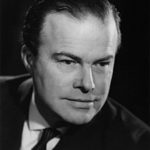
  • David Gibson-Watt – 1967 Speech on Aberfan Inquiry

    David Gibson-Watt – 1967 Speech on Aberfan Inquiry

    The speech made by David Gibson-Watt, the then Conservative MP for Hereford, in the House of Commons on 26 October 1967.

    I am sure that the House will be grateful to the Secretary of State for the very sympathetic way in which he has dealt with this very difficult subject, for 21st October, 1966, will certainly rank as one of the grimmest days in Welsh history. It is not the first time that a mining community has suffered, for mining is a hard and dangerous calling, but it is the first time in the long history of the mining industry that the young have had to suffer.

    Anyone who knows the valleys of Wales will agree that they have a special character. They are close communities. The valley which contains the two villages of Aberfan and Merthyr Vale has a community that is especially close, for a great proportion of the men employed there are employed in the Merthyr Vale Colliery. Mining, with all its hazards, creates a particular fraternity among those men, and this closeness was certainly never shown to better advantage than in the awful moments that followed the fatal disaster in October last year.

    Whatever we say today in this debate, we should bear in mind that our main objective is to heal and to give strength to these people, and we should honour those who have suffered and not add to their suffering.

    We would all wish to pay tribute to the many who helped after the disaster—the many volunteers spearheaded, of course, by the miners themselves; to the police, the Civil Defence, the ambulance and nursing services and other public bodies, the many voluntary services and organisations and, indeed, to the troops who came in later. Nor should the Welsh Office be without its share of credit, as my right hon. Friend the Leader of the Opposition said in the House some days after the disaster.

    The administrative job, as the Secretary of State has said, was complicated by two factors: first, Aberfan falls under two authorities—Glamorgan and Merthyr Tydvil; secondly, the vast number of people who flocked to Aberfan on that day, some to gaze helplessly but many more to dig and to work. I myself, like other Members of the House, saw dozens of young volunteers going in their cars with equipment, only to be turned away, so great was the crush within the valley. Considering these two problems—the duplication of administration and the crowds who flocked there—the rescue and the clearance work was certainly very well done.

    I would ask the Minister whether the aftermath of this disaster has perhaps changed some of the thinking in the Home Office on this matter. I also ask this question: on such an occasion, who should be in charge—a Minister, a mayor, a policeman or a Civil Defence officer. I think perhaps more guidance might be given on this point from the Home Office in case of any trouble in the future.

    The Tribunal set up by the Secretary of State for Wales was, as the right hon. Gentleman said, composed of three well-known men, and was under the chairmanship of Sir Edmund Davies, a Lord Justice of Appeal, a popular man who was born and bred in the valleys. It is clear that they carried out their unpleasant and difficult task with sympathy and competence, and, indeed patience, for this Tribunal went on for an unnecessarily long time.

    The Tribunal’s Report is clear. It is detailed and it makes recommendations to help the avoidance of future such disasters. On page 131 is the summary of its findings. The first finding is: Blame for the disaster rests upon the National Coal Board. The reasons for its findings are detailed in the Report, and the men whom the Tribunal describe as not being without blame have been named. I do not intend to pursue this. It is a heavy punishment indeed to be named by a tribunal of this sort.

    But what a tale this Tribunal unfolded. It is a sombre catalogue of incompetence, subterfuge and failure, of warnings disregarded, a complete exposure of the lack of communication within the National Coal Board. It must seem incredible to anybody who reads this Report that Tip No. 7 on Merthyr Mountain should ever have been chosen and that it should have been tipped on for so long, when the water problems was abundantly clear, when the tailings problem was admitted and when there were so many complaints about Tip No. 7.

    Complaints came from several organisations, including the Merthyr Corporation, many individuals and, in particular, Councillor Mrs. Williams, whose strong complaint in the Merthyr Planning Committee was reported in the Merthyr Express in 1964. She said: If the tip moved it could threaten the whole school. The complaints were frequent.

    Let me quote but two from the Merthyr Corporation. They started in July, 1959, as we are told on page 52 of the Report. Letters from the Borough Engineer, Mr. Jones, in 1963, referred to apprehensions about the movement of slurry to the danger and detriment of people and property adjoining the site of the tips. The Deputy Borough Engineer, Mr. Bradley, in 1963, wrote a number of letters which were headed Danger from coal slurry being tipped at the rear of the Pantglas Schools. To all these complaints the National Coal Board turned a deaf ear. It went on tipping. I cannot entertain the suggestion that the Merthyr Corporation can be held responsible in any way, nor, indeed could the Tribunal. As Mr. Alun Davies, Q.C., said at the Tribunal: …perhaps the natural mistake made by the Merthyr Corporation was that it accepted the opinions of the experts of this organisation at their own valuation. Little did the Corporation realise how empty were the assurances given by their experts, but in my submission this cannot be blameworthy conduct as between responsible men. To the several complaints from the Merthyr Corporation the answer was given by the National Coal Board that experts were being used. In 1950, the Coal Board wrote to the borough engineer saying that the Board was constantly checking the position of all these tips. In fact, it blinded them with science.

    Alderman Tudor, himself an important witness, who gave considerable warnings to the Coal Board, said to the Tribunal: Remember, I was a layman with limited knowledge of tips. I had raised the matter of tips in the Consultative Committee and I was compelled to accept what Mr. Wynne told me, recognising that he had far more ability than had. And I thought that he was capable enough of making a decision. If he was not capable enough of making a decision, well then, he should have called someone else in. As a layman I could not argue with him, because he could have blinded me, because he knew more of the pits and he knew more of the pit work than I did. The Coal Board blinded them all. It was deaf to all warnings, written and vocal. It was blind, also, to the visual warnings. There has been tip slips on Mynydd Merthyr, which could all have been seen by those in charge. In 1944 a rotational slip on tip 4 was followed by a flow slide; between 1947 and 1951 a rotational slip on Tip No. 5; in 1963 a rotational slide on Tip No. 7 followed by a flow slide. Between 1964 and October, 1966 there were further slipping movements on Tip No. 7. There were also the other tip slides at Tymawr and Cilfynydd, from the neighbouring valleys.

    Yet something stopped these men taking action. Something stopped them concentrating on this tip about which they were constantly warned. What was it? Was it just a combination of ignorance and failure to take responsibility? Was it the pressure of other work at the pit itself and in the rest of the area? Was it the fear that, if they stopped tipping on Tip No. 7, there was very little other land to tip on and the pit itself might be in danger of closure?

    The evidence of the hon. Member for Merthyr Tydvil (Mr. S. O. Davies) reflects this question, but the Tribunal, in investigating it, did not find sufficient evidence to support it. Or was it the same attitude which any of us could have taken, an attitude which exists in the minds of those who live below a volcano and which may be epitomised in just a few words—”It will never happen”?

    The Tribunal just blames the National Coal Board and says that there was an absence of tipping policy and no legislation dealing with tip safety. Although the Tribunal found blame for the disaster to rest with the Coal Board, it took a long time for the Coal Board to admit it. At the beginning, its statement gave no hint of acceptance at any level of any degree of blame for the disaster. Indeed, the Board’s counsel said: The Board’s view is that the disaster was due to a coincidence of a set of geological factors, each of which in itself is not exceptional but which collectively created a particularly critical geological environment”. Those words were later shown to be false, for, on the 65th day of the hearing, the Tribunal heard Mr. Piggott, the Board’s expert, say that the only exceptional feature about Merthyr Mountain lay in the fact that it had been used as a tipping site at all. Mr. Sheppard, the Director-General of Production of the National Coal Board, said in answer to Mr. Wien, the Board’s counsel, All the geological features could have been previously appreciated”. There was, in fact, a definite and continued attempt, in the view of the Tribunal, by the Coal Board to avoid responsibility.

    Lord Robens’ original statement and his evidence did not make things any easier. After he had been to Aberfan, Lord Robens told a reporter: It was impossible to know that there was a spring in the heart of this tip which was turning the centre of the mountain into sludge”. Clearly, this was inaccurate, and it was said without technical advice. The evidence which Lord Robens gave to the Tribunal later was self-contradictory and inconsistent, so much so that counsel for the N.C.B., in his closing address, said that it had not assisted the Tribunal and asked that it be disregarded.

    Lord Robens was in a difficulty. He must, like anyone connected with this matter, have been in a state of mental turmoil. He made his inaccurate statement to the television reporter before he had been able to get proper advice. But, surely, he must afterwards have known what the Coal Board’s line was to be before the Tribunal, after that statement and before the Tribunal had met.

    Lord Robens said in his evidence—this is recorded on page 91 of the Report —that by the time the inquiry started on 29th November he was satisfied that the causes were reasonably foreseeable. If that was so, why did the Coal Board persist in its attitude until day 65, when Mr. Piggott, the Board’s expert, finally said: All the geological features could have been previously appreciated”? This is not easy to understand. It is easy, as the Tribunal said, for anyone to be guilty of hindsight. It is easy for us to criticise and to accuse with the Report before us. But it is not easy to understand Lord Robens’ attitude from the time of the disaster to the end of the Tribunal. Blame for the disaster rests with the Coal Board. That is the Tribunal’s first finding, and, as the Secretary of State said, certain officials of the Coal Board have been moved within the Board’s organisation.

    Lord Robens offered his resignation to the Minister. It was certainly the honourable thing for him to do, as head of this vast industrial empire which was blamed for the disaster by the Tribunal. The Minister has refused to accept his resignation. I ask the Minister today to say a little more about his reasons for not accepting it. The only point in the Secretary of State’s speech in which I did not fully concur was when he said that the Minister had given his reasons. The copies of the letters passing between the chairman of the National Coal Board and the Minister do not give us the reasons.

    In his letter to Lord Robens rejecting his resignation, the right hon. Gentleman said: Nor do I consider that the conclusions of the Tribunal are of a kind which call for your resignation. The conclusions of the Tribunal were that the Coal Board was totally responsible for the disaster. The evidence of Lord Robens was not only late, but it was found to be useless by the Coal Board’s counsel, so much so that, as I have said, he asked for it to be disregarded. I cannot help saying to the Minister that I am sure he has further reasons for refusing Lord Robens’ resignation, and from our side we should very much like to hear them. I repeat that we are not asking that Lord Robens should resign. We want only to be told more about the Minister’s reasons.

    The right hon. Gentleman may say that Lord Robens’ leadership is essential to the Coal Board in the difficulties which the industry faces, and with this we could agree. It is a complicated industry. In Wales alone, just under 60,000 men are still employed in just over 70 collieries. Lord Robens has done much to restore morale within the mining industry.

    I put these questions to the Minister. How much does this huge industry decentralise? How much more will it decentralise now, since the study which, we are told, has taken place? How much responsibility did the divisions take in the past? I ask this question because, in all the evidence which was brought before the Tribunal, there was one person who was not called by counsel for the Coal Board. I find it curious that Mr. Kellett, the Chairman of the South-Western Division, was not called to give evidence regarding a pit disaster which occurred within his division. I hope that the Minister will be able to answer that tonight.

    The Minister of Power (Mr. Richard Marsh) May I be clear on the question about Mr. Kellett which the hon. Gentleman asks? Is he asking me why no one —including the Tribunal itself—called Mr. Kellett, or merely why the Coal Board’s counsel did not call him? The Tribunal could have called anyone it wished. It did not call him.

    Mr. Gibson-Watt The point of my question is that one would have expected counsel for the Coal Board to call the chairman of the division. I do not understand it. If there is a reason, I am very ready to accept what the Minister may say. I should like him to give us an answer on the point.

    The Coal Board, like other nationalised industries, enjoys immunity from Parliamentary control. No Member of Parliament may ask Questions in the House about the administrative matters of nationalised industries. This gives the industries, as it were, an impregnability which I am not always sure is in their own interests. In this case, it was not possible for the hon. Member for Merthyr Tydvil to come to the House and ask the Minister concerned about the tip menace. The general public cannot understand this prohibition on Parliamentary probing. Some changes could be made. After all, Mr. Aneurin Bevan did not make that mistake with the National Health Service when he introduced it. Would it not be possible for this matter to be considered by the Select Committee on Nationalised Industries?

    Many hon. Members wish to speak in the debate, and, therefore, I want only shortly to say a word about the repair work which has taken place on the Aberfan complex in draining, terracing and reseeding Tip No. 7. As far as one can judge, this has been well done, and when one goes up the valley one, sees the freshly seeded grass. The Under-Secretary of State spoke the other day of the £1 million which is to be spent by the Coal Board in reshaping the tips on Merthyr Mountain, with reseeding and planting of fair-sized trees. It remains to be seen whether this will be adequate. Fair-sized trees do not grow easily, particularly in coal tips, and the job should be done by experts.

    I have no doubt that it will be, but it is not clear that Tips Nos. 4 and 5 are to be included in the landscaping. The Minister has the advantage of me, for he has seen the model and I have not. But we cannot accept any excuse that Tip No. 5 is still burning and, therefore, cannot be removed. That should be made very plain to those who are clearing up that part of Merthyr Mountain. It was stated in the Tribunal, by one of the Coal Board experts, that One may conclude that No. 5 has been standing and is standing at a very low factor of safety. Therefore, we shall need a good deal of convincing that adequate work is being done.

    As the right hon. Gentleman said, there has been a good deal of Press and television coverage of the whole affair. Whatever people’s reactions to some of it may have been, it should at least remind every one of us of the debt the country as a whole owes to the mining communities and the country’s responsibility to see that the existing tips are safe, and that the lives of those living in the valleys shall not only be safer but shall be made less drab by reshaping, reseeding and re-afforestation.

    It is only when one lives there or goes there that one realises that in South Wales there are not hundreds but thousands of coal tips. The real difficulty here, unlike other coal-mining areas, is that there is practically nowhere to put the tips except on the slope at the side of the valley. It is immaterial whether the slipping tip is now the property of the Coal Board or not. A number of small though potentially dangerous slips have taken place in the past few months, and throughout periods of heavy rain, such as we had recently, there is a great deal of anxiety about them.

    The Secretary of State has announced that grants of between 85 and 95 per cent. will be available to local authorities under the 1966 Industrial Development Act. I do not believe that that goes quite far enough. Any local authority which is tackling a scheme of any size—say, of £250,000—and which is asked to provide 10 per cent. of the money to do the repairing and reshaping will have to find a large amount from the local ratepayers. It will probably be dealing with a coal tip that was put there some years ago and in many cases might be just a relic of a bygone economic age. Therefore, I hope that the Government will reconsider this and perhaps be even more generous to the local authorities than they have been so far.

    I have no doubt that the disaster at Aberfan has taught a terrible lesson to the Coal Board, and no doubt it has made certain reorganisations. But the disaster has also brought home to us the lesson that there are many tips that need remedial action in order to relieve anxiety.

    I do not wish to say anything in detail about the disaster fund. When he winds up, will the Minister tell us how the fund, totalling nearly £2 million, has been administered, and what is the up-to-date position?

    I have put a number of questions to the Minister. First, will he give us the reasons why he did not accept Lord Roben’s resignation? Second, will he say why the Chairman of the South Western Division did not give evidence at the Tribunal? Third, will he consult his colleagues about changing the rules which prevent hon. Members from asking Questions about nationalised industries in the House? Fourth, will he ensure that the Coal Board adequately reshapes the tips at Aberfan? Fifth, will the Government be more generous to local authorities? Finally, will he tell us more about the disaster fund?

    Having put those questions to the Minister, I conclude by saying to all who have suffered at Aberfan. “We wish you strength and faith to overcome your grief.”
  • Cledwyn Hughes – 1967 Statement on Aberfan Inquiry

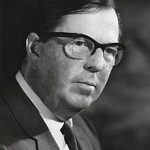
    Cledwyn Hughes – 1967 Statement on Aberfan Inquiry

    The statement made by Cledwyn Hughes, the then Secretary of State for Wales, in the House of Commons on 26 October 1967.

    I beg to move, That this House takes note of the Report of the Tribunal appointed under the Tribunals of Inquiry (Evidence) Act 1921 to inquire into the disaster at Aberfan (House of Commons Paper No. 553). Just over a year ago this House and the whole world was shocked to learn of the dreadful tragedy which had occurred at Aberfan, a small mining village near Merthyr Tydfil. Hundreds of thousands of tons of colliery waste suddenly moved down the steep mountainside and overwhelmed a large part of the junior school and a number of houses in the vicinity. Desperate efforts at rescue were made by those nearby, who were joined by others who poured into Aberfan from all over South Wales and beyond, but no one was taken out of the ruins alive later than two hours after the first movement of the tip, and a hundred and forty four persons, the majority of them young children, lost their lives.

    As soon as news of the tragedy reached me I went immediately to Aberfan to see whether I could be of use. After seeing the site my first concern was to clarify the division of responsibility for the work that was going on. The Chief Constable of Merthyr had been placed in overall operational charge, and I confirmed this. The National Coal Board was asked to concentrate on the stabilisation of the tip, and the local authority was asked to take full responsibility for all the rescue work. The other local authorities, who had so readily and promptly come to help, willingly accepted my invitation to put their resources temporarily under the control of the officials of the Merthyr Tydfil Borough Council.

    Later that evening I was joined by my right hon. Friend the Prime Minister, who made it clear that the whole of the resources of the Government were at my disposal for the rescue operation. Other colleagues in the Government also came to the site.

    I have already in this House thanked all those who took part in the rescue operation for the splendid work which they performed in the most harrowing circumstances.

    No time was lost in setting up a Tribunal of Inquiry into all the circumstances of the disaster and we were fortunate to secure the services as Chairman of Lord Justice Edmund Davies, a Welshman born and bred in a neighbouring valley and renowned for his distinction as a lawyer and for his humanitarian sympathy, and as members of the Tribunal with him, Mr. Harold Harding, the eminent civil engineer, and Mr. Vernon Lawrence, the greatly respected former Clerk to the Monmouthshire County Council.

    Lord Justice Edmund Davies promptly visited the scene of the disaster and arrangements were quickly made for the Tribunal to sit at Merthyr Tydfil and a preliminary meeting was held on 8th November. The proceedings were opened on 29th November by my right hon. and learned Friend the Attorney-General, and so began what was to prove the longest inquiry of its kind in British legal history.

    Written statements were taken by the Treasury Solicitor from all who wished to give evidence, about 250 witnesses in all, and of these 136 gave oral evidence also, being examined and cross-examined by counsel and questioned by members of the Tribunal. Including the preliminary meeting the Tribunal sat in public for 77 days, first at Merthyr Tydfil and later at Cardiff, and commanded, I believe, universal admiration for their patience and thoroughness in elucidating the facts. The Tribunal finally rose at the end of April and the members then addressed themselves to the massive task of sifting the evidence and drawing up their report and recommendations.

    As the House knows, the Chairman placed a copy of the Tribunal’s Report in my hands in the latter half of July and it was printed by order of the House and published on 3rd August. It is not my intention to go through the Report, but I am sure that it would be the wish of the House that I should express our admiration for the high sense of duty with which the Tribunal applied itself to its most onerous task and our gratitude for its findings and for its recommendations on the measures needed to prevent a recurrence of such a disaster. These findings and recommendations, as has been made clear already, have commanded general acceptance by Her Majesty’s Government. We are all much indebted to Lord Justice Edmund Davies and his colleagues who have performed a great public service.

    Before I come to action taken on receipt of the Report, I should like to say a word or two about action taken during, and even before, the sittings of the Tribunal. Immediately after the disaster the National Coal Board ordered an inspection of all tips, active or disused, in the Board’s ownership and my right hon. Friend, the Minister of Housing and Local Government and I invited local authorities in England and Wales, invoking the assistance of the National Coal Board as necessary, to arrange for an inspection of all tips in private ownership. These measures disclosed potential instability in several tips and appropriate precautions were taken and remedial action put in hand at once.

    The incidents which occurred during the heavy rains of last week, however, although relatively minor in character, demonstrated that some tips can still present problems and that much remains to be done. As hon. Members will hear from my right hon. Friend who hopes to wind up this debate, the efforts of the National Coal Board, the Government, and all concerned, are being directed to ensure that all problems, both large and small, can be foreseen and promptly dealt with.

    One of the results of the disaster at Aberfan was to give a new stimulus also to the effort to clear up the land left derelict by industrial processes of the past, a problem of which everyone has long been uncomfortably aware, especially in the mining valleys of South Wales. The objective of this effort is not only to reclaim land now useless so that it may be available for industry or housing or other beneficial use, but also to make these areas more attractive to incoming industry and for those who live in them. To pursue this objective more effectively, shortly after the disaster I set up in the Welsh Office in Cardiff a Derelict Land Unit to work closely with the local authorities in preparing schemes of rehabilitation and getting them carried out.

    With the co-operation of the Board of Trade, progress has already been made to an extent which is, I think, most encouraging. So far, the unit has had discussions with 60 local authorities and has visited 115 derelict sites, covering approximately 2,650 acres, in 42 of these local authority areas. The unit has been asked to help by preparing outline proposals for 48 sites, covering about 1,000 acres, and has prepared such proposals for 10 of these sites and is at present engaged on preparing them for others.

    The first stage of one large tip scheme has been completed and work on others is well under way—for example, work on the huge Lewis Merthyr tip in the Rhondda, being done in conjunction with a coal recovery operation. Achievement of the objective inevitably takes a very long time. One cannot heal in a day the scars of great wounds made over generations. It is a task of great magnitude. But during this past year much more work has been done or started than in the whole of the preceding five years—and the way has been prepared for a much accelerated rate of progress in the future.

    The National Coal Board has also changed its basic structure and now has three levels of authority instead of the former five. This change, which was in hand before Aberfan for other reasons, should go a long way to reducing the difficulties of communication to which the Tribunal drew attention. This reorganisation took effect from the beginning of April this year. The Board’s civil engineering organisation has also been strengthened and a post of area civil engineer has been created in each area. The many detailed measures which the Board has taken to improve its organisation and avoid blurring of responsibilities are summarised in a note which has been made available in the Vote Office by my right hon. Friend the Minister of Power.

    Now to return to the Report. The oral evidence tendered to the Tribunal was recorded in a daily transcript which was made available to all the parties appearing before the Tribunal, and of course, to the Tribunal members. Copies of the written evidence received a similar circulation so far as the number of copies available permitted. The Tribunal, in its Report, quotes freely from both the oral and the written evidence and the Report promised the publication of the papers recording the results of the investigations carried out, in view of their scientific interest and importance.

    Arrangements for the publication of this material are well forward, but I must tell the House that the volume is unlikely to appear before next Easter. The reason for this is that it is necessary to redraw, so as to render them suitable for printing, the large number of maps, diagrams and drawings which accompany the text. To publish the text alone would be simpler, but useless, as much of it is a commentary on the illustrations drawings and diagrams. The work is going ahead with all speed and I am told that those who are familiar with the processes of printing scientific documents will be well satisfied if the date I have mentioned can in fact be met.

    Now I come to the Tribunal’s lessons and recommendations and the action which is being taken, or has already been taken, to implement them. Some, as the Tribunal pointed out, require legislation and this is being prepared with a view to its being introduced next Session.

    One of the Questions to be considered is what should be done about the remaining tips at Aberfan. I say “remaining tips” because, during the course of the very extensive work which has been done by the National Coal Board since the disaster, to ensure safety, the rest of the disaster tip has virtually disappeared, and the area of hillside over which it slipped has been cleaned up and covered with a new growth of grass.

    In the spring of this year, the National Coal Board commissioned a landscape consultant, who has lived 20 years in Wales, to prepare a scheme taking into account all the considerations. This scheme, illustrated by a large scale model, was explained to representatives of the Aberfan Parents and Residents’ Association, accompanied by their expert advisers, and to representatives and officials of the Merthyr Tydfil Corporation, at a meeting in the Welsh Office a week ago, under the chairmanship of my hon. Friend the Under-Secretary of State. The model is now on display in the village of Aberfan.

    This scheme incorporates all the further safety measures proposed by all the expert advisers who gave evidence before the Tribunal. Apart from these further safety measures, the proposals involve reducing the height of the tips, smoothing the contours, and sowing and planting the whole area below the area of burning tip material with grass, gorse, broom and a variety of trees, including some fairly large transplanted trees.

    I understand that the preliminary civil engineering works—that is to say, the further drainage measures, the removal and redisposition of substantial quantities of tip material, and the terracing—can be completed in about a year. If a beginning is made soon, perhaps all and certainly the greatest part of the sowing and planting can then be done in the planting season of the winter of 1968–69; and, by the spring of 1969, not only would the whole of the tips complex be greatly altered in outline, but also the whole of the area below the burning tips would be green.

    Most of the Tribunal’s recommendations are of general application. First of all, the Tribunal stated that tips should all be regarded as potentially dangerous, although the Tribunal recognises that the dangers mainly arise with active working tips; secondly, tips should all be treated as engineering structures and, therefore, the procedures of preliminary site investigation and subsequent control customary in other branches of civil engineering should be applied. These two propositions are accepted by the National Coal Board and are already being acted on. I commend them to all who are in any way concerned with spoil heaps, whether connected with the coal industry or not.

    I have already mentioned the new structure of the National Coal Board, which will improve, among other things, the state of internal communications. The observations of the Tribunal upon this aspect are not, I am sure, unheeded by many—and I am not now referring only to the coal industry—who have had occasion to consider how their own conduct would have stood up to a similar searching inquiry. I am sure that all hon. Members would agree that there is a lesson here for us all, for everybody engaged in any enterprise where more than a handful of people are involved.

    My right hon. Friend the Minister of Power proposes to appoint a National Tip Safety Committee to advise him, and perhaps other Ministers, also, on problems affecting the stability of tips. Discussions are now going on as to the terms of reference such a Committee might have and I hope to see it constituted in the very near future. The Committee, when set up, will be asked as one of its first tasks to consider a standard code of practice.

    The Tribunal’s recommendations which require legislation fall mainly within the field of my right hon. Friend the Minister of Power, who will be replying to this debate on behalf of the Government, though there is one matter affecting local authorities which is in the field of my right hon. Friend the Minister of Housing and Local Government and myself.

    My right hon. Friend the Minister of Power is preparing legislation to amend the Mines and Quarries Act, 1954, so as to give effect to those of the Tribunal’s recommendations which require new legislation. He will give the House details of his proposals and the House may take it that they will be comprehensive. Broadly speaking, the Ministry of Power and the Mines Inspectorate will be given the additional powers and duties recommended by the Tribunal and tips forming part of active mines and quarries will be regularly inspected by persons competent to judge their stability.

    I should like myself to say something about the powers and responsibilities of local authorities, although details will need to be worked out in consultation with local authority associations. If any local authority has any reason to fear that a working tip presents a hazard, it should at once inform the Ministry of Power or the local Inspector of Mines. The Ministry will immediately make an investigation and, if need be, require the owner to carry out tests or remedial work. If the local authority is still not satisfied, the matter can be referred to an independent arbiter, who will be empowered to order further work to be done.

    In the case of a disused tip which gives cause for anxiety, a local authority should also get in touch with the Ministry and obtain the advice of the Mines Inspectorate. In the light of this advice, the local authority could decide whether there was a prima facie case of instability. The authority would be empowered to require the owner to carry out specified tests and to furnish a report and also to carry out specified remedial work. The local authority would also have default powers to carry out tests or do the works themselves or appoint contractors to do so. If the owner objected to any test or remedial work, he could appeal to the Minister of Power.

    These proposed arrangements should go far to ensure that local authorities are fully empowered to protect the inhabitants of their area—a protection which, as the Tribunal pointed out, it is every citizen’s right to expect.

    Besides safety, there is the question of the general appearance of working tips. The local planning authorities are able to control this by imposing conditions when they grant planning permission. This applies both to tipping operations and also to the recovery of material from disused tips.

    I now turn to a subject on which the Tribunal very properly made no recommendation, though no small part of its Report was concerned with it, namely, the responsibility of individuals for the disaster and the strictures passed on other individuals whose conduct was censured by the Tribunal. This aspect of the Report has received long and anxious consideration by the Government, by my right hon. Friend the Minister of Power and by the National Coal Board. My right hon. and learned Friend the Attorney-General came to the conclusion that the facts disclosed by the Report did not justify the institution of criminal proceedings. My right hon. Friend the Minister of Power did not accept the offered resignation of the Chairman of the National Coal Board and made known his reasons for asking Lord Robens to continue in office. Those individuals named in the Report who are still in the service of the National Coal Board have been moved to other work.

    In paragraph 210 of the Report the Tribunal referred to “the vastly disagreeable task of censure” which the sense of public duty of its members obliged it to carry out. In a moving passage in paragraph 207, the Tribunal expressed its belief that Whether or not named or adversely referred to in this Report, there must be many today with hearts made heavy and haunted by the thought that if only they had done this, that or the other the disaster might have been averted. Of these, some will blame themselves needlessly; others, while blameworthy in some degree, will condemn themselves with excessive harshness; yet others must carry the heavy burden of knowing that their neglect played an unmistakeable part in bringing about the tragedy. There, in my view, the matter ought now to be allowed to rest.

    Finally, I should like to speak of the village of Aberfan as it is today. A sad anniversary has just passed and renewed the poignancy of grief for those who lost loved ones. But life must go on, and Aberfan is bravely facing the task of physical reconstruction and its families the no less difficult task of restoring mental tranquillity. Thanks to the wonderfully generous response of the public to the appeal for the Aberfan Fund, the resources are not lacking. But if the inhabitants are to find peace, they need a period away from the glare of publicity to which they have been exposed for so long. I appeal to everyone to give them the quiet they need to bear their burden of grief and to rebuild their shattered lives.

  • Emlyn Hooson – 1966 Comments on Aberfan

    Emlyn Hooson – 1966 Comments on Aberfan

    The comments made by Emlyn Hooson, the then Liberal MP for Montgomeryshire, in the House of Commons on 24 October 1966.

    On behalf of my right hon. Friend and my hon. Friends I would like to be associated with the expressions of sympathy which have followed this appalling tragedy. It is an appalling tragedy for the Welsh nation apart from anything else.

    May I also congratulate the right hon. Gentleman the Secretary of State for Wales on his appointment of Lord Justice Edmund Davies to conduct the inquiry. No one is better qualified to carry it out.

    I would also like to associate myself with the thanks and appreciation expressed in the House to all of those who have given such unstinting help in this terrible situation.

    Does the right hon. Gentleman not feel that it would be wiser, since this inquiry has now been ordered, if no one made statements as to the cause of this tragedy? It should be a matter for the tribunal to investigate rather than for anyone, however eminent, to make statements. Would he also reassure the House that the inquiry will not confine itself to the dangers from existing slag heaps in South Wales? From my own knowledge I can tell of one slag heap in North Wales, not owned by the National Coal Board, which gave some trouble some years ago. I am sure that the House is very pleased to hear the Secretary of State say that the legal position with regard to responsibility for these tips is being investigated by the Lord Justice Edmund Davies committee.

    Mr. Hughes The possible causes of the accident are a matter for the inquiry, and it is inappropriate and improper for me or anyone else to comment upon them.

    We are taking similar action in relation to tips in North Wales.

  • Mark Drakeford – 2022 Speech to Labour Party Conference

    Mark Drakeford – 2022 Speech to Labour Party Conference

    The speech made by Mark Drakeford, the First Minister of Wales, on 26 September 2022.

    Jo, thank you for that very kind introduction and for everything you and our Welsh Labour MPs do and thank you Chair for this opportunity to address conference.

    Whenever I come to Liverpool, I’m always glad to be able to say how great it is to be back in North Wales.

    And there is a very special reason for that Welsh celebration this year.

    This autumn it will be one hundred years since the Labour Party first won a majority of seats in a General Election in Wales.

    And we’ve done it in every election across the whole of the century which has followed.

    It’s a remarkable achievement, but the celebration is very powerfully accompanied by a growing sense of disappointment and disillusion.

    Because, in the 100 years during which Wales has voted, time and time again, for Labour, only 33 of those years have resulted in a Labour Government at Westminster.

    The message I bring is a simple one:
    The central reason for our Party’s existence;
    The reason why our members do those things we ask of them: knocking those doors, delivering those leaflets, making those phone calls is this:
    We exist to seek and to win political power.

    Not as an end in itself, but because only in that way can we change for the better the lives of those who rely on the Labour Party to fashion that better future for us all.

    And, Conference: we can do better.

    Whether that’s through a Welsh Labour Government, or a Labour Mayor, or a Labour council, we show every day the difference that Labour can make.

    And when we don’t do it, when we don’t win power on their behalf, let’s be clear: we let those people down.

    We can carry on winning our own elections in Wales and doing the things which only we can do.

    But without a Labour Government at Westminster, the story can never be complete.

    And Conference, using the privilege of power, even in the toughest of times, is an obligation, not a choice.

    In our local elections in May of this year, while the Tories lost 44% of all the seats they held, we won councils across the country.

    For those of you wondering what to do when this Conference is over, I can now offer you the opportunity to walk from the northern shores of Wales to the southernmost tip, without ever leaving territory where Labour is in power.

    What a sense of excitement, of new possibility there is when we, at last, are able to put our priorities into practice.

    Whenever we’ve had the chance, it is Labour Governments which have shaped the lives of our citizens for the better.

    Without Labour in power there would have been no NHS, no National Minimum Wage, no devolution to Wales and Scotland and no peace in Northern Ireland, either.

    And, because in Wales we have had the opportunity, we are able to show what a Labour Government can do.

    In this Senedd term we won’t be restarting fracking, because we never allowed it in the first place.

    But we are paying all our social care workers the real living wage.

    And we’ll provide universal free school meals for every child in our primary schools.

    Conference, let me just set all this in the context of two current discussions inside our own Party.

    First of all, the Senedd, with its unbroken Labour Governments, has always been elected by proportional representation, a system put on the statute book – twice! – by a Labour Government at Westminster.

    And, in a special conference, earlier this summer, over three quarters of the entire Welsh Party voted to strengthen the proportionality of our voting system, to make sure that every Labour vote will count towards creating that next Welsh Labour Government.

    And secondly, conference, while Labour has always formed the Government in Wales, we’ve never governed alone.

    The fault line in Welsh politics runs right down the middle of the Senedd. On the one side, a reactionary, out-of-touch, deeply unloved Conservative Party.

    On the other side, those Parties committed to social and economic progress.

    Do the Parties of the centre left agree on everything? Of course not.

    But we focus on those areas where progressive parties can agree; a politics which recognises the dominant position of Labour, but which also recognises that no Party has a monopoly on progressive ideas.

    And, in the face of the dreadful decisions of last week, the obligation to do everything we can to take and exercise power on behalf of that great mass of decent people, the length and breadth of the UK is more powerful than ever.

    How has it come to this?

    A country in which the rich are rewarded while a cruel and casual kick is aimed at the family struggling by on bare bones Universal Credit.

    Conference, of course we are better than this.

    People across our country want what we want as a Party: a country in which the broadest backs bear the greatest burden;

    Where we protect, not punish, those made vulnerable by sickness or disability or old age;

    Where extraordinary windfall profits are put to work for the benefit of us all;

    Where borrowing is used to invest in the skills and infrastructure which really create economic growth, not squandered in pursuit of a dogma which has been disproved time and time again around the world.

    Today, a fearful United Kingdom looks on in dismay and disbelief at the wreckage caused by a government which they had no hand in creating.

    Towards the end of his too-short life, Nye Bevan’s great friend and agent, Archie Lush said to him, ‘you see, Nye, you could have been Prime Minister if you’d wanted to’. Bevan replied, ‘I never wanted to be anything. I wanted to do something’.

    And that, Conference, is the simple difference between the Tories and us.

    They scrap like ferrets in a sack, just to become Prime Minister.

    We want Keir Starmer to be Prime Minister, because we know that he will want to do the things which only Labour can do.

    Britain really can be better.

    And that’s why nothing is more important for Wales than making sure that happens.

  • Robert Buckland – 2022 Comments on Remaining as Welsh Secretary

    Robert Buckland – 2022 Comments on Remaining as Welsh Secretary

    The comments made by Robert Buckland, the Secretary of State for Wales, on 7 September 2022.

    It’s an honour and a privilege to be reappointed as the Secretary of State for Wales.

    Working alongside our new Prime Minister, fellow Cabinet Ministers and colleagues in Wales, I’m looking forward to delivering for all parts of our great country.

    The cost of living and increasing energy bills are having a significant impact on every single person in the country, and it’s a priority for me to make sure that families, businesses and individuals across Wales receive all possible help to see us through this challenging winter.

    Wales has a huge part to play in our longer-term energy needs with potential for offshore wind, nuclear and renewable energy schemes. These are projects that create jobs and prosperity, help secure our energy future and deliver our Net Zero targets.

    On top of specific measures to tackle the immediate cost of living issue, we will continue to deliver the investment Wales needs through the UK Government’s Levelling Up and Shared Prosperity Funds.

    I am a proud Welshman and a proud Unionist and want to see Wales prosper as a strong part of our successful United Kingdom.

  • Robert Buckland – 2022 Comments on Wrexham Becoming a City

    Robert Buckland – 2022 Comments on Wrexham Becoming a City

    The comments made by Robert Buckland, the Secretary of State for Wales, on 1 September 2022.

    Congratulations to Wrexham on achieving city status. The city and surrounding area already has so much to offer – it’s home to the famous Wrexham Lager Brewery, the Unesco World Heritage Pontcysyllte Aqueduct and a fantastic football club which is Wales’s oldest and one of the oldest in the world.

    There is already much for Wrexham to be proud of and its future is equally exciting. I hope that the city of Wrexham continues to prosper and grow.

  • Theresa May – 2002 Speech at Welsh Conservative Party Conference

    Theresa May – 2002 Speech at Welsh Conservative Party Conference

    The speech made by Theresa May on 25 May 2002.

    The theme of this conference is making life better for Wales.

    Today, I want to talk about why we are the Party fit for that purpose.

    We are the Party that recognises the value of community.

    We are the Party that wants to push power down to people, not take it away from them.

    We are the Party in politics today which knows that we need to change the way we think about public services if we are to give the public the schools, hospitals and railways they deserve.

    We are changing as a Party – not who we are or what we believe, but how we express what we believe.

    We stand by our Conservative principles – freedom, responsibility and choice.

    But we are looking at how we apply these to the 21st Century.

    And to do this, we are learning from local people.

    My Shadow Cabinet colleagues and I have been travelling throughout Britain to see how people are making a difference in their own communities.

    We all know that people no longer hold politicians in high regard. They have seen too many broken promises to believe much of what we say.

    So in many communities they are rejecting politics and finding different ways of improving their quality of life.

    They are building neighbourhoods.

    Our challenge now is to support these local neighbourhoods and to support local people who want to help themselves.

    Too often, politics acts as a barrier to community.

    For five years we have been governed by a party which sees community as a threat. Labour have been the most centralising government for decades.

    But they haven’t simply centralised power and decision-making in Whitehall – they’ve actually put it in the hands of just a few people.

    I know this better than anyone.

    I have the task of trying to root the truth out of anything Stephen Byers says.

    We all know that he has great difficulties in remembering quite what he’s said to whom and what people have said to him. It doesn’t matter whether it’s the Chairman of BMW, the rail regulator, the chairman of Railtrack or his own press officer.

    So it’s little wonder the Prime Minister has taken his responsibilities from him and given them to an unelected adviser – Lord Birt.

    He’s not elected. He’s not accountable. His only record on transport is running up a massive taxi bill at the BBC. Yet the Prime Minister would rather he decided transport policy than his own Transport Secretary.

    This is an example of how Labour works.

    They put power in the hands of the few – not the many.

    They take decisions behind closed doors. They dictate to people through centralised plans and national targets. They think they know best.

    They don’t trust you to take your own decisions.

    Here in Wales, they said that devolution would bring power closer to the people – but do people here in North Wales feel any better off because there’s an Assembly in Cardiff?

    For too long we have allowed Labour to claim the mantle of devolution.

    We need to reclaim that mantle. Today, it is we Conservatives who believe in a genuine devolution of power.

    It’s not about local politicians. It’s about local people.

    Because the Labour LibDem coalition has not delivered real devolution. But let’s be clear about why.

    It’s not because they couldn’t make life better in Wales if they wanted to. It’s not because they need greater powers or more money.

    It’s because Labour and Liberal Democrat politicians simply don’t know how to deliver better services to people in Wales.

    It’s because they think politicians and the state run things better than people and communities.

    They have increased centralised control over public services.

    On education, housing and social services they dictate policies from the centre.

    They cream off resources that are meant to go to schools.

    They offer councils financial incentives, but only if they sign-up to what they want.

    They believe uniform policies work better than local initiatives.

    Today, I have seen first-hand how this approach impacts upon vulnerable people.

    Earlier this morning, Nigel Evans and I visited a care home here in the town – in fact, as we speak Nigel is still there. We heard from elderly residents who thought they had found a long-term home. It is a community in itself. The residents know their neighbours; the residents know the staff; and the staff know the residents.

    But a politician somewhere has decided that it has to close. It may not have been the intention of the decision they took, but by imposing centrally decided standards on care homes while failing to back them up with resources, they have condemned the residents of plas-y-dre to an uncertain, and perhaps an unhappy future.

    This is the politics of last century.

    So what a relief that we have such a strong team of Conservative AMs in Cardiff.

    A group who have worked to try and make the Assembly deliver the better quality of life the people of Wales were promised.

    A group who are on their side.

    What would the Assembly be without a Conservative group who recognise that people want decent public services not decadent politicians’ palaces?

    And a group who are being straight-forward and honest with people about what they can achieve in Wales.

    I would of course love to see a Conservative victory at next year’s elections.

    A Conservative led Assembly would put to rest the myth that the only problem with it is that it doesn’t have enough power.

    And we will fight every seat vigorously to achieve that success.

    Half of our candidates are already chosen. Soon we will have our full team in place.

    But it’s not just about having the right team – it’s about having the right policies.

    Later this afternoon you will hear more about the policies our Conservative Assembly Members will be putting forward to the people of Wales next year. Nearer the time they will publish their full manifesto.

    But it is important that in building these policies we have been talking to the people who matter.

    On education, we’ve been talking to parents and teachers. We’ve been finding out about their concerns. We know what they want, and we know how to deliver it.

    They want local schools to have the freedom, the flexibility and the finance to deliver world-class education. So we need to stop politicians and bureaucrats dipping into their budgets by ring-fencing the money they are given.

    On health, we’ve spoken to doctors, nurses and patients. They think Jane Hutt’s plans to replace 5 health bodies with 37 different organisations are mad. 80 per cent of NHS managers have already said such a reorganisation won’t achieve better health care. So we should take the politicians out of the NHS and let doctors, nurses and patients decide the best way to organise themselves.

    On transport, we recognise that the best way to improve public transport is not to tax the motorist off the road. For many people in Wales the car isn’t a luxury – it’s a necessity. So we need to improve the road and rail links throughout Wales. Anyone trying to get here to Llandudno will testify to that.

    None of these things can be solved by money alone.

    You don’t improve schools, hospitals or the transport system by simply throwing more money at it. Unless you are also prepared to think about how you spend the money, unless you are prepared to consider changing the systems you are spending it on, then all the money in the world won’t deliver the world-class public services people want.

    And the tragedy is that when public services fail it is vulnerable people who suffer the most.

    It’s the vulnerable who are suffering most as a result of our failing health service. It’s ok if you can afford to buy your way out of it. If you can afford to travel to France or South Africa to receive treatment then the spiralling waiting lists need not affect you. But why should people have to spend their life savings to save their own life?

    It’s ok if you can afford to send your children to private schools. People should of course have that right. But what happens to the children whose parents can’t afford it? What happens to the community where one child is well educated while the next one isn’t?

    How do you build social cohesion when your quality of life depends more on what you have in your pocket than on what you bring to your community?

    That’s why this week Iain Duncan Smith said that his most important priority – and our Party’s most important priority – is to ensure equality of opportunity in our schools for all children, wherever they live, however much their parents earn.

    In the past, we have allowed ourselves to be portrayed as a Party which only cares about money. People felt we were prepared to let vulnerable people suffer.

    It was of course a caricature, but people believed it.

    But under Iain Duncan Smith the Party is changing.

    It’s changing to focus on improving public services; changing to be more representative in our constitution of the society we seek to represent in our politics; changing to give support to our communities and to their people.

    And people are responding to that change.

    That’s why here in Wales people are joining us from all areas of the political spectrum.

    That’s why former Liberal Democrat candidates and councillors now sit under the Conservative umbrella; and why a former organiser for Plaid Cymru is your Assembly candidate here in Conwy.

    And haven’t we seen Plaid’s true colours in the past week? At least people in Merthyr and elsewhere can now see through their false promises and platitudes and recognise the true nature of the party underneath.

    It is clear that we are the only credible opposition in Wales.

    In the Assembly, Nick Bourne and his team are the only Members standing up for the interests of all the people of Wales.

    Jonathan Evans is our strong voice in Europe. He has already shown that he can lead where Labour and Liberal Democrat politicians – to their shame – try not to follow.

    And you can take it from me – the Welsh Conservative voice is heard loud and clear around the Shadow Cabinet table from Nigel Evans.

    We are all united in one aim.

    We want to give power back to local people. We want to push power down; support community and voluntary groups who seek to help themselves; support local councils who want to be free to innovate and try new ways of doing things.

    That’s the message I’m giving to local councillors as I travel around England. Our commitment in Wales is no different.

    Conservatives believe in local people whoever, and wherever, they are.

    It is not always about winning votes for the Conservative Party.

    There are some areas of Wales where a Conservative is seen as an outsider. These are the areas we have to reach.

    It is often in these areas that people need help the most.

    It is often here that the schools, hospitals and transport systems are worst.

    But many of them have one very important thing – community spirit. We can harness this for the good, or dampen it to everyone’s detriment.

    We have made our choice, and Iain Duncan Smith is leading the way.

    So over the next year we have to go into these areas and reach out to these people. Show them that we are on their side. Tell them what a Conservative administration and a Conservative government will do for them.

    Tell them that we trust them to run their own lives, but that we are ready to help where we can.

    This is what devolution is really about.

    People not politicians.

    Communities not committees.

    Pushing power down, not pulling power up.

    We have listened and learned. We are changing. We know that people deserve better than they have had in the past, and much better than what they are getting now.

    It is as true in Wales as it is in Westminster.

    It is the message we shall pursue up until next year’s elections and beyond.

    It is how Conservatives will make life better in Wales.


  • Nick Bourne – 2003 Speech on the Welsh Assembly Building

    Nick Bourne – 2003 Speech on the Welsh Assembly Building

    The speech made by Nick Bourne on 1 July 2003.

    When the Assembly voted to proceed with this building in 2000, the then First Secretary said “Often, with a major public building, nobody knows about it until the finalised design is unveiled with a fanfare of trumpets.”

    At every painful step of this project there has been no fanfare by the people of Wales.

    Alun Michael also said “I agree that we should be open and transparent about all aspects of the building, including the costs”.

    At £23m, he announced, “we now have full and robust cost estimates”

    Three years later and Rhodri Morgan insists there will “be no more cost over-runs”.

    With this project it appears there is no ceiling figure. The sky’s the limit.

    You would have thought that given the long-running fiasco over the Assembly building that finally we would have some honesty over its true cost.

    The lump sum is £41m, but the final cost does not include VAT, furnishings, computer equipment and the millions of pounds already wasted.

    The true estimate of the building is therefore thought to be somewhere around the £55m mark.

    But not even that is guaranteed.

    When pressed on the overall figure the First Minister told journalists “I just don’t know to be honest.”

    I also hear that the company who sold a desk to the Scottish Parliament for just under £1m is now keen to sell one to Rhodri Morgan. I imagine their luck will be in.

    In February 2002, Edwina Hart said that Lord Rogers had got the cost of the building wrong and that she hoped the “right professionals” would be brought in to take over the project.

    Now the Richard Rogers Partnership is back on board and the taxpayer has footed the bill for thousands of pounds in disputed fees for the design of the building.

    The dithering and mismanagement, which has plagued this Labour government and is epitomised by this project, has cost the Welsh public dear.

    As for the Liberal Democrats, well Eleanor Burnham had a point when she warned the Audit Committee in 2001 that the Assembly was in danger of being perceived to be in the same position as the Millennium Dome. She was worried that the Assembly would be seen as “a huge white elephant of complete mismanagement”.

    The final cost of the Dome rose by 90%.

    The Assembly building costs have risen by 400%.

    As the costs rose Ron Davies conceded “this is a major embarrassment for the National Assembly”.

    Ieuan Wyn Jones agreed.

    Neil Kinnock said he wondered whether anyone would chose the Assembly building as a priority.

    It is a matter of priorities.

    When the project was halted in 2001, at considerably less cost than the sum before us today, Edwina Hart said “We do have a vision, but my vision of the new Wales is about changing things for ordinary people”.

    She said, “I have to look the electorate in the eye. They talk to me about health and education and I know what their priorities are.”

    What better symbol for the future of Wales than to turn around our flagging public services.

    To reverse the miserable rise in hospital waiting lists.

    When Assembly Members vote this afternoon, remember that £50m could provide a Children’s Hospital for Wales and up to 3,000 hip operations.

  • Laura Anne Jones – 2003 Speech on New Welsh Assembly Building

    Laura Anne Jones – 2003 Speech on New Welsh Assembly Building

    The speech made by Laura Anne Jones on 1 July 2003.

    It was very telling that none of the three proposers of this motion mentioned the views of the public – which are decidedly against spending untold millions on a “Palace for Politicians” in the Bay.

    The fiasco over the new Assembly building has already done a great deal of damage to the credibility of the Assembly as an institution. I have met many constituents who are disillusioned with the Assembly because it is seen to waste their money.

    I ask Members here today to vote for what their constituents would want – and not vote to satisfy their own egos – that is why we are here.

    The Labour Government in Westminster and the Assembly have “promised everything and delivered nothing.”

    – Instead of wasting time on Bills on Fox Hunting and now a new “Palace for Politicians” in the bay – surely we should be concentrating on what matters to the people – our failing public services and our dying agricultural industry.

    – Is it any wonder that Voter Apathy is so high in Wales – when we are ploughing more than £55 million into an unnecessary Debating Chamber?

    – We should be cutting waiting lists, raising educational standards, improving transport and cutting crime

    These are the problems that the people of Wales want their money to go towards solving.

    It is no wonder that they are disillusioned when you push such important issues to the sideline. It is disgusting.

    If it is anything like the Scottish Parliament, the costs for this project will escalate into hundreds of millions of pounds.

    What matters to the Welsh Conservatives is not what the Assembly looks like, but what it does for Wales.

    I strongly urge members to consider whether their constituents will think this a valuable use of public money when they cast their voted this afternoon.

  • Rachel Maclean – 2022 Speech on Illegal Off-Road Biking in Islwyn

    Rachel Maclean – 2022 Speech on Illegal Off-Road Biking in Islwyn

    The speech made by Rachel Maclean, the Parliamentary Under-Secretary of State for the Home Department, in the House of Commons on 20 June 2022.

    I start by expressing my thanks to the hon. Member for Islwyn (Chris Evans) for securing this important debate. He has raised specific concerns about illegal off-road biking and the harm it causes communities. Any form of antisocial, dangerous or inconsiderate behaviour involving vehicles, including misused off-road bikes, is a serious issue.

    I fully agree with the hon. Gentleman and his constituents that the misuse of off-road bikes and the resulting dangerous and antisocial behaviour causes a huge amount of concern and distress. In fact, I also answered for the Government during a Westminster Hall debate on this topic just a few weeks ago. I said then, and I repeat it now, that the Government are not prepared to accept a situation in which law-abiding citizens are adversely affected by the behaviour of others, whether it is taking place in the beautiful Gwent countryside, as he sets out, or even in Worcestershire or anywhere else. We are all aware from talking to our constituents just how harmful and damaging any form of antisocial behaviour can be. At its worst, it can have a detrimental effect on the natural environment and it can ruin people’s enjoyment of public spaces and their communities. I pay tribute to Gwent police for all the work that it has done very effectively. I am sure that the hon. Gentleman has played his part in that, and I thank him for that.

    The Government are focusing on this issue through our beating crime plan and also through our police recruitment programme, and we are using those levers to drive action to make our cities, towns and villages safer and more peaceful places to live, work and socialise. The police, local authorities and other local agencies have a range of flexible tools and powers under the Anti-social Behaviour, Crime and Policing Act 2014. The hon. Gentleman has highlighted some of the issues he sees in his constituency, and he is right to say that this is an acutely local issue. That is why we believe local areas are best placed to decide how best to deploy those powers, depending on the specific circumstances. They are best placed to understand what is driving the behaviour in question and the impact it is having, and then to determine the most appropriate response.

    Importantly, the 2014 Act contains specific measures designed to give victims and communities a say in how complaints of antisocial behaviour are dealt with. I am referring to the community trigger, which gives victims of persistent antisocial behaviour the ability to demand a formal case review. In addition to antisocial behaviour powers, the police have the power under section 59 of the Police Reform Act 2002 to seize vehicles, including misused off-road bikes being used in an antisocial manner. This can be as a result of someone using a vehicle in a careless and inconsiderate manner or in a manner causing alarm, distress or annoyance to members of the public. I must remind the hon. Gentleman and anyone listening that enforcement of road traffic law and the deployment of resources is the responsibility of individual chief officers and chief constables, taking into account the specific local problems and demands.

    The hon. Gentleman has called for the introduction of a mandatory registration scheme. We have reviewed that, but we do not believe at the present time that the introduction of such a scheme for off-road bikes would be the most effective way to tackle dangerous and antisocial use. It would place a burden and cost on law-abiding citizens who would be most impacted by the requirements. We believe that the police have adequate enforcement powers to deal with the vehicles being used. In response to his comments and his ask of me, I would be happy to meet him and any other members of this House or any other local parties who would be interested. He highlighted a number of areas of policy and law that sit within other ministerial portfolios, most notably those of the Department for Transport, and possibly even the Department for Environment, Food and Rural Affairs if a farm vehicle is being referred to.

    The hon. Gentleman referred to funding. He will know that we have devoted considerable resources and funding, during the course of our time in government, to ensure that all local areas have additional funding for their police forces. In Gwent, I am sure he will welcome the 143 officers who have been recruited as part of the police uplift programme, with a further 82 to be recruited next year.

    I thank the hon. Gentleman for securing this debate and for his contribution. It is clear that this subject is generating considerable interest in some areas, not least his own. He is doing exactly the right thing by raising this issue with his local police and crime commissioner and chief constable.

    The Government fully recognise the damage and distress caused by this type of antisocial behaviour, including the wilful and illegal misuse of off-road bikes. We should never accept a situation in which law-abiding people suffer as a result of others’ reckless and selfish actions. The Government certainly will not. That is why we will continue to support the police to enforce road traffic legislation. We will use every available measure to confront the scourge of antisocial behaviour.