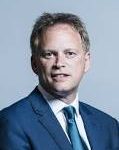
Category: Transportation

  • Grant Shapps – 2021 Comments on M25 Climate Protesters

    Grant Shapps – 2021 Comments on M25 Climate Protesters

    The comments made by Grant Shapps, the Secretary of State for Transport, on 22 September 2021.

    We will not let these demonstrators wreak havoc on our roads, disrupt thousands of people’s journeys and put lives in danger. Not only are they creating more traffic and pollution, they are alienating the public from their own cause.

    Today, we’re taking action, bringing in further measures to stop those taking part in these self-defeating protests, while we continue the work we’re already carrying out to clean up our air and reach net zero.

  • Grant Shapps – 2021 Statement on Motor Vehicle Driving Licences

    Grant Shapps – 2021 Statement on Motor Vehicle Driving Licences

    The statement made by Grant Shapps, the Secretary of State for Transport, in the House of Commons on 16 September 2021.

    The haulage sector has been experiencing a shortage of HGV drivers worldwide for some time. The issue has been further exacerbated by the coronavirus pandemic as driver testing had to be suspended for much of last year, meaning the shortage increased further.

    This country enjoys a robust and resilient supply chain. Nevertheless, there is no room for complacency and this Government are determined to do what they can to mitigate the effects as far as is possible. It is therefore vital that we expedite legislation that will expand and accelerate testing—while at the same time acknowledging that the road haulage industry must play its part in improving recruitment and training by offering better pay and conditions.

    The Department for Transport and other Government Departments have worked closely with the haulage sector considering a range of options to improve the number of HGV drivers. As part of these measures a consultation closed on 7 September on change to streamline the HGV driving licence regime and removing a separate trailer test for car drivers. The Driver and Vehicle Standards Agency has already taken administrative action to increase capacity and offer more practical HGV tests but more is needed.

    The first of these measures will be addressed via a draft affirmative statutory instrument that will be laid before Parliament today and will mean that car drivers will no longer need to take another test to tow a trailer or caravan, freeing up some 30,000 test slots annually. This additional capacity can be used to reduce the backlog in HGV testing.

    To make rapid progress on this, we are making use of the urgent procedure under paragraph 14(6) of schedule 8 to the European Union (Withdrawal) Act 2018. I am of the opinion that, by reason of urgency, the requirements for the statutory instrument to be published in draft 28 days before it is laid, and for a scrutiny statement to be made before laying, should not apply.

    Accelerating the legislation by forgoing the 28-day publication period will allow earlier laying of the legislation than would have otherwise been possible and strengthen the steps we have already taken to increase testing capacity and ease supply chain issues as quickly as possible. Arrangements will be in place to ensure that the changes made by the legislation are operationally effective as soon as the legislation is in force.

    Road safety continues to be of paramount importance. We will engage with training providers and insurers to test the response to this change and to explore how we can seek to ensure that any road safety concerns are addressed. We will also explore options for an industry led accreditation that could offer a standardised testing approach if that would be welcomed by the market, insurers and consumers.

  • Jim McMahon – 2021 Comments on Change to International Travel Rules

    Jim McMahon – 2021 Comments on Change to International Travel Rules

    The comments made by Jim McMahon, the Shadow Secretary of State for Transport, on 17 September 2021.

    Labour has been calling for months for a simplified system for international travel, affordability of tests and the publication of full country-by-country data, to allow the public and the travel industry to make informed decisions.

    PCR tests play a crucial role in identifying variants of concern and ministers must now set out in detail exactly how they will continue this surveillance – including whether they plan to increase sequencing of tests – to ensure we do not see a repeat of the failings that allowed the Delta variant to spread rapidly through the country.

    Unfortunately the Government has chosen yet again to brief an important policy change to the press before bringing the plans to Parliament, preventing proper scrutiny. We all want to see international travel moving freely again, but the public deserve to hear in full how ministers intend to keep people safe and prevent any further variants that could risk the success of our vaccination programme.

  • Grant Shapps – 2021 Comments on Shortage of HGV Drivers

    Grant Shapps – 2021 Comments on Shortage of HGV Drivers

    The comments made by Grant Shapps, the Secretary of State for Transport, on 10 September 2021.

    From Inverness to St Ives, HGV drivers are helping to keep the country running, and have been throughout the pandemic. The shortage of drivers is a global problem, but we’ve been taking action here in the UK to help industry leaders attract drivers and build a more resilient sector.

    We’ve already delivered 50% more tests than were available before the pandemic, but today’s additional measures will deliver up to 50,000 more a year, helping more and more people to kickstart their career as a well-paid HGV driver.

  • Lothian Buses – 2021 Statement on Running Advertising Sexualising Passengers

    Lothian Buses – 2021 Statement on Running Advertising Sexualising Passengers

    The statement issued by Lothian Buses on 31 August 2021.

    External advertising on our vehicles is managed by our partners, Global – we have passed your comments on for their attention.

  • Seema Malhotra – 2021 Comments on Supply Chain Chaos

    Seema Malhotra – 2021 Comments on Supply Chain Chaos

    The comments made by Seema Malhotra, the Shadow Minister for Business and Consumers, on 26 August 2021.

    The chaos hitting supply chains is of the Conservatives’ making. Their failure to keep their promise to cut red tape for businesses, which are struggling with more paperwork and higher costs, combined with worker shortages, has created a perfect storm.

    Whether it’s production grinding to a halt in our car factories, shelves emptying in supermarkets, or restaurants running out of food and drink, businesses are ringing the alarm and saying these problems are only going to get worse.

    Ministers must listen to businesses and unions who are calling for them to show leadership and put in place short-term solutions to deal with this acute crisis. But they must also end their chronic dismissal of these concerns, having accused the industry of ‘crying wolf’ over driver shortages, and take action to deliver on the promise of post-Brexit Britain.

  • Jim McMahon – 2021 Comments on Rail Fare Increases

    Jim McMahon – 2021 Comments on Rail Fare Increases

    The comments made by Jim McMahon, the Shadow Secretary of State for Transport, on 18 August 2021.

    Rail travel has long been unaffordable for many people, thanks to the Conservatives prioritising the profits of private companies over passengers. This would be yet another eye-watering hike hot on the heels of the failure of the Government’s so-called money saving flexi ticket scheme.

  • Chris Heaton-Harris – 2021 Comments on Greater Anglia and a Green Railway

    Chris Heaton-Harris – 2021 Comments on Greater Anglia and a Green Railway

    The comments made by Chris Heaton-Harris, the Rail Minister, on 6 August 2021.

    We are working tirelessly to decarbonise transport. For rail that doesn’t just mean cutting the emissions of trains, it also means making the environment around our railways greener for everyone.

    By reducing delays, improving air quality and protecting the beautiful scenery around our railways, Greater Anglia, Network Rail and volunteers across the region are doing exceptional work to make services even better for passengers returning to the network.

  • Max Madden – 1985 Speech on Rail Services in Bradford

    Max Madden – 1985 Speech on Rail Services in Bradford

    The speech made by Max Madden, the then Labour MP for West Bradford, in the House of Commons on 26 November 1985.

    I am pleased to have this opportunity to discuss Bradford’s rail services. To understand the mounting concern in Bradford about rail services it is necessary to explain the city’s unemployment crisis, the efforts that are being made to regenerate the city’s economy and the city’s anxiety about resources being deployed with a wrong sense of direction and priority.

    The jobs crisis is massive. During the period 1961 to 1978, manufacturing industry in Bradford lost 54,000 jobs, 45,000 of them in textiles alone. Between 1978 and 1981 a further 23,000 jobs in manufacturing industry were lost, 16,000 of them in textiles. The rate of unemployment has increased from 2 per cent. in 1974 to 16 per cent. in 1985, and 35,000 men and women are desperately looking for work. Wage levels remain well below the regional and national averages. The result is that millions of pounds have been taken out of the pockets of the men and women of Bradford and the rates revenue of the local authority has rapidly diminished.

    Car ownership in Bradford is very low. Only half of the families in the district own a car. There is substantial poverty and extensive deprivation. But the people of Bradford have a gritty independence. They want to help themselves. However, they are rapidly coming to the conclusion that although the Government have offered support to enable the people of Bradford to help themselves their help is inadequate.

    It is not being provided with the sense of urgency and commitment that the people of Bradford believe to be necessary. We have seen the city council, which is the city’s largest employer, losing millions in rate support grant and paying millions to the Government in rate penalty. We have seen the university, the city’s second biggest employer, suffering extensive cuts in 1981 and having to pay for substantial redundancies, and we have seen other unacceptable consequences as a result of those cuts, which are estimated to have taken another £6 million out of the local economy. All these pressures have led to extensive efforts being made by the city employers and others to diversify, to compensate for the losses experienced by manufacturing industry, by expansion of the service employment, especially in tourism.

    Transport services are obviously of vital importance to the city, and this concern led Bradford council and British Rail to enter a joint review of inter-city services and to issue a joint report recently. The report highlighted the importance of transport, particularly rail services to Bradford, and the extensive and mounting concern about the future of our rail services in the city.

    The chamber of commerce, trade unions, including the Transport and General Workers Union, by which I am sponsored, the Confederation of British Industry and many others, have stressed the importance that they attach to improving the transport services. The CBI, at its annual conference recently in Harrogate, devoted a considerable amount of time urging the Government to spend more on public works of all sorts, and there were numerous references to the need to improve transport services.

    Bradford should have one of the best rail services in Britain, and should not be condemned to having one of the worst. Bradfordians using public transport, including rail services to work, business or pleasure are entitled to services that are reasonably priced, comfortable and convenient. Sadly, this is not the case today, and unless the Government intervene, the prospects are that Bradfordians will be asked to pay higher fares for an increasingly third class service.

    It would be ludicrous for the line between Bradford and Leeds not to be electrified when the line between Leeds and the east coast main line is to be electrified, we hope by 1989. The investment for that electrification amounts to more than £300 million. The Government must find a way to give British Rail the £4 million that it needs to electrify the Bradford to Leeds line. The Government must ensure that British Rail expands the direct inter-city service between Bradford and London, which is now worse than it was 20 years ago.

    The joint report prepared by Bradford city council and BR, commenting on inter-city services, said that 10 years ago there were five through trains from Bradford to London, and six in the opposite direction. Now, there are three in each direction, all via Leeds.

    “It is unfortunate … that the Inter City service to and from London is worse in 1985 than it was in 1965. Industrialists comment about the length of time it takes to get from London to Bradford when a change has to be made at Leeds. They also criticise the scruffy, slow and often crowded nature of the link between Leeds and Bradford. Conferences are being, and have been lost because of the declining rail service between Bradford and London. Most tourists come by coach or car … Journey time, comfort and convenience by rail from London particularly, are important for many new and developing industries. At the present time, Bradford is at a great disadvantage. Decision makers and investors will not be attracted to Bradford if it becomes the largest city in the country without an Inter City rail service, or if it retains the worst Inter City rail service of any of the top six metropolitan districts in the country.”

    That is a succinct description of the concern in Bradford about rail services and particularly about the inter-city service.

    Over the years, the declining rail service has had spinoff effects on other services. The Bradford post and telecom advisory committee wrote recently to a senior executive at the Post Office expressing concern that Bradford had been excluded from the new dedicated intercity transport service, which will be operating between the main cities of this country. The letter said:

    “We have recently reached the stage where the 19.43 Bradford/Kings Cross train has been withdrawn and vans are having to be sent to Sheffield and York to catch trains there. This means that the evening posting time has had to be advanced in some districts by at least half an hour. This causes tremendous inconvenience to the business community who would normally be posting between 5.00 and 5.30 pm and who how have to get their mail to the Post Office before 5.00 pm.

    We find it difficult to understand why Bradford has been excluded from the new service, yet Leeds with a far better transport network has been included. Surely it would be preferable to include in the dedicated service those large cities which are suffering from a poor network.”

    I raised the issue recently with a Department of Trade and Industry Minister and I regret very much that he gave me a dismissive and off-hand reply, saying that he was not prepared to raise the matter with the chairman of the Post Office.

    The Government must take action to ensure that local rail services are maintained. The usual spiral of deteriorating services, leading to fewer passengers, trains being axed and lines being closed, must not be allowed.

    There is also mounting concern about services to Keighley and Ilkley, and it is a genuine based anxiety. Clear assurances must be given by the Government. They must take action to ensure that those services are not only maintained, but improved.

    The Government must recognise the vital importance of all transport services and do everything possible to find the money necessary to maintain and improve Bradford’s services. The city council has suggested that we need an interdepartmental Government task force, representing the Departments of Transport, the Environment and Trade and Industry to ensure a joint Government approach so that our transport services, particularly the rail services, can be defended and improved.

    Ministers visit Bradford fairly frequently, but not many travel by train and few experience the overcrowded, uncomfortable and inconvenient arrangements suffered by most passengers on trains from Leeds to Bradford. I urge the Under-Secretary to come to Bradford to meet the city council and discuss its proposals for ensuring that the Leeds-Bradford line is electrified, and its proposals for maintaining and improving the inter-city service. Such a visit would be welcomed by the council and would give the Minister some experience of conditions for passengers between London and Bradford.

    Good transport, including a good modern rail service, is central to Bradford’s efforts in providing new jobs, encouraging existing firms to expand or new firms to come to Bradford and in attracting visitors to the city.

    I end by quoting a good editorial in the Bradford Telegraph and Argus on 5 November:

    “If short-term, cost-cutting economic factors are the sole consideration in deciding whether or not to keep open the nation’s main transport arteries, we are likely to end up with a few highly prosperous major cities, such as Leeds, surrounded by vast areas of neglect such as Bradford.

    We believe it is time for the Government to take a longer-term, social view, before cities like ours are allowed to sink further into decline.” That view is generally held in Bradford, and the Minister can help to dispel it tonight. He can only hope to do so by promising action and cash. We are told that BR cannot electrify the line between Bradford and Leeds because of the stringent financial controls imposed by the Government, and that BR must show a proper rate of return on any investment made to proceed with that investment.

    For those reasons and arguments, to give hope to Bradford, to give positive and practical help to back up the self-help it is already involved in, to try to overcome the unemployment crisis, and to help our efforts to revive our economy, I appeal to the Minister tonight to give clear assurances that he places the highest priority on ensuring that our rail and transport services are saved. That is what the people of Bradford want to hear. I hope that he can give those assurances in his reply.

  • Grant Shapps – 2021 Comments on Walking and Cycling

    Grant Shapps – 2021 Comments on Walking and Cycling

    The comments made by Grant Shapps, the Secretary of State for Transport, on 30 July 2021.

    Millions of us have found over the past year how cycling and walking are great ways to stay fit, ease congestion on the roads and do your bit for the environment. As we build back greener from the pandemic, we’re determined to keep that trend going by making active travel easier and safer for everyone.

    This £338 million package marks the start of what promises to be a great summer of cycling and walking, enabling more people to make those sustainable travel choices that make our air cleaner and cities greener.