Category: Transportation

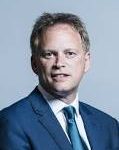
  • Grant Shapps – 2021 Comments on Training HGV Drivers

    Grant Shapps – 2021 Comments on Training HGV Drivers

    The comments made by Grant Shapps, the Secretary of State for Transport, on 10 December 2021.

    The government has worked tirelessly to tackle the driver shortage caused by coronavirus and years of undervalued wages. We have now introduced 32 actions to help get more HGV drivers on the road. It is good to see that these measures are clearly working, with the haulage industry reporting a significant increase in tests carried out and licenses issued. Now these training camps will provide a further boost for the sector as we work together towards its recovery.

  • Nadhim Zahawi – 2021 Comments on Training HGV Drivers

    Nadhim Zahawi – 2021 Comments on Training HGV Drivers

    The comments made by Nadhim Zahawi, the Secretary of State for Education, on 10 December 2021.

    HGV drivers are vital to keeping this country moving. It’s brilliant to see the first people with their hands on the steering wheel as they head towards new well-paid careers in the industry.

    To help even more people get the training they need to be road ready, we’re expanding our HGV Skills Bootcamps to support more than 11,000 people to gain the skills they need to progress in the industry, and to help those with previous experience refresh their skills so they can get back on the road.

  • Jacob Young – 2021 Speech on the Integrated Rail Plan

    Jacob Young – 2021 Speech on the Integrated Rail Plan

    The speech made by Jacob Young, the Conservative MP for Redcar, in the House of Commons on 18 December 2021.

    The Tees Valley has a proud history as the home of our nation’s railway. Starting with George Stephenson’s revolutionary launch of the Stockton to Darlington railway in 1825, our region has been a pioneer in the development of Britain’s rail sector, from steel forged in the furnaces of Redcar for the construction of the London underground to the production of new trains at Hitachi in Newton Aycliffe.

    Recent announcements show our commitment to levelling up rail in Teesside. From next year, TransPennine Express services will be extended from Redcar Central to Saltburn, something I have been campaigning on for well over two years. As of next week, LNER will launch a direct service from Middlesbrough to London Kings Cross—a fantastic step, but we need more than just one a day. And the £l00 million redevelopment of Darlington train station creates new platforms, a new station building and the potential for more frequent services on the local network.

    The Tees Valley is also playing a huge role in the development of the wider national network, and a key way we can strengthen this role is by committing to using British-made steel from Teesside. HS2 is one of this Government’s biggest infrastructure projects but it has yet to commit to signing the UK steel charter. It is a false economy to continue to bail out our steel industry and not secure its pipeline through procurement rules in the UK. Using UK-sourced steel in the construction of HS2 will help us to secure the future of this vital national industry and support over 1,000 jobs in Redcar alone.

    This IRP delivers for the north, but there is more work to do. The Minister will know that I am pushing for the east coast main line to extend its services not just to Middlesbrough but to Redcar to complement our new freeport. Along with the Chief Secretary to the Treasury, I am supporting the return of passenger services to east Cleveland on the Boulby potash line, if we are able to achieve it. But as we rightly increase services on the Redcar line, such as the TransPennine service to Saltburn, we run the risk of cutting Redcar in half, virtually blockading our level crossings in the town centre. There is no doubt that resolving this roadblock to growth in Redcar will require significant funding, and there is no obvious solution right now, but I seek assurances from the Minister that Redcar town will not be cut off as we grow our network, and that we will seek to minimise the length of time the crossings are down. This is a Government committed to levelling up and transforming Teesside for the better. Thanks to this Government and our Conservative team across our region, we have never been better connected by rail, road and air. Long may it continue.

  • Toby Perkins – 2021 Speech on the Integrated Rail Plan

    Toby Perkins – 2021 Speech on the Integrated Rail Plan

    The speech made by Toby Perkins, the Labour MP for Chesterfield, in the House of Commons on 8 December 2021.

    Conservative Governments have made me angry before. Indeed, it was the Thatcher Government who first awoke my passion for politics, because I wanted to stand against everything that they stood for, but at least the Thatcher Government were competent. What we have now is a Government who are so incompetent, so inept, so irresponsible and so dishonest that they constantly let down the people who voted for them, and that is what we see in this plan for integrated rail.

    We need only look at the manifesto promises that we have had from the Tory Government—all the way back to 2010, when I was first elected and the hon. Member for Ashfield was working for a Labour MP—to see what the Tories have been all about. Throughout that time, we have seen manifestos promising that HS2 would be delivered. We saw those promises in 2010 and we saw them in 2015, and the Tories were also promising to electrify the midland main line in 2017. In 2019 they promised that they would listen to the Oakervee review, a detailed review of HS2, the costs of which were escalating because of the constant delays and ineptitude of this Government in implementing it.

    For 11 years HS2 has been Tory party policy, but throughout that period they have managed the policy so ineptly that the costs have continually escalated, and public confidence has not been there. Now they are asking how we can support policies that they spent four general elections and 11 years telling us were the right policies. They stand there and say that this is a major investment, but every major investment in rail that they have announced in the 11 years for which I have been here has never been delivered. They have stood there and announced midland main line electrification, and they have never delivered it. They have stood there and announced HS2, and they have never delivered it. So why on earth should anyone believe that the plan that is on that desk, which will take many years and future Parliaments to be delivered, will ever happen?

    The people of Chesterfield have been lied to, and people across the midlands and the north have been lied to, in order to get this shabby Government elected. It is no wonder that people throughout my constituency are finally starting to see what this Government really stand for. It makes me sick, Mr Deputy Speaker.

  • Matt Rodda – 2021 Speech on the Integrated Rail Plan

    Matt Rodda – 2021 Speech on the Integrated Rail Plan

    The speech made by Matt Rodda, the Labour MP for Reading East, in the House of Commons on 8 December 2021.

    It is a pleasure to speak in this important debate. I start by offering my wholehearted support to the shadow Transport Secretary, who has made an excellent contribution this afternoon, as have many other hon. Members across the House.

    I feel deeply sorry for many communities across the midlands and the north of England, because they have clearly been badly let down by the Government. I know the rail Minister is a decent, hardworking Minister, and I am sure even he is disappointed with this rather thin offering—the way Nottinghamshire has been let down, the way the north-west of England has been let down, the way Bradford and Sheffield have been let down. They have all been badly let down by the Government, I am afraid, and indeed colleagues in London are about to be severely let down with the looming crisis in Transport for London, where the Government are clearly unable to do the decent thing and provide the right level of support to vital transport infrastructure in the capital.

    All those things bode very badly for our country at a time when we need more investment and more economic growth. High-speed rail is clearly a driver of significant economic growth and regeneration for major cities and smaller towns, such as my Reading constituency, and offers huge advantages to communities across the country.

    I draw the Minister’s attention to a number of points in my own area. In particular, I call for greater Government focus on electrification of the Great Western line to the west of Reading; at present the electric line stops at Newbury, which is clearly not far enough to the west. Indeed, the far south-west is not served by adequate rail infrastructure at this time. The electric line also stops in Cardiff, Wales, and Welsh colleagues have mentioned the serious flaws with that lack of investment in their country.

    In addition, the north-south line that connects the south coast of England with the midlands and ultimately Manchester should be a priority for electrification. It is currently a narrow rail corridor with only one line going north and one going south. There are real issues there, but electrification offers greater efficiency, lighter rolling stock, much faster speeds on the railway and a more efficient railway all round. It requires more up-front investment, but it pays back great dividends in future. Many colleagues from Coventry and other midlands cities have mentioned that to me.

    I realise time is limited, but I also draw the Minister’s attention to a number of other issues, particularly Reading Green Park station in the neighbouring seat of Reading West, which also serves my constituents who commute to work in the science park at Green Park on the west of Reading. We also need investment in other stations across Berkshire. I draw his attention to the need for the Western Rail Link, another crucial piece of rail infrastructure in the Thames valley that offers wider benefits to people from across the country. I appreciate that he is interested in the project, and I urge him to speak to local councils, myself and other MPs such as the shadow rail Minister on that point.

  • Cat Smith – 2021 Speech on the Integrated Rail Plan

    Cat Smith – 2021 Speech on the Integrated Rail Plan

    The speech made by Cat Smith, the Labour MP for Lancaster and Fleetwood, in the House of Commons on 8 December 2021.

    It is a pleasure to speak in this debate on the disintegrated rail plan. I associate myself with the comments made by the hon. Member for Westmorland and Lonsdale (Tim Farron); I agree wholeheartedly with his points about rail connectivity outside the Liverpool-Manchester-Leeds corridor, and across Lancashire and Cumbria. It so often feels as though that part of the north is forgotten about. Just because we do not have big cities, it does not mean that we do not have jobs and industry, and a need for connectivity. Indeed, we have some very good projects that lend themselves to reasonably cheap electrification, which would help lower the carbon footprint of our public transport system.

    I will keep my remarks tightly focused on lines affected in my constituency. I must be clear: if HS2 ever gets as far north as us in Lancashire and Cumbria, which seems like something of a long shot, we cannot have trains not stopping in Lancaster. It is the county town of Lancashire. We have world-class universities and industries that need rail connectivity to the capital, and we need that investment. We cannot keep talking about rail connectivity as meaning getting to London faster. We must also talk about investing in the north and in our communities.

    I want to talk about Fleetwood, a town without a railway station, though it has been promised one. In November 2019, the Prime Minister came to Poulton-le-Fylde—and later got it muddled up with Bolton, but we will move on from that. He promised us that its rail line would be reconnected. We are still waiting. We have had £100 million for a plan, but so far, there is no indication that the line will materialise. I encourage the Minister of State, Department for Transport, the hon. Member for Pendle (Andrew Stephenson), who is on the Front Bench —a Lancashire guy—to look favourably on Fleetwood, and to work with us and the local community to make that rail line happen.

    I finish with some words from my constituents, because all too often the real impact is on constituents’ lives. Mark Waites asks, “Where’s the railway?” That is probably the No. 1 question that I am asked as a local MP—where is our railway in Fleetwood? The track bed is there, but there are no trains running up and down it. Jack Harrison offered me a festive quote to share in the debate:

    “Now all we want for Christmas, is our trains back;

    And no more empty election yackity yack.”

    That sums up the feeling across Fleetwood, and right across the Fylde coast, about the promises that the Government have made, but not delivered on. We have been promised that railway back.

    “Now that the Prime Minister knows where Fleetwood is, will he finally say when the railway connection will be reinstated to Poulton and the rest of the country?”

    That is a quote from my constituent Tony Johnson. I urge the Minister to look favourably at Lancashire and Cumbria, and to offer us the rail connection that we have been promised.

  • Ruth Edwards – 2021 Speech on the Integrated Rail Plan

    Ruth Edwards – 2021 Speech on the Integrated Rail Plan

    The speech made by Ruth Edwards, the Conservative MP for Rushcliffe, in the House of Commons on 8 December 2021.

    I feel privileged to speak in this debate, not simply because this fantastic £96 billion investment in rail is transformational for huge swathes of our country, and not just because we have sped up existing plans by around 15 years to bring real benefits to places such as my constituency of Rushcliffe. No—I feel particularly privileged because this debate gives us the chance to examine the habits and the utterances of that rare species, the Starma chameleon.

    For years, the Leader of the Opposition has manned the barricades in opposition to HS2. He said that he opposes HS2

    “on cost and on merit: it will not achieve its stated objectives.”—[Official Report, 15 September 2015; Vol. 599, c. 1006.]

    He called its impact devastating and said it would cause “wholly unacceptable damage”. However, all of a sudden, the Government have not gone far enough. Suddenly he believes that the plans are

    “a second-class option for the North”

    and the midlands. If the Leader of the Opposition had had his way, the people of Nottinghamshire, Derbyshire, Birmingham and Sheffield would not have had high-speed rail at all, but perhaps it only matters when it is in his own backyard—hardly prime ministerial.

    The integrated rail plan delivered on a commitment to level up regional connectivity by electrifying the midland main line, and electrification work is set to begin in the next phase, before Christmas. These improvements will be welcomed by my constituents, who, because of the plan, will find it a lot easier to commute and undertake other travel by train. Indeed, in my inbox, praise for this plan far outweighs criticism. As the Secretary of State and my hon. Friend the Member for Keighley (Robbie Moore) have said—in fact, as has been said repeatedly—the last Labour Government electrified 63 miles of track in 13 years. An ordinary British garden snail moving at a top speed of 0.048 kph would have made more progress.

    Colleagues may be surprised to hear that the Leader of the Opposition and I have something in common: we both represent constituencies containing planned HS2 stations, the only difference being that I did not petition against this massive upgrade to, and investment in, rail in my constituency. The integrated rail plan will deliver HS2 faster. It will slash train journey times between London and Nottingham by two thirds, and the journey time from Nottingham to Birmingham to only 26 minutes, which is half an hour faster than envisaged under previous plans. It will deliver HS2 right into the heart of the East Midlands freeport, where we are making a green jobs hub that will create over 60,000 jobs in the region.

  • Tim Farron – 2021 Speech on the Integrated Rail Plan

    Tim Farron – 2021 Speech on the Integrated Rail Plan

    The speech made by Tim Farron, the Liberal Democrat MP for Westmorland and Lonsdale, in the House of Commons on 8 December 2021.

    It is a pleasure to follow the hon. Member for High Peak (Robert Largan), who made a thoughtful contribution concerning his constituency.

    The integrated rail plan for the north is a real disappointment to many people, not least people from Cumbria, the furthest north-west county in England. When we leaf through the 162 pages of that document, we find not a single mention of the county of Cumbria. That is a reminder that when we talk about the north and levelling up the north, it feels to many of us that the rural north—rural communities generally, but specifically those in the far north-west of England—is not thought of and is very much overlooked.

    The cancellation of part of HS2 is deeply troubling, but of course the more troubling cancellation is that of Northern Powerhouse Rail. If one understands the north of England, one understands that what we really need is not to get to London a bit quicker, but to have greater capacity and to get from east to west more quickly. That has been overlooked by the Government. It is a betrayal of the north, yes, but more than that it is a betrayal of their lack of understanding of the north, which is more telling.

    I want to focus on a couple of things in my community. First, we appreciate that the HS2 line is not going to go further into Lancashire and into Cumbria, but nevertheless the trains will. I am deeply concerned that there are no plans for any of those HS2 trains to stop in the biggest visitor destination in the country apart from London, namely my constituency—the Lake district. That should be put right.

    We have a railway line from the main line at Oxenholme that takes us to Windermere—the Lakes line. It is a very short line, and it would be one of the cheapest electrifications in the country if only it were done. Sadly, the Government have cancelled that. I am, however, encouraged by recent conversations with the Rail Minister about the possibility of a passing loop at Burneside, which would give us the opportunity to effectively dual the line again—that was our Beeching cut back in the ’60s and ’70s. Doing that would double the capacity on the Lakes line and massively increase the number of people who could come to the Lake district and not come by car. That would be a huge positive.

    It is worth bearing in mind that there are many small things that are huge to us. At Staveley, the first station in the Lake district, there are 42 steps to get up to the station. Friends of mine who have disability issues, are elderly or need to use prams simply cannot use their local station, so I call on the Government to consider very carefully funding access to Staveley station.

    We have a world-class visitor destination in the Lake district, with what feels at the moment like a third-class rail connection. That is why I ask, finally, that the Government reconsider the electrification of the line from Oxenholme to Windermere, and of the Furness line from Lancaster to Barrow through my constituency. That would be a positive, carbon-neutral thing to do, and it would be a massive boost to tourism and to local communities. It would be a good, effective use of public money after this disappointment.

  • Robert Largan – 2021 Speech on the Integrated Rail Plan

    Robert Largan – 2021 Speech on the Integrated Rail Plan

    The speech made by Robert Largan, the Conservative MP for High Peak, in the House of Commons on 8 December 2021.

    First, I associate myself with the excellent speeches of my hon. Friends the Members for Harrogate and Knaresborough (Andrew Jones) and for Blackpool North and Cleveleys (Paul Maynard), two experienced former rail Ministers who set out why they welcome the integrated rail plan while perhaps hoping that it had gone further in some areas. I completely agree with every word of both of their speeches.

    One area of the IRP that I really welcome is the continued commitment to the £137 million upgrade to the Hope Valley line running between Manchester and Sheffield. That is important for several reasons. First, the line is one of the worst performing in the country in terms of reliability and punctuality, so this extra capacity to improve reliability and frequency and help freight get out of the quarries and into market is a really positive step, along with, finally, the retirement of the Pacers and their replacement by the new class 195 trains, and the much-needed reforms to rail franchising. That £137 million investment in our railways, combined with the £228 million new Mottram bypass and Glossop spur road, which is due to start construction in 2023, represents the biggest investment in transport infrastructure in the High Peak in my lifetime at least.

    On top of that, it is important to ensure that local passengers on the stopping stations on the Hope Valley line, such as Hope, Edale, Bamford, New Mills and Chinley, also benefit from this, and that we link up the bus services from those stations to destinations. That is why the Hope Valley explorer bus pilot is such a positive step forward. I also welcome the commitment to look at electrification of the line.

    I also want to talk about HS2, which benefits the High Peak directly. I am very pleased that the western leg and extension is going ahead. That will free up capacity on the Stockport corridor of the west coast main line through to Manchester Piccadilly, a big bonus for those travelling there from places including Buxton, Whaley Bridge, Chapel-en-le-Frith and New Mills.

    However, we do need to go further. That is why I continue to campaign for a railway station for Gamesley, one of the most deprived places in the country. It has one of the lowest car ownership rates but atrocious transport links, including a bus service that ends at 5 o’clock in the evening. That desperately needs sorting out. We also need to replace the loss of the 236 bus, which means that at the moment people in Glossop have no connection and no direct bus route through to Tameside Hospital and Ashton College. I really hope that gets fixed too.

    Overall, there are lots of really positive things in the integrated rail plan for us to welcome. I would like to see it go further in other places, but the key now is that we get on and deliver it, and that we get spades in the ground as soon as possible. I look forward to the start of the construction of the upgrade to the Hope Valley line within the next few months.

  • Louise Haigh – 2021 Comments on ‘Rail Betrayal’

    Louise Haigh – 2021 Comments on ‘Rail Betrayal’

    The comments made by Louise Haigh, the Shadow Secretary of State for Transport, on 8 December 2021.

    Northern communities are, once again, paying the price for broken Tory promises on rail.

    This great rail betrayal will hit millions of people, and leave the North in the slow lane for decades to come.

    Promises made must be kept, and today Labour will stand up for our communities and demand they deliver the northern rail investment promised by the Prime Minister.