Category: Transportation

  • Trudy Harrison – 2022 Comments on Zero Emission HGVs

    Trudy Harrison – 2022 Comments on Zero Emission HGVs

    The comments made by Trudy Harrison, the Transport Minister, on 11 May 2022.

    Our road freight industry is one of the most efficient in the world and contributes over £13 billion to the UK economy each year.

    But we must accelerate our journey towards our net zero goals, and we’re committed to leading the way globally on non-zero emission road vehicles.

    Our ambitious plans will continue to ensure food is stocked on the shelves and goods are supplied while eliminating fossil fuels from HGVs and making our freight sector green for good.

  • Sadiq Khan – 2022 Statement of Opening of Crossrail (Elizabeth Line)

    Sadiq Khan – 2022 Statement of Opening of Crossrail (Elizabeth Line)

    The statement made by Sadiq Khan, the Mayor of London, on 4 May 2022.

    I’m delighted that our world-class new Elizabeth line will be opening to passengers later this month, helping build a better London – one which is safer, fairer, greener and more prosperous city for all Londoners.

    This is the most significant addition to our transport network in decades, and will revolutionise travel across the capital and the south east – as well as delivering a £42 billion boost to the whole UK economy and hundreds of thousands of new homes and jobs.

    Green public transport is the future and the opening of the Elizabeth line is a landmark moment for our capital and our whole country, particularly in this special Platinum Jubilee year. I’m so proud of this new line and can’t wait for millions of passengers to start riding on the Elizabeth line from 24 May.

  • Chris Loder – 2022 Speech on the Future of Rail

    Chris Loder – 2022 Speech on the Future of Rail

    The speech made by Chris Loder, the Conservative MP for West Dorset, in Westminster Hall on 26 April 2022.

    Thank you for calling me, Sir Charles. Well, with three minutes I will just get to the point, if I may.

    I appreciate the comments of the hon. Member for Ealing Central and Acton (Dr Huq). I should just say that the RMT does not quite agree with her about the London Mayor. I respectfully make that point, because the RMT has itself said that it is the London Mayor who is causing the logjam, and ultimately that has a considerable impact on the finances available. I represent a constituency that I am afraid has a three-hourly train service frequency, and when I see Transport for London getting such considerable amounts of money, it is a matter of great concern to me. That is money going to support the good people of London, rather than to support the Heart of Wessex line. I know that my hon. Friend the Minister is well aware of my strong views on that point.

    I will move on to the future of rail. I spent 20 years working for the railways before being elected to Parliament. I am not sure whether there are any Opposition Members present who used to be members of the RMT. I was once a member and should give it a big shout-out for its policy briefing, which was very interesting and for which I am grateful. The railways are very important for the future of this country. I appreciate that lots of people have strong views on where the new GB Railways HQ should be, although personally I do not think that will make much of a difference to the future capability of the railway; what will make an enormous difference is where the Government look to invest. The Government have supported the railway to the tune of £14 billion during the worst time of the pandemic. They have kept thousands of people in jobs, and they have done so to ensure that the future of our railways is extremely good and supports the future of our country.

    It is really important that we also consider the wider things that the railways have to change going forward. The railways have been marvellous in lots of ways, but the fact that it can take 12 months to change a timetable is not acceptable in the current day and age. Why is it that we have a timetable that is the same on a Monday as it is on a Friday, when we know that the demands are very different? There are fundamental changes that need to happen in order for our railways to excel.

    I am conscious of time and am grateful for the opportunity to speak in this debate. As a final point, it is really important that we remember it is not all about the cities; it is about connecting the rural areas as well—areas such as West Dorset and other parts of the country that would greatly benefit from that in the future.

  • Rupa Huq – 2022 Speech on the Future of Rail

    Rupa Huq – 2022 Speech on the Future of Rail

    The speech made by Rupa Huq, the Labour MP for Ealing Central and Acton, in Westminster Hall on 26 April 2022.

    Ealing and Acton would not be here without the railways. Both have stations underground, overground—not wombling free—east, west, south, broadway, common, central. They are in “that there London”, so people might be thinking, “You’re all right, Jack,” but I want to counter this misperception that has grown up around the Government’s levelling up rhetoric. It is in the suburbs of London that we feel this most acutely. Our trains are full and getting fuller, fares are rising faster than wages, and west London, the sub-region with Heathrow, is a key driver of our national economy, but it needs transport fit for purpose, not just to and from central London but between the suburban bits.

    An obvious solution would be breathing life into the old Beeching line, the west London orbital. There is Ealing, the centre of west London, and to the north Brent Cross, with lots of jobs, and to the south, Brentford, but good luck to anyone trying to get between any of those three. There is the super-development opportunity area of Old Oak, which has promised 24,000 dwellings and jobs, jobs, jobs. Again, this proposal could link them all, but there is no chance in sight, because the Government will not commit long-term funding to TfL.

    Instead, we have the ignominious situation of cap-in-hand, eleventh-hour settlements, being marched to the top of the hill and down again. We are pretty much the only capital city on earth—I am not counting Singapore—where there is no central Government subsidy. We need reliability, predictability and all those things. When the current Prime Minister was Mayor of London, he was bequeathed a load of goodies from his Labour predecessor: the bikes that bear his name, the TfL rail Overground—it used to be quite scary when it was the Silverlink; it is brilliant now—the DLR extension and bus investment. But for Sadiq Khan—bless his cotton socks—the cupboard is bare.

    Chris Loder (West Dorset) (Con)

    I congratulate the hon. Member for York Central (Rachael Maskell) on securing the debate. I have been listening intently to what the hon. Member for Ealing Central and Acton (Dr Huq) said about the finances for TfL. Does she agree that if the National Union of Rail, Maritime and Transport did not strike so often in London and bring the whole of London to a standstill, the TfL finances might be in a better position?

    Dr Huq

    The hon. Gentleman is falling into the Tory trope of union bashing. I am a proud trade unionist, and the unions are there to better the conditions of their members. We do not want exploitation, do we? Is he going to be shoving kids up chimneys next? I fear the track he is going down. This issue is a bit of a smoke screen. We need long-term funding and a dependable model for London, which we used to have. Every other London Mayor had that, but in 2016 George Osborne suddenly cut the support grant. I think that had something to do with the complexion of City Hall, but—[Interruption.] I am not going to give way, because I do not get any extra time.

    With covid giving way to a cost of living crisis, what did we see from the Chancellor? A cut in fuel duty and a 3.8% rise in fares, and I am not counting that gimmicky video—that thing, whatever it was—about the 1% of journeys where someone can get a cheap fare, going to the right place on the right day. That is not going to affect any of my constituents.

    Meanwhile, we can only marvel at what they are doing outre-Manche in the rest of Europe. Look at Austria’s climate ticket. In Germany, there is a €9 a month regional transport ticket. In this country, no one between 25 and 65, which is probably most of the people here, is eligible for a national railcard, which is available elsewhere. I urge the Minister to look at something like that.

    In conclusion, the future of rail should include projects that complete vaguely on time. I have an Oyster card holder that says, “Crossrail—new for 2018”. Ha! The future of rail would have considerate construction. HS2 goes through my seat and has made life a misery for the residents of Wells House Road, NW10. The future of rail would also have a visionary Government that could think long term, rather than say, “It’s all Sadiq Khan’s fault,” any time a London MP stands up to say anything, when we know that our London Mayor is doing a fantastic job against the odds. The country cannot be levelled up by levelling down London. The new Piccadilly line trains, due in 2025, are being built in Yorkshire. Level up London and the whole country benefits. Let us get Ealing, Acton and Chiswick back on the rails. Now that’s what I really call levelling up.

  • Andrew Jones – 2022 Speech on the Future of Rail

    Andrew Jones – 2022 Speech on the Future of Rail

    The speech made by Andrew Jones, the Conservative MP for Harrogate and Knaresborough, in Westminster Hall on 26 April 2022.

    It is always a pleasure to serve under your chairmanship, Sir Charles.

    I congratulate the hon. Member for York Central (Rachael Maskell) on securing this debate. She spoke very well about why the headquarters of Great British Railways should be located in York, and about the opportunities that transport investment delivers for levelling up and decarbonising for the future. I want to support that argument.

    Lots of Members will put forward the case for their areas. Some of those cases are, quite frankly, a bit on the thin side. I understand why they are doing it, but I believe that the correct way to approach this question is to look at the criteria that the decision makers in this competition have set.

    Let me start by suggesting what the challenges for rail are, and how they influence what Great British Railways needs. The rail industry is a huge success. The pre-pandemic data, which I use for obvious reasons, tells us that it had 1.8 billion passenger journeys per year and 140,000-plus services per week—more than ever before. The question for Ministers and the industry is how to cope with the growth. The answer has been, through a variety of mechanisms, to increase capacity with new lines, improve existing lines, and provide new rolling stock and better signalling. The pandemic has clearly changed things, and it is too early to see how the trends will settle, but we can see that demand is returning already, although the commuting sector is still weak. The long-term problems have not gone away, and Great British Railways will need to address them.

    The Government have published six criteria for judging the bids, and a critical element is the opportunity for Great British Railways. That is the third of the listed criteria, and I will focus on it for a few moments. It is against that criterion that York emerges head and shoulders above the others as the strongest bid. The question is: how do we deliver the future? The digital signalling, the planning of line enhancements, the new systems of power to drive the industry as the sector decarbonises, the expertise, the skills, the wider rail ecosystem with companies based in York and beyond in Yorkshire, the partnerships with academic institutions—they are all in place in York now, ready to be expanded and play a greater role.

    Let me give one small example. The UK has been developing a series of rail operating centres—12 in total—that will control all the country’s signalling. They have been operating for some years and have taken on more services over time. York hosts one now, and it is in fact the largest of them all. It was part of a Network Rail campus, and it includes a workforce development centre, so York is already at the heart of the digital rail future.

    The other criteria against which the bids will be judged are again met by the qualities of York: connectivity north-south and east-west is excellent; it is centrally located, half way between London and Edinburgh; the railway heritage is obviously second to none; and it hosts one of the major rail museums of the world. I know that the Science Museum Group has already made an important representation to the Minister in the bid process in favour of York. Public support has been demonstrated by the work undertaken locally by political representatives, not least in this debate. York is Yorkshire’s choice.

    The hon. Member for York Central did not mention that in Yorkshire we are famous for liking value. [Interruption.] That is not really a joke, but a truth. We are famous for liking value, and with the York Central development we have an enterprise zone, with much of the land already in Network Rail ownership, so there is a ready-made value solution.

    The last criterion is levelling up. Some of the most left-behind communities in the country are within a short journey time from York. The halo effect, building upon the current cluster, would have the positive effect of providing opportunity across these communities. Looking at the criteria as a whole and seeing what York can deliver, I see the York bid as being head and shoulders above the others, which is why I support it. I am grateful for the opportunity to share my views this afternoon and to support this bid.

  • Rachael Maskell – 2022 Speech on the Future of Rail

    Rachael Maskell – 2022 Speech on the Future of Rail

    The speech made by Rachael Maskell, the Labour MP for York Central, in Westminster Hall on 26 April 2022.

    I beg to move,

    That this House has considered the future of rail.

    It is a pleasure to serve with you in the Chair, Sir Charles. On 27 September 1825, as Stephenson’s Locomotion powered its way up out of Shildon towards Stockton, the eyes of the world marvelled at the height of British engineering. As we prepare for rail’s bicentenary against the backdrop of a different set of challenges, the excellence of British engineering can once again capture the imagination of what can be achieved and ignite a new transport revolution.

    Today, I will set out why consolidation and intersection with other forms of transport and energy technologies is essential if Britain is once again to lead the transport revolution, and why it is vital that the Government invest in this unique global rail supercluster for rail’s bicentenary. I am ambitious for rail and I am ambitious for Britain.

    It will not be lost on anyone in this debate that York is where that revolution will occur. After all, York made the railways and the railways made York. The partnership between York University and Leeds University centres the future of digital and advanced rail, including the Institute for High Speed Rail and System Integration at Leeds University, bringing together the very best of transport, academia and digital technologies with the 13 leading rail education providers in the region, including the Institute of Technology at York College, which I visited recently.

    We love our steam trains; whether it is the Mallard or the Flying Scotsman that fills people with greatest pride, our rail heritage is a natural draw for anyone across the network. Today, York has over 100 rail companies, which are at the forefront of engineering, operations, software development, timetabling and planning, providing over 5,500 of York’s top jobs and 9,500 jobs in the surrounding region, and consolidating York’s rail cluster, which is the largest outside London and now eager to take us forward once more.

    Sir Greg Knight (East Yorkshire) (Con)

    I congratulate the hon. Lady on securing this excellent debate. Does she agree that there is not a good case, but an overwhelming case, to make York the headquarters of Great British Railways?

    Rachael Maskell

    I thank the right hon. Gentleman for his intervention. Where else can Great British Railways locate itself but in York if it is to level up the whole country? That really must be the argument we make.

    The York Rail Innovation Community already oversees the intersection of rail businesses and innovations, enabling the northern rail economy to generate over £42 billion, according to the University of Leeds. It draws on the University of York’s Institute for Safe Autonomy, bringing new technologies and robotics together, and opening up a new conversation for the future of rail and the future of transportation, and modernising how we think about rail and transport. The institute’s £12 million programme leads global research to provide industry, regulators and researchers with guidance on assuring and regulating robotics and autonomous systems, including those on rail. York’s work is setting global standards and ensuring that such systems are safe.

    Taking the search for answers into applied testbeds, such as the advanced rail test facilities, widens possibilities and the collaborations between York, Leeds, Sheffield, Huddersfield and Hull. This is not just a rail cluster, but a transport cluster. Interlink that with the new headquarters of Active Travel England, and we will have end-to-end connectivity and endless possibilities. Now that the Government are seeing such enthusiasm for BioYorkshire, Yorkshire’s green new deal and advancing a new generation of fuels, including links to the Teesside and Humber energy clusters, even more future technologies open up, with new innovations between transport and energy clusters.

    The electric vehicle revolution is too slow, too expensive, with too little infrastructure and too few people engaged, and it is not sustainable enough. We need travelling by train to be competitive with travelling by road. Pricing matters. Rail advancement will be far more efficient, faster, cleaner and greener, if we are to decarbonise and claim the climate dividend to keep the target of 1.5 degrees alive. That must be our bicentenary challenge.

    As a nation, there are significant challenges we need to address. Post pandemic, the trains need to see patronage restored and advanced, better timetabling and intermodal end-to-end connectivity, not least connectivity from main lines to improved branch lines, to consolidate opportunity. The very best industry expertise across the railways in York is ready to rise to the challenge. With fuel prices escalating, the Government must seize the moment to achieve a sustained and sustainable modal shift.

    Although the integrated rail plan came as a bitter blow to us in Yorkshire, centring Great British Railways’ future on driving up patronage, accessibility, connectivity and reliability across the towns and cities of our region will address some of the Williams-Shapps plans. I know other colleagues will reinforce the point and urge the door not to be closed on our ambition.

    Karl Turner (Kingston upon Hull East) (Lab)

    I congratulate my hon. Friend on securing this important debate. Entire sections of the transport infrastructure, especially in the north, are just not up to the job. A good example is the Hull to Selby route. We have been begging and pleading for years for that rail line to be electrified. Does my hon. Friend agree that it is about time the Government got their finger out?

    Rachael Maskell

    My hon. Friend is always to the point in expressing the frustration of his constituents, and detailing the opportunity that electrification of the Hull to Selby line would draw to the whole region.

    Imran Hussain (Bradford East) (Lab)

    My hon. Friend is making an excellent speech. The problem in the north is much greater, because most of the north suffers from the situation identified by my hon. Friend the Member for Kingston upon Hull East (Karl Turner); we lose the economic benefits that would be brought by electrification. If the Government are serious in their levelling-up rhetoric, the people of the north need to see that. The Government need to take action.

    Rachael Maskell

    My hon. Friend is right. I know his frustrations for Bradford, and the opportunity he wants to bring to his constituents and his city through greater connectivity.

    The reason for this debate is to lift the sights of the Minister beyond York and Yorkshire, and beyond even our railway nation. The UK could once again take pride of place in marketing the very best in railway planning, operations and engineering globally. If we are looking for a reason for global Britain, the operational and engineering expertise grown in our rail cluster in York, mixing the intermodal intersections with the next generation of energy, could be globally marketable and transformative. Already students from 120 countries study in Yorkshire. Global companies already understand the power of what is happening in York. Bosch has just made a significant investment in the city, building partnerships and integrating with other high-tech initiatives. The Government must invest if we are to move forward over the next 200 years of rail.

    York also stables the Network Rail trackside repair fleet. My recent visit to Holgate engineering works showed me how the most advanced trackside safety developments are being integrated into the fleet, with robotics, digital and high-end scanning equipment filling these yellow mechanical engines. That will give the UK the reputation for having the safest railway anywhere in the world. Again, that will be priceless when exporting our safety capability.

    York’s Rail Operating Centre—the largest in the UK—has tech that mirrors that of a spaceship. Every inch of the network is mapped live, overseen and monitored across a series a sophisticated digital tools, which enhances rail operations. It is preparing us for the future, playing a key role in plans to introduce the next generation of digital signalling on the east coast and beyond. Network Rail’s training centre for professional development is already in the city and helping to take this revolution forward, with more than 1,000 Network Rail staff already working in York.

    Every time I meet York’s engineers, excitement for the next development greets me. My thinking is transformed, my mind left marvelling. This is what we can do when we build a sustained rail cluster. When the network’s guiding mind is anchored and embedded in the midst of such developments, and the sparks of each rail entrepreneur are joined together, the future of our rail is set ablaze. That is why I am calling for investment for the rail bicentenary. The Minister will see its return.

    As for freight—perhaps the most challenging but neglected area of the network—investment in innovation has never been more needed. High Speed 2 and Northern Powerhouse Rail were partially about freeing up track for freight. That argument got lost as the debate turned to speed and costs. Our freight capability is woeful. Now coal remains in the ground, and while the likes of Drax see biofuels slowly chug their way from Liverpool docks to Selby, investment is urgently needed to drive freight forward.

    Bill Esterson (Sefton Central) (Lab)

    I thank my hon. Friend for her speech. She mentioned the port of Liverpool; trading goods through the port of Liverpool has expanded dramatically, but it has put far more freight into lorries in an area with some of the worst air quality in the country. The Government’s answer is to build another road, which will increase roadside emissions and go through a much-loved country park. Through her, may I make a plea to the Minister that it be reconsidered and that rail be seen as the option not just to address those short-term challenges, but because the long-term success of our freight transport depends on massive investment in rail?

    Rachael Maskell

    To harness the opportunity provided by the bicentenary of British Rail, investment in the freight industry will be the gamechanger for our logistics and transport.

    Those living in Kent are constantly reminded of the challenges of road haulage. However, the last couple of years have exposed the risks that the logistics industry is facing. Short-term fixes do not address the twin challenges of climate and workforce. As motorways turn into motels, a modal shift from road to rail for freight must be a priority. Cutting emissions, addressing the skills shortage and moving goods reliably is not only good for the climate, but better for business, which can become more dependable, meeting just-in-time demands that are essential in logistics. Moving goods from road to rail must be the rail cluster’s bicentenary challenge and the Minister’s focus. If we get the engineering, logistics, planning and operations right on freight, we can be confident of export demand for another product from global Britain: not just capability, but know-how, too. That is the prize for the industry.

    The brilliant minds that serve our industry are the people who, at the height of the pandemic, got on our trains, repaired our tracks and advanced the network. Some, such as Belly Mujinga, gave their lives. We truly honour our transport workers and their unions—ASLEF, the National Union of Rail, Maritime and Transport Workers, the Transport Salaried Staffs’ Association and Unite—who have worked tirelessly to keep staff and us safe, and to keep people in work.

    We have difficult months ahead, but the Government must guarantee job security and good wages as staff work to rebuild the future of the industry to be even better than before. We need to enable all—from the station porter and train cleaner, to ticket office staff, trackside engineers, operators, designers, controllers, electricians and train drivers—to know that they are valued in our rail family, as they keep us safe and take our industry forward. Although consolidation of York’s rail cluster will level up our city, address the low-wage economy and accelerate inward investment for York and the region, it is what York’s rail cluster can deliver for levelling up across the whole country that excites our city the most. We believe that can be achieved only if Great British Railways is anchored in York and if investment in the sector’s research and development powers that opportunity.

    York has the very best of our rail past and present, but in politics we cannot change the past; it is the future that is placed in our hands. I look at the girls and boys in my city, who are all mesmerised by our rail story. The National Rail Museum’s new galleries will give them the first taste of rail engineering and spark their ambition to be the planners, operators and engineers of the future as they embark on their science, technology, engineering and maths journey. Our collective ambition will realise the potential power of York’s rail intersectional clusters to deliver the very best rail future—all delivered on the site of the old British Rail carriage works, adjacent to just about the best-connected station in the country.

    Great British Railways will be no add-on in York; it will anchor Britain’s rail future, ignite Britain’s rail ambition and deliver the next chapter of our Great British Railways revolution like no other place can. The bicentenary of rail gives the Minister the opportunity to invest in the future of passenger and freight. That will be the pride of my city, and that is our offer to the future of rail.

  • Wendy Morton – 2022 Speech on Derby’s Bid to be the Home of Great British Railways

    Wendy Morton – 2022 Speech on Derby’s Bid to be the Home of Great British Railways

    The speech made by Wendy Morton, the Minister of State at the Department for Transport, in Westminster Hall on 27 April 2022.

    It is a pleasure to serve under your chairmanship this morning, Mr Efford. Before I respond to the points made by the hon. Members, I pay tribute to my hon. Friend the Member for Mid Derbyshire (Mrs Latham) for securing the debate. She has made clear her passion for the city of Derby and the area she represents and she has highlighted some of the things that Members can do as Back Benchers. I hope that the Marriage and Civil Partnership (Minimum Age) Bill, her private Member’s Bill, makes progress—fingers crossed it will receive Royal Assent. I know she has been working on it for a long time. As a Back Bencher, I was successful in taking two private Member’s Bills through this place and that is real proof that we can deliver things that we have a passion or enthusiasm for or an interest in.

    Just last month, I was in the Chamber debating the merits of Crewe as a potential Great British Railways headquarters location. This is the fifth debate on the subject—the hon. Member for Slough (Mr Dhesi) and I may differ on whether it is the fifth or sixth overall. Others have been for Darlington, York, and Carnforth, and, yesterday, we were in Westminster Hall—so this is a little bit of déjà vu—for a broader debate on the merits of the York bid.

    It has been absolutely heartening to see hon. Members from up and down the country engaging in the important conversation about the future of our railways and doing outstanding work to support the bids for their towns and cities. As Rail Minister, the other real advantage of the debates has been the opportunity not for just me, but, more broadly, for all of us to learn so much more about the history and heritage of our railways, and about our rail industry—about the manufacturing, the communities, and the families that are all part of our railways.

    At the risk of repeating myself, as I said this yesterday, railways are close to my heart. Both of my paternal great-grandfathers worked on the railways, one in Wensleydale and the other in County Durham. My hon. Friend the Member for Mid Derbyshire mentioned railway cottages and I discovered that my dad was actually born in one. There is perhaps a sense that I have some railway heritage, or railway stock, myself, and I absolutely understand the importance of the industry and the amazing rail heritage of this country.

    As my hon. Friend the Member for Mid Derbyshire set out, Derby has a very proud rail heritage. When the Midland Railway was formed in 1844, Derby became its headquarters, and Derby rail station is a major railway hub. As we have heard today, Derby became an important manufacturing centre for the railways through the famous Derby Works and the Derby Carriage and Wagon Works.

    The first mainline diesel locomotives built in Great Britain were built at the Derby Works, which closed as a locomotive works in 1990. The Derby Carriage and Wagon Works continues to operate as a railway rolling stock factory today, run by Alstom. From the earliest days of the railways to the modern day, Derby has played, and will continue to play, an important role. My mailbox shows great evidence of the fact that many other towns and cities across the country have, of course, played an important part in our proud railway heritage, which hon. Members are proud to represent. The response to the competition has been positive and I am pleased that by the time it closed on 16 March we had received an outstanding 42 applications from up and down the country.

    Hon. Members will be well aware that the Williams-Shapps plan for rail, published in May 2021, set out the path towards a truly passenger-focused railway underpinned by new contracts that prioritise punctual and reliable services, the rapid delivery of a ticketing revolution with new flexible and convenient tickets and long-term proposals to build a modern, greener and accessible network. Central to the Williams-Shapps plan for rail is the establishment of a new rail body—Great British Railways—that will provide a single familiar brand and strong, unified leadership across the rail network.

    Great British Railways will be responsible for delivering better value and flexible fares and the punctual, reliable services passengers deserve. By bringing ownership of the infrastructure, fares, timetables and planning of the network under one roof, it will bring today’s fragmented railways under a single point of operational accountability, ensuring that the focus is delivering for passengers and freight customers. Great British Railways will be a new organisation with a commercial mindset and strong customer focus. It will have a different culture to the current infrastructure owner, Network Rail, and very different incentives from the beginning.

    GBR will have responsibility for the whole railway system, and a modest national headquarters as well as several regional divisions. The national headquarters will be based outside London and will bring the railway closer to the people and communities it serves, ensuring that skilled jobs and economic benefits are focused beyond the capital in line with the Government’s commitment to levelling up. Hon. Members have spoken this morning about the importance of the levelling-up agenda.

    The competition for the headquarters was launched by the Secretary of State on 5 February 2022 and closed for applications on 16 March 2022. The GBR transition team is now evaluating the 42 submissions for the national headquarters, which we received from towns and cities across Great Britain, against a set of six criteria. The criteria are: alignment to levelling-up objectives; connected and easy to get to; opportunities for Great British Railways; rail heritage and links to the network; value for money; and public support. The GBR transition team will recommend a shortlist of the most suitable locations that will go forward to a consultative public vote. Ministers will make a final decision on the location based on all information gathered. As I mentioned before, I am incredibly pleased by the number of high-quality bids we have received. I am sure that, wherever we choose, the future headquarters will go to somewhere truly deserving.

    Alongside a new national headquarters, GBR will have regional divisions that are responsible and accountable for the railway in local areas, ensuring that decisions about the railway are brought closer to the passengers and communities they serve. GBR regional divisions will be organised in line with the regions established in Network Rail’s putting passengers first programme, which reflects how passengers and freight move across the network today. Cities and regions in England will have greater influence over local ticketing, services and stations through new partnerships between regional divisions and local and regional government. Initial conversations are starting with local stakeholders on how those partnerships can best work together.

    I was pleased to hear the contributions from the hon. Members for Nottingham South (Lilian Greenwood) and for Strangford (Jim Shannon) and the right hon. Member for Derby South (Margaret Beckett). I was also pleased to see the Parliamentary Secretary, Cabinet Office, my hon. Friend the Member for South Derbyshire (Mrs Wheeler) in the debate. One of the challenges of being a Minister is being unable to speak in such debates, but it was good to see her.

    We have heard contributions about innovation. As a Minister, I have learned a lot recently about innovation in the sector, including the First of a Kind scheme. The importance of freight has also been highlighted; it is really important in building a cleaner, greener future for our country. The hon. Member for Strangford spoke, quite rightly, about levelling up. The right hon. Member for Derby South highlighted the importance of our rail heritage and its future. That goes for the country as a whole. The focus of this morning’s debate was Derby, but we should be proud of our heritage and look positively to our future.

    There were contributions about the importance of partnerships, the rail community, rolling stock and ticketing. We recently launched our Great British rail ticket sale. As of yesterday, we have sold more than 700,000 tickets—an excellent example of how the Government are helping people to access rail and with the cost of living.

    The reforms proposed under the Williams-Shapps plan for rail will transform the railways for the better, strengthening and securing them for the next generation. The reforms will make the sector more accountable to taxpayers and the Government and will provide a bold new offer to passengers and freight customers of punctual and reliable services, simpler tickets and a modern, green and innovative railway that meets the needs of the nation.

    Although transformation on such a scale cannot happen overnight, the Government and the sector are committed to ensuring the benefits for passengers and freight customers are brought forward as quickly as possible. We have already sold over 200,000 of our new national flexi-season tickets, which offer commuters savings as they return to the railways. As I have explained, to help passengers facing the rising cost of living we also recently launched the Great British rail sale, which offers up to 50% off more than a million tickets on journeys across Britain. And the transition from the emergency recovery measures agreements to the new national rail contract is under way, providing more flexible contracts that incentivise operators to deliver for passengers.

    GBR will work alongside the local communities that it will serve. Integrated local teams within GBR’s regional divisions will push forward design and delivery for their partners supported by new incentives that encourage innovation, partnership and collaboration. GBR will be designed and have the structure to become yet another example of this Government’s historic commitment to levelling up the regions across the nation. Both the Government and the GBR transition team welcome the interest and advocacy from different cities and towns, and also welcome the participation in the competition for GBR’s headquarters so that together we can really deliver the change that is required.

    To conclude, we look forward to creating this new vision for Britain’s railways, in collaboration with the sector and local communities, and deciding on GBR’s HQ is just one of many steps we are taking to achieve that.

  • Margaret Beckett – 2022 Speech on Derby’s Bid to be the Home of Great British Railways

    Margaret Beckett – 2022 Speech on Derby’s Bid to be the Home of Great British Railways

    The speech made by Margaret Beckett, the Labour MP for Derby South, in Westminster Hall on 27 April 2022.

    It is a great pleasure to serve under your chairmanship, Mr Efford. My colleague from Derbyshire, the hon. Member for Mid Derbyshire (Mrs Latham), has done a brilliantly comprehensive job of making the case for Derby to be the home of the headquarters. She has left very little for anyone else to say, but I will pick up on one or two points.

    The hon. Lady covered this ably in her remarks, as did my hon. Friend the Member for Nottingham South (Lilian Greenwood), but I particularly want to stress that there is much to be said about the tremendous history of rail in Derby. It is something in which the whole community takes great pride. However, we are not just about the history of rail. The present and the future of rail also have a very strong base in Derby. That is the key point that I would like to leave with the Minister. There are other places with much past connection to rail, but I do not think there is anywhere else that has the unique combination of history, strength, community understanding, skills and families who have all lived with rail right across the city and its environs.

    As the hon. Member for Mid Derbyshire said, Alstom has the only facility in the United Kingdom—it has been the only facility for some time—that goes all the way from design to production of new rolling stock. As the Minister will know, Alstom, in partnership with Hitachi, is providing the rolling stock for Crossrail and for HS2, so Derby is both looking to the future and to delivering now.

    The word “partnership” is very familiar to Derby, as it is in partnership with other places across the country—Hitachi is also in partnership in the north-east—and within our city and community. There is tremendous community spirit and co-operation in the whole business sector in the locality of Derby.

    As the hon. Lady has pointed out, we are very much a transport hub; we are not just a rail hub. Toyota is based in the constituency of the hon. Member for South Derbyshire (Mrs Wheeler), Rolls-Royce is based in my constituency, and a collection of people are working constructively together all the time. The hon. Member for Mid Derbyshire touched on the rail forum, which now has some 300 companies from across the UK. I am sure that the Minister will find herself invited, if she has not been already, to various functions in the rail industry, and she will find that a concentration of people are in or have come to Derby and that the spirit of partnership that we all need is very much present.

    Reference has been made to the importance and strength of our geographical location, which makes it is easy to travel to places such as Cardiff. As well as the north-south connections, and although there is weakness in the east-west links to Birmingham and so on, people rarely highlight the impressive fact that CrossCountry trains, which run between Inverness and Penzance, run through Derby. In the near future, the Joint Committee on the National Security Strategy will visit the Met Office in Exeter, and I shall come home on the train, from Exeter straight through to Derby. Geographically, therefore, Derby is an extraordinarily convenient place. It deals with both the present and the future of rail.

    As has already been highlighted, there is a great concentration of skills, knowledge and experience in the community, among the existing and the potential workforce, but more than that there is opportunity. There is training and a rail-specific educational engagement programme, run in partnership with Rail Forum Midlands. Those developments can all be of benefit to Great British Railways.

    On the issue of whether enough, or any, civil servants are being brought out from the centre into our locality, it is a constant source of astonishment to me that Derby is not recognised more readily as an attractive environment for those who would come to work in the headquarters. We have an extremely competitive housing market—that may not please everybody, but it is certainly true—particularly for people who might be coming out from the centre. We have excellent facilities and, of course, we have on our doorstep one of the most beautiful national parks in England.

    Derby has a great deal to offer and has an immensely strong sense of community. It is a community that looks outwards and is welcoming. I have experienced—perhaps the Minister has, too—places with a strong sense of community, but it is directed inward: “If you haven’t lived here for 60 years, you don’t really belong.” Derby is not like that. Even if people have been there only five minutes, we will treat them as if they and their grandparents before them had been there all their life. It is a very warm and welcoming place, where such new employment would be welcomed and could thrive.

    As has been touched on, there is the whole question of research and development for the future. The plethora of companies that operate in and around Derby makes it a home of real innovation. For my part, I have a great attachment to the manufacturing industry and, within that, a particular attachment to innovation. We do not devote nearly enough attention to innovation, but it is where Britain has a great track record. It has been said that, under successive Governments, far too often we innovate but do not follow through—other people exploit our innovation. We certainly have the innovation and we should, I hope, focus more on how it can be exploited in future.

    The hon. Member for Mid Derbyshire also commented on support from across the local business community—not just rail-related business, but the whole business community in Derby and Derbyshire, which works well together on all kinds of projects. As I recall, we have support from Tarmac, which has quarries up in Derbyshire, serviced by rail, where it produces aggregate needed for the housing programme. Its efficient operation is dependent on the facility of rail. Right across the piece, therefore, we see an opportunity. The support should be there to develop rail to the maximum advantage, with a real interest in and pressure for research and future development.

    Lilian Greenwood

    No one understands Derby and its history as well as my right hon. Friend. Does she agree that one thing about Derby and the east midlands is the importance of freight? Derby brings not only that knowledge of rail infrastructure and rolling stock, but interaction with freight customers, which is important because they can sometimes be forgotten in the focus on passengers. Freight is important in our region, historically because of quarrying, and increasingly with the rail freight hub and proximity to the East Midlands airport, which is a huge freight airport. That brings a thinking that is unique in the country.

    Margaret Beckett

    My hon. Friend is absolutely right. It is slightly unfortunate that there is no better link at present, because, as she says, East Midlands airport is the freight airport, in particular for freight from the United States. It is very much an airport linked to freight. That gives us an opportunity to develop strengths and partnerships that might not have been fully developed so far. Again, that is an opportunity to innovate and develop support for the future.

    I do not want to take too long or to simply repeat everything said by the hon. Member for Mid Derbyshire. However, I hope that we will convince the Minister and those organising the programme for Great British Railways that nowhere in the UK is better suited to house its headquarters—to everyone’s advantage—than the city of Derby. The massive support that the city and its environment can provide for the establishment of the headquarters will very much play in our favour.

  • Pauline Latham – 2022 Speech on Derby’s Bid to be the Home of Great British Railways

    Pauline Latham – 2022 Speech on Derby’s Bid to be the Home of Great British Railways

    The speech made by Pauline Latham, the Conservative MP for Mid Derbyshire, at Westminster Hall on 27 April 2022.

    I beg to move,

    That this House has considered Derby’s bid to host the headquarters of Great British Railways.

    It is a great pleasure to serve under your chairmanship for, I think, the first time, Mr Efford. I also warmly welcome my hon. Friend the Minister to her place. The beauty of being a Back Bencher, with no ministerial responsibility—I have to add that I have never wanted that responsibility—is that we can do anything that we want to do. We can campaign for things that matter to us and we can be successful—sometimes—in those campaigns. Yesterday I was delighted to hear the Third Reading in the House of Lords of my Marriage and Civil Partnership (Minimum Age) Bill, and we should get Royal Assent today or tomorrow, so that is a tremendous success for a Back Bencher. I have been passionate about that issue for many years, so it was a great delight to do that. Another of my passions was to get Derby designated the city of culture. Sadly, I failed miserably on that. As a team in Derby, we campaigned together, but we did not make it.

    My other campaign is to get the Great British Railways headquarters to Derby. I have been talking about that for some time in Parliament and I am passionate that Derby is the right place for it to be situated. Sadly, we do not have many right hon. and hon. Members with us today to take part in this debate—probably because the House sat so late last night and 9.30 on a Wednesday morning is not people’s favourite time to come in—but I am passionate about the headquarters coming to Derby. Of course, my right hon. Friend the Secretary of State established the competition, which he announced last year, to find the place that will host the headquarters of Great British Railways. Derby has submitted its bid and is eagerly waiting to find out whether it will succeed in making it through to the second round. Then there will be even more lobbying, but with a much-anticipated public vote.

    I firmly believe, as you would expect, Mr Efford, that Derby is the right location for the headquarters. There are many reasons why it is an important place for Great British Railways and why the Minister and the Secretary of State should choose Derby for its headquarters. First, Derby is at the centre of the UK’s rail network. It has great connections north and south, from Scotland to London and beyond, and, crucially, east and west, offering a key path from the east midlands to the west midlands and Wales, as well as to the east coast.

    Secondly, Derby has so much rail history. Derby station first opened in 1839, as one of the largest in the United Kingdom, when Derby was home to the world’s first factory and the Midland Railway. As soon as the railway arrived in Derby, the rail industry set up shop there, too. Derby locomotive works was constructed in 1840 and, in the years that followed, nearly 3,000 steam engines were built. The first ever roundhouse, for turning engines, was built by Robert Stephenson in Derby. It is part of what is now Derby College. [Interruption.] I welcome my hon. Friend the Member for South Derbyshire (Mrs Wheeler). From 1934, Derby produced diesels, and then in 1947 it built Britain’s first main-line diesel locomotives. Now, we are at the forefront of developing alternative train-based power sources that complement the progressive roll-out of electrification. HydroFLEX, Britain’s first train converted to hydrogen operation, was designed in Derby by Porterbrook.

    Jim Shannon (Strangford) (DUP)

    I commend the hon. Lady for her dedication to all the subject matter on which she has delivered the legislation coming through on marriage. I support that and was very pleased to see it. I also commend her for her work in this area. Connectivity is critical but does she agree that that is also true of the private sector, of which I believe Derby has a large proportion? Connectivity is part of the pursuit of the headquarters of Great British Railways, but the partnership with the private sector is crucial to advancing it.

    The hon. Lady mentioned hydrogen. We in Northern Ireland have some connections with hydrogen and we are pleased that she is promoting it. All I know about Derby is that it has a football team that is in trouble, but I am pleased to come here and support the hon. Lady.

    Mrs Latham

    I thank the hon. Gentleman for his intervention. It never fails to amaze me how the hon. Gentleman from Northern Ireland can have an interest in what is happening in Derby. It is very important that we include the whole of the United Kingdom and work with all of it when and if we get the Great British Railways in Derby. It is important that Northern Ireland, Scotland and all the other regions are included, so I thank him for that intervention.

    Alstom, which has had various names and iterations, is the current train building company in Derby, and it plans to build the first brand-new fleet of hydrogen trains in conjunction with Eversholt Rail. Similarly, Porterbrook and Rolls-Royce recently launched the first 100 mph hybrid battery-diesel train on Chiltern Railways, which links London with Oxford and Birmingham. It is very important that we look to our history, but that we also look to the future of the Great British Railways and rail innovation.

    Derby is at the heart of rail innovation. It is home to the largest cluster of rail engineering companies anywhere in Europe, with an international reputation for rail excellence and innovation.

    Lilian Greenwood (Nottingham South) (Lab)

    The hon. Member is making a compelling case for Derby very effectively. Does she agree with me that Great British Railways would benefit from that innovation that she was starting to talk about? Derby’s rail industry is famous for the revolutionary tilting trains that have gone on to be hugely successful. They were first developed in Derby as a result of the technological know-how of the British Rail research team, and that expertise continues in our universities in both Derby and Nottingham. I believe that, at one point in the 1970s, the team also developed plans for a flying saucer. Is that not precisely the kind of innovative, radical thinking that Great British Railways needs?

    Mrs Latham

    We have the expertise in Derby and it is important that we spread it around. If the Great British Railways comes to Derby, it will benefit Nottingham and other counties, including Staffordshire and Leicestershire, because we are quite a tight-knit community. There are so many innovative companies based in and around Derby that it will have a knock-on benefit for so many people and the local economy. It is really important, as the hon. Member for Strangford (Jim Shannon) said, that we have thriving private businesses working with Government organisations. Working together, they can achieve so much more. I thank the hon. Lady for that intervention.

    We continue to be the home of rail research, as has been said. In 1935, the LMS Scientific Research Laboratory was established in Derby, which evolved into British Rail’s globally recognised Railway Technical Centre that opened in 1964, and that tradition of innovation continues today through special rail consultancies, dynamic small and medium-sized enterprises, and the University of Derby’s rail research and innovation centre, so there is a host of reasons why the Minister must choose Derby.

    Derby is home to the largest cluster of rail engineering companies anywhere in Europe, with an international reputation for rail excellence and innovation. There are more than 11,000 rail sector employees in Derbyshire, spanning operations, design, manufacture, testing, safety, data and finance. Nowhere else in the whole country can we design, test and manufacture a train all on the same site. Not only that, but alongside the University of Derby, our rail industry is leading the way on rail decarbonisation—a huge part of our country’s efforts to achieve net zero by 2050. In addition to these practical reasons why Derby is the best choice, I would like to talk about the longer-term impact of such a decision, and how it fits in with the Government’s policy aims. First, for GBR, choosing Derby brings the opportunity to engage more closely than ever with the private sector. Last year, the Williams-Shapps plan for rail laid out clearly the Government’s intention for GBR to work ever more closely with the private sector, learning lessons and fostering innovation.

    As I have explained, there is no better place for interaction with the private sector than Derbyshire, whether seeking to collaborate with the largest rail companies in the land, or to learn from and help to develop the most innovative engineering or railway technology businesses. I know I need not repeat, for the Minister has heard me make the point many times, that Derby is home to the largest private sector rail industry cluster in Europe, and the associated benefits that that would bring to our public sector rail body.

    The east midlands is the rail capital of the UK, with a global reputation for excellence. I would like to quote the Government’s rail sector deal:

    “The east midlands is one of the largest rail clusters in Europe…The success of UK rail will owe much to the successful nurturing of these clusters.”

    In the recently published levelling-up White Paper, the midlands rail cluster is referred to as one of the largest in the world, incorporating rail operations, research and innovation, digital applications, manufacturing, technical services and finance.

    Derby and Derbyshire, along with the whole of the east midlands, are often left behind when it comes to public funding. Levelling up is a phrase we have heard a lot recently, and it is really important for Derby. We have heard Ministers and the Prime Minister talking about it, but I would like to see it delivered for Derby. We must be clear that levelling up is about taking advantage of the talents and skills all around the country, not just about giving a handout. That is why bringing GBR to Derby really is levelling up. Placing the headquarters of Great British Railways at the heart of the largest railway cluster in Europe is an example of the Government taking advantage of the amazing skillset and industry knowledge that we have in abundance in the east midlands, which for so long have been overlooked.

    Jim Shannon

    The hon. Lady has been wide-reaching in the debate for Derby, but we can all take advantage. The Government and the Minister have given their commitment to levelling up across the whole United Kingdom of Great Britain and Northern Ireland. The hon. Lady referred to that, which I fully support. Within that levelling up, there may be opportunities for businesses in Northern Ireland to buy into the levelling up that Derby can take advantage of. Does the hon. Lady feel that, when it comes to securing the Union, which we can do as we are all committed to that, levelling up is part of that process?

    Mrs Latham

    It is important that levelling up works for the whole country, and that we genuinely level up. We need a lot of levelling up in our region, and it is important for the Government to do what they say.

    Alongside that, we will have the opportunity for many apprentices and to improve skills we already have. It is amazing that at Alstom, which builds the trains, there are some fantastic female apprentices. They are not straight from school; they have worked outside and come in as apprentices. They are so passionate about building trains and making it right. We have the workforce who want to do the job. With Great British Railways, and all the other businesses in Derby, we could provide an apprenticeship for everybody, because there are so many opportunities with so many different businesses in the area. It is incredibly important—

    Lilian Greenwood

    The hon. Lady is being very generous in giving way. People may think it is slightly strange that someone from Nottingham is supporting Derby, but it is important to take a view of the whole of our region. Does she agree that if Great British Railways were based in Derby, which of course is a key city of the east midlands, its employees travelling there would see that it is on a north-south line that is not fully electrified, and that, at the moment, we have very poor east-west connections to Birmingham and the west midlands? That might remind them every single day of the importance of the levelling up that she is talking about and the need for more investment in our transport network.

    Mrs Latham

    That is absolutely right. The people who come to work for Great British Railways will see the benefits of what we do in Derby and across the region, and that we need better links. We have links, but we need better ones. It is no good looking at places such as Birmingham, which has huge innovation and lots of other businesses, and does not specialise in rail. Derby specialises in rail, so locating Great British Railways there would have a huge impact on the economy and the area. That will add to the levelling up agenda, and Nottingham will benefit from that. Cities need to play to their strengths. Nottingham has different strengths, and Derby’s greatest strength is the rail industry, as well as Rolls-Royce aero-engines, the nuclear sector and Toyota. We have planes, trains and automobiles in our area, and huge skills in engineering, which are very important. Lots of people from Nottingham work in Derby, and vice versa, because there are opportunities for different industries to employ people.

    Lilian Greenwood

    I should not allow the impression to be given that there are not fantastic rail engineering companies in Nottingham. LB Foster in my constituency produces rail technologies, rail lubrication and friction modification. It has worked on Crossrail, and produced the original boards at St Pancras station. That technology is spread across the midlands, although Derby is very much at the heart of the industry.

    Mrs Latham

    Of course, that is true. The hon. Lady talks about local companies being involved in St Pancras station, and the bricks that were used there came from Butterley in Derbyshire, so we are steeped in the rail industry—from the construction of buildings, right through to the construction of trains and all the engineering in between.

    The Minister may not be aware that Derby was home to Britain’s first railway staff training college, which opened in 1938. It is now known as the Derby Conference Centre. That amazing, beautiful building has been repurposed, but it was the heart of the railway staff training college, which is very important to Derby.

    Derby’s bid is supported not just by Derby’s MPs, or even Derbyshire MPs. I am delighted by the support that colleagues from across the region have given to our bid. They not only recognise that Derby is the best location for the Great British Railways headquarters, but know that it will benefit GBR, Derby and the wider region in the long term. Some of those colleagues are here today. I would have liked to have said many, but the late night means that not many are here.

    I remind the Minister of all the right hon. and hon. Members who have already publicly pledged their support for the bid, demonstrating their support for Derby and levelling up in the east midlands. First, there are the right hon. Member for Derby South (Margaret Beckett) and my hon. Friends the Members for Derby North (Amanda Solloway) and for South Derbyshire. Then there are all the other Derbyshire MPs from across parties. Several are Ministers so cannot speak in this debate, but I know that they have expressed their support to the Minister through other channels. We have also received support from outside Derbyshire. There have been key contributions from my right hon. Friend the Member for Staffordshire Moorlands (Karen Bradley), my hon. Friends the Members for Burton (Kate Griffiths) and for Bosworth (Dr Evans), and the hon. Member for Nottingham South (Lilian Greenwood), who is a former Chair of the Transport Committee and was shadow Transport Secretary for a long time, so understands the industry in the area. Also supporting us are my hon. Friends the Members for Bassetlaw (Brendan Clarke-Smith), for North West Leicestershire (Andrew Bridgen) and for Mansfield (Ben Bradley)—who is also leader of Nottinghamshire County Council, which is important because it is fully behind us—and my hon. Friend the Member for Ashfield (Lee Anderson). That is a formidable amount of parliamentary support. It is not just Derby Members who want it. The support stretches across four counties and at least six upper-tier authorities representing the entire east midlands region.

    We have over 11,000 highly skilled people in rail-related employment across the east midlands, with around 45,000 jobs connected to the rail industry delivering train building and refurbishment, infrastructure maintenance and renewals, operations, digital technology, safety management, specialist finance and other key roles.

    The thing about Derby is that, compared with other cities in the region, we do not have many civil servants based in our city or indeed in the county. There is one very small rail industry body, the Rail Accident Investigation Branch, but apart from that we have very few. If we are talking seriously about levelling up, it means bringing in Great British Railways to take part in this wider rail industry in Derby, Derbyshire and across to Nottinghamshire.

    It is very important that GBR comes to Derby, because it would cement the whole of the rail industry. It would benefit from working with the private sector and learning about all the different private businesses there, as well as our huge innovation. A lot of apprentices go from Derby College into the rail industry. The university also works very hard with the rail industry. It is such a key place, and not just for history. History is important, but it is about the future.

    The first railway cottages in the world are in Derby. They were saved by the Derbyshire Historic Building Trust many years ago. They were going to be bulldozed to make way for a four-lane motorway through the centre of Derby, which would have been crazy. These beautiful railway cottages are genuinely the oldest in the world. We have history, but we also have the innovation. We have the will of the people in Derby. I hope that the public vote will show that they really care about the railway industry in Derby. Another part of the jigsaw is to bring Great British Railways to Derby.

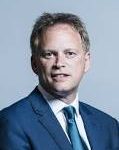
  • Grant Shapps – 2022 Comments on Banishing Loud Engines

    Grant Shapps – 2022 Comments on Banishing Loud Engines

    The comments made by Grant Shapps, the Secretary of State for Transport, on 30 April 2022.

    We want those in Britain’s noisiest streets, who are kept up at night by unbearable revving engines and noisy exhausts, to come forward with the help of volunteer areas to test and perfect the latest innovative technology.

    For too long, rowdy drivers have been able to get away with disturbing our communities with illegal noisy vehicles. It’s time we clamp down on this nuisance, banish the boy racer and restore peace and quiet to local streets.