Category: Trade

  • Andrew Griffith – 2025 Speech on British Steel

    Andrew Griffith – 2025 Speech on British Steel

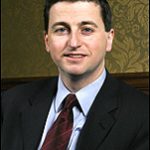
    The speech made by Andrew Griffith, the Shadow Industry Minister, in the House of Commons on 22 April 2025.

    I thank the Minister for advance sight of her statement, and I join her in thanking the Scunthorpe workers for their efforts over the last few weeks.

    We are here once again because the Government had no plan—they failed to prepare, they bungled negotiations, and they took too long to listen to the warnings. What do we have to show for it? We have this botched nationalisation and a potential bill for the taxpayer stretching into the billions. I say billions, but it remains entirely unclear how much this bungled 11th-hour decision will cost, while the assets still belong to China. I hope that Members across the House will agree that this is a complete mockery of transparency and accountability, and I hope that the relevant Select Committees will take it upon themselves to conduct their own inquiries. Instead of a statement from the Treasury today, the Chancellor is running to the International Monetary Fund in Washington to explain how she broke the UK economy. Steel nationalisation, the IMF downgrading growth forecasts, trade union summits in No.10—it is all sounding a bit 1970s.

    The simple problem is that we do not know the answers to any of these questions because the Government have failed to publish an impact assessment. Will the Minister confirm to the House when they plan to do so? Has anyone in government asked the Office for National Statistics whether British Steel will now be classified as a publicly owned entity? Has the ministerial team discussed the impact of the takeover with the Chancellor on her already evaporated fiscal headroom? To date, how much has the Department spent, or how much has it committed to underwrite—that is a straightforward question that deserves an answer? Given that her Department had no budget for revenue support of steel, has the Minister been able to secure additional funds from the Treasury, so that other sectors or support for British exporters do not pay the price?

    We have seen no further detail of the Government’s proposed steel strategy, or any confirmation of longer-term plans to protect British steelmaking. Labour Members refused to back a coking coalmine to produce some of the raw materials that blast furnaces rely on. Instead, they wait for shipments to arrive from halfway around the world. Most importantly, the Government have not set out how they intend to reduce the enormous burden of sky-high energy costs. Instead, the Secretary of State for Energy Security and Net Zero seems dead set on delusional policies that drive energy prices in this country even higher. We cannot make steel sustainably when we have the highest energy prices in Europe. Prices for industrial energy in Birmingham in this country are four times higher than those in Birmingham Alabama. We cannot make steel if we do not have coal.

    As Nissan’s Alan Johnson said today, the “simple fact” is that the UK is

    “too expensive… Once you’ve paid your electricity, gas, NICs we are too expensive—any industrial strategy that does not tackle that is a waste of time.”

    Well, we are here once again. There is no steel strategy, no industrial strategy, no export strategy and no energy strategy. Perhaps when she replies the Minister can share a single strategy that this Government actually possess.

    Sarah Jones

    It is getting harder and harder to understand quite what the Opposition’s policy is on steel. It is all over the place. On the one hand, they ask us questions about costs. They say they had negotiated a modernisation plan with British Steel, but they will not tell us how much money they were willing to throw at that plan. Their proposal, apparently, was to build on two sites. If Jingye was asking us for £1.2 billion to build on one site, how much taxpayers’ money were the Government putting on the table to fund two? We need answers to those questions.

    On nationalisation, last week the shadow Secretary of State for Business and Trade, who was, as we know, Financial Secretary to the Treasury when Liz Truss crashed the economy, said that he backed full nationalisation of British Steel. On the other hand, this morning the Leader of the Opposition said on Radio 4 that nationalisation should be the “last resort.” It seems a bit muddled. Finally, the hon. Member asked questions about the cost of energy pricing, forgetting of course that industrial energy prices doubled under the Tories. UK Steel, the trade body for the steel industry, is clear and has said that it is

    “the UK’s reliance on natural gas power generation”

    that leaves us with higher prices than our international allies. It is not too much clean energy, but too little.

    The hon. Member asked a reasonable question about the costs. I hope he will understand that matters at the moment are sensitive and commercially confidential, and I hope he will be assured that we will publish accounts in due course. We are securing materials and reviewing things such as health and safety, and other critical roles. Regular meetings are happening between the Departments and British Steel, as he would expect, and of course we will publish those details in due course. He asked about the coalmine. British Steel has told us directly that it could not use that coal because of the sulphur content. We also need coke ovens to turn coal into coke, and the coke ovens at British Steel were closed on his watch several years ago. The reality is that the Tories failed the British Steel sector, and this Labour Government are securing it.

  • Sarah Jones – 2025 Statement on British Steel

    Sarah Jones – 2025 Statement on British Steel

    The statement made by Sarah Jones, the Minister for Industry, in the House of Commons on 22 April 2025.

    With permission, Madam Deputy Speaker, I wish to make a statement on the steps the Government have taken since the Steel Industry (Special Measures) Act 2025 came into force.

    The Government took the decision to recall Parliament on 12 April so that we could take swift, significant action on British Steel. As hon. Members will be aware, that was the first time Parliament had sat on a Saturday in over 40 years. Our attendance in this place was testament to the urgency and importance of the issue at hand, which was the need to prevent the immediate closure of the blast furnaces at Scunthorpe. The action we took on 12 April and the measures we have taken since matter greatly for this country, and are of enormous importance to thousands of steelworkers and their families. I am very pleased to inform the House that this afternoon, British Steel has cancelled the redundancy consultations started by Jingye. I know that many British Steel employees will breathe a sigh of relief at that news.

    It is regrettable that when this Government took office, we inherited a steel sector in crisis, and an iconic British company facing an existential threat. Since day one, we have worked tirelessly with British Steel and the trade unions to find a resolution, because blast furnace closures at Scunthorpe is an outcome that this Government were simply not willing to allow. I want to stress that this kind of state intervention is not something that we intend to replicate in other situations, or for other industries. We recognised that unprecedented action was warranted in a truly unprecedented situation.

    As hon. Members will know, the legislation we introduced, which was passed that weekend, gave us the power to direct British Steel’s board and workforce, ensure they got paid, and order the raw materials to keep the blast furnaces running. It also permits the Government to do those things themselves, if the circumstances demand it. We have wasted no time in enacting those powers and taking the urgent action required to keep the blast furnaces lit at Scunthorpe. We have secured the raw materials needed to keep the blast furnaces operating, and we continue to work at pace to secure a steady pipeline of materials. Officials were on site to help British Steel within hours of the Steel Industry (Special Measures) Act 2025 becoming law, and we are already seeing the real-world impact of our decisive intervention.

    I am delighted to say that British Steel has also confirmed today that it can keep operating both of the UK’s last remaining blast furnaces. By contrast, Jingye’s plan was to shut one of them down earlier this month. It will come as no surprise to hon. Members to hear that the company’s workforce, their families, suppliers and communities have expressed deep gratitude for the action we have taken, which has preserved steelmaking at Scunthorpe and safeguarded thousands of skilled steel jobs.

    Now that the immediate emergency has passed, it is right that hon. Members also ask questions about what is next. We have been clear that in order to secure the long-term future of British Steel, which has not been properly invested in for years, we will need a modernisation programme, ideally with a private sector partner. Furthermore, we will need to look beyond any individual company, and ensure a secure and thriving future for the whole steel sector. That is why we are continuing our work to publish the steel strategy this spring.

    All options are on the table as we begin to address the company’s long-term sustainable future. My officials met Jingye on 16 April. It was a respectful conversation, and that dialogue will continue as we find a way forward in the national interest that safeguards steelmaking and protects jobs. With that in mind, I also want to say thank you—thank you to those who sent us messages to say we did the right thing to save British Steel, thank you to everyone who offered practical support and, most importantly, thank you to the workers and managers at British Steel who have heard our call to produce the steel that we need to deliver our plan for change, to keep the Scunthorpe site and everyone working at it safe, and to do so in a way that reduces the scale of financial losses. They have shown remarkable resilience and dedication at a supremely difficult time, and have served the plant, their community and the nation. They have promised us that there are better days ahead for British Steel, and we agree. We are giving them the chance they need to write the next chapter of British Steel’s history.

    We have assured this House time and again that steel has a bright future under this Government, and I restate that today. Steel is fundamental to Britain’s industrial strength and to our identity as a global power, and we will never hesitate to protect it. We have committed to update both Houses as policy develops and a longer-term strategy is formulated. I reaffirm that written updates will be forthcoming regularly. So let there be no doubt: this week is not the end. It is not the end of the work, and it is not the end of the negotiations, but thanks to the actions we have taken, it is also not the end of British Steel. I commend this statement to the House.

  • Jonathan Reynolds – 2025 Commons Statement on British Steel

    Jonathan Reynolds – 2025 Commons Statement on British Steel

    The statement made by Jonathan Reynolds, the Secretary of State for Business and Trade, in the House of Commons on 12 April 2025.

    Mr Speaker we meet under exceptional circumstances to take exceptional action in what are exceptional times.

    Our request to recall Parliament was not one we have made lightly. And I am grateful, genuinely grateful, to Honourable members on all sides of this House for their cooperation and for being here today as we seek to pass emergency legislation that is unequivocally in our national interest.

    I would also like to particularly thank the staff here in Parliament for facilitating today.

    I would like to thank the Prime Minister, the Chancellor and the Home Secretary for their support.

    Indeed, the only reason we can take this action today is because of the restoration of economic stability and the dedicated resources for steel in the last Budget.

    I would like to recognise my honourable friend for Scunthorpe and the honourable member for Brigg and Immingham and for all my honourable friends from Teesside for their advocacy and engagement on behalf of their constituents throughout this matter.

    As honourable members will know, since taking office this government has been negotiating in good faith with British Steel’s owners, Jingye.

    We have worked tirelessly to find a way forward, making a generous offer of support to British Steel that included sensible, common sense conditions to protect the workforce, to protect taxpayers’ money, and create a commercially viable company for the future.

    Despite our offer to Jingye being substantial, they wanted much more, frankly, an excessive amount.

    We did, however, remain committed to negotiation. But over the last few days, it became clear that the intention of Jingye was to refuse to purchase sufficient raw materials to keep the blast furnaces running.

    In fact, their intention was to cancel and refuse to pay for existing orders.

    The company would therefore have irrevocably and unilaterally closed down primary steel making at British Steel.

    Now I want to make absolutely clear that separate to any conversation about a possible deal to co-invest in new facilities, the British Government offered to purchase raw materials in a way that would have ensured no losses whatsoever for Jingye in maintaining the blast furnaces for a period of time.

    A counter offer was instead made by Jingye for us to transfer hundreds of millions of pounds to them without any conditions to stop that money, and potentially other assets, being immediately transferred to China.

    They also refused a condition to keep the blast furnaces maintained and in good working order.

    Now even if I had agreed to these terms, I could not guarantee that further requests for money would not then be made.

    In this situation, with the clock being run down, doing nothing was not an option.

    We could not, will not, and never will, stand idly by while heat seeps from the UK’s remaining blast furnaces without any planning, any due process, or any respect for the consequences.

    And that is why I needed colleagues here today.

  • Keir Starmer – 2025 Statement on British Steel

    Keir Starmer – 2025 Statement on British Steel

    The statement made by Sir Keir Starmer, the Prime Minister, on 11 April 2025.

    As Prime Minister, I will always act in the national interest.

    …to protect British jobs and British workers.

    This afternoon, the future of British steel hangs in the balance.

    Jobs. Investment. Growth.

    Our economic and national security…

    …are all on the line.

    I’ve been to Scunthorpe.

    I’ve met the steel workers.

    I know how important steel is…

    …not just to the region, but to the whole country.

    It’s part of our national story.

    Part of the pride and heritage of this nation.

    And I’ll tell you this – it is essential for our future.

    Our Plan for Change means we need more steel not less.

    So we will act with urgency.

    Now, we should be clear –

    This situation – and our response – is unique.

    While it is true that we are facing a new era of global instability…

    Our concerns about this plant…

    And negotiations to protect it…

    Have been running for years.

    This moment could have happened at any time.

    But it has happened now.

    And I will not stand by.

    There is no time to waste.

    So we are recalling Parliament tomorrow

    For a Saturday sitting.

    We will pass emergency legislation

    In one day

    To give the Business Secretary the powers

    To do everything possible to stop the closure of these blast furnaces.

    And as I have said, we will keep all options on the table.

    Our future is in our hands.

    This government will not sit back and just hope.

    We will act to secure Britain’s future…

    With British steel: made in Britain, in the national interest.

  • Jonathan Reynolds – 2025 Speech at Samsung KX

    Jonathan Reynolds – 2025 Speech at Samsung KX

    The speech made by Jonathan Reynolds, the Business Secretary, in London on 13 February 2025.

    Good morning, and thank you very much for that warm introduction, Aleyne, and my sincere thanks to the whole team here at Samsung for so generously hosting us, today.

    It’s actually quite emotional to be honest, it would have been someone like my grandfather who dug out that coal, sent it down here, and a few generations later I get to be on this stage doing this.

    But Samsung is a company synonymous with the best in cutting-edge design and innovation;  and much of it is on full display here within these four walls.

    It is a fitting venue to discuss this government’s ambition to go further and faster in our growth mission…ensuring that your investments that you outlined here in the UK pay dividends.

    Three years ago, I gave my first speech as the then Shadow Business Secretary – and I promised we would be both a pro-business and a pro-worker party…

    …A party rooted not just in the experience of working people, but which recognises, above all else, that you cannot rebuild an economy without a flourishing private sector; backed by an unapologetically pro-business government.

    I committed to partnering with you in making our offer to the country one you could get behind.

    And you gave us the ideas, energy and, in some cases, explicit support that was needed to win a strong majority and an even stronger mandate from the British people. A mandate to deliver our Plan for Change.

    Today, I want to reflect on the progress that we have made as a government. I want to talk candidly about what I believe we need to do;

    …And I want to provide a clear direction, some reassurance and – I hope – some excitement and optimism about the future.

    Now I am extremely proud of the work that my department has done in the first seven months of this Government.

    That includes our record-breaking International Investment Summit…where we secured £63bn of inward investment commitments for the UK…

    …that was where we published our Industrial Strategy Green Paper…

    …and where we launched our Industrial Strategy Council expertly led by Clare Barclay. I’m so glad Clare could join us ahead of the council’s meeting later today.

    Building on from the investment summit, at Davos last month, the Chancellor and I sent a clear message to the international community: that the UK is a great place to invest and do business. We have the lowest corporation tax in the G7, uncapped R&D tax credits, and 100% full expensing on capital allowances.

    And ahead of our Trade Strategy’s publication, we are leveraging our relationships with Europe, China, India and the Gulf and beyond so businesses can make the UK their base to connect with global markets.

    And this is important, because in response to the announcements made by the US this week, I want to reiterate that under this government, the UK will always champion free, fair and open trade. That is what is in our national interest.

    And where we have seen the opportunity for an active government to bring business and workers together, my department has always been on the pitch…

    …Whether that’s securing a better deal for the workforce at Port Talbot

    …engaging on the takeover of Royal Mail…

    …Or the renegotiated deal that saw Navantia acquiring Harland and Wolff and protect 1,000 jobs at shipyards across the UK. I will always roll up my sleeves and get involved.

    But – being candid – none of this work in itself is sufficient, if it does not lead across the board to improved business confidence, to greater investment, and to higher household income, in every part of the country.

    And on that I, and the whole government, recognise the challenge, and we accept it.

    In the Budget the government had a responsibility to fix the foundations and restore economic stability.

    And while I recognise that the Budget capped corporation tax, extended capital allowances, and raised the employment allowance threshold from this April, I know it asked a great deal of business. I don’t underestimate that for a second.

    We will never take that contribution – your contribution – for granted.

    You are playing your part in fixing this country, in stabilising the public finances, in investing in our people and helping us rebuild our crumbling infrastructure.

    And we know it is imperative that therefore we clear the path for the private sector to thrive… that we deliver the right conditions for growth.

    It’s why, on top of the £100 billion of investment unveiled at the Budget, this Government has thrown its full support behind a third runway at Heathrow.

    It’s why we’re making the Oxford Cambridge growth corridor a success with the right transport and public services to foster growth.

    It’s why through our expanded Office for Investment and the National Wealth Fund we will be supporting transformative investments throughout the country from West Yorkshire to the West Midlands, and Glasgow and Greater Manchester.

    The challenges we face as government make all the things we promised to do even more critical.

    And I relish that.

    And I don’t believe there are easy answers to complex problems.

    But I do believe that good policy, good strategies, and good government working hand-in-hand with the private sector, can make a difference.

    And I want my constituents to feel, and to be, better off.

    And only a pragmatic, business-orientated government can deliver that.

    And that to me is what being pro-worker, and pro-business means.

    And I believe this national UK Government is able to deliver on this mission because, fundamentally, we can offer what no-one else can:

    First of all, political stability – sadly, a rare commodity in many countries these days.

    Secondly, openness to the rest of the world – at a time where that is clearly coming under pressure.

    And most importantly of all, we are offering a willingness to use our mandate in Parliament to transform the business and investor environment.

    And we are using our Industrial Strategy to ensure that our policies are made with business, for business.

    As you know, in October last year, we consulted on our Industrial Strategy Green Paper; our blueprint to channel investment and support into our country’s high-growth sectors and high potential places.

    In that green paper, we posed a series of questions, and you answered in great detail. You told us that you need access to a high-skilled workforce.

    And that is why we have launched Skills England, bringing in flexibilities for the Growth and Skills levy, allowing for shorter apprenticeships and giving employers more control over training.

    Meanwhile our Great Britain Working White Paper has already set out detailed plans to support people back into work.

    And for key sectors such as AI and life sciences, we’ve committed to looking at visa routes for the most highly skilled, ensuring those routes continue to work for the UK. The upcoming Immigration White Paper will set out plans to make our immigration, skills, and visa systems work better and more coherently.

    You told us that planning has become a by-word for inefficiency.

    So, we’re making it quicker and simpler for developers to build on brownfield land.

    We’re making it much easier to build laboratories, gigafactories, data centres, and digital network grid connections.

    And we’re preventing campaigners from repeatedly launching hopeless legal challenges against planning decisions.

    You have also told us that access to capital needs drastic improvement.

    Here again we’re listening and we’re responding. That is why the Government is creating pension megafunds, unlocking billions of pounds of investment. At the same time, we’re delivering on Lord Hill’s Listing Review to allow the FCA to rewrite the UK’s Prospectus Regime for faster fund-raising.

    And, finally, you told us that we need a ‘regulation reset’ in this country.

    Day in, day out I hear from business leaders who say to me that regulation and regulators are too cumbersome.

    They’re too slow.

    They’re too focused on theoretical issues, with little understanding of how businesses and markets actually operate.

    And I’ve heard that message loud and clear.

    One of our foremost regulators, the Competition and Markets Authority, has recently made great strides in addressing some of these issues.

    And today, my department is publishing a consultation on a new Strategic Steer for the CMA to accelerate this work.

    This isn’t about meaningless platitudes – about the ‘cutting of red tape.’

    It’s about effective consumer protection, competition law and digital market powers so that we create a level-playing field for businesses to compete on. We need to address genuine harm done by those who are not playing by the rules.

    Our Strategic Steer asks the CMA to minimise uncertainty for business – by being proactive, transparent, timely, predictable and responsive in its engagement.

    And I know, under Sarah Cardell and the new Interim Chair, Doug Gurr, the CMA has already taken significant steps in adopting this approach…in always having growth and investment in mind.

    Its extensive work around the merger of Vodafone and Three is a fantastic example of that…as is the CMA’s launch of a Growth and Investment Council to identify opportunities for greater competition.

    And there is more to come.

    I know Sarah and the CMA have set out their plans to deliver real, meaningful reforms to the merger control processes already today. Its eyes are trained firmly on more direct engagement with businesses. On speeding up its decision-making to deliver more certainty for investors. On adopting a faster, more agile approach to protecting competition.

    I fully endorse these measures because this Government believes in effective, independent institutions. In promoting competition and protecting competition – that is fundamental to our growth mission. And with the current CMA team in place, we want to support them every step of the way in the changes they’re making.

    I want to see that same level of ambition from our other regulators because right now, I don’t think our regulatory environment is doing enough to drive investor confidence and support growth.

    So, I’m taking this first step today but watch this space.

    I’m serious about delivering our wider regulatory reform over the coming weeks and months…

    …I’m also serious about building the pro-innovation, pro-worker, pro wealth creation economy that we promised at the general election. I know you in the room share that commitment, too.

    I’m proud of the reforms that we’ve set out in the Employment Rights Bill – of the opportunities they will afford working class families and working-class communities like the one I grew up in.

    I want everyone to benefit from the stronger economy I know we can have.

    But I always said, however, that we would work with – and not against – business to deliver these generational reforms.

    I said that we would never introduce changes that would make it harder for firms to hire with confidence.

    And this is precisely why my department is consulting on many of the key aspects of our Make Work Pay reforms – not least on probationary periods.

    I want a statutory probation period that lets businesses get a good sense of how new employees are performing.

    And it’s common sense to ensure that there are lighter touch standards for dismissal during those initial months of people starting a job.

    I know how important this is for employers. And I get it.

    It’s why my department will continue to engage face-to-face with business to develop a sensible, balanced proposal before we go out for formal consultation.

    And we will also consult on the length of the statutory probation period, with our preference being 9 months.

    We have also made clear that the changes we make to unfair dismissal will come into effect no sooner than the autumn of next year.

    I want there to be a buffer – a proper, business readiness period – so employers fully understand the details of our reforms, and can prepare long before they enter into force.

    That is the right thing to do – for both employers and employees.

    So, let there be no doubt – we are still the party of business.

    And we are willing to do the difficult things.

    Be that a third runway at Heathrow, a step change at the CMA, or stopping endless court challenges over the job-creating projects this country needs.

    We can share our ideas and ambition with each other.

    Take the big bets.

    Take some risks.

    Be the disruptors.

    My desire to be your champion in government has never wavered.

    And it is as resolute now as ever.

    We have to go further and faster in driving growth.

    And, friends, together, I know that we will.

    Thank you very much.

  • Jonathan Reynolds – 2024 Statement on the UK Steel Safeguard Extension

    Jonathan Reynolds – 2024 Statement on the UK Steel Safeguard Extension

    The statement made by Jonathan Reynolds, the Secretary of State for Business and Trade, in the House of Commons on 18 July 2024.

    I would like to make a statement on decisions made by the previous Government in relation to the UK’s steel safeguard measure.

    A successful steel industry is critical to our economic future, and we need the right policy environment to build sustainable growth in the UK and to ensure we respond effectively to unfair overseas trading practices and protectionist measures.

    Trade remedy measures enable Governments to protect their businesses from unfair foreign trade practices. They tackle issues of dumping or of unfair Government subsidies or, as in the case of safeguards, give businesses time to adjust to unforeseen increases in imports.

    The UK has, since 2018, applied a safeguard measure on imports of certain steel products. A safeguard measure imposes a tariff on specified product imports. This provides a level playing field and protects domestic producers from serious injury caused by unforeseen increases in imports giving them the needed time to adjust.

    The UK’s safeguard measure applies on 15 different steel product categories and was set to expire on 30 June 2024 under UK law. The Trade Remedies Authority conducted an investigation to determine whether or not there would be injury or threat of injury to domestic steel producers without the safeguard. They considered evidence from both domestic and international industry and organisations. After careful consideration, the Trade Remedies Authority recommended to the previous Secretary of State for Business and Trade that the measure should be extended on all 15 product categories for a further two years, to 30 June 2026.

    The previous Government considered the evidence in the Trade Remedies Authority’s recommendation and wider matters in the public interest, including the UK’s obligations under the relevant World Trade Organization agreement. They took the decision to extend the measure on all 15 categories for a further two years, to 30 June 2026. The decision to extend the measure on five of the 15 product categories represented a departure from the UK’s obligations under the relevant WTO agreements. The previous Government balanced this against the evidence the TRA found in their investigation and the UK’s public interest. As shadow Business and Trade Secretary, I supported this decision.

    The previous Government also decided to extend the application of the suspension for Ukraine to 30 June 2026. The extension review conducted by the Trade Remedies Authority did not consider the future of the existing suspension for Ukraine as it was beyond the scope of their investigation. The previous Government decided that it was in the UK’s public interest to extend the suspension for Ukraine to 30 June 2026. This decision was taken to ensure that imports of Ukrainian steel will not be subject to the additional safeguard quotas and duty. This is in line with the UK’s commitment to support Ukraine in the war with Russia, which the Prime Minister has reaffirmed to President Zelensky.

    In taking this decision with respect to the Ukraine suspension, UK legislation requires the Secretary of State to lay a statement before the House to explain why such a decision was taken. Now that Parliament has been reconstituted, I am laying this statement to make the House aware of the decision taken by the previous Government.

  • Kemi Badenoch – 2024 Speech at Chatham House

    Kemi Badenoch – 2024 Speech at Chatham House

    The speech made by Kemi Badenoch, the Business and Trade Secretary, at Chatham House on 7 March 2024.

    To understand the role of the UK in the global trade landscape we must describe what that landscape looks like right now.

    Everyone in this room is old enough, at least I think everyone in this room is old enough, to have seen for themselves the transformational power of trade.

    You don’t have to go as far as back as Adam Smith and David Ricardo to understand the arguments.

    Look to Eastern Europe and what’s happened since the fall of the Berlin Wall or to countries in the Indo-Pacific like Malaysia or even China.

    As free trade has grown, it is no coincidence that more than a billion people have been lifted out of extreme poverty over the same period.

    But I’m not here to give you a cliché-ridden lecture on how great trade is. The case for it is overwhelming yet despite that it has become a tough sell for politicians. I’m here to respond to the criticisms that the UK no longer has a place in the world, and that free trade has been part of the problem rather than the solution.

    I’m here to give you reasons for optimism and reasons to be proud about our role on the world stage.

    Across the West and beyond, low growth has become a profound and stubborn problem. In many countries, wages have failed to keep pace with rising prices, with lower and middle income families being hardest hit.

    Many, as you know, blame free trade. They say we have allowed other countries to steal our lunch, that the momentum is now [with] the BRICS nations.

    In trade negotiations I often encounter a belief that trade is a zero-sum game, that if we gain from someone we must lose something in exchange.

    Proving that trade within a free market provides mutual benefit is hard when your counter-party believes that the objective is to try and take something from you.

    I spent all of last week in Abu-Dhabi at the World Trade Organization’s 13th Ministerial Conference.  This is where the rules-based trading system and democracy come together to have a big row.

    I am still baffled at how 164 countries make any decisions at all, given the need for unanimity. I saw a lot of arguments, I also saw some tears.

    While the disagreements in Abu Dhabi were not between countries which were pro Israel or pro Palestine, not even really between developed and developing nations.

    The principal disagreements were often within the BRICS nations, between those who support free trade and those who don’t.

    So it’s a choice between the agenda which the head of the WTO, Dr Okonjo-Iweala Ngozi, is promoting – a forward-looking agenda that is about services, green, digital and inclusive trade and an alternative protectionist agenda ending up as a race to the bottom.

    The rules-based system which you often hear about is under threat. One country can stop 163 others from coming to a decision.

    The role of the UK here is not just to prevent the WTO from being held back by a small minority but to ensure that it can live up to its founding principles, using free trade as a means to raise living standards, create jobs, and improve people’s lives – something which we have championed right from the very beginning.

    When I became the Secretary of State for Business and Trade, I told my team that our mission was to be the Department for Economic Growth.

    And I set five priorities to establish how we would deliver on that promise with an outward looking, international agenda.

    To remove market access barriers for UK businesses was the first. Second, to grow British exports. Third, to become the No 1 destination for investment in Europe. Fourth, to sign high quality trade deals. And, finally, and most importantly, to defend free and fair trade.

    These priorities exist in a world where protectionism peaked just as we embarked on our own independent trade policy.

    We took our own seat at the WTO just as many had lost faith in the institution and lost faith in the value of free trade.

    We were repeatedly told that without the clout of the EU bloc we would not open up trade with the markets of the future.

    And three myths have arisen which are regularly repeated on growth, exports and investment.

    The first is that Brexit has hampered our growth, relative to comparable economies.

    That is not the case. The IMF predicts that between 2024 to 2028 the UK will outgrow the G7 economies of France, Germany, Italy, and Japan.

    And our economy is expected to be 17 per cent larger than France’s by 2035.

    The second is that exports have declined.

    That is also not the case. The value of our exports in 2016 – the year of the referendum – was £576 billion.

    In 2020, the year we left the EU, it was just under £624 billion- that’s including the impact of COVID.

    And today our exports are worth over £850 billion […] despite the challenges we’re experiencing following COVID and Putin’s war in Ukraine.

    The third claim was that after Brexit investment would dry up.

    However, last year, our car sector alone attracted £23.7 billion in investment commitments – more than the past 7 years combined. The UK’s car production is now growing at its fastest rate since 2010.

    And the latest figures show that we are the number one destination in Europe for foreign direct investment.

    So, we have succeeded, not in spite of embracing free trade, but because of it.

    In just a few years, we’ve negotiated more free trade agreements than any other independent country in the world.

    In the coming weeks, we will pass our bill [on] the CPTPP – the Comprehensive and Progressive Agreement for Trans-Pacific Partnership […]. This will make over 99% of UK goods eligible for zero tariffs in Asia-Pacific member countries – a region that will drive global Britain over the next few decades.

    Of course, it’s easy to produce statistics showing that exports and investments are up.

    It’s a lot harder to demonstrate how we are defending the system that we helped create.

    I tell my department we should start by not being ‘knowingly naïve’.

    By that I mean not blindly believing that just because rules are written, they will be followed or that culture and politics are not relevant and it’s only the regulations that count.

    It’s about realism. Realism, realism, realism.

    Which brings me to the criticisms that the government typically faces on trade.

    When the US brought in the Inflation Reduction Act, there were many calls for the UK to do the same – lots of articles written about how leaving the EU meant we were already in decline.

    My response was that copying and pasting policy from other countries is not a strategy.

    It is not possible for every economy to subsidise its way to growth. Some will go bankrupt doing that. That will not be us.

    At a time when other countries are engaging in subsidy wars, we need to be smart and work with those allies who understand what is at risk.  We have to be pragmatic.

    Yes, that means offering targeted support to tackle specific issues facing our economy and yes we want a level playing field for our entrepreneurs so that they can compete globally, but it doesn’t mean hosing industries down with subsidies or slapping tariffs on products from abroad.

    Trade wars inevitably fan the flames of global tensions – the very last thing we need right now.

    This wouldn’t be a Kemi Badenoch speech without a reference to my favourite economist, Thomas Sowell, who pointed out that trade wars are economically counter-productive.

    He argues, for example, that the Smoot-Hawley tariffs played just as great a role in prolonging the Great Depression as the Wall Street crash itself. I agree.

    We would be wise to heed his advice because history shows that countries who engage in protectionism and in ‘beggar thy neighbour’ trade policies are always weaker and poorer as a result.

    So, we lead by example. We work with allies. We are not alone. Countries like New Zealand, Japan, Switzerland and Singapore and many others are with us.

    So in my department, I have to grapple with maintaining a competitive UK steel industry that can stand on its own two feet against a global oversupply of steel, as China floods the market, while also ensuring vital safeguards for the domestic sector. Not an easy trade off.

    I have to manage the lowering of tariffs to bring down costs while not undercutting our own producers when other countries are subsidising theirs. Not easy – there is a trade off.

    I have to strike the right balance between embracing the import of goods from developing countries to help them grow with the need to maintain the high standards on quality and safety which the British people rightly expect.

    We make choices.

    Our free trade agreements are helping us make the right choices because they are all about diversification and resilience.

    That is what the Indo-Pacific tilt is about, but we need to make sure that the facts are out there. It still baffles me how desperate people are to blame everything on leaving the EU. Because criticisms arrive often because it is the first time many are watching the ins and outs of an independent trade policy, played out live.

    These events took place in a black box when we were in the EU. We didn’t have the real-time updates of what was happening with trade negotiations as we do now. It is new. And for those of us who are optimists, exciting. For those of us who are pessimists, scary, and want to make it all go away.

    The problems that they see now, we had when we were in the EU, like harmonizing standards and regulations across different trade agreements, or engaging with countries that have exceptionally different and diverse models of trade, or striking deals with countries that don’t have our values of democracy, the rule of law, and a market economy.

    But when we encounter these same standard negotiating issues, it’s put down to the UK being isolated or being in decline.  This is not a serious analysis of trade for the 21st century.  It is not serious commentary. Let’s have more realism.

    The reality is that the geopolitical climate, and the global conditions for economic security, are more precarious now than at any other time since the Cold War.

    In the Middle East, conflict is raging. In the Red Sea, the free flow of trade is under attack, which is why together with our allies we have taken coordinated military action to protect it.

    Covid and Putin’s war against Ukraine have permanently reconfigured supply chains.

    The challenges in trade we face are different from just a few decades ago. We live in a vastly more interconnected global economy with complex supply chains, cheaper international travel, and the free flow of information.

    That interdependence means there can be no retreat into splendid isolation.

    We must continue to pursue free trade and avoid the tariffs and taxes which stifle growth and push up inflation.

    That open, outward-looking, approach is compatible with protecting our long-term economic security.

    We need investors to feel confident in the UK, confident not only that their assets will grow over time but that fraud or illicit finance will never be tolerated.

    Through our Economic Crime and Corporate Transparency Act we will make the UK one of the safest places in the world to do business.

    Our National Security and Investment Act is preventing the hostile acquisition of assets.

    This matters because our power plants, our 5G networks and our critical national infrastructure should never be in the hands of those who would do us harm.

    And we are taking similar precautions with regards to exports leaving the UK, updating our Strategic Export Licensing Criteria and significantly enhancing our Military End Use Control.

    Our key aim in all of this work is to prevent hostile countries from ever acquiring British weapons or advanced British technology.

    And to those who would do harm to us or to our allies, we say that we will not allow you to use your economic might to meddle with another state’s affairs.

    The vision of Global Britain remains.  Once mocked as a nation of shopkeepers, we know the value of trade and are staying true to our heritage as a global trading nation that once ruled the waves.

    We received a great inheritance from previous generations; it is important that we create an even greater one to hand down to the next.

    So, the next time you’re asked what role the UK is playing, you can say that from sanctions to supply chain resilience, we are a global leader in economic security, and we are defending free and fair trade underpinned by a rules-based system.

    As you saw in the budget yesterday, we are doing all of this with economic growth at the forefront of our minds.

    And I will conclude by saying we have a Prime Minister who is clear-eyed about the opportunities and the challenges that lie ahead.

    Where investor confidence in many countries has been shaken, he has sent a loud and clear message that Britain is open for business.

    Where there is instability abroad, he has helped to intervene, to bring economic stability at home. He has a plan.

    And where countries are embracing protectionism, we are opening up our markets and lowering the barriers to free, open trade – reducing costs and widening choice for the British consumer, ensuring that our economy is strong, resilient and protected from states that threaten us, threaten our allies, and threaten our international security interests.

    That is the role the UK is playing on the global stage.

  • Kemi Badenoch – 2023 Speech to the Northern Ireland Investment Summit

    Kemi Badenoch – 2023 Speech to the Northern Ireland Investment Summit

    The speech made by Kemi Badenoch, the Secretary of State for Business and Trade, in Belfast on 13 September 2023.

    Good afternoon everyone, your Royal Highness, my Lords, Ladies and Gentlemen.

    I know you’ve already been welcomed several times over the last two days, but I would like to thank you specially this afternoon for being in Belfast for the Department of Business and Trade’s first ever investment Summit, and I believe the first Investment Summit ever of its kind in Northern Ireland.

    This Summit is absolutely swarming with ministers desperate to talk to business and the investment community. So, I’d like to take this opportunity to thank my fellow ministers, the Secretary of State for Northern Ireland Chris Heaton-Harris, the Minister of State Steve Baker, Secretary of State for Levelling Up Michael Gove and of course business and trade ministers, Lord Johnson, and Lord offered for all their support on business engagement.

    I’d also like to thank the Prime Minister’s trade envoy to the US Sir Conor Burns for being an excellent sherpa over the last couple of days.

    So at this summit, we’re going to be telling a story of Northern Ireland that’s different from the ones you typically hear. A story of energy, creativity, and innovation.

    But first, for me, a story about growth and how the UK Government and my department will help achieve that.

    When I first became Business and Trade Secretary, I decided our mission was to ensure that our department became the government’s engine for economic growth.

    It was my focus when I was a Treasury minister, and even more so now in a world that is becoming increasingly competitive and increasingly complex.

    So how does government deliver growth?

    The truth is, it doesn’t, business does.

    Our job is to get out of the way and make life easier for all of you to grow. So we’ve been doing this by focusing on five priorities.

    The first is removing the barriers to business and trade, not just in our country, but around the world, cutting through red tape and tailoring regulation to better suit the needs of a dynamic UK.

    The second is maintaining our status as Europe’s top investment destination.

    For three years running, the UK has topped the tables for new foreign direct investment projects in Europe. And since I took up the role, the UK has risen to third in the world for inward investment only behind the US and China, and business investment is up nearly 7% year-on-year.

    And I was particularly delighted just this week that we have overtaken France and are now the eighth largest manufacturing economy in the world.

    We need to attract the capital that transforms homegrown enterprises into global ones. And building on this progress is why we’re here today to help deliver our other priority of growing exports.

    We don’t just want to sell in the UK or even in the EU, but all over the world. Building on this progress is why we’re all here today.

    Another priority is signing high quality trade deals. Earlier this year, we signed our accession to CPTPP – the Comprehensive Progressive Trans Pacific Partnership for those of you who don’t know – that is a deal that is going to give our businesses including here in Northern Ireland greater access to markets that are home to half a billion people.

    That’s where the 21st century’s middle class will be coming from. They’ve got money in their pockets and surging demand for your goods and services.

    The final one, and the one closest to my heart, is defending free and fair trade. Many people hear this and they think it means giving money to developing countries.

    But actually, it is about providing economic security, and defending the rules-based trading system that underpins a lot of the security and safety of how we do business in our country.

    Many people think that the way to do this is to become more protectionist. And I can understand that. There are a lot of countries who are feeling the pain from a whole list of issues.

    The supply chain fallout post-pandemic, Russia’s war in Ukraine, a more assertive China, and when the world feels so unsure, the natural reaction is to want to retreat from it. But slamming down the shutters and putting up a ‘closed’ sign isn’t the solution.

    I grew up in a country that was actually very protectionist, and it can be quite awful. And people continue to bring more policies that make life worse for people that make them poorer, while championing a nationalism that actually doesn’t do anything for anyone.

    What we need is an open economy. And in a ever more connected world, we cannot be economically isolationist.

    But we also can’t be knowingly naive. We need to be smart. We need to be clever, but we also need to be open.

    You can’t put a border on ideas, but you can put a border on opportunity if you have the wrong policies.

    And that brings me back to the story which we want to tell about Northern Ireland at this summit.

    It is about opportunity, and how the UK Government is working to create it here.

    Today, there are more people employed in manufacturing in Northern Ireland than either the Republic or the UK average.

    And we know that long term prosperity requires peace, and the political progress of the last few decades has nurtured business confidence.

    It’s led to billions in inward investment and it’s driven economic growth.

    There have undeniably been some recent challenges. But this government has restored the smooth flow of trade from Great Britain to Northern Ireland and protected Northern Ireland’s place in our Union.

    This certainty and stability makes Northern Ireland an even more attractive investment prospect, given its unique trading position with a seamless land border with the single market and within an internal UK market that is striking trade deals across the world and scrapping hundreds of trade barriers.

    When you back Northern Ireland, you back this country, you are joining a growing list of businesses and investors who also recognise these opportunities.

    From the creators of Game of Thrones – my favourite TV show – who filmed one of the world’s most successful fantasy dramas not far from here, making an enormous contribution to Northern Ireland’s incredible creative industry, to the businesses that are committing £20 billion of investment a year, creating thousands of new jobs in the last few years alone.

    Just today, for example, you would have heard EY announcing 1,000 new jobs in a new hub here.

    Northern Ireland is well positioned to take advantage of the government’s broader work to drive innovation across the UK.

    On new Smarter Regulation Framework also commits to regulation only as a last resort so that we don’t stifle innovation.

    And of course, every nation needs a bedrock of talent and skills to succeed.

    Health and life sciences is just one of the many areas where Northern Ireland is in a prime position, thanks to a combination of expertise, world class research, strong links between industry, clinicians and academia – in Queen’s University and also the University of Ulster.

    But what’s been interesting is listening to all of you over my meetings this morning and at the reception yesterday, telling me about what your personal experiences have been, how you see business and education being a lot better integrated here than in other parts of the UK, for example, and an increasing numbers of businesses are using this skills base as a springboard to diversify into the low carbon and renewable energy sector.

    Local businesses are building expertise in producing green hydrogen, manufacturing hydrogen buses, and developing intelligent systems for carbon capture and storage.

    But I won’t go on because this summit is not about me. It is about you, and I’d like to finish on one final note.

    It is our responsibility to promote all parts of Northern Ireland, especially the Northwest, not just this great city of Belfast where we meet today. And that is something that the government is trying to ensure that we are levelling up across the UK but also across Northern Ireland too.

    I’m convinced that Northern Ireland has an incredible future and over the summit we’ll get a glimpse of all that lies ahead. Please consider becoming more of a part it.

    Thank you so much, and now I’m honoured to welcome our special guest, Her Royal Highness The Princess Royal, to the stage.

  • Nigel Huddleston – 2023 Statement on the Trans-Pacific Partnership

    Nigel Huddleston – 2023 Statement on the Trans-Pacific Partnership

    The statement made by Nigel Huddleston, the Minister for International Trade, in the House of Commons on 18 July 2023.

    The Secretary of State for Business and Trade signed the accession protocol to the comprehensive and progressive agreement for trans-Pacific partnership on Sunday 16 July in Auckland. The UK will be the first new member since CPTPP was created. With the UK as a member, CPTPP will have a combined GDP of £12 trillion and will account for 15% of global GDP. Accession to the agreement sends a powerful signal that the UK is using our post-Brexit freedoms to boost our economy. It will secure our place as the second largest economy in a trade grouping dedicated to free and rules-based trade. It gives us a seat at the table in setting standards for the global economy.

    The agreement is a gateway to the wider Indo-Pacific, which is set to account for the majority of global growth and around half of the world’s middle-class consumers in the decades to come. That will bring new opportunities for British businesses abroad and will support jobs at home. More than 99% of current UK goods exports to CPTPP countries will be eligible for zero tariffs. The UK’s world-leading services firms will benefit from modern rules, ensuring non-discriminatory treatment and greater transparency. That will make it easier for them to provide services to consumers in other CPTPP countries.

    In an historic first, joining CPTPP will mean that the UK and Malaysia are in a free trade agreement together for the first time. That will give businesses better access to a market worth £330 billion. Manufacturers of key UK exports will be able to make the most of tariff reductions to that thriving market. Tariffs of around 80% on whisky will be eliminated within 10 years, and tariffs of 30% on cars will be eliminated within seven years. Joining CPTPP marks a key step in the development of the UK’s independent trade policy. Our status as an independent trading nation is putting the UK in an enviable position. Membership of that agreement will be a welcome addition to our bilateral free-trade agreements with more than 70 countries. I pay tribute to the many officials and Ministers who have worked on this deal over the past two years, some of whom are in the Chamber today.

  • Kemi Badenoch – 2023 Statement on the Comprehensive and Progressive Agreement for Trans-Pacific Partnership

    Kemi Badenoch – 2023 Statement on the Comprehensive and Progressive Agreement for Trans-Pacific Partnership

    The statement made by Kemi Badenoch, the Secretary of State for Business and Trade, in the House of Commons on 17 July 2023.

    Introduction

    The UK officially signed its accession protocol to the comprehensive and progressive agreement for trans-pacific partnership (CPTPP) on 16 July 2023. This trade agreement contains some of the world’s largest and most dynamic economies. Our membership will take the agreement from 11 to 12 members and represents the first expansion of this high-standards trade agreement.

    The agreement will act as a gateway to the wider Indo- Pacific and Americas region, bringing new opportunities for British businesses, supporting jobs across the whole UK and shaping the future of international trading rules.

    The Indo-Pacific region will account for the majority of global growth in coming decades and be home to around half the world’s middle-class consumers. On the UK joining, the CPTPP membership will account for around £12 trillion in GDP, a number which will grow as new members join. Economies including Costa Rica, Uruguay and Ecuador have formally applied, and the Republic of Korea, Thailand and the Philippines have expressed an interest in doing so. As the first acceding country, we have placed ourselves in an ideal position to benefit from future expansion of the agreement.

    Geopolitical benefits

    Accession to the agreement will send a powerful signal that the UK is using our post-Brexit freedoms to boost the economy. It will secure our place as the second largest economy in a trade grouping dedicated to free and rules-based trade while taking a larger role in setting standards for the global economy.

    Becoming a member will see us deepening our multilateral relations and strengthening our trading links in the Indo-Pacific region. We will work closely with our partners to develop the agreement, creating further benefits for all its members.

    As CPTPP grows, the UK will help shape its development to fight unfair and coercive trading practices that threaten the future of international trade. British businesses will benefit from enhanced access to more markets while trading under fair rules that allow them to compete and thrive on the global stage.

    Our status as an independent trading nation is putting the UK in an enviable position. Membership of this agreement will be a welcome addition to our bilateral free trade agreements with over 70 countries.

    Gains for businesses and consumers

    In an historic first, joining CPTPP will mean that the UK and Malaysia are in a free trade agreement together for the first time, giving British business better access to a market worth £330 billion. Manufacturers of key UK exports will be able to make the most of tariff reductions to this thriving market. Tariffs of around 80% on whisky will be eliminated within 10 years and tariffs of 30% on cars will be eliminated within seven years.

    In addition, over 99% of current UK goods exports to economies in the agreement will be eligible for zero tariff trade. The agreement’s provisions will also help facilitate trade by ensuring that customs procedures of CPTPP parties are efficient, consistent, transparent and predictable.

    Beyond goods exports, the UK’s world-leading services firms will benefit from modern rules which ensure non-discriminatory treatment and greater levels of transparency. In key sectors, UK companies will not be required to establish or maintain a representative office in a CPTPP territory. This will make it easier for them to provide services to consumers in other CPTPP countries.

    The deal we have struck will also open up new opportunities in the Government procurement markets of CPTPP members, including in Malaysia, Singapore and Japan.

    Business travel will be easier under the agreement. Britons travelling to CPTPP members for work purposes will enjoy greater certainty on trips for short-term work meetings. Professionals going to Peru and Vietnam for short-term business will be able to stay for six months. That is double the amount of time for previous agreements.

    UK consumers are also set to benefit from tariff reductions on imports. These tariff reductions could lead to cheaper prices, better choice and higher quality. Products such as fruit juices from Chile and Peru, and Mexican honey and chocolate, to name but a few, could all cost less.

    Defending UK interests in negotiations

    We have ensured that joining will not compromise our high animal and plant health, food safety or animal welfare standards. We have also maintained our right to regulate in the public interest, including in areas such as the environment and labour standards. Furthermore, we ensured that the NHS was kept off the table throughout the course of discussions, as in all of our free trade agreement negotiations. We have also ensured that UK producers will be protected. We have reduced import tariffs in proportion to the market access we have received and kept safeguards where necessary. Market access increases will be staged over time for certain products, ensuring that farmers have time to adjust to new trade flows. Permanent limits on tariff-free volumes have been agreed on some of the most sensitive products that can be exported to the UK. This includes on beef and pork.

    Conclusion and next steps

    Following signature, the Government will now take the necessary steps to ratify the agreement. The Secretary of State will write to the Trade and Agriculture Commission to commission its advice on the agreement.

    The Government have now published the accession protocol and related market access schedules, as well as relevant side letters, an impact assessment and a draft explanatory memorandum. With the publication of the accession protocol, the agreement text has now been presented to Parliament, but the Government will not commence the pre-ratification scrutiny process under the Constitutional Reform and Governance Act 2010 for a period of at least three months. This will ensure there is appropriate time for the relevant Select Committees to consider the agreement in advance. Legislation necessary to implement the agreement will be brought forward, and duly scrutinised by Parliament, when parliamentary time allows.

    Joining CPTPP marks a key step in the development of the UK’s independent trade policy. It will deepen our relations with a strategically vital region and offer exciting new opportunities for British businesses and consumers.