Category: Speeches

  • Rachel Reeves – 2024 Speech to Business Leaders at Rolls Royce

    Rachel Reeves – 2024 Speech to Business Leaders at Rolls Royce

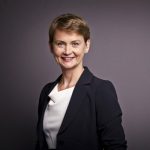
    The speech made by Rachel Reeves, the Shadow Chancellor of the Exchequer, on 28 May 2024.

    Good morning.

    In five weeks’ time, the British people will go to the polls.

    To make a profound choice about the future of our country.

    And where better to think about the future than here at Rolls Royce, in Derby.

    Away from the short-termism of politics, the pessimism of our present moment, here you have the very model of a great British business…

    … a global brand synonymous with excellence…

    … that continues to this day to pioneer in new technologies critical to the challenges of a changing world…

    … from submarine technologies crucial to defence, to the development of carbon neutral aviation at the frontier of the climate transition.

    And a business partnering with homegrown small and medium enterprises throughout its supply chain…

    … which has nurtured deep roots in this city going back more than a century.

    A business built on the foundations of a past in which we can take pride, with a vision of a future that we can invest our hope in.

    **

    As Shadow Chancellor, one of the great privileges of this role has been to travel the country and meet entrepreneurs, innovators and business leaders all across the UK.

    In the most challenging of economic times, they give me immense optimism.

    Today I want to put forward a simple proposition:

    That this changed Labour Party is today the natural party of British business.

    And I want to set out the central economic fault line in this election, the choice before the British people on the fourth of July:

    Five more years of chaos with the Conservative Party, leaving working people worse off;

    Or stability with a changed Labour Party.

    TORY INSTABILITY

    I can tell you exactly what Rishi Sunak wants you to think on polling day.

    He’s already saying it.

    That the plan is working – don’t change course now.

    That the chaos and instability wrought by Liz Truss was just a blip.

    That the deep problems we face are down to global events – they’re not his fault at all.

    ‘Don’t judge 14 years on 49 days’, he will say.

    **

    I want to take that head on.

    Because while it is true that the crises we have faced are global in origin, our unique exposure to those crises…

    … the reasons we have been hit harder than many comparable countries…

    … by the economic impact of covid and then by inflation and rising energy prices…

    … can only be explained by choices made by Conservative governments here at home.

    And because while the Prime Minister want this election to be about whether inflation is coming down this month…

    … he omits to mention when it started to rise:

    On his watch as Chancellor;

    Even before the Conservatives, in their clamour to cut taxes for those at the very top, sent interest rates and mortgage costs spiralling.

    He omits to mention when it peaked too…

    … on his watch as Prime Minister.

    And he omits to mention the families and businesses dealing with the consequences of Conservative economic mismanagement today.

    **

    Like the family I met in Redcar:

    The dad doing an apprenticeship, the mum working in a supermarket…

    … who spend every evening talking about money, because there’s just not enough to pay the bills.

    The small business owner in Milton Keynes…

    … desperate to expand, but faced with a system of business rates that are stacked against her.

    Or just down the road from here, the workers at Alstom, some of whom I met just a few months ago…

    … who are facing the uncertainty that results…

    … when a government is unwilling to take a long-term, strategic approach, in partnership with business and trade unions…

    … the only responsible approach to economic policy.

    The Conservatives are insulting the intelligence of millions of people like these, forced to deal with the consequences of their failure.

    **

    But we won’t let them get away with it.

    Because the Conservatives do deserve to be judged on the record of those fourteen years.

    The general election, in five weeks’ time, is a chance for the British people to pass judgement on fourteen years of economic chaos and decline under the Conservatives.

    Fourteen years that have seen taxes reach a seventy year high.

    National debt more than double.

    And the typical homeowner re-mortgaging this year paying £240 more every single month, after the disastrous mini-budget.

    Wages flat.

    Public services on their knees – taxpayers asked to put more and more in, but getting less and less in return.

    And economic growth on the floor.

    Five Prime Ministers.

    Seven Chancellors.

    Twelve plans for growth, each yielding less than the last.

    To put this into perspective:

    If the UK economy had grown at the average rate of OECD economies under the Tories, it would now be £150 billion larger;

    An additional £5,000 for every household;

    Providing an additional £55 billion more investment in our public services.

    **

    That is their record – and they deserve to be judged on it.

    The Conservatives have failed on the economy.

    The plan isn’t working.

    And Rishi Sunak’s decision to call an early election is the clearest sign of that.

    If he doesn’t believe his plan is working, why should you?

    TAX

    And no matter how much they tell us that Liz Truss was nothing to do with them, their every action tells us otherwise.

    They haven’t learnt their lesson.

    They’re singing from the same songbook.

    With the Prime Minister’s priorities dissolving into thin air, what is his last, desperate throw of the dice?

    Not to deliver on the promises he has made over the last two years.

    But instead, to offer up £64 billion worth of unfunded tax cuts.

    They offered up another one just last night.

    The Conservative cannot say how they’re going to pay for them.

    What cuts will they make to public services?

    What other taxes will they raise?

    Or will they be paid for by yet more borrowing?

    And why should anyone believe them, after – I’ll say it again – the tax burden has reached it’s highest in seventy years?

    Be in no doubt, the single biggest risk to Britain’s economy is five more years of the Conservative Party.

    CHANGED LABOUR

    My ambitions for Britain are so much greater than that.

    I don’t think we need fantasy economics to look and hope for a better future – just look around us.

    But we do need change.

    Under Keir’s leadership, we have changed the Labour Party so that we may have the chance to change our country for the better.

    To offer a government that is pro-worker and pro-business, in the knowledge that each depends upon the success of the other.

    A party that understands business.

    That works with business.

    I’m not one of those politicians who thinks the private sector is a dirty word, or a necessary evil.

    I’ve worked in the private sector.

    Before politics, I worked in financial services in West Yorkshire.

    I know what a successful business can do for places like those.

    And I know that economic growth comes from the success of businesses, large, medium and small – there is no other way.

    I’m not talking about the old trickle down, free market dogmas of the past…

    … but instead, a new spirit of partnership between government and business.

    An approach fit for a more uncertain world.

    I know there is no policy that I can announce…

    … no plan that can be drawn up in Whitehall…

    … that will not be improved from engagement with business.

    And our manifesto will bear the imprint of that engagement.

    I want to lead the most pro-growth, pro-business Treasury in our country has ever seen…

    … with a laser focus on making working people better off.

    Today, more than 120 senior business leaders have signed a letter, expressing their support for a Labour government.

    Across the world of business, Labour is being recognised as the natural partner of business;

    The party of growth and of enterprise.

    **

    A few years ago, you might not have expected to hear those things from the Labour Party.

    Think how far we have come under Keir’s leadership, in four short years.

    If we can change this party, to bring it back to the service of working people;

    If we can return it to the centre ground of politics;

    If we can bring business back to Labour;

    Then I know we can bring business back to Britain.

    To bring investment back to Britain.

    To bring growth back to Britain.

    To bring hope back to Britain.

    Because by bringing business back to Britain, we can deliver a better future for working people.

    Whatever ideologues on left and right say, it’s not either-or:

    This Labour Party understands that business success is crucial to good jobs, and good work is crucial to successful businesses.

    It is by bringing business back to Britain that we can create good jobs that pay a decent wage;

    Bring in investment to build strong communities with thriving high streets;

    Put more money in people’s pockets;

    And take pride in goods and services made here in Britain, but exported around the world.

    LABOUR’S PLAN

    Our plans for growth are built on partnership with business;

    A mission-led government, prepared to take on the big challenges that we face and ready to seize the opportunities of the future.

    And a government that will build all its plans for the future on the bedrock of economic stability.

    It is clearer than ever that at this election, there is a choice between Tory chaos or Labour stability. And stability is change.

    Stability, so that we never again see a repeat of the mini budget and the damage it did to family finances.

    Stability, so that families and business can plan for the future.

    Stability of direction…

    … so we can bring together government, business and working people in common purpose…

    … to meet the great challenges of our time.

    **

    That will be underpinned by robust fiscal rules, that get debt falling by the end of the parliament.

    I will never play fast and loose with the public finances – because when you do so, you put family finances at risk.

    We have started as we mean to go on:

    I have been very clear that every policy we announce, and every line in our manifesto, will be fully costed and fully funded.

    No ifs, no ands, no buts.

    That is the attitude I will take into the Treasury.

    Because taxpayers’ money should be spent with the same care with which we spend our own money.

    **

    I remember how, when I was growing up, my mum used to sit at the kitchen table, combing over, line by line, her bank statements and her receipts.

    We weren’t badly off, but we didn’t have money to spare.

    To my mum, every penny mattered.

    Believe me, I understand – the basic test for whoever is Chancellor is to bring that attitude to the public finances.

    **

    And stability will rest – as it always has done when Britain has enjoyed economic success – on strong institutions.

    I started my career as an economist at the Bank of England.

    I know why the stability it brings and its independence from short term politics matter to economic success and the battle against inflation.

    So Labour will not play – I will not play – the Tory game of undermining the Treasury or the Bank of England;

    And I will introduce a new fiscal lock;

    So that any government making significant and permanent changes to tax and spending…

    … will be subject to a forecast from the independent Office for Budget Responsibility.

    So that there is never a repeat of the mini budget.

    Stability must mean something else too – and I have heard time and time again from business how important this is:

    Certainty in our tax system;

    Which is why we have committed to the publication of a business tax roadmap…

    … covering the duration of the parliament, within the first six months of a Labour government;

    And it is why corporation tax will be capped at its current rate for the duration of the next Parliament.

    That is the lowest rate among G7 economies.

    And  should our competitiveness be under threat, we will act.

    STABILITY

    Stability will be the bedrock of everything we do.

    But stability alone is not enough.

    It is one, central part of what I call securonomics;

    A new approach, which recognises that our age of insecurity requires new answers to new economic challenges.

    So stability must stand alongside a plan to fix our weak levels of investment.

    Britain today is the only G7 country with investment below 20 percent of GDP.

    I am not under the illusion that government can fix this alone – the lifeblood of economic growth is business investment.

    So investment will be delivered through a new partnership between government and business;

    Embodied in a modern industrial strategy;

    And in a new National Wealth Fund…

    … with government investing to crowd in tens of billions of pounds of private investment…

    … to create the jobs of the future, drive down bills, and achieve energy independence.

    **

    And we will need reform too.

    No more ducking the difficult decisions.

    No more shrinking from vested interests.

    No more accepting that this is as good as it gets.

    So we will reform our politics…

    … pushing power out of Westminster so our local and regional leaders can deliver for their areas.

    We will reform our skills system…

    … to give working people the chance to succeed in a changing world of work…

    … replacing the Apprenticeship Levy with a new Growth and Skills Levy.

    We will reform our planning system…

    … taking head on the single biggest obstacle to growth and investment we face, to get Britain building again.

    We will deliver reform for security in work, with a New Deal for Working People.

    And we will forge a closer relationship with our nearest neighbours in the European Union, to ease the burden of bureaucracy and red tape on British businesses;

    Including a new veterinary agreement, an agreement on touring visas, and the mutual recognition of professional qualifications.

    **

    Stability, investment, reform.

    You’re going to hear those three words a lot from me.

    Because they are the ingredients of a genuine plan for the future.

    An alternative to managed decline.

    The reason that I can say today, with confidence, that this Labour Party is the natural party of British business.

    CHANGE

    The choice at the next election is simple:

    Five more years of the vicious cycle of chaos and decline which the Conservatives have set in motion;

    Or a changed Labour Party;

    Putting stability first, in the service of working people.

    **

    We will fight this election on the economy.

    Every day we will expose the damage the Conservatives have done…

    … the further damage they threaten to do.

    And we will set out Labour’s alternative.

    Five missions for a decade of national renewal.

    And six first steps to point the way to a better Britain.

    Cutting NHS waiting times, with 40,000 new appointments every single week;

    Launching a new Border Security Command to smash criminal gangs and strengthen our borders;

    Setting up Great British Energy, a new, publicly owned clean power company;

    Cracking down on antisocial behaviour;

    Recruiting 6,500 new teachers;

    All fully costed, all fully funded;

    All those ambitions built on the bedrock of economic stability.

    The foundation stones for a decade of national renewal.

    **

    To serve as Chancellor of the Exchequer would be the privilege of my life.

    Not to luxuriate in status;

    Not as a staging post in a career;

    But to serve.

    I know the responsibility that will come with that.

    I embrace it.

    I know that it will not be easy.

    It will take hard work.

    And it will require harder choices.

    I am ready for it.

    **

    As I travel around the country, I see great potential everywhere I go.

    In dynamic, great British businesses like this one.

    In labs and classrooms in our world-leading universities.

    And in the talent and effort of working people.

    It is time to unlock that potential.

    Turn the page on chaos and decline.

    And start a new chapter for Britain.

    Labour is ready.

    Thank you.

  • Keir Starmer – 2024 Comments on Jeremy Corbyn Standing at the General Election

    Keir Starmer – 2024 Comments on Jeremy Corbyn Standing at the General Election

    The comments made by Keir Starmer, the Leader of the Opposition, on 24 May 2024.

    I’m very clear, the first thing I said as Labour leader is that I would tear antisemitism out of our party by the roots.

    That was my first solemn promise, and I followed through on that, and that is why I took the decision that Jeremy Corbyn would not stand as a Labour candidate at this election.

    Now what’s happened with Jeremy standing as an independent, that’s a matter for him.

    We will have an excellent Labour candidate in Islington North making the same argument as we will across the country, which is it’s time to end 14 years of chaos and division, it’s time to turn the page and a fresh start and rebuild our country together.

  • Bim Afolami – 2024 Speech at the CityWeek Conference

    Bim Afolami – 2024 Speech at the CityWeek Conference

    The speech made by Bim Afolami, the Economic Secretary to the Treasury, on 20 May 2024.

    Good morning, everyone.  Thank you to William/New Financial for the invitation.

    Over the last 3 years, this government has embarked on the most comprehensive set of reforms to financial services in a generation.

    These could not have been more timely. Because in that time, our world has changed almost beyond recognition. A global pandemic. War in Europe. And, as a result, a cost-of-living crisis.

    We have risen to these challenges. That’s why inflation is now falling, wages are rising, and the IMF has forecast that we will grow faster than any G7 European economy over the next six years.

    But through all the changes – and difficulties – of recent years, one thing has remained constant – the UK’s pre-eminence as a global financial centre – with London at the heart of its success.

    In periods of rapid change, you risk becoming extinct unless you can adapt and evolve accordingly.

    I’m a student of history.  So, believe me when I say that we have been here before.

    Breton-Woods, the Big-Bang, and now Brexit. These were all responses to profound economic, political and historical shifts.

    And rightly so. Because in those moments, unless you adapt and evolve accordingly, you will become extinct.

    Today, we find ourselves at another of these moments. As the Prime Minister himself noted last week, more will change in the next five years, than in the last thirty.

    That transformation carries potential for both risks and rewards.

    And it is why for the UK’s financial services sector, everything has had to change for our success to be maintained. And the political, legal, and economic sovereignty that we have gained since 2016 allows us to do so.

    It meant we could roll out a national Covid vaccination scheme faster than any other country in Europe. It allowed us to be amongst the first to help Ukraine defend herself. And – working hand in hand with industry – we are successfully delivering a new model for the UK’s FS sector.

    Now as I mentioned in a speech I gave to the think tank Bright Blue last week, this model has three key elements. First, it is open to the world. Secondly it embraces the opportunities of tomorrow. And finally, it is firmly at the heart of a modern, dynamic UK economy.

    Capital Markets

    This philosophy has underpinned our reform of capital markets. The UK already has some of the oldest and deepest capital markets in the world – and today, we are Europe’s leading hub for investment.

    The government is committed to building on those strong foundations. That’s why almost four years ago, our Prime Minister – at that point, our Chancellor – set out his vision of a technologically advanced, open, sustainable, and competitive financial services sector.

    But promises alone are not enough. You have to deliver. And my promise to you I that I will continue to do so as long as I am in this post.

    That’s why we are completely rewriting the UK’s Prospectus regime to make it easier for companies to list and raise capital on UK markets. This will increase the pool of investors with a stake in UK markets and allow firms to more easily raise larger sums of capital to invest in their growth.

    Alongside this, the FCA are rewriting our listing rules for a new generation. This will bring our regulatory regime in line with international counterparts and provide greater flexibility to firms and founders when raising capital.

    I’d like to thank Lord Hill and Mark Austin in particular for their support of this reform agenda.

    But in particular, I am extremely excited that we are establishing a world-first new class of market, the Private Intermittent Securities and Capital Exchange System PISCES.

    1. This will give private companies better access to UK capital markets and create regulatory coherence between public and private markets.
    2. Here is what it means for the UK’s approach.

    That we are on the front-foot.  That we have lent into the structural shift to private markets. That we evolve in response to circumstance and allow ourselves to take risks in doing so.

    Because as I said in my “capital markets renaissance” speech at Bloomberg earlier this year – there’s no point having the safest graveyard.

    Pensions Reforms

    Achieving that capital markets renaissance requires rediscovering the productive potential of UK pension funds.

    The numbers are sobering. UK pension fund holdings in UK listed equities have fallen – from 53% in 1997 to around just 6%. They invest even less in unlisted equity, especially in comparison to international peers like Australia. Friends, that’s not good enough.

    But I know the rewards of changing those numbers are clear. Improved saver returns and improve economic growth. Billions of pounds of investment for high-growth companies. And thriving capital markets.

    That why we are building on the Chancellor’s package from Mansion House 2023, which will unlock up to £75 billion of financing for growth by 2030.

    To do so we are undertaking three workstreams. First, we will further consolidate the pensions market.

    Secondly, we will ensure our regulatory framework rewards investment for long term returns rather than high costs.

    And finally, we will ensure that pension funds have access to high-growth assets – including in the science and tech sectors – via the ‘LIFTS’ initiative. We announced the winners of this initiative at Spring Budget 2024.

    Partnerships

    Of course, just as our economic sovereignty has allowed us to chart a new domestic approach for UK capital markets, we have also used it to renew our international partnerships.

    We are clear about what the UK can achieve on the global stage. That’s why the Foreign Commonwealth and Development Office’s 2023 refresh of our foreign policy approach – against a background of profound geopolitical shifts – highlighted financial services as a key competitive advantage of the UK economy, and a tool of statecraft that we can use to align the international order with our values.

    You might think that’s somewhat academic. I know from my work with the City that you are practically minded people, who want to understand the impact of our decisions.

    So allow me to set out what we have achieved with key international partners.

    Gulf States

    Take the Gulf, whose jurisdictions are fast emerging as key capital markets partners for innovative financial services.

    We echo that positive approach to a changing industry. That’s why in 2023 we agreed with the Kingdom of Saudi Arabia to collaborate on financial services, including capital markets – which will harness that dynamism to maximise the full potential of UK sourced capital and finance in the Kingdom.

    The EU

    Of course, although we’ve been busy making new friends halfway across the world, the UK still needs to be a good neighbour.

    The UK and EU’s financial markets remain deeply interconnected – in 2023 the EU was 35% of our financial services trade – our largest trading partner, and it’s right that in the current global climate, they remain so.

    Although our regimes will of course evolve differently over time, I know that we are aligned on our principles: open markets, supported by high global standards. I am confident in saying that, under my watch, the EU will never have cause for concern about regulatory standards in the UK.

    Our UK-EU regulatory forum is an important vehicle to facilitate access between our capital markets. At the inaugural event last year, we shared best practice on our work – including our innovative T+1 settlement.

    China

    Finally, it is crucial that we continue to engage with our strategic competitors – such as China. Although – as with any bilateral relationship – we won’t always agree on everything, you simply cannot give the cold shoulder to an economy that is home to a fifth of the world’s globally systemically important banks, four of the world’s largest banks, and almost a third of the world’s leading global financial centres.

    It is in our interests to engage where we can – profoundly so – it makes good economic sense, and it also means we can continue to tackle shared global challenges such as climate change, biodiversity loss and ageing societies.

    Where China is concerned, we must take the long view.

    Of course, we should only engage where it is consistent with our interests. But be in no doubt – that is absolutely not the same as disengagement. If we hesitate too much – as Lord Cameron himself noted two weeks ago – our competitors will write our future for us.

    I echo that view – and it underlines why we must continue to engage with China on financial services.

    That’s why I took the opportunity to speak at the China – Britain Business Forum in March this year, where I set out how financial services sits at the heart of many of the shared challenges we face, and how working together we can resolve them with outcomes that benefit us all.

    Conclusion

    But I have spoken enough for today. And so I will leave you with this.

    What you have seen from this government – both at home and abroad – has been nothing less than an ambitious parliament of delivery.

    We have drawn on our long history of expertise in financial services to meet today’s challenges. We are rebuilding our framework from the bottom up – and nowhere better encapsulates that than our capital markets reforms.

    But why is financial services so critical? Because it lies at the heart of the real economy, and the challenges our society faces.

    It’s not just numbers on a spreadsheet, or bankers getting richer. Because products like mortgages, loans, investment – mean homeownership, small businesses and education.

    People sometimes like to talk about the social contract between government and society. That if you are willing to work hard, and operate within the rules, then you will thrive.

    Well, financial services underwrite that contract. A contract which requires industry, regulators and government to work together – to deliver a sector, and a future, that will benefit families and businesses up and down the country.

    Now let’s get out there and deliver.

    Thank you.

  • Michael Gove – 2024 Speech on Antisemitism

    Michael Gove – 2024 Speech on Antisemitism

    The speech made by Michael Gove, the Secretary of State for Levelling Up, Housing and Communities, on 21 May 2024.

    Since the Hamas attack on Israel on October 7th last year we have seen a shadow spread. Across the world. And here in the UK.

    October 7th was the largest pogrom perpetrated against the Jews since the Holocaust. The perpetrators of those killings have said that if they could, they would kill many, many more. And yet within hours of news of the massacre being broadcast worldwide, and long before Israel had launched its current military operation inside Gaza, there was growing evidence of a remarkable phenomenon. Not sympathy and solidarity with the Jewish people as they faced another enemy bent on their extermination. No. Quite the opposite. A questioning of the facts. A blaming of the victims. A campaign of hate directed not just against the Jewish state but Jewish people everywhere.

    Let me quote from a speech given by my friend David Wolfson in the House of Lords last October just a few weeks after the October 7th attack.

    David began his speech with this comparison.

    “On Saturday night I had two children in uniform. My son was in the uniform of the Israel Defence Forces. Like many twenty-year-olds in Israel, he is doing military service because if he didn’t, there wouldn’t be an Israel. He witnessed the aftermath of Hamas’ atrocities firsthand.”

    My other child in uniform was my daughter. Her uniform was trainers, jeans, and a Star of David necklace around her neck. That is her traditional Saturday night uniform, as with many teens who come in on the Tube to enjoy this great city’s nightlife.

    I was more concerned about my daughter. How on earth have we gotten to that place?”

    How on earth.

    That was six months ago. When a father feared that his daughter was under threat in London if she was – to coin a phrase – openly Jewish.

    Since then, the shadow has only spread. The hate grown. We have seen an explosion in antisemitism. The charity charged with recording antisemitic incidents – the Community Security Trust – recorded 4,103 incidents in 2023 -– as we’ve heard an increase of 147% on the previous year, which was itself a record high. Of those figures 2,699 incidents occurred after October 7th. That is more antisemitic incidents occurred between October 7th and December 31st, 2023, than in any previous twelve-month period.

    And every day brings fresh examples.

    The chaplain driven off campus at Leeds University because he was Jewish. The visitor to a mosque promoting inter-faith dialogue told he was not welcome because he was Jewish. The family who found their baby’s passport defaced because they were Jewish.

    The stand-up comic who was told – by a BBC comedy star - that she would be killed, and her family would be grieving for her in the cemetery – because she was Jewish. The renovator of a dilapidated building threatened with a machete and told he should leave the “jew building” he was working in – because he was Jewish. The reporter told not to cover an event because her eyes looked Jewish.

    And inseparable from these incidents are the increasingly strident, visible and lurid, demonstrations of antisemitism on our streets during protest marches. Swastikas, Hamas banners, depictions of Jews as exploiters, devils, child killers pigs. It’s incessant. We saw it again only this weekend. The imagery of Der Sturmer paraded past the gates of Downing Street.

    Now, of course, I know that many of those on these marches are compassionate people – driven by a desire for peace and an end to suffering. But they are side by side with those who are promoting hate.

    The organisers of these marches could do everything in their power to stop that.  Many – the majority – don’t.

    And we now know that it is – genuinely – dangerous for people to be openly, clearly, proudly, Jewish near these marches. At a time when we are all encouraged to be our whole authentic selves, to celebrate our identity, to be out and proud – there is only one group told they – and they alone – can only be tolerated on terms set by others – Jews.

    The organisers of the marches say that there are Jewish people on their demonstrations.

    But they are only safe if they deny what is dear to so many Jewish people – the safety of people in Israel. If they are to be accepted on these marches then they must knuckle under, accept the calls to globalise the intifada or end the Zionist entity.

    They have to obey the rules laid down by others – those march organisers. Who reserve the right to tell Jews both where they should live in the world and how they should live on our streets.

    It is a classic antisemitic trope to set the terms on which Jews will be accepted. Safe, provided they live in their ghetto. Safe, provided they don’t get above themselves. Safe, provided they don’t contemplate the use of force in self-defence.

    Until, of course,  they aren’t safe anymore.

    History tells us that the dismantling of the right of Jews to live, like others, on their own terms leads, inevitably, to the destruction of Jewish lives.

    That is why we must make a stand.

    We have seen where the unchecked growth of antisemitism has led in the past. We all know that what starts with the Jews never ends with the Jews.

    It’s an ironclad law of history that countries which are descending into darkness are those which are becoming progressively more unsafe for Jewish individuals and the Jewish community – the Spain of the Inquisition, the Vienna of the 1900s, Germany in the Thirties, Russia in the last decade.

    It is a parallel law that those countries in which the Jewish community has felt most safe at any time are the countries where freedom and progress is most secure at any time. The Netherlands of the 17th century. Britain in the first decades of the last century. America in the second half of that century.

    So when Jewish people are under threat, all our freedoms are threatened. The safety of the Jewish community is the canary in the mine. Growing antisemitism is a fever which weakens the whole body politic. It is a mark of a society turning to darkness and in on itself.

    And I see that directly in my work tackling extremism and promoting community cohesion. There is one thing which – increasingly – unites the organisations and individuals which give cause for extremist concern. Antisemitism. It is the common currency of hate. It is at the dark heart of their world view. Whether Islamist. Far Right. Or Hard Left.

    In the past we have tended to bracket Islamists, the Far right and the extreme Left as different causes for concern.

    And indeed, it is vitally important in dealing with extremism to be precise in the use of data and definitions. But increasingly we find that those undermining our democracy and society from different points on the extremist compass are all drawn, magnetically, to converge on antisemitic tropes, language, ideas and agitation.

    So far right figures – like Nick Griffin, formerly of the BNP, Mark Collett of an organisation called Patriotic Alternative, Jayda Fransen of Britain First, and Jim Dowson, a transatlantic hate preacher – have been invited to share space with Islamist advocates and broadcast from Islamist platforms, where the common focus of concern is Jewish influence, the Jewish state, the Jewish threat.

    And on the extreme Left, academics such as Professor David Miller and groups such as the Socialist Workers’ Party, the Socialist Party and the Revolutionary Communist Party jostle to share platforms with Islamist groupings, deploy aggressive language about “Zionists”, support calls for intifada and praising te the resistance – a synonym for Hamas – in terms that Jewish students say cause them physical fear.

    And extreme Islamist groups then weaponise this growing antisemitism to divide Muslim from Muslim. Islamists have demanded that mosques become no-go zones for “Zionists”, that inter-faith dialogue exclude any Jewish voice sympathetic to Israel’s existence, and that believers show that they are truly faithful by demonstrating their commitment in the fight against Israel. By making ardour against Israel and hostility to Jewish voices the litmus test of how good a Muslim you are, Islamists polarise and divide our Muslim communities.

    That is why none of us can afford to be indifferent to the increasing prevalence of antisemitism in our society. There is a reason television series about the 1930s are called “A Lesson from History”.

    A growth in antisemitism is both a precursor of greater hate and an enabler of further extremism.

    Antisemitic tropes which encourage people to think criticism of Israel is muted or censored by Jewish control of the media feed into greater distrust of the “MSM”. That leads to a greater willingness to believe in conspiracy theories and a stronger propensity to seek out “alternative” truth tellers – whether on incel message boards, anti-vax YouTube channels, far-right Telegram groups or Islamist podcasts. And thus,The common ground on which our democracy depends is eroded.

    The continual insinuation, sometimes open assertion, that the major political parties are in hock to Jewish finance is also an effort to divide and demonise. Extremists will argue that Jewish money drives both foreign policy and domestic decision-making in countries like our own in order to deliberately fuel disaffection with democracy and encourages a further flight to the extremes.

    So understanding, and countering, the rise in antisemitism all around us is central to the wider struggle against extremism, division and hate and the defence of democracy, freedom and civilisation.

    This new development in the nature of extremist activity is related to the changing nature of the time of antisemitism.

    Antisemitism, as the late Chief Rabbi Jonathan Sacks pointed out, is a virus that evolves.

    In medieval times it was a religious prejudice – requiring conversion on the part of Jewish individuals to eliminate the Jewish faith. In the late 19th and early 20th century, the focus changed – the perverted notions of “racial science” and ethnic purity led the Nazis and their collaborators to wish to end Jewish lives in order to eliminate the Jewish people.

    And antisemitism now is increasingly focussed on the Jewish home – on Israel. Self-styled progressive opinion – against borders, sceptical of the nation state, determined to link prosperity to exploitation, anxious to make every conflict one centred on privilege – has been mobilised and charged.

    So now the focus is on the delegitimization and demonization of the state of Israel, as a prelude to its dismantlement and destruction. That is what the cry of “From the River to the Sea” envisages. The erasure of the Jewish people’s home. Bethlehem, Nazareth and Jerusalem to become Judenfrei.

    These protests may ostensibly be presented as against Israel’s actions in Gaza but in reality they are directed against Israel’s continued existence. Israel is denounced as an apartheid state conducting a genocide. The worst evils of the last 100 years are, apartheid, genocide, are situated in one country – the Zionist construct – the Jewish home.

    The calls for Boycotts, Divestment and Sanctions from protestors are endorsements of a campaign – the BDS campaign – which I can see is explicitly antisemitic. The Britain-Israel Communications and Research Centre has submitted evidence to Parliament making clear that the “founder and ideologue of the BDS movement – has repeatedly made clear his non-recognition of the rights of Israel to exist”, and that the BDS campaign“[they] oppose a Jewish state in any part of Palestine”. The end point is clear – the elimination of Israel.

    Being clear about what the BDS campaign wants is very far from giving the Israeli government, any Israeli government, a free pass. It is, of course, legitimate, and sometimes necessary to criticise the conduct of Israel’s government. That is why we have continually, since October 7th, stressed the need for aid to flow freely to civilians in Gaza, we have worked for diplomatic progress towards peace, emphasised that there will have to be, ultimately, a two-state solution and argued that military action must be governed by international humanitarian law.

    But while it is necessary to be clear about where we may differ from the Israeli government at any point, just as we differ from other friends from time to time, it is even more necessary to be clear about what is going on more broadly. We must draw attention to the way in which Israel, unique among nations, is so consistently treated differently from others. To consider why. And to see what the impact of that is on the Jewish community in Britain.

    There are no BDS campaigns directed against Bashar Assad’s Syria, the regime guilty of killing more Muslims in living memory than any other. There are no student encampments urging university administrators to cut all ties with China given what is happening in Xinjiang or Hong Kong, or what happened in Tibet. I know of no efforts to organise marchers in their thousands to demand immediate action to stop the persecution of the Rohingya or Karen people by Myanmar’s Government. I may have missed it, but agitation to end the war in Sudan, or in the Democratic Republic of Congo or Mali or Ethiopia does not seem to energise our campuses.

    And nowhere is there any suggestion, other than with Israel, that the errors or even crimes of a country’s leaders should necessitate the end of that country’s independent existence. No one argues that the state of Syria is illegitimate, or Myanmar should be dismantled or deconstructed.

    That is why the argument that the cry of “From the River to the Sea”, or calls for the globalisations of the intifada, or demands for victory for the resistance are not really antisemitic are so disingenuous. They are cries targeted against the reality of collective Jewish experience.  Denials of the reality of collective Jewish suffering. Calls for the end of collective Jewish existence.

    We should all remember what those who have endured antisemitism at its worst have asked for when they were at last free. A safe home. When the British Army liberated Bergen-Belsen in 1945 the survivors in that camp marked the end of their persecution with a song of salvation. It was the Hatikvah – the song that has become Israel’s national anthem –

    As long as the Jewish spirit is yearning deep in the heart,

    With eyes turned toward the East, looking toward Zion,

    Then our hope – the two-thousand-year-old hope – will not be lost: To be a free people in our land,

    The land of Zion and Jerusalem.

    Those voices could not be crushed eighty years ago. But there are a growing number who want to silence that song today.

    And nowhere is that campaign more visible today than on our campuses.

    The encampments which have sprung up in recent weeks across universities have been alive with anti-Israel rhetoric and agitation. But more than that they have been deeply, profoundly intimidatory to Jewish students and others. Yet they have not appeared in a vacuum. They have followed years of ideological radicalisation.

    The encampments, in their slogans, programmes and demands reflect the prevailing intellectual fashion: of decolonisation.

    The radical left, the extreme left, rejects the idea that successful states – whether the United Kingdom, Israel, South Korea, the United States or any European nation – can have prospered because of free markets, enlightenment values, liberal parliamentarianism, property rights and capitalism. and so on.

    The hard left finds it impossible to acknowledge that higher material living standards – and indeed greater human flourishing – in some states rather than in others – is better explained by reference to Adam Smith, John Locke, Edmund Burke and Karl Popper rather than Karl Marx, Vladimir Lenin, Franz Fanon and Edward Said. That historic fact is unconscionable for the dedicated activists of the radical hard left.

    So they argue that the prosperity of states such as the US, the UK, France, Spain and even Australia or Canada must be built on exploitation and empire.

    That argument, as my colleague Kemi Badenoch has brilliantly shown, and historians from Niall Ferguson to Nigel Biggar have reinforced, is inherently flawed.

    But these ideas are deeply congenial to those authoritarian states who are, increasingly, arrayed together against us. For Iran, for China and even for Russia, the decolonisation narrative is meat and drink.

    The idea that the success of liberal Western nations is built on plunder and exploitation, that we seek even now to dominate others through illegitimate means and that our attachment to freedom is mere hypocrisy is central to their efforts to advance their goals.

    That is why forces within those powers seek to influence the debate in our country. They want to weaken our collective resolve in support of democratic values and fellow democracies.

    And they know that if they can undermine support for Israel by encouraging a broader lack of self-confidence in the West’s values, they have secured a signal victory. It is no mere coincidence that Iran, Russia and China are sources and spreaders of antisemitic and anti-Israel narratives. They know those intellectual currents erode our shared defences.

    And they know that if the decolonisation narrative and the delegitimization which follows can prevail in the case of Israel then it will be a profound breach in the West’s collective defence. Because nowhere is the narrative more ahistorical and illogical than when it comes to Israel. But they know that if they Undermine Israel and the other dominos will fall.

    Why is delegitimizing Israel so important?

    Because Israel is transparently successful because of its democratic values, not a history of exploitation.

    Israel has next to no material resources. It has been surrounded by enemies since its re-creation. And those enemies sought to strangle it at birth.

    It is a land of refugees and asylum seekers. Built by those fleeing persecution, not enacting it.

    And Israel was itself a nation reborn after imperial subjugation -– under the Ottoman Empire -– which endured for hundreds of years.

    So Israel in 1948 was a poor, shunned, embattled and fragile child of Empire.

    And yet Israel succeeds. Why? Because of its values. A belief in courage, enterprise and endeavour. A belief in the worth of every individual’s soul. A robust democracy. A market economy. A commitment to liberty.

    But for a section of the extreme radical left to acknowledge that would be to admit that their ideology is wrong, decolonisation theory is refuted by facts on the ground, the real route to prosperity and progress lies through free markets and free peoples in strong liberal nation states.

    So Israel’s success must be delegitimised, its achievements denigrated, its example dismantled. It has to be branded as a settler state, a colonial construct, a racist endeavour. It has to be found guilty of the greatest sins of empire – apartheid and genocide.

    If these arguments were restricted to the seminar room and the journal article that might be one thing. But as history reminds us, ideas have consequences.

    Young minds can become entranced, and ideologies can lead to action.

    Indeed, some of those advancing these ideas have subsequently celebrated the most terrible actions. There were actually voices in academia who described the pogrom of October 7th as de-colonisation in action.

    Mahvish Ahmad, assistant professor in human rights and politics at the London School of Economics responded to the Hamas massacre by saying that decolonisation ‘is not a metaphor’. And an associate professor at McMaster University in Canada, Ameil J Joseph, occupied the same intellectual terrain. ‘Post-colonial, anti-colonial and decolonial are not just words you heard in your EDI [equality, diversity and inclusion] workshop’, he tweeted.

    And the effect of that rhetoric, those views, that celebration of resistance has been felt by Jewish students as hostile and intimidating on campuses here in the UK.

    In Leeds University earlier this month graffiti proclaimed that the faculty were funding an “f…ing genocide” and the graffiti went on, “Israel is harvesting Palestinian organs”. That is a direct invocation of one of the oldest and most vicious antisemitic tropes. The blood libel.

    On Bristol University the encampment posters claim that our media and politicians are lying because they are “Zionist funded”. Another antisemitic trope – the all-powerful Jewish conspiracy.

    At SOAS, part of London University, there is a declaration of “full solidarity” with the Palestinian resistance – i.e., Hamas – and a proclamation that the student union is a “historically anti-Zionist space with a duty to uphold BDS”. Yet again, telling Jewish students they are not welcome unless they deny their own identity. Antisemitism re-purposed for the Instagram age.

    Alongside these student demonstrations, academics on the Far Left who advance decolonisation narratives, such as David Miller, outline a programme that tells Jews in Britain what their terms of surrender should be. He calls for the end of “Zionist organisations”, a programme of “individual de-Zionisation”, and “abolishing the fact of the Zionist entity or any hope that it could ever be resurrected” as well as a “re-education programme” to deal with the “toxic effects”, in our country, of “Zionist ideas”.

    How can Jewish students experience this as anything other than the most direct hostility and hate?

    And how can we allow it to continue unchallenged?

    We cannot.

    That is why the Government is taking action.

    That is why we are legislating to prevent universities from enabling antisemitism by endorsing the antisemitic BDS campaign.

    The legislation is making its way through the House of Lords and has been endorsed by politicians from all parties as well as the Board of Deputies of British Jews and the Jewish Leadership Council. [Political content redacted] Listen to the Jewish community, send a message to the antisemites on our campuses, back the Bill now.

    There is much more that needs to be done. I believe universities, schools, government departments, the NHS and local government – indeed all public bodies – should sign up to a charter against antisemitism, adopt the IHRA definition of antisemitism and make clear that antisemitic agitation will be met with clear disciplinary action.

    We also need to ensure that the marches on our streets which have caused so much distress, indeed physical intimidation, of Jewish people are dealt with more effectively.

    That is not to criticise the police, who have to operate within a framework we politicians set.  We politicians must do better.

    And we can. Today the former Labour MP, John Woodcock, will publish a ground-breaking report into political violence and intimidation. Its analysis is brilliant and its recommendations both compelling and far-reaching. Some will require detailed debate and thought but that cannot be an excuse for delay in dealing with the challenges he addresses. We must make rapid progress to deal with the intimidatory consequences of marches by looking at their cumulative effect, consider more closely how to police repeated invocations of prejudice, and ensure organisers pay for the consequences of their actions.

    There is also more we need to do to bolster the role of the Government’s Independent Adviser on Antisemitism; and to take the matter with the seriousness it demands, I intend to establish a parallel Independent Adviser on Anti-Muslim Hatred. We must also call out extremist groups, ensure they aren’t given public platforms, endorsement or money, tighten the rules on charities and look at how to ensure extremists cannot abuse our tax system.

    But alongside legislation in parliament and executive action by Government there is a broader duty. One for all of us.

    We must not be silent.

    We must not let tolerance for different views become a moral relativism that refuses to defend the democratic principles and traditions we cherish in this country.

    We must say to every Jewish citizen in this country – your safety is the best guarantee of our security, your freedom to live as you choose the only way we can be certain we remain a land of liberty, your future is our future. We said Never Again. And that is a promise we will never, ever, disavow.

  • Victoria Atkins – 2024 Statement on the Infected Blood Inquiry report

    Victoria Atkins – 2024 Statement on the Infected Blood Inquiry report

    The statement made by Victoria Atkins, the Secretary of State for Health and Social Care, on 21 May 2024.

    Yesterday we heard the harrowing conclusion of Sir Brian Langstaff’s inquiry on infected blood. The report lays bare the many failings of successive governments, including historic failings in my own department. As the Secretary of State, I apologise unreservedly for the actions which have hurt and harmed so many people, culminating in the damning conclusions of the report.

    “Instances of the destruction of records and withholding of information are shocking and unacceptable. This should not have happened and must never happen again. We will study the report to make sure the lessons of Sir Brian’s Inquiry are learned and that these mistakes can never be repeated.

    “I give my sincere thanks to all of the victims, families and campaigners for sharing their pain and for their fortitude in pursuing the truth over many decades, as well as to Sir Brian for his meticulous and comprehensive analysis. I am working with the NHS Business Services Authority to ensure that all those eligible receive a second interim payment of £210,000 as soon as possible.

    “This terrible history of failures, experiments, disbelief, and cover ups has stolen the lives of victims and their families; instead of birthdays, careers, freedoms and joy, the victims’ lives are measured in pain, mental anguish, the crushing burden of stigma and the agony of wondering what could have been. Never again.

  • Keir Starmer – 2024 Comments on the Government’s Rwanda Project

    Keir Starmer – 2024 Comments on the Government’s Rwanda Project

    The comments made by Keir Starmer, the Leader of the Opposition, on 23 May 2024.

    Rishi Sunak clearly does not believe in his Rwanda plan. I think that’s been clear from this morning, because he’s not going to get any flights off.

    I think that tells its own story. I don’t think he’s ever believed that plan is going to work, and so he has called an election early enough to have it not tested before the election.

  • Daisy Cooper – 2024 Comments on Liberal Democrats Not Helping Conservatives Stay in Power

    Daisy Cooper – 2024 Comments on Liberal Democrats Not Helping Conservatives Stay in Power

    The comments made by Daisy Cooper, the Deputy Leader of the Liberal Democrats, on 23 May 2024.

    We have ruled out doing any deal whatsoever with this Conservative Government because it is really quite clear that there are lifelong Conservative voters who can no longer stomach voting for this Conservative Party, they simply don’t recognise it anymore.

  • Keir Starmer – 2024 Statement Following Announcement of General Election

    Keir Starmer – 2024 Statement Following Announcement of General Election

    The statement made by Sir Keir Starmer, the Leader of the Opposition, on 22 May 2024.

    Tonight the Prime Minister has finally announced the next General Election.

    A moment the country needs – and has been waiting for. And where, by the force of our democracy power returns to you.

    A chance to change for the better. Your future. Your community. Your country.

    It will feel like a long campaign – I’m sure of that. But no matter what else is said and done. That opportunity for change is what this election is about.

    Over the course of the last four years – we have changed the Labour Party. Returned it once more to the service of working people.

    All we ask now – humbly – is to do exactly the same for our country. And return Britain to the service of working people. To that purpose.

    We offer three reasons why you should change Britain with Labour.

    One – because we will stop the chaos.

    Look around our country. The sewage in our rivers. People waiting on trolleys in A&E. Crime virtually unpunished. Mortgages and food prices – through the roof.

    It’s all – every bit of it – a direct result of the Tory chaos in Westminster.

    Time and again, they pursue their own interests. Rather than tackling the issues that affect your family.

    And if they get another five years, they will feel entitled to carry on exactly as they are. Nothing will change.

    A vote for Labour is a vote for stability – economic and political. A politics that treads more lightly on all our lives. A vote to stop the chaos.

    Two – because it’s time for change.

    Our offer is to reset both our economy and our politics.

    So that they once again serve the interests of working people.

    We totally reject the Tory view that economic strength is somehow gifted from those at the top.

    Over the past fourteen years – through all the crises we have had to face – sticking with this idea has left our country exposed, insecure and unable to unlock the potential of every community.

    But a vote for Labour is a vote to turn the page on all that. A vote for change.

    And finally, three – because we have a long-term plan to rebuild Britain. A plan that is ready to go. Fully-costed and fully funded.

    We can deliver economic stability. Cut the NHS waiting times. Secure our borders with a New Border Security Command.

    Harness Great British Energy to cut your bills for good. Tackle anti-social behaviour.

    And get the teachers we need in your children’s classroom.

    But most of importantly of all, we do all this with a new spirit of service.

    Country first, party second.

    A rejection of the gesture politics you will see in this campaign, I have no doubt from the Tories and from the SNP.

    I am well aware of the cynicism people hold towards politicians at the moment.

    But I came into politics late, having served our country as leader of the Crown Prosecution Service.

    And I helped the Police Service in Northern Ireland to gain the consent of all communities.

    Service of our country is the reason – and the only reason – why I am standing here now – asking for your vote.

    And I believe with patience, determination and that commitment to service there is so much pride and potential we can unlock across our country.

    So – here it is – the future of the country – in your hands.

    On 4th July you have the choice. And together, we can stop the chaos.

    We can turn the page. We can start to rebuild Britain. And change our country.

    Thank you.

  • John Swinney – 2024 First Speech as First Minister

    John Swinney – 2024 First Speech as First Minister

    The speech made by John Swinney, the Scottish First Minister, on 7 May 2024.

    Presiding Officer

    When I stood down as Deputy First Minister in March last year, I believed that would be the last senior office I would hold in politics. Having served then as a senior Minister for 16 years, I felt I had – to coin a phrase – done my bit. To find myself accepting office as First Minister of Scotland today is therefore – to utter a classic understatement – something of a surprise. It is however an extraordinary privilege and it is my honour to accept the office of First Minister, committing myself to do the best I can for Scotland.

    As I navigated my way through the media pack in the corridors of this Parliament last week, prior to announcing my candidacy for the SNP Leadership, I tried to explain that I was taking my time to decide whether to stand because I had to be certain it was a decision that was right for my family. For me, that was not a stalling tactic or an evasive answer from an experienced politician. For me, it was the truth.

    Members will know that my wife Elizabeth has multiple sclerosis. She is indefatigable in trying to make sure that MS does not get in the way of her living life to the full. But much to her frustration, she does often have to rely on her husband for support and assistance. I could not just commit myself to become First Minister without properly working out how we will be able to manage as a family. We have talked that through and we will manage. But I cannot let this moment pass without making clear to Elizabeth my profound gratitude for the sacrifices she is prepared to make to enable her husband to serve our Country as First Minister.

    I am so pleased that my Father, my wife and children, members of my family and our dearest friends, are able to be here today to see this moment. My only regret is that my beloved Mother did not live long enough to see this day. As her Parish Minister wrote to me yesterday “Your Mum would have been (quietly) proud”. My Mother’s love of literature and poetry – which rubbed off on her two sons – would have prompted her to find some words that would sum up this moment.

    Yesterday, I was asked what would be the single most important policy objective for my Government. I made clear it would be the eradication of child poverty.

    So, in searching for some words to sum up this occasion, perhaps my Mother would have chosen these words from one of Scotland’s greatest poets, Hamish Henderson, who was born in Blairgowrie, in the very heart of my Perthshire North constituency. In his epic anthem, Freedom Come All Ye, which I heard Henderson sing from an open top bus in the Meadows of our great Capital City during a rally that demanded the establishment of a Scottish Parliament in the early 1990s, the poet wrote :

    “So come all ye at hame wi Freedom,

    Never heed whit the hoodies croak for doom.

    In your hoose a’ the bairns o’ Adam,

    Can find breid, barley-bree and painted room.”

    If there was ever an anthem that railed against child poverty, those words from Hamish Henderson echo through the straths and streets of our diverse country as a call for us to act.

    So I will be unapologetic about bringing to this Parliament the measures we can take to eradicate child poverty and I look forward to seeking the support of others to achieve that aim.

    Because I recognise, that is how it is going to have to work. I am leading a minority Government. I will need to reach out to others to make things happen. To pass legislation. To agree a Budget.

    To pass legislation. To agree a Budget. These sound like dry technical parliamentary terms. But what they mean in reality is if we want to fund our schools and our hospitals, if we want to give our businesses a competitive edge, if we want to take climate action, if we want to eradicate child poverty, if we want to change people’s lives for the better, we have to work together to do so.

    This Parliament is intensely polarised at this time. I accept my part in creating that environment – whether that is by shouted put downs from the front bench or heckling from a sedentary position. I do promise Presiding Officer that will all stop – I have changed.

    This is not the collaborative place it has been in the past, a collaborative place that has done much good to improve the lives of people in Scotland. As the Parliament marks its 25 year anniversary, and as one of the now relatively small group who have been here from the start, I reflect on the major developments that have taken place by collaborative work and agreement over that time. Major developments taken forward by the Labour and Liberal Executive such as the ban on smoking in public places, or Minimum Unit Pricing by the SNP Government, or the introduction of free bus travel for under 22s by the SNP-Green partnership.

    I commit my Government to working to create that agreement across the Chamber. I hope there is the space and the willingness for that to happen in the interests of the people who sent us here.

    It is hardly a surprise to anyone in this Chamber that I believe that this country could do more if we had the powers of a normal independent nation. Others in this Chamber take the opposite view. That is the essence of democracy – people free to hold and express and pursue different opinions. The question we face in this Parliament today however is a more practical one.

    Does our disagreement on the Constitution prevent us from working collaboratively to eradicate child poverty, build the economy, support jobs, address the cost of living crisis, improve the health service and tackle the climate crisis?

    I will give all of my energy, and my willingness to engage and listen, to ensure that is not the case. I invite others to do the same.

    When I pitched up at Forrester High School in this City in 1979, at the age of 15 wearing my SNP badge, and my friends and teachers wondered why I had become involved in this fringe party, I could scarcely have imagined that my journey would involve becoming the First Minister of Scotland. It is an extraordinary privilege to hold this office and I thank Parliament warmly for the honour that has been given to me.

    To the people of Scotland I would simply say this.

    I offer myself to be the First Minister for everyone in Scotland. I am here to serve you. I will give everything I have to build the best future for our Country.

  • Tim Farron – 2024 Comments on the Announcement of the General Election

    Tim Farron – 2024 Comments on the Announcement of the General Election

    The comments made by Tim Farron, the Liberal Democrat MP for Westmorland and Lonsdale, on 22 May 2024.

    It’s on!

    Rishi Sunak has just called a General Election for Thursday 4th July.

    Serving our communities as our MP is an absolute privilege. Together we have achieved so much, whether it’s saving local vital health services or even running our train service on the Lakes Line!

    In just a few weeks time, you get to decide who will be your MP for the next 5 years – me or a Conservative.

    I would be honoured if you would put your faith in me to carry on serving you as we make our own luck and get things done.