Category: Speeches

  • King Edward VII – 1903 King’s Speech

    edwardvii

    Below is the text of the speech made by King Edward VII in the House of Lords on 17 February 1903.

    My Lords and Gentlemen,

    My relations with all the Foreign Powers continue to be friendly.

    The blockade of Venezuelan ports, rendered necessary by outrages on the British flag and wrongs inflicted on the persons and property of British subjects by the Venezuelan Government, has led to negotiations for the adjustment of all the matters in dispute. I rejoice that a settlement has now been arrived at which has justified the blockading Powers in bringing all hostile naval operations to an immediate close. Papers on the subject have been laid before you.

    Negotiations have taken place for the adjustment of the questions which have arisen with regard to the boundary between My possessions in North America and the territory of Alaska. A treaty providing for the reference of these questions to an Arbitral Tribunal has been signed and ratified.

    The condition of the European provinces of Turkey gives cause for serious anxiety. I have used My best efforts to impress upon the Sultan and his Ministers the urgent need for practical and well-considered measures of reform. The Governments of Austria-Hungary and Russia have had under their consideration what reforms it would be desirable that the Powers who were parties to the Treaty of Berlin should recommend to the Sultan for immediate adoption. I trust that the proposals made will prove to be sufficient for the purpose, and that I shall find it possible to give them My hearty support. Papers on the subject will be laid before you.

    I regret that the efforts which My Government have been making to arrive at a joint delimitation with the Turkish Government of the boundaries of the tribal country adjoining Aden have hitherto failed to bring about a settlement. Negotiations upon this subject are being urgently pressed forward.

    A body of My troops, including a small corps of mounted infantry raised from the inhabitants of the Transvaal and Orange River Colony, has been disembarked at Obbia, in Italian Somaliland, to operate against the Mullah Abdullah, and an advance inland is about to be made. The co-operation of the Italian Government in this undertaking has been most cordial, and I trust that as a result of these operations the tribes of both Protectorates may be secured from further molestation.

    The progress of events in South Africa has been satisfactory. The visit of the Secretary of State for the Colonies to that portion of My dominions has already been productive of the happiest results; and the opportunity which it has provided for personal conference with Lord Milner, with the Ministers of the self-governing Colonies, and with the representatives of all interests and opinions, has greatly conduced to the smooth adjustment of many difficult questions, and to the removal of many occasions of misunderstanding.

    It has been found necessary to send an expedition to Kano in consequence of the hostile action of the Emir of that place. My troops have successfully occupied his capital, and I trust that it will now become possible to proceed in safety with the delimitation of the boundary between My territory of Northern Nigeria and the adjoining possessions of the French Republic. Papers upon this subject will at once be presented.

    My succession to the Imperial Crown of India has been proclaimed and celebrated in an assembly of unexampled splendour at Delhi. I there received from the feudatory Princes and Chiefs, and from all classes of the peoples within My Indian dominions, gratifying marks of their loyalty and devotion to My Throne and family. I am glad to be able to state that this imposing ceremony has coincided, in point of time, with the disappearance of drought and agricultural distress in Western India, and that the prospects both of agriculture and commerce throughout My Indian Empire are more encouraging and satisfactory than they have been for some years past.

    Gentlemen of the House of Commons,

    The Estimates for the coming year will be laid before you. Although they have been framed with due regard to economy, the needs of the Country and of the Empire make a large expenditure inevitable.

    My Lords and Gentlemen,

    A Bill will be laid before you which will, I trust, complete the series of measures which have already done much to substitute single ownership for the costly and unsatisfactory conditions still attaching to the Tenure of Agricultural Land over a large portion of Ireland.

    Proposals will be submitted to you for completing the scheme of Educational Reform passed last session by extending and adapting it to the Metropolitan area.

    Measures will be introduced for the purpose of carrying into effect engagements arising out of the Convention for the Abolition of Bounties on Sugar which has recently been ratified at Brussels; and for guaranteeing a Loan to be raised for the Development of My new Colonies in South Africa.

    A Bill will be laid before you for Improving the Administration of the Port and Docks of London, the condition of which is a matter of National concern.

    A measure Amending and Consolidating the Licensing Laws in Scotland is greatly desired in that country, and I trust will pass into Law.

    Measures will also be proposed to you for Improving the Law of Valuation and Assessment; for Regulating the Employment of Children; for dealing with the Sale of Adulterated Dairy Produce; for Amending the Law relating to Savings Banks; and for Reconstituting the Royal Patriotic Fund Commission.

    I pray that the guidance and blessing of Almighty God may direct all your labours.

  • King Edward VII – 1902 King’s Speech

    edwardvii

    Below is the text of the speech made by King Edward VII in the House of Lords on 16 January 1902.

    My Lords and Gentlemen,

    Since the close of the last Session of Parliament I have had the happiness to welcome back the Prince and Princess of Wales on their return from their lengthened voyage to various parts of My Empire. They have everywhere been received with demonstrations of the liveliest affection, and I am convinced that their presence has served to rivet more closely the bonds of mutual regard and loyalty by which the vigour of the Empire is maintained.

    My relations with other Powers continue to be of a friendly character.

    I regret that the war in South Africa has not been yet concluded, though the course of the operations has been favourable to our arms.

    The area of the war has been largely reduced, and industries are being resumed in My new Colonies. In spite of the tedious character of the campaign, My soldiers have throughout displayed a cheerfulness in the endurance of the hardships incident to guerilla warfare, and a humanity, even to their own detriment, in the treatment of the enemy, which is deserving of the highest praise.

    The necessity of relieving those of My troops who have most felt the strain of the war has afforded Me an opportunity of again availing myself of the loyal and patriotic offers of My Colonies, and further contingents will shortly reach South Africa from the Dominion of Canada, the Commonwealth of Australia, and from New Zealand.

    On the invitation of the King of the Belgians, an International Conference on Sugar Bounties has recently reassembled at Brussels. I trust that its decision may lead to the abandonment of a system by which the sugar-producing Colonies, and the home manufactures of sugar, have been unfairly weighted in the prosecution of this most important industry.

    I have concluded with the President of the United States a Treaty, the provisions of which will facilitate the construction of an interoceanic canal under guarantees that its neutrality will be maintained, and that it will be open to the commerce and shipping of all nations.

    I have concluded a Treaty with the President of the United States of Brazil referring to arbitration questions relative to the frontier between My Colony of British Guiana and Brazil. I have much pleasure in stating that the King of Italy has consented to act as Arbitrator.

    In My Indian Empire the rainfall has been less abundant than was desired, and the continuance of relief measures, though on a less extensive scale than in the past year, will be necessary in certain parts of the Bombay Presidency and of the adjoining Native States. I anticipate a further improvement in the methods and efficiency of famine relief in the future from the labours of the Commission who have recently reported.

    The death of Abdur Rahman, the Ameer of Afghanistan, has been followed by the accession of his son and appointed heir, the Ameer Habibulla, who has expressed his earnest desire to maintain the friendly relations of Afghanistan with my Indian Empire.

    Gentlemen of the House of Commons,

    The Estimates for the service of the year will be laid before you. They have been framed as economically as a due regard to efficiency renders possible, in the special circumstances of the present exigency.

    My Lords and Gentlemen,

    Proposals for the co-ordination and improvement of primary and secondary education will be laid before you.

    A measure will be introduced for amending the administration of the water supply in the area at present controlled by the London Water Companies.

    A Bill for facilitating the sale and purchase of Land in Ireland will be submitted for your consideration.

    Measures will be proposed to you for improving the Law of Valuation; for amending the Law relating to the Sale of Intoxicating Liquors and for the Registration of Clubs; for amending the Patent Law; and for sundry reforms in the Law of Lunacy.

    I pray that, in the consideration of these important questions, you may have the guidance and blessing of Almighty God.

  • King Edward VII – 1901 King’s Speech

    edwardvii

    Below is the text of the speech made by King Edward VII in the House of Lords on 14 February 1901.

    My Lords and Gentlemen,

    I address you for the first time at a moment of National sorrow, when the whole Country is mourning the irreparable loss which we have so recently sustained, and which has fallen with peculiar severity upon Myself. My beloved Mother, during Her long and glorious reign, has set an example before the world of what a Monarch should be. It is My earnest desire to walk in Her footsteps.

    Amid this public and private grief it is satisfactory to Me to be able to assure you that My relations with other Powers continue to be friendly.

    The war in South Africa has not yet entirely terminated; but the capitals of the enemy and his principal lines of communication are in My possession, and measures have been taken which will, I trust, enable My troops to deal effectually with the forces by which they are still opposed. I greatly regret the loss of life and the expenditure of treasure due to the fruitless guerilla warfare maintained by Boer partisans in the former territories of the two Republics. Their early submission is much to be desired in their own interests, as, until it takes place, it will be impossible for Me to establish in those Colonies institutions which will secure equal rights to all the white inhabitants, and protection and justice to the Native population.

    The capture of Peking by the allied forces, and the happy release of those who were besieged in the Legations, results to which My Indian troops and My Naval forces largely contributed, have been followed by the submission of the Chinese Government to the demands insisted on by the Powers. Negotiations are proceeding as to the manner in which compliance with these conditions is to be effected.

    The establishment of the Australian Commonwealth was proclaimed at Sydney on the 1st January with many manifestations of popular enthusiasm and rejoicing.

    My deeply beloved and lamented Mother had assented to the visit of the Duke of Cornwall and York to open the first Parliament of the new Commonwealth in Her name.

    A separation from My Son, especially at such a moment, cannot be otherwise than deeply painful; but I still desire to give effect to Her late Majesty’s wishes, and as an evidence of Her interests, as well as of My own, in all that concerns the welfare of My subjects beyond the seas, I have decided that the visit to Australia, shall not be abandoned, and shall be extended to New Zealand and to the Dominion of Canada.

    The prolongation of hostilities in South Africa has led Me to make a further call upon the patriotism and devotion of Canada and Australasia. I rejoice that My request has met with a prompt and loyal response, and that large additional contingents from those Colonies will embark for the seat of war at an early date.

    The expedition organised for the suppression of the rebellion in Ashanti has been crowned with signal success. The endurance and gallantry of My Native troops, ably commanded by Sir James Willeocks, and led by British officers, have overcome both the stubborn resistance of the most warlike tribes in West Africa and the exceptional difficulties of the climate, the season, and the country in which the operations have been conducted.

    The garrison of Coomassie, which was besieged by the enemy, has been relieved after a prolonged and gallant defence; the principal Kings have surrendered, and the chief impediment to the progress and development of this rich portion of My West African possessions has now, I hope, been finally removed.

    The suffering and mortality caused by a prolonged drought over a large portion of My Indian Empire has been greatly alleviated by a seasonable rainfall; but I regret to add that in parts of the Bombay Presidency distress of a serious character still continues, which my officers are using every endeavour to mitigate.

    Gentlemen of the House of Commons,

    The Estimates for the year will be laid before you. Every care has been taken to limit their amount, but the Naval and Military requirements of the Country, and especially the outlay consequent on the South African war, have involved an inevitable increase.

    The demise of the Crown renders it necessary that a renewed provision shall be made for the Civil List. I place unreservedly at your disposal those hereditary revenues which were so placed by My predecessor: and I have commanded that the Papers necessary for a full consideration of the subject shall be laid before you.

    My Lords and Gentlemen,

    Proposals will be submitted to your judgment for increasing the efficiency of My Military forces.

    Certain changes in the constitution of the Court of Final Appeal are rendered necessary in consequence of the increased resort to it, which has resulted from the expansion of the Empire during the last two generations.

    Legislation will be proposed to you for the amendment of the Law relating to Education.

    Legislation has been prepared, and, if the time at your disposal shall prove to be adequate, will be laid before you, for the purpose of regulating the Voluntary Bale by Landlords to Occupying Tenants in Ireland, for amending and consolidating the Factory and Workshops Acts, for the better administration of the Law respecting Lunatics, for amending the Public Health Acts in regard to Water Supply, for the prevention of drunkenness in Licensed Houses or Public Places, and for amending the Law of Literary Copyright.

    I pray that Almighty God may continue to guide you in the conduct of your deliberations, and may bless them with success.

  • Jeremy Wright – 2016 Statement on the European Convention on Human Rights

    jeremywright

    Below is the text of the speech made by Jeremy Wright, the Attorney General, in the House of Commons on 26 April 2016.

    I am answering this urgent question today on behalf of the Home Secretary, but my right hon. Friend will be making a statement to this House on the Hillsborough inquest findings tomorrow. Mr Speaker, I hope that it is in order for me to make a brief comment on that subject before I turn to the right hon. Gentleman’s question.

    As the House knows, the inquest jury has now returned its verdict. I am sure that the whole House will wish to join me in thanking the jurors for the considerable public service that they have performed. As a result, this morning I have written to Members advising that care be exercised when making public statements, to ensure that nothing is said that suggests that any individual or organisation has been found to be criminally liable. Ultimately, a jury in a criminal trial may need to decide that issue, and it is important that nothing is said that may prejudice the right to a fair trial, or make it more difficult to pursue appropriate prosecutions.

    On the subject of this urgent question, the United Kingdom is a founder member of the European convention on human rights, and lawyers from the United Kingdom were instrumental in the drafting of the European convention. We are signatories to the convention and we have been clear throughout that we have no objections to the text of the convention; it is indeed a fine document and the Government are firmly of the view that the rights that it enshrines are rights that British citizens and others should continue to hold as part of a reformed human rights framework.

    However, this Government were elected with a mandate to reform and modernise the UK human rights framework: the 2015 Conservative party manifesto said that a Conservative Government would scrap the Human Rights Act and introduce a British Bill of Rights. As with all elements of our manifesto, we intend to meet that commitment in the course of this Parliament. Members will be aware that we have set out our intention to consult on the future of the UK’s human rights framework both in this country and abroad, and that consultation will be published in due course. We will fully consult on our proposals before introducing legislation; in doing so, we will welcome constructive contributions from all parts of the House.

    The intention of reform is to protect human rights, to prevent the abuse of human rights law and to restore some common sense to the system. The Prime Minister has been clear throughout that we

    “rule out absolutely nothing in getting that done”.

    Our preference, though, is to seek to achieve reforms while remaining members of the European convention. Our reforms will focus on the expansionist approach to human rights by the Strasbourg court and under the Human Rights Act, but although we want to remain part of the ECHR, we will not stay in at any cost. We have been clear that if we cannot achieve a satisfactory settlement within the ECHR, we may have no option but to consider withdrawal.

    However, the question before the people of the United Kingdom in June—again, thanks to this Government—is not about our future membership of the European convention on human rights, but about our future membership of the European Union. It is important that, in taking that significant decision, people do not conflate those separate questions.

    Let me make one thing absolutely clear: the United Kingdom has a proud tradition of respect for human rights that long pre-dates the Human Rights Act—and, indeed, the European convention on human rights. Any reforms that we make will maintain that protection. Those are not just words. This Government and the coalition Government who preceded them have a strong record on human rights, both here and abroad.

    We brought forward the Modern Slavery Act 2015 to protect some of the most vulnerable and exploited people in our society and to punish those responsible for that exploitation. We have fought to promote and protect human rights internationally. We are one of the leading members of the UN Human Rights Council, leading negotiations to set up international investigations into human rights abuses in Syria and elsewhere. We have transformed the fight against sexual violence in conflict, persuading more than150 states to agree for the first time that sexual violence should be recognised as a grave breach of the Geneva convention. We have been leading the world on the business and human rights agenda: we are one of the first states to argue for the UN’s “Guiding Principles on Business and Human Rights”, and the first state in the world to implement them through a national action plan.

    That is a track record of which we can justifiably be proud, and it is that track record on which we will build when we set out proposals for the reform of the human rights framework in the United Kingdom.

  • Philip Dunne – 2016 Statement on Shipbuilding on the Clyde

    philipdunne

    Below is the text of the speech made by Philip Dunne, the Minister for Defence Procurement, in the House of Commons on 25 April 2016.

    Before I answer the hon. Lady’s question [he was asked to make a statement on the Government’s plans for shipbuilding on the Clyde], I am sure that the whole House will join me in offering our sincere condolences to the family and friends of Captain David Seath, who tragically died after collapsing during the London marathon on Sunday. This was of course not an operational casualty, but given the interest that many hon. Members take in raising funds for charity through the marathon, as do many members of our armed forces, I thought that it was appropriate to start my response in that way. Our thoughts are with his family and friends at this difficult time.

    I welcome the opportunity to outline our plans for building complex warships. The Type 26 global combat ship programme is central to those plans. The strategic defence and security review restated this Government’s commitment to the Type 26 global combat ship programme. The ships are critical for the Royal Navy, and we are going ahead with eight anti-submarine warfare Type 26 global combat ships. The SDSR also made it clear that build work on Type 26 would be preceded by the construction of two additional offshore patrol vessels and that we would launch a concept study and then design and build a new class of lighter, flexible, general purpose frigates. The construction of the additional offshore patrol vessels will provide valuable capability for the Royal Navy and, crucially, will provide continuity of shipbuilding workload at the shipyards on the Clyde before construction of the Type 26 begins.

    Nothing has changed since the publication of the SDSR, and over the next decade, we will spend around £8 billion on Royal Navy surface warships. We continue to progress the Type 26 global combat ship programme, and we announced last month the award of a contract with BAE Systems valued at £472 million to extend the Type 26 demonstration phase to June 2017. That will enable us to continue to work with industry to develop an optimised schedule for the Type 26 and OPV programme to reflect the outcome of the SDSR, to mature further the detailed ship design ahead of the start of manufacture, to invest in shore testing facilities and to extend our investment in the wider supply chain in parallel with the continuing re-baselining work.

    Overall, the SDSR achieved a positive and balanced outcome, growing the defence budget in real terms for the first time in six years, delivering on our commitment to spend at least 2% of GDP on defence and, in the maritime sector, setting the trajectory for expansion of the Royal Navy’s frigate fleet. That growth in numbers will be achieved through the introduction of a more affordable light general purpose frigate—GPFF. The GPFF reflects a shift in the Navy’s focus and posture to delivering the strategic defence outputs of continuous at-sea deterrence and continuous carrier capability with our unique high-end warships: six Type 45 destroyers and eight Type 26 frigates. A large range of other naval tasks will be undertaken by the GPFF.

    To deliver the SDSR, we must improve and develop our national shipbuilding capability to become more efficient, sustainable and competitive internationally. To that end, we announced the intent to have a national shipbuilding strategy, and I am delighted that Sir John Parker, a pre-eminent engineer and foremost authority in naval shipbuilding, has started work as the independent chair of that project. I look forward to receiving his recommendations, which will address, among other things, the best approach to the GPFF build.

    I understand the strong interest in the timing of the award of the contract to build the T26 global combat ship, and I also understand that reports of delays create anxiety, but let me assure the shipyard workers on the Clyde that this Government remain absolutely committed to the Type 26 programme and to assembling the ships on the Clyde, and that we are working closely with BAE Systems to take the Type 26 programme forward, ensuring that it is progressed on a sustainable and stable footing.

    More broadly for Scotland, our commitment to the successor programme will sustain 6,800 military and civilian jobs there, rising to 8,200 by 2022. As the programme progresses, an additional 270 personnel will be based at Her Majesty’s naval base Clyde. Extending the Typhoon until at least 2040, and upgrading it with the active electronically scanned array radar, will benefit RAF Lossiemouth and continue to benefit Selex ES in Edinburgh. Our new maritime patrol aircraft will be based at RAF Lossiemouth, which is ideally placed for the most common maritime patrol areas and is currently used as a maritime patrol aircraft operating base by our NATO allies. This will also lead to significant investment, and our current estimate is for some 200 extra jobs in Scotland.

  • Angela Eagle – 2016 Speech on BHS

    angeleeagle

    Below is the text of the speech made by Angela Eagle, the Shadow Business Secretary, in the House of Commons on 26 April 2016.

    I thank the Minister for her statement and for giving me early sight of it.

    Eleven thousand BHS staff will be desperately worried about their jobs today. BHS is a venerable British company, which has been a feature of our high streets for almost a century. I am sure Members on all sides of the House will hope that administrators will be successful in their attempts to sell BHS as a going concern. At this difficult time for the workforce and their families, we all want to be reassured that the Government are doing everything they can to support a successful outcome to the process. If the worst happens, BHS workers will want to know that the Government stand ready to offer help for them to get back to work as soon as possible.

    The crisis facing BHS highlights a wider challenge for our high street retailers, with increased competition from online retailers. It is vital that our high streets adapt and change to stay relevant and competitive. It is important to understand how we ended up here and to think about the implications for public policy.

    There are some serious questions to answer, not least by the former owner, Sir Philip Green. He bought BHS in 2000 for £200 million. In just two years of his ownership, £422 million in dividends was paid out, with the vast majority going to him and his family. He seems to have taken out far more in value than he paid for the business in the first place. Last year, he disposed of BHS for just £1. When Sir Philip bought BHS, the pension fund had a surplus of more than £5 million and it remained in the black as late as 2008. Yet when he got rid of the business, he had turned this into a deficit of hundreds of millions of pounds. The pension fund now reportedly has a black hole of £571 million.

    If the worst happens, the liability will be covered by the Pension Protection Fund, as the Minister indicated, and BHS staff will get only 90% of the pension they have worked so hard for and saved for. However, Philip Green seems to have got much more out of BHS for himself and his family than that. BHS staff and the public will understandably want to know whether the former owner, who took so many millions of pounds out of the business, will have to pay his fair share of the liabilities that accrued during his stewardship.

    It is right that the pensions of working people are covered in the event of their employer going under, but in this situation it appears that the owner has extracted hundreds of millions of pounds from the business and walked away to his favourite tax haven, leaving the Pension Protection Fund to pick up the bill. We know that Sir Philip is such a vocal supporter of the Conservative party that in 2010 the Prime Minister asked him to conduct a review for the Cabinet Office of how to slash Government spending. What he appears to have done with BHS is to extract huge value from the business before walking away and leaving all the liabilities to others, including the public purse. Now we are learning that BHS has paid more than £25 million to Retail Acquisitions, which bought it for £1 in 2015.

    What help can the Department give to ensure that the interests of the 11,000-strong workforce are properly looked after? Does the Minister think that taking hundreds of millions of pounds out of a business which then accumulates a huge pension black hole is responsible ownership? What comments does she have on the conduct of Sir Philip Green during his ownership of BHS? Does she agree that in cases such as this, former owners should be held accountable and liable to pay their fair share of any accumulated pension deficit, rather than leaving it to responsible pension funds to pick up the bill through the pension protection scheme?

    Sir Philip has reportedly offered a mere £40 million in lieu of the pension deficit. That is less than 10% of the total, but he has taken far, far more than that out of the business. Does the Minister believe that that offer is acceptable? If not, can she set out the options which the Government and the Pensions Regulator have to pursue him for a fairer settlement? Will she review the current law to ensure that irresponsible owners are not able to extract value from businesses and then walk away, leaving the liabilities elsewhere?

  • Matt Hancock – 2016 Speech on Digital Transformation

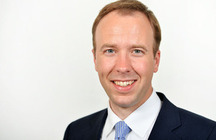
    Matt Hancock
    Matt Hancock

    Below is the text of the speech made by Matt Hancock, the Cabinet Office Minister, at King’s Cross in London on 26 April 2016.

    Good morning. It’s a pleasure to be here.

    I’d like to thank Digital Catapult and Imperial College’s Centre for Cryptocurrency Research and Engineering for their support in setting up and running this event.

    King’s Cross has certainly changed a bit in the last few years. Regeneration and investment has radically revitalised this part of London, and it’s exciting to see the results.

    If you were to climb up on the roof, you’d probably be able to see the Emirates Stadium just up the road. And just beyond that, Stoke Newington, another area regenerated, which began life as the end-point of the New River, an artificial waterway built in the 1600s to bring fresh water from Hertfordshire down to central London.

    Now, one of the engineers on that impressive project was Henry Mill, who later patented the first typewriter.

    Typewriters transformed the way business was done – in government and in business too. Not just because they made the old process of writing everything by scribe quicker and more efficient, but because they can do a particularly clever trick.

    Using a simple sheet of carbon paper, a typist could make 2 copies of the same document at once. One copy for the office, one copy for the customer to take away.

    The carbon copy gave you simple, instant, distributed, consensual data. It gave some guarantee against tampering, because you’d have to tamper with both copies to make them match. And because different parties held different copies in different places, there was a lot of security built-in.

    OK, so it’s not exactly a blockchain, but I hope you can see my point. There was a degree of trust not previously possible without huge expense, built into that simple carbon copy system.

    If your copy matches mine, we can both agree that we both know the truth.

    Fast forward 400 years, and to modern government.

    Once again technology is radically transforming the way we do things.

    And the story of digital transformation in government isn’t just about websites and computers.

    It’s about changing the business model. Not just about doing the old things in new ways, but changing how we deliver for our customers: the citizens of this country.

    And part of that story is about using new technology to build and foster a new culture of trust. Within government and further afield.

    Let me explain how government reached this point.

    We have worked very hard in recent years to transform government, to bring it up to date with the internet age. We’ve made great strides, but there’s still a very long way to go.

    Crucially, government cannot bury its head in the sand and ignore new technologies as they emerge. That’s partly what happened with the web.

    As it grew in the late 90s and the 2000s, government lagged behind, because it wasn’t able to get to grips with the potential the web offered.

    We’ve fixed that now. But we cannot let it happen again by standing still.

    Since 2010, we’ve been working to make government more efficient, and using technology as a vital tool for achieving that.

    The problem in 2010 was that the internet had, in the preceding years, become part of the fabric of the nation, but it was not part of the fabric of government.

    That’s why we established the Government Digital Service. We took the mess of hundreds of government websites, and built just 1 to replace them – GOV.UK.

    But transformation goes much deeper than just websites.

    We started work on transforming services. But replacing a paper-based process with a digital equivalent on the web isn’t good enough. No matter how well we put it on the web. It’s still an old process that’s been digitised.

    To make real progress, we have to be much smarter.

    That’s why we started building what we call ‘government as a platform’. That little catchphrase sums up a huge amount of work building many different things – not just actual technical platforms, but also standards, design and service patterns, data registers, and the skills and capability of the people who deliver digital services, and indeed the whole business of government.

    All those things – the platforms, the standards, the legacy technology, the service design – come together as an ecosystem of interconnected components that departmental teams can use to assemble their services.

    They will only do that, though, if they actually trust those components in the first place. So delivering transformation is just as much about fostering a new culture of trust across government.

    The old culture depended on departmental silos, and services designed and delivered within them. Instead we’ve got to work across those silos. And that depends on trust.

    This brings us to the benefits of the blockchain.

    Blockchains – distributed ledgers, shared ledgers – are digital tools for building trust in data.

    Rather than a single central authority demanding trust and declaring: “I say this data is correct,” you have the distributed consensus of everyone in the chain, saying in unison: “we agree that this data is correct.”

    They bring with them built-in integrity and immutability. You can only write new data, nothing is ever removed or deleted.

    Now blockchain technology is not going to solve every problem, or work in every context. When a trusted body already exists, for example, that can hold canonical data, that’s often the best solution.

    But the fact that data held in the blockchain comes with its own history, and that history is a fundamental part of proving its integrity, this fact is enormously powerful.

    What does it mean for us in government? The main reason you’re here today is to help us find answers to that question.

    We’ve already committed to supporting the Alan Turing Institute with £10 million to investigate digital currencies and distributed ledger technologies, and we’re excited to explore any and all possible use cases for blockchains in government.

    We’re exploring the use of a blockchain to manage the distribution of grants. Monitoring and controlling the use of grants is incredibly complex. A blockchain, accessible to all the parties involved, might be a better way of solving that problem.

    Bitcoin proved that distributed ledgers can be used to track currency as it is passed from one entity to another. Where else could we use that? Think about the Student Loans Company tracking money all the way from Treasury to a student’s bank account. Or the Department for International Development tracking money all the way to the aid organisation spending the money in country.

    These are just some of the ideas we’re considering in government. We’re still in the early days. That takes time, and a lot of careful thought.

    And we want to hear from you. We’re relying on your brains to guide us, to help us take the next steps, and the right steps.

    Today is all about blockchain brainstorming.

    Conclusion

    Today is about exploring future technologies. Not only new ways to do the old things, but how, just as with the typewriter, we can reshape the state to make the best of modern technology.

    And how in doing so, each one of us can, through each step forward, play a small part in a much bigger mission: the mission to improve the lives of the citizens who we serve.

  • Lord Bourne – 2016 Speech on the Paris Agreement

    lordbourne

    Below is the text of the speech made by Lord Bourne, the Parliamentary Under Secretary of State for Climate Change, in New York on 22 April 2016.

    I am delighted to be here today on this auspicious and historic occasion and to be signing the Paris Agreement on behalf of the United Kingdom of Great Britain and Northern Ireland.

    This is an agreement like no other: today an unprecedented number of countries will sign, indeed have signed, the landmark deal that we made in Paris. A deal by which each and every one of us will take action to reduce the risks and impacts of dangerous climate change, take action to increase our ability to adapt to the impacts of climate change and foster climate resilience, and take action to mobilise all finance flows towards sustainable growth.

    This deal proves that the transition to a climate-neutral and climate-resilient world is happening. This deal has made it universal and irreversible.

    The requirements for every Party to pursue domestic mitigation measures, to submit – every five years – progressively more ambitious nationally determined contributions, and to transparently track their progress toward achieving those contributions are what makes this deal so special.

    So the Paris Agreement starts a race to the top; a race in which every country will strive to do everything it can to achieve our shared goals.

    Britain has a proud record here. We have in place domestic legislation requiring us to reduce our emissions by at least 80% by 2050. We’ve ruled out more coal fire from 2025. Britain’s of course part of the European Union which tabled one of the most ambitious INDC’s and did so before any other major economy.

    So we have signed up to doubling the EU’s economy-wide emissions reduction target to at least 40% by 2030 – a target that is in line with the global goal of keeping the temperature rise to well below 2°C.

    Britain and the EU have strong record of setting and delivering on ambitious climate targets.

    Of course, we are not waiting to act: we are acting now, to deliver our 2020 20% target, to work with colleagues around the world to implement their climate plans, and to foster the development of innovative solutions and green markets.

    We’ve increased our public funding for climate finance; the Prime Minister announced a £6 billion pound budget when he went to New York–when he came here in September.

    As part of this, I am very pleased to announce today that the UK will provide £10 million pounds to the new Capacity-Building Initiative for Transparency. We recognise it’s necessary specifically in developing countries to meet the requirements that we’ve set.

    We are using our position as leaders in the global financial markets to work with industry on greening private finance and investment flows. The Bank of England, as you know, is at the forefront of international regulators. We’re working with the Climate Disclosure Taskforce. Businesses are gathering in London this June at the Business and Climate Summit, so we’re doing much.

    Today, ladies and gentleman, is historic. I’m proud and honored to be a part of it. The United Kingdom is proud and honored to be a part of it.

    Thank you.

  • Anna Soubry – 2016 Statement on BHS

    CBI Conference

    Below is the text of the speech made by Anna Soubry in the House of Commons on 25 April 2016.

    Thank you very much Madame Deputy Speaker and with your permission I would like to make a statement to update the House on the latest position following the announcement this morning that British Home Stores has filed for administration.

    This is obviously a very difficult time for all the employees, somewhere between 8,500 thousand perhaps as many as 11,000 people work in their many stores across the UK. Of course we bear in mind the fact that it’s also very difficult time for the many creditors who will be concerned especially with those with small businesses.

    BHS, is a name synonymous with British high streets for over 80 years and has been an important player in the history of British retail. The company still has a significant high street presence with 164 stores nationwide, as I say with somewhere around 8,500 to 11,000 employees. I recognize that consumer trends are changing moving away from high street shopping and increasingly towards online retail channels, which continues to see the retail landscape change.

    Today – and the last few days of media speculation – as I say have been particularly troubling for BHS’s workers and their families. There is a clear message going out to all staff today, and that is that BHS is still open for business as usual. There are no plans for immediate redundancies or store closures, and that the administrators are looking to sell BHS as a going concern.

    If this proves not to be possible, then the Government will obviously stand ready to offer its assistance, including through Jobcentre Plus’ Rapid Response Service, to help people move into new jobs as quickly as possible.

    Now there has been a lot of comment and speculation about the BHS pension scheme. It is the fact the pension regulator is investigating a number of concerns and indeed allegations. I understand the BHS scheme is in the early stage of a Pension Protection Fund (PPF) assessment, during which time the PPF will determine the final funding position of the scheme and whether it should assume responsibility for it.

    Madame Deputy Speaker the retail sector is a crucial one for the UK economy. The total value of retail sales (excluding fuel) in 2015 was £340 billion. The value of retail sales has increased every year for the last twelve years, though in 2015 volume of sales grew faster than values indicating a decline in prices overall. The sector accounts for 3 million jobs; almost a third of those employees are under 25.

    We intend to ensure that this success continues. In the budget this year the Government announced the biggest ever cut in business rates in England, worth £6.7bn over the next 5 years.

    But with that and other matters I commend this statement to the house.

  • Barack Obama – 2016 Speech on the UK and the EU

    barackobama

    Below is the text of the speech made by Barack Obama, the President of the United States, on 22 April 2016.

    The text of David Cameron’s speech before is available here.

    Thank you, David. And as always, it is wonderful to be here in London, and to meet with my good friend, David Cameron. I confess I’ve also come back to wish Her Majesty the Queen a very happy 90th birthday. Earlier today, Michelle and I had the honor to join Her Majesty and His Royal Highness the Duke of Edinburgh as their guests at Windsor Castle, where we conveyed the good wishes of the American people.

    I have to say I have never been driven by a Duke of Edinburgh before. (Laughter.) And I can report that it was very smooth riding. As for Her Majesty, the Queen has been a source of inspiration for me, like so many people around the world. She is truly one of my favorite people. And should we be fortunate enough to reach 90, may we be as vibrant as she is. She’s an astonishing person, and a real jewel to the world and not just to the United Kingdom.

    The alliance between the United States and the United Kingdom is one of the oldest and one of the strongest that the world has ever known. When the U.S. and the UK stand together, we make our countries more secure, we make our people more prosperous, and we make the world safer and better.

    That’s one of the reasons why my first overseas visit as President more than seven years ago was here to London, at a time of global crisis. And the one thing I knew, as green as I was as a new President, was that it was absolutely vital that the United States and the United Kingdom, working together in an international forum, tackle the challenges that lie ahead. Our success depended on our ability to coordinate and to be able to leverage our relationship to have an impact on other countries.

    I met with David on that visit. He wasn’t yet Prime Minister. But just as our nations share a special relationship, David and I have shared an extraordinary partnership. He has proven to be a great friend, and is one of my closest and most trusted partners. Over the six years or so that our terms have overlapped, we have met or spoken more times than I can count. We’ve shared our countries’ beers with each other — he vouches for his, I vouch for mine — (laughter) — taken in a basketball game in America.

    David I think you should recall, we were actually partners in that ping-pong game. (Laughter.) And we lost to some school children. (Laughter.) I can’t remember whether they were eight or 10, but they were decidedly shorter than we were, and they whooped us. (Laughter.)

    Samantha and Michelle, our better halves, have become good friends as well. And it’s the depth and the breadth of that special relationship that has helped us tackle some of the most daunting challenges of our time.

    Around the world, our joint efforts, as David mentioned, have stopped the outbreak of Ebola, kept Iran from obtaining a nuclear weapon, forged a climate agreement in Paris that hopefully will help to protect our planet for future generations.

    And today, on Earth Day, our governments, along with about 170 others, are in New York to sign that agreement. The U.S. is committed to formally joining it this year, which should help it take effect years earlier than anybody expected.

    We also discussed the full array of challenges to our shared security. We remain resolute in our efforts to prevent terrorist attacks against our people, and to continue the progress that we’ve made in rolling back and ultimately defeating ISIL. Our forces, as David mentioned, are systematically degrading ISIL’s finances and safe havens, and removing its top leaders from the battlefield. We’ve got to keep working to improve security and information-sharing across Europe, and to stem the flow of foreign fighters into and out of Syria.

    We discussed our efforts to resolve political conflicts in the Middle East, from Yemen to Syria to Libya, in order to increase the prospects for stability. In Libya, going forward, we have an opportunity to support a new government and help Libyans root out extremist elements. In Syria, as challenging as it is, we still need to see more progress towards an enduring ceasefire, and we continue to push for greater humanitarian access to the people who need it most.

    We have to continue to invest in NATO so that we can meet our overseas commitments, from Afghanistan to the Aegean. We have to resolve the conflict in the Ukraine and reassure allies who are rightly concerned about Russian aggression. All NATO allies should aim for the NATO target of spending 2 percent of their GDP on defense — something that David has made sure happens here in the UK to meet that standard.

    We discussed new actions we can take to address the refugee crisis, including with our NATO allies. And because a strong defense relies on more than just military spending but on helping to unleash the potential of others to live freer and more prosperous lives, I want to thank the people of the United Kingdom for their extraordinary generosity as one of the world’s foremost donors of humanitarian aid.

    We talked about promoting jobs and stronger growth through increased transatlantic trade and investment so that our young people can achieve greater opportunity and prosperity. And, yes, the Prime Minister and I discussed the upcoming referendum here on whether or not the UK should remain part of the European Union.

    Let me be clear. Ultimately, this is something that the British voters have to decide for themselves. But as part of our special relationship, part of being friends is to be honest and to let you know what I think. And speaking honestly, the outcome of that decision is a matter of deep interest to the United States because it affects our prospects as well. The United States wants a strong United Kingdom as a partner. And the United Kingdom is at its best when it’s helping to lead a strong Europe. It leverages UK power to be part of the European Union.

    As I wrote in the op-ed here today, I don’t believe the EU moderates British influence in the world — it magnifies it. The EU has helped to spread British values and practices across the continent. The single market brings extraordinary economic benefits to the United Kingdom. And that ends up being good for America, because we’re more prosperous when one of our best friends and closest allies has a strong, stable, growing economy.
    Americans want Britain’s influence to grow, including within Europe.

    The fact is, in today’s world no nation is immune to the challenges that David and I just discussed. And in today’s world, solving them requires collective action. All of us cherish our sovereignty — my country is pretty vocal about that — but the U.S. also recognizes that we strengthen our security through our membership in NATO. We strengthen our prosperity through organizations like the G7 and the G20. And I believe the UK strengthens both our collective security and prosperity through the EU.

    In the 21st century, the nations that make their presence felt on the world stage aren’t the nations that go it alone but the nations that team up to aggregate their power and multiply their influence. And precisely because Britain’s values and institutions are so strong and so sound, we want to make sure that that influence is heard, that it’s felt, that it influences how other countries think about critical issues. We have confidence that when the UK is involved in a problem that they’re going to help solve it in the right way. That’s why the United States cares about this.

    For centuries, Europe was marked by war and by violence. The architecture that our two countries helped build with the EU has provided the foundation for decades of relative peace and prosperity on that continent. What a remarkable legacy — a legacy born in part out of what took place in this building.

    Before we walked out, I happened to see Enigma on display. And that was a reminder of the incredible innovation and collaboration of the allies in World War II and the fact that neither of us could have won that alone. And in the same way, after World War II, we built out the international institutions that, yes, occasionally constrained us, but we willingly allowed those constraints because we understood that by doing so, we were able to institutionalize and internationalize the basic values of rule of law, and freedom, and democracy, that would benefit our citizens as well as people around the world.

    I think there’s a British poet who once said, “No man is an island” — even an island as beautiful as this. We’re stronger together. And if we continue to tackle our challenges together, then future generations will look back on ours, just as we look back on the previous generation of English and American citizens who worked so hard to make this world safer and more secure and more prosperous, and they’ll say that we did our part, too. And that’s important. That’s important not just here; that’s important in the United States, as well.

    Thanks.

    PRIME MINISTER CAMERON: Thank you very much.

    All right, we’ve got some questions. We’re going to start with a question from the British press. We’ll have Chris Ship from ITV.

    Q Thank you very much, Prime Minister. Chris Ship from ITV News.

    Mr. President, you, yourself, acknowledge the controversial timing of your comments on the EU referendum and the spirited debate that we’re having here. And I think you’re right. In the weeks before your arrival here, Leave campaigners have said that you’re acting hypocritically. America would not accept the loss of sovereignty that we have to accept as part of the EU. America would not accept the levels of immigration from Mexico that we have to accept from the EU. And therefore, in various degrees of politeness, they have said to you that you should really keep your views to yourself. With that in mind, Mr. President, do you still think it was the right decision to intervene in this debate? And can I ask you this — truthfully, what happens if the UK does decide in June to leave the European Union?

    PRESIDENT OBAMA: Well, firsts of all, let me repeat, this is a decision for the people of the United Kingdom to make. I’m not coming here to fix any votes. I’m not casting a vote myself. I’m offering my opinion. And in democracies, everybody should want more information, not less. And you shouldn’t be afraid to hear an argument being made. That’s not a threat. That should enhance the debate.

    Particularly because my understanding is that some of the folks on the other side have been ascribing to the United States certain actions we’ll take if the UK does leave the EU. So they say, for example, that, well, we’ll just cut our own trade deals with the United States. So they’re voicing an opinion about what the United States is going to do. I figured you might want to hear it from the President of the United States what I think the United States is going to do. (Laughter.)

    And on that matter, for example, I think it’s fair to say that maybe some point down the line, there might be a UK-U.S. trade agreement, but it’s not going to happen anytime soon, because our focus is in negotiating with a big bloc, the European Union, to get a trade agreement done, and the UK is going to be in the back of the queue — not because we don’t have a special relationship, but because, given the heavy lift on any trade agreement, us having access to a big market with a lot of countries — rather than trying to do piecemeal trade agreements is hugely inefficient.

    Now, to the subject at hand, obviously the United States is in a different hemisphere, different circumstances, has different sets of relationships with its neighbors than the UK does. But I can tell you this. If, right now, I’ve got access to a massive market where I sell 44 percent of my exports, and now I’m thinking about leaving the organization that gives me access to that market and that is responsible for millions of jobs in my country and responsible for an enormous amount of commerce and upon which a lot of businesses depend, that’s not something I’d probably do.

    And what I’m trying to describe is a broader principle, which is, in our own ways — I mean, we don’t have a common market in the Americas — but in all sorts of ways, the United States constrains itself in order to bind everyone under a common set of norms and rules that makes everybody more prosperous.

    That’s what we built after World War II. The United States and the UK designed a set of institutions — whether it was the United Nations, or the Bretton Woods structure, IMF, World Bank, NATO, across the board. Now, that, to some degree, constrained our freedom to operate. It meant that occasionally we had to deal with some bureaucracy. It meant that on occasion we have to persuade other countries, and we don’t get 100 percent of what we want in each case. But we knew that by doing so, everybody was going to be better off — partly because the norms and rules that were put in place were reflective of what we believe. If there were more free markets around the world, and an orderly financial system, we knew we could operate in that environment. If we had collective defense treaties through NATO, we understood that we could formalize an architecture that would deter aggression, rather than us having, piecemeal, to put together alliances to defeat aggression after it already started. And that principle is what’s at stake here.

    And the last point I’ll make on this — until I get the next question, I suspect — (laughter) — is that, as David said, this magnifies the power of the UK. It doesn’t diminish it. On just about every issue, what happens in Europe is going to have an impact here. And what happens in Europe is going to have an impact in the United States.

    We just discussed, for example, the refugee and the migration crisis. And I’ve told my team — which is sitting right here, so they’ll vouch for me — that we consider it a major national security issue that you have uncontrolled migration into Europe — not because these folks are coming to the United States, but because if it destabilizes Europe, our largest trading bloc — trading partner — it’s going to be bad for our economy. If you start seeing divisions in Europe, that weakens NATO. That will have an impact on our collective security.

    Now, if, in fact, I want somebody who’s smart and common sense, and tough, and is thinking, as I do, in the conversations about how migration is going to be handled, somebody who also has a sense of compassion, and recognizes that immigration can enhance, when done properly, the assets of a country, and not just diminish them, I want David Cameron in the conversation. Just as I want him in the conversation when we’re having discussions about information-sharing and counterterrorism activity. Precisely because I have confidence in the UK, and I know that if we’re not working effectively with Paris or Brussels, then those attacks are going to migrate to the United States and to London, I want one of my strongest partners in that conversation. So it enhances the special relationship. It doesn’t diminish it.

    PRIME MINISTER CAMERON: Let me just make, Chris, one point in response to that. This is our choice; nobody else’s — the sovereign choice of the British people. But as we make that choice, it surely makes sense to listen to what our friends think, to listen to their opinion, to listen to their views. And that’s what Barack has been talking about today.

    But it’s also worth remembering as we make this choice, it’s a British choice about the British membership of the European Union. We’re not being asked to make a choice about whether we support the German style of membership, or the Italian style of membership. Britain has a special status in the European Union. We’re in the single market; we’re not part of the single currency. We’re able to travel and live and work in other European countries, but we’ve maintained our borders, because we’re not in the Schengen no-border zone.

    And on this vital issue of trade, where Barack has made such a clear statement, we should remember why we are currently negotiating this biggest trade deal in the whole world, and in the whole world’s history, between the European Union and the United States — is because Britain played an absolutely leading part in pushing for those talks to get going. Indeed, we announced them at the G8 in Northern Ireland, when Britain was in the chair of that organization. We set the agenda for what could be an absolutely game-changing trade deal for jobs, for investment, because we were part of this organization.

    So I just want to add those important points.

    I think we have a U.S. question now.

    PRESIDENT OBAMA: Justin Sink.

    Q Thanks, Mr. President. Following on that, do you think that between Brexit and the migration issue, European unity is at a crisis point? What do you hope leaders gathering in Germany can concretely do about it? And do you expect those nations to militarily support, including the possibility of ground troops, the new government in Libya to keep that situation from further straining Europe? While we’re talking about future summits, I’m also wondering if maybe you could talk about whether you plan to go to Hiroshima when you visit Japan, and —

    PRESIDENT OBAMA: Oh, come on, man. You’re really stretching it. (Laughter.)

    Q This one is for Prime Minister Cameron, and it’s short. I promise.

    Prime Minister Cameron, the President has come here to tell the UK that, as a friend, and speaking honestly, they should stay in the EU. As a friend and speaking honestly, what would you advise American voters to do about Donald Trump? Thanks. (Laughter.)

    PRESIDENT OBAMA: That was so predictable.

    PRIME MINISTER CAMERON: I’ll let you take the first six —

    PRESIDENT OBAMA: Yes, exactly.

    PRIME MINISTER CAMERON: — and then I’ll pick up that last one. (Laughter.)

    PRESIDENT OBAMA: I wouldn’t describe European unity as in a crisis, but I would say it is under strain. And some of that just has to do with the aftermath of the financial crisis and the strains that we’re all aware of with respect to the Eurozone. I think it is important to emphasize, as David points out, that the UK is not part of the Eurozone, and so the blowback to the British economy has been different than it is on the continent. But we’ve seen some divisions and difficulties between the southern and the northern parts of Europe. That’s created some strains.

    I think the migration crisis amplifies a debate that’s taking place not just in Europe, but in the United States as well. At a time of globalization, at a time when a lot of the challenges that we face are transnational, as opposed to just focused on one country, there is a temptation to want to just pull up the drawbridge, either literally or figuratively. We see that played out in some of the debates that are taking place in the U.S. presidential race. And that debate I think is accelerated in Europe. But I’m confident that the ties that bind Europe together are ultimately much stronger than the forces that are trying to pull them apart.

    Europe has undergone an extraordinary stretch of prosperity — maybe unmatched in the history of the world. If you think about the 20th century and you think about the 21st century, 21st century Europe looks an awful lot better. And I think the majority of Europeans recognize that. They see that unity and peace have delivered sustained economic growth, reduced conflict, reduced violence, enhanced the quality of life for people. And I’m confident that can continue.

    But I do believe that it’s important to watch out for some of these fault lines that are developing. And in that sense, I do think that the Brexit vote — which, if I’m a citizen of UK, I’m thinking about it solely in terms of how is this helping me, how is this helping the UK economy, how is it helping create jobs here in the UK — that’s the right way to think about it. But I do also think that this vote will send a signal that is relevant about whether the kind of prosperity that we’ve built together is going to continue, or whether the forces of division end up being more prominent. And that’s why it’s — that’s part of the reason why it’s relevant to the United States, and why I have had the temerity to weigh in on it.

    What were your four other questions? (Laughter.) I’ve got to figure I’ve knocked out two through that answer.

    Q Libya —

    PRESIDENT OBAMA: With respect to Libya, both David and I discussed our commitment to try to assist this nascent government. And it’s a challenge, but there are people in this Government of National Accord that are genuinely committed to building back up a state. That’s something we desperately want, because both the United States and United Kingdom, but also a number of our other allies, are more than prepared to invest in helping create border security in Libya, and helping to drive out terrorists inside of Libya, and trying to make sure that what could be a thriving society — a relatively small population, a lot of resources — this is not an issue where we should have to subsidize Libya. They’re actually much better-positioned than some other countries that we’ve been helping, if they can just get their act together. And we want to help provide that technical assistance to get that done.

    There is no plans for ground troops in Libya. I don’t think that’s necessary. I don’t think it would be welcomed by this new government. It would send the wrong signal. This is a matter of can Libyans come together. What we can do is to provide them our expertise. What we can do is provide them training. What we can do is provide them a road map for how they can get basic services to their citizens and build up legitimacy.

    But I do think that the one area where both David and I are heavily committed is, as this progresses, we can’t wait if ISIL is starting to get a foothold there. And so we are working not just with the Libyan government but a lot of our international partners to make sure that we’re getting the intelligence that we need and, in some cases, taking actions to prevent ISIL from having another stronghold from which to launch attacks against Europe or against the United States.

    And I think you have to wait until I get to Asia to start asking me Asia questions. (Laughter.)

    PRIME MINISTER CAMERON: The question you asked me — this is not a general election. This is a referendum. And as Barack has explained, it’s a referendum that affects, of course, the people of the United Kingdom very deeply, but it also does affect others in the European Union; it affects partners like America, or Canada, or Australia, or New Zealand. And as I look around the world, it is hard to find — so far, I haven’t found one — a country that wishes Britain well that thinks we ought to leave the European Union.

    And I think that’s — again, it’s our choice. We’ll make the decision. We’ll listen to all the arguments. People want the facts. They want the arguments. They want to know the consequences. And I’ll try to lay those out as Prime Minister as clearly as I can. But listening to our friends, listening to countries that wish us well, is part of the process and is a good thing to do.

    As for the American elections, I’ve made some comments in recent weeks and months. I don’t think now is a moment to add to add to them or subtract from them. (Laughter.) But I think, just as a Prime Minister who’s been through two general elections leading my party, you always look on at the U.S. elections in awe of the scale of the process and the length of the process, and I marvel at anyone who is left standing at the end of it. (Laughter.)

    PRESIDENT OBAMA: Fortunately, we’re term-limited. (Laughter.) So I, too, can look in awe at the process. (Laughter.)

    PRIME MINISTER CAMERON: We have another British question from Laura Kuenssberg from the BBC.

    Q Thank you. Mr. President, you’ve made your views very plain on the fact that British voters should choose to stay in the EU. But in the interest of good friends always being honest, are you also saying that our decades-old special relationship that’s been through so much would be fundamentally damaged and changed by our exit? If so, how? And are you also — do you have any sympathy with people who think this is none of your business?

    And, Prime Minister, to you, if I may, some of your colleagues believe it’s utterly wrong that you have dragged our closest ally into the EU referendum campaign. What do you say to them? And is it appropriate for the Mayor of London, Boris Johnson, to have brought up President Obama’s Kenyan ancestry in the context of this debate?

    PRIME MINISTER CAMERON: Well, let me — this is a British question – let me go first. I mean, first of all, questions for Boris are questions for Boris. They’re questions for Boris, they’re not questions for me.

    I don’t have some special power over the President of the United States. Barack feels strongly about this and has said what he’s said. And, as I said, it’s our decision as a sovereign people, the choice we make about Europe, but I think it’s right to listen to and consider the advice of your friends.

    And just to amplify one of the points that Barack made, we have a shared interest of making sure Europe takes a robust approach to Russian aggression. And if you take those issues of the sanctions that we put in place through the European Union, I think I can put my hand on my heart and say that Britain played a really important role, and continues to play an important role, in making sure those sanctions were put in place and kept in place. I’m not sure it would have happened if we weren’t there.

    Now, if it’s in our interest — and it is in our interest — for Europe to be strong against aggression, how can it be an interest not to be at that table and potentially to see those sanctions not take place? And I think it’s been that working between Britain and the United States over this issue that has helped to make a big difference.

    I would just say about the special relationship, to me — and I’m passionate about this, and I believe it very, very deeply, for all the reasons of the history and the language and the culture, but also about the future of our country — and the truth is this: The stronger Britain is, and the stronger America is, the stronger that relationship will be. And I want Britain to be as strong as possible. And we draw our strength from all sorts of things that we have as a country — the fifth largest economy in the world; amazing armed forces; brilliant security and intelligence forces — that we were discussing about how well they work together; incredibly talented people; brilliant universities; the fact that we’re members of NATO, the G7, the G20, the Commonwealth. But we also draw strength, and project strength, and project power, and project our values, and protect our people, and make our country wealthier, our people wealthier by being in the European Union.

    So I want Britain to be as strong as possible. And the stronger Britain is, the stronger that special relationship is, and the more that we can get done together to make sure that we have a world that promotes democracy and peace and human rights and the development that we want to see across the world.

    So, to me, it’s simple: Stronger Britain, stronger special relationship — that’s in our interest, and that’s in the interest of the United States of America, as well.

    PRESIDENT OBAMA: Let me start with Winston Churchill. (Laughter.) You know, I don’t know if people are aware of this, but in the Residence, on the second floor, my office, my private office is called the Treaty Room. And right outside the door of the Treaty Room, so that I see it every day, including on weekends, when I’m going into that office to watch a basketball game — (laughter) — the primary image I see is a bust of Winston Churchill. It’s there voluntarily, because I can do anything on the second floor. (Laughter.) I love Winston Churchill. I love the guy.

    Now, when I was elected as President of the United States, my predecessor had kept a Churchill bust in the Oval Office. There are only so many tables where you can put busts — otherwise it starts looking a little cluttered. (Laughter.) And I thought it was appropriate, and I suspect most people here in the United Kingdom might agree, that as the first African American President, it might be appropriate to have a bust of Dr. Martin Luther King in my office to remind me of all the hard work of a lot of people who would somehow allow me to have the privilege of holding this office.

    That’s just on Winston Churchill. I think people should know that, know my thinking there.

    With respect to the special relationship, I have a staff member, who will not be named — because it might embarrass her a little bit — who, generally, on foreign trips, does not leave the hotel or the staff room because she’s constantly doing work making this happen. She has had one request the entire time that I have been President, and that is, could she accompany me to Windsor on the off-chance that she might get a peek at Her Majesty the Queen. And, gracious as she is, Her Majesty actually had this person, along with a couple of others, lined up so that as we emerged from lunch, they could say hello. And this staff person, who is as tough as they come, almost fainted — (laughter) — which was — I’m glad she didn’t because it would have caused an incident. (Laughter.) That’s the special relationship.

    We are so bound together that nothing is going to impact the emotional and cultural and intellectual affinities between our two countries. So I don’t come here, suggesting in any way that that is impacted by a decision that the people of the United Kingdom may make around whether or not they’re members of the European Union. That is there. That’s solid. And that will continue, hopefully, eternally. And the cooperation in all sorts of ways — through NATO, through G7, G20 — all those things will continue.

    But, as David said, if one of our best friends is in an organization that enhances their influence and enhances their power and enhances their economy, then I want them to stay in it. Or at least I want to be able to tell them, you know, I think this makes you guys bigger players. I think this helps your economy. I think this helps to create jobs.

    And so, ultimately, it’s your decision. But precisely because we’re bound at the hip, I want you to know that before you make your decision.

    Margaret Brennan.

    Q Thank you very much, sir. Mr. President, Vladimir Putin hasn’t stopped Assad, as he led you to believe he would, and the ceasefire in Syria appears to be falling apart. Will you continue to bet on what looks to be a losing strategy?

    Mr. Prime Minister, the UK today warned its citizens traveling to North Carolina and Mississippi about laws there that affect transgender individuals. As a friend, what do you think of those laws?

    Mr. President, would you like to weigh in on that? And, sir, if you’d indulge us —

    PRESIDENT OBAMA: Indulge — what do you mean?

    Q Well, indulge all of us back in the U.S., sir, Prince passed away. You were a fan. You had invited him to perform at the White House. Can you tell us what made you a fan?

    PRESIDENT OBAMA: I’m trying to figure out which order to do this. (Laughter.) Maybe I’ll start with North Carolina and Mississippi. I want everybody here in the United Kingdom to know that the people of North Carolina and Mississippi are wonderful people. They are hospitable people. They are beautiful states, and you are welcome and you should come and enjoy yourselves. And I think you’ll be treated with extraordinary hospitality.

    I also think that the laws that have been passed there are wrong and should be overturned. And they’re in response to politics, in part; in part, some strong emotions that are generated by people — some of whom are good people but I just disagree with when it comes to respecting the equal rights of all people, regardless of sexual orientation, whether they’re transgender or gay or lesbian. And although I respect their different viewpoints, I think it’s very important for us not to send signals that anybody is treated differently.

    And I think it’s fair to say that we’re not unique among countries where — particularly under a federal system in which power is dispersed, that there are going to be some localities or local officials that put forward laws that aren’t necessarily reflective of a national consensus. But if you guys come to North Carolina or Mississippi, everybody will be treated well.

    The second question with respect to Syria. I am deeply concerned about the cessation of hostilities fraying and whether it’s sustainable. Now, keep in mind that I have always been skeptical about Mr. Putin’s actions and motives inside of Syria. He is — along with Iran — the preeminent backer of a murderous regime that I do not believe can regain legitimacy within his country because he’s murdered a lot of people.

    Having said that, what I also believe is, is that we cannot end the crisis in Syria without political negotiations and without getting all the parties around the table to craft a transition plan. And that, by necessity, means that there are going to be some people on one side of the table who I deeply disagree with and whose actions I deeply abhor. That’s how oftentimes you resolve conflicts like this that are taking an enormous toll on the Syrian people.

    The cessation of hostilities actually held longer than I expected. And for seven weeks we’ve seen a significant reduction in violence inside that country. And that gave some relief to people.

    I talked to Putin on Monday precisely to reinforce to him the importance of us trying to maintain the cessation of hostilities, asking him to put more pressure on Assad, indicating to him that we would continue to try to get the moderate opposition to stay at the negotiating table in Geneva.

    But this has always been hard. And it’s going to keep being hard. And what David and I discussed in our meeting was that we will continue to prosecute the war against Daesh, against ISIL. We are going to continue to support those who are prepared to fight ISIL. And we’re going to continue to target them. We’re going to continue to make progress. But we’re not going to solve the overall problem unless we can get this political track moving.

    I assure you that we have looked at all options. None of them are great. And so we are going to play this option out. If, in fact, the cessation falls apart, we’ll try to put it back together again even as we continue to go after ISIL. And it’s my belief that ultimately Russia will recognize that, just as this can’t be solved by a military victory on the part of those we support, Russia may be able to keep the lid on, alongside Iran, for a while, but if you don’t have a legitimate government there, they will be bled, as well. And that is not — that’s not speculation on my part. I think the evidence all points in that direction.

    And finally with respect to Prince, I loved Prince because he put out great music and he was a great performer. I didn’t know him well. He came to perform at the White House last year and was extraordinary, and creative and original and full of energy. And so it’s a remarkable loss.

    And I’m staying at Winfield House, the U.S. Ambassador’s residence. It so happens our Ambassador has a turntable, and so this morning we played “Purple Rain” and “Delirious” just to get warmed up before we left the house for important bilateral meetings like this. (Laughter.)

    PRIME MINISTER CAMERSON: As a fan of great music, the Ambassador has brought a lot of brilliant talent.

    PRESIDENT OBAMA: Absolutely.

    PRIME MINISTER: Let me just answer, I’ve been to North Carolina many years ago and enjoyed it. I have not yet made it to Mississippi, but one day I hope to. The guidance that we put out, the Foreign Office, gives advice on travel, and it obviously deals with laws in situations as they are, and it tries to give that advice dispassionately, impartially. But it’s very important that it does so. It’s something that a lot of attention is given to.

    Our view on any of these things is that we believe that we should be trying to use law to end discrimination rather than to embed it or enhance it. And that’s something we’re comfortable saying to countries and friends anywhere in the world. But obviously, the laws people pass is a matter of their own legislatures. But we make clear our own views about the importance of trying to end discrimination, and we’ve made some important steps forward in our own country on that front, which we’re proud of.

    With that, thank you very much.

    PRESIDENT OBAMA: Thank you very much, everybody. (Applause.)