Category: Speeches

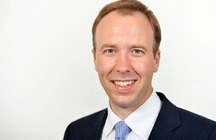
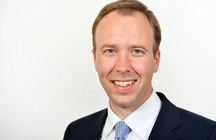
  • David Lidington – 2017 Speech at Opening of the Legal Year

    Below is the text of the speech made by David Lidington, the Lord Chancellor and Secretary of State for Justice, on 2 October 2017.

    The wheels of justice, they say, turn slowly.

    Well, not this morning.

    Between the Royal Courts of Justice, the Supreme Court and Westminster Abbey, we have dealt with a very full caseload – and it’s still only breakfast time.

    As well as opening a new legal year, we have welcomed two exceptional leaders for the senior judiciary. A new Lord Chief Justice, Sir Ian Burnett, and a new President of the Supreme Court, Lady Hale.

    We must also say our farewells, to Lord Thomas and Lord Neuberger. They have served the justice system with distinction, dignity and energy.

    We have many challenges ahead but I am confident that we have a judiciary eminently well equipped to deal with them. They are fearsomely experienced and rightly independent of the executive – but like all of us here they still need a good breakfast.

    So will you please join me in raising a glass in a toast: To the future – and to the past.

    And now, as Shakespeare recommended, let us:

    “Do as adversaries in law – strive mightily, but eat and drink as friends”.

  • Boris Johnson – 2017 Speech at Conservative Party Conference

    Below is the text of the speech made by Boris Johnson, the Foreign Secretary, at the Conservative Party conference in Manchester on 3 October 2017.

    Good afternoon.

    As our hearts go out to Las Vegas today we are reminded once again of the attack that took place here only a few months ago, on innocent and music-loving young people. And if there is a message to our American friends it is this: that they will come through it and they will come back from it stronger.

    Because this city has shown that nothing and no one can bow the indomitable spirit of the people of Manchester, which in recent years has reinvented itself as the great thrumming engine of the northern powerhouse.

    With its vast potential to generate jobs in finance, in academia, in journalism and the arts – and that’s just the ones held by George Osborne.

    And since our subject this afternoon is how to win the future and build Global Britain I want to introduce our superb foreign office team.

    Our PPSs Conor Burns and Amanda Milling and our whip David Evenett.

    And our ministers : covering the Middle East – already one of the most expert parliamentarians in that field – Alistair Burt, and covering Africa Rory Stewart.

    Like the pharaohs of upper and lower Egypt they are double hatted ministers in the sense that they simultaneously represent the FCO and DFID – bringing together our foreign policy with our aid programmes.

    In the Lords we have Tariq Ahmad, who is working on ensuring that next year in London we make the most of an institution that takes 2.4 billion people and 52 of some of the fastest growing economies in the world and unites them in admiration of the service provided by Her Majesty the Queen – the Commonwealth.

    And we will have a summit to do her justice.

    And just back from Burma – making clear this country’s disgust at the treatment of the Rohingya – Mark Field.

    And dynamically triangulating between Europe and America decoding President Trump for President Juncker and vice versa.

    We have that Mount Rushmore of wisdom Sir Alan Duncan.

    We have a great team and we are getting on with the job and yet frankly, folks, as I absorb the general tone of the national conversation I don’t think I have ever known so many to be sunk in gloom and dubitation about Britain and the world.

    Every week I pick up British-edited international magazines, of the kind that you will find in the briefcases of jet setting consultants.

    Glossy-covered, elegantly written, suspiciously unread.

    And every week these publications have found new reasons to be slightly less than cheerful about this country.

    Every day a distinguished pink newspaper manages to make Eeyore look positively exuberant and across the world the impression is being given that this country is not up to it. That we are going to bottle out of Brexit and end up in some dingy ante-room of the EU, pathetically waiting for the scraps but no longer in control of the menu.

    And the most pessimistic of them all is not the media or our friends in the EU commission or the excitable M Guy Verhofstadt – far from it – it’s Jeremy Corbyn.

    That Nato bashing, trident scrapping, would-be abolisher of the British army whose first instinct in the event of almost any international outrage or disaster is to upend the analysis until he can find a way of blaming British foreign policy.

    And whose response to the grisly events in Venezuela is to side with the regime – simply because they are fellow lefties.

    He says he still admires Bolivarian revolutionary socialism.

    I say he’s Caracas.

    At a time when the world should unite to condemn Venezuela’s Maduro, we have the leader of Britain’s official opposition giving cover to a government that is jailing opponents, shooting demonstrators, intimidating journalists and repressing human rights.

    It is a disgrace – and I can tell you there are many Labour MPs who feel appalled that their party is still led by this man and his peculiar belief – expressed in glutinous victory-style Chavista rallies up and down the country – that he somehow won the election.

    He didn’t win.

    You won – we won.

    Theresa May won.

    She won more votes than any party leader and took this party to its highest share of the vote in any election in the last 25 years and the whole country owes her a debt for her steadfastness in taking Britain forward as she will to a great Brexit deal.

    Based on that Florence speech on whose every syllable, I can tell you the whole cabinet is united.

    Of all the areas where Corbyn is content to talk this country down, there is none more ludicrous and vacillating than his policy on Brexit.

    In the customs union one week, out the next, in the single market, out the next.

    In out, in out.

    Faster than one of those members of the shadow cabinet who gets sacked before she knows she has even been appointed.

    A kind of manifestation of Heisenberg’s uncertainty principle.

    It would be disastrous.

    And in leaving Britain in this limbo – locked in the orbit of the EU but unable to take back control. Unable to do proper free trade deals.

    Labour would inflict a national humiliation on a par with going cap in hand to the IMF.

    And yes, I know: in making these sorts of points we come up against a difficulty we must accept that when we talk about the 1970s we imagine people instantly understand about power cuts, the three day week, union bosses back in Downing Street, state-made-British rail sandwiches.

    We think they get the reference but unfortunately going back to the 1970s sounds to too many people like a massive joint revival concert by David Bowie, Led Zep and the Rolling Stones.

    And that is because people can remember the Stones and Bowie and Led Zep, monuments of global culture but they have totally forgotten that those bands, along with so many other wealth creators were driven overseas by Labour’s 83 per cent tax rate.

    They have forgotten that the problem used to be the brain drain, not people wanting to hear.

    They have forgotten that we had to fight and win battles of ideas and in a way that is entirely understandable – because our victory has been so comprehensive.

    If you listen to the aspirations of the young people I meet around the world, you will find there is not a single successful global economy that would dream of implementing the semi-Marxist agenda of McDonnell and Corbyn of nationalisation and state control.

    And wherever you find enterprise and initiative and start-ups and innovation and economic growth it is where people have followed ideas that were pioneered by our party and by our country- and in this city of Manchester –

    From India,

    to China,

    to Vietnam,

    to Thailand,

    Where free markets and deregulation and privatisation have helped lift more people out of poverty than ever in history.

    To the central and east European economies that this party – and not the Labour party – helped on the path to freedom and democracy.

    You see it in Estonia, tech hub with a high degree of social protection – where they have a flat tax of 20 per cent.

    In Romania they have a flat tax of 16 per cent and free health and education AND higher education.

    In Hungary they have a tax rate of 15 per cent – 15 per cent?

    We are all tax-cutting Tories but even I think that is going a bit far. And yet how crazy it is that a quarter of a century after the working people of these former Soviet bloc countries risked their lives to throw off the shackles of socialism – while the Labour left sneered at them and made excuses for their oppressors -the shadow leader and shadow chancellor are seriously proposing to put place the British people back in bondage – a £200bn renationalisation programme. A display of economic masochism that would do incalculable damage to the future of our children.

    That’s the difference between this Conservative party and the Labour party.

    We want a country with a government that works for everyone.

    Corbyn wants a Britain where everyone works for the government.

    This battle of ideas is not lost in memories of the 1970s.

    It is back from the grave.

    Its zombie fingers straining for the levers of power and that is why we cannot rest.

    We may have the most illustrious battle honours of any political party but now we have to win the battle for the future and the way to win the future is not to attack the market economy, not to junk our gains but to make it work better – make it work better for the low paid – turning the living wage under this Conservative government into a national living wage.

    Make it work for all those who worry their kids will never find a home to own – building 100s of 1000s of homes.

    Make it work better for parents who can’t find good enough childcare – with 30 hours free care for 3 and 4 year olds.

    And above all help people who are struggling, by driving benefit reforms that have helped millions back into the dignity and self-esteem that goes with having a job and which has seen inequality fall – as the Chancellor pointed out yesterday – to the lowest levels for 3 decades.

    And to win the future we must communicate once again the central idea,

    Our one nation conservatism that, for all its faults, an open free-trading and thriving market economy is the only sustainable way to create the wealth we will always need to help the poorest.

    The surest way to finance the platform of great public services and great infrastructure that themselves enable business to succeed.

    And the only way to win the future is not to retreat from the world, not to abandon globalisation but to play our part, as we always have, in making the world safer and freer – and therefore more prosperous and that is why we must believe in global Britain. Not dismiss the very notion of a world role – as Corbyn does but accentuate and be proud of that role.

    There are places where it is simply our moral duty to British passport holders, like the overseas territories in the Caribbean where those islands have been overwhelmed by the biggest catastrophe for 150 years.

    It is an eerie scene.

    Not a leaf remaining on the shattered trees.

    Houses turned into streaks of wooden and plastic litter.

    Boats hurled on top of one another or lodged absurdly up hillsides.

    Of all the disasters in my lifetime, none has overturned the lives of so many UK nationals and yet we should pay tribute to the indomitable spirit of those islanders and together with Priti Patel and Michael Fallon the government will work to put them back on their feet.

    And still our responsibilities go wider.

    When we protect the world we protect British interests as well.

    When we campaign for the stability of the south china seas, that is because through the narrow pulsing jugular of the Malacca straits – only 1.7 miles wide – goes fully 25 per cent of world trade including huge quantities of British goods.

    Across the Middle East and North Africa we are helping to bring peace and defeat terrorism.

    Not just because that is right in itself but because these will be the great markets of the coming century.

    Just in the last few weeks I have seen British troops training the Nigerian forces to defeat the numbskulls of boko haram around Maiduguri – where British doctors are tending the maimed victims of terror and as our helicopter swooped over the burned and deserted villages they said there was a risk of pot-shots from behind, and I said it was an occupational hazard in my line of work.

    And every week, with UK help, the brave Nigerian forces are winning but you can’t just tackle the problem in Nigeria. Those terrorists’ AK47s are being smuggled down through the desert from the chaos of Libya and in Tripoli I have seen the charred ruins of our embassy – the smashed snooker table and the room where Tony Blair once held a banquet.

    But I was proud to run that Union Jack back up the flagpole and that embassy is being be rebuilt.

    And if we in the UK can help solve the problems of Libya – and we are making progress – then that country can also win a great a future.

    And until we sort it out you will find British ships off the Libyan coast, helping our Italian friends to cope with illegal migration.

    And that is what I mean by Global Britain, committed as team players and where necessary as leaders to the protection of the world and our common European home.

    I have seen the 800 British troops in Estonia and congratulated them on resisting the honey traps allegedly placed in their way by Russian intelligence. At least they said they had resisted. They are a visible and powerful symbol of this country’s unconditional commitment to defend the boundaries of Europe and the incredible freedoms we won in the 1980s and 1990s.

    And I can’t tell you how much our friends value Britain’s contribution, in Europe and around the world because we have reached a unique phase in our history.

    We are big enough to do amazing things.

    We have the ability to project force 7000 miles, to use our permanent membership of the UN sec council to mobilise a collective response to the crisis in North Korea.

    We contribute 25 per cent of European aid spending and yet no one seriously complains that we have a sinister national agenda and that is why the phrase global Britain makes sense because if you said Global China or global Russia or even alas Global America it would not have quite the same flavour.

    I am not saying that everyone automatically loves us or that everyone completely follows our sense of humour, though a lot more than you might think. But there is a huge desire out there for us to engage with the world more emphatically than ever before.

    And after Brexit that is what our partners are going to get as this country is freed from endlessly trying to block things in Brussels committee rooms. Freed to stop being negative and to start being positive about what we believe in – including free trade.

    And yes we are leaving the EU – but as the PM has said in her Florence speech we can create a deep and special partnership built on free trade with a strong EU buttressed and supported by a strong UK.

    And since it is manifestly absurd to argue that European values or culture or civilisation are somehow defined or delimited by the institutions of the EU, we will be no less European.

    Britain will continue to be European in culture, geography, history, architecture, spiritually, morally, you name it.

    We are one of the great quintessential European nations. In many ways the most influential of all and that is because our most important exports are our values. British values. Embodied in this amazing metropolis of Manchester as they are in London and across the country.

    A society that welcomes talent. That welcomed my ancestors from France, Russia, Turkey and heaven knows where. That is proud of the EU and other nationals that want to come here and that have enriched our lives. A society that does not judge you for where you come from or your background or how you live your life provided you do no harm to others that is the syncretic genius of our country.

    And it is thanks to that intellectual cross-fertilisation that Britain is at the cutting edge of new markets and new technology. Think back to how we have changed the world just in our lifetimes, and then imagine what we will have done in 40 years time, your lifetime – William Hague’s lifetime.

    We are going to crack global warming, with British clean technology and British green finance – in which we lead the world.

    We will get to a point where we generate as much clean energy as we want and eventually we will stabilise our world populations and raise per capita GDP above all by promoting female education – which is at the heart of all British overseas policy – and we should be proud of the young women and girls that we are helping to teach, in Africa, in South Asia – 6 m of them in the Pakistani Punjab alone.

    And if we can drive on that great cause of female empowerment and education, the Swiss army knife that solves so many problems, then I believe we will eventually find a cure for the psychological contamination of radical Islamist extremism. Just as we have eradicated smallpox and polio.

    It came and it will go.

    And we will have problems – of course we will have problems.

    Humanity will always have its afflictions in mind or body because without pain and doubt and anxiety there can be no pleasure and no triumph and no success.

    But success will be achieved not by allowing the UK to retreat from our global role but by reinforcing that role and breakthroughs will come not through the edict of some bureaucrat in some Corbynist ministry of plenty but through the effort of inventors, scientists, business people, students and dreamers of whom we have so many.

    And to all those who are worried about the UK today, let me remind you that it was only eight years ago that we stood on the verge of the nastiest recession for 70 years and I remember being taken up on to the roof of City hall – which I then ran – by a female American TV journalist and she said Mr mayor – look around you – no one is building anything and the irritating thing was she was right; the cranes were gone from the skyline; confidence had deserted us.

    Well look at London today, storming ahead – even if the new mayor isn’t a patch on the last guy.

    He seems to spend his time trying rather ineffectually to ban things.

    Why not try doing something for a change?

    And look at the UK – with the lowest unemployment rate for 42 years.

    The highest number of people in work ever, the number one destination for investment into Europe and every time one of these facts emerges it is reported in tones of slight disapproval, and with the inevitable qualification – despite Brexit.

    It is time to stop treating the referendum result as though it were a plague of boils or a murrain on our cattle or an inexplicable aberration by 17.4 m people. It is time to be bold, and to seize the opportunities and there is no country better placed than Britain.

    Which is not only the place where the atom was first split but has become a gigantic cyclotron of talent in which people are coming together from every discipline to produce constant flashes of inspiration and indeed we are the global capital of innovation we export more TV programmes than any other country in Europe – five times more than the French.

    We export a programme to Cambodia called Neak Neng Klay Chea Sethey, which means who wants to be a millionaire. And it is thanks to the triumph of conservative values you are allowed to become a millionaire in Cambodia without being despatched for re-education by some Asiatic John McDonnell

    We lead the world in bioscience and fintech and some branches of AI and cybernetics – and what is Labour’s first instinct on hearing the news? Tax robots! and then make them join the union.

    Did Manchester become great by taxing the spinning jenny?

    We have a growing space programme run by my brother Jo Johnson and I have a candidate for the first man we gently blast into orbit and that is the superannuated space cadet from Islington and I know he has an innocent and voletrousered air but his domestic policies would rack up unfair debts for our children and grandchildren and his foreign policies would imperil not just this country but our friends and neighbours as well.

    Conference we cannot allow it to happen.

    200 years ago people used to come to this city to see something revolutionary – the beginning of the modern world and once again this country has had the guts to try to do something new and different to challenge received wisdom with a democratic revolution that we can turn into a cultural and technological and commercial renaissance.

    There are people say we can’t do it.

    We say we can.

    We can win the future because we are the party that believes in this country and we believe in the potential of the British people. We have been privileged collectively to be placed in charge of this amazing country at a critical moment in our history.

    We are not the lion.

    We do not claim to be the lion.

    That role is played by the people of this country. But it is up to us now – in the traditional non-threatening, genial and self-deprecating way of the British – to let that lion roar.

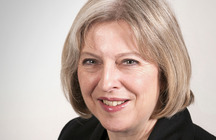
  • Theresa May – 2017 Speech at Conservative Party Conference

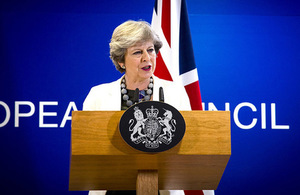
    Below is the text of the speech made by Theresa May, the Prime Minister, at the Conservative Party conference held on 4 October 2017 in Manchester.

    A little over forty years ago in a small village in Oxfordshire, I signed up to be a member of the Conservative Party.

    I did it because it was the party that had the ideas to build a better Britain. It understood the hard work and discipline necessary to see them through.

    And it had at its heart a simple promise that spoke to me, my values and my aspirations: that each new generation in our country should be able to build a better future. That each generation should live the British Dream.

    And that dream is what I believe in.

    But what the General Election earlier this year showed is that, forty years later, for too many people in our country that dream feels distant, our party’s ability to deliver it is in question, and the British Dream that has inspired generations of Britons feels increasingly out of reach.

    Now I called that election. And I know that all of you in this hall – your friends and your families – worked day and night to secure the right result.

    Because of your hard work we got 2.3 million more votes and achieved our highest vote share in 34 years. That simply would not have been possible without the long days and late nights, the phone calls, the leaflet drops. The weekends and evenings spent knocking on doors.

    So for everything that you do, let me say – thank you.

    But we did not get the victory we wanted because our national campaign fell short.

    It was too scripted. Too presidential. And it allowed the Labour Party to paint us as the voice of continuity, when the public wanted to hear a message of change.

    I hold my hands up for that. I take responsibility. I led the campaign.

    And I am sorry.

    THE BRITISH DREAM

    But the choice before us now is clear:

    Do we give up, spend our time looking back? Or do we do our duty, look to the future and give the country the government it needs?

    This country will judge us harshly if we get this decision wrong.

    Because all that should ever drive us is the duty we have to Britain and the historic mission of this party – this Conservative Party – to renew the British Dream in each new generation.

    That dream that says each generation should do better than the one before it.

    Each era should be better than the last.

    The dream that, for decades, has inspired people from around the world to come to Britain. To make their home in Britain. To build their lives in Britain.

    The dream that means the son of a bus driver from Pakistan serves in a Conservative Cabinet alongside the son of a single mother from a council estate in South-West London.

    And in a way, that dream is my story too.

    I know that people think I’m not very emotional. I’m not the kind of person who wears their heart on their sleeve. And I don’t mind being called things like the Ice Maiden – though perhaps George Osborne took the analogy a little far. But let me tell you something.

    My grandmother was a domestic servant, who worked as a lady’s maid below stairs. She worked hard and made sacrifices, because she believed in a better future for her family. And that servant – that lady’s maid – among her grandchildren boasts three professors and a prime minister.

    That is why the British Dream inspires me. Why that dream of progress between the generations spurs me on. And it is why today at this conference, this Conservative Party must pledge to renew the British Dream in this country once again.

    THE GOOD A CONSERVATIVE GOVERNMENT CAN DO

    To renew that dream is my purpose in politics. My reason for being. The thing that drives me on.

    And it has never wavered through good times and hard times. My belief that this Conservative government can renew it has always remained strong.

    For whenever we are tested as a nation, this party steps up to the plate. Seven years ago, our challenge was to repair the damage of Labour’s great recession – and we did it. The deficit is down. Spending is under control. And our economy is growing again.

    But we didn’t limit ourselves to that ambition. We have achieved so much more.

    An income tax cut for over 30 million people.

    Four million taken out of paying it at all.

    Employment up to a record high.

    Unemployment down to a historic low.

    Income inequality at its lowest for thirty years.

    More women in work than ever before.

    Over 11,000 more doctors in our NHS.

    Over 11,000 more nurses on our hospital wards.

    Free childcare for 3 and 4 year olds doubled.

    1.8 million more children in good or outstanding schools.

    3 million more apprenticeships.

    Crime down by more than a third.

    More young people from disadvantaged backgrounds going to university than at any time in the history of our country.

    Britain leading the world in tackling climate change, eradicating global poverty, and countering terrorism wherever it rears its head.

    Same sex marriage on the statute book, so that two people who love each other can get married, no matter what their gender…

    And a National Living Wage – giving a pay rise to the lowest earners – introduced not by the Labour Party, but by us, the Conservative Party.

    So let us never allow the Left to pretend they have a monopoly on compassion.

    This is the good a Conservative Government can do – and we should never let anyone forget it.

    WHAT I’M IN THIS FOR: TACKLING INJUSTICE

    But it’s easy when you’ve been in government for a while to fall into the trap of defending your record, and standing for the status quo.

    Yes, we’re proud of the progress we have made, but the world doesn’t stand still.

    Change, as Disraeli taught us, is constant and inevitable. And we must bend it to our will. That means staking out an agenda for Britain – and uniting behind it too. And the agenda that I laid out on day one as prime minister still holds. It burns inside me just the same.

    Because at its core, it’s about sweeping away injustice – the barriers that mean for some the British Dream is increasingly out of reach.

    About saying what matters is not where you are from or who your parents are.

    The colour of your skin. Whether you’re a man or a woman, rich or poor. From the inner city or an affluent suburb.

    How far you go in life should depend on you and your hard work.

    That is why I have always taken on vested interests when they are working against the interests of the people. Called out those who abuse their positions of power and given a voice to those who have been ignored or silenced for too long.

    And when people ask me why I put myself through it – the long hours, the pressure, the criticism and insults that inevitably go with the job – I tell them this: I do it to root out injustice and to give everyone in our country a voice.

    That’s why when I reflect on my time in politics, the things that make me proud are not the positions I have held, the world leaders I have met, the great global gatherings to which I have been, but knowing that I made a difference. That I helped those who couldn’t be heard.

    Like the families of the 96 men, women and children who tragically lost their lives at Hillsborough. For years they saw people in authority closing ranks and acting against them, but now they are on the way to seeing justice served.

    That’s what I’m in this for.

    Like the victims and survivors of Child Sexual Abuse, ignored for years by people in positions of power, now on the long road to the truth.

    That’s what I’m in this for.

    Like Alexander Paul, a young man who came to this conference three years ago to tell his story. The story of a young black boy growing up in modern Britain who without causing any trouble – without doing anything wrong – found himself being stopped and searched by people in authority time and time and time again.

    Alexander spoke so eloquently about his experience and how he came to mistrust those in positions of power as a result. So inspired by his example, we took action. We shook up the system, and the number of black people being stopped and searched has fallen by over two thirds. I am sad to have to tell you that last year, Alexander – who inspired us all with his passion – was diagnosed with brain cancer. And in June of this year he tragically passed away. He was just 21. Let us today remember the courage he showed in coming to our conference to speak out against injustice, take pride that we gave him a platform – and inspired by his example, redouble our efforts to give a voice to the voiceless at every opportunity.

    That’s what I’m in this for.

    And that same commitment is the reason why one of my first acts as Prime Minister was to establish the ground-breaking racial disparity audit – investigating how a person’s race affects their treatment by public services, so that we can take action and respond.

    We already know, for example, that members of Black and Minority Ethnic communities have a higher risk of illnesses such as high blood pressure that may lead to the need for an organ transplant.

    But our ability to help people who need transplants is limited by the number of organ donors that come forward. That is why last year 500 people died because a suitable organ was not available. And there are 6,500 on the transplant list today. So to address this challenge that affects all communities in our country, we will change that system. Shifting the balance of presumption in favour of organ donation. Working on behalf of the most vulnerable.

    That’s what I’m in this for.

    It’s why after seeing the unimaginable tragedy unfold at Grenfell Tower, I was determined that we should get to the truth.

    Because Grenfell should never have happened – and should never be allowed to happen again.

    So we must learn the lessons: understanding not just what went wrong but why the voice of the people of Grenfell had been ignored over so many years.

    That’s what the public inquiry will do. And where any individual or organisation is found to have acted negligently, justice must be done.

    That’s what I’m in this for.

    And because in this – as in other disasters before it – bereaved and grieving families do not get the support they need, we will introduce an independent public advocate for major disasters.

    An advocate to act on behalf of bereaved families to support them at public inquests and inquiries. The strong independent voice that victims need.

    That’s what I’m in this for.

    It’s why tackling the injustice and stigma associated with mental health is a particular priority for me. So we are building on our record of giving mental and physical health parity in law by investing more in mental health than ever before. But there is widespread concern that the existing Mental Health legislation passed more three decades ago is leading to shortfalls in services and is open to misuse. Detention rates under the Mental Health Act are too high. And it is people from black and minority ethnic populations who are affected the most. So today I can announce that I have asked Professor Sir Simon Wessely to undertake an independent review of the Mental Health Act, so that we can tackle the longstanding injustices of discrimination in our mental health system once and for all.

    That’s what I’m in this for.

    This is the Conservatism I believe in. A Conservatism of fairness and justice and opportunity for all. A Conservatism that keeps the British Dream alive for a new generation.

    That’s what I’m in this for.

    That’s what we must all be in this for.

    WHAT’S AT STAKE

    And we must come together to fight for this mainstream Conservative agenda. To win the battle of ideas in a new generation all over again. For those ideas are being tested. And at stake are the very things we value.

    Our precious union of nations – four nations that are stronger as one – threatened by those with their narrow, nationalist agendas that seek to drive us apart.

    The strength of our society, in which we understand the obligations and responsibilities we have to one another, under attack from militant forces who preach animosity and hate. The free-market economy – for so long the basis of our prosperity and security. An idea that has lifted millions around the world out of poverty – called into question by those who would imperil our future by adopting the failed experiments of the past.

    That idea of free and open markets, operating under the right rules and regulations, is precious to us.

    It’s the means by which we generate our prosperity as a nation, and improve the living standards of all our people.

    It has helped to cement Britain’s influence as a force for good in the world.

    It has underpinned the rules-based international system that helped rebuild post-war Europe and the world beyond.

    It has ushered in the fall of the Berlin Wall; the end of communism, and the dark days of the Iron Curtain; securing the advance of freedom across Europe and across the world.

    It has inspired 70 years of prosperity, raising living standards for hundreds of millions of people right across the globe.

    So don’t try and tell me that free markets are no longer fit for purpose. That somehow they’re holding people back.

    Don’t try and tell me that the innovations they have encouraged – the advances they have brought – the mobile phone, the internet, pioneering medical treatments, the ability to travel freely across the world – are worth nothing.

    The free market – and the values of freedom, equality, rights, responsibilities, and the rule of law that lie at its heart – remains the greatest agent of collective human progress ever created.

    So let us win this argument for a new generation and defend free and open markets with all our might.

    A CHOICE OF FUTURES FOR BRITAIN

    Because there has rarely been a time when the choice of futures for Britain is so stark. The difference between the parties so clear.

    And it’s the Conservative Party that has a vision of an open, global, self-confident Britain, while our opponents flirt with a foreign policy of neutrality and prepare for a run on the pound.

    Some people say we’ve spent too much time talking about Jeremy Corbyn’s past.

    So let’s talk about his present instead.

    This is a politician who wants to pile on taxes to business just when we need them to invest in our country the most. This is a politician who wants to borrow hundreds of billions of pounds to nationalise industries without the slightest idea of how much it will cost or how he will ever pay it back.

    This is a politician who wants to strip us of our nuclear deterrent, without being honest with voters about his plans.

    This is a politician who lets anti-Semitism, misogyny and hatred run free, while he doesn’t do a thing to stop it.

    This is a politician who thinks we should take the economics of Venezuela as our role-model.

    No… Jeremy Corbyn.

    By contrast, when I look around the cabinet table, I have confidence that we have a team full of talent, drive and compassion. A team that is determined that this party – this great Conservative Party – will tackle the challenges of the future together.

    A team that is determined we will always do our duty by our country.

    THE BEST BREXIT DEAL

    And our first and most important duty is to get Brexit right. The people have decided. We have taken their instruction.

    Britain is leaving the European Union in March 2019.

    I know some find the negotiations frustrating.

    But if we approach them in the right spirit – in a spirit of cooperation and friendship, with our sights set firmly on the future – I am confident we will find a deal that works for Britain and Europe too. And let’s be clear about the agreement we seek.

    It’s the agreement I set out earlier this year at Lancaster House and again in my speech in Florence ten days ago.

    It’s a new deep and special partnership between a strong, successful European Union and a sovereign United Kingdom. A partnership that allows us to continue to trade and cooperate with each other, because we see shared challenges and opportunities ahead. But a partnership that ensures the United Kingdom is a sovereign nation once again. A country in which the British people are firmly in control.

    I believe it is profoundly in all our interests for the negotiations to succeed. But I know that are some are worried whether we are prepared in the event that they do not. It is our responsibility as a government to prepare for every eventuality. And let me reassure everyone in this hall – that is exactly what we are doing.

    So a deep and special partnership is our ambition and our offer. And I look forward to that offer receiving a positive response.

    And let me say one more thing – because it cannot be said often enough.

    If you are a citizen of the EU who has made their life in this country, I know you will feel unsettled and nervous. But let me be clear that we value the contribution you make to the life of our country. You are welcome here.

    And I urge the negotiating teams to reach agreement on this quickly because we want you to stay.

    A STRONG ECONOMY AND WORLD-CLASS PUBLIC SERVICES

    Whatever the outcome of our negotiations, Britain’s long-term future is bright.

    The British Dream is still within reach.

    For as we look to that future, we do so with the fundamentals of our country strong.

    Ten years after Northern Rock, our economy is back on track. The deficit is back to pre-crisis levels, we are firmly on course to get our national debt falling and business investment is growing.

    The work to get there hasn’t been easy. It’s meant big decisions and huge sacrifices. I know the public sector has had to carry a heavy burden. The private sector has played its part too.

    But with government, businesses and the public sector working together, we have bounced back – creating record numbers of jobs, and getting more people into work than ever before.

    So while we will never hesitate to act where businesses aren’t operating as they should, let this party celebrate the wealth creators, the risk takers, the innovators and entrepreneurs – the businesses large and small – who generate jobs and prosperity for our country, and make British business the envy of the world.

    Because we understand that it is the wealth creators whose taxes fuel our public services. It is their success that funds the things we want to do.

    And the difference between us and Labour is that we understand that to deliver the things we want, private enterprise is crucial. That you can’t get something for nothing. Prosperity is key.

    And when politicians offer the earth but have no means of delivering their promises, disillusionment with politics only grows.

    So over the years ahead this government will adopt a balanced approach to the economy – dealing with our debts, keeping taxes low, but investing in our priorities too.

    Things like our vital public services, our schools, our police, housing, and our great national achievement, our NHS.

    Let us not forget that it is this party that has invested in the National Health Service and upheld its founding principles through more years in government than any other.

    For we understand that the NHS doesn’t just bring us into this world, make us well if we fall ill, and nurse and care for our families through their final hours. It doesn’t just bear witness to moments of joy and to times of intense sorrow.

    It is the very essence of solidarity in our United Kingdom. An institution we value. A symbol of our commitment to each other, between young and old, those who have and those who do not, the healthy and the sick.

    Like most people in this hall, it has been there for me when I have needed it. I have early childhood memories of visiting my family GP. More recently, it was the NHS that diagnosed my type 1 diabetes and taught me how to manage it so I could get on with my life.

    And in recent months, I have seen it at its most brilliant – in the world-class response shown by the doctors, nurses and paramedics when terrorists struck London and Manchester.

    To them all – and indeed to the public servants everywhere who so often go unsung – let me say this: for your service, your hard work and for your dedication – thank you.

    So I rely on the NHS. I believe in the NHS.

    And because we believe in ensuring that a world class NHS will be there for generations to come, we will increase funding per head for every year of this parliament, we will oversee the biggest expansion in training for doctors and nurses, and we will always support the service to deliver safe, high quality care for all – free at the point of use.

    That’s what our balanced approach to the economy will help us to do.

    THE NEXT ECONOMIC CHALLENGE

    With our economic foundation strong – and economic confidence restored – the time has come to focus on Britain’s next big economic challenge: to foster growth that works for everyone, right across our country.

    That means keeping taxes low, spreading prosperity to all corners of this United Kingdom, and getting out into the world to trade, export and help our economy grow.

    So as the world’s leading advocate for free markets and free trade, we will pursue new free trade agreements with countries around the world. As we roll out our modern industrial strategy, we will attract and invest in new high-paid, high-skilled jobs – spreading prosperity and opportunity to every part of this country. Tackling our economy’s weaknesses like low levels of productivity, backing our nation’s strengths, and bringing investment, jobs and opportunities to communities that feel they have been forgotten for far too long.

    We will continue to reform education and skills training so that people growing up in Britain today are ready and able to seize the opportunities ahead.

    Starting in our schools – those great drivers of social mobility – where our record is strong and our legacy is proud. Because our reforms are working.

    And after years of stagnation under the last Labour Government, we are turning things around. But there is more to do. Our reform programme goes on. Because it’s simply not good enough that if you live here in the North, you have less chance of attending a good school than someone living in the South.

    So we will extend the Free Schools programme for a new generation of young people – building 100 new Free Schools in every year of this Parliament. Not because our ideology says so… but because Free Schools work. And it’s the right thing to do.

    And we need to bring that same energy to skills training too. Preparing our young people for the world of the future. Setting them up to succeed. Taking skills seriously with new T-levels for post-16 education, a new generation of Technology Institutes in every major city in England – providing the skills local employers need, and more technical training for 16-19 year olds. A first-class technical education system for the first time in the history of Britain. Keeping the British Dream alive.

    A GLOBAL BRITAIN

    That’s how we will prepare Britain for an open, global future. I know that some young people worry that Brexit means we’re turning our back on the world.

    That Britain will no longer be open, but closed. But we reject both the isolationism of the hard-left and those who would have us turn inward, and we choose a global Britain instead.

    As Asia booms and the world looks to the East, we will reach beyond the borders of Europe to become a trusted friend to nations all around the world.

    We will meet our commitments to international security, with the finest armed forces and intelligence services anywhere on the planet.

    We will build an outward looking Britain that cooperates with other nations to tackle the great challenges of our time like mass migration, modern slavery and climate change.

    And we will provide a moral lead in the world, and set an example for others.

    Meeting our commitments on security: committing fully to the NATO alliance and spending 2% of our GDP on defence.

    Remaining firmly committed to renewing our independent nuclear deterrent, to help uphold the security of the world. And leading the world in cracking down on modern slavery – because if you are buying and selling another human being, you are undermining all that is right. The very basis of our humanity.

    And we must bring this outrage to an end.

    And under this government, we will continue to meet the international aid target, spending 0.7% of our GNI on international development.

    That’s not just because it’s good for Britain, but because it is the right thing to do.

    Today, UK Aid is being used to bring food to starving children in conflict zones like Syria and Iraq. UK Aid is being used to bring water to drought stricken parts of Africa. UK Aid is helping to educate women and girls in parts of Asia where that most basic of human rights has been denied to them for so long.

    Yes, charity may begin at home, but our compassion is not limited to those who carry the same passport. We should be proud that under a Conservative Government, this country is one of the few that is meeting its duty to some of the poorest people in our world.

    And as Prime Minister, I will ensure that’s something Britain always continues to do.

    But let me also be clear: it is absurd that international organisations say we can’t use the money to help all those that have been hit by the recent Hurricanes in the British Overseas Territories.

    Many people on those islands have been left with nothing. And if we must change the rules on international aid in order to recognise the particular needs of these communities when disaster strikes, then that’s what we will do.

    This then is the Britain we choose.

    Not a Britain that retreats behind its borders, but a global Britain that stands tall in the world.

    A beacon of hope and an example to others. A modern, compassionate Britain that we can all be proud to call home.

    RENEWING THE BRITISH DREAM

    And we must renew the British Dream at home through a determined programme of economic and social reform. A programme that champions our belief in free markets by being prepared to reform them when they don’t work.

    That ensures our economy and society work for everyone in every part of this country, not just the privileged few.

    Because for too many, the British Dream feels increasingly out of reach.

    The effects of the financial crisis – nearly a decade of low growth, stagnating wages and pay restraint – linger.

    The boom in the housing market means that while some have done very well, for many the chance of getting onto the housing ladder has become a distant dream.

    And it’s that fact, perhaps more than any other, that means for too many the British Dream is increasingly out of reach.

    Just over a decade ago, 59% of 25-34 year olds owned their own home. Today it is just 38%.

    It has always been a great sadness for me and Philip that we were never blessed with children. It seems some things in life are just never meant to be.

    But I believe in the dream that life should be better for the next generation as much as any mother. Any father. Any grandparent.

    The only difference is that I have the privileged position of being able to do more than most to bring that dream to life.

    So I will dedicate my premiership to fixing this problem – to restoring hope. To renewing the British Dream for a new generation of people.

    And that means fixing our broken housing market.

    For 30 or 40 years we simply haven’t built enough homes. As a result, prices have risen so much that the average home now costs almost 8 times average earnings. And that’s been a disaster for young people in particular.

    We have begun to put this right. The number of new homes being delivered each year has increased significantly since 2010.

    Our Housing White Paper set out plans to increase it further, ensuring councils release more land for housing, and giving them new powers to ensure that developers actually build homes once they’re given planning permission to do so.

    And because it will take time for greater housebuilding to translate into more affordable house prices, we have introduced schemes like Help to Buy to support people who are struggling right now.

    But the election result showed us that this is not nearly enough. We’ve listened and we’ve learned.

    So this week, the Chancellor announced that we will help over 130,000 more families with the deposit they need to buy their own home by investing a further £10 billion in Help to Buy.

    We have announced measures to give the increasing number of families who rent from a private landlord more security – and effective redress if their landlord is not maintaining their property.

    And today, I can announce that we will invest an additional £2 billion in affordable housing – taking the Government’s total affordable housing budget to almost £9 billion.

    We will encourage councils as well as housing associations to bid for this money and provide certainty over future rent levels. And in those parts of the country where the need is greatest, allow homes to be built for social rent, well below market level.

    Getting government back into the business of building houses.

    A new generation of council houses to help fix our broken housing market.

    So whether you’re trying to buy your own home, renting privately and looking for more security, or have been waiting for years on a council list, help is on the way.

    It won’t be quick or easy, but as Prime Minister I am going to make it my mission to solve this problem. I will take personal charge of the government’s response, and make the British Dream a reality by reigniting home ownership in Britain once again.

    And let me say one more thing. I want to send the clearest possible message to our house builders. We, the government, will make sure the land is available.

    We’ll make sure our young people have the skills you need. In return, you must do your duty to Britain and build the homes our country needs.

    And to renew the British Dream for a new generation of young people we must also take action on student debt.

    As Conservatives, we know education can be the key to unlocking the future.

    That’s why for more than a century, it has been Conservative Education Secretaries who have driven the reforms that have widened access and raised standards. And it’s why we want everyone to have the opportunity to benefit from studying more after they leave school. Because it’s good for them and good for the country too.

    But today, young people take on a huge amount of debt to do so.

    And if we’re honest, some don’t know what they get from it in return.

    We have listened and we have learned.

    So we will undertake a major review of university funding and student financing.

    We will scrap the increase in fees that was due next year, and freeze the maximum rate while the review takes place.

    And we will increase the amount graduates can earn before they start repaying their fees to £25,000 – putting money back into the pockets of graduates with high levels of debt.

    FIXING OUR BROKEN ENERGY MARKET

    For while we are in favour of free markets, we will always take action to fix them when they’re broken. We will always take on monopolies and vested interests when they are holding people back.

    And one of the greatest examples in Britain today is the broken energy market.

    Because the energy market punishes loyalty with higher prices. And the most loyal customers are often those with lower incomes: the elderly, people with lower qualifications and people who rent their homes. Those who for whatever reason, are unable to find the time to shop around. That’s why next week, this Government will publish a Draft Bill to put a price cap on energy bills. Meeting our manifesto promise. And bringing an end to rip-off energy prices once and for all.

    A UNITED COUNTRY

    So we have a big task before us. An agenda to follow. A duty to uphold.

    To renew the British Dream for a new generation, and bring our country together again.

    For a country that’s divided can never make the most of its potential. And we need to harness that potential if we’re to compete and succeed in the years ahead.

    That’s why where others seek to bring division, we must stand united.

    Recognising as Jo Cox put it that we have more in common than what divides us. It’s why I will always be proud to call myself a Unionist – and proud to be the leader of the Conservative and Unionist Party too.

    Because that word means something special to me. It stands for this great union of nations that has so much to offer the world. And it stands for this great union of people – people from all over the world who have made their homes here and are proud to call themselves British. Attracted by the strength of the British Dream.

    We are an example to the world of how people of different colours and creeds can live side-by-side. And we celebrate that.

    And as a proud Unionist, I take comfort that the General Election saw the threat of nationalism set back, the case for a second referendum in Scotland denied. And wasn’t it a brilliant result for the Scottish Conservatives and their superb leader, Ruth Davidson?

    Together, quite simply, we are stronger. So we must unite the country around our Conservative vision of a global, prosperous Britain in which the British Dream is alive. That means showing that we’re determined to make a difference. To doing something, not being someone. To doing our duty by Britain again. Because people are fed-up with the game-playing, the name-calling. The refusal to listen to the other’s point of view. We can look around the world and see where this approach to politics gets us – anger, recrimination and polarisation too.

    So we must – all of us – look inside. Consider how we conduct our politics in this country. And find a better way.

    For there is a big problem in our politics when an MP from one party refuses to be friends with those of another.

    There is a problem in our politics when a leading journalist from our national broadcaster has to hire bodyguards just to be able to do her job.

    There is a problem when one of our two great political parties is so riven with the stain of anti-semitism that even one of its own council leaders questions if they will be welcome in his city again.

    Let me be clear: racism, intolerance and hatred has no place in British politics or British society. This party will never permit it. We will always stamp it out.

    Britain can do better than this. For this country is – and has always been – the home of tolerance, a bastion of freedom and a beacon of democracy.

    And this city of Manchester knows it better than anyone. Because four months ago, this city came under attack from those who hate our country and despise our values.

    The liberty we extend to everyone, whoever they are and wherever they are from.

    The way in which our society is open, accepting, and tolerant of others. The fact that we celebrate diversity and champion difference. The way we encourage people from all backgrounds and beliefs to live their lives in freedom. To be all they want to be.

    And because of this hatred, they chose to take out their rage on the defenceless and vulnerable. The innocent and the young.

    Let us be in no doubt: the responsibility for such an outrage lies with no one other than those who planned it, and those who saw it through.

    And this party, which knows the terrible toll of terrorism all too well, will never seek to justify or excuse such acts of terror. We will stand strong in the face of terrorism and ensure our values always prevail.

    But what we remember most from the cowardly attack on the Manchester Arena is the response of the Spirit of Manchester.

    People throwing open their doors to strangers, giving them a place to shelter.

    Taxi drivers helping people get home safely, accepting no fare in return.

    Ordinary people rushing to the scene of destruction. Putting themselves in harm’s way.

    The incredible men and women of the emergency services running towards the carnage, while others dropped what they were doing and went back to work to help.

    But above all, an image of a community coming together. Men and women, young and old, black and white, Muslim, Christian, Sikh, Hindu, Jew, standing together as one.

    And it was that image of this city – an image of modern Britain in all its diversity, compassion and strength – that was shared around the globe.

    And it said something about us.

    It said that this is modern Britain. A country of promise, of potential, of hope.

    And perhaps we too easily forget that. But we must hold on to that essential truth.

    THE POTENTIAL OF BRITAIN

    For we are a nation of dreamers, with the capacity to deliver those dreams too.

    Cities like Manchester were the pioneers that fired the industrial revolution, helping to make Britain the workshop of the world. And it’s this heritage that means today we export to and trade with nations in every corner of the globe.

    It was here in Britain that we discovered the structure of DNA, the biological code for life. All the technologies for sequencing the human genome have been developed in this country. And today we are using this knowledge to improve human health.

    Back in the 1970s it was scientists in Oxford who invented the lithium ion battery which powers all laptops and mobile phones. Today we continue to be pioneers in this sector, funding new battery technologies for electric cars and renewable energy. Technologies we will soon be exporting around the world.

    Within a few hundred yards of here you will find the world’s first passenger railway station. And a few hundred yards beyond that a new research facility to develop the extraordinary material Graphene, for which two scientists here in Manchester won the Nobel prize.

    And let me say this to George Osborne – you were right to back it as part of the Northern Powerhouse and this Government will back it too.

    So the future is bright, our potential is great, and if we choose the right path, the British Dream can be renewed.

    CONCLUSION: FULFILLING OUR DUTY TO BRITAIN

    So let us do our duty by Britain. Let us shape up and give the country the government it needs.

    For beyond this hall, beyond the gossip pages of the newspapers, and beyond the streets, corridors and meeting rooms of Westminster, life continues – the daily lives of working people go on.

    Many pay little attention to great conferences and gatherings like this.

    They get up early and go to work. They want to know their job is going to last and that they are going to get paid a fair wage. They want to know that the school their children go to is the best it can be. That they will be cared for when they fall ill. That they will have safety and security as they advance towards old age.

    And they want to believe in the British Dream: that their children will do better than themselves. That they will have the opportunity to lead happy, successful, secure lives. That they will have the chance to be all they want to be.

    These are the priorities that it is our duty to respond to. The priorities of working people up and down this land. And they must be our only focus.

    Not worrying about our job security, but theirs. Not addressing our concerns, but the issues, the problems, the challenges, that concern them. Not focusing on our future, but on the future of their children and their grandchildren – doing everything we can to ensure their tomorrow will be better than our today.

    That is what I am in politics for. To make a difference. To change things for the better. To hand on to the next generation a country that is stronger, fairer and more prosperous. And to renew the British Dream for a new generation again.

    None of this will be easy. There will be obstacles and barriers along the way.
    But it has never been my style to hide from a challenge, to shrink from a task, to retreat in the face of difficulty, to give up and turn away.

    For the test of a leader is how you respond when tough times come upon you.
    When faced with challenge, if you emerge stronger. When confronted with adversity, if you find the will to pull through.

    And it is when tested the most that we reach deep within ourselves and find that our capacity to rise to the challenge before us may well be limitless.

    That is the story of our party. That is the story of our country.

    And that is the resolve and determination we need as we turn to face the future today.

    So let us go forward together.

    Confident in our values. Clear in our vision. Sure in our purpose.

    With a rich, ambitious agenda to follow. A bold, exciting mission to pursue.

    Let us fulfil our duty to the British people.

    Let us fulfil our duty to our country.

    Let us fulfil our duty to Britain.

    Let us renew the British Dream.

  • Ruth Davidson – 2017 Speech at Conservative Party Conference

    Below is the text of the speech made by Ruth Davidson, the leader of the Scottish Conservatives, at the Conservative Party conference held in Manchester on 2 October 2017.

    Thank you conference.

    It’s great to be here in Manchester. Or as I call it, the Southern powerhouse.

    I want to talk to you about the general election. In fact, I want to talk to you about two of them.

    The first one – two years ago.

    And for us in Scotland, the same old story.

    Knocking our pans in.

    Hitting countless doors, delivering thousands of leaflets, too many conversations to count, another pair of boots ruined.

    And at the end of it all?

    We started with one MP. We ended with one MP.

    We’d survived the SNP tsunami, but were no further forward than when we began.

    …we were still outgunned by those sodding pandas.

    But, two years later, we had a second election – this June.

    Back on the stump.

    Back knocking those same doors, delivering more leaflets, having thousands more conversations and – yes – by the end of it, another pair of boots totalled.

    But this time, it was different. This time people were looking for a serious alternative to a nationalism that had let down our schools and was more concerned with division than delivery.

    And we went from one MP to 13. Our best result in decades.

    After years of heroically holding the line on his own, suddenly David Mundell got some company.

    The pandas are going to have to go some, to catch up now…

    It’s been quite a ride, conference.

    And we’re not done yet – far from it.

    But, conference, we didn’t turn things around in one seven-week campaign.

    We did it through grafting hard between elections. By organising. By making and remaking the argument.

    And I have watched. With incredulity, the response to the Labour party conference this week.

    Commentators, who should know better, declaring Jeremy Corbyn as a shoo-in to number 10, just because Glastonbury chanted his name to the White Stripes. Folks, he hasnae even won a raffle.

    Well, conference I have been here before and I can tell you how this story ends.

    I have watched as Nicola Sturgeon sold out rock venues. As she released a line of signature clothing. As she sold foam fingers to the faithful so they could point at the sky as she flew in a helicopter she’d slapped her face on, over their heads.

    I’ve read the commentary that said her momentum was irresistible, that everything would be swept before her.

    And all the other parties in Scotland should just pack up, and go home.

    Well, conference, I don’t like anyone telling me where to go.

    Politics is not for faint hearts. It’s not about what’s in fashion or who is the absolute boy.

    It’s about making the case for what you believe in.

    It’s about service and duty and getting the job done. Delivering for others. And giving everyone the chance to get on.

    And, just as the SNP came crashing down to earth. Just as they lost 40 per cent of their seats in June. Just as half a million Scots chose to take their vote away. So too can the Corbyn bubble burst, but only if we work hard to make it so.

    Because, you know what? People tire of being offered free unicorns. Of easy promises that don’t add up.

    They want serious solutions to the issues facing their world.

    They want opportunities to make their own lives better.

    A good school so their children can do anything they set their mind to.

    A strong economy so they’ll always have the security of work.

    Well-funded public services to look after their needs

    And to keep more of their own money because they make better decisions for their family’s future than the state makes for them.

    That’s what we offer. That’s what Theresa May offers.

    A belief in country, duty, service and the power of people.

    And that’s what we fight for.

    Always. We fight.

    ……

    We may have five years, but I tell you – we need to get to work right now.

    Because the in-tray is full.

    Firstly. Brexit.

    It’s time to get the best deal we can.

    And you know what?

    It’s time we in this party made it clear – that we’re not Leavers or Remainers anymore – we’re just Brits.

    People who were asked to make a decision. Did. And now want to deliver that decision in the best way possible. Who now must unite behind our leader to get the best deal for us and the right deal for Europe as well.

    Next we’ve got to deliver that strong economy and world-class public services.

    Ten years of tough times since the crash – it’s time to show working families right across the UK – from a tenement in Glasgow, to a one-bed in Grantham – that we’ve got their back.

    Yes, we’ve got record employment in the UK today – but we also need to recognise the pressures faced by the job-juggling generation, where two or even three jobs are needed to make ends meet.

    The sheer effort that takes – just to keep going.

    The strain it puts on relationships.

    The stress of not knowing if you’re going to make your rent.

    And what will happen if you can’t.

    These people are looking to us for answers – and for action to make their lives easier.

    It’s our duty to deliver.

    Also, to make our country fairer.

    To make it clear: this party isn’t there for those at the top of the ladder – this party IS a ladder.

    It’s what we’re about: to help people move up and get on.

    To be the party of home-building.

    The party that enshrines excellence in education – no matter the school.

    The party that will take action on the low wage economy and help lift living standards.

    Further, to be a beacon in the world. To help those that are hurting and fight for those who can’t fight for themselves. To go into bat for our friends and allies.

    To be able to say when you go abroad that despite the financial hit of the last few years – that my country, our country, kept its commitments to the world’s poor and will continue to do so.

    And finally, conference, to stay united.

    To stay one United Kingdom.

    By being a nation that realises the ambitions of everyone in this country. That seeks to be a home for all who live here.

    And I mean everyone.

    From the people who voted to leave the UK, to the majority who voted to stay…

    From the people who voted to remain in the EU to the people who voted to leave.

    From the people who can trace their ancestors back through generations, to people who’ve settled here from somewhere else.

    …who pursued that innate Conservative instinct to better themselves and their families and build a new life in a new land.

    We need to stand together, Not defensive in this diversity and our sometime disagreement – but to be confident in our ability to embrace difference and debate.

    And to have the courage to confront not just our strengths but our weaknesses too.

    We are a remarkable Union, conference.

    Because of the leadership of this party – our Union is known the world over as a Union of choice, not of force.

    A Union that, three years ago, put our democratic right to choose whether to leave before its very survival.

    That’s not nothing. In fact, the more time passes, the more remarkable it becomes.

    And let’s say it loud and proud – that this is a Union that that does not hoard power to the centre, but has sought to push it out.

    And again, did so thanks to a Conservative party which – as Edinburgh, as Cardiff, Manchester and Teeside will attest – is now THE party of devolution.

    Not Labour, certainly not the LibDems. Us.

    And a party that now wants to use Brexit to go further – to ensure that the power surge that will hit Britain when we leave the EU is felt in Edinburgh, in Cardiff Bay and in Stormont too.

    I’m proud of that, conference. I’m proud of all we’ve done in the last few years to keep this country together and move forward as one.

    But we should recognise that these huge changes to our nation pose challenges too.

    Devolution of power has transformed our nation for the better. It has put power closer to people.

    But – at the same time – while we’ve built vigorous new devolved structures, we’ve not done enough to nurture that which binds us.

    As the Prime Minister said in Scotland earlier this year, all too often, Whitehall devolves and forgets.

    And the danger is that we become a country that stays together, but lives apart.

    With the cracks exploited by those who would pull us apart for good.

    So let me make a plea today.

    Yes – let’s absolutely press on with more devolution. But it’s time for a bit more Union too.

    More Union right across Britain.

    More Union in all parts of our nation – benefiting us all.

    More Union spread evenly– and not just based in London.

    ***
    Now let me make this clear: conference, I love London.

    No plans to move there myself, but great to visit.

    And it’s wonderful that our small island nation plays host to the capital of the world.

    But the truth is: for all the devolution of power in the last twenty years, our Union continues to be far too London-centric.

    Compare us to our friends around the world. New York’s global status doesn’t diminish Washington’s political clout, or LA’s creativity, or Silicon Valley’s entrepreneurialism. Instead, America has a cluster of great global cities.

    Or look at Germany – where Berlin’s political heft is balanced by the financial hub of Frankfurt and the industry of Munich.

    We’re the odd one out – in fact, among major global capitals, only Moscow accounts for a greater share of national product than London.

    And this imbalance is getting crazy.

    We live in a country where the property values of London’s top 10 boroughs are worth more than all of Northern Ireland, Scotland and Wales combined.

    Where you can sell a three bed semi in Ilford, and buy half of Sutherland.

    Where, in a capital city already zooming forward on the jet fuel of high finance, the economy is further boosted by enough civil servants to fill Wembley.

    It is time for change – to fulfil the plans we set out at the election this year…
    …to give Britain a shake and spread more of our Union outside the capital.

    To see our great metropolitan cities have a larger share in the government of our country.

    To ensure that – if our civil service and cultural bodies are to claim to be UK institutions – they must be present across our whole United Kingdom.

    To move more of the infrastructure, the people and the administration of our country out of the capital and into the country.

    It is happening to a degree already of course.

    More civil service jobs coming to my constituency in central Edinburgh.

    The fantastic new V+A museum rising up in Dundee, ready to show the best of Scottish and British design.

    And here in Manchester, the Northern Powerhouse now showing the way ahead.

    But I want to see more. We need to see more.

    The government’s industrial strategy is designed to boost growth in places across all four nations of the United Kingdom.

    And it’s reviewing the various agencies based in London to see which ones could be ready for a move.

    So I want us to seize the opportunity to ensure more of them come to Scotland.

    Conference, here’s the bottom line.

    The success of our Union cannot and should not be measured by the fact the alternative has failed.

    That separation is a busted flush.

    No – our success must be measured by our determination to always improve.

    By going the extra mile. By refusing to accept the status quo as a given. And being restless for change.

    By recognising that thousands of our fellow countrymen and women no longer see this country as theirs.

    By seeking not to shun them, or dismiss their complaints – but to answer them with action.

    And that must be our task as we go forward from conference this week.

    In Government, across the United Kingdom, united behind our Prime Minister, determined to face the challenges of the future.

    To tackle injustice.

    To be the ladder.

    To create real social cohesion.

    And – in opposition in Scotland – we must be ready to change, and to win.

    Because, I don’t know about you, but after ten years of SNP Government, it seems to me like it’s time for a new broom.

    It’s not going to be Scottish Labour, by the way.

    They swap leaders so often that Trump’s communications director feels sorry for them.

    But us? We’re serious.

    …serious about restoring Scotland’s reputation as the education capital of the world.

    ….serious about boosting our productivity – to get Scotland’s economy firing once again.

    And serious about running a government in Scotland that just gets on with the job for once.

    A government you can trust to focus on the tough choices.

    To dump the tedious grievance politics and the petty complaints.

    Instead, to act as a grown-up partner within a reformed United Kingdom – eager not just to better Scotland but – in so doing – to better our wider nation too.

    As a party that, in Scotland, is re-engaging with our roots.

    A party as Teddy Taylor once put it, isn’t just there for the people in the ‘big hooses’.

    But for those who clean their tenement step as well.

    That’s the party we are building in Scotland and across the United Kingdom.

    A party that speaks to the hopes of our nation as a whole.

    From car production lines in Coventry to contact centre staff in Cardiff.

    From ship workers in Glasgow to software designers in Dundee.

    A party that reaches out to every corner of our country with a level head, but also an open heart.

    And with a clear set of values.

    …That strong families are the foundation of a stable society.

    …A good education is the key to a lifetime of opportunity.

    …That everybody should have a safe and secure home.

    …That there should be a job for everyone who wants to work – and that pay should be fair.

    These are the things I believe in – and I know you believe in them too.

    So it’s time for us – all of us – to unite and fight.

    Unite and fight for the union of our nation

    …For the security people want.

    …For the prosperity families need.

    …For the future our young people deserve.

    Unite and fight for this country we are proud to serve.

  • David Gauke – 2017 Speech at Conservative Party Conference

    Below is the text of the speech made by David Gauke, the Secretary of State for Work and Pensions, at the Conservative Party conference held in Manchester on 2 October 2017.

    In 2010, our economy faced a crisis.

    We were borrowing more than at any time in our peace time history.

    Unemployment had risen by nearly 850,000 in the previous two years, we had just under 4 million workless households.

    Our welfare system had become much more expensive, increasing in real terms by £82 billion over 13 years. But we still had a dysfunctional benefit system that failed to properly reward work and left too many trapped in a life of dependency.

    And where are we today?

    Youth unemployment down by over 400,000
    Long term unemployment down by 400,000
    600,000 more disabled people are in work

    Today, do not let anyone forget, there are over 3 million more jobs in this country than seven years ago.

    And only a very small minority of those jobs have been filled by George Osborne!

    This country’s remarkable jobs story is one of the reasons why it is such a privilege to have been appointed Secretary of State for Work and Pensions, to build on the work of Iain Duncan Smith, Stephen Crabb and Damian Green.

    Helping millions into work is not the only way the department supports those in need:

    We have established auto enrolled pensions. By the end of August, over 8.5 million people had been automatically enrolled into a workplace pension.

    We are giving employers the tools they need to recruit, retain and support disabled people. Almost 5,000 employers have signed up to the Disability Confident scheme so far, and this number is growing rapidly.

    And I’d like to thank my excellent ministerial team. Penny Mordaunt, Damian Hinds, Caroline Dinenage, Guy Opperman and Peta Buscombe. I’m fortunate to have such a strong team and I would like to thank them – and all the department’s frontline staff up and down the country – for all that they do.

    The work that we do touches on the lives of millions of our fellow citizens.

    We know that to improve the living standards of the poorest in society, we need a strong economy and a job creating economy. Without the tax receipts that a strong economy provides, we cannot support those that need it most. And we also know that it is through work that people have a chance to progress and to provide for their own economic security.

    As Conservatives we do not believe, we have never believed, that we can turn our backs on those most in need.

    As Conservatives we believe in a strong and compassionate welfare state that helps everyone fulfil their potential.

    In truth, the strength and compassion of a welfare system should not be measured just by the money you spend, but by the lives you transform.

    Among the people that need more support are those with mental health conditions.

    Helping them has rightly been a priority for the Prime Minister. The UK is increasingly a world leader in treatment and Jeremy Hunt is doing great work here. We understand more than in the past that mental health conditions are a barrier to work but, if we can help people into employment, for many, work can be part of the solution.

    That’s why we have trained 1800 Universal Credit work coaches in how to support claimants with mental health issues. To further support Jobcentre work coaches, we have developed an enhanced mental health training programme. Following testing, I can therefore confirm that by the end of the year, it will be made available to all those work coaches who would benefit from it.

    Of course, there are some people who suffer from such severe disabilities that they will never be able to work. Last year, my predecessor, Damian Green, announced that we were looking to exclude those with severe lifetime health conditions from any requirement to be reassessed for out-of-work benefits. After early tests of this approach, it has now been implemented and I can tell you that around twice as many people are expected to benefit from this reform than were originally thought.

    It is right that we focus our disability benefits on those that need it most. We will support those who are unable to work, while helping those who can work to maximise their potential.

    And this is consistent with our approach to the welfare system. An effective welfare system is about eliminating the barriers to work. And it is working, with an employment rate higher than the US, and an unemployment rate half that of the Eurozone.

    Of course, we should acknowledge the importance of the job creators in this country. The entrepreneurs, the businesses that have created opportunities, taken on staff and given people the chance to earn a living, and support themselves and their families.

    And we should celebrate the determination of the so many of the British people to get in work and to stay in work, so often showing an ability to adapt and be flexible.

    The phrase ‘hard working families’, is sometimes seen as a bit of a politicians’ cliché. (And, frankly, it is.) But it is also a fair description of so many people in this country.

    Our job-creating businesses and our hard-working people. They are the real heroes of the British economy. And the Conservative Party will always value them and always be on their side.

    But let us not hide our light under a bushel. Even with all the excellent businesses out there and our industrious workforce, the British jobs miracle would not have happened without the measures we have taken in government.

    The cuts in income tax that meant the low paid could keep more of what they earnt.

    The cuts in corporation tax that have encouraged investment.

    And the welfare reforms that have put work at the heart of our system – ensuring better results for claimants, and fairness for the people whose taxes pay for it.

    All of this has meant that every day we have been in office, 1114 jobs have been created. A remarkable achievement.

    I talk about work a lot. After all, it is in my new title.

    But we should all talk about it – we have a great record.

    I have given you the statistics, but these are not abstract numbers. These are lives transformed, prospects raised, economic security provided. We should be proud of that.

    And let us be very clear. None of that would have happened had Labour been in power. And all of it would be put at risk if Jeremy Corbyn and John McDonnell got their hands on the British economy.

    The unreconstructed socialism they offer has failed every time and in every country it has been tried.

    Let me tell you who would pay the price if they got the chance to inflict their failed ideology here. It wouldn’t be the super-rich – they’d just up sticks and move abroad. But it would be:

    – those struggling to get by
    – the hard pressed worker who couldn’t afford higher taxes
    – the person who lost their job when a business pulls out of the country
    – the young person who can’t even get on the jobs ladder because of higher unemployment.

    There is nothing compassionate about destroying the public finances, driving out businesses and passing on huge debts to future generations.

    And remember, unemployment always increases under a Labour government. Even when the relatively sensible ones were in charge!

    We have achieved much, but there is more to do.

    We inherited a welfare system that puts in place barriers to people fulfilling their potential.

    The person working part time, worried about working more than 16 hours a week because they will move from one set of benefits to another – and then will have to move back again if there is a fall in their hours.

    The worker reluctant to take on more responsibility because they’ll lose almost as much from reduced benefits as they gain in pay.

    The person who just wants to do all they can to provide for themselves and their family.

    Too many lives have been held back by a complex benefits where progressing in work is seen as a risk not worth taking.

    That is why Iain Duncan Smith came forward with Universal Credit, the most radical reform to our benefits system since the Second World War. Scrapping six benefits and replacing them with one and ensuring that work always pays. And, a point that should be appreciated more, we are giving claimants the increased personalised support of work coaches. They are working with claimants to help eliminate their barriers to work.

    It is the right vision and I want to pay tribute to Iain for having the courage and determination to pursue this transformative change.

    In 101 job centres up and down the country, it is already in operation. The evidence is already clear. It is helping more people into work and it is helping more people in work to progress to better jobs.

    Delivering a simpler system that encourages work and supports aspiration.

    I understand the concerns that have been raised that, when people first claim, they have to wait six weeks or more before they receive a penny.

    It is the case that what you get in Universal Credit depends on what you have earned over the previous month, so payments are made in arrears.

    But I am determined to ensure that those who need support earlier in the month will get it. It is already the case that if people need help before the first full benefit payment, they can quickly get an advance to help tide them over.

    Increasing numbers of people now claim this – since June, the majority of claimants did so. However, I can announce today that we are refreshing the guidance to DWP staff to ensure that anyone who needs an advance payment will be offered it up-front. Claimants who want an advance payment will not have to wait six weeks. They will receive this advance within 5 working days.

    And if someone is in immediate need, then we fast track the payment, meaning they will receive it on the same day.

    Universal Credit is working. So I can confirm that the rollout will continue, and to the planned timetable. We’re not going to rush things – it is more important to get this right than to do this quickly, and this won’t be completed until 2022. But across the country, we will continue to transform our welfare system to further support those who aspire to work.

    Universal credit is the next step on our journey. A journey to a welfare state that gives people the help that they need but does not trap them in dependency.

    A welfare state that believes we have to support the vulnerable but that simply signing a cheque is not enough.

    A welfare state that is on the side of all of those who aspire to fulfil their potential.

    It is a vision of the welfare state that is compassionate, practical and aspirational. It is, in short, a Conservative vision for a modern welfare state

  • Archie Norman – 1997 Maiden Speech in the House of Commons

    Below is the text of the maiden speech made by Archie Norman, the then Conservative MP for Tunbridge Wells, in the House of Commons on 3 July 1997.

    Thank you, Mr. Deputy Speaker, for this opportunity to make my maiden speech on the important subject of the Budget. I congratulate Labour Members who have made their maiden speeches today and welcome their interest in the businesses in their constituencies, especially the highly profitable ones in Leamington Spa. I share their interest and that of the Chancellor in the business community, but perhaps in a more substantial way. I should declare that I am chairman of Asda—the largest private sector employer based in the north of England—a director of Railtrack and a former director of British Rail. That establishes my public sector credentials as well.
    I have tried to speak in the Chamber in previous debates, and I think this is about my 11th hour of taking assiduous notes. I have listened to many excellent maiden speeches and, as a result, my geography has been much improved. On this occasion, I do not intend to give the House a guided tour of my constituency, but I should like to speak about my predecessor, Sir Patrick Mayhew, who is now Lord Mayhew of Twysden.

    It is not difficult to pay tribute to Lord Mayhew. He was a distinguished Attorney-General and his contribution as Secretary of State for Northern Ireland was remarkable. He undertook the role with an open mind, great objectivity, integrity, enthusiasm and relish, and he brought the prospect of lasting peace in Northern Ireland closer than at any time in the previous two decades. In the constituency and in the House. Sir Patrick was, in all respects, larger than life. He succeeded in making a contribution which was in many ways beyond politics. His halo still shines brightly in Tunbridge Wells and, as I am constantly reminded, he leaves large shoes to fill.

    Mine is a delightful constituency, situated in Kent in the heart of England. Its focal point is Royal Tunbridge Wells, a spa town which was famous in the 18th century for its royal visitors who, I suspect, were able to get there rather more quickly than today’s commuters. It has two major public finance initiative projects which are important to the local community and which were supported by the Conservative Government. The first is the long-awaited dualling of the A21, which is the main arterial route from London to Hastings. The second is a desperately needed new hospital because the Kent and Sussex hospital is divided into two parts and has outdated facilities. A PFI project for a new hospital is at an advanced stage.

    Regrettably, both projects have been called in for one of the new Government’s ubiquitous reviews. That means that, within two months of the election, my constituents fear that they may have to pay a steep price for a Labour Government. I hope that those fears are unjustified. The people of Tunbridge Wells are famous, apart from anything else, for the forthright expression of their views in national newspapers. They are vigorous letter writers, as the Minister will find out before long if our transport and health projects are not approved.

    My warning may be a little too late for the Chancellor. He will hear from many home owners in Tunbridge Wells and especially from those whose incomes are less than £15,000 a year. The majority of those who benefit from MIRAS are in that income range, and their incomes have been cut as a result of the Chancellor’s action.

    Many of my constituents are retired or saving for retirement and their pension funds will be hit by the changes to advance corporation tax. The abolition of tax relief on private medical insurance affects many of my constituents who are in nursing homes and many people in the insurance industry. It is short-sighted, mean-spirited and economically insignificant and can only add to the pressure on the health service. It is greatly regretted by my constituents. My ambition is to rebrand my constituents “Contented from Tunbridge Wells”, but I fear that the Government have done little in their first few months to help me to achieve that aim.

    Two of the Chancellor’s main themes were business and employment. Unlike many Labour Members, I believe that experience in business, enterprise and industry is good for the Government and for the House. I am proud of my record in business and of the companies that I served. I welcome the Chancellor’s intention to be business-friendly, and I also welcome the promotion of people with business experience to the Government. The appointment of the Paymaster General and of David Simon, the former chairman of British Petroleum, are a welcome recognition of the contribution that business can make to the policy and process of government. I am glad to see that my friend Howard Davies has been given a leading role in the Securities and Investments Board. It is good to see a former McKinsey man in gainful employment in public services. Hopefully, he will not be the last.

    It was reported at the weekend in, I think, The Sunday Times that Martin Taylor had turned down a ministerial job. Of course, BP and Barclays are among Britain’s 10 largest companies: Asda is about the 50th. Perhaps as the Chancellor works his way down the list I will eventually receive a call. My badge from my shopkeeping days reads, “Happy to help”, which has always been my motto, but, of course, I cannot be certain that my help would be the sort that the Chancellor has in mind.

    It is not long since the Secretary of State for Health described people like me as stinking, thieving, lousy, incompetent scum. Even as I read the words I find them amazing. One of the great strengths of the House is that hon. Members are able to speak freely, and the right hon. Gentleman is entitled to his view, but I hope that there is a little truth in the last part of his epithet because my dictionary defines scum as matter which rises to the top in an otherwise murky liquid. The right hon. Gentleman’s words were, in the main, different from the more honeyed prose that we have heard from the Labour party in the past two years. Its business manifesto states that a Labour Government would create a dynamic and supportive environment in which business can prosper and thrive. We hope that they will succeed in that endeavour, although it will be hard to better the achievement of the Conservative Government in the past 18 years, during which period there has been a comprehensive managerial revolution in the way in which we manage and employ people, create success and invite investment into the United Kingdom. To date, the words from the Government have been friendly, but the substance, I fear, has been increasingly hostile.

    The Chancellor said that this is a Budget for investment and to secure our future. Business people are, in the main, practical, and we will wonder quite what he means. Our economy’s future depends on competitiveness and profit and, so far, the balance sheet does not look too good. To start with, business people will wonder whether it is logical for a Government, who make much of the need for investment in infrastructure, transport and the waterworks, to reduce the prospect of further investment with a windfall tax.

    The Chancellor said that the tax will not affect investment, employment or the cost of services. In fact, it clearly will. It takes investment cash from those companies, and it defies belief to suppose that obliging utilities to gear up and take on more debt will have no effect on investment. Surely we are all financially literate enough in this day and age to understand that taxing more means investing less. Stage two, we fear, may be regulation to force the investment, which the Government have made less attractive, by other means.

    Business people will wonder also where the logic is in Labour’s plans for the proceeds of the tax. They are to be used, apparently, to subsidise wages to create temporary jobs, but permanent jobs will be threatened as wage costs will be driven up with the introduction of a minimum wage. Those of us with experience of employing people and of being employed do not need to be the principal of the London business school to know that a minimum wage will mean fewer jobs. It will hit the most vulnerable people in society—in many respects, those whom the welfare-to-work programme is supposed to help, including the unskilled in particular, the handicapped, the young, the old and, yes, single mothers who work part time.

    There is a piece of hypocrisy floating around that the minimum wage is a form of competitiveness—that it will even up the competitive field between employers who exploit employees by paying less and those who do not. The reality is that big business will not be affected by the minimum wage, but small business will. The companies affected will not be large and profitable; they will be the corner shop, the local pub, the small hairdresser and those that we need to support most.

    Business people will wonder also how opting into the social chapter will help our competitiveness. I was curious and interested to hear the hon. Member for Warwick and Leamington (Mr. Plaskitt) say that businesses in Leamington Spa were not concerned. That is not my experience. Many small businesses throughout the UK are in favour of a free-trading Europe, but wholly opposed to further regulation in the form of the social chapter. New regulations in the form of works councils, supervisory boards and paternity requirements can bring us only closer to a European model of inflexibility and ossification.

    Business people will wonder also how taxing pension contributions by limiting tax relief on advance corporation tax can do other than raise the cost of employment. It is irrelevant for the Chancellor to justify that measure by claiming, as he did yesterday: Many pension funds are in substantial surplus”.—[Official Report, 2 July 1997; Vol. 297, c. 306.] If they are in surplus, that is a consequence of the funds that have been injected and of their investment performance. Those companies with surplus funds are taking advantage of that by improving their profits through a pension holiday. By definition, eliminating the scope for pension holidays means reducing those profits. It follows that, if those pension funds are in deficit in future, the money to fund them will have to come out of corporate profits. The £5.4 billion that this measure will raise has to come from somewhere. The cost of the Budget is in company profits and individual savings. That is corporation tax by another name for companies and a savings tax by another name for pensions.

    It would be churlish of me not to welcome the cut in corporation tax, particularly for small businesses, many of which will benefit in my constituency, but the balance sheet for businesses in the first eight weeks of this Government is in the red—a small cut in their tax bill for a large slice of their pensions and a large increase in pension contributions.

    After this Budget, business people will ask whether we have a Government who mean what they say about business, or a Government for whom business was simply a nice idea and who simply said what the electorate hoped they would. The Chancellor’s grand words about investment and long-termism belie a fundamental shift in Government tone and policy—a shift towards a belief that it is Governments who create jobs and shape the economy. The question that business people will be asking is whether new Labour means a new form of socialism—not the ownership socialism of the past, but the regulatory socialism of continental Europe.

    The assumption behind the Budget appears to be that the Government can engineer investment, whereas, in the business world, we know that subsidised investment is often the worst form of investment. The other assumption is that the Government can engineer and create jobs, whereas, in the business world, we know that subsidised jobs are often of the poorest quality and temporary.

    It is not my intention to be unreasonably contentious, The Chancellor’s aspiration to improve competitiveness and long-termism is, of course, one which we share. It is the means that we contest. This Budget is not a people’s Budget, as the people will have to pay more tax. It is not a Budget for competitiveness or for enterprise. It is a Budget of taxation to enable a Labour Government to pursue political policies that involve spending more of the “people’s money” on their well-meaning, but perhaps ill-judged, projects.

    It is not a good Budget for business, for middle Britain or for my constituents in Tunbridge Wells. The business world is pragmatic, not ideological. Most business men operate in their commercial interests and in those of their shareholders and employees. We judge people by what they deliver, not by what they say. As far as we can, we call a spade a spade. Substance triumphs over style, decisions over reviews, and we will hold the Chancellor to account for his promises. Today, the jury may still be out, but the first signs for business and enterprise are ominous—very ominous indeed.

  • Dadabhai Naoroji – 1893 Maiden Speech in the House of Commons

    Below is the text of the maiden speech made by Dadabhai Naoroji, the then Liberal MP for Finsbury Central, in the House of Commons on 28 February 1893.

    MR. NAOROJI (Finsbury, Central) said he did not wish to go into the question of the merits of monometallism and bimetallism. He wished merely to refer to the chief argument of bimetallists, which was that France had stood by bimetallism for 70 years, and had thereby introduced a fixed ratio between gold and silver. The question now was whether the bimetallism of France had been the cause of keeping the ratio between gold and silver steady, or whether it was not the fact that the ratio of gold and silver was not steady even when the system of bimetallism existed in France. He would ask if bimetallism had steadied that ratio why had it been broken up, and why had France given it up?

    When bimetallism existed in France there had been no universal consent between France and the other nations of the world, and why was that universal consent required now if bimetallism had any virtue in it? His contention was that when the time came that the ratio between gold and silver had become steadier they might have bimetallism or not, for it would come to the same thing. But India was the subject on which he wished to address the House principally. It had been said over and over again in the course of the Debate by one side that India had been largely benefited by the fall in exchange, and by the other side that India had been injured by the fall in exchange. It was difficult to arrive at a conclusion as to which side to believe, for each side had said it had official authority for its assertion. Instead of making general statements of that kind he would lay before the House a simple ordinary trade transaction from which they would be able to judge how far the difference in the two currencies in England and India, and the rise and fall in exchange, affected India. But in considering the subject they should always remember that India was in an unfortunate economic condition.

    They should consider India in two aspects—both as a self-governing country, like China independent of outside political influences, and as a country under foreign domination, with many important forces influencing her for evil and for good. Let them first take India as situated like China or any other self-governing country that had a silver currency.

    As far as trade and commerce between two independent countries were concerned it made no difference what currency existed in those countries. He would illustrate that by a simple trade transaction. A trader in India had to sell a hundred bales of cotton which cost him R.10,000. He sent the cotton to an agent in England to sell with directions to forward him the net proceeds of the sale. When the exchange stood at par rate of 2s. a rupee the trader had in calculating his profits to take that into consideration, as well as freight and insurance, and he would know exactly that he had to get a certain price, say 6d., for his cotton, in order to get his original R. 10,000 back and a profit of say another R.1,000. But suppose the rupee stood at 1s. instead of 2s. in exchange. In that case the trader would get only 3d. per pound instead of 6d. per pound for his cotton to cover his R.11,000. As exchange fell prices fell with it proportionately in England, and all the talk about India getting immense quantities of silver when there was a fall in exchange was simply absurd. The Manchester manufacturer was not such a fool as to pay 6d. per pound for cotton in England when by sending a telegram to Bombay he would be able to get the same cotton for 3d. per pound.

    His contention was, that whether there were two separate currencies in the two separate countries or not it had no weight or effect on the one country or the other, commercially, and in any case the Indian trader in the business transaction he had mentioned got back the money he had invested and in ordinary circumstances a profit of 10 per cent. In these controversies there was always a reference to prices. It was said that on such and such an occasion prices were high, and that on such another occasion prices were low. That was a very fallacious test, because the ultimate prices of commodities were not the result of one particular force, but the result of many forces, such as supply and demand, exchange, cost of production, &c. He was exceedingly thankful to those hon. Members who had shown so much sympathy towards India, but somehow or other the argument was always on the side for which it served its purpose. India was at one time exceedingly poor, and at another time exceedingly prosperous. But whatever the state of India might be, the system of exchange had nothing to do with it. Then take India, as it was, under foreign domination. It was true that India, under her peculiar circumstances, felt the pinch. India had to remit £16,000,000 sterling to this country every year. This year, or perhaps next year, it would unfortunately be £19,000,000, because for several years the India Office had got capital paid by Railway Companies in England, and did not require to draw their bills in India to that extent.

    The whole evil arising from the fall in exchange was this: that the disease already existed in India, and that fall in exchange came in and complicated it. If the disease of excessive European Services did not exist it would not be the slightest consequence whether the exchange was 6d. or 1s., or 2s. or 4s. the rupee. The position was, therefore, this: India had to send from her “scanty subsistence” a quantity of produce to this country equal to the value of £19,000,000 in gold. As gold had risen, India had to send more produce in proportion to the rise in gold, no matter what the currency was — silver, or copper, or anything. The sympathies of those who wished well to India in the course of the Debate were therefore a little misdirected. The remedy for the evils from which India was suffering did not lie in introducing bimetallism, or changing the currency into gold or restricting the silver currency, but in reducing the expenses of the excessive European Services to reasonable limits.

    After a hundred years of British administration—an administration that had been highly paid and praised— an administration consisting of the same class of men as occupied the two Front Benches, India had not progressed, and while England had progressed in wealth by leaps and bounds—from about £10 in the beginning of the century to £40 per head—India produced now only the wretched amount of £2 per head per annum. He appealed to the House, therefore, to carefully consider the case of India. He knew that Britain did not want India to suffer—he was sure that if the House knew how to remedy the evil they would do justice to India, but he wished to point out that bimetallism and the other artificial devices that had been put forward were simply useless, and that India would get no relief from them whatever. On the contrary, much mischief would be the result. With regard to the meeting of the Conference again, he thought it would be useless.

    In 1866, when Overend, Gurney, and Company failed, when many of the East India banks broke or were shaken to their foundations, and Bombay was in ruins, entirely on account of the fall in the price of cotton, no man in his senses tried to save this or that merchant, and raise the price of cotton somehow or other. The storm raged and ran its course. Many a well-known name passed into oblivion, but in a year or two no one thought anything more about it; cotton came in as usual from the interior, new men came into the field, and all the ruin was forgotten. The mischief was done in the present instance by the United States.

    There was a commercial disturbance, coming from demonetisation in Germany, or the excessive production of silver in America; just as storms arise in the physical world. The United States undertook the absurd feat of trying to stop it, and keep up the price of silver, and the result was that the more it was stemmed the greater force it acquired. Twenty years of suffering had been due entirely to this one mistake. The Indian people would be the greatest sufferers, but the storm must take its course. They could no more stop it than they could order gravitation to become non-existent, or make water run upward. Silver would go on falling until it had reached its proper bottom; the Indian and Chinese currencies would remain; there would be silver-using and gold-using countries, and the amount of silver that would come into operation would be useful in one way or another.

    On the one hand they were told that it was law that had made all this confusion, and the very same gentlemen who told them so would rush to the same law again to produce an artificial and worse condition of affairs. They must allow laws, commercial, physical, moral, or political, to be governed by nature. If they tried to stop the storm, the result would be far more disastrous. Conferences might meet, but they would not reach any conclusion except some artificial device which would merely cause more mischief. It was said that France was anxious for bimetallism and laid the blame of her not adopting it on England. But when France and the other Latin nations had bimetallism silver took its own course, and there was no use laying the blame on England now. He was of opinion that England must stick to the sound scientific principle of currency that she had adopted. Nor should she allow the currency of India to be tampered with. He thanked the House for the favourable hearing accorded to him, and hoped that before any step was taken to change the currency system either of this country or of India they would think once, twice, and three times.

  • Stephen Barclay – 2017 Speech at FT Investment Management Summit

    Below is the text of the speech made by Stephen Barclay, the Economic Secretary to the Treasury, to the FT Investment Management Summit on 28 September 2017.

    The UK is currently the best place in the world for asset management.

    That’s not my bias talking, as someone who’s worked in the City and is now the industry’s leading advocate in government.

    It was the assessment of the Global Financial Centres Index just last month – ranking London top for asset management activity, ahead of both New York and Hong Kong.

    So today I will speak about what the government has done to support that reputation, and what the government will do to preserve and enhance it going forward.

    We’ve got the largest asset management industry in Europe here, with around £8 trillion in assets under management – more than France, Germany and Italy combined.

    Globally, there are $69 trillion in assets under management and 7% growth over the last 12 months. This presents the UK with a great opportunity to use our proven strengths to gain an increasing share of this business.

    And the UK asset management industry is truly global.

    Just five years ago, UK firms managed £790 billion on behalf of non-EU investors. Today, that figure has surpassed £1 trillion.

    But there are huge opportunities for further growth, with the UK poised to capitalise on developments in emerging markets.

    In China, there are already £6 trillion in assets under management and that figure is growing at over 10% per year.

    In India, there are £1.8 trillion in AuM.

    And around 83% of all Masala bonds are listed in the UK, which is worth £1.8 billion.

    While in South America, the opportunities in Brazil with £900 billion in AuM are well known.

    But there are also emerging opportunities in other countries such as Argentina, Chile, Peru and Columbia.

    Having this specialism here in the UK brings a lot of tangible benefits for people.

    Obviously, there are the tax revenues this sector brings in. Which is particularly pertinent from government’s perspective.

    But there are also the jobs it provides – over 90,000 all in all – not just in London, but in cities across the UK, like Edinburgh, Leeds and Bristol.

    There are the funds it manages that allow British savers to plan for their future.

    The finance it offers to our businesses to help them grow.

    The investment it can bring to our big infrastructure projects.

    And there’s the essential liquidity it provides to our financial markets.

    All in all, the asset management sector makes an enormous contribution to our economy as a whole – supporting British success in ways many people outside of the sector under appreciate.

    I want to be clear that the government understands the strategic importance of the UK asset management sector and, alongside insurance, it is an industry with truly global reach.

    That’s why we’re keen to keep the UK as the premier global location for asset management.

    Now I know we’ve heard people questioning whether that will remain the case after Brexit.

    I want to tackle that head on – I get that what the industry needs most is certainty and clarity around Brexit – and I want to reassure you that we’re working hard to get that as soon as possible.

    This is a government that will keep taking action to support you in the work you do. And we have taken action.

    When my colleague, Sajid Javid, was City Minister, we abolished Schedule 19, which acted as a proxy for the principal stamp duty reserve tax charge.

    This charge was previously seen as a major deterrent to domiciling funds in the UK and its abolition enhanced the competitiveness of the UK funds industry considerably.

    And now – assets managed in UK funds on behalf of UK investors have reached £1 trillion. A 13% increase in the past year alone.

    We worked with the FCA to cut fund authorisation time in half to a maximum of 3 months.

    We introduced the Private Fund Limited Partnership to reduce the administrative burdens for funds operating as a limited partnership.

    We overhauled how we do our overseas marketing and promotion – working with the sector to make the most of global opportunities to market the UK’s strengths.

    I was in Brazil myself for the Economic and Financial Dialogue earlier in the summer, and had the chance to discuss the significant opportunities that exist to further promote investment and capital flows between our two markets.

    These are opportunities that we’re determined to realise, whether that’s attracting Brazilian pension funds to the UK or enabling UK firms to do more business in Brazil.

    The Department of International Trade is also working to promote UK industry abroad and encouraging overseas firms to set up in the UK through the “one-stop-shop” approach adopted in 2013.

    That’s just an illustration –there’s much we’ve done to support this industry.

    And with your expertise, the UK’s economies of scale, the strong network of ancillary services, and our high-standard regulation, asset management has flourished here.

    So what we’re going to do as we manage our exit from the EU, is not let that go. Quite the opposite – I am determined to use the challenge posed by Brexit as a spur to capitalise on the underlying global reach of the sector.

    It is a central priority of the Treasury that the asset management sector thrives after the UK withdraws from the EU.

    Part of that work will include continuing to strongly support the global delegation model for portfolio management, in partnership with other countries that share our views on this issue.

    I know that a number of you are concerned about this, going forward.

    But I see the delegation model as an integral component of the asset management industry – not just for the UK, but for the US, Asia and the rest of Europe. And I know Megan Butler spoke about these points earlier today.

    It benefits everyone within the value chain, allowing firms to harness specialist expertise, promote efficient capital allocation and operate on a truly global basis.

    And this enables UK asset managers to sit at the heart of global investment allocation – turning the cumulative capital of millions of savers into investment beyond the UK.

    So I would like to reassure you that the government understands your concerns and is looking to preserve this global activity.

    And that is in the interests of Europe as well – a restricted delegation model would cause fragmentation and prompt funds located in Europe leave the continent for other financial centres such as New York or Hong Kong.

    But whether Brexit had happened or not, we would have still wanted to look at what more we could do to proactively enhance our competitiveness in this field.

    Brexit unlocks a renewed urgency for the government to turn its attention to the sector.

    Of course, some of you will have ideas for tax reform, and I am always happy to listen to those, especially where this unlocks growth.

    But beyond tax, there are four main areas I’ll be looking at.

    Firstly, I want to consider how we can ensure that the UK retains its status as a jurisdiction with gold standard regulation, in particular how we ensure simplicity in our regulatory approach.

    Because a robust and resilient regulatory framework provides the foundation for the growth and innovation that will be key to us moving forward.

    Secondly, I’ll be exploring FinTech solutions within the asset management industry.

    There’s huge potential in this area – for example, reducing investor charges through disintermediation or improving direct-to-consumer investments.

    As Europe’s largest centre for asset management and with the FCA’s world-class regulatory hub for the development of FinTech business, the UK is uniquely placed to take advantage of FinTech trends.

    Whether it is through innovative robo-advice models, helping consumers invest wisely or blockchain solutions to reduce back office costs.

    Thirdly, I’ll be considering how we can generate an environment that stimulates innovation within the sector.

    There are already a number of initiatives that asset managers can capitalise on – patient capital and green finance are just two examples.

    So far this year, $79 billion worth of green bonds have been issued across the globe and the market is expected to reach $150 billion by the end of the year – demonstrating the importance of this growth market.

    And I’m leading a Green Finance Taskforce with BEIS to make sure that government responds to this opportunity with cross-Whitehall collaboration and industry engagement at the most senior ministerial level.

    All in all, I want to ensure that government is engaged with the sector through these initiatives, and assess what further changes we can make to create a growth environment for asset management.

    And finally, skills.

    You don’t stay best in the world unless you can attract or develop the best talent in the world.

    That’s why I want to work with the industry to make sure we’re doing all we can to get that through. We are in close discussions with the Home Office to reassure, as the Prime Minister has made clear, that we want to attract the brightest and best.

    And with the Department for Education we are looking at ways to maximise the opportunities that the apprenticeship levy brings. So from next year firms will be able to pass on up 10% of funds to other firms in their supply chains. And it means bringing in scale – by 2019-20 the annual spend on apprenticeships in England will reach £2.45 billion, double what it was in 2010-11.

    So there are clear growth opportunities for the sector.

    And that extends beyond the UK, to our engagement with overseas markets across the globe – from Asia to South America – both through our existing Economic and Financial Dialogues and through new contact with emerging markets such as in Latin America.

    Both to ensure we are making the most of the opportunities to grow on the global stage, while also attracting more overseas asset managers, and international capital, to the UK – further developing our unique, diverse, and global financial services cluster.

    As part of the change in gear in government, I am delighted to announce that I am establishing an Asset Management Taskforce to look at how we stay ahead.

    This Taskforce will bring together CEOs within the UK asset management industry and senior representatives from investor groups and the FCA.

    It will be a forum to discuss how government, industry and the regulator can work collaboratively to stay competitive and deliver for investors.

    And it has come about in response to an industry request. After discussing the issues facing UK asset managers with CEO’s across the industry, there is a clear need for a discussion forum like this.

    So, you can rest assured that the government is listening and that it has delivered on this ask.

    It will help identify concrete steps that we can take to reinforce the UK’s position as a global centre for asset management.

    And this is what I intend for it to deliver:

    ideas that government, industry and the regulator can consider to ensure a thriving asset management industry that can respond effectively to the UK’s withdrawal from the EU, and make the best of global trading opportunities
    mechanisms by which industry can improve its offer to domestic savers
    a means of enhancing the sector’s contributions to the UK economy through investment and stewardship

    In conclusion, I am in no doubt of the importance of the asset management sector to UK Financial Services.

    There are clearly huge opportunities for growth in global markets. Brexit must act as a spur to accelerate our response to these global opportunities, not a distraction.

    And we will continue to drive support for the global delegation model, which is key to the interests of our European partners as well as an important element of the industry in the US and elsewhere.

    I look forward to working with you in the weeks ahead.

    Thank you.

  • Michael Fallon – 2017 Speech at Faslane

    Below is the text of the speech made by Michael Fallon, the Secretary of State for Defence, on 29 September 2017.

    It is a huge pleasure to welcome Permanent and Military Representatives of NATO to Her Majesty’s Naval Base Clyde.

    Our nation’s commitment to the Alliance – the bedrock of our defence – remains absolute.

    In the past year alone we’ve increased our NATO efforts: policing Black Sea skies, leading half of its maritime missions and upping our efforts to mentor Afghan officers. And today, our Prime Minister is in Estonia visiting the 800 UK troops who, supported by our French and Danish allies, are leading NATO’s Enhanced Forward Presence providing vital reassurance to our Eastern European allies.

    But there’s no greater illustration of our commitment to NATO which, after all, remains a nuclear alliance than our investment in the UK’s independent nuclear deterrent submarine force. And today, we mark the milestone of its 350th patrol at its home base.

    So, before I continue, I would like to thank our brave submariners and our submarine enterprise as a whole. For almost 50 years their efforts and those of their forebears have kept us safe every hour of every day. They remain the ultimate guarantors of our security.

    And this event offers us a unique opportunity to remind ourselves why our nuclear programme remains so significant.

    Protect Our People

    First, it’s about protecting our people. Our nuclear deterrent remains our only defence against the most extreme threats to our way of life.

    Those threats are intensifying whether they come from North Korea’s latest nuclear testing setting off a hydrogen bomb, launching ballistic missiles and reinforcing her reckless defiance of the international community. Or Russia, which not content with aggression in Ukraine and Crimea, has over the last few years repeatedly ramped up its nuclear rhetoric and in its latest exercise involving some 50,000 troops massed on the borders of Eastern Europe will also test nuclear capable ballistic missiles.

    Now the UK remains firmly committed to the long term goal of a world without nuclear weapons. As Secretary of State, I reduced the number of deployed warheads on each submarine from 48 to 40 and the number of operationally available warheads to no more than 120. Just as we remain committed to reducing our overall stockpile of nuclear warheads to no more than 180 by the mid-2020s.

    Yet, at the same time, we remain realistic. The total number of nuclear weapons in the world did not suddenly fall. Much as we would love to live in a world without nuclear weapons. We cannot uninvent them.

    Our deterrent ensures our adversaries are left in no doubt that the benefits of any attack will be vastly outweighed by the consequences.

    No credible alternative exists. And we see no reason to change our posture.

    Protect Our Alliance But this brings me back to the point at which I started. Our nuclear deterrent isn’t just essential for our security. it’s essential for NATO’s security as well. It forms one of the Alliance’s key centres of decision making that complicates the calculations of our adversaries.

    What is more, many nations, represented here today signed the Non-Proliferation Treaty (NPT) in the late 1960s, safe in the knowledge they were covered by NATO’s nuclear umbrella including the United Kingdom deterrent. Not only did that deal help halt the nuclear arms race at the time, it has helped to cut the world’s nuclear stockpile by 85%.

    It is no coincidence there hasn’t been a major conflict involving nuclear powered states since the end of the Second World War.

    Protect Our Future

    Finally, our independent deterrent is a promise to protect our future. We don’t know what threats lie around the corner.

    Yet by giving the next generation every means necessary – from the conventional though to the nuclear – to deal with whatever comes round the corner.

    We are strengthening their hand ensuring that they will have the means to deter potential threats into the 2040s, 2050s, 2060s and beyond.

    That is why today we’re building four Dreadnought class submarines which will enter service in the early 2030’s.

    That is why we’re continuing to spend £1.3 billion over the next three years on facilities here at Faslane. And that is why we are building on the incredible advanced manufacturing skills found across Scotland to transform this base into a Royal Navy submarine centre of specialisation a base for all UK submarines providing 6,800 jobs now and 8,200 in the future.

    Conclusion

    So I hope you find your visit instructive and informative.

    You can rely on the UK to remain not just 100 per cent committed to our NATO alliance but 100 per cent committed to our deterrent – a message Parliament confirmed overwhelmingly last year when it voted to maintain CASD. At the same time, we can never be complacent.

    As we look towards next year’s NATO summit and beyond we must not just ensure the Alliance’s political and military leaders continue recognising the importance of nuclear capabilities as NATO adapts and modernise but continues to make the case about the importance of nuclear weapons to a new generation.

    Our national safety the strength of our Alliance and the security of the world depends on it.

  • Theresa May – 2017 Address to British Troops in Estonia

    Below is the text of the address made by Theresa May, the Prime Minister, at Tapa Military Base in Estonia on 29 September 2017.

    I’m delighted to be here today and to have this opportunity to pay tribute to all of you for the work you are doing in this vital NATO mission to protect the security of the Alliance’s Eastern flank.

    Russia’s continued aggression represents a growing danger to our friends here in Estonia – as well as in Latvia, Lithuania and Poland. And our response must be clear and unequivocal.

    That is why this mission that you are carrying out is so important. By stepping up NATO’s deterrence and defence posture, you are showing that we are equipped to respond to any threat we face. You are showing that we are ready to do so. And you are showing – through our actions as well as our words – that our collective commitment to NATO’s Article 5 remains as strong as ever. And that an attack on any one of our NATO allies, would be treated an attack on us all.

    So I am proud that over 800 British servicemen and women are here leading a multinational effort, together with their French and Danish partners, and working alongside their Estonian hosts – and that this British deployment is one of the largest we have made to Eastern Europe in recent times.

    For when a nation like Russia deliberately violates the rules based international order that we have worked so hard to create, we must come together with our allies to defend that international system – and the liberal values of democracy, human rights and the rule of law by which we stand.

    I am clear that Britain will always stand with our allies in defence of these values.

    From the fight against Daesh in Iraq and Syria to our commitment to meet the target of spending 2 per cent of our GDP on defence, we have been at the forefront of the NATO alliance and that is exactly where we will remain.

    And while we are leaving the European Union, as I have said many times, we are not leaving Europe. So the United Kingdom is unconditionally committed to maintaining Europe’s security. And we will continue to offer aid and assistance to EU member states that are the victims of armed aggression, terrorism and natural or manmade disasters.

    Our resolve to draw on the full weight of our military, intelligence, diplomatic and development resources, to lead international action, with our partners, on the issues that affect the security and prosperity of our peoples is unchanged.

    And our determination to defend the stability, security and prosperity of our European neighbours and friends remains steadfast.

    But these commitments are only possible because of the work that you are doing.

    It is your work across differences in language, culture and technology that has brought together an international combat-ready battlegroup able to defend the Baltic region by responding to the full range of threats that might exist.

    It is your part in the current series of major multinational NATO exercises that is helping to provide deterrence and demonstrate our military capability to counter those who would threaten us.

    It is your deployment – in the British case, the fielding of a combined arms battlegroup – that is reassuring our European partners of the scale and scope of our commitment to their security.

    And beyond your military contribution, the work you are doing in communities across Estonia is deepening the friendship between our countries and our peoples – and showing you to be some of the finest ambassadors we have.

    As with all our brilliant servicemen and women – and I know I speak for President Macron, Prime Minister Ratas and Prime Minister Rasmussen too when I say this: our countries have nothing but the deepest admiration for everything you have achieved and the exceptional courage and professionalism that you have demonstrated in achieving it.

    Away from your families for months at a time, the sacrifices you make, the expertise that you bring and that sense of service that you embody is what gives meaning to the commitments we make and the values that we stand for.

    So as many of you move on shortly to new deployments, I hope you will do so with an incredible sense of pride.

    And to the British servicemen and women in particular, let me say a heartfelt thank you, on behalf of our whole country, for all that you have done here in Estonia, for the security of this region, for the commitments of this Alliance and for the defence of the values and the way of life that we all hold dear.