Category: Speeches

  • Iain Duncan Smith – 2002 Speech at the London Chamber of Commerce

    Below is the text of the speech made by Iain Duncan Smith, the then Leader of the Conservative Party, at the London Chamber of Commerce on 18 April 2002.

    It is a great pleasure to be with you at your President’s lunch today and I am extremely grateful to you for your kind invitation.

    I’m looking forward to what is usually described as a full and frank discussion about the Budget in a few moments, but first I would like to set out where I think things stand.

    Today’s newspapers are full of headlines about Gordon Brown punishing small businesses and their workers to pump more money into public services.

    But none of this is new.

    The Chancellor spent his first five Budgets raising taxes by stealth. He piled on £6 billion a year in extra taxes and another £5 billion a year in regulation.

    What we saw yesterday was simply the final stripping away of the veneer of New Labour and a return to old-style tax and spend in spades.

    With his increase in National Insurance contributions he broke cover.

    The CBI estimates that the cost of doing business has gone up by £2.5 billion after yesterday.

    The Federation of Small Business said that small firms will face a £2 billion bill to cover his National Insurance hike, and called the Chancellor’s Budget ‘a sickener’.

    The British Chambers of Commerce said that Business Competitiveness had taken a step backwards.

    The fact is the increase in Employers’ National Insurance contributions is purely and simply a tax on jobs.

    And with people on average earnings having to pay an extra £214 pounds a year in tax from their income, it will also influence pay negotiations going forwards.

    These things dwarf the eye-catching measures made by the Chancellor such as the reduction in the small companies corporation tax rate, the simplification of VAT and his research and development credit.

    Overall his measures amount to an effective increase in Corporation Tax of 3%, except that they will bite on all firms no matter how profitable they are, no matter how small they are.

    They will hit labour-intensive industries such as those in the service sector particularly hard.

    And that includes those public services like health, education and the police that he says he is seeking to improve with his tax increases.

    The NHS is Europe’s largest employer. Well over half its total costs are staff costs.

    How much of yesterday’s NHS funding increases announced by the Chancellor yesterday will be eaten up by NICs increases for employers?

    And what of the employees? A senior nurse will now be more than £300 a year worse off as a result of yesterday’s tax changes.

    Will senior nurses not want a pay increase to compensate for the extra tax they are having to pay?

    The total cost could be a billion pounds.

    No wonder Tony Blair and Gordon Brown got a warmer reception than they were hoping for from an irate nurse when they went to the Chelsea & Westminster Hospital this morning.

    She was right to say the Chancellor he had scored ‘an own goal’ by raising National Insurance on poorly-paid NHS staff.

    And that is not the only own goal he has scored.

    The Chancellor’s budget speaks volumes about his attitude to small businesses, many of them already struggling to survive under the burden of regulations he has imposed.

    None more so than care homes – a crucial part of how we care for the vulnerable in our society.

    Care homes have been closing all over the country as a result of the costs the Government has imposed on them.

    They are labour-intensive businesses: around 80 per cent of their costs are labour costs.

    The smallest care homes now operate on profit margins of less than 5 per cent.

    Raising employers’ NICs by 1 per cent will reduce their profits by almost a fifth.

    More and more care home owners will find that they can earn a better living by investing their money in a building society rather than by providing care for the elderly.

    As the Chief Executive of the Registered Nursing Home Association said today:

    ‘For those care home owners who are already teetering on the brink, this tax increase on wages could be the final straw. Many care home owners could say “I’ve had enough”‘.

    What kind of message is that to send to small businesses?

    What kind of message is that for the Chancellor to send to the elderly?

    But all of this is merely a down payment on future tax rises.

    Now the Chancellor has turned on the tap, he will find it very hard to turn it off again.

    His current increases in public spending only take us up to the next Election. Whatever he says at that Election he would ultimately need to raise taxes again, perhaps by as much as £6 billion a year during the next Parliament.

    And not all of this would even go on schools and hospitals. Over the past five years welfare bills have increased faster than the money into health and education.

    But at least the British people will know next time that he will tax, tax and tax again.

    At the last Election, just ten months ago, Gordon Brown who once called National Insurance ‘a tax on ordinary families’ rejected claims he would jack up NICs as ‘smears that I utterly repudiate’.

    After yesterday, no-one will ever believe a word they say again.

    The tough medicine he dispensed yesterday is only part of a repeat prescription.

    But will it work? The Chancellor has firmly closed his mind to any meaningful reform of the Health Service and has decided instead to try and spend his way to decent healthcare in this country.

    In that sense it is a real gamble. We should never forget that in his first five years he had already increased real resources going into the NHS by one-third.

    Consider the results of that approach.

    Waiting lists are rising again.

    Accident and Emergency waits have got longer.

    The odds of surviving cancer in this country are among the worst in Europe.

    Hospital beds are blocked and care home beds are being closed.

    The NHS has to send patients abroad to be treated.

    And last year a quarter of a million people paid for their own operations out of their own pockets, a record.

    I heard Gordon Brown this morning on television and radio saying the NHS was the best health insurance scheme in the world.

    To be honest I don’t think French patients, German patients or Swedish patients lie in their beds wishing they were British. Quite the reverse in fact.

    Under the Chancellor’s plan, by 2007/8 the NHS as a whole will be spending roughly what a country like France spends today. But Wales and Northern Ireland already spend that now and their treatment of patients is worse.

    At the end of the day it isn’t simply about money, it is about changing the way that money is spent.

    Yes, we need to spend more money on health, but we also need to learn lessons from those countries who deliver healthcare to their people than we do.

    I challenged Tony Blair on this point at Prime Minister’s Question Time before Christmas.

    I asked him whether once we matched the European average on health spending we could look forward to European standards of health care. He said yes.

    So today I issue this challenge to the Chancellor, if he matches European spending on health will he get rid of waiting lists as they have in Germany?

    Will he give patients a legal right to treatment within four weeks of seeing their GP as they have in Denmark?

    Will patients be able to go to the doctor and the hospital of their choice as they do in Stockholm?

    Will Gordon Brown come with me as I visit Italy and Spain in the weeks to come to see what Britain can learn from the way they run health care there?

    For in the end that is how yesterday’s Budget will ultimately be judged.

    On whether it deliver things to people in Britain – especially our elderly and our vulnerable – that the citizens of other countries take for granted.

    I think the Chancellor’s past record is a guide to his future performance.

    He has closed his mind to genuine reform.

    He is about to spend a lot of money on a system which is outdated, overly-centralised and incapable of using that money properly.

    1970s methods used on a 1940s institution will not deliver 21st century standards.

    In the process he will damage our competitiveness and make things more difficult for hardworking families.
  • David Lidington – 2018 Speech at UK Finance Annual Industry Dinner

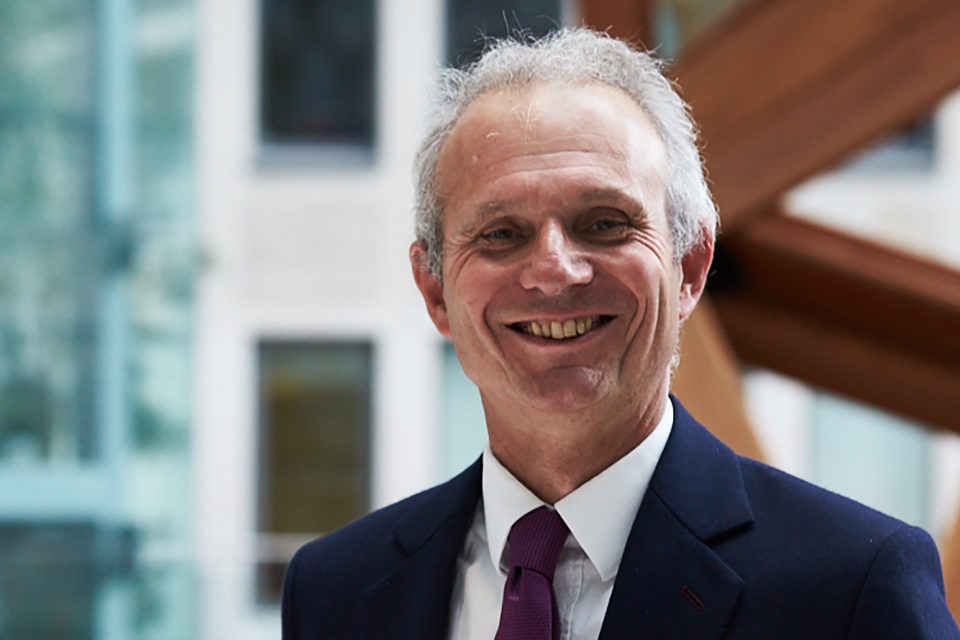
    Below is the text of the speech made by David Lidington, the Chancellor of the Duchy of Lancaster, on 18 October 2018.

    Ladies and gentlemen, thank you very much for the invitation and thank you for that welcome.

    I am deeply conscious I am interposing a speech between you and the opportunity for food and drink, and also looking to my right, presumably for the karaoke for which this sector is renowned at the end of the evening. I will look forward to the FT’s music correspondents giving the full details tomorrow morning.

    I want to start by being frank with you –

    This country is facing some of the most complex social and economic challenges of any in recent history.

    But those new challenges also bring with them new opportunities. And this sector and this country have track record of seizing those opportunities and making the most of them.

    Many of you will be agog to know the very latest on what’s going to happen at the European Council in Brussels this evening –

    Apart from the fact I suspect they won’t have anything like as good a dinner as they will have here –

    The Prime Minister will welcome the progress made in recent weeks on the Withdrawal Agreement and the political declaration on the future relationship.

    She will reiterate the need for the backstop to be temporary, and for this condition to be built into the agreement we negotiate with the EU.

    And she will emphasise our continued commitment to getting a good deal in our mutual interest that respects the economic and constitutional integrity of both the United Kingdom and the European Union.

    Getting that deal is something which I, having spent six years as Europe minister in the recent past, know is important for all sectors of the UK economy, including the financial services sector.

    And I believe now is the time for a clear-eyed focus on the few remaining but critical issues that are still to be agreed.

    I want to make it very clear that a deal is what we want. It is what we are working with every scrap of energy that we can muster towards achieving. And it is what we believe that we can and will secure at the end of the day.

    And I think too that throughout the challenges ahead, whether those that arise out of our departure from the European Union or those that are posed generally by global competition and by the accelerating pace of technological change, the Square Mile will continue to display the characteristics that have helped make London the world’s pre-eminent financial centre.

    That is certainly my view and I know it is the view of my colleague John Glen, the Economic Secretary, who is also with us this evening.

    What strikes me – whenever I come to the City, whenever I talk to people – is that for centuries the City has been a place of innovation…

    … of adaptability and resilience…

    … and of problem-solving.

    There are countless examples of those qualities that you can find shining through the fabric of the history of this City of London.

    Bob, you listed in your earlier remarks a whole host of examples of how over the past 12 months alone this City, and this sector within the City, have demonstrated those qualities of adaptability, resilience and problem solving.

    You mentioned at one stage what you have been doing in this sector over cyber security. Just two days ago I launched the second Annual Report of the National Cyber Security Centre.

    One thing that I announced then is that the Government is going to copy the best of what you have done – the CBEST approach and standards that have been pioneered by the United Kingdom’s financial services sector.

    We are going to adapt a GBEST approach to ensure that government and government suppliers are also working to ensure that when people do business with the UK of any kind, they know that this will be the most cyber secure business environment of any other in the world.

    You look at the history of the City, and I can point to examples of those qualities of adaptability and problem-solving – at least two of them in this building itself.

    You have probably already admired the magnificent 170-foot king post timber roof of this space, the so-called ‘Porter Tun’.

    But you might not have yet a story about some early 19th century porter in the vaults lying beneath our feet.

    The founder of this brewery, Samuel Whitbread, wanted to save money by switching from storing the porter in casks to a bulk storage system.

    He soon found himself in difficulty.

    The surviving documentation shows that the liquid ran through the walls “as through a sieve”.

    Fortunately two of the great men of the day, Josiah Wedgwood and John Smeaton, applied their minds to the challenge in the great tradition of the City.

    Now, that tradition of course is not solving problems through the rapid consumption of alcohol –

    They didn’t drink it all themselves…

    But what Wedgwood and Smeaton did was use their engineering expertise to help the Brewery go from strength to strength.

    You might say they had successfully consigned the problem of uncontrolled leaks to the past.

    Something that I am trying to persuade the Cabinet that they should adopt as well.

    Government and business working together
    But that anecdote exemplifies in a way the qualities that have helped the City prosper…

    … and helped our financial services sector create opportunities for people around the country, too.

    And it’s particularly important, at a time when in the years since 2008 we have seen an ebbing of more general public confidence and trust in UK finance, in the City, even in the free enterprise system itself, that we do ensure that we both speak about and demonstrate what this sector does for the prosperity and security of people in every part of this nation.

    Roughly two-thirds of the 2.2 million people who work in the financial and related professional services sectors are based outside London.

    And across all the major sectors the UK financial services industry is highly developed.

    We’ve got the largest asset management sector in Europe…

    … we have the largest banking sector in Europe…

    … and the largest insurance sector in Europe, too.

    All told, last year the UK was the largest net exporter of financial services in the world, with a trade surplus of £61 billion.

    I think our dynamic financial services sector should be the beating heart of a free market economy…

    … An economy that helps everyone in our country realise the opportunities ahead.

    That includes creating new opportunities for small businesses, mutuals, charities, co-operatives and social enterprises.

    We want to nurture vibrant, healthy, innovative, competitive and diverse marketplaces.

    And so, I know, do you, representing UK finance business.

    Financial services is a key part of our economic infrastructure.

    It generates wealth…

    … it creates jobs up and down the country…

    … and provides tax revenue to support our vital public services.

    That’s why this government is committed to listening to your views and engaging with you closely on a range of issues.

    Working together we can help back businesses to create jobs while ensuring that they also play by the rules.

    Working together we can build the homes people need so that everyone can have a safe, decent place to live.

    And working together we can help people to achieve their true potential – whether that is about enable people to develop the skills they are going need in an economy that is being transformed every day by digital technology…

    … or whether it is about ensuring everyone has access to the kind of opportunities that most of us in this this room sometimes take for granted.

    Collaborating on the domestic financial services agenda
    All of us in this room, for example, can agree on the importance of affordable credit.

    Regardless of their background or income, it’s right that everyone should have access to useful and affordable financial products and services.

    The government is committed to addressing this issue…

    That is why that subject formed part of the work of the Financial Inclusion Policy Forum, established earlier this year, which brings together industry, the third sector, ministers and the regulator.

    UK Finance has worked alongside Toynbee Hall to co-chair the Forum’s subgroup which is exploring ways to increase the availability of affordable credit to all consumers.

    That important work highlights how, coming together, we can explore solutions to the difficult challenges facing the most vulnerable men and women in our society.

    Our collaborative efforts can support consumers…

    … and they can protect them, too.

    UK Finance data shows there were more than 30,000 cases of automated push payment fraud in the first half of 2018.

    Both individuals and micro-businesses are being harmed by these kinds of scams.

    We do need to take them very seriously…

    … That’s why I’m delighted that requirements for consumer protection and the principles for reimbursement for consumers who fall victim to them have been developed by a joint Steering Group of industry and consumer group representatives.

    And on behalf of the government I want to say a big thank you to UK Finance for your work in providing the secretariat for that Steering Group.

    The publication of its draft voluntary code is an important milestone and we look forward to hearing responses to its consultation in due course.

    It’s right that industry takes the necessary steps to protect consumers against this kind of fraud…

    … and so we welcome UK Finance’s work in helping to develop it.

    There are many other examples I can give of collaborative working:

    UK Finance’s work with the Post Office to raise awareness of the Post Office’s services that allow banking in person to continue,

    … or UK Finance’s integral role supporting our response to economic crime, including through the Joint Fraud Taskforce, the Joint Money Laundering Intelligence Taskforce and seconding staff to help build the new National Economic Crime Centre…

    … or the very welcome engagement of UK Finance and others across the financial services sector as we draft the necessary legislation for onshoring.

    Financial services and Brexit
    As I have said at the start – and as I say again now – we recognise how important it is that we get a good Brexit deal, and that firms and their customers do not face a cliff-edge at the point of our exit from the European Union.

    That is what the entire Cabinet is working towards, and we are committed to making further progress in negotiations.

    But it’s also right that we ensure that we are prepared for any and all scenarios, just as you would also expect of any responsible business.

    I want to say how grateful I am to UK Finance for your input into this process – your expertise really is invaluable.

    But I also want to say that although there has been escalating excitement about the possibility that a deal with the European Union would prove elusive…

    … the growth in newspaper column inches does not reflect an increased likelihood of no deal.

    As the Prime Minister has said:

    This is the time for cool, calm heads to prevail.

    I believe her pragmatic proposals which she has put forward are in the economic interests of both sides – of businesses and of consumers in all 28 countries of the European Union.

    We are asking our European partners to respond with ambition and with urgency…

    … and to concentrate with us on completing this task in the interests of all our citizens.

    We have had good working-level discussions with the European Commission on our proposals for the future relationship in financial services.

    And what we have proposed in our White Paper is logical.

    Our financial markets are deeply integrated.

    That indisputable fact underlines why the bilateral treaty agreement we are putting forward should be bolstered with regulatory dialogue and supervisory cooperation.

    We should recognise the autonomy of both sides in decisions relating to market access and the rulebook.

    And the UK government is proposing a framework for financial services that will provide stability for the EU-UK financial ecosystem…

    … preserving mutually beneficial cross-border business models and economic integration…

    … and stabilising the current EU equivalence framework through a transparent and de-politicised process…

    … for the benefit of businesses and consumers in both the United Kingdom and the EU 27.

    Realising this means achieving that deal with our European partners that we remain committed to working towards.

    Conclusion
    The United Kingdom has always been both a European country and also one which has global interests and a global perspective.

    And as we prepare to leave the European Union the United Kingdom is going to need to focus with even greater energy and determination on the opportunities to be a greater global force, forging new relationships, stronger trade links and working to increase global security.

    My colleague John Glen put it this way:

    the commercial instincts of this country have been honed and sharpened over the centuries…

    … and we fully expect those instincts to prevail as we prepare to leave the European Union.

    The innovation, the resilience of the financial services sector have been demonstrated time and time again in our national history.

    Plague, fire, and blitz have not stopped the City in the past.

    And while the markets that the City serves and the workforce that serves those markets have changed beyond recognition…

    … I believe we can be certain of one thing:

    It will be the City’s great traditions of resilience, adaptability and innovation that will continue to help it and the entire finance sector to grasp the opportunities ahead.

    Thank you very much indeed.

  • Chris Grayling – 2018 Statement on the Rail Review

    Below is the text of the statement made by Chris Grayling, the Secretary of State for Transport, in the House of Commons on 11 October 2018.

    Mr. Speaker,

    I would like to update the House on the government’s Rail Review, which we will use to build on the successes of our busy railway, to deliver a network that is fit for the future and better serves passengers.

    I will also update the House on the current performance of Northern and GTR.

    For a generation before the 1993 Railways Act, British Rail was in seemingly terminal decline. Passenger numbers where falling. Stations were closing. Short term decisions were being made at the expense of the traveling public. The Railways Act brought investment, new services and better reliability.

    A quarter of a century later, the situation is very different. Our UK rail network is at capacity in commuter areas, with many of the most intensively used lines in Europe. On many routes, it simply isn’t possible to squeeze more trains onto the network.

    As we now know, the railways were not in terminal decline after all – they had simply been starved of investment. Privatisation has reversed the decades of decline and heralded the fastest expansion of our railways since they were built by the Victorians. It has also delivered billions of pounds of investment and radically improved safety. Our railways are now among the safest in the world.

    But this welcome expansion has brought new, acute challenges. On major commuter routes across the country, trains are packed each morning. Network Rail, which represents a third (38%) of the industry (based on spend), is nationalised. It is also responsible for over half (54%) of the daily disruption.

    But no matter whether it is a failure of the track, a fault with a train, or a customer incident, it is because there is little resilience or margin for error in the system that, when things go wrong, the knock-on effect can last for hours.

    This problem is compounded because the railway is run by multiple players without clear lines of accountability.

    When I took over as Transport Secretary in 2016 I said that change was needed. I started to bring together the operation of the tracks and trains, which had been split up in the 1990s, to be controlled by single operational teams. This is helping overcome the problems caused by fragmentation, and creating a railway that is more responsive to passenger needs.

    I also said that change needed to be evolutionary and not revolutionary, to avoid destabilising the industry. So we have started to shape alliances between the teams running trains and track to create a more joined-up and customer-focused structure.

    But the difficulties with the introduction of the new timetable over the summer and the problems we are experiencing with many major investment projects has convinced me that evolution is no longer enough. The collapse of Virgin Trains East Coast has also highlighted the need for radical change.

    Simply, we need this change to ensure that the investment going into the railways, from both the government and the private sector, results in better services for passengers and delivers the improved reliability, better trains, extra seats and more frequent services we all want to see.

    Last month, my department announced a root-and-branch review of the rail industry.

    Keith Williams, deputy chairman of John Lewis and Partners and former chief executive of British Airways, is leading this work and I expect him to make ambitious recommendations for reform to ensure our rail network produces even greater benefits for passengers and continues to support a stronger, fairer economy. Keith Williams’s expertise in driving customer service excellence and workforce engagement will be incredibly valuable as we reform the rail industry to become more passenger-focused.

    Keith will be assisted by an independent expert challenge panel from across the country, with expertise in rail, business and customer service.

    The panel will ensure the review thinks boldly and creatively, challenging received wisdom, to ensure its recommendations can deliver the stability and improvements that rail passengers deserve. They will be supported by a dedicated secretariat and will now begin engaging with the industry, passengers, regional and business representatives and others across the country, drawing on their expertise, insights and experiences to inform the review.

    It will consider all parts of the rail industry, from the current franchising system and industry structures, to accountability and value for money for passengers and taxpayers. It will consider further devolution and the needs of rail freight operators, and will take into account the final report of Professor Stephen Glaister into the May 2018 network disruption, due at the end of the year, which I will turn to shortly.

    When we establish what we think is the right approach to mend our railways, it must be properly tested and scrutinised independently.

    I have today (11 October 2018) published the Rail Review’s terms of reference, and have placed copies in the libraries of both Houses, together with the names of the Rail Review’s independent panel.

    The review will build a rigorous and comprehensive evidence base, and it will make recommendations regarding the most appropriate organisational and commercial framework for the sector that delivers our vision for a world-class railway.

    The private sector has an important part to play in shaping the future of the industry, but it is important that the review considers the right balance of public and private sector involvement.

    Mr Speaker, some have called for the return to a national, state-run monopoly, and for us to go back to the days of British Rail. There is an expectation that taking on hundreds of millions of pounds of debt onto the government books will magically resolve every problem.

    This fails to recognise that many of the problems that customers faced this year were down to the nationalised part of the railways.

    It also creates the sense that a government-controlled rebrand would somehow make every train work on time. Those who make this argument fail to tell passengers that the much-needed investment that is taking place today would be at risk, and that taxpayers’ money would be diverted from public services to subsidise losses.

    The review will look at how the railway is organised to deliver for passengers. It will look forensically at the different options, and then make recommendations on what will best deliver results in different areas of the country.

    The review will conclude with a White Paper in autumn 2019, which will set out its findings, and explain how we will deliver reform. We expect reform to begin from 2020, so passengers will see benefits before the next election.

    I have commuted by train for most of my career; over 35 years. I still do. I am proud to be in a government that is supporting a major programme of investment in rail, from Thameslink to the Transpennine upgrade, with new trains in the north, south, east and west.

    But I can’t stand by while the current industry struggles to deliver the improvements that this investment should be generating. So it’s time for change.

    The review will not prevent us taking every opportunity in the short term to improve passenger experiences. That is the government’s focus, and that is why we are committed to an investment of £48 billion in the railways over the next 5 years.

    Mr Speaker, Professor Stephen Glaister’s interim report has provided us with an accurate account of the series of mistakes and complex issues across the rail industry that led to the unacceptable disruption that passengers experienced earlier this year.

    We know that in the north, delays to infrastructure upgrades, beyond the control of Northern Rail, were a major factor in the resulting disruption. Richard George, the former head of transport at the London 2012 Olympic Games, is now working with the industry and Transport for the North to look at any underlying performance issues.

    In the 4 weeks ending 15 September, over 85% of services met their punctuality targets; the highest level delivered for Northern Rail’s passengers since the timetable introduction in May. Northern is now running 99% of the planned May timetable, and we are working with Transport for the North and the industry to plan further uplifts in services, while prioritising reliability.

    In the coming months, passengers across the north will begin to benefit from the brand new trains that were unveiled last week. There will be over 2,000 extra services a week, all the Northern and TransPennine Express trains will be brand new or refurbished, and all the Pacers will be gone.

    Mr Speaker,

    I now want to turn to GTR which has new leadership and where the reliability of its services have significantly improved; since the introduction of the interim timetable in July, 85% of trains arrived at their station on time.

    In addition to this, in the last week, the first of the new Class 717 trains that will run on its Great Northern routes begun testing.

    GTR is now operating 94% of the weekday services it planned to run from 20 May, including all services during the busiest peak hours. By December 10 it plans to introduce all planned off-peak services. There is, however, more work to do to improve services at weekends.

    Since the disruption in May there has been intense scrutiny from the government and its independent regulator, the Office for Road and Rail, on what went wrong and why.

    GTR must take its fair share of the responsibility – its performance was below what we expect from our rail operators.

    Officials in my department are taking action to finalise how we will hold GTR account for the disruption and the Rail Minister will keep the House updated.

    Mr Speaker, our action demonstrates that when passengers experienced severe disruption, this government took action.

    To help passengers plan ahead.

    To reduce delays.

    To reduce cancellations.

    To properly compensate disrupted fare-payers.

    The Rail Review that I have announced will continue this approach, ensuring the rail industry is always focused on the passenger first and that record investment delivers the services that passengers want and deserve.

  • James Brokenshire – 2018 Statement on Leasehold Reform

    Below is the text of the statement made by James Brokenshire, the Secretary of State for Housing, Communities and Local Government, in the House of Commons on 15 October 2018.

    I have published a technical consultation on how to implement the Government’s reforms to the leasehold system in England.

    This consultation marks the next step in my personal commitment to tackle exploitative and unjustifiable practices in the leasehold sector, making homeownership fairer for all.

    Unjust leasehold terms also risk making relatively new houses unattractive to buyers. Therefore, last year the Government announced they would introduce ​legislation to prohibit the unjustified granting of new residential long leases on new build or existing freehold houses, other than in exceptional circumstances, and restrict ground rents in newly established leases of houses and flats to a peppercorn.

    In addition, we want to address loopholes in the law to improve transparency and fairness for leaseholders and freeholders. This includes providing freeholders with equivalent rights to leaseholders to enable them to challenge the reasonableness of estate rent charges or freehold service charges for the maintenance of communal arrears and facilities on a private or mixed estate.

    Finally, we want to introduce measures to improve how leasehold properties are bought and sold.

    The consultation details a number of proposals setting out how our plans may work in practice. It asks important questions to understand people’s views on how this could affect them. It sets out and seeks views on:

    how the changes to prevent unjustified new leasehold houses will work in practice, in what circumstances any exemptions will be provided, and how the policy will be enforced;

    the future nominal ground rent for new leasehold properties being capped at £10 per annum, and what exceptional circumstances may warrant exemption;

    how we intend to provide freeholders with equivalent rights to leaseholders to enable them to challenge the reasonableness of an estate rent charge or a freehold service charge for the maintenance of communal arrears and facilities on a private or mixed estate; and

    measures to improve how leasehold properties are bought and sold.

    We will use the evidence we gather to inform the legislation and the accompanying impact assessment.

    The consultation will run for six weeks and will close on 26 November 2018. It is available online at: https://www.gov.uk/government/consultations/implementing-reforms-to-the-leasehold-system, and I have placed a copy in the House Library.

    Since becoming Secretary of State, I have already taken steps to ensure excessive and unfair leasehold practices are brought to an end. No new Government funding schemes will now support the unjustified use of leasehold for new houses.

    This consultation, and the legislation which will follow, will make the leasehold system fairer, more transparent, and cheaper for home owners in the future.

  • Tracey Crouch – 2018 Speech on Loneliness

    Below is the text of the speech made by Tracey Crouch, the Under-Secretary of State for Digital, Culture, Media and Sport, in the House of Commons on 15 October 2018.

    I should like to make a statement on the publication of the Government’s landmark strategy to tackle loneliness.

    This is a very emotional statement to make. I am standing here at the Dispatch Box with a clear line of sight to the coat of arms representing our colleague who took this issue of loneliness and catapulted it into the stratosphere. I have dedicated a brief nine months to developing the strategy, but Jo Cox dedicated her whole life to tackling loneliness, and the publication of this strategy, which bears her photo, and a copy of which I have set aside for Jo’s children, is dedicated to her. I hope she would be proud.

    The Jo Cox Commission on Loneliness was set up with a vision to carry forward her important work, and in January the Prime Minister welcomed its report and many of its recommendations, including the appointment of a cross-Government ministerial lead on loneliness, a post which I was overwhelmingly humbled to be offered. I would like to take this opportunity to thank in particular the hon. Member for Leeds West (Rachel Reeves) and my hon. Friend the Member for South Ribble (Seema Kennedy) for their vital work as co-chairs of the commission. Their dedication and passion have been essential in leading and driving forward action, and I am personally grateful to them for the cross-party support they have given me since I have taken on this work.

    Since then, our work in the UK has gained global attention. Loneliness is increasingly recognised as one of the most pressing public health issues we face across the world. Feeling lonely is linked to early death, with its impact often cited as being on a par with that of smoking or obesity. It is also linked to an increased risk of heart disease, stroke, depression, cognitive decline and even Alzheimer’s.

    It is estimated that between 5% and 18% of adults in the UK feel lonely often or always, but they are frequently hard to reach and suffer in silence. The Government are committed to confronting this challenge. The strategy published today outlines the Government’s vision for England to tackle loneliness, complementing the work being done in the devolved Administrations, and creating ​a place where we all have strong social relationships, where families, friends and communities support each other, where organisations promote people’s social connections as a core part of their everyday role, where loneliness can be recognised and acted on without stigma or shame, and where we can all make an effort to look out for each other and ensure that moments of contact are respectful and meaningful.

    To get there requires society-wide change, which is why the strategy recognises that Government cannot make the necessary changes alone. It sets out a powerful vision of how we can all play a role in building a more socially connected society. But there is no quick fix to achieving this vision, so it is very much a starting point rather than the end. It largely concentrates on the role Government can play and how we can set the framework to enable local authorities, businesses, health and the voluntary sector, as well as communities and individuals, to support people’s social connections. But it also describes the important responsibilities that we all have as individuals to our family, friends and communities and gives some examples of the great work already under way across the country to create strong and connected communities. It is a cross-Government programme, rather than a programme of one Department, and sets out a number of policy commitments ranging across policy areas such as health, employment, transport and housing and planning, and I am pleased that so many of my colleagues involved in the strategy are sitting alongside me on the Treasury Bench this evening.

    I wish briefly to draw five areas to the attention of the House. The strategy sets out a commitment to improve and expand social prescribing across England. It is estimated that GPs see between one and five patients a day because of loneliness. This is a policy that has been very much developed in response to some of the brilliant work by the Royal College of General Practitioners, frontline health professionals and others, and it will change the way patients experiencing loneliness are treated.

    Social prescribing connects people to community groups and services through the support of link workers, who introduce people to support based on their individual needs. By 2023, the Government will support all local health and care systems to implement social prescribing connector schemes across the whole country. In addition, the Government will explore how a variety of organisations, such as jobcentres, community pharmacies and social workers, refer people into social prescribing schemes and test how to improve this. The Government will also work with local authorities to pilot and test how the better use of data can help to make it easier for people to find local activities, services and support.

    The Government will also grow a network of employers to take action on loneliness, working with the Campaign to End Loneliness. The Government strategy includes a pilot with Royal Mail and sets out details of a new pledge that employers can sign up to, demonstrating their commitment to helping their employees to tackle loneliness. I am really pleased that a number of businesses and organisations have signed up, including Sainsbury’s, the Co-op, National Grid and the British Red Cross, along with 18 or so others, as well as the UK Government civil service.

    Earlier this summer, we announced that £20 million of funding would be made available from the Government and other partners to support initiatives to connect people. ​In the strategy today, I am pleased to announce that a further £1.8 million will be made available to support even more community spaces and used to transform underutilised areas, including creating new community cafés, art spaces or gardens.

    Furthermore, the Government will build a national conversation to raise awareness of loneliness and reduce the stigma. We will explore how best to drive awareness of the importance of social health and how we can encourage people to take action. In addition, Public Health England’s forthcoming campaign on mental health will explicitly highlight the importance of social connections to our wider wellbeing.

    Finally, the strategy sets out the Government’s ongoing commitment to this agenda. The ministerial group that steered development of the strategy will continue to meet to oversee the Government’s work on tackling loneliness. The group will publish an annual progress report. My ministerial colleagues in the group, from the Ministry of Housing, Communities and Local Government, the Department for Transport and the Department for Business, Energy and Industrial Strategy, will have their portfolios extended to include loneliness, to show the importance of the agenda across a wide range of policy areas. My colleague at the Department of Health and Social Care, who already has loneliness in her portfolio, will also continue to provide invaluable support on this work.

    The Government’s intention is to embed consideration of loneliness and relationships throughout the policy-making process. From next year, individual Government Departments will highlight the progress they are making on addressing loneliness through their annual single departmental plans. The Government will also explore other mechanisms for ensuring that loneliness is considered in policy making, including through adding loneliness to the guidance for the family test.

    The Government strategy is a significant first step in the national mission to end loneliness in our lifetimes. An enormous number of people, organisations, voluntary groups and others have helped to produce the strategy; the list published in the strategy of my thanks extends to four pages, so I cannot mention them all here. As there is no way they would have written it into the speech or the strategy themselves, I would like to place on the record a huge thank you to the team of officials who have been enthusiastic secondees from across Whitehall to work on this strategy. They have brought with them invaluable energy and expertise from their Departments, and it has been an enormous pleasure to work with them.

    The strategy builds on years of dedicated work by many organisations and individuals. It sets out a powerful vision on how we can all play a role in building a more socially connected society and is supported by important policy commitments to make that vision a reality. I call on all hon. Members across the House to join me in taking action to defeat loneliness. Together we can address one of the most pressing social issues of our time. I commend this statement to the House.

  • Theresa May – 2018 Statement on EU Exit Negotiations

    Below is the text of the speech made by Theresa May, the Prime Minister, in the House of Commons on 15 October 2018.

    With permission, Mr Speaker, I would like to update the House ahead of this week’s European Council.

    We are entering the final stages of these negotiations. This is the time for cool, calm heads to prevail, and for a clear-eyed focus on the few remaining but critical issues that are still to be agreed. Yesterday, the Secretary of State for Exiting the European Union went to Brussels for further talks with Michel Barnier. There has inevitably been a great deal of inaccurate speculation, so I want to set out clearly for the House the facts as they stand.

    First, we have made real progress in recent weeks on both the withdrawal agreement and the political declaration on our future relationship. I want to pay tribute to both negotiating teams for the many, many hours of hard work that have got us to this point. In March, we agreed legal text around the implementation period, citizen’s rights and the financial settlement, and we have now made good progress on text concerning the majority of the outstanding issues. Taken together, the shape of the deal across the vast majority of the withdrawal agreement—the terms of our exit—is now clear. We also have broad agreement on the structure and scope of the framework for our future relationship, with progress on issues such as security, transport and services.

    Perhaps most significantly, we have made progress on Northern Ireland, on which the EU has been working with us to respond to the very real concerns we had about its original proposals. Let me remind the House why this is so important. Both the UK and the EU share a profound responsibility to ensure the preservation of the Belfast/Good Friday agreement, protecting the hard-won peace and stability in Northern Ireland and ensuring that life continues essentially as it does now. We agree that our future economic partnership should provide for solutions to the unique circumstances in Northern Ireland in the long term, and while we are both committed to ensuring that this future relationship is in place by the end of the implementation period, we accept that there is a chance that there may be a gap between the two. This is what creates the need for a backstop to ensure that if such a temporary gap were ever to arise, there would be no hard border between Northern Ireland and Ireland, or indeed anything that would threaten the integrity of our precious Union.

    This backstop is intended to be an insurance policy for the people of Northern Ireland and Ireland. Previously, the European Union had proposed a backstop that would see Northern Ireland carved off in the EU’s customs union and parts of the single market, separated through a border in the Irish sea from the UK’s own internal market. As I have said many times, I could never accept that, no matter how unlikely such a scenario might be. Creating any form of customs border between Northern Ireland and the rest of the UK would mean a fundamental change in the day-to-day experience for businesses in Northern Ireland, with the potential to affect jobs and investment. We published our proposals on customs in the backstop in June. After Salzburg, I said that we would bring forward our own further proposals, and that is what we have done in these ​negotiations. The European Union has responded positively by agreeing to explore a UK-wide customs solution to this backstop, but two problems remain.

    First, the EU says that there is not time to work out the detail of this UK-wide solution in the next few weeks, so even with the progress we have made, the EU still requires a “backstop to the backstop”—effectively an insurance policy for the insurance policy—and it wants this to be the Northern Ireland-only solution that it had previously proposed. We have been clear that we cannot agree to anything that threatens the integrity of our United Kingdom, and I am sure that the whole House shares the Government’s view on this. Indeed, the House of Commons set out its view when agreeing unanimously to section 55 in part 6 of the Taxation (Cross-border Trade) Act 2018 on a single United Kingdom customs territory, which states:

    “It shall be unlawful for Her Majesty’s Government to enter into arrangements under which Northern Ireland forms part of a separate customs territory to Great Britain.”

    So the message is clear not just from this Government but from the whole House.

    Secondly, I need to be able to look the British people in the eye and say that this backstop is a temporary solution. People are rightly concerned that what is only meant to be temporary could become a permanent limbo, with no new relationship between the UK and the EU ever agreed. I am clear that we are not going to be trapped permanently in a single customs territory unable to do meaningful trade deals. So it must be the case, first, that the backstop should not need to come into force; secondly, that if it does, it must be temporary; and, thirdly, while I do not believe that this will be the case, that if the EU were not to co-operate on our future relationship, we must be able to ensure that we cannot be kept in this backstop arrangement indefinitely. I would not expect the House to agree to a deal unless we have the reassurance that the UK, as a sovereign nation, has this say over our arrangements with the EU.

    I do not believe that the UK and the EU are far apart. We both agree that article 50 cannot provide the legal base for a permanent relationship, and we both agree that the backstop must be temporary, so we must now work together to give effect to that agreement.

    So much of the negotiations are necessarily technical, but the reason why this all matters is that it affects the future of our country. It affects jobs and livelihoods in every community. It is about what kind of country we are and about our faith in our democracy. Of course it is frustrating that almost all the remaining points of disagreement are focused on how we manage a scenario that both sides hope should never come to pass and that, if it does, will only be temporary. We cannot let that disagreement derail the prospects of a good deal and leave us with the no-deal outcome that no-one wants. I continue to believe that a negotiated deal is the best outcome for the UK and for the European Union. I continue to believe that such a deal is achievable, and that is the spirit in which I will continue to work with our European partners. I commend this statement to the House.

  • Chloe Smith – 2018 Speech on Democracy

    Below is the text of the speech made by Chloe Smith, the Minister for the Constitution, in Brussels, Belgium on 15 October 2018.

    Introduction

    We agree democracy is essential for free, well-governed societies to prosper.

    We in the UK, along with you, are part of a community, extolling the virtues of democracy.

    But as the leaders of the G7 agreed earlier this year in the Charlevoix, “democracy and the rules-based international order are increasingly being challenged by authoritarianism and the defiance of international norms”.

    It’s up to all of us to work together to defend our democracy and preserve it for future generations. In my view we must respect it, protect it and promote it – those are the themes I will be working on in the UK, Europe and around the world.

    As the Minister for the Constitution in the UK Government, today, I will set out what we are doing to defend the UK’s democracy. We are committed to:

    – maintaining transparency, fairness and equality for parties, campaigners and voters

    – we want to protect the safety and security of the electoral process, free from fraud and interference

    – and we want to build on our democratic traditions to remain world leaders in maintaining confidence in our democracy

    Transparency for digital campaigning

    Starting with one of the challenges we face – for the last three decades the internet has not only revolutionised the way we interact with each other, it has revolutionised the way we do politics, too.

    Information is only a moment away, and on the whole those changes are positive.

    Thirty years ago, voters also didn’t also have to worry about whether their choice was being influenced by misleading political ads on social media.

    The digital landscape poses challenges which we can’t afford to shy away from addressing.

    On international affairs – we know that certain states routinely use disinformation, bots and hacking as foreign policy tools. It’s not surprising that they should try to influence other countries democratic systems to further their own agendas.

    Democracy is based on citizens being confident that the elections they vote in are fair and transparent.

    Governments must act to meet the pressures of digital campaigning so this confidence is assured, in terms of foreign-originated content, but of course also domestic content and debate too.

    We are working to protect the news environment so accurate content can prevail and has a sustainable future.

    We have to be alive to the fact that traditional news outlets aren’t the main source of information anymore.

    We must give everyone the skills they need to distinguish between fact and fabrication.

    In the UK, we are publicly consulting on how to require digital campaigning material to include the details of who has produced it.

    Because voters need to see which organisation or individual is targeting them.

    Salisbury

    People need to be informed about the threats facing our country. I am immensely proud of the work done by the National Security Communications Team and the government’s Russia unit in revealing the role of the GRU in the despicable Salisbury attack.

    The actions of the GRU are genuinely a threat to all our allies in democracy.

    We are working together by sharing information about their activity with our international partners so that others can learn more about the threat they pose.

    Safety and security of elections

    In the UK, we have seen no evidence of successful interference in our democratic processes. We are vigilant.

    I am confident that our voting system is secure.

    Whilst UK voting systems do not lend themselves to direct electronic manipulation because our ballots are conducted with paper and pen.

    But we recognise that confidence in the electoral system, and participation in it, are very much linked.

    In the UK – there’s a reform we’re doing – you only need to say your name and address to get your ballot paper – a test based on a 19th century assumption that people knew their neighbours at the polling station.

    Clearly, this process can be open to abuse and needs to be updated for our more modern, populous society.

    One approach is to bring the UK in line with other European countries such as the Netherlands, France and Germany and many others where people can confirm their identity when they vote.

    Conclusion

    We know it is vital that everyone has confidence that their vote is theirs, and theirs alone.

    Not only that – they have to feel that their vote matters, and that their voice is being heard, too.

    I want the reputation of the UK’s democracy to be absolutely solid:

    – known for its transparency and fairness

    – known for being a safe and secure electoral system, untainted by misinformation

    – I want it known for being a democracy that genuinely does work for every voter

    – and known for the willingness of its government to work hard to increase confidence in our democracy for the people it serves

    As I said, we must respect, protect and promote our democracy for the next generation.

    That work has a vital task for our times.

  • James Brokenshire – 2018 Speech at Royal Institute of British Architects Stirling Prize Award Ceremony

    Below is the text of the speech made by James Brokenshire, the Secretary of State of Housing, Communities and Local Government, on 10 October 2018.

    Thank you for inviting to me join you this evening.

    It’s a real privilege to be here.

    The Stirling Prize is a wonderful opportunity to celebrate British Architecture and since 1996, when it replaced the less august sounding ‘Building of the Year Award’, it has consistently showcased the immense talent coming out of this country.

    When James Stirling won the Royal Gold Medal in 1980 he did so not only for his achievements but also for the potential of those ideas never realised.   That connection between accomplishment and promise, between the past and the future, is embodied each year in the Stirling Prize and its shortlisted nominees.

    Helping to honour the legacy and inspire future generations of architects.

    Thank you for your contribution to our country, our economy and our cultural life.

    And it is to the role of the architect I wish to turn.

    You are the guardians of quality.

    So often the difference between the ugly and the beautiful isn’t because of ‘good architect vs bad architect’ but rather a case of there being little or no architect at all. What I know is we need more of your expertise involved in how we build and create communities, not less.

    And ultimately, for me at least, that is why we build.

    To create communities.

    To create great places to live, work and spend time in.

    To create please we are proud to call home.

    To create that connection between the built environment and our identity.

    At the core of this should be an aspiration for beauty.

    Whilst we may debate its precise nature, its existence is beyond doubt.

    And our spaces and places should embody this value.

    As Secretary of State for Housing and Communities, these issues are an important part of my role.

    And something I will be returning to in the coming weeks.

    From the individual home through to the new settlements we need to build I pay special attention to the quality of design and style.

    We need to build homes which fit with the world around them.

    Helping to give confidence to people that development will be sympathetic to its surroundings. Helping grow a sense of community, not undermine it.

    Helping to ensure our places are fit for the future, casting our eyes on the coming innovations in technology whilst keeping our feet firmly grounded in what communities want and need.

    That’s why tonight is so special.

    In recognising and celebrating the essential role of style, design and yes, architecture.

    I’d like to congratulate all those shortlisted for this prestigious award.

    You have all earned rightful plaudits for your work. Tonight we celebrate not just the winner – but all of you.

    Thank you all for what you do.

    And the very real contribution you are making in creating communities we can be proud of.

    Thank you.

  • Theresa May – 2018 Speech at World Mental Health Day Reception

    Below is the text of the speech made by Theresa May, the Prime Minister, on 10 October 2018.

    I’m really pleased to be able to welcome you here to Number 10 on World Mental Health Day.

    And I want to say a huge thank you to everybody here for everything you are doing to transform how we look after mental health, here in Britain but also around the world.

    Because as I’ve been discussing with a number of you and with some young people earlier – for too long, too many people have suffered in silence in fear of the stigma surrounding mental health conditions.

    While those who have sought help haven’t had the access to care they would have for a physical ailment.

    Putting right that historic injustice is – I think – one of the defining challenges of our time.

    We all know someone who has been affected by mental health problems – whether a family member, a colleague or a friend.

    Yet average global spend on mental health is just 2.8 per cent of government health spending worldwide.

    And we have to change this.

    For we are not looking after our health if we are not looking after our mental health.

    And we need that true parity between physical and mental health, not just in our health systems but elsewhere as well – in our classrooms, our workplaces, in our communities too.

    That is why we were so pleased this week to host the first ever Global Ministerial Summit on mental health.

    And in this landmark agreement we see more than 50 countries have supported the declaration to achieve equity for mental health in the 21st Century.

    And I am delighted that we have representatives from many of those national delegations here with us this afternoon.

    Now we must turn those words into action.

    Here in the UK, as you’ve just heard, I have made parity of care a priority for our long-term plan for the NHS.

    And as a result, our record investment in the NHS will mean record investment in mental health.

    For the first time ever, the NHS will work towards standards for accessing mental health services that are just as ambitious as those for physical health.

    The Independent Review of the Mental Health Act, led by Simon Wessely, will enable the government to bring forward historic new legislation – and it is amazing that it has taken so long for us to review our mental health legislation – to help ensure that all people treated under the act are treated with dignity and respect.

    We are investing more than £220 million over the next decade in the mental wellbeing of our brave armed forces – changing the culture, so those in need are not stigmatised but rather encouraged to step forward and then helped to return to the frontline. And we are ensuring that we have the right mental health support for our veterans too.

    Our new campaign – Every Mind Matters – will train 1 million people in mental health awareness, with the first pilot beginning today in the West Midlands ahead of a national launch next Spring.

    But I want us to go further, in particular in two areas: how we prevent the tragic loss of too many lives from suicide and how we support the mental wellbeing of our young people.

    I think it’s utterly heart-breaking that suicide is the biggest killer of men under 50 and most likely to occur among those who are disadvantaged in our society today.

    And we cannot stand by and allow this injustice to continue.

    But to tackle it we need to focus on the full range of challenges that those at risk of suicide are so often facing – from ill-health to debt or unemployment; from family breakdown to bereavement or loneliness; from drugs and alcohol dependency to homelessness.

    And we need to break the stigma that so often prevents people from talking when they are at their most desperate.

    For this to happen we need to give suicide prevention the priority it deserves.

    So I am today appointing Jackie Doyle-Price as the first ever Ministerial Lead for Suicide Prevention.

    And what Jackie will be doing is bringing together a national effort to tackle this injustice – working with all of you here – across national and local government, with suicide and self-harm prevention experts, clinicians and those personally affected by suicide. This will include charities like one whose representatives I’ve just met – the Campaign Against Living Miserably – who have campaigned so tirelessly on this issue.

    Jackie will also explore how we can harness the latest technology – such as predictive analytics and artificial intelligence – to identify those at risk of suicide.

    She will be looking at the support offered to families affected by suicide.

    And she will also help to ensure there are effective suicide prevention plans in every local area – and we’ll be publishing a national progress report by Spring next year.

    As we do all of this, we are committing up to £2 million for the Zero Suicide Alliance over the next two years to improve suicide awareness and training across the NHS and beyond.

    And we will ensure that when people do want to talk, there is someone there to listen.

    So we are also committing up to £1.8 million for the Samaritans’ helpline over the next four years, to ensure that it remains free for everyone who needs it, when they need it, 24 hours a day.

    As I said, I also want us to do more to support the mental wellbeing of young people.

    Half of all mental illness, as we know, begins by the age of 14 – and with young people spending more time online, the strains on mental wellbeing are only going to increase.

    So it’s critical that we not only deliver parity of care between mental and physical health – but that we do the same for prevention too.

    That is why we are making education about mental health and resilience a mandatory part of the national curriculum.

    And we are developing an entirely new mental health workforce that will support schools to get the right help early to young people with mild to moderate mental health needs.

    Recruitment has just begun for the first cohort of trainees. They will begin studying in January and be fully trained working in schools by the end of next year.

    But we need to go even further in ensuring that mental wellbeing and resilience is at the forefront of our whole approach to supporting young people.

    For generations, we have measured our children’s physical health throughout their childhood.

    And we have done the same with their academic attainment.

    But we haven’t done this for their mental wellbeing.

    That not only sends the wrong message about the importance of mental health but it also denies us vital data that can help transform the support we provide for generations to come.

    So we are going to change this.

    From next year, we will publish an annual State of the Nation report every World Mental Health Day to highlight the trends and issues in young people’s mental wellbeing.

    And we will provide schools with an approved framework which can help them with measuring all aspects of their students’ health, including their mental wellbeing.

    Now, when I first became Prime Minister, I stood on the steps of Downing Street and pledged to fight the burning injustices in our society.

    I think there are few greater examples than the injustice which faces those with mental health conditions.

    But working together we can change that.

    We can end the stigma that has forced too many to suffer in silence.

    We can prevent the tragedy of suicide taking too many lives.

    And we can give the mental wellbeing of our children the priority that it so profoundly deserves.

    So let’s do that. And let me thank you all again for everything that you are doing to support that vital mission.

    And let’s go forward together, determined to ensure we improve people’s mental health and give help and support to those that need it.

  • Jeremy Hunt – 2018 Speech to the Illegal Wildlife Trade conference

    Below is the text of the speech made by Jeremy Hunt, the Foreign Secretary, on 11 October 2018.

    On behalf of the Foreign and Commonwealth Office – and our co-hosts, the Department for International Development and the Department for Environment, Food and Rural Affairs – I’m delighted to welcome you to this conference.

    Our task simply is to address one of the greatest challenges facing humankind. How can we protect the magnificence of the natural world from the criminal gangs who threaten human beings just as surely as they plunder the planet?

    The world’s population now stands at 7.5 billion human beings, that’s a fivefold increase on a century ago, reflecting humanity’s remarkable progress against poverty and disease. Since 1990, the global infant mortality rate has fallen by over 50 per cent. Almost everywhere, people are living longer and healthier lives – and we should give thanks for that cardinal achievement.

    Yet as we have succeeded, other species have gone dramatically into decline. It was Yuval Noah Harari, from Hebrew University in Jerusalem, who described homo sapiens as the “deadliest species in the annals of Planet Earth”. By about 12,000 years ago – long before our ancestors invented the wheel or iron tools – we human beings had already exterminated about half of the world’s large mammals.

    Today, the process has gone still further. If you placed all the people in the world on a giant set of scales, they would weigh about 300 million tonnes. But if you gathered all the surviving wild animals – of every size and species – and placed them on the other end of the scales, their combined mass would be less than 100 million tonnes, three times less than us.

    The global population of vertebrate animals has fallen by almost 60 per cent since 1970. It’s even worse news for particular animals: forty years ago, Africa had about 1.3 million elephants. Today, the figure is down by two thirds to 415,000. In Asia, the population of wild tigers has dropped by 95 per cent since 1900.

    The illegal wildlife trade is not the sole cause of the disappearance of wildlife, but we all suffer from its malign effect.

    The same criminal networks that smuggle tusks and horns and hardwood also traffic in guns and drugs and people. They launder money, engage in modern slavery, fund conflict and thrive on corruption. By one estimate, the illegal wildlife trade is the fourth most profitable criminal enterprise in the world, generating as much as $23 billion.

    Last year, the authorities in Hong Kong achieved the biggest ivory seizure in history, intercepting a shipment of tusks weighing 7.2 tonnes. For that one consignment, the smugglers or their accomplices will have killed at least 700 elephants.

    In the process, these bandits were looting the natural wealth of Africa. From Mongolia to Laos, from Angola to the Amazon, the illegal wildlife trade robs sovereign nations of their resources and deprives some of the poorest countries in the world of the revenues of their biodiversity.

    The World Bank estimates that governments lose as much as $15 billion every year from illegal logging. Money that could be spent on schools and roads and hospitals; instead much of it goes to criminal gangs who harm people even as they despoil nature.

    If anyone asks why we devote effort and resources to combating the illegal wildlife trade when millions of human beings still endure war, hunger and disease, then here is the answer. This trade threatens some of the poorest people in the world, destroying livelihoods, empowering criminals, and depriving governments of the means to provide essential services.

    The interests of humanity cannot be separated from the interests of the natural world. The one depends on the other.

    So we are all here today because of our common resolve to combat this trade – and we are all looking for the most effective methods. Let me share some of the actions that Britain has taken, and where we think they could be more effective alongside a global coalition.

    My predecessor, Lord Hague, called the first London Conference on this subject in 2014 and the framework we agreed then provides the best guidance for our response.

    Firstly, we need to eradicate the market for illegal wildlife products. Secondly, we must ensure our laws are strong enough to deter the criminals. Thirdly, we must rigorously enforce those laws. Finally, we need to provide sustainable livelihoods for those who might otherwise be tempted by the short term gains of poaching.

    Last year, the British Parliament passed the Criminal Finances Act, strengthening our powers to combat money laundering and freeze unexplained wealth. Since then, we have placed another law before Parliament that would ban domestic ivory sales.

    We are now testing our legislation and enforcement capabilities using the methods developed by the International Consortium on Combating Wildlife Crime. Britain will be the first G20 country to go through this exercise and put our own house in order.

    We will also contribute £250 million to the UN’s Global Environment Facility by 2022. Along with other donors, we secured agreement for a 30 per cent increase in the budget of the UN’s Global Wildlife Programme.

    The Department for International Development is working alongside many of the governments represented here today in order to help provide alternative livelihoods for poor communities.

    We are helping countries to improve their governance, strengthen the rule of law and achieve sustainable economic growth. I was pleased to announce another £3.5 million of technical support to help countries “follow the money” behind the grand corruption associated with the illegal wildlife trade.

    The criminals don’t respect borders; if one nation toughens its laws, the smugglers will move into a neighbour. If we improve the protection of one endangered wildlife population, they will target another species – or the same species in a different country.

    Our response has to rest on international cooperation and it’s so fantastic that 85 governments are represented here today. We welcome the trans-frontier approach to conservation – including “Green Corridors”- which we will do everything we can to support.

    This conference will complement our joint work at the UN and CITES, which is the right forum to agree international rules and identify any species in need of extra protection.

    But we know that governments and international organisations can’t address this problem alone. That’s why this conference includes businesspeople, NGOs, scientists, law enforcement experts and youth organisations.

    We have brought the Interpol Wildlife Crime Working Group to London because we need to ensure that seizures result in prosecutions and convictions.

    I offer a special welcome to the game rangers who are present. In the last year, over 100 brave rangers have been killed in the struggle to protect wildlife. We must do more to equip and safeguard the courageous people who risk their lives to guard the natural majesty of their homelands.

    I welcome the representatives of communities who live alongside wildlife. I know how easy it is to romanticise that experience if you happen to reside in the safety of London so we all look forward to hearing more about how to reduce human-wildlife conflict from people who understand the issue best.

    Yesterday, His Royal Highness the Duke of Cambridge launched a new private sector Financial Taskforce, designed to bolster the struggle against the illegal wildlife trade.

    I hope that we all will use this conference to create new networks and learn from what has gone right as well as what has gone wrong. Nepal, for example, has doubled its tiger population since 2009; in fact not a single rhino or tiger has been poached in Nepal for the last four years.

    Let me close by repeating my welcome to London. Let us all leave this conference with a renewed determination to thwart the criminal gangs who inflict grave injury on people with deadly consequences for animals. If we fail to act, quite simply we will never be forgiven.