Category: Speeches

  • David Steel – 1985 Speech on the Loyal Address

    Below is the text of the speech made by David Steel, the then Leader of the Liberal Party, in the House of Commons on 6 November 1986.

    I happily join the other party leaders in congratulating the mover and seconder of the Loyal Address.

    The hon. Member for Birmingham, Hall Green (Sir R. Eyre) is a respected senior colleague and a former Minister and we greatly enjoyed his references to his previous constituents. I noted with particular enjoyment his reference to Tony Hancock and the episode in the “Blood Donor”. The hon. Gentleman might have regaled the ​ House with the line that I remember best from that episode. Tony Hancock was explaining to the attendant at the blood donor centre why he had been motivated to go to the centre. He said that he felt that he had to do something for his country and it was either giving blood or joining the Young Conservatives. I believe that Tony Hancock made the right choice, and I am sure that the hon. Member for Hall Green agrees.

    On a more serious note, the hon. Member for Hall Green was surely right to make a plea to the Government to invest more in our decaying cities and less in the green belt. His view finds an echo on the Opposition side.

    I have a warm affection for the hon. Member for Aberdeen, South (Mr. Malone). The leader of the Labour party gave a less than complete biography of the hon. Gentleman whose contribution to the alliance began not with his defeat in a by-election by my right hon. Friend the Member for Glasgow, Hillhead (Mr. Jenkins), but in the 1979 election with his defeat by me at Roxburgh, Selkirk and Peebles. The hon. Gentleman is a unique embodiment of how much the Liberal party and the SDP have in common.

    Again on a serious note, we not only enjoy the hon. Gentleman’s self-deprecating humour and appreciate his obviously genuine devotion to Aberdeen after sojourns in the Borders and Glasgow, but I strongly agree with him that the success of the Government will be judged by how they manage to reform our industrial base. On that proposition, we can rest content and we shall see what happens in the next year or two.

    There is no doubt that the whole tone of the Queen’s Speech follows closely the tone of the Conservative party conference. The whole emphasis was on the presentation of policies rather than on the policies themselves. Any criticism was of the presentation, not the substance.

    Great emphasis is placed on presentation, so much so that, during the Conservative party conference, The Guardian reported:

    “It is a week in which presentation … is the name of the game.”

    It reported a particular and, I believe, significant episode:

    “Mr. John Patten, the new Minister for the Environment, may have gone too far presentationwise. An advance handout of his speech winding up a local government debate began: ‘This has been a marvellous debate.’ It was distributed some two hours before the debate began.”

    That is the sort of presentation that we are becoming used to and we find echoes of it in various phrases throughout the Gracious Speech. For example, we are told that the

    “Government will continue to work for progress in arms control and disarmament negotiations”.

    Continue to work? What efforts have the Government made in arms control negotiations? Not only did they refuse to count in the Polaris missile system during previous East-West discussions, despite almost semi-public prodding by Vice-President Bush to do so, but they have made a lukewarm response—to put it mildly—to Mr. Gorbachev’s alternative suggestion that there could be direct discussions to see whether reductions on both sides could be achieved between Britain and the Soviet Union.

    The House has debated many times the effect on the Budget in general and on conventional defence spending in particular of the Government’s commitment to the Trident missile programme. We do not concentrate often enough on the fact that that commitment represents a major escalation of nuclear fire power by this country at a time when we hope for greater optimism in East-West ​ relations. An increase from a targeting capability of 64 to 896 is not working towards arms control and reductions; that is working positively for a major escalation of nuclear fire power. There is a gap between the presentation and the reality.

    In the next paragraph of the Gracious Speech we are told that within the European Community the Government

    “will work for improved decision taking”.

    They could have fooled me. Where have we found Britain in recent Community discussions? We have been in company with Denmark and Greece in resisting the political and constitutional reforms that are necessary to end stagnation within the Community. That will be an important issue as Spain and Portugal join the Community. I hope that it signals a major change in the Government’s attitude to the Community.

    The Queen’s Speech states that the Government

    “will continue to seek more normal relations with Argentina.”

    I hope that that will be so. I was glad to see published for the first time in yesterday’s press a fact that I reported privately to the Foreign Office a couple of weeks ago following my discussions with President Alfonsin—that the Argentine Government are ready to join in a multilateral effort to secure agreements on fishing. It is a small step, but it is welcome, and I hope that the Government will build on it.

    My basic quarrel is with the Government’s negative stance on the future of the Falklands. We tend to forget that, proud though we all were of our great victory in the Falklands, we not only brought liberty to the Falkland Islands but we were also instrumental in bringing liberty and democracy to Argentina. We have not built upon that, nor have we built upon the good will generated there.
    If the Government were willing to negotiate the future constitution of the Falkland Islands with a military dictatorship, it is not unreasonable to ask two democracies to come to an agreement on this long-standing dispute. We should be looking forward in this Session to the lifting of the protection zone, the cessation of hostilities, and a return to normal diplomatic relations. If no other argument appeals to the Prime Minister, she should listen to the many British business men who are complaining bitterly about the loss of trade and export potential.

    The Queen’s Speech continues:

    “My Government will work for peaceful and fundamental change in South Africa with the European Community and the Commonwealth”.

    I hope that the emphasis will be on work, not just hope, because “peaceful and fundamental change” is what we are after.

    The Government’s record is not good. At the European Community meeting the unfortunate Minister of State took a negative stance and, even in the tiny sanctions agreed by the other Community countries, following the Prime Minister’s performance in the Bahamas, we held out to resist any international pressure on South Africa. That does not give us hope that the Government intend to work constructively to ensure a peaceful change.

    I asked someone who was in the Bahamas at the time whether the atmosphere was as bad as it appeared to us at home, and I was told that it was worse. I was told, “You do not understand. Your Prime Minister treats other Heads of Government as if they were members of the Dorking Conservative association with the same narrow, blinkered view of the world perspective.” I appreciate that a growing ​ part of Conservative philosophy is to believe that everyone else is wrong and that the Tory Government are right, but I hope that the Government really intend to work for that change and that it is not mere presentation.

    The Government promise to

    “maintain a substantial aid programme.”

    No one could honestly use the word “maintain” in relation to the Government’s aid programme. Our contribution has never reached 0·7 per cent. of gross domestic product—the United Nations target. When the Government took office our contribution was 0·52 per cent., and it is now only 0·33 per cent. Our contribution is in decline. When we came back after the summer recess we were treated to a warm demonstration from the World Development Movement. It was one of the most impressive demonstrations outside the House for many years. I remember asking the Leader of the House, who was standing in for the Prime Minister, why we gave only $25 a head to overseas aid when the Americans gave $37 per head and the French $47. He said that one had to consider the relative strength of resources. That is fair, but the Canadians gave $65 per head and the Danes and the Dutch $88. That has nothing to do with the strength of resources, but more to do with strength of will—or the lack of it. Maintaining “a substantial aid programme” must be more than presentation; it must become a reality.

    Similar phraseology is used in relation to domestic matters. We are told:

    “Legislation will be introduced to facilitate funding by the industry of agricultural research, advice and related services”.

    That is a euphemism for cutting agricultural research along with medical, scientific and engineering research. The words “facilitate funding” seem to bestow a benefit upon agricultural research, but no one in the farming world will believe that for a second.

    The Gracious Speech says:

    “Measures will be brought forward to reform the operation of Wages Councils”.

    If the Government intend to make it easier to bring young people into the labour market without plunging straight in at adult wage rates, they will get some sympathy, but we suspect that this proposal might open the door to a return to sweatshops for young people because the Government intend to abandon the International Labour Organisation code. Why do they intend to do that if reform is their genuine aim?

    In Scotland legislation is planned

    “to improve legal aid arrangements”.

    The legal profession in Scotland knows what that means. It means cutting legal aid access; it has nothing to do with improving legal aid arrangements. That is another example of presentation which has nothing to do with reality.
    The most brazen piece of presentation is contained in the paragraph which says:

    “Legislation will be introduced … to promote the professional effectiveness of teachers.”

    This Government have done more to undermine the professional effectiveness of teachers than any previous Government. I met union members yesterday, so I know what I am talking about. They reinforced my view that the issue is not just about the current pay dispute, but about the Government’s attitude to education. We must take note of the Audit Commission report on the universities published yesterday. We must take into account what has happened to school books and buildings.

    Of course, a problem is caused by falling school rolls, but the Government have given the figures as expenditure per head, which conceals the decline in morale in the classrooms.

    The Prime Minister referrred to the powers of the police in combating disorder. We shall give our constructive support to any legislation designed to combat public disorder. However, we must be careful that we do not turn our police into a buffer to deal with problems which politicians and society have failed to tackle. I say that retrospectively with reference to the miners’ dispute and to the inner city problems. It is no use piling all the responsibility on to the police if we have not tackled the root of the problem.

    The crime record under the present Government is appalling. It reveals a glaring gap between presentation and image and reality. The Government claim to be the Government of law and order. The people believe it because Conservatives constantly make speeches about it, but their record reveals something different.

    All reported crimes are up 40 per cent. Crimes of violence are up 20 per cent., robberies have doubled, and burglaries have nearly doubled since the Government came to power. Crimes against property have increased, and I believe unemployment to be the root cause. People who are not part of the criminal fraternity are turning to crime almost as a way of life. We must tackle that problem immediately.

    We shall support any Government moves to tackle drug addiction. The increase in drug addiction is also related to some extent to the feeling of helplessness in our inner cities—[HON. MEMBERS: “Rubbish.”] Hon. Members may doubt that, but one of the most depressing conversations that I had during the summer was when I spent a week in Liverpool. I met members of the Merseyside drug council and talked to drug addicts. One addict commented to me, “What is the point of coming off drugs? What is it for?” When there is that feeling of frustration, helplessness and hopelessness among some of our young people, we have an obligation to be aware that it exists. We must tackle that as well as the problem of drug trafficking, although I welcome what the Prime Minister had to say about that. To ignore that atmosphere, to say that it is all a question of going after the pushers, is to ignore what life is really like in our inner cities.

    I am sorry that the Prime Minister did not have time to see the Rev. Jesse Jackson when he was here, although I do not criticise her. He saw the other party leaders individually and voiced important opinions about the effect of black consciousness in the inner cities and the American experience. He gave one very good piece of advice to the black community in this country, which deserves wider attention, about recruitment to the police force. It is undoubtedly true that while only 300 of our 20,000 Metropolitan police are black, the tensions that Lord Scarman highlighted in his 1981 report will continue. The Rev. Jesse Jackson said that the attitude of blacks boycotting entrance into the police was wrong, and we must all endorse what he said. We must try to recruit more black people into the police and integrate them—[Interruption.] I wish that the hon. Member for Macclesfield (Mr. Winterton) would not interrupt from a sedentary position and make such ludicrous remarks. I object to those who, on political grounds, say that they are ​ not interested in entering the police force. I am not saying that there should be different qualifications for different people; only that we should recruit more black people.

    Surely we want people to help themselves. I say to the leader of the Labour party that one of the problems of the Labour council in Liverpool is that it believes that it can find the people to do for Liverpool people what they should be doing for themselves. It appointed as a race relations officer a member of Militant Tendency—a surveyor in London. Yet there is a perfectly good black consciousness movement in the city capable of generating its own leadership, and it should be encouraged to do so.

    This summer I also visited Handsworth, some time after the riots had occurred. Again, there is a lesson to be learned. The Prime Minister and the Home Secretary—

    Mr. Robert N. Wareing (Liverpool, West Derby)

    The right hon. Gentleman is telling the Labour party what it should be doing, yet the Liberal party was in control of the city of Liverpool for 10 years, during which time it stopped the building of council houses, slashed student grants, sacked 4,000 workers from the Liverpool corporation and refused a grant to Toxteth community council almost immediately after the riots so that the bill had to be met by the Labour-controlled Merseyside county council. The right hon. Gentleman’s remarks are rich indeed.

    Mr. Steel

    I shall happily send the hon. Gentleman the 66-page document that we have prepared showing how false are the statements being made by the hon. Gentleman, Mr. Hatton and others—[Interruption .] I am sorry that I have been diverted from my speech, but I wish to deal with this point. During the Liberal party’s period of control in Liverpool, there was a switch from council housing to co-operative and other forms of low-cost housing. In a city that has thousands of empty council houses, to talk about building more and giving people what the Labour party thinks is best for them is quite the wrong attitude. If the hon. Gentleman had dared to talk to the Eldon housing co-operative, which has many good Labour party members, he would have learned a great deal about what should be done for housing in the city, and at much less public expense than the Labour party’s proposals.

    Birmingham gives us an important lesson in the way in which money has been spent in the cities. The Prime Minister was right to say that a great deal of money has been spent in those areas—

    Mr. Eric S. Heffer (Liverpool, Walton) rose—

    Mr. Steel

    I shall not give way. Although I am usually willing to give way, I have now moved from Liverpool to Birmingham. This will not be the last time that we discuss the problems of Liverpool, and I look forward to returning to them in future.

    There is an important lesson to be learned from Handsworth. I accept that money has been spent there, but one of the complaints of the people of Handsworth is that it has gone to outside national contractors which have brought in outside labour, carried out the work, and taken away the profits. We must look for better ways to spend the money.

    A specific complaint is that projects put forward by the community following the 1981 experience have not yet been processed. I could not believe that and asked that the details be sent to me. The other day I forwarded to the ​ Home Secretary one specific example of this problem. A self-help project was proposed by the Afro-Caribbean group. It was dated 11 September 1981, but has still not been processed by the city council and the Manpower Services Commission. The project would involve young, unemployed blacks in restoring and repairing houses in the area. Surely that is the sort of project that we should be encouraging. Rather than throw money at the problem, we should use money to help people to help themselves.

    What I have said about the inner cities is true of the general housing position. The Government’s house-building record is appalling. We hope that the Secretary of State for the Environment will succeed in persuading his Cabinet colleagues that the house repair problem is serious. It must be tackled more imaginatively. More could be done by turning local authority estates and new council housing into housing co-operatives. That is the way for the future, and it is one means of building communities rather than simply building houses. The Government should concentrate on that.

    Finally, and most important of all, my quarrel with the tone of the Gracious Speech is that it offers nothing towards changing the Government’s economic direction. It refers to

    “improving the efficiency of industries”

    and to certain privatisation measures. Some of those measures may be acceptable, but we will have to wait to see the legislation. However, none of that is relevant to the central issues. The sale of assets, whatever the merit in spreading share ownership, is simply Treasury creative accounting. What will the Government do after the next election when there is nothing left to sell? What will they do in five years when there is no oil revenue? They have raised billions of pounds of capital from the sale of public assets, but pumped nothing back into the investment and infrastructure of our country.

    It is significant that during the past few weeks other people—usually sympathetic to the Conservative party—have made that same criticism. Reference has already been made to the House of Lords Select Committee report. Not only was the report all-party, which is unusual; it was signed by people who are not theoretical economists, but have major experience of the industrial and commercial life of our country. In the report they said:

    “Unless the climate is changed so that steps can be taken to enlarge the manufacturing base, combat import penetration and stimulate the export of manufactured goods, as oil revenues diminish the country will experience adverse effects which … constitute a grave threat to the standard of living and to the economic and political stability of the nation … Urgent action is required.”

    The Association of British Chambers of Commerce said that there should be a much more positive Government approach to manufacturing industry and that the Government’s decision to reject the House of Lords report had been “rash and unwise”.

    The Confederation of British Industry spoke about the Chancellor

    “tying British industry’s shoelaces together”

    with a combination of high interest rates and an overvalued pound.

    The president of the Chartered Institute of Building said that the Government must act; they have got it wrong. He said that the Government seemed devoid of meaningful ideas, yet rejected serious initiatives from industry. He ​ said that the harsh, unpalatable fact was that Britain was spending a much lower proportion of GNP on superstructure and infrastructure.

    This autumn the alliance published its detailed budget proposals, designed to stimulate the economy, to obtain some growth and to create jobs. They were tested on the Treasury model. The Government may disagree with them, but they cannot doubt their validity. We should concentrate hard on improving our manufacturing and economic base.

    This is fundamentally a tinkering Gracious Speech; it does not go to the heart of the problem. It is all presentation. The Government, in rejecting all those other people’s views, remind me a little of a Victorian embroidery that I recall seeing on a wall in the home of an elderly couple in my constituency. I can imagine the Prime Minister saying to the Chancellor of the Exchequer,

    “All the world’s a little wrong save thee and me, and even thee’s a little wrong.”

    That sort of attitude will not carry the Government through. The editor of the Spectator was correct in his view of the Government’s presentation when he commented:

    “it is a waste of time for anyone to try to alter the Prime Minister’s political persona. You may be able to persuade her to raise her voice or lower it, but it will still say the same things.”

    That is true, and, because of it, the Government refuse to listen and to change and they are leading us to disaster in the long run. Because the Government will not change, we must change the Government.
  • Donald Trump – 2019 Speech During State Visit to the UK

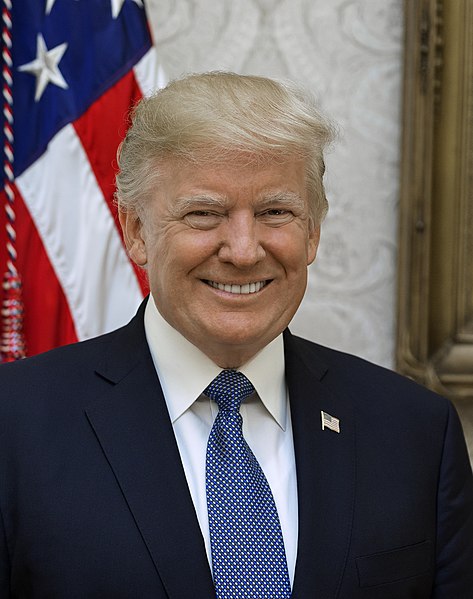
    Below is the text of the speech made by Donald Trump, the President of the United States, on 3 June 2019.

    Your Majesty, Melania and I are profoundly honored to be your guests for this historic State Visit. Thank you for your warm welcome, for this beautiful weather — (laughter) — your gracious hospitality, and Your Majesty’s nearly seven decades of treasured friendship with the United States of America.

    This week, we commemorate a mighty endeavor of righteous nations and one of the greatest undertakings in all of history. Seventy-five years ago, more than 150,000 Allied troops were preparing on this island to parachute into France, storm the beaches of Normandy, and win back our civilization.

    As Her Majesty remembers, the British people had hoped and prayed and fought for this day for nearly five years.

    When Britain stood alone during the Blitz of 1940 and 1941, the Nazi war machine dropped thousands of bombs on this country and right on this magnificent city. Buckingham Palace alone was bombed on 16 separate occasions.

    In that dark hour, the people of this nation showed the world what it means to be British. They cleared wreckage from the streets, displayed the Union Jack from their shattered homes, and kept fighting on to victory. They only wanted victory.

    The courage of the United Kingdom’s sons and daughters ensured that your destiny would always remain in your own hands.

    Through it all, the Royal Family was the resolute face of the Commonwealth’s unwavering solidarity.

    In April of 1945, newspapers featured a picture of the Queen Mother visiting the women’s branch of the Army, watching a young woman repair a military truck engine. That young mechanic was the future Queen — that great, great woman. Her Majesty inspired her compatriots in that fight to support the troops, defend her homeland, and defeat the enemy at all cost.

    We also pay tribute to Prince Philip’s distinguished and valiant service in the Royal Navy during the Second World War.

    On D-Day, the Queen’s beloved father King George the Sixth delivered a stirring national address. That day, he said, “After nearly five years of toil and suffering, we must renew that crusading impulse on which we entered the war and met its darkest hour…Our fight is against evil and for a world in which goodness and honor may be the foundation of the life of men in every land.”

    This evening, we thank God for the brave sons of the United Kingdom and the United States who defeated the Nazis and the Nazi regime, and liberated millions from tyranny.

    The bond between our nations was forever sealed in that “Great Crusade.” As we honor our shared victory and heritage, we affirm the common values that will unite us long into the future: freedom, sovereignty, self-determination, the rule of law, and reverence for the rights given to us by Almighty God.

    From the Second World War to today, Her Majesty has stood as a constant symbol of these priceless traditions. She has embodied the spirit of dignity, duty, and patriotism that beats proudly in every British heart.

    On behalf of all Americans, I offer a toast to the eternal friendship of our people, the vitality of our nations, and to the long, cherished, and truly remarkable reign of Her Majesty the Queen. Thank you.

  • HM Queen Elizabeth II – 2019 Speech with US President Donald Trump

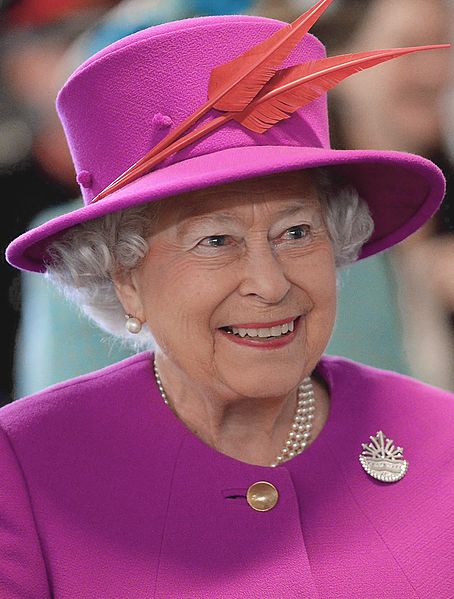
    Below is the text of the speech made by HM Queen Elizabeth II on 3 June 2019.

    Mr President, I am delighted to welcome you and Mrs. Trump to Buckingham Palace this evening, just 12 months after our first meeting at Windsor.

    Visits by American Presidents always remind us of the close and longstanding friendship between the United Kingdom and the United States, and I am so glad that we have another opportunity to demonstrate the immense importance that both our countries attach to our relationship.

    In the coming days, you will see some of our most treasured historical buildings, speak to the business leaders whose expertise and innovation drive our economies, and meet members of our armed services, past and present. You will also travel to Portsmouth and Normandy to commemorate the 75th anniversary of D-Day.

    On that day — and on many occasions since — the armed forces of both our countries fought side-by-side to defend our cherished values of liberty and democracy.

    Mr. President, in your State of the Union Address this year, you paid tribute to some of the American heroes who risked their lives, and we owe an immeasurable debt to the British, American, and Allied soldiers who began the liberation of Europe on the 6th of June 1944.

    I paid my first State Visit to your country at the invitation of President Eisenhower. As Supreme Allied Commander, he had ultimate responsibility for the execution of the Normandy landings. In his headquarters in St. James’s Square — not far from Buckingham Palace — British and American officers worked closely together to plan the freedom of a continent, and it would be no exaggeration to say that millions of lives depended on their common endeavour.

    As we face the new challenges of the 21st century, the anniversary of D-Day reminds us of all that our countries have achieved together. After the shared sacrifices of the Second World War, Britain and the United States worked with other allies to build an assembly of international institutions to ensure that the horrors of conflict would never be repeated.

    While the world has changed, we are forever mindful of the original purpose of these structures: nations working together to safeguard a hard-won peace.

    Of course, it is not only our security which unites us, but our strong cultural links and shared heritage. Every year, there are almost 4 million visits by Americans to the United Kingdom, with a great number claiming British descent. And with your own Scottish ancestry, Mr. President, you too have a particular connection to this country.

    We are also bound by the strength and breadth of our economic ties, as the largest investors in each other’s economies. British companies in the United States employ over one million Americans, and the same is true vice versa.

    Mr. President, as we look to the future, I am confident that our common values and shared interests will continue to unite us. Tonight, we celebrate an alliance that has helped to ensure the safety and prosperity of both our peoples for decades, and which I believe will endure for many years to come.

    Ladies and gentlemen, I invite you all to rise and drink a toast to President and Mrs. Trump, to the continued friendship between our two nations, and to the health, prosperity, and happiness of the people of the United States.

  • Theresa May – 2019 Statement on Ireland with Leo Varadkar

    Below is the text of the statement made by Theresa May, the Prime Minister, with Leo Varadkar, the Taoiseach of the Republic of Ireland, on 2 June 2019.

    In our statement of 26 April, we announced a new phase of political talks in Northern Ireland.

    The Secretary of State for Northern Ireland Karen Bradley and the Tánaiste Simon Coveney have updated us on progress since then.

    We welcome the constructive engagement shown by all parties to date. It is clear to us that the Northern Ireland political parties wish to see the institutions of the Belfast / Good Friday Agreement restored, but operating on a more credible and sustainable basis. While broad consensus has been reached on some issues, other areas remain to be resolved.

    The Secretary of State and Tánaiste believe that there is a genuine but narrow window of opportunity to reach agreement in the immediate period ahead and that it is essential to continue and intensify talks to this end.

    As Prime Minister and Taoiseach, we will continue to monitor this progress closely. We believe it is imperative that the parties now move without delay to engaging substantively on the shape of a final agreement.

  • Theresa May – 2019 Statement on Visit of US President

    Below is the text of the statement made by Theresa May, the Prime Minister, on 3 June 2019.

    This is a significant week for the special relationship and an opportunity to further strengthen our already close partnership.

    During his State Visit to the UK the President and I will be taking part in an historic commemoration of the D-Day landings and the sacrifice our armed forces made 75 years ago.

    And as we reflect on our shared history and honour those who fought so bravely on the beaches of Normandy, we also look to the future.

    Our relationship has underpinned our countries’ security and prosperity for many years – and will continue to do so for generations to come.

    We do more together than any other nations in the world. We are the largest investors in each other’s economies and our strong trading relationship and close business links create jobs, opportunities and wealth for our citizens.

    Our security relationship too is deeper, broader and more advanced than with anyone else. Through joint military operations, unrivalled intelligence-sharing and our commitment to NATO, our global leadership remains at the heart of international peace and stability.

    So I look forward to welcoming President Trump to the UK and to building on the strong and enduring ties between our countries.

  • Andrew Murrison – 2019 Statement on the Israeli Settlement Construction

    Below is the text of the statement made by Andrew Murrison, the Minister for the Middle East, on 3 June 2019.

    The UK Government is gravely concerned by plans announced on 30 May to advance tenders for hundreds of settlement housing units in occupied East Jerusalem.

    We are clear that settlements built on occupied Palestinian territory are contrary to international law and an obstacle to a two-state solution. Regrettably this takes us further away from a negotiated peace agreement.

    I visited Jerusalem on 28-30 May where I reiterated UK support for a two-state solution, with Jerusalem as a shared capital for both states.

  • Matt Hancock – 2019 Speech on the NHS People Plan

    Below is the text of the speech made by Matt Hancock, the Secretary of State for Health, at the East London Foundation Trust on 3 June 2019.

    1.3 million people in the NHS.

    If we were a country, we’d be the same size as Estonia. If we were a company, we’d be almost the same size as McDonald’s – but a lot better for you than a Big Mac.

    Since I became health secretary I’ve tried to meet as many staff, from as many different parts of the NHS, as possible. Admittedly, meeting 1.3 million people individually is difficult.

    I’ve spoken to hundreds of nurses, doctors, paramedics, porters, juniors, seniors, consultants, chief executives. I’ve tried to listen and I’ve tried to listen hard.

    And what’s clear is that people are the most valuable asset the NHS has. How we invest in, and look after, our people will determine the future of the NHS.

    And that future is so important because the NHS is the most valuable public service we have.

    A strong NHS, and strong public services, are the foundations of a strong society. So Britain must continue to be a place where we invest in people because we believe in the potential of people to make things better.

    It’s why we appointed Prerana Issar as the first ever NHS Chief People Officer. And it’s why Dido and her team have created the first ever NHS People Plan.

    I am extremely grateful to both of them because taking better care of our people is mission critical to the success of the NHS.

    Now, I know your time is valuable. So I’m not going to waffle on. And if you saw Good Morning Britain, you’ll know I’ve already been caught out once for too much waffle.

    So I’m going to be short today. And I’m going to be direct.

    I want to talk to you about 3 people. Three people who illustrate where we’ve come from, where we are now, and where we need to get to.

    Recruitment, retention, and an NHS that puts people first.

    The first person is a nurse. She, or he, doesn’t live in this country – yet.

    They’re in the Philippines, or India, or Poland, or any other number of countries around the world.

    They look to the NHS as a beacon of excellence, and of opportunity. Somewhere they can come to, to be the best nurse they can possibly be.

    Somewhere they can learn new skills, earn money, and return home as a world-class nurse, or stay and build a new home and a better life here in Britain.

    To that nurse I say: we welcome you, we need you, we want you to come and help us build an NHS that’s fit for the future.

    Because the National Health Service has always had an international workforce, from the Windrush Generation to the Warsaw Generation.

    We must never forget the enormous contribution that people born beyond these shores have made to one of this nation’s greatest institutions.

    The People Plan spells out how we need a new Windrush Generation for the NHS. A recruitment drive to attract the brightest and best doctors, nurses, and clinical staff from overseas.

    And I want to send a very clear message to those people: if you have the talent, the skills, and the determination to pack up your hopes and dreams in a suitcase and travel to the other side of the world, then the NHS will be your new home.

    Our NHS could not provide its world-class service to patients without the hardworking doctors and nurses from other nations.

    The second person I want to talk about is a British student.

    She, or he, is 18. They’re getting ready for their A-Level exams – hopefully not leaving it as late as I did.

    They were born in this century. Technology has shaped every part of their lives from the way they shop, eat, travel, bank, socialise, and even find love.

    They have more choice at their fingertips than previous generations would have had in a lifetime.

    In fact, there’s so many possibilities that it can be overwhelming. And then a parent, or a perhaps a career adviser, says: “Have you ever thought about becoming a nurse?”

    And this 18-year-old thinks: “I’m good at science, I’m interested in people, caring for others would be a rewarding career.”

    And then they start to look into it. They start to search online for information.

    And what do they see?

    Story after story about shortages, about the stresses and the strains, and only the problems.

    Never or rarely hearing about the nurses who love their jobs and wouldn’t choose to do anything else, despite the difficulties.

    Now, I know there are genuine problems with the system.

    That’s why Dido has taken a long-term approach to the first ever NHS People Plan so we can create a new system that puts people first, and is fit for the future.

    There are shortages. We use too many agency workers when we should have permanent staff.

    The job has become more challenging as the population ages and demand grows.

    Your roles are more complex and you need continuous training and new technology to keep up with the pace of change.

    But I fear that by only talking about the problems, we risk creating a perception that a career in the NHS isn’t for an ambitious, young, British person. Particularly when it comes to nursing.

    Nursing is a first-choice career. An NHS nurse has a passport to anywhere.

    In fact, it’s what makes my job so difficult because we can do a lot of things to convince people to stay in the NHS, but I’m afraid we can’t compete with the Australian sunshine.

    So we’re putting a record £33.9 billion a year into the NHS – and let’s not forget three-quarters of the NHS budget goes on staff.

    We’re opening 5 new medical schools. We’re increasing the number of clinical training places, and we’re increasing the number of routes into nursing through apprenticeships and nursing associates.

    But fundamental to delivering the People Plan, and tackling the nursing shortage in the NHS, is changing the perception of nursing as a career.

    That way we can get the right number of people and the right type of people in the NHS: talented, ambitious, hard-working, committed to caring.

    Third and finally I want to talk about someone who really helped me understand the retention challenge – what it means to you, on the frontline.

    He’s a senior consultant at a London hospital. And he said:

    Matt, when you join the NHS, everybody knows the deal: you work hard, you do everything you can for your patients and your colleagues, you put everything into the job because at the end of it you know you’re going to get a good pension, but that’s under threat. I can’t plan ahead. I’m afraid to take on extra sessions in case I get an unexpected tax bill, and if I was a few years older I’d be thinking about taking early retirement.

    And then he used a graphic but typically medical metaphor to describe the effect it’s having on the NHS. He said:

    Right now it’s like a haemorrhage. If we can stop the bleeding in the first 5 or 10 minutes, we can save the patient, but if we don’t, and we leave it, then we’ll be resuscitating the body.

    So I understand your frustration. Getting pensions right is how we stem the flow and convince our senior staff to stay in the NHS.

    So I’ve listened to you, and I’ve learnt from you, and this is what we’re going to do:

    A new pensions deal for senior nurses, doctors and GPs so you have greater flexibility and control over your pension so you don’t get hit with an unexpected tax bill.

    A new pensions deal that lets you take extra shifts, go for a promotion, and ultimately rewards you for your hard work and dedication, and encourages you to stay.

    We’re going to work with you to change the NHS Pension Scheme so it’s fair to you, fair to the taxpayer, and leads to better care for patients because that must be our goal.

    These proposed reforms recognise the unique role and importance of NHS staff. We want to ensure the NHS Pension Scheme continues to be one of the best around so we can continue to attract the best people.

    But these reforms must work for you, so we will launch a staff consultation across the NHS next month.

    We will have these changes in place by the start of the next tax year. This will allow NHS staff and employers to start planning for the future with confidence and peace of mind.

    And it will ensure the NHS is a place where everyone is looked after, and everyone is treated fairly.

    Making the NHS a better place to work: that’s where we need to get to. This plan is the first step.

    But this journey requires us all to work together: every part of our health service heading in the same direction.

    I’ve made it my mission to get the right technology in the NHS so we can make your lives easier, and give you back the gift of time. So you can do what you came into the job to do: caring for people.

    The NHS of the future will have more tech, more robots, more AI, but it will always have people at its core.

    As the march of the machines removes the jobs that can be replaced by code, so more and more as a society, we’ll need more people doing the jobs no machine can ever do: the caring, the empathy, the connection.

    So, we will make the NHS a more caring employer.

    We will transform the culture.

    The NHS of the future will always put people first.

    Because a strong NHS, and strong public services, is how we build a Britain that always put people first.

    That is a place we all want to get to.

    That’s the country we all want to live in.

    So let’s work together to ensure the NHS is a place where everyone feels valued, where everyone feels cared for, and where everyone can fulfil their potential.

  • Theresa May – 2019 Speech at Eid al-Fitr

    Below is the text of the speech made by Theresa May, the Prime Minister, on 4 June 2019.

    I want to send my very best wishes to Muslims at home and around the world celebrating the festival of Eid al-Fitr.

    For more than three million British Muslims, the joyous occasion of Eid, spent with family and loved ones, marks the end of the holy month of Ramadan.

    Over the last month, many British Muslims have shared the holy practices of Ramadan with neighbours of all faiths and none – from doing charity work in the local community to preparing meals for the elderly or coming together to break the fast at the end of the day.

    During Ramadan, as at many other times of the year, I see the very best of the values which unite us all: of tolerance, of respect, and of selflessness.

    Sadly, there are those who only seek to sow division and to spread fear and hatred in our communities. This year we have seen despicable acts of terrorism targeted against Muslims both abroad and on UK soil, on innocent people attending their place of worship or going about their daily lives.

    There can be no place in our societies for the vile ideology that incites hatred and fear, and I stand with Muslims here in the UK and around the world against those who seek to destroy our values.

    So as we come together in celebration this Eid – to share meals and gifts with families, friends and colleagues – let us remain steadfast in the values we share.

    A happy and peaceful celebration to you all.

    Eid Mubarak.

  • Jeremy Hunt – 2019 Statement on 30th Anniversary of Tiananmen Square

    Below is the statement made by Jeremy Hunt, the Foreign Secretary, on 4 June 2019.

    Today we mark 30 years since the tragic events of 4 June 1989, remembering those who lost their lives protesting peacefully in and around Tiananmen Square.

    Over the past 30 years, China has ratified a number of UN instruments relating to human rights. However, people in China are still unable to exercise their right to protest peacefully in China.

    We continue to urge the Chinese Government to respect citizens’ freedom of association, assembly, expression and other fundamental rights and freedoms, as enshrined in China’s constitution and in international law.

  • Philip Hammond – 2019 Speech at the Resolution Foundation

    Below is the text of the speech made by Philip Hammond, the Chancellor of the Exchequer, at the Resolution Foundation on 30 May 2019.

    Thank you Torsten, it’s a great pleasure to be here with you this morning and I welcome your latest report as a valuable contribution to this debate.

    Ten years ago, the world was in the throes of the worst financial crisis since the Great Depression.

    The banking system was broken.

    The economy was in recession.

    People were at risk of losing their jobs and their savings.

    Thanks to our economic plan, and the hard work of the British people, we have turned a corner in our long recovery from that period.

    The economy has grown now for nine straight years.

    The deficit last year was just 1.1% of GDP and our national debt is falling sustainably for the first time in a generation…

    …meaning that, going forward as a nation, we once again have genuine choices.

    And we have, of course, got a remarkable story to tell on jobs – with the employment rate at a record high and unemployment at its lowest point since 1975.

    I am proud of that record – but the job is not yet done.

    We are still dealing with the deepest scars of the recession – in the form of weakened productivity growth, and, especially, low wage growth, which remains below pre-recession levels, despite recent improvements.

    We have, of course, already acted to address the challenge of low wage growth for those on the lowest pay.

    The introduction of the National Living Wage in 2016 gave Britain’s low paid the biggest pay rise in 20 years.

    When we increased the rate again in April, 1.8 million workers were better off.

    The pay of a full-timer on national living wage has risen by £2750 a year since 2016

    And the percentage of jobs defined as low paid, as today’s Resolution Foundation report shows, is at its lowest level since 1980.

    But with around 18% of the workforce still working in low paid jobs, there is more to do.

    Despite the recent good news on wage growth, a decade of low rates of pay increase has slowed the rate of growth in living standards.

    And it has also played into a deeper sense of anxiety about our economic system, about our society and our politics.

    An anxiety which has been exploited by John McDonnell to propose statutory wage rises that would manifestly be unsustainable…

    …and deeply damaging to the interests of those they purport to benefit;

    A plan which is, in the words of the Institute for Fiscal Studies, “risky and dangerous”.

    The truth is that we have seen a gap open up – in Britain and in other developed countries – between the theory of how a market economy and free trade creates and distributes wealth, and the reality experienced by many ordinary people.

    We ignore that gap at our peril because if we do not address it, it will be filled with the reckless promises of the populists.

    But that doesn’t mean we should abandon our economic model.

    As so often is the case, the populists do not have the answers, but they are quick to identify the problems.

    So for those, like me, who believe passionately that harnessing the power of market economics is the only way to deliver progress…

    …it is imperative that we take decisive action to show that the regulated market model can respond to these challenges;

    …to deliver higher wages and higher living standards…

    …as well as providing solutions to the great societal challenges of our age.

    That means building the homes that the next generation needs;

    Supporting people of all ages to embrace technology change through retraining and reskilling, so that technology means higher living standards, not higher unemployment;

    It means closing the gap between our regions through sustained investment in infrastructure;

    And harnessing market-based solutions to show that de-carbonisation and rising living standards can go hand-in-hand.

    But above all, it means delivering rising living standards, through sustainable real wage growth, year after year.

    Of course, over the medium term, sustainable real wage growth is only possible through productivity growth.

    That’s why I have redirected government resources to that goal, through record levels of investment in infrastructure, a renewed focus on skills, and a relentless programme of support for innovation in the economy.

    But raising Britain’s productivity is a medium-term challenge. And there is some evidence to suggest that the continued availability of flexible, low-cost labour, may undermine the incentive for productivity-enhancing investment.

    So if we are going to meet our ambition of making the economy work for everyone, one of the best levers we have is to deliver carefully considered increases to the National Living Wage.

    In 2016, we set a target for the National Living Wage to reach 60% of median earnings by 2020 – and we will deliver on that, giving a pay rise to millions of workers.

    Now we need to decide where to go next.

    And as I said in the Spring Statement earlier this year, we want to be ambitious, with the goal of ultimately ending low pay altogether in this country.

    But we do not want to be reckless – taking excessive risks with the employment prospects of the lowest paid, or with our future economic growth.

    From my initial conversations with trade union and business leaders alike, it is clear that there is a broad support for that ambitious approach…

    …and broad support, too, for a careful implementation of it, avoiding unintended consequences.

    We are greatly helped of course in this country in navigating the path to a sustainable higher National Living Wage by the existence of the LPC, a highly respected tri-partite body embracing employers, unions and academics, able to act as an independent and impartial advisor on the rate of progress that is sustainable.

    So our task is to set the remit within which the LPC will work – and to ensure they have sufficient flexibility to allow them to deliver it sustainably.

    To help us identify how to do that, I asked Professor Arin Dube, as a recognised expert on minimum wage policy, to review the evidence, particularly evidence from international comparators. I’m delighted to welcome him to London this week – and I look forward to receiving his report in the autumn. And, indeed, to hearing from him in just a moment.

    Let me finish with one final thought.

    Whoever the next Prime Minister is, one of his or her central tasks will be to show a new, and sometimes sceptical, generation that a properly regulated market economy remains the most powerful force available to us for unlocking aspiration and raising living standards.

    And bold, decisive action on the National Living Wage, sustainably delivered, will be an important demonstration of the power of that argument…

    …and a necessary step to re-build confidence in the politics of the centre ground.

    Because that centre ground is under threat.

    On the left, the Labour Party characterises business as “the real enemy”;

    On the right, the argument for radical tax cuts, deregulation and smaller government is gaining ground – just as our population demographics are making them harder to do.

    And as we look to re-build the case for centre ground politics…

    …we should take a bold step in writing the next chapter in the story of statutory minimum wages in the UK – a story which began under the Labour Government of 1997…

    …but which took a giant step forward under the Conservative Government in 2016 –

    So that we demonstrate, once again, that the well-regulated market delivers for all our people.

    Now, I look forward to hearing the thoughts of Professor Dube and others about how we can turn that vision into a sustainable reality.

    Thank you.