Category: Speeches

  • John Healey – 2021 Speech on Defence at RUSI

    John Healey – 2021 Speech on Defence at RUSI

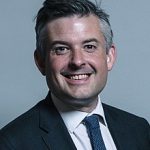
    The speech made by John Healey, the Shadow Defence Secretary, on 26 February 2021.

    Thank you, Malcolm. Thank you to you and to RUSI for incorporating this speech into your calendar of run-up events to the Government’s Integrated Review.

    Keir Starmer and I have both served in Government. You will hear us both affirm: the first duty of Government is to keep the nation safe and protect our citizens. We take this responsibility just as seriously in Opposition.

    He appointed me to this privileged post as Labour’s Shadow Defence Secretary two weeks after lockdown began.

    It’s hard to get to grips with a new job – especially one like defence – when you can’t go anywhere, and you can’t meet anyone.

    So I’m hugely appreciative for all I’m able learn through RUSI – your staff, associates and members make the RUSI calendar full of so many must-follow events.

    Thank you all for your time today. I look forward to your views as well as your questions later.

    In the British Parliamentary system Her Majesty’s Opposition face a massive mismatch in undertaking our constitutional duty to hold the Government to public account – there are 4000 staff in MoD main building alone and as Shadow Defence Secretary, I rely on one and a half policy advisers.

    So good government depends on strong democratic debate and challenge – not just from politicians but from the range of voices in policy institutes, industry, the military and the media.

    This will certainly be the case with the Integrated Review.

    We need the Government to get this right: to make the best decisions about our nation’s sovereignty, our alliances and our security.

    We need the Government to get this right because there is no ‘year zero’ in defence. Defence policy and procurement cycles reach well beyond political cycles, so decisions that should follow this Integrated Review will largely fix the framework for an incoming Labour government in 2024 and beyond.

    The Integrated Review was launched as “the most radical reassessment of the UK’s place in the world since the end of the Cold War”. That’s a big ambition – but it’s the right one.

    It comes at a time of very significant change.

    The threats to our national security are proliferating; becoming less conventional, less predictable, more continuous.

    Space and cyber are now rightly recognised as operational domains of warfare, with equal status to land, sea and air: but they’re domains in which we, as a country, cannot rely on centuries of tradition and experience. We’ll need to compete hard to maintain parity with potential adversaries, and we’ll have to collaborate closely with chosen allies.

    Brexit has changed our relationship with Europe, and if we want to continue the leadership role we play among our European allies in security and defence, we will have to change the way we do it.

    While the USA – our most important strategic partner – has announced its own global posture review, ending support for offensive Saudi actions in Yemen and pausing the removal of US troops from Germany.

    We’re feeling the instabilities in the global order, not just at the edges but at the centres of the world’s major powers. The US Capitol under siege last month from far-right protesters; thousands arrested in democracy protests in Russia and Belarus; and three million Hong Kong citizens have seen their right to a British Overseas National passport derecognised by Beijing.

    These are just the most obvious signals of uncertainty.

    On top of the continuing hostilities – proxy wars, terrorism – that our armed forces and security services have been dealing with for two decades, technology is changing the kind of threats we must plan for.

    The Nagorno-Karabakh conflict, where the Azeri army used drones to defeat a well-equipped and trained opponent, means defence professionals all over the world are asking with added urgency: How much do we have to change, and how rapidly? And how continuously?

    And we’ve seen the emergence of hybrid threats, and hybrid strategies – where countries are operating deliberately in the greyzones between war and peace, between international legality and organised crime. That was so dramatically illustrated by the Russian nerve agent attack in Salisbury, and the disgraceful Russian disinformation campaign that followed it.

    So the idea of a radical review – starting from a clear statement of foreign and security policy, then calibrating defence budgets, force structures, intelligence and security priorities and development aid against that – was a good idea. And necessary.

    Then Covid hit us. Understandably there have been delays, and we should cut the Government some slack.

    But the Integrated Review was rightly first promised alongside the Spending Review in November. Without it the four-year settlement for Defence remains funding with no strategy, while pre-emptive leaks fuel stories that undermine both morale among our Forces personnel and confidence among our allies, as well as indicating weakness to potential adversaries.

    The Defence Secretary promised publication “in the first two weeks of February”. A Foreign Office Minister has now said it will be March, but with no definite date. The Integrated Review should now be published without further delay, to bring an end to the confusion and speculation.

    So, as we wait for the Integrated Review to report, and a likely defence white paper, I want to do three things today:

    Restate Labour’s core principles on national defence and security, so that voters, service personnel and the defence industry can see where we, the new leadership of the Labour Party, are coming from.

    Review the weakened foundations for this Integrated Review, after the last decade of defence decline or ‘the era of retreat’, as the Prime Minister calls it.

    And set out some tests we think the Integrated Review must meet, and which will guide both our challenge to Ministers while in opposition and our own thinking in government.

    I will start with Labour’s principles on defence and national security.

    There are four. Each have their roots in the great post-war Labour government, whose achievements Britain – not just Labour – still draws on. These are principles not based on party politics but on what’s required for Britain’s security and for Britain being a force for good in an increasingly unstable global order.

    First, Labour’s commitment to NATO is unshakeable. And mutual defence through Article V is the cornerstone of Labour’s commitment on Britain’s security, which Attlee’s foreign secretary Ernest Bevin fought for at NATO’s foundation. All wings of our party supported its formation. And as President Biden’s administration re-engages with Europe, we want to see the Alliance strengthened as a force for peace and security in the region.

    Second, Labour’s support for nuclear deterrence is non-negotiable. The matter is settled. From Kinnock to Corbyn – with Blair, Brown and Miliband in between – this has been, and will remain, Labour policy. So we are committed to building four new submarines at Barrow, committed to continuous at-sea deterrence and committed to all future upgrades to this capability that may be necessary. And as a P5 UN Security Council member, we want to see Britain doing more to lead efforts to secure strategic arms limitation and multilateral disarmament.

    Third, Labour’s commitment to international law, to universal human rights and to the multilateral treaties and organisations that uphold them is total. Our core Labour values are internationalist and multilateralist. We believe cooperation and binding mutual obligation provide the greatest assurance of global progress and peace. And we want to ensure no treaty partner can call into question Britain’s full adherence to the agreements we’ve signed, whether that’s the NI Brexit protocol in the Internal Markets Bill or the Geneva Conventions in the Overseas Operations Bill.

    Regrettably, recent months have seen the Conservatives damage Britain’s international reputation and relationship with allies by breaching treaty agreements or court rulings on exports to regimes that commit human rights abuses.

    Fourth, Labour’s determination to see British investment directed first to British industry is fundamental, not just to our thinking on defence, but to our vision of the kind of society we want to build. When done well, we believe defence spending has a multiplier effect. As the Party of working people and trade unions we see spending on defence as a force for good in the country. It strengthens our UK economy and, as Covid has exposed the risks of relying on foreign supply chains, it also has the potential to strengthen our sovereignty and security. We want to see a higher bar set for decisions to procure Britain’s defence equipment from other countries.

    These four principles are what will guide our thinking on defence as we build on the Integrated Review and lay out a programme for government in 2024.

    Let me turn to my main concerns ahead of the Integrated Review, and the way the foundations for this Review have been weakened during the last decade of Conservative government.

    For us, the national security of this country starts here, at home, in our towns, our communities, our territorial waters, our cyberspace, our energy infrastructure, our information networks and – as we’ve learned the hard way – in our public health systems.

    We owe a great deal to our Armed Forces for helping the country through this pandemic – from building Nightingale hospitals to delivering PPE to planning behind the scenes in every part of government. At one point 95% of mobile testing centres around the country were run by the military.

    The pandemic has shown the Armed Forces are essential to our national resilience, not just our national defence.

    But Covid – let’s be frank – has exposed a lack of homeland resilience, as well as the changing nature of the threats we’re facing.

    Even as our service personnel mobilised to help contain the pandemic, so our adversaries were feeding disinformation and division into our communities.

    Covid, in short, shows what happens if you recognise a threat in theory but fail to do the hard graft to prepare for it. Because ‘pandemic’ had been identified as a tier one risk in both the 2015 SDSR and the 2018 Security review, yet when the virus hit less than 1% of our PPE was sourced in Britain.

    It shows how essential public understanding is in a crisis and that the enemies of democracy will exploit every weakness in the resilience of civil society.

    And it shows resilience can’t be done on the cheap, but the costs of being under-prepared are so much greater, in human and economic terms.

    The security lesson seems clear to me: full spectrum society resilience will require planning, training and exercising that must be led by government and involve private industry, local agencies and the public.

    Some countries are ahead of us with such civil-military ‘greyzone’ strategies and I expect the Integrated Review to catch up.

    The Conservatives’ decision to produce a National Security Strategy alongside the 2010 defence review, and then incorporate this into the 2015 review, were useful innovations that we continue to support; as we do the National Security Council. The five-yearly drum beat of defence reviews also has advantages we would retain.

    Nobody expects twenty-twenty foresight. I see our 1998 Labour strategic defence review as exemplary for its broad engagement with the forces, industry, experts and opposition. It built a strong national consensus around its conclusions; and I contrast this with an Integrated Review conducted largely behind closed doors and with no great consensus to help with implementation. But our 1998 review did not foresee 9/11 or the lengthy stabilisation campaigns that followed the invasion of Iraq in 2003 and deployment to southern Afghanistan in 2006.

    The 2010 review was right to make cyber and global terrorism top priorities, but it was myopic in misjudging the menace of state-based threats, especially from Russia.

    The 2015 National security risk assessment listed international military conflict and hybrid attacks as tier one threats. But it didn’t anticipate that Russia might stage a chemical attack on British soil.

    And it was glowing about economic collaboration with China, lauding Chinese investment in Hinkley Point as part of the Government’s new “golden era”. What was published said nothing about the national security risk arising from China’s involvement in our 5G infrastructure and when it mentioned Xinjiang it spoke of Islamist terror, not the threat of mass persecution against the Uighur population.

    We need better this time.

    We’re entitled to expect that when we fail to anticipate threats, lessons are learned.

    The main lessons I take are two-fold: first, that state-directed threats to Britain’s security have been consistently underplayed and the range of ways to attack us underestimated. Second, that, in the current global order, economic ties to other countries do not ensure their collaboration or stability or respect for international law.

    These underlying assumptions of SDSR 2015 no longer hold. National defence planning must in future be based on the threats we’re facing, not the economic interests we’re trying to pursue.

    Under successive Conservative governments there’s been a clear drift towards embracing the illusion that Britain is somehow able to project force everywhere in the world at once, and needs armed forces designed to do a bit of everything.

    Global Britain is a beguiling phrase. But it was under this Global Britain mantra that the Government opened our 5G infrastructure to Huawei, while the Chinese state was challenging maritime freedoms in the South China Seas. Slogans do not deliver security.

    The most important thing the Government can do in the Integrated Review is to refocus our defence efforts on where the threats are, not where the business opportunities might be.

    Labour in government would give the highest priority to Europe, the North Atlantic and the high North – our NATO area – where Russia’s growing arsenal of longer-range missiles, together with modernised land and sea forces and intensified greyzone activity, pose the greatest threats to our vital national interests.

    Let me be clear: when Russian state media dripfeeds disinformation into our society, when the Russian oligarchy tries to buy influence the City of London or at Westminster, one of their aims is to undermine the political and public will to have British troops deployed in Estonia doing their duty in defence of our allies.

    Whilst the biggest threat to stability for Europe is coming from Russia at present, China has emerged as the principal strategic competitor to the USA, with trade war, espionage, cyber operations and soft power being deployed with increasing intensity. Although this is certainly significant for the UK’s national security, it is principally a big powers contest.

    As the USA pivots to meet the long-term challenge of China, Britain’s military leadership in Europe will become more essential.

    How Britain’s role in European defence and security will develop, is a key question for the Integrated Review to answer.

    For some Brexit will have little impact on Britain’s defence strategy, although the UK risks weakened security ties with our closest country neighbours at a time when growing external threats make it more important to work closely together. Boris Johnson’s decision to take defence and security off the table during Brexit negotiations already means we’ve been expelled from Galileo, lost access to the Schengen Information Service database and been cut off from any new EU defence investment funds.

    Britain’s never been signed up to the more ambitious aims some allies have set for the EU’s common security and defence policy but Brexit has also now ended our British veto over its development. So we will have to work harder to maintain our security ties, and Britain will need to become a partner – not a part – of the EU drive for greater defence cooperation, especially if we aim to remain the major bridge between Europe and the US.

    Of course, NATO remains central to British defence and our role remains central to NATO – 23 of the 30 Deputy Supreme Allied Commanders in NATOs history have been British – and Labour would ensure this unwavering British NATO commitment continues.

    However, simply committing to the 2% spending threshold is no longer enough. It’s not just how much you spend that counts, but how you spend it most effectively to strengthen the alliance. With new developments in AI, space, cyber, robotics and greyzone deterrence, we should contribute to NATO’s armoury in these novel areas of conflict.

    NATO2030, authored with John Bew as the British expert on the Reflections Group, calls on NATO members states to: “put collective defence at the forefront of consultation … enable swift decision-making … and … ensure actions do not undermine the utility and cohesion of the Alliance”.

    I think this challenges us in Britain on our political investment in NATO, not just our military contribution, which we should meet.

    If this is our main defence job in a post-Brexit European world, let’s do it enthusiastically and do it well.

    Since 2010, the Conservatives have cut £8 billion from the defence budget and cut our full-time Armed Forces by nearly 45,000. As a result, our ability to monitor Russian submarines in our own coastal waters was outsourced to allies for nearly a decade; our tanks and armoured vehicles have not been upgraded for 20 years; and our new carriers sail without vital supply ships, the new radar system and with far fewer than the number of F-35s needed to provide a “minimum credible force”.

    The Defence Secretary declared in 2012 that the deficit “has been eliminated and the budget is now in balance”. But MoD habits die hard. They’ve continued reducing budgets but increasing costs – £31 billion since 2015 alone – then glossing the gap with fictional figures from ‘efficiency savings’, ‘invest-to-save schemes’ or ‘reprofiled procurements’.

    So the NAO has judged the defence equipment plan “unaffordable” for four years in a row and now reports a black hole of up to £17 billion.

    These financial failings damage the ability to plan or procure strategically and weaken the foundations for the Prime Minister’s extra £16.5 billion capital funding, which Labour welcomed as the promise of an overdue upgrade to Britain’s defences after a decade of decline since 2010.

    But the new defence budget is not all it seems.

    Ministers talk about the rise in capital funding but not the real cut in revenue funding over the next 4 years. This means less money for Forces’ recruitment, training, pay and families.

    It means the risk we get new ships but no new sailors.

    Worse still, over half this year’s £16.4 billion defence equipment budget is revenue-based, for ‘equipment support’ and maintenance.

    The revenue cut is the Achilles heel of defence plans. No other Whitehall department is projected to have a cut in day-to-day spending between now and 2024/5. The Defence Secretary should never have agreed it.

    There are big decisions that can no longer be ducked. The Integrated Review must confirm the answers.

    Labour’s 1998 Strategic Defence Review devoted a full chapter to service personnel. By contrast both the 2010 and 2015 reviews had less than two pages.

    I’ve urged the Secretary of State to avoid the same mistake in this Integrated Review by putting our service men and women at the heart of future defence plans – while high tech systems and weapons are essential, highly-trained personnel are indispensable.

    Size matters. Our Forces are already 10,000 below the strength Ministers confirmed was needed in SDSR15 to meet the threats Britain faces.

    Deeper cuts could significantly limit our Forces ability simultaneously to deploy overseas, support allies and maintain a robust national defence and resilience.

    The Chief of Defence Staff said in 2015 that the ability to field a single, war-fighting division was ‘the standard whereby a credible army is judged’. Yet the fully capable division mandated then, including a new strike brigade, will not now be battle-ready for another ten years, according to written Army evidence to the Defence Select Committee.

    SDSR15 is the benchmark. Unless the IR confirms a reduction in threats and a reduction in the scale and type of operations the armed forces will undertake, then it will be hard to accept a case for reducing the strength of our full-time Forces.

    The Secretary of State rightly says, in the future, servicemen and women will go to war alongside robots. Robots we are told, enthusiastically, don’t need pensions. They also don’t give Covid jabs. They don’t rebuild broken societies. They don’t comfort the victims of ethnic cleansing or sexual violence. They don’t seize and hold vital ground from the enemy.

    I’ll be interested in the IR’s expert views on how fast we can transition towards robot and drone-supported warfare. What I don’t want is Britain’s servicemen and women paying the price for a tech transition we’re only just beginning.

    I would also be interested in your views on how we should assess the Integrated Review.

    Let me offer some tests that Labour will use as our starting points for scrutiny.

    First, is there a clear foreign and security policy baseline built upon Britain’s national interests and multilateralism? Is it a realistic statement about what constitutes our strategic security priorities? Does it provide a platform for the values Britain and our allies must uphold to strengthen the rules-based international order?

    Second, is there a full and forthright threat assessment based on the motives and abilities of our adversaries to exploit our vulnerabilities? Does it recognise the need for wider public debate and understanding of the threats we face? Does it avoid the mistakes of the last two reviews – downplaying emerging threats, soft-peddling on criticism of geopolitical competitors or inappropriate commercial interests clouding risk judgements?

    Third, are the planned capabilities and procurements based on a strategic realism? Will the proposed combination of platforms, capabilities and force structures provide the best deterrent and defence against identified threats? Is the necessary strength and flexibility for the Armed Forces maintained? Will it strengthen our national resilience and the civil-military relationship? Are plans being diluted by virtue signalling to backbench political interests and penny pinching?

    Fourth, is the budget sufficient and sustainable through to 2024 and beyond? Does it clearly spell out how the £16.5bn will be spent? How has the £17bn equipment plan black hole been fixed? Have the tough strategic decisions been taken or do we have more of the same short-term fudging that have left major procurement projects at the mercy of the illusion that “something will turn up” to pay for them?

    Fifth: does the Integrated Review strengthen our defence industrial resilience by growing our sovereign capacity to regenerate equipment and platforms if they are degraded in conflict? Does it set out a long-term plan to boost Britain’s foundation industries in steel, shipbuilding, aerospace and cyber security as national assets?

    Sixth: Does it enhance British multilateralism as a force for good in the world? Does it equip the armed forces to fulfil their commitments to NATO and the UN? Does it aim to use our P5 status to press for new international rules over conflict in space and cyber? Does it set out a bigger vision for Britain in peacekeeping, disaster relief, civil contingencies support and safeguarding sea trading routes? Does it reverse the steep and self-defeating cut to development aid, especially damaging as it coincides with the humanitarian catastrophe created by Covid?

    We want to see the Integrated Review succeed.

    We will inherit the Review’s decisions as a Labour government after the next election, so we will kick the tyres hard on what comes out next month.

    Previous strategic defence reviews have been ‘overambitious and underfunded’, and weakened the foundations for our Armed Forces.

    This review must not make the same mistakes. It must fix the foundations and secure the future of our nation’s defences.


  • Matthew Pennycook – 2021 Comments on the UNFCCC Synthesis Report

    Matthew Pennycook – 2021 Comments on the UNFCCC Synthesis Report

    The comments made by Matthew Pennycook, the Shadow Climate Change Minister, on 26 February 2021.

    With the election of a new US President and China’s recent commitment to carbon neutrality by 2060, the past few months have offered grounds for cautious optimism on climate change. But this report serves as a wake-up call. It sets out in stark terms just how wide the gulf remains between national pledges made and what the world must do to avoid catastrophic global heating.

    This year’s COP26 summit is the last best chance to keep alive the hope of the Paris Agreement that warming might be limited to 1.5°C. As its hosts, the UK has a unique responsibility not only to do whatever it takes to maximise global ambition but also to secure agreement on a roadmap for delivering that ambition.

    It’s essential we lead by example. But by remaining seriously off track to meet its existing climate targets whilst promising more ambitious ones; by laying claim to the mantle of climate leadership abroad whilst approving new coal mines at home; or by seriously undermining our standing with those on the frontline of the climate crisis by cutting the overseas aid budget, the Government continues to damage its credibility as the custodian of the COP process and by implication the prospects of success in Glasgow in November.

  • Pat McFadden – 2021 Comments on the Kalifa Review

    Pat McFadden – 2021 Comments on the Kalifa Review

    The comments made by Pat McFadden, the Shadow Economic Secretary to the Treasury, on 26 February 2021.

    It’s important that we support our world-leading fintech sector to grow, not least given the way the government completely ignored financial services in its trade negotiations with the EU.

    The Kalifa review is right to focus on making Whitehall more joined up in its approach to financial innovation and ensuring that opportunity is spread to every part of our country.

    It’s also essential that consumers and citizens are placed at the heart of any ‘Digital Finance Package’ so that they reap the benefits and are well protected from the risks.

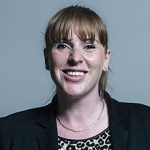
  • Angela Rayner – 2021 Comments on Postal Voting

    Angela Rayner – 2021 Comments on Postal Voting

    The comments made by Angela Rayner, the Deputy Leader of the Labour Party, on 27 February 2021.

    Yet again Ministers are burying their heads in the sand with voters set to go to the polls in the biggest set of elections we have ever seen outside of a General Election in just ten weeks’ time.

    The Government has had nearly a year to sort this out and protect our democracy, but Ministers have once again been too slow to act. With ten weeks to go, we are yet to see a proper plan from the government setting out how these elections will be run safely, while councils face shortages of electoral staff, lack of venues, and funding uncertainty.

    The government’s failure to take any action to encourage people to sign up to vote safely from home risks creating a perfect storm of the disenfranchisement of millions of voters and potentially dangerous crowds at polling stations.

    It is clear that fairly stringent measures will still be in place in May, so it is completely inexplicable that the government is not taking urgent action to get people signed up to vote from home by post, hugely undermining their own public health messaging emphasising the ongoing threat of Covid and the need to proceed with caution in lifting restrictions in order to avoid a surge in infections, hospitalisations and infections and a devastating fourth national lockdown.

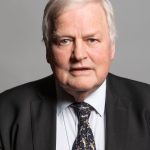
  • Bob Stewart – 2021 Speech on PC Yvonne Fletcher

    Bob Stewart – 2021 Speech on PC Yvonne Fletcher

    The speech made by Bob Stewart, the Conservative MP for Beckenham, in the House of Commons on 23 February 2021.

    On 17 April 1984, Woman Police Constable Yvonne Fletcher of the Metropolitan police was fatally wounded by a gunman. He was hiding in the Libyan People’s Bureau, which was in St James’s Square in London. In this debate, I want to remember her by talking about her life and her tragic death, as well as making a request that she, even now, be considered for a posthumous gallantry award. I do not intend to speculate about who was responsible for pulling the trigger, as I believe there is now very little chance of bringing the murderers to justice, much as I would dearly like to see that happen.

    Yvonne Fletcher was born on 15 June 1958. Her parents, Michael and Queenie Fletcher, lived in Semley, Wiltshire. Yvonne was the oldest of four daughters, and from the age of three, she told her parents that she wanted to join the police. It was her primary ambition in life. By the time she was 18 and a half, she tried, but she was 1½ inches too short to reach the height required; she needed to be 5 feet 4 inches, and she was 5 feet 2½ inches. Disappointedly, she applied for any police service that she could get into, which included the Royal Hong Kong police. Yvonne’s persistence paid off, and the Metropolitan police waived the height requirement in her case. She must have been very special for them to do that.

    After training and a two-year probationary period, she was confirmed as a regular woman police constable. After being given her warrant, she spent most of her police service working from Bow Street police station. It was there that she became engaged to another police officer, Police Constable Michael Liddle. For some six years, Yvonne was based at Bow Street, where she was hugely respected and liked by her fellow officers. I gather she was called “Super Fletch”, and that was because, first, they liked her, and secondly, she was very good at her job.

    On 17 April 1984, Yvonne was asked to reinforce a police operation monitoring a demonstration of mainly Libyan students who were protesting about the regime of Colonel Gaddafi. The main part of that demonstration was occurring in St James’s Square. A detachment of about 30 police officers was sent to St James’s Square, including Yvonne Fletcher, her fiancé Michael Liddle, and members of the police diplomatic protection group. The anti-Gaddafi protesters consisted of about 75 people, and their demonstration started at about 10 am. Many of the demonstrators were wearing masks to make sure that they could not be identified by photographers standing at the windows of the Libyan People’s Bureau. Gaddafi’s regime had a habit of murdering opponents, wherever they were in the world, so this precaution was very sensible.

    The police had erected barriers. The demonstrators were behind them, and Yvonne and her colleagues were in front. The demonstrators carried anti-Gaddafi banners and chanted slogans against the dictator. I think that there was actually a pro-Gaddafi protest there as well. Suddenly, at 18 minutes past 10, automatic gunfire was discharged from two windows of the People’s Bureau. It was presumably directed at the anti-Gaddafi demonstration, but a round hit Yvonne Fletcher. I suspect that the gunman simply sprayed the area and did so without really looking out of the window, with their hands up so that they could not be identified. The bullet entered Yvonne’s back and tore through her body. She collapsed on the road. Several other people were wounded, although none was as badly hurt as Yvonne.

    The police shepherded the demonstrators into Charles II Street, while several of Yvonne’s police colleagues tried to save her. I quote from an email that I received from PC John Murray, who was with her at the time. Forgive me for quoting directly, but he did email me last week. He said:

    “Yvonne was shot from the bureau, and fell to the ground. I went over to her. I was only feet from her and cradled her head. The square quickly emptied, leaving three of us with Yvonne. We carried her into a nearby street and I went with her in the ambulance to hospital. In the ambulance there were other Libyan students who were bleeding from their wounds, but she seemed more concerned about them. ‘Keep safe. Be calm,’ she said.”

    What incredible courage and conduct for a young woman of 24 or 25. What an example—to the Metropolitan police themselves and to every one of us. I am in awe of that, and I suspect that anyone listening is too.

    At 10.40 am, Yvonne had been taken to Westminster Hospital. For some of the time going there, she was conscious but in huge pain. As she was being transferred from the ambulance on to the trolley in the hospital, the spent bullet that had travelled through her body fell out of her uniform. Yvonne was taken straight into the operating theatre, but it was too late; she died on the operating table at about midday.

    Yvonne’s hat and four other officers’ helmets were left lying in the square during the ensuing siege of the bureau. At the time, I was a staff officer in the Ministry of Defence. In the days that followed, I remember—I suspect others do too—the images of the hats and helmets in St James’s Square being shown repeatedly in the media, on the television and in newspapers.

    Ten days later, on 27 April, a police officer called Clive Mabry, acting against specific orders, ran in and retrieved Yvonne’s hat from in front of the bureau. Getting that hat back was hugely symbolic and doing that meant one heck of a lot to the policemen and policewomen. Typically for any uniformed organisation—I have been in one myself—Mabry was admonished, but praised too. He was fined seven days’ pay by the police for his indiscipline, as well as being given the freedom of the City of London for doing the right thing. The hat was placed on Yvonne’s coffin for her funeral, which took place later the same day in Salisbury Cathedral. Six hundred policemen attended that funeral.

    Yvonne’s conduct exemplified the very highest standards of the Metropolitan police service. When she was mortally wounded, she seemed to care more about others who were with her in the ambulance than herself. What courage she displayed by saying to those trying to look after her that they should keep safe and stay calm. That was within minutes of her death. She did that when she must have been in the gravest of agony.

    From my own experience of writing citations, may I suggest that a posthumous award of the George Medal could be considered, despite the passage of years, and because of Yvonne’s calm, courageous demeanour while she was grievously wounded, and dying? As so many of us remember, Police Constable Keith Palmer was murdered near here, in New Palace Yard, on 22 March 2017. He was awarded the George Medal posthumously. I believe there should be such an award for Yvonne Fletcher, who showed valour of a similar nature to that of Keith. Keith tried to stop the madman, although he was unarmed; it cost him his life. Yvonne was saying things and showing, in the way she behaved, how courageous she was.

    Mr Mark Francois (Rayleigh and Wickford) (Con)

    In view of my right hon. Friend’s elevation to the Privy Council, on which I congratulate him, I believe his recommendation carries even more weight. Some years ago, I was Veterans Minister at the Ministry of Defence. I was never a Minister in the Home Office; nevertheless, I pay tribute to Keith Palmer, and also to Yvonne Fletcher. For what it is worth, may I wholeheartedly endorse my right hon. Friend’s recommendation that her valour and conduct is wholly worthy of the award of the George Medal?

    Bob Stewart

    Thank you, on behalf of everyone who is campaigning. The more of us who say it, the better.

    Jim Shannon (Strangford) (DUP)

    Will the right hon. Gentleman give way?

    Bob Stewart

    I give way to my honourable friend—he is my hon. Friend, even though he is in the Opposition.

    Jim Shannon

    The right hon. Member for Beckenham (Bob Stewart) has a great part in every one of our hearts. I salute him, as an honourable and gallant Member.

    I remind him as well that we in Northern Ireland have felt all too often the devastation of the death of our serving police officers. I know that the right hon. and gallant Gentleman will have known some of those officers who served and died for Queen and country. Does he agree that the message must be clear in every part of the United Kingdom of Great Britain and Northern Ireland that every life is precious, that there will be no tolerance of the murder of those who served, and that the maximum penalty can and will be applied on every occasion? I support entirely the campaign on behalf of Yvonne Fletcher. I wish the hon. Member well, and I hope that the Minister will respond in a positive fashion.

    Bob Stewart

    I thank the hon. Member. All I can say to that is that I entirely agree with him on the Police Service of Northern Ireland and its predecessor, the Royal Ulster Constabulary.

    To make a little aside, when someone is killed in the military, they give out the Elizabeth Cross to the next of kin. I would have thought that that is quite a nice thing to consider doing for the police. It is just a thought, which has only just come into my brain at this moment, but the Elizabeth Cross really means something to the next of kin of people who have lost their lives serving in the military. I would have thought that for the police that would be quite a good idea, too.

    The hon. Member for Ayr, Carrick and Cumnock (Allan Dorans), who was a serving officer in the Metropolitan police on the day that Yvonne was murdered, cannot be with us today. He has told me that he did not know Yvonne personally, but he did know that she was an exceptionally talented, passionate and caring young police officer who loved her job and the opportunity to help people—she was really good at that. He told me that he would provide full support for the posthumous award of a George medal.

    As I prepared for this debate, I have personally spoken to 59 past and present members of the Metropolitan police about Yvonne Fletcher. Only one or two of those officers needed to be reminded who she was, and that is because they were not even born when this incident happened, but to a man and to a woman they were utterly supportive that such recognition should be given to their incredibly gallant late colleague. I entirely agree with them. Thank you, Madam Deputy Speaker—over to my friend the Minister.

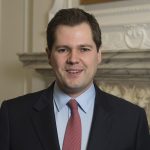
  • Robert Jenrick – 2021 Speech to the Centre for Social Justice

    Robert Jenrick – 2021 Speech to the Centre for Social Justice

    The speech made by Robert Jenrick, the Secretary of State for Housing, Communities and Local Government, on 25 February 2021.

    Thank you for that kind introduction.

    It’s a pleasure to join you and the Centre for Social Justice at the launch of your ‘Close to Home’ report which makes a really powerful contribution to the debate around how we can end rough sleeping.

    In particular, I want to thank Andy Cook and Joe Shalam who are tireless campaigners; the work that the CSJ publishes is both inspirational and integral to our plans for the future.

    What guides you is what guides this government: a belief that opportunities should be more equal and background no barrier to success. And a commitment to helping those who have been held back by accident, circumstance or misstep, to achieve the fulfilment and happiness of rewarding work, security at home and nourishing relationships.

    The pandemic has reminded us as Robert Kennedy said, that those who live with us are our brothers and sisters, that they share with us the same short moment of life, that they seek, as we do, nothing but the chance to live out their lives in purpose and in happiness.

    Which is why our goal to reduce rough sleeping is more important than ever.

    An extraordinary thing has happened over the course of the past year: the pandemic has accelerated and magnified many forces like never before, upending people’s lives, businesses and communities. But it is rare that something entirely positive has happened, and that is the manner in which we as a country have supported rough sleepers throughout the pandemic.

    Our priority is to ensure that the 37,000 vulnerable people and rough sleepers ‘Everyone In’ has helped never return to a life on the streets. We have made good progress so far with at least 26,000 of those supported by the programme now in long term accommodation, and new figures published today paint a picture of a country that is changing.

    I am pleased to tell you that the number of people sleeping rough has fallen for the third year in a row. Across England, the numbers have fallen by 37% to 2,688. And since Boris Johnson became Prime Minister, the number of people rough sleeping has reduced by over 40%.

    We have also published, alongside the snapshot this year, additional management information indicating that the number of people on the streets reported by local authorities fell to 1,743 in December and 1,461 in January.

    For the first time in many years London has seen a significant fall as well, mirroring the rest of the country with a 37% decrease. And again, that achievement has been built upon in the months that have passed since.

    I want to say thank you to the hard work of Rachael Robathan and Georgia Gould – the leaders of Westminster and Camden councils and their respective teams in the West End. The London figures published today, which show the largest decrease since these statistics began, highlight the impact of their work and the dedication of the staff.

    We’ve seen a number of areas that have reached 0 rough sleepers at the snapshot – including Ashford and Basingstoke – among many others. And major cities have seen quite exceptional improvement, like Birmingham where numbers have fallen to just 17 people.

    Having, I hope, praised the many great achievements, in all types of places and by councils of all political colours, it is worth noting that there are wide variations, which shows that whilst some local authorities have achieved truly exceptional things this year, there are others somewhat less so. There are differences of approach and of commitment. Those yet to conquer this issue must learn from those that have or are on the way.

    It is almost a year since I phoned Dame Louise Casey and discussed how the pandemic would impact rough sleepers. Not then a reality in this country, a distant threat, but one whose drumbeat was drawing inexorably closer and louder. Louise was in Australia, struggling to get a flight home. We agreed immediately that the right approach was to emphasise protecting the most vulnerable people among us. And upon her return she came to Marsham Street and in her characteristic way, gave herself fully to the task ahead. I’m immensely grateful to Louise for her energy, commitment and friendship.

    That conversation, and the meetings that took place in the following weeks led to the birth of the Everyone In programme, and later the next phase, our Protect Programme. A programme that has saved many lives.

    TS Eliot said that sometimes things become possible if we want them badly enough. That describes Everyone In. But you also need exceptional people. The work of staff in shelters, of council support workers, of outreach workers, of volunteers at soup kitchens and to so many others – whose work is unglamorous and often unnoticed, but is vital and noble.

    I should also like to place on record my gratitude for the commitment and dedication of the civil servants at the Ministry of Housing with whom I work. Under the superb leadership of Penny Hobman and Catherine Bennion, who demonstrate every day a real passion and idealism for this cause.

    We know that the community, charity and faith sectors are instrumental to this effort. Importantly, nobody comes off the streets because of the work of one agency. A critical element of the success of Everyone In was due to the quality of our partnerships: so I must extend thanks and gratitude to those charities that have paved the way on this issue, especially to the inspirational Jon Sparkes from Crisis and Petra Salva from St Mungo’s.

    And I need to thank my two immediate predecessors in this role, Sajid Javid and James Brokenshire. It would be wrong to see Everyone In as some kind of remarkable start-up. Its success was built on the foundations they had laid. Both cared passionately about this issue, and indeed do still.

    Sajid started the Housing First pilot – work that as we will hear today, the CSJ has proved so vital in spearheading. The Homelessness Reduction Act happened under his leadership. James oversaw the reinvigoration of the Rough Sleepers Initiative, whose impact is well evidenced and had driven the two prior years of reductions, in 2018 and 2019.

    As our vaccination programme gathers speed and we begin to turn the tide on COVID-19, it is right that we cement the incredible gains we have made over the last twelve months, acknowledging the seriousness and the weight of the challenges we have yet to face.

    The late Lord Ashdown, in a notable speech on homelessness, once compared tackling rough sleeping at times of economic disruption to “leaves in a gale” – the faster you collect the leaves, the faster they gust away again, and all the time more fall around you in the headwind. And there will be headwinds to come as we exit lockdown and move beyond the pandemic.

    The truth is, we cannot begin to tackle this issue until we begin to tackle its causes: which are multi-faceted and complex. Unemployment, family breakdown, domestic abuse, insecure housing, criminal justice policy, failures in our immigration system, and above all else – substance misuse and mental health. So we’re utilising the expertise of all government departments from the Ministry of Justice and the Home Office to the Departments of Health and of Work and Pensions, investing over £750 million next year to continue to reduce homelessness and rough sleeping and invest in preventative programmes which tackle the underlying issues early.

    It is vital that we bring together health and housing to tackle rough sleeping. The marriage of health and housing will be the heart of our strategy.

    That is why we have brought forward an investment of £150 million in long-term housing through our Rough Sleeping Accommodation Programme, delivering 3,000 new homes.

    And a further £272 million will be invested over the course of this Parliament providing 6,000 vital new homes for rough sleepers – the largest ever investment of this kind. These will be a national asset – symbols of hope and opportunity for those looking to turn their lives around.

    Thanks to the hard work and perseverance of Robert Buckland and Lucy Frazer at the Ministry of Justice, we are tackling reoffending, ensuring more prison leavers are offered accommodation at release and building a criminal justice system based on second chances and redemption. That takes inspiration from, amongst others, the direction set by Michael Gove when he was Justice Secretary – and I his bag-carrying PPS. It has always stayed with me that more than 50% of rough sleepers have spent time in prison. This must be at the front of our minds as we frame our strategy.

    At the Home Office, Priti Patel shares my commitment to supporting victims of domestic abuse and together we have seen the Domestic Abuse Act implemented and fully funded with £120 million of financial support for local councils next year. And together we will use the new freedoms we have as a sovereign country, to create a better and fairer immigration system, so that fewer foreign nationals end up on our streets and those that do can be compassionately and considerately returned to their home countries.

    On health and housing, almost two thirds of homeless people cite addiction to drugs and alcohol as both a cause and consequence of rough sleeping. We know the toll that substance misuse takes on individuals and on families – and drug addiction is a global human crisis, at the very heart of this issue, more important than ever as we come out of the pandemic; which emerging evidence suggests has amplified substance misuse through unemployment, isolation and anxiety.

    The homeless will not be forgotten when it comes to the vaccination. Last night we asked all local authorities to redouble their efforts to safely accommodate as many rough sleepers as they can and to register them with a GP, as a good in itself, but also as a precursor to vaccination. At this crucial stage in our vaccination programme, there really is no time to waste. So we have also allocated a further £10 million of funding to help protect people rough sleeping this winter and ensure their wider health needs are met.

    We need to follow in the footsteps of my now somewhat distant predecessor Sir George Young who worked hand-in-hand with homelessness charities in pioneering the first Rough Sleeping Initiative.

    That same sense of urgency and resolve is needed again today.

    I want to be unequivocal in stating that we will use every mechanism at our disposal to achieve our goal.

    And yes, Housing First is an integral part of that mission. I’m grateful to Brooks Newmark for his role in establishing Housing First. As a former Treasury Minister under Philip Hammond I can say it was no mean feat of Brooks and Sajid to persuade him to back it.

    Our £28 million Housing First pilots in Greater Manchester, Liverpool and West Midlands are already supporting around 800 of our most vulnerable people off the streets and into secure homes. 600 are now in permanent accommodation. Over 2,000 other Housing First places have been created, many funded through the Rough Sleeping Initiative and our new accommodation programme draws inspiration from it.

    I have seen it in action myself. Last Christmas Eve I met a woman in Walsall and Housing First was helping to turn her life around after several years of sleeping rough in local parks and of drug addiction. It was working and she was re-entering society and re-establishing herself as a productive member of it. As I left her flat to drive home to my family, I turned around and watched her welcome her children to her home for the first time in many years. For their first Christmas together in many years. I couldn’t help, but cry.

    Rough sleeping a terrible waste of lives. To see dignity and purpose and the love of family and friends restored is a wonderful thing to behold.

    So I will champion Housing First. One solution – it goes without saying – will not fit all. This must be multi-targeted and multi-focus. But the principle that everything begins with a home will be our guiding star.

    Our strategy will be refined, with the guidance and support of all those willing to offer it to us, but our objective is clear, that no one should have to sleep rough in this country. That is a litmus test of a civilised society. And we will raise the safety net from the street, but addressing the causes as well as the consequences. Not so much no second night out, but no first night out.

    As we come out of the pandemic, and as the Prime Minister has said, we must aspire to build back better. This means not merely mending, or simply restoring a status quo. Nor even more improvement.

    It is not like teaching a horse to jump better, but like turning a horse into a winged creature that will soar over fences which could never have been jumped, said CS Lewis. It is in that spirit we will work, together, to resign rough sleeping to the history books once and for all.

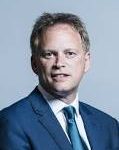
  • Grant Shapps – 2021 Comments on Ghost Flights

    Grant Shapps – 2021 Comments on Ghost Flights

    The comments made by Grant Shapps, the Secretary of State for Transport, on 26 February 2021.

    I want to restart international travel as soon as it is safe and the slots waiver is a critical part of making that happen.

    With airlines flying a smaller proportion of their usual schedules, the waiver means carriers can reserve their finances, reduce the need for environmentally damaging ‘ghost flights’ and allow normal services to immediately restart when the pandemic allows.

  • Luke Pollard – 2021 Comments on Amazon Rainforest Plots Being Sold on Facebook

    Luke Pollard – 2021 Comments on Amazon Rainforest Plots Being Sold on Facebook

    The comments made by Luke Pollard, the Shadow Environment Secretary, on 26 February 2021.

    The Amazon is our planet’s green lung and it’s vital we protect it from destruction. Social media companies have a moral duty to ensure their operations are not enabling deforestation and illegal sales of forest.

    The Government must urgently act to make sure that UK companies do not trade on the back of rainforest destruction.

  • Jonathan Ashworth – 2021 Comments on NHS Staff Pay

    Jonathan Ashworth – 2021 Comments on NHS Staff Pay

    The comments made by Jonathan Ashworth, the Shadow Secretary of State for Health and Social Care, on 25 February 2021.

    Our NHS staff deserve a fair pay rise. If Rishi Sunak next week refuses it will be kick in the teeth to our brave hardworking NHS heroes.

  • Jim McMahon – 2021 Comments on Smart Motorways

    Jim McMahon – 2021 Comments on Smart Motorways

    The comments made by Jim McMahon, the Shadow Transport Secretary, on 26 February 2021.

    Dozens of people have lost their lives on smart motorways, so this investigation is welcome. Ministers must act now and do what Labour has called for – reinstate the hard shoulder while a full review is carried out and the results brought back to the Commons.