Category: Speeches

  • Matt Hancock – 2021 Statement on Covid-19

    Matt Hancock – 2021 Statement on Covid-19

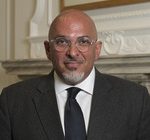
    The statement made by Matt Hancock, the Secretary of State for Health and Social Care, on 28 April 2021.

    Good afternoon and welcome to Downing Street for today’s coronavirus briefing.

    I’m joined by Professor Jonathan Van Tam, Deputy Chief Medical Officer, and Dr Nikki Kanani, the Medical Director for Primary Care at NHS England.

    Today we’ve got an update on our fight against coronavirus, both here at home and around the world.

    Support for India

    I’ll start by talking about events around the world.

    We’ve all seen the harrowing pictures of what’s happening in India.

    I think it pains each one of us who’s seeing those scenes.

    Not least because the bonds between our countries are so strong. And there are ties of family and friendship.

    I’ve been in constant contact with my Indian counterpart.

    And we worked over the weekend to put together our first package of support of ventilators and oxygen concentrators.

    More supplies will be arriving later this week.

    I’ve also been working with the Health Minister for Northern Ireland, Robin Swann, to donate large scale oxygen production equipment from Northern Ireland which is capable of producing over 1,000 litres of oxygen per minute – which is one of the main needs of the people of India.

    I’d like to thank Robin for the incredible hard work he’s done in getting this to the position it is so we can get it sent to India where it can produce that oxygen that is so badly needed.

    Everyone across this whole United Kingdom stands side-by-side with the people of India in these troubled times because in this battle against coronavirus, we’re all on the same side.

    This fight is a global fight.

    And when other nations face their hour of need, as we have faced our hour of need here at home: we’ll be there.

    The situation in India is a stark reminder that this isn’t over yet.

    It shows how important it is that we’re vigilant here at home.

    Professor Van Tam will take us through the data in a moment.

    Transmission data

    Just before we do, I want to give an update on the vaccination programme.

    This morning we published new data, giving the first concrete evidence of how much vaccines reduce transmission within households.

    We’ve seen already that a vaccine reduces your chance of catching COVID by around two thirds.

    This new data looked at people who tested positive after having received one dose of the vaccine and found that they were up to 50 per cent less likely to pass on the disease to someone else in their household.

    And we’re looking at whether the second dose gives an even bigger effect.

    We know that indoor settings have the highest risk of transmission.

    So these results are very encouraging in terms of the impact of the vaccine on reducing transmission.

    We’re finding out more and more about the layers of protection you get from a vaccine, and how its impacting in the real world.

    In summary, we think you get around two thirds protection against catching the disease at all, around four fifths reduction in your likelihood of ending up in hospital and around 85 per cent protection from dying of COVID.

    That’s the protection you get from one dose.

    And in addition to all that, you’re up to half as likely to pass it on to somebody else that you live with.

    We expect the benefits to be even greater after two doses and we are monitoring that carefully.

    What this means is the evidence is stacking up that the vaccine protects you, protects your loved ones, and is the way out of this pandemic.

    Vaccination programme

    The overall effectiveness of the vaccination programme comes from just two things.

    One, how effective the vaccine is – that’s the science if you like.

    And two, how many people get the jabs. That of course is on all of us.

    I just want to turn to the second of those for a moment as well.

    First animation, please.

    This shows the proportion of people who’ve had a jab, according to age group.

    Green bars represent people who’ve had one dose, and the blue represent people who’ve had two.

    And you can see they are growing over time as the vaccination programme reaches more and more people who are younger and younger.

    As you can see, across the United Kingdom, uptake of the first dose among the over 50s is phenomenally high, at over 95 per cent.

    And is rising sharply in people in their late forties who have been now able to receive the vaccine for a couple of weeks.

    This is great progress, and it’s something we can all celebrate, because we all have a part to play in this.

    I’m delighted we’ve been able to offer the vaccine to even more people.

    So anyone who’s 42 or older can now come forward and get the jab.

    I’m delighted about this, not just because it shows the progress we’re making, I’m also delighted because it means I can get my jab too.

    Just like every other 42 and 43 year old, I got a text from the NHS yesterday.

    I went online and booked it for myself. It takes less than a minute.

    And I’m looking forward to getting my jab first thing tomorrow morning.

    In the words of our new campaign “every vaccination brings us hope”.

    Antibody data

    So, we’ve looked at the effectiveness of the vaccine and we’ve looked at the take up of the vaccine.

    And now I want to turn to a combination of the two.

    What I’m about to show you is not how many people have had the jab, but how many people have got the antibodies that make the jab effective. These antibodies that protect you from coronavirus.

    This isn’t a measure of the vaccination programme directly. This is a measure of the protection that we have, collectively, built up in people right across the country.

    Can we have the second chart, please.

    This data, released today by the ONS, is from a national survey where they visit over 20,000 people, and actually measure the antibodies in people’s bloodstream.

    The blue area shows the proportion of people who have COVID-19 antibodies.

    As you can see, in the older age groups who got vaccinated first they are much more likely to have COVID-19 antibodies.

    So more and more people are getting protection.

    And now 7 in 10 adults have protective COVID antibodies. This is the vaccination programme in action.

    It makes me so proud of what we’ve done.

    We have been working on the vaccination programme for more than a year now.

    And there’s a massive team to it, and I’m grateful to them all.

    But the thing that makes me proudest is how, when the call came, the whole nation who has been asked has effectively stepped forward.

    This vaccination programme depends, yes ,on the effectiveness of the science and that is crucial. But it depends on everybody stepping forward.

    Booster programme and Pfizer doses

    The vaccine is helping us to bring back our freedom and we must protect this progress.

    The biggest risk to that progress is the risk posed by a new variant.

    So we’re working on our plans for booster shots too.

    To keep us safe and free here while we get this disease under control across the whole world.

    We’ve been working on a programme of booster shots again for over a year now.

    And we’ve backed some of the only clinical trials in the world looking specifically at booster shots.

    I’m delighted to be able to tell you that we’ve secured a further 60 million doses of the Pfizer/BioNTech vaccine.

    And that will be used, alongside others, as part of our booster shot programme from later this year.

    And that is all about protecting the progress that we’ve made.

    Conclusion

    We have a clear route out of this crisis.

    But, this is no time for complacency, it’s a time for caution.

    So that we can keep the virus under control, while we take the steps, safely, back to normal life.

    So please remember the basics of hands, face, space, and fresh air.

    And crucially, if like me you get the call, join me and get the jab.

    Now I’d like to hand over to Professor Van Tam to talk through the latest data and then to Dr Kanani to talk through some of the detailed data about that extraordinarily high take up of the vaccine.

    Thank you.

  • James Heappey – 2021 Comments on Getting Vaccines to Overseas Territory of Tristan da Cunha

    James Heappey – 2021 Comments on Getting Vaccines to Overseas Territory of Tristan da Cunha

    The comments made by James Heappey, the Minister for the Armed Forces, on 29 April 2021.

    This operation to transport vaccines to one of the most remote parts of the world, reaffirms our commitment to the people of our Overseas Territories.

    The Armed Forces take great pride in supporting our people, at home or abroad, whenever and wherever needed. I am immensely proud of all Royal Navy and RAF personnel involved in this mission and the role they have played in helping to deliver vaccines to the people of Tristan da Cunha safely and quickly.

  • Kit Malthouse – 2021 Comments on Police Recruitment Drive

    Kit Malthouse – 2021 Comments on Police Recruitment Drive

    The comments made by Kit Malthouse, the Policing Minister, on 29 April 2021.

    Joining the police to help make neighbourhoods safer is a noble career and I am heartened to see thousands more people make that choice.

    An increase of 8,771 officers is a great achievement, and I want to thank forces for their considerable efforts to help us exceed our target for the first year of the recruitment campaign.

    It is fantastic that our police forces are now more diverse than ever before, but we know there is still more work to do to on this front – I will continue working with police leaders to ensure our forces are truly representative of the communities they serve.

  • Cat Smith – 2021 Comments on Electoral Commission’s Investigation into Boris Johnson’s Flat

    Cat Smith – 2021 Comments on Electoral Commission’s Investigation into Boris Johnson’s Flat

    The comments made by Cat Smith, the Shadow Minister for Democracy, on 28 April 2021.

    It is welcome that the Electoral Commission is set to investigate the series of murky revelations around the refurbishment of Boris Johnson’s Downing Street flat.

    No stone should be left unturned to get to the bottom of who’s funding the Prime Minister’s luxury lifestyle, and what they could be expecting in return.

    If the Conservatives want to do something about the stench of sleaze engulfing them, they must cooperate fully with the Electoral Commission and publish the paper trail and any invoices relating to this matter.

    The Government must take this opportunity to immediately publish the Register of Ministers’ Financial Interests.

  • Kate Green – 2021 Speech to the Confederation of School Trusts Annual Conference

    Kate Green – 2021 Speech to the Confederation of School Trusts Annual Conference

    The speech made by Kate Green, the Shadow Education Secretary, on 28 April 2021.

    Thank you, conference. It is a pleasure to speak to you this morning. Firstly so I can thank you, for the role you have played in the most difficult of circumstances.

    You have been at the forefront of the most extraordinary and challenging year; a year that has seen the greatest disruption to young people’s learning we have known in peacetime. You have kept pupils, staff, and your school communities safe, and ensured pupils continued to learn in and outside the classroom.

    The efforts of critical workers – in schools, in hospitals, in social care, and in all areas of our society – have been nothing short of heroic. And now, as we begin to emerge from the pandemic, I believe that it is the duty of politicians to work closely with all of you who have helped to get us through the past year, so that we begin to rebuild our country together, with a new settlement for a fairer, more equal society, a prosperous economy that creates opportunities for all, a Britain that is the best place to grow up in and the best place to grow old in.

    Nobody knows better than you and your colleagues the huge impact that this pandemic has had on the education, wellbeing, and life chances of our nation’s children.

    But while teachers and leaders moved mountains to keep children learning remotely during the pandemic, we all know that the best place for children, for their learning, development, and wellbeing, is in school, in the classroom.

    Yet the difficult truth is that no matter how good a job our schools and teachers do, education on its own cannot resolve the inequalities and injustices that damage the life chances of millions of children. What happens in the classroom, while hugely important, is shaped by the lives of children beyond the school gate.

    And while that has been thrown into stark relief by the pandemic, as children were left without the resources to learn, and the Government had to be dragged kicking and screaming to ensuring they didn’t go hungry during school holidays, it was true even before coronavirus. The children in over-crowded accommodation, without devices for remote learning, with parents struggling to make ends meet, are the same children who have not seen their educational outcomes improve for a decade – those growing up in persistent poverty.

    For those children, the attainment gap simply is not closing, and hasn’t been closing for years. And, at a time when the most disadvantaged children are facing ever greater challenges, schools area getting less funding to support them.

    Changes to the pupil premium are leaving schools across the country thousands of pounds worse off. For many, they are losing more from this change than they have gained in catch-up funding. This is a dangerous false economy, taking resources out of the classroom at a time when they are needed more than ever.

    Gavin Williamson and the Westminster government have simply not been honest about this, they have refused to publish any assessment of the financial impact of their own policies. But as every head knows, the lack of adequate resources to support the learning and recovery of the most disadvantaged children will only serve to embed the inequalities that already scar our society.

    Inequalities that were too often ignored, even as they held back the opportunities of a generation of children, have been exacerbated by the pandemic, and in the months and years ahead they will become even worse if we return to business as usual.

    So it must now be our collective mission to tackle those injustices and guarantee a bright future for all children as we rebuild our country.

    That is something that we can only achieve by working together. Deeply embedded inequalities and the consequences of the last year cannot be fixed by Whitehall alone. It will need you, the education professionals who make such a difference to children’s lives, it will need parents, carers, wider public services and the whole community to work together if we are to transform children’s lives.

    And in many ways, the challenges of the last year have brought people closer together.

    Parents working from home have been closer to their children’s learning than they ever were before. They have seen, first hand, the incredible work of both education staff and children and young people. Many parents now know more about what their children learn, the value of the education they receive, and the work that goes in to delivering it. They want a closer partnership with their children’s schools to continue in future

    But it’s not just parents to whom schools are important. Schools are one of the only public services that will touch all of our lives, as children ourselves, and if we have children of our own; they are one of the most powerful means we have to shape the life chances of every child and the life of every community.

    So we must harness that opportunity to ensure that every school acts as a genuine anchor for the whole of their community, bringing together people of all backgrounds with a common cause: to improve the lives of young people in every city, town, and village in England.

    The task is not just about teaching and learning. Children cannot enjoy their childhood or achieve their full potential if we do not work together to address the persistent, pernicious link between poverty and educational outcomes.

    On this, Labour has a proud record in government, one that I am still happy to stand beside ten years later.

    We delivered a huge and sustained fall in child poverty, while investing in schools and the early years. We transformed the life chances of a generation of children and their families because that was a priority not just for successive education secretaries, but for every part of our government.

    And it is that commitment to children’s futures that we will again take in to office after the next election.

    With a central role for our schools as civic institutions at the heart of every community.

    Schools as places where educators and employers, voluntary & community organisations and public services, families and professionals, all work together to improve children’s outcomes and prospects. The power of schools to transform lives does not begin and end with the sound of the school bell; but it is an opportunity we have every day, as millions of children pass through them, one of the only public services we can be sure they will access.

    And it is this role as anchors of their community, above and beyond their core function of education, that means schools can evolve to offer wraparound care, holiday activities, extracurricular activity, support for parents.

    Labour’s call for breakfast clubs in every school exemplifies this wider role for schools as civic institutions. By extending the school day to offer a healthy breakfast to every child, we get them ready to learn, improve attainment, give time for socialising with teachers and friends, support their emotional wellbeing. And we can also take the chance to involve volunteers, work with business, and make life a little easier for millions of working parents, particularly mothers.

    This policy would help millions of children every day, in every city, town, and village in England. It is a small investment that we can make in the future of every child, to help guarantee a bright future for all.

    It’s one small example of how an extended school offer can make a difference, to children, their families, their employers, and the wider community.

    The Confederation of School Trusts has always argued that schools and school trusts are civic institutions, and that your leaders are civic leaders. That civic mission can bring our communities and schools together in the months ahead, as we build a new future for schools and children across the country.

    But we must recognise that the schools system we have now is not a perfect one, and that schools’ role as civic institutions also means schools working more effectively with one another to advance education for the public good and for every child in the local community.

    While we have world class schools with world class leaders and staff, our school system is fragmented, opaque, and over-complex – to the detriment of pupils and wider society. Instead of one school system we have several.

    Schools operate as their own admissions authorities, have different levels of accountability to their community and to government, and there is no consistent role or voice for parents.

    They are incentivised to compete against one another, and to operate admissions and exclusions policies that serve the interests of some children at the expense of others. Governance and decision making have become detached from the local community.

    The Secretary of State’s answer this morning – every school in an academy trust – is based on a simplistic dichotomy between strong trusts and failing maintained schools.

    The reality is more complicated, with all the evidence demonstrating that it is the quality of teaching and school leadership, not structure, that determines a school’s success.

    So while Labour has long said that schools working together in families is the right way to go, this top down solution cannot guarantee successful outcomes for all children, their families and communities, and is at odds with the role of local communities to determine the schools that work for them and that represent their local needs and priorities.

    This is not criticising the extraordinary work that goes on in individual schools, academies or trusts every single day to transform the lives of the children they educate.

    So I want to make an open invitation, to you, to your profession, to parents, and to local political leaders and representatives, to work with me, to come together with ideas and solutions that achieve the best outcomes for every child and help rebuild strong and resilient communities.

    My priorities will be to ensure the system is responsive and accountable to local needs; that it attracts, supports, and retains world class staff, in the classroom and among school leaders; encourages fairness, cooperation, and transparency between schools; and gives a clear and powerful voice to the communities they serve and work in.

    A system that ensures that every child gets the knowledge and skills they need in a broad curriculum; that wellbeing is front and centre in every school; that education professionals are genuinely empowered to improve lives; and every child in every school receives a world class education.

    The work of you, your colleagues, and all those who work in schools will be essential to meeting that challenge. Because we know that nothing matters more for educational outcomes than the teaching a child receives, which means that training, retaining, and investing in the teaching profession is one of the most important things that a government can do to improve outcomes for children.

    Sadly, in the last ten years, that has simply not been the case.

    The last decade has seen real terms cuts to pay that have left teachers thousands of pounds worse off in real terms, top-down structural changes that have pushed up workloads and driven teachers from the classroom, and, even in this last year, the teaching profession and its representatives have been treated by the Secretary of State not as allies in meeting a national challenge but as a problem to be solved, or a political enemy to be briefed against.

    That does a gross disservice to you and to all those who work in schools. It ignores the huge role you play in enabling every child to reach their potential, and that, in the last year, you have gone above and beyond all that could be expected from you.

    But I know that it takes more than warm words to keep you in the classroom, and it takes more than promises from politicians to build a world-class teaching profession. That is why I want to give you a voice in the work we do, to tell me what it is that can keep teachers in our schools, that can support them to grow as professionals, and empower them to change lives.

    This is one of the most important things that Labour can do in government, but it is not something that we can do alone. That is why I hope that you will join us in meeting that challenge, so that we can all work towards our shared goal – a bright future for every child, one where every child can fulfil their potential.

    The first White Paper published by the Confederation of School Trusts begins with the words of Kofi Annan:

    “There is no trust more sacred than the one the world holds with children.”

    Those words have never been more important than now, as, in Britain and across the world, children begin to emerge from a year of disruption that would have been unimaginable a little over a year ago.

    It is a trust that we all hold, and it is tied to a promise that we are all responsible for – to offer to the next generation greater opportunities than we ourselves had.

    The last decade – which has seen cuts to education spending, rising child poverty, stagnant real wages, and, now, a global pandemic – has made it harder to fulfil that promise.

    But as we emerge from one of the most difficult years most of us will ever have known, we must grasp the opportunity to rebuild our country, to enrich the life of every child, and give them the chance to fulfil their potential.

    That is why earlier this year, we set up our Bright Future taskforce, to help us devise the solutions that children across the country need as we recover from the pandemic and look to their future. The taskforce has been clear that those solutions must be far reaching, covering policy and practice not just in, but beyond, the classroom. Because they know and I know that it is only by listening to and working with the wider community – the staff in our schools, the experts who work around them, young people, their parents, civil society, businesses and employers – and putting schools as civic institutions at the heart of our communities, that we will deliver on our ambition, that Britain will be the best country for every child to grow up in.

    I very much look forward to working with you to make the vision a reality.

  • Lisa Nandy – 2021 Speech on India’s Second Wave Crisis

    Lisa Nandy – 2021 Speech on India’s Second Wave Crisis

    The speech made by Lisa Nandy, the Shadow Foreign Secretary, in the House of Commons on 28 April 2021.

    Mr Speaker, India is in a Covid crisis of unprecedented proportions.

    We will all have seen the haunting footage of families pleading with doctors to treat their loved ones or queueing to cremate their dead.

    In the last 24 hours, India has once more reported the world’s largest single day total, with more than 360,000 new confirmed cases and more than 3,000 deaths. There have been more than two million cases confirmed in the last week. India now makes up around 40 per cent of all the new cases in the world and experts believe this is almost certainly an underestimate. The peak of this crisis may yet be weeks away.

    This is not just a heart-breaking crisis for India, it is global emergency that has consequences for all of us. We all face the same disease. We are all in this together. We are in a global race between vaccines and variants. No one is safe until we are all safe.

    Mr Speaker, for many of us in Britain, our ties to India are personal. My father came to this country from India, and being half Indian is an important part of who I am. Family ties between our countries are woven into the fabric of this nation. For the more than one million British Indians of different generations, this is a moment of fear and anxiety. So many British Indians will have gone to work today in the NHS, to which they make such a remarkable contribution. They have helped to carry this country through this crisis. Today many will be worried for loved ones, family and friends in India.

    Mr Speaker, just over a year ago, when the UK was facing one of our darkest moments in this pandemic, the Government of India sent 3,000,000 packets of paracetamol to the UK to meet our needs. That was an act of solidarity and support. It is now our turn to help the people of India in this hour of need.

    I’m grateful to the Foreign Secretary for outlining what support the government has already provided.

    I believe we can and must do more. I would be grateful if the Foreign Secretary could assure me the government is exploring all avenues available in the following areas:

    First, Medical supplies: including oxygen, but also empty canisters and cylinders, oxygen concentrators, ventilators; and surplus therapeutic medicine like remdesivir;

    Second, Genomic sequencing and epidemiology: utilising the UK’s world leading capacity in genomic sequence to track potential further mutations and variants in the Indian outbreak.

    Third, Vaccines: we need a much greater effort to ensure we ramp up production and manufacturing capacity and overcome barriers to expanding supply, the greatest challenge we face.

    Fourth, coordination – working with the government of India but also partners in North America and Europe to ensure our contributions have the greatest effect;

    Mr Speaker, this is a time for solidarity and common cause with the people of India. I hope that today we can come together as a House and show that we are doing all we can.

  • Lucy Powell – 2021 Comments on Toyoda Gosei Job Losses

    Lucy Powell – 2021 Comments on Toyoda Gosei Job Losses

    The comments made by Lucy Powell, the Shadow Minister for Business and Consumers, on 28 April 2021.

    This is really distressing news for workers at Toyoda Gosei who will be worried about their jobs, and for communities in Yorkshire and Swansea where these plants provide opportunities for good, high-skilled employment.

    The Conservatives have no plan for the car industry, having scrapped the industrial strategy and having failed to deliver the sector deal they need.

    The drive to electric is an opportunity to help the industry to succeed, yet Ministers are failing to grasp it. Labour backs our automotive manufacturers and has set out plans for an electric vehicle revolution to back car businesses and protect and create jobs.

  • Liz Kendall – 2021 Speech on the Importance of Social Care

    Liz Kendall – 2021 Speech on the Importance of Social Care

    The speech made by Liz Kendall, the Shadow Care Minister, on 28 April 2021.

    If you neglect your country’s physical infrastructure you get roads full of potholes, and buckling bridges, which prevent your economy functioning properly. The same is true if you fail to invest in social infrastructure.

    President Biden gets this, which is why he has made investment in home care a central plan of his post-pandemic Infrastructure Plan.

    When the virus struck, our care system was more vulnerable than it ever should have been. The conservatives weakened its foundations with an £8 billion cut from local authority social care budgets since 2010, despite growing demand.

    This was compounded by a failure to grasp the deep rooted and long standing problems in our care system, which must be addressed if we are to build a care system that is fit for the future.

    We have a welfare state in the 2020s built on the life expectancy of the 1940s. When the NHS was created, average life expectancy for men was 63. Now it’s 80, and 1 in 4 babies born today are set to live to 100 years old. Our health and care system has struggled to keep pace with these changes, with social care in particular developing in a piecemeal, fragmented way.

    One of the underlying reasons for this is that caring just isn’t valued like other professions. It’s seen as women’s work, mostly left to families, and if they can’t cope provided by some of the lowest paid workers in this country – the vast majority of whom are women, with many from Black, Asian and ethnic minority communities.

    Many of us will spend over a third of our lives beyond the traditional retirement age, but our economy, public services and wider welfare state have barely begun to wake up to this fact.

    Changing this requires political leadership to seize the opportunities, and tackle the challenges, our century of ageing brings.

    But so far our politics has proved woefully inadequate: too short-term in its thinking, too narrow in its horizons and too limited in its ambitions. Labour’s missions is to change this – in social care and many other areas.

    Our aim isn’t merely to ‘fix the crisis in social care’ – as the Prime Minister has repeatedly promised – but to transform support for all older and disabled people, as part of a much wider ambition to make this the best country in which to grow old.

    Labour understands that – in the century of ageing – social care is as much a part of our economic infrastructure as the roads and the railways.

    If you neglect your country’s physical infrastructure you get roads full of potholes, and buckling bridges, which prevent your economy functioning properly. The same is true if you fail to invest in social infrastructure.

    President Biden gets this, which is why he has made investment in home care a central plan of his post-pandemic Infrastructure Plan.

    Britain deserves this level of ambition too. We need a 10 year plan of investment and reform – not simply to put more money into a broken system.

    Labour’s priority will be to empower older and disabled people to live the life they choose, fundamentally shifting the focus of support towards prevention and early help, under the guiding principle of ‘home first’ – because that’s what the overwhelming majority of people want.

  • Rachel Reeves – 2021 Comments on the Independent Adviser for Ministerial Interests

    Rachel Reeves – 2021 Comments on the Independent Adviser for Ministerial Interests

    The comments made by Rachel Reeves, the Shadow Chancellor of the Duchy of Lancaster, on 28 April 2021.

    In our country, the police don’t require the permission of a thief to investigate a burglary.

    The Prime Minister can’t be judge and jury on his Ministers’ – or indeed his own – behaviour.

    The Prime Minister shouldn’t be able to block investigations into his Ministers or himself when breaking the Ministerial Code.

  • Kate Green – 2021 Comments on Pupil Premium Funding

    Kate Green – 2021 Comments on Pupil Premium Funding

    The comments made by Kate Green, the Shadow Secretary of State for Education, on 29 April 2021.

    The Conservatives have weakened the foundations of our school system through a decade of real-terms cuts which are forcing head teachers to use this funding – designed to support children on free school meals – to plug holes in school budgets.

    The Government’s ‘stealth cut’ to pupil premium will further undermine school finances and the planned delivery of early interventions, small group tutoring and hiring additional staff to support those pupils most likely to have struggled to learn at home.

    Labour wants to see children at the heart of an ambitious national recovery but the Conservatives are failing to deliver for our children and putting their recovery from this pandemic at risk.