The comments made by Grant Shapps, the Secretary of State for Transport, on 14 November 2021.
Work is continuing on the integrated rail plan. We will publish it shortly and do not comment on speculation.
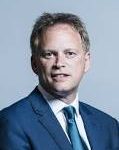
The comments made by Grant Shapps, the Secretary of State for Transport, on 14 November 2021.
Work is continuing on the integrated rail plan. We will publish it shortly and do not comment on speculation.

The article published by the Sunday Telegraph on 14 November 2021 and issued as a press release by the Government.
We believe in freedom and democracy. Freedom loving societies are not just the best places to live, they are the most successful.
When the Berlin Wall fell and the Iron Curtain came crashing down three decades ago, renewed democracies were established across Eastern Europe. People have become freer, living better lives and their children have better futures. But these hard-won gains are now at risk with malign, autocratic regimes seeking to take away people’s freedom.
Look at what’s happening in Belarus. The escalating standoff at the Polish border marks the latest step by the Lukashenko regime to undermine regional security. He is using desperate migrants as pawns in his bid to create instability and cling onto power, regardless of the human cost.
The United Kingdom will not look away. We will stand with our allies in the region, who are on the frontier of freedom. That’s why we are proud to be the first European country to assist Poland by agreeing to send a small team of personnel to provide engineering support to ease pressure at the border.
In the same way, we were the first European country to put sanctions on the Lukashenko regime, targeting over 100 individuals and organisations with measures including asset freezes and travel bans. This shows we are ready to take the lead in standing up for freedom and democracy, acting robustly, decisively and relentlessly to take on malign actors wherever they are in the world.
We are not just standing side by side with Poland as they bear the brunt of this shameful manufactured migrant crisis, but also others in the Visegrad Four – Hungary, Slovakia and the Czech Republic – and our friends in the Baltics and Ukraine.
In Belarus, this carefully crafted crisis is an attempt to divert attention away from the litany of abhorrent acts and human rights violations that the regime has already committed. Since the fraudulent election in August 2020 we have seen members of the opposition, journalists and activists beaten, jailed and killed, while others have been forced into exile.
In contrast to their tyrannical leaders, the people of Belarus are true democrats. Time and again we have seen ordinary citizens risking everything to stand up for their rights and keep the flame of freedom alive. As the chair of the Belarusian Association of Journalists, Andrei Bastunets, said: “Today, the law does not defend us. Today, we defend the law.”
Russia has a clear responsibility here. They must press the Belarusian authorities to end the crisis and enter into dialogue.
We need to fight for the rule of law, freedom and democracy, and we must take that fight to the where that ideological battle is. Security is no longer solely about military hardware. The battle is now taking place in cyber space, the economy, and in the appalling use of people as collateral.
We will join forces with our partners to advance our shared interests. At the NATO foreign ministers’ summit in Riga in a few weeks’ time, we will put forward new proposals to challenge the 21st century methods of aggression being used by those who threaten our freedoms, economies and democracies.
The world is changing and modern threats are more multifaceted and complex. That idea lies at the heart of the Integrated Review of security, defence, development and foreign policy the government published earlier this year. We need to work with allies who believe we must have a world where freedom loving democracies don’t just survive – they thrive.
That is why we remain the largest European spender on defence in NATO – the world’s greatest defence alliance. It is why we are working with friends and allies in South East Asia where we are deepening our defence, maritime and security ties. This week in Indonesia, the world’s third largest democracy, I agreed new ties in cyber. I also visited Thailand and Malaysia, where our cooperation includes the Five Power Defence Arrangements. We are also increasing our defence collaboration with India, Israel and many others around the world. Through AUKUS we are collaborating with the US and Australia on the next generation of technologies.
I want our friends across Europe to join us. That means standing together for example in opposing the construction of the Nord Stream 2 Pipeline. It risks undermining European security by allowing Russia to tighten its grip on those nations who rely on its gas, despite the pandemic reminding us about the importance of having diverse supply chains to avoid being strategically dependent on unreliable partners.
At this critical time, we should be deepening our investment and trade ties with counties that follow the rules and allow free market economies to thrive. We cannot, and will not, ever give succour to those who want to undermine freedom and democracy.
Together with our friends and allies, we can build a network of liberty, working to repel these malign actors to ensure freedom loving people can live in peace.
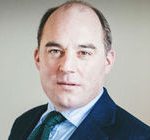
The comments made by Ben Wallace, the Secretary of State for Defence, on 14 November 2021.
On Remembrance Sunday we pause to remember all those who died in the service of their country and reflect on the sacrifices our personnel continue to make on operations around the globe. The commitment and sacrifice of our veterans continue to inspire today’s service personnel as they strive to honour their legacy.

The comments made by Nadine Dorries, the Culture Secretary, on 14 November 2021.
Every year we come together on Remembrance Sunday to honour the brave men and women who have paid the ultimate sacrifice for our country.
I am pleased that this year we can welcome back veterans in the march past and the public to be part of this special service. I hope that people across the country and from every walk of life will join those attending today in remembering those to whom we owe so much.
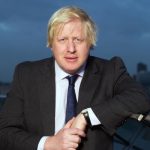
The comments made by Boris Johnson on 14 November 2021.
Today we come together to remember those who sacrificed everything in service of our country, in the First World War and every conflict since, including recently in Iraq and Afghanistan.
It’s a sacred ceremony that has endured for more than a century because we know the unpayable debt we owe those brave servicemen and women.
We know that for our tomorrow they gave their today. And we know that here at home and around the world, thousands of men and women in uniform still stand ready to defend our unity and our way of life, our values, and at a cost few among us would be willing to pay.
Today we come together. We wear our poppies with pride and stand as a nation in two minutes of silent tribute.
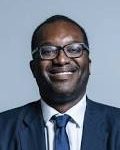
The comments made by Kwasi Kwarteng, the Business Secretary on 14 November 2021.
The UK is home to some of the most transformative and innovative medical research in the world, and the availability of this research funding, alongside the work of our strong life science and pharmaceuticals sector, will make the most of that research to help those living with motor neurone disease.
It is vital that we increase our understanding of this condition in pursuit of new treatments and better care, and I am pleased to see UK institutions at the forefront of that work.

The comments made by Sajid Javid, the Secretary of State for Health and Social Care, on 14 November 2021.
Neurodegenerative conditions like MND can have a devastating impact on people’s lives and I’m committed to ensuring the government does everything we can to fight these diseases and support those affected.
We’ve already invested millions in understanding and treating MND and our new funding commitment will back more research into this and other neurodegenerative diseases.
The UK is a global leader in medical research. Our world-class research sector was central to the discovery of lifesaving treatments for COVID-19 like dexamethasone and Tocilizumab, as well as the development of the vaccine programme which has saved hundreds of thousands of lives.
We will continue to harness this expertise and innovation to support pioneering projects to find better treatments for those living with motor neurone disease, like the excellent work underway at NIHR Sheffield Biomedical Research Centre where scientists are trialling new drugs to treat the condition.
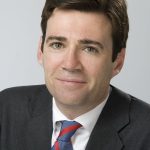
The comments made by Andy Burnham, the Mayor of Greater Manchester, on 10 November 2021.
Sacha [Lord] and I met with members of the Manchester Night In campaign and agreed to look at launching an Anti-Spiking Partnership with key venues in the city-region. Sacha is working up the details of this and we will convene a further meeting in two weeks’ time, I am hoping we can move quickly.
I want to thank the members of the Manchester Night In campaign for meeting with us. I saw the numbers of people participating in the protest and we are committed to taking tangible action.
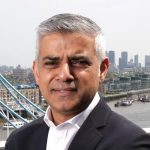
The comments made by Sadiq Khan, the Mayor of London, on 12 November 2021.
I am truly humbled by the brave sacrifices of our armed forces. Their heroism made the precious freedoms we enjoy every day possible.
We are in their debt and it is a true privilege to come together, stop, remember and honour those who paid the ultimate price for our freedom.
This Remembrance Day, we reflect on the incredible courage of the service men and women who have worked to keep us safe and remember to never take for granted those who continue to protect our way of life.
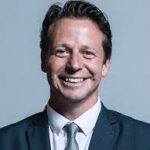
The speech made by Nigel Huddleston, the Minister for Sport, Technology, Heritage and Civil Society, in Dubai on 10 November 2021.
Good afternoon everybody. I’m delighted to be invited today as the Minister for Sport, Tourism, Heritage and Civil Society, and as a representative from the Department of Digital, Culture, Media and Sport to support these important discussions on ‘How will we Create?’ and open today’s panel session on ‘How creativity and technology can be harnessed for ‘good’?’
I am honoured to be invited by our friends here in the United Arab Emirates, and I wish to start by congratulating them on the fiftieth anniversary of its founding in 1971.
The United Kingdom and the United Arab Emirates are committed to tackling global issues together, in friendship, and in recognition of the opportunity created by the depth of our relationship. Together, we have established a new, and ambitious ‘Partnership for the Future’ which will strengthen the deep and historic relations that our countries share.
And in the same vein, the United Kingdom and United Arab Emirates are important trading partners. The UK Government is currently laying the foundation for an advanced trade deal between the United Kingdom and the Gulf Cooperation Council, of which of course the United Arab Emirates is a key member. The GCC and UK already enjoy very strong economic relationships, with £30.3 billion of overall trade in goods and services in 2020. We will build on this history to ensure that the United Arab Emirates and the United Kingdom are able to work closely together to promote prosperity and security for our citizens, tackle climate change, and expand the exchange of knowledge, skills and ideas.
In this spirit, I am pleased to be here to support this thought-provoking panel session. Before we start, I would like to credit our Official Heritage Partner for the UK Pavilion, The Royal College of Art. The RCA’s contribution to the UK Pavilion at Expo 2020 will bring together a wide range of interdisciplinary projects from staff, current students and alumni. It showcases the strength and importance of art, design and innovation – highlighting the significant role creative education plays in ensuring that a global Britain can innovate for a sustainable future. Yesterday, the RCA brilliantly hosted a workshop, and guided students to imagine “A city in a day”.
What do we mean by harnessing creativity and technology for ‘good’? I believe we mean championing “wellbeing”, in the very broad sense, for people and the planet that we live on. I believe we also mean creating economic growth and positive ecological change, which are not and must not be incompatible aims.
Today, as we emerge from a global pandemic, and climate change forces us to rethink and re-evaluate the way we live our lives, humankind’s creative and technological talents will be key to demonstrate resilience and innovation, and shape the sustainable society of tomorrow.
I am proud to belong to a Department, and a Government that consistently champions the immense benefits that our cultural and creative industries bring to UK and international audiences. I’m delighted to be joined this week by 27 of the UK’s leading creative companies. These companies with us today possess an impressive array of UK creative expertise, and a vast portfolio of successful project experience across a range of disciplines. They are keen to explore how they might help foster more collaboration with decision-makers across the Emirates, and build upon our strong commercial and cultural ties.
Of course 2022 will be a year of celebration for the UK, with a year-round programme of major sporting and cultural events: the Birmingham 2022 Commonwealth Games will form one of three key pillars of landmark events, alongside Her Majesty The Queen’s Platinum Jubilee and the Unboxed programme: showcasing the nation’s talent in science, technology, engineering, arts and maths. As international travel reopens, we want to welcome the world to the UK so visitors can experience these exciting events for themselves.
In the UK, the cultural and creative industries are an integral part of our economy, contributing over £115 billion in 2019 and accounting for almost 6% of GDP and nearly 12% of the UK’s international exports. And their influence goes way beyond these economic successes, as they contribute to enriching our communities’ wellbeing and inspiring future generations of innovators and artists in the UK and internationally.
And that is why in response to the pandemic, the UK Government introduced an unprecedented set of measures to tackle the crisis facing our most loved cultural and creative organisations, and ensuring these sectors can continue to thrive at home and across the world. We introduced a Culture Recovery Fund totalling nearly £2 billion, along with a further six month extension to the £500 million Film and TV Production Restart Scheme, and extended pan-economy support for both individuals and businesses. The UK’s £800 million Live Events Reinsurance Scheme will give the events industry the confidence they need to plan for the future.
As we emerge from the pandemic, our creative sectors will be key to support our resilience, growth and innovation potential. As they create opportunities and boost livelihoods across the country, our film, TV and video games industries are our great British success story, with production and development hubs spread right across the UK. At home and beyond, UK creative industries will play a crucial role in building a wealthier, innovative and highly skilled economy, sharing new content and ideas with international audiences. UK creative technologies, from immersive experiences to music streaming platforms, form part of a new generation of startups and scaleups. Sitting between creativity and technology, these businesses deliver impressive revenues, with the UK’s virtual reality industry alone growing at an annual rate of 34% and with an estimated £1.2bn in revenue by 2022.
These businesses will play a key role in driving future economic growth. And this is why the UK Government invests in programmes such as Creative Scale-Up and Creative Careers, which have encouraged growth and talent development across the creative industries right across the country. Together with UK Research and Innovation, we continue to provide support for research and development across the UK through the Creative Clusters programme, and encourage these businesses to drive the ideas of tomorrow.
Our creative sectors have demonstrated their resilience, innovation, and staying power over the last two years. Their adoption of digital technology has enabled worldwide online access to our great national and regional museums, concert halls and artists. More than 10 million people viewed the productions of our National Theatre in the first few months of lockdown, and hearteningly, the National Theatre says its streaming figures equate to its venues being completely filled for 11 years, which is a remarkable figure. Although these can never fully match the live experience, digital alternatives have enabled greater access to cultural productions and entertainment. We will continue to support digital solutions, through programmes such as the UK Research and Innovation’s ‘Audience of the Future’ programme, for the development of innovative content, and pioneering cutting-edge, immersive experiences that are accessible to the general public across the world.
UK creative technologies have the potential to be leading on our response to climate change, through ambitious innovative sustainable practices, and contributing to our Net Zero target for 2050. This impressive site here at Expo 2022 is an example of the wonders innovative design and cutting-edge technology can bring to life. I want to commend the sustainability-themed pavilion, in particular its landscape design and visitor experience for “Terra”, which was co-led by the Eden project, the UK’s iconic environmental visitor attraction.
The UK is already leading in sustainable fashion of course. From world-leading labels such as Stella McCartney to innovative small to medium organisations, the UK fashion industry is taking significant action on sustainability, which was showcased just last month, through our successful UK Expo 2020 ‘WEAR Breakthrough Moment’. Through the ‘Institute of Positive Fashion programme’ launched by the British Fashion Council, UK businesses are leading the way in driving change to transform the industry to a more circular, sustainable model, which will deliver significant environmental and economic impacts.
Working in partnership, with our friends from the Gulf, is absolutely key to delivering these objectives ahead of us.
I’m looking forward to today’s discussions, which will be a force of collective intelligence, and an opportunity to hear from thought leaders from a vast array of sectors. Including Design: with Priestman Goode, Film and Television: with the British Film Institute, Museums: with the V&A, and Digital arts and technologies: with the Biome collective and Disguise.
So that’s enough from me, over to the panel, thank you very much.