Category: Speeches

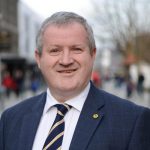
  • Ian Blackford – 2022 Loyal Address Speech

    Ian Blackford – 2022 Loyal Address Speech

    The speech made by Ian Blackford, the Leader of the SNP at Westminster, in the House of Commons on 10 May 2022.

    Thank you, Mr Speaker. May I thank the Duke of Rothesay for coming to Parliament today and for leading us in the state opening with the address that we had? May I also send best wishes from everyone across the House, and certainly from our Benches, to the Queen, in what is such a momentous year for her? We also need to reflect on those we sadly lost during the last Session of Parliament. We think of James Brokenshire, David Amess and, of course, Jack Dromey, three outstanding but different parliamentarians who were all a fine example to all of us of how to conduct ourselves in this place.

    I thank the hon. Member for Beverley and Holderness (Graham Stuart) for moving the motion. He gave an erudite treatise on his history in government. I hope he still has a lot to give. He has made it very clear that he was removed early from office by the Prime Minister and perhaps he still has some days ahead of him. It is important that he stressed the unity there is in this House on the topic of Ukraine. We all stand together with our friends in Ukraine, standing up to the warmonger and war criminal that still resides in Moscow. He will face justice and we will make sure that, ultimately, the people of Ukraine prevail.

    I thought it was interesting that the hon. Gentleman told us that the recent difficulties the Prime Minister has had with the Metropolitan police are not new; he has had his collar felt in the past as well. I also thank the seconder of the motion, the hon. Member for Brecon and Radnorshire (Fay Jones). What we had really was a job application for government from the Member. I am sure she has a long and fruitful career in front of her as a Member of this House and a member of the governing party.

    As much as I hate to rub salt into wounds, I have to say that this Queen’s Speech has one very obvious backdrop that deserves a mention: the democratic drubbing the Prime Minister and his party got last Thursday. I know they might want to hide from that reality, but the message from people right across these islands was crystal clear. The people made it clear that this is now a Prime Minister facing his final days in office and a Tory Government on their last legs.

    I am proud to say that Scotland sent the strongest message of all. I understand that this might be a wee bit uncomfortable listening for those on the Conservative Benches, but they need to hear it all the same because they need to hear what Scottish democracy is telling them and has been telling them for years. Last Thursday saw the best ever result for pro-independence parties in the local elections. The Scottish National party is the largest party in the largest number of councils—the greatest ever result in a local election in our party’s history. This is the 11th election victory in a row for the SNP and the eighth election in a row the SNP has won under the leadership of Nicola Sturgeon. A party in government winning more votes and winning more seats—can you imagine that, Prime Minister? That is what we did—what about the Conservatives? Down by 100,000 votes, and they lost 66 seats in Scotland. The worst news for all of them is, after all that, they still kept their leader.

    Democracy has spoken in Scotland. It has spoken before and it will speak again and again. All our democratic decisions say exactly the same thing: Scotland rejects this Westminster Government, we reject the Tory Party and we demand the choice of an independent future. The Scottish people know the cost of living with Westminster. We know the price we pay with the Prime Minister and the price of being stuck with a Tory Government we did not vote for. It is a price that none of us in Scotland—not one of us—can afford to pay any longer.

    Andrew Bowie (West Aberdeenshire and Kincardine) (Con)

    I would like to ask the right hon. Gentleman a direct question: how does it feel, eight years after Scotland said no so conclusively to separation, for the pro-independence parties to get the same proportion of votes as they achieved eight years ago, despite everything that has been thrown at us, and, frankly, everything we have thrown at ourselves? When will he admit that the game is up?

    Ian Blackford

    I have to say to my hon. Friend—I will call him that because I enjoy his company—that if the game is up for anybody or any party, the game is up for the Tory party in Scotland and for the Union. He needs to reflect on the fact that the SNP has won the last 11 elections. We went to the public and asked for a mandate to have an independence referendum. [Hon. Members: “You didn’t get one!”] I hear from a sedentary position that we did not get one. I ask Conservative Members to reflect carefully. Let us consider the first-past-the-post elections to the Scottish Parliament last year when we won 62 of the 73 seats. There is a pro-independence majority in the Scottish Parliament.

    The Queen’s Speech mentioned respecting democracy. Why do the Scottish Conservatives and those in London deny democracy to the people of Scotland? How many times do the people of Scotland have to elect the SNP into government yet Westminster says no? What price democracy when this place ignores the sovereign right and the will of the Scottish people? A day of reckoning will come for those who seek to frustrate the rights of Scots to have a referendum. That day will come and not only will there be a referendum, but we will win it because that is what democracy is about.

    Hannah Bardell (Livingston) (SNP)

    Does my right hon. Friend agree that the reason that this shower of corrupt, criminal Conservatives are blocking Scotland’s democratic and legal right to have a mandate over its own future is that they know—

    Mr David Davis (Haltemprice and Howden) (Con)

    On a point of order, Mr Speaker. It is in breach of the House’s regulations for somebody to call someone else a criminal in this Chamber.

    Mr Speaker

    A particular Member was not referred to, as you know—[Interruption.] Just a minute—I do not think I need any help. What I would say is that we want moderate and tolerant language that does not bring the House into disrepute or expect those outside to copy the behaviour. I want good behaviour and moderate language. I want people to think before they speak. I call Ian Blackford.

    Hannah Bardell rose—

    Mr Speaker

    No.

    Ian Blackford

    I agree with my hon. Friend. [Interruption.]

    Mr Speaker

    We don’t want to get into this.

    Ian Blackford

    I will come on to those points in a moment. Let me say respectfully, particularly to the hon. Members for West Aberdeenshire and Kincardine (Andrew Bowie) and for Banff and Buchan (David Duguid) that I think they know that a referendum will come.

    Let me take the Speaker’s warnings about behaviour in this House and how we should all reflect on it and how we interact with each other. That applies across the House—I say that to my friend the hon. Member for Edinburgh South (Ian Murray) on the Labour Front Bench, too. When we have that referendum, it is incumbent on us all to engage constructively.

    Let us examine, and by all means pull apart, the arguments for and against Scottish independence, but let us treat the electorate with respect. Let us trust the electorate who have given the Scottish Government a mandate to have that referendum. [Hon. Members: “2014!”] I hear what Members say about 2014. The whole point is that the electorate are given a choice in an election to elect a Government—and a Government with a mandate for an independence referendum. Let us not forget that, in 2014, we were explicitly told that if we stayed in the United Kingdom our rights as European citizens would be respected. What did this House do to Scotland? This House took Scotland out of the European Union against its will, and it is perfectly right that, under those circumstances, the people of Scotland have the right to revisit whether they wish to become independent.

    Edward Timpson (Eddisbury) (Con)

    Will the right hon. Gentleman give way?

    Ian Blackford

    I will make some progress.

    The most glaring omission in this Queen’s Speech is the complete lack of any immediate action to help people faced with the biggest inflationary crisis in 50 years. Democracy spoke last Thursday, but it is pretty evident that the Government have not listened and, certainly, given what we have seen today, that the Prime Minister has not learned. People turned out last week to punish the Prime Minister for the scandal of partygate. Let us not forget that the public know that this is the only Prime Minister who has been found to have broken his own laws in office and yet he still sits here as Prime Minister. That should shame this House as it shames us.

    The electorate also turned out to punish a Prime Minister and a Chancellor who have been so consumed by the crisis of partygate that they have failed to lift a finger to fight the Tory-made cost of living crisis. As the Bank of England confirmed last week, the occupants of No.10 and No.11 Downing Street have now led us to the brink of recession. As my hon. Friend the Member for Glasgow Central (Alison Thewliss) has said, the very first line of the Queen’s Speech should have been a commitment to bring forward an emergency budget. Where is it? Where is the emergency budget that we need? We need an emergency budget to tackle now the rising cost of energy, fuel and food.

    Caroline Lucas (Brighton, Pavilion) (Green)

    Does the right hon. Gentleman agree that it is remarkable that, for a Government who say that they care about the cost of living crisis, there was absolutely nothing new in this Queen’s Speech around, for example, a mass home insulation programme? Such a programme would be the cheapest, most effective and fastest way of getting our emissions down, creating hundreds of thousands of jobs, and tackling climate emissions, and yet we have nothing new on that at all in this Queen’s Speech.

    Ian Blackford

    The hon. Lady is right: there is nothing in this Queen’s Speech to deal with the cost of living crisis, and nothing to deal with home insulation. In the Scottish Parliament, the collaboration between the SNP and the Greens is an example of two parties coming together to make sure that we prioritise the climate emergency, which is really missing from this Queen’s Speech.

    Scottish Power has already called for urgent action. It has called for £1,000 bill discounts for 10 million families before energy bills rocket by another £900 this autumn, and yet, once again, there is nothing of that from the Prime Minister and the Chancellor in this Queen’s Speech. In fact, the Chancellor has already told us that his strategy to tackle the cost of living crisis is, literally, to sit on his hands, because he thinks it would be silly to act now—silly to act at a time when people are facing tough decisions on whether to turn the heating off, whether they can afford to put food on the table. The Chancellor thinks it is silly to act—that tells us everything that we need to know about the humanity and compassion of this Conservative Government. Just like the spring statement, nothing has come from this Government. This Queen’s Speech represents one more missed opportunity.

    I can give the Prime Minister some suggestions. He could have matched the Scottish child payment, which doubled in April and will increase to £25 per week per child by the end of this year. That is positive action to help those most in need. He could have matched the increase in Scottish-issued social security payments by 6%. He could have done what Governments are supposed to do in an emergency: helped people through it. By any measure or meaning, this Government fail on all counts.

    Another gaping hole in this programme is when it comes to energy policy, as has already been raised. As my hon. Friend the Member for Kilmarnock and Loudoun (Alan Brown) rightly said last month, the Prime Minister’s energy strategy is nothing more than a con trick, lacking any substance or ambition. The lack of ambition to drive growth in green investment and forge the path to net zero, not to mention an industrial strategy to back it up, fails this and future generations. That lack of ambition will not help investment in renewables, it will not help a just transition and it certainly will not help consumers now or in the long term. As for us in Scotland—a country so rich in energy potential—it is fleecing us of our green present and future.

    Jamie Stone (Caithness, Sutherland and Easter Ross) (LD)

    The right hon. Gentleman’s constituency and mine border the Cromarty Firth, which has the Nigg fabrication yard where many of the mightiest oil production platforms in the North sea were constructed. Would it not be a positive suggestion to Her Majesty’s Government to power ahead with building floating offshore wind structures in the highlands of Scotland? That would help the Prime Minister and it would help us in Scotland.

    Ian Blackford

    I am very grateful for that intervention, and I agree 100% with what the hon. Gentleman has said; he and I have been talking about that over recent months. There is fantastic potential, not just for the highlands but for the whole of Scotland, to benefit from the industrial revolution that will come from the opportunities in green energy. We need to make sure that we learn from the lessons of the past and that we are able to capture that supply chain. If we go back to the 1970s, Nigg was a thriving industrial base, with thousands of jobs in that community supporting the oil industry.

    I know the hon. Gentleman, like me, wants to see the highlands and islands being a thriving area with an industrial future, but we need the UK Government to help us on that. I look forward, together with him, to having discussions with the Government on exactly how we take that forward.

    The Secretary of State for Scotland (Mr Alister Jack) indicated assent.

    Ian Blackford

    I can see the Secretary of State for Scotland nodding, so perhaps we can discuss that over the coming days.

    Since the start of this year alone, we know that the UK Government have profited by at least £1.7 billion from the revenues brought in from North sea oil. All that revenue from Scotland’s resources, and still this UK Government refuse to match the Scottish Government’s £500 million just transition fund to help to ease reliance on fossil fuels. Still there is no commitment to carbon capture and storage in Scotland’s north-east. Not only are this Westminster Government harming our planet, but they are holding Scotland back.

    David Duguid (Banff and Buchan) (Con)

    I am genuinely grateful to the right hon. Gentleman for giving way, particularly as the Scottish cluster is so important to my constituency. Does he agree that the UK Government have thus far committed £41 million to that project? However, that was not what I wanted to intervene on; I wanted to intervene on his mention of the £500 million just transition fund for the north-east of Scotland. Can he do what his colleagues the hon. Members for Kilmarnock and Loudoun (Alan Brown) and for Aberdeen South (Stephen Flynn) have not been able to do thus far, and describe in detail what that £500 million will be spent on in the north-east of Scotland?

    Ian Blackford

    We have been short-changed by not getting carbon capture and storage in Scotland. Twice now we have been promised that it is coming, but we all know in Scotland that getting carbon capture and storage in the north-east of Scotland with the Acorn project is instrumental in getting to net zero by 2045. It is instrumental in ensuring that Grangemouth has a green chemical future. There can be no more dithering—there can be no more delay. The Acorn project must be greenlit, and it must be greenlit now.

    I say to the hon. Gentleman that yes, we will spell out exactly the plan for that £500 million transition fund. I say to the House now that, together with my hon. Friends the Members for Kilmarnock and Loudoun and for Aberdeen South (Stephen Flynn), we will be speaking more on Scotland’s future energy potential. We on these Benches will accept our responsibilities to deliver that energy strategy and the industrial policy that is lacking from those on the Government Front Bench.

    I have concentrated on how the proposed legislation in the Queen’s Speech fails to tackle the cost of living crisis and our green future, but what it will enact is every bit as harmful. At the heart of this Session’s programme there is a twin attack that must be challenged: an attack on devolution and an attack on human rights law.

    As the Prime Minister gets increasingly vulnerable and desperate, it is probably no surprise that he has reached back to the policy that got him the job in the first place—Brexit. The Brexit freedoms Bill to repeal EU-retained law and the other Brexit legislation in his Queen’s Speech represent a race to the bottom on standards. As for the idea that Westminster will be able to strike down devolved legislatures’ retained EU laws, that would be only the latest in a long line of Tory power grabs.

    The Prime Minister indicated dissent.

    Ian Blackford

    The Prime Minister shakes his head, but that is the reality—we have seen it over the course of the past few years. The Scottish Parliament has the right to retain EU law because we have the opportunity and the right to find our way back into the European Union. We will not be denied the right to retain EU law, and we will not be denied the right to an independent future in Europe—and the same applies to our human rights laws. This UK Government propose ripping up the Human Rights Act 1998. That is one more example of a Government who are prepared to force through legislation that is not only immoral but internationally illegal. That attack on human rights legislation is all the more concerning in the context of the continuing failure to respond compassionately and comprehensively to the ongoing Ukrainian refugee crisis, not to mention the anti-refugee Bill that was passed in the previous Session. The agenda of this Westminster Government could not be clearer—a hostile environment for devolution, for human rights law and for refugees—and that agenda continues apace in the Queen’s Speech.

    Joanna Cherry (Edinburgh South West) (SNP)

    Both the Government’s independent review of the Human Rights Act and the cross-party Joint Committee on Human Rights have found that there is no case—no evidence base—for replacing the Human Rights Act with a British Bill of rights, so does my right hon. Friend agree that the only reason why the Government are trying to do this is that for as long as the Human Rights Act is on the statute book, it is a serious threat to their project of diminishing the accountability of the Executive?

    Ian Blackford

    My hon. and learned Friend is absolutely correct. The public should be very afraid of what this Government are doing, and the consequences for our hard-fought and hard-won human rights, which have been built up over many decades.

    Mr David Davis

    I think the right hon. Gentleman would probably accept that I have a lot of credence in the importance of the human rights of British citizens, but the primary argument that I have heard about the modification of the Human Rights Act is that it will give the Government the ability to deport foreign criminals who have been released from prison. That is an important right of the Government, and surely it is worth having, if nothing else.

    Ian Blackford

    I am afraid that is a fig leaf for what is going on, which is an attack on the rights that have been fought for so hard, and so hard-won, over the past few decades. All this is the cost of living with Westminster, and it is exactly why Scotland wants out.

    Mr Perkins rose—

    Ian Blackford

    I have to make progress.

    Just as this Queen’s Speech seeks to entrench—[Interruption.] I hear the hon. Member for West Aberdeenshire and Kincardine (Andrew Bowie) saying, “Scotland doesn’t want out.” I hope he rises to speak at some point in the Queen’s Speech debate and tries to defend that. I say to him, as I do to the Prime Minister, that we have the mandate for an independence referendum. If he does not think that we will win it, let’s bring it on! I tell you what, Mr Speaker: he will soon find that Scotland will vote for independence.

    Just as this Queen’s Speech seeks to entrench Brexit Britain, our Scottish Parliament will bring forward legislation that offers a very different future to our people: a positive and progressive future at the heart of Europe. We are not seeking the Prime Minister’s permission; the only permission that we need—[Interruption.] There we are: we can see that the Prime Minister could not care less; he is talking to his friends on the Government Front Bench. That is the disdain that we see for the people of Scotland from this Government. They simply could not care less. The only permission we will ever need is the democratic permission of the Scottish people.

    Let us not forget that it is the people of Scotland who hold sovereignty. Let us not forget—the Prime Minister might want to listen to this—the legal opinion in the case of MacCormick v. the Crown at the Court of Session in 1953, when Lord Cooper stated:

    “The principle of the unlimited sovereignty of Parliament is a distinctively English principle which has no counterpart in Scottish constitutional law.”

    It is unquestionably the right of those in Scotland to determine their own future. Those rights were enshrined in the claim of right that was so instrumental in delivering our devolved Parliament, and that is the case today as we seek to exercise our rights in an independence referendum.

    Let me remind the Prime Minister of the words of Parnell, who used to sit on these very Benches. He said:

    “No man has a right to fix the boundary of the march of a nation; no man has a right to say to his country—thus far shalt thou go and no further.”

    Time and again, the people of Scotland have spoken, and they want us to choose our own future. They spoke at the last Holyrood election, and they spoke again last Thursday. The longer Scottish democracy speaks, the louder it will get. If the Conservatives want to stand in the way—if they want to try to deny democracy—they should be well warned that democracy will sweep them away, just as their party was swept away last week.
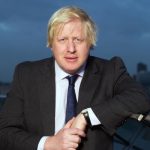

  • Boris Johnson – 2022 Loyal Address Speech

    Boris Johnson – 2022 Loyal Address Speech

    The speech made by Boris Johnson, the Prime Minister, in the House of Commons on 10 May 2022.

    Mr Speaker, allow me to join you and Members across this House in thanking His Royal Highness the Prince of Wales for delivering the Gracious Speech and in sending our warmest wishes to Her Majesty the Queen. The whole House knows the reluctance with which Her Majesty made today’s decision, and her extraordinary service to this nation continues to inspire us all.

    As we come to the halfway point of this Parliament, this country has seen off the biggest challenge that any post-war Government have faced, but the cost of the pandemic has been huge, with the biggest fall in output for 300 years, which necessitated Government expenditure of £400 billion. The aftershocks are still being felt across the world, with a global spike in energy prices and the impact that we are seeing on the cost of food. It is precisely because this Government got the big calls right and made the tough decisions during the pandemic that we had the fastest economic growth in the G7 last year—and will return to that status, by the way, by 2024—and therefore have the fiscal firepower to help families up and down the country with all the pressures that they face now.

    We will continue to use all our ingenuity and compassion for as long as it takes—my right hon. Friend the Chancellor and I will be saying more about this in the days to come —but at the same time as we help people, we need the legislative firepower to fix the underlying problems in energy supply, in housing, in infrastructure and in skills, which are driving up costs for families across the country. This Queen’s Speech takes those issues head on.

    Above all, we are tackling the economic challenges with the best solution of all, and that is an ever-growing number of high-wage, high-skill jobs, Mr Speaker. Jobs, jobs, jobs! We drive up employment by creating the right platform for business to invest; making our streets safer, with 20,000 more police; creating a healthier population, with 50,000 more nurses; funding the NHS to help it to clear the covid backlogs; giving the confidence that people know that they will be looked after in old age, by fixing social care; delivering gigabit broadband, giving the remotest parts of the country the access that they need; and using our Brexit freedoms to enable revolutionary technologies like gene editing to help our farmers to grow more nutritious and more productive crops.

    It is that combination of public and private sector together that is tackling unemployment, with half a million more people on the payroll now than before the pandemic began, and it is that strength at home that enables this country to show leadership abroad, as we have done and will continue to do in supporting the people of Ukraine. So this Queen’s Speech delivers on our promises: it will not only take us through the aftershocks of covid, but build the foundations for decades of prosperity, uniting and levelling up across the country.

    Mr Speaker, allow me to join the Leader of the Opposition in paying tribute to those colleagues we lost in the last parliamentary Session. Time will not dim our shock at the despicable murder of Sir David Amess, a friend to so many, who lost his life giving the service he loved most: a constituency surgery in a local church. Among the many legacies of Sir David, which include his amazing work on animal welfare and his campaign to support women with endometriosis, I am proud to say that today Southend-on-Sea stands as a city in tribute to him.

    Yesterday we gathered at St Margaret’s Church to remember James Brokenshire, a true gentleman who faced his battle with cancer with enormous courage, generosity and strength of character. It was typical of our dear friend that even in the midst of his own battle, he was supporting and encouraging others to seek help, campaigning for better lung cancer screening and becoming the first MP to secure a debate on the issue on the Floor of this House. We willed him to pull through because the world needs more people in public life like him. His loss is felt deeply in all parts of the House, and by all those whose lives he touched.

    Finally, we began the year joining the right hon. and learned Member for Camberwell and Peckham (Ms Harman) in paying tribute to her wonderful husband Jack Dromey, one of the great trade unionists of our time, who, having married someone who would go on to become, in his words, the “outstanding parliamentary feminist of her generation”, will also be forever remembered, in his words, as Mr Harriet Harman, né Dromey. We all knew him as a man of great warmth, energy and compassion, and he commanded the utmost respect across the House.

    The response to the Gracious Speech was magnificently proposed—self-deprecatingly, I thought—by my hon. Friend the Member for Beverley and Holderness (Graham Stuart), whose campaigning brilliance I saw at first hand, as he pointed out, when, as Back Benchers almost 20 years ago, he and I organised a demonstration against Labour’s plan to close community hospitals. The campaign group was called CHANT—Community Hospitals Acting Nationally Together. His memory of it is much more glorious than mine; I remember only a tiny handful of desperadoes. We were stopped almost immediately by the police, who turned us back, but my hon. Friend none the less succeeded in forcing the Government—the then Labour Government, I should stress—to perform a U-turn on the funding for community hospitals. As a great pace bowler—or a medium-pace bowler, it is probably fair to say these days—he bowled them middle stump. It is fitting that today he has proposed the response to the Gracious Speech for a Government who are delivering the biggest NHS catch-up programme in history, and who, far from closing hospitals, are building new hospitals—48 of them, in fact—so that we have the best health service in the world.

    I know, by the way, that my hon. Friend has personal experience of healthcare in a less fortunate country. He was lying in bed with a fractured rib after a skiing accident in Chamonix when three men in white coats arrived claiming that they were there to perform the operation. On closer inspection, they turned out to be my right hon. Friends the Members for Haltemprice and Howden (Mr Davis) and for Sutton Coldfield (Mr Mitchell) and my noble Friend Lord Lancaster. At that point, it is said, my hon. Friend levitated miraculously from his bed and made his escape. His speech today was in the finest traditions of this House.

    I was delighted that the motion was seconded by my hon. Friend the Member for Brecon and Radnorshire (Fay Jones). Some more seasoned Members will recall the 14 years of service rendered to the people of Cardiff, North by her father, Gwilym, who joins us in the Gallery today. I am delighted to see him there, and I am sure he will be filled with admiration at the speech just delivered by his daughter. I know that my hon. Friend sadly lost her mother earlier this year, and I have no doubt that she too will be simply bursting with pride as she looks down on us today, because while my hon. Friend may have been an MP for only a few short years, she has already established herself as a fantastic campaigner. As she said herself, that included changing the law to ban cyber-flashing, saving Brecon barracks, and—with 1st The Queen’s Dragoon Guards—securing the return of a permanent Welsh regiment in Wales. Nor was she prepared to remain silent while the Leader of the Opposition’s colleagues in Cardiff tried to keep Wales in perpetual lockdown. She is a tireless advocate for Welsh veterans and the armed services generally, an issue that is personal as well as political for her.

    As a fellow enthusiast for dogs at polling stations, I was delighted to see my hon. Friend take Nancy the Labrador to the polling station on Thursday. Nancy is, of course, named in honour of Nancy Astor, a great Conservative woman who certainly left a mark on this place and this country, and whose influence and achievements I am sure my hon. Friend will emulate in the long and successful career that so clearly awaits her. It was a pleasure to hear from her today, and I thank her for seconding the motion.

    On Sunday, I spoke to my G7 counterparts, together with President Zelensky, urging our international partners to join us in going further and faster in supporting Ukraine. I am sure the whole House will share my sorrow and revulsion at events in Mariupol in eastern Ukraine, which has endured weeks of merciless Russian bombardment and some of the worst atrocities of the war. At the same time, I am pleased to report that our brave Ukrainian friends are succeeding in repelling the Russian assault on Kharkiv, defending their second city with the same fortitude that saw off Putin’s attack on their capital. We should be proud that, when the very survival of a great European democracy was in peril, our United Kingdom has led the way, providing Ukraine with the weapons to defend itself and helping the world to impose the toughest economic sanctions on Putin. As I walked through the streets of Kyiv last month, I saw at first hand what the wholehearted support of this House and this country has meant to the brave people of Ukraine, so let the message ring out from this Chamber today: we will persevere in our support for the Ukrainians until Putin has failed and Ukraine has won.

    During the pandemic, this Government worked night and day at extraordinary speed to protect lives and livelihoods across our whole United Kingdom, whether by injecting £400 billion of direct support to the economy and supporting jobs through our world-leading furlough scheme, by becoming the first country in the world to administer and approve covid vaccines, or by delivering the largest testing programme and the fastest vaccine booster campaign in Europe. All this allowed us to retain one of the most open economies and societies across the continent—which we would not have done, by the way, if we had listened to the advice of the Labour party—with the fastest growth in the G7 last year.

    Now we will bring that same urgency, impatience and determination to deliver on our mission of getting our country back on track and easing the burdens on families and businesses across the land. That is why we have already committed £9.1 billion to assist with energy costs alone. We are giving back £150 to people in their council tax, cutting fuel duty, increasing the warm home discount, creating a tax cut for 30 million workers by raising the national insurance threshold and delivering the biggest ever increase in the national living wage, worth an extra £1,000 a year to those working full time. But however great our compassion and ingenuity, we cannot simply spend our way out of this problem; we need to grow out of the problem by creating hundreds of thousands of new high-wage, high-skilled jobs across the country.

    Sarah Owen (Luton North) (Lab)

    Will the Prime Minister give way?

    The Prime Minister

    As I give way to the hon. Lady, I remind the House that there has never been a Labour Government who left office with unemployment lower than when they came in.

    Mr Speaker

    It is not normal to give way in these speeches, but obviously the Prime Minister has agreed to do so.

    Sarah Owen

    I thank the Prime Minister for giving way. We have heard a lot of words being very rapidly delivered, but what we have not heard yet is an apology to the pensioners who are choosing between heating and eating, an apology to the children who have gone hungry throughout the school holidays and an apology to the hundreds of thousands of family members of covid victims who were lost during the pandemic.

    The Prime Minister

    Of course this Government are doing all we can to help people during the pandemic and to help pensioners, and by the way it was this Government who introduced the triple lock for pensioners, to protect them. This Government help people with the cost of heating, with the £9.1 billion that we are putting in, with the holiday activities and food programme and with the extra billions that we are putting in to support local councils. But be in no doubt—this is what everybody in this country needs to understand: we are making sure that we have a strong economy with high-wage, high-skilled jobs that will enable us to take this country forward. That would simply not have been possible if the hon. Lady had listened to the advice of those on her Front Bench, who wanted to keep us in lockdown—[Interruption.] That is absolutely true. It was worth giving way just to make that point. That is why we are going to continue with our levelling-up and regeneration Bill, which will help—

    Mr Toby Perkins (Chesterfield) (Lab) rose—

    The Prime Minister

    No, no; sit down. The Bill will help to create jobs wherever people live, in communities across the whole United Kingdom. That is the objective of this Queen’s Speech. It is all focused on driving growth and jobs, and our schools and higher education Bills will ensure that people have the skills to do them, raising standards in our classrooms and implementing the lifetime skills guarantee so that people can retrain and acquire new qualifications at any stage of their lives.

    Our energy Bill will power our new green industrial revolution, creating hundreds of thousands—

    Mr Perkins

    Will the Prime Minister give way?

    The Prime Minister

    No. The energy Bill will create hundreds of thousands of new green jobs, taking forward this Government’s energy security strategy—it is about time this country had one—with £22 billion—[Interruption.] Labour did not want a single nuclear power station. Come on, be honest. Look at them, the great quivering jellies of indecision that they are. Our £22 billion UK Infrastructure Bank is supporting the transition to net zero and vast new green industries, in which our United Kingdom will again lead the world.

    Just as we got Brexit done, so with this Queen’s Speech we finish the job of unleashing the benefits of Brexit to grow our economy and cut the cost of living. By bringing urgency and ambition to how we exercise the freedoms we have regained, our Brexit freedoms Bill will enable us to amend or replace any inherited EU law with legislation in UK law that puts the interests of British business and British families first. That is what we are going to do.

    We will seize the chance to make our United Kingdom the best-regulated economy in the world. We are going to take forward the trade deals we have with 70 different countries worth over £800 billion a year, with specific legislation in this Queen’s Speech—I hope I am not speaking too fast for the hon. Member for Luton North (Sarah Owen)—for our new free trade agreements with Australia and New Zealand.

    We are using our new freedoms to control our borders, with a new plan for immigration so that we can fix our broken asylum system, tackle the illegal immigration that undermines the legal immigration that we support and crack down on the vile people smugglers. I know that the Leader of the Opposition—perhaps I should, in deference to his phrase, refer to him as the Leader of the Opposition of the moment—likes to claim he opposes these plans, but it turns out that legislation to permit the offshoring of asylum seekers—

    Mr Perkins

    Will the Prime Minister give way?

    Mr Speaker

    Order. Only one person can be on their feet at the same time. The Prime Minister is not giving way.

    The Prime Minister

    The Leader of the Opposition of the moment purports or claims to oppose the plans, but it turns out that they were actually pioneered in 2004 by a Labour Government. The right hon. and learned Gentleman may have got Tony Blair to take part in his election campaign, but it is a shame he cannot get behind Tony Blair’s policies.

    During the pandemic, we marvelled at the courage and commitment of so many people: all the people working in our public services, from the extraordinary men and women in our NHS, risking their lives to save others, to those toiling to keep our country going, whether in schools or shops, or on public transport. It is therefore right that this Government are now investing more in our NHS than any other Government in history, giving our NHS the funding it needs to help to clear the covid backlogs. We will also make sure that every penny is well spent. Whether through pop-up clinics in our communities, more face-to-face GP appointments, or new cancer screening machines, we maximise the ability of our NHS to check and treat its patients.

    But when times are tough and families are facing such pressures, we must also cut the cost of government and cut the burdens that the Government place on taxpayers and citizens. We cannot have expensive delays in delivering passports and driving licences that see families stranded and unable to go on holiday and HGV drivers unable to transport goods around this country in the way that is so integral to the economy we need. We are going to fix that.

    Let me send a clear message from this House today: this Government will tackle the post-covid “mañana” culture. We will take whatever steps are necessary to deliver for the British people, because the British people are not prepared to wait, and we share their impatience.

    We will get through the aftershocks of covid, just as we got through covid, as I have told you, Mr Speaker, with every ounce of ingenuity, compassion and hard work. We will do so not by irresponsible spending that merely treats the symptoms of rising prices while creating an ever-bigger problem for tomorrow, but by urgently pressing on with our mission to create the high-wage, high-skilled jobs that will drive economic growth across the United Kingdom—the whole United Kingdom. That is the long-term, sustainable solution to ease the burden on families and businesses. That is the way to get our country back on track after the pandemic, to unite and to level up across our whole country, exactly as we promised. That is what this Queen’s Speech delivers. I commend it to the House.

  • Keir Starmer – 2022 Loyal Address Speech

    Keir Starmer – 2022 Loyal Address Speech

    The speech made by Keir Starmer, the Leader of the Opposition, in the House of Commons on 10 May 2022.

    Before I turn to the Address, I thank His Royal Highness the Prince of Wales for delivering the Address this morning. I, too, pay tribute to Her Majesty in the year of her platinum jubilee. Her dedication to Britain has been a reassuring constant in an ever-changing world, her commitment to public duty a reminder of the responsibilities that we all owe each other, and her dignity and leadership an inspiration to all of us. She will forever have all our thanks for 70 years of service to our country. We all wish her well.

    I congratulate the Prime Minister, who has achieved a new first: the first resident of Downing Street to be a constituent of a Labour council. I am sure that it will serve him well. I also congratulate the mover and seconder on their fine and funny speeches. I understand that the hon. Member for Beverley and Holderness (Graham Stuart) owns over 900 copies of Eagle comic books. He is no old duffer. He is an extensive collector of the adventures of Dan Dare from the Inter-Planet Patrol: a comic book with a hero with a moral message, a spirit that he has channelled into his 17 years in this House. Although there is some mischief in him, as he demonstrated in his speech—I particularly liked his advice that you should not make an enemy of your party leader—so I think he is a little bit more Dennis the Menace.

    The hon. Member for Brecon and Radnorshire (Fay Jones) is dedicated not only to what was obviously a punishing consultation exercise on what to put into her speech but a punishing exercise regime. She is a former cox with Twickenham Rowing Club, a half-marathon runner and even an ironman competitor. Maybe she is an iron lady in the making.

    I know that if they were here, David Amess and James Brokenshire would have been proud of both the mover and the seconder. We all miss them both. I know that the pain on the Conservative Benches is still raw, with their friends taken too soon, but their passing leaves us united in our resolve to defeat the evils of both extremism and cancer.

    I also want to pay tribute to my dear friend, Jack Dromey. Jack picked fights on behalf of working people, and he won them. In 1975, he led the first Equal Pay Act strike. He campaigned for the rights of cleaners everywhere, from the House of Commons to MI5, and, in the last year of his life, he campaigned for a public inquiry on behalf of the families bereaved by covid. The only way in which we on the Labour Benches can really pay tribute to Jack is by aspiring to champion working people as well as he did.

    Times are hard, but they are much tougher than they should be. As we emerge from the pandemic, find a new place in the world outside the European Union and transition to a carbon-neutral economy, our country faces great challenges, but at the same time, great opportunities are within our reach. We can rebuild stronger, learning where our society and our services need more resilience. We can do more than just get Brexit done; we can ensure that Britain is in the best position to thrive outside the European Union, and we can lead the world in zero-carbon industries, generating high-skilled, high-wage jobs across the country. But for that to happen, we need a Government of the moment with the ideas that meet the aspirations of the British public. This thin Address, bereft of ideas or purpose and without a guiding principle or a road map for delivery, shows just how far the Government are from that. Too out of touch to meet the challenges of the moment, too tired to grasp the opportunities of the future, their time has passed.

    The first great challenge our country faces is the cost of living crisis. Inflation stands at 7% and rising; household bills have gone up by hundreds of pounds; the cost of the weekly shop has rocketed; and people are seeing their wages run out much earlier in the month and the value of their savings fall. I wish I could say that the worst is over, but last Thursday the Bank of England revised down Britain’s growth and revised up inflation. This Government’s failure to grow the economy over a decade, combined with their inertia in the face of spiralling bills, means that we are staring down the barrel of something we have not seen in decades: a stagflation crisis. That is a truly shocking legacy of this Government. It should humble those on the Conservative Benches who have ignored the red lights on our economy even while wages were frozen for over a decade, and whose complacency is best summed up by a Prime Minister whose response to the crisis was to make fun of those who were worrying about inflation.

    A Government of the moment would use the great powers they have to tackle this head on and bring forward an emergency Budget with a windfall tax for oil and gas producers which would raise billions—money that could be used to slash the cost of energy bills and help businesses keep their costs down. Even the bosses at BP do not agree when the Prime Minister says it would deter investment. It is a common sense solution, but instead the Government are bereft of leadership: the Chancellor ruling the windfall tax in, the Business Secretary ruling it out, and a Prime Minister who does not know what he thinks.

    It is not just about the short-term measures. A Government of the moment would take a step back from the crisis and ensure that Britain is never again so vulnerable to a surge in international prices, forced to go cap in hand from dictator to dictator looking for a quick fix of imported oil. That means standing up to those vested interests who oppose onshore wind, the cheapest and most reliable source of electricity that we have, but this Prime Minister is too weak to stand up to his Back Benchers. It means investing in the insulation we need to use less energy in our homes. That would take £400 off energy bills every year and cut gas imports by 15%, but this Prime Minister is far too concerned with vanity projects ever to prioritise investment in insulating homes. So we are left with an energy Bill not up to the moment. It is the latest chapter in a pathetic response to the cost of living crisis. Where there should have been support, it has been tax rise after tax rise on working people—the only country in the G7 to do so during a cost of living crisis.

    The low growth that led to the stagnation we see today is the same reason wages have been frozen for so long. Over 12 years of Tory Government the economy has grown far slower than when Labour was in power, and it is set to go even slower in coming years—the slowest-growing economy in the G7 next year. As the director general of the CBI said:

    “For a country that is used to growth at 2 – 2.5%”—

    the Conservative record—

    “is simply not good enough.”

    We cannot afford to go on like this. If the Tories had simply matched Labour’s record on growth in Government, people would have had higher incomes, boosting public finances, and we could have spent over £40 billion more on public services without having to raise a single tax.

    So the second great challenge our country faces is to get Britain growing again. A Government of the moment would have grasped the nettle and set out a new approach to the economy; an approach based on a stronger partnership between Government and businesses; a partnership dedicated to growth. There would have been an industrial strategy to grow the industries of the future, with the Government providing initial investment that brings confidence and security and acts as a catalyst for the private sector to invest in gigafactories, hydrogen and steel—in high productivity jobs right here in Britain. A Government of the moment would finally abolish business rates and replace them with a fair system that creates a level playing field with online giants, so that our businesses can compete, invest and grow. And a Government of the moment would have a plan to revive our town centres with new businesses, providing finance for a new generation of start-ups in our town centres and giving councils the power to take over empty shops and fill the space with workshops and offices offering the jobs of the future.

    Instead of that new approach to the economy, we have a Chancellor who thinks it would be silly to do anything different; a Chancellor who, rather than partnering with business, has loaded them up with debt and wonders why they are struggling to invest; a Chancellor who seems content to have the slowest growth of any G20 country bar one, Russia; a Chancellor whose legacy will be low growth, high inflation and high tax, and with it, the diminishing of Britain’s living standards—no hope of taking on the big challenges, no hope of seizing the great opportunities, hopeless. And because the Government are not up to the challenge of growing the economy, all those tax hikes are not going into improving public services, with no chance of a doctor’s appointment, people forced to wait months for urgent mental health treatment, and super-sized classrooms the norm again. Never before have people been asked to pay so much for so little.

    The third great challenge we face is ending the poverty of ambition that this Government have for our public services. That means a Government of the moment relentlessly focused on school improvement. Labour would improve leadership and teaching standards at state schools, funding it by ending tax breaks for private schools. It means a Government of the moment that would finally deliver world-class mental health provision that matches years of empty rhetoric on parity with physical health. Labour would hire new clinicians so that we can guarantee mental health treatment in four weeks, paid for by closing loopholes to private equity firms.

    Instead, we have a Government that went into the pandemic with record waiting lists and have no plan to get them down any time soon; a Government that take the public for fools by pretending that refurbishing a wing of a hospital is the same as building a new hospital; a Government that cannot hire the GPs they promised or get the GPs we have to see more patients—lost in spin, with no ambition, not up to the challenge of the moment.

    It is not just education and health that need reform. Fraud has become commonplace, with 7 million incidents a year and Britain routinely ripped off, but the Business Secretary has suggested that it does not even count as crime. Fraud is just the tip of the iceberg. Victims are being let down while this Government let violent criminals off. The overall charge rate stands at a pathetic 5.8%, meaning that huge swathes of serious offences like rape, knife crime and theft have effectively been decriminalised.

    A Government of the moment would say, “Enough is enough”—[Interruption.] Nobody can be proud of this record of 12 years. A Government of the moment would invest in community policing, pulling resources away from vanity projects like the Prime Minister’s ministerial yacht. They would strengthen protection for victims of crime and antisocial behaviour and increase the number of specialist rape units in the justice system so that it stops routinely failing women. Instead, we have a Government who talk tough while letting the justice system fall apart—no care for victims or their communities, not good enough, not up to the moment. We have a Government whose time has passed, a Cabinet out of ideas and out of energy, led by a Prime Minister who is entirely out of touch.

    It does not have to be this way; it will not always be this way. A Labour Government would tackle the cost of living crisis head on, get Britain growing again after 12 years of failure, and improve public services so that they deliver for the people paying for them. A Labour Government would rise to the moment where this Government have badly failed.

  • Fay Jones – 2022 Loyal Address Speech

    Fay Jones – 2022 Loyal Address Speech

    The speech made by Fay Jones, the Conservative MP for Brecon and Radnorshire, in the House of Commons on 10 May 2022.

    It is a real honour to be asked to second the Loyal Address this afternoon, and an even greater one to follow my hon. Friend the Member for Beverley and Holderness (Graham Stuart). His was a pitch-perfect speech—an exemplar of how to do it—that undermined his status as a self-confessed old duffer. Members with more experience than me have seen many state openings, but this year’s is undoubtedly special. Despite Her Majesty’s absence this morning, the platinum jubilee is a lasting reminder of the Queen’s immense devotion to duty. I know that everyone in the House wishes Her Majesty a speedy recovery.

    At last year’s Queen’s Speech, I sat up in the Gallery, as seats in the Chamber were especially limited because of the covid regulations. As I watched my good friend, my hon. Friend the Member for South Ribble (Katherine Fletcher), get to her feet, I remember thinking to myself, “All the best, Fletch. I wouldn’t want to be in your shoes right now,” but karma comes at us fast, does it not, Chief Whip? Unlike my northern friend, I have the honour of addressing a packed Chamber, with faces free of the burden of face masks. Much as I loathed wearing a face mask in the Chamber, they certainly helped me by hiding the looks of disinterest and abject boredom whenever I got up to speak. This year, however, the cameras are on, so Members should at least try to look as though they are enjoying this.

    On being asked to second the motion on the Gracious Speech, I turned to trusted friends and colleagues for advice.

    The Treasurer of Her Majesty’s Household (Christopher Pincher)

    Name them!

    Fay Jones

    All in good time, Deputy Chief Whip. The instant reaction of my right hon. and learned Friend the Member for South Swindon (Sir Robert Buckland) was, “Oh my God, love. You’d better be funny.” My hon. Friend the Member for Cities of London and Westminster (Nickie Aiken) told me that I would be “a total mess.” Even my dad, a former Member and my inspiration in many ways, said after yesterday’s rehearsal, “Well, you’re going to have to tell the jokes better than that.” But that is actually better feedback than he gave me at the start of my political career, at my count in 2019. The result had been declared, and I took to the podium to make my acceptance speech. My mum was beaming in the front row, and I saw my dad move to the back of the hall, presumably to get a better view or to take a photograph. Just a minute or so into my speech, however, he had had enough, and he gave me the signal to wind it up and get off the stage.

    With friends like those, I ran straight for the warm embrace of the House of Commons Library, where I discovered that I am the seventh Member from Wales to have taken part in the speech on the Loyal Address since 1874. I am the first woman from Wales and the first Conservative from Wales. However, I am very proud to say that my constituents in Brecon and Radnorshire have a long association with the Loyal Address. In 1975, one of my predecessors, Caerwyn Roderick, a senior figure in the Labour party, proposed the address. As Members will know, Brecon and Radnorshire is two thirds of the historic county of Powys, so with a proposer and now a seconder coming from the undisputed better half of the county, I wonder how my hon. Friend the Member for Montgomeryshire (Craig Williams) feels this afternoon, knowing that he is neither the “has been” nor the “will be” [Laughter.] I withdraw that, Mr Speaker.

    My being asked to give this speech came as a surprise to many, most of all me. I was always afraid that I had torpedoed my political career long before it even began. In 2005, when I was at university, I shared a flat with a friend who was working on the campaign to make my right hon. Friend the Member for Haltemprice and Howden (Mr Davis) the Conservative party leader. It was suggested to me and a few friends that wearing a pink T-shirt that said “It’s DD for me” would go down a storm at party conference. Turns out, it did! Sorry, David. So 14 years later, when I was asked at my selection meeting for Brecon and Radnorshire, “Have you ever done anything to embarrass the Conservative party?”, I had to say yes. I was later asked what I had learned from the incident, and I said that I do not look good in pink.

    Today is a proud day for my constituency and my family. Apart from stints in London for university and working in Europe, I have lived my whole life in Wales. I was raised in a firmly Conservative household, and I think being a Conservative in Wales has helped me to develop the thick skin that I hope will get me through today. It certainly helped after last week’s results, anyway. In 2019, my hon. Friends the Members for Wrexham (Sarah Atherton) and for Ynys Môn (Virginia Crosbie) and I became the first three women to be elected to the Conservative Benches representing Welsh constituencies. I like to think that the three of us were worth the 100-year wait.

    While we have some difficult questions to answer and challenges to meet on the treatment of women in this place, it is imperative that we do not put anyone off becoming a Member of Parliament. Yes, the House of Commons is a strange place to work and, yes, sometimes some people do not realise that they are part of the problem, but despite that, this is a place where women achieve great things.

    It was a woman who introduced the Autism Act 2009 —the late, and much-missed across this House, right hon. Member for Chesham and Amersham. It was a woman who delivered the children’s funeral fund and who continues to be a pain in the Government’s neck on hormone replacement therapy—the hon. Member for Swansea East (Carolyn Harris), who I am sorry to see is not in her place today. It was a woman who secured inclusion in today’s Gracious Speech of the Government’s intention to license pedicabs right across the Cities of London and Westminster for the very first time—no prizes for guessing who that was. And it was a woman, long before my time, who stood up to the might of the unions, empowered council tenants to buy their homes and, 40 years ago this year, protected the Falkland Islands. It is important that we say today that a woman’s place is in the House of Commons. By the way, it was also a woman who got £20 million out of the Treasury for the global centre of rail excellence, made cyber-flashing a criminal offence and got the Ministry of Defence to scrap the closure of Brecon barracks—just saying! [Interruption.] Yes, of course.

    As much as we must attract more women to this place, we must do our utmost to attract a wide range of talents, so that our Benches are filled with the plain-speaking common sense of my hon. Friend the Member for Ashfield (Lee Anderson), the distinguished professional experience of my hon. Friend the Member for Newbury (Laura Farris) and, dare I say it, the political diplomacy of my hon. Friend the Member for Stoke-on-Trent North (Jonathan Gullis).

    My Liberal Democrat opponents tell me that all I do is talk about farming and the military, so today I will keep them happy and do exactly that. During my maiden speech, I said that I felt I had won first prize in the lottery of life by becoming the Member for Brecon and Radnorshire. That is as true today as it was then. It is a glorious part of the world, stretching from the upper Swansea valley to just outside Ludlow. It is kept thriving by thousands of farmers, not trustafarian farmers who inherit their wealth, but the ordinary, mud-under-the-fingernail grafting farmer, who works year round to put food on our plates and give their kids a future.

    The cost of living crisis is having a particular effect in rural areas. Costs of fuel and fertiliser are eye-watering, and that presents a real risk to our ability to feed ourselves. It is deeply tragic that it has taken war in Ukraine for us to focus on UK food security. If I do anything in this place, it will be to bang on about the importance of farming to this country—hence why I welcome the measures in the Gracious Address that will see British produce on tables around the world, and even the Online Safety Bill, which will protect the unsuspecting farmer from nefarious internet videos.

    If you walk down the Watton in Brecon, Mr Speaker, as I know you have, you will see 24 trees honouring the 24th of Foot. A better name for them is the South Wales Borderers, and they fought at the battle of Rorke’s Drift, which was made iconic in the film “Zulu”. Whether Brecon barracks, the Sennybridge training area or the Navy’s outdoor leadership training centre in Talybont, my constituency is extremely proud of its military footprint. We are also home to the Cambrian Patrol, which is the Olympic gold medal in infantry training, a 60 km march for teams of eight over just 48 hours. He will be far too modest to tell you himself, Mr Speaker, but the Secretary of State for Wales is in fact a finisher of that event. So modest was he, so keen to keep his light under a bushel, that when we visited the Cambrian Patrol back in October, he brought his finisher’s certificate along with him and put it out on Twitter. It was dated 1987, and I took great joy in pointing out that I was two years old at the time—and I take great joy recounting it again now.

    Over the years, many wrongs have been done to military veterans, and I applaud the efforts of those right across the House to correct that. The hon. Member for Barnsley Central (Dan Jarvis) has led on the Opposition Benches in that effort. On this side of the House, my hon. Friends the Members for Plymouth, Moor View (Johnny Mercer) and for Wrexham have spoken for male and female veterans in ways few can match. So on behalf of the many veterans I represent—particularly those who served in Northern Ireland and who tell me that they have been frightened of opening the post for decades—I warmly welcome the inclusion of the legacy Bill in today’s Gracious Speech.

    Let me conclude my seconding of the Loyal Address so that I can give way to the Leader of the Opposition. I know we are all delighted that he has not cancelled this afternoon’s speech—I warmly welcome it on behalf of my constituents.

    Today’s Queen’s Speech contains a commitment to right the historic imbalance that has pervaded this country for too long, and to level up all four corners of the United Kingdom. It offers leadership in turbulent times, it looks to the long term, ironing out our challenges of food and energy insecurity, and it makes best use of our new-found legislative freedoms. It helps this country to stand tall on the world stage, as it has done for so long, and it is my honour to commend this Gracious Speech to the House.

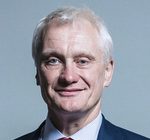
  • Graham Stuart – 2022 Loyal Address Speech

    Graham Stuart – 2022 Loyal Address Speech

    The speech made by Graham Stuart, the Conservative MP for Beverley and Holderness, in the House of Commons on 10 May 2022.

    I beg to move,

    That an humble Address be presented to Her Majesty, as follows:

    Most Gracious Sovereign,

    We, Your Majesty’s most dutiful and loyal subjects, the Commons of the United Kingdom of Great Britain and Northern Ireland, in Parliament assembled, beg leave to offer our humble thanks to Your Majesty for the Gracious Speech which was addressed to both Houses of Parliament.

    It is a great honour for me and my constituents in Beverley and Holderness that I propose the Humble Address, and all the more so in this platinum jubilee year—I think we can all take it as read that this packed Chamber is intimidating and creates a certain amount of nerves. We wish Her Majesty the best of health and thank her for her seven decades of service to the country. Her Majesty has demonstrated a selflessness that puts the rest of us, perhaps not least in here, to shame.

    The legislative agenda we are debating today must be seen within the most alarming of international contexts. Russia’s unprovoked and unjustifiable attack on Ukraine has united the whole House in condemnation. We stand together with our friends in Ukraine, and I congratulate the right hon. and learned Member for Holborn and St Pancras (Keir Starmer), the Leader of the Opposition, on his party’s wholehearted backing for the measures to support the Ukrainians. We are providing rocket launchers, complete with rockets—so different from the Trident submarines that the right hon. and learned Gentleman’s party previously proposed, which were to have been built but, hon. Members will remember, never armed.

    No one in politics minds being senior but, equally, no one wishes to be seen as past it, yet today I fulfil the role of the old duffer whose best days are behind him, while my hon. Friend the Member for Brecon and Radnorshire (Fay Jones) plays the part of the up-and-coming talent. The Chief Whip certainly made the right decision with the latter, as we shall soon hear. But given my part today, I thought I would dispense some advice, both to those seeking to enter Parliament and to young thrusters already here, many of whom were elected as long as two years ago—you know who you are. I cannot believe that you are still not in the Cabinet. Some of us are here for a long time, some for a short time—and some, according to our media friends, for a good time. [Laughter.]

    For candidates, my advice is to keep going and realise how much simply comes down to luck. When I applied to Beverley and Holderness Conservative association, the senior officers had already decided who they were going to have as their candidate: none other than their then Member of the European Parliament, who would not be able to continue in that role, now my right hon. Friend the Member for Scarborough and Whitby (Sir Robert Goodwill). After I won that selection, by two votes, two elderly lady members congratulated me and told me they had voted for me. The first one said to me, “You spoke very well, Mr Stuart.” “Thank you”, I said. The other one came in with, “Yes, but Robert Goodwill—he was brilliant”, to which the other replied, “He’s got a job already.”

    Robert, of course, won selection in Scarborough. He then went on to overturn Lawrie Quinn’s 3,500 majority, and was, I think, along with my hon. Friend the Member for Shipley (Philip Davies), the only Conservative candidate in the whole of the north of England to take a seat from the Labour party at that election. The Leader of the Opposition must wish it was so today. Instead the only thing opening up for him in the north is a police investigation. [Laughter.] Some months after the election, I met a member of my association’s executive committee, who actually congratulated me and said that he was glad that I had been selected as a candidate after all. I thought at last my hard work was being recognised, and then he added, “Because you’d have never won Scarborough.”

    My constituency of Beverley and Holderness comprises four towns—Beverley, Hornsea, Withernsea and Hedon—and many other hamlets and villages that are dotted across east Yorkshire. It is a beautiful part of the world and has history as well as charm. Beverley has contributed more than most places to the improvement of our democratic system over the years—admittedly chiefly by running elections in such a corrupt manner that the law had to be changed afterwards. After the unseating of the victorious candidate in 1727 by a petition, his agents were imprisoned and Parliament passed a whole new bribery Act. But Beverley’s notorious freemen were not to be put off so easily. Beverley continued to be a byword for electoral malpractice. The novelist Anthony Trollope stood in the Liberal interest, unsuccessfully, in 1868, and such was the level of wrongdoing that a royal commission was established especially and a new law passed disenfranchising the town and barring it from ever returning a Member of Parliament again. Obviously the law did change. Free beer and cash inducements were the electoral controversies then, rather than, say, beer and curry today. Never in the history of human conflict has so much karma come from a korma.

    I said I would provide some advice for our up and coming parliamentarians. When I arrived here, I was just about wise enough to back the winner of the leadership contest that summer, David Cameron. What I was not wise enough to do was stop telling him every way in which I thought he was going wrong, and I do mean every way. Funnily enough, that resulted in an 11-year wait to be asked to go on to the Front Bench—a wait that ended only when he stepped down. It may be that my right hon. Friend the Member for Maidenhead (Mrs May) saw merit where her predecessor did not, but it is more likely that she had just seen a lot less of me. Lesson one for the up and coming: do not make an enemy of your party leader.

    There is of course more to this place than the Front Bench. In my first term, community hospitals were being closed in swathes right across the country, and all three in my constituency were lined up for the chop. Having led marches and demonstrations in all the towns across my constituency, it became obvious to me that the problem would not be solved locally, so I set up a campaign group, CHANT, or Community Hospitals Acting Nationally Together. Along with my deputy chairman, the then Member for Henley, I recruited colleagues from right across the House. We waged guerrilla warfare on Labour’s Department of Health, breaking the record for the number of petitions presented in one day in this House.

    We held a rally outside this place. There were hundreds of people, and banners and placards galore. David Cameron spoke; so did Labour MPs; and I remember my deputy giving a rousing speech. So carried away with the righteousness of our cause was he that he called on everyone to join us on a march to Parliament Square. So it was that our now Prime Minister found himself being intercepted by a police inspector, who told him that no permission existed for such a march, and that we must go back. There are two lessons here: never stop campaigning for what you believe in; and, having marched your troops to the top of the hill, never be afraid to march them down again, if circumstances necessitate it.

    When the call did come, I was lucky enough to go into the Whips Office, the only communal playpen in Westminster aside from the crèche. Being there made me realise how little I knew after 11 years here, because as a Whip, you learn a lot. That is another lesson: join the Whips Office if asked.

    Given my position, I would like to tell the House that being in government is not all it is cracked up to be, but actually it is. I served both my right hon. Friend the Member for North Somerset (Dr Fox) and my right hon. Friend the Member for South West Norfolk (Elizabeth Truss) when they were Secretary of State for International Trade. Both were exceptional. They were tireless and demanding, but delivered, from a new Department, outcomes that no one thought possible. So, young thrusters, enjoy any Department that you are in, and value it for itself, and not just as a stepping stone to something else. After all, as I discovered last September, you never know when you will be prematurely on the Back Benches.

    Today’s Queen’s Speech unveils a substantial legislative programme under four main headings: boosting economic growth and helping with the cost of living; making our streets safer; funding the NHS and tackling the backlog; and, providing leadership in troubled times. To pick out one item, if I may, the energy Bill is of particular importance to my constituents. It will make possible the development of hydrogen, and of carbon capture and storage, on which I expect the Humber to be not only a national but a global leader. It will take us to net zero and give us energy security and huge export potential.

    The Conservative party, under the leadership of my right hon. Friend the Prime Minister, has work to do. We were elected to deliver our manifesto and level up the United Kingdom, and that is what we will do. Despite the human weakness that is all too present in this place, I believe that nearly everyone here is in politics for the right reasons, and that elected public service continues to be a noble calling. I hope that potential candidates from all sides will continue to come forward; that young thrusters will show ambition for their country, as well as for themselves; and that before we fire legislative bullets at the challenges that face us, we will, in this platinum jubilee year, take aim and, like our Ukrainian friends, say with total conviction, “God save the Queen.” I commend the Gracious Speech to this House.

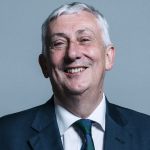
  • Lindsay Hoyle – 2022 Statement at Beginning of New Parliamentary Session

    Lindsay Hoyle – 2022 Statement at Beginning of New Parliamentary Session

    The statement made by Lindsay Hoyle, the Speaker of the House of Commons, in the House on 10 May 2022.

    The House has directed the Speaker to make a statement at the beginning of each Session about the duties and responsibilities of hon. Members. I begin by reminding hon. Members of their duty to observe the code of conduct agreed by the House and to behave with civility and fairness in all their dealings. The behaviour code applies to Members as it applies to others who visit or work in Parliament, and it provides clear guidance. Unacceptable behaviour will be dealt with seriously, independently and with effective sanctions.

    The House asserts its privilege of freedom of speech. That privilege is enjoyed by Members of Parliament only in their work in this House; as private individuals, we are equal under the law with those whom we represent. It is there to ensure that our constituents can be represented by us without fear or favour. It is an obligation upon us all to exercise that privilege responsibly.

    The Speaker does not have the power to police the accuracy of Members’ contributions. Therefore, it is incumbent on Members to be accurate in what they say in this House, but if a Member is inaccurate by mistake, they should correct that mistake as soon as possible. Members must be mindful of the impact of what they say, not only on other Members but on others who follow our proceedings, and Members should be heard courteously, whatever their views.

    In this place we are honourable Members and the language we use about each other should reflect that. If a Member falls short of the standards expected of us all, there are ways of dealing with that, but not by accusations made as sideswipes during questions or debates. If we fail to treat each other with respect in debate, that diminishes our work, but it also risks raising the temperature of discussions outside this place—particularly on social media—which already too often descend into online abuse against hon. Members.

    I also wish to give some advice about seeking to speak in the Chamber. The Deputy Speakers and I take into account a number of factors when determining who to call during business that is not balloted, and one factor we consider carefully is how often a Member speaks —Jim Shannon is not with us. [Laughter.] In other words, if you have spoken much more than a colleague then, other things being equal, that colleague is more likely to be called—or certainly more likely to be called earlier—in the next debate for which you both apply.

    I know it can be frustrating not to be called in a debate or to be called very late; prioritising the debates, question times, urgent questions and statements in which you seek to participate is one way of trying to avoid that happening. Now that we have started a new Session, everybody’s scores start, after the reset button, at zero. I should make it clear that different principles apply to Front Benchers from the three largest parties, who are nominated to speak on behalf of their parties. Staff in my office are happy to offer further advice.

    Finally, I want all Members and everyone in the parliamentary community to be able to go about their work safely, both online and here in Westminster. The security of this building and those who work here depends on us all. We have a duty to be vigilant and to assist those whose job it is to maintain this place as a safe place to work. Before moving to the first business of the new Session, I would like to express my very best wishes to all hon. Members and to all those who work in this House.

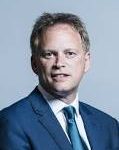
  • Grant Shapps – 2022 Comments on Minimum Wage for Seafarers

    Grant Shapps – 2022 Comments on Minimum Wage for Seafarers

    The comments made by Grant Shapps, the Secretary of State for Transport, on 10 May 2022.

    We will stop at nothing to make sure seafarers in UK ports are being paid fairly. P&O Ferries’ disgraceful actions do not represent the principles of our world-leading maritime sector and changing the law on seafarer pay protection is a clear signal to everyone that we will not tolerate economic abuse of workers.

    We will protect all seafarers regularly sailing in and out of UK ports and ensure they are not priced out of a job. Ferry operators that regularly call at UK ports will face consequences if they do not pay their workers fairly.

  • Amanda Milling – 2022 Comments on Support for Syrians

    Amanda Milling – 2022 Comments on Support for Syrians

    The comments made by Amanda Milling, the Minister for the Middle East, on 10 May 2022.

    I am proud to announce the UK will pledge up to £158 million during the Supporting the Future of Syria and the Region conference in Brussels today. It is vital the international community collectively supports humanitarian efforts in Syria. The UK will continue playing a leading role to ensure the people of Syria are not forgotten and a lasting settlement to the conflict is found that protects the rights of all Syrians.

  • John Glen – 2022 Comments on Financial Scams

    John Glen – 2022 Comments on Financial Scams

    The comments made by John Glen, the Economic Secretary to the Treasury, on 10 May 2022.

    We are reforming our financial services sector now we have left the EU to ensure it acts in the interests of communities and citizens, creating jobs, supporting businesses, and powering growth across all of the UK. “We know that access to cash is still vital for many people, especially those in vulnerable groups. We promised we would protect it, and through this Bill we are delivering on that promise.

    We are also sticking up for victims of financial scams that can have a devastating impact, by ensuring the regulator can act to make banks reimburse people who have lost money through no fault of their own.

  • Liz Truss – 2022 Statement on North Korea’s Ballistic Missile Testing

    Liz Truss – 2022 Statement on North Korea’s Ballistic Missile Testing

    The statement made by Liz Truss, the Foreign Secretary, on 10 May 2022.

    The UK condemns North Korea’s ballistic missile launches on 4 and 7 May. We remain deeply concerned by repeated testing of ballistic missile technology which is damaging regional security and stability.

    The UK works closely with our partners to urge North Korea to return to dialogue and take credible steps towards denuclearisation in a complete, verifiable and irreversible manner.