Category: Speeches

  • Paul Beresford – 2022 Speech on the Future of the UK

    Paul Beresford – 2022 Speech on the Future of the UK

    The speech made by Paul Beresford, the Conservative MP for Mole Valley, in the House of Commons on 16 May 2022.

    I must congratulate the hon. Member for Birmingham, Erdington (Mrs Hamilton) on her speech, which she delivered with such feeling. I was sitting here waiting for clapping from the Gallery above—she must warn people not to do that, but she would have deserved it. Her speech was absolutely brilliant.

    Given the time strictures, I will touch on just one little Bill. It would not be hard for people to work out that it is a trade Bill—the Trade (Australia and New Zealand) Bill, which will help to make Britain the best place in which to live. There is great kith and kin support between the United Kingdom and the antipodes. Most of my parents’ generation used to talk about this country as home, even if they had never been here. Many a New Zealand coffee table of that generation displayed a copy of one of those amazing books of beautiful photographs of the United Kingdom. The amazing thing was that they were all taken on a sunny day!

    The deal with New Zealand and Australia is the UK’s first new free trade agreement since leaving the European Union. It is long overdue. New Zealand and Australia were sore when we went into the Common Market. I am a member of the UK National Farmers Union and, locally, there has been some concern about the deal as both Australia and New Zealand are agricultural juggernauts. The biggest dairy farmer in my Mole Valley constituency has about 350 cows. I think my largest sheep farmer probably has about 1,000 sheep. A couple of dairy farmers in the north of the South Island are milking 1,500 and 2,500 cows. The farm I left to come here, after lambing, had 30,000 sheep. Fortunately, the balance of timing means that we can work together. Moreover, the New Zealand NFU equivalent is looking to work with our farmers to assist in fulfilling some of the bids going into Europe.

    The economic opportunities under the agreement will be considerable across a range of sectors and businesses. Any visitor to New Zealand or Australia will be struck by the fact that cars, trucks, and agricultural machinery—I do not just mean tractors—are dominated by south-east Asia, particularly by Japan. There is a desire to buy British trucks, cars and so on, but they are too expensive. The tariff change should give us an opportunity, but we need to get in there. I have been urging the appropriate Minister to get onto the manufacturers and to promote our goods in Australia and New Zealand. I have already suggested a campaign and have offered to translate. I hope that with the Government stimulating our industries we will get in there, open the doors and work towards going into the trans-Pacific partnership.

    Given the time limit, I will stop at that point, but I reiterate that I am willing to help and need to help. This is an opportunity for huge sales to make Britain the best place in which to live.

  • Kit Malthouse – 2022 Speech at the United Nations Commission on Crime Prevention and Criminal Justice

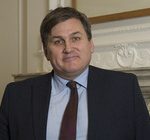
    Kit Malthouse – 2022 Speech at the United Nations Commission on Crime Prevention and Criminal Justice

    The speech made by Kit Malthouse, the Minister for Crime and Policing, on 17 May 2022.

    The United Kingdom welcomes the Thirty-First Regular Session of the Commission on Crime Prevention and Criminal Justice.

    Transnational crime cannot be tackled without cross-border cooperation. We are united in our pursuit and promotion of fair criminal justice systems. It is essential that we maintain an open dialogue and continue working in close partnership on this issue. The Commission plays a vital role in helping foster that co-operation and collaboration, and the UK Government is, and will remain, a committed and active participant in these discussions.

    Before I outline some of the UK’s key priorities in this space, I would like to comment briefly on the situation in Ukraine. First and foremost, we continue to stand shoulder to shoulder with the Ukrainian people. And more broadly, we must remain alert to the potential impact of the crisis on transnational organised crime threats.

    Turning to the main agenda, the UK welcomes the Commission’s thematic focus on strengthening the use of digital evidence in criminal justice and countering cyber crime.

    One of the most pressing challenges facing us all is the fight to prevent the spread of online child sexual abuse.

    The UK is at the forefront of addressing this issue, but no country can mount a truly effective response in isolation.

    A single instance of abuse can span multiple jurisdictions, and the threat continues to grow and evolve as offenders exploit rising global internet access and new technologies to harm children.

    This is why the UK has tabled a resolution for this session on tackling online child sexual exploitation and abuse, and the importance of fostering partnerships with private technology companies. The resolution challenges members to set consistent expectations and standards for technology companies to keep children safe on their platforms and services. The protection of children is among the most fundamental responsibilities for any government. We hope Members will engage constructively in this debate, because the goal we share is a common one: to keep citizens safe and bring the perpetrators of these heinous crimes to justice. The UK will also be hosting a side event on this topic which I would encourage delegations to join.

    The UK continues to engage with the UN Cyber Crime Treaty process. We want to develop international cooperation and capacity building as part of our ongoing efforts to prevent online crimes, such as child sexual exploitation and abuse.

    As a major UNODC (UN Office of Drugs and Crime) donor, the UK has several key priorities including drug trafficking, criminal flows from Afghanistan, modern slavery and human trafficking, and anti-corruption. Of course, effective partnerships across borders must be further supported by robust national frameworks. In October last year, the UK and UNODC launched a transnational organised crime strategy toolkit.

    This will enable policy-makers to create or enhance their own national strategies to combat transnational organised crime.

    Four regional workshops have already taken place and we will continue to work with the UNODC to assist in developing holistic national serious organised crime strategies.

    In closing, I’d like to thank the UNODC again for facilitating this event. Given the scale and diversity of the threats we face, it is more important than ever before that we confront them together. Thank you.

  • Dominic Raab – 2022 Speech to the Prison Officers’ Association Conference

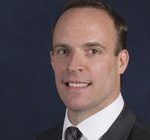
    Dominic Raab – 2022 Speech to the Prison Officers’ Association Conference

    The speech made by Dominic Raab, the Deputy Prime Minister, on 17 May 2022.

    I’m really sorry I can’t be with you all today, but I wanted to record this message for your first in-person conference since the start of the pandemic.

    And in particular, I really wanted to take the opportunity to thank all of you, every single one of you, for your incredible hard work, your outstanding dedication during such a tough set of times.

    Prison officers, I know, may not always be in the public eye in the same way that police officers, doctors and nurses are. But I’ve got no doubt, and I’ve seen first-hand, that you’re at the front line of our defences when it comes to protecting the public and you do an outstanding, amazing job.

    I’d like to see all of you at the front line get more recognition for that incredible work you’ve done, both during the pandemic and more generally.

    Throughout COVID-19, you’ve done more than ever to demonstrate why – in my view at least – you are the unsung heroes across our justice system.

    I’ve been hugely impressed by what I’ve seen in the nine prisons I’ve visited so far since I became Justice Secretary.

    At Category A prisons like HMP Franklin and Woodhill, I saw the extraordinary security challenges that the governors, Darren Finley and Nicola Marfleet, face in dealing with some of the most serious offenders, including radicalised terrorists and dangerous gangsters.

    You guys and your teams, work incredibly hard in what is a very precarious environment, to see the early signs of terrorist risks, to nip them in the bud, to stop the spread of poisonous ideologies, and ultimately help us protect the public.

    Of course, in many of those other prisons where the focus is more on rehabilitation, I’ve seen the vital role that governors and staff play in getting prisoners off drugs, getting them skilled up, and getting them into work.

    From the marketing call centre that I saw at HMP High Down, to HMP Ford, where prisoners get the chance to work as HGV drivers when they’re on ROTL. And from HMP Hatfield’s farm shop and the recycling centre, to the working farm and timber processing at HMP Prescoed. From the barbers and bike repair shop at HMP Five Wells, to the mechanics and the cleaning workshop at Wandsworth.

    I’ve seen the great potential that we’ve got, and that you’re grasping in prison, to use inmates’ time in a more constructive way, to get them the skills, get them back into work, which is ultimately the way we’ll get them back onto the straight and narrow and reduce reoffending and protect communities around the country.

    And, you know, I’m really struck by the conversations that I’ve had with offenders that I’ve met, who are able and willing to take that opportunity to start to turn their lives around.

    And I know it’s a long haul, and there’ll be ups and downs for many offenders, but getting prisoners off drugs for good through sustainable recovery, getting them the skills, the training, the work experience they need to go straight, those are two of my very top priorities.

    And of course, they’re critical elements in helping those offenders to turn their lives around, and that keeps our streets safer with fewer victims. So the public really do owe you all a debt of gratitude. And I want to say thank you for all that amazing work that you do.

    And of course, when I look forward at the agenda that we’ve got ahead of us over the next year, that’s why we’re going to be assessing offenders for any addiction they’ve got from the moment they arrive, so that the treatment plans we put in place, including expanded use of drug recovery wings, a greater focus on abstinence, all of those things can be put in place straight away and strengthen the rehabilitation work you’re doing.

    And of course, we’re going to have a zero-tolerance approach to drugs in prisons, clamping down on the illicit items being smuggled in.

    We’re enhancing our prison security with a lot of technology that’s been funded by £100 million of new investment, including the state-of-the-art X-ray scanners across the whole closed male adult estate. I’ve seen them work first-hand and I’m convinced that they will help reduce the violence and help keep prison officers, as well as offenders, safer.

    And, of course, we’ll continue to build on our partnership with you at a national level, and between prison governors and local branches of the POA, to create prisons that are better, safer, and which, as I said, through all the work we’re doing, will help drive down reoffending relentlessly.

    I now want to pass over to our brilliant Prisons Minister, Victoria Atkins, to take you through some of the detail of our strategy. But again, from the bottom of my heart, through COVID and all the other work that we’re doing, thank you so much for the outstanding job you’re doing, and I look forward to seeing many more of you in the weeks and months ahead.

  • Paulette Hamilton – 2022 Maiden Speech in the House of Commons

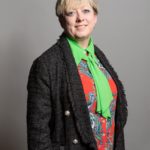
    Paulette Hamilton – 2022 Maiden Speech in the House of Commons

    The speech made by Paulette Hamilton, the Labour MP for Birmingham Erdington, in the House of Commons on 16 May 2022.

    Today I stand, Madam Deputy Speaker, to thank you for giving me the opportunity to make my maiden speech. It is an honour to follow the hon. Member for Thurrock (Jackie Doyle-Price).

    I can only say how proud I am to be a Brummie today. I am overwhelmed but privileged to be standing here today in this great institution. Being elected to Parliament is not a right, it is an honour, and it is an even greater honour knowing that your community voted for you to be here. When I was elected on 4 March, people found it difficult to understand that I was the first female to be elected for the Erdington constituency. They were even more shocked to learn that I was the first person of African and Caribbean descent to be elected as a Member of Parliament in Birmingham. I hope the constituency shares my pride in knowing that they have made history.

    In saying that, I cannot go any further without talking about the late, great Jack Dromey MP. Jack was elected in May 2010 and worked relentlessly to serve our community. He said in Parliament, and often within the constituency, in his speeches:

    “Erdington may be rich in talent, but it is one of the poorest constituencies in the country.”—[Official Report, 15 September 2021; Vol. 700, c. 984.]

    Until his death he worked to support his constituency, in so many ways. Any job lost in the area was a personal blow to Jack. The many tributes that have been made to him in this place and in the community show how much he is deeply missed.

    I grew up in Handsworth, in the neighbouring constituency of Perry Barr, but Erdington is a place I have called home for 35 years. Over 103,000 people live in the constituency, and we have a diverse community: 26% are BME people, and over 69% are under the age of 45. Some families, sadly, have not worked for three generations. It is important to get those people back to work. We need to invest, instil confidence, give opportunity and build aspirations into our young people.

    I am looking forward to being involved in debates relating to people living with mental health issues. Serving as the mental health champion for Birmingham City Council, the first ever to be elected, I have seen at first hand the increase in the number of people living with mental health issues, and the massive increase, since the pandemic, in the number of young people living with severe and enduring mental illnesses. The funding in this area has been cut, and it does need to be increased, as mental health services are struggling to access adequate in-patient beds when they are needed.

    In Erdington, the community has also seen an alarming increase in the number of houses in multiple occupation. We have the second highest number in the city. My constituency needs to see an urgent change in legislation to ensure that poor, unscrupulous landlords are punished, fined and removed from the market if they fail to comply with the rules that are designed to protect residents.

    These are just some of the many issues that I will be raising on behalf of my constituency, as I heard about them time and time again while out campaigning.

    My children were born in Erdington—some of them are up in the Public Gallery—and they went to Erdington schools, of which we have over 40 in my constituency. I have 40 schools to visit, and I promise I will be visiting all of them. I know I will feel at home when I do, because arriving in Parliament after a by-election has truly made me feel like the new girl at school.

    My husband opened his first shop on the Slade Road in the late 1980s, in an area where the high street was dying, so as a family we were acutely aware of the difficulties that other small businesses were experiencing back then. At the same time, I trained as a nurse and worked at the local health centre in Warren Farm Road, Kingstanding, for several years. My career in the health service lasted for over 25 years, and it has truly shaped my political career.

    As I have already noted, Erdington is a very diverse part of Birmingham, with a wonderful strong community and neighbourhood spirit, and people who work very hard and look out for each other. One day you could be celebrating Eid in Stockland Green, or Vaisakhi in the local gurdwara; on another, you could be working with our strong Irish or African-Caribbean community to celebrate the Good Friday walk along the high street. Our manufacturing history is well known, but sadly too many of our workplaces have closed. It is vital that new business comes into the constituency, so it is important that through the levelling-up fund we are given funding to develop our high streets, particularly Erdington High Street.

    The Erdington constituency can look quite dark and lacking in green space when you drive through it. That is because of roads like the Gravelly Hill interchange, which I am sure everyone here knows as spaghetti junction. If you look more closely, however, under spaghetti junction—as the hon. Member for Birmingham, Northfield (Gary Sambrook) will confirm—you can walk along some of the most beautiful canal walkways in the country. We are also fortunate to have many lovely parks such as Pype Hayes Park and Rookery Park, Short Heath Playing Fields, and the beautiful 13-acre site owned by Erdington Rugby Club. I would also like to mention the stunning bowling facility in the constituency run by the Erdington Court Bowls Club. The Brookvale lakes and Witton Lodge lakes, where residents take part in a duckling watch to ensure that we preserve the natural beauty of this area, are truly incredible. Alongside that is the amazing eco-hub run by an organisation called the Witton Lodge Community Association.

    When I won this election, my husband looked on and said, “Well done. Now the work starts.” How right he was. After receiving more than 2,000 emails plus sacks of mail in my first month, I am under no illusions that the role of an MP is many things to many people. We are here to help, guide, advise, support and represent our constituents.

    I want to thank the people of Birmingham, Erdington for putting their faith and trust in me. It is an amazing privilege to be here. My promise to you is that I will work tirelessly on your behalf, both in this place and in the community. Thank you, Madam Deputy Speaker.

  • Jackie Doyle-Price – 2022 Speech on the Future of the UK

    Jackie Doyle-Price – 2022 Speech on the Future of the UK

    The speech made by Jackie Doyle-Price, the Conservative MP for Thurrock, in the House of Commons on 16 May 2022.

    It is a pleasure to follow the right hon. Member for Kingston upon Hull North (Dame Diana Johnson), who represents an exciting area of the country on the Humber. Thurrock may be in the south-east, but I share her exasperation about London-centric policy making, which has gone back decades. In that sense, we should welcome the commitment to levelling up, although she set quite a high bar for proving what it means in practice. I share some of the concerns that she has expressed. When I look at my local road infrastructure in Thurrock, I can see that a national approach has not served us especially well. We must make sure that levelling up really means something in practice.

    We are talking today about making this country the best place to grow up and grow old, and it is the greatest country in the world. When I look at what is happening around the world, I think, “Aren’t we lucky to be here in the United Kingdom?” When I read our newspapers, watch our TV or listen to Opposition Members, I often think that this country is much better than they say it is, and that should be celebrated. That is not to say that we cannot do better and there are not challenges that need to be addressed.

    In this place, we talk too often about how much we are spending on solving a problem, rather than about the outcomes that we are trying to deliver. Success is not measured by how much we spend; if we try to measure it in that way, we end up with a very short-term approach that does not fix the problem. That is why we end up having the same debates over and over again.

    One area I want to highlight in that regard is social care. For the last 10 years, we have been obsessing about how we pay for social care, without properly looking at how we design a social care system that is fit for purpose. The challenge is that we are all living longer, and we have not revisited our systems and policies to address that. We need a life course approach to our housing. We know that falls are the biggest source of elderly ill health, so why are we not doing more to incentivise people to approach how they live in a way that suits their new length of life?

    We also need to give younger people hope that they will be able to buy their own home, and this is where the two policies come together. Too often, we look at policies in silos. Why are we not encouraging people to make better use of their housing assets for their whole family? We can incentivise granny annexes, and we can give young people some hope by ensuring they have greater access to the wealth in their parents’ home. If we can do that, we will save money in the health service, because unnecessary hospital stays are much more expensive than dealing with a little inheritance tax problem, which might unlock some investment.

    Housing is a big challenge, and we need some radical approaches to it. Council housing is a big part of it, and we must have a Macmillanesque expansion of our housing supply. We can deal with that by having fixed-term tenancies, to make sure that we are giving the most help to those most need it and not having homes being stuck.

    I also wish to say something more widely about health, because I have always said that government perhaps works too well for the pointy-elbowed middle classes who are good at fighting for their interests and not for those who most need it. In that respect, I am disappointed that we have not made more progress with reform of the Mental Health Act 1983. It is now four years since Sir Simon Wessely brought forward his review. We spent a great deal of time consulting users, who often had to relive their own trauma in order to give us their advice. So we have really let those people down in delivering material change. We know that deprivation of liberty can be an important part of looking after people with severe mental ill health, but we also know that it is misused, as Sir Simon Wessely’s report shows.

    I have little time left, but I wish to highlight a couple more things we need to properly address in that regard. We are still using the Bail Act 1976 to remand people in custody for their own protection. The criminal justice system should not be the place where we deal with people with severe mental ill health; in 21st-century Britain, that is completely unacceptable. We have made much of acting to remove prison cells and police cells as places of safety, and I assumed that we were making considerable progress on that—I thought that this was used in a very limited way. So I was horrified to hear from Her Majesty’s inspectorate of prisons that in the three women’s prisons it visited last year 68 women had been remanded for their own protection. That is not acceptable and I want more speed in dealing with it.

  • Diana Johnson – 2022 Speech on the Future of the UK

    Diana Johnson – 2022 Speech on the Future of the UK

    The speech made by Diana Johnson, the Labour MP for Kingston upon Hull North, in the House of Commons on 16 May 2022.

    I am delighted to speak in this Queen’s Speech debate on making Britain the best place in which to grow up and grow old. I want to focus on what my part of the country needs if we are to meet our full potential to contribute to future national prosperity, and to ensure that the people of Hull and the rest of the United Kingdom do not just survive but thrive, with strong public services and opportunities for all.

    It is 12 years since the coalition Government talked of rebalancing the economy and boosting UK economic growth by taking pressure off the congested south-east. It is 10 years since Lord Heseltine’s 2012 “No Stone Unturned” report, eight years since the northern powerhouse was launched, and three years since the Prime Minister took office and re-badged the idea as levelling up. Levelling up was only recently defined in the White Paper. After 12 years, we now have 12 missions.

    We all know that a growing UK economy is the key to improving standards of living, ending poverty and having well-funded public services, but we are stuck with low productivity, low growth, high inflation and high taxes. Escaping that requires a major contribution from the Humber. Hull is a freeport city with a multi-sector industrial base; it has the UK’s fastest-growing digital economy, a strong local arts sector and a great university. New maritime industries are expanding around the green energy estuary, and there are opportunities for growth, ending fuel poverty and energy security.

    However, alongside those success stories, Hull has setbacks. Local unemployment remains above the national average. Hull is usually in the top five areas in the UK for deprivation. In-work poverty weakened our local economy even before the austerity decade and the cost of living crisis. Hull needs more skilled, higher-paid jobs. The Minister doing the media round this morning seems to think that those jobs are shared equally around the country, but sadly they are not. Hull has several of the 225 left-behind neighbourhoods, where physical and mental health outcomes lag considerably behind those in wealthier areas.

    Raising educational standards in Hull has been challenging. Too many local youngsters are not in education, employment or training. Many of our brightest feel the need to leave to get on. Like many left behind areas, over the past decade Hull has lost not just shops, but banks, pubs, youth clubs, churches, children’s centres, police stations and post offices. Access to GPs and NHS dentists is worsening. Hull has, however, gained food banks, gambling outlets, junk food sellers and loan sharks.

    Opportunities to bid for the community wealth fund will hopefully help to repair some of our depleted social infrastructure, but so far, the talk about levelling up has been unmatched by deeds. Independent research from Bloomberg and others shows that levelling up has barely started for most of the north. Indeed, the gap between it and the south-east has grown over the past decade, including, most shamefully, when it comes to life expectancy. The excuses for failure do not convince my constituents. Of course, covid and Ukraine have been economic shocks, but Ministers presented Brexit as an opportunity to boost levelling up, not another excuse for failing. We also know that crisis can create opportunities, as happened in 1945. Hull has received some levelling-up funding for our city centre sites, but it is a small proportion of the funding package required to turbocharge our regional economy, and it is nowhere near the sustained public and private investment that has transformed the London docklands over the past 40 years. It does not even replace funding lost since 2010. I always fight in this place for the people of Hull, but a fair share of not very much will not be transformative in boosting UK economic growth and increasing the opportunities that we all want to see for the people of this wonderful country.

    Hull’s digital connectivity is good, but our poor road and rail connectivity hold back economic regeneration. The Government’s integrated rail plan delivers no genuine transport levelling up. Another obstacle to Hull’s progress has been Ministers’ insistence—behind the guise of devolution—on permanent, made-in-Whitehall changes in political structures, without proper local consultation, as a precondition for funding. I draw attention to the fact that London never had to make such changes before getting schemes such as Crossrail. The ambition must be to transform, not tinker. We must go beyond the rhetoric of a Medici-style renaissance—or a Victor Meldrew charter to level down next door’s conservatory.

    The whole country needs a levelling-up Bill that is bold, lifting the dead hand of Whitehall bureaucracy, cutting waste and boosting investment. Only failure is unaffordable for our country.

  • David Evennett – 2022 Speech on the Future of the UK

    David Evennett – 2022 Speech on the Future of the UK

    The speech made by David Evennett, the Conservative MP for Bexleyheath and Crayford, in the House of Commons on 16 May 2022.

    It is a great pleasure to speak in support of the Queen’s Speech. In this debate on making Britain the best place to grow up and grow old in, I will focus on education. I appreciate, however, that inflation and the cost of living are top priorities for my constituents at this time. The Government need to do more to alleviate the consequences of rising prices, and I believe that they will.

    The UK is, and always has been, one of the best places to grow up in, and I am convinced that it remains a great place for those of all ages to live in. Through education and the opportunities that it gives, and especially through great state schools and teachers, people from my background have been fortunate enough to reach our potential. However, despite the fantastic opportunities, and the increase in finance that the Government have put into our education system, a number of issues still need to be addressed, and my right hon. Friend the Secretary of State for Education is determined to tackle them. We congratulate him on his March White Paper. I know that he aims to improve standards and achievement. I look forward to participating in debates on the schools Bill when it comes to the House.

    I have worked as both a teacher and a lecturer, so I know how vital it is that every child receives the best possible education. Education and social mobility have always been key political issues for me, and I passionately believe that every child deserves the best possible start in life. I am a strong supporter of lifetime learning. Education is not just for the young, but for all age groups, particularly at a time when the world is changing rapidly.

    As we all know, parents are a child’s primary educator. A parent’s education level has a significant impact on their children’s success and can significantly affect opportunities later in life. However, talent and hard work alone should determine how far people can go, whoever they are, wherever they come from, whatever their background. Opportunity is key, and this Government believe passionately in opportunity. I believe that talent is widespread across our nation. Unfortunately, there are certain groups and areas where opportunity is not open to all, for many and varied reasons, so fair funding, accountability, a safe environment and attendance are vital. I look forward to further debates on the Bill.

    In my Bexleyheath and Crayford constituency, we are very fortunate to have a diverse and fantastic collection of schools at primary and secondary level. The borough is a social mobility hotspot, and a wide variety of education offerings are available, including church, grammar, comprehensive and single-sex schools, all of which achieve good results and give young people excellent opportunities to develop their talents. Children from across Bexley, from advantaged and disadvantaged backgrounds, achieve great results at school and benefit from the wide range of opportunities.

    We have an excellent local further education provider—the Bexley campus of London South East Colleges—that offers a wide range of choices and courses. When I visited recently, I particularly enjoyed the media and special needs facilities. Last week, I also visited Woodside Academy, a special school that supports children from the age of four to 19 with a wide range of learning difficulties. It is part of the London South East Academies trust, and is another example of working together. It does innovative work to support the children under its care, both with their education and with wider health concerns. I watched, listened and learned about their specialist eye testing on site. The trust’s chief executive, Dr Sam Parrett OBE, and her team are doing a superb job.

    However, even in areas such as Bexley, where we are making great progress, more can always be done. I recently visited Bedonwell School with my hon. Friend the Member for Old Bexley and Sidcup (Mr French) and the hon. Member for Erith and Thamesmead (Abena Oppong-Asare). It has outstanding special educational needs provision, but it highlighted concerns about SEN funding. I have written to my right hon. Friend the Secretary of State about the concerns it raised during our visit.

    The Schools Bill will make it easier for schools in England to join multi-academy trusts, strengthen the regulatory framework, reform the schools funding formula to make it fairer, and strengthen the school attendance regime so that children can benefit from being in school. Those are vital issues, which is why I strongly support what the Government are doing. Madam Deputy Speaker insists that I keep to five minutes, so I cannot talk about the Higher Education (Freedom of Speech) Bill, which is also great news. I think we all agree with it on the Conservative Benches, so I do not have to go into detail on it.

    To conclude, by levelling up skills and education, we not only help to unleash the potential of every area in our United Kingdom, but grow the economy and boost our GDP. There is a clear theme from the Queen’s Speech that needs to be promoted loud and clear: the Conservative Government believe in social mobility, opportunity and an education system that offers the best to all, so that every individual can maximise their life chances.

  • Carol Monaghan – 2022 Speech on the Future of the UK

    Carol Monaghan – 2022 Speech on the Future of the UK

    The speech made by Carol Monaghan, the SNP MP for Glasgow North West, in the House of Commons on 16 May 2022.

    In this Queen’s Speech, I would have expected to see some radical interventions that are urgently needed to tackle the cost of living crisis, to tackle climate change and to properly support our elderly community, including elderly veterans, but there is a real lack of ambition in the speech, and this Government have done the absolute opposite of making Britain the best place to grow up and grow old. While they have lined the pockets of their cronies, they have limited the opportunities of young people. They have caused and then ignored the cost of living crisis, which has left many children and elderly without enough to get by, and delayed action on climate change, which arguably will have the biggest impact on our younger generations.

    For us in Scotland, this is a tale of two Governments. The Scottish Government are determined to make Scotland the best place in the world to grow up and grow old, regardless of household income or social demographic, but only as an independent nation will Scotland have the levers, the decision-making powers and the full fiscal autonomy to see that ambition fully realised. [Interruption.] There is heckling from those on the Government Benches. I would have thought that the results of the elections two weeks ago would have shown them something—perhaps they would have learned some lessons. People in Scotland more and more are waking up to this.

    Let us compare the two Governments. A woman in Scotland who is expecting a child is given a baby box filled with essentials for her baby—clothes, books, teething toys, blankets. The message is clear: your baby is important, your baby is valued and your baby is welcomed. At the same time as the baby box was introduced in Scotland, the UK Government introduced a two-child limit on child tax credit and universal credit. It is apparently okay to have up to two children. Beyond that if you are a low-income household your baby is neither welcomed nor valued by this Tory Government.

    The British Pregnancy Advisory Service said that over half the women it surveyed who had an abortion in the coronavirus pandemic and knew of the two-child limit said that that policy was important in their decision-making around whether to continue the pregnancy. That is pretty damning evidence. It is no surprise that, since 2016—since mothers have been expecting babies who would be born after that policy came into force—there has been a sharp increase in the number of abortions. Women are choosing abortions because they cannot afford to have a baby. The best place to grow up?

    In Scotland, the Scottish Government have introduced the Scottish child payment—£20 a week for every eligible child and that will be rising to £25 a week—and that is mitigating some of the worst impacts for families. Frankly, the progressive policies of the Scottish Government must be matched with similar interventions from Westminster.

    Last week, we were treated to the comments of the hon. Member for Ashfield (Lee Anderson), who said that people were only using food banks because “they cannot budget” and

    “cannot cook a meal from scratch.”—[Official Report, 11 May 2022; Vol. 714, c. 185.]

    Today, Gareth Mason, head chef at Absolute Bar & Bistro in Westhoughton, has said that the hon. Member’s comments were “tone deaf” and “insulting”. He has set about proving this by cooking seven everyday meals, such as spaghetti Napoli, beans on toast, baked potato—

    Madam Deputy Speaker (Dame Rosie Winterton)

    Order. Can I just check that the hon. Lady has informed the hon. Gentleman that she was going to refer to him? That is perhaps just a reminder that that is what she would do.

    Carol Monaghan

    Madam Deputy Speaker, I have not. I was not making a point of order; I was referring to something that was said in a debate and has been said in the press.

    The chef, Gareth Mason, said:

    “I’ve come to the conclusion it’s a load of rubbish. These meals I’ve done, as soon as you put any protein or dairy into them, it’s not feasible to do it for 30p. If you eat beans on toast for every meal, it might work, but even if you did cheese on toast, the cost of cheese would be more than 30p on its own”,

    and that is before considering the cooking cost of the food.

    Dr Luke Evans (Bosworth) (Con)

    My hon. Friend the Member for Ashfield (Lee Anderson) was very clear that he offered anyone on the Opposition Benches to go and join him down in Ashfield. Given the problems the hon. Member has outlined, is she planning on going down to see what happens in Ashfield and how that food bank functions?

    Carol Monaghan

    I would love to do that, but more than that, I look forward to the cooking book from the hon. Member for Ashfield, because I am sure that will be a really popular volume. I will even buy some copies for my own food bank if we think we can be making meals for 30p a day—incredible!

    The fact is that people on low income or on benefits are far superior with managing their finances because they have to be. According to Jack Monroe, the bootstrap cook who gave evidence to the Work and Pensions Committee, the impact of the cost of living crisis on

    “millions of children living in poverty in Britain today”

    is

    “going to be, in some cases, fatal”.

    This is first and foremost due to the rise in the cost of everyday essentials, not because families on low incomes cannot budget or cannot cook a meal from scratch.

    But it gets worse. The Minister for safeguarding—the Under-Secretary of State for the Home Department, the hon. Member for Redditch (Rachel Maclean)—said on Sky News today that people struggling with the cost of living should just “take on more hours” or “get a better-paid job”. This shows how detached this Government are from the lived reality of so many people in our communities that we represent. Hunger impacts on the ability of children to learn. As one Member has said, they cannot concentrate and they cannot think. I know of teachers who are keeping cereal bars and snacks in their desk drawers to give to children to make sure they have something in their tummies.

    In his opening remarks, the Secretary of State talked about extracurricular activities, and I think every Member here understands the importance of these. But for families who are just about managing—they are just about managing to pay bills and to feed their children—the things that will go are the little extras. These are the sports clubs, the activities, the birthday parties, the days out, the holidays—in fact, all the little things that together make childhood so special, and that enrich their experience and their ambitions.

    It is good to hear the Secretary of State also talk today about the importance of teachers. As a former teacher myself, I know the difference that good teachers can make to young people. It is good to hear him talking about his ambition to make the starting salary for teachers £30,000 a year. That will only be £3,000 below what Scottish teachers currently start out on, with £33,000 a year.

    In Scotland, we want to create a more equal society. One way we aim to do that is through widening, rather than restricting, the opportunities for our young people once they leave school. The Scottish Government’s young person’s guarantee ensures that every young person from 16 to 24 has a chance to go to university or college with no tuition fees, or has a chance to secure an apprenticeship or high-quality job. It is significant that, of anywhere in the UK, Scotland has the highest proportion of young people with positive destinations post school.

    Time and again, we see this Tory Government undermining progress towards a better society for our young people. They talk of untapping aspiration, yet just a couple of weeks ago the chair of their Social Mobility Commission said that fewer girls than boys are studying physics because they dislike “hard maths.” That perpetuates outdated and harmful gender stereotypes about girls, particularly in science, technology, engineering and maths, which is close to my heart. That is no way to untap aspiration or ambition.

    Students in England are considering their career and whether they are willing to take on a lifetime of debt. The Government’s equality analysis found that their student finance reforms will likely have a negative impact on graduates from disadvantaged backgrounds, while benefiting those who are already more privileged. The reforms will not, in fact, increase social mobility. This Government are making policy decisions that will hinder opportunity, to the obvious detriment of so many young people.

    I could talk about Brexit and our lack of mobility across Europe, and about the international collaborations that have been lost, but I want to speak a little about our elderly community. According to the Centre for Ageing Better, one in five pensioners—more than 2 million people—is living in relative poverty. Worse than that, many are living in abject poverty. This represents an increase of more than 200,000 in just the last 12 months, and the problem will only get worse.

    The report also presents a stark picture of up to a 10-year difference in lifespan between wealthy pensioners and poor pensioners. Pensioners have been abandoned by this Government, who scrapped the pension triple lock. Pensioners will be among the hardest hit by the rising cost of living; some already have to resort to spending the day on buses or eating one meal a day just to keep warm, as we heard last week. “The best place to grow old”?

    Many UK citizens abroad, including a significant number of veterans, are living in poverty because of the freeze in overseas pensions. Their pension is frozen at the point at which they moved. Countries such as Canada have formally requested a reciprocal arrangement to cover pension uprating, but this UK Government have declined.

    Our pensioners include veterans who have given the very best of themselves through their service. We have a duty of care to them, and I will talk briefly about one particular group that I know has support from both sides of the House—the nuclear test veterans. Their numbers are dwindling and they have had a lifetime of health issues, yet they have received neither a medal, recognition nor compensation. This is the only country not to have compensated its nuclear test veterans. Surely we can do better for this small group.

    The SNP Scottish Government are doing what they can to support households during these difficult times—fully mitigating the bedroom tax; mitigating council tax; doubling the Scottish child payment; providing free tuition, free prescriptions and free school meals for all primary schoolchildren—but just as Scotland tries to mitigate the worst excesses of this Tory Government, the Scottish Government are suffering from budget cuts by them. A lack of powers for the Scottish Government means that we can only really deal with things around the edge—with the symptoms of poverty, not the deep-rooted causes of inequality in our society that deliver child poverty and pension poverty. Only with full independence can we realise our ambition for our children, our young people and our pensioners.

  • John Whittingdale – 2022 Speech on the Future of the UK

    John Whittingdale – 2022 Speech on the Future of the UK

    The speech made by John Whittingdale, the Conservative MP for Maldon, in the House of Commons on 16 May 2022.

    It is a pleasure to speak in support of this Queen’s Speech. It is tempting to respond to a number of the points made by the hon. Member for Houghton and Sunderland South (Bridget Phillipson), whose speech sounded remarkably like a bid for the leadership of the Labour party. However, given the lack of time, I want to concentrate on just four Bills, all of which emanate from the Department for Digital, Culture, Media and Sport and all of which I had a small hand in part of the preparation of.

    The first is a carry-over—the Online Safety Bill. I welcome this opportunity to speak on it because I had only five minutes do so on Second Reading, although I will have rather less this time. I reiterate that the Bill is tremendously important and will protect our young people as they grow up. It is pioneering legislation to introduce some regulation of online activity.

    We also have an ambition in this country to be the technological leaders of the world, so I remain concerned that the Bill is very vague in a lot of aspects. Since Second Reading, I have had meetings with mid-sized platforms such as Pinterest, Reddit, Eventbrite and Tripadvisor, all of which are committed to this country but concerned that, while they want to comply with the provisions of the Bill, it is not clear to them what those provisions are going to undertake. I again say to the Government that what is important is to protect people who are at risk, not necessarily just regulate every large platform because of their reach.

    Matt Rodda (Reading East) (Lab)

    Will the right hon. Gentleman give way?

    Mr Whittingdale

    No, if the hon. Gentleman will forgive me, as I am under a lot of pressure to keep this short.

    The second Bill is the media Bill, which is vital for the future of public service broadcasting in this country. A lot of attention will be given to the provisions on Channel 4, which I welcome, although it is important that we debate those and discuss the model that Channel 4 should operate in future. The Bill contains other important provisions. The prominence of public service broadcasters has been argued for by ITV, Channel 4 and the BBC for many years, and it is essential if we are to protect public service broadcasters and ensure that they are visible in a world where competing channels are increasing in number almost every week.

    In support of commercial public service broadcasters, I welcome the absence from the Queen’s Speech of a Bill to introduce advertising bans for HFSS—high in fat, salt or sugar—foods before 9 pm. I support the Government’s wish to reduce obesity, but I firmly believe that an advertising ban would have no effect on that and, at the same time, would massively affect commercial broadcasters.

    I regret the absence from the Bill of provisions for radio prominence. This was an important part of the outcome of the digital radio and audio review. The Government accepted the recommendations from that but they seem to have dropped out of the Bill. I hope that we might try to correct that during its passage.

    I look forward to the inclusion in the Bill of the repeal of section 40 of the Crime and Courts Act 2013, which is a sword of Damocles hanging over a free press allowing a future Government to impose punitive costs unless they sign up to the Government’s version of regulation. The removal of that was in the Conservative manifesto and I very much hope that we will fulfil that manifesto commitment in that Bill.

    The third Bill is the digital markets and competition Bill, which, if anything, is even more important to the freedom of the press. At the moment, the press are at a disadvantage in their negotiations with the big platforms such as Facebook and Google, which take their content and decide how much, if anything, they are going to pay for it. The digital markets unit is being established to address that, but it needs to be put on a statutory basis; it needs to be underpinned by law. I therefore welcome the provision in the Queen’s Speech for a draft Bill but hope the Government will move forward to implement that legislation as soon as possible.

    Finally, I turn to a Bill I again played some role in: the data Bill. One of the great opportunities from Britain taking back control of its own laws is our ability to write our own data protection laws. Of course we want to ensure that people’s privacy is protected, but at the same time the existing rules have acted as a disincentive. They are overburdensome and not properly understood by large numbers of small firms in particular. This is a real opportunity to have a modern data protection regime which others across the world will admire and follow.

    On that basis, I am delighted to support the Queen’s Speech.

  • Bridget Phillipson – 2022 Speech on the Future of the UK

    Bridget Phillipson – 2022 Speech on the Future of the UK

    The speech made by Bridget Phillipson, the Labour MP for Houghton and Sunderland South, in the House of Commons on 16 May 2022.

    It is a pleasure to speak in today’s debate on behalf of the Opposition, and to set out the contrast between a Conservative Government who have spent 12 long years failing Britain and a Labour party determined to make our country the best place to grow up and grow old.

    As the Leader of the Opposition set out last week, at the heart of the Government’s programme there is a poverty of ambition for our public services, entirely inadequate for the challenges we face. We see that in the Government’s ongoing refusal to commit to a children’s recovery plan to support children after the disruption of the pandemic on anything like the scale that either their adviser, Sir Kevan Collins, or the Labour party has set out. I remain disappointed but sadly not surprised. After all, this is the Government who reopened the pubs before they reopened schools.

    Twelve years in and the Conservatives are out of ideas, out of touch and out of steam. The challenges we face as a country demand vision, leadership, energy, drive and determination. Of course there are the challenges that every country faces, and now there are the challenges bequeathed by the pandemic and its legacy. But there are also the challenges brought by 12 years of Conservative failure, and what they all have in common is that every single one of them is a challenge from which this Government flinch.

    A generation of children have been through the education system in this country under Conservative Governments since 2010. Their experience is the core narrative of this Government’s failure: not simply a failure to deliver, but a failure to think, a failure to plan, a failure to resource and a failure to learn. I think of what a child starting school in 2010 will have seen in that time: real-terms cuts to funding per pupil; secondary school classes at their largest for a generation; hundreds of thousands more children eligible for free school meals; school building repairs cancelled or postponed; hundreds of days lost to the pandemic; botched examinations not for one year, but two; and now this historic failure to invest in the children’s recovery plan that the Government’s own expert recommended and that our children desperately need.

    The only thing on the up under this Government is child poverty. Now, as that young person looks ahead to university and the years that follow, they can see higher costs than ever before, stretching almost to retirement.

    Gary Sambrook (Birmingham, Northfield) (Con)

    I thank the hon. Lady for drawing comparisons with what it is like to go to school under a Conservative Government. I went to school under a Labour Government. When I left my secondary school in 2005, it had a pass rate of 11% and one in three teachers were supply teachers. Was that not the real legacy of a Labour Government: a failed generation?

    Bridget Phillipson

    The last Labour Government transformed the life chances of people across our country—child poverty down, investment in our schools, schools rebuilt, teachers properly supported. That is a record of which we are very proud.

    This is a generation of children let down from primary school right the way through to university, a generation of children failed by the Conservatives. I can tell you why they have been failed. The Government have stopped thinking in terms of children, people, parents and families. They have been too long in power, and they are mistaking changing institutions and regulations for improving the lives of our people.

    Look at the Schools Bill, published last week. I had genuinely hoped for better, but what did we find? It is narrow in scope, hollow in ambition and thin on policy. It has 32 clauses on the governance of academies and 15 on funding arrangements. On funding, what a sorry sight it is to see a Conservative Chancellor and Secretary of State seeking plaudits merely for aiming to restore, by 2024, a level of real-terms school funding achieved by the last Labour Government, when their Government have spent a decade slicing it away.

    The newspapers this weekend made it all too clear that whichever children the Secretary of State cares about, they are not always the children in England’s state schools.

    We learnt that he is concerned that the success of our young people in accessing their first choice universities from England’s state schools—the schools which the vast majority of children attend and for which he is primarily responsible—is evidence of “tilting the system” away from private schools, of which, he tells us, he is “so proud”. What an extraordinary remark by the Secretary of State for Education about the success of students in state schools in this country.

    If that were not enough, the next day brought further clarification. Not only does the Secretary of State appear concerned by the growing success of state-educated children in entering the universities of their choice, he is not bothered that their schools are crumbling around them. His own officials, within the last two months, have said:

    “Some sites a risk-to-life, too many costly and energy-inefficient repairs rather than rebuilds, and rebuild demand three times supply”.

    Children are being educated in schools that are a risk to life, and the Government have not lifted a finger.

    The children of this country are being failed by an Education Secretary more interested in appealing to Conservative party members than in ensuring the success of our young people.

    Dr Caroline Johnson (Sleaford and North Hykeham) (Con)

    The hon. Lady has made two points in the last few minutes about school funding for buildings and about children from private schools. May I address both? Does the hon. Lady welcome the more than £1 million given to Carre’s Grammar School in Sleaford to improve the school buildings and facilities? I went to a comprehensive school in Middlesbrough until I was 16. Just before I was 16 I was on a walk in the hills when I met somebody who went to Gordonstoun, a brilliant public school. They gave me, an ordinary working-class girl from Middlesbrough, a scholarship, for which I am eternally grateful. Were I to have applied for Oxford University, should I have been penalised for that scholarship?

    Madam Deputy Speaker (Dame Rosie Winterton)

    I emphasise that interventions should be brief.

    Bridget Phillipson

    I am afraid that I did not catch most of that intervention—it was a bit hard to hear the hon. Lady—but I repeat that the last Labour Government rebuilt schools across our country. That has not been the record of the last 12 years.

    The next Labour Government will build a Britain where children come first, where we put children and growing up at the heart of how we think about the future of our country, where Britain is the best place to grow up and the best place to grow old, and where young people leave education ready for work and ready for life.

    Nadia Whittome (Nottingham East) (Lab)

    Since we are all talking about when we were at school, I should point out that I am probably the only Member of the House who grew up under a Tory Government and was at school in 2010. Does my hon. Friend agree that the reality of that was class sizes that were the biggest on record and school buildings that were falling apart, and, with education maintenance allowance having been cut, all we had to look forward to was the prospect of paying £9,000 a year in tuition fees if we went to university?

    Bridget Phillipson

    My hon. Friend is absolutely right. The last Labour Government transformed the life chances of a generation, and it will fall to the next Labour Government to do the same. Because, in a country where we think about children as both a society and an economy of the future, we build a better Britain for everyone: a Britain of children and families where the Government work to enable and empower success and, in particular, a Britain in which the Government see the soaring cost of childcare not as a statistic to be observed but a problem to be solved. That cost is crippling: families suffer financially; children suffer socially, and our country suffers economically. When the cost of childcare, not just for our two to four-year-olds, but the whole time from the end of maternity leave to the start of secondary school—from ensuring that parents can choose, and afford, to go back to work, to affordable breakfast clubs and afterschool activities so that parents do not always need to be at the school gate—is quite literally pricing people out of parenting, children and families are being failed.

    That failure is not just about the individual children and families whom the Government fail, though there are millions of them and that is bad enough; our whole country is failed when we let our children down. It is not just childcare. We see it too in the Government’s failure to face up to the damage that their mishandling of the pandemic did to the education of a generation. The Secretary of State’s failure to convince the Chancellor to invest properly in children’s recovery from the pandemic; his failure at the last spending round in the autumn; his failure in the spring statement, and his failure now—that series of failures—above all he does or says now or in the future, is what he will be remembered for. The Prime Minister’s own adviser had the dignity to resign rather than accept such failure, and Labour would have been very different from the Government.

    We have a plan where the Government have failure. On the very day that schools and nurseries closed to most children in March 2020, a Labour Government would have started work on three plans: an immediate plan to support children’s learning and development remotely and as fully as possible while lockdown went on; an urgent plan to reopen schools safely and quickly, and then to keep them open so children could learn together and play together; and, critically, a plan to ensure that when lockdown ended, children’s education and wellbeing did not suffer in the long run. Our children’s recovery plan put children and their futures at the heart of how we think about moving on from the pandemic because, after all, every child in Britain did more to follow the covid rules than our Prime Minister. The impact that had on their health and educational attainment needs addressing, not ignoring.

    We would introduce breakfast clubs so that every child starts their day with a proper meal; afterschool activities, so that every child gets to learn and experience art, music, drama and sport; mental health support because every report that we see tells us that children’s development has fallen behind in the pandemic; continued professional development for our teachers because every child deserves teachers second to none in support of their learning; and targeted extra investment right from the early years through to further education, to support the children at risk of falling behind, because attainment gaps open up early and need tackling early.

    We would go further to lock in the gains of a recovery programme for the long term, with a national excellence programme to drive up standards in schools, because every child deserves to go to a school with high expectations and high achievements. There would be thousands upon thousands of new teachers in subjects that have shortages right now, because every child deserves to be taught maths and physics by people who love their subject and to be introduced to a love of sport, music, art and drama; a skills commission, because every young person needs to leave education ready for work and ready for life; careers guidance in every school and work experience for every child, because each of us deserves to succeed at work, and Labour believes that the Government have a role to play in making that happen; and a curriculum in which we teach our children not just the past that they will inherit, but the future they will build, and in which they learn about the challenge of net zero and the climate emergency that we face.

    It is precisely because we have a plan that we would enable our education system to deliver it. It is why we want an approach to how our schools are run that focuses on how children achieve and thrive, not the name on the uniform or the hours that they are there. It is why we have a determination to see childcare not as a passing, costly phase in the lives of others, but as the foundation of opportunity in the lives of every child and every parent.

    As our children grow and as they interact more and more with my party’s proudest achievement to date, the national health service, it is sadly not the case that their experience of this Government’s record on public services improves. With health, as with education, there was a decade of failure even before the pandemic began. The national health service did not go into the pandemic strong, well-resourced and resilient. No, the NHS went into the pandemic with record waiting lists, 100,000 vacancies and 17,000 fewer beds than in 2010. As my hon. Friend the Member for Ilford North (Wes Streeting) has rightly said:

    “It is not just that the Government did not fix the roof while the sun was shining; they dismantled the roof and removed the floorboards.”—[Official Report, 14 December 2021; Vol. 705, c. 954.]

    Last autumn, the Government announced that they would raise tax to fund clearing the backlog and improving social care. The tax rise is happening during a cost of living crisis, sure enough, but it is not clear how they will manage the rest. That is why today, in our health service as in childcare, we are paying more but getting less. The Government are raising taxes on working people in the middle of a cost of living crisis, yet patients are expected to wait longer for care.

    Conservative Members would do well to remember that NHS waiting lists are at a record 6 million. Ministers cannot blame the pandemic, because the figure was already at over 4 million before covid struck. Let us think of those millions of people waiting—waiting longer than ever before, often waiting in pain and discomfort, waiting while working or trying to find work, waiting while walking their children to school, waiting while trying to find somewhere affordable to live, waiting while looking after their grandchildren. They are waiting at a cost to themselves, of course, but at an astronomical cost to our country that is not just financial, but economic and social. They are waiting for their Government to give our public services the priority they deserve.

    Mental health services are on the brink of collapse. In 12 years of Conservative Governments, a quarter of mental health beds have been cut, and right now 1.6 million people are waiting for mental health treatment. How on earth can any Minister defend that record? The Government’s approach to social care is up there with their failure on childcare: it is not fair, and it will not work. The less people have, the more they will take. Those with homes worth £150,000 will lose almost everything, while the wealthiest are protected.

    It does not need to be this way. Labour will build an NHS fit for the future and get patients seen on time. We will provide the NHS with the staff, equipment and modern technology required so that the NHS is there for people when they need it. We will fix social care so that those in need do not go without. Our new deal for care workers will provide fair pay and secure contracts to plug the more than 100,000 vacancies in social care. We will transform training to improve standards of care. Across our public services, Labour will build a better Britain. We have done it before; we will do it again.

    I remember a previous Conservative Government who cared little for the challenges that my family faced—a Government keener on judging my family than on supporting it. Then I saw, growing up and as a young woman, the difference that an incoming Labour Government made. I saw a Government who acted decisively to tackle disadvantage, cut child poverty and support families and children. A generation grew up with Sure Start and with children’s centres. A generation like me were supported after 16 with the education maintenance allowance and a level of investment in our NHS unmatched in history, with waiting lists driven down from months and years to days and weeks. I saw then, in my own community, the difference those changes made, and I still see it now in the better lives of young people who grew up with that advantage and the support it unlocked.

    For 12 long years, Conservative Ministers have failed a generation of our children. Labour in power will be different, because we see Britain as its people—our children, our families, our future—and we will never swerve from making this country the best place to grow up and the best place to grow old.