Category: Speeches

  • PRESS RELEASE : Bathing water reforms to consider water sports and water quality [November 2024]

    PRESS RELEASE : Bathing water reforms to consider water sports and water quality [November 2024]

    The press release issued by the Department for Environment, Food and Rural Affairs on 12 November 2024.

    Defra invites the public, community and environmental groups, farmers, businesses and local authorities to share views on modernising bathing water regulations.

    • Consultation launched to modernise bathing waters in first shake up in over a decade
    • Reforms include removing fixed season dates from regulations and improved water quality measures
    • The public, environmental groups and businesses invited to contribute

    Changes to bathing water rules will prioritise public safety and water quality so more people can enjoy our rivers, lakes and seas throughout the seasons in the first shake up since 2013.

    Bathing waters are officially designated outdoor swimming sites. England and Wales have over 550 designated bathing waters, which are monitored by the Environment Agency and Natural Resources Wales. Annual ratings classify each site as ‘excellent’, ‘good’, ‘sufficient’ or ‘poor’ on the basis of water quality.

    In a consultation launched today (12 November), Defra and the Welsh Government are inviting the public, community groups, environmental groups, farmers, businesses and local authorities to share their views on modernising bathing water regulations to ensure a more flexible approach to designation and monitoring.

    The proposed changes, which will benefit cold water swimmers and other water sports enthusiasts, include:

    • Removal of fixed bathing water season dates (which currently runs from May to September) from the regulations to allow for a more flexible approach to monitoring, extending the dates of the bathing season to better reflect when people use bathing waters.
    • Expanding the legal definition of ‘bathers’ to include participants in water sports other than swimming, including paddle boarders and surfers.
    • Further considering water quality and public safety when applications for new bathing waters are assessed.
    • Introducing multiple testing points at bathing water sites.
    • Ending the automatic de-designation of bathing water status after 5 consecutive years of a site being rated ‘poor’, which can damage local tourism and businesses. Instead, underperforming sites will be individually reviewed by regulators, taking into account their unique circumstances.

    Water Minister Emma Hardy said:

    Bathing water sites are the pride of local communities across the country.

    But the current system is not working for all those who use and enjoy our bathing waters, and reform is long overdue.

    That is why this Government will give more people the opportunity to experience the benefits of our beautiful waters and connect with nature.

    Mark Lloyd, Chief Executive of The Rivers Trust said:

    We welcome these proposed reforms to the Bathing Water rules, several of which we and other NGOs have been requesting for some time.

    Our rivers, lakes and beaches are a fantastic natural resource which should be available for people to enjoy confidently for their mental and physical wellbeing as well as providing opportunities for economic growth.

    We are particularly pleased to see the ending of automatic de-designation for waters which failed to meet standards after 5 years – the focus must be on driving improvements in our natural environment and not giving up when it gets hard.

    We will be urging Ministers to make the new system more transparent and to include a wider range of pollutants that can cause risks to public health. We hope that applications for new designations can open again in the Spring without any further delay.

    Ben Seal, Head of Access and Environment at Paddle UK, on behalf of the Clean Water Sports Alliance said:

    Access to clean, healthy, nature-rich blue spaces is crucial to the health and wellbeing of millions of people around the UK.

    We are a water sports nation, however, as a result of the sewage scandal, the public have become increasingly fearful of getting sick, doing the activity they love.

    Paddle UK and the 10 other National Governing Bodies of watersports that make up the Clean Water Sports Alliance, welcome the announcement that bathing waters rules are to be consulted on and brought up to date with new reforms.

    The 6 week consultation will be an important opportunity for the voices of recreational users to be heard. We encourage as many people to feed into the process as possible”.

    Gail Davies-Walsh, CEO of Afonydd Cymru, said:

    Afonydd Cymru welcomes this consultation and support any resulting measures that improve the ecological health of rivers and the safety of recreational users.

    The review will need to give consideration to the extent that the current designation for Bathing Water, primarily designed for coastal waters, meets the different needs of our rivers including microbiological quality, levels of other potentially harmful pollutants, monitoring, public safety and damage or disturbance to flora and fauna, particularly for designated rivers.

    We look forward to engagement with the Consultation to ensure these matters are considered for Wales.

    Chris Coode, CEO of Thames21, said:

    We welcome the government’s announcement to reform the Bathing Water Regulations.  This is a crucial step towards improving water quality and the health of our rivers, especially in the areas we cover across London and the Thames Basin.

    Extending the dates of the bathing season and having a flexible approach to monitoring will generate valuable data, helping people to decide on whether they want to use their local river on any given day. We are also pleased with the government’s proposals to broaden the legal definition of ‘bathers’ to include other water lovers, not just swimmers.

    We look forward to playing our part in this consultation by contributing evidence alongside other key stakeholders. Additionally, we hope that the government will recognise the work of countless communities, groups and volunteers who have applied or plan to apply for bathing water designation and hope that the shortcomings of the bathing water application process are resolved.

  • PRESS RELEASE : Keir Starmer meeting with World Bank Group President Ajay Banga [November 2024]

    PRESS RELEASE : Keir Starmer meeting with World Bank Group President Ajay Banga [November 2024]

    The press release issued by 10 Downing Street on 12 November 2024.

    The Prime Minister met with the President of the World Bank Ajay Banga at the COP29 summit in Baku today.

    They agreed on the importance of mobilising private finance to strengthen action to tackle the climate challenge, and the Prime Minister welcomed the World Bank’s ambition in this area.

    The Prime Minister said he was delighted to announce the launch of the new CIF Capital Market Mechanism which will list on the London Stock Exchange. He thanked the President for his support and engagement in this area, and welcomed the confidence this showed in the UK’s economy.

    The Prime Minister said that this demonstrated London as a green finance capital, and bolstered Britain as an attractive place to invest in the future.

  • PRESS RELEASE : Reappointment of His Honour Peter Rook KC as vice chair and member of the Parole Board [November 2024]

    PRESS RELEASE : Reappointment of His Honour Peter Rook KC as vice chair and member of the Parole Board [November 2024]

    The press release issued by the Ministry of Justice on 12 November 2024.

    HH Peter Rook KC has been reappointed for 1 year from 1 February 2025 until 31 January 2026.

    The Parole Board is an executive non-departmental public body sponsored by the Ministry of Justice (MOJ). It works with its criminal justice partners to protect the public by risk assessing prisoners to decide whether they can be safely released into the community. It was established by the Criminal Justice Act 1967.

    The Lord Chancellor has reappointed His Honour Peter Rook KC as a judicial member of the Parole Board. In addition, the Chair of the Parole Board, Caroline Corby, has designated His Honour Peter Rook KC as the board’s vice chair. The vice chair will be expected to share in the leadership and governance of the Parole Board.

    Appointments and reappointments to the Parole Board (with the exception of judicial members) are regulated by the Commissioner for Public Appointments.

    Biography

    HH Peter Rook KC was called to the Bar in 1973 and appointed Queen’s Counsel in 1991. In June 2005, he was appointed a senior circuit judge to sit at the Old Bailey retiring in 2017. He also sat as a judge in the Court of Appeal. He sat as a coroner between 2017 and 2019. He sat as a judge sitting in retirement until September 2024.

    HH Peter Rook KC was Chair of the Criminal Bar Association from 2002 until 2003. He was head of chambers, at 18 Red Lion Chambers, from 2002 until 2005. He is the co-author of a leading textbook now in its sixth edition “Sexual Offences: Law and Practice” – seventh edition to be published in 2025.

  • PRESS RELEASE : Change of His Majesty’s Ambassador to Mauritania – Guy Harrison [November 2024]

    PRESS RELEASE : Change of His Majesty’s Ambassador to Mauritania – Guy Harrison [November 2024]

    The press release issued by the Foreign Office on 12 November 2024.

    Mr Guy Harrison has been appointed His Majesty’s Ambassador to the Islamic Republic of Mauritania in succession to Mr Colin Wells. Mr Harrison will take up his appointment during January 2025.

    Curriculum vitae

    Full name: Guy Andrew Harrison

    Year Role
    2023 to 2024 Yaoundé, Deputy High Commissioner (temporary duty)
    2022 to 2023 Conakry, Head of Mission
    2018 to 2022 Lagos, Economic Counsellor
    2015 to 2018 FCO, Team Leader, South Asia Department
    2010 to 2015 Kathmandu, Deputy Head of Mission and Head of Political Section
    2010 FCO, Team Leader Strategic Finance Directorate (Spending Review)
    2009 FCO, Head of Commonwealth Heads of Government Meeting (CHOGM) Unit
    2006 to 2009 FCO, Team Leader, later Deputy Head, Global Economy Group
    2002 to 2006 Brussels Embassy, Director of Trade and Investment
    1998 to 2002 Seoul, Second Secretary (Economic)
    1995 to 1998 FCO, Migration and Visa Directorate
    1993 to 1995 Hanoi, Vice-Consul
    1992 Munich, Attaché (G7 Summit)
    1987 to 1992 Seoul, Third Secretary Political (Full-time Korean Language Training 1987-89)
    1986 to 1987 FCO, West European Department
    1986 Joined FCO
  • PRESS RELEASE : Interim Chair appointed to the Judicial Pension Board [November 2024]

    PRESS RELEASE : Interim Chair appointed to the Judicial Pension Board [November 2024]

    The press release issued by the Ministry of Justice on 12 November 2024.

    The Lord Chancellor has approved the appointment of Josephine Magure as the interim Chair of the Judicial Pension Board.

    Ministers consulted the Commissioner for Public Appointments before making the appointment which will ensure that the Judicial Pension Board has an Interim Chair while a recruitment exercise is run.

    The Judicial Pension Board is responsible for helping the Lord Chancellor manage and govern the Judicial Pension Schemes by ensuring they comply with the requirements of the Pensions Regulator.

    Appointments and reappointments are made by the Lord Chancellor and are regulated by the Commissioner for Public Appointments. The appointments has been made in line with the requirements of the Governance Code on Public Appointments.

    Biography

    Jo Maguire is a Trustee of the DH&S Retirement and Death Benefits Plan and the Price Waterhouse Coopers (PwC) Pension Fund. Previously, she was a Pensions Assurance director with PwC and an Executive Director of the Pensions Research Accountants Group.

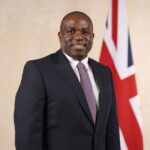
  • David Lammy – 2024 Speech on Indigenous Peoples and Protecting Forests

    David Lammy – 2024 Speech on Indigenous Peoples and Protecting Forests

    The speech made by David Lammy, the Foreign Secretary, on 12 November 2024.

    Can I just begin by saying what an absolute honour it is to be standing here as Labour’s first Foreign Secretary here at COP after 14 years out of power.

    And what a pleasure it is to be here as Foreign Secretary sharing the stage with wonderful Indigenous peoples, wonderful philanthropists, ministers – all dedicated to dealing with the climate emergency.

    It’s one of the privileges of my life to be back in power. Actually able to do something about this agenda.

    So let me just start by first saying:

    • why do I care about forest tenure rights in the first place?
    • second, why should the world care?
    • and third, working together, what we can do about it?

    The bottom line is I got into politics because I care about helping my community secure equity, equal opportunities and justice.

    I represent, in north London, the constituency of Tottenham. It’s where I’m from and it would be described traditionally as an inner-city neighbourhood in London.

    So let me just tell you a bit about my story. My parents arrived from Guyana, just on the northeast corner of South America. My father came to Britain in 1956. He was part of what we talk about in Britain as the Windrush generation. Windrush because that was the boat that people first arrived on in 1948, bringing people from the Caribbean.

    Many of them had contributed to the building of Britain after the second World War and fought during the second World War, and they arrived determined, with a gleam in their eye, for a new prospect in life.

    Over the course of that period then, I’m thinking about the community I represent because many of them faced poverty, and their families have faced poverty. Education was key. Social justice was hugely important to those communities. And, of course, coming from Guyana and the Caribbean I’m thinking about what they left behind.

    In a lecture I gave very recently in Kew, I was reminded that my father used to take me to Kew Gardens in London. I had no reason why as a child he was taking me to the other side of London to hang out in a very large park. And, of course, it was because he wanted to be close to nature. I know that now to be true. And I have committed in my own life to support the rights of Indigenous peoples.

    My wife and I are founders of a conservation centre, it’s called Sophia Point. We work on the Essequibo in the middle of the rainforest in Guyana. We work alongside Akawaio, groups of Amerindian people. Helping them preserve what is in their rainforest.

    Working with the University of Guyana. Helping them with their own rights. Assisting them – they are the custodians of the land. We have a long lease on the land. Working alongside them in a charitable effort. Understanding and wanting to be part of a community that I am originally from.

    But I guess that the other part to that story, of course, is recognising that I stand here as a Briton. We talk about Britain, the green and pleasant land. Think about Robin Hood. You’re thinking about Epping Forest and Sherwood Forest, and those wonderful forests that we have in Britain.

    The point is that all of us have a connection with nature. All of us have a history, and that, in a sense, grounds me as I come to this event. So that’s why I dedicated my first major speech as Foreign Secretary to tackling this crisis. And is why, I explained in that speech, my commitment not just to the issue and to Sophia Point but what more we could do.

    So how do we build an economic model that allows us to continue to live in harmony with nature. The most heartening aspect of what I’ve seen at Sophia Point is hearing how it works to give communities agency in their lives.

    And tenure security gives communities the right to object to environmentally damaging projects and it gives them alternative routes to sustainable livelihoods so that they can thrive as guardians of nature.

    So that’s why I care about this issue. Why should you all care sitting there?

    Well, here are just a few statistics:

    • Indigenous peoples and local communities manage and live in at least half of the world’s land
    • this land contains much of the world’s remaining biodiversity and over a third of intact forests
    • the world’s forests are declining at an alarming rate – every year, we lose an area that is just a bit larger than Azerbaijan itself
    • but the rights of Indigenous peoples and local communities are protected in just 10% per cent of the land in which they reside
    • and over 1 billion people worldwide feel insecure about their rights to property or land

    Funding for forest tenure and management is sadly very low – it received less than 1 per cent of all climate finance in the previous decade, much of which went to governments and NGOs. Almost 2,000 land and environmental defenders were killed between 2012 and 2022, and research shows that these were disproportionately likely to be in Indigenous peoples.

    So the money they get to defend their rights, to be custodians, of our wonderful forest and the danger that they face in much of the world is serious and extreme. That’s why it should alert us all.

    Now in recent years, we have seen some positive steps in the right direction.

    Extended rights, with Brazil acknowledging 10 new Indigenous Territories since President Lula took office.

    We are seeing new legislation, indeed in Guyana we saw new legislation, but also places like the Democratic Republic of Congo’s law on Indigenous peoples’ rights.

    We’re seeing greater implementation, such as Indonesia’s rollout of its social forestry programme,

    And more focus from donors, with increasing engagement at events like this one.

    Still, we are starting from such a low base that there is much, much more that we need to do.

    Today’s event is about what precisely we should be doing.

    There will be lots of ideas in this room, but I want to kickstart just some ideas about how we can play a role.

    If you are a donor – whether from a government like mine or a philanthropic foundation – this is about commitment, and it’s about the long haul. Sustained commitment.

    Committing to funding for nature, committing to funding for forests, and committing for forest communities, particularly their livelihoods and their rights to protect that nature on our behalf.

    I am pleased to confirm that the UK will ensure that of our £11.6 billion in climate finance, three billion will be for nature and within that 1.5 billion for forests.

    With us today are key partners in that, our wonderful friends from Norway who have got a longstanding commitment in this area and of course the Bezos Foundation who have done so much amongst the 25 donors who, with the UK, made the IPLC Forest Tenure Pledge at COP26 in Glasgow, which assigned 1.7 billion dollars by 2025.

    I am delighted we are on track to meet that commitment and to confirm the UK will play its part, keeping our promise to provide over 10% of that funding.

    And I hope today we can talk about how we develop the next phase of that historic Pledge, next year in Brazil. To show our commitment beyond 2025, I can also announce a new 10-year programme.

    Which will provide initial funding of £50 million over 2 years to reduce illegal logging and benefit forest people.

    This builds on partnerships the UK has been forming in these communities for decades and generations, going almost back to when I first started in politics 25 years ago.

    And we are complementing this with new initiatives that invest even further in forest communities.

    A £94 million programme to strengthen forest communities’ voices in governance processes particularly for the Amazon, and a project to train local scientists in the Congo Basin.

    Now if you are a partner government like Brazil, or many others who are here today, this is also about guaranteeing rights.

    As I have said, there are some really important examples of this happening around the world.

    And I hope countries like the UK can work with you to build on this.

    This year, for instance, we launched a Land Facility programme to partner with Global South governments to develop more effective and transparent land governance systems, that better protect rural and forest tenure rights and I hope this model is one that we can continue to build on.

    Last, but not least, for Indigenous peoples and local communities, I hope this can be about seizing an opportunity.

    I recognise you have been speaking up for decades. Fighting to be heard with your own heritage, and thanks to the many Indigenous communities that I have met over the last few years, I am all too aware that there can be a powerful sense that the system is rigged against you.

    But I hope that, as quickly as possible, we can turn things around. Ensure that your rights are protected under the law.

    And that you have the tools you need to make the right choices for you, for your communities and for your environment.

    This is our goal for the next IPLC Forest Tenure Pledge. Our goal for the new programmes I have announced. But I don’t want you to take my word for it.

    We need, more than anything else, to listen to you, to hear you, and to hear how we can continue to make further improvements.

    Let me just end with one story. The community that I work with on the Essequibo coast in the rainforest of Guyana. When we were building the conservation centre, because of some of these rights issues, too often what was happening on their land is illegal mining, some of it very dirty, very disruptive to the environment.

    But communities from the Indigenous Amerindian communities finding that they had to do that because it was all they could do. The conservation centre brings new people alongside them into the environment. It brings scientists, academics, not doing helicopter science, flying in and flying out with the knowledge, but actually working with local communities on the IP, working with local university students on the IP alongside them.

    Again, that brings livelihoods to those communities. It brings documentary filmmakers and others because Guyana is a region of the top of the Amazon base and is less well known.

    So that’s what I mean about coming alongside communities, able to give them livelihoods, livelihoods based on rights and purpose that helps us all in this global fight to make sure that our forests make that contribution to our desire to meet that 1.5 commitment.

    As I say, it’s a great, great privilege to be here for my first event as Foreign Secretary in the UK. Centring of course climate within broader foreign policy and I’m very pleased now that we’re able to watch a video about why Indigenous peoples and local communities really matter.

    Thank you very much.

  • PRESS RELEASE : Human rights must be protected – UK Statement at the UN Third Committee [November 2024]

    PRESS RELEASE : Human rights must be protected – UK Statement at the UN Third Committee [November 2024]

    The press release issued by the Foreign Office on 12 November 2024.

    Statement by Liz Page, First Secretary Cyber, Digital and Technology at the UN Third Committee on the United Nations Convention against Cybercrime.

    Chair, the UK’s EOP at the conclusion of negotiations explained our basis for joining consensus on this Convention. Building on this, I will focus today on addressing views and interpretations expressed by stakeholders and some delegations.

    Stakeholders are right to highlight the potential risks that this Convention could pose to human rights given its broad scope of international cooperation for the sharing of e-evidence and its intrusive procedural powers.

    These risks led the UK, and many others, to insist on effective human rights safeguards in the final text. If applied properly and in good faith, these safeguards mean that human rights will be protected as the Convention is implemented. This is a legal obligation applicable to all State Parties.

    Article 24, relating to the Convention’s procedural powers, is an example. Paragraph 1 of this Article says a Party’s domestic law shall provide for conditions and safeguards, which shall provide for the protection of human rights, in accordance with international human rights law.

    While those conditions and safeguards will be provided for in a Party’s domestic law, the obligation to establish them is not optional. Nor is the obligation subservient to domestic law.

    As is made clear by 24(4), these human rights obligations apply equally at the domestic level and when engaging in international cooperation.

    It is concerning that a few Member States have already tried to deny or dodge them.

    Chair, good faith adherence to safeguards is essential for building trust and unlocking the greater level of international cooperation most Member States aspire to. The UK will play close attention to the implementation of, and adherence to, the safeguards. The stakeholder community must also play an important role here.

    The UK stands ready to cooperate with States who respect the letter and the spirit of the Convention, and support their efforts through capacity building.

    To be clear – the UK will not cooperate with any country which does not comply with the safeguards required by this Convention.

    Ultimately, while the commitments in the Convention are critical, it is how State Parties implement them in the real world which will determine whether this Convention makes a practical difference to efforts towards our common aim to prevent and combat cybercrime.

    Finally, the UK appreciates Vietnam’s offer to host a signing ceremony – but expresses our strong concern at the unprecedented procedure by which this amendment has been introduced after the Ad Hoc Committee had concluded its work.

    We accept this amendment on the basis that there are no PBIs and, noting the commitment Vietnam has expressed to an open dialogue with stakeholders, encourage Vietnam to maintain the inclusive spirit of the Ad Hoc Committee by enabling participation of stakeholders at the signing ceremony.

  • PRESS RELEASE : The most effective way to protect civilians is the immediate cessation of hostilities – UK statement at the UN Security Council [November 2024]

    PRESS RELEASE : The most effective way to protect civilians is the immediate cessation of hostilities – UK statement at the UN Security Council [November 2024]

    The press release issued by the Foreign Office on 12 November 2024.

    Statement by Lord Collins of Highbury, Minister for Africa and the UN, at the UN Security Council meeting on Sudan.

    After eighteen months the conflict in Sudan has had a devastating impact on civilians.

    Almost 19,000 people have been killed and 33,000 injured. These numbers, and the suffering they mask, are unacceptably high.

    The UN reports that mass rape, torture, the destruction of livelihoods, ethnically-targeted killings have been perpetrated on a large scale.

    I thank the Secretary-General for his recommendations on the protection of civilians, as requested by resolution 2736. The overarching message is clear – the most effective way to protect civilians is an immediate cessation of hostilities.

    Efforts to secure this continue: we must offer our full support to the UN as they seek to mediate between the parties, and we call on the parties to engage in good faith with this process.

    But the last eighteen months have also shown that we cannot just wait for a ceasefire.

    We must act now, and these recommendations are a positive step towards more action to protect civilians. It is now for us as states, civil society and members of the UN family to consider how to use them.

    To be successful, we must confront the context we face, rather than the one we would want or like to see.

    I note the Secretary-General’s assessment that the conditions do not currently exist for the effective deployment of a UN force to protect civilians in Sudan.

    We must keep this under review but also remember that the deployment of UN forces is only one lever amongst many.

    We can all see that the warring parties have failed to uphold their commitments in the Jeddah Declaration to protect civilians and allow unfettered humanitarian access.

    I urge them to establish a robust and transparent compliance mechanism to ensure their commitments bear tangible results on the ground.

    They can achieve this, including with the support offered by the UN. Many civilians are suffering because of direct violence. But many more because they are starving, deliberately stopped by the warring parties from getting life-saving help.

    I strongly support the Secretary-General’s recommendation that the parties agree to humanitarian pauses to allow the safe passage of civilians and facilitate the unimpeded delivery of humanitarian aid.

    The potential closure of the Adré border crossing looms large. Its closure would mean millions more civilians would be at risk.

    The crisis demands adaptable approaches.

    Ordinary people have stepped up and taken unimaginable risk to protect their communities, through the Emergency Response Rooms and other mutual aid groups.

    The international community must listen to the Secretary-General’s call to consider how we can further support those local efforts. And this requires warring parties to back scalable, locally-negotiated ceasefires and violence reduction measures.

    I urge all member states, civil society organisations, and stakeholders to be motivated by the Secretary-General’s recommendations, to step up coordinated, international action to protect the people of Sudan.

  • PRESS RELEASE : The worst case scenario is now playing out in northern Gaza: UK statement at the UN Security Council [November 2024]

    PRESS RELEASE : The worst case scenario is now playing out in northern Gaza: UK statement at the UN Security Council [November 2024]

    The press release issued by the Foreign Office on 12 November 2024.

    Statement by Lord Collins of Highbury, Minister for Africa and the UN, at the UN Security Council meeting on the protection of civilians in armed conflict.

    Colleagues, Gaza is in the grip of a humanitarian catastrophe, with over 43,000 Palestinians killed, hospitals and roads destroyed and winter approaching.

    We must see an immediate ceasefire in Gaza and the release of all hostages.

    Ending the war is the best way to stop the suffering.

    The humanitarian situation is intolerable and we need to act immediately to improve it. Aid deliveries last month were the lowest since the conflict began. And now, imminent famine looms over northern Gaza – while food and other lifesaving supplies are stuck at the border.

    This is appalling.

    It is completely unacceptable that trucks, humanitarian workers and medics, funded by the international community, are unable to travel the last few miles to reach civilians.

    The Famine Review Committee has issued a shocking and urgent warning – one which Israel must heed, and act on today.

    As the Committee put it, it is abundantly clear that a worst case scenario is now playing out in areas of northern Gaza, where starvation, malnutrition and deaths are believed to be rising fast.

    Colleagues, time has run out, and urgent solutions are required now, to prevent the very worst from unfolding.

    There is no excuse for the Israeli government’s ongoing restrictions on humanitarian assistance. They fly in the face of Israel’s public commitments. So let me be clear: my government condemns these restrictions in the strongest terms.

    So, we are calling on Israel to finally, and immediately, make good on its commitment to flood Gaza with aid.

    We want to see greater variety and quantity of essential items surging in, including food, water, fuel and medicine.

    Israel must urgently enable safe and effective aid distribution. This includes repairing roads to deliver aid, and enabling continuous access to northern Gaza from southern Gaza.

    Civilians and civilian infrastructure must be protected. Evacuation orders should be rescinded as soon as possible so families can return home.

    And humanitarians must be able to work safely and effectively.

    The United Nations and its agencies must be able to fulfil their mandate.

    UNRWA remains the backbone of the humanitarian response in Gaza and provides essential basic services.

    The international community has been clear that Israel must not undermine its role and must meet all legal obligations as the Occupying Power.

    Colleagues, we cannot allow famine to take hold – there is no time to waste. The international community must now act as one, and work with Israel to take every possible measure to prevent this disaster.

  • PRESS RELEASE : UK and Kuwait continue celebrations to mark 125 years of partnership [November 2024]

    PRESS RELEASE : UK and Kuwait continue celebrations to mark 125 years of partnership [November 2024]

    The press release issued by the Foreign Office on 12 November 2024.

    • As the UK and Kuwait continue celebrations to mark 125 years of partnership, the Minister for the Middle East visited for key meetings with counterparts.
    • His visit focused on defence, security and investment co-operation and reaffirms UK commitment to supporting de-escalation across the Middle East.
    • Discussions also centred on the urgent humanitarian situation in both Gaza and Lebanon and efforts to uphold regional stability.

    125 years of diplomatic relations between the UK and Kuwait are being marked by a visit from UK Minister for the Middle East, Hamish Falconer MP, in his first visit to Kuwait since taking office in July.

    Reiterating the UK’s call for an immediate ceasefire in both Gaza and Lebanon, he discussed the deeply concerning situation in the Middle East and ways in which the UK and Kuwait, as close friends and partners, could work together to address this.

    The Minister met senior Kuwaiti officials, including the Deputy Minister of Foreign Affairs, Sheikh Jarrah Jaber Al-Ahmad Al-Sabah, alongside who he had co-chaired the 21st Kuwait-UK Joint Steering Group in London on 4 September; and the Managing Director of the Kuwait Investment Authority, Ghanem Al-Ghenaiman.

    Reflecting on his visit, Minister Falconer said:

    For over a century and a quarter, the UK and Kuwait have shared strong diplomatic relations. This landmark anniversary year has provided us with the opportunity to reflect on our shared history, whilst also strengthening current and future collaboration.

    With a focus on ensuring regional stability, the UK is committed to working alongside Kuwait on de-escalating tensions across the Middle East and securing unimpeded aid access into Gaza.

    Addressing a range of bilateral priorities, the Minister welcomed last month’s deal for the UK’s SRT Marine Systems to support the development of the Kuwait Coastguard’s capabilities, noting the defence and security co-operations between the two nations.

    Turning to the UK government’s commitment to growth, the Minister also discussed plans to continue strengthening substantial trade and investment ties, highlighting the Sovereign Investment Partnership signed in August 2023 and positive progress of negotiations on a free trade agreement with the Gulf Cooperation Council. In 2023, the GCC was equivalent to the UK’s 9th largest trading partner – with total trade worth £57 billion.

    The Minister rounded off his visit by attending the first King’s Birthday Party to take place in Kuwait. While the theme was horticulture and heritage crafts – mutual interests of His Majesty the King and His Highness the Amir – Minister Falconer used his speech to stress the huge importance the UK places on its partnership with Kuwait, which spans a broad range of areas including trade and investment, defence and security, and culture and education.

    The Minister is visiting Kuwait as part of a wider Gulf tour. He will also visit the Kingdom of Saudi Arabia this week to discuss the importance of a ceasefire in both Gaza and Lebanon and de-escalation in the region.