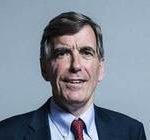
The statement made by Ben Wallace, the Secretary of State of Defence, in the House of Commons on 19 May 2022.
I beg to move,
That this House has considered NATO and international security.
I am grateful for the opportunity to discuss NATO and international security today. The ongoing war in Ukraine underlines the fact that we are living in a dangerous new reality, where aggressor states such as Russia are ever more willing to take risks and violate our international rules-based order. But it also reinforces the ongoing value of the North Atlantic Treaty Organisation, the most successful alliance in history.
Since NATO’s formation in 1949, it has been a beacon of freedom. Twelve founding members, of which the United Kingdom was one, came together to protect their common values and the precious freedoms so recently won in the second world war— freedoms that until recently many of us took for granted. Over the last 70 years, NATO has more than doubled in size to 30 members, but each is still bound by the common values of that founding treaty: freedom, democracy, human rights and the rule of law. Contrary to allegations that emanate from the Kremlin, people choose NATO; NATO does not choose them. Those founding principles have stood the test of time, while other authoritarian, oppressive regimes have been found wanting. Our principles have remained, but our military and diplomatic strategies have continued to evolve.
NATO’s strategic concept is the masterplan for the alliance. It reaffirms the alliance’s values and guides NATO’s future political and military development. It provides a collective assessment of the security environment and drives the adaptation of the alliance.
Mr John Baron (Basildon and Billericay) (Con)
My right hon. Friend will have had sight of the 2022 Defence Committee report and its recommendations. Does he agree, without wishing to put him on the spot about higher defence spending, that it is wise for the west and this country to talk softly and to carry a big stick, and to resource those capabilities accordingly? We are more likely to be listened to when talking softly if we have the hard assets required to ensure that.
Mr Wallace
My hon. Friend makes an important point about resource. I have always said that, as the threat changes, we should obviously consider changing how we deliver and what we deliver in defence. One of the key planks of my tenure as Defence Secretary is for us to be a truly threat-led organisation—if the threat goes up or down, we should adjust accordingly—otherwise we will end up fighting yesterday’s battles, not tomorrow’s. That of course includes resource. It is also very important to make sure that the machineries of both NATO and our Department of State reflect that and move quickly to deliver it.
Mr Tanmanjeet Singh Dhesi (Slough) (Lab)
Having served as a Member of the NATO Parliamentary Assembly, I am glad that both the Government and Her Majesty’s Opposition are of the firm opinion that NATO must be a cornerstone of our defence policy. What exactly is the Secretary of State doing to assuage the concerns of Turkey to make sure that the likes of Finland and Sweden can acquire the NATO membership they desire?
Mr Wallace
Turkey is an incredibly important member of NATO, and indeed a strong contributor to it. We should always remember that NATO covers a very wide frontier, from the high north—the Arctic—in Norway all the way through to the Black sea and Turkey. Turkey is one of the oldest members of NATO, and it is very important that we understand, in this environment, what Turkey is concerned about and that we address that to make sure that the 30 nations come together to support and accept Finland and Sweden.
I will be speaking to my counterpart—I speak regularly to the Defence Minister anyhow—and I have listened to the worries of President Erdoğan about PKK terrorism groups and whether members are doing enough to deal with them. I think there is a way through and that we will get there in the end. It is very important that we listen to all members about their concerns in that process. We will certainly be listening to Turkey, and I was in touch with my counterpart over the weekend about exactly that.
The NATO strategic concept is updated every 10 years and, in the wake of Russia’s atrocities in Ukraine, it is critical that we make sure it is updated to reflect what is going on today. The 2010 strategic concept has served us well, but clearly needs modernising to reflect the new security reality we face. For example, in 2010, the concept stated that the Euro-Atlantic area was at peace. The next concept will reflect how NATO is accelerating its transformation for a more dangerous strategic reality, calibrating our collective defence to Russia’s unacceptable invasion of Ukraine and the new challenges posed by countries further afield, such as China.
While the new concept will reaffirm our commitment to freedom, openness and the rules-based order, it must also embed the UK-led work to ensure that the alliance is fit for future challenges in line with the NATO 2030 agenda. This includes modernising and adapting to advanced technologies, competing and integrating across domains using military and non-military tools, and improving national resilience. The UK has been at the forefront of the strategy’s development. We have full confidence that the 2022 strategic concept will reshape the alliance to ensure it is fit for purpose and for future challenges—in particular, by adapting its deterrence and defence posture on its eastern flank by expanding the alliance’s forward presence from a tripwire to a more credible and combat-effective model, which is grounded through effective, enabled and equipped in-place forces, and supported by persistent, rotational and rapidly scalable forces from elsewhere.
Mr Kevan Jones (North Durham) (Lab)
I again put on record my thanks to the Secretary of State for his leadership during the present crisis. One of the challenges facing NATO, which may seem quite boring to many people, is the issue of logistics and the resilience of transport and other networks across the NATO alliance. Does he see this being addressed at Madrid? Certainly from the NATO Parliamentary Assembly point of view, we talk about it, and it is one of those issues that comes up time and again.
Mr Wallace
NATO and many of its member countries are no different from the United Kingdom in that many of the unglamorous but key enablers have been disinvested in. That may be the bridge strengthening in eastern Europe that would allow heavy armour to get to the frontlines—that used to be a total norm in every design in the 1980s and at the time of the cold war—or it may be logistical hubs or transport to get people rapidly to the front. All of that has in effect been the Cinderella of defence spending for too long across the alliance countries, including the United Kingdom. One of the ways through that is NATO common funding, and Jens Stoltenberg, the Secretary-General, has an ambition for a significant increase in that funding. We will look sympathetically at that request, obviously balancing our own budget requirements, but also making sure that it is going to be used for those purposes.
It is here that places such as the EU can complement NATO. The EU has recently published what I think it calls its strategic compass, and I was very keen to make sure that the EU complemented NATO and did not compete with it. What can the EU do well? It can co-ordinate in sub-threshold areas such as cyber, transnational crime, transnational migration and disinformation, and also in infrastructure-readiness across its member states. I am incredibly supportive of the EU doing more in that space, which would complement the NATO response and make it even more effective.
Stewart Malcolm McDonald (Glasgow South) (SNP)
I completely agree with everything that the Secretary of State has just said, but does it not make the case for the UK to have a defence and security treaty with the European Union?
Mr Wallace
We have a defence and security treaty with the 30 members of NATO, nearly every one of which is in the EU. I do not think that we need to replicate treaties, but we should recognise that where we can encourage the EU not to compete but to complement NATO, we should be full supporters of that. If necessary, we should join the EU in things such as the PESCO—permanent structured co-operation—mobility study. The United States has joined it as well, and we should be open to joining.
John Spellar (Warley) (Lab)
I am sorry that the Secretary of State missed that opportunity to ask what the SNP policy actually is on NATO, or which one it is on today. On logistics and transport, was it not a strategic mistake to pull the Army out of Germany? How far advanced are we in reinstating ourselves in bases that are far more accessible to where a theatre of operations may be?
Mr Wallace
I was one of the soldiers in north-west Germany at the time and there was always a desire after the cold war that we would bring forces back; the Dutch and everyone did that. With the unification of Germany and the accession of the Baltic states, Germany is a long way from any frontline. It is a different world now. It was a few minutes’ drive to the iron curtain in my day; it is now a long way to any frontline.
If there were any desire to reinvest in mainland Europe near what are in effect the new frontlines, we would look openly at that. What we are looking for from NATO in this next phase is long-term planning for how it will contain Russia post Ukraine and provide resilience and reassurance to countries that cannot do that on their own. That could be permanent basing or it could be rapid readiness—being able to deploy quickly, instead of being stuck in a big base in one place. That is all up for development, which I think is incredibly important.
The year 2014 was a wake-up call. With Russia annexing Crimea, NATO began steadily transforming itself in relation to the increased danger. Thanks to the leadership of the United Kingdom, it enhanced the NATO response force, created the enhanced forward presence and launched the framework nation concept. Since 2019, it has developed a new NATO military strategy and a new deterrence and defence concept for the Euro-Atlantic area—the DDA. It has recognised space and cyber as operational domains, and we have agreed strategies on artificial intelligence and emerging and disruptive technologies.
Reflecting the themes of our own integrated review, we want to ensure that NATO is flexible and agile and has a resilient multi-domain force architecture with the right forces in the right place at the right time. In particular, the UK has been pushing to instil a culture of readiness in the alliance. The combat forces that deliver the NATO readiness initiative include 30 major naval combatants, 30 heavy or medium-manoeuvre battalions and 30 kinetic air squadrons—which, in English, is fighter planes. You never know what a kinetic air squadron is—only in the Ministry of Defence. [Laughter.] They are being organised and trained as larger combat formations for reinforcements and high-intensity war fighting or for rapid military crisis intervention.
I am proud that the UK has made the largest offer of any ally to the NATO readiness initiative by allocating our carrier strike group, squadrons of F-35Bs and Typhoons, and an armoured infantry brigade. I am also proud of our role in developing two significant UK-inspired military concepts, the DDA and the war fighting concept, which will further strengthen the alliance’s ability to deter and defend against any potential adversary and maintain and develop our military advantage now and in the future. We will continue to play a leading role in the implementation of those concepts.
The recent war in Ukraine has helped to recover NATO’s original sense of purpose. In the wake of President Putin’s senseless invasion, he imagined that he would find NATO weak and divided. Instead, he has found only strength and solidarity. From the outset, the alliance made it clear that any attack by Russia on its neighbours—including NATO’s enhanced opportunity partners, which is what Ukraine was—would result in the imposition of significant economic, political and diplomatic costs, and so it has proved. NATO allies, supported by further friends from across the globe, have imposed unprecedented costs on Russia, starving the Kremlin’s war machine of resources. In a matter of weeks, President Putin has destroyed decades of economic progress for the Russian people. Allies are providing substantial financial and humanitarian aid, including by hosting millions of refugees across Europe.
I am proud again that the UK has been at the forefront of those efforts. We were the first European country to provide lethal aid to Ukraine. To date, the United Kingdom has sent more than 6,900 anti-tank missiles, including next generation light anti-tank weapons and Javelins; eight air defence systems, including Starstreak anti-air missiles; 1,360 anti-structure munitions; 4.5 tonnes of plastic explosives; thousands of tonnes of non-military aid and humanitarian aid; and military aid such as helmets and body armour. The Stormer armoured vehicles will be deployed soon, once training is complete.
Not only has the Ukraine crisis tested NATO’s ability to support a neighbour, but it has rightly led to a re-evaluation of our collective security. As I have said to the House before, the greatest irony of the conflict is that President Putin has secured a larger NATO presence on his borders, the polar opposite of what he claimed he wanted to achieve. For the first time, we have deployed the NATO response force for defensive purposes. More than 40,000 troops are now under direct NATO command. We are setting up four new multinational battle groups in Slovakia, Hungary, Bulgaria and Romania, doubling NATO’s presence in the region.
As part of that effort, the UK has increased its readiness to respond to all contingencies. That includes sending four additional Typhoons to Cyprus and Romania to patrol the south-eastern European skies, in addition to the four Typhoons already conducting NATO air policing from Romania. It also includes sending ships to the eastern Mediterranean and the Baltic sea and temporarily doubling our military presence in Estonia to 1,700 personnel.
Article 5 is perhaps the most well-known article in the 1949 NATO founding treaty. It is the centre pillar of collective defence—the principle that an attack against one ally is an attack against us all—and it binds NATO’s members together in a spirit of solidarity, committing them to protect one another. Contrary to popular belief, however, article 5 is not automatic; a member invoking it still requires the consensus of all allies. It is important to note that once there has been a vote, article 5 gives member states a range of options, including but not limited to military responses.
Article 5 has been invoked only once in NATO history: by the United States, in the wake of the 9/11 terrorist attacks. In contrast, the less well-known article 4 of NATO’s founding treaty has been invoked on seven occasions since 1949. An ally or group of allies can invoke article 4 if they perceive a threat to their security, territorial integrity or political independence. On 24 February, Bulgaria, the Czech Republic, Estonia, Latvia, Lithuania, Poland, Romania and Slovakia invoked article 4 in response to the Russian illegal invasion of Ukraine. As with article 5, the actions that follow article 4 can take a number of forms. On this occasion, allies agreed to significant additional defensive deployments of forces to the eastern part of the alliance.
Our ability to honour treaties comes at a significant cost, but in that area, too, the UK is leading. We currently have the largest defence budget in Europe. Not only is Putin discovering more NATO presence, but his belligerence has paradoxically ensured more investment in the alliance. At the end of 2020, the UK, anticipating the resurgence of Russia, increased its defence budget by £24 billion over four years. Since the outbreak of war, other NATO nations have begun following suit. Denmark has established a defence diplomacy fund of €1 billion for 2022-23. France has indicated that it will increase its defence spending beyond the substantial increases already planned for the next few years. Poland has announced that it will increase its defence spending to 3% of GDP from 2023, while roughly doubling the size of its military. Most notably, Germany has dramatically reversed its historical position on defence and has announced legal changes to ensure that it will meet the 2% spending pledge alongside €100 billion for the Bundeswehr, which in effect doubles its defence budget.
What we spend our money on matters as much as its sum total. That is why NATO is putting the onus on spending more on research and development to develop the disruptive capability that we need to defeat our adversaries. As part of our settlement for defence, the UK has ringfenced more than £6 billion for R&D, so I am delighted that NATO recently selected the United Kingdom, alongside Estonia, as the joint host of the European NATO headquarters of DIANA, the defence innovation accelerator of the north Atlantic.
Sweden and Finland have both taken the bold step of seeking NATO membership. The UK will be strong in its support for them in that process. If Sweden and Finland are successful, all 10 nations of the Joint Expeditionary Force, from Iceland to the Baltics, will be in NATO. That 10-nation alliance will be well suited to training, exercising and operating together within the NATO alliance, with Britain as a framework nation.
John Spellar
The Secretary of State says, “If Sweden and Finland are successful”. Surely they have to be successful, having made an application. As militarily equipped democracies, their applications have to succeed. Nothing should stand in their way.
Mr Wallace
I totally agree. When Britain says that we want to support them, we want them to succeed. We will help them to succeed, and I believe they will succeed. The right hon. Gentleman is right to say that they must succeed. We need to demonstrate that nations such as Sweden and Finland, having applied, are welcome in the alliance. As I said, people choose NATO, but NATO also recognises the values that those two countries stand for and the professionalism of their armed forces, with which Britain already integrates very strongly. Only a couple of weeks ago, I went to see British heavy tanks in Finland. I think that that is the first time in history that they have been deployed there.
There remain a lot of challenges. We have seen encouraging signs of countries rising to the spending challenge, but as of 2021 less than a third meet the pledge to spend 2% of GDP on defence. The Russian Government’s invasion of Ukraine has, of course, presented new challenges to NATO members, which is why in March I asked NATO to produce a long-term plan on containing Russia, providing reassurance to its members and contributing to improving the resilience of countries on the frontline. I am pleased to say that earlier this week, the Supreme Allied Commander Europe, General Tod Wolters, provided his initial thoughts on the long-term posture. Members will be discussing it between now and Madrid.
Events in Ukraine have reminded many people of the importance of NATO as a guardian of European security. There are many in this House who have been consistent supporters of our membership. Putin’s strategic miscalculations have been so great that he has even now recruited new supporters to NATO’s cause: not only are Sweden and Finland applying, but the Scottish National party has now come out in full support, which we welcome on the Government Benches.
Stewart Malcolm McDonald
I will come on to this in my own remarks, but the policy happened 10 years ago this autumn.
Mr Wallace
Well, when I sat in the Scottish Parliament, I think NATO and the SNP did not go together.
Stewart Malcolm McDonald
More than 10 years ago!
Mr Wallace
Yes, maybe it was. But let us not forget that NATO is a nuclear alliance. There is a danger that the people of Scotland will pick up the slight contradiction that the SNP, which campaigned to rid Scotland of the deterrent that has kept the whole United Kingdom safe for more than 50 years, is campaigning to join a nuclear alliance. In that nuclear alliance, it is Britain’s deterrent that is effectively allocated to NATO. If the SNP got its way, it would be ironic if its wholehearted support for NATO meant that it was reliant on an English nuclear deterrent.
Wayne David (Caerphilly) (Lab)
And Welsh!
Mr Wallace
And Welsh.
I welcome the close working and clear support from the Labour party on Ukraine and NATO over the past few months. I noticed the article in The Times today by the shadow Defence Secretary, the right hon. Member for Wentworth and Dearne (John Healey), arguing for the Opposition to have a greater involvement in the process of refining the strategic concept for the next 10 years.
You know as well as anyone, Mr Deputy Speaker, that I am always keen to be inclusive and above partisan politics. I am happy to discuss with Opposition Front Benchers the strategic concept as it develops over the next few weeks and months. I will, however, add that NATO has mechanisms to contribute to such decisions, not least the NATO Parliamentary Assembly, on which a number of hon. Members serve—there are six Labour Members on it. In both the Opposition and the Government, we do not pay enough attention to our Members who serve on committees abroad. The assembly is often an afterthought, when in fact it should be embraced wholly. It can work both ways, and we can learn what people are thinking in NATO—for example, when it comes to solving the Turkish issue, we should be using the members of the assembly as much as ministerial contacts.
It is not always the case that Opposition parties are so supportive of NATO. Only a few years ago, the previous leader of the Opposition was a man whose aim was to disband NATO. There is also an individual on the Labour Front Bench who recently said that he hoped Russia would successfully hack the nuclear deterrent in the United Kingdom. I know that the right hon. Member for Wentworth and Dearne does not share those motives or views, but we should remind ourselves that not everybody, all of the time, agrees with our positions. Every party is free to change its position on alliances such as NATO, as have the SNP and others, although a certain Member for Islington is, I think, still on a different track.
NATO’s upcoming summit in Madrid, from 28 to 30 June, is an opportunity to address the new strategic reality and agree abiding changes to our deterrence and defence posture in response to Russia’s invasion of Ukraine. Ours aims at the meeting will be straightforward: to maintain NATO’s momentum; to ensure its forces are credible and combat capable in the east; to expand the alliance’s forward presence from a trip-wire approach to a more effective model based on well-equipped, in-place forces supported by persistent, rapidly scalable forces from elsewhere; and to strengthen neighbouring countries and the global partnerships that underpin freedom and democracy. Critically, NATO nations will be looking to agree our new strategic concept, which will set the direction of the alliance for the next decade.
For more than seven decades NATO has protected our way of life and the democracy, justice and freedom that go to the heart of who we are. But peace must be defended in every generation, and as we confront a dangerous new reality in which those values and the international system that underpins them come under sustained assault, it is vital that the alliance is stronger and more united than ever before. I know that that desire is shared by Members on both sides of the House, and they should rest assured that Britain will do all in its power to make sure that NATO keeps delivering by upgrading its defence and deterrence, and will help it adapt to face the 21st-century threat, making sure it remains, as it has for nearly three quarters of a century, the greatest bastion of our security and the greatest guarantor of our peace.