Category: Speeches

  • Chris Loder – 2022 Speech on Transport

    Chris Loder – 2022 Speech on Transport

    The speech made by Chris Loder, the Conservative MP for West Dorset, in the House of Commons on 19 May 2022.

    Thank you, Madam Deputy Speaker, for calling me to speak in this debate; it is a pleasure to contribute and to follow the hon. Member for Richmond Park (Sarah Olney). I draw attention to my entry in the Register of Members’ Financial Interests: I worked for the railways for a long time before being elected to this House.

    I am proud of the Government’s ambition and determination to level up across the UK. I am also proud of the Bills in the Queen’s Speech, particularly the transport Bill, but if I may, I will focus today on railways, buses and roads.

    The Great British Railways proposal is good for the United Kingdom—the whole of the United Kingdom. I am particularly pleased about it because the current model has probably reached the end of its life. The results from that model have been good—we have seen passenger numbers increase 100% since privatisation began—but the Government fully understand that things need to change.

    I draw the Government’s attention to some initiatives that could provide further opportunities within the GBR proposal. In Japan, for example, the relationship between real estate and funding for railway operations is very close, to the extent that Government investment is often not required. That is because of the model that is adopted. I urge the Minister and her officials to look into that.

    Enormous amounts of money are invested in transport, but it is important that we do not get carried away with the number of billions that will be spent. We need to be more concerned about the specific outputs than the amount of money that will be spent. We see billions going to Highways England—I think the Chair of the Transport Committee, my hon. Friend the Member for Bexhill and Battle (Huw Merriman), said that it was £27.4 billion—yet there is consultation after consultation for years and years before any spades actually go into the ground.

    It is the same in the railways, particularly in relation to the rail network enhancement plan, which has been a long time coming. We have seen some really good announcements for the midlands and the north—the integrated rail plan is bringing in £96 billion there—but regrettably we have seen nothing yet in the south-west. Even worse, when Network Rail announced that it was going to invest in re-signalling to enable more capacity and flexibility, the schemes were deferred at the end of the last control period with no hope in sight of the most basic re-signalling programmes.

    We talk a lot in this House about tens of billions of pounds. The Opposition want more than £96 billion, forgetting that we pay £82 billion a year in interest. However, we must remember other parts of the country, particularly the rural parts and specifically the south-west—the local challenges in Dorset and Somerset have been immense. I am grateful for the Minister’s support for returning the frequency of trains and the direct services on the Waterloo-Exeter line and the Waterloo-Dorchester-Weymouth line, which came into effect with the last timetable.

    GB Railfreight, of which Parliament should be incredibly proud, is taking important steps to decarbonise the railway’s freight sector. It recently introduced a first Class 99 hybrid locomotive that will eventually succeed the diesel-power Class 66. It will go a long way to decarbonising the freight network and we have much to learn from it.

    The help that we give transport and railways in Ukraine is not often spoken about in the House. We take great pride in what our nation has done in past decades to help those escaping tyranny by train. Although we are not a neighbouring country to Ukraine, I urge the Government to participate in and actively support initiatives such as ALLRAIL, a group of European train operators that run up to the Polish-Ukrainian border and have brought people out of Ukraine and taken them across Europe. It would be a wonderful statement by the Government, on top of all the wonderful work that they have done so far, to participate in such an initiative. I encourage the Minister to consider that.

    The bus service improvement plan has been quite painful for Dorset. I fully recognise that it has been good for the country in many ways, but Dorset and many other rural areas have not been successful. It is important that the Government consider what can be done to support rural areas, not necessarily with financial bungs but with tangible initiatives. That would be very much appreciated.

  • Trudy Harrison – 2022 Comments on Self-Driving Cars

    Trudy Harrison – 2022 Comments on Self-Driving Cars

    The comments made by Trudy Harrison, the Transport Minister, on 23 May 2022.

    We know that self-driving vehicles have the potential to revolutionise the way we travel, making our future journeys cleaner, easier and more reliable. But our absolute priority is harnessing the technology to improve road safety.

    With around 88% of road collisions currently caused by human error, this funding will drive the introduction of new technology to improve travel for all, while boosting economic growth and highly skilled jobs across the nation.

  • Nadhim Zahawi – 2022 Comments on Children’s Social Care

    Nadhim Zahawi – 2022 Comments on Children’s Social Care

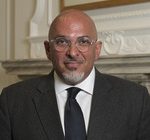
    The comments made by Nadhim Zahawi, the Secretary of State for Education, on 23 May 2022 following the publication of the review by Josh MacAlister.

    This is the start of a journey to change the culture and dramatically reform the children’s social care system.

    Everything we do to raise the outcomes for children and families must be backed by evidence. This report will be central in taking forward our ambition to ensure every child has a loving and stable home and we will continue working with experts and people who have experienced care to deliver change on the ground.

    I am grateful to Josh MacAlister for his work, as well as to the families, young people, and professionals who shared their experiences.

    We are ready to meet the challenge set by this review and I will set out my plans for bold and ambitious change in the coming months.

  • Sarah Olney – 2022 Speech on Transport

    Sarah Olney – 2022 Speech on Transport

    The speech made by Sarah Olney, the Liberal Democrat MP for Richmond Park, in the House of Commons on 19 May 2022.

    It is a real pleasure to contribute to this transport debate, because transport is so central to so many of the challenges facing us as a country, from net zero to levelling up. It is even central to the cost of living crisis, because the Prime Minister seems to want us to use our bus services as a refuge from unaffordable fuel bills.

    For me, the most important issue that transport needs to tackle is decarbonisation. Local communities right across the country need better transport options that are not only greener, but more accessible, reliable and affordable. We need more and cleaner buses. I am delighted that two of our main bus routes in Richmond Park, the 65 and the 371, are now electric, which will have a positive impact on the air quality in both Kingston and Richmond—not only that, passengers can plug in their phone, which is a real win.

    The Government need to go a lot further with their transport decarbonisation strategy. They have pledged £27 billion on new or upgraded roads, and a raft of ambitious goals and targets for phasing our carbon-emitting vehicles, but there is a distinct lack of detail in how those targets will be delivered.

    I echo the comments of the hon. Members for Newbury (Laura Farris) and for Erith and Thamesmead (Abena Oppong-Asare) about the Elizabeth line and how marvellous it is that it has been opened, but there have been delays and extra costs. We need to leverage not just the opportunity that that extra connectivity offers to London and the south-east, but the opportunity to learn lessons from what went wrong on the Crossrail project and apply them to some of the other big transport infrastructure projects across the country. HS2, for example, has huge potential as an engine for economic growth across the north and the midlands, but it is so disappointing to see the scrapping of the Leeds leg, because that diminishes the opportunity to deliver on the Government’s levelling-up agenda.

    As we are investing in new rail across the country, the Government should focus on accessibility and step-free access for passengers of reduced mobility. It is such an important issue. While we are building those railways and investing in new track and carriages, we should build in that accessibility at the very start. I also want to renew my call for more tactile paving across the network for the partially sighted. We have seen some horrific cases in London of blind people falling off the platform, leading to a number of deaths, because there was no tactile paving.

    I am really pleased to see that the planning application has gone in for lifts at Barnes station under the Access for All programme. That will make a huge difference to the ability of people with limited mobility to use the station, but it must be said that more than 40% of stations across the UK do not offer that step-free access, and that needs to be addressed.

    Following on from what the hon. Member for Putney (Fleur Anderson) said, may I just mention Hammersmith bridge for my constituents living in Barnes? I want to see the Department engaging with Hammersmith and Fulham on the funding for the strengthening of the bridge. I know the business case is in preparation, but I urge the Department to do everything it possibly can to support that work, because my constituents really, really need it. The Government also need to think about a strategic plan for bridges right across the country. When there is the sort of catastrophic failure that we have seen in Hammersmith, it is too much for a single local authority to fund.

    Quickly on rickshaws, I would welcome an opportunity to meet the Minister to talk about legislation for the regulation of rickshaws. The hon. Member for Cities of London and Westminster (Nickie Aiken) brought forward legislation in the last Session on this matter. It could be a real game changer for those in my constituency and elsewhere in London and other cities who cannot access active travel in the same way. It could be an interesting opportunity and I would welcome the chance to take that forward. Transport for London needs a sustainable funding package, so that it can invest for the long term in projects such as those on Hammersmith bridge and on rickshaws.

    I do not want to forget rural areas. We talk a lot about urban areas and solutions for urban areas, but too many rural areas are still very dependent on cars. In the south-west, for example, the cost of diesel is 0.5% higher than the national average, which really disadvantages people in places such as Devon when using their cars.

    Finally, may I mention electric vehicles? We need to expand opportunities for charging and to think about a temporary reduction of VAT on electric vehicles to encourage take-up. The hon. Member for Erith and Thamesmead made a great case for investing in electric vehicle charging points, but if we want to accelerate the uptake of electric vehicles, we urgently need to consider making the price more attractive.

  • Natalie Elphicke – 2022 Speech on Transport

    Natalie Elphicke – 2022 Speech on Transport

    The speech made by Natalie Elphicke, the Conservative MP for Dover, in the House of Commons on 19 May 2022.

    It is an honour to follow the hon. Member for Canterbury (Rosie Duffield) and I thoroughly endorse her comments on the importance of rural bus services in our area of east Kent.

    I welcome the Conservative Government’s robust action in holding P&O Ferries to account, and the work that is under way to better protect seafarers, as announced in the Queen’s Speech. I thank my hon. Friend the Member for Bexhill and Battle (Huw Merriman), the combined membership of the Transport Committee and the Business, Energy and Industrial Strategy Committee, and Members from all parties for their support on the issue, which is so important to my constituents.

    I represent an incredibly well-connected and successful area, Dover and Deal, and transport is central to both our economic and community life. We have the one and only, the original, the first of the high-speed lines: High Speed 1. It means we can benefit from trains that whiz from Dover to London in just over an hour, and there are high-speed connections right through to Deal.

    Although the train line is excellent, services have not been fully restored to their pre-pandemic timetable, and the cost of tickets is nothing short of exorbitant. An anytime day return ticket to London is more than £85, which is simply not affordable for many people in my area. An off-peak return is almost £50. An annual season ticket is nearly £7,400, which means that to travel from Dover costs over £2,000 more than it costs to travel from affluent Tunbridge Wells or leafy Sevenoaks. That represents more than 23% of average earnings in Dover, compared with around 17% of average earnings for Tunbridge Wells and around 13% of average earnings for Sevenoaks —it is a pleasure to see my hardworking hon. Friend the Member for Sevenoaks (Laura Trott) in her place. The Dover tickets are more expensive than travelling from Cambridge, Southampton or even Birmingham to London. That cannot be fair and it does not make economic sense. Our country has invested millions of pounds in great rail services for our area. If people cannot afford to use them, we all lose out, nationally and locally.

    As the House will know, Dover has a national strategic role as well as a local one. We are home to our country’s most successful and busy port of its type: the port of Dover. It is vital to ensure a balance between the national interest and the community interest—between a trade corridor and a great place to live. Kent is served by not one but two motorways—the M20 and the M2—but Dover is not. As lorries and cars thunder along the motorways, the last few miles of the approach into Dover on either side of the town are not motorways, they are A roads: the A20 and the A2.

    The A2 is mostly single carriageway, peppered with residential roundabouts that criss-cross the homes, shops and workplaces of local people. The A2 is so now overloaded that planning permissions for local homes are objected to by National Highways on the basis of capacity constraints. The road has been identified as in need of an upgrade for nearly all my adult life. It is now in the road investment programme, and the upgrade really must now go ahead, because Dover is becoming as famous for its traffic queues as for its white cliffs. It is time that the road blocks were cleared. It matters for national growth as well as local growth. Geographically, we are the closest point to continental Europe, and 60% of our trade with Europe transits the short straits route. Dover alone manages up to 10,000 freight vehicles, 25,000 cars and 90,000 passenger movements a day at peak times.

    Contrary to what the doomsters and gloomsters said, when Brexit transition finally came, the sky did not fall in, the seas did not rise and there were not hundreds of miles of tailbacks to the midlands and beyond. But there are days when the traffic grinds to a halt—there were before we left the European Union and there are now—because of weather, strikes and many other reasons. This is part and parcel of having a major transport hub in a constituency—be that a port or an airport. However, the fragility of the road network has increased in recent decades as the activity and growth—international, national and local—has soared, and the roads are long overdue for investment.

    The Kent road system currently operates with a sort of sticking plaster—or should I say a series of sticking plasters? They are called Operation TAP: the traffic assessment project; Operation Stack; Operation Brock; and the euphemistically named active management protocol, which involves police standing on the corners of the main arterial roads, directing traffic. Yes, I am talking about a few traffic lights and police in high-vis jackets to manage local community traffic, those 10,000 lorry movements and up to 90,000 passenger movements at peak times. This sticking-plaster and piecemeal approach is letting down Dover and it is letting down UK plc. We need proper investment and I renew my request for urgent planned strategic investment to keep Dover clear and to make the most of Britain’s opportunity to trade with the world.

    Finally, Dover and Deal is a wonderful place in which to live and work. I want to see our area thrive, develop, grow and prosper even more. Getting the right infrastructure in place will deliver for our community and for our nation alike. In these financially constrained times, it is more important than ever to put national investment where it can deliver most bang for the buck. That means investing in Dover and Deal.

  • Rosie Duffield – 2022 Speech on Transport

    Rosie Duffield – 2022 Speech on Transport

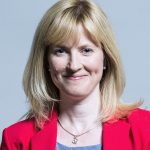
    The speech made by Rosie Duffield, the Labour MP for Canterbury, in the House of Commons on 19 May 2022.

    The Environment, Food and Rural Affairs Committee, on which I serve, is currently considering the evidence for its report on rural mental health. Time and again, the expert witnesses mentioned isolation, loneliness and the problems of basic connectivity as factors leading to poor mental health in rural communities. Combined with the many current financial pressures, plus Brexit uncertainty and added bureaucracy, this is sadly all part of a deeply worrying pattern.

    Rural communities are especially dependent on reliable, regular and affordable transport links. When local bus services are cut, the effect is immediate and has catastrophic consequences. For example, if a single parent’s routine involves setting off for work knowing that their teenage child will leave for the bus 20 minutes later and arrive safely in time for registration, what exactly are they supposed to do if they are told one day that the bus route will no longer exist? What exactly is anyone who regularly uses a route for medical appointments or social reasons, or to go to college or work, supposed to do if the route is gone overnight? School and work are essential activities, so the buses are essential, too.

    Far too many cars already clog up the few main routes into and out of my constituency, contributing to increasingly dangerous levels of air pollution and growing rates of childhood asthma, but what choice do people have when their buses simply disappear? We are building more and more houses, thereby inviting in more and more cars, and we are even building more roads to accommodate those cars and threatening much-loved and historical green spaces, such as the Old Park area in Canterbury. Does this sound like a recognition of the climate emergency? It is hardly progressive.

    People in Canterbury, Whitstable and our villages simply want to be able to move from A to B and to get to school without damaging the planet and everyone’s lungs, but we will not achieve that if local bus services constantly disappear. What about cuts to school bus services, such as the one serving Spires Academy in Herne Bay, which is attended by many pupils who live around Canterbury? How is it more efficient for Kent County Council to have to source other modes of transport, particularly for otherwise stranded children with special educational needs and additional needs?

    The cost of a school travel pass is now almost £400. There is no way that a single parent, possibly with two or more children, can magic up money like that. Several years ago, I had to borrow the money to pay for my two children’s bus passes when they cost half that amount.

    It is easy to forget how dependent people are on public transport while we in this place go around Westminster. Everywhere we look we see affordable buses on every corner. When my constituents visit London, they can jump on a bus and go anywhere for £1.65, but they have to pay more than £7 to travel for around 20 minutes from Canterbury to Whitstable and back.

    The fact that the 27 bus route through Rough Common, one of my local villages, is about to be cut is causing so many problems. My constituents depend on it. There are also cuts to routes 922, 925 and 7.

    Despite being one of the largest local authorities, Kent County Council does not have an endless supply of money. Our county has to deal with the horrors of Operation Brock—one of the many so-called benefits of Brexit—and the recent collapse of P&O Ferries, which was a disaster for our area and about which I am sure we will hear more later from the hon. Member for Dover (Mrs Elphicke). The pause of Eurostar services from Ashford and Ebbsfleet has also had a catastrophic effect. Our local authorities urgently need direct financial assistance and help to tackle such huge issues.

    Canterbury City Council has committed to building far too many new homes without the basic infrastructure that is needed. Will the Government help the county to update our outlook and aims so that we do not simply choke our children as a result of outdated car dependency? We need help with a cleaner, greener, more people-focused overview of transport. We need to keep our rural communities moving and maintain east Kent as an inviting and buzzing tourist destination.

    Let us perhaps model ourselves a bit more on our European neighbours and have more pedestrian-friendly town centres and cheaper and more environmentally friendly and reliable transport. Let us help our local authorities and big bus companies to work together, in consultation with national Government, and adequately fund the active travel scheme, so that we can achieve a more ambitious, greener vision for local transport throughout the country.

  • Sara Britcliffe – 2022 Speech on Transport

    Sara Britcliffe – 2022 Speech on Transport

    The speech made by Sara Britcliffe, the Conservative MP for Hyndburn, in the House of Commons on 19 May 2022.

    To truly level up, we need to make sure that we provide suitable connections for our constituents to get to the opportunities that exist, whether that be by road or rail. That is one of my key focuses for the residents of Hyndburn and Haslingden, but we have some serious issues with transport and connectivity, one example being that a journey to Manchester by road, which is about 26 miles away, can easily take more than an hour. By train it takes just under that. I have worked with colleagues in Westminster, just after being elected, to save the vital X41 bus service, which goes from my patch to Manchester. We did that because bus routes are key, especially when we are encouraging people to use more public transport, but they routes have to exist, be reliable and affordable. That is why I welcome more than £34 million of funding from the Government for Lancashire’s bus service improvement plan, and I will push for much of the investment to go into Hyndburn and Haslingden.

    Reliable services by train are vital, but our stations also have to be accessible. That is why I am pleased to see investment in Accrington train station, through Government funding. We are already seeing £300,000-worth of work being done on a compliant ramp on the Burnley-bound platform side, which came from the Department for Transport mid-tier funding. I have also lobbied for other stations to become accessible for all, such as Church & Oswaldtwistle and Rishton, and for further measures for Accrington. I am pleased that option selection reports and diversity impact assessments have been submitted to the Department for all those stations by Northern, which I have worked closely with. I really press that those be looked at favourably by the Department, as this investment would make a transformational difference.

    Let me turn to some more of the schemes I have been lobbying the Government on, along with colleagues, the first of which is the Skipton to Colne railway line. I need to thank the campaign group SELRAP—Skipton East Lancashire Rail Action Partnership—for its hard work and dedication to the campaign. The reinstatement of just 13 miles of track removed during the Beeching cuts would be a huge benefit to our area and finally link up Yorkshire and Lancashire by rail. I would sincerely welcome a meeting with the Minister and other colleagues involved to discuss that further. As the Haslingden MP, my full backing is also behind the Rawtenstall to Manchester line bid under the restoring your railway fund. I was pleased that the Government granted £50,000 to Rossendale Borough Council for the feasibility study. Along with the local authorities, the local enterprise partnership, business leaders and East Lancashire chamber of commerce, we have been working together to get a freight terminal in Huncoat, which will be hugely beneficial for Lancashire and beyond, bringing jobs, investment and economic growth. I want the Government to be aware of that.

    I want to talk about some key issues with our roads across Hyndburn and Haslingden, the first of which is speeding. Roads such as Hud Hey Road, Blackburn Road, Burnley Road, Manchester Road and Fielding Lane are just a few where we have severe problems with nuisance and ignorant drivers, who use our roads as racetracks, putting innocent lives at risk and creating excessive noise. I have been working with our local police and the county on the issue, and with them I am putting together our application to be one of the areas to trial the noise cameras that the Government have put forward. I hope our application will also be looked upon favourably.

    We have a big issue in Lancashire and beyond. One thing we have been talking about a lot is the use of speed cameras. I have been told by authorities that the cost of just a single speed camera is quite significant, so I wonder whether there is a pot of funding that could go to local authorities from the Government so that these cameras could be put into the communities that need them, such as mine in Hyndburn and Haslingden.

    I come to the issue of congestion in areas such as Clayton, and specifically around the Whalley Road at peak times. That is one of the main routes linking the Ribble Valley to Hyndburn. The congestion is causing huge problems during rush hour and significant air pollution. Something like a relief road might be needed to solve the congestion. I would welcome further discussions on what we could do in Hyndburn to create something suitable for the area.

    Finally, I hope the Government will carefully consider Lancashire’s bid to make Preston the home of the Great British Railways HQ, because it is just the kind of investment we need in lovely Lancashire.

  • Laura Farris – 2022 Speech on Transport

    Laura Farris – 2022 Speech on Transport

    The speech made by Laura Farris, the Conservative MP for Newbury, in the House of Commons on 19 May 2022.

    Last week I had the pleasure of joining the all-party parliamentary group on Crossrail for my first Crossrail trip across London’s city centre, and it is a triumph of engineering and creativity. From the cloud atlas ceiling as I descended into Paddington station to the pinstripes that inspired the entire construction of Liverpool Street station, the design tells the story of our city.

    Crossrail’s construction also revealed more of the city’s history. Some of the construction workers told me of discovering more than 3,000 victims of the black death, buried at haste and without dignity, beneath the old Bethlem Hospital when they excavated the tunnel at Liverpool Street. Of course, Crossrail also plants a flagpole in our national story, having been unveiled in the year of the Queen’s platinum jubilee and been christened in her name.

    Crossrail has not all been plain sailing. It is overbudget and overdue, and it would not have made it without significant Government intervention. I have repeatedly cursed it over the years for the chaos it caused at Reading station and, as I crawled through on the bus, for the way it carved up Tottenham Court Road. Despite that, I have had a Damascene conversion. Crossrail is an extraordinary new piece of infrastructure.

    It is incredible that we can travel from Paddington to Liverpool Street in 10 minutes, and even more incredible that we can get from Newbury station in my constituency to Canary Wharf, in the heart of the London docklands, in exactly one hour. Everyone who worked on Crossrail should feel proud. It will change our city and transform rail transport across much of the south-east.

    Crossrail comes at a bittersweet moment for west Berkshire, because it is only two months since we learned that Great Western Railway is withdrawing three intercity express trains between Bedwyn and Paddington, about which my hon. Friend the Member for Devizes (Danny Kruger), who is not in his place, and I have been talking to Ministers ever since it was decided.

    I thank the Minister of State, Department for Transport, my hon. Friend the Member for Aldridge-Brownhills (Wendy Morton), who is also not in her place, for her help in reinstating the 19.07 route from Paddington to Bedwyn, which is popular with commuters. She will understand that my predecessor, who now sits in the other place, worked very hard on the route’s introduction, and it meant people moved to villages such as Kintbury and Hungerford because they believed those places were commutable from London. GWR is doing a great job of trying to improve connection times, and it has said its ambition is to reinstate the intercity express trains. I hope Ministers will understand if I keep up that conversation and keep knocking on their door in the months ahead.

    Finally, and I will be brief, I strongly differ from the hon. Member for Ilford South (Sam Tarry) on Bus Back Better, as we have had generous indicative funding. It has perhaps not enabled us to realise all our plans—we have lots of creative ideas in west Berkshire—but it has enabled us to realise some of them. Bus funding is often siloed in individual counties, and it is rare for counties to correspond on securing bus routes that travel between them, so Ministers will understand why I raise it.

    For close to 18 months, I have been campaigning for a bus that links Newbury to Oxford, with stops along the way, not just because these two great metropolises ought to be joined, although they should, but because I think it meets the Department’s BSIP criteria to maximise passenger growth. The A34 route between west Berkshire and south Oxfordshire is home to some of the most exciting technology and science enterprises in the country, if not the world.

    The Harwell science park, just north of my constituency border, is creating 10,000 jobs over the next five years and is already heavily recruiting talented apprentices from Newbury College. The same can be said of the science parks at Culham and Oxford, and of the business park at Milton. They are all on the same route, but the only way one of my constituents can access these places, if they get a job, is by taking two trains and a bus, with a journey time of about an hour and a half for a distance of less than 20 miles. Of course, most of them get in their car, which is something we want to limit.

    I am grateful for the energy and enthusiasm that Oxfordshire County Council, West Berkshire Council, the Thames Valley local enterprise partnership and many others have shown for my proposed direct bus route, recognising that we need to give people a cheaper, greener and faster way of getting to work in these important growth destinations. West Berks and Oxfordshire both made this request of the DFT in their BSIP proposals, but the decision ultimately rests with Ministers, and I strongly encourage them to approve it.

  • Ian Paisley – 2022 Speech on Transport

    Ian Paisley – 2022 Speech on Transport

    The speech made by Ian Paisley, the DUP MP for North Antrim, in the House of Commons on 19 May 2022.

    Five minutes is usually about clearing my throat, Madam Deputy Speaker, but I will do my best in this debate, and I hope there will be no hot air from me today. I welcome the comments made by the previous Minister, the hon. Member for Harrogate and Knaresborough (Andrew Jones). Both Ministers on the Front Bench know of my commitment to Wrightbus in my constituency. It is a company that was about to go into the doldrums, starting with about 55 people, less than two and a half years ago, and it now employs almost 1,000 people. I remember the Under-Secretary of State for Transport, the hon. Member for Copeland (Trudy Harrison) visiting the plant with me and sitting in a new hydrogen development bus and wanting to steer it around the streets of Ballymena. I know that those visits are incredibly important. In the last few weeks, I have had the opportunity to meet the Secretary of State for Transport, and I have encouraged him to make his next big visit to Northern Ireland to visit the bus plant at Wrightbus and see for himself the great, pioneering work that is being done by the workforce there. They are immensely proud of the fact that they have produced the only workable hydrogen buses to scale across the UK. Indeed, they have produced over 1 million miles of bus activity on the UK’s roads. This is the future of public transport, and I hope the Government grasp it with both arms, give it a bearhug and take it forward, as is required for our industry to be successful.

    I am also delighted that, in recent days, we have had a new export deal between Wrightbus and Volgren in Australia. Indeed, a deal with a European country for more hydrogen bus sales into Europe will be announced later this week, which is a very positive development. A small, 75-year-old company in Northern Ireland is now a world leader in hydrogen and other low-emission bus technologies. The job creation is significant and adds to our Union connectivity. Remember that 1,000 people employed in Northern Ireland is the equivalent of about 30,000 jobs across the United Kingdom. It is very significant for a small place like Northern Ireland to have such an impact. I encourage the Secretary of State and other Ministers to visit, because Wrightbus shows the importance of bus development.

    Another aspect of Union connectivity as it relates to transport is the Heathrow hub link to Northern Ireland. A number of hon. Members have mentioned the interim price cap, which is disastrous for connectivity to Northern Ireland. If I wanted to fly to Northern Ireland right now and made an emergency booking with British Airways, a single flight would cost £375. I could probably fly to anywhere else in Europe for that. The price cap will cripple connectivity, and I encourage the Government to step in.

    I heard what the Minister said, but it is not good enough to say that this is a matter for the Civil Aviation Authority. Government intervention is required because of the strategic and security interests at stake with Union connectivity. I know it is difficult for him to step in, and that he would be treading on all sorts of toes, but he should do the Northern Ireland thing and get his retaliation in first. He should put on his hobnail boots, tread on those toes and make the point that this is damaging trade and investment in Northern Ireland, damaging connectivity and damaging the Union. It is important that we address that issue.

    I congratulate Translink on its significant work on our railways across Northern Ireland. It is improving the links between the villages of Cullybackey and Dunloy in my constituency and Ballymoney. These are significant transport links for connectivity and businesses across Northern Ireland.

    I also thank the road surfacers who are trying to improve, with a very limited budget, what I can only describe as the Swiss cheese-like roads on which some of our people drive in Northern Ireland. Again, the Government here should be encouraging our Government in Northern Ireland to get on with developing those roads.

    The Minister mentioned the levelling-up agenda, which is a significant opportunity to change the UK for good, if it is applied correctly. If we can get levelling-up funding into new air routes and new airlines operating across Northern Ireland and into the rest of the world, it will make a significant difference for trade and for my constituents.

    Finally, I chair the all-party parliamentary group on motorcycling, and I encourage the Minister to meet us soon to discuss the point raised by the hon. Member for Bexhill and Battle (Huw Merriman), the Chair of the Transport Committee, on the regulation of e-scooters and other e-vehicles. This is an important development, and we need to get ahead of the curve.

  • Andrew Jones – 2022 Speech on Transport

    Andrew Jones – 2022 Speech on Transport

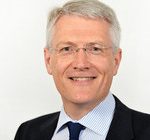
    The speech made by Andrew Jones, the Conservative MP for Harrogate and Knaresborough, in the House of Commons on 19 May 2022.

    I will make a few points, but I will be particularly aware of the time and make sure that I do not overrun, so that other colleagues can get in. First, I agree strongly with the point made by the Minister of State, Department for Transport, my hon. Friend the Member for Pendle (Andrew Stephenson), that Government support for the transport sector during the pandemic was very strong. It was necessary in the emergency that we faced. However, the message to people to avoid public transport, while I understood its point, undid some of the progress that had been made in getting people back on to public transport in the first place. Our task now is to encourage people to resume using public transport and to ensure that the Government investment programme surges ahead, although I recognise fully that these are tough times in transport planning, given all the uncertainties. We are still facing problems from the pandemic, when things like train driver training were cut back, but it is a bad mistake to think that the current level of passenger demand has stabilised and is somehow fixed and that service levels can be cut back accordingly.

    We have seen some of the implications of this locally on the Leeds-Harrogate-Knaresborough-York line. The services that have been cut back are the early morning services to Leeds, although many people from Harrogate commute to Leeds for work. Some will now find it impossible to be in work on time. For other service users, it is now impossible to connect with the Leeds to London services that get into our capital before 10 am. That is not good enough for business people, and Harrogate has significant conference business at its convention centre, with many people travelling to it from across the country. Other rail cuts have created long gaps in the evening services and an earlier finish on the Knaresborough service. These cuts are obviously bad for our night-time economy.

    It is not great to see these things because we had been making such great progress after all of the years of Labour’s no-growth northern franchise. We have got rid of the Pacers, we have much better rolling stock and we have more services, especially the six direct London services per day using the new Azuma trains. I have taken this matter up locally, specifically with the chair of Northern Rail, Robin Gisby, with whom I had a very positive meeting. It was clear that he recognised the significance of the services that have been cut, and he is working on reinstatement for later this year. Getting more drivers through training is a necessary ingredient for progress.

    I recognise the challenges in resuming full pre-pandemic levels of operation. We have lower demand at the moment, as well as operational issues. We can see comparable issues in other sectors of the economy and in our public services, but lots of people have worked hard to secure the rail improvements we have enjoyed over the last 10 years and lots of people need the services that have been lost. Those services have a disproportionate economic impact, which is why we need them back at the earliest opportunity. May I ask the Minister to focus on ensuring that the operational side of the catch-up is delivered as fast as possible? I recognise that this is the industry’s responsibility, but pressure from the Minister can help.

    I would like to switch modes and talk about buses. We have many electric buses in Harrogate already. There was a step change in 2018 when a fleet of eight electric buses went into service. That funding came from a green bus fund initiative, which ran for many years. Before anybody intervenes, I acknowledge that I am indeed marking my own homework here, as a former bus Minister, but the point is that we are now seeing comparable initiatives all across the country. Indeed, only in the last few weeks the Harrogate Bus Company and North Yorkshire County Council, under the excellent leadership of Councillor Don Mackenzie, have won approval for their bid to the Government’s zero emission bus regional areas—ZEBRA—scheme. The county council has secured £8 million and the Harrogate Bus Company is investing £12 million to create a scheme that will bring 39 electric buses to Harrogate and, especially, to Knaresborough.

    I would like to share the experience we have had in Harrogate. The bottom line is that the new electric buses are very popular, and the customer response has been excellent. I have checked this with the bus company and with passengers. People like the ride quality and the quietness, alongside the fact that the vehicles are bright, airy and pleasant to be in. They are obviously also emission free, which is highly popular. When the new buses arrive, I know that they will be popular too. The point of mentioning this is to encourage the Government to put as much pace as possible into the Bus Back Better campaign. The 4,000 zero-emission buses that will come from it will be popular. They will drive passenger usage, they will help to deliver our net zero objectives and as the buses will be built across the UK, including in Northern Ireland, they will help to deliver on the levelling up agenda. There are not many policy areas that can tick that many boxes, so please can we look at how the zero emission schemes have been implemented? There are lessons to be learned there, and those lessons will speed deployment. More wins, more quickly.

    I have a moment left, and I have one further ask of Ministers. Will they keep the House informed of progress in the single leg pricing rail fare reform trial? Again, I must be up front about the fact that my fingerprints are on this issue. This trial is about simplifying fares on the London to Leeds, Newcastle and Edinburgh routes so that passengers can mix and match to get more flexibility and therefore better deals. Initial feedback from LNER has been positive. I am not surprised by that, because we have seen passenger benefits. If Ministers could keep the House informed, that would be great. If the trail remains successful, perhaps it could be rolled out into other areas of the country so that more passengers can get better deals.

    Lastly, there has been an enormous amount of hot air today from the Opposition Benches. The Labour Government did nothing to invest in rail during their time in office. We have listened to Labour Members suggesting that they would spend billions of pounds without identifying where the money would come from. Their track record is woeful. I ask them to consider how many miles of electrified railway the Labour Government delivered during the course of their term in office. It was woeful. They should not try to hide from their record. They should recognise that things have changed under this Government.