Category: Speeches

  • Keir Starmer – 2024 Comments at the Launch of the Global Alliance against Hunger and Poverty

    Keir Starmer – 2024 Comments at the Launch of the Global Alliance against Hunger and Poverty

    The comments made by Keir Starmer, the Prime Minister, on 18 November 2024.

    Thank you, President Lula – you know, I’m a great admirer of Brazil…

    It’s not just the football…

    It’s also your culture and your commitment to working people.

    More than just their right to be free from exploitation…

    But their right to be lifted up, to enjoy greater opportunities, and to enjoy life.

    We share that passion.

    It fuels our politics.

    And it is a great pleasure to be here with you.

    This is my first G20.

    So I want to take the opportunity to say that under my leadership…

    The UK will always be at the table…

    Listening, upholding our values, ready to work with you…

    As a responsible global partner.

    I want work together on the huge challenges before us…

    Like conflict and climate change…

    Because these forces work against everything we want to achieve.

    They destroy economic growth, undermine security and opportunity, and generate migration at a level that we can’t sustain.

    But if we can find solutions to these problems…

    Then there are also real opportunities here…

    For growth and for investment…

    To cut the cost of living at home and improve the lives of those we are here to represent.

    So I want to build the partnerships we need to support progress.

    And that includes in the fight against hunger and poverty…

    I want to thank President Lula for putting this on the agenda.

    We look back on a lost decade in the fight against poverty…

    Due to Covid, climate change, and rising levels of conflict.

    It can’t go on.

    We need renewed, resolute global leadership to tackle poverty and hunger.

    President Lula’s Global Alliance will help us to meet that challenge.

    And I am pleased that the UK is playing its part.

    We’re not just joining the Alliance….

    We’re joining its Board of Champions to help steer this work.

    And we’re delivering practical support for communities to keep food on the table…

    Helping to build climate resilience and protect harvests…

    In countries across Africa and Asia.

    We’re also launching a new partnership to combat child wasting…

    With UNICEF, the World Food Programme and the WHO.

    And we are doubling our support for those displaced by the war in Sudan.

    The suffering from that conflict is horrendous.

    And it highlights a crucial point…

    That famine is man made.

    The greatest step in the fight against hunger today would come from resolving conflicts.

    And so we call again for an immediate ceasefire in Gaza.

    For the hostages to be released.

    We are deeply concerned about the plight of Palestinian civilians…

    Facing catastrophic hunger and starvation – particularly in northern Gaza.

    In defending itself, Israel must act in compliance with international humanitarian law…

    And do much more to protect civilians and aid workers.

    The UK has provided £100 million of humanitarian aid…

    But we also need to see a massive increase in the amount of aid reaching civilians in Gaza…

    UNRWA must be able to carry out its mandate…

    Particularly at the onset of winter.

    Finally, it is important in this room that we address Russia’s illegal war in Ukraine.

    Tomorrow marks the 1,000th day of their invasion of a peaceful, sovereign state.

    And they have inflicted damage on the wider world, including on food and energy security.

    So we call, again, for a just and durable peace, consistent with the UN Charter.

    Thank you, Chair.
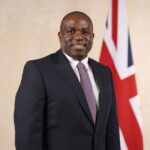
  • David Lammy – 2024 Speech on Israeli Restrictions on Humanitarian Aid

    David Lammy – 2024 Speech on Israeli Restrictions on Humanitarian Aid

    The speech made by David Lammy, the Foreign Secretary, on 18 November 2024.

    The situation is devastating and frankly beyond comprehension.

    And is getting worse, not better.

    Winter is here.

    Famine is imminent.

    And 400 days into this war, it is totally unacceptable that it’s harder than ever to get aid into Gaza.

    In October, just 37 humanitarian trucks entered the Strip each day.

    It’s the lowest average in the last year.

    The situation in northern Gaza is a nightmare of disease, destruction and despair.

    Over three hundred aid workers have now been killed.

    It’s the highest number in UN history.

    Amongst them were three British nationals, whose families yearn for justice.

    More children have been killed than in any recent conflict anywhere in the world.

    And meanwhile, Hamas still cruelly holds onto the hostages, including British national Emily Damari, extending their families’ torment even further.

    In the West Bank, an environment of impunity exists for extremist settlers.

    And since October 7th, conflict has spread, engulfing of course, Lebanon.

    We must bring this multi-front conflict to an end.

    There is no excuse for Hamas’ hostage taking.

    They need to be set free.

    There is no excuse for Israeli restrictions on humanitarian aid.

    They need to be lifted.

    And there is no excuse for violations of international humanitarian law.

    It needs to be respected – by all sides.

    No excuse for malign Iranian activity, destabilising the region.

    It needs to stop.

    The world has failed to bring about the ceasefires so desperately needed in Gaza and Lebanon.

    Failed to break the cycles of violence.

    But the UK will not give up.

    Not when there is so much, frankly, at stake for civilians in the region, who suffer so greatly.

    But also for us all.

    On and since October 7th, the nationals of at least thirty-one UN members have been killed or kidnapped in the region.

    Merchant shipping, of course, has been disrupted in the Red Sea, and the entire region has been pulled to the brink of an even more devastating war.

    Despite this bleak picture, we cannot let experience turn us into pessimists.

    It is never too late for peace.

    We need a huge huge rise in aid.

    We need to respect aid workers once again.

    Proper protection for civilians.

    The UK has restarted our funding to UNRWA, to help those saving lives, and deliver the Colonna report.

    And we’ve been consistent in our support for international law.

    We’re working hard every day to bring this horrendous war to an end.

    The longer fighting continues, the deeper the depths of pain, of anger, which corrode the bonds of common humanity on which a lasting peace must necessarily be built.

    When the opening comes, we must be ready to seize it.

    We need detailed plans for turning an immediate ceasefire into a lasting solution.

    A strengthened and reformed Palestinian Authority should be at the centre of Gaza’s future recovery, security and governance.

    And we’ve got to give the people of the West Bank and Gaza a political horizon, a credible, irreversible pathway to a Palestinian state.

    In 1947, the United Nations adopted Resolution 181.

    Ever since, the Palestinian people have been waiting, waiting for seventy-seven years for a land that they can call their own.

    That wait must end.

    And the Israeli people, who are still threatened by groups dedicated to their destruction, have waited too long for the peace and security promised when their nation was born.

    We must not give up our pursuit of a future where all people of the region can live side by side in peaceful co-existence, including Israelis and Palestinians.

    Ending the war.

    Securing a lasting peace, with a two-state solution at its core.

    This is what the region needs.

    And this is what the world wants.

    And this is what we will keep striving to achieve.

  • David Lammy – 2024 Speech on the Rape and Starvation in Sudan’s Brutal Civil War

    David Lammy – 2024 Speech on the Rape and Starvation in Sudan’s Brutal Civil War

    The speech made by David Lammy, the Foreign Secretary, on 18 November 2024.

    For over eighteen months, Sudanese civilians have endured unimaginable violence.

    We have seen and heard the testimony.

    Atrocities driven by ethnic hatred.

    Sexual violence, including mass rape.

    Children abducted and recruited as soldiers in this horror.

    Aid workers attacked.

    Essential supplies blocked.

    Homes, schools, hospitals destroyed and looted.

    This suffering is a scar on the collective conscience.

    On a scale that is frankly hard to comprehend.

    In the face of this horror, the UK and Sierra Leone – working in partnership – sought to bring this Council together to address this humanitarian emergency and catastrophe.

    To protect civilians.

    To ensure aid access.

    To call for a ceasefire.

    One country stood in the way of the Council speaking with one voice.

    One country is the blocker.

    One country is the enemy of peace.

    This Russian veto is a disgrace.

    And it shows to the world yet again Russia’s true colours.

    Shame on Putin for waging a war of aggression in Ukraine.

    Shame on Putin for using his mercenaries to spread conflict and violence across the African continent.

    And shame on Putin for pretending to be a partner of the Global South.

    While condemning Black Africans to further killing, further rape, further starvation in a brutal civil war.

    I ask the Russian representative in all conscience sitting there on his phone.

    How many more Sudanese have to be killed?

    How many more women have to be raped?

    How many more children have to go without food?

    Before Russia will act?

    Russia will have to explain itself to the entire United Nations membership now.

    While Britain doubles aid.

    Russia blocks aid access.

    While Britain works with our African partners.

    Russia vetoes their will.

    We tabled this resolution to show the Sudanese people and the world that they are not forgotten.

    This text would have called on parties to agree humanitarian pauses.

    To ensure the safe passage and get aid to where it is needed.

    It would have galvanised support to local groups, who are taking unimaginable risks to protect their communities.

    And it would have increased pressure on the warring parties to agree a ceasefire by supporting mediation efforts.

    Mean, nasty and cynical, Russia’s veto today sends a message to the warring parties that they can act with impunity.

    That they can ignore their commitments and responsibilities to protect their own people.

    Let me be clear.

    I will not stop calling for more action to protect the people of Sudan.

    I will not stop calling more aid.

    I will not stop working with our partners in Africa and around the world to help

    The UK will not forget Sudan.

  • Priti Patel – 2024 Speech on Bangladesh and Attacks on Hindu Community

    Priti Patel – 2024 Speech on Bangladesh and Attacks on Hindu Community

    The speech made by Priti Patel, the Conservative MP for Witham, in the House of Commons on 2 December 2024.

    First of all, I thank the hon. Member for Brent West (Barry Gardiner) for his urgent question on this important subject. He also raised the arrest of the ISKCON leader, and I too am familiar with the place of worship near the hon. Gentleman’s constituency.

    There are deep and long-standing ties between our two countries. The Minister visited Bangladesh recently. She is right to point out that, as the hon. Member for Brent West said, the degree of escalation in the violence is deeply, deeply concerning. What we are witnessing now is uncontrolled violence in many quarters. We are watching with horror and shock as further violence spreads in Bangladesh. The thoughts of all of us in the House are with the diaspora community here and those affected in Bangladesh. These are deeply disturbing reports. The Minister also mentioned the deadly attacks and the violence that took place during what is an auspicious period, the Durga Puja festival, in 2021.

    Given the current instability in Bangladesh and the departure of the former Prime Minister in August, this is a moment of deep concern. Many Governments are condemning the violence and calling for peace, and law and order to be restored. I welcome the Minister’s comments, but I emphasise that all efforts must now be taken. A religious leader has been arrested and we need to know what is being done, due process in particular, to secure his release.

    Will the Minister give details of the Government’s engagement with the Bangladesh Government on that particular matter? What discussions have taken place? Have we been robust in pursuing: the right to protect life; the prevention of violence and persecution; and, importantly, tolerance for religious belief? What efforts have the Government undertaken to build on the previous Government’s work to promote freedom of religion and belief in Bangladesh? Can the Minister say what discussions are taking place with other international partners to help restore the stability we desperately need to see in Bangladesh?

    Catherine West

    The protests following the student-led events in June, July and August were deeply troubling and led to the fall of the Government of Bangladesh. The Opposition spokesperson is quite correct to emphasise the nature of these worrying protests. Our constituents are concerned, which is why my hon. Friend the Member for Brent West brought this important question here today. They include reported cases of retaliatory attacks against allies of the former regime, including the Hindu minority. Some of the attacks are allegedly politically motivated and are of concern. That is why I had it at the top of my agenda when I met Professor Dr Yunus and why the effort was made to set up the policing unit. Our high commission is active—more than any other that I could see when I was there—in guiding, helping and supporting a peaceful transition to a new Government, elections eventually and a harmonious future. Anywhere in the world where freedom of religion or belief is at risk, there we will be standing up for the rights of minority groups.

  • Catherine West – 2024 Statement on Bangladesh and Attacks on Hindu Community

    Catherine West – 2024 Statement on Bangladesh and Attacks on Hindu Community

    The statement made by Catherine West, Parliamentary Under-Secretary of State for Foreign, Commonwealth and Development Affairs, on 2 December 2024.

    The UK has a long-standing commitment to the protection of human rights. The UK champions freedom of religion or belief for all; no one should live in fear because of what they do or do not believe in. We are working to uphold the right to freedom of religion or belief through our position at the UN, G7 and at other multilateral fora, and in our important bilateral work.

    Just last month, as my hon. Friend the Member for Brent West (Barry Gardiner) is aware, I visited Bangladesh, where, as part of our programme, I met Chief Adviser Professor Yunus and Foreign Affairs Adviser Touhid Hossain. At the meeting with Chief Adviser Yunus, I discussed the full range of bilateral issues, including the importance of protecting religious minorities in Bangladesh. The UK Government support freedom of religion or belief and freedom of expression in Bangladesh through both our political advocacy and development programme funding, providing up to £27 million from March 2023 to February 2028 under the Bangladesh collaborative, accountable and peaceful politics programme for protecting civic and political space.

    On the Hindu community in Bangladesh specifically, I was given assurances by the interim Government in Bangladesh that support was available for minority communities in Bangladesh in the lead up to Durga Puja —a national festival. We were pleased to see the establishment of a special policing unit, which was active in protecting mandaps—the Hindu worship sites—as I am sure my hon. Friend is aware.

    The UK Government will continue to monitor the situation, including making representations from this House, and will engage with the interim Government in Bangladesh on the importance of freedom of religion or belief specifically as it affects the Hindu community.

    Barry Gardiner

    Thank you for allowing this urgent question, Mr Speaker.

    Since the fall of the previous Government in August, Bangladesh has seen more than 2,000 incidents of violence, most of which have been targeted against the minority Hindu community. Hindus make up less than 10% of the population of Bangladesh. As my hon. Friend will be aware, anti-Hindu violence has been a recurrent event in Bangladesh. Indeed, earlier this year, the Jamaat-e-Islami party was banned after riots in which 200 people were killed.

    While Bangladesh no longer has the secular constitution of 1971 and became an Islamic state in 1988, there are none the less supposed to be protections for minority religions under the constitution, including articles 28 and 39. However, these appear not to be being enforced. There are reports of police and army standing by, as more than 20 places of minority Hindu and Sufi worship were vandalised and their worshippers attacked. This came to a head on Friday, when extremist groups from the Jamaat-e-Islami party attacked two Hindu temples in Chittagong and conducted a campaign of orchestrated violence against the Hindu population.

    A leading Hindu monk, Chinmoy Krishna Das, a former leader of the International Society for Krishna Consciousness has been arrested. ISKCON is a worldwide branch of modern Hinduism with its UK headquarters at Bhaktivedanta Manor in Bushey, many of whose worshippers live in my constituency of Brent West and the surrounding areas of north-west London. People are concerned that while he was engaged in exclusively peaceful protest, he has been denied due process, charged with sedition and refused bail, yet none of the individuals who attacked the temples has been apprehended or charged. On Saturday, senior Bangladeshi journalist Munni Saha was taken into police custody following an attack on her car by a large mob in Dhaka, and released only under the provisions of the criminal code.

    The situation is clearly on a knife edge. With such large diaspora populations in the UK and large Hindu communities with strong links to the community in Bangladesh, I ask my hon. Friend what more she can do to have discussions with the Bangladeshi Government and other partners in the region to ensure that tensions are lowered, the rule of law put into effect, and calm and order restored.

    Catherine West

    My hon. Friend is right to raise these concerns. Our high commission, based in Dhaka, is in detailed discussions with the interim Government of Bangladesh on how to verify and record the number of incidents or attacks against communities, and indeed small businesses, where there have been reports of such attacks, as well as taking remedial action and indeed working on prevention.

    That is why, in the week we visited, we were pleased to hear that the special policing unit had been set up. We stand ready to offer advice on law and order, but know that that is part of the road map towards a more stable Bangladesh. We are aware of the statement of concern from the Indian Government following the arrest of Chinmoy Krishna Das, a well-known Hindu leader, on sedition charges. The UK Foreign, Commonwealth and Development Office desk is closely monitoring those developments.

  • Bernard Jenkin – 2024 Speech on the Chagos Islands

    Bernard Jenkin – 2024 Speech on the Chagos Islands

    The speech made by Bernard Jenkin, the Conservative MP for Harwich and North Essex, in the House of Commons on 2 December 2024.

    First, may I ask, what is the rush? Why is the Minister in such a hurry to get this done? May I suggest that it would be to the Government’s advantage, if their case is so strong, to allow this House to debate the agreed text in public before it is signed? May I also suggest that it stretches incredulity for him to tell the House that there have been no discussions at all with the incoming American Administration? Can he at least tell the House what informal dialogue there is with the incoming Administration about what their view really is? Can he report that to the House, please?

    Luke Pollard

    As a long-standing Member of this House, the hon. Gentleman will be familiar with how treaties are debated and agreed by this House. After signature, they come forward for ratification. This process was started a number of years ago by the Government that he supported. Eleven rounds of negotiation have taken place. We have secured a deal that is in support of the UK and US base on Diego Garcia, which will continue to operate well into the next century. When he and others see the detail of the deal, I am sure they will back it.

  • Calum Miller – 2024 Speech on the Chagos Islands

    Calum Miller – 2024 Speech on the Chagos Islands

    The speech made by Calum Miller, the Liberal Democrat MP for Bicester and Woodstock, in the House of Commons on 2 December 2024.

    We, and all those who care about the resolution of this issue, are deeply disappointed about the way we have been led to this point, with 11 rounds of negotiations under the Conservatives, and more under the new Government. Just four weeks ago, the Foreign Secretary presented his deal to the House. Now the new President-elect and the new Prime Minister of Mauritius are expressing doubts. Is it not striking and shocking that it has unravelled so quickly? Does the Minister agree that whatever happens next, it is vital that the voices of the Chagossians are finally injected into the process, and that they are able to fulfil their rights of self-determination?

    Whatever lies ahead in these talks, the Liberal Democrats have strongly argued that all treaties should come before the House before signing, and I believe that members of the Government, including two who are on the Front Bench today, supported that in the past. Will the Minister commit to allowing meaningful opportunities for parliamentarians to examine the detailed proposals, including the necessary assurances on elements of the deal relating to our national security, before anything is signed?

    Luke Pollard

    We will follow the normal process for treaty ratification, which is that after signature, the treaty will come before this House, with details given to colleagues and with the ability for full parliamentary scrutiny, as would be expected as part of the normal process. The hon. Gentleman is right to raise the Chagossians. My ministerial colleague, my hon. Friend the Member for Cardiff South and Penarth (Stephen Doughty), who is sat next to me, has been meeting Chagossian communities in the UK. He will continue to meet those communities. This Government deeply regret how they were treated and removed from the islands originally. It is one reason why we have made the relationship with the Chagossians such an important part of the future of the islands, as the Foreign Secretary has previously outlined to the House.

  • James Cartlidge – 2024 Speech on the Chagos Islands

    James Cartlidge – 2024 Speech on the Chagos Islands

    The speech made by James Cartlidge, the Conservative MP for South Suffolk, in the House of Commons on 2 December 2024.

    Thank you, Mr Speaker, for granting this urgent question.

    At a time when we face the most challenging military threats for years, surely our top priority should be to preserve the strongest possible US-UK relations, given that this is so vital to our national security, yet it appears that the Government are seeking to agree a deal surrendering the sovereignty of the Chagos islands before President Trump is formally in post. We know that the new US Administration are concerned about the Government’s deal because presumptive nominee US Secretary of State Marco Rubio has said that the deal

    “poses a serious threat to our national security interests”.

    He has also suggested that

    “it would provide an opportunity for communist China to gain valuable intelligence on our naval support facility”.

    Let us be clear: our military base on Diego Garcia is a vital strategic asset for the UK in the Indian ocean, and it is critical to our presence and posture in the Indo-Pacific region. In particular, it is an especially important base for the United States, and we believe that anything that damages its defence posture, particularly in relation to China, also undermines our national security. We understand that the new Mauritius Government have now launched a review of the deal.

    Will the Minister therefore confirm that the Government’s policy really is to try to rush through their Chagos deal before President Trump’s inauguration? Does he not see how that would be hugely disrespectful to the new Administration and President Trump’s democratic mandate? Given that we now know it is common for the MOD to state the cost of overseas bases, will he be transparent and finally tell the House how much we will have to pay to rent back the vital military base that we currently own?

    Finally, although we would prefer the Government to cancel the whole deal, at the very least will the Minister pause any further ratification until the new US Administration are in place and the Mauritius Government have concluded their review?

    Luke Pollard

    I thank the hon. Gentleman for his questions and his strong focus on this matter. I think he has a bit of amnesia from when the Government he was a part of started these negotiations. They held 11 rounds of negotiations, and it took a Labour Government to conclude them. We have done so in the best interests of our national security, and the national security concerns of our closest allies. It would not have been possible to secure a deal and the support of the United States if all parts of the US security apparatus were not in support of it, and as a former Defence Minister, the hon. Gentleman will know that to be true, regardless of the politics he must play today.

    The hon. Gentleman asked two quick questions. We intend to continue our dialogue with the new Mauritian Government and our friends in the United States. He will be aware, of course, that it is illegal under US law for us to engage directly with the new Administration until they come into place, but we will continue to have dialogue with our US and Mauritian friends.

    I am surprised that as a former Defence Minister, the hon. Gentleman is asking about costs. He will know that it is usual for us to declare the operating and running costs of overseas bases, but it would compromise our operational security and long-term relationships if we were to declare the Government-to-Government payment for overseas bases. We have declared the operational running costs of our overseas bases, and we will continue to do so in response to parliamentary questions. Detailing the security payments for Government-to-Government interactions is not something that this Government do, and was not something that his Government did either.

  • Luke Pollard – 2024 Statement on the Chagos Islands

    Luke Pollard – 2024 Statement on the Chagos Islands

    The statement made by Luke Pollard, the Minister for the Armed Forces, in the House of Commons on 2 December 2024.

    I congratulate the hon. Gentleman on securing this urgent question. The Secretary of State has asked me to respond on behalf of the Department.

    On 3 October, the UK and Mauritius reached an historic agreement to secure the important UK-US military base on Diego Garcia, which plays a crucial role in regional and international security. The agreement secures the effective operation of the joint facility on Diego Garcia well into the next century. The agreement is strongly supported by our closest friends and allies, including the United States. It has been supported by all relevant US Departments and agencies, following a rigorous scrutiny process.

    This base is a key part of UK-US defence relationships, as it enables the United Kingdom and the United States to support operations that demonstrate our shared commitments to regional stability, provide a rapid response to crises and counter some of the most challenging security threats we face. The President of the United States applauded the agreement. To quote him directly:

    “It is a clear demonstration that through diplomacy and partnership, countries can overcome long-standing historical challenges to reach peaceful and mutually beneficial outcomes.”

    Several other countries and organisations, including India, the African Union, the UN Secretary-General and others, have welcomed and applauded this historic political agreement.

    Our primary goal throughout these negotiations, which started over two years ago under the previous Government, was to protect the joint UK-US military base on Diego Garcia. There will be clear commitments in the treaty to robust security arrangements, including arrangements preventing the presence of foreign security forces on the outer islands, so that the base can continue to operate securely and effectively. The operation of the base will continue unchanged, with strong protections from malign influence.

    For the first time in 50 years, the base will be undisputed and legally secure. Continued uncertainty would be a gift to our adversaries. That is why the agreement has been welcomed by all parts of the US system, and other critical regional security partners. Agreeing the deal now, on our terms, meant that we were able to secure strong protections that will allow the base to operate as it has done. We look forward to engaging with the upcoming US Administration on this and many other aspects of the UK-US special relationship.

    Finally, hon. Members can be reassured that the long-term protection of the base on Diego Garcia has been the shared UK and US priority throughout, and this agreement secures its future. We would not have signed off on an agreement that compromised any of our security interests, or those of the US and our allies and partners.

  • Kieran Mullan – 2024 Speech on the Terminally Ill Adults (End of Life) Bill

    Kieran Mullan – 2024 Speech on the Terminally Ill Adults (End of Life) Bill

    The speech made by Kieran Mullan, the Conservative MP for Bexhill and Battle, in the House of Commons on 29 November 2024.

    Today the focus is rightly on Back Benchers, so I will limit my remarks and—mindful of your advice on time, Mr Speaker—I will not be taking any interventions.

    It is not for me to make the case for His Majesty’s Opposition, because we have not taken a collective view, and, like many other Members, I have struggled greatly with this decision. I do not believe there is a perfect choice to be made today, just different versions of imperfection, and my time working as a doctor in A&E has made me sympathetic to both sides of the argument. I have seen the pain in the eyes of relatives who want to ease the suffering of their dying loved ones, but I have also held the hand of frail elderly people, forgotten by their families, feeling themselves to be nothing but a burden. When we reduce it to its core, we are facing a difficult dilemma.

    Access to assisted dying could reduce suffering for the terminally ill. That is a choice that some people would like to have, and some people would make that choice without any undue pressure. If we vote against this Bill today, they will not have that choice. I caution against avoiding facing up to this hard moral reality by arguing that whatever people may fear about dying can always be managed by modern medicine. For all that it can achieve, modern medicine cannot achieve everything. We have heard examples today of the worst illnesses that do more than cause pain. The hon. Member for Bury St Edmunds and Stowmarket (Peter Prinsley) and my hon. Friend the. Member for Hinckley and Bosworth (Dr Evans) described dying from a catastrophic bleed that takes a person’s life in a panicked final moment.

    Of course, the treatments we may use to help people with pain often rob them of what they may sincerely feel to be their own independence and dignity. Some people may not want to spend their final days in a drug-induced state of semi-consciousness to manage their pain. Those minded to vote against the Bill should give that the greatest possible consideration. I do not think that the Bill’s opponents can deny it, any more than its proponents can deny that if this law is passed, it will represent the crossing of a significant legal, societal and moral Rubicon. Every other expectation that we have of the state is for it to help to extend and protect life, but we will instead be asking the state to procure the medicines, provide the staff, and sign off through the courts a process that is designed to lead—and will lead—to someone’s death.

    A deep respect for the sanctity of life is not the preserve only of religious thinkers. Opponents of the Bill place great weight on that consideration. They argue that once we accept that the state and its citizens can play a proactive role in causing death, the debate will shift from whether it should do that at all to how and when it should. It may be that we pass this legislation and no other in future, but those who have the utmost concern about even the possibility of an expanded Bill may vote against this one as the surest way for them personally to prevent that from happening.

    The Mother of the House, the right hon. Member for Hackney North and Stoke Newington (Ms Abbott), argued that coercion is not limited to the selfishly motivated relative directly pressuring a vulnerable person. It can be as simple as knowing that people in the same position as oneself could and did choose to die. Some Members worry that people will then ask themselves not just “Do I want to die?”, but “Should I want to die?”

    So where does this leave us? All of us can make a sensible and reasonable case for our positions, and even point to care and compassion, as we see it, in support of our view. Taking all this together, I think it means that one thing more than anything else should be our guiding principle today: we should, above all else, vote with great humility, and with respect for each and every vote cast in whichever direction. I want to direct that sentiment to the country at large. There are passionate campaigners on both sides of the debate, with their own perspectives, who fear greatly the outcome today if it turns out not to be the one that they want. I say to them that as well as being MPs, those voting today are also sons, daughters, brothers, sisters, parents and grandparents. Each Member will have in mind what they would want for their families and themselves.

    Our final decisions will come at the end of a great deal of thought and careful consideration. As the hon. Member for Vauxhall and Camberwell Green (Florence Eshalomi) said, if people listened closely enough today they will have heard us all speaking with one voice—the voice of passion, for those people and causes that we are trying to aid with our vote, even if those people and causes are different. That passion represents this House at its very best. That should not be forgotten. I hope that it is something on which we can all agree.