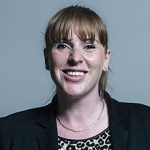
The speech made by Lisa Nandy, the Secretary of State for Culture, Media and Sport at the Royal Shakespeare Company on 20 February 2025.
In 2019, as Britain tore itself apart over Brexit, against a backdrop of growing nationalism, anger and despair I sat down with the film director Danny Boyle to talk about the London 2012 Olympics Opening Ceremony.
That moment was perhaps the only time in my lifetime that most of the nation united around an honest assessment of our history in all its light and dark, a celebration of the messy, complex, diverse nation we’ve become and a hopeful vision of the future.
Where did that country go? I asked him. He replied: it’s still there, it’s just waiting for someone to give voice to it.
…
13 years later and we have waited long enough. In that time our country has found multiple ways to divide ourselves from one another.
We are a fractured nation where too many people are forced to grind for a living rather than strive for a better life.
Recent governments have shown violent indifference to the social fabric – the local, regional and national institutions that connect us to one another, from the Oldham Coliseum to Northern Rock, whose foundation sustained the economic and cultural life of the people of the North East for generations.
But this is not just an economic and social crisis, it is cultural too.
We have lost the ability to understand one another.
A crisis of trust and faith in government and each other has destroyed the consensus about what is truthfully and scientifically valid.
Where is the common ground to be found on which a cohesive future can be forged? How can individuals make themselves heard and find self expression? Where is the connection to a sense of belonging to something larger than ourselves?
I thought about that conversation with Danny Boyle last summer when we glimpsed one version of our future. As violent thugs set our streets ablaze, a silent majority repelled by the racism and violence still felt a deep sense of unrest. In a country where too many people have been written off and written out of our national story. Where imagination, creation and contribution is not seen or heard and has no outlet, only anger, anxiety and disorder on our streets.
There is that future.
Or there is us.
That is why this country must always resist the temptation to see the arts as a luxury. The visual arts, music, film, theatre, opera, spoken word, poetry, literature and dance – are the building blocks of our cultural life, indispensable to the life of a nation, always, but especially now.
So much has been taken from us in this dark divisive decade but above all our sense of self-confidence as a nation.
But we are good at the arts. We export music, film and literature all over the world. We attract investment to every part of the UK from every part of the globe. We are the interpreters and the storytellers, with so many stories to tell that must be heard.
And despite everything that has been thrown at us, wherever I go in Britain I feel as much ambition for family, community and country as ever before. In the end, for all the fracture, the truth remains that our best hope… is each other.
This is the country that George Orwell said “lies beneath the surface”.
And it must be heard. It is our intention that when we turn to face the nation again in four years time it will be one that is more self-confident and hopeful, not just comfortable in our diversity but a country that knows it is enriched by it, where everybody’s contribution is seen and valued and every single person can see themselves reflected in our national story.
You might wonder, when so much is broken, when nothing is certain, so much is at stake, why I am asking more of you now.
John F Kennedy once said we choose to go to the moon in this decade not because it is easy but because it is hard.
That is I think what animated the leaders of the post war period who, in the hardest of circumstances knew they had to forge a new nation from the upheaval of war.
And they reached for the stars.
The Festival of Britain – which was literally built out of the devastation of war – on a bombed site on the South Bank, took its message to every town, city and village in the land and prioritised exhibitions that explored the possibilities of space and technology and allowed a devastated nation to gaze at the possibilities of the future.
So many of our treasured cultural institutions that still endure to this day emerged from the devastation of that war.
The first Edinburgh Festival took place just a year after the war when – deliberately – a Jewish conductor led the Vienna Philharmonic, a visible symbol of the power of arts to heal and unite.
From the BBC to the British Film Institute, the arts have always helped us to understand the present and shape the future.
People balked when John Maynard Keynes demanded that a portion of the funding for the reconstruction of blitzed towns and cities must be spent on theatres and galleries. But he persisted, arguing there could be “no better memorial of a war to save the freedom of spirit of an individual”.
Yes it took visionary political leaders.
But it also demanded artists and supporters of the arts who refused to be deterred by the economic woes of the country and funding in scarce supply, and without hesitation cast aside those many voices who believed the arts to be an indulgence.
This was an extraordinary generation of artists and visionaries who understood their role was not to preserve the arts but to help interpret, shape and light the path to the future.
Together they powered a truly national renaissance which paved the way for the woman we honour today – Jennie Lee – whose seminal arts white paper, the first Britain had ever had, was published 60 years ago this year.
It stated unequivocally the Wilson government’s belief in the power of the arts to transform society and to transform lives.
Perhaps because of her belief in the arts in and of itself, which led to her fierce insistence that arts must be for everyone, everywhere – and her willingness to both champion and challenge the arts – she was – as her biographer Patricia Hollis puts it – the first, the best known and the most loved of all Britain’s Ministers for the Arts.
When she was appointed so many people sneered at her insistence on arts for everyone everywhere..
And yet she held firm.
That is why we are not only determined – but impassioned – to celebrate her legacy and consider how her insistence that culture was at the centre of a flourishing nation can help us today.
This is the first in what will be an annual lecture that gives a much needed platform to those voices who are willing to think and do differently and rise to this moment, to forge the future, written – as Benjamin Zephaniah said – in verses of fire.
Because governments cannot do this alone. It takes a nation.
And in that spirit, her spirit. I want to talk to you about why we need you now. What you can expect from us. And what we need from you.
…
George Bernard Shaw once wrote:
“Imagination is the beginning of creation.
“you imagine what you desire,
“you will what you imagine –
“and at last you create what you will.”
That belief that arts matter in and of themselves, central to the chance to live richer, larger lives, has animated every Labour Government in history and animates us still.
As the Prime Minister said in September last year: “Everyone deserves the chance to be touched by art. Everyone deserves access to moments that light up their lives.
“And every child deserves the chance to study the creative subjects that widen their horizons, provide skills employers do value, and prepares them for the future, the jobs and the world that they will inherit.”
This was I think Jennie Lee’s central driving passion, that “all of our children should be given the kind of education that was the monopoly of the privileged few” – to the arts, sport, music and culture which help us grow as people and grow as a nation.
But who now in Britain can claim that this is the case? Whether it is the running down of arts subjects, the narrowing of the curriculum and the labelling of arts subjects as mickey mouse – enrichment funding in schools eroded at the stroke of the pen or the closure of much-needed community spaces as council funding has been slashed.
Culture and creativity has been erased, from our classrooms and our communities.
Is it any wonder that the number of students taking arts GSCEs has dropped by almost half since 2010?
This is madness. At a time when the creative industries offer such potential for growth, good jobs and self expression in every part of our country And a lack of skills acts as the single biggest brake on them…bar none, we have had politicians who use them as a tool in their ongoing, exhausting culture wars.
Our Cabinet, the first entirely state educated Cabinet in British history, have never accepted the chance to live richer, larger lives belongs only to some of us and I promise you that we never ever will.
That is why we wasted no time in launching a review of the curriculum, as part of our Plan for Change.
To put arts, music and creativity back at the heart of the education system.
Where they belong.
And today I am delighted to announce the Arts Everywhere fund as a fitting legacy for Jennie Lee’s vision – over £270 million investment that will begin to fix the foundations of our arts venues, museums, libraries and heritage sector in communities across the country.
We believe in them. And we will back them.
Because as Abraham Lincoln once said, the dogmas of a quiet past are inadequate to the stormy present.
Jennie Lee lived by this mantra. So will we.
We are determined to escape the deadening debate about access or excellence which has haunted the arts ever since the formation of the early Arts Council.
The arts is an ecosystem, which thrives when we support the excellence that exists and use it to level up.
Like the RSC’s s “First Encounters” programme. Or the incredible Shakespeare North Playhouse in Knowsley where young people are first meeting with spoken word.
When I watched young people from Knowsley growing in confidence, and dexterity, reimagining Shakespeare for this age and so, so at home in this amazing space it reminded me of my childhood.
Because in so many ways I grew up in the theatre. My dad was on the board of the National, and as a child my sister and I would travel to London on the weekends we had with our dad to see some of the greatest actors and directors on earth – Helen Mirren, Alan Rickman, Tom Baker, Trevor Nunn and Sam Mendes. We saw Chekhov, Arthur Miller and Brecht reimagined by the National, the Donmar and the Royal Court.
It was never, in our house, a zero-sum game. The thriving London scene was what inspired my parents and others to set up what was then the Corner House in Manchester, which is now known as HOME.
It inspired my sister to go on to work at the Royal Exchange in Manchester where she and I spent some of the happiest years of our lives watching tragedy and farce, comedy and social protest.
Because of this I love all of it – the sound, smell and feel of a theatre. I love how it makes me think differently about the world. And most of all I love the gift that our parents gave us, that we always believed these are places and spaces for us.
I want every child in the country to have that feeling. Because Britain’s excellence in film, literature, theatre, TV, art, collections and exhibitions is a gift, it is part of our civic inheritance, that belongs to us all and as its custodians it is up to us to hand it down through the generations.
Not to remain static, but to create a living breathing bridge between the present, the past and the future.
…
My dad, an English literature professor, once told me that the most common mistakes students make – including me – he meant me actually – was to have your eye on the question, not on the text.
So, with some considerable backchat in hand, I had a second go at an essay on Hamlet – why did Hamlet delay? – and came to the firm conclusion that he didn’t. That this is the wrong question. I say this not to start a debate on Hamlet, especially in this crowd, but to ask us to consider this:
If the question is – how do we preserve and protect our arts institutions? Then access against excellence could perhaps make sense. I understand the argument, that to disperse excellence is somehow to diffuse it.
But If the question is – how to give a fractured nation back its self confidence? Then this choice becomes a nonsense. So it is time to turn the exam question on its head and reject this false choice.
Every person in this country matters. But while talent is everywhere, opportunity is not. This cannot continue. That is why our vision is not access or excellence but access to excellence. We will accept nothing less. This country needs nothing less. And thanks to organisations like the RSC we know it can be achieved.
…
I was reflecting while I wrote this speech how at every moment of great upheaval it has been the arts that have helped us to understand the world, and shape the future.
From fashion, which as Eric Hobsbawm once remarked, was so much better at anticipating the shape of things to come than historians or politicians, to the angry young men and women in the 1950s and 60s – that gave us plays like Look Back in Anger – to the quiet northern working class rebellion of films like Saturday Night Sunday Morning, This Sporting Life and Loneliness of the Long Distance Runner.
Without the idea that excellence belongs to us all – this could never have happened. What was once considered working class, ethnic minority or regional – worse, in Jennie Lee’s time, it was called “the provinces” which she banned – thank God. These have become a central part of our national story.
….
I think the arts is a political space. But the idea that politicians should impose a version of culture on the nation is utterly chilling.
When we took office I said that the era of culture wars were over. It was taken to mean, in some circles, that I could order somehow magically from Whitehall that they would end.
But I meant something else. I meant an end to the “mind forged manacles” that William Blake raged against and the “mind without fear” that Rabindranath Tagore dreamt of.
[political content removed]
Would this include the rich cultural heritage from the American South that the Beatles drew inspiration from, in a city that has been shaped by its role in welcoming visitors and immigrants from across the world? Would it accommodate Northern Soul, which my town in Wigan led the world in?
We believe the proper role of government is not to impose culture, but to enable artists to hold a mirror up to society and to us. To help us understand the world we’re in and shape and define the nation.
Who know that is the value that you alone can bring.
I recently watched an astonishing performance of The Merchant of Venice, set in the East End of London in the 1930s. In it, Shylock has been transformed from villain to victim at the hands of the Merchant, who has echoes of Oswald Mosely. I don’t want to spoil it – not least because my mum is watching it at the Lowry next week and would not forgive me- but it ends with a powerful depiction of the battle of Cable Street.
Nobody could see that production and fail to understand the parallels with the modern day. No political speech I have heard in recent times has had the power, that power to challenge, interpret and provoke that sort of response. To remind us of the obligations we owe to one another.
Other art forms can have – and have had – a similar impact. Just look at the ITV drama Mr Bates vs The Post Office. It told a story with far more emotional punch than any number of political speeches or newspaper columns.
You could say the same of the harrowing paintings by the Scottish artist Peter Howson. His depiction of rape when he was the official war artist during the Bosnian War seared itself into people’s understanding of that conflict. It reminds me of the first time I saw a Caravaggio painting. The insistence that it becomes part of your narrative is one you never ever forget.
That is why Jennie Lee believed her role was a permissive one. She repeated this mantra many times telling reporters that she wanted simply to make living room for artists to work in. The greatest art, she said, comes from the torment of the human spirit – adding – and you can’t legislate for that.
I think if she were alive today she would look at the farce that is the moral puritanism which is killing off our arts and culture – for the regions and the artistic talent all over the country where the reach of funding and donors is not long enough – the protests against any or every sponsor of the arts, I believe, would have made her both angered and ashamed.
In every social protest – and I have taken part in plenty – you have to ask, who is your target? The idea that boycotting the sponsor of the Hay Festival harms the sponsor, not the festival is for the birds.
And I have spent enough time at Hay, Glastonbury and elsewhere to know that these are the spaces – the only spaces – where precisely the moral voice and protest comes from. Boycotting sponsors, and killing these events off, is the equivalent of gagging society. This self defeating virtue signalling is a feature of our times and we will stand against it with everything that we’ve got.
Because I think we are the only [political context removed] force, right now, that believes that it is not for the government to dictate what should be heard.
But there is one area where we will never be neutral and that is on who should be heard.
Too much of our rich inheritance, heritage and culture is not seen. And when it is not, not only is the whole nation poorer but the country suffers.
It is our firm belief that at the heart of Britain’s current malaise is the fact that too many people have been written off and written out of our national story. And, to borrow a line from my favourite George Eliot novel, Middlemarch, it means we cannot hear that ‘roar that lies on the other side of silence’. What we need – to completely misquote George Elliot – is a keen vision and feeling of all ordinary human life.’ We’ve got to be able to hear it.
And this is personal for me.
I still remember how groundbreaking it was to watch Bend it Like Beckham – the first time I had seen a family like ours depicted on screen not for being Asian (or in my case mixed race) but because of a young girl’s love of football.
And I was reminded of this year’s later when Maxine Peake starred in Queens of the Coal Age, her play about the women of the miners’ strike, which she put on at the Royal Exchange in Manchester.
The trains were not running – as usual – but on one of my council estates the women who had lived and breathed this chapter of our history clubbed together, hired a coach and went off to see it. It was magical to see the reaction when they saw a story that had been so many times about their lives, finally with them in it.
We are determined that this entire nation must see themselves at the centre of their own and our national story. That’s a challenge for our broadcasters and our film-makers.
Show us the full panoply of the world we live in, including the many communities far distant from the commissioning room which is still far too often based in London.
But it’s also a challenge for every branch of the arts, including the theatre, dance, music, painting and sculpture. Let’s show working-class communities too in the work that we do – and not just featuring in murder and gangland series.
Part of how we discover that new national story is by breathing fresh life into local heritage and reviving culture in places where it is disappearing.
Which is why we’re freeing up almost £5 million worth of funding for community organisations – groups who know their own area and what it needs far better than Whitehall. Groups determined to bring derelict and neglected old buildings back into good use. These are buildings that stand at the centre of our communities. They are visible symbols of pride, purpose and their contribution and their neglect provokes a strong emotional response to toxicity, decline and decay. We’re determined to put those communities back in charge of their own destiny again.
And another important part of the construction is the review of the arts council, led by Baroness Margaret Hodge, who is with us today. When Jennie Lee set up regional arts associations the arts council welcomed their creation as good for the promotion of regional cultures and in the hope they would “create a rod for the arts council’s back”.
They responded to local clamour, not culture imposed from London. Working with communities so they could tell their own story. That is my vision. And it’s the vision behind the Arts Everywhere Fund that we announced this morning.
The Arts Council Review will be critical to fulfilling that vision and today we’re setting out two important parts of that work – publishing both the Terms of Reference and the members of the Advisory Group who will be working with Baroness Hodge, many of whom have made the effort to join us here today.
We have found the Jennie Lee’s of our age, who will deliver a review that is shaped around communities and local areas, and will make sure that arts are for everyone, wherever they live and whatever their background. With excellence and access.
But we need more from you. We need you to step up.
Across the sporting world from Boxing to Rugby League clubs, they’re throwing their doors open to communities, especially young people, to help grip the challenges facing a nation. Opening up opportunities. Building new audiences. Creating the champions of the future. Lots done, but much more still to do.
Every child and adult should also have the opportunity to access live theatre, dance and music – to believe that these spaces belong to them and are for them. We need you to throw open your doors. So many of you already deliver this against the odds. But the community spaces needed – whether community centres, theatres, libraries are too often closed to those who need them most.
Too often we fall short of reflecting the full and varied history of the communities which support us. That’s why we have targeted the funding today to bring hope flickering back to life in community-led culture and arts – supported by us, your government, but driven by you and your communities.
It’s one of the reasons we are tackling the secondary ticket market, which has priced too many fans out of live music gigs. It’s also why we are pushing for a voluntary levy on arena tickets to fund a sustainable grassroots music sector, including smaller music venues.
But I also want new audiences to pour in through the doors – and I want theatres across the country to flourish as much as theatres in the West End.
I also want everyone to be able to see some of our outstanding art, from Lowry and Constable to Anthony Gormley and Tracey Emin.
Too much of the nation’s art is sitting in basements not out in the country where it belongs. I want all of our national and civic galleries to find new ways of getting that art out into communities.
There are other challenges. There is too much fighting others to retain a grip on small pots of funding and too little asking “what do we owe to one another” and what can I do. Jennie Lee encouraged writers and actors into schools and poets into pubs.
She set up subsidies so people, like the women from my council estate in Wigan, could travel to see great art and theatre. She persuaded Henry Moore to go and speak to children in a school in Castleford, in Yorkshire who were astonished when he turned up not with a lecture, but with lumps of clay.
There are people who are doing this now. The brilliant fashion designer Paul Smith told me about a recent visit to his old primary school in Nottingham where he went armed with the material to design a new school tie with the kids. These are the most fashionable kids on the block.
I know it’s been a tough decade. Funding for the arts has been slashed. Buildings are crumbling. And the pandemic hit the arts and heritage world hard.
And I really believe that the Government has a role to play in helping free you up to do what you do best – enriching people’s lives and bringing communities together – so with targeted support like the new £85m Creative Foundations Fund that we’re launching today with the Arts Council we hope that we’ll be able to help you with what you do best.
SOLT’s own research showed that, without support, 4 in 10 theatres they surveyed were at risk of closing or being too unsafe to use in five years’ time. So today we are answering that call. This fund is going to help theatres, galleries, and arts centres restore buildings in dire need of repairs.
And on top of that support, we’re also getting behind our critical local, civic museums – places which are often cultural anchors in their village, town or city. They’re facing acute financial pressures and they need our backing. So our new Museum Renewal Fund will invest £20 million in these local assets – preserving them and ensuring they remain part of local identities, to keep benefitting local people of all ages. In my town of Wigan we have the fantastic Museum of Wigan Life and it tells the story of the contribution that the ordinary, extraordinary people in Wigan made to our country, powering us through the last century through dangerous, difficult, dirty work in the coal mines. That story, that understanding of the contribution that Wigan made, I consider to be a part of the birthright and inheritance of my little boy growing up in that town today and we want every child growing up in a community to understand the history and heritage and contribution that their parents and grandparents made to this country and a belief that that future stretches ahead of them as well. Not to reopen the coal mines, but to make a contribution to this country and to see themselves reflected in our story.
But for us to succeed we need more from you. This is not a moment for despair. This is our moment to ensure the arts remain central to the life of this nation for decades to come and in turn that this nation flourishes.
If we get this right we can unlock funding that will allow the arts to flourish in every part of Britain, especially those that have been neglected for far too long, by creating good jobs and growth, and giving children everywhere the chance to get them.
Our vision is not just to grow the economy, but to make sure it benefits people in our communities. So often where i’ve seen investments in the last decade and good jobs created, I go down the road to a local school and I see children who can see those jobs from the school playground, but could no more dream of getting to the moon than they could of getting those jobs. And we are determined that that’s going to change.
This is what we’ve been doing with our creative education programmes (like the Museums and Schools Programme, the Heritage Schools Programme, Art & Design National Saturday Clubs and the BFI Film Academy.) These are programmes we are proud to support and ones I’m personally proud that my Department will be funding these programmes next year.
Be in no doubt, we are determined to back the creative industries in a way no other government has done. I’m delighted that we have committed to the audiovisual, video games, theatre, orchestra and museums and galleries tax reliefs, as well as introducing the new independent film and VFX tax reliefs as well.
You won’t hear any speeches from us denigrating the creative industries or lectures about ballerinas being forced to retrain.
Yes, these are proper jobs. And yes, artists should be properly remunerated for their work.
We know these industries are vital to our economic growth. They employ 1 in 14 people in the UK and are worth more than £125 billion a year to our economy. We want them to grow. That is why they are a central plank of our industrial strategy.
But I want to be equally clear that these industries only thrive if they are part of a great artistic ecosystem. Matilda, War Horse and Les Miserables are commercial successes, but they sprang from the public investment in theatre.
James Graham has written outstanding screenplays for television including Sherwood, but his first major play was the outstanding This House at the National and his other National Theatre play Dear England is now set to be a TV series.
You don’t get a successful commercial film sector without a successful subsidised theatre sector. Or a successful video games sector without artists, designers, creative techies, musicians and voiceover artists.
So it’s the whole ecosystem that we have to strengthen and enhance. It’s all connected.
The woman in whose name we’ve launched this lecture series would have relished that challenge. She used to say she had the best job in government
“All the others deal with people’s sorrows… but I have been called the Minister of the Future.”
That is why I relish this challenge and why working with those of you who will rise to meet this moment will be the privilege of my life.
…
I wanted to leave with you with a moment that has stayed with me.
A few weeks ago I was with Andy Burnham, the Mayor of Greater Manchester, who has become a great friend. We were in his old constituency of Leigh, a town that borders Wigan. And we were talking about the flashes, which in our towns used to be open cast coalmines.
They were regenerated by the last Labour government and they’ve now become these incredible spaces, with wildlife and green spaces with incredible lakes that are well used by local children.
We had a lot to talk about and a lot to do. But as we looked out at the transformed landscape wondering how in one generation we had gone from scars on the landscape to this, he said, the lesson I’ve taken from this is that nature recovers more quickly than people.
While this government, through our Plan for Change, has made it our mission to support a growing economy, so we can have a safe, healthy nation where people have opportunities not currently on offer – the recovery of our nation cannot be all bread and no roses. Our shared future depends critically on every one of us in this room rising to this moment.
To give voice to the nation we are, and can be.
To let hope and history rhyme.
So let no one say it falls to anyone else. It falls to us.