
Category: Speeches

  • Pat McFadden – 2025 Speech on “Cyber is a Poster Child for Growth”

    Pat McFadden – 2025 Speech on “Cyber is a Poster Child for Growth”

    The speech made by Pat McFadden, the Cabinet Office Minister, on 7 May 2025.

    Introduction:

    Good morning everyone,

    It’s really great to be here with you in Manchester.

    This is one of Britain’s great cities.

    From music to sport to industry, Manchester has made its mark on the world in so many ways…

    And today I want to talk to you about an area where I believe Manchester, the North West, the whole country can grow in strength in the future.

    There might have been times when a government minister making a speech about cyber security was thought to be something routine.

    Ritual calls for preparedness, and it might not seem to have much connection to the real world.

    But not today. Not this time. Not this week. Not with what we have been seeing happening over the past few weeks.

    Great British businesses. Household names like M&S, the Co-op, Harrods, all the subject of serious cyber incidents.

    These cyber attacks are not a game. They’re not a clever exercise. They are serious organised crime.

    The purpose is to damage and extort good businesses. It’s the digital version of an old-fashioned shake down. Either straight theft or a protection racket where your business will be safe as long as you pay the gangsters.

    And what we’ve seen over the past couple of weeks should serve as a wake-up call for everyone – for government and the public sector, for businesses and organisations up and down the country, as if we needed one, that cybersecurity is not a luxury – it’s an absolute necessity.

    Whether it is a system failure or a deliberate attack, no organisation can afford to treat cyber security as an afterthought.

    So it’s not routine. It’s a good time to be gathering today, to discuss what we can do to make our defences as strong as possible.

    Now it’s one of the paradoxes of modern life: technology brings huge benefits, and there’s no going back – but it also brings risks.

    The internet is one of the greatest engines for creativity and innovation in modern history. It has transformed the way we live, work and learn.

    Just think of the applications. Busy parents who can save so much time by ordering goods online, students with an unfathomable range of knowledge at their fingertips, families all around the world able to share pictures of those precious moments – birthdays, christenings, weddings – just at the press of a screen. All of us benefit from this astounding level of connectedness.

    Yet the technology that underpins it can be weaponised by those who want to destabilise our infrastructure, our information systems, or our industrial base.

    The UK’s critical infrastructure is now more interconnected than ever. That is empowering…

    But it also carries risks, because there are vulnerabilities –  and more than we had years ago. Right down to the household level.

    As the cost of the tech has plummeted, and broadband speeds have risen, more and more devices are connected online. In 2020, it was thought to be about 50 billion. By 2030 – which isn’t that far away now – it will be 500 billion, according to projections.

    More connections, more interconnectedness.

    Technological leaps are rarely born in comfort; more often, they are forged during conflict, or competition or by sheer necessity. And history shows us that innovation always accelerates when the stakes are highest, from nuclear energy to the space race.

    The stakes are high right now. And we are in the middle of another huge technological leap – a “technology shock” if you like – with AI and other emerging technologies developing at breakneck speeds.

    It’s a duty for Government and all of us to keep up.

    Because in the modern world, where everything is connected, and so much of it’s online, it doesn’t take much if that is attacked to cause serious disruption.

    Just ask anyone in Spain or Portugal who went through the power outage last week. Passengers stuck in underground trains. Payment systems disabled and suddenly, for a day, cash is king again. And a host of other effects.

    I experienced last July, just a couple of weeks after the general election, the CrowdStrike incident. We worked closely with one of the sponsors of this conference, CrowdStrike, to manage the fallout of that.

    That wasn’t a cyber attack but it did cause ripples right across the country and the world.

    Flights grounded. Hospital appointments disrupted. Holidays cancelled. GP services cut off.

    We worked closely with the company to resolve it. But what did we learn?

    Lessons:

    First, you’ve got to bring people together and coordinate. We had the National Cyber Security Centre, the Cabinet Office – the department I lead – Microsoft and CrowdStrike, all the different parts of government to understand what the incident was.

    Secondly, Government cannot do it alone. You have to have good partnerships between the public and private sector.

    And thirdly, even though it exposed a responsibility, there is also a prize to be grasped here.

    Because if interconnectedness that I’ve spoken about requires greater protection and powers of recovery, then those countries that think about this, that invest in the cybersecurity services, will be able to offer those services to those that need them.

    Just think about previous waves of interconnectedness and how the UK led the way in protecting them. Think about how Lloyds of London, for example, insured shipping right across the globe, well so too can the UK play a major role in cyber security. A new kind of technological insurance.

    We are already the third largest exporter of these products and services in the world.

    And as the technology continues to develop, I believe that our cyber companies and start-ups can use that current competitive advantage as a launchpad for greater success – for the benefit of the entire UK economy.

    So my message this morning to you is that it’s not just about vulnerability and risk – it’s about economic growth too.

    Later this year, we’ll publish a new National Cyber Strategy that will set out how we want to approach these challenges and opportunities in the years to come.

    Today I want to touch on three aspects of that today: threats, security and growth.

    Threat landscape

    Scale of activity:

    The threat is growing.

    Last year the NCSC received almost 2,000 reports of cyber attacks – of which 90 were deemed significant, and 12 at the top end of severity.

    That is three times the number of severe attacks compared to the year before (2023).

    They’re targeted both Government and private systems.

    Combatting it is a constant challenge. I can’t stand here this morning and tell you that Government systems are bombproof. That is not the case.

    These are new systems, built on top of legacy systems, and we’re doing everything in our power to modernise the state, and to upgrade those core systems . But the Government, and the country as a whole, has to take this seriously if we’re going to do it securely in the future.

    Artificial Intelligence:

    It’s our strong conviction that Artificial Intelligence will bring huge opportunities to the UK. We want this country to be a good home both for investment and adoption in this field. But like all general purpose technologies, it can be used for good or ill.

    And just as people and businesses across the country are using AI in all sorts of applications, so too are our adversaries.

    Today, we are declassifying an intelligence assessment that shows AI is going to increase not only the frequency, but the intensity, of cyber attacks in the coming years.

    Our security systems will only remain secure if they keep pace with what our adversaries are doing.

    And that’s why it’s imperative to understand what they’re doing and why.

    State-actors:

    And today state-backed cyber hacking has become the new normal.

    Hostile states constantly working to degrade our military advantage. With cyber criminals who will routinely sell their services to other states. These cyber mercenaries can cause huge harm.

    Sometimes to steal money. For example, it is thought that North Korea stole $1.34bn through cryptocurrency theft last year, causing US officials to describe their hackers as the “world’s leading bank robbers”.

    The cyber activity we are seeing in countries like North Korea reflects that grey area that exists between some states and cyber criminals.

    My colleagues at the Home Office, under the leadership of the Home Secretary and the Security Minister, are working hard to strengthen our overall response to cyber crime. They have been consulting on a number of ransomware proposals designed to thwart our enemies.

    Other state-backed hacking is done as part of a wider war – and we’ve seen that with Russia’s illegal invasion of Ukraine.

    How Ukraine is putting up an incredibly brave fight against cyberwarfare unleashed by the Russians, and we have vowed to stand shoulder-to-shoulder with Ukraine for as long as it takes to defend their sovereignty.

    And so we’re going to invest £8 million in the Ukraine Cyber Programme over the next year to counter the Kremlin’s cyber aggression.

    What Russia is doing doesn’t stop in Ukraine. There have been a number of other attacks and disinformation campaigns in other countries.

    For example, in Moldova’s presidential election last year. And we know that they will keep trying. So we will be investing £1 million in cyber capabilities in Moldova, to help give that country the tools to combat Russian cyber attacks and ensure their upcoming parliamentary election can be as democratic, fair and open as possible.

    Our country has always defended freedom.

    This is part of the defence of freedom and democracy that has been part of our country’s history.

    But defence today is not just about troops and missiles.

    It’s also about this cyber realm, too – and this Government is absolutely committed to making sure we and our allies are strong in this domain.

    China:

    And let me say a word about China.

    When we think about international activity in cyberspace, we need to be clear-eyed about the challenge posed by China.

    It is well on its way to becoming a cyber superpower. It has the sophistication. The scale. And the seriousness.

    It’s one of the world leaders in AI, as the world’s second largest economy it’s deeply embedded in global supply chains and markets.

    We need to view China’s approach to cyberspace with open eyes. Disengagement economically from China is not an option. Neither’s naivety.

    The job of a responsible Government is to protect our people and constructively engage with the world as it is.

    “Stop the world I want to get off” is not in the United Kingdom’s interests.

    Rather, our approach should be to engage constructively and consistently with China where it is in the UK’s economic interests, but also to be clear that we will robustly defend our own cyberspace.

    Bolstering our defences

    And I want to thank the organisations that do that. GCHQ, NCSC, the National Cyber Force – they keep watch, working tirelessly with our allies, with the Five Eyes alliance, to stay ahead of our competitors.

    Our intelligence agencies also play a key role in growing our overall cyber ecosystem – acting as a training bed for all kinds of experts who go on to be successful cyber entrepreneurs.

    LASR:

    And we’re investing in new capabilities in this regard.

    Last year, I launched a new public-private partnership to keep the UK on top of some of the risks emerging on how we harness AI.

    The idea behind the Laboratory for AI Security Research – or LASR, as we’ve come to call it – is simple: accelerate innovation and research into how AI can protect our national security.

    Since November, its funded 10 PhDs at Oxford University; funded an in-house team of 9 researchers at The Turing Institute; and its funded research at 8 other leading UK universities including Queen’s University Belfast and Lancaster University.

    And we are committing an extra £7million to LASR’s research over the next financial year.

    And I’m pleased to announce it has agreed a new partnership with one of the biggest tech companies in the world, Cisco.

    They are going to be collaborating with GCHQ and the NCSC, and other partners to expand the research and innovation capacity of the Lab.

    They will be running challenges across the UK, and build a demonstrator here in the North West to showcase how our scientists and entrepreneurs can work together to manage the risks, build the skills and grasp the opportunities of AI security.

    This is the first collaboration of its kind with LASR, and will be a trailblazer and it will help LASR drive cutting-edge research into the impact of AI on national security.

    Cyber Security and Resilience Bill:

    We’re also modernising the way the state approaches this, through the Cyber Security and Resilience Bill.

    That legislation will bolster our national defences. It will grant new powers to the Technology Secretary to direct regulated organisations to reinforce their defences.

    And as we begin scrutiny of that Bill in Parliament, we will be launching a new Software Security Code of Practice – to help all organisations take the measures they need to embed security and resilience.

    And the prize of all this is growth. Safe economic growth.

    Growth

    When we’re talking about cyber, it’s easy to focus on the risks and threats.

    But we also need to think about the reward. There is enormous potential for cyber security to be a driving force in our economy.

    We already have over 2,000 businesses across the UK. An estimated 67,000 jobs – with an increase of 6,000 in the last 12 months.

    Revenue of more than £13billion.

    And as I said, we’re exporting this across the world.
    But there is still potential on the table.
    So we’re supporting an independent report from Imperial College and Bristol University, who are going to apply their knowledge and expertise to help us establish which levers we need to pull, and how we do that.

    And ahead of the report, we are already making some big investments like the £1billion going into a new state-of-the-art Golden Valley campus near GCHQ’s Cheltenham office.

    That site alone is expected to create 12,000 jobs and be home to hospitality, retail businesses, as well as 3,700 new homes. It is all growth.

    Industrial Strategy:

    And that is why cyber is part of our Industrial Strategy too. It is a significant part of our economic future.

    Conclusion:

    So as I said at the start of my remarks, we are in a new world.

    In fact, it’s incredible to think it’s been only 36 years since Tim Berners Lee invented the World Wide Web.

    I have teenage children and sometimes I try to explain to them the world before the internet. It’s not something they find easy to understand. The pace of change that we have seen during that time is unlikely to slow down.

    So we have got to take the long view: not just think about the technologies of today, but what it might look like in 10 or 20 years.

    Cyber attacks and cyber hacking are likely to be permanent features of this new global order – there is no point in pretending otherwise.

    But the opportunities are also huge, and I believe that this country, in its position of creativity and innovation, will be at the vanguard of cyberspace and cybersecurity for decades to come.

    Seizing the opportunities to grow the sector, protecting and defending other parts of the economy.

    Standing by our allies in an ever changing world, and defending democracy right across the world.

    It is at once one of the challenges and opportunities of our time, and we have to work together to meet it.
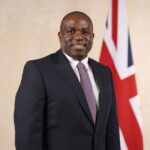

  • David Lammy – 2025 Statement on India and Pakistan

    David Lammy – 2025 Statement on India and Pakistan

    The statement made by David Lammy, the Foreign Secretary, on 7 May 2025.

    Current tensions between India and Pakistan are a serious concern. The UK government is urging India and Pakistan to show restraint and engage in direct dialogue to find a swift, diplomatic path forward.

    The UK has close and unique relationships with both countries. I have made clear to my counterparts in India and Pakistan that if this escalates further, nobody wins. The UK was clear in its condemnation of the horrific terrorist attack in Pahalgam last month. We need all sides to work urgently to see regional stability restored and ensure protection of civilians.

    The safety of British nationals in the region will always be our priority. The FCDO continues to monitor developments closely and stands ready to support any British nationals 24/7. Any British nationals in the region should follow the FCDO’s travel advice for the country they are in, along with the advice of the local authorities.

  • James Timpson – 2025 Speech on Professional Standards in the Prison and Probation Service

    James Timpson – 2025 Speech on Professional Standards in the Prison and Probation Service

    The speech made by James Timpson, the Minister for Prisons, Probation and Reducing Reoffending, on 6 May 2025.

    Thank you, Jennifer, for that introduction, it’s great to be here.

    Let me start by thanking Emily for hosting us today…

    And for everything you do to lead by example at High Down. A culture of high professional standards starts at the top – I know you take that incredibly seriously.

    Thanks to all the staff here today – for the absolutely critical work you do day in, and day out, to protect the public and turn lives around…

    And to everyone involved in putting this event together.

    Of course, I also want to thank you, Jennifer, and the people who supported you, for this important report, and for your work as a Non-Executive Director at the Ministry of Justice. I’m fortunate to have you as a colleague.

    This marks a watershed moment for every part of HMPPS – Prison, Probation and YCS.

    A wake-up call, and an opportunity to change things for the better, for more than 65,000 staff who work there.

    I want to start with two stories. Two real life stories, showing two very different faces of the same Service. The first is about a prison officer – I’ll call her Jane.

    It was a night shift like any other. Things seemed calm – the prison was under control. The kind of shift where officers carry out routine monitoring, and respond to any emergencies.

    Jane was doing exactly that, focusing on the checks she needed to make.

    Also on duty that night was a senior colleague. A man in a position of authority. He was a higher rank than Jane. And he had more years in the job than she did.

    Jane had heard things about him. That he had a reputation. It was, as she put it, “common knowledge” that he could be lecherous. But she’d never had a problem herself…

    Until that night.

    It started with the way he looked at her – lingering, unsettling. Then, out of nowhere, he asked: “What’s your bra size?”

    Jane was taken aback, unsure at first if she’d heard it right.

    She answered, firmly: “That’s none of your business.”

    And she walked out of the room. But the man followed her.

    Cornering her in a nearby kitchen, he grabbed hold of Jane, and forced his tongue into her mouth. Then he groped her.

    Jane felt trapped. Frightened and powerless.

    Like so many men in positions of authority who abuse their power like this, he told her that it needed to be their “secret”.

    Shocked, and shaken, Jane didn’t report what had happened at first.

    Because he was in charge.

    Because she didn’t want to rock the boat.

    Because she loved her job…

    And she didn’t want to lose it.

    Eventually, Jane did work up the courage to come forward. Her colleague was sacked, rightly. And he was brought to justice – prosecuted for sexually assaulting Jane, and another officer.

    He is due to be sentenced soon, and could very well go from patrolling the prison landings, to living on them. His actions were clearly despicable. But Jane’s story begs the question…

    Why did it take an assault for this man to finally be called out?

    Why, when he already had a reputation, was he not exposed sooner?

    Too often, in the Prison and Probation Service, unacceptable behaviour is laughed off as a joke, as lads being lads.

    The trouble is, when someone says, “it’s just banter”, it becomes harder and harder to call this behaviour out for what it really is:

    Abuse. Intimidation. And harassment.

    It’s unacceptable. And this Government will not tolerate it, at all.

    But I said there were two stories. The second takes us to HMP Frankland – one of our most secure, most challenging prisons.

    Just last month, three officers there were brutally attacked by an inmate. Stabbed and slashed. A lifechanging, traumatic experience.

    There’s an investigation underway, so I won’t go beyond what’s been reported publicly…

    But I can say this: Without the courage and quick thinking of those officers, and their colleagues, who responded, lives would have been lost.

    And it was a privilege to speak to some of the officers involved myself, when I visited Frankland recently.

    They ran towards danger, when others would run away. They are true heroes. And our thoughts are with the injured officers as they continue to recover.

    That kind of bravery isn’t rare in the Service.

    Our probation officers, too, manage risk constantly, working with dangerous offenders to keep the public safe.

    These are jobs where heroism happens daily, in environments more stressful, more pressurised, than people could possibly imagine.

    And I see the same spirit time and again when I visit a prison or a PDU:

    Dedication. Sacrifice. An unshakeable sense of duty.

    The question is, then: how do we make this a Service worthy of the heroes at Frankland? Worthy of every hero in the Service?

    Because behind high prison walls, in PDUs, and offices, away from public eyes, toxic behaviour can all too easily take root and grow – unless we weed it out.

    Unacceptable behaviour – language, attitudes, and actions – have become normalised, tolerated, and accepted over time.

    And, as Jennifer’s report shows, bullying, intimidation, and harassment in HMPPS has gone unchecked for far too long. Her findings are deeply sobering:

    There is a “vacuum of pastoral care” for victims of sexual harassment – too often left to raise concerns with a line manager, who may be well-meaning, but hasn’t been trained to handle the situation sensitively.

    Little is being done to track complaints, making it almost impossible to get a sense of the scale of the problem… In turn, making it much harder to take meaningful action.

    And the message is clear: there is a fundamental, devastating, lack of trust in how complaints of bullying, discrimination and harassment are dealt with.

    Too many staff feel unable to speak out, fearing they won’t be believed…

    That it will only make matters worse – because the hierarchy above them will close ranks…

    And that nothing will be done. This isn’t a culture that we should stand for.

    We must rebuild that trust. And to begin doing so, we need to face up to the realities of the situation as they exist today, and the effect this has on staff:

    Imagine making a complaint, knowing full well it will be investigated by a senior manager, who is friends with the person harassing you – and they socialise together outside of work, too.

    Imagine, plucking up the courage to come forward, only to have your complaint passed on to the perpetrator. Or to learn that paperwork about your grievance has been left in a public area, for all to see.

    Imagine seeing a colleague branded a ‘grass’, for speaking out.

    Would you want to come forward under those circumstances?

    Would you have confidence you’d be dealt with fairly?

    These are just some of the examples laid bare in Jennifer’s report.

    Last year, one in eight HMPPS staff said that they had been bullied or harassed, or that they’d experienced discrimination. Many said they didn’t feel as though they could come forward, or that they would be punished, if they did.

    All of this is against a backdrop of damaging newspaper headlines. Stories of inappropriate relationships between staff and inmates, and officers smuggling in contraband and drugs. I know this doesn’t represent the majority of staff in our prisons, but the fact remains: it happens.

    And unacceptable behaviour isn’t just confined to our prisons. The Inspectorates continue to highlight problems, including racism and discrimination, across the Service. They do a crucial job in highlighting these issues, even if they are, at times, difficult to read.

    Some of these stories may not make the front pages in the same way, but they are no less devastating.

    Disabled staff, still struggling to get the basic adjustments they need to do their jobs.

    Colleagues who have been repeatedly subjected to racist remarks, but keep quiet, because they think nothing will change.

    And the cost of this isn’t just reputational. It’s human.

    Unacceptable behaviour breaks people. It drives out good staff, the kind we want to keep in the service. It creates a toxic culture.

    And it makes it much harder for you to do your jobs – the vital work that turns lives around, cuts crime, and makes our streets safer.

    That’s why professional standards matter. They cannot simply be words on paper. They must be reflected in how we treat each other, every day. In every team – on every shift.

    And where those standards aren’t met – our staff – and the public – must know that we’ll take swift and decisive action.

    To its credit, HMPPS recognised that something needed to be done. That’s why Jennifer was asked to carry out her independent Review in the first place. And I’m delighted both that she agreed to do it, and that we’ve accepted her recommendations in full.

    But most of all, I’m grateful to all the staff who spoke up – who shared their stories so honestly, openly, and bravely. You are the reason we can move forward. And you are the reason we must.

    And we have to be honest about the problem: this is about more than just a few bad apples.

    These are deep rooted cultural issues, and they have been allowed to go on for too long.

    But this Government takes its duty seriously, and it is acting.

    So, we will fundamentally change how complaints of bullying, harassment and discrimination are dealt with in our Prison and Probation Service.

    As Jennifer recommends, and in line with other public services like the Armed Forces, we will create a new unit, sitting jointly between the MoJ and HMPPS, to handle allegations of unacceptable behaviour. And we will fund it in full.

    Crucially, this unit will be entirely independent, taking complaints away from the line management hierarchy.

    It means staff can have confidence that their concerns will be dealt with properly, fairly, and in absolute confidence. Not by a manager, who may even be complicit in the behaviour, but by a dedicated team of experts.

    No more conflicts of interest. No more ‘boys club’ networks.

    HMPPS is now working closely with the Trade Unions to develop a model for how the unit will work, including how cases will be triaged, investigated, and resolved. And I appreciate their continued engagement, and challenge.

    And we’re going further. This new unit will be overseen by an independent Commissioner, who will report publicly each year on the unit’s work and how bullying, harassment, and discrimination policies are being applied.

    This will bring both accountability and progress, as we transform how bullying, harassment and discrimination are dealt with across the Service.

    It marks a seismic shift, a major departure from what has gone before.

    But it is only the beginning of how we rebuild the trust that has been lost.

    As Jennifer recommends, we will introduce new guidance on sexual harassment, which sets out what managers must do in response, and where they can get advice if they are unsure. It makes clear that suspected crimes like sexual assault or rape should be reported to the police, and, crucially, that there is support for victims, and where they can get it.

    Moving forward, these sensitive cases will be handled by the new specialist joint unit, so victims know they’ll be listened to in confidence, and supported by people who are properly trained to help.

    We will make better use of data, publishing complaints statistics, and outcomes, to bring greater transparency, while protecting staff confidentiality. The goal is simple: to give more people the confidence to speak up, and that their concerns will lead to action.

    And we are bringing together the wider professional standards and counter corruption work already underway, so we can spot patterns of unacceptable behaviour earlier…

    So we can investigate them properly…

    And so we can dismiss those responsible – the people who tarnish your reputation, and damage public trust.

    We’re also bolstering the existing Tackling Unacceptable Behaviour Unit. Their work is important, but, as Jennifer sets out in her report, their ‘Climate Assessments’ into the experiences of prison staff haven’t had the intended impact. Too often, staff feel that what they say isn’t acted on.

    So, last Autumn, we introduced a new, streamlined approach. Reports now happen faster, with a sharper focus on issues and areas for improvement. And a new team is now in place to support prison leaders directly, helping them to turn those insights into real change on the ground.

    But if we want to build a stronger, safer Prison and Probation Service, we also need to change its culture. Getting that right really matters.

    Positive culture is the bedrock of every great organisation. The difference between a place where people just work – and a place where they feel proud to belong.

    And in any good organisation – any resilient, high performing team – that culture is built on trust, fairness, and mutual respect.

    My own approach as CEO of the Timpson Group was always rooted in a culture of kindness. That meant knowing our people. Looking after them when they had a problem. And treating everyone with dignity – as equals.

    At Timpson, we won awards for being a great company to work for. And my goal now is just as clear: to make HMPPS a world class organisation – an employer of choice.

    The kind of place where anyone would want to work. Where staff bring their best, and achieve their best. Where they can come to work every day, knowing their friends and family would be proud.

    That’s about much more than policy and HR processes. Alone, they won’t fix the problem. What we need is a shift in mindset. Fundamentally changing how we think, and respond, when things go wrong.

    That brings us back to culture.

    We need a culture where everyone feels safe to come to work. Where they know – without a doubt – that if they raise a concern, they’ll be heard. Taken seriously. And that action will follow.

    A culture where high professional standards are modelled throughout the Service. Where we don’t just walk by when behaviour falls short – we step up and challenge it.

    And a culture where the boundaries are crystal clear. Where there is no doubt about what constitutes unacceptable behaviour. And where there are swift, clear consequences for those who don’t play by the rules.

    But culture can’t be imposed from above. It doesn’t come from a mission statement, or sit in a strategy. It lives in our day-to-day actions. It’s what we say. What we do. And it has to be lived, and led, by every member of staff, at every level. A shared journey.

    If people aren’t on board with that – this isn’t the job for them.

    There is a long road ahead. But we are laying the groundwork for this culture change, and for a safer, more professional workplace.

    And let me just emphasise – this work is deeply important to me. I see it as a defining part of my job.

    That starts with improving how we recruit our staff.

    All good organisations need good people. People who can drive that culture change forward, and become leaders of the future.

    As Jennifer outlines, that means raising the bar. It means making sure the staff we bring in don’t just have the right skills, but that they share our values – that they bring the integrity and resilience essential for the role.

    So, we are reviewing recruitment across the whole Service. And, following a successful pilot of ‘values-based’ recruitment in Probation, we’re now looking at how we can roll this approach out across the Prison Service, too.

    And we are also working with occupational psychologists to study the highest performing Prison officers, identifying what excellence really looks like – to bring more people like them into the Service.

    Bringing the right people in is vital. But we also need to keep the wrong people out.

    I’m clear – people who don’t reflect HMPPS values, who don’t have the integrity this job demands, shouldn’t be anywhere near a prison or PDU. Or anywhere else in the Service, for that matter.

    That’s why we are strengthening vetting. Making it harder for the wrong people to get in, and easier to remove those who breach our high standards.

    This year, we introduced online digital vetting checks, to flag people who pose a risk – whether that’s through criminal associations, so crime can’t continue behind prison walls, or through views and behaviours that go against everything we stand for, like racism, misogyny or homophobia.

    We’re also taking the fight to corruption, through our Counter Corruption Unit.

    Its mission is simple: to detect and prevent corruption right across the Service, and support staff to do the right thing.

    The Unit works shoulder-to-shoulder with the police and National Crime Agency, taking a more sophisticated, joined up approach to corruption for the minority who cross the line.

    And HMPPS has funded 20 specialist police investigators, focused on rooting out criminal behaviour. In 2024 alone, the Unit prosecuted 37 staff for involvement in corruption.

    Finally, we are improving how we train our people.

    Before I became a Minister, I led an Independent Review of Prison Officer Training. And while there was good work happening, it was clear that the standard seven-week basic training simply wasn’t doing enough to prepare new recruits for the reality of this incredibly tough job.

    A more structured, longer-term approach, with higher standards might mean that we lose more people along the way. But those who stay will be better equipped – and more likely to thrive.

    So, I’m pleased (perhaps unsurprisingly, now I’m the Minister!) –  that the review’s recommendations are now being taken forward.

    The Enable Programme is transforming initial training, so that officers don’t just have the practical skills they need for the job – but the ethical foundations. And more subtle skills too – how to work well together, and be a great colleague. Because by investing in our people, we are investing in the future of the whole Service.

    Taken together, these changes are a solid first step towards a safer, more professional Service.

    And I’m grateful to Jennifer, who has agreed to continue working with us as an independent reviewer – to make sure her report is a roadmap for real, lasting change.

    But let me finish where I started.

    We should all be very angry that people like Jane – hardworking prison officers who we want to join and remain in the Service – have been subject to the most appalling abuse.

    And we should all be proud to have officers like those at Frankland – who showed extraordinary courage in the face of great danger.

    Both of these stories are part of our reality.

    But it’s the bravery and dedication of the Frankland officers, and many like them across the Service, that should define our future.

    I want to thank Jennifer again for her thoughtful report, the team that worked with her, and all the staff who bravely shared their experiences.

    Professionalism is more than a policy. It’s a commitment to a culture of integrity, respect, and accountability.

    High standards are not optional…

    For years, others have talked the talk on zero tolerance.

    Now this Government will walk the walk.

    This is our moment to set a new standard for the future.

    To build a culture we can be proud of, and a Prison and Probation Service where anybody would be proud to work.

    Let’s get it right, and let’s do it together.

    Thank you.

  • Keir Starmer – 2025 Open Letter to Veterans

    Keir Starmer – 2025 Open Letter to Veterans

    The open letter sent by Keir Starmer, the Prime Minister, on 4 May 2025.

    To our veterans,

    As we approach the VE Day anniversary, I want to salute your ongoing dedication to keeping our country safe.

    This week, we celebrate the greatest victory our armed forces ever secured. And like so many families across the country, my relatives served and fought in the Second World War. Therefore, it is the highest honour of my role to meet veterans of that conflict. I think of people like Stanley Fisher and Mervyn Kersch, two Jewish veterans of the Normandy landings, who went on to become eyewitnesses to the horrors of the Bergen Belsen concentration camp in the early days of its liberation by British forces. Their stories – and countless others we will hear this week – are a reminder that our victory was not just for Britain. It was also a victory for good against the assembled forces of hatred, tyranny and evil. VE Day is a chance to acknowledge, again, that our debt to those who achieved it can never fully be repaid.

    Yet as the nation falls silent on Thursday, I know that my mind will also turn to those who carry the torch of their legacy in our armed forces today – people like you. As time marches on, we all have a responsibility to renew the bonds of our history so that future generations inherit our national story as their own. But alongside our history and our values, service is the other great force that binds a nation together. So this week, I want you to know: the whole nation is inspired by the selfless dedication of your example. It is not just that you keep us all safe. It is also that you represent the best of who we are. A living link of service that unites the values we must stand for in the present, with the stories we must pass down from our past.

    Furthermore, I know that this is not without sacrifice. I will always remember the conversation I had with a sub-mariner in Faslane, who brought home exactly what over 200 days a year underwater means for the simple things most families take for granted. Missing birthdays, weddings, anniversaries. Not being there in the photographs. From the Carrier Strike Group at sea, to our postings in Estonia, Cyprus and here in the UK, every service man and woman I have met has had a version of this story. And I recognise that this too is a debt that can never fully be repaid. But this week, the country will show you just how thankful we all are. Because we know, that without your service, the freedom, peace and joy that these celebrations embody, would not be possible.

    So, wherever you are, wherever you serve, have a wonderful VE Day. And on behalf of a proud and grateful nation: thank you for your service.

  • Laurence Turner – 2025 Statement on Criminal Injuries Compensation

    Laurence Turner – 2025 Statement on Criminal Injuries Compensation

    The statement made by Laurence Turner, the Labour MP for Birmingham Northfield, in Westminster Hall, the House of Commons on 29 April 2025.

    I beg to move,

    That this House has considered compensation for criminal injuries.

    It is a pleasure to serve under your chairship for the first time, Dr Murrison. At the outset, I thank the members of the Backbench Business Committee for agreeing to allocate this debate and all hon. Members, across parties, who supported the application. I also thank those constituents and members of the public who have been in touch in advance of the debate. Criminal injuries are, by their nature, not easy matters to discuss, so I am grateful to all the people who took the time to recount their experiences.

    I am also grateful to all the Members present today, in particular my hon. Friend the Member for Warrington North (Charlotte Nichols), who has already done much in this and the previous Parliament to highlight some of the problems that we will talk about in this debate. It is also good to see the hon. Member for Strangford (Jim Shannon) in his place. I should make it clear that, I will be talking about the criminal injuries compensation scheme as it operates in Great Britain, but I am aware that different arrangements apply in Northern Ireland, and I am glad that that perspective will be represented today.

    It is also important at this early stage to pay tribute to the staff of the Criminal Injuries Compensation Authority. Nothing in the opening of this debate is intended as a criticism of them. They work within parameters that are broadly set by us in Parliament, and with staffing numbers that have fallen by 19% since the current iteration of the scheme was introduced in 2012. The civil service people survey reveals that they take pride and find purpose in their jobs, and I am grateful to them.

    The question of how the victims of serious physical and mental criminal injury may be fairly compensated has occupied this House for many decades. We are, to the month, at the 60th anniversary of the introduction for the first full year of the original, non-statutory scheme, which was introduced in recognition of the fact that there will always be cases in which the perpetrators of serious violence cannot be identified or awards cannot be recovered from their assets or incomes.

    In preparation for this debate, I was delighted to learn of a local connection: the guiding and determined force behind the original scheme was the Birmingham magistrate and first secretary of the Howard League for Penal Reform, Margery Fry, who up to her death was a tireless campaigner for better support for the victims of crime and for the principle that perpetrators must, wherever possible, pay the cost of restitution. Those are principles that I am sure Members on both sides of the House will endorse today.

    However, there is another, unhappy point of emerging agreement on the criminal injuries compensation scheme: it does not adequately serve the people it is meant to aid. As the Victims’ Commissioner put it in 2019, victims of violent crime reported

    “delays, uncertainty about next steps and poor communication. To many, fairly or unfairly, the Scheme seemed calculated to frustrate and alienate.”

    Julia Lopez (Hornchurch and Upminster) (Con)

    I thank the hon. Gentleman for tabling an incredibly important debate. I came upon this issue recently in dealing with the case of a 10-year-old boy in my constituency who was shot in a quiet residential street. It has taken five years to get him compensated for the injuries that he suffered, which will be lifelong. Does the hon. Gentleman share my concern about the sheer length of time that it takes to get victims compensated, the bureaucratic and sometimes impersonal approach, and the inadequacy of the sums being received by people, particularly children, who have received lifelong injury?

    Laurence Turner

    The hon. Member raises what sounds like a truly shocking case. All my sympathies are with that child and his family. I agree wholeheartedly with the point she makes about timelines and the nature of communication through the scheme, which I—and, I am sure, other Members—will come on to in the course of this debate.

    At the time, the Victims’ Commissioner further recommended that the Ministry of Justice

    “examine the Scheme with a view to making it simpler and accessible to victims wishing to apply on their own behalf, reducing the reliance on legal representatives.”

    Also in the last Parliament, the all-party parliamentary group for adult survivors of child sexual abuse reported that “almost all survivors” who contributed to its inquiry

    “had a negative experience of applying to CICA for compensation.”

    I recognise that some progress has been made in the last six years, which must be welcomed. The last Government retrospectively removed the “under the same roof” rule for crimes committed between 1964 and 1979. It had long been recognised that the rule prevented the awarding of fair compensation to victims of historical domestic abuse and childhood sexual abuse during that period. Progress has also been made more recently on reducing the paper-bound nature of the scheme.

    However, we cannot reassure ourselves that the scheme is in good health. As has been said, victims of violent crime can face long delays before they access compensation. For residents in Birmingham, the average time between application and award is still more than a year. That average can be dragged upwards by the most complex cases, but even apparently simple cases can take many months to resolve. Applicants to the scheme are not effectively signposted to wider support or assisted to navigate the processes for accessing services, such as the diagnosis of post-traumatic stress disorder through the NHS.

    The reasoning that underpins the tariff system is hard to understand, and the apparently arbitrary limits to the scheme can produce outcomes that are, to the layperson’s eye, perverse. The two-year normal claim limit is out of line with the three-year limit for civil claims for injury.

    Warinder Juss (Wolverhampton West) (Lab)

    Does my hon. Friend agree that it is totally inconsistent to have a time limit of three years for ordinary personal injury claims, but a time limit of only two years for Criminal Injuries Compensation Authority claims? There is a reason why there are time limits—memories fade and evidence becomes less reliable—but does he agree that there should be consistency here?

    Laurence Turner

    My hon. Friend is very learned and experienced in these matters, and I wholeheartedly agree. The discrepancy is hard to explain, especially as the pre-1996 non-statutory scheme explicitly aligned the criminal injuries time limit with that for civil claims.

    There is some evidence that victims who have legal representation often receive greater compensation than they would have done had they acted alone. That is not a desirable outcome, especially when people with more limited means are more likely to become the victims of crime. The scheme’s tariff has not been updated since 2012, and its upper and lower bounds had been frozen for many years before that, despite inflation. Indeed, the lowest tariff of £1,000 has remained frozen since 1992—a real-terms erosion of 54%.

    The process can feel cold and impersonal. As one member of the public with recent experience of the scheme who wrote to me in advance of this debate put it, the lack of “timelines or guidelines” means that

    “victims are continually left in limbo and retraumatised by a process that is meant to help.”

    Andy Slaughter (Hammersmith and Chiswick) (Lab)

    I am grateful to my hon. Friend for securing this debate and for the way he is setting out the problems with the scheme, which is something of a Cinderella service. As he said, the tariffs have not changed, and the upper limit has not changed for almost 30 years. What gives away the situation even more is the fact that, although the average sum awarded in the last year is about £8,000, the amount increased sixfold on appeal. That, and the fact that only 3% of injured victims of crime actually receive compensation, suggests that there are things wrong with the scheme.

    Laurence Turner

    My hon. Friend, the Chair of the Justice Committee, makes an important point. We must also consider the number of victims of crime who are so exhausted by the process that they choose not to appeal, even though they may have grounds to do so. His scrutiny in this area is very welcome.

    Changes made to the scheme have an unhappy history in this House. Some Members may recall the very contentious changes made to it in 2012, with the express intent of reducing expenditure by between £40 million and £60 million a year. At the time, in the face of sustained scrutiny, including from Members on the then Government Benches, the Minister of the day, the hon. Member for Maidstone and Malling (Helen Grant), announced:

    “a hardship fund of £500,000 per year which will provide relief from hardship for very low-paid workers in England and Wales who are temporarily unable to work as a result of being a victim of a crime of violence.” —[Official Report, 27 November 2012; Vol. , c. 14WS.]

    That concession secured support for the relevant secondary legislation. The fund is still in existence, but its criteria are too tightly drawn. An applicant must be paid no more than £5,700 a year, the equivalent of statutory sick pay, and they must apply to seek it not within two years of an injury, but within two months of an injury, in order to qualify.

    Far from the fund supporting low-paid victims of crime by £500,000 a year, the Ministry of Justice told me recently that only £4,100 has ever been paid out of it, and no payments at all were made in the seven years to 2023-24. I suspect that the very few workers who were eligible to apply were unaware that it exists. The hardship fund is a dead letter; it would be better to scrap it than to claim that special support is available to low-paid workers when, in practice, it is not.

    Charlotte Nichols (Warrington North) (Lab)

    My hon. Friend refers to low-paid workers; we know that retail staff are among the victims who experience a really shocking amount of violent crime within the workplace. Will he join me in paying tribute to the Union of Shop, Distributive and Allied Workers for the work it is doing to ensure that its members who are victims of violent crime in the workplace can access the CICA scheme?

    Laurence Turner

    I thank my hon. Friend for her intervention, and I agree with her. USDAW’s Freedom From Fear campaign, which has been running for many years and covers a number of important issues, including the importance of fair access to compensation, is to be welcomed, and USDAW should be congratulated on the changes that it has already secured in this House.

    Another high-profile change was the tightening of the criteria, so that the scheme only applied to injuries caused by deliberate violence inflicted by a person. That change excluded most dangerous dog attacks, and in practice compensation for such attacks can only be secured if it can be shown that a dog was directed to attack by its owner. It seems to me a serious flaw that a child or postal worker might be mauled by a dog and left with life-changing injuries, and the keeping of that dog may itself be an offence under the Dangerous Dogs Act 1991, but there would be no route for the victim to claim compensation, especially if the owner of the dog cannot be identified.

    The Communication Workers Union continues to campaign on this issue; ahead of this debate, it drew attention to figures showing that each year 200 Royal Mail workers lose a finger or part of a finger after a dog attack. I encourage Ministers to look again at this issue, especially in light of the growing number of animals belonging to new, and now-banned, breeds such as the XL bully since 2012.

    As has already been said, compensation for criminal injuries is an important issue for workers in public-facing roles more generally, and I am grateful to USDAW, GMB and Unison, as well as the CWU, for their work to draw attention to the risk of violent assault to their members. And for the avoidance of doubt, I draw attention to the support provided to my constituency party by GMB and Unison.

    The changes to the scheme that I have referred to were made under the previous Government, but I wish to press the Minister on two further and more recent points. First, shortly before Easter the Ministry of Justice published its response to the consultations undertaken between 2020 and 2023. In that response, the MOJ said that there would be no immediate changes to the scheme, in part because of resource constraints.

    The decision not to accept recommendation 18 of the Independent Inquiry into Child Sexual Abuse has understandably caused disappointment and reignited wider criticism of the scheme. The Government cited two factors: protection of universality, which means treating all applicants in the same way, and cost. If the scheme is not to be amended to provide different criteria for victims of childhood sexual abuse, what other steps will the Ministry now take, such as the provision of enhanced guidelines on the circumstances under which an out-of-time application would be accepted, taking into account our modern understanding of the lifelong effects of this horrendous crime?

    On resourcing, will the Minister accept that although the nature of the scheme means that expenditure varies year on year, the cost of compensation has actually fallen on average—that is the trend—after inflation is taken into account. Although the number of applications has risen, that appears to have been driven by an increased number of ineligible claimants. The scheme overall costs less than it did before 2012—less in cash terms, I believe, than under the pre-statutory scheme—and, as mentioned, CICA’s headcount has fallen.

    Reforms are needed, but I am concerned that we seem to be talking again about protecting the sustainability of the scheme. I know the Minister has a strong personal commitment to this issue and to enhancing support for victims of crime more generally. I hope she will be able to reassure us that any future reforms of CICA will seek to improve victim support, including in its compensation elements.

    Our constituents expect us to bring our knowledge, our judgment and the benefit of our experiences to this place. Like some other Members of this House, my interest in this matter arises partly through my direct experience of the scheme. By their nature, such matters are difficult to talk about; if I stumble, I ask for Members’ patience.

    Some six years ago I was on the wrong end of an attempted robbery. I was left concussed, my arm was dislocated and one of the joints in my right hand was shattered. I was physically unable to leave the house for a month, and I had a frozen shoulder for a year. There are long-term physical effects: I have premature arthritis and permanent loss of movement on my right-hand side. By any common-sense judgment they are serious and blameless injuries, arising from violence, but with one minor exception: annex E of the scheme does not recognise them as such.

    There was—and is—also a psychological effect. An event of that kind changes a person. I am changed in ways that I still find difficult to talk about. I have learned that recovery is not some happy state that is one day achieved: it is a process that follows its own timetable at an uneven pace, towards a destination that can never be fully reached. In my case, the perpetrators were never identified. I incurred substantial costs because the assault happened almost on my doorstep. Although I would be unlikely to recognise the perpetrators, they would have recognised me.

    At the conclusion of the investigation, the police referred me to the criminal injuries compensation scheme. My experience of the scheme is typical of the delays and impersonal contact that have already been described, and does not require repeating. What I will say is that when a person is compelled to relive their experiences, within a system that they feel they have to fight against, the original injustice is continually visited anew.

    At the conclusion of the process I received the lowest tariff award of £1,000. That was given because there was some post-surgical scarring—the only injury that qualified under the scheme. In truth, that aspect was the least consequential effect of the assault. The criteria felt—and still feel—arbitrary. I received an apologetic letter from one of the administrators of the scheme, and I remain grateful for that human touch. The award did not, as it does not for many, cover the costs of travel and accommodation for surgery or physiotherapy—but, three years on from the assault, I was just glad to have some official recognition and did not pursue an appeal.

    I do not say any of this to attract attention or sympathy, or to suggest that my experience was in any way exceptional. The point is that it was not. Like many victims of crime, my hope now is that some good might come from adverse experience. In that respect, I agree with the Minister when she wrote:

    “The clear message to me is that we need change, and I will be considering how Government can best provide the support that victims need and deserve.”

    I hope we will hear more about those plans today.

    I am encouraged by the Prime Minister’s clear and personal statement of support for victims of crime in response to my hon. Friend the Member for Warrington North last week. I am glad to have the opportunity next Tuesday to introduce to the House a ten-minute rule Bill that aims to secure the wholesale review of CICA and the scheme that the Victims’ Commissioner called for in 2019. The victims of violent crime deserve better, and I hope the Bill will secure cross-party support.

  • Monica Harding – 2025 Speech on Unauthorised Moorings on the River Thames

    Monica Harding – 2025 Speech on Unauthorised Moorings on the River Thames

    The speech made by Monica Harding, the Liberal Democrat MP for Esher and Walton, in the House of Commons on 29 April 2025.

    No issue in my constituency demonstrates more the inertia and failure of the previous political leadership than the problem of overstayed, wrecked and abandoned boats that have been left to proliferate along the banks of the Thames for the last decade. I am pleased to have the opportunity today to bring this issue to the attention of the House and the Minister.

    Esher and Walton is a river community. The Thames forms our boundary with London; its waters have brought Vikings to raid Walton and kings to live in Hampton Court, and it is loved by my constituents. We have rowing clubs in Molesey and Walton that generate home-grown Olympians, the Ajax and Viking sea scouts, and wild swimming groups. We have riverside businesses that contribute to our local economy and provide residents and tourists with access to the most famous river in our land. All these activities have been impacted by the sunken, wrecked and abandoned boats, alongside unlicensed overstay boats. They line the entire length of my constituency, from the Dittons through Molesey and down into Walton-on-Thames.

    There are wrecked vessels, half sunk and rusting, on the banks opposite Hampton Court Palace, visible to the hundreds of thousands of tourists who visit. Next door, there are overstay boats which one constituent described as a “small village”; it is Dickensian. The overstay boats are almost always unregistered. They turn up, moor, and then stay for months, sometimes years. In addition to this impunity, they generate litter and waste. Some boats apparently operate as Airbnbs. Others have erected fences: they have fenced off public land on the towpath, put up “Keep out” and “Private” signs, and intimidated residents. Stretches of land—our riverbank, enjoyed for centuries by my constituents—have become no-go areas characterised by drug use and antisocial behaviour.

    Jim Shannon (Strangford) (DUP)

    I commend the hon. Lady for introducing this debate. I spoke to her beforehand to hear her thoughts on what she hopes to achieve. I represent a constituency that is equally as nice as hers, and I can well understand the desire to stay and take advantage of the lovely locations on the River Thames. However, the people she describes are taking advantage and preventing others from having enjoyment that is meant for all. Does she agree that we must have regulations in place that allow for reasonable enjoyment, without people taking advantage?

    Monica Harding

    The hon. Gentleman makes the main point that I want to make today: I will speak about regulations and who is accountable.

    One resident told me:

    “In the past few years, my neighbours and I have been subjected to constant harassment, including threats of physical harm, theft of property, firing of catapults, fly-tipping, dog fouling and antisocial behaviour.”

    That is profoundly unfair on my constituents. Residents who pay their taxes have lost the river as they know it.

    Rowing clubs and boat hire and paddle board companies are unable to launch. Residents with boats who want to take them out and moor alongside riverside restaurants and cafés are unable to do so. The Molesey regatta, which has been a fixture of my community since 1867 and in which I declare an interest as an honorary president, has been required to alter the course of its race.

    In October, a single clean-up of one stretch of riverbank populated by these boats yielded more than 1 tonne of waste. The Environment Agency has failed to get to grips with the situation over a period of years, meaning that the number of such boats in Elmbridge has risen steadily. At the last count, the tally was approaching 250.

    Mr Joshua Reynolds (Maidenhead) (LD)

    In Maidenhead, the local authority and generous individuals have taken matters into their own hands and have been able to get rid of many sunken boats along our stretch of the Thames. The EA has regarded owners of land as being responsible, but lots of riverbank owners are not known—we do not know who lots of the mooring owners are—and that causes significant delays and costs. Does my hon. Friend agree that it is time for the Environment Agency to step up and take responsibly? It should be supporting our community, rather than trying to pass on responsibility to unknown landowners.

    Monica Harding

    My hon. Friend is absolutely right. In my constituency, the sense of frustration and disappointment with the Environment Agency is palpable. When a highly visible problem goes unaddressed year after year, as it has for a decade, and when a situation is allowed to deteriorate, it creates a deep sense of disappointment and frustration, and it undermines the faith that people have in the Government to deal with the things that affect people’s day-to-day lives.

    David Chadwick (Brecon, Radnor and Cwm Tawe) (LD)

    I recognise the frustrations and problems that my hon. Friend is having getting the relevant supervisory authorities to pay heed. In Brecon, we have a similar issue: the canal might run dry following Welsh Water’s decision to start charging the Canal & River Trust for the water it extracts, yet none of the relevant authorities have responded to our request for a meeting. Does my hon. Friend agree that in instances like that, it would be helpful for the Minister whose Department is implicated to pay attention? They should come to Brecon and help us to find a solution.

    Monica Harding

    I thank my hon. Friend for his intervention, but I would like the Minister to come to Esher and Walton first, although I appreciate his desire for her to visit his constituency as well.

    My predecessor in Esher and Walton, a previous Deputy Prime Minister, brought the former Environment Secretary to see the problem for herself. They committed to the permanent removal of these boats, but nothing happened: yet another broken Conservative promise. Either my predecessor was uninterested or he was ineffective. Like many, I had hope that the new Government would bring change. I wrote to the newly appointed Secretary of State and the chief executive of the Environment Agency as soon as I was elected, asking for action. At that point, there were 180 boats. I was pleased with the Minister’s reply, which acknowledged that the EA, as the navigation authority along the non-tidal Thames, was committed to managing the situation and to delivering a detailed action plan laying out clear steps for enforcement. I was assured that EA officials wished to regain the trust of the community.

    As a result of that letter, the EA towed away two of the largest and longest staying boats during an enforcement day—hooray! Elmbridge borough council housing department joined the operation and modelled a joined-up approach with the police and the Environment Agency to respond to any homelessness issues. My local council is ready and willing to play its part, but it is frustrated that the EA is not playing its part.

    The enforcement success in the autumn should have marked the beginning of renewed energy and action, with a long-term plan to finally get to grips with the problem. Instead, it was followed up with almost nothing, and the situation has since deteriorated.

    That is despite months and months of advocacy and regular meetings with the EA, in which I have heard again and again about its intention to clear the boats. It has consistently overpromised and underdelivered.

    I was promised a survey of abandoned vessels before comprehensive removals and a long-term strategic enforcement plan as a prelude to making progress in the spring. Well, it is spring now, but both documents were endlessly delayed. Last month, the EA finally produced the survey, but it was presented so confusingly that the council found it almost useless, and I am now told that the EA cannot resource any of it. When the plan came, it was manifestly insufficient.

    In today’s letter, the Minister referenced that document—the Thames waterways compliance and enforcement plan for Elmbridge—which I have read. It runs for 10 pages and makes one minor mention of taking action to reduce the number of unauthorised and unregistered boats, which should have been the central focus. As one of its tactical objectives, the plan promises to develop a clear and tactical plan. We have yet another promise, but no plan.

    All in all, the document marked a dramatic roll- back of previous ambitions. It has an almost complete lack of measurable targets, metrics and accountability mechanisms. In other words, there is no way to assess the progress of the EA in delivering outcomes against agreed objectives or on key concerns, such as the number of boats removed, the number of registration offences or the rubbish cleared. In fact, at our last meeting, the area manager suggested that the problem had become so big that it was too expensive to fix.

    Lincoln Jopp (Spelthorne) (Con)

    I am grateful to my constituency neighbour for giving way—rivers have two banks, and we share one of them. I congratulate Spelthorne borough council, the EA and the police on doing such a good job on the Spelthorne side. I offer my support to the hon. Member in her endeavour to make her side of the river better. If we can give any assistance, we will of course do so.

    Monica Harding

    I am grateful to my constituency neighbour. I would love to work with him, the Environment Agency, our relevant borough councils and the police in order to fix this problem.

    Dr Ben Spencer (Runnymede and Weybridge) (Con)

    I thank the hon. Lady for giving way in such an important debate. I entirely share her frustrations about progress with these boats. This issue affects many of my constituents not just in Weybridge, but across my constituency. I am sure that she will come on to this point. Given the nature of rivers, does she agree that a positive step forward would be working with me, my hon. Friend the Member for Spelthorne (Lincoln Jopp), the hon. Member for Maidenhead (Mr Reynolds) and the Minister to try to get a group together so that rather than pushing the boats on, we can tackle the issue once and for all?

    Monica Harding

    I thank the hon. Member, my constituency neighbour, for that point. I have no intention at all of pushing the boats down to his constituency: I want them gone. There can be nothing more powerful for our constituents than us working across parties in order to fix this problem.

    The BBC picked up on this story this morning. The EA gave a statement to BBC Radio Surrey in which it claimed to be taking

    “firm, lawful and proportionate action”.

    That is manifestly not the case: the action is not firm or proportionate. It also said that the current situation highlights the need for a “more sustainable, systemic response” and pledged a “longer-term approach”. This is the same hot air that we have heard for years and years, waffling on about the need for long-term plans while the situation deteriorates.

    All in all, this is a sad indictment of the poverty of ambition, application and competence in a body charged by taxpayers with protecting our waterways. Indeed, it is hard to overstate the disappointment of my constituents at the seeming inability of the Environment Agency to deliver results, even against objectives that it or the Secretary of State has set. This is the endless cycle: the most basic promises made to residents, the council or me are jettisoned after months of prevarication; the goals that remain are without measurement or accountability.

    I worry from the Minister’s letter to me this afternoon that, regrettably, nothing will change, apart from her very kind ask of the Environment Agency to review its enforcement approach and her commitment to strengthening the EA’s approach. I am keen to hear how she intends to follow up on those points. I was deeply frustrated that much of the letter repeated what I, my residents and the council have being hearing from the EA for months and years: promises of new plans and more joined-up working, and recognition of past disappointments and the need for change. The Environment Agency says that it wants to regain the trust of my constituents. That trust is at rock bottom. What is needed now is far greater oversight—ministerial if necessary —and accountability against specific and deliverable goals.

    I recently attended a public meeting with residents of Hurst Park and Molesey on a Friday night that was packed to the rafters with constituents deeply upset and justifiably angry with the situation. The essence of what people call broken Britain is the sense that the public realm is incapable of solving problems, even the most egregious and obvious ones—those that people and businesses see and feel every single day. The Prime Minister and members of the Government have spoken repeatedly about the need to rebuild trust in the state, rebuild its capacity, and show the people that systems can work and achieve things. Something that my residents and I have found particularly frustrating is the difficulty of attaching any accountability at all to anyone at any point, despite failure after failure. A failure to act deprives these people who I am privileged to represent—those who play by the rules and pay for public services—of the land, peace and natural beauty that they have always enjoyed.

    I ask the Minister to give this matter her personal attention, and to work with me to solve it as a matter of priority. I would like her to work with me to show the people of Esher and Walton that good politics makes things better. Boats listed by the Environment Agency as wrecked or abandoned can, and should, be cleared immediately. Doing so quickly and forcefully, rather than piecemeal, removes one of the permanent risks of those boats—namely, that a change in river conditions could dislodge vessels and transform them into immediate hazards. Clearing overstayed boats requires taking legal steps, and it is vital that this work is consistently and properly resourced. Taking a start-and-stop approach is not an option, because many enforcement mechanisms unlocked by serving initial notices on boats must be completed within a certain period of time. Letting opportunities disappear sets everything back to square one.

    The local police and the local council are ready and eager to help, and have put resources aside to do their part. As such, will the Minister commit personally to driving forward meaningful action on this issue through the Environment Agency and the Department for Environment, Food and Rural Affairs; to providing the necessary energy and resources; and to giving me a point of contact with officials in her department to co-ordinate our work? Will she also commit to meeting me, either in this place or in my constituency—where the problem can be seen and believed—to discuss the progress that we can make together? The problem of overstayed and sunken boats should not be intractable; everyone can see the problem, and the solution is obvious. It is time to show that collectively, we can deliver.

  • Priti Patel – 2025 Speech on the Palestinian Authority Prime Minister Visit

    Priti Patel – 2025 Speech on the Palestinian Authority Prime Minister Visit

    The speech made by Priti Patel, the Conservative MP for Witham, in the House of Commons on 29 April 2025.

    I am grateful to the Minister for advance sight of his statement. The Government’s MOU fails to stand up to credible scrutiny, as it fails to outline in any way how it will help to achieve a meaningful end to the conflict. The MOU says that the PA are the “only legitimate governing entity” across the west bank, East Jerusalem and Gaza and that the UK Government want to see the PA running all three. There clearly cannot be any future for Hamas—we completely agree with that—but how will the Minister and the Government bring this about without a strategy for the removal of the terrorist Hamas regime in Gaza? I have asked this question many times from the Dispatch Box, but the Government simply have no answers.

    There is a commitment in the MOU that the Palestinian Authority will hold presidential and parliamentary elections in “the shortest feasible timeframe”. What is that timeframe? Who is dictating that timetable? What mechanisms are being put in place for elections, and has this been supported by Arab partners and neighbours who are signatories to the Cairo plan to rebuild Gaza? Does the Minister believe that the Palestinian Authority, in their current form, are capable of holding free and fair elections? If not, is it the Government’s intention to provide election assistance? How would the Government rule out Hamas being able to run in those elections? There is nothing explicit in the MOU about a plan to ensure that terrorist infrastructure in Gaza is dismantled once and for all, which is inexplicable. What dialogue has taken place with key middle eastern allies since the Cairo plan for Gaza was published?

    On the question of recognition of a Palestinian state, the Government’s approach is incoherent, and the MOU provides no clarity on the long-term intentions, conditions or timing of this happening. Does the Minister agree that we are not at the point of recognition, and that recognition cannot be the start of the process?

    There is no mention anywhere in the MOU of efforts to build upon the Abraham accords as a way of achieving regional stability, despite the accords providing the framework to support and finance a new future for Palestine and support a two-state solution. Were efforts to expand the accords discussed with the Palestinian Authority leadership yesterday?

    On the economic front, the MOU talks about boosting trade, but what kind of increases are we looking at in value terms, given all the instability in the region? In which sectors are the Government now pursuing trade, and will this involve the UK Government spending money on trade promotion measures?

    Why is there no mention of welfare reform in PA-controlled territory, which we know is in dire need of urgent attention? Meanwhile, the reference to education is extremely vague and unsatisfactory. It needs to be much clearer and set proper parameters, so that there are clear plans for educating and upskilling a whole generation who have been poorly served by their political leaders for too long. Can the Minister confirm whether he held discussions with the PA about the urgent need for them to do everything in their powers to banish antisemitism from Palestinian school textbooks? Can he provide any detail on the opaque commitment to

    “education, scientific and cultural exchanges”?

    What form will those take?

    Can the Minister clarify what exactly the £101 million he announced yesterday will go towards? Which organisations will be entrusted with the money and whether UNRWA—the United Nations Relief and Works Agency—will receive any of it? What specific programmes will it fund? The entire document contains only a brief mention of the need to tackle corruption, which is inadequate. What is his assessment of the current corruption levels and the PA leadership’s efforts to deal with it? What is his definition of progress?

    The section on security co-operation also needs unpacking and more accountability. Exactly how will security co-operation be enhanced, and which “global challenges and threats” does the Minister envisage jointly countering with the Palestinian Authority?

    The MOU also states:

    “The Participants commit to action to uphold the rights of women and minority groups and prevent the targeting of individuals in these categories.”

    Does the Minister believe that these rights are being sufficiently upheld in the west bank at present? Indeed, the question of full civil liberties, including freedom of expression and media freedom, needs serious attention. The PA have their work cut out to prove their credibility.

    There is a section on climate change in the MOU. Can the Minister tell us exactly what is the best practice he is seeking to learn from the Palestinian Authority when it comes to tackling climate change? On the current conflict, what have this Government done since the House last met on this issue to support international efforts to secure the release of those poor hostages who remain in such cruel captivity in Gaza?

    Finally, I turn to Iran. If we are serious about sustainable peace, we must address the root causes of this terrible suffering. We still have no clarity from the Government about how they see the UK working with the US Administration, so I will give the Minister another opportunity to answer that question. Will he furnish us with the Government’s official response on the legal attempt here in the UK to challenge the proscription of Hamas?

    Mr Falconer

    The shadow Foreign Secretary asked many questions. Let me be clear: the British Government see the Palestinian Authority as a vital partner, and they are a vital partner that must go through reform. The new Prime Minister has shown leadership on that reform agenda and has made progress on a range of issues. The right hon. Lady raises a number of important issues. One is the content of textbooks, an issue on which we have discussions with the Palestinian Authority and which I have discussed with other parties who have strong views, understandably, on the importance of ensuring that both communities are raised with a belief in co-existence rather than hatred.

    There are a range of other very important reform questions that are at issue. One of them, on which the Prime Minister has shown real leadership, is the so-called “pay to slay” arrangements. Progress has been made on that, and we must encourage the Palestinian Authority in those reform efforts. The memorandum of understanding is intended to provide a framework to upgrade that co-operation, because the Palestinian Authority are the vital partner for peace.

    The right hon. Lady rightly asked what we will do to ensure that Hamas leave the Gaza strip and do not play a governance role. One of the most important things we can do is ensure that there is a serious and credible alternative to Hamas, and that must be the Palestinian Authority, which is what our efforts are aimed at.

    The right hon. Lady asked two important questions about the UK Government’s position in relation to Iran. We welcome the talks between the United States of America and Iran. I was in Oman after the first stage of the talks and the Foreign Secretary has been there recently. We are talking to all parties and we want to see a diplomatic solution to the nuclear weapon threat that Iran poses not just to the region but to the world. We hope that these talks will prove successful.

    The right hon. Lady asked, reasonably, about the allocation of the £101 million. I am not in a position to give a full breakdown of exactly where the money will go, though I will provide the House with that breakdown. I would anticipate that funding is directed to UNRWA and the Palestinian Authority directly, but once we have full programmatic details, we will return to the House with that breakdown. We are talking to partners about those allocations and I am happy to come back in writing on some of the more detailed questions.

    Lastly, we support the Abraham accords. I was very pleased, while the right hon. Lady was there, to sign the UK up to an agreement with Bahrain and the US which includes explicit reference to the Abraham accords. We are supporting the Abraham accords not just in our words but in our actions.

  • Hamish Falconer – 2025 Speech on the Palestinian Authority Prime Minister Visit

    Hamish Falconer – 2025 Speech on the Palestinian Authority Prime Minister Visit

    The speech made by Hamish Falconer, the Foreign Office Minister, in the House of Commons on 29 April 2025.

    With your permission, Madam Deputy Speaker, I will make a statement on the inward visit of Prime Minister Mustafa.

    Yesterday, at the invitation of the Government, the Palestinian Authority Prime Minister, Dr Mohammad Mustafa, visited the United Kingdom. Prime Minister Mustafa was accompanied by Minister of State for Foreign Affairs Varsen Aghabekian and Minister of Health Dr Maged Abu Ramadan. The Prime Minister and Foreign Secretary both held meetings with Prime Minister Mustafa yesterday, and I was delighted to meet him again this morning. This visit reflects the UK’s steadfast support for the Palestinian Authority and the Palestinian people at this critical juncture in the Occupied Palestinian Territories.

    During the visit, we reaffirmed our unwavering commitment to advancing a two-state solution as the only pathway to achieving just and lasting peace in the middle east, where Israelis and Palestinians can live side by side in peace, dignity and security. We are clear that the Palestinian people have an inalienable right of self-determination, including to independent statehood. The Government are committed to strengthening our bilateral relations with the Palestinian Authority. The PA are the only legitimate governing entity in the Occupied Palestinian Territories, and it is important that Gaza and the west bank are reunified under their authority. The UK is clear that the PA must have a central role in the next phase in Gaza. There can be no role for Hamas in the future of Gaza. We have been clear: Hamas must immediately release the hostages and relinquish control of Gaza. Israelis must be able to live in security next to their Palestinian neighbours, and 7 October must never be repeated.

    The Foreign Secretary and Prime Minister Mustafa signed a landmark memorandum of understanding to enhance the bilateral partnership between our two Governments. The memorandum of understanding established a new framework to guide and enhance the strategic partnership, and high-level dialogue across areas of mutual interest and benefit, including economic development and institutional reform. As part of our meetings with Prime Minister Mustafa, we discussed the gravity of the situation in Gaza, the west bank and East Jerusalem. We condemned the appalling suffering of civilians in Gaza and agreed on the urgent need for a return to a ceasefire in Gaza with the release of hostages and unblocking of aid. Aid workers need protection. Only diplomacy, not more bloodshed, will achieve long-term peace.

    We also shared our alarm at the heightened tension in the west bank. We reiterated our clear condemnation of Israeli settlements, which are illegal under international law and harm the prospect of a future Palestinian state. We called for an end to settlement expansion and settler violence. We are also clear that Israel must release frozen Palestinian Authority funds.

    Prime Minister Mustafa outlined the essential reforms that the Palestinian Authority are currently undertaking. We fully support the implementation of those much-needed reforms, including through providing technical assistance. The reforms will strengthen financial sustainability and economic development, enhance the transparency and efficiency of governance and service delivery, and promote peaceful co-existence with neighbouring countries. As part of our MOU, the Palestinian Authority underlined their commitment to delivering their reform agenda in full as a matter of priority. As part of the visit, we also announced a £101 million package of support for the Occupied Palestinian Territories. It will be directed at humanitarian relief, support for Palestinian economic development and strengthening Palestinian Authority governance and reform.

    As the Foreign Secretary made clear, we will not give up on the two-state solution, with a Palestinian state and Israel living side by side in peace, dignity and security. The visit is a significant step in strengthening our relationship with the Palestinian Authority—a key partner for peace in the middle east—at this critical moment. I commend this statement to the House.

  • Dan Jarvis – 2025 Statement on Irish Republican Alleged Incitement by Kneecap

    Dan Jarvis – 2025 Statement on Irish Republican Alleged Incitement by Kneecap

    The statement made by Dan Jarvis, the Minister for Security, in the House of Commons on 29 April 2025.

    I thank the right hon. Gentleman for his urgent question. Let us never forget that we lost two Members of this House, Jo Cox and Sir David Amess, in tragic circumstances. Both Jo and Sir David were passionate advocates for their constituents, and they cared deeply about a range of issues and embodied the finest democratic qualities, traditions and values of this House. I know that the thoughts of the whole House will be with their families today and every day.

    I want to reiterate the Home Secretary’s words and fully condemn the comments that have been made. Such remarks are dangerous and irresponsible, and this Government utterly reject the views expressed by this group. Let me be crystal clear: political intimidation and abuse have no place in our society.

    I know that the House will want immediate answers on this issue, but as the Minister of State for Policing and Crime Prevention said yesterday, in relation to the urgent question on the Headingley case, the desire for immediate answers is often constrained by the obligation that we have, as Ministers and as Members of this House, not to do or say anything that would interfere in what is a live police investigation.

    As Members know, the investigation and prosecution of criminal offences are matters for the police and the Crown Prosecution Service to determine, and they are operationally independent of the Government. It is important that the police are allowed to carry out their ongoing investigations free from political interference.

    However, for the benefit of the House, let me recap what the Metropolitan police have themselves said about these reports. They said:

    “We have been made aware of the video and it has been referred to the counter-terrorism internet referral unit for assessment and to determine whether any further police investigation may be required.”

    Although I will not comment further on this specific case, the safety and security of Members of this House, and all those who serve in elected office, is an issue to which I attach the utmost seriousness, as does the Home Secretary and as do you, Mr Speaker.

    Elected representatives at all levels and across all parties must be able to perform their duties safely and without fear, and, through the defending democracy taskforce, we are driving a whole-of-government effort to ensure that that is the case. The taskforce has recently agreed a programme of work to tackle the harassment and intimidation of elected Members. The taskforce is also supporting the Speaker’s Conference that is addressing these issues.

    Those of us who attend this place are all too aware of the devastating consequences of violence against our colleagues and friends. We may not always agree, but if there is one universal truth to which we would all subscribe it is surely that our politics is better when it is conducted respectfully and safely. I hope and trust that that will have the support of Members right across the House.

    The Home Secretary and I condemn the comments that have been made and we will work tirelessly to ensure the safety and security of all those who step forward to serve in public office.

  • Hamish Falconer – 2025 Statement on Kashmir

    Hamish Falconer – 2025 Statement on Kashmir

    The statement made by Hamish Falconer, the Parliamentary Under-Secretary of State at the Foreign Office, in the House of Commons on 29 April 2025.

    The horrific terrorist attack in Pahalgam in Indian-administered Jammu and Kashmir on 22 April was devastating. [Interruption.]

    Mr Speaker

    Order. Members must sit down, because the Minister is on his feet replying.

    Mr Falconer

    Our thoughts are with those affected, their loved ones and, of course, the people of India. This attack left 26 people dead, most of whom, we understand, were tourists travelling to the region. Following the attack, India has announced a number of diplomatic measures against Pakistan, and Pakistan has reciprocated. The official UK travel advice for Indian-administered Kashmir continues to advise against all travel to Jammu and Kashmir, except for travel by air to the city of Jammu, travel within the city, and travel within the union territory of Ladakh.

    This is a very sensitive situation, with real risks to regional and wider stability. Understandably, there has been huge interest within UK communities. Kashmir has been a flashpoint for conflict between India and Pakistan many times over previous decades. The Prime Minister spoke to Prime Minister Modi on 25 April to express his condolences on behalf of the British people. The UK condemns all forms of terrorism and the extremism that sustains it, wherever it occurs. The Foreign Secretary spoke to India’s External Affairs Minister Jaishankar on 27 April to pass on the UK’s condolences and to express the UK Government’s support to the Indian people at this difficult time. The Foreign Secretary has also spoken over the weekend to Pakistan’s Deputy Prime Minister and Foreign Minister, Ishaq Dar.

    Heightened tensions between India and Pakistan inevitably raise concerns about escalation. Effective channels of engagement to safeguard stability in the region are essential. The UK supported the UN Security Council press statement on 25 April, which condemned the attack and reaffirmed that acts of terrorism are criminal and unjustifiable. The long-standing position of the UK is that it is for India and Pakistan to find a lasting resolution to the situation in Kashmir, taking into account the wishes of the Kashmiri people. It is not for the UK to prescribe a solution. We will continue to monitor the situation closely through our high commissioners in New Delhi and Islamabad.

    Gurinder Singh Josan

    I thank you, Mr Speaker, for allowing this question, and I thank the Minister for his statement. I have three further points.

    First, this is a terrorist attack of the utmost barbarity, and it deserves to be condemned by all. My thoughts are with the families of those killed. The killing took place in a popular tourist location, and most victims were tourists. Among the victims was a man married only the week before, who was honeymooning with his wife. The manner of the selection of the victims was particularly horrific, with the killers actively seeking out non-Muslims before killing them in cold blood. The Minister will be aware that the Kashmir region has been the scene of previous terrorist attacks that have claimed many innocent lives, including in Chittisinghpura, where 35 Sikhs were killed in 2000. What support can the UK provide to ensure that the terrorists are found and brought to justice, and to ensure that their networks of support are dismantled?

    Secondly, there has been a significant escalation of tensions between India and Pakistan, including the measures that the Minister has outlined. India and Pakistan have engaged in large-scale military hostilities in the past in the region, and there is a real risk that the nations could revert to a military conflict again. What can the UK do to encourage a de-escalation of tensions, while ensuring the eradication of the terrorist organisations and their support networks wherever they exist?

    Finally, the Minister will be aware that there have been protests in the UK outside India and Pakistan’s high commissions. Those protests have been characterised by provocative language and gestures, including what appears to be a throat-slitting motion by an alleged Pakistan official. Windows have been smashed at Pakistan’s high commission in London, and an individual has been arrested and charged. Does the Minister recognise the importance of proactive work with communities across the UK to ensure that we do not see a downturn in community relations here?

    Mr Falconer

    I thank my hon. Friend for his engagement on these questions. I am sure that the whole House shares his horror at the details of this incident—the targeting of the victims and the way in which it was carried out.

    First, I will address the scenes on UK streets. We are aware of reports of the video that my hon. Friend refers to; the Metropolitan police are investigating, so I will not provide any further commentary on that particular incident, but it is obviously concerning. We take seriously our responsibility for the security of all embassies and high commissions under the Vienna convention, so both the Pakistani and Indian high commissions will receive all the support of the UK state to ensure that they stay safe. As my hon. Friend has said, and as I know many in this House feel, these issues have long been discussed with passion on British streets. We call on all sides, all community leaders and all involved to call for calm at a time of tension in the region.