Category: Speeches

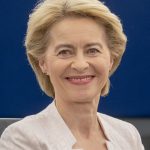
  • Ursula von der Leyen – 2025 Speech at the Choose Europe for Science Event

    Ursula von der Leyen – 2025 Speech at the Choose Europe for Science Event

    The speech made by Ursula von der Leyen, the President of the European Commission, on 5 May 2025.

    It is an honour to be here in the Sorbonne – surrounded by some of the brightest minds in the world. Dear Emmanuel, you once said that before being a university, the Sorbonne was an idea. An idea of scientific excellence, collaboration and – if I may add – of opportunity. And no story encapsulates this better than that of Maria Salomea Skłodowska-Curie, also known a Marie Curie. In her homeland of Poland, then under Russian occupation, women were barred from universities. So, she and her sister joined underground night schools, dreaming of freedom through knowledge. That was at the end of the 19th century. Her journey would eventually bring her to La Sorbonne. Here she was allowed to study and do her research. She ultimately revolutionised medicine and physics. Maria Skłodowska-Curie became the first woman to win a Nobel Prize, the first person to win a Nobel Prize twice, and the only person to win a Nobel Prize in two different fields. And her discoveries and her work on radiation saved millions of lives. I start with this story not just because we are here in the Sorbonne – or even because it shows how scientific excellence can change the course of destiny. But because this is also a story about freedom. Freedom to learn and invent. It is a story about openness. Openness to turn ideas into groundbreaking discoveries. And it is a story about collaboration beyond borders. And this is exactly what Europe and the world need more today. Because I am convinced that science remains the fuel of progress and growth for our societies. Without the ideas and breakthroughs that come from scientific research, progress sooner or later stagnates.

    Unfortunately, as your discussions have shown today, the role of science in today’s world is questioned. The investment in fundamental, free and open research is questioned. What a gigantic miscalculation. I believe that science holds the key to our future here in Europe. Without it, we simply cannot address today’s global challenges – from health to new tech, from climate to oceans. And as I look around the room – and at all the young people here – I know we are far from having run out of new ideas or bright minds. In fact, the truth is we have barely scratched the surface of the knowledge that science can offer us. So more than ever we need to stand up for science. Science that is universal – shared by all humanity – and that is unifying. Because the pursuit of knowledge and the yearning to understand how things work are values that bring us together as people, as it has done today. We can all agree that science has no passport, no gender, no ethnicity or political party. And as such it does play a crucial role in connecting people and creating a shared future in today’s fractured world. We believe that diversity is an asset of humanity and the lifeblood of science. It is one of the most valuable global goods and it must be protected.

    That is why I am here today, to say that Europe will always choose science. And Europe will always make the case for the world’s scientists to Choose Europe. Scientific endeavour runs deep through European history – from Pythagoras and Aristotle in Ancient Greece to Galileo and Copernicus in the Renaissance period or to Koch or Pasteur in latter centuries. The oldest university in Europe was founded in Bologna, where teaching started as far back as 1088. And Europe was the home of the Scientific Revolution which saw one of the most consequential transformations in human history – thanks to breakthroughs in mathematics, astronomy, biology and much more. That tradition lives on today. Europe already has the second highest scientific output in the world. It is home to over 2 million researchers – one quarter of the world’s total. We lead in green tech, health, economics, business and social sciences. We excel in areas of scientific research and technologies that are pivotal to our future – from aerospace to robotics, from automotive to engineering, from biotechnologies to pharmaceuticals, just to name a few.

    And we have a huge number of natural advantages that help set us apart. The first is sustained and stable investment from Europe and its Member States. Europe runs the world’s largest international research programme, Horizon Europe. It has a firepower of over EUR 93 billion. Over the last 40 years, the European Union has funded 33 Nobel Prize laureates. European support has made possible breakthroughs in genome sequencing and mRNA vaccines. It spurred the development of cutting-edge microchips, and even led to the first image of a black hole. These examples show what we all know – the return on investment in science is unparalleled. We have worldclass research infrastructure. From particle physics to molecular biology, and from space exploration to nuclear fusion. This helps make Europe a leader in fundamental research.

    We have a world-leading supercomputing infrastructure, EuroHPC, and we are investing massively in AI, quantum and digital research. Finally, we also have a proud tradition of open and collaborative science. We uphold the principles of open science, open education and data sharing. Our European Research Council is run not by politicians, but by scientists, for scientists. Our Horizon Europe programme is a magnet for global cooperation. From the UK to Switzerland, from Canada to South Korea, more and more countries want to join it. We see scientists from across the world collaborating here in Europe. Take CERN as a case in point. Founded 70 years ago to carry out cutting-edge research that no individual nation could do alone, it is today the world-leading laboratory for high-energy particle physics and related technologies. Researchers from over 100 nationalities working together for the good of humanity. This is how science should work, and it is why scientific freedom and collaboration must always be at the heart of our institutions and our infrastructure.

    Ladies and Gentlemen,

    Europe has everything that is needed for science to thrive: we have the stable and sustained investment; we have the infrastructure; we have the commitment to open and collaborative science, we have a social market economy that delivers access to good schools, education and healthcare for all. But at the same time, we have to be alert and work on our deficiencies. We know that researchers still face too much – or too complex – bureaucracy here in Europe compared to some other parts of the world. We know that the path from fundamental research to business and to market is not straightforward or fast enough here in Europe. We know that we need to offer the very best a longer-term perspective. We are ready to tackle this head on.

    We want Europe to continue to be at the forefront of fundamental research. We want Europe to be a leader in priority technologies from AI to quantum, from space, semiconductors and microelectronics to digital health, genomics and biotechnology. We want scientists, researchers, academics and highly skilled workers to choose Europe. And this is why today I am presenting the first elements of our Choose Europe Initiative.

    The first priority is to ensure that science in Europe remains open and free. This is our calling card. We must do everything we can to uphold it – now more than ever before. We want to strengthen the free movement of knowledge and data across Europe – just as we do for goods, talents and capital across our Single Market. And we want to enshrine freedom of scientific research into law in a new European Research Area Act. Because as threats rise across the world, Europe will not compromise on its principles. Europe must remain the home of academic and scientific freedom.

    The second element of Choose Europe is financing. Science is an investment – and we need to offer the right incentives. This is why I can announce that we will put forward a new EUR 500 million package for 2025-2027 to make Europe a magnet for researchers. This will help support the best and the brightest researchers and scientists from Europe and around the world. We aim to create a new seven-year ‘super grant’ under the ERC to help offer a longer-term perspective to the very best. Through the ERC, we are already supporting researchers who relocate to Europe with a top-up beyond their grant. We are now doubling the amount they can receive this year. And I want to extend this support for 2026 and 2027.

    At the same time, we must also focus on the next generation. This is why we are also increasing support to early career scientists through our Choose Europe pilot under Maria Skłodowska-Curie. Those that choose Europe will benefit from higher allowances and longer contracts. We will expand this support over the next two years, with targeted incentives in frontier fields, like AI. For the mid- and long-term: together with our Member States, we want to reach the 3% of GDP target for investment in research and development by 2030. And we will put forward ambitious proposals on research and innovation funding in the next long-term budget. Because we know that an investment in science is an investment into our future.

    The third part of Choose Europe is the need to fast-track the pathway – from breakthrough science to transformative innovation and business opportunities. This is why we will put forward a first ever European Innovation Act and a Startup and Scaleup Strategy, to remove regulatory and other barriers, and to facilitate access to venture capital for innovative European startups and scaleups.

    Last but not least: We have to make it easier and more attractive to come to Europe for research. We will better link up researchers with research institutions. We will speed up the process around entering and staying in Europe. We already have an excellent platform that links researchers worldwide with thousands of jobs in Europe, as well as providing visa support and career guidance. We now want to support public and private institutions to better link up to highly skilled workers and researchers, and to speed up and simplify the entry for top researchers. Because bringing the best from across the world is about bringing out the best of Europe.

    Ladies and Gentlemen,

    Europe has made its choice. We are choosing to start a new age of invention and ingenuity. We are choosing to put research and innovation, science and technology, at the heart of our economy. We are choosing to be the continent where universities are pillars of our societies and our way of life. We are choosing to be the continent where innovation serves humanity, where global talent is welcomed. Because as the history of the Sorbonne and our excellent universities show, progress thrives on freedom, openness and collaboration. So, to every researcher, at home or abroad, to every young girl and boy who dreams of a life in science, as Maria Skłodowska-Curie once did, our message is clear: Choose Science. Choose Europe.
  • Donald Tusk – 2025 Statement on Election of New Pope

    Donald Tusk – 2025 Statement on Election of New Pope

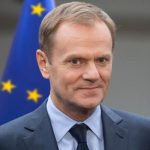
    The statement made by Donald Tusk, the Prime Minister of Poland, on 8 May 2025.

    Habemus Papam! Evil will not prevail. Zło nie zwycięży. Ił male non prevarrà. The optimism and hope that the world needs.

  • Emmanuel Macron – 2025 Statement on Election of New Pope

    Emmanuel Macron – 2025 Statement on Election of New Pope

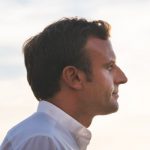
    The statement made by Emmanuel Macron, the President of France, on 8 May 2025.

    A historic moment for the Catholic Church and its millions of faithful. To Pope Leo XIV, and to all Catholics in France and around the world, I extend a message of fraternity.

    On this May 8th, may this new pontificate be one of peace and hope.

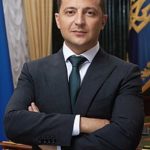
  • Volodymyr Zelenskyy – 2025 Statement on Election of New Pope

    Volodymyr Zelenskyy – 2025 Statement on Election of New Pope

    The statement made by Volodymyr Zelenskyy, the President of Ukraine, on 8 May 2025.

    Congratulations to His Holiness Pope Leo XIV @Pontifex on his election to the See of Saint Peter and the beginning of his pontificate.

    Ukraine deeply values the Holy See’s consistent position in upholding international law, condemning the Russian Federation’s military aggression against Ukraine, and protecting the rights of innocent civilians.

    At this decisive moment for our country, we hope for the continued moral and spiritual support of the Vatican in Ukraine’s efforts to restore justice and achieve a lasting peace.

    I wish His Holiness Leo XIV wisdom, inspiration, and strength—both spiritual and physical—in carrying out his noble mission.

    Ad multos annos!

  • Keir Starmer – 2025 Comments Following UK’s Economic Trade Deal with the US

    Keir Starmer – 2025 Comments Following UK’s Economic Trade Deal with the US

    The comments made by Keir Starmer, the Prime Minister, on 8 May 2025.

    Just a few moments ago, I spoke to President Trump, the President of the United States.

    And I am really pleased to announce to you, and I wanted to come to you to announce it, that we have agreed the basis of an historic Economic Prosperity Deal.

    That is a deal will protect British businesses and save thousands of jobs in Britain, really important, skilled, well-paid jobs.

    It will remove tariffs on British steel and aluminium, reducing them to zero.

    It will provide vital assurances for our life sciences sector, so important to our economy and grant unprecedented market access for British farmers without compromising our high standards.

    And for the great British cars that you make here, that we see all around us, this deal means that US tariffs will now be cut from 27.5% to 10% for 100,000 vehicles every year, that’s a huge and important reduction.

    And I know from when I was last here, how much that will have been weighing on your minds when you knew the size of the tariffs that would otherwise be in place.

    To get that decrease was hugely important to me and I can tell you my teams were working really hard on this deal night and day for weeks. I was working with them.

    And in politics what matters sometimes is who you have in your mind’s eye when you are making these deals, who do you have in your mind’s eye when you are taking decisions.

    What I took away from here last time was you and the brilliant work that you do and had you in my mind’s eye as we did that.

    We have scope to increase that quota as we go forward, this is not fixed, this is where we have got to.

    And all of these tariff cuts will come into place as soon as possible and that’s really important in relation as well to the work that you are doing, and the brilliant cars that you make.

    And as Adrian has said I was here with you just a few weeks ago and I promised you that I would deliver in the national interest.

    And today I am really pleased to come back here, to be able to look you in the eye and say I have delivered on the promise I made to you.

    And that’s why as soon as I knew this deal was coming in today, I said I want to come back to JLR to talk to the workforce there, for whom this means so such.

    Now of course we are the first country to secure such a deal with the United States.

    In an era of global instability that is so important. The great challenge of our age is to secure and renew Britain.

    And that is what we are going to do.

    Acting in the national interest.

    Shaping this new era – not being shaped by it.

    If it’s not good for Britain, we won’t do it.

    If it doesn’t mean more money in people’s pockets, we won’t do it.

    If it doesn’t mean security and renewal in every part of the country – we won’t do it.

    But that doesn’t mean we’re turning inward.

    Instead, we are sending a message to the world that Britain is open for business – seeking trade agreements with India on Tuesday, with the US today, and working to boost trade with other partners too – including of course the EU with who we have an important meeting just a week on Monday.

    Making deals that will benefit working people.

    You know – in recent years an idea has taken hold that you show strength by rejecting your allies.

    That you shut the door, put the phone down, storm off. I’ve had plenty of people urging me to do that rather than stay in the room and fight for the interests of our country.

    I want to be absolutely crystal clear – that is not how this Government operates. It is never how this Government operates. We don’t storm off, we stay in the room, and we negotiate, and we work for our country with the national interest at the foremost of our mind.

    Because the other way of working doesn’t deliver the benefits that working people need.

    And so I also want to be clear – this is just the start.

    With the deal we have done today we can say: jobs saved. Jobs won. But not job done.

    Because we are more ambitious for what the UK and US can do together.

    So we are hammering out further details to reduce barriers to trade with the United States across the board.

    We have £1.5 trillion invested in each other’s economies, creating 2.5 million jobs across both countries.

    There are so many areas where I think we can even more than that and put more pounds in the pockets of working people across the United Kingdom.

    As the two biggest services exporters in the world, we will work to bring down barriers, creating jobs in our thriving services sectors – in Leeds, in Manchester, London and Birmingham.

    As the only two western nations with trillion-dollar tech sectors we will go further to deepen our partnership in new technologies to shape the innovations of this century together and create the jobs of the future.

    Because, look – our history shows what we can achieve when we work together.

    And what timing for this deal, that we have agreed this deal on VE Day.

    80 years ago, today Churchill was addressing the nation at the end of the Second World War. Victory in Europe.

    And we were standing the United Kingdom with the United States on defence and security. For 80 years we have been the closest of partners, and today we have added to that trade and the economy in the special relationship between us.

    Defined by peace and economic prosperity.

    So, it is fitting today that we renew the bond on the 80th anniversary of VE Day.

  • Keir Starmer – 2025 Speech at the London Defence Conference

    Keir Starmer – 2025 Speech at the London Defence Conference

    The speech made by Keir Starmer, the Prime Minister, on 8 May 2025.

    It is a real privilege to be able to speak to you here today on VE Day.

    80 years to the day…

    Since an expectant nation turned on the wireless – as of course it was then…

    To hear Churchill announce victory in our war against Nazi Germany.

    Just imagine it.

    Beacons lit across the country…

    Bunting up…

    People raising their glasses and thanking the bravery of our armed forces…

    As we will do today.

    And then they came to the streets.

    The late Queen Elizabeth II – who was then a young princess of just 19 –

    Remembering going unnoticed in the crowds, swept up in a ‘tide of happiness and relief’.

    A celebration of defiance…

    Of sacrifice…

    The courage of that lion-hearted generation…

    The greatest victory in the history of this great nation.

    A victory not just for Britain.

    But for good against the assembled forces of hatred, tyranny and evil…

    For the light of our values – in a world that tried to put them out.

    And, as you know…

    There are people who would happily do likewise today.

    Our values and security are confronted on a daily basis.

    And we have to rise to this moment.

    80 years ago, just round the corner from here, Churchill said…

    “We must begin the task of rebuilding…

    Do our utmost to make this country a land in which all have a chance…

    And in which all have a duty to our countrymen”.

    The post-war generation took on that task on with relish.

    And we must use this moment…

    To do the same.

    Deepening our partnerships with allies old and new –

    From across Europe to meet the defence challenges of our age…

    To the United States…

    an indispensable ally for our economic and national security…

    As you know, talks with the US have been ongoing – and you’ll hear more about that later today.

    But make no mistake – I will always act in our national interest…

    For workers, businesses and families…

    To deliver security and renewal for our country.

    Because the world has changed, decisively.

    I mean, I remember – as some of you will also too…

    The day the Berlin Wall came down in 1989.

    A landmark moment for my generation.

    A sense of freedom, of possibility, of peace.

    European countries finally free to choose their own future.

    I didn’t think then that in my lifetime I would see Russian tanks entering a European country again.

    Yet here we are.

    And here we stand resolutely…

    With the people of Ukraine.

    Together with our allies…

    Showing the strength of our values…

    As well as the value of our strength.

    A few weeks ago, I was with the Prime Minister of New Zealand…

    To visit our forces delivering Operation INTERFLEX in Wiltshire.

    This is a multinational military operation…

    That has trained more than 50,000 Ukrainian troops for the frontline.

    Men and women who are not soldiers by trade…

    Far from it.

    They are accountants, they are builders, businesspeople, you name it.

    Who stepped up from their lives…

    Stepped away from their families…

    And, as veterans did eighty years ago…

    Answered the call to defend freedom and liberty in their homeland.

    And as these brave men and women leave their training in Britain…

    And head to the frontline of freedom…

    They are applauded by their British trainers.

    I’ve seen this a couple of times now – it’s a really humbling sight.

    A sign of our support and solidary in their struggle…

    Pride and admiration at their courage.

    Because in this country we know – this isn’t just a fight for freedom and democracy in Ukraine.

    No – it is a new, more dangerous era of history.

    A period of global instability…

    That fuels insecurity for working people here at home.

    The British people have already paid a price for Putin’s aggression in Ukraine, with rising bills and prices.

    Russia already menaces our security…

    They’ve launched cyber-attacks on our NHS.

    Spread disinformation online…

    And we cannot forget, just a few years ago – a chemical weapons attack on our streets in Salisbury.

    In broad daylight, in the heart of England.

    No – the battle lines in Ukraine are the front line for Western values.

    And the argument that defines this age is simple…

    National security is economic security.

    And that is why we are boosting defence spending, with the largest sustained increase since the Cold War…

    An increase of £13.4bn year on year compared with where we are today.

    Not just meeting our commitment to spend 2.5% of our GDP on defence…

    But bringing it forward to 2027.

    And, alongside that, a new ambition for defence spending to rise to 3% of GDP in the next Parliament.

    But look, I do want to be clear – this investment has two objectives.

    Yes of course, the first goal is always the safety and security of the United Kingdom.

    But the second is to create jobs, wealth and opportunity in every corner of our country.

    Secure at home, strong abroad.

    You know – at times like this there is a lot of talk about the end of the peace dividend.

    Well, our task now is to seize the defence dividend.

    Felt directly in the pockets of working people.

    Rebuilding our industrial base.

    Creating the jobs of the future.

    The skills for the next generation…

    From the shipyards in Scotland…

    To the missile systems built in Stevenage and Belfast….

    The artillery barrels made at Sheffield forgemasters…

    And the land vehicle development in Wales…

    Mark my words – the British defence industry will be the engine of national renewal.

    Because this isn’t just about increasing our defence spending…

    It’s also about reform and rebuilding.

    And in the coming weeks, we will publish a first-of-its kind, root and branch strategic defence review…

    It will scrutinise every aspect of defence – to determine how we can best meet the threats of today…

    And return Britain to warfighting readiness.

    Alongside our National Security Strategy and our defence industrial strategy…

    We will set out a major overhaul of the British Armed Services…

    Starting by treating our Armed Forces with the respect that they deserve –

    delivering the largest pay rise for over 20 years…

    And good homes for service personnel and their families.

    But also – the biggest shift in mindset in my lifetime –

    To see security and defence…

    Not as one priority amongst many others…

    But as the central organising principle of government –

    The first thought in the morning – the last at night…

    The pillar on which everything else stands or falls.

    Because – as in 1945…

    This has to be a collective endeavour.

    A national effort.

    A time for the state, business and society to join hands…

    In pursuit of the security of the nation…

    And the prosperity of its people.

    So whether you’re a world-renowned business…

    Or a smaller, family-run firm…

    You have a vital part to play in boosting Britain’s defences.

    That is why we have launched a new unit – to help SMEs get their foot in the door of the defence supply chain.

    Because I am clear – the future belongs to the innovators.

    Take the announcement made just last week…

    StormShroud drones…

    Flying as uncrewed guardians to RAF pilots and crew…

    Now, for the first time, made in Britain.

    An investment that supports hundreds of highly skilled jobs…

    Boosting our capabilities for the modern age of drone-based warfare.

    Possible – only because of industry and military working together.

    Or take the submarines that we’re building in Barrow.

    This one is personal for me.

    Not just because I was there in Barrow at the keel laying in March –

    Not just because I met the workers and the apprentices and saw for myself what it means for them…

    And of course the 42,000 jobs it supports up and down the country…

    It’s also personal for me because just a few days before that visit…

    I went up to the Firth of Clyde, as another boat made in Barrow –

    A Vanguard-class submarine…

    Was coming in off a record-breaking patrol.

    We boarded the sub and met the crew – who had been at sea for months on end.

    And meeting those remarkable men and women is something I’ll never forget.

    There is no greater duty than the one that they carry –

    No task more vital.

    Our security…

    Nato’s security…

    Depends on them.

    They are the quiet custodians of the nation’s greatest capability…

    Part of an unbroken watch that has been maintained for 55 years.

    And in this moment – it’s time for the rest of us to step up and rebuild our country…

    Leading the world in the opportunities of the future.

    Recently, I visited the Carrier Strike Group off the coast of Cornwall…

    And stayed aboard HMS Prince of Wales…

    It was frankly humbling to see F35s taking off with just 100metres of deck to take off – and then returning and hovering to land on a sixpence

    So imagine how I felt later the very same day when I went to see the apprentices at Rolls Royce…Who had made the engines for those very F35s.

    And we need to keep those apprentices busy…

    And mark my words – we are going to do that.

    With the most ambitious programme of work to secure and rebuild our country since 1945.

    Take an example: today, I can announce a £563 million contract to maintain Britain’s fleet of Typhoon fighter jets.

    The backbone of Britain’s air defence…

    Proudly part of the flypast for VE Day that you may have seen on Monday.

    All 130 Typhoons will have their engines maintained by Rolls-Royce…

    Supporting hundreds of jobs in Bristol and beyond…

    Defending British airspace.

    Helping a new generation of service come of age.

    And just imagine – what this means for a young apprentice, aged about 18.

    Entering into the work force with a good job.

    The pride of that work – as a proud I understand from my dad…

    Of knowing that what you do, what you make matters.

    The pride of following in the footsteps of local families…

    Who have been the backbone of their communities for generations.

    The grandchildren of the young men who fought on the beaches of Normandy…

    Now the submariners on a Vanguard-class submarine.

    The descendants of the code breakers at Bletchley…

    Now learning the skills to build a new generation of nuclear submarines in Barrow.

    And the pride of stepping into our national story…

    So those who follow us can say…

    We also rose to meet the moment.

    We also stood firm against tyranny and oppression.

    We also rebuilt Britain – so it serves everyone that serves our country.

    Because on VE day 80 years ago…

    Politicians of all parties and stripes understood that a people who had sacrificed so much were owed a great debt.

    And the truth is – people today are too.

    After years of being buffeted about by insecurity and uncertainty…

    They are owed the same security…

    the same prosperity and peace of mind…

    A good home to live in…

    A well-paid job with strong rights at work…

    An NHS that is there for them when they need it…

    all underpinned by the foundation of national security.

    A defence dividend – that will be felt in the pockets of working people and the prosperity of the country.

    An investment in peace…

    But also an investment in British pride and the British people…

    To build a nation that, once again, lives up to the promises made to that generation…

    Who fought for our values, our freedom and our security.

    Thank you very much indeed.

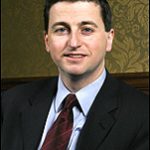
  • Douglas Alexander – 2025 Statement on Trade Negotiations

    Douglas Alexander – 2025 Statement on Trade Negotiations

    The statement made by Douglas Alexander, the Minister for Trade Policy and Economic Security, in the House of Commons on 6 May 2025.

    I wish to make a statement on the progress that this Government have made towards a UK-India trade deal. I am delighted to inform the House that we have now concluded negotiations on a comprehensive, modern agreement with the fastest-growing economy in the G20.

    Hon. Members will no doubt be aware that India is expected to be the third-largest economy in the world by 2028. By the end of this decade, it will be home to an estimated 60 million middle-class consumers, and with trade between the United Kingdom and India already standing at north of £43 billion, we know that this powerhouse economy is and will remain a hugely important market for British businesses. While past Governments have failed to negotiate a deal with India, this Government have today succeeded. We have brokered the most generous trade deal ever agreed by India in its history.

    From day one of this deal coming into force, it will make trade between our countries cheaper, easier and quicker. UK exporters will benefit from much lower tariffs across a whole host of sectors, including those that we are prioritising in our industrial strategy. It means simplified customs processes for businesses in advanced manufacturing and aerospace, in the food and beverage sector, and in the creative sector, which will benefit from improved copyright protection.

    For our world-leading financial and professional services companies, this deal locks in access to India’s fast-growing market. It will ensure that UK banks and finance companies are placed on an equal footing with Indian suppliers, and it encourages the recognition of professional qualifications, so that UK and Indian firms can access the right talent at the right time, whether they are in Mumbai or Manchester. This deal will unlock new opportunities for businesses in every part of the United Kingdom, including our advanced manufacturing companies in the north-east, our iconic Scottish whisky brands and our car plants in the west midlands. In all, we will have secured over £400 million in tariff reductions in the first year alone, doubling to around £900 million after just 10 years.

    Crucially, the deal we have negotiated will provide bespoke support for small and medium-sized enterprises to enter the Indian market, alongside a firm commitment from India to address the trade barriers that those businesses face. Since taking office, we have committed to hardwiring the views and interests of small businesses into everything we do, and the deal we have negotiated is evidence of that. For the very first time, British businesses will have guaranteed access to India’s vast procurement market, covering goods, services and construction. They will be able to bid for approximately 40,000 tenders worth at least £38 billion a year.

    The deal that we have just got over the line is further proof that this Government are using the power of international trade and investment to raise living standards here at home. Indeed, experts predict that it will boost our bilateral trade by some £25.5 billion. It is also projected to increase UK wages by £2.2 billion each year, while adding nearly £5 billion to our GDP over the long run.

    We have done all that while defending stoutly the UK’s national interest. We have brokered a deal that protects our NHS and upholds our high food standards. It ensures that our points-based immigration system remains unaffected. The deal demonstrates our commitment to both workers and businesses, staying true to our Labour values while contributing to our primary mission of economic growth.

    I recognise that this House will need time to scrutinise the deal before the ratification process. My Department will follow the process set out in the Constitutional Reform and Governance Act 2010 in sharing the finalised treaty text with hon. Members. The House will, of course, have the opportunity to scrutinise any legislation associated with its implementation.

    This deal sends a powerful message about the UK and India’s shared commitment to free, fair and open trade. The UK-India relationship has deep, enduring roots, exemplified by the living bridge of 1.9 million people of Indian heritage living in the United Kingdom. While I do not personally lament that the right hon. Member for Richmond and Northallerton (Rishi Sunak) is no longer the UK’s Prime Minister, it would be wholly wrong of me not to acknowledge his significant achievement as the first British-Indian Prime Minister, which is a testament not just to his own ability but to the close bonds that unite our two nations.

    The Government are proud to back open markets and free trade. We recognise that Britain has always been an open, outward-looking trading nation, and we believe that open markets and free trade are fundamental building blocks with which the UK can secure its opportunities and prosperity at home and abroad. Through our upcoming trade strategy, we will set out our ambitions to engage with more industrial giants, like India, to ramp up trade and investment over the coming months and years.

    Today, though, as close trading partners and as friends, I am proud that we have secured this deal with India. It is a deal that affords UK businesses certainty and stability during a time of global uncertainty and instability, and a deal that will give British businesses access to one of our biggest markets abroad, while raising wages and driving growth here at home. That is what this deal delivers, and I commend this statement to the House.

  • Lisa Smart – 2025 Speech on Counter Terrorism Policing Arrests

    Lisa Smart – 2025 Speech on Counter Terrorism Policing Arrests

    The speech made by Lisa Smart, the Liberal Democrat MP for Hazel Grove, in the House of Commons on 6 May 2025.

    I thank the Minister for updating the House and for advance sight of his statement. I also add my thanks to the security services and the police for all their work to keep us safe.

    Over recent years Members have been called to this Chamber to discuss plots to commit acts of terror on Britain’s streets at the hands of the Iranian regime—but consecutive Governments are yet to proscribe the Islamic Revolutionary Guard Corps as a terrorist organisation. In opposition, the now Foreign Secretary said:

    “The IRGC is behaving like a terrorist organisation and must now be proscribed as such.”

    Earlier this year I asked the Minister precisely this question: does he not agree that now is surely the time? In his earlier remarks, he mentioned the review that has concluded. If now is not the time for proscription, when should the House expect a further update?

    The Liberal Democrats have welcomed previous sanctions against those linked to the Iranian regime. However, I urge the Government to go a step further and look closely at whether those individuals and others with links to the regime have assets here in the UK. Will the Minister commit to carrying out an audit, so that we know where those assets are, enabling the Government to freeze them as appropriate? The Minister is right to reference the long-standing pattern by the Iranian intelligence service of targeting people of the Jewish faith and of Israeli nationality. Could he update the House on any conversations he has had with the UK Jewish community leadership, specifically the Community Security Trust, about threats here in the UK?

    Dan Jarvis

    I thank the hon. Lady for, as is always the case, the very sensible and reasonable way in which she has phrased her questions. I am always available to discuss these matters in more detail should she wish to do so. To her question on proscription, I hope she will acknowledge the response I gave to the shadow Minister a few moments ago.

    We take these matters incredibly seriously. The Home Secretary and I looked at them very closely in opposition, and that is precisely why the Home Secretary commissioned Jonathan Hall. He is the right person to look carefully at our legislative framework and make recommendations about whether we can toughen and strengthen our laws in this particular area. Mr Hall has now concluded his report; we are looking very closely at it, and it will be published shortly. As I said to the shadow Minister, we will not hesitate to bring forward further measures as required.

    The hon. Lady made an important and helpful point about sanctions and assets, and I know it will have been heard by the Foreign Office Minister, my hon. Friend the Member for Lincoln (Mr Falconer), with whom we work incredibly closely. We work hard to ensure that our response is always as joined up across Government as it can be. The Home Secretary works very closely with the Foreign Secretary, and I work very closely with my hon. Friend the Member for Lincoln on these matters, and we will consider whether further measures need to be taken.

    The hon. Lady’s final point about the Jewish community is a very important one. I give her and the whole House an absolute commitment that we will work tirelessly to ensure the safety of the Jewish community in our country. The Home Secretary and I, and other Ministers, are in regular contact with members of that community, including the CST, which she referenced and which does an excellent job. I will be meeting them in the very near future, and the hon. Lady can be reassured that we will work very closely with them to ensure that they get the protection that they need and deserve, and the assurances that they rightly want.

    Paul Waugh (Rochdale) (Lab/Co-op)

    I pay tribute to the bravery and professionalism of the counter-terrorist specialist firearms officers who took part in the arrest of an Iranian national in Rochdale over the weekend. It was a reminder of not only the constant threat that we face, but the intelligence and police services’ daily work to keep us all safe. Does the Minister agree that in this week of the 80th anniversary of VE Day, it is a reminder too that Britain is at war with a modern enemy: the fascism of Islamist extremism and state-sponsored terrorism? The message should go out loud and clear that my town, our country and this House will never surrender to such terrorism or to its ideology.

    Dan Jarvis

    My hon. Friend makes a powerful and important point. He is absolutely right that the Government will never drop their guard to the threats that we undoubtedly face in countering terrorism, whether the specific threat around Islamist extremism or state threats. We take these matters incredibly seriously, and we will work to ensure that all our security services and police forces have the resources and tools they need to address the threats we face.

  • Matt Vickers – 2025 Speech on Counter Terrorism Policing Arrests

    Matt Vickers – 2025 Speech on Counter Terrorism Policing Arrests

    The speech made by Matt Vickers, the Conservative MP for Stockton West, in the House of Commons on 6 May 2025.

    I thank the Minister for providing advance sight of his statement on this critical issue. People will have read the deeply concerning report suggesting that an attack may have been just hours away, and this will understandably be worrying to people across the country.

    This statement reminds us of the tragic incidents that have plagued our country in the past. This month marks 12 years since the death of Lee Rigby on our streets, as well as eight years since the horrific Manchester Arena bombing. Later this year, we will also mark the 20th anniversary of the 7/7 attacks, which brought to London a level of destruction that many of us never thought we would see in our lifetimes. These acts of terror, along with other cowardly acts, caused untold hurt to victims and their families.

    As we discuss the arrests over the past weekend, we must remember the importance of keeping the British public safe from those who seek to terrorise us, and I therefore pay tribute to the hard-working members of the police and intelligence services for their bravery in disrupting terrorist activities. In October, the head of MI5 said that the police and MI5 had together disrupted 43 late-stage attack plots since the Manchester bombing. We must remember that each of these cases is not merely a statistic, but represents someone’s life and someone’s future.

    I commend the Minister for recognising the work of the previous Government and for acknowledging the measures that were used effectively in this incident. In turn, we will support measures that enact the National Security Act and give the Government the powers needed to act against malign influences on our country.

    Turning to the incidents at hand, I would be grateful if the Minister could clarify certain points. While I am thankful for today’s statement, I hope the Government will be as transparent as possible about the details to avoid the vacuum of information we have previously discussed in this place. While I appreciate that the Government do not want to provide a running commentary, like many other Members I would be grateful if the Government could be as open as possible, given the seriousness of the arrests.

    As the Minister has outlined, there were two separate arrests of Iranian nationals in relation to terror offences, which has raised serious questions about how their networks were formed and what their intentions were. Can the Minister provide any further information about the suspects? For example, while we know they were Iranian nationals, what is their immigration status? Was the state aware that these individuals were in the UK, and was there any prior indication of the risk they might pose?

    On the broader issue of Iran, while I understand that the Minister may not be able to comment on proscription directly, the Home Secretary did address this while in opposition.

    In July 2023, she told the Royal United Services Institute that

    “instead of trying and failing to use counter-terror legislation to proscribe organisations like Wagner or IRGC, we will introduce a bespoke proscribing mechanism to address state-sponsored threats.”

    She also said at the Dispatch Box in April 2024 that Labour wanted

    “appropriately targeted proscription-style restrictions on the operations of state-linked organisations such as the IRGC.”—[Official Report, 15 April 2024; Vol. 748, c. 19.]

    However, it was only in March of this year that the Minister for Security announced the review by Jonathan Hall. Does he share my concerns that these mixed signals and the delay suggest a lack of prioritisation by the Government? Ultimately, we must all work together to ensure that the UK adopts the strongest possible stance on national security. As cross-party co-operation is essential, I urge the Government to take every possible step to prevent these cowardly acts of terror.

    Dan Jarvis

    I thank the shadow Minister for the sensible, reasonable and constructive tone of his response. He is absolutely right to draw the House’s attention to the tragic death of Lee Rigby, the tragic bombing in Manchester and, of course, the 20th anniversary of the 7/7 bombings that we will be commemorating in a couple of months’ time.

    Let me join the shadow Minister in paying tribute to all those who work tirelessly to keep our country safe. It is one of the greatest privileges of this particular role that we have the opportunity to serve in government, as Conservative Members will also have done, and to work closely alongside those incredibly committed members of the police and the intelligence services; we owe them a debt of gratitude.

    I am also grateful for the opportunity that the shadow Minister has afforded me to offer our thanks for the work that was done by the previous Government, both in introducing the National Security Act 2023, which has proved to be an incredibly valuable tool, and in creating CTOC, which is delivering very significant operational value. I can absolutely give an assurance that this Government, like the previous one, will continue to invest in that institution.

    The shadow Minister made an important point about transparency, and I can give him the reassurances that he seeks. He and the House will understand that we are just a couple of days on from those arrests that took place on Saturday. The Home Secretary will provide a further update as soon as we are operationally able to do so. I give the shadow Minister a commitment that we will be as transparent as possible while of course ensuring that we do not cut across live counter-terrorism operations.

    The shadow Minister mentioned proscription, and I understand why. I know that he will acknowledge—or at least I hope that he will—that on 4 March I announced a very strong suite of measures designed to most effectively address the nature of the threat that we face from Iran. Contained within those measures was a request from the Home Secretary for Jonathan Hall, who I know is held in very high regard because of the experience and credibility that he has in this area, to look very carefully at the legislative framework that might enable us to more effectively proscribe state-based entities. I can confirm that Mr Hall has completed his report and that the Home Secretary and I are considering it very carefully. It will be published shortly. I assure the shadow Minister that we will not hesitate to act if there is a requirement to bring forward further measures.

  • Dan Jarvis – 2025 Statement on Counter Terrorism Policing Arrests

    Dan Jarvis – 2025 Statement on Counter Terrorism Policing Arrests

    The statement made by Dan Jarvis, the Minister for Security, in the House of Commons on 6 May 2025.

    With permission, Mr Speaker, I will make a statement on the series of national security-related arrests that took place on Saturday 3 May. Protecting our national security is the first duty of Government, and it is a testament to our world-leading law enforcement and intelligence services that, through their tireless commitment, so many plots against the UK have been thwarted. I pay tribute to them again today for the work that they have done not just this weekend, but in recent weeks and months, on these important operations.

    The two operations that took place across multiple locations this weekend were significant and complex. They were some of the largest counter-state threats and counter-terrorism actions that we have seen in recent times, and I am sure the whole House will want to join me in thanking the police, the security services and other partner agencies across the country, who showed their professionalism and expertise in carrying out these operations to keep our country safe.

    Right hon. and hon. Members will understand that these are complex investigations. The police and the security services need time and space to be able to pursue their investigations, and our first priority must be to protect the integrity of that work so that we do not cut across those investigations and operations at a crucial time. However, these are serious matters, and the House will rightly want to remain informed. I will therefore outline as much detail as I am able, and I hope that right hon. and hon. Members will understand that there is a strict limit to what I can say at this stage, given that investigations are now ongoing.

    I will first outline the facts around the events on Saturday 3 May. Throughout the day, counter-terrorism police undertook a series of arrests relating to two separate investigations. In total, eight men were arrested by the Metropolitan police’s Counter Terrorism Command. Five men were arrested on suspicion of preparation of a terrorist act, contrary to section 5 of the Terrorism Act 2006, as part of a proactive investigation in the areas of west London, Swindon, Rochdale, Stockport and Manchester. All five men are Iranian nationals. While four of the individuals remain in police custody, the fifth has now been bailed with strict conditions.

    As part of the investigation, police officers carried out searches at a number of addresses in the Greater Manchester, London and Swindon areas. Investigations continue, with searches and activity still under way at multiple addresses across the country. The investigation relates to a suspected plot to target specific premises. Police officers have been in contact with the affected site’s representatives to make them aware and provide relevant security advice and support. However, the police have also been clear that for reasons of operational security and public safety, they are not—and I am not—able to provide further information on the target at this time, and I urge Members not to speculate about the site.

    In a separate police investigation, two men were arrested at two different addresses in north-west London, and one man was arrested at an address in west London. All three were arrested under the National Security Act 2023. These three men are also Iranian nationals, and remain in police custody. I can confirm to the House that these are the first Iranian nationals arrested under the National Security Act.

    The operations to execute these eight arrests under both counter-terror and counter-state threat powers—in different parts of the country, and in the space of 24 hours—were intensive. They involved a range of different organisations, including different police forces, counter-terror police, the National Crime Agency, and our security and intelligence services. These operations were co-ordinated through the world-leading Counter Terrorism Operations Centre, which brings together and co-ordinates the UK’s agencies, alongside the agencies of our Five Eyes partners, to detect and tackle national security threats. I welcome the work of the previous Government to establish CTOC in 2021, and this Government have continued to support it and invest in it since taking office.

    The significant point about both counter-terrorism and counter-state threats powers is that they allow the police to intervene early to prevent and disrupt threats, not just respond after events have taken place. This is crucial for public safety, but it also makes the investigations more complex, and that is why the police need the time and space to pursue them now, so we will not be providing a running commentary on the work that they are doing. However, what now follows is an incredibly complex set of investigations, involving hundreds more officers carrying out forensic searches, collecting vital evidence across different sites across the country and securing witness statements, backed up by the continued efforts of our security and intelligence agencies. This is careful, painstaking work.

    At this stage in the operations and investigations, it would not be appropriate for me to speculate on or comment further on the details of these two cases and the motivations behind any of the threats that were posed. However, the House will be aware that these operations come against a backdrop of complex, interconnected threats to the UK, where state threats and counter-terrorism as well as serious and organised crime are intertwined together.

    For 20 years, the greatest focus of our national security work was on terrorism—primarily from Islamist terrorism, with additional threats from Northern Ireland-related terrorism and other areas—and those threats have not gone away. Fifteen terrorist attacks have taken place since 2017, and there have been 43 late-stage disruptions of terrorism plots, but alongside that we have seen a serious, growing and complex challenge from state threats. Last year, Sir Ken McCallum, the director general of MI5, said that MI5 state threat investigations had increased by 48% in the previous 12 months. He added that, since January 2022, the police and MI5 had responded to 20 Iran-backed plots presenting potentially lethal threats.

    In March, I told Parliament that the UK is facing a growing and evolving threat from malign activity carried out by a number of states. My statement in March outlined the Government’s response to the unacceptable threat that we face from the Iranian state, and the steps we are taking to ensure that our intelligence and law enforcement agencies have the tools they need to disrupt and degrade Iran’s malign activity on UK soil. We have delivered on the commitments made. I announced that the whole of the Iranian state, including the Islamic Revolutionary Guard Corps and the Ministry of Intelligence and Security, would be placed on the enhanced tier of the foreign influence registration scheme. I laid the regulations to make this happen in the House on 1 April and committed to bring the scheme into force on 1 July. I trust that all Members will vote in favour when those regulations are debated shortly.

    Let me be clear: anyone in the UK who works for the Iranian state must declare it or they will be committing a serious criminal offence. We will also go after the criminal networks and enablers that Iran uses to carry out its work. Last month, the Government sanctioned the Foxtrot network—a network involved in violence against Jewish and Israeli targets in Europe on behalf of the Iranian regime. Training and guidance on state threats activity is now being offered by Counter Terrorism Policing to all 45 territorial police forces across the UK.

    The independent reviewer of terrorism and state threats legislation, Jonathan Hall KC, was asked by the Home Secretary to review the parts of our counter-terrorism framework that could be applied to modern-day state threats such as those from Iran. The Home Secretary specifically asked the reviewer to look at a state threats proscription tool, so we are not held back by limitations in applying counter-terrorism legislation to state threats. Jonathan Hall has now completed his review and will publish it shortly, and the Government will not hesitate to take action in response to Mr Hall’s advice.

    As we continue to support the police and the security services in their investigations, I can also tell the House that the Home Secretary has instigated a series of security assessments that are being done or refreshed in the light of the cases this weekend and the further information surrounding them, which will ensure that the Government can respond robustly and comprehensively to any wider national security issues raised by these cases.

    Working alongside our international allies to counter state threats is central to our success. The Foreign Office is engaging with our closest allies to outline the disruptive action that has taken place and will be considering potential future response options as the investigation progresses. The Home Secretary remains in close contact with my right hon. Friend the Foreign Secretary, who is committed to doing everything necessary to protect the country from these threats and to bring to bear all the diplomatic tools at our disposal.

    The Home Secretary and Ministers will provide an update on the national security position when we are able to do so, following both these operations and investigations and the wider security assessments that are under way. The Government will not hesitate to act robustly to respond to these plots at the appropriate time, but first, we must allow the investigations to continue. Our police, security and intelligence agencies are the best in the world and stand ready at all times to take action to keep our country safe. I am sure they will have the support of the whole House as they continue this vital work. I commend this statement to the House.