Category: Speeches

  • Chris Webb – 2025 Speech on Access to NHS Dentistry

    Chris Webb – 2025 Speech on Access to NHS Dentistry

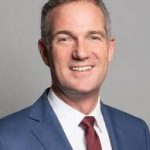
    The speech made by Chris Webb, the Labour MP for Blackpool South, in the House of Commons on 22 May 2025.

    Anyone who has had severe toothache knows the unbearable agony. In those moments, it feels like there is nothing worse. But imagine watching your four-year-old child suffer that same pain and being told that he cannot be helped. That was the reality for my constituent, Louise. A single mum, Louise got in touch with me when she was at breaking point. She had to watch her son suffer through constant distress: crying in agony, unable to sleep and refusing his food. When she managed to see an emergency dentist, she was told he would need between four and eight teeth extracted under local anaesthetic, but the wait time for that procedure was up to two years. Louise was left with no choice but to manage her son’s pain with daily Calpol and ibuprofen. That is not healthcare—it is abandonment.

    Sadly, Louise’s story is not rare. In my constituency of Blackpool South, people are being driven to desperate measures. They are turning up at A&E in agony because they cannot get dental appointments. Some are even resorting to pulling out their own teeth at home—DIY dentistry in 21st-century Britain. NHS dentistry was left to decay under the previous Government. I stood over there on the Opposition Benches one year ago today, highlighting the problems we have in Blackpool. In Blackpool South, just 34% of adults have seen an NHS dentist in the last two years. That is a sharp fall from over 50% a few years ago and well below the national average. Only 45% of children were seen in the past year—a figure that is lower than almost anywhere else in England.

    People living in poverty are most at risk of poor dental health, and in my constituency, poverty is a daily reality for so many. Children’s tooth decay is one of the clearest signs of how deep this crisis runs. In Blackpool, one in five three-year-olds and nearly one in three five-year-olds have visible dental decay—among the highest rates in the country. Behind every number is a child missing class because of dental pain, and a parent like Louise who feels helpless; all this in a town that already faces some of the deepest health inequalities in the country.

    I am pleased that the Government have rolled out 700,000 more urgent dentist appointments, and I know the Government are committed to recruiting new dentists in areas that need them most, like Blackpool. I welcome the Government’s commitment to reforming the dental contract, but I urge them to act now. The BDA points out that a reformed service will not work if there is no workforce left by the time it is finally introduced. The sector needs a clear timetable for negotiations, a firm deadline for a new system and a sustainable funding model. The Government need to build a system not on crisis care, but on prevention and early access, and it has never been more urgent.

    People in Blackpool South are not asking for special treatment. They are just asking for treatment—and the simple assurance that toothache will not become trauma.

  • Claire Young – 2025 Speech on Access to NHS Dentistry

    Claire Young – 2025 Speech on Access to NHS Dentistry

    The speech made by Claire Young, the Liberal Democrat MP for Thornbury and Yate, in the House of Commons on 22 May 2025.

    I thank the hon. Member for Great Grimsby and Cleethorpes (Melanie Onn) for introducing this debate.

    Thornbury and Yate is a dental desert. According to a recent newspaper report, not a single dentist in Thornbury and Yate is taking on new NHS patients for the third year in a row, leaving people having to travel long distances for care, or forced to pay for private treatment. I am sure, as a fellow south-west MP, the Minister will be as concerned as I am to hear that in September 2024 the NHS dental activity delivery rate was lowest in the south-west, at 61.6%, compared to the highest in London, at 94.7%. Not surprisingly, in the south-west, around one in every 460 people had to be taken to A&E with a dental problem in 2023-24. That was substantially higher than in London, where the figure was only one in every 860 people. The area covered by the NHS Bristol, North Somerset and South Gloucestershire integrated care board is the worst of all worlds, with fewer dentists, adjusted for population size, and lower dental activity delivery rates alongside higher numbers of A&E visits with dental problems.

    I want to highlight two cases that show the impact that is having on vulnerable people. One constituent wrote:

    “Despite contacting more than a dozen dental practices in and around South Gloucestershire and Bristol, I have been told by every single surgery that no NHS appointments are available. However, I have been offered private appointments if I am willing to pay…The situation is even more distressing as my wife is currently pregnant and requires urgent dental care, which is crucial for her health and that of our unborn child. Pregnant women are entitled to free NHS dental care, yet this right is rendered meaningless when no NHS appointments are available.”

    Another constituent wrote to me: a cancer patient who needed major dental treatment ahead of intense radiotherapy. Bristol dental hospital advised them they would need lifelong follow-up care, but during covid that treatment was stopped and they were discharged back to their NHS dentist. Soon after—surprise, surprise—the practice ceased to provide NHS dentistry and they could not find another, so they were forced to pay for their essential treatment.

    Charlie Maynard (Witney) (LD)

    There seems to be a consensus across the House that the NHS dental contract is broken. That is the consensus across the country as well, including in my constituency. If there is one thing we can get out of the debate today, it is a timeline to which the Government will commit to fixing the situation and to bringing legislation before the House. Does my hon. Friend agree that would be of benefit?

    Claire Young

    I do. We also need solutions for people like my constituent in the meantime; they have already had to pay £1,400 for treatment and they face another £2,000-worth of work to be able to eat normally. That is a stiff fee when you are reliant on personal independence payment and your spouse’s pension. My constituent feels that they have nowhere to turn.

    To sum up, patients like my constituents deserve access to an NHS dentist. We need an emergency scheme to guarantee access to free NHS dental check-ups for those already eligible: children; new mothers; those who, like my constituent’s wife, are pregnant; and those on low incomes. We need a dental rescue package that brings dentists back into the NHS from the private sector by fixing the dental contract and using flexible commissioning to meet patients’ needs in the meantime.

  • Linsey Farnsworth – 2025 Speech on Access to NHS Dentistry

    Linsey Farnsworth – 2025 Speech on Access to NHS Dentistry

    The speech made by Linsey Farnsworth, the Labour MP for Amber Valley, in the House of Commons on 22 May 2025.

    I thank my hon. Friend the Member for Great Grimsby and Cleethorpes (Melanie Onn) for securing this vital debate. This issue touches on every community, but I will focus on how the crisis is playing out in my constituency.

    Amber Valley has less than a quarter of the national average number of NHS dentists per 100,000 people. When I speak to residents on the doorstep and in my surgeries, I hear the same heartbreaking stories from people in pain who are unable to access an NHS appointment. Some have become so desperate that they have resorted to pulling out their own teeth. During my campaign, I made a promise to the people of Amber Valley to fight for better access to NHS dental care, and that remains my most urgent pledge. We do have a handful of dedicated, hard-working dentists who are maintaining NHS patient lists against difficult odds—dentists such as Dr Nadia Duarte at Amber Valley dental practice—but most surgeries simply do not have the resources to keep their NHS lists open. This puts huge pressure on the few that do, with waiting lists stretching over two years. Simply put, anyone is extremely lucky to get an NHS appointment in Amber Valley.

    Amber Valley dentists have told me that our surgeries received the lowest payment per NHS treatment when compared with neighbouring constituencies. This has made it almost impossible to recruit and retain the quality NHS staff we need. I took this up with the Derbyshire integrated care board, saying not just that this was unfair, but that it had created a crisis of health inequality for Amber Valley. I am grateful that it listened and acted. We have secured an additional £240,000 to address this underpayment, allow our surgeries in Amber Valley to take on more NHS staff and make it easier for us to get the NHS appointments we need. It is a real win for Amber Valley, but nothing less than my constituents deserve, although it is only a small part of the solution and one that will take time to bear fruit. That is why I particularly welcome the Government’s commitment to 700,000 additional emergency NHS dental appointments each year, and I urge my constituents to access one of the 16,298 such appointments in Derbyshire.

    I promised the people of Amber Valley that I would speak up for them and fight for the dental care that should be their right, so although I am grateful for the progress the Government have made so far, I say to my hon. Friend the Minister: please, let us go further and faster so that no one in Amber Valley has to suffer without the dental care they need.

  • Jo Platt – 2025 Speech on Access to NHS Dentistry

    Jo Platt – 2025 Speech on Access to NHS Dentistry

    The speech made by Jo Platt, the Labour MP for Leigh and Atherton, in the House of Commons on 22 May 2025.

    I thank my hon. Friend the Member for Great Grimsby and Cleethorpes (Melanie Onn) for securing the debate.

    For far too long, people across the country have struggled to access NHS dental care, and I have heard heartbreaking stories in my constituency. One constituent has struggled to find an NHS dentist, which has left him without access to the dentures he needs. He told me:

    “All I want is to return to work as I have always worked but having no upper teeth is holding me back as I am so embarrassed.”

    Poor dental health should not be a barrier to individuals returning to work, and my constituent’s situation is unacceptable. It simply should not happen.

    However, there are glimmers of hope. This Government’s announcement of 700,000 extra urgent dental appointments is a vital step forward, and nearly 18,000 of those appointments will be delivered in Greater Manchester, including for residents in Leigh and Atherton, who have been waiting for far too long. It is a sign of intent and a recognition that action is overdue, but for all this to work we need the workforce in place, and that is where the challenge remains.

    Railway Road dental practice in Leigh has been trying to replace a senior dentist for nearly nine years. Despite advertising, there has been no interest. It is a clear sign that practices, particularly in areas of high deprivation, need better support to attract and retain staff. The Government’s golden hello scheme is a smart move, as it offers financial incentives to bring dentists into the areas that need them most. Through the NHS long-term workforce plan, we are increasing dental training places by 40%.

    As the right hon. Member for New Forest East (Sir Julian Lewis) said, we must acknowledge the people who have kept NHS dentistry going through difficult times. I pay tribute to Mr Dobranski, a local dentist who has given 53 years of his life to the NHS. His service to the people of Leigh is nothing short of remarkable, and I sincerely thank him for it.

    Yes, the challenge is big, but I am encouraged by the steps being taken. The extra appointments, the investment in the workforce and the renewed focus on prevention are all signs that we are finally facing up to the crisis.

  • Alison Griffiths – 2025 Speech on Access to NHS Dentistry

    Alison Griffiths – 2025 Speech on Access to NHS Dentistry

    The speech made by Alison Griffiths, the Conservative MP for Bognor Regis and Littlehampton, in the House of Commons on 22 May 2025.

    It is an honour to speak in this debate and to raise the plight of my constituents, some of whom are struggling in silence, pain and frustration, simply trying to access basic NHS dental care. I thank the hon. Member for Great Grimsby and Cleethorpes (Melanie Onn) for securing the debate, and I share her views on pretty much everything she has said, but in particular the wider impact of poor dentistry on A&E, the NHS more widely and cardiac health.

    I have many constituents’ testimony to refer to today. Let me begin with the real story of a person who has worked tirelessly her entire life. Now, due to long covid, she is housebound and dependent. When she missed a single NHS dental appointment due to illness, she was removed from the list. She has since been unable to find another NHS dentist. When an infection struck, she waited a week for emergency care at St Richard’s hospital, and she is not alone.

    In 2023, only 24.7% of adults in the south-east were seen by an NHS dentist in the previous two years—the second-lowest rate in England. In some areas, fewer than one in five adults have been able to access NHS dentistry. The Government have announced recent steps, with 26,546 additional urgent care dental appointments for Sussex—a rise from 245 to 455 a week. We have a £20,000 golden hello relocation incentive to attract dentists to underserved areas. Some 17 of those posts have been approved for Sussex. I welcome those steps, but they are not enough.

    The Dental Defence Union and the Public Accounts Committee have made it clear, as have other colleagues, that the NHS contract is broken. It disincentivises dentists from treating those patients with the greatest needs. In 2022, 91% of dentists surveyed felt worn out, and 84% reported burnout. They are walking away from NHS dentistry not out of disinterest, but because the system is unsustainable. How many of the urgent contracts are now available, and when will real contract reform take place?

  • Ben Goldsborough – 2025 Speech on Access to NHS Dentistry

    Ben Goldsborough – 2025 Speech on Access to NHS Dentistry

    The speech made by Ben Goldsborough, the Labour MP for South Norfolk, in the House of Commons on 22 May 2025.

    A crisis has unfolded in Norfolk, quietly but painfully; a crisis that we can afford to ignore no longer. It is the urgent and worsening state of NHS dentistry. Just 33.6% of adults in Norfolk have seen an NHS dentist over the past two years, well below the national average of 40%. For children the picture is even worse: only 42.7% have been seen, compared with 55% nationally. A&E visits due to dental problems are rising—in the east of England, there have been 152.6 visits per 100,000 people. That is worse than London, the south-east and the midlands. The only region doing worse than us is the south-west.

    We now have just 328 dentists in Norfolk and Waveney with any NHS activity, down from 423 in 2019. That is one dentist for every 3,177 people. One of my constituents recently rang 111 with a swollen face from an infected tooth. They contacted six emergency dentists but could not be seen by a single one. They were forced to go private, paying more than £1,000. That simply is not good enough in a modern society.

    Luke Murphy (Basingstoke) (Lab)

    My hon. Friend is setting out eloquently why we need to improve dentistry. Does he agree that today’s access crisis is the result of a decade of underfunding and contract failure? In Basingstoke, as in his constituency, two thirds of adults and nearly half of children did not see a dentist last year. Does he believe this goes beyond a postcode lottery and is in fact a systemic failure?

    Ben Goldsborough

    My hon. Friend makes an extremely good point—as though he had read the next part of my speech.

    The Secretary of State has described our area as the Sahara of dental deserts. I agree, but we need more than just a diagnosis; we need solutions. I urge the Government to invest in a new dental school in the Edith Cavell medical campus in south Norfolk. We need to train dentists where they are needed and keep them there. I also encourage all dentists to complete the Government’s new survey before 16 June. Insight must lead to reform, starting with the broken NHS dental contract. Norfolk has been taken for granted for too long. Our county is ready for change, and I know that my hon. Friends will work together to deliver it, because only by working together can we unlock the dental revolution that we need across Norfolk.

  • John Milne – 2025 Speech on Access to NHS Dentistry

    John Milne – 2025 Speech on Access to NHS Dentistry

    The speech made by John Milne, the Liberal Democrat MP for Horsham, in the House of Commons on 22 May 2025.

    Since being elected to represent Horsham, I have been approached by many residents facing impossible prices for urgent dental treatment. Annie is 67 and caring for a husband with terminal bowel cancer. You would think that she has enough things to worry about, but given the state of dental services in the Horsham area, she has been unable to find an NHS dentist within a 20-mile radius. Forced to go private, she paid £80 for an assessment and was then quoted £150 for an extraction. She asks simply:

    “When will an alternative to private dentistry be available?”

    I also heard from Sally. Her family were denied NHS root canal treatment, with an £800 private option as the only alternative. She asks:

    “How can we trust their advice when it feels like it’s all about the money?”

    Of course, this is a crisis not of dentists, but of dentistry. The NHS contract—based as it is on units of dental activity—is simply no longer fit for purpose, if it ever was. The conflict of interest between public and private is the result of more and more dentists being forced to subsidise their NHS contracts through private work. The Government have committed to providing more support and more urgent appointments, but it is hard to get enough new employees through the front door when so many continue to leave by the back door.

    In the area covered by my local integrated care board, there are more people leaving than joining across many key dental roles. Over a six-month period to the end of March last year, there were 41 general dentists in and 43 out; one orthodontist in and two out; 48 dental nurses in and 60 out; and 48 receptionists in and 54 out. In fact, five out of nine roles in dentists’ clinics have been losing staff faster than they can get new ones. The result is ever-declining access to NHS dental services, with children losing their teeth before they even reach the age of 10 and the horror stories of do-it-yourself dental treatment.

    I will leave the House with the words of the West Sussex local dental committee, which contacted me just weeks after my election last year regarding the NHS dental contract. Its warning was simple:

    “If we don’t act quickly, there may be very little NHS left to adopt a new NHS contract.”

    I accept that the present Government were not responsible for causing this problem, but they are responsible for fixing it.

  • Claire Hazelgrove – 2025 Speech on Access to NHS Dentistry

    Claire Hazelgrove – 2025 Speech on Access to NHS Dentistry

    The speech made by Claire Hazelgrove, the Labour MP for Filtry and Bradley Stoke, in the House of Commons on 22 May 2025.

    I thank my hon. Friend the Member for Great Grimsby and Cleethorpes (Melanie Onn) for securing this debate.

    Today marks a year since the general election was called. Over the two-and-a-half years before then, I was out knocking on doors and listening to people across the Filton and Bradley Stoke constituency, as I still do almost every weekend. One of the issues raised with me the most was how hard it had become to find and keep an NHS dentist. Listening and acting on what matters locally, I took that campaign up. I raised those local issues with the then shadow Health Secretary, who kindly raised them here in the House of Commons for us before the election. Still there was no change from the Conservatives, who voted against Labour’s plans to rescue NHS dentistry and, remarkably, continued to do nothing.

    Conservative failure is far from a deterrent. I ran a survey asking local people what their experiences were— I thank fellow residents who took the time to complete it—and the findings were clear. Only 31% of those who completed my survey had an NHS dentist, but almost everyone without an NHS dentist—97%—wanted one. Notably, 65% of those without an NHS dentist said that it was because theirs went private, and nearly all respondents—94%—agreed that Labour’s plans to open up 700,000 more urgent appointments a year where they are most needed would help. Still no action came from the Conservatives, and local people voted for change.

    My very first question in this House was about ensuring we have the right infrastructure as our communities grow, including dentists. Living locally, I know how challenging this has become—I do not have an NHS dentist, either. While receiving official designation as a dental desert is not something anyone wants for their community, I am relieved that we finally have a Government who recognise the challenges we face. This Labour Government’s action means that across our integrated care board area we will now have an extra 19,000 urgent NHS dental appointments, and I know this will be just the beginning. The Government will reform the dental contract and examine how we can encourage more dentists to stay within the NHS, getting us back to that place where people can again pop that dentist’s appointment back on the calendar, whether they like going or not.

    I will not stand for a future where as many as six in 10 children have rotting teeth by the age of five, as they do in the Britain we have inherited. I will not stand for a future where the most common reason why children are admitted to hospital is tooth decay, as it is in the Britain we have inherited. I will continue to campaign for good access to NHS dentists across my community for as long as it takes, and I am glad to finally have a Government who I can work with—rather than have to fight against—to get the NHS dental services we need locally.

  • Andrew Murrison – 2025 Speech on Access to NHS Dentistry

    Andrew Murrison – 2025 Speech on Access to NHS Dentistry

    The speech made by Andrew Murrison, the Conservative MP for South West Wiltshire, in the House of Commons on 22 May 2025.

    Thank you, Madam Deputy Speaker. I prefer Ben— I have never enjoyed Andrew—but Andrew will do.

    Quite honestly, NHS dentists are saints. As my right hon. Friend the Member for New Forest East (Sir Julian Lewis) has said, the reason why we do not have any NHS dentists is that it is far more remunerative to do expensive dental work than the sort of grinding service work that NHS dentistry implies. The reason for that, fundamentally, is the so-called new dental contract introduced in 2006. That is the problem. Units of dental activity have plagued the dental profession and the provision of NHS dentistry all these years.

    I am delighted that the Government are revising the dental contract that their Labour predecessor introduced 20 years ago, but, unless they are prepared to underwrite it, I am afraid that we will still be more or less in the same position. It is not as if we are not training dentists—we are training more and more dentists and there are more and more dental schools, and rightly so—but if those professionals are going to practice in the NHS, they need to be incentivised to do so.

    Sam Rushworth (Bishop Auckland) (Lab)

    I agree with the right hon. Gentleman about the 2006 NHS dentistry contract, which clearly needed revision. Why did his party not do that in 14 years in government?

    Dr Murrison

    I am sorry that the hon. Gentleman has destroyed the consensual way in which I was trying to introduce my remarks.

    If I may, I will explain that I think there has been a conspiracy of silence all these years on NHS dentistry. What Government have to get to grips with is whether they intend that dentistry should continue to be a universal part of our NHS and whether it will be exempted from the universality that has characterised the provision of healthcare services in this country since 1948.

    The Government could decide that dentistry is a bit like ophthalmic optics, which in the 1940s was deliberately excluded from NHS provision. I am not recommending that, but I am recommending to the Minister that we are at least honest with the public. At the moment, we have this pretence around NHS dentistry that says, “Of course you have the right to have your teeth fixed at no cost to you at all up front.” In reality, in most parts of the country, mine included, that is a complete fiction.

    When the Government come to their new arrangements, which I welcome very much, can we first have some honesty? Can we have some money behind them? Can we have some idea about what part of current NHS provision the Government intend to deprioritise, if that is their intention, to ensure that we have truly universal provision of NHS dentistry going forward?

  • Irene Campbell – 2025 Speech on Access to NHS Dentistry

    Irene Campbell – 2025 Speech on Access to NHS Dentistry

    The speech made by Irene Campbell, the Labour MP for North Ayrshire and Arran, in the House of Commons on 22 May 2025.

    When the NHS was introduced, it made the biggest positive changes ever to the health of the general population. The original “How to use your NHS” booklet from 1948 stated:

    “It will provide you with all medical, dental and nursing care. Everyone—rich or poor, man, woman or child—can use it or any part of it.”

    On the topic of dentistry, it said:

    “After 5th July you can go to any dentist taking part in the new arrangements (there will be a list at your Post Office).”

    At that time, 83% of registered dentists signed up to work in the NHS. Currently, in England, approximately 66% are signed up to work in the NHS, a significant reduction since the early days that demonstrates a clear barrier to access.

    As a former NHS manager in Scotland, I have seen the importance of early intervention when it comes to health inequalities, particularly in dentistry. Scotland too has an access crisis, with decreasing numbers of NHS participating dentists. Naturally, those lower levels of participation affect patient access to NHS dental services, and dentists lose the chance to pick up early signs of decay, cancers and other serious issues, which results in higher costs for the NHS and worse outcomes for patients.

    Additionally, children and adults from the most deprived areas were less likely than their wealthier counterparts to have seen their dentist within the last two years. Recent statistics from Public Health Scotland showed that 55.9% of children from the most deprived areas have seen their dentist in the last two years, compared with 75.8% for children in the least deprived areas. Those figures drop to 42.7% and 53.5% for adults.

    In September 2008, the gap in child participation between the most and least deprived areas was three percentage points. That increased to seven percentage points by 2010, 18 percentage points in 2021, and then 20 percentage points in 2023. We cannot let that continue. As oral health inequalities continue to grow, it is important that our NHS strategy involves a focus on increasing participation and access in more deprived areas. Otherwise, we will continue to see further such worrying trends, which cause more serious problems further down the line.