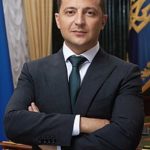
The address made by Volodymyr Zelenskyy, the President of Ukraine, on 28 December 2022.
Glory to Ukraine!
Dear Mr. Chairman, dear people’s deputies of our strong Ukraine, dear government officials!
Dear guests, dear attendees!
Dear Ukrainian warriors!
Ukrainian people!
Let’s talk about Ukraine today.
About how everyone has changed in these 10 months. And about how we changed the whole world.
About our strength.
All this time we were one. Just like now in this hall, when everyone answered – “Glory to the heroes”.
Glory to Ukraine!
Due to our unity, we have achieved what almost no one in the world, in the whole world, believed in. Almost no one except us.
Ukraine has become one of the global leaders.
Our national colors are today an international symbol of courage and indomitability of the whole world. In any country, on any continent, when they see blue and yellow, they know that it is about freedom. About the people who did not give up, who endured, who united the world. And who will win.
Thanks to Ukraine, the world believed that values give strength. This belief emerged following our struggle. The world became convinced that tyranny will lose. Following our faith. The world saw that freedom can be victorious. Following our achievements on the battlefield. And all our warriors.
It will definitely happen.
Ukraine will definitely win.
In 10 months of this year, we helped everyone. We helped the West find itself again, return to the global arena and feel how much the West prevails. No one in the West is afraid of Russia anymore and will never be.
We helped the European Union acquire real agency. We helped Europe feel like not several championships with teams of different levels, but one strong team that, together with the whole free world, is fighting for this important victory.
It was Ukraine that united the European Union. It turned out that it is possible!
And now Europe defends itself. Europe overcomes crises. And this is despite the colossal resources thrown by Russia to break our continent.
Everything that Russia tried to do against Europe did not work. Every Russian step was a mistake.
And our steps did work.
And for the first time in history, the European Union is helping to defend against such large-scale aggression. For the first time, a number of EU countries have changed their legislation and political rules and are now providing armed support to our state.
For the first time in history, some European countries have reconsidered the concept of neutrality and resist aggression together with us, together with Ukraine.
We helped Europe and most of the world feel that being neutral now is, pardon me, immoral. 143 states voted for the resolution of the UN General Assembly in support of the territorial integrity of Ukraine and the full implementation of the UN Charter.
This is a really striking example. This is the biggest number in 10 months and 8 years. And I thank everyone who worked for this result. Unprecedentedly actively. Congratulations! This is a great victory!
During this time after February 24, I alone had 850 international events. And this is how our entire diplomatic corps worked.
Now I want to thank everyone who worked just like that, just as powerfully. All our diplomats, all our government officials and, of course, those people’s deputies who helped the Ministry of Foreign Affairs and the Office build a pro-Ukrainian coalition in the world. I thank you!
And I am thankful to all the leaders and nations who help us defend our independence, protect international law! Thank you to the honorable ambassadors of the countries – partners of ours, who are now present here, in this distinguished hall!
Fellow Ukrainians!
Look at how global priorities have changed.
Most of the countries of the world are no longer interested in whether Russia will hear them. That’s no longer the case.
Now the world is really interested in what else to expect from Ukraine, what else Ukraine can give to Europe, what we can give to the world.
For many people in the world, it is now pride to have friends among Ukrainians. Remember how Ukrainians once wanted to have friends among foreigners.
And now we are truly one with the world – with the strongest, with the freest in the world.
We restore faith in values to millions of people in different countries. In the values that parents teach their children anywhere in the free world. We show that life should really depend on such values.
We actualize the meanings. Meanings that were, unfortunately, only barren letters of some international agreements, conventions and memoranda for a long time. They will work. And we show it.
We give each of our partners a unique and very important feeling and a historic opportunity – to be a winner together with Ukraine.
Thanks to Ukrainians, the world remembers what it means to be winners.
Next year we will only strengthen it.
This year, we obtained for Ukraine the status of a candidate for joining the European Union. But our achievement is not only in this. This is only part of the achievement. Ukraine has long deserved this status. We know. Even 20 years ago, we could have been there, with this status.
Now our achievement is much greater.
Ukraine cements.
It cements the European Union and the entire free world with the struggle for freedom and peace.
This is our main achievement in foreign policy for the past year.
We made it obvious to everyone that no union in Europe would be strong without Ukraine.
And that is why in all the countries of the European Union, a clear majority of citizens supported Ukraine and the idea of Ukraine joining the EU, and the majority sees us in the Alliance.
It is time to start negotiations on Ukraine’s membership in the European Union.
Fellow Ukrainians!
I want us now to thank all those who opened this opportunity and this path to us.
I want us to thank our warriors. Warriors!
Our warriors, exactly warriors, Ukrainian heroes, are not just servicemen. Not just soldiers and sailors, not just sergeants, not just officers and generals.
The warriors are the hope of millions of people for life. They are Europe’s hope for peace. They are the hope of the world that the time of empires cannot return.
Ukrainian warriors gain peace for us.
And they will gain it!
Glory to the Armed Forces of Ukraine! To the National Guard, our border guards, our intelligence, Security Service, Special Operations Forces, National Police! Glory to all our Defense and Security Forces! Glory to Ukraine!
Today, the Ukrainian warriors prove that greatness does not depend on the size of the state, the stockpile of missiles, or the ability to force someone into something.
Greatness depends on the strength of morale of those who defend their home, defend the freedom of their people.
The Ukrainian warriors ousted the invaders from around Kyiv, and this was the first turning point in the full-scale war. It showed the strength of our resistance.
The Ukrainian warriors freed Zmiinyi, and since then every occupier knows the only answer he will hear from the Ukrainians to any of his encroachments. This showed that nothing can stop Ukraine.
The number of flagships has somewhat decreased in the Black Sea, and one infamous bridge is increasingly operating for exit rather than entry. If it is operating, of course. And it showed what the future would be like. It will be Ukrainian.
The active actions of our Defense and Security Forces in the Kharkiv region turned many pages of old history. Perhaps, the Russian army did not know that it was capable of fleeing so quickly. Fleeing, leaving everything behind – positions, weapons, their soldiers and collaborators.
The occupiers fled, although they had an advantage in this direction – in the number of weapons, equipment and soldiers. But our warriors had – and have – another great advantage.
A more significant one.
The advantage in determination, the advantage of the strength of your land under your feet.
We reinforce this advantage of Ukrainian warriors with powerful weapons. We have such weapons for the first time.
HIMARS and Krab, Harpoon and NASAMS, Bayraktar and M777 howitzers, CAESAR, Bushmaster, IRIS-T, Crotale – I have named only a few of the dozens of types of the best weapons in the world, which our warriors already have or will have. I am grateful to our partners!
We have already managed to liberate more than one thousand eight hundred cities and villages of Ukraine from the Russian occupier.
And I thank all the states that help us overcome Russian tyranny right on the battlefield!
And let me remind you that a year ago it seemed impossible that our country would have Patriot air defense systems. Now we have such an agreement. I am grateful to our strategic partners!
This is a special sign of trust in Ukraine.
This is a true alliance with the United States of America. We have achieved this.
And I have a debt after my visit to the United States, which I want to pay off right now.
Captain Pavlo Cherniavskyi is now in this hall, commander of the HIMARS battery who was awarded the Cross of Combat Merit and who presented this award to President of the United States of America Biden.
It was an honor to carry out this special mission. But it also has a second part. In response, President Biden handed over a Command Coin – a special symbol from the President of the United States of America.
Mr. Captain! Pavlo!
I have to give this Command Coin to you now.
Once again, I want to thank President Biden, both parties of Congress and every American family for the historical support of Ukraine and our citizens. Thank you!
Fellow Ukrainians!
You see, dear Ukrainians, how the whole world helps us and how we get advanced weapons.
Rest assured, the time will come when the whole world will be equally interested in Ukrainian weapons brands.
We are capable of producing our missiles, our naval drones, we are already doing it, armored vehicles, aircraft and other types of weapons. We are already doing it. There is ours already.
It’s all ours. “Stugna”, “Vilkha”, “Neptune”, marine drone and others.
Let’s thank our domestic production.
Ukraine and the Ukrainian military-industrial complex was and will be one of the most powerful in Europe and the world, I am sure of that.
The intensity of hostilities, the depth of the evil that Russia has brought, the volume and brutality of the crimes of the occupiers on our Ukrainian land encourage not only us, but also the whole world to update defense standards, update security standards, and achieve justice.
And this applies to many areas.
From the production of projectiles and tactics on the battlefield to the creation of a new effective security architecture for Ukraine, for all of Europe and the world, new security guarantees.
From the launch of legal mechanisms to bring to justice all those guilty of aggression and to compensate at the expense of Russia for all the damage caused by this terror, to the reform of existing international organizations that are supposed to guarantee peace, guarantee international law and order, but are unable to do so now.
Ukraine is already among the leaders of the relevant processes.
And, by the way, it is in Ukraine that new NATO standards are defined by our heroic warriors. Standards we share with our allies today. Allies! Not just partners.
But in order to get to that time and those opportunities, we have to come to an agreement between ourselves now.
All of us in this hall, in Ukraine, within our people, our society.
The first point is unity. We have to cherish it despite any personal emotions, any personal interests.
Unity is what allows us now to strengthen society, strengthen our state, win together and change the negative trends of our centuries-old history.
The stronger the unity, the greater and faster our victory will be.
We must be equal in unity. Equal in unity. And this is now a challenge. A very important point.
No one at the front will understand those who, having any political weight or any position of authority, will try to return to the old life. Life before February 24.
And if someone tries to play against the independence of Ukraine – be it political, economic, or spiritual independence – our state will respond instantly and in a tough way.
There is no such gold for crosses or anything else in the world that could cover the moral rust from ties with a terrorist state.
And if someone from the political class of Ukraine thinks that when he skis down the mountain, he motivates the soldiers to climb out of the trenches and go on the offensive, this is a sign of madness, and there will be no such people in politics.
I urge everyone to leave their personal ambitions at home and work to protect our common home.
Work together with the state and in a way that is necessary to protect freedom and our people.
When such a brutal war is ongoing, it is not the time for personal political guerrilla activity somewhere in the rear, in the media, or even more so in the capitals of the countries that help us.
Please take my words as seriously as possible.
Ukraine is on its way to the victory that generations of our people have dreamed of. Now our children dream of it. Our parents and grandparents dreamed of it. All generations from the time of Bohdan to the national liberation struggle of the XX century.
We will get what we did not achieve before. We will.
And this is possible thanks to the fact that for the first time in several centuries we simultaneously have national unity, our own functioning state and the maximum unity of the world in supporting our beautiful Ukraine.
We will not let anyone “roll it back” to the old days. People will not allow it. The world will not allow it.
Our unity must be as strong as our warriors.
The second point is security.
Being one of the global leaders is not a status or an award. This is an ongoing process. The process of finding new opportunities for our state, new friends and alliances, new growth for the economy and for our society.
In the same way, the security of the state is not a state that you achieve once and for all, it is difficult work, it is a process.
Leadership and security always go hand in hand – by acquiring one, you work for the other.
Now, when the enemy has set himself the goal of destroying us, destroying our energy sector, we set ourselves the goal of becoming a leader in the transformation of our energy sector to counter any threats, any challenges – military, political, economic or even climatic.
We have to become – and we will become, as there is no other option – a leader in building modern green energy. This will allow us to create a decentralized energy system that cannot be destroyed by anything, any missile strikes.
Today – everyone can see – it is dangerous when cities depend on several large thermal or power plants. A modern city needs decentralized sources of energy.
Only green energy can really provide this.
Having a leadership position in such energy and developing our atomic generation, as well as hydrogen energy, we will be able to provide for the needs of Ukraine, and in peacetime – the needs of Europe.
And this will be a historic strengthening of Ukraine’s role in Europe. We can, and therefore must, become one of the guarantors of European energy security. And this is a task, a task for tomorrow.
And today we have to get through and we will definitely get through this winter.
Russian missile and, as they say, “shahed” strikes at our energy sector, at the energy supply of Ukrainians, is an obvious challenge not only to our state, by the way.
When terror strikes against the civilization of life, the world can stand up for both civilization and life.
We do everything for this.
I want to thank everyone who advocates for increasing international pressure on Russia for this terror!
And I thank all the countries and companies, international organizations and people who supply us with equipment and provide financial support to provide the people of Ukraine with light, heat and communication! Thank you!
One example – we will increase the number of Starlink terminals in Ukraine, which clearly prove the superiority of civilization over terror and barbarism, to more than thirty thousand in the near future.
We are already becoming – and we will become – a leader in the digital transformation of our state and society.
I think it is not necessary to dwell separately on what we have achieved in the field of digitization and communication.
I will only say that this is an achievement of such importance that allows us to make our country’s experience in digitization one of the tools of foreign policy.
We will complete the total digitization of all permits and public services in Ukraine. This is about anti-corruption and about the stability of the institutions of our state.
And what is important, by spreading such experience of transformation, successful experience in the world, we will provide Ukraine with new friends, new alliances, new political and economic opportunities.
In particular, this will concern the development of relations with African countries and other states of the Global South. This direction of foreign policy received a special priority.
We are already becoming – and we will become – the leader of global efforts for food security.
This year has shown that without a Ukrainian farmer, without Ukrainian agricultural exports, it is impossible to guarantee not only food, but also social security for dozens of countries in Africa, Asia and Europe. Our two initiatives – the Export Grain Initiative and the “Grain from Ukraine” program – have returned the world to vital stability.
More than fifteen million tons of food for export to more than forty countries of the world in just five months in conditions of full-scale war is our first grain initiative.
And I want to thank the UN Secretary-General, Mr. Guterres, I thank President of Türkiye Erdoğan for supporting the restoration of our agricultural exports.
Already more than thirty donor countries and almost two hundred million dollars – this is our second grain initiative, a humanitarian one. The European Union and Qatar, Türkiye and Japan, Norway and Korea, Canada and the United States of America – this is just the beginning of the global humanitarian corridor for countries facing the threat of famine.
Famine caused by Russia.
Even now, when it’s hard for us, we share our Ukrainian bread with those for whom it is even harder. I thank you for this – everyone who did it! This moral leadership of Ukraine and our partners is undeniable.
Ukraine must always look for ways to show leadership, to attract other leaders, and every such success will strengthen our security, strengthen the external situation of our state.
But also the internal one.
Our export initiatives and, in general, the expansion of opportunities for freight transportation through the territory of the European Union, Türkiye – allowed us to save millions of jobs for Ukrainians.
Dear attendees!
I am asking you now to thank all our transporters, all our port workers, all those who work on the railways, in every other industry that ensures the movement of goods for Ukrainians!
Another important security element.
Business is also the protection of Ukraine now. Taxes are also security now.
This year we had no delays – or almost no delays – with the salaries of our beloved teachers and doctors. Pensions were indexed, as provided by the legislation of Ukraine. In the de-occupied territory, payments were made as soon as stabilization measures were completed there. More than one trillion two hundred billion hryvnias are allocated to defense for the year.
Of course, the financial assistance of partners and other involved funds played an important role, that’s true.
But.
But there is a but. We must remember that the financing of the Armed Forces of Ukraine is primarily an internal resource from Ukrainian taxes, customs duties, bonds and other similar sources.
And every unpaid hryvnia of taxes is money taken from our military. This is the fact.
Of course, the existing tax system is convenient neither for those who pay taxes nor for those who collect taxes. It is also not convenient for those of our people who receive salaries and pensions from these taxes.
But it is extremely important for us to reach a national agreement on this issue.
Now I want to thank everyone who keeps their businesses running, who keeps jobs so that people can provide for themselves and their families, who pays taxes. Gratitude to all of you!
I want to emphasize this again and want you all to know: very important international aid goes to important social benefits. And the entire resource for the salaries of the military is paid by the citizens of Ukraine.
The third point is justice.
The creation of the Tribunal for the Crime of Aggression is an integral part of the policy of our state. I am sure that the Tribunal will work.
The International compensation mechanism, which we are currently building, will also work.
At the same time, we must cooperate as much as possible with our international partners, with the International Criminal Court.
That is, all elements of international and national justice will be used to bring to justice the Russian murderers and torturers, all those who planned, started and are carrying out aggression against the people of Ukraine.
No crime committed by the occupiers in Ukraine can go unpunished.
And no matter how much resources and time it takes, accountability for the occupiers must be unavoidable.
And it will be so!
For everything that was done against Ukraine, that was done against Ukrainians from 2014 and from February 24.
Can the state alone ensure this? No.
And I want to thank our partners, in particular, the Netherlands, for their principled leadership in this work; all our investigators, experts, prosecutors, all our judges who are already working on this, and all journalists and public activists who joined justice. Thank you!
I am also thankful to those who help us find and block the assets of the terrorist state and its associated persons in foreign jurisdictions, who promote important legislative initiatives in other states to confiscate these assets of the Russian Federation, and also advocate this in the media!
We will do everything to bring home all our people who are currently in Russian captivity.
The goal of restoring the territorial integrity of Ukraine always goes hand in hand for us with another goal of freeing all our people who are held in Russian captivity or in prisons, as well as all those who were forcibly deported from our land.
After February 24, our team managed to free 1,456 people from Russian captivity.
This is significant. I am happy to see everyone who returns to Ukraine.
But there is much more work ahead.
However, I have no doubt that we will fulfill it together, in a united manner.
Reconstruction of Ukraine after hostilities is another component of justice.
It is already clear that this will be the biggest economic project of our time in Europe. The scope of what needs to be done is obvious to everyone and requires a separate enumeration now.
I will mention very briefly only the key principles.
The entire territory of our state needs reconstruction of those infrastructure, energy, social sphere and other objects that do not meet modern security requirements.
We have to raise from the ruins the territory entered by the Russian invaders after February 24.
In the same way, we will restore the normality of life in the territory of Donbas and Crimea, which were illegally occupied in 2014 and have been brought to the point of disaster by the occupiers over the time that has passed.
Now it is still difficult to estimate the required amount of resources.
But it can be said for sure that we should prioritize the restoration of those companies that were in Ukraine or that came to Ukraine during the war. Which left the Russian market during the war.
And this is fair.
Who supported us in the most difficult moments, who were with us when Ukraine was fighting for life, who worked, who paid taxes, who volunteered, who helped our indomitability… We need to find a format to give such business more opportunities in such important projects, the projects of a new, rebuilt Ukraine.
Ukrainian business, American, French, Polish – any that we see – here and now.
And I ask you, dear people’s deputies, together with us, together with the Office, together with the Government to develop such a legislative framework. And this will also, I think, encourage international business to enter Ukraine now – preparing for the future, for the victory.
And one more thing.
Just as we must restore territorial integrity, we must also restore social integrity.
Millions of our people who have become displaced persons, who have found shelter abroad, should not become refugees.
I thank all the countries, I thank all the nations of Europe and the world who help our people!
But we must preserve them as a part of Ukrainian society. We have to ensure their return. And this includes various components of work.
Security guarantees, economic growth.
Reconstruction and further integration of our state with the European Union and other leading subjects of the free world.
Protection of human rights, equalization of social and personal freedoms in Ukraine and in advanced countries of stay of our migrants.
Creating a modern veteran policy. It’s very important!
Creation of a modern rehabilitation system in Ukraine for those who were put in the most difficult position by the war. So that our society has this feeling that no one is needless among us – this is the task… That we care about all Ukrainians, that we can help each and every one of them.
A country that supports every its citizen is a country that you want to return to.
We have to make sure that when the world sees the blue and yellow Ukrainian flag of ours, they will know that it is about freedom and about people who have a strong home and who will always be helped – no matter what happens to them.
Because we are all Ukrainians. And that’s enough.
I thank you for your attention!
Glory to all who fight and work for our country! Glory to all who help us protect our independence, our freedom! Glory to all of you, our people!
Glory to Ukraine!
I wish all of us victory and only victory in the coming year. Nothing else is needed! Happy upcoming holidays. Thank you all for this difficult year! We thank our warriors, our people of beautiful Ukraine!
Glory to Ukraine!