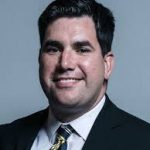
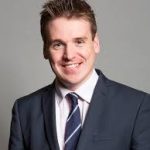
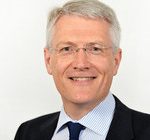
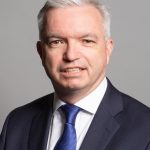
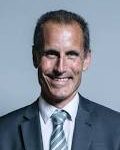
The parliamentary question asked by Bill Esterson, the Labour MP for Sefton Central, in the House of Commons on 9 January 2023.
Bill Esterson (Sefton Central) (Lab)
What assessment he has made of the potential impact of changes in the level of (a) interest rates and (b) inflation on regional inequality.
Gavin Newlands (Paisley and Renfrewshire North) (SNP)
What recent assessment he has made of the impact of increases in inflation on the adequacy of levelling-up funding.
The Parliamentary Under-Secretary of State for Levelling Up, Housing and Communities (Dehenna Davison)
I wish you a very happy new year, Mr Speaker.
The recent autumn statement protected the most vulnerable by uprating benefits and pensions with inflation, strengthening the energy price guarantee, and providing cost of living payments for those who are most in need. My Department is continuing to analyse and respond to the challenges that inflation presents to the delivery of our levelling-up programmes and the levelling-up agenda, working closely with the places affected. We are continuing to explore what other support can be offered to mitigate against those inflationary pressures.
Bill Esterson
Happy new year, Mr Speaker.
According to the Department, construction of major projects has stalled because industry prices are well above the headline rates of inflation. As the Minister knows, UK inflation is projected to be the highest in the G7 this year, as it was last year. In the north-west, the Government have cut £206 million from the much-needed shared prosperity fund, so will the Minister confirm that her Department will make up the shortfall in the funds to help the construction industry play its part in rebuilding the economy and communities across the country?
Dehenna Davison
I am grateful to the hon. Gentleman for bringing attention to the shared prosperity fund, which is just one of the many measures that this Government have put in place to help to promote investment in local areas right across the country. One point that I draw his attention to is that, in recognising the challenging landscape that we face at the moment, our Department is making an additional £65 million of funding available to successful applicants to ensure that they can take on board consultants, train up extra staff and increase their capacity so that they are responding to the challenges that they face.
Gavin Newlands
Happy new year, Mr Speaker. It is great to see the former Prime Minister, the right hon. Member for Uxbridge and South Ruislip (Boris Johnson), take a break from his career break to come and join us today—he is very welcome.
The UK is already the second most unequal G7 country, with inflation higher in poorer regions—including many parts of the west of Scotland—than in London and the south-east of England. That is set to become even worse as a consequence of the Tory cost of living crisis. Local initiatives such as the Clyde green freeport are designed to boost economic prospects in the west of Scotland, but inequality is still a major impediment to economic growth. How can the Tories fix that inequality when they largely caused it in the first place and have spent the last decade making it worse?
Dehenna Davison
I am grateful to the hon. Gentleman for again drawing attention to the green freeports programme, which will provide brilliant opportunities for residents in Scotland; we hope to make an announcement on that incredibly soon. I draw his attention to the incredible UK Government funds going into Scotland: the UK shared prosperity fund, the levelling-up fund and the community ownership fund—all things that Scottish people can access thanks to the UK Government improving opportunities for Scottish people.
Sara Britcliffe (Hyndburn) (Con)
Happy new year, Mr Speaker.
In Hyndburn and Haslingden, we welcome the shared prosperity funding we have received, which will support places such as Haslingden market. But after significant stakeholder engagement, we now eagerly await the outcome of our levelling-up fund bid. Can the Minister confirm that the results will be known before the end of the month?
Dehenna Davison
I am grateful to my hon. Friend, who is an excellent champion for her community—this is not the first time she has bent my ear on the levelling-up fund, and I am sure it will not be the last. I can confirm that we will announce the full outcome of the levelling-up fund by the end of January.
Sir Jake Berry (Rossendale and Darwen) (Con)
In Darwen, our town deal is absolutely crucial as part of our levelling-up plan. However, because of inflation, not only is time a wasting asset, but so is the value of that deal. Will the Minister meet me and representatives of Blackburn with Darwen Borough Council to discuss how we can speed up the release of the Darwen town deal funds?
Dehenna Davison
Yes, I absolutely will.
Mr Speaker
I call the shadow Minister.
Sarah Owen (Luton North) (Lab)
Thank you, Mr Speaker, and happy new year.
Conservative failure to tackle regional inequality is just one in a long list of let-downs. Thirteen years of Tory rule, and parts of the UK have plunged further and further into poverty. Local authorities spent over £27 million applying for levelling-up bids, only for many to lose out—places such as Barnsley and Knowsley, which have been denied multiple bids with little transparency, leaving many colleagues in the dark and resorting to questioning Ministers about local bids, with no answers at all. Will the Minister please clarify the lack of transparency and the financial costs of these bids to cash-strapped councils, particularly during the cost of living crisis?
Dehenna Davison
I thank the shadow Minister for her question. We are keen to get the levelling-up funding announced by the end of the month, with additional funding to what we were originally forecast to put out. We had £1.7 billion in the pot; we are now going to be divvying out £2.1 billion to local areas that really need it. It is the Conservative Government who deliver for the people across this country.