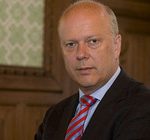
The speech made by Wes Streeting, the Shadow Secretary of State for Health and Social Care, in the House of Commons on 9 January 2023.
Happy new year to you, Mr Speaker, and to the rest of the House. I thank the Secretary of State for Health and Social Care for advance sight of his statement.
This winter has seen patients waiting hours on end for an ambulance, A&E departments overflowing with patients, and dedicated NHS staff driven to industrial action—in the case of nurses, for the first time in their history—because the Government have failed to listen and to lead. I notice that the Secretary of State did not talk about the abysmal failure of his talks with nurses and paramedic representatives today. Let me say to him: every cancelled operation and delayed appointment, and the ambulance disruption due to strikes, could have been avoided if he had just agreed to talk to NHS staff about pay. Today, he could have opened serious talks to avert further strikes. Instead, he offered nurses and paramedics 45 minutes of lip service. If patients suffer further strike action, they will know exactly who to blame.
Of course, the Prime Minister has already shown that he is not interested in solving problems; he resorts to the smokescreen of parliamentary game playing by bringing in legislation to sack NHS staff for going on strike. I ask the Secretary of State, in his sacking NHS staff Bill, how many nurses is he planning to sack? How many paramedics will he sack? How many junior doctors will he sack? The Government have the audacity to ask NHS staff for minimum service levels, but when will we see minimum service levels from Government Ministers and the entire Government?
After arriving at the Derriford Hospital in Plymouth, an 83-year-old dementia patient waited in the back of an ambulance outside A&E for 26 hours before being admitted. That was on 23 December, when no strikes were taking place; the Secretary of State should listen. The patient’s family found him in urine-soaked sheets, and since arriving in hospital, he has contracted flu. His daughter said of the hospital staff:
“They’re polite, they’re caring, and they are trying their best. It’s just impossible for them to do the work they want to do.”
Let me say what the Health Secretary and Prime Minister refuse to admit: the NHS is in crisis—the biggest crisis in its history. That is clear to the staff who have been slogging their guts out over Christmas and to everyone who uses it as a patient; the only people who cannot see it are the Government.
What has been announced today is yet another sticking plaster when the NHS needs fundamental reform. The front door to the NHS is blocked, the exit door is blocked, and there are simply not enough staff. Where is the Conservatives’ plan to fix primary care, so that patients can see the GP they want in the manner they choose? After 13 years of Conservative government, they do not have one. Where is the plan to recruit the care workers needed to care for patients once they have been discharged from hospitals, and to pay them fairly so that we do not lose them to other employers? After 13 years of Conservative government, they do not have one. Where is the plan to train the doctors, nurses and health professionals the NHS needs? After 13 years of Conservative government, they do not have one.
Well, we do. The Secretary of State is welcome to nick Labour’s plan to abolish non-dom tax status and train 7,500 more doctors and 10,000 more nurses and midwives every year; to double the number of district nurses; and to provide 5,000 more health visitors—a plan so good that the Chancellor admitted that the Conservative Government should nick it. After 13 years of mismanagement, underfunding and costly top-down reorganisations, however, all the Conservatives have to offer the NHS is a meeting and a photo op in Downing Street.
The collapse of the health service this winter could be seen coming a mile away—health and social care leaders were warning about it last summer—so why is the Secretary of State announcing these measures in the middle of January? Why have care homes and local authorities been made to wait until this month for the delayed discharge fund to reach them? It is simply too little, too late for many patients.
In fact, this Government are so last minute that, after announcing this plan last night, they found an extra £50 million and sent out another press release. I know most of us are happy to find a spare fiver lying around the house that we did not know was there, but this Prime Minister seems to have 50 million quid stuck down the back of the sofa. What on earth is going on? No wonder they cannot get money to the frontline: the left hand does not know what the right hand is doing.
It is intolerable that patients who are fit and ready to leave hospital are then stuck there for months because the care they need is not available in the community. They are not bed blockers, and they are not an inconvenience to be dropped off at a hotel and forgotten about. They need rehabilitation at home, rather than a bed in a care facility. Vulnerable patients deserve proper support suited to their needs, or they will fall ill again and go back to hospital. What about all these beds the NHS is procuring, and what about the capacity that families need? I will tell hon. Members what will happen: they will not get the care, and they will be coming right back through the front door of A&E, with the cycle of broken systems repeating itself again and again. Where is the choice and control for patients and their families who may not want to be discharged to a hotel?
I am afraid that, after 13 years, this just is not good enough. The Prime Minister might not rely on the NHS, but millions of ordinary people do. They are sick and they are tired of waiting. There have been 13 years of Conservative Government now—13 years—and look at what they have done to the NHS. Did the Health Secretary listen to himself as he described the situation in hospitals of people waiting on chairs for discharge, the trolleys in the corridors and people waiting longer than ever? Whose fault is it? It is not that of the NHS staff he is threatening to sack, but of the Conservative Ministers who have made disaster after disaster. After 13 years of Conservative Government it is clear that the longer they are in power, the longer patients will wait. Only Labour can give the NHS the fresh start and fresh ideas it needs.
Steve Barclay
The hon. Member talks about a fresh start, but even his own shadow Cabinet colleagues do not seem to agree with his plans. His own deputy leader seemed to distance herself from his plans to use the private sector, and his own shadow Chancellor seems to have distanced herself from his plans for GPs. Perhaps he can share with the House exactly how much his unfunded plans for GPs will cost, because the chief executive of the Nuffield Trust has said:
“It will cost a fortune”,
and is
“based on an out of date view”.
The point is that he has no plans that his deputy and his own colleagues support, and he has not set out how he would fund those plans in a way that does not divert resource from other parts of the NHS.
The hon. Member talked about pressure, yet there was no mention of the fact that the NHS in Wales, the NHS in Scotland and, indeed, health systems across the globe have faced significant pressure as a result of the combination of covid spikes and flu spikes, particularly in recent weeks. This is not a phenomenon limited to England and the NHS; this is a pressure that has been reflected internationally, including for the NHS in Wales.
The hon. Member refers to talks with the trade unions, and it is right that we are engaging with the trade unions. I was pleased to meet the staff council of the NHS today. Indeed, the chair of the NHS staff council, Sara Gorton, said the discussions had made “progress”, notwithstanding one trade union leader who was not in the talks giving an interview outside the Department to comment on what had and had not been said in those talks. We want to work constructively with the trade unions on that.
The hon. Member says that we are only announcing measures today, but again, he seems to have written those comments before he got a copy of the statement. The integrated care boards took operational effect in July last year—[Interruption.] Because they are scaling up, we are putting control centres in place and we are integrating health and social care. In the autumn statement, we announced £500 million for discharge, a further £600 million next year and £1 billion the year after, recognising that there is significant pressure, and that is ramping up. NHS England set out its operational plans in the summer, including the 100-day discharge sprint. That, for example, set out the greater use of virtual wards, which is new technology being rolled out at scale. It also announced the extra 7,000 community beds. Indeed, we also set out the additional measures in our plan for patients.
What is clear when we have a sevenfold increase in flu in a month—50 cases admitted last year compared with 5,100 this year—is that there is a combination of a surge in demand on top of the existing high-level position, and the surge in demand corresponds with a constraint on supply as staff absences also increase because of flu, so during the Christmas period community services are more constrained. Those two things together have created significant pressure on our emergency departments. That is why in the engagement I have had with health leaders the two key messages they gave to me were the importance of getting flow into hospitals, which is constrained by the high bed occupancy—that is why getting people out of hospital is so central to relieving pressure—and, within the emergency departments specifically, the need to decompress those services with same-day emergency treatment and having short stay post-emergency departments. That is a better way to decompress those emergency departments—through the triaging and bringing other clinical specialties closer to the front door. We have listened to the NHS frontline and those were the two key requests made to me, alongside other issues such as care quality inspections and how to make them more flexible. However, alongside those immediate pressures, we need to recognise that we had pressures last summer during the heatwave and we had pressures in the autumn, which is why we have announced a wider set of measures today.
So we have listened and we have acted; we have taken measures to deal with the immediate pressure, but we have also set out how we will build further capacity that will go through into the autumn. Alongside that, we have signed deals, for example with Moderna and BioNTech, and we are bringing forward the life science investment so that that has a better impact on pressures on the frontline.