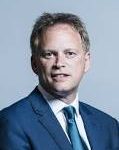
The closing statement made by Dominic Johnson, Baron Johnson of Lainston, in the House of Lords on 9 January 2023.
I thank noble Lords for taking part in today’s debate and for the contributions from all sides of the House: it has been absolutely fascinating. I am extremely grateful also that the Australian and New Zealand high commissioners made themselves available to watch part of the debate: I am grateful to them for their support, morally, in the Galleries. I also extend warm gratitude to the IAC and say how much I appreciate its involvement both before this debate and, I very much hope, in the next few weeks, as we go through Committee and Report.
I join the long line of people congratulating my noble friend Lord Swire on his first-class maiden speech. He was certainly a better speaker and politician than he was a soldier, by the sounds of things, and I am very glad to have him behind me, as a result. Both he and the noble Lords, Lord Marland and Lord Howell, raised the Commonwealth. I totally agree with the importance we place on our links with the Commonwealth and the opportunities that our post-Brexit vision brings us in relation to the Commonwealth. I reassure my noble friends that the Government will and are making the most of the Commonwealth within our trade agenda. We have done 33 trade deals with Commonwealth members and we have a newly launched developing countries trading scheme, which I know my noble friend Lord Swire has discussed with me in the past. Total trade in goods and services between the UK and the Commonwealth was £121 billion in 2021, which I am delighted to report is an increase of 12% on 2020.
I will answer some of the questions that have been raised and I will try to do so in as much detail as possible given the time available to me. I think this is a very important debate.
The first point I would like to turn to is the question of why we are presenting this Bill to you today given that, in theory, there is a Procurement Bill that is being debated in the other place that will cancel this Bill. Well, actually, that is not completely true. All the provisions relating to Scotland are not in the Procurement Bill, so if we are to have consistency then we need to have this Bill relating to Scotland to follow through on top of the Procurement Bill, even when the Procurement Bill cancels this Bill—if that does not sound too bizarre.
There is also an important point on timing. The Procurement Bill, rather than this procurement Bill called the Trade (Australia and New Zealand) Bill, will take many months to get on to our statute books. Following that, there will be a further six-month waiting period before the provisions in the Procurement Bill come into effect; that could be a year, or a year and a half, or it could be longer than that. Who would want to stand in the way of this opportunity to allow our traders and our citizens to benefit from this free trade deal when we are able to present to you today a very uncontentious tidying-up Bill around procurement that, as I say, will have to follow through in any event on the Scottish measures? The noble Lords, Lord Kerr and Lord Purvis, my noble friend Lord Lansley and the noble Baroness, Lady Liddell, all covered this point and I hope I have answered the reason for the logic of this Bill and the importance of it.
I will also cover the issues surrounding negative versus affirmative statutory instruments. It is important to point out that, if you read the Bill, you will see that the powers therein are very specific—they are not intended to relate to procurement beyond the Australia and New Zealand trade Bill. The measures that we are considering that will be brought through as negative statutory instruments will be very procedural; they relate to things like the changing of names of government departments, so to assume—forgive my newness to this place and to Parliament in general—that we need to go through an affirmative process would be extremely cumbersome, time-consuming and really not relevant in this at all. As far as I am aware, the majority of the measures in this procurement Bill are effectively all being employed by procuring agents today anyway, so I am sure this brings much needed consistency, but in terms of changes it would not be significant. As a result, to have an impact assessment around this Bill would be unnecessary because the impact is to ensure that we can do our free trade agreement; it is not necessarily on the procurement processes that we are reforming. In fact, all the reforms seem eminently logical, and we should do them even if we were not doing a free trade deal.
I was criticised for my tone. I am sorry if people think I am too optimistic about what free trade agreements can give us, but I am excited by what we have before us. I am excited by our post-Brexit vision of Britain, I am excited about the wealth that we can create for our citizens, I am excited about the opportunities that we are going to have for our businesses, and I am excited about enhancing our cultural, societal and citizenly relations with our sister nations in Australia and New Zealand. So, yes, I am excited, and I am frankly amazed that people are not more excited than me.
Yes, every trade deal has give and take and it does revolve around change; I am aware of that and we should have a debate about it. I think what my noble friends Lord Hannan of Kingsclere, Lord Frost and Lord Udny-Lister, said about what great opportunities these are for us was right. I am a bit frustrated to some extent that we seem to think we are at a standing start with Australia and New Zealand when we are not and that this is the end of the road for our trade deals. We already trade with Australia and New Zealand; this is an improvement or enhancement; this is future-proofing our relationship and building it stronger. If we did not have this agreement, we could not deal with and look at in detail all the issues that people have purported to raise, like animal welfare, agriculture and the environment.
We can provide the leadership through this process that we could not do without it. That is why it is so wonderful. It is everything that noble Lords opposite should want—the opportunity to encourage trade and wealth creation while showing leadership in our values. That is what this free trade agreement does. We talk about the engagement and scrutiny process. I have great sympathy with that. I am in two minds about the level of scrutiny that is useful when negotiating a free trade deal. It is useful for our counterparts to understand what our citizenry feels about certain important issues, and I know that the Australians and New Zealanders—certainly the Australians—are effective in engaging with their industry base.
I was involved as a board director of the DIT in encouraging greater engagement with industry in the negotiating process and, frankly, we could continue to do more. I am not averse to suggestions. This is an iterative process and is the first of many deals, I hope. This is the simplest and most straightforward deal that we could have presented to the House, but we want to learn as much as possible from it. Therefore, while I would not look to change the process around the constitutional review that this House and the other place bring to bear on treaties in a specific and formalised sense, I am aware of and indeed desire greater engagement with business and the body politic. We otherwise end up with what we have today, a debate about any of the potential negatives of the deal, rather than people rejoicing in the huge opportunities that it presents to us.
I am, to some extent, frustrated that not enough businesses have come out to say how much they are going to benefit from these deals when, in fact, they have spoken to me directly about the huge opportunities that there are. I want to try to build a bow-wave around our free trade agenda. I therefore take to heart the views that noble Lords have expressed today about engagement and scrutiny. As I say, while the processes should not change, there could certainly be more forward footedness in engagement. That is a good process, which helps to spread the power of these agreements and makes them more successful.
I should make one important point. We are looking at these free trade agreements in the wrong way—through the wrong end of the telescope. We are used to trade agreements whereby one does a deal—some 1950s steel-type treaty on tariff allowances or whatever, such as allowing certain amounts of steel into the economy over a certain number of years—and that is it; one is stuck. The reason why the Ponsonby rule came into action was that Parliament was concerned that secret deals were being made that we could not get out of and that we did not know anything about.
This is different. There has been a huge degree of scrutiny and discussion around these agreements—and this is not the end but just the beginning. They are structured to enable us to have intensive debate around each section, whereby all the key points that we have been discussing have committee and dialogue structures built into their mechanisms, to allow us to change and evolve these treaties. Scrutiny starts on day one. We will be able to make changes to these treaties if they do not suit us in the way in which they were intended to suit our economy and people. That is important. This is completely different from how conceptual treaties worked in the past. I congratulated the negotiators because flexibilities are built into this process to allow us not to be fearful of the outcomes of the treaties, because we can change them. That is at the core of the Government’s negotiating strategy and is why I am so enthusiastic about these treaties. Not only do they give us so much and allow us to lead the world in our value offerings but they are entirely flexible. If they do not work as we intend—it is hard to forecast everything—they can be altered through mutual agreement. That is enormously powerful.
As to my final point on the impact assessment, we have a review at two and five years and of course I should be delighted to engage further with the House at those points. That is important; we have to assess the impact of these treaties because we want to learn how we can improve them. I very much support that process.
I conclude on the scrutiny point by saying that I am sorry if noble Lords think that I am too optimistic about what these trade deals offer us. However, the reality is that, because of the way in which they have been structured, one has a high degree of scrutiny over the future of these trade deals and the Government have been forward footed in making sure that Parliament was part of the process, as it was always intended to be.
I will cover three other points, one of which is the environment. These FTAs include environment chapters which recognise our right to regulate to meet net zero and reaffirm our commitments to the Paris Agreement. This is very important: at no point and in no area do these FTAs derogate our ability to control our own destiny. In fact, by having the negotiations with Australia, particularly before the Government changed, we were able to bring to bear on them the pressure to accord with our climate change ambitions. That is amazing. If the Greens want change in this area politically, this is a very powerful way of doing it—and we have done it. We were the first major economy to pass a legislative target to reach net zero by 2050. That was done by the Conservative Government, not by any other party. We lead the world in this area, and these trade agreements reflect that. In my view, this is another matter for us to rejoice in.
The deal commits the UK and Australia to work together on climate change; that is very important. In other areas that have come up in the past—not necessarily in this debate—people have raised concerns about deforestation with regards to the FTA. I have mentioned my gratitude to the TAC for the work it has done in this whole process. It reports that, on a net basis, Australia has been reforesting rather than deforesting. Nothing in this agreement stops the Government taking domestic action on our side to deliver on our commitments to meet our climate objectives. I know there is some head shaking opposite me, but I can only go on the facts; I am slightly beholden by that.
There is a view that Australia and New Zealand are far away, which they are. I like the idea that we are starting at the other end of the world and then working backwards. If you look at overall greenhouse gas emissions associated with UK-based production—largely unchanged from the agreement—you will see that there is a possibility of some increase in transport-related emissions associated with increased trade flows, but, according to the TAC, these impacts are likely to be negligible. This idea that we are going to have huge greenhouse emissions on account of transport increases is simply not being predicted. As my noble friend Lord Hannan pointed out, having a New Zealand lamb chop on your plate in the House of Lords restaurant is better for the environment than having one that comes from another part of the UK. Why can we not ask other parties to celebrate where we see environmental benefits from these trade deals? The assumption is that all trade deals are somehow negative for the environment; how can that possibly be the case? As my noble friend Lord Hannan said—I back up his point; it came from a Board of Trade report—the environmental impact of the production of New Zealand lamb is lower than ours in many cases, even if you include transport costs.
My final point is very important: this agreement provides huge opportunities to boost trade in environmental goods which can speed the development and uptake of environmentally friendly production techniques. I think the noble Baroness, Lady Liddell, also raised this. Again, what are we trying to do with Australia and New Zealand? We are trying to sell them our technology on net zero, where we are global leaders, thus generating wealth for this country and improving our environment. If anyone thinks my tone is too rejoicing at the astonishing benefits that, factually, we bring through this agreement, I apologise again.
I am very sensitive to the issue of agriculture, and I do not want there to be any sense of triumphalism about this trade agreement in that sense. The fact is that there is change and people are affected. However, it is important to note, first, that this agreement will have relatively limited negative impacts on certain agricultural sectors of the economy. That really is a fact, and I will go through that in a moment. The positives are also significant. We export more agricultural produce, in its broadest sense, to Australia than we import from it, so the gain is in our favour. We believe that the amount of meats which are competitive for us being imported from Australia into the UK will increase by very small amounts.
As I have repeated, and repeat again, this is not an agreement starting from scratch. We already import New Zealand and Australian meats, and they are not using the quotas that we already have. Yes, we are liberalising our trade, and I think it is right to do that, but the fears that are being created among the body politic and the press are entirely unreasonable and, if I may say so, slightly disingenuous. There is no reason to fear this trade deal. If we did not have it, it would not make any difference in a negative sense on farmers. That is important for people to understand. This is actually an opportunity, because it unlocks—
Lord Purvis of Tweed (LD)
Is the Minister saying that the impact assessment is wrong about the 5% and 3% reductions? The Minister has just said at the Dispatch Box that, if this agreement were not in place, there would be no negative impact. However, the impact assessment says that this agreement is bringing a negative impact. Will the Minister commit to revising the impact assessment before we reach Committee, because either he has just misled the House or the impact assessment is wrong? They cannot both be right.
Lord Johnson of Lainston (Con)
I am grateful for that point and would be happy to clarify. I will certainly work closely with the noble Lord in Committee.
My point is that Australian imports already operate below the existing quotas. Even if we said that we were not going to have a trade deal with Australia and decided that we did not want to go ahead with a deal that I think will be hugely beneficial, we already have a quota system where the Australians are importing less. If we go to a new arrangement where, over 10 or 15 years, we gradually liberalise our agricultural imports, the very fact that we are increasing that higher level does not necessitate that we are going to put ourselves in a more disadvantaged position. I am not trying to suggest that the impact assessments are not correct. I have been sensitive about that; I said at the beginning that there are impacts and there will be change. We must be sensitive to that. However, I am saying that the claims that we are going to have a significant tsunami of Australian beef coming into the UK simply do not make logical sense when we are already importing less than the quotas imply. It is important to mention that.
We have also touched on another relevant point. There are production differences between Australia and New Zealand; my noble friend Lord Hannan of Kingsclere mentioned this earlier. It is important that we take advantage of that fact. I will not be too much longer but let me quote the TAC, which states that
“different production practices between countries are a function of different climatic, geographical, agronomic, environmental, economic and cultural conditions. Australian cattle and sheep live their lives outdoors, mainly on very large stations, which is different in the UK. It can never be assumed that what is normal in one country needs to be normal in another … Moreover, the international trading system, of which free trade agreements form a part, is predicated upon the understanding that countries should be able to benefit from advantages which they enjoy over their trading partners. Trade law, in principle, prohibits countries from restricting imports of products simply based on how they are made, whether this is by using their more abundant sunshine, land, educational skills or lower labour costs.”
This is important. We are trying to do a trade deal where we have, enjoy and appreciate comparative advantage while at the same time being extremely firm on the controls that we will put in place to make sure that, if there is a significant increase in imports into the UK, we can restrict those imports and ensure that our farmers are protected. Following the 15-year point, we will still have WTO restrictions that we can fall back on.
Baroness Young of Old Scone (Lab)
Before the Minister finishes, I hope that he will give way for a microsecond. During my contribution, I asked whether he could let us have some detail of the systems that are in place to keep under surveillance the environmental, animal welfare and other standards on which he is giving us assurances, including how effectively they are operating. Will he agree to do that before we reach Committee?
Lord Johnson of Lainston (Con)
I thank the noble Baroness. I am about to go on to that exact chapter in making my final point on standards, which are important. I take this issue to heart.
It is absolutely essential for everyone to realise that nothing has really changed in terms of our standards. In fact, we believe that, in some instances, we have increased our ability to protect ourselves. I want to quote from some of the important chapters in the Trade and Agriculture Commission’s report, if noble Lords will indulge me; I know that my noble friend Lady McIntosh wanted me to touch on these matters as well. The report states:
“Importantly, all of these trade liberalisation obligations are fully covered by general exceptions, taken from WTO law, ensuring that the UK can regulate to protect animal or plant life or health … In addition, the FTA contains several rules in its environment and animal welfare chapters that expand on these rights to regulate, which gives the UK more leeway to override its trade liberalisation obligations—
that goes to the whole friction between these points—
“than it would have under WTO law.”
This is very important. We are ironclad in our ability to control our standards.
The concept of mulesing was raised. The TCA sees an increase in imports of mutton from mulesed sheep as negligible, and the FTA does not restrict the UK’s WTO rights to prohibit imports of products from Australia produced using the practice of mulesing without pain relief. I was told that 90% of all mulesing is done with pain relief. Yes, there are different practices and clearly, mulesing is not relevant in the UK because of flystrike and other conditions, but we have the ability to protect ourselves and we still have the ability to ensure that the food and goods we import conform to our standards.
Also, in terms of animal welfare, these chapters are ground-breaking. It is worth using those words, which are appropriate. We have driven change there, and it reflects our values. New Zealand and Australia have a very strong commitment to raising animal welfare standards. It is also very important to point out that we still have complete control over pesticides and other such matters. Our approval process involves audit and assessment of a country’s system. Products entering the UK must be accompanied by certificates and a percentage are subject to physical checks to ensure that standards are maintained. We have worked very closely with the Food Standards Agency and Food Standards Scotland. This is very important and—
Baroness McIntosh of Pickering (Con)
My noble friend will be aware of a briefing from the Food Standards Agency, which is concerned about the increase in what is required of it. He might like to consider that.
On a slightly separate point, my noble friend said that the purpose of the Bill is that the procurement provisions will apply in Scotland. My understanding is that the Scottish Government have withheld consent to the Procurement Bill so I am not quite sure how, constitutionally, we could not be seen to be circumventing the will of the Scottish Government and the Scottish people in this regard.
Lord Johnson of Lainston (Con)
I thank my noble friend for both her points, the first of which is heard. The assumption is that these agencies can police our borders. Clearly, if there are different requirements on account of this trade deal—although I cannot see why—certainly, we should look into that. We covered her second point in the debate. These are concurrent powers. We have consulted consistently and continually with all the devolved nations, and we are not requiring a legislative consent Motion to run those concurrent powers.
I thank all noble Lords for their contributions to today’s debate. I reiterate my willingness to meet noble Lords and discuss this Bill further. Those who have spent time with me over the last month know that I am fully available to ensure that this Bill is a success. I am transparent and open to you and want to ensure that we learn in this iterative process to create even more effective trade deals into the future with different economies. This is not a “one size fits all” process. Just because we have an agreement with Australia and New Zealand does not mean that this agreement will be cut and pasted across to another country. Every country and economy is different and should be treated as such.
Underpinning this Bill are two extraordinarily far-sighted trade deals between our sister nations, resulting in an estimated £10 billion increase in trade with Australia and £1.7 billion increase in trade with New Zealand. There have been discussions about how we get to those figures. Professor Minford suggested a £60 billion benefit for trade with Australia; our government forecasts gave us a figure of £10 billion. I am happy to discuss with the noble Lord, Lord Purvis, how to assess these trade deals more accurately. The impact assessment and the look back will help us in that regard.
As I said to my noble friend Lady McIntosh, we have engaged with the devolved Governments at every stage of the process and have also allowed for greater parliamentary scrutiny than is prescribed in statute. We have shone the torch of the Trade and Agriculture Commission on these issues, and we have built two-year and five-year assessment breaks into the agreement. If we decide that we do not like these agreements, we can cancel them within a six-month notice period. These deals demonstrate our values and leadership on standards—that is very important and has come up in the debate today—how we operate with developing nations, labour rights, gender equality, the treatment of animals and the environment. These deals absolutely protect our agriculture industry and our standards in line with our values, while ensuring that we bring essential benefit to our consumers.
These trade agreements are designed to be flexible, with a whole range of structures established to ensure proper dialogue and recourse. As I have said, they are not some post-war steel treaties. They are, thanks to our leadership and position as the new driver of our unique free trade mission, modern, future-proofed concepts which allow our nations to grow together in commerce and trade.
These deals are being made between us and two allied Commonwealth nations, as has also been said, with the same Head of State and with those who died for our values in two world wars. We are their brothers, sisters, fathers, mothers and cousins. We already live and travel and own properties, businesses and farms in each other’s countries.
As came up earlier, our levelling-up agenda plays an important part in how we will work together in the future. I ask Members of the House to talk to some of the firms and people positively affected by these deals. Your Lordships will see the palpable excitement, as I have shown, from chapters such as the ground-breaking one on SMEs welcomed by the FSB. All that is within a consumer protection section that will ensure that our consumers benefit from greater choice and lower prices in our shops.
Contrary to critics’ view, the Government have thought out our trade strategy well. We want to ensure that our free trade agenda is indeed the framework that launches us on the path to give our citizens the choices and power to reach the ends of the earth. We should be proud of the decisions we have recently taken over our trading destiny and focus on creating a new world order, where we sit at the very centre of a series of geostrategic relationships and prosper from this network of trade and investment, shared culture and values, and build the wealth that gives us security and ultimately control over our destinies, which is at the very heart of our free, liberal and democratic-minded nation.
The Government have taken the first major step on our journey. We are proud of the modern and comprehensive deals that we have negotiated, and I look forward to the passage of the Bill through your Lordships’ House.
Bill read a second time.