Category: Speeches

  • Charlotte Nichols – 2023 Speech on Holocaust Memorial Day

    Charlotte Nichols – 2023 Speech on Holocaust Memorial Day

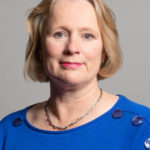
    The speech made by Charlotte Nichols, the Labour MP for Warrington North, in the House of Commons on 26 January 2023.

    It is an honour to rise today to commemorate Holocaust Memorial Day, both personally as a proud Jewish parliamentarian, and on behalf of my constituents in Warrington North, many of whom have made Warrington their home after fleeing the horrors of the holocaust and subsequent post-war genocides in Rwanda, Darfur, Cambodia and Bosnia, which we also commemorate today.

    This Shabbat, Jews in synagogues around the world will be reading Parashat Bo, a Torah portion described by the former Chief Rabbi, Lord Sacks of blessed memory, as

    “among the most revolutionary in the entire history of ideas”

    and

    “one of the most counterintuitive passages in all of religious literature.”

    In the passage—Exodus 10 to 13:16—Moses is addressing the Israelites before their release from Egypt. But his address is not about the freedom they will soon see, or the society they will have to build, but—repeatedly—about education and the duty of parents to educate their children about what they experienced in Egypt. The passage reads:

    “Vayomer Moshe el-ha’am zachor et-hayom hazeh asher yetzatem mi Mitzrayim”.

    That is:

    “And Moses said to the nation: Remember this day, when you went out from Egypt”.

    What does “zachor”—to remember—mean? The Jewish concept of remembering is not passive, but active. We tell the Exodus story to our children. We re-experience it and understand it through the elaborate rituals of the Pesach Seder. We reflect on it in our recitation of the central daily prayer, the Shema, in the laying of tefillin—a physical ritual with which to commemorate liberation from Egypt daily—and in the mezuzah, which we hammer to our doorframes. To truly remember is to act. That is as true for the story of the Exodus as it is for the genocides that we come together to commemorate today.

    The theme of this year’s Holocaust Memorial Day is “ordinary people”. We reflect on the fact that its victims were ordinary people, each with their own inherent human dignity, loves, hopes, fears and aspirations—not nameless, faceless statistics, which our inability to fully comprehend the enormity of these atrocities can reduce them to. We reflect that those who committed these genocides were ordinary people, that this capacity for evil is indeed in all of us, and it is a choice, just as courage is a choice. And we reflect on the indifference of ordinary people who stood by while it happened, which was necessary for that kind of industrial-scale murder and the mechanics of genocide to be sustained. There are, of course, stories of bravery, with the kind of heroics that we see commemorated at Yad Vashem by the “righteous among the nations”, but what makes these people extraordinary is the very fact that the vast majority of people—the ordinary people—did not care enough to stop genocide taking place.

    However, to reflect on the holocaust, and on the genocides in Rwanda, Bosnia, Darfur and Cambodia, is not in and of itself true remembrance. This week I had the honour of sharing a platform with the holocaust survivor Joan Salter MBE, who has been turning reflection into action through her advocacy for contemporary refugees and her work with Freedom from Torture. We cannot commend historical actions such as the Kindertransport in debates like this and not condemn the inflammatory and hateful rhetoric used in this place and in the media about those fleeing persecution today, or about the LGBT+ and Gypsy, Roma and Traveller communities.

    I was also honoured, in my capacity as an ambassador for the charity Remembering Srebrenica, to sit with members of the Movement of Mothers of Srebrenica and Žepa Enclaves. As they spoke to me about the trauma of their sons, brothers and fathers murdered in the Bosnian genocide, they also told me about their fight for justice. Many of the bodies have still never been recovered. One mother told me that she felt “lucky”, as they had found one bone of their youngest son to bury. Many of the mothers do not even have that, as mass burial pits were excavated and moved to evade detection, which prolonged the agony of those left behind. One mother spoke at the International Criminal Tribunal for the Former Yugoslavia to plead for clemency for the soldier who she knew had murdered her family, for he had recently had a son and she did not want another child growing up without a father.

    We cannot remember without justice, and a full and true accounting of all the decisions before, during and after a genocide, to learn, to change, and to ensure that “never again” is not an empty maxim, but a series of actions to which we can all commit ourselves. We know of cases—such as that of the “butcher of Slomin”, Stanislaw Chrzanowski—in which war criminals have evaded justice because of active collusion by the British police, the Crown Prosecution Service and the security services, who protected them and allowed them to live among the rest of us as “ordinary people”. It is time for an inquiry: the Board of Deputies of British Jews has called for one, but the Government have so far ignored its call. How can we have confidence that these things will not happen in future—perhaps with Russian war criminals—if we cannot account for how and why they happened before?

    This is why education, and the education of children in particular, is so very important—from Moses and the Israelites in Parashat Bo to our contemporary society. The holocaust is rapidly fading from living memory, and so too, one day, will the genocides that followed it. The testimony of survivors, which the sterling work of the Holocaust Memorial Day Trust and the Holocaust Educational Trust allows so many to access and experience, is an important part of our collective memory, but the survivors cannot be expected to bear this responsibility themselves and to bear this burden alone. While Elie Wiesel was right when he said that if the holocaust was forgotten

    “the dead will be killed a second time”,

    we remember not for the sake of the past, but for the sake of the future.

    The message from today, and from this week’s sedra from Exodus, must be this: through education we can aspire towards liberation, solidarity and community, and build empathy and understanding as we march together with all people on the path out of Egypt and refuse to go back. We observe, we remember, and, inspired by our histories and our faiths, ordinary people across all our communities will act. It is in education that a good society is won or lost.

  • Amanda Spielman – 2023 Speech at the Big Conversation

    Amanda Spielman – 2023 Speech at the Big Conversation

    The speech made by Amanda Spielman, the Chief Inspector of Ofsted, on 28 January 2023.

    Hello, and welcome to this year’s Ofsted Big Conversation.

    It’s my first Big Conversation speech since the pandemic, and I’m delighted to be back and talking to you all again.

    Thank you all for coming and for contributing to this hugely valuable event. And thanks to the organisers for all your efforts in bringing it together.

    But I also want to thank you for what you do the other 364 days a year. Because I know it’s been an exceptionally difficult year.

    We published our Annual Report last month, and in it we recognised some of the pressures you’ve been facing.

    The effects of missing early education

    We reported on the longer-term effects of the pandemic including the effects that missing early education has had on some children.

    We now have a clearer picture of where children have fallen behind, and of the difficulties you all face in helping them to catch up.

    Some children’s speech and language are delayed, as well as their wider development. These children often take longer to settle into a nursery or with a childminder.

    And it means some children are less prepared for Reception when they start school.

    But we’ve also seen great examples of the work you are all doing to help children catch up.

    These include creating more opportunities for children to interact. You’ve been rebalancing your curriculums towards language and communication.

    You’re reading to children more, and emphasising social skills in day-to-day routines.

    You’re giving children lots of chances to mix with each other. They’re simple changes, but they can have a significant impact.

    But taking these steps, does need stable and skilled staff. We know that’s also something that many of you are struggling with.

    Our Annual Report noted that it is still difficult to recruit and retain qualified staff. And of course, this can lead to a lack of continuity and consistency for children.

    So far, staffing problems have not affected the national profile of inspection judgements, but of course it is something we are very aware of.

    Apprenticeships

    Apprenticeships could be part of the solution to recruiting enough qualified early years staff. But unfortunately fewer young people are even beginning these programmes at the moment.

    The number of people starting relevant apprenticeships fell from just over 27,000 six years ago, to just over 16,000 last year. We hope this trend can be reversed.

    It is also important to use apprentices in the right way. They can be a huge help, and on-the-job training is a big part of their professional development.

    But we have also seen cases of employers not always releasing apprentices for off-the-job training. This may seem like a short-term fix, but it can delay or disrupt their training and cause problems down the road.

    We’ve also seen some providers using apprentices to replace skilled, experienced practitioners. This can’t be a long-term solution and it isn’t fair to the apprentices, or to children.

    We’re awaiting the results of the consultation on updating and improving the Level 3 criteria for Early Years Educators. I know many of you will have responded to the consultation.

    It’s important that these criteria capture the right things and are brought up to date to reflect current thinking and research.

    It’s so important that people coming into the sector get off to the right start, and this means equipping them with the knowledge they need. We hope this update process can be completed quickly.

    Against this difficult background, it is all the more impressive that so many childminders, nurseries, and pre-schools are rated good or outstanding.

    But we also know that we cannot be complacent. You don’t need me to tell you that children only get one childhood and deserve the best start.

    Best start in life

    And that is why our Ofsted strategy makes a priority of giving children ‘the best start in life.’

    We are really emphasising the first 5 years and especially language and communication.

    We know that many children do well in the early years.

    But last year over a third didn’t reach a good level of development by the age of 5. And that figure is up a lot since before the pandemic.

    This is clearly concerning on its own. But it’s even more concerning, when you consider how this may set them back throughout their education and later life.

    You might have seen that we have now published the first of our early years research reviews.

    It points out that, in early education, children explore the building blocks of the knowledge, in that they will go on to study at school. (And when I talk about knowledge, I do mean in its fullest sense, not disconnected facts.)

    Obviously, preparing children for school is not the only purpose of early education. But it is an important one.

    Later this year we will be publishing more parts of this research review.

    They will explore all 7 areas of learning in the Early years foundation stage (EYFS), with a particular focus on language and communication.

    Language and communication

    Spoken language is such an important channel for learning in the early years, before children can become independent learners through reading at school.

    Language and communication are the most vital areas of learning for the early years, and the hardest to catch up on later. Without them, all other learning becomes more difficult.

    We understand that the EYFS goes beyond and into reception, but we want these reviews to be as useful as possible to you, and have designed them with you, the preschool sector, in mind.

    In developing and evaluating our approach, we consider a range of research and viewpoints. And we look further afield and consider what other countries do.

    This could be the subject of a speech all on its own, especially as no 2 countries have the same approach. But there’s always something to learn when looking at other countries’ arrangements.

    Just as in England, nearly every country has one strand of thinking about childcare and another about early education. In some countries one is more prevalent than the other. Not that anyone is wrong or right, but there are many approaches.

    But almost all countries agree that they want children to be competent readers by about age 7.

    In terms of learning to read and write, English is at the more difficult end of the spectrum, because it has more complex and overlapping relationships between letters and sounds. This complicated code means that literacy takes longer to build in English than in many other languages.

    For you, this reinforces the importance of developing language and communication in the preschool years.

    It sets children up well for starting to learn to read in reception. You can all play a major part in that.

    So, what should you do? I know that might sound like a daunting question. But it can also be remarkably simple. Sticking to the basics will serve you well and serve your children well.

    After all, learning gets lost if you try to overcomplicate it. This applies just as much to young children as to older ones.

    Working out what level of learning children can cope with is important. It’s not about coming up with more exciting and elaborate activities. It’s about working out what you want children to learn and then thinking about the best way for them to learn it. This is something you do every day of course.

    However, there is a balance.

    In the jargon, some cognitive load is required – but cognitive overload should be avoided.

    An approach of little and often, of planning your teaching in small chunks, will help children learn now and set them up for future learning.

    Learning does require effort. But that becomes easier as the young child gathers more knowledge.

    Early years curriculum

    Our research review identified some features that high quality early years education may have.

    It should start with a carefully considered curriculum. I know that word, ‘curriculum’, can be misunderstood or make people think of something more complicated than is actually needed.

    An early years curriculum should consider what children need to learn over time as well as the end goals.

    It should be coherently planned and well sequenced.

    It does not need to include formal subjects, but it should prepare children for that. And it should enable all children to make progress.

    Once you have decided what you want children to learn, you need to think about the best way to teach it.

    Again, the word ‘teaching’ can be so misunderstood. We’re not talking about chalk and blackboards.

    In the education inspection framework (EIF) handbook we define teaching like this:

    Teaching is a broad term that covers the many different ways in which adults help young people learn.

    In the early years, that should be a balance of play, guided activities, and direct teaching.

    Much of children’s learning comes through your interactions with them during planned and child-initiated play and activities.

    But of course, sometimes it’s right to show or tell children what to do through explicit teaching.

    For example, when they are learning something for the first time such as tying their shoelaces or using scissors.

    Judging what, when and how to teach is a key part of your role. Experimenting at the water tray is a great way for children to learn about floating and sinking.

    But nobody expects a child to learn how to use a microwave by discovery. That would lead to broken microwaves and ruined food.

    And we don’t expect children to discover the names of shapes, colours or numbers for themselves. We teach those things explicitly.

    But sometimes we don’t do the same with the wider world and the things around children.

    It is important to consider a child’s interests and work with them to make your teaching engaging.

    For example, if they ask for the name of a flower, naming it and then pointing out the parts of a plant could be a great way to add to their knowledge and vocabulary.

    They will never soak up new words and new ideas faster than when they’re with you, so it’s a wonderful window of opportunity.

    But it is also important to not just to be led by children’s interests and what they ask about. If you do, you may miss essentials.

    So again, there’s a balance to be found, and that’s a big part of your role. You should encourage children to take part in all kinds of play, not just those that fit with their previous experience and preferences.

    Teaching doesn’t mean treating your children as though they are already in school, but it should include making sure that they are ready for that environment by the time they leave you.

    That includes making sure they can communicate and engage with other children and adults.

    It can also include practical skills such as preparation for writing. You don’t need to teach letter formation, but you could start with a good, relaxed pencil grip when drawing.

    It can also be the daily things that you may not consider teaching.

    Even very young children enjoy simple routines and structures, feeling that they know how things work, and that they can do things.

    Activities like laying and setting a table or tidy up time can of course instil good habits and routines for later in life and build social skills.

    And they can also make children feel good, feel that they are contributing, and feel pride in doing something for other people.

    Little routines throughout the day like putting their bags in cubbies, hanging their coats on pegs, and saying please and thank you, also stand children in good stead for when they start school.

    Many of you already do these things so well and they’re so important.

    These are just some examples.

    But of course, finding how and when to teach most effectively will always rely on your professional judgement.

    Setting the right ambitions and plans in your curriculum will make sure you are on the right path.

    I hope you enjoy the rest of today’s programme – I know my colleagues Wendy Ratcliff and Kirsty Godfrey are looking forward to it!

    Thank you again for joining the Big Conversation, and for all that you do.

  • Stuart Andrew – 2023 Speech at Westminster Insight Conference on the Future of Women’s Sport

    Stuart Andrew – 2023 Speech at Westminster Insight Conference on the Future of Women’s Sport

    The speech made by Stuart Andrew, the Sports Minister, at The Institution of Structural Engineers in London on 30 January 2023.

    Thank you for inviting me to speak to you today and giving me the opportunity to outline my priorities for women’s sport.

    It is great to see so many of you here which reflects the genuine interest and enthusiasm surrounding this important area.

    I am delighted to have taken on the role of Minister for Sport at such an exciting time and I look forward to making real progress on issues that I personally feel very passionately about, such as equality and diversity.

    The Lionesses win at the Women’s Euros last Summer firmly shone the spotlight on women’s sport.

    The success of England’s Red Roses reaching the final at the Women’s Rugby World Cup and the success of many female athletes at the Commonwealth Games, including Eilish McColgan’s outstanding performance in the 10,000m to name just one example, have also built on that momentum.

    I feel privileged to have witnessed first hand some amazing achievements in women’s sport since I have been in post, such as Great Britain reaching the semi finals of the Billie Jean King Cup for the first time in 41 years and most recently seeing Beth Mead, the Lionesses and Sarina Wiegman being honoured at the BBC Sports Personality of the Year Awards.

    There is no doubt that the media profile of women’s sport is continuing to rise too with events such as the US Open, the Women’s Euros, the Women’s Rugby World Cup and the Women’s World Cup being made available to a wider audience on free to air television.

    The Rugby League World Cup, which was hosted across England last year, put the Men’s, Women’s and Wheelchair tournaments on an equal platform – hosting all three tournaments at the same time and all players receiving equal participation fees.

    I want to build on this momentum ensuring that women’s sport continues to get the media attention it deserves and in turn inspire the next generation.

    Audiences for women’s sport are also growing, for example, a record 23.3m UK viewers tuned in to watch the Women’s Euros final on BBC platforms and in November the Women’s Rugby World Cup Final was watched in the UK by 1.7m at 6.30am.

    Figures published by Women’s Sport Trust in December showed that 43 million people watched three minutes or more of women’s sport in 2022, and a total of 325 million hours viewed.

    This is in stark contrast to 2012, when London hosted the Olympic and Paralympic Games, where there were 20.1 million people watching women’s sport and 19.1 million hours viewed.

    This is fantastic and shows that there is a real appetite for women’s sport, something we should continue to capitalise on.

    Landmark sponsorship deals, such as Barclays’ investment of over £30 million in the Women’s Super League, have injected money into the system and allowed certain sports to professionalise.

    Record breaking and innovative sponsorship deals are also being struck such as Amazon Prime Video re-investing a seven figure sum from sharing the broadcast of the US Open into boosting girls’ participation in tennis.

    This is all good news but we recognise that a number of challenges remain.

    In terms of participation, men are still more likely to be active compared with women and the latest Active Lives Children data released in December shows that boys are more likely to be active than girls.

    It is clear that more work needs to be done to continue to break down those barriers that prevent women and girls from being active such as fear of judgement, safety concerns and lack of time.

    We want to ensure that everybody in this country has the opportunity to play and enjoy sport and that includes ensuring more women and girls have the opportunity to get active in a way which suits them.

    We also want to continue to raise the profile of women’s sport and encourage more commercial investment into women’s sport.

    It’s fantastic to see elite women’s sport getting better coverage but there is more to do to drive up audience figures tuning in to watch women’s sport and to build the case for further investment in women’s sport.

    On the subject of governance, I am pleased that the strengthened Code for Sports Governance requires all National Governing Bodies (NGBs) in receipt of public funding to agree a diversity and inclusion action plan with Sport England and UK Sport.

    This is a welcome step forward but we need to keep pushing – to make sure women are fairly represented on the boards of our sporting organisations.

    We also want to make the most of opportunities that come our way.

    Building on the success of the Women’s Euros we will continue to invest in grassroots sport to bring on the next generation of Lionesses and work with the Department for Education to ensure girls have equal access to sports.

    We are also working with the Football Foundation and FA to name sites after the Lionesses – in towns and cities which shaped their careers.

    The Women’s World Cup in the summer will again shine a light on women’s football and we want to be ready to embrace the renewed interest that this will inevitably generate.

    The UK is also hosting the International Working Group on Women and Sport until 2026. This is a great opportunity not only to share the fantastic work we are doing but to learn from other countries too.

    In addition, we are refreshing our overarching sport strategy at DCMS and it’s clear that women’s sport needs to be a central part of this.

    We are also working with UK Sport to identify future events we could support including the 2025 Women’s Rugby World Cup and the 2026 Women’s T20 World Cup which I am pleased to say will both be held in England.

    And following the work by Tracey Crouch and her fan led review of football governance, we are carrying out an in-depth review of domestic women’s football led by Karen Carney to examine issues affecting the game at elite and grassroots level.

    We need to maintain an emphasis on improving participation, employment opportunities, commercial investment and visibility in the media. The Review of Women’s Football will support the continued growth and development of the women’s game, to ensure it has a strong and sustainable future.

    This is a defining period for women’s football, and this thorough review will be at the heart of that.

    I am also keen to engage further on transgender participation in sport and the Secretary of State and I will host a further meeting with sports shortly to understand what work national governing bodies are doing in this area.

    We want to ensure that everybody in this country has the opportunity to play and enjoy sport, but when it comes to competitive women’s sport, the Government believes that fairness has to be the primary consideration.

    So in conclusion, we want to continue to build on recent successes such as the Women’s Euros and the good work already being done.

    As I said at the beginning, this is an area that I care about passionately, and inclusion in sport is a priority for me. We also need to look ahead and be prepared to take advantage of opportunities and find ways to overcome challenges.

    I look forward to working with you to ensure that all aspects of women’s sport continue to flourish, and to hearing your ideas for how we can make Britain a great place for women’s sport.

    Thank you.

  • Fiona Bruce – 2023 Speech on Holocaust Memorial Day

    Fiona Bruce – 2023 Speech on Holocaust Memorial Day

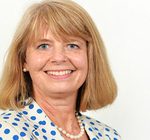
    The speech made by Fiona Bruce, the Conservative MP for Congleton, in the House of Commons on 26 January 2023.

    This week, holocaust survivor Manfred Goldberg spoke movingly in the Foreign, Commonwealth and Development Office about the “hell on earth” he experienced under the Nazis. The tragedy is that there have been a catalogue of horrors since the Nazis perpetrated their genocidal acts. In the ’70s there was Pol Pot’s terror in Cambodia. In the ’80s there was Saddam Hussein’s desecration of Kurds in Iraq. In the ’90s there were attempts to systematically exterminate Tutsis in Rwanda, while Bosnian non-Serbs suffered a similar fate.

    There have been atrocities inflicted across the world, including in Asia, the middle east, Africa and Europe, and on victims from a range of religions and races—Muslim, Buddhist, Jewish, Christian and others. Still, in the 21st century, we see further atrocities where elements of the definition of genocide are present, including targeting of the Rohingya Muslims in Myanmar, of the Uyghur Muslims in Xinjiang, and of the Hazaras in Afghanistan. In my work as the Prime Minister’s special envoy for freedom of religion or belief, I have heard many survivors speak of unspeakable suffering. They relay the same message as survivors of the holocaust: we must not only call out evil, but act to prevent it from happening again.

    One way we can act is by formally recognising the genocide against the Yazidis and Christians in Iraq and Syria by Daesh, as the lower house in Germany did just last week. Recognition of genocide is one of the most significant things we can do as part of the UK’s atrocity prevention strategy. Another is to identify where there is risk of genocide. We must equip our diplomatic teams across the world to spot the early warning signs where a nation is at risk of genocide. The UK can be a leader among our allies and partners in setting up early warning mechanisms, and in using our diplomatic reach—a reach that is still much regarded internationally, as I know from my work as the Prime Minister’s special envoy—to resolve disputes and tensions where we are able to do so.

    The International Development Committee’s recent report, “From Srebrenica to a safer tomorrow: Preventing future mass atrocities around the world” sets out a road map for the Government to follow. I welcome the Government’s positive response, not least the development of the mass atrocity prevention hub, and look forward to further progress to fulfil our manifesto commitment to implement the Truro review fully, including recommendation 7, which states:

    “Ensure that there are mechanisms in place to facilitate an immediate response to atrocity crimes, including genocide, through activities such as setting up early warning mechanisms to identify countries at risk of atrocities, diplomacy to help de-escalate tensions and resolve disputes, and developing support to help with upstream prevention work.”

    I highlight Nigeria as one country with close links to the UK where I fear the risk of genocide is growing. Around 90 hon. Members attended the Open Doors 2023 world watch list launch here last week and heard how Nigeria is now the sixth highest country for persecution of Christians; indeed, it would be top if the list were based just on the number of recorded deaths. We must condemn in the strongest possible terms the ongoing attacks against Christians and moderate Muslims by Islamic extremists in that country, and call out the Nigerian Government’s repeated denial of any such targeted religious persecution and their failure to act adequately to address it and protect the targeted.

    Finally, we must do more work on educating the next generation about the importance of freedom of religion or belief, so that “never again” becomes a reality for their generation in a way that, sadly, as I have said, it has not for ours. This is the ultimate upstream prevention work, and it is vital. One of the main takeaways from last year’s ministerial conference on freedom of religion or belief, which I was privileged to co-host, was the inspiration of the development of education toolkits for teachers to use in primary schools, to give even the youngest children an understanding of freedom of religion or belief and of the vital importance—

    John Cryer (Leyton and Wanstead) (Lab)

    Will the hon. Member give way?

    Fiona Bruce

    Certainly.

    John Cryer

    In the context of what the hon. Member is saying about education, will she join me in congratulating the HET, the CST and other organisations on educating people and also on combating antisemitism, including, sadly, in my own party and in other institutions?

    Fiona Bruce

    I thank the hon. Member for his intervention. I will indeed congratulate the Holocaust Educational Trust later in my speech.

    It is vital that we teach even the youngest children about the importance of not discriminating against others on account of their beliefs, just as they understand so well the importance of not discriminating against others on account of disability.

    I have the privilege of chairing the International Religious Freedom or Belief Alliance, a growing group of 42 countries whose Governments, like ours, have formally committed to protecting and promoting freedom of religion or belief around the world. It is our aspiration to see the toolkit that I mentioned, when it is developed, used in schools across our 42 countries. I am proud that the toolkit is currently being piloted in the UK, including in a school in my constituency.

    As the years go by and our brave, inspirational holocaust survivors, with their testimonies, diminish in number, we must ensure that their voice is sustained, not least with young ambassadors. I pay tribute to the Holocaust Educational Trust for the excellent work that it does in that regard.

    The alliance I chair is promoting the connection of young freedom of religion or belief ambassadors around the world. We are working towards a 2023 virtual global conference engaging young FORB ambassadors, and we want to involve three groups of young people: first, young people from democratic societies like our own who have not personally experienced persecution but care about the issue and want to do more; secondly, young people in the diaspora here in the UK with ties in countries such as Nigeria and direct concerns to relay; and, thirdly and critically, young people who live in countries where there is persecution and are experiencing it themselves—places such as Myanmar, where there is already strong interest from young people, and Hong Kong, where oppression on account of religion is an increasing concern.

    As we plan this virtual global conference, I would welcome contacts from colleagues, all-party parliamentary group country chairs and others with young people from across the world who may be interested in engaging with the event late in 2023. This is a way in which we here can act. Indeed, we can all do something to make “never again” a reality for the next generation, and it is so heartening that, in this Parliament, elected Members right across the political spectrum are determined to do so.

  • Christian Wakeford – 2023 Speech on Holocaust Memorial Day

    Christian Wakeford – 2023 Speech on Holocaust Memorial Day

    The speech made by Christian Wakeford, the Labour MP for Bury South, in the House of Commons on 26 January 2023.

    I would like to thank my right hon. Friend the Member for Barking (Dame Margaret Hodge) and my friend the right hon. Member for Bromsgrove (Sajid Javid) for their contributions to today’s debate, as well as all those who have spoken before me. In particular, I want to thank my hon. Friend the Member for Stretford and Urmston (Andrew Western), who gave a magnificent maiden speech—although I disagree with his choice of football club.

    I would like to thank and pay tribute to the Holocaust Educational Trust, as many Members have, and the Antisemitism Policy Trust for their vital work. I also thank the Community Security Trust, in particular Amanda Bomsytyk and Jonny Newton, for continuing to provide protection to the Jewish community not just in my constituency, but across the country. I thank The Fed in my constituency for their “My Voice” project, which publishes the life stories of holocaust survivors and refugees who have made Britain their home. I hope to raise that in Parliament later this year, and I hope for the support of colleagues. On a final note of thanks, I pay particular tribute to Karen Pollock and Danny Stone, whose counsel is widely sought and respected across this entire Chamber, and indeed across both Houses. Their impact on me and my education should not be underestimated.

    We are all ordinary people who today can be extraordinary in our actions. We can all make decisions to challenge prejudice, stand up to hatred and speak out against identity-based persecution. That is the message of the Holocaust Memorial Day Trust this year, and it was the story of so many during the holocaust. Genocide is facilitated by ordinary people. Ordinary people turn a blind eye, believe propaganda and join murderous regimes. Those who are persecuted, oppressed and murdered in genocide are not persecuted because of crimes they have committed, but simply because they are ordinary people who belong to a particular group. This is true of genocide the world over, but particularly in the case of the holocaust.

    During the rise of Nazi Germany, ordinary people had choices. Many ordinary people were in positions of power, using Jewish people to advance their disgusting ideology and taking advantage of the economic circumstances following the first world war. Many of those in power believed this ideology, but many others were ordinary people obeying orders given to them by evil people. Ordinary people were, for instance, policemen involved in rounding up victims, secretaries typing the records of genocide, and dentists and doctors carrying out evil selections.

    Those who were persecuted were ordinary people too, whether Jews, Soviet civilians and prisoners of war, disabled people, Romani people, gays or many, many others. Like us, they all had families, hopes and dreams, and a want and need to get on in life, find opportunities, be happy, and to give and feel love. They wanted to read and write, to contribute and maybe even hold high office, to represent their families and communities and feel free—things we all take for granted today.

    Ordinary people also stand by as genocide happens around them. They do not partake, but they also do not speak out, preferring to turn a blind eye and pretend they have not seen it. They were keen not to get involved in case they were next, watching as Jews were snatched from their homes, with anxiety heightened and thoughts swirling around their head: “I hope they don’t come for me next.” What the holocaust showed is that they will. Never in this Chamber or out there must we walk on the other side when it comes to racism and injustice. As a famous civil rights activist once said:

    “We do not need allies more devoted to order than to justice”.

    I imagine Jews around the world would agree that antisemitism is the oldest racism and that it needs all of us here today to lead from the front and stand against those who wish to fan the flames of hatred and division to enhance their racist agenda.

    We should all follow in the footsteps of the ordinary people who did not stand by—the righteous among the nations. Many of them will say that they are not extraordinary people, despite having done extraordinary things. They will say that they did not show superhuman bravery; they just did what was right. When Sir Nicholas Winton rescued 669 children from Czechoslovakia and brought them to the UK, thereby sparing them from the horrors of the holocaust, he simply said:

    “Why are you making such a big deal out of it? I just helped a little; I was in the right place at the right time.”

    I disagree with Sir Nicholas. He saved innocent children from a life of unimaginable trauma, torture and almost certain death, and gave them a life that at the time seemed impossible. I am sure we all agree that there can be no greater gift than the saving of a precious life.

    We stand on the shoulders of giants in this Chamber today. Every single one of us, as leaders in our communities and constituencies, should wake up every day channelling the spirit of Sir Nicholas; doing the right thing, making the right choices, helping those who need it and standing tall in their corner when they need us. Leadership is about ordinary people rejecting division and hate. Leadership is about showing bravery in the face of adversity. Leadership is about choosing virtue over evil.

    Earlier this week I visited the Terezín ghetto in Prague with the European Jewish Association. While there I heard at first hand from Gidon Lev, a survivor of Terezín, about how it was the site of the original propaganda from the Nazis. When media gathered to the ghetto, the Nazis were keen to stress that while, yes, it may be a ghetto, people were actually being looked after, and children were being educated and fed. Of course, this was all a front for the despicable treatment that was really happening to Jewish people. It was only following the work of the Red Cross that what was truly happening was uncovered.

    Fake news is something we must stand shoulder to shoulder against with our Jewish brothers and sisters, from the rapid development of artificial intelligence, the digital doctoring of pictures and videos of the time, to the holocaust denial spreading like wildfire across social media. Ordinary people are still duped by fake news about the number of people murdered in the holocaust. Decades-old theories—in some cases, centuries-old—that Jewish people are somehow puppeteers of the world’s events, that they run our media, music industry and our sport and are somehow plotting against us, continue to put Jewish lives at risk.

    We must never lose sight of the story of the holocaust and how ordinary people in power systemically dehumanised Jewish people so that other ordinary people could murder them on a scale that is simply hard to fathom. In short, we must always remember, and never forget. It must never happen again—not to Jews, not to anybody, not on our watch.

  • Stephen Crabb – 2023 Speech on Holocaust Memorial Day

    Stephen Crabb – 2023 Speech on Holocaust Memorial Day

    The speech made by Stephen Crabb, the Conservative MP for Preseli Pembrokeshire, in the House of Commons on 26 January 2023.

    It is a pleasure to follow the new hon. Member for Stretford and Urmston (Andrew Western). I congratulate him on an excellent maiden speech, delivered in the very best traditions of the House. We wish him all the very best for his time serving his constituents.

    It is a privilege to speak in this debate to mark Holocaust Memorial Day, a date that has become hugely important in our national life and in our parliamentary calendar. I congratulate my right hon. Friend the Member for Bromsgrove (Sajid Javid) on leading the debate and on his outstanding contribution, which struck exactly the right tone as we gather to remember the victims of the holocaust. I also want to put on record my thanks to him for the work he did in a succession of ministerial roles. He was consistently excellent and consistently reliable in fighting antisemitism. I think of his work in support of the Community Security Trust. I think of the work he did to ensure that Hezbollah was proscribed in its entirety. He has been a consistent champion for this cause and it is fitting that he opened the debate.

    I also want to put on record my thanks and pay tribute to the tireless work of the Holocaust Educational Trust, the Holocaust Memorial Day Trust and other organisations that work in this area, as well as the remarkable survivors who are prepared to recall the tragic and unimaginable experiences that they endured to ensure that the horrors of the past are not repeated and that lessons continue to be learnt.

    Holocaust Memorial Day is a moment to remember again the 6 million Jewish men, women and children murdered by the Nazis and their collaborators, and all those who were murdered by the Nazis, including Roma and Sinti people, gay men, disabled people, political opponents and many others. We use this day to remember all those killed in subsequent genocides in Cambodia, Rwanda, Bosnia and Darfur.

    As Members have highlighted, the theme for this year’s Holocaust Memorial Day is ordinary people. That is a thought-provoking theme when we think about some of the survivors we have met in this House and the stories we have learnt about what people endured. There is nothing ordinary about that period of history; nothing ordinary about the scale of the suffering or the depth of the evil visited on Jewish people at the time. As we have heard, what really comes out from listening to the testimony of the survivors and listening the stories about family members, as described by the right hon. Member for Barking (Dame Margaret Hodge) in her contribution, is that these were all ordinary individuals from ordinary families living in ordinary communities.

    It was an honour to be at the Foreign, Commonwealth and Development Office on Tuesday to hear the very moving testimony given by Manfred Goldberg, who spoke incredibly powerfully about the events of that period. He spoke about his family, his mother and father, and he spoke in detail about what he personally endured. What came across in his speech was his extraordinary spirit, his extraordinary capacity to hope and to survive, and his capacity, like so many of the survivors we have met, to look back not with bitterness but with grace and forgiveness, and to look forward to the future and play his part in helping to ensure that future generations of young people are informed, are taught and learn the truth about what happened during the holocaust.

    In June, the all-party parliamentary group on holocaust memorial hosted Mala Tribich MBE in Portcullis House. I know a number of Members were there in that room when we listened to her testimony of what she endured, surviving Nazi deportation and finally being liberated from Bergen-Belsen. I listened in awe to her testimony, which was really powerful and remarkable—ordinary people enduring extraordinary evil and coming through it with extraordinary grace, strength and optimism for the future.

    It is important that we put on record those survivors of the holocaust who sadly passed away this year. We remember Iby Knill BEM, Freddie Knoller BEM, Freda Wineman BEM and, most recently, Zigi Shipper BEM, to whom my right hon. Friend the Member for Bromsgrove referred. They all worked incredibly hard with the Holocaust Educational Trust to share their stories. May they rest in peace. We thank them for their courage and bravery for sharing their experiences.

    We in this House have an extraordinarily privileged position and it is right that we mark Holocaust Memorial Day with debates such as this. It is right that we attend events, light candles and wear badges. That is all part of the collective remembering and marking of the event. It is our responsibility, I believe, to ensure that this is not just a one-day affair, but that every day that follows we try to use our extraordinarily privileged position to ensure that the horrors of the past are never repeatedly, and to face down and tackle antisemitism. That goes for all forms of discrimination, wherever it occurs, at a national level and most particularly in our own communities and constituencies—in our own parties, even. We must use our voices and actions to that end.

    I would like to finish in that spirit by urging the Government to press ahead with the commitments they have made in this field. I am delighted to see the Minister in her place. I know from our discussions that she takes these issues to heart and shares the strong commitment that the Government should continue to fight antisemitism and all forms of discrimination. I would encourage her to press ahead with the work on legislation to clamp down on boycotts, divestment and sanctions and the pernicious use of those avenues, because I believe they can be antisemitic. I look forward to seeing that legislation.

    I do not want to make a contrarian point, given the remarks of the Father of the House, my hon. Friend the Member for Worthing West (Sir Peter Bottomley), but I do believe that the national holocaust memorial and learning centre should be built in Victoria Tower Gardens. There is a very strong cross-party consensus that that should be done.

    There are other issues. Iran has effectively declared war on the Jewish people in Israel, and we should be doing everything we can with our international partners to ensure that Iran never acquires a nuclear weapon. There are so many other fields where there is practical action that we as a Government and we as politicians can take. It is a privilege to contribute to this extraordinarily important debate.

  • Andrew Western – 2023 Maiden Speech and Speech on Holocaust Memorial Day

    Andrew Western – 2023 Maiden Speech and Speech on Holocaust Memorial Day

    The maiden speech made by Andrew Western, the Labour MP for Stretford and Urmston, in the House of Commons on 26 January 2023.

    It is truly an honour to make my maiden speech in the House in such an emotive and important debate. We must always remember the horrors of the holocaust, and do all we can to inform and educate ourselves and future generations about the dangers that exist when the judgment of decision makers is clouded by bigotry, hatred, racism and intolerance.

    Given the matter before the House, I feel compelled to begin my comments about my constituency by first highlighting the rich diversity that we so cherish in Stretford and Urmston, and indeed in Partington, Carrington and Old Trafford. I am therefore pleased to share with colleagues that my constituency is home not just to those whose heritage can be traced back several generations locally, but, among others, to a large Irish diaspora, a considerable Muslim community, one of Greater Manchester’s largest Sikh populations, a Traveller settlement, many Jewish and Hindu residents, and a longstanding and sizeable African-Caribbean community.

    In 1997, the new constituency of Stretford and Urmston elected its first MP, and we were represented until 2010 by Beverley Hughes, now Baroness Hughes of Stretford. Like me, Baroness Hughes was leader of Trafford Council before being elected to this place, and until earlier this month she also served local residents as the deputy mayor of Greater Manchester. Hers is a formidable record of public service, and she remains fondly remembered by many of my constituents to this day.

    Bev’s retirement in 2010 saw my great friend and predecessor, Kate Green, elected. Kate was a much loved and admired MP, whose warmth, diligence and compassion quickly won her the support of local residents. You will know better than I do, Mr Speaker, that Kate was a respected and unusually thoughtful parliamentarian, thorough in her consideration of matters before this House, and compelling in the arguments she made to advance the many causes she supported. I am left in no doubt that I have huge shoes to fill.

    It would be unforgivable for me not to refer in this speech to Stretford and Urmston’s unique status as the birthplace of what is surely the greatest social advance in the history of our country: our precious NHS. It was at Park Hospital, now Trafford General Hospital, that the late, great Nye Bevan officially opened the first NHS hospital on 5 July 1948. I look forward to celebrating the 75th birthday of the NHS this year, and I can only concur with Bevan’s words that day, that that was

    “the most civilised step any country has ever taken.”

    Another key element of my constituency’s history is our industrial heritage, given the economic significance of Trafford Park. As the world’s first industrial estate, Trafford Park’s place is history is assured. Yes, it is home to some of the most well-known businesses in the world—Ford, Kellogg’s, Westinghouse—but it is especially fitting in this debate that I share with colleagues that Trafford Park was also key to defeating fascism, with production almost entirely turned over to the war effort from the end of the 1930s. Indeed, it was at Trafford Park that the engines for both the Spitfire and the Lancaster bomber were manufactured—truly national service indeed.

    Turning from Stretford and Urmston’s economic and industrial heritage to our cultural and sporting identity, I should note that we are also home to the Trafford Centre, one of the country’s largest indoor shopping and leisure destinations, and the provider of many jobs to our local economy. For those who seek a rather more cultured afternoon, the Imperial War Museum North offers an intellectual and educational experience that is second to none. A short walk away can be found the sporting Mecca that is Old Trafford, home to my beloved Lancashire county cricket club. It is a venue of international repute, and the site in 1993 of cricket’s ball of the century, with Mike Gatting bamboozled by Shane Warne.

    On the subject of sport, and as a lifelong Manchester City fan, I have to admit to being sorely tempted today to use the protective veil of parliamentary privilege to assert that there is in fact only one sport in Old Trafford, and they play it with a cricket ball. But whatever my own footballing allegiances, it would be remiss of me not to acknowledge the global standing of Manchester United as a hugely successful sporting institution, even if they are still below City in the league.

    A more recent addition to the constituency has been ITV, which moved production to Stretford and Urmston in 2013. With it came perhaps Manchester’s most famous global export, the cobbles of “Coronation Street”—the longest-running soap in the world. If soap opera has taught us anything, it is that from Weatherfield to Walford, Erinsborough to Emmerdale, and, yes, from Summer Bay to Stretford and Urmston, it is people and communities, not assets and institutions, who truly bind neighbourhoods together. People, that is, like notable former Stretford and Urmston residents Emmeline Pankhurst, L. S. Lowry, the philanthropists John and Enriqueta Rylands, “The One Hundred and One Dalmatians” author Dodie Smith, and the aviator John Alcock, born in Stretford, who piloted the first trans-Atlantic flight in 1919. All have helped to shape my constituency in some way, as have the friendly, hard-working and socially conscious people who are resident there now. I am humbled to be their voice in this place and hope to use my time here focusing on work to better support people out of poverty and to root out inequality.

    Anybody seriously attempting to do either of those things must first recognise two simple facts: one, that a safe and secure home is the most fundamental element in unlocking anybody’s potential; and two, that while we as politicians speak the language of addressing unfairness, we are not yet routinely bold enough to challenge that most dangerous of inequalities that is so detrimental to our economy and our future, and that underpins our broken housing market—I speak of the generational inequality that is so entrenched in wealth and privilege up and down the land. I hope to say much more on that in future, Mr Speaker, but time and tradition prevent me from doing so today. I shall simply say that our housing crisis is, at its source, a crisis of basic supply and demand, the answer to which, however much we tinker at the edges, can only ever be to build, build, build. And why? Because:

    “Housing is the first of the social services. It is also one of the keys to increased productivity. Work, family life, health, and education are all undermined by crowded houses.”

    Those are not my words, but those of Winston Churchill’s Conservative party in its 1951 manifesto. Given that Churchill’s grandson, Winston Churchill MP, represented both Stretford and Urmston’s predecessor constituencies before 1997, those are words it feels fitting to associate myself with today.

    So, that is me and that is my constituency, at least a little of it. I want to be an MP for everyone in Stretford and Urmston, but I want to be an MP fighting for a better future for Stretford and Urmston too. It is the honour of my life to serve such wonderful people in such a wonderful place that I am so privileged to call my home. I will give it my all, Mr Speaker, and I hope I will not let them down.

  • Peter Bottomley – 2023 Speech on Holocaust Memorial Day

    Peter Bottomley – 2023 Speech on Holocaust Memorial Day

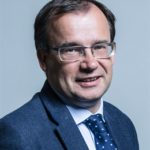
    The speech made by Sir Peter Bottomley, the Father of the House and the Conservative MP for Worthing West, in the House of Commons on 26 January 2023.

    It is an honour to follow the first two speakers. To follow on from some of the early words of my right hon. Friend the Member for Bromsgrove (Sajid Javid), tomorrow in Worthing people who are Jewish, Muslim, Hindu, humanist and Christian will come together to mark their intention that things such as this should never be forgotten and, where possible, should never recur. The idea that the holocaust was the last major genocide we all know is wrong.

    I have spoken before about the places where some of my grandfather’s extended family died. The list sadly gets longer as research shows more and more people who were involved: Sobibor, Auschwitz, Mauthausen, Belsen, Ravensbrück, Dachau, Seibersdorf and Bytom. I do not know many of that side of my family. They are not close—they were not close—but they matter. The idea of education is that people like me can discover those links and that many other families will have a closer experience.

    Every time I take people around the Palace of Westminster, I try to take them past the Kindertransport plaque by the admission order office. I show it to them to illustrate that what people may have disapproved of at the time, they are now proud of. It was not unanimous that those 10,000 children should have been able to come to this country from stations such as Prague, aged 5, 6, 7 or 8. I am glad we have the living proof of Alf Dubs, who in his lifetime has shown the importance of what was done following a debate in the House of Commons.

    I wish to disagree with the Government about the location of the national holocaust memorial. My hon. Friend the Member for Harrow East (Bob Blackman) has tabled early-day motion 748, almost all of which I agree with. I have also tabled an amendment to it, stating that we should have the memorial

    “in a place and manner consistent with the features and facilities listed by the United Kingdom Holocaust Memorial Foundation’s ‘Search for a Central London site’ in September 2015 on page 6 and in the area illustrated and considered to be sufficiently central to meet the visions set out by the Holocaust Commission on page 10.”

    That map on page 10 states that a site would be regarded as central London from the west of Regent’s Park, to the east of Spitalfields and to the south of the Imperial War Museum.

    I commend to everybody, whatever their views on the proposed location of the memorial and learning centre, that they visit the holocaust galleries in the Imperial War Museum, which reopened in the past two or three years. They are incredibly impressive. I think the way forward—I hope I will be supported by Baroness Deech and others—is for us to separate the learning centre from the memorial.

    We should have a new competition for the memorial. It being adjacent to Parliament was not in the minds of the UK Holocaust Memorial Foundation, the committee or the Government eight years ago. If it has to be there, we could consider Parliament Square, where the Buxton memorial fountain was first placed before it was moved to Victoria Tower Gardens. I think that we could do it better, and that it would have more impact and be less of a threat if we did not have the learning centre and the place of gathering so close to the Palace of Westminster.

    My last point is that the tributes to the Holocaust Memorial Day Trust and the Holocaust Educational Trust are genuine. Those people do mighty work, and they allow people to understand what is happening. We must ensure that that does not happen just on Holocaust Memorial Day, but on every day of every year in every way, and that people understand the horrors of what we stood against, with the victims, around the time I was born.

    One of the most difficult questions for people to answer is when would have been the right time to stand up, with force, against Adolf Hitler’s Nazis in Germany. Should it have been in 1933 when he was elected Chancellor and was thought to be pliable by the bigger parties? Should it have been in 1935 or ’36 when he started invading? Should it have been in 1938? It happened in 1939, although some people did not think that was right, but should it have been later, or ever, or never? The reason I am not a pacifist is because of the holocaust.

  • Margaret Hodge – 2023 Speech on Holocaust Memorial Day

    Margaret Hodge – 2023 Speech on Holocaust Memorial Day

    The speech made by Dame Margaret Hodge, the Labour MP for Barking, in the House of Commons on 26 January 2023.

    My thanks to the right hon. Member for Bromsgrove (Sajid Javid) and others for co-sponsoring the debate, and to the right hon. Member for his excellent speech.

    Holocaust Memorial Day has been a national day of commemoration for 22 years. We use the occasion to strengthen our collective memory of the holocaust, to ensure that the lessons learned are passed on, and to intensify efforts to bring safety and justice to those suffering persecution today. This year’s theme—ordinary people—supports our purpose. Ordinary people were involved in all aspects of the holocaust. Ordinary people were victims, but they were also perpetrators, bystanders and witnesses. Ordinary people allowed this to happen, but some ordinary people also became extraordinary during the war. They acted in brave, dangerous and extraordinary ways to save Jews from the fate of extermination.

    Roza Robota, imprisoned in Auschwitz in 1942, helped to smuggle explosives to members of the Jewish underground in the camp. When they blew up one of the crematoria in 1944, Roza was identified, horrifically tortured and then hanged on 6 January 1945. She was 23 years old.

    Captain Frank Foley was a British spy in Germany. After Kristallnacht, he risked his life obtaining papers, forged passports and visas to help Jews escape. He visited concentration camps with batches of visas to get Jewish prisoners released. He hid Jews in his home in Berlin. He made it possible for an estimated 10,000 Jews to get out of Germany.

    These stories and the testimony of every survivor help our understanding and educate us all. It is why I have spoken about my own family’s experiences—my grandfather, who escaped to Britain from Vienna; my grandmother, murdered by the Nazis; my uncle, gassed at Auschwitz; my sister’s husband, who survived through the Kindertransport. I want to keep their stories alive for my family and, through occasions like today, for others, so that we never forget.

    My family were just ordinary people. As I prepared for today, I thought about my mother, whose own mother was murdered. My mother died when I was 10 and my oldest sister was 17. She never, ever talked about our grandmother’s murder. Maybe it was too brutal and distressing. Maybe it was the culture of the time that when people died you were expected to put your feelings in a box and close the door on your loss. Maybe she felt guilty because she survived. Maybe she felt anxious to become accepted in Britain, and feared she might stir up antisemitism by making her Jewish mother’s death a part of our lives. My mother’s silence was not uncommon. Many survivors felt that they could never share their experiences. So we have no idea how this brutal death affected her. The only clue is that, when my younger sister was born in 1947, she was named Marianne, after my grandmother.

    My aunt survived the war in the Ardèche, protected by local people. My memories of her in the 1950s were of her waiting for her beloved husband to return. She convinced herself and us that he was still alive. Only when we were clearing her flat in Paris did we find papers with his Auschwitz number and confirmation that he had been gassed and killed. She had known that for years, but had never stopped hoping. She never admitted to his being a victim of the holocaust.

    My dad never said much. We coped with our refugee status by working hard at becoming British—eating cucumber sandwiches and dried fruitcake became more important than recounting the past—but I think we lost something by their silence. Understanding the experience of ordinary people during the holocaust can be a powerful way to combat rising hatred today. Despite my parents’ silence, my refugee Jewish identity has always been there, equipping me to fight the racist British National party and helping me to fight antisemitism in my own party.

    Nine days before she was killed, my grandmother wrote to my uncle—her son—and said:

    “I am sceptical that we shall ever meet again. Who knows when I can even write to you again”,

    and then twice she said:

    “Don’t forget me completely”.

    Ensuring that she is never, ever forgotten is why I am here today, and why I champion the brilliant work of the Holocaust Educational Trust and the Holocaust Memorial Day Trust.

    We know how vital remembering the lives of ordinary people in our history is to understanding and fighting hatred and racism today, whether it is in our attempts to help the Uyghurs and the Rohingya Muslims, acting to support the Ukrainians—the documented incidents involving potential war crimes, vicious attacks on civilians and the shocking death of children horrify us all—or, and I welcome the remarks of the right hon. Member for Bromsgrove on this, the condemnation from us all when a Member of this House compared the vaccine roll-out to the holocaust as equivalent crimes against humanity.

    The Holocaust Memorial Day Trust recently found that 5% of UK adults do not believe the holocaust ever took place, and over one in 12 believe its scale has been exaggerated. That shocking finding should make us all redouble our efforts to keep the holocaust history alive. That is why today matters. We, ordinary people, are using our voice today to remember and remind other people of the atrocities of the holocaust.

    I close with the eloquent words of one of my political heroes, Martin Luther King. He said:

    “Our lives begin to end the day we become silent about things that matter.”

    We must learn from his example, and never give up hope that we can make a world free of genocide. We have to work hard, together, for future generations and for those who suffered in the holocaust. For me, this is for my grandmother I never knew. May she never be forgotten.

  • Sajid Javid – 2023 Speech on Holocaust Memorial Day

    Sajid Javid – 2023 Speech on Holocaust Memorial Day

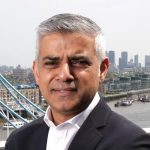
    The speech made by Sajid Javid, the Conservative MP for Bromsgrove, in the House of Commons on 26 January 2023.

    I beg to move,

    That this House has considered Holocaust Memorial Day.

    I thank the right hon. Member for Barking (Dame Margaret Hodge), my right hon. Friend the Member for Preseli Pembrokeshire (Stephen Crabb) and my hon. Friend the Member for West Bromwich East (Nicola Richards) for co-sponsoring the debate. I pay tribute to the incredible people at the Holocaust Memorial Day Trust, the Holocaust Educational Trust and many others for the work that they are doing this week and all year round.

    I am extremely honoured to be leading this debate. Usually, my lengthy speeches from the Back Benches are reserved for when I resign from the Government, so this is a welcome change. I could not think of a more important issue on which to speak and I am pleased to see so many hon. Members on both sides of the House here today. Tomorrow will mark the 78th anniversary of the liberation of Auschwitz-Birkenau—a place of evil, atrocity and inhumanity; a place where more than 1 million men, women and children arrived but never left. More than 6 million Jews and others lost their lives during the holocaust, and countless more would carry the burden of their persecution.

    Genocide is a dark stain on the conscience of humanity, and the hatred that drives it is a disease of the heart. After the holocaust, we vowed, “Never again,” but the killing fields of Cambodia, the butchery of Rwanda, the deathly silence of Srebrenica and the suffering of Darfur show that the disease of hatred lives on. Although those dark stains can never be washed out, it is our duty to shine a light on them in this House.

    It is also an honour for me to be the first Muslim to lead this debate from the Back Benches. My late friend, Rabbi Lord Jonathan Sacks, once said,

    “The test of faith is whether I can make space for difference. Can I recognise God’s image in someone who is not in my image, whose language, faith, ideal, are different from mine? If I cannot, then I have made God in my image instead of allowing him to remake me in his.”

    At a time when I worry about communities becoming increasingly insular, and when too many young men and women are drawn to divisive voices, our responsibility is to spread the message of understanding and compassion between communities. That responsibility has never been greater.

    The theme of this year’s Holocaust Memorial Day is ordinary people, but I will first mention a group of extraordinary people—the survivors of the holocaust. I have been privileged to know many of them during my time in Parliament, as have many other hon. Members on both sides of the House. When I was Chancellor, I invited 12 survivors to have dinner in 11 Downing Street; it was an evening that I will never forget. That night, my family was joined by the late, great Zigi Shipper, who was full of energy, enthusiasm and optimism. As we were showing him out, I recall that he pointed at me and, turning to my wife, said, “What are you doing with that rogue when you could be with me instead?” May his memory be a blessing.

    Zigi saw the horrors of Auschwitz-Birkenau first hand, but as the theme of this year’s Holocaust Memorial Day reminds us, we should not forget that the crimes of that place were committed by, and to, ordinary people. As the Holocaust Memorial Day Trust has said:

    “Genocide is facilitated by ordinary people. Ordinary people turn a blind eye, believe propaganda, join murderous regimes”,

    and ordinary people are persecuted

    “simply because they…belong to a particular group”.

    Alex Sobel (Leeds North West) (Lab/Co-op)

    I would like to speak about one ordinary person—my great-grandfather David, who was in Lviv, Ukraine during the war. To survive, he needed a job, and to get a job, he needed a life number. He worked in a hairdresser’s, but he had to bribe the hairdresser and he did not have enough money to bribe them. His valuable belongings were hidden in a safe house and the person who owned the safe house would not give them up, so he could not afford the bribes. He lost his job, he lost his life number, and he was sent to Belzec extermination camp and killed. He was an ordinary person doing ordinary things, but betrayed by ordinary people.

    Sajid Javid

    I thank the hon. Member for everything that he has done and continues to do to fight hatred in our communities, and for sharing that about his dear family with the House. He makes the point so well.

    In this debate, we should also reflect on our role as policymakers, because we know the familiar, sickening pattern of atrocities all too well. We are right to reaffirm our commitment to “never again”, but we as parliamentarians must also do more to prepare the political foundations and the policy framework to prevent the next atrocity. Our commitment to the truth must also be reinforced at home, including in how we counter misinformation and conspiracy theories. In the UK, we have seen a rise in anti-vaccine protesters carrying signs reading “vaccine holocaust” and wearing the star of David, and I must say that it angers me that any Member of this House would seek to connect the holocaust with UK public health policy.

    To tackle persecution, our voices and actions are needed now more than ever. Research from the Community Security Trust shows that in the first half of 2022 alone, 782 incidents of anti-Jewish hate were recorded in the UK. As so often, that hatred is fuelled by the online world.

    Christine Jardine (Edinburgh West) (LD)

    The right hon. Gentleman is making a powerful speech on an important day, which reminds us what ordinary people are capable of—good and bad. He talks about antisemitic attacks. Recently, I visited a Jewish school in London where 10-year-old children told us stories about the antisemitism that they had faced. Does he share my concern that we are still overlooking the potential for that sort of problem to exist and grow in our society?

    Sajid Javid

    Yes. I thank the hon. Lady for what she has said and I very much share her concern, as will hon. Members on both sides of the House. She rightly talks about young children, but a recent independent report that was done for the National Union of Students also found antisemitism, so it is an issue across society for people of all ages. She is absolutely right to raise that.

    The hon. Lady and others will agree about the role of the online world in spreading hate. Recent research shows that every day in the UK, more than 1,300 explicitly antisemitic tweets are posted—some to Members of this House. It is no wonder that many British Jews are becoming increasingly frustrated at hearing words of condemnation alone when it seems that the perpetrators of that hate too often do not receive the punishment that fits the crime.

    The fact that the Community Security Trust needs to exist should be a cause of deep sadness—although, when I was Home Secretary, of course I was pleased to secure multi-year funding for it. When Jews in this country have the freedom to pray behind high walls and security guards, can we call that freedom at all?

    Dr Matthew Offord (Hendon) (Con)

    I congratulate my right hon. Friend on the speech he is making. However, in some ways he has provoked in me a condemnation of the Crown Prosecution Service, because many of my constituents were threatened by protesters who drove all the way down from Bradford with signs saying that they were going to rape and kill Jews, but the CPS decided it would not prosecute, for reasons unknown to me or, indeed, the Home Secretary. Does he agree that these kinds of actions send out a terrible message, and that if these perpetrators are not brought to justice, people will continue to act in such a fashion?

    Sajid Javid

    Yes. My hon. Friend gives an excellent example of exactly why more needs to be done. I think that includes the entire criminal justice system, and he is right to share his example of the CPS. I do very much agree with him.

    Another thing that certainly helps to reduce antisemitism and hatred of all types is education, which is crucial in the effort to tackle persecution and hatred. For example, the Anne Frank Trust reached something like 46,000 schoolchildren last year alone. The Holocaust Educational Trust does fantastic and excellent work with visits for schoolchildren from across the UK to the Auschwitz Museum.

    As a Communities Secretary who fought hard for the establishment of a national holocaust memorial, I was personally delighted with the news from my right hon. Friend the Prime Minister yesterday about the new holocaust memorial, which will have cross-party support. It has been a long road, but that memorial will make an immense difference.

    I want to end with the words of Anne Frank. She wrote:

    “In spite of everything I still believe that people are really good at heart.”

    The world is a complex and often unjust place, but if we can embody the spirit behind those words and work towards the common good, then the steady ship of progress will never veer far from its course. So let us stand together and reaffirm our commitment to fight for the common good, to shine a light on evil wherever it is found and to never, never forget the victims of persecution.