Category: Speeches

  • Giles Watling – 2023 Parliamentary Question on a Trade Envoy for the Commonwealth

    Giles Watling – 2023 Parliamentary Question on a Trade Envoy for the Commonwealth

    The parliamentary question asked by Giles Watling, the Conservative MP for Clacton, in the House of Commons on 9 February 2023.

    Giles Watling (Clacton) (Con)

    What assessment she has made of the potential merits of establishing a trade envoy for the Commonwealth.

    The Minister of State, Department for Business and Trade (Nigel Huddleston)

    The countries of the Commonwealth are important trading partners. Our total trading relationship was worth more than £146 billion in the 12 months to September 2022, which is why my right hon. Friend the Prime Minister has already appointed trade envoys to 15 Commonwealth nations. We have trade agreements with 33 Commonwealth members, and five of the 11 members of the comprehensive and progressive agreement for trans-Pacific partnership are in the Commonwealth as well.

    Giles Watling

    As chairman of the 1922 committee’s Back-Bench foreign affairs policy committee, I recently shared our report with ministerial colleagues. One of its recommendations was the creation of a Commonwealth-specific trade envoy post. Does my hon. Friend agree that in this post-Brexit era, increasing trade and movement between the Commonwealth and the UK should be a top priority to foster economic growth? By the way, this is not a pitch for that job.

    Nigel Huddleston

    Yes, I am afraid that those jobs are at the discretion of the Prime Minister.

    I hear what my hon. Friend is saying. We already have extensive coverage through the existing network, but we review the network regularly because we are committed to working with our allies in the Commonwealth to remove the barriers to trade and strengthen trading relationships to foster economic growth. Growing exports to Commonwealth countries is a priority, and trade increased by 25% in the year to September 2022. As for movement, we have a new global immigration system which is vital in supporting trade and economic growth, and the movement of business people on a temporary basis promotes and supports trade in services and goods and investment activities. Recognition of professional qualifications and business travel are always an important part of our trade deals.

  • Philip Hollobone – 2023 Parliamentary Question on Foreign Direct Investment since 2016

    Philip Hollobone – 2023 Parliamentary Question on Foreign Direct Investment since 2016

    The parliamentary question asked by Philip Hollobone, the Conservative MP for Kettering, in the House of Commons on 9 February 2023.

    Mr Philip Hollobone (Kettering) (Con)

    If she will make an estimate of the level of foreign direct investment into the UK since 23 June 2016.

    The Minister of State, Department for Business and Trade (Ms Nusrat Ghani)

    More global multinationals have set up subsidiaries in the UK than in any country other than the United States. This is the best place in Europe in which to raise capital. Between April 2016 and the end of March 2022, the Department assisted more than 8,700 foreign direct investment projects in the UK, which have created about 348,000 new jobs across the United Kingdom.

    Mr Hollobone

    The UK has had a great track record of attracting foreign direct investment since we voted to leave the European Union. The figures given by the Minister will include the £200 million investment by Ball Corporation in the United States in the UK’s largest and Europe’s most advanced can manufacturing plant, in Burton Latimer. How does the UK’s record of attracting foreign direct investment compare with those of our major EU competitors?

    Ms Ghani

    My hon. Friend has given a fantastic example of the opportunities that have been created. The UK is a highly attractive destination for FDI, and has been among the top recipients in Europe over the last decade. According to the Financial Times and the United Nations Conference on Trade and Development, the UK has the highest market share of greenfield FDI capital expenditure in Europe, at 20%—almost double that of Spain, which is in second place with 12%. It also has the highest levels of Food and Drug Administration stock in Europe, second only to the United States globally. It is remarkable how far we have progressed in such a short time.

    Kerry McCarthy (Bristol East) (Lab)

    The Biden Administration’s Inflation Reduction Act 2022 makes investing in the US very attractive, particularly for innovative green technology. How are we going to compete?

    Ms Ghani

    In my previous role I was dealing with the impacts of the Inflation Reduction Act, and I hope I will continue to do so, because so many business representatives whom I have met have raised it as a concern. The hon. Lady has referred to green technology. A great deal of work has already been done to promote all our expertise, especially in relation to hydrogen, but there is a huge amount of investment in the UK’s green technology sector and technology in general, and we are also a leading light when it comes to lithium. I was recently in Cape Town with our Green Lithium firm, which wanted to negotiate on how it could do more work in the United States. That is exactly what we are here to do—to facilitate collaboration of that kind.

  • Wera Hobhouse – 2023 Parliamentary Question on Trade with European Countries

    Wera Hobhouse – 2023 Parliamentary Question on Trade with European Countries

    The parliamentary question asked by Wera Hobhouse, the Liberal Democrat MP for Bath, in the House of Commons on 9 February 2023.

    Wera Hobhouse (Bath) (LD)

    What steps she is taking to help increase trade with European countries.

    The Minister of State, Department for Business and Trade (Nigel Huddleston)

    Europe remains a vital destination for British businesses, with exports of over £386 billion in the year to September 2022. That is up almost 25%, in current prices, on the previous year. As we speak, the Secretary of State is in Rome to establish the UK-Italy export and investment promotion dialogue, which will help to strengthen practical co-operation on exports in high-performing sectors and promote inward investment. We are also working closely with EU member states to tackle priority barriers and unlock export opportunities for UK businesses.

    Wera Hobhouse

    More than half of firms surveyed by the British Chambers of Commerce are struggling with the new post-Brexit export system. The Office for National Statistics reports that Brexit costs the economy £1 million per hour, and the UK economy has not recovered as well as other countries post covid. What plans does the Minister have to reduce trade barriers and EU border bureaucracy, which have hugely increased since Brexit?

    Nigel Huddleston

    As I said earlier, I hope that we can look at the opportunities of leaving the EU as well as trying to fight past battles. There are a host of opportunities; for example, I do not think that the EU had a particularly proud record on services around the globe. We are opening up services for many companies, which under the EU we were to a very large degree constrained in doing. We have huge resources for supporting businesses. Trade with the EU has been growing considerably, and we will do everything we can to support further growth.

    Sir Desmond Swayne (New Forest West) (Con)

    These barriers have had a greater impact on EU trade than on the UK. When does the Minister anticipate the EU will wake up to what is in our mutual interest?

    Nigel Huddleston

    My right hon. Friend makes a perfectly good point. Our agreement with the EU is one of the most thorough and comprehensive trade agreements, but we need to work further. We are constantly looking at opportunities—country by country, industry subsector by subsector—to open up more trade by reducing the barriers. These are barriers that also existed when we were in the EU.

    Mr Speaker

    I call the shadow Minister.

    Gareth Thomas (Harrow West) (Lab/Co-op)

    Over the past three years, according to the latest German trade figures, exports to Germany are up by almost a third from the US, by almost a quarter from the rest of the EU and by more than 10% from China, yet exports from Britain to Germany are down. Everybody else’s exports are up; Britain’s are down. Is it a lack of support to our exporters to Germany, is it the poor deal that the Conservative party negotiated with the EU, or does the Minister blame British business for the situation, as one of last year’s Prime Ministers once did?

    Nigel Huddleston

    Again, all I have to say is that I have much greater confidence in British industries taking advantage of opportunities, not only in the EU but around the world. I wish others in this Chamber shared that optimism and confidence in British business.

  • Mark Eastwood – 2023 Parliamentary Question on Export Opportunities for SMEs

    Mark Eastwood – 2023 Parliamentary Question on Export Opportunities for SMEs

    The parliamentary question asked by Mark Eastwood, the Conservative MP for Dewsbury, in the House of Commons on 9 February 2023.

    Mark Eastwood (Dewsbury) (Con)

    What steps her Department is taking to help increase export opportunities for small and medium-sized businesses.

    The Minister of State, Department for Business and Trade (Ms Nusrat Ghani)

    UK exports have grown by 24% year on year, and our landmark 12-point export strategy will challenge Government and the private sector to reach £1 trillion-worth of exports a year. As part of that strategy, we created the export support service, which has brought together helplines and services across Government to build a one-stop shop for UK exporters facing challenges in exporting to the EU. We are also delivering for businesses through our dedicated team of international trade advisers, reinforced by Department for International Trade events and programmes such as the UK Export Academy.

    Mark Eastwood

    Last month, I was delighted to co-host my first successful export academy at Kirklees College in association with the Department for International Trade and UK Export Finance. Will the Minister outline how local DIT officers and UKEF can assist SMEs to export their goods and services across the world?

    Ms Ghani

    Mr Speaker, may I first thank you for your leadership in hosting President Zelensky yesterday? It really was a humbling moment for us all. My hon. Friend the Member for Dewsbury (Mark Eastwood), with his can-do attitude, is constantly championing everybody in Dewsbury. As he may know, UK Export Finance offers a range of trade, finance and insurance products to help small and medium-sized businesses fulfil export contracts. It works with more than 100 private sector partners, including all major UK banks. UKEF support is underpinned by the innovative general export facility, a product designed to give SME exporters more flexibility when accessing trade finance. It unlocked almost £250 million of working capital loans in the last financial year. Local trade has obviously helped strengthen the “Made in the UK” branding, which provides export support to SMEs across the country. Face-to-face support for exporters in England is delivered via a network of around 200 international trade advisers. There is so much to say, but I think I should stop there.

    Mr Speaker

    Hear, hear. I call Matt Western.

    Matt Western (Warwick and Leamington) (Lab)

    SMEs in my area have been doing a huge amount of business internationally. One such company has been exporting 80% of its business for decades. In recent years, it has been challenged by China, and has had intellectual property issues; its IP has been stolen. I am afraid to say that it felt unsupported by the Department for International Trade. It faces an issue in Germany. Will the Minister meet me to help this business with the challenge that it faces in those countries?

    Ms Ghani

    The beauty of having former business Ministers in the new Department is that we are across most of these issues, including the issue of IP. I am more than happy to sit down with the hon. Gentleman, or to make sure that the right Minister does, because we need to protect our IP.

  • Greg Smith – 2023 Parliamentary Question on US State-level Market Barriers

    Greg Smith – 2023 Parliamentary Question on US State-level Market Barriers

    The parliamentary question asked by Greg Smith, the Conservative MP for Buckingham, in the House of Commons on 9 February 2023.

    Greg Smith (Buckingham) (Con)

    What recent discussions she has had with her US counterpart on reducing market barriers at the state level in the US.

    The Minister of State, Department for Business and Trade (Nigel Huddleston)

    We are taking tangible steps to improve our trade relationship with our largest bilateral trading partner, the United States. We have already signed state-level memorandums of understanding with Indiana, and North and South Carolina, which we are using to address barriers and promote British business in priority areas such as procurement, renewable energy, automotive, and life sciences. Together, those states imported more than £3.3 billion of UK goods in 2021. In December, the previous Minister for Trade Policy met counterparts in California to discuss an MOU, and counterparts in Utah to advance our talks. We are also making progress with Oklahoma and Texas, alongside our regular engagement with states across the US.

    Greg Smith

    I welcome my hon. Friend’s answer, particularly the priority areas he outlined. However, from financial services to online shopping, digital trade is at the heart of doing business with our closest ally—the United States. Will my hon. Friend update the House on the progress made on removing barriers specific to such digital trade with individual states?

    Nigel Huddleston

    My hon. Friend is absolutely right to highlight the importance of the digital economy. We very much see digital trade as an excellent area to focus on, deepening ties between the US and the UK. As part of that, we are keen to explore where we might be able to facilitate co-operation and promote digital trade with the US at state level. Further, the US-UK trade dialogues in Baltimore and Aberdeen last year helped to identify a range of trade-related areas for the two countries to collaborate on, and we agreed to strengthen further our bilateral trade in a range of areas, including on digital trade.

    Mr Speaker

    I call the shadow Minister.

    Ruth Cadbury (Brentford and Isleworth) (Lab)

    After failing to get a trade deal with the United States, the Government have resorted to signing non-binding agreements with separate US states. The Minister’s answer to the hon. Member for Buckingham (Greg Smith) on the different sectors was interesting, but the Government have refused to confirm what economic benefits these agreements will bring to the UK economy. I give the Minister another chance: will he tell me what value in pounds and pence these agreements will bring to our economy?

    Nigel Huddleston

    Again, I am somewhat disappointed that the Opposition are talking down the opportunities we have. These MOUs seek to bolster the already strong trading relationships with US states, which, as I said, are worth £3.3 billion of UK goods. As we move through and implement the MOUs—we have good faith and goodwill with the people we have been negotiating with—we will inevitably increase our trade volumes. The US is already our strongest and most important trading partner, accounting for about 16% of the UK’s overall trade, and growing.

    Jim Shannon (Strangford) (DUP)

    In my constituency, companies are able to sell to Europe, the far east, South Africa and south America, but they have difficulty selling their products—foodstuffs that come from our farms across Strangford in Northern Ireland—to the US. Will the Minister give some indication of what can be done in conjunction with the Department for the Economy in Northern Ireland to open those doors to sales?

    Nigel Huddleston

    We are fighting for opportunities right across the UK. As I said, the US is a really important trading partner. With the MOUs, we are seeking further opportunities, but we are also working on removing trade barriers and inhibitions to trade. For example, since leaving the EU, we have secured major trade deals with the US, reinstating beef and lamb imports and ending damaging steel and aluminium tariffs, so we are working in individual sectors to try to find further opportunities at both state and federal level.

  • Gavin Newlands – 2023 Parliamentary Question on Exports from Devolved Nations to the EU

    Gavin Newlands – 2023 Parliamentary Question on Exports from Devolved Nations to the EU

    The parliamentary question asked by Gavin Newlands, the SNP MP for Paisley and Renfrewshire North, in the House of Commons on 9 February 2023.

    Gavin Newlands (Paisley and Renfrewshire North) (SNP)

    What steps her Department is taking to help increase exports from the devolved nations to the EU.

    The Minister of State, Department for Business and Trade (Nigel Huddleston)

    We are supporting businesses in all parts of the United Kingdom through our export support service, including our innovative Export Academy, which helps build market export capability among small and medium-sized enterprises across the UK. We have also established trade and investment offices in Edinburgh, Cardiff and Belfast, increasing the visibility of the Department’s services in the nations, and channelling the benefits of our new export and investment strategies to the entire UK. I am sure the hon. Member is aware of those benefits in his own constituency, with businesses such as Lynkeos Technology winning a £100,000 contract last year in Germany with the assistance of the Department.

    Gavin Newlands

    I like the hon. Member, but that answer was nonsense, quite frankly. The Institute of Directors found in a recent survey that almost half—47%—of businesses are still finding trade after Brexit a challenge, with just a third envisaging any opportunities at all from Brexit. That report also found that 45% of SMEs are exporting less to the European Union post Brexit, with Scottish exports having already slumped by £2.2 billion because of Brexit. Does the Minister agree that Brexit is an act of state-sanctioned economic vandalism?

    Nigel Huddleston

    I am sorry that the hon. Gentleman is saying this is nonsense. I am sure that those businesses in his constituency and across Scotland who get support from the Department do not share that attitude. As well as focusing on the EU, which is and will continue to be an important trading partner of the UK, we are looking to the entire world, hence focusing on so many other countries. I hope he will be a little more “glass half full” in the future.

    David Mundell (Dumfriesshire, Clydesdale and Tweeddale) (Con)

    Is the Minister aware that the Scottish Government are planning to bring forward draconian restrictions on the advertising of whisky and other drinks in Scotland? Not only will that cost jobs in Scotland but it will make it much more difficult for the industry to export to the EU and elsewhere.

    Nigel Huddleston

    My right hon. Friend makes an important point. Such measures could have a considerable negative impact on so many Scottish businesses. That is precisely why we are seeking opportunities to support them, for example with trade deals, and trying to ensure that we reduce tariffs and are able to export more overseas. While we are backing our businesses right across the UK, I hope that in future we can get support from the Opposition, who might at some point come and join us and support one of the trade deals we are negotiating.

    Mr Speaker

    I call the SNP spokesperson.

    Richard Thomson (Gordon) (SNP)

    Unfortunately for the Minister, and unfortunately for Scotland, the latest data from His Majesty’s Revenue and Customs shows that between July and September last year, exports from Scotland to the European Union slumped by 5%. Will the Minister explain for an expectant nation exactly how that is in any way strengthening the case for the Union?

    Nigel Huddleston

    The hon. Gentleman will be well aware that, as we recover from a global pandemic, certain sectors and certain industries are suffering more than others. That is precisely why we have an export strategy and why the Secretary of State has articulated a five-point strategy for growth. We will continue to work positively with all sectors to grow our export opportunities. UK exports to the EU for the 12-month period to September 2022 were up by 25% in current prices.

    Richard Thomson

    It is not just the SNP who are saying what a disaster Brexit has been. With the director of the Institute for Fiscal Studies saying that Brexit is clearly an “economic own goal”, and even a former Brexit Secretary saying that there have been no economic benefits from Brexit, is it not surely time for voters in Scotland to be given the choice between continued British economic decline or a prosperous, independent European future?

    Nigel Huddleston

    I know the hon. Member and some people are tempted to continue to fight the battles of the past, but this Government will be laser-focused on the future and future opportunities. We have the comprehensive and progressive agreement for trans-Pacific partnership and so many other opportunities around the world, and I think it would be good for all of us in this place to talk the British economy up, rather than talk it down.

  • Jessica Morden – 2023 Parliamentary Question on Public Procurement of UK-Made Steel

    Jessica Morden – 2023 Parliamentary Question on Public Procurement of UK-Made Steel

    The parliamentary question asked by Jessica Morden, the Labour MP for Newport East, in the House of Commons on 2 February 2023.

    Jessica Morden (Newport East) (Lab)

    What steps he is taking with Cabinet colleagues to promote the use of UK-made steel in public procurement.

    The Parliamentary Secretary, Cabinet Office (Alex Burghart)

    The Government are ensuring a competitive future for the UK steel industry, and the reported value of UK-produced steel procured by the Government was up last year by £160 million, from £108 million to £268 million.

    Jessica Morden

    In last week’s Westminster Hall debate, the steel Minister, the hon. Member for Wealden (Ms Ghani), said

    “there is huge scope for more procurement to take place in the UK.”—[Official Report, 25 January 2023; Vol. 726, c. 331WH.]

    Will the Cabinet Office commit to publishing up-to-date data on the Government’s record in using UK steel, because it has not been good enough so far, and to adopting ambitious targets across Departments on the use of domestic steel in public projects?

    Alex Burghart

    I am pleased to tell the hon. Lady right now that 67% of the steel required for High Speed 2 is UK-produced, 94% of the steel used to maintain our rail track is produced in the UK and 90% of the steel used to build schools is produced in the UK. I understand there will be an urgent question after Question Time, which will give her the opportunity to ask a Minister from the Department for Business, Energy and Industrial Strategy about this.

  • Zac Goldsmith – 2023 Speech on the Arctic Policy Framework (Lord Goldsmith)

    Zac Goldsmith – 2023 Speech on the Arctic Policy Framework (Lord Goldsmith)

    The speech made by Zac Goldsmith, Lord Goldsmith, on 9 February 2023.

    Good morning and thank for joining us for the launch of ‘Looking North’ – the UK Government’s new Arctic Policy Framework.

    We have drafted it through engagement with our Arctic partners, for which I offer our sincere thanks.

    Thanks also to colleagues across Government from other Departments for their valued contributions.

    Throughout this document we reaffirm our commitment to the Arctic region.

    Of course, the UK is not an Arctic state, but the Arctic is absolutely critical to our interests, because our climate, weather and biodiversity are all inextricably linked.

    The UK Government produced its first Arctic Policy Framework in 2013. And in that, we affirmed ‘Respect, Cooperation and Appropriate Leadership’ as the guiding principles of the approach that the UK takes in the region. And those principles absolutely remain true today.

    In ‘Looking North’, we have adapted our approach in response to the evolving influences on the Arctic.

    The region is at the mercy of ever shifting forces, increasingly buffeted by climate, environmental and also geopolitical headwinds.

    So I am going to briefly talk you through some of the key security, environmental and economic challenges, and how the UK is addressing them through our expertise and partnerships.

    Security

    First of all, security. While it remains our strategic aspiration for the Arctic to be an area of high cooperation and low tension, clearly that vision is at risk.

    Melting sea ice has provided greater accessibility to a wider range of players. And Russia’s invasion of Ukraine has undermined the stability of its entire neighbourhood.

    The UK Government is committed to working to ensure that the Arctic remains secure and peaceful.

    We have strong relationships with almost every one of the Arctic states.

    And through NATO, the Joint Expeditionary Force, the Northern Group, and through the Arctic Security Forces Roundtable, we have intensified work with our partners to preserve stability and security across the region.

    Last year we publicly set out the UK’s Defence Contribution in the High North, in a paper of the same name.

    And we set out our readiness to protect, and where appropriate, assert our rights, against those who wish to challenge the international order, threaten the stability of the region, or restrict freedom of navigation.

    We are the nearest neighbour to the Arctic, and so regional security is central to our own security as well.

    Climate Change and the Environment

    Secondly, climate change.

    Without doubt, climate change poses the clearest and most significant existential threat to the Arctic as we currently know it.

    In 2021, the Arctic Monitoring and Assessment Programme reported that Arctic temperatures are increasing three times faster than the global average.

    A new study last year raised this to four times faster than the global average.

    And we know that warming temperatures have profound implications for the people who live in the Arctic, for biodiversity, and for the whole world.

    Climate change is devastating Arctic ecosystems and communities. Sea ice and the Greenland ice sheet are rapidly melting. Permafrost is thawing.

    And nature is already showing signs of struggling to adapt. Migratory patterns are already shifting.

    And changes to the Arctic will have profound consequences for the UK, for example increasing the frequency of extreme weather, flooding and denigration of our shared and valued biodiversity.

    The UK government has made tackling climate change a key priority. That was reflected in the Integrated Review; it will be reflected in the shake-up of the Integrated Review; it’s been reflected in the International Development Strategy.

    And in Glasgow the year before last, COP26 was a collective acknowledgement of the work required globally to limit global warming to 1.5 degrees.

    We are delivering our pledge to provide up to £11.6bn of International Climate Finance over 5 years, and we are working with partner countries to help them reduce emissions, protect their nature without which we don’t have any prospect of tackling climate change, and helping them to adapt to the unfortunate, inevitable changes associated with climate change.

    So addressing the biodiversity crisis remains a priority issue for me, but also for the wider UK Government.

    The UK played a leading role shaping the Kunming-Montreal Global Biodiversity Framework, adopted in December. We wanted a ‘Paris moment’ for nature, and it is.

    The agreement contains an ambitious package of global goals and targets, and a central mission to halt and reverse biodiversity loss by 2030, to put the natural world on a path to recovery by the end of this decade.

    We have consistently fought for better international regulations to protect the ocean, and we will continue to do so.

    And to support the protection of fragile marine ecosystems, we will seek to join the Central Arctic Ocean Fisheries Agreement as soon as we possibly can.

    People and Prosperity

    Of course – Fishing is extremely important to the Arctic economy, and a reminder that the region is, first and foremost, a home to nearly 4 million people.

    It is a region of vibrant and diverse communities, cultures, languages and traditions.

    The UK Government recognises the diversity of Arctic Indigenous communities, and respects their rights, their views, their interests, their culture and their traditions.

    We have invested £7.6m in a multi-partner research programme to address the impact of environmental change in Inuit Nunangat – their traditional homelands in Canada, putting Indigenous communities at the heart of Arctic science.

    Of course changes in the Arctic do also open up new commercial avenues. And the people of the Arctic should benefit from those opportunities.

    The UK has a lot of expertise to offer, including professional maritime and financial services.

    We have a clear vision for a prosperous Arctic, where economic development is achieved in a way that is safe, responsible and sustainable, and that does not damage the Arctic’s natural and fragile, unique environment.

    Extractive industries in particular, as well as the increasing opportunity for navigation within the Arctic Ocean, must be carefully managed to protect vulnerable marine ecosystems. We’re going to have to think very hard, collectively, not just in the UK but with our friends and allies around the world, about whether or not we want to see deep sea mining in the Arctic Ocean.

    The UK Government is committed to working with partners to ensure that effective governance, and environmental protections, are in place to regulate ships operating in Arctic waters.

    We also participate in the Extractives Industries Transparency Initiative, and the Voluntary Principles on Security and Human Rights in the Extractive Industries, which apply to mines in the Arctic just as they apply to everywhere else.

    And we will continue to encourage all countries to adopt the highest possible standards of environmental and social governance.

    Partnering and Collaborating

    The challenges and opportunities facing the Arctic can only be managed through effective international cooperation.

    The UK Government, and our science and research sector, has strong relationships with Arctic partners, and we will strengthen those ties.

    UK Science has played a key role in building our understanding of the Arctic.

    In terms of published research, UK-based scientists are ranked first among non-Arctic states in the number of published articles.

    And since 2012, UK researchers have received over £56 million in Arctic science funding, on top of investments in their infrastructure and other assets.

    The Government’s Science and Innovation Network has played an important role facilitating collaborative international Arctic research, and empowering Indigenous researchers to play a full part.

    The Arctic Council remains the preeminent intergovernmental forum for cooperation in the Arctic. The UK has been an observer to the Council since its first meeting, and has contributed significant expertise to its work.

    We fully supported last year’s decision to pause the work of the Arctic Council following Russia’s illegal invasion of Ukraine. And we have been grateful to continue contributing to Council projects, where it has been appropriate.

    We look forward to engaging with the incoming Norwegian chair, and will seek further opportunities for UK experts to be a part of the Council’s work.

    Conclusion

    So to conclude: ‘Looking North’ sets out the UK’s approach to being a trusted and active partner on the Arctic.

    We have an enduring interest in the region, and a lot to offer in terms of expertise.

    We have a vision of a cleaner, greener, more secure, safe and prosperous Arctic.

    And we will continue to collaborate with our Arctic partners to realise that vision.

    Thank you so much.

  • Volodymyr Zelenskyy – 2023 Speech to the European Parliament

    Volodymyr Zelenskyy – 2023 Speech to the European Parliament

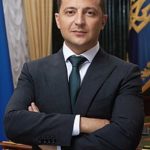
    The speech made by Volodymyr Zelenskyy, the President of Ukraine, to the European Parliament on 9 February 2023.

    Dear Mrs. President, dear Roberta!

    I thank you for these powerful words and I thank you for your personal attention, an extremely important attention for Ukraine. I thank you for your integrity and energy, two qualities that we see invariably in the current struggle for Europe and whose combination is always a prerequisite for progress. Europe is fortunate that in this hall, in the largest parliament in Europe, the European Parliament, principled and energetic people are an absolute majority. I thank you.

    Dear representatives of Europe!

    Dear leaders of Europe!

    All of us, Europeans, each and every one of the hundreds of millions of people on our continent, combine these two statuses – representatives of Europe and leaders of Europe. This combination reflects what our Europe, a modern Europe, a peaceful Europe, gives to the world. European way of life. European path of life. European manner of life. European rules of life.

    When everyone matters. When the law rules.

    When states strive to be social and societies strive to be open. When diversity is a value and the values of the different are united by fair equality.

    When the borders are inviolable, but their crossing is not felt.

    When people believe in tomorrow and are willing to take to the streets to fight for their tomorrow. When there is only one single barrier between the president and the protesters, and that is fair elections.

    This is our Europe. These are our rules. This is our way of life.

    And for Ukraine, it’s a way home.

    Now I am here to protect the way home for our people. All Ukrainian men, all Ukrainian women. Of different ages and different political beliefs, different social status, different views on religion, with different personal stories, but common European history with all of you.

    There is an attempt to destroy the Ukrainian European way of life by all-out war. But what for?

    For the destruction of the European way of life as such after the Ukrainian European way of life is destroyed.

    For each of all twenty-seven elements of the European way of life. The twenty-seven countries of the European Union.

    We will not allow that.

    This total war that has been unleashed by Russia is not just about territory in one part of Europe or another.

    Its threat is not only in the fact that there is a dictator with huge stockpiles of Soviet weapons and weapons inflow from other dictatorships, in particular the Iranian regime.

    In order to be able to wage this war, the Kremlin has been consistently destroying, step by step, year after year, what we see as the basis of our Europe.

    The sacred value of human life has been completely destroyed in Russia as well. No one matters to the authorities there, except those inside the Kremlin walls, their relatives and their wallets. For them, for the Kremlin, all others, all one hundred and forty million citizens are just bodies capable of carrying weapons – carrying weapons to Ukraine, carrying weapons on the battlefield, keeping others in line or being in line themselves.

    The rule of violence and obedience are the rules there instead of law.

    The Russian regime not only hates everything, any sociality and any diversity, but also deliberately invests in xenophobia and tries to make all the inhuman things that happened in the 1930s and 1940s part of the norm on our continent.

    But will it last forever? This is a question for all of us. The answer is no! No!

    Europe! We are defending ourselves against the most anti-European force in the modern world. We are defending ourselves. We, Ukrainians, are on the battlefield with you.

    I thank you for the fact that we are defending ourselves together!

    And we must defend ourselves!

    And this is important not only for European countries. Not only for the communities of Europe.

    No matter who we are, we always fight against contempt. Wherever we live, we always rely on good faith. Whatever we dream of for our children, for our grandchildren, the unconditional background for these dreams is peace – peace and security.

    Will all of this be possible if we do not defeat the anti-European force that seeks to steal Europe from us, from all of us? No. It is only our victory that will guarantee all of this – each of our common European values. Our imperative victory!

    Dear representatives of Europe! Dear leaders of Europe! Dear ladies and gentlemen of the parliament!

    Dear employees of the European Parliament and other European institutions!

    Dear journalists! Dear security officials, military! Police officers, rescuers!

    Dear municipal employees! Diplomats! Teachers! Professors! Scientists! Dear doctors, drivers and port workers! Farmers!

    Dear industrialists and workers of industrial enterprises! Owners of small and large businesses, banks!

    Dear power engineers and railway workers!

    Dear students, pupils! Trade union activists, representatives of non-governmental organizations!

    Dear directors and artists! Lawyers, judges, environmentalists, human rights activists!

    The fate of Europe has never depended on politicians alone. There should be no such illusion now as well.

    Each and every one of you is important. Each and every one of you is strong. Each and every one of you can influence our common result. Our common victory.

    This applause is definitely not for me. This applause is for gratitude – I want to thank everyone in Europe, in hundreds of cities and towns, who supported Ukraine in this historic struggle. Thank you!

    I want to thank you – everyone who has helped our people, our ordinary people, our displaced persons. Those who called on their leaders to increase support for the protection of these ordinary people. Who took to the streets, who asked questions, who spread the truth about Russian aggression. Who refrained from the temptations of Russian disinformation and who stand with us in the fight for life. In the fight for Europe. I thank you!

    I thank everyone who is helping Ukraine with vital supplies. Weapons and ammunition. Energy equipment and fuel. Thousands of things that are essential to survive this all-out war.

    I thank you, dear ladies and gentlemen of the parliament, and you personally, Roberta, for consistently defending the European way of life with your decisions. For consistently defending the Ukrainian European way of life.

    You have made bold decisions and strengthened the European ambition to be the home of justice and freedom.

    I recall the first days of the full-scale invasion, when Russia’s ambition to break us and the whole of Europe was still audacious. When Russian aggression was just beginning to break its teeth on our defense.

    Already then, on March 1, on the sixth day of the full-scale war, the European Parliament adopted a resolution supporting not just our country, but the status of a candidate for accession to the European Union for our country.

    It was a vision that motivated us to be resilient and stay on our path. Thank you.

    Today, at a meeting of the European Council, I will have the opportunity to personally thank the heads of state and government of Europe, whose decisions over the past year have allowed our continent to do what the previous wave of leaders thought impossible.

    Europe is finally freeing itself from destructive dependence on Russian fossil fuels.

    Europe is cleaning itself of the corrupt influence of Russian oligarchic business.

    Europe is defending itself against the infiltration of agents of the Russian special services, who have even considered Europe as a place to hunt for opponents of the Russian dictatorship already.

    For the first time in its history, the European Union is providing military assistance of such magnitude. And for the first time in history, I believe, it is preparing a positive assessment of internal reforms in a European country that is defending itself in this all-out war and at the same time – while fighting – modernizing its institutions.

    We are getting closer to the European Union.

    Ukraine will be a member of the European Union!

    A victorious Ukraine! A member of the European Union – a victorious European Union!

    Dear friends!

    Perhaps some of you have not experienced the full power of the European way of life before. But now, together, Ukraine and the EU countries have made our power evident.

    Why is this possible? Because we combine integrity and energy. We are all equal in representing Europe, and we are diligent as each of us is a leader of Europe in our own particular life.

    We do not rely on words – we act. We do not cower before the enemy – we stand. We do not waste time – we change ourselves and we implement changes.

    Europe will always remain free. As long as we are together and as long as we care about our Europe!

    Care about the European way of life.

    I thank you all! I invite you all to Ukraine!

    Glory to all Ukrainian men and Ukrainian women who are in combat! 

    Glory to Ukraine!

  • Lee Waters – 2023 Statement on Rural Transport in Wales

    Lee Waters – 2023 Statement on Rural Transport in Wales

    The statement made by Lee Waters, the Welsh Deputy Minister for Climate Change, on 8 February 2023.

    Wales’ rural communities make up around a third of our population, and are spread across all parts of the country. Providing access to sustainable, safe and reliable public transport is vital not only to achieving our climate change goals but to help people access the services, employment, cultural and education opportunities to enable them to thrive.

    I was pleased to be able to host a series of round tables with local authority leaders and transport experts from across Wales at the end of last year to discuss our plans in more detail, and would like to thank them for helping to shape our approach.

    We recognise that the transport needs of communities in rural Wales will be different to those in more urban areas, and it is important to work with those communities to plan the types of public transport services they will need. It can’t be a ‘one size fits all’ solution; each community has its own requirements and challenges that will impact what works best for the people that live, work and visit them.

    I was heartened to see the focus on rural transport in the North Wales Transport Commission, who identified the need to prioritise schemes that demonstrate better handling of key rural-to-rural connections. It recommends that new and more sustainable travel options such as car clubs, car sharing, cargo cycles, e-scooters and e-cycles. It also suggested effective workplace travel planning should be considered, an essential step in enabling people to think and act differently about the way they travel.

    Llwybr Newydd – the Wales Transport Strategy – sets out our approach to developing a series of pathways centred on topics which are of strategic importance. They cut across different modes and sectors and are designed to pull together our commitments and plans on these topics in a way that allows people to easily track the progress both we as Welsh Government are making along with our local, regional and national delivery partners.

    It is vital that we seek to find sustainable public transport models which are both tailored to the needs of rural communities, but also interface with more urban transport networks so that people can travel from urban to rural areas and vice versa with as little friction as possible.

    Our Rural Pathway takes a hub-and-spoke approach. It will help those in the most isolated communities better access their local village or town. From there they will have a wider range of public transport and active travel choices to travel locally or to connect them to their nearest transport interchange for longer journeys.

    The development and delivery of our rural pathway is already underway. We will be submitting a proposal shortly to the UK Government’s Union Connectivity Fund to develop plans to increase capacity along the Cambrian and Heart of Wales rail lines, and in doing so increase cross-border connectivity.

    Working with Sustrans, our e-move pilot has shown the potential of free medium-term e-bike and e-cargo bike loans to support local communities. We will continue to develop out long-term approach to support people to take advantage of e-bikes for local journeys across Wales, including support for them to purchase them.

    The new Sherpa service in Snowdonia, which sees electric busses minimising the use of cars within the National Park, is already providing new opportunities for local residents and visitors to see Snowdonia in a new and greener way. It is an approach which we will take and look to roll out in other areas of outstanding natural beauty and national parks across Wales.

    Buses are the backbone of our public transport service. They carry three times as many passengers as trains, getting people across Wales to work and school, allowing us to meet family and friends, and offering a key lifeline for people in Wales who do not have access to a car. Our Bus Reform legislation will enable us to deliver a bus system which is governed and designed to serve the public interest, not just those routes which are commercially viable.

    As well as new technologies, new service models will play an important part in allowing people to access public transport in a way and at a time that best suits their needs. Our Fflecsi pilots have shown that demand-responsive travel can provide a more flexible and adaptable service, with particular success in rural communities. We will examine the findings of this pilot carefully and embed them into our rural pathway framework for regions across Wales to exploit.

    Electric car clubs also offer a new way of looking at car usage; both for those who want to use their car less, or may only use it some of the time, and for people who may struggle to afford the high cost of running a car. We are working in partnership with Powys County Council, Transport for Wales, and a range of partners to look at how we can increase provision of community-based car clubs.

    Community transport is an important part of our transport system in Wales, supporting vulnerable people to access essential services. We will, through Transport for Wales, work with our Community Transport partners to look at ways we can best support both the people who use this vital service and those who give their time to run it.

    We understand the importance of the strategic road network for rural Wales. Our roads are important assets and must be maintained. They also play a vital part in enabling modal shift to active travel and public transport. We will shortly publish the report from the independent roads review plus our position on the future of road investment to ensure that projects we fund are aligned to the delivery of our transport strategy ambitions and priorities.

    Our delivery pathways also provide a framework to support the development of Regional Transport Plans, which will be developed for North, West, Mid and South East Wales by the regional Corporate Joint Committees (CJCs). It will allow each region to easily identify the different range of interventions they could make, and how they can implement them in a way that is consistent with Llwybr Newydd. These will be live frameworks, being updated as we test and develop new and innovative services and infrastructure solutions.

    We are literally taking a Llwybr Newydd – a new path. The Wales Transport Strategy sets out a new way of thinking that places people and climate change at the front and centre of our transport system. This is something that we have to do; if we are going to protect the lives of our children, we need to achieve net zero by 2050. And in order to do that, we need to both change the way we travel, and rewire the system so it supports us to do this. Our rural pathway is one of many steps on the journey to achieve this.