Category: Speeches

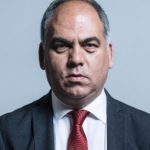
  • James Wild – 2023 Speech on the Equipment Theft (Prevention) Bill

    James Wild – 2023 Speech on the Equipment Theft (Prevention) Bill

    The speech made by James Wild, the Conservative MP for North West Norfolk, in the House of Commons on 3 March 2023.

    I, too, congratulate my hon. Friend the Member for Buckingham (Greg Smith) on reaching this stage, and I look forward to his Bill hopefully passing later today. I also wish him a happy birthday. The Bill makes important changes to prevent the theft and resale of equipment and tools that are essential to agricultural businesses in North West Norfolk and across the country. The Bill has a relatively limited initial scope aimed at preventing the theft of quad bikes and ATVs, but I was pleased, as my hon. Friend the Member for Aylesbury (Rob Butler) just referred to, that the Minister confirmed during Committee that the Government intend to extend the provisions beyond agricultural equipment to commercial tools as well.

    There is currently no legal requirement to fit immobilisers or forensic marking to machinery and equipment, although some manufacturers choose to do so on a voluntary basis. By addressing that gap, the Bill will help to reduce this type of theft. In addition, the Bill allows the Secretary of State to require records to be kept relating to equipment that has been sold and its buyers.

    Rural crime, in particular agricultural machinery theft, has a significant impact on my constituents. The proportion of suspects being charged for offences in towns and cities is 24% higher than in the countryside, and that imbalance must be addressed. Data published by NFU Mutual in its rural crime report of 2022 estimated the cost of rural theft to be £40 million, of which £5 million was in the east of England. Some £10 million was agricultural vehicle theft, but it is broader than that. Anyone who has watched the latest series of “Clarkson’s Farm” will have seen that it raised the issue of GPS devices being stolen regularly, and I hope the Bill will be extended to deal with that issue.

    The Countryside Alliance’s rural crime survey presented stark statistics, with 32% of respondents reporting having experienced agricultural machinery theft, making it the second most reported crime, just 3% behind fly-tipping. Unsurprisingly, the rural crime survey found that agricultural machinery theft was respondents’ top priority for the police to tackle.

    As we have heard, an estimated 900 to 1,200 quad bikes and ATVs are stolen each year, and this theft is damaging the livelihoods of farmers in my constituency and across the country. The cost of that theft is around £2.2 million. After a fall in the number of these thefts during the pandemic, for understandable reasons, they are now on the increase. Quad bikes and ATVs are essential to farming and land management, and have become a crucial piece of equipment to get around on a farm instead of using a tractor, whether that is to check livestock, move animals, move feedstock or set up fences, as well as many other uses.

    I welcome the fact that my hon. Friend the Member for Buckingham has consulted widely; he gave a long list of the organisations he has worked with to get the Bill to this position. I am confident from the evidence I have seen that regulations requiring immobilisers and forensic marking will lead to a substantial reduction in this type of theft. I noted with interest in the explanatory notes that the proportion of road vehicles with immobilisers fitted increased to 98% between 1993 and 2013, which led to a decline of up to 45% in such thefts.

    There is also a wider problem of tool theft. A report found that nearly four in five tradespeople had experienced tool theft, which is a striking statistic. While the financial cost of this theft is more easily quantifiable, it also has a damaging impact on people’s health and wellbeing.

    I represent a rural constituency, and I believe it is important to introduce the regulations on ATVs as soon as possible. The Minister has indicated that he wants to do so by Christmas. While I support the extension of the Bill’s provisions to cover more agricultural and other equipment, any extra time required to develop that extension should not affect the plan to have the regulations in place by Christmas. I commend my hon. Friend the Member for Buckingham for his important work on getting the Bill to this stage, and I look forward to supporting it this afternoon.

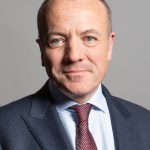
  • Rob Butler – 2023 Speech on the Equipment Theft (Prevention) Bill

    Rob Butler – 2023 Speech on the Equipment Theft (Prevention) Bill

    The speech made by Rob Butler, the Conservative MP for Aylesbury, in the House of Commons on 3 March 2023.

    It is a great pleasure to speak in this debate. I congratulate my hon. Friend the Member for Buckingham (Greg Smith), my constituency neighbour, on introducing this important Bill, to which I am pleased to have contributed in Committee. It will be a fitting birthday present for him if it passes Third Reading today.

    The Bill sets out much-needed changes that are straightforward, practical and will, as my hon. Friend says, no doubt help to reduce rural crime. From visiting farms in my constituency, I know how much the theft of machinery concerns farmers and the increasing impact it has had over the past few years. Indeed, the Countryside Alliance’s 2022 rural crime survey, which had more than 2,000 responses, underlines the extent of the problem, with 15% of respondents reporting having experienced the theft of agricultural machinery in that one year alone. Machinery theft was second only to fly-tipping.

    As my hon. Friend says, it is no exaggeration to say that farmers depend on their machinery for their livelihood. Deprived of that equipment, farmers are simply unable to work as efficiently, and their ability to generate revenue is diminished. Not only that, but there is the costly, slow and sometimes stressful process of replacing the stolen machinery. It is crucial that farmers are given support to deter criminals from stealing their machinery and, in particular, the all-terrain vehicles specified in this Bill. It is crucial that farmers are given support to deter criminals from stealing their machinery and, in particular, the all-terrain vehicles specified in the Bill.

    It is worth noting that demand for ATVs has grown recently at a rate that has outstripped the readily available supply. That, of course, increases the incentive for those with criminal intent, because they know they will be able to sell what they steal. The National Farmers Union has reported that members are having to wait three to six months to obtain one of these vehicles. That means the vehicles are especially lucrative because not only are they highly sought-after and easily portable, but there is a ready resale market in this country and, indeed, abroad. NFU Mutual’s annual rural crime survey stated that quad bike and ATV theft amounted to £2.2 million in 2021, which is not an insignificant sum.

    Most of us will know from our own experience with cars that immobilisers are a tried and tested deterrent. When affixed to ATVs, they make them more secure. Their value is clear: since 1992, all new cars in the UK have been built with an immobiliser and, in the following 30 years, vehicle theft plummeted by an incredible 43%. While other factors may have contributed, data produced by the Home Office demonstrated a strong correlation between the increased fitting of immobilisers and the reduction in stolen vehicles. In the light of that, the standardised fitting of these devices on all new-build ATVs and the retrofitting of them to other vehicles prior to sale could prove to be a relatively cheap and highly effective approach.

    My hon. Friend the Member for Buckingham has had the foresight in his Bill to consider not only the prevention of theft, but, where that sadly fails, the recovery of ATVs that have been stolen. The forensic marking he described should enable police forces to identify the ATVs they recover and more easily return them to their rightful owners. Furthermore, requiring sellers to record details of the sale, including information about the vehicle and the buyer, is key to the success of the Bill’s aims and provides an appropriate audit trail.

    I am pleased to hear that my right hon. Friend the Policing Minister is considering extending the Bill’s provisions, as and when appropriate, to go beyond ATVs and include other equipment and commercial tools—a subject that was much discussed in Committee. Tool theft regularly afflicts an array of trades beyond farming, such as roofers, electricians and plumbers. Presently, the second-hand tool market is unregulated. That means that sellers have no obligation to prove the origin of their items or even to evidence the original purchase. It has been argued quite understandably that this encourages and facilitates the theft of tools. As with farmers, not only is the loss of equipment an immediate financial loss for tradespeople; it prevents them from working and can disrupt the schedule of their building projects, causing frustration to them and their customers.

    The help that my hon. Friend’s Bill provides is necessary and timely. It is not right that security is such a significant concern for many farmers. The provision of immobilisers, forensic marking and recording of the sale of ATVs will reduce the likelihood that they will fall victim to this crime, which, as I have outlined, has an impact well beyond the immediate loss of the vehicle. I applaud my hon. Friend for the work he has done. I am absolutely confident that farmers in my constituency, as well as his, and across the entire country would benefit from this legislation. I look forward to his Bill making its way on to the statute book as soon as possible.

  • Greg Smith – 2023 Speech on the Equipment Theft (Prevention) Bill

    Greg Smith – 2023 Speech on the Equipment Theft (Prevention) Bill

    The speech made by Greg Smith, the Conservative MP for Buckingham, in the House of Commons on 3 March 2023.

    I beg to move, That the Bill be now read the Third time.

    Throughout the Bill’s passage so far, I have sought to make the case for what is essentially a very simple idea, but one that could potentially have a huge impact on the people and businesses up and down the land who suffer so badly when the equipment that they need to go about their business is stolen. This applies predominantly to quad bikes and all-terrain vehicles, which are specified in the Bill, but secondary legislation would enable the Bill to be expanded to cover other equipment such as tradespeople’s tools.

    When such equipment is stolen, it is not just a minor inconvenience. It is not just a case of saying, “Well, we will go down to the shops, or go on Amazon and order another.” Thefts such as these can put people out of work or out of business for days, weeks or even months, with considerable costs to meet before the insurance is paid—or indeed, in some cases, if it is paid. I am confident that the provisions in this Bill to demand that immobilisers are fitted to all new quads and all-terrain vehicles at point of sale and that forensic marking—of a standard that will make a significant difference—is applied to those pieces of machinery will, first, deter would-be criminals from stealing them in the first place and, secondly, give our hard-working police officers up and down the land a meaningful tool to be able to say, “We know where that piece of equipment came from. We know where it was stolen from. We know who the rightful owner is.” That will enable them not only to return it to the rightful owner, but, more significantly, prevent its resale, taking away the point of anybody’s wishing to steal it in the first place. Let us be honest: the thieves of quad bikes, machinery and equipment are not stealing those things to use them. They are not using the quad bikes to round up sheep anywhere; they are not stealing power tools to do some DIY at home. They are stealing that equipment to sell and monetise it, and if they cannot do so because of the forensic marking upon it, they will not steal it in the first place.

    The genesis of this Bill was a community Facebook page in my Buckingham constituency, following a spate of thefts from trades vans in the town. Local people put their heads together and came up with the idea for a mechanism to disincentivise the resale of stolen goods, starting with trying to set up a national database of serial numbers. Over the months since I was lucky enough to be drawn in the private Member’s Bill ballot, I have worked closely with the police and many others to work out how we can make such a mechanism work. I give a lot of credit and thanks to Superintendent Andy Huddleston, a Northumbria officer who is the national lead on rural crime.

    Through consultation with police forces, including my own home force in Thames Valley, where Superintendent Hutchings leads the rural crime taskforce, with other police officers, the National Farmers Union, the Countryside Alliance, the Country Land and Business Association and many farmers in my own patch, as well as the manufacturers and the organisations representing them, we came up with what I hope is a consensual set of measures that will make a difference. We have shaken down all the things that could get in the way; for example, the original idea of serial numbers was quickly dismissed, because for many manufacturers those serial numbers are not unique. Instead, we opted to put everything into forensic marking and to include measures on immobilisers specific to quad bikes.

    Those less familiar with rural communities might ask, “Is this such a huge priority?” I must say categorically that it is. Quad bike thefts have been running at between 800 and 1,100 per year in recent years. Conferring with the police earlier today, I reconfirmed some of the latest figures. Let me give a comparison: in January 2022, across the country, 52 quad bikes were stolen, but in January this year that number was up to 78. The numbers for larger machinery, particularly agricultural machinery, are even more frightening: in January 2022 there were 29 thefts of large machines, but in January 2023, I am afraid the number was up to 131. In February 2022 it was 19, but in February this year it was 122.

    Such theft is a considerable problem for rural communities across the whole of our United Kingdom; NFU Mutual, which insures the vast majority of agricultural machinery in the country, has released figures suggesting that it paid out approximately £2.2 million on agricultural thefts in 2021 alone. Likewise, the Countryside Alliance’s rural crime survey shows that 43% of respondents had been the victim of rural crime, with 32% of them saying that the crime was the theft of equipment.

    Equipment theft is a huge problem that we have to tackle, and this framework Bill gives my right hon. Friend the Minister the ability in secondary legislation to define the forensic marking standards that are needed and, indeed, to expand forensic marking to equipment types beyond quad bikes, ATVs and side-by-sides. I am confident that this will make a massive difference by preventing crime and ensuring that people who rely on such equipment to go about their daily business, be that farming, food production or another trade, have much greater confidence that their equipment is safe and will be there when they start work.

    I understand there is some criticism that the cost to the end user will be an additional burden but, given that forensic marking costs between £20 and £30 per product and an immobiliser fitted at the point of sale, rather than in the factory, costs between £70 and £100, the cost of ensuring that equipment is safe and has less chance of being stolen is not very high at all, particularly when we factor in the expected reduction in annual insurance premiums for such products, which many in the industry inform me will more than offset the initial cost of this measure at the point of purchasing a new quad bike, a new tractor GPS unit or whatever equipment it might be.

    The police say the Bill will make a huge difference and, having grown up in a police family, I put an enormous amount of trust in our police. I want to ensure that the professionals who go out each day to keep us and our property safe have every power, resource, law and regulation they need to deter would-be criminals, and to bring to justice those who commit crime. I have great confidence that this Bill will do that.

    I am grateful to the Minister for supporting the Bill’s passage so far. Likewise, I am grateful to the Opposition for supporting it on Second Reading and in Committee. I hope that spirit of co-operation will continue under the new shadow Minister, the hon. Member for Aberavon (Stephen Kinnock). With the support of colleagues, I look forward to the Bill passing and going to the other place before finally, I hope, becoming an Act.

  • Neil Coyle – 2023 Personal Statement in the House of Commons for His Behaviour

    Neil Coyle – 2023 Personal Statement in the House of Commons for His Behaviour

    The statement made by Neil Coyle, the Independent MP for Bermondsey and Old Southwark, in the House of Commons on 3 March 2023.

    The report of the Independent Expert Panel into my conduct has been published today. I want to say how sorry I am for the upset and offence my behaviour caused last year. I wish to specifically apologise to the two complainants who were subject to my drunk and offensive behaviour and attitude. I cannot apologise enough for the harm and upset caused, and I am, frankly, ashamed of my conduct. It should not have happened. No one should leave any MP’s company so shocked or appalled at their inappropriate behaviour or failure to meet the standards rightly expected of this office.

    I also apologise to my constituents in Southwark. They faithfully put their trust in me to stand up for their values here in Westminster in three consecutive general elections, and I failed to represent them in the way they deserve or a way they would recognise. I owe a debt of gratitude too large to ever repay to my constituents for the privilege of serving our wonderful, diverse community. I am ashamed that this apology is both necessary and overdue. I apologise to the members of my local Labour party, who also expect me to represent the best of our values in this place, and who last year I also let down so badly.

    With permission, Mr Deputy Speaker, I also wish to thank the two complainants for their bravery. I do not doubt that it was not easy to submit the complaints. Their courage has ensured that standards have been upheld through an independent process that I was proud to support the establishment of, and that exists to tackle the problematic behaviour I sadly exhibited last year. It is right and proper that I have been held to account and sanctioned accordingly, and I take my punishment on the chin. I fully accept my failings and, again, express my sincere apologies. I will use the time for which I am suspended to reflect on self-improvement, and I have already undergone some training, including on tackling unconscious bias, which I recommend to all Members and their teams.

    I owe the complainants my further gratitude for calling out my upsetting words and actions. It forced me to recognise that my drinking had become a dependency and to seek help. On 1 March this week, I celebrated a year since I stopped drinking, and I would not have been able to stop without their effective intervention. In the healthcare I have received since last February, it has also been made abundantly clear to me that, had I not stopped, my drinking would likely have caused a significant stroke or worse. Their intervention has quite possibly saved my life.

    Going forward, I will remain abstinent to offer the greatest chance for my own health to continue to improve, for the best relationship with my daughter and family to continue to grow, and for the best service to my constituents to continue. I hope that in speaking out publicly about ending my alcohol dependency, I am also able to support others struggling to maintain or regain control.

    In closing, I thank the Speaker’s Office and the wider parliamentary team, including the Whips, the Serjeant at Arms team and those in the health and wellbeing service, for all the support provided over the last 12 months, especially to enable me to stop drinking. I could not have done it without the tremendous help along the way, especially from my own small team who work wonders for Southwark, and who I will cherish even more for their hard work throughout the difficult, overstretched period I created for them in the last year.

    Going forward, I will endeavour to be a stronger ally to the east and south-east Asian community in order to prove my apology to the journalist who had the courage to complain, as well as to my constituents, who too often see the downplaying of the discrimination and hate crime they experience, and to my own family, who I have let down. Two of my brothers have Chinese wives and I have two Chinese nieces and a nephew. I also need to show them that this was an aberration and ensure that they can, once again, be proud of me.

    I wholly and unreservedly apologise again for my offensive language and behaviour last year. I know that I let a huge number of people down, and I am sorry to everyone who saw drink get the better of me. I am resolute that it will never happen again.

  • Michael Tomlinson – 2023 Statement on the Sentencing of David Carrick

    Michael Tomlinson – 2023 Statement on the Sentencing of David Carrick

    The statement made by Michael Tomlinson, the Solicitor General, on 3 March 2023.

    David Carrick’s crimes were abhorrent, and the scale of his offending over so many years, and against so many women, will stay in our minds for years to come.

    The fact he acted with apparent impunity – as though his status as a serving police officer made him untouchable – is a particularly disturbing factor.

    Because of the strong feelings this case evokes, it came as little surprise that I received so many referrals under the Unduly Lenient Sentence scheme to consider the term of 32 years minus time served handed to Carrick .

    I have received full and detailed legal advice and considered the issues raised very carefully and concluded Carrick’s case cannot properly be referred to the Court of Appeal.

    Such a referral can only be made if the legal test is met, irrespective of the seriousness of the offending or the emotions the offending may evoke in all of us. But my duty as a Law Officer in considering whether sentences may be unduly lenient is to act quasi-judicially and independently of government, even when it is not easy or popular.

    At sentence, Mrs Justice Cheema-Grubb described the “irretrievable devastation” Carrick has wrought on the women who were victims of his sickening offences, and I am satisfied that she gave careful and detailed consideration to all the features of this case. These include the seriously aggravating factor that David Carrick was a serving police officer and the impact of his horrendous crimes on public confidence in policing, particularly in relation to cases of rape and sexual violence.

    She also had to consider the guilty pleas that were entered by David Carrick and the reduction in sentence guilty pleas attract.

    The threshold for referral is a high one, and that was not met in this case. It is only met if the sentencing judge made a gross error or imposed a sentence outside the range reasonably available in the circumstances of the offending.

    My thoughts remain with the offender’s victims, and everybody affected by his despicable acts.

  • Johnny Mercer – 2023 Op-ed on the Launch of the Veterans Welfare Review

    Johnny Mercer – 2023 Op-ed on the Launch of the Veterans Welfare Review

    The Op-ed, originally published in the Daily Express, by Minister for Veterans’ Affairs Johnny Mercer and republished by the Government as a press release on 2 March 2023.

    Veterans deserve as much support off the battlefield as they had on it. While the vast majority of our military personnel go on to live happy, healthy and successful lives, for those who struggle after leaving service, getting the right help – in employment, housing and health – can be an absolute lifeline.

    It might be an infantry soldier leaving the Army after ten years, and looking for advice on what to do next. Or a sailor who left the Navy two decades ago, and who has been coping fine – until the death of a loved one brings back painful memories from the past. Whatever the circumstances, our veterans need to be able to access support that is human, sensitive and that works for them.

    So today I and the Minister for Defence People, Veterans and Service Families are jointly launching a review into welfare provision for veterans that come under the umbrella of Veterans UK.

    We’re doing this for two reasons.

    First, because we have a moral duty to give our former service personnel the best help we can. They risk their lives for this country. The least we can do is make sure the support they’re given meets the needs of today. Yet for too long veterans services have suffered from under-investment, and been over-reliant on paper records and outdated tech. This is 2023. We live in a digital age – and it’s time our services reflected that. That’s why I have personally pledged to finally deliver the Veterans Digital ID card this year, to make it easier for ex-service personnel to access services across the country.

    The second reason is a by-product of the fact that under this government, veterans’ issues are finally getting the political priority they deserve. In 2019 we launched the Office for Veterans’ Affairs, which drives government support for former service personnel from the heart of government.

    We’ve stepped up in areas such as health, with the creation of Op Courage, the veterans mental health and wellbeing service in England. In the coming weeks we will launch a new chronic pain service, which will create one simple clear path for veterans who have injuries from their time in the military to access care for long-term pain. And this year we will end veteran homelessness through Op Fortitude.

    As our support expands, we have to look carefully again at the efficiency and effectiveness of what we’re currently providing under the banner of Veterans UK. Is accessing help too confusing? Are we doing too much in one area and not enough elsewhere? How can service provision be improved? These are key questions this review will answer.

    That way, we can make good on our promise to make this country the best place in the world to be a veteran.

  • Lucy Frazer – 2023 Speech at the Gambling with Lives Annual Parliamentary Forum

    Lucy Frazer – 2023 Speech at the Gambling with Lives Annual Parliamentary Forum

    The speech made by Lucy Frazer, the Secretary of State for Culture, Media and Sport, on 1 March 2023.

    Culture Secretary speaks ahead of the publication of the gambling white paper.

    Good afternoon everyone,

    And I wanted to start by thanking Liz and Charles for inviting me to speak at this event and thank you very much for your very powerful speech.

    You have both been, as many of you have been in this room, tireless and devoted champions in this area, and I know Gambling with Lives does incredibly valuable work to support families in this room but also who are across the country.

    Shortly after I was appointed I read your response to the call for evidence and I was struck by the harrowing stories of people like Robert and Fred, whose lives were ruined by gambling, and as a mother I can’t begin to imagine the grief and sense of loss of all your families.

    And though I’ve only been Culture Secretary for three weeks, meeting all of you and hearing your experiences was one of the first things I wanted to do in this role.

    Because it’s so important to hear directly from families who have been touched by these issues, and I really value your input when looking at gambling reform.

    So thank you, Liz, thank you Charles, thank you everybody – and I’m really pleased that your hard work was honoured in the New Year Honours List.

    I have also read the House of Lords report on Gambling Harm Time for Action and I recently met with the lived experience advisory panel. I heard some really moving stories and I am struck by how diverse their experiences were.

    One person had lost over £1 million. Another never bet more than £1 on a spin.

    One young man had started gambling at the age of eleven. Many tried to self exclude but found the enticements drawing them back in just too difficult.

    I also wanted to say that I know it must be very frustrating to have yet another ministerial team leading the government’s work on gambling, and I know that you might be worried about further delays to the white paper.

    So let me reassure you that White Paper is an absolute priority for me, and for the Prime minister, and we are committed to publishing it soon.

    But I do want to give these issues justice and take some time to make sure that I do meet with you and others to really understand the issues. I am particularly conscious of the vulnerability of young people.

    And of course you know very well, gambling doesn’t just destroy the lives of the gamblers themselves, it has a devastating impact on their loved ones.

    The Review of the Gambling Act is an opportunity to make the changes we need, and to make sure we have the right protections in place for the digital age.

    Nearly every area of gambling policy is in scope, and I want to make sure your views are heard and reflected.

    I am also conscious there are a variety of views on the way forward.

    Of course, the White Paper when it is published will not be the last word on reform. I’m really keen to keep talking to you all, and to make sure we understand the drivers of gambling harm and how we can protect the public.

    So thank you so much for everything you’ve done so far.

    And for everything I’m sure you’ll continue to do in the months and years to come.

  • Grant Shapps – 2023 Chatham House Speech on Greater Energy Independence

    Grant Shapps – 2023 Chatham House Speech on Greater Energy Independence

    The speech made by Grant Shapps, the Secretary of State for Energy Security and Net Zero, at Chatham House in London on 1 March 2023.

    Good afternoon everyone.

    It is great to be here at 10, St James’s Square. Famous not just as the Chatham House headquarters of course, but also the home of three ex-Prime Ministers.

    Including two eminent Victorians ones, the Earl of Derby, and William Gladstone, whose terms in office spanned a period of phenomenal economic growth during the second half of the 19th century.

    Of course, there were many different reasons for that growth, but the real powerhouse behind the Industrial Revolution was a single commodity – coal.

    For so long, cheap and abundant needed in such enormous volumes as industry expanded that by 1900, coal powered an incredible 95% of the British economy.

    Causing some to fear that supplies could run out. Bringing booming Britain to an abrupt halt. Economist Stanley Jevons wrote a book, predicting the likely exhaustion of our coal mines. The Times and the Economist published articles about it.

    And yet, in the race to industrialise, no-one addressed our complete reliance on just one source of domestic energy. Or what was assumed to be one of our greatest strengths, and how that could become one of our greatest vulnerabilities.

    Because energy security was simply not a priority.

    Today I want to explain why this backstory has parallels with modern Britain.

    And how we will learn from our past mistakes, to deliver my ambition as Energy Secretary for wholesale electricity prices to become amongst the cheapest in Europe.

    Russia-Ukraine

    Despite those dire warnings about coal’s longevity during the Gladstone era. We know that it became a far more enduring power source than anyone could possibly have imagined.

    Indeed, thanks to Putin’s illegal invasion of Ukraine 12 months ago, it’s even experienced a brief revival.

    Although Britain has slashed her coal use from 40% a decade ago, to less than 2% today. Some countries are reopening mothballed coal plants to replace Russian gas.  We’ve kept two or three of ours on standby – but thankfully have not had to use it this winter.

    We hope, for the sake of our climate, that coal’s renaissance will be very brief.

    Just as we pray – for the sake of the brave Ukrainian people – that this appalling, pointless war is over before too long.

    Putin has achieved nothing from marching into a sovereign nation, beyond disrupting energy supplies and hitting families with higher bills, killing thousands and displacing millions

    In every way, his reckless gamble has fallen apart.

    His military catastrophe. His miscalculation of the West on whether we would be divided. His spectacular undermining of his own country’s interests.

    The past year has shown that Russian fossil fuels – like Putin himself – belong in the past.

    The fallout from this tragic conflict may have caused us some short-term challenges and we know that it has. But ultimately, Putin’s war will just hasten the energy transition we all want to see

    Indeed, actually I’d go further. I’d say it marks a crucial turning point for Britain’s energy resilience.

    Never again will we be held to hostage by a tyrant.

    Never again will we allow our energy security to be threatened.

    And never again will we let one man hit the pockets of every family and business in Britain causing the government to step in and pay half – half – of a typical household energy bill.

    Instead, by accelerating plans to diversify, decarbonise and domesticate our energy supplies, we will take back power.

    And reform our energy market. To secure cheap, clean energy that Britain needs to prosper.

    Department for Energy Security and Net Zero

    So, creating the Department for Energy Security and Net Zero is a clear statement of intent from this Government.

    Nearly twice the size of the old Department of Energy and Climate Change.

    The new Department can now give energy and net zero the full and dedicated attention they palpably deserve.

    So, Chatham House, here are my main objectives as Secretary of State:

    1. To set Britain on a path to energy independence, in other words, delivering energy security.
    2. To bring bills down as soon as possible, and keep them down, so wholesale electricity prices are among the cheapest in Europe, delivering consumer security.
    3. To decarbonise energy as part of our commitment to net zero, delivering climate security.
    4. And to play our part in reducing inflation and boosting growth, delivering economic security.

    Distinct though these may be, each of these four objectives are closely entwined.

    Each one depends on the success of the other three.

    So a key mission for the new Department will be to work across different disciplines, and make best use of our expertise.

    But they also feed into the Prime Minister’s five priorities for Britain, in particular to halve inflation and get our economy growing, to build a strong, stable and prosperous future, thereby reducing debt in the medium term, for our country.

    The challenges

    I’m the first to admit the challenges we face are considerable. For decades, Britain has been increasingly reliant on polluting, imported fossil fuels. We’ve neglected investment in other forms of power, and in partiuclar in nuclear power.

    And that has left us more exposed to volatile international energy markets.

    The government has stepped in this winter, as I have explained, paying half of a typical household bill and a third of a typical business bill, even if many people perhaps don’t realise that’s what we’re doing in the face of rising prices

    I will continue to fight on behalf of the consumer – just as I’ve done recently with the pre-payment meters scam. But to address the main objectives I’ve set out.

    We must wean ourselves off fossil fuel imports. And remove the direct link between gas prices and renewables. And replace them with cheaper, cleaner, domestic sources of energy.

    Powering more of Britain from Britain.

    UK strengths

    Let’s not forget what we’ve achieved already.

    We were ranked top 3 in the world last year for clean energy investment – only the US and China, obviously much larger countries, were higher.

    We are a global leader in offshore wind power – with the world’s largest offshore wind farm.  And the world’s second largest.  And the third.  And fourth largest.

    And we’re pioneering many breakthrough energy technologies, through our open ecosystems. We have so much to promote here in Britain.

    The thriving tech sector. Our world class universities. and the North Sea, described recently by the Economist as “Europe’s new powerhouse”.

    Plus, our position outside of the EU gives us the freedom to regulate and deregulate, and build our business-friendly environment.

    So, we can and have increased energy security whilst decarbonising faster than any other industrialised nation. We expect growth in offshore wind to support 90,000 jobs directly and indirectly by 2030.

    And we’re developing the next frontier in this exciting industry. floating offshore windfarms – Currently the only operational ones in the world for example, is in the Celtic Sea around Cornwall and Wales.

    Proving that Britannia still rules the waves!

    We have incredible potential in areas like carbon capture and hydrogen. Carbon capture clusters, and exporting the technology, could support 50,000 UK jobs by 2030, with the backing of our £1 billion CCS Infrastructure Fund.

    Hydrogen hubs like places in Teesside, bringing back investment to areas that experienced significant decline during the 20th century

    And we promise sustained growth for the future.

    And we’re not just concerned with creating new jobs.

    Through our North Sea Transition Deal, we’re helping to decarbonise oil and gas and protecting thousands of existing jobs as well. So, bringing all this work together through the Energy Security Bill – the vehicle for delivering our strategy.

    It will modernise the way that we heat people’s homes.

    It will turbocharge British technology.

    And it will liberate private investment, scaling-up jobs and growth.

    Private investment

    But this is not just all about government, of course. My new department will be working flat out to fire up private investment in our energy transition.

    A couple of weeks ago I was meeting with Bill Gates to discuss how green energy opportunities can work here in Britain. He was hugely impressed by the drive and innovation, the political will which is not universal throughout the rest of the world, to transform energy security.

    His ‘Breakthrough Energy’ initiative was founded in 2016 to invest in fledgling green clean energy projects that have enormous potential. It’s just the kind of stimulation we need to scale-up green energy businesses in the UK.

    Nuclear

    But alongside all of those renewables, I am also firmly committed to nuclear within our future energy mix.

    We’re progressing with the construction of Hinkley Point C, and driving forward Sizewell C, a sister project that I funded at the end of last year, which could be powering the equivalent of six million homes and  supporting 10,000 jobs – it’s the first time in 40 years public money has been committed to nuclear in this country.

    And we’re setting up Great British Nuclear, to produce a resilient pipeline of projects, so it is not the last. I’ve appointed the country’s first ever nuclear minister in Andrew Bowie – already dubbed ‘Atomic Bowie’ within our department.

    All of this together will help us to meet those legally-binding target of net zero by 2050.

    Net zero and energy consumption

    As well as creating new green energy and jobs of tomorrow, we must make sure that we energy efficiently today. Our goal is to cut energy consumption from buildings and industry by 15% in this decade.

    Backed by £6 billion funding between 2025 and 2028, on top of £6.6 billion provided in this Parliament. This winter I know has been incredibly difficult for households across the country.

    Thankfully, there are now signs of the wholesale gas price coming down. But if anything positive has come from the past few months, it’s built awareness of the need to increase efficiency of energy use. An awareness we must develop, even when energy prices return to normal.

    Because the “Net Zero” part of my Department’s title is really just the flip side of “Energy Security”.

    All too often I think in the green debate in this country, it has been framed by a tiny minority of people who glue themselves to motorways. But that’s not the future when it comes to tackling climate change.

    I see decarbonisation as a fundamental, and mainstream aspect of everything we do.

    Conclusion

    With hindsight, then, we can perhaps forgive Gladstone and Lord Derby for neglecting energy security. Coal supplies had long been considered inexhaustible.

    And there was little concern for or even recognition of environmental impact as Britain’s economy boomed at that time. Today, by contrast, we have many compelling reasons to think differently.

    Putin’s invasion of Ukraine demonstrated something that the UK already appreciated – fossil fuels are not the future. Instead, greater energy independence, by investing in renewables and nuclear, is the way to ensure aggressors can never again hit people’s energy bills.

    And this reason alone is justification to overhaul our energy strategy.

    But when it’s also critical to achieving net zero.

    And creating hundreds of thousands of green jobs to level-up Britain. Then we must address energy security with much greater urgency and resolve.

    Those Victorian Prime Ministers were lucky, fears over coal reserves were ultimately unfounded as we know.

    But we won’t take a chance on our energy security again.

    This time, we’ll choose the responsible path.

    Make the right decisions.

    For our environment.

    For our prosperity.

    And for our children’s future.

    Thank you.

  • James Cleverly – 2023 Speech on the Nigerian Presidential Elections

    James Cleverly – 2023 Speech on the Nigerian Presidential Elections

    The speech made by James Cleverly, the Foreign Secretary, on 1 March 2023.

    The United Kingdom commends Nigerian voters for their participation in the Presidential and National Assembly elections and for their patience and resilience in exercising their democratic rights. We congratulate the President Elect, Senator Bola Ahmed Tinubu.

    We note the position of opposition parties on the election outcome and the concerns expressed by observer missions and civil society about the organisation of the process, including delays and technical challenges. We encourage the authorities to examine all concerns carefully, take action to resolve outstanding issues and focus on delivering the will of the Nigerian people.

  • Grant Shapps – 2023 Speech at Norwegian Royal Plenary Session

    Grant Shapps – 2023 Speech at Norwegian Royal Plenary Session

    The speech made by Grant Shapps, the Secretary of State for Energy Security and Net Zero, in London on 1 March 2023.

    A little over 80 years ago, just before midnight, on Tuesday February 16th, 1943…

    A small team of Norwegian commandos, trained by the British Special Operations Executive in Scotland….. parachuted from an RAF plane onto a freezing mountain plateau in Telemark.

    Against overwhelming odds…..

    They managed to blow up part of the hydroelectric power plant at Vemork that had been taken over by the Nazis.

    Our Norwegian friends here will know, that it was the largest plant of its type in the world at the time – and a symbol of Norway’s status as an energy superpower.

    Not only was it the most audacious act of sabotage in modern military history..

    But because Vemork was mass producing heavy water used in the nuclear fission process…

    These heroes ended Hitler’s dream of building a nuclear bomb.

    Eight decades on, Britain and Norway still share the same special bond that made this extraordinary attack possible.

    Critical allies in standing up to aggression, most recently Putin’s evil war in Ukraine…..

    And we’re still committed to making the world a more secure place.

    Our bonds stretch back centuries; indeed, many British names and traditions bare the mark of the Norsemen and women who settled here many hundreds of years ago.

    Even our royal families are related – and it is a pleasure and honour to welcome His Royal Highness, Crown Prince Haakon to London today and – actually – back to London. After all, His Royal Highness studied here in London.

    I know that these ties will help us to continue working together as we speed up our transition to net zero…

    And build a green and prosperous future for all.

    Norway and Russia

    We are also hugely grateful for what you are doing today.

    Norwegian gas has been critically important in providing energy resilience to Europe this critical winter.

    Including for Britain – where it accounts for about a third of our current gas consumption.

    As we reflect on this year’s barbaric war in Ukraine, we have all been taught a valuable lesson.

    Never again must we allow our country to be held to ransom on energy as Putin has done.

    We must join together and utilise our flourishing renewables industries to defeat energy tyranny.

    Renewables

    Like Norway, we want to be smart about the way we think about our energy.

    And smart with the way we use our extraordinary renewable resources and green tech leadership.

    And as the UK works towards my goal of delivering the cheapest wholesale electricity prices in Europe by the middle of the next decade..

    …we can start to think about how best to nuture our energy industries for the long term.

    And like your fantastically successful sovereign wealth fund, we want to think about how we ensure the benefits of renewables are fed back into the economy – for the good of all.

    From offshore wind to carbon capture, utilisation and storage and to hydrogen..

    We will support these vital technologies, ensuring that they work seamlessly across borders.

    For example, our two countries need to work out the best use of the vast carbon storage capacity in the North Sea.

    And we need to ask how best we can work with other countries to increase CO2 trading across boundaries……. as well as working together on hydrogen.

    Indeed, I look forward signing after the speeches the expanded Memorandum of Understanding with Norway on Carbon capture and storage which will include closer collaboration on hydrogen.

    Conclusion

    Eighty years after that audacious Telemark raid we must join together and join forces once again…

    I know that our shared vision and our shared history will help us meet our big 21st century challenges:

    Energy security,

    Sustainability

    And affordability.

    These three goals need to become a mantra engrained onto our collective psyche so we can make the rest of this century a success for both our countries, and for the rest of the world.