Category: Speeches

  • Jeremy Hunt – 2023 Comments on Silicon Valley Bank UK

    Jeremy Hunt – 2023 Comments on Silicon Valley Bank UK

    The comments made by Jeremy Hunt, the Chancellor of the Exchequer, on 13 March 2023.

    The UK’s tech sector is genuinely world-leading and of huge importance to the British economy, supporting hundreds of thousands of jobs. I said yesterday that we would look after our tech sector, and we have worked urgently to deliver on that promise and find a solution that will provide SVB UK’s customers with confidence.

    Today the government and the Bank of England have facilitated a private sale of Silicon Valley Bank UK; this ensures customer deposits are protected and can bank as normal, with no taxpayer support. I am pleased we have reached a resolution in such short order.

    HSBC is Europe’s largest bank, and SVB UK customers should feel reassured by the strength, safety and security that brings them.

  • Florence Eshalomi – 2023 Speech on International Women’s Day

    Florence Eshalomi – 2023 Speech on International Women’s Day

    The speech made by Florence Eshalomi, the Labour MP for Vauxhall, in the House of Commons on 9 March 2023.

    It is an honour to follow the hon. Member for Southend West (Anna Firth). A number of us do hold our mothers dear; I think of my late mother, who was not fortunate enough to see me elected to this place, but I know that she is with me every day. She was my biggest inspiration, and to echo the words of the hon. Member for Livingston (Hannah Bardell)—who is not in her place—my mother was also a single mother. We have to continue to pay tribute to the role that single mothers up and down the country, especially during this difficult time where a number of those single mothers are navigating the cost of living crisis but are still providing for their children.

    There are so many fantastic young women in my constituency of Vauxhall, but there is one young woman who I want to pay special tribute to this afternoon: Ebinehita Iyere, who is the founder of Milk and Honey Bees, a creative space for young black women in south London. She and a number of girls wrote a book last year, “Girlhood Unfiltered”. Milk and Honey Bees is a safe space for young black girls to talk about some of the issues and challenges that they face. The work that Ebinehita has done over the past few years in providing a voice and a space for those young black girls is so inspirational, and I just wanted to make sure that she was mentioned this afternoon.

    It is a real pleasure to speak in today’s debate, Mr Deputy Speaker, and to follow so many other inspirational women and their powerful contributions. As MP for Vauxhall, I am proud to represent the Brixton community that I have lived in all my life, but I am not alone in that: Brixton is in the unique position of being represented in this House by not one, not two, but three MPs, and I am proud that since the 2019 election, all three of us are women. Locally, Lambeth Council is led by Councillor Claire Holland. Marina Ahmad AM is my successor as London Assembly Member for Lambeth and Southwark, and 30 female Lambeth councillors provide strong leadership across our borough. I am delighted that any young girl or woman growing up in Vauxhall today has so many women to look up to, not just in politics but in our local businesses, our schools, our voluntary and community organisations, our wonderful cultural centres and our fantastic Oval Invincibles cricket team, who have won both The Hundred titles on offer since that tournament was launched in 2021.

    We should be proud of the progress we have made. We know that representation must be used to improve the rights of women and girls locally, nationally and globally; therefore, International Women’s Day is not just a celebration of our achievements, but a chance for us to recognise how far we must still go to achieve global gender equality. One area in which we still see a marked disparity is between men’s and women’s health outcomes. Women often do not get the treatment they need as quickly as men do, and that problem is driven by the lack of awareness about women’s health and the cultural tendency to view illness through the lens of a man. As co-chair of the all-party parliamentary group on HIV and AIDS, I wish to focus the rest of my remarks on the impact of HIV on women.

    Women make up a third of people living with HIV, with an estimated 31,000 women living with HIV in the UK and 20 million worldwide. In 2021, 556 women were newly diagnosed with HIV in England, accounting for 27% of all new diagnoses. The vast majority of those cases were likely due to exposure during heterosexual contact. What is most shocking is that black African women accounted for 38% of all women diagnosed, followed by white women, who accounted for 15%. Of the women diagnosed in 2021—this is a really shocking statistic—35% lived in London, and 47% were diagnosed late. That is a key issue that is highlighted by so many organisations and charities leading the fight against HIV and AIDS.

    Last month, we celebrated National HIV Testing Week, and I was proud to join other parliamentary colleagues across the House to demonstrate how quick and easy it is to get tested, but testing is only one tool in the prevention of HIV and AIDS. I put on record the fantastic, formidable women who are leading the fight against HIV and AIDS in the UK: Susan Cole, Deborah Gold, Lisa Power, Sophie Strachan, Angelina Namiba, Amanda Ely, Professor Yvonne Gilleece, Dr Claire Dewsnap, Professor Jane Anderson, Anne Aslett and Dr Laura Waters. Those are just some of the women I have met in my role as co-chair of the APPG on HIV and AIDS who are taking on that fight. If we are really to look at how we deliver services and make sure that we end new HIV transmissions by 2030, we must ensure that we remember women’s voices.

    We must have a strategy for tackling the persistent health issues that remain. The stigma, poverty, gender-based violence and immigration problems all intersect, with the result that women living with HIV struggle with not only their physical health, but their emotional wellbeing. To tackle this, we must achieve gender parity in the HIV response. That will involve ensuring equitable investment, priority and attention to women in HIV prevention, research, data and services. We must also ensure that HIV research addresses specific knowledge gaps around HIV in women, which will support the full participation and meaningful involvement of women. Finally, we must allow for better access to pre-exposure prophylaxis and other forms of HIV prevention.

    Lilian Greenwood

    Before my hon. Friend finishes her very powerful speech about the importance of listening to women’s voices in relation to HIV and AIDS, can I ask her whether she agrees that we also need to listen to women’s voices in a whole range of healthcare settings? I am thinking particularly of women harmed by failures in healthcare, including my constituent Sarah Hawkins, whose daughter Harriet was born dead as a result of inadequate maternity care, and whose second daughter Lottie is growing up without her big sister. I am also thinking of my constituent Peggy Gedling, who yesterday laid to rest her son Justin far too young. His life was cut short after she was prescribed the hormone pregnancy test drug Primodos. Does my hon. Friend agree that if women had been listened to, we could have avoided some of that harm?

    Florence Eshalomi

    I thank my hon. Friend for making that powerful intervention. When we look at the health disparities that exist, we see that it is really important that women’s voices are heard in terms of the treatment they are receiving. All of us as MPs will have received emails from female constituents detailing where they have not been listened to or believed; where sometimes, their symptoms have been unrecognised; where they have been told that they need more painkillers and “it will be okay, dear”. We need to make sure that those dedicated doctors and nurses listen to women, and believe women when they raise medical concerns.

    Dawn Butler

    My hon. Friend is making a very powerful speech. On the subject of women, the NHS and medical interventions, does she agree that structures such as body mass index, which was created to identify the average body of a man, does not relate to women? We have to look at all the systematic, structural misogyny that exists in our systems.

    Florence Eshalomi

    I thank my hon. Friend for making that really important point. In terms of how we identify some of the problems that women face, one of the other issues that we have worked on together is maternal death of black women—the fact that black mothers are more likely to die during childbirth or pregnancy—and some of the issues around their weight and long-term conditions not being taken into account when addressing those health inequalities.

    On this International Women’s Day, there is a lot more that we can and should be doing. We should be working together to improve the quality of life for millions of women, not just in the UK, but right across the world, and it is incumbent on us all to work together to say that we can bring the epidemic that started 40 years ago to an end by including women’s voices.

  • Anna Firth – 2023 Speech on International Women’s Day

    Anna Firth – 2023 Speech on International Women’s Day

    The speech made by Anna Firth, the Conservative MP for Southend West, in the House of Commons on 9 March 2023.

    It is a true privilege to speak in today’s debate. This time last year, I could not take part because I had not yet made my maiden speech. It is a particular pleasure to follow the hon. Member for Brent Central (Dawn Butler), who made a fascinating speech. I really commend the hon. Member for Birmingham, Yardley (Jess Phillips), who is no longer in her place, for her contribution. Nobody in this place, particularly someone listening to it live for the first time, can fail to be moved by it. It is incumbent on us all to try to eliminate violence against women. I look forward to the day when we can come to this Chamber and have this debate and the hon. Lady does not need to read out that harrowing list.

    I wish to start with three words: women, life, freedom. Many Members in this Chamber will know that those words are the strapline for the recent uprising in Iran. Yesterday was the first International Women’s Day since the brutal killing of Mahsa Amini, whose murder by the medieval regime was a lightning flash around the world. She has now become such a symbol of bravery, courage and hope.

    The women of Iran have been the victims of systematic oppression for the past 44 years. It is not just about religious dress codes; women are banned from singing in places, from taking part in certain sports, and even from attending certain games in stadiums. In short, they are treated as second-class citizens. However, as we all know, it has become far, far worse than that in the 175 days since the recent uprising. Following the death of Mahsa Amini, 82 Iranian women have been murdered by the regime. The Islamic Revolutionary Guard Corps have been disproportionately targeting women—targeting their eyes, targeting their chest and targeting their genitals. Only this week, we heard horrifying reports of several schoolgirls being poisoned in revenge for their role in the recent protests.

    I mention all of this because all that it takes for evil to prevail is for good men and women to stay silent. I am proud that, in this place, we are not staying silent about what is going on in Iran. It is a salutary lesson to consider that if any of us were to stand up and say these things in Iran, we would be in mortal danger. I have two young women who encourage me to join these protests. Every time, I think how lucky we all are that we can do this—that we can stand up for women. We could not do any of this if we were living in Iran. It is vital that we keep sending that message to the Iranian women that we stand with them, that this murderous regime has to go and that the eyes of the world are on them.

    Dame Maria Miller

    My hon. Friend is making a powerful point. It is a point that was made endlessly to me over the past three days in New York at the UN Commission on the Status of Women. The women who were there from Iran, from Afghanistan and from Ukraine need to hear vocal support from colleagues in Parliaments such as our own and at events such as the UNCSW. Does my hon. Friend agree that, when it comes to the agreed conclusions of that event, we need to be reflecting just the point that she has made: that the plight of these women cannot be forgotten.

    Anna Firth

    I absolutely agree with my right hon. Friend. It is so encouraging to know that those points have been reiterated in one of the highest commissions on the status of women, and it is extremely good to know that Iran has finally been taken off that commission. No such regime anywhere in the world has a place on any commission concerned with women’s right. I thank her for reminding us of that.

    We are so lucky that we can stand for public office. Although I am privileged to be the first woman to have been elected as the MP for Southend West, I am not the first female MP for Southend. Of course, Lady Iveagh represented that seat between 1927 and 1935, so I have a proud tradition behind me. We have so much further to go, as we all know. Just 31% of MPs are women, and since 1918, more than 100 years ago, only 561 women—not even an entire Parliament—have been elected. I say to any women who are thinking of coming into public office, particularly if they are in Southend West: “I want to hear from you, and I would be delighted to speak to you.”

    I am delighted that in Southend West, we have plenty of women putting themselves forward for election in May. I wish the very best of luck to Councillor Meg Davidson, Councillor Lesley Salter and—we hope—soon-to-be councillor, Cheryll Gardiner. I will be on the streets of Southend knocking on doors to support them, supported by the indefatigable deputy chairman Judith Suttling, who is still pounding the streets in her 80s and setting me a daunting and energetic example.

    I will use the time that I have to celebrate the incredible work that women do in my Southend West community. I, alongside our local paper, the Southend Echo, will soon launch a new community champion scheme in Southend to highlight our unsung and hidden heroes. The first hero is not unsung or hidden, however. She will be none other than our one and only Jill Allen-King OBE, who has spent her life standing up for people who live with blindness and visual impairments.

    For those who do not know Jill’s story, she lost her sight on her wedding day, aged just 24. Instead of collapsing in a well of despair, she got out there and has spent her entire life bringing to our community things that we now take for granted. Tactile paving—the little bumps on the pavement that we all see whenever we cross the road—is down to Jill Allen-King, as are the wheelchair-level buttons in buses, and she has done lots to get access to public spaces for therapy dogs. She has attracted the attention of well-known names, including Paul O’Grady and Michael Ball. Of course, she has her OBE, but this year, she has the Pride of Britain lifetime achievement award. Despite her blindness, she has been busy teaching Ashley Banjo from Diversity to do the cha-cha-cha.

    Sir Peter Bottomley

    Just to demonstrate that I have been around for a time, in 1986, when I became the junior Transport Minister, with responsibility for mobility for disabled people, Jill Allen-King took me for a walk around Westminster, helped to put in the first tactile surfaces just outside the Palace of Westminster, and gave much other good advice. Please give her my best wishes.

    Anna Firth

    I thank my hon. Friend—I will absolutely pass that on.

    There are so many wonderful women in Southend West whom I want to celebrate, so—in great Sir David fashion— I will now rattle through a whole list. First, the incredible Riz Awan at Citizens Advice Southend is a support for so many people across our community. She took over as chief executive as the covid pandemic was starting, and she kept the centre open to assist people in one of the most difficult of times. Also at Citizens Advice Southend is the award-winning Emily Coombes, who was recognised as a rising star by the Young Energy Professionals.

    I pay tribute to Jackie Mullan, chief executive officer of the SEN Trust Southend. Jackie set up that amazing organisation to support people with learning difficulties throughout our local community, and she is a huge inspiration. I would also like to mention Rachael, a constituent of mine who came to see me in this place only a few weeks ago. She has led an amazing battle to raise awareness of functional neurological disorder.

    We also have great role models in our Southend schools. Thirteen of our headteachers are women, showing that woman can, of course, take on such positions of responsibility and leadership.

    Vicky Ford

    As a fellow Essex MP, may I also give a shout-out to Deputy Police and Crime Commissioner Jane Gardner, particularly for her work on the Southend, Essex and Thurrock domestic abuse board? That board is commissioning fantastic work from charities—including Compass, Changing Pathways and Next Chapter—supporting victims of domestic abuse, running the perpetrator work that I mentioned earlier, and commissioning a network of independent domestic abuse advisers and independent sexual abuse advisers to work with victims. All that work, run by Jane and her team, is helping to get the numbers down so that fewer women suffer such awful abuse.

    Anna Firth

    I welcome my hon. Friend’s intervention; I am glad that we have also got Jane on the record.

    I will next pay tribute to Denise Rossiter, the excellent chair of Essex Chambers of Commerce. Denise is an absolute force and a consummate professional. She champions Essex wherever she goes, and she is a great support to female MPs in Essex.

    I must also mention Carla Cressy, who works tirelessly to raise awareness of endometriosis. I was delighted this week to host here in Parliament her event to launch Endometriosis Awareness Month.

    Last week, I was privileged to attend the Jubilee Awards at Southend Civic Centre. We celebrated women who have made a huge difference during the jubilee year and beyond. Shirley Massey is the president, and Kim Bones a member, of the Leigh-on-Sea branch of the Royal British Legion. Both are always there, year after year, doing their bit for our veterans.

    Ilda Stafa, who runs Welcome to the UK, has given advice, support and sanctuary to all the wonderful Ukrainian families who have come to Southend. Danielle Carbott is a real champion for our local environment, setting up the brilliant Litterless Leigh initiative. I must mention Danielle Bee, the organiser of the Bluetits Chill Swimmers cold-water swimming group—she has taken me out on one of those dips, and I can tell Members that it is an aptly named group. Brenda Knapp was nominated by staff and children because she comes into Leigh North Street Primary School voluntarily almost every day of the week. Staff and students at the school recognise that they simply could not do without her.

    Helen Symmons, the female CEO of Leigh-on-Sea Town Council, is doing a great job. The Lady McAdden Breast Screening Trust, which does so much to raise awareness of breast cancer, also has a female CEO.

    Karen Packer gives up her own time to volunteer tirelessly to give opportunities to guides and scouts. She is an incredible woman. During Parliament Week, I went to visit her brownie group, and we were challenged to build a Houses of Parliament of biscuits, using icing sugar as glue. It was quite a messy experience.

    Finally, I must mention my incredible constituency assistant, Julie Cushion, who won this year’s Parliament’s People constituency assistant of the year award. Quite apart from her help for me, just thinking about her contribution to the community makes me feel exhausted. She is the chair of our Mayor’s charity, raising hundreds if not thousands every year; she chairs the SEN Academy Trust; she is the director of two choirs; and she is a trustee of the YMCA and, of course, of the amazing award-winning Music Man project. Quite apart from that, she helps me almost every day of the week in one respect or another, and I pay tribute to her hard work in keeping me on the road.

    Finally, I could not miss out on the opportunity to once again celebrate my own incredible inspiration: my own mother, Dr Margaret Garrett. She has been a huge support to me throughout my life, and is now pretty much in sole care of my lovely dog Lottie while I am up here during the week. To her, I say just one thing: thank you.

  • Rishi Sunak – 2023 Press Conference in Paris

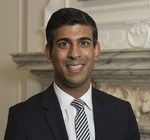
    Rishi Sunak – 2023 Press Conference in Paris

    The speech made by Rishi Sunak, the Prime Minister, at a press conference in Paris on 10 March 2023.

    Emmanuel, thank you for hosting us here today.

    Now, if we’re honest, the relationship between our two countries has had its challenges in recent years…

    …and I’m not just referring to you knocking England out of the World Cup.

    But I believe today’s meeting does mark a new beginning – our entente renewed.

    We’re looking to the future.

    A future that builds on all that we share – our history, our geography, our values.

    And a future that is far more ambitious about how we work together to improve the lives of the people we serve.

    We’ve discussed every aspect of our crucial alliance today.

    And made important progress in three areas in particular: illegal migration, energy, and security.

    Emmanuel and I share the same belief: criminal gangs should not get to decide who comes to our countries.

    Within weeks of my coming into office, we agreed our largest ever small boats deal.

    And today, we’ve taken our co-operation to an unprecedented level to tackle this shared challenge.

    We’re announcing a new detention centre in Northern France…

    …a new command centre bringing our enforcement teams together in one place for the first time…

    …and an extra 500 new officers patrolling French beaches.

    All underpinned by more drones and other surveillance technologies that will help ramp up the interception rate.

    And the legislation the UK has introduced this week supports this…

    …because it’s designed to break the business model of the criminal gangs and remove the pull factors bringing them to the Channel coast.

    Now, we will always comply with our international treaty obligations…

    …but I am convinced that within them we can do what is necessary to solve this shared problem – and stop the boats.

    Second, the UK and France are working together so that never again can the likes of Putin weaponise our energy security.

    You are helping us to secure our supply of nuclear power thanks to EDF’s incredible work at Sizewell C.

    And through our ports and interconnectors, we can be Europe’s gateway for non-Russian gas.

    Today we’re going further, with an ambitious new Energy Partnership.

    We have:

    Signed a new deal on civil nuclear cooperation…

    Agreed that France will examine the case for new energy interconnectors…

    And committed to work together on low carbon energy.

    Together, I believe we’re creating a future where every watt of energy

    powering our homes and industry will come from secure, sustainable, and reliable sources.

    Third, the UK and France share a special bond and a special responsibility.

    When the security of our continent is threatened, we will always be at the forefront of its defence.

    And today we’re going even further to strengthen our security and defence co-operation.

    We’ve agreed:

    To train Ukrainian marines, helping to give Ukraine a decisive advantage on the battlefield and for Ukraine win this war.

    To increase the inter-operability of our forces, harnessing the full potential of the Combined Joint Expeditionary Force.

    To promote security and stability in the Indo-Pacific, coordinating our carrier deployments.

    And we will jointly explore the development of complex weapons like air defence, combat air, and long-range weapons.

    Now, for decades we’ve been two of the world’s biggest defence powers, and leading contributors to NATO.

    And we will continue to stand together for freedom, democracy, and the rule of law.

    Finally, today there has also been a celebration of the richness of our cultures…

    …all that we give to each other, and all that we learn from each other.

    And so we’ve agreed to make it easier for our children to go on school exchanges…

    …and our museum curators, writers and artists to create and collaborate together.

    And that brings me to my concluding thought.

    For all the agreements we’ve reached today – in the end, it’s about people.

    The bonds of family, friendship, and solidarity that we share.

    And there’s no greater example of that human connection than the sympathy of the French people on the passing of Her Majesty the Queen.

    And I want to thank you personally, Emmanuel, for the graciousness of your words.

    They said everything about you as a leader and as a friend of Britain.

    You know, I’ve learnt very quickly in this job that there are some things you can control and some things you can’t.

    And one thing you can’t control is who you get as an international counterpart.

    I feel fortunate to be serving alongside you.

    And incredibly excited about the future we can build together.

    Merci, mon ami.

  • Ed Davey – 2023 Comments Calling for Resignation of BBC Chair Richard Sharp

    Ed Davey – 2023 Comments Calling for Resignation of BBC Chair Richard Sharp

    The comments made by Ed Davey, the Leader of the Liberal Democrats, on Twitter on 11 March 2023.

    The MOTD saga has shown failure at the top of the BBC and the need to urgently protect its independence.

    We need leadership that can uphold British values and withstand Conservative attacks.

    Under Richard Sharp’s leadership this hasn’t been the case. He must resign.

  • Alastair Campbell – 2023 Article in Support of Gary Lineker

    Alastair Campbell – 2023 Article in Support of Gary Lineker

    An excerpt from the article written by Alastair Campbell in the New European on 8 March 2023.

    “Language not dissimilar to Germany in the 1930s,” says Lineker. Too bloody right. Swarms. Invasions. Left wing lawyers. The liberal elite. They all starred in the story of the rise of fascism. Judges as “Enemies of the People?” Remember that one, which not a single member of this government condemned? Exactly what the pro-Hitler press called judges in the 30s.

    Indeed, if I were doing a media studies PhD right now I would be tempted to analyse the similarities between Der Stürmer and the Völkischer Beobachter in ‘30s Germany and the Mail, Express and Co of recent decades here, in terms of headlines, story selection, consistency of populist messaging, denial of critical voices.

    Polarisation. Populism. Post-truth. The 3Ps of modern autocracy. I honestly thought Sunak might be different. He is certainly not as incontinently dishonest as Johnson, or as utterly useless as Liz Truss. But that is such a low bar it is hardly worth making the comparison. On the 3Ps, at his “stop the boats” press conference and in his exchanges with Keir Starmer in the Commons, he showed himself to be just as bad as his predecessors.

  • Nicola Sturgeon – 2023 Comments on the Suspension of Gary Lineker

    Nicola Sturgeon – 2023 Comments on the Suspension of Gary Lineker

    The comments made by Nicola Sturgeon, the Scottish First Minister, on Twitter on 10 March 2023.

    As a strong supporter of public service broadcasting, I want to be able to defend the BBC. But the decision to take @GaryLineker off air is indefensible. It is undermining free speech in the face of political pressure – & it does always seem to be rightwing pressure it caves to.

  • Dawn Butler – 2023 Speech on International Women’s Day

    Dawn Butler – 2023 Speech on International Women’s Day

    The speech made by Dawn Butler, the Labour MP for Brent Central, in the House of Commons on 9 March 2023.

    When I was a teenager, I used to question why there are so many ways to tell the relationship status of a woman—Mrs, Miss, Ms—but there is just a Mr. I am still wondering that as a grown woman. Articles always include the age of the woman after her name, but only sometimes the age of the man. Why is that? Our laws and language are designed to keep women vulnerable and exposed in a particular way.

    Wera Hobhouse

    I was a secondary school teacher and, although a married woman, with four children, in my middle age, I was always “Miss”, whereas a man was always “Sir”. Is that not bizarre?

    Dawn Butler

    It completely is. Again, it is about language, and what it is designed for and to do.

    Dame Maria Miller

    The hon. Lady brings up the interesting issue of inequality in titles. I was very fortunate to be able to receive a damehood recently and I am greatly honoured to have it. But I note with interest that the spouses of those of my colleagues who have been knighted have a different title entitlement from that of my husband. Does the hon. Lady agree that her point about titles needs to be looked at on both sides of the coin—for men and for women?

    Dawn Butler

    Absolutely. We talk about equality and equity not only in actions, but in language. It all needs to be looked at, because certain systems and structures are designed in a certain way. As I said, it is to keep women exposed and vulnerable. For example, for sex workers, working alone is okay, but working in pairs is illegal. How on earth does that keep women safe? Just this week, during the debate on buffer zones around abortion clinics, many men were telling women how they should think, what they should do and who they should listen to about their bodies. Our structures are riddled with misogyny, racism and so much else, and it is time that we change how women are written about.

    I have campaigned for many things in this House. I have campaigned on domestic abuse policy, and trying to allow 10 days’ paid leave for people, particularly women, when they leave abusive relationships. In those 10 days, it could save a life because that is when they are most vulnerable. You are not safe when you leave an abusive relationship; you become more vulnerable.

    I have campaigned for changes in the use of language by the Met police, for instance, when they deliver briefings and press releases about missing and murdered women. I have also campaigned for changes in the judiciary, which is filled with many—please do not take offence at this, Mr Deputy Speaker—old white men with outdated views. I need to recognise the work of Judge Anuja Dhir KC, the first person of colour to become an Old Bailey judge. She is doing her very best to change how the judicial system works, but she is just one woman, powerful as she is. Today, I am campaigning for and championing the work of Level Up, and calling for a clause in the Independent Press Standards Organisation editors’ code on reporting fatal domestic abuse. The code needs to be one that journalists are legally bound to, not a voluntary code, and I will tell the House why.

    The way in which the press report domestic abuse is often inaccurate and undignified, and prioritises sensationalist headlines over responsible reporting. There is often negative framing of victims, and when this goes viral it is amplified over and over again. That is extremely damaging because it reinforces negative framing around the victims, and what is seen as acceptable or “deserving” behaviour of the woman—as it often is—who is killed. Thus, “sexism”, “misogyny”, “extremism” or “terrorism” are never words used when describing violent men. Why not? We have an epidemic in our country of domestic violence, domestic abuse and violence against women and girls. Level Up introduced the UK’s first guidelines on this and the BBC, The Mirror, The Guardian and the Metro have all taken that on board, but more needs to be done.

    The recent coverage of Nicola Bulley, Emma Pattison and Brianna Ghey shows us that the media reporting of women who are violently abused or killed is out of control. Emma Pattison was killed, along with her young daughter, by her violent husband and this was reported with the headline, “Did living in the shadow of his high achieving wife lead to unthinkable tragedy?” Another headline read, “Husband of Epsom College head who ‘killed her and their daughter before turning his gun on himself’ said he was ‘desperate to do more with his days’ after his business failed”. Why on earth would we accept our media reporting the murder of a woman and a young child in that way in our country? It is unacceptable and in this House we should be able to legislate against that, which is why we need a new, enforceable editors code.

    It is not an isolated incident when a woman is killed every three days by a man. My hon. Friend the Member for Birmingham, Yardley (Jess Phillips) read out those names today and that list never gets shorter. This is an epidemic.

    Vicky Ford

    I agree that this must not become an epidemic, so I would like to draw the hon. Lady’s attention to some of the work that has been done in this area in Essex, under our police, fire and crime commissioner and chief of police, particularly to intervene with perpetrators. The change hub works with them and it has resulted in a 95% reduction in violent incidents caused by those perpetrators. A campaign that encouraged people to self-refer led to more than 115 people referring themselves as perpetrators and they were then worked with. May I encourage her to look at the work in Essex to see whether she could get it into her own police area, as this work with perpetrators seems to be helping to reduce domestic violence?

    Dawn Butler

    First, let me correct the hon. Lady: this is not becoming an epidemic; it is an epidemic. It is an epidemic when a woman is killed every three days by a man, and we need to start—

    Vicky Ford rose—

    Dawn Butler

    I need to finish my point. We need to start referring to it as such. Yes, some good work is being done and there is good practice, such as some police forces having independent domestic violence advisers, but it is still not working because a woman is still killed every three days. So yes, we can acknowledge the good work, but I am not here today to do that; I am here today to push for changes in legislation so that we can save lives.

    Women and girls who are victims of abuse are never responsible for the abuse, and we need to start at that point. It is the perpetrator who is responsible, and media reporting must reflect that. Let me read out a few more headlines: “Husband jailed after he snapped and smothered nagging wife to death”, “Henpecked husband killed wife”, “Wife jibes about penis size drove hubby to murder”. These headlines are shocking. There will be people listening to this debate who will say, “Well, Dawn can’t be telling the truth; she must be lying.” I am not lying. Those are actual headlines.

    The hon. Member for Thurrock (Jackie Doyle-Price) talked about culture and language, and I must say that this fake culture war going on at the moment is extremely damaging to women and to other minoritised groups in our society. People say, “Why can’t I say what I want to say? Why can’t I do what I want to do?” This sort of language is having a damaging effect, and it is why we will not make progress.

    Kirsten Oswald (East Renfrewshire) (SNP)

    The hon. Lady is making some really important points about how language in the public discourse and in the media is often dehumanising, as we heard in the headlines she just read out. Those women were described in the most ridiculous fashion, considering the context. More broadly, the language of the media is also often very objectifying of women. On all of these fronts, it would be really helpful if one of the takeaways from today was that some of the people who are listening to this debate might think about that and perhaps change some of the ways they describe women.

    Dawn Butler

    I agree with my honourable friend. When a woman has been killed or murdered, the media will try to find a picture of her in a nightclub, or holding a drink, or with her hair down, or wearing a short skirt or dress, as if that was the reason she was killed or murdered. The misogyny that exists in our structures must be rooted out.

    I do not just talk about these things. I have worked hard on the House of Commons complaints procedure to change how this place works and operates. I am also working with the police. Wayne Couzens and the messages from the WhatsApp group prove exactly what black people have been saying for a really long time: structures built for the promotion of a certain type of white man are riddled with racism, misogyny, homophobia and everything else that tries to belittle others. It is an uncomfortable truth, but it is a truth that must be aired.

    When our police forces, jurors and judges are drawn from a society that allows outdated and damaging portrayals of domestic violence, the damage is clear: there is still one woman killed every three days by a man. It is time for us to make this long-overdue change if we are to reduce the number of women killed every year. I recognise that some work has been done, and that some work is being done with the Met police, but it is not enough.

    I wondered whether I should read out these WhatsApp messages to the House, and I have decided that I am going to read out a couple. This is a police discussion on domestic violence. The police said that the women who suffer from domestic violence have one thing in common: they are women who do not listen. Wayne Couzens and another police officer had a joke when they saw a young drunk woman on the train. The officer was asked:

    “Did you finger her to see if she was ok?”

    The officer responded:

    “I considered it. But she was a right old lump. So I just raped a bystander instead.”

    There is more of that on the police WhatsApp groups. It is absolutely appalling and disgusting. It is time for us to legislate, and to recognise that words have consequences. Domestic terrorist groups in our country are on the rise. We have seen the growth of incels. We have nearly 3,000 incels in our country and they are very much underground, which is concerning. Teachers have been asked in the classroom, “Miss, have you ever been raped?” That is the kind of language that I have been talking about. The incels talk about how they can watch women being murdered. This is really damaging.

    I want to end with two well-known sayings:

    “A world that does not love, respect and protect its Women is doomed to perish! Because Women are Mother Earth!”

    G.D Anderson said:

    “Feminism isn’t about making women stronger. Women are already strong, it’s about changing the way the world perceives that strength”.

  • Flick Drummond – 2023 Speech on International Women’s Day

    Flick Drummond – 2023 Speech on International Women’s Day

    The speech made by Flick Drummond, the Conservative MP for Meon Valley, in the House of Commons on 9 March 2023.

    It is a pleasure to speak again in a debate on International Women’s Day. #EmbraceEquity is this year’s hashtag. Although we are approaching equality of resources and opportunities, equity recognises that each person has different circumstances and that we may need to allocate different resources and opportunities to reach an equal outcome.

    I thought I would use this debate to highlight the work to promote tech and STEM careers to women and girls, which is one of the themes of International Women’s Day 2023. We keep returning to careers in STEM because we are still not maximising the potential of women in these industries. Even if there is equality in provision and training, it is not being accessed equally, so we need to examine why.

    I have several interests, chiefly through the all-party parliamentary group on women and work, which I co-chair with the hon. Member for Birmingham, Yardley (Jess Phillips), who has just left the Chamber. As the hon. Member for Livingston (Hannah Bardell) said, we work together across the House in many ways. My interest also comes from my work on university technical colleges, an education model that offers transformational opportunities to young people. Finally, like many others, I have an interest as a mother and grandmother. [Interruption.] Yes, I have three grandchildren.

    I have been a strong supporter of UTCs since they were introduced, and I was instrumental in encouraging the establishment of my local UTC in Portsmouth. Every young person interested in a STEM career should have the same chance to have the education that a UTC provides—this should include coding in every school’s core curriculum—but most UTCs are now oversubscribed, and there are sometimes 10 applicants for every place. I am backing the Portsmouth UTC to launch another UTC in the Solent region, as it will help many of my young constituents to access an amazing route into STEM careers.

    Last week, I visited the London Design and Engineering UTC, where girls make up 36% of the intake, which is fairly typical of most UTCs. Fifty-one per cent. of UTC teachers are women. I hope the proportion of girls attending UTCs quickly increases to nearer 50%, and 50% of applicants for next year are female, so there is some progress at last.

    Chloe Smith (Norwich North) (Con)

    Those figures are really interesting and obviously a great empirical example, but does my hon. Friend have any thoughts on how we may have achieved 50% of the teachers being female but only a third of the students being female? What is the difference between those two numbers?

    Mrs Drummond

    Interestingly, I think 65% of secondary schools have women as teachers, so the proportion is slightly less. I have met female UTC teachers, and they are all highly skilled scientists and mathematicians, as is my right hon. Friend the Member for Chelmsford (Vicky Ford) and my hon. Friend the Member for North Devon (Selaine Saxby). It is a shame because we are sort of putting them in here and not into the community, where they could be teaching the next generation.

    A third of female UTC graduates go on to STEM destinations. Some 70% of girls go into higher education, compared with 55% of boys. Twenty-four per cent. of girls go on to apprenticeships, mostly at level 4 or higher, against just 4% nationally in other schools. The fact that only a third go on to STEM destinations should raise alarms. This year, the APPG on women and work published our report on the cost of being a woman at work. We had a lot of input from the tech industries, including some shocking statistics about women in tech. In 2017, PwC discovered that only 3% of women say that tech would be their first choice, which is shockingly low considering the good salaries and prestige that come with the industry. The five most valuable brands are tech companies—Apple, Google, Microsoft, Amazon and Meta—yet 78% of students could not name a woman working in technology, which is probably not surprising given that only 26% of the tech workforce are women.

    The tech industry has produced awe-inspiring, life-improving inventions, but it has also contributed to growing online misogyny and gadget misuse, including spy cameras and stalking. Surely having more women working in the industry would help lead to tech being better adapted for women and to more work to combat the negative aspects for women.

    Vicky Ford

    I am sure my hon. Friend will be interested to know that the theme of this year’s Commission on the Status of Women meeting at the UN was “Women and the impact of technology.” I know she wished to be there herself, but the key issue of trying to make sure technology works for women was the highlight of the global conversation. The point about needing to have more women in the tech sector, working on developing new technologies, was repeatedly reiterated. What she says is spot on.

    Mrs Drummond

    There is also the impact on education in more remote countries, or even in Afghanistan. We would hope that people could access education through tech. If we can get more women working in tech, education could be provided which perhaps even the Taliban would agree with.

    Chloe Smith

    My hon. Friend is being very generous with her time. I agree with her point on Afghanistan, on which I heard some particularly powerful anecdotes from the Street Child charity only last night. Does her APPG, and the other groups with which she is working, have broader thoughts on the future of work? Is there an avenue to have a wider debate about women’s interests in that, not that I believe there is any such thing as a woman’s interest in a ghettoised form? I wonder what her thoughts are on that.

    Mrs Drummond

    I set up the all-party group in 2015 with that sole purpose of changing policy on the barriers to women in work. Each year, we have produced a report, and I will pass on some copies to my right hon. Friend, because we cover the whole gamut of women in the workplace. This year, we have been focusing on tech, which is why today’s debate is so important.

    We need to change the way we use the internet, and having more women at the top will help because we need to be more inclusive. As we have said, that will help in education around the world, too. Careers advice must push tech as an option. Tech companies must link in with schools and provide mentoring. It will take time, commitment and long-term investment, but it will make a massive difference to our productivity. There are mentoring programmes for women already in the tech industry and they are proving successful. Cornell University has estimated that that could lead to a 15% to 38% increase in promotion and retention rates for women. As I have said, there are very few women at the top of tech companies.

    It is good to have a day when we can focus on how far women have got in so many areas. We have also heard some harrowing speeches today. It is great that we can encompass every single aspect of what it is like to be a woman. Tech must reduce its barriers to women using it effectively and entering it as a career, and then we can really embrace equity.

  • Hannah Bardell – 2023 Speech on International Women’s Day

    Hannah Bardell – 2023 Speech on International Women’s Day

    The speech made by Hannah Bardell, the SNP MP for Livingston, in the House of Commons on 9 March 2023.

    It is a huge pleasure and privilege to speak in this debate. There have been some fantastic and powerful speeches by right hon. and hon. Members. I pay tribute to my right hon. Friend the Member for Basingstoke (Dame Maria Miller), who opened the debate. I have fond memories of us trekking down the corridor to the former Speaker’s office to advocate for baby and parental leave for Members of this House, to try to take this place forward. It is right, as other Members have said, that female parliamentarians often work cross-party to achieve progress. It is not the Punch and Judy show that folks see on the television week in, week out.

    I pay particular tribute to my hon. Friend the Member for Birmingham, Yardley (Jess Phillips) for her incredibly moving speech. It has become a grim tradition, it is fair to say, that every year she discharges her duty of reading the names of women who have been killed by violent men. That is incredibly important.

    One of those names was a constituent of mine, Aimee Cannon. Her mother, Wendy Cannon, is here with us today in the Gallery. I want to share the details of what happened to Aimee. I stress that these are Wendy’s own words, and we are privileged that she is willing to share them with us through me, her Member of Parliament.

    On 5 May last year, Wendy and her husband were enjoying a Friday night. It felt like any other typical Friday night as they began thinking about the weekend. Wendy had been communicating with their daughter, Aimee, via WhatsApp. Aimee had been telling them how much she was looking forward to work the next day. Aimee worked at a beauty salon. She had plans to celebrate at a birthday party that weekend, and she was also going to help out at a charity fundraising event for a children’s hospice. In spite of her own challenges—anorexia, self-harming, domestic abuse and addiction—she wanted to help others. She had a big heart. That was Aimee.

    On Saturday her parents became worried about Aimee’s lack of contact. Aimee’s father went to her house and found her dead with multiple injuries. The police described the attack as a brutal and sustained attack. Aimee would have been frightened, in pain, alone and dying in a place that she should have felt safe in. Aimee was only 26 years old, and she had so much to live for and so much to give.

    Aimee’s parents and their grandchildren’s lives will never be the same again. Aimee’s mum Wendy told me that they stagger from day to day in a dark maze of grief, lost in a legal system that they do not understand. They have one question: how many more women have to die before we recognise that gender violence is now becoming an epidemic in our society?

    I am incredibly proud of and grateful to Aimee’s parents for their courage and bravery in sharing Aimee’s story, and for allowing me to share it today. When Wendy first came to see us to get support, we sat together and she told me about Aimee. And we cried—a lot. Wendy said to me this morning when she came to Parliament that she had heard the Prime Minister’s legitimate concerns about his daughter’s safety while walking to school. She said that she hears that—but imagine how she feels.

    The challenges that Aimee faced in her life are, sadly, shared by many women across the UK. I have spoken before of women from my constituency, Kirsty Maxwell and Julie Pearson, who were both killed abroad at the hands of violent men. It was their untimely and tragic deaths that led my team and me to start our work on deaths abroad and consular assistance. There are so many other women we could talk about, though some are very often missed off our lists, forgotten about or unnamed.

    We are privileged to be here and in this position as female parliamentarians. I am in this place because of generations of women who have come before me, who fought for our right to vote, to get paid equally and to get treated fairly, and who fought for real progress at their own expense, both professionally and personally. In fact, yesterday I had the privilege of taking some of the WASPI women—from the Women Against State Pension Inequality Campaign—to the suffragette broom cupboard, a little-known shrine for those feminists among us. On the night of the 1911 census, Emily Wilding Davison hid herself in that cupboard so that she could record it as her address, in the Chapel of St Mary Undercroft. Her census form gives the postal address as:

    “Found hiding in crypt of Westminster Hall”,

    and the pencilled note on the bottom left gives the date, “3/4/11 Since Saturday”. Emily was arrested on nine occasions, went on hunger strike seven times and was force-fed on 49 occasions. She died after being hit by King George V’s horse at the 1913 Derby when she walked on to the track during the race, sacrificing herself so that we can be here today.

    There was something almost prophetic about showing those incredible women, who have faced such injustice, that place where another great woman suffered and sacrificed to make her point.

    Sir Peter Bottomley

    Emily Wilding Davison taught for a time in Worthing, which gives me a constituency link. I think her view was that if she could not vote, she was not a person and therefore she should not be recorded by the census. I do not think that she aimed to be recorded as being in Westminster; she just wanted to hide here.

    Hannah Bardell

    I thank the hon. Gentleman for that providing that incredibly helpful education.

    As we walked past the statue of Falkland, to which suffragette and activist Margery Humes chained herself, one of the WASPI women told me that they should have brought their own chains. It is a brutal and harsh reality that more than a century later, we have women facing similar injustice who have to fight way past retirement age and who are dying before they get the justice to which they are entitled.

    I am reminded that it is Endometriosis Awareness and Action Month. My co-chair of the all-party parliamentary group on endometriosis, my hon. Friend the Member for Kingston upon Hull West and Hessle (Emma Hardy), and I have been to a number of events and briefings this week, as we do throughout the year, to talk about, discuss and campaign for better diagnosis, support and funding for research and treatment for those who suffer from such a brutal and life-limiting disease.

    Kirsten Oswald (East Renfrewshire) (SNP)

    My hon. Friend makes an important point about a reality that blights the lives of many women. Will she also call for similar research and focus to be shone on polycystic ovary syndrome, which is another blight on the lives of many women?

    Hannah Bardell

    I wholeheartedly agree with my hon. Friend. So often, women are being left behind by the lack of resource for, research on and understanding of diseases such as endometriosis and polycystic ovary syndrome.

    All over the UK we have incredible groups, such as my local one in Livingston, Endo Warriors, run and managed by Candice and Claire, two remarkable women. I was reminded yesterday that, unlike other diseases, endometriosis and, I believe, polycystic ovary syndrome, still have some of the worst support and understanding by clinicians, and that post-op care comes nowhere close to what people get if they have almost any other injury, disorder or disease.

    I want to mention briefly Marie Lyon, who heads up the campaign on Primodos, another scandal of our time. I know that the Minister is familiar with this. We have to pay tribute to those women and parents who have suffered at the hands of Primodos, the hormone pregnancy drug, because they are still fighting for justice decades on from the harm that has been done to them and their children.

    Some progress has been made, though—it is not all grim. In Scotland, for example, we have become the first country in the UK to publish a women’s health plan, which is an important first step, and I know that the UK Government are following in our footsteps by focusing on the rights of women and girls in their international development strategy. That is incredibly welcome, but what is not welcome is the cut in international aid, which is going to hit some of the poorest areas in the world the most. It needs to be reversed.

    The simple fact is that women today still face vast inequalities. The issues are complex and interlinked, whether they be childcare costs, the cost of living, access to affordable healthcare or traditional stereotypes, many of which we have heard about from Members throughout the Chamber. Women of colour, trans women, women on lower incomes and women across the LGBT community continue to be disproportionately impacted. Not only are this UK Government bringing forward illegal and illiberal policies that will shame us the world over, but having no recourse to public funds has a brutal impact on many women who are seeking refuge and asylum. I have seen that at first hand when constituents come to me.

    According to the World Economic Forum’s “Global Gender Gap Report 2022”, it will take another 132 years to close the gender pay gap.

    Internationally, we see women striving for the same rights as men. I pay tribute to the incredible women in Iran who have stood up and risen up against an authoritarian Government, and to the women in Afghanistan who are fighting for the right just to retain the ability to be educated, and who face a brutal reality following the departure of the troops. The west has left the women of Afghanistan behind and we must look to what more we can do. And I pay tribute to the women of Ukraine, including my constituent Natalya, who is interning in my constituency office. She had to leave many of her family members behind, as they are fighting in that horrific conflict.

    There are many incredibly important women in all our lives. One of them is my mum. She stood for election to this place in 2010. She was unsuccessful but, five years later, I am pleased to say that I beat the man who had beaten her.

    I grew up as a child of a single parent. I was born out of wedlock, and I want to say to all the single parents and single mothers how incredible they are, that they are loved, wanted and valued.

    One of my favourite stories about my mum is about our dinner traditions. One of our favourite dinners—some may be familiar with this, and some may not—was a pick-and-mix dinner, which often came at the end of the month. It did not dawn on me until adulthood that my mum creatively made up the dinner with whatever was left over at the end of the month because, quite often, there was not much left to spend. Her creativity in presenting us with lots of different wee bits as an entertaining game worked every time. We loved it and I still love it. Her door was always open to anyone, no matter how little we had. We had Christmases with folk who did not have anywhere to go and camping trips with other folk’s kids. Mothers, especially single mothers, are really quite exceptional.

    I close by paying tribute to the incredible Emma Ritch. She was the executive director of Engender and passed away suddenly in 2021. She is desperately missed by her family, friends and colleagues, and I was the beneficiary of her excellent advice on more than one occasion. I am so pleased that the Emma Ritch law clinic will shortly open in her memory at the University of Glasgow.

    To all the incredible women, to those who identify as women and to women like Aimee who, in spite of all the challenges they face, display enormous kindness and generosity for others, we salute you. I know that my constituent Wendy will continue to fight for women’s equality, in Aimee’s memory, with her army of friends and family, and I look forward to going on that journey with them.