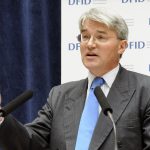
The speech made by Andrew Mitchell, the Minister for International Development at the Foreign Office, on 27 April 2023.
I’m conscious that I’m talking in the heat of a massive crisis in Sudan. Clearly our thoughts are with British nationals being evacuated and the brave servicemen and women risking their lives to secure safe passage back to the UK. And our thoughts are with the 45 million people in Sudan who are bearing the brunt of suffering.
It is essential that the ceasefire is maintained and that a political process is secured. If not, the humanitarian consequences will be incalculable. The UK will continue to work tirelessly to help bring an end to the violence and provide vital humanitarian relief.
Today in this great centre of learning and scholarship, we assert again our commitment to change the lives of the world’s poorest and drive forward shared prosperity.
Today, we commit to persuading more of our fellow citizens that international development is core to our own national interest as well as the right thing to do.
Today, we reaffirm our priorities, and show how we can secure these goals through partnership to achieve progress and prosperity. And we underline Britain’s historic commitment through the international system to those who dwell in the poorest and most challenging of circumstances.
Today, we seek to promote a British policy and priority, which is above party politics, and which is seared into our national conscience as people across our country have shown through their generosity and compassion to those suffering in distant places, where for many in their darkest moments after flood, earthquake and disaster, Britain has been a beacon of hope, and of light at a time where the international system is fractured. And Russia’s war in Ukraine shows that core international values and rules can be brutally assaulted and overturned.
We restate in strong terms, our belief in an effective and ambitious rules based international system, essential to address climate change, the existential crisis of our time, as well as the causes of migration and global health security. A time when crises are everywhere, but leadership is not. When we can save a bank in California in 3 days, but Zambia waits more than 2 years for debt relief. When our children can secure mortgage finance for 30 years, but developing countries secure maturities just over 5 years. And when the Sustainable Development Goals (SDGs) agreed with the rest of the world under David Cameron’s leadership are way off course at this halfway point.
We invoke the famous dictum of Douglas Hurd, one of the UK’s most distinguished Foreign Secretaries, that through the international system, Britain can punch above its weight. After 30 years of unprecedented poverty reduction, when the benefits of technology and globalisation supported by aid and development lifted quality of life around the planet, we have come to the hard stop of COVID and Russia’s invasion of Ukraine. With 70 million people falling back into poverty, with millions of girls out of school, with famines stalking the lands of East Africa, with 5 seasons of failed crops due to drought, where at least 40,000 people have died and where children are starving to death. And this year at the international meetings which I attended just 2 weeks ago in New York and Washington, I heard clearly the loud voices of the global south, but not only the south, voices of dismay and distress, that anger is rising, as they see a developed world which can invent quantities easing to find money for themselves, but cannot find the money to save the planet.
These are the issues that collectively we face. We are called to deliver the SDGs when at halftime, if I may use a football analogy, we are 2-nil down. And we must transform international finance to mobilise the trillions of dollars that are needed if we are to deliver on our promises on climate change, and secure the future of our planet, a planet which we share, but with vastly unequal resources were those who have done least to cause the climate crisis are hit first and hit hardest by it.
In Niger, where I was recently trying to advance our shared security and economic interests, a country among the poorest and most challenged in the world, they lose each day to climate change, the equivalent in arable land of close to 500 football pitches. And in some regions, 50% of the girls are married by the age of 15, and pregnant by the age of 17.
And so just as the world came together at the millennium to make poverty history and stand by the Millennium Development Goals, so today, the Bridgetown agenda and the Sustainable Development Goals call on our generation to shoulder our responsibilities and deliver.
We face a complex environment where resources in many wealthy countries are depleted and constrained by domestic priorities including, frankly in Britain, where Parliament accepted a temporary reduction in spending below our commitment to allocate 0.7% of our own national income. I know that these cuts are painful for our partners, and yes, they dented the UK’s reputation.
But today is about looking forward. The government’s decision to allocate an additional £2.5 billion to the ODA budget to help relieve pressures resulting from Britain’s embrace of those fleeing persecution in Ukraine and Afghanistan, is a clear signal that things are changing. And of course, we will return to 0.7% as soon as the fiscal tests are met.
But returning to 0.7% is not the whole story. New approaches that reflect the changing world around us will be vital. It is even more important meanwhile that we press for creative ways of mobilising new and additional funds to ensure our development objectives are on track. We must redouble our efforts to go beyond aid to secure the gains and the results our consciences and interests demand with all the resources and tools at our disposal.
I come now to how we will do this, through the changes we are making to reinvigorate Britain’s development leadership, which has been sorely missed by our friends and allies across the world. And international leadership owned by the British people, our universities and think tanks and by the British NGOs and charities too, which are at the forefront of all our work. It is this leadership which pledges to work in patient, long term partnership with people and governments around the world. Where engagement comes without coercion. And where tackling the development crisis and the climate crisis are not a choice, but 2 sides of the same coin that need to be resolved together.
I’ve been back as the UK is Development Minister for exactly 6 months. As set out in the recent Integrated Review, the Prime Minister has thrown his full weight behind our international development work. It is the path set out by our international development strategy on which we must go further and faster.
Britain’s development leadership will not be reinvigorated until we can deliver on the promise of the merger. There is a great prize to be grasped here. A merger which is seen as a success for both development and wider foreign policy will avoid once again in the future, a development department being spun out to the foreign office with a prolonged period of Whitehall introspection and disruption, which inevitably results.
Working together development and foreign policy are a powerful force. They nurture trust and reciprocity. By supporting the ambitions of our partners, development amplifies our diplomatic influence. And by the same token, our diplomatic reach helps deliver our development goals. Helping others helps us.
We need an approach fit for the 21st century, which understands that development and geopolitics go hand in hand. And that development is long term, an approach which deploys the full panoply of UK diplomacy and soft power, where development is dynamic and forward looking, and which readily adapts to the pace and scale of global change. So change is required to achieve this.
Firstly, we will greatly strengthen the way government addresses all development issues. We will create a second Permanent Under-Secretary within the Foreign Office responsible for ODA (Official Development Assistance). A cross-Whitehall committee will be co-chaired by myself, the Development Minister, and the Chief Secretary to the Treasurer, my friend and colleague John Glen. And it will focus on both the quality and coherence of ODA spend to ensure that this precious budget is delivering value for money for taxpayers and producing results on the ground.
Second, the Development Minister has returned to the Cabinet table, and now also sits on the National Security Council where defence, diplomacy and development are hardwired together. Of great importance too, the Development Minister will be Governor to the 5 major multilateral development banks, including the World Bank and the African Development Bank. It is within these institutions that critical experience and financial firepower reside. This must be harnessed if the SDGs and climate goals are to be achieved.
Finally, international development leadership cannot solely be delivered by geography. Policy is thematic. We need an answer to the question: how do I interact with the British government on international development, whether I’m an NGO or an international organisation?
So today I launched a new brand to recognise the breadth of our work and collaboration that promises value for money to our taxpayers, reliability to our partners and friends around the world, and a commitment to help reach our global goals: UK International Development – UKDEV. We will continue to use the UK aid brand to badge our humanitarian work and we will continue to do so with sensitivity, especially in conflict zones.
But this new brand, UK International Development, will badge the Foreign Office’s work to use a diverse range of partnerships to advance development progress to build widely shared prosperity.
Placing partnership at the heart of the UK’s offer shows that at its core, international development is not about charity, handouts and dependency. It is about listening to our partners and working together to secure shared objectives.
So, by these 3 sets of changes, we bring together the direction and grip necessary for Britain to reassert our aspiration for global leadership, and building national and global systems that really work for people and planet.
This brand is intended to be bigger than just our Foreign Office programme, and to embrace not just the rest of government, but Britain’s much wider set of civil society actors and partner with us. Our universities, our scientific establishments, our NGOs and volunteers together with many private sector actors. It is that totality of effort that makes the new brand. We are bigger than our parts.
I now turn to the 7 key priorities for the UK set out in the Integrated Review which we will drive forward with new determination and vigour. Three of these priorities I will talk about only briefly today. First, we will place ourselves at the centre of the global health agenda, which promotes pandemic preparedness, prevention and response at home and abroad, underlining that no one is safe until everyone everywhere is safe.
Next, we will champion open science for global resilience. Britain is a research and science superpower.
And third, we will bear down on money laundering and the flows of dirty money which deprive countries of their legitimate tax receipts and represent money stolen particularly from Africa and African people. There is a great cross-party consensus and collaboration on this issue I pay tribute to Margaret Hodge and Nigel Mills for leading this work in Parliament. We will change the way we operate to ensure that these vast sums wherever possible are trapped, frozen and returned. This is one of the great examples of how action in the UK can pay dividends for our partners around the world making ourselves more secure and supporting global development.
Globally the OECD (Organisation for Economic Co-Operation and Development) estimates that countries are missing out on between $100 and $240 billion in revenue from multinational tax avoidance. With the right support it is estimated that lower income countries could raise an additional $260 billion in tax revenue.
The National Crime Agency estimate that hundreds of billions of dollars are laundered through UK and UK linked corporate structuring each and every year.
Global Health, open science, dirty money are essential parts of a wide ranging and ambitious long-term agenda. But there are 4 other areas above all, where I am today setting out new and greater ambition.
First, we confirm that we place the position of girls and women at the forefront of everything we do. It is not possible to understand development unless seen through the eyes of girls and women who bear the brunt of extreme poverty and conflict too often in the most hideous of ways.
We will continue to push back on those who seek to challenge the hard-won rights of women and girls at every opportunity.
I am determined that we will continue to champion the rights of all girls to 12 years of quality education. And so we will launch a new public campaign on girls’ education results with easy access to information which shows the huge difference we are making.
I’m also delighted to announce that the UK is launching today an innovative new programme SCALE, which stands for scaling, access and learning and education. This builds on all we have learned from the girls’ education challenge fund. We will partner with governments that want to test new approaches, and then scale them up in their national systems. This will lead to an additional 6 million girls in school over 4 years, thanks to the British taxpayer.
We have recently allocated £90 million to help children access education in emergencies. And we should never forget that one of these girls may one day discover the cure for cancer.
We are determined through our work on family planning to enable many more women to decide for themselves when and whether they have children. And through the work championed so fulsomely by my ministerial colleague, Lord Ahmad, to protect women from sexual violence and through our efforts to lead the development of a global framework for tackling sexual exploitation and abuse, and sexual harassment in development and peacekeeping.
Second, we believe it is the private sector which can help in extraordinary ways to boost the growth of prosperity in the poorest parts of the world. Ensuring that investors are treated fairly under the rule of law is critical to trade and investment.
It remains the case that the vast majority of all jobs in the world are created by private enterprise and not by governments. It is by being economically active, having a job, that citizens are able to elevate their living standards, and importantly, to thrive on their own terms.
Under our British Investment Partnerships approach, we will mobilise through investment partnerships, up to £8,000 million of financing by 2025.
I am today announcing the first new initiatives and services under our 5 new UK Centres of Expertise on economic development. These will draw together UK expertise across business, the private sector, academia and government to advise on trade, green growth, citizen infrastructure, public finance, and financial services to provide support to our partners on economic growth and on job creation.
British International Investment (BII), formerly CDC, has been significantly reformed over the last decade. Supported by a team of 600 experts, in 2010 there were just 47, BII is now the leading international development finance institution in the world, deploying both patient and pioneer capital, it is a key private sector investor across the poor world, even investing in ports in the Horn of Africa.
BII now supports businesses that employ directly and indirectly around 1 million people in poorer countries, that’s potentially over 1 million families with food on the table, while paying $10 billion dollars in tax into the treasuries of poorer countries over the last 5 years. It proves beyond doubt that the private sector is the engine of development and not, as some think, the enemy of it.
I want BII to be at the very forefront of development finance. I take the inquiry by Parliament’s International Development Select Committee very seriously indeed. I stand ready to consider their recommendations and will be discussing and following up on these with the BII board in the coming months to make sure that they continue to do all that they can to reduce poverty, deliver impact and support green transition.
When I had the privilege of being Secretary of State in DFID, I was proud that we were the most transparent development agency in the world. I am proud of BII and I want to see it lead the way in demonstrating to the world how transparent a development finance institution can be, and I intend to publish a roadmap of BII commitments towards this.
But our partnership with the private sector goes way beyond the work of BII, along with UKEF (UK Export Finance), the British export credit guarantor, and the rest of British investment partners, we will boost living standards through British investment while securing a return for our taxpayers.
Next April, our Prime Minister will host a UK Africa Investment Summit in London and we expect billions in investments and millions of jobs to result. Harnessing the power and potential of the private sector will be central to our strategy to help build prosperity.
Third, we are determined that we will not rest while people in the world are starving to death. I have met communities where children are dying from malnutrition. In Sad’a in Yemen I’ve been to malnutrition wards were terrified mother’s cradle emaciated little children and where British taxpayer funded medical care was their last and only hope. In Karamoja in Northern Uganda, malnourished and emaciated children queued quietly in line for supplies of life saving emergency peanut based paste paid for by the British taxpayer. It is frankly obscene, that in the 21st century, and in our world of plenty, children are today slowly starving to death.
So next year, we will spend £1,000 million on humanitarian relief, including in ways that build future resilience to climate impacts, and meet our commitment to climate change adaptation.
Funding to deliver water by lorry must always be accompanied by investment in water retention reservoir capacity for the future so that subsequent crises are met with greater resilience. So in New York on the 24th of May, we will co-host an international pledging event where we will announce our humanitarian funding for the Horn of Africa. The conference will be a key moment to secure funding for the largest humanitarian crisis in the world and highlight the urgent need for countries facing the brunt of climate impact to access climate finance.
I am announcing that we will set up a new UK Centre for veterinary innovation and manufacturing to apply recent vaccine tech breakthroughs to zoonotic disease threats that compound the danger to livestock in drought conditions.
We will also continue to champion British research and investment in partnership with others, which has produced new bio-fortified crops like the vitamin A sweet potato, which are now feeding millions of smallholder farming families across the world, averting damage to health, physical and cognitive development.
And the mobile money system, M-Pesa, developed thanks to a British taxpayer grant enables money to be moved and weather alerts and farming advice to be swiftly received. This model has become a global beacon for financial inclusion across the continent and beyond. So from the depths of despair, we have seen how partnerships fuel the progress on which prosperity depends.
So towards the end of the year, we will hold in London an event to bring together British and international expertise in tackling hunger and starvation with the support of the academic, medical, research, philanthropic, and NGO and charity community. This event will show our own taxpayers and constituents why this work is both in our national interest and the right thing to do.
We will inaugurate the Child Nutrition Fund this autumn, working with the Gates Foundation, the Children’s Investment Fund and UNICEF, Britain will lead what is an innovative, affordable way of tackling child wasting and build resilience to famine in some of the most vulnerable countries in the world.
And through co-financing, insurance products and other multipliers working both bilaterally, and through the multilateral system, we will augment and increase our own scarce and valuable funding. Our aim is to extract a quart from a pint pot and we have made a good start with our significant co-financing plans with other partner countries. We recently announced a partnership that saw $2 million of the UK’s humanitarian funding package matched by Saudi Arabia, providing a boost to the World Food Programme and supporting those in desperate need in Somalia. We want to expand the scope of our aid relationship with Gulf partners, and have agreed to scale up our co-funded programmes from tens to hundreds of millions of pounds.
And so I come finally to the last of our priorities. It is at the heart of everything we need to do. It is to generate the funding needed to tackle climate change and reassert the primacy of purpose of reaching the SDGs. Here the role of private sector investors will be central. For example, pension funds alone amount to $60 trillion, which will overwhelmingly drive forward the global response. The overarching aim of the Spring Meetings of the IMF (International Monetary Fund) and World Bank in Washington just 2 weeks ago, was how we can radically scale up their resources to mobilise the hundreds of billions needed to deliver on the promises the international community has repeatedly made at the SDG summits and the COPs.
Make no mistake, as I said at the outset of my remarks today, we are now reaching a tipping point. We’ve heard the challenge of the poor world at our own COP in Glasgow, and the rising voices of outrage at last year’s COP in Egypt. By the time we reach COP28 at the end of this year, we will need to show clear and unmistakable progress.
Of course, we need a clearer pipeline of oven ready climate mitigation and adaptation programmes. We must recognise also that a country like Somalia simply doesn’t have the technical expertise to get through the due diligence gateways to access these global climate funds.
In Somalia, Britain is helping with invaluable technical expertise, and we can and will do more. But progress depends above all on the capacity of the international financial system. And that is why I made clear in Washington that the sweating of the balance sheets of the World Bank and the other huge multilateral development banks combined with the creative financial engineering skills of a sector replete with expertise and experience must now be brought to bear to produce a quantum of financial support, which is unprecedented.
At the World Bank meetings, I approved changes to the capital adequacy reserve ratios. A reduction in the IBRD (International Bank for Reconstruction and Development) requirement limit from 20% to 19%, just 1%, releases for lending an additional $4 billion each and every year.
Britain has announced a series of guarantees over the last 18 months to expand MDB (Multilateral Development Bank) lending to countries in Asia and Africa by $4.5 billion. And the UK is urging the IMF to increase still further its support for the poorest countries, including through targeted gold sales, none of which incidentally scores against our ODA budget unless called, and is therefore incremental to the 0.55% we are investing this year.
And we are driving innovation in insurance. The UK is a founding member of the regional risk pools. The Caribbean risk pool pays out in 14 days and transfers $1.2 billion of risk annually off country’s balance sheets to the private markets. Africa is transferring $1 billion of risk to date and paid out the first drought insurance support for Somalia.
While we were in Washington, the Chancellor of the Exchequer Jeremy Hunt signed off $5.3 billion of special drawing rights to support 2 different funds delivering directly to the world’s poorest people.
Again, this is an in addition to our spending through the development budget, and it is our experts in finance and development in the British team who are driving forward this agenda precisely because of the expertise and geographical reach, which exists in the British Foreign Office.
By the time we meet for the annual meetings in Marrakech in October, I want to see much greater progress across all the multilateral development banks towards the several hundred billions of dollars in additional financing the G20 expert group identified.
All this additional financing capacity will only be able to benefit the poorest if we also tackle the global debt crisis. Official creditors must urgently reach an agreement on debt restructuring in Zambia and Ghana. There is no time to waste.
And we are leading the way to avoid debt crises reoccurring in the future. UKEF is the first export credit agency to offer to build in climate resilient debt clauses. These clauses allow debt repayments to be suspended when climate shocks such as hurricanes hit. This in turn frees up resources quickly to respond to crisis. The first deals using these clauses will be announced over the next few months. By the end of this year, we hope that several other bilateral private and multilateral lenders will have agreed to offer the same clauses.
These steps ladies and gentlemen reflect the ambition of the Bridgetown agenda championed vigorously by the formidable voice and charismatic presence of the Prime Minister of Barbados, Mia Mottley. I have no doubt that this voice is going to be heard.
Her agenda for progress is gaining widespread support. And Britain, and indeed President Macron in France, are right behind it. To deliver on our funding promises to reinvigorate the SDGs, to elevate the desperate lives so many lead in our world today and literally to save our planet before it is too late, that voice is not going to be silenced.
And as we pass through the waypoints on our journey to COP28 at the end of this year, the G7 leaders’ summit, the summit for new global finance pact in Paris, the Africa climate action summit, the G20 leaders’ summit, UNGA, including the SDG summit in New York, the IMF World Bank annual meetings in Marrakech, the clamour for justice and the response of rich countries will be critically evaluated by our friends and our allies. But also we are being watched by our constituents, particularly the younger generation, who are increasingly determined that those who are today the key decision makers on this vital agenda measure up to this task.
We must be honest and accept that we do not currently enjoy sufficient support for this wide-ranging and ambitious agenda from the British public. At the moment, the Development Engagement Lab comprising academics at the University of Birmingham and University College London, tell us that public support has been around the 50/50 mark for much of the last decade.
But I am determined that we shall win over the doubters and drive-up support to the 70/30 mark over the next 10 years. To do this, we will need to get out of London, and not to visit capital cities around the world but to visit small towns and villages in our own United Kingdom, to explain what we do in simple and straightforward language that everyone can relate to. With confidence, but also with humility with facts, data and evidence, but also with human stories and compelling tales. Tales that are heartening, as well as sobering. Drawing on the numerous examples and experiences that make up the story of great British International Development. I intend to provide a communication platform to the people that the research shows the public trust the most.
We will show that the generational ambitions for progress on climate progress, on women and girls’ progress, on business working for sustainability, not against it, are core to UK ambitions, with the final prize being greater prosperity in the world and the UK.
And so today, I am issuing an invitation to all of you to partner with us to tell a story of progress in these universal challenges. Together, we must work to achieve a step change in both domestic understanding and support for the UK’s international development work, laying firmer foundations for a better future together.
I want us to drive more awareness, more action, more donations and ultimately more support by engaging beyond current supporters.
To show that we in government are serious about playing our part, I will be setting a new target for the new second Permanent Under-Secretary to improve public support as measured by the Development Engagement Lab year on year over the next decade.
And I expect the Foreign Office to seize this opportunity to use the new UK International Development brand to convene a partnership with UK universities, the private sector and the thousands of household name charities. I expect to see a step change in the capacity and capability at the Foreign Office to engage positively the UK public starting this year.
And later this year, we plan to invite tenders for a new international volunteering programme. Similar to the former international citizens’ service, it will be an opportunity for young people to engage internationally and support our development work across the world.
I am minded to publish a White Paper which will outline our plans for the next 7 years, setting out a long-term direction for British International Development leadership until 2030. It will chart a course that will build on the International Development Strategy, accelerate our determination to deliver on climate change, and galvanise international support to meet the Sustainable Development Goals.
This endeavour will draw on the full resources of the Foreign Office, bringing together our political and development expertise.
It will underpin our commitment to delivering value for money to our taxpayers, reliability to our partners and friends around the world, and a commitment to meet the global goals that emphasises it is opportunity, not charity that is needed.
It is partnerships which secure progress and build shared prosperity. There are no quick fixes in development, we are in it for the long haul. And though the challenge is formidable, the rewards are immense.
We have not a moment to lose.
So today I pledged that the government will drive forward the UK’s fight to reduce poverty and boost climate security, to reassert our aspiration for global leadership, and to say loudly, and clearly, Britain is back.
Thank you very much.