Category: Speeches

  • Claire Coutinho – 2023 Speech to the National Day Nurseries Association Conference

    Claire Coutinho – 2023 Speech to the National Day Nurseries Association Conference

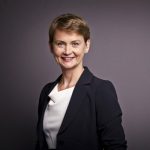
    The speech made by Claire Coutinho, the Minister for Children, Families and Wellbeing, on 9 June 2023.

    I have spent a large chunk of my career working out how we can help families and give children the best start in life. I first started working with disadvantaged children when I was about 16, and I’ve continued doing that throughout my career.

    The evidence is very clear. The earliest years are the most critical stage of child development, something that everyone in this room knows. That’s the time when young children are learning most rapidly. It’s the time that’s going to shape the people that they become, and that doesn’t just happen by chance. The early education and care that you provide in nurseries across the country, that I go and see every week, is supporting those children in their critical years and also allowing their parents to continue work and earn money which helps them develop their own lives and careers.

    One of the best parts of my job is going on those visits. I see all of your passion and dedication in practice. I get to spend time with children that I may have found to be my intellectual equals in life, and they are absolutely wonderful. Seeing all the things that you do is such an inspiration.

    But young children can be many things. Even the most adoring parents will admit that they’re not always easy. It takes hard work to steer the next generation and yet that is our generation’s biggest task. I have nothing but admiration and respect for the endless patience, kindness, encouragement and expertise that I see that you provide for children in your care. I’m incredibly grateful for the work that you do.

    I know the past few years have been challenging, which is an understatement. During the pandemic, it was nurseries that opened quickest after the first lockdown. You stayed open, getting on with the job of providing excellent education and care. I don’t think you can ever be thanked enough for this. I saw this myself as a constituent MP, just how important it was. Not only to make sure that people could go to work in the NHS, I’m the only person in my family that doesn’t work for the NHS, but also making sure that children got that vital education that they needed.

    I also know just how hard recruitment and retention is at the moment. It’s one of the things that I hear the most when I go out and speak to all of you. And that finding and developing the staff – those talented, qualified staff – that is crucial for you to deliver the high quality care your children and parents need.

    Supporting the early years sector and those who work in it is a priority for me, it’s a priority for this Government. But obviously don’t take my word for it. In the Spring Budget, we set out a commitment to the early years sector. The Chancellor pledged that by 2028, we would double our spending on childcare – aiming to spend more than £8 billion every year on those vital early years. That will fund the 30 hours of childcare per week for eligible working parents of children from nine months old, right to when they start primary school.

    It is the single biggest ever investment in childcare in this country. And it’s in part thanks to the work of many people in this room, including Purnima and the NDNA, who I would just thank you so much for everything that they’ve done to campaign on this issue, make sure that it’s a hot political issue, make sure that we well understand the challenges that you face. I thank you all for everything that you’ve done on that basis.

    But we heard loud and clear that those plans will come to nothing if we don’t make sure that you’ve got funding and support you need to deliver this offer.

    So we will be spending an extra £4 billion a year by 2028. From September, we’re going to provide £204 million of extra funding to local authorities to increase the hourly rates they pay you now, and we’re going to make sure these rates go up each year. So that means in September, the average hourly rate for two year olds is going from £6 to £8 – a 30% increase. The average three to four year old rate will be going up 7% year on year, this year. And from 24/25, which will be the first time that a rate will kick in for under twos, that will be £11 an hour.

    Before the end of the summer break, and one of the reasons that I’ll be going back for those meetings, we will be confirming the September rates for each local authority for 2023, so you can have some certainty on that. I’ll be asking you for views on how we distribute the funding for the new entitlements from April 2024, including the rules that local authorities will have to follow when distributing the funding to providers.

    One of the things that comes up in my conversations with managers is concerns about top slicing. I know that access to SEND funding can also be a challenge. That’s something else which I’m passionate about – I also have special educational needs in my brief. We’re looking at the situation really closely to make sure we get that balance right in how the money flows to providers and ultimately to the children your care.

    But of course money isn’t everything. I’ve heard from so many people working in and managing nurseries that there are parts of the Early Years Foundation Stage framework that stop you from making the most effective use of your staff. For instance, are you able to give your best people the responsibilities that match their abilities? That’s why the first thing that I wanted to look at is how to give you more flexibility and address some of those barriers while maintaining the high level of quality that you’re working so hard to provide. We’ve been engaging with lots of you to do this. That’s why we launched a consultation on changes to a range of Early Years Foundation Stage requirements.

    We’re suggesting removing the requirement from level three staff to have level two maths to count within ratios. Now I’m an out and out maths nut, and you won’t find a greater champion for the subject than me, apart from possibly the Prime Minister. But this is about pedagogy and feedback that we’ve had in our conversations with you and the sector, and educational experts, suggest that the level two maths requirement doesn’t necessarily reflect the skills needed to support children’s early mathematical development.

    You may have seen last year when we did the £180m Early Years Recovery Fund, we put in place some programmes for continued professional development (CPD) around early years numeracy and I’m very interested in that model, but we think removing the level 2 requirement for ratios could help the staffing situation and ease some of the pressure, make sure that you’re getting the right skill sets the right points.

    Another thing that we’re looking at is the qualification requirements for ratios not applying outside of peak hours to give you flexibility on how you use staff across the working day and relieve pressure for hours outside of core learning, where level two or level three knowledge might not always be needed, to focus your time and education expertise during core hours. We’re also consulting on the rules around percentage of level 2 qualified staff per ratio. Leaders do often tell me that some of their best people often don’t have level two or level 3 qualifications. Of course, it’s important to raise standards across the board, but we also want to give you some flexibility so you can put your best people in roles where they can make the most difference.

    There are many other proposals in the consultation and every single one of them has come from conversations with you held at my level across the Department. But we want to hear more. The deadline for responses is the 26 June – just under 7 weeks from now. I would love if as many of you as possible, go online and tell us what you think.

    We’re also running a consultation engagement event with the NDNA in the next few weeks, so do keep an eye out for that. Again, we really want to hear from you. The approach we’re taking following this consultation as we move forward will reflect on what we hear from you because it’s your expertise that will make it a success.

    Some of these new measures will also help free staff up to pursue their own professional development. We have an Early Years Education Recovery Programme, some of you will be familiar with that, which offers a package of training qualifications, guidance and targeted support for everyone working in the sector. And that includes opportunities from NPQs in early years leadership and professional development programmes, to the Experts & Mentors Scheme and Online Child Development Training. We know we need more graduates – I’m very concerned and looking at ways that we can create different routes in for people. We’re also training up 5,000 Early Years Special Educational Needs Coordinators. I know we’ve had huge appetite for that and it’s one of the things that gets raised with me a lot when I go and speak to nurseries.

    I recently visited a specialist early years setting for children with SEND in Berkshire, and the parents told me there that  the support that they’re providing is a lifeline with them. I could also see how transformative it is for those children if they can get that specialist support at the right time in life. This funding will help us carry on supporting those parents with getting the right diagnoses. I know that it’s a massive challenge and it’s something which is a huge priority for me and for the Government at the moment.

    All those training opportunities are brilliant, but the only way we’re going to get more people trained up is to get more people in. You all know why you work with a sector. I know there’s been some challenges, but everywhere I go when I meet people, they tell me how rewarding and wonderful it is. That’s why we’re going to go full steam ahead next year with the national campaign to promote the sector, support the recruitment and retention of talented staff. I’d love to hear from all of you about the things that you’d like to see us talk about at the national level on that.

    And finally, I just want to acknowledge the hard work done by Purnima and her colleagues at the NDNA. They have been pushing for a government-backed recruitment campaign for some time. We are going to work very closely with you on how to design that. The NDNA’s ‘First Five Years Count’ campaign is an excellent platform for us to build off, but we want to learn all the lessons that you’ve seen to make sure that we can make this a success.

    So we’ll be working closely with you and others and we’re going to consider how else we can support you. This is the time to do it. We now have childcare and early years right at the top of the political debate. So as we roll forward with these plans over the next few years, there’ll be lots of opportunities for us to talk and work together. That’s why I’m going to spend as much time as possible travelling up and down the country, visiting as many of you as possible. That’s why I want my officials to get out and visit settings. If you don’t know where the DfE people are, could you all stick your hands up? Right. So if I’m not here, please go and tell these people everything that you think we need to know. That’s why I’m here today.

    All I want to say is please, please, continue to talk to us. We really care about this area.

    Thank you so much for having me.

  • Rishi Sunak – 2023 Opening Remarks at the White House

    Rishi Sunak – 2023 Opening Remarks at the White House

    The opening remarks made by Rishi Sunak, the Prime Minister, in the United States on 8 June 2023.

    Thank you, Mr President –

    Before I begin my remarks – a word if I may on what happened in France this morning.

    All our thoughts are with those affected by this unfathomable attack, including a British child and with their families.

    I’ve been in touch with President Macron.

    And we stand ready to offer any assistance that we can.

    Mr President, Joe, it’s an honour to be here at the White House and thank you for your warm welcome.

    Not for decades has the relationship between our two nations been so important.

    The values we share – our belief in freedom, democracy, and the rule of law – have never changed.

    They never will.

    But what has changed, are the challenges we face.

    And standing here together, as our predecessors have done for generations…

    …I feel confident that through the strength of our relationship…

    …we can shape the world once again in our pursuit of liberty, prosperity, and the possibilities of a new age.

    That begins with our highest priority – national security.

    Last time I was here in the US, we signed AUKUS – the most significant defence partnership in generations.

    Because we recognise that the security of the Atlantic and Pacific regions are indivisible.   And just a fortnight ago, in Hiroshima, President Biden and I stood with President Zelenskyy and our G7 allies in a powerful display of unity.

    The UK is proud of our contribution – including providing tanks, long-range weapons, and training Ukrainian soldiers.

    But let no one doubt: US leadership and resources are the decisive contribution allowing the forces of democracy and freedom to prevail.

    As I said in Congress, and I say again now to President Biden – and to the American people – thank you.

    And just as we collaborate to protect our national security – so we must increasingly do the same to protect our economic security, on which our prosperity depends.

    Countries like China and Russia are willing to manipulate and exploit our openness…

    …steal our intellectual property, use technology for authoritarian ends, or withdraw crucial resources, like energy.

    They will not succeed.

    Today we have agreed the Atlantic Declaration – a new economic partnership for a new age, of a kind that has never been agreed before.

    Yes, a partnership that protects our citizens.

    But more than that, …a test case for the kind of reimagined alliances President has spoken so eloquently about.

    That means new investment.

    This week alone, £14bn of new American investment has been committed into the UK, creating thousands of jobs.

    It means stronger supply chains, with a new action plan on clean energy.

    And it means reducing trade barriers in the technologies of the future.

    With a new, secure UK-US Data Bridge – helping tens of thousands of small businesses.

    An agreement to work towards mutual recognition of more professional qualifications in areas like engineering…

    And we’re launching negotiations on a new Critical Minerals Agreement.

    Once concluded, this will give UK companies stronger access to the US market.

    And we’re building on our extraordinary, shared strengths in cutting edge future technologies…

    …with joint research collaborations in areas like quantum, semiconductors, and AI.

    And our job as leaders is to ensure that this technological revolution makes us more secure and not less.

    Last week, the pioneers of Artificial Intelligence warned us about the scale of the challenge, as well as the opportunity.

    The US and the UK are the world’s foremost democratic AI powers.

    So today, President Biden and I have agreed to work together on AI safety, including multilaterally.

    The UK looks forward to hosting the first global summit on AI safety, later this year.

    So that we can seize the extraordinary possibilities of this new technological age – and do so, with confidence.

    And we are well placed to do so.

    I know some people have wondered what kind of partner Britain would be after we left the EU.

    I’d say: judge us by our actions.

    We’re as committed to our values as ever, as reliable an ally as ever, as attractive an investment destination as ever.

    But we’re changing, too.

    We’re strengthening our relationships not just with old friends like America and in Europe…

    …but with new friends in the Indo-Pacific, too.

    And we now have the freedom to regulate the new technologies that will shape our economic future – like AI – more quickly and flexibly.

    That is the future we are creating in Britain – confident, proud, and free.
    Let me close, with a personal reflection.

    As Joe mentioned, he and I have seen quite a lot of each other in recent months. I gather our wives have even started to take spin classes together.

    We were talking earlier about our hometowns.

    Joe is very rightly proud of Scranton.

    And I was telling him a bit about Southampton in England, where I’m from.

    Not everyone knows this, but it was in a church in Southampton where…

    …in the days before he set sail for these shores…

    …that John Winthrop first spoke about his dream of building a city on a hill.

    And that reminds us that the relationship between our two nations is unlike any other.

    Our alliance is so strong because it is not abstract – it is rooted in our people.

    And it’s never been about our history alone, but our ability to grasp the future.

    We share the same beliefs, pursue the same purpose, and act according to the same ideals.

    And that’s why today, as we meet the challenges of our time, we can depend upon each other with absolute conviction.

    When the United States and the United Kingdom stand together, the world is a safer, better, and more prosperous place.

    That’s why ours is the indispensable alliance.

    Thank you.

  • Robert Halfon – 2023 Speech to the Times Education Summit

    Robert Halfon – 2023 Speech to the Times Education Summit

    The speech made by Robert Halfon, the Minister for Skills, Apprenticeships and Higher Education, at the Times Education Summit held at News UK in London on 8 June 2023.

    Good morning, and thank you for that introduction.

    I was honoured to be asked to take part in the Times Education Commission in 2021, to consider questions such as the purpose of education, and how it should interact with social and economic institutions. I returned to government last autumn, to discover there was still quite a lot of work to be done! But it was also gratifying to see reforms from my first term as Skills Minister bearing fruit, some of which support elements of the Commission’s recommendations. As I will describe, we are now getting serious about technical education to 18, with the continuing roll-out of T Levels. And I am determined that pupils will have earlier and earlier opportunities to see industries and occupations up close. They need to understand the world of work as something to build towards, rather than encounter it abruptly at the end of their schooling.

    Anyone who knows me knows I’m a huge admirer of JRR Tolkien.

    The best known Tolkien apprentice is of course Samwise Gamgee, an apprentice gardener in Lord of the Rings. I want to frame my thoughts using another Tolkien story that is less well known, Smith of Wootton Major.

    It features a character called Alf, an apprentice who receives both good and bad training in the village of Wootton Major. Though he receives three years excellent training, when his master departs the villagers do not trust him to take over. ‘He had grown a bit taller, but still looked like a boy’ – and was not one of their own. Instead, an idle and incapable local man is appointed as Master Cook of the village, who spends his tenure taking credit for the apprentice’s work and talking down to him. Alf’s talent is wasted on absurd tasks like stoning raisins. I won’t tell the whole story, but eventually Alf assumes his rightful position and the older man has a comeuppance of sorts. Finally, Alf is revealed to have understood all along something fundamental to the nature of the office of the Master Cook, something that only the true master could have passed down to him.

    What is the relevance of this story to today’s apprentices? Well, quite a lot actually. An appreciation of skills education, and how it’s perceived by those who haven’t acquired it. The skills required to become a Master Cook are underestimated by the villagers, who choose a bad trainer for Alf.

    Examples of good and bad training – how an apprentice can be expertly trained in just three years, but side-lined and given little responsibility because of his obvious youth.

    The tacit acknowledgement of his trainer that the apprentice has something to offer, but also reluctance that he should get the credit for their work.

    It’s a good parable for modern times. For too long, the acquisition of vocational and technical skills has been undermined. It is not respected in the same way that academic education is.

    I have always found this a false hierarchy. We will always want to know the names and types of fishes, how they spawn and miraculously breathe through gills. But in every generation, people must also be taught how to fish.

    That’s why I’ve always argued we need more skills-based post-16 education. And that is what we’re now doing.

    You may have heard about my Ladder of Opportunity. It is not just a slogan but a way of thinking about what we need as a country, to create a skills system that supports people of all backgrounds up the ladder into secure and well-paid employment.

    The Ladder has 2 pillars:

    Opportunities and social justice, and strengthening Higher and Further education.

    These aren’t just two slogans slotted into a framework. They are fundamental and interconnected.

    On the one side, Higher and Further education need to do a lot more collaboration.

    The Lifelong Loan Entitlement, which I’ll come to later, will help to bind these strands together.

    Both Higher and Further education cannot be said to be truly succeeding as a meritocratic endeavour, until the opportunities they bring are distributed widely, to everyone who can make use of them – but particularly to those who need them most.

    When the most disadvantaged groups in our society are finally taking-up their fair share (or more) of university courses, apprenticeships and other technical education places, that is when the system will be at its strongest – nurturing talent wherever it is found, rather than just the talents of those who happen to find it. That is when Further and Higher education can truly be said to be serving social justice.

    And that is the lens through which I see all the work we’re doing to bolster skills education in this country.

    The first rung on the Ladder of Opportunity is careers guidance and information. We cannot hope to change attitudes about skills education unless it is seen as a route to progression. And it needs to be considered much earlier in school than the adolescence afterthought it’s been recently. Evidence shows that pupils start to develop stereotypes that can limit their educational and occupational aspirations at a very young age. That’s why we’re funding a £2.6 million programme to target 2,250 primary schools in the most disadvantaged areas. Running until March 2025, it will inspire pupils to consider the world of work, drawing positive role models from a range of industries and sectors. The aim is to raise aspirations, challenge stereotypes, and help children link their learning to future jobs and careers. Teachers will be supported with professional development and resources to continue delivery beyond the programme.

    At the same time, our ASK programme is raising older pupils’ awareness of the benefits of apprenticeships and T-levels. And through the Skills and Post-16 Education Act 2022, we have strengthened the provider access legislation, known as the Baker Clause. We now stipulate that every school must provide pupils with a minimum of six education and training provider encounters. We are working with The Careers & Enterprise Company to support schools to comply, and will take tough action where there is persistent non-compliance.

    Overall, we invested around £100 million in 2022-23 in careers provision for young people and adults. It’s money that I’m determined we will continue to spend in a focused, meaningful way.

    The second rung on the Ladder of Opportunity is about championing apprenticeships and the skills employers need. Apprenticeships are at the heart of this government’s skills agenda. They are about widening the skills pipeline to drive economic growth, and bringing paid opportunities for progression to those who may not otherwise choose further training.

    Our aim is that every occupation should have a quality apprenticeship attached to it. That is why we moved from apprenticeship frameworks to standards. These are carefully designed in partnership with industry, in order to truly serve their utility for the employer and their value for the apprentice. There are now accredited routes to over 660 occupations, from entry-level to expert.

    To support the creation of more of these opportunities, we are increasing funding to £2.7 billion by 2024-25. In 2021-22, we spent 99.6% of the £2.5 billion apprenticeship budget handed down to us by Treasury. And despite what you may hear, it isn’t being spent on MBAs, which we removed from the Level 7 Senior Leader standard in 2021.

    70% of all apprenticeship starts are at Levels 2 and 3 [2021/22 AY], and young people under the age of 25 make up more than half of all starts. But we still want older people to consider apprenticeships among their options to retrain or return to work. Hence our ‘returnerships’ initiative, announced in the Budget, to encourage adults over 50 to consider these routes back into training and employment.

    Degree apprenticeships are the crown jewel within our offer. Or to Tolkien fans, the Faery star. They combine the best of vocational and academic education at some of our best universities. They hold particular value for students from disadvantaged backgrounds, giving them knowledge, training and industry insight in one complete package. That last point is particularly valuable if you lack personal connections in the area where you want to work – those invisible career foundations that you only notice if you don’t have them. Degree apprentices earn while they learn, but don’t pay tuition fees like other students. It is so important we promote these routes to those who could benefit most: young people whose social and financial position currently deters them from degree-level study.

    There are now almost 160 apprenticeships offered at degree level. And contrary to what sometimes is misreported, they’re not all in management. Degree-level apprenticeships prepare students for careers in the Police, nursing, aerospace engineering – and, yes, even journalism. There have been over 185,000 starts on these prestigious courses since their introduction in 2014. They’ve made up 16% of all starts so far this year [August 2022 -Feb 2023], with numbers up 11% compared to the same period last year – building on year-on-year growth.

    There is much more to do to meet rising demand – and to spread the word to build demand still further. We’re working with higher education institutions to increase both employer vacancies at degree apprenticeship level, and applications from young people. We’re providing an additional £40 million to support providers to expand degree apprenticeships over the next two years, and to help more applicants access these incredible opportunities.

    While raising apprenticeship standards, we saw a gap at Level 3: a qualification to prepare students for skilled work at 18 that also provided a solid foundation for further study or training. The Institute for Apprenticeships and Technical Education worked with employers, providers and industry experts to identify what such a qualification would look like, and the different progression routes that could follow-on from it. In 2020 we introduced T Levels, a new gold standard in technical education. These courses have a rigour gives them parity with A levels, and include a meaningful 9 week placement in industry. This reflects my belief that students should be shown the workplace well before the age of 18, to build understanding of its expectations and their own aspirations. Oldham College has been among the first to offer Supporting Adult Nursing and Supporting Midwifery T Levels, providing an incredible pipeline for the future local healthcare workforce.

    We will have made £1.6 billion of extra funding available for 16-19 education by the 2024-25 Financial Year [compared to 2021-22]. This includes up to £500 million for T Levels each year, once they’re fully rolled out in 2025.

    The fourth rung of the Ladder of Opportunity is lifelong learning.

    So far, my focus has been on young people, and those at the beginning of a career. But the latter can of course include people who want to switch careers later on, a move we want to encourage to help the working population keep pace with the shifting labour market. To support people to study and retrain for better employment, the Lifelong Loan Entitlement will unify Higher and Further education finance under a single system. From 2025, financial support equivalent to 4 years post-18 education (£37,000 in today’s fees) will be available to use over the whole course of a working life. Crucially, this can be drawn down in modular increments to build qualifications over time. This flexibility will enable older learners to fit their study around life events and daily commitments. Like getting on and off a train, they will be able to alight and board their post-school education when it suits them – building qualifications at their own pace, rather than being confined to a single ticket.

    I want the Lifelong Loan Entitlement to signify an inclusive change in how we view skills education, and the pace at which we acquire education in general. The name suggests to me (as I hope it does to you) that education has no finish line. That your fate is not cast in stone by the age of 25. It may also encourage young people to get some experience of work that interests them, rather than go straight to university, in order to inform the use of their finance allowance.

    And while I have great respect for the history, traditions, and academic excellence of Oxford and Cambridge, we need to get away from this obsession with using it as a benchmark for everything else. Instead of talking about the Oxbridge of skills education, people should be pointing to colleges like Loughborough, Oldham and universities like Staffordshire. They are serving students exceptionally well, fitting them for good jobs and great careers. Their degrees give students what they need to propel them up the Ladder of Opportunity. And yet they are not among the bywords for a ‘good’ education – the age-old establishments that served many of the people in this room. Those who value education on outcomes, rather than reputation, should seek to change this.

    I’ll finish by returning to my favourite Oxford professor, who could write with insight about the misconceptions that surround skills education. His apprentice heroes defied low expectations.

    Samwise Gamgee not only helped Frodo deliver the Ring to Mount Doom. He was eventually elected Mayor of the Shire seven times, and became an advisor to the King.

    And Alf, the apprentice of Wootton Major, is finally revealed at the end of the tale be the Elven King of Faery himself.

    Tolkien once said that true education is:

    “A matter of continual beginnings, of habitual fresh starts, of persistent newness.”

    We want more and more people to build the skills needed for good employment in this age of ‘persistent newness’ – skills for new and shifting industries, that business leaders are crying-out for.

    Successfully matching high quality training with the talent found in all walks of life will not only enhance our country’s skills and economic profile. It will allow people to truly thrive at work and in their communities.

  • Stuart Andrew – 2023 Speech at the English Football League Annual Conference

    Stuart Andrew – 2023 Speech at the English Football League Annual Conference

    The speech made by Stuart Andrew, the Sports Minister, on 8 June 2023.

    It is a pleasure to address all 72 EFL clubs today.

    You represent much more than 90 minutes on a pitch – you are the beating hearts of your communities and part of the fabric of our national identity.

    I want to start by thanking you for the incredibly positive impact that you have on the local communities you serve.

    This is underlined by the “EFL clubs and their Club Community” report published earlier this year.

    I was pleased to attend the launch of that report and enjoyed hearing from individuals who have led, supported, and benefited from the incredible work you do in local communities.

    I was also pleased to hear of the EFL’s partnership with the British Red Cross in which you are working together to tackle loneliness in our society.

    It was a fitting and timely intervention ahead of Loneliness Awareness Week taking place next week.

    This Government is proud to support the EFL.

    We have supported your work in the community, providing the English Football League Trust with £1.3 million through the Loneliness Covid-19 Fund, to make onward grants to its Football Club Community Organisations in 32 deprived locations across England, with the aim of connecting older people at risk of loneliness.

    Supporting the pyramid is crucial and this Government has already committed to invest £300 million of funding to support grassroots multi-sport facilities across the UK by 2025. This is a key element of the Government’s upcoming sport strategy which will be published shortly.

    This year is a significant one for English Football.

    I am absolutely delighted to be backing our bid to bring EURO 2028 to the UK and Ireland.

    Our incredibly inspiring and talented Lionesses, the reigning European Champions, will be taking on the world at the FIFA Women’s World Cup this summer.

    The recent success of the Lionesses has accelerated interest in the women’s game, with more people now watching, attending and playing women’s football than ever before.

    The Review of Women’s Football which we launched in September and is being Chaired by Karen Carney, is looking at how to deliver bold and sustainable growth of the women’s game at elite and grassroots levels.

    This was the first recommendation taken forward from the independent Fan Led Review, and I look forward to seeing the findings published this summer.

    And of course, we started this year by publishing our Football Governance White Paper in response to that Fan Led Review.

    This included the groundbreaking commitment to establish a new statutory and independent regulator for English football.

    Despite the phenomenal success of football at home and abroad, we have seen too many examples of the devastating impact the failure of a beloved club can have on a local community.

    Since the Premier League was created in 1992, there have been 64 instances of clubs collapsing into administration.

    Historic clubs have been lost, taking with them chunks of our history and heritage, and leaving huge holes in their communities.

    Bury Football Club was one example. A club that, just a few years ago, would have sat alongside you at today’s conference.

    Over its proud 134-year history, Bury managed to survive world wars and countless economic cycles. But it was driven to the wall by financial mismanagement, which damaged the local economy and left behind a devastated fan base.

    But I am pleased to say that a vote to unify Bury FC and Bury AFC passed last month and Bury Football Club will be playing once again at Gigg Lane next season!

    But it is not just Bury that has been affected.

    The same is true of Macclesfield Town, another century-old club, and Rushden & Diamonds. Countless others, such as Derby County, have been driven to the brink after stretching far beyond their means.

    And we know there are a number of clubs across the EFL that are in real distress today.

    This is where our proposals for an Independent Regulator come in.

    The Regulator will have a clear focus, centred on ensuring that English football is financially sustainable and resilient for the benefit of fans and the local communities football clubs serve.

    The Regulator will operate a licensing system for all clubs in the top five tiers of English football.

    The Regulator will be independent of industry and Government. This will be set out in law.

    The model we have set out is proportionate and flexible, allowing English Football to continue being a global-success story, while tackling harms where they exist.

    Where clubs are already well run and risks are low, the Regulator will not look to intervene unless necessary, nor will the Regulator impose an extra layer of requirements to burden clubs with.

    Under the Regulator’s regime…

    We will legally strengthen the owners’ and directors’ tests, to protect clubs and their fans.

    These new tests will reduce the likelihood of unsuitable custodians.

    We will give fans more of a voice on the running of their clubs.

    This will include stopping owners from changing vital club heritage, such as names, badges and home shirt colours, without approval from the fans.

    Likewise, clubs will have to seek regulator approval for any sale or relocation of the stadium, and fan engagement will be a crucial part of that process.

    And we will give the Regulator the power to block clubs from joining closed-shop breakaway leagues, such as the European Super League.

    We want a thriving football pyramid, and more money must flow through the game to make this happen.

    On financial distribution, it remains our firm belief that the best solution is a football led one. If one is not found the Regulator will have a backstop power to intervene and force a solution.

    I am optimistic that discussions between the Premier League and EFL will find a solution on this urgent issue.

    I am hopeful that the resolution will be found soon. I would urge both sides to reach a deal as soon as possible. It is in the game’s interests to avoid the risk of further financial uncertainty.

    In short, we are protecting the long-term success of our national game, and restoring fans’ position at the heart of how football is run.

    Since the publication of the White Paper in February, we have been consulting with the football industry on our proposals.

    This is a crucial step in ensuring that we develop effective regulations that deliver positive outcomes for football, while minimising the harms identified in the game.

    I would like to thank the EFL and many of its member clubs for your support throughout this process as we look to further develop and refine our policy.

    The Government intends to publish its response to this initial period of consultation in the coming weeks.

    This will represent the latest step in our ongoing commitment to support, promote and protect the national game, as well as ensuring that fans are placed at the heart of it.

    We remain committed to bringing forward legislation when parliamentary time allows.

    I would like to finish by encouraging you to continue progressing with your valuable work in communities across England and Wales, as well as moving forward with much needed reform.

    Fans were able to have a major say in this White Paper. Football does not need to wait for an Independent Regulator to be in place before it can introduce improved governance practices. You can act now!

    I want to finish by thanking the EFL for inviting me to speak at this year’s Annual Conference. I thank Rick and Trevor for their continued engagement on these important issues.

    I appreciate our continued collaboration and look forward to hearing the outcome of discussions from the panel session.

  • James Cleverly – 2023 Speech at the OECD’s Ministerial Council Meeting in Paris

    James Cleverly – 2023 Speech at the OECD’s Ministerial Council Meeting in Paris

    The speech made by James Cleverly, the Foreign Secretary, in Paris on 7 June 2023.

    Good morning Ministers, Ambassadors, Friends, Colleagues.

    Welcome to today’s OECD Ministerial Council Meeting. Our theme “Securing a resilient future: shared values and global partnerships” is both timely and important.

    I’m honoured to represent the UK as chair of this year’s meeting.

    And we have put together an ambitious, forward-looking agenda that addresses our most serious and immediate concerns.

    The global pandemic demonstrated the importance of resilient and diversified supply chains and trading systems. Climate change and the loss of biodiversity are serious problems for all of us.

    Russia’s illegal invasion of Ukraine threatens to upend the international order and that is why it is so important that it must fail and that our friends in Ukraine must win.

    I have just returned from Ukraine, from Kyiv, and I saw a country under arms, I saw a country defending its sovereignty and territorial integrity. But I also saw a country defending the principles that underpin peace, security and economic development in the post-war era. That is why our support to them must endure and that is why their success must be guaranteed.

    The OECD is well positioned to promote unity between allies and to encourage a coherent response to the acute and long-term issues that we face.

    Today’s Ministerial Council Meeting is special, is unique. We have opened our discussions to non-members and we’re honoured by the participation of a wider range of global voices. And our agenda addresses their shared concerns and priorities. And we will have better discussions as a result of their participation.

    This year opens a new chapter in the OECD’s commitment to the Indo-Pacific. Underpinned by our new Strategic Framework, we all recognise the region’s importance for global growth, critical supply chains, digital transition and resilience, and, of course, climate action.

    But we must not ignore the challenges that we face today.

    Russia’s invasion of Ukraine is always at the forefront of our minds. And we must support Ukraine to win, and we must support its recovery efforts once it does. And we look forward to hosting the Ukraine Recovery Conference in London in a few weeks’ time.

    This war continues to imperil the world’s economy by disrupting global supply chains and unleashing a wave of inflation driven by high fuel and food prices. And vulnerable countries now face severe risk of food insecurity and, in some instances, famine.

    So we must work closely together to strengthen global economic resilience to current and future shocks. And the OECD has the right policy tools and the right analysis to support these efforts. And we’re promoting supply chain resilience, better international tax rules, climate action, and, of course, gender equality.

    We should remember that free markets offer the best and quickest route to prosperity. And gender equality is best advanced through free markets. Free trade inevitably benefits service industries and small business. And not only are they the life blood of local communities as well as national economies, they also disproportionately employ women. And so, therefore, freer trade disproportionately benefits women and when women are empowered socially and economically, everybody wins.

    And my colleague, Kemi Badenoch, the UK Business and Trade Secretary, will explore how smart trade and investment policies can deliver global economic resilience and stimulate growth.

    We often say that a rising tide raises all boats. Probably more accurate to say that a rising tide can lift all boats, and we need to work together to ensure that it does.

    Our world is changing rapidly. New technologies offer people across the globe new freedoms, greater access to knowledge, better opportunities economically.

    Artificial Intelligence-enabled technologies diagnose disease; virtual learning helps students who would otherwise be excluded from education; improved access to renewable energy will power our clean energy transition.

    But technology also has the potential to undermine our safety, undermine our security, and undermine our democratic values. So we must address the risks by working together to ensure technology is designed, developed and deployed, and governed ethically, safely and reliably, so that we can harness the advantages and mitigate the risks.

    The OECD Global Forum on Technology, which the UK is proud to support alongside Spain and the United States of America, had its inaugural meeting yesterday, chaired by my good friend and colleague Chloe Smith. And the Forum will find opportunities and mitigate the challenges of immersive technologies, quantum and synthetic biology.

    Innovation ushers our societies towards new frontiers. It unlocks previously inconceivable improvements.

    It will be central to ensuring we can adapt to environmental change and cut greenhouse gas emissions.

    And our discussions on Future Frontiers and Energy Futures will explore these issues in more depth, and I look forward to hearing the outcome of the panel chaired by my colleague Grant Shapps, Secretary of State for Energy and Net Zero.

    The International Energy Agency and the OECD are highly regarded thought leaders in this field and that’s why it’s great to have Director-General Dr Fatih Birol and Secretary-General Mathias Cormann on the panel, alongside the Minister from Sweden.

    All our fortunes depend on a stable and peaceful international order. By working together we give ourselves the best chance to create an environment where everybody can prosper.

    The OECD is a cornerstone of the multilateral order. We are a community of like-minded members, committed to free markets, to democracy, to the rule of law, to free trade, to human rights, to sustainability, to gender equality, and, of course, to fairness. These are the values that have brought us together today.

    So let this meeting renew our commitment to global partnerships, to extend the reach of the OECD, and, by doing so, to build a prosperous future trade for the whole world.

    It is a genuine pleasure now to take the opportunity to invite the Ukrainian Prime Minister Denys Shmyhal to say a few words on behalf of Ukraine.

    Thank you.

  • Alex Burghart – 2023 Article on a Strengthened Procurement Regime

    Alex Burghart – 2023 Article on a Strengthened Procurement Regime

    The article by Alex Burghart published in The Times on 7 June 2023 and republished by the Cabinet Office as a press release.

    Protecting the nation’s security has always been government’s primary responsibility. In an increasingly interconnected world, defending the realm goes well beyond the “front line”. It means using every lever of government to further our nation’s security and protect us from ever increasing threats.

    We know that states across the world increasingly are using the tools at their disposal to project their influence and potentially threaten our security. These hybrid threats include using economic channels to attempt to undermine and compromise our government and society.

    So we have to act. Today we are strengthening the Procurement Bill, which will have its report stage in parliament next week, with changes in three areas.

    First, to ensure that we are alive to potential national security risks which some suppliers may pose, we are establishing a National Security Unit for Procurement. This new team, based in the Cabinet Office, will investigate suppliers who may pose a risk to national security, and assess whether companies should be barred from public procurements.

    The specialist team will work across government, ensuring we use our resources to protect our citizens, and helping those responsible for public procurement avoid signing contracts with bad actors.

    Second, we will introduce new powers to ban certain suppliers from specific sectors. This means that we can adopt a precautionary approach, banning companies which may pose a risk to sensitive areas of government, for example GCHQ.

    Finally, we are committing to publish a timeline for the removal of surveillance equipment produced by companies subject to China’s National Intelligence Law from sensitive central government sites. We have already taken firm action in this area. Last year we halted the installation of such equipment on sensitive government sites and asked departments to consider their removal. By publicly committing to this timeline, we are providing reassurance and urgency around the removal plans.

    These measures show the proactive approach that we are taking in ensuring that companies cannot threaten our national security through procurement.

    But the Procurement Bill is about so much more than protecting national security, it constitutes a major piece of legislation that will repeal an array of EU rules. The Bill will deliver better value for money for the taxpayer, through slashing red tape, boosting growth and driving innovation.

    The new rules will support smaller businesses by making it easier to win public contracts. For example, for the first time we are legislating to ensure that contracting authorities must help SMEs overcome the barriers they face when trying to win public contracts.

    It will create a more transparent procurement system, with clearer and faster competition processes for emergency buying.

    So we believe the Procurement Bill, which we call on all sides of the house to back, will deliver for Britain, protecting our security, growing our economy and helping small businesses.

  • Ben Wallace – 2023 Speech at the D-Day 79 Commemorations

    Ben Wallace – 2023 Speech at the D-Day 79 Commemorations

    The speech made by Ben Wallace, the Secretary of State for Defence, on 6 June 2023.

    Mr. Minister, Your Excellency, veterans, ladies and gentlemen.

    Before coming here my officials drafted a speech they thought I might want to deliver.

    It celebrated the heroes, objectives captured and the units.

    And if I had not served myself I would have no doubt I would have delivered it.

    But what I wanted to say today was that this day belongs as much to the ordinary soldier, sailor, airman as it does the outstanding.

    Because the 6th June was an achievement of the platoon commanders, the non-commissioned officers, the private, and the airman and then naval rating.

    Because it is they who had to conquer first the fear.

    Who had to sort order from chaos, and who in the end had to stand up and walk towards the guns.

    It was they who had to inspire their section or troops.

    They who had no certainty of survival.

    Each man on 6 June would have to have rationalised the potential death they faced with themselves.

    That was the first obstacle on the day to overcome.

    And once that fear was overcome the task of turning the vast enterprise that was Operation Overlord could commence.

    As we celebrate the victory of the Allied forces on these beaches 79 years ago today, we should reflect that at this very moment there are men and women of Ukraine trying to overcome that same fear and trepidation.

    In assembly areas and on start lines along the vast front, each individual will be mentally preparing themselves for potential death or victory.

    They will be experiencing that same anxious feeling in the stomach. They will be trying to think of their home in the same way those Allies who had come from so very far away to this beach, on this day, 79 years ago.

    They will be looking to their friends beside them and their Corporals for encouragement or reassurance.

    The fear that many of us have witnessed first-hand will be somewhere behind the eyes.

    They will be doing what the Free French did so powerfully on this day. They will be fighting for their lands, their soil.

    They will be fighting for Europe to be free.

    We should not underestimate the challenge it is to go forward under fire.

    Attacking is a very different task from defending.

    The memorials here today remind us of that.

    We must be grateful as a generation that on that day of days courage was on our side.

    That despite all the chaos, and fear and noise, it was the ordinary who grabbed their rifle, overcame fear and fought for us all.

  • Chloe Smith – 2023 Speech at the Global Forum for Technology

    Chloe Smith – 2023 Speech at the Global Forum for Technology

    The speech made by Chloe Smith, the Secretary of State for Science, Innovation and Technology, in Paris on 6 June 2023.

    Thank you for that warm welcome, Secretary General Cormann.

    It’s a privilege to be joining you and everybody here at the inaugural Organisation for Economic Co-operation and Development (OECD) Global Forum on Technology.

    Today’s event is unique, it is ambitious, and it is truly global.

    It is wonderful to be able to welcome such a rich and diverse group of open and democratic countries, and leaders in academia, industry and civil society from across the world.

    I must first express my sincere thanks to the OECD for their efforts in shaping today’s programme.

    With its world-leading expertise on tech and the digital economy, and its vital role in developing policy guidance and approaches to governance that we value highly in the UK, there is nowhere better placed to hold a forum like this.

    My thanks also go to the US and Spain for their support in getting us here today, and to the many other countries and stakeholders that have shaped, and will continue to shape, this forum in the days, weeks, months, and years ahead.

    Within a relatively short period of time, it’s fair to say that technology has evolved at breakneck speed. The meteoric rise of ChatGPT and of AI more generally, of virtual assistants, of self-driving cars – of all this incredible technology – has the power to fundamentally change society as we know it. What were once regarded as the challenges of tomorrow have fast become the challenges of today.

    And the geopolitical context is increasingly uncertain, too.

    Against this backdrop, we need to work even harder to make sure that the values and fundamental principles of democracy are embedded in the design, development, deployment, and governance of new technologies.

    Strengthening collaboration with industry, academia and civil society around the world, not just among OECD countries, is essential to achieve that vision.

    This Global Forum on Technology provides us with the platform to tackle the challenges we face in doing so, head on.

    Everybody here today shares a commitment – to shaping a future where new technologies strengthen open societies, support human rights, and empower citizens, even as they turbo-charge innovation and sustainable growth for the benefit of all.

    We know that technology and scientific discovery are key to realising our future prosperity and wellbeing – as long as the critical foundations of digital infrastructure, digital skills and digital literacy are addressed first.

    In fact, when you take three of our biggest global challenges – food, fuel, and healthcare – it’s clear that those opportunities are already here.

    Right now, engineering biology is revolutionising agriculture, developing crops that are more resilient and nutritious, enabling us to take enormous steps towards achieving our Zero Hunger sustainable development goal.

    Engineering biology is also bringing us closer to delivering affordable, reliable, sustainable energy for all, through advances in everything from carbon capture technology and the bioremediation of pollution to the sustainable production of new materials and biofuels.

    And the chance for change is just as exciting in enhanced healthcare. Speaking personally for a moment, I’ve beaten breast cancer, and cancer will have touched many of us in this very room. So we can be excited that AI-powered image analysis tools can help doctors to identify cancer cells more accurately, while Virtual Reality and Augmented Reality are being used to create immersive experiences that can help patients to better understand their condition and empower them to shape their own care.

    We must do all we can to seize these opportunities. But, of course, they come with risks, too. We know that there are real and legitimate concerns about how to ensure that the transformative power of tech is harnessed safely and responsibly.

    We know that virtual reality, for example, has the power to bring people together in new ways. To revolutionise education, training, entertainment and a whole host of other sectors. But, like social media, we want to ensure that this immersive world does not become a breeding ground for hate or intolerance.

    Discrimination can be baked into algorithmic decision-making, too.

    The data that Generative AI is trained on, for example, is overwhelmingly created by people in wealthy, developed countries, making these powerful tools less relevant to those in poorer parts of the world.

    And there are risks elsewhere. Synthetic Biology has the potential to revolutionise many aspects of our lives, making them longer, happier, and healthier. But it could also be used to create new pathogens that threaten human health, and bioweapons that could be used to harm people or disrupt critical infrastructure.

    So, the question we must ask ourselves is: how do we put people at the centre of our technological future, protecting democracy, freedom, and human rights, while capturing those benefits.

    As governments, we know we can’t only rely on traditional governance models to do this. These are powerful new questions, and old answers just won’t do.

    We do need to look to innovation, creativity and flexibility. I think we need to work with business to grow economies – creating jobs and prosperity for citizens, building public trust.

    And the Global Forum is critical in this endeavour… in its breaking down of barriers between communities – bringing together, industry, civil society, academia and policy makers – to gain a better understanding of the challenges we face, and how to overcome them.

    We have a real opportunity here for meaningful dialogue that addresses the kind of knotty issues we don’t necessarily discuss elsewhere. And by involving non-OECD partners from the start, we can ensure that our discussions are informed by a community of partners with truly global perspectives.

    I am personally deeply excited to see where today’s discussions will take us. I look forward to the journey ahead with all of you today.

    Thank you.

  • Therese Coffey – 2023 Speech at the Countryside Future Conference

    Therese Coffey – 2023 Speech at the Countryside Future Conference

    The speech made by Therese Coffey, the Secretary of State for Environment, Food and Rural Affairs at Hatfield House on 6 June 2023.

    Thank you very much Nick and I really appreciate that warm welcome. It is true I have come from Cabinet this morning. But I want to start by saying a huge thank you to the Countryside Alliance Foundation organising committee for today’s event. I know many people have made a contribution today, indeed everyone who’s given up their time to participate in this important discussion on the future of our countryside. And also particularly in this great estate – thanks to Lord and Lady Salisbury in particular – which as we already know has played such an important role in many chapters of our national history.

    The countryside is the bedrock of our own story, rightly famous around the world for its beauty. And absolutely at the heart it is a part of what makes our country such a great place to live. It has nourished generations of painters, poets, authors, composers, who brought the countryside and nature to life, whether that’s Elgar, Beatrix Potter, Gainsborough, Jane Austen, I can even add Clarkson’s Farm which has opened up the world of agriculture to a new audience who may be connecting for the very first time on what a challenging and rewarding life being a farmer is. And from the patchwork quilt of fields, hedgerows and the dry stone walls that characterise our landscapes to the woodlands that have kept watch for generations and the ancient stone circles that still keep us guessing about how they got there, we are so fortunate that we have these wonderful touchstones of our shared heritage to hand. Our countryside makes up over 90% of our land. This is a living, breathing, vibrant place that adds so much to the health and happiness of millions every year and over £250 billion to our economy in England alone – thanks to the hard work and dedication of the nearly 10 million people who are proud to call this home.

    Just a few weeks ago, I was delighted to present the Countryside Alliance awards – the rural Oscars as they’re known – to several brilliant businesses from across the United Kingdom, who’ve been chosen from over 15,000 entries. It was a joyful, brilliant celebration of a thriving, vibrant countryside that we all know, that we all love, that we all cherish, and that we want to continue to prosper.

    Now I know how government has already helped businesses – rural business rate relief, financial support to keep things like the network of rural post offices open. We’re continuing to do so. We’ve got £3.2 billion a year supporting farmers, £2.6 billion in the Shared Prosperity Fund and indeed the extra £110 million of the Rural England Prosperity Fund that we are deploying. And that’s just to name a few of the initiatives that we’ve undertaken. This morning, sitting around the cabinet table, we were discussing these important rural matters, and most of the cabinet ministers represent rural areas. My team of Defra ministers certainly do. And we know why people love living and working in the countryside. We live and work there ourselves. We know the potential, but we also know the challenges that our rural communities can and do face. As a government, we have established the rural proofing policy so that every department has to consider policy through the rural lens. And that’s why also we started presenting the annual rural report, the next version of which will be published later this year.

    To complement that today, and because of that potential we know exists, I’m pleased that the government is publishing Unleashing Rural Opportunity, which outlines some of the work we’ve already done and some new initiatives to help – to help grow the economy, to help increase connectivity, to help introduce affordable housing, and to help strengthen our rural communities.

    Securing a fine and prosperous future for our countryside is not a niche concern. Far from it. It is a national priority. As Secretary of State for Rural Affairs, I make my pledge to you, indeed to people living and working in the countryside, that we will always champion the countryside and cherish rural ways of life. Those of us with mud on our boots, we may roll our eyes when we hear newcomers to the village complain of the clanging of the church bell or the smell from the spreading of manure. But we also know that with time comes a really growing understanding that these are the things that make the countryside so special, and that we take them for granted at our peril. So I am delighted – as we think about the next generation in particular – we’ve recruited none other than Shaun the Sheep to help us promote respect for the countryside through the Countryside Code.

    And it is that respect for the hard work it takes to keep the countryside beautiful and healthy, that respect for the countryside and for the people living and working in it, that I really want to reinforce today. Those of us who are fortunate enough to live and work in the countryside know the many benefits that spending time in the great outdoors can bring to our lives. Indeed we made a pledge in our Environmental Improvement Plan to provide access to green or blue spaces within 15 minutes from everyone’s home.

    We have over 140,000 miles of public rights of way in England and Wales alone and we are extending the deadline to 2031 to register more. When complete next year we will have the longest coastal path in the world, the recently rechristened King Charles III Coast Path, and that level of access is extraordinary. But I do believe that access needs to be carefully managed, carefully respected, to protect our ground-nesting birds, to keep dogs on leads to stop sheep worrying, and to allow farmers to farm. Which is why we, the Conservative government, will absolutely not be establishing a right to roam but we are reinforcing respect for rural communities.

    Now I think we’ve made a lot of progress in supporting rural communities to prosper since 2010. We actually see very high rates of employment in the countryside. But it can hide pockets of poverty too and in particular on low pay, where there are some of the lowest salaries in the country – the council that’s represented by the Prime Minister has the third lowest median salary in the country. That is a challenge undoubtedly. And we are reviewing how we measure deprivation in rural areas so that the interests of rural communities are better represented in future policy.

    We want everyone in rural areas to be living long and fulfilling lives with the sustained improvements to living standards and their wider well-being we all want to see, beyond what just the natural green of the countryside provides – so providing the tools and resources they need to actually shape their future and to be part of decisions that affect their lives as we work together to make the most of the countryside for everything we want to achieve. And of course that includes our farmers. I’m not intending to dwell on farmers today but they are a core part of our countryside. I’ve spoken about this at length in recent months and indeed, their dedication makes everything possible. I call them the original friends of the earth – they are certainly the custodians of our countryside. This was reinforced I hope when the Prime Minister made clear how important they are at the Food Summit that we hosted in Number 10 just a few weeks ago. And as I pointed out, our rural reporting is now an annual fixture. So combining the best of the rural resourcefulness that many of us enjoy, the stewardship, the husbandry, we do need to make sure that we future-proof our rural ways of life.

    And some of this work needs to be undertaken and is being undertaken on a massive scale, including the £2.4 billion flowing into the rural economy through supporting sustainable and productive farm businesses in England alone. Yet, just as a host of small challenges compound one another in the unique context of the countryside, we need to have smaller targeted solutions and initiatives come together and make a real difference for the people who need them the most and expand the horizons of what rural life can be. I think in particular, when I think about the different ways that we can do that, it is about making sure that we are unlocking growth and unleashing that rural potential. And there are certain ways that we can try and make sure that happens.

    So we have digital connectivity. You should be able to run a financial services company or an architectural practice at the top of remote valley just as well as you can in a town. And that in turn will help us create more of the jobs we need in the countryside, as well as making it easier to give young people the wider educational and vocational opportunities they need to take them up, close to where they live, paying more rather than having to factor in an expensive commute into their working day. I’m determined that we would keep at it and, as I pointed out already, whether that’s business rate relief that we have, support for schools, investment in post offices, making sure that people can access the services that they need. So in terms of setting out our initiatives, we’ve got four themes where we’re talking about how we can grow the economy.

    But to do that, we also want to make sure that we are improving that connectivity, and not just mobile phone but indeed broadband, and also reinforcing what it is about when we live in homes that are the affordable homes that many of our younger people especially need, rather than having an exodus to the cities and then coming back later in life. But critically we also need to reinforce our communities and back the proven resilience, resourcefulness and agility that rural communities and rural businesses provide. So in terms of supporting growth in the rural economy, we will press on with making sure that we try to improve, as part of the levelling up agenda, supporting jobs, supporting education. whether that’s traditional rural strengths like farming, forestry, tourism, to make sure that we’re also capturing ventures into green industries and biotechnology, improving their skills, getting more people into better paying jobs, and just making things easier for people to do that.

    We’re investing £10 million through the new Rural England Prosperity Fund, and we’re going to be helping those who have furthest to travel to college each day by increasing our funding for bursaries for 16 to 19-year-olds by 10% for the next year. In terms of transport and connectivity, getting to work is absolutely key and we should just accept that most people in the countryside do and will continue to drive. But quite rightly, we know that people want to be able to travel by buses too, particularly as people get older in life. But it can be astonishingly expensive. And that’s why I was delighted that we’re extending the £2 bus fare cap until the end of October, and then we’ll go up to £2.50 until November 2024. And I know it’s helping a lot of rural people already. If I think about a trip from Kendal to Lancaster, it normally costs £15.

    People are already saving that money now with the £2 cap and I can see the difference it makes in my own constituency as well. So overall, we’ll see over £3 million in government investment to better protect our services into 2025 and keep travel affordable alongside the wider £1 billion being spent to improve the reliability, frequency and cost of buses. We’re also consulting on ways to better reflect the cost of operating rural bus services in subsidy payments to try and keep those fares low and the service levels high. So we want to protect vital rural routes. But even with the best will in the world, many people will know we can’t get a service everywhere, which is why we’ll be investing in more demand-responsive options as well.

    The Department for Transport will be publishing later this year the Rural Transport Strategy and that will provide guidance for local authorities to use new technologies to improve access to services, tackle isolation and increase access to jobs and services in rural and remote areas. I was very pleased that we did issue a call for evidence last year on driving licences. Anybody here who got their driving licence before 1997? So most people in the room but actually not all. And if you did that there was a European regulation, which Britain fought hard for at the time, that meant you were able to keep your driving licence rights which actually involved being able to drive up to a seven-and-a-half tonne lorry – but also critically, and this is why it matters to me so much, a D1 licence and that is basically where you can drive community mini buses. And I see it quite regularly in my own constituency that you see charities investing money in people, about £2,500 to £3,000, to get their licence. I’m pleased to say that in the summary of the call for evidence that’s been published today, 73% of those who responded would like to reinstate those rights, particularly for mini buses.

    Digital connectivity is now mission critical. And things have moved faster than any of us could have imagined. 75% of UK premises can now access gigabit-capable broadband. That’s up from 6% just at the beginning of 2019. And over 730,000 premises have already been upgraded in hard-to-reach rural areas as part of our five-day enhanced project in gigabit investment. And so by December 2025 we will have provided over 1.5 million premises with access to gigabit broadband, with fibre being laid up and down country. I remember it’s not that long ago, probably a decade ago, when we talked about Universal Service Obligation. That was when we were going to excitedly give everybody access to 10 megabits and now we’re talking about a gigabit and we will continue to invest in that as well – an £8 million grant scheme to improve satellite connectivity for those really hard-to-reach places, up to 35,000 homes in the remotest parts of the country, as well as tripling the value of vouchers available under the gigabit broadband voucher scheme.

    So that will mean we’re investing over £1 billion in the shared rural network alongside industry to get 4G coverage and to get more people onto gigabit, and indeed we are planning through our Wireless Infrastructure Strategy to boost it by £40 million. There are a number of trials we are doing in the remote islands of the Shetlands or deep valleys and the new £7 million fund will help to see how we can bring together satellite wireless and internet connectivity. I believe that will help tourism businesses, it help farmers to access lightning speeds and reliable connectivity for the first time. I am delighted that Simon Fell is going to be our rural connectivity champion, and that will encourage innovation investment and advanced wireless technologies in rural areas.

    We also want to make sure that people can get a home. The affordability of homes is really challenging. That includes making it easier for farmers to convert their disused farm buildings. We’re also funding a new team of rural housing enablers right across England to support new schemes and boost the supply of new affordable housing to rent for rural communities as well.

    You already know some of the challenges that we have on second homes. That’s why local authorities will have the power to charge up to double the council tax on second homes, to help them to manage the impact that they can have on rural communities. And we’ll be consulting on the tools needed to address concerns about the proliferation of short-term lets. I know that we’ve already supplied quite a lot of money, particularly for those areas with high proportions of second homes, to build new homes. I had the pleasure of opening a suite of those in Southwold in my own constituency. But it is critical that people do not feel that they have to leave the communities in which they have been brought up and want to stay within.

    I think also one of the things that doesn’t really get registered very often is crime. And we know that crime is generally lower in rural areas. But it’s also worryingly concerning around things like agricultural theft, in terms of equipment. These drills are not cheap to replace. These tractors are not cheap to replace. But they are being stolen and that’s why the establishment of the new National Rural Crime Unit with targeted funding, I believe, will do a lot to bring together best practice, but also a laser-like focus on making sure that it’s not just about fly-tipping, which is a blight, but also how this is impacting the incomes and the prosperity of the people who are the very custodians our countryside and put the food on our plate.

    One of the things I am conscious about is that we want to see improve our access to things like health, the new dental plan. I’m expecting more work to be coming through on specifically on how we support rural communities. Coming back to the villages, the hamlets, the market towns, quite a lot of this is about is ‘the pub the hub?’ or ‘is the village hall the hub?’. As far as I’m concerned, it could be both and anything – anything that brings people together, brings communities together to enjoy that way of life, to be the volunteers, not just listening to The Archers every night – but so they can have it happening in their own homes, in their own communities.

    We need to make sure that we tackle that rural isolation, that we support the different elements that make people feel special. It’s why we’re forming a new Public Library Strategy for England in 2024. We’re giving some funding to ACRE and its network of member organisations to help more people to volunteer and tackle loneliness. But also that’s why we continue to invest in things through the assets of community value. I think the Prime Minister referred in cabinet this morning to the pub that he helped reopen when the community had bought it. For locals, like with the Racehorse in Westhall in my constituency, just under £100,000 was the key bit in there helping them buy and keep their pub open.

    And indeed we want to make sure that village halls endure, which is why we created a fund especially in celebration of Her Majesty’s Platinum Jubilee. And indeed I was in Herefordshire just a few days ago, where they were showing me how the support has made all the difference to making sure that their community hub is absolutely there.

    Let’s be clear, our countryside needs to be living, working, vibrant and thriving. That’s why I believe there are still many opportunities to really unleash its potential. That’s why today, I am publishing Unleashing Rural Opportunity, and it’s why I’m excited for now and generations to come to be the Secretary of State of Defra, to be the person that bangs the table with my fellow cabinet ministers to make sure the countryside is not only respected, but cherished, valued, considered and continues to prosper for generations to come. Thank you very much.

  • Rishi Sunak – 2023 Statement on Illegal Migration

    Rishi Sunak – 2023 Statement on Illegal Migration

    The statement made by Rishi Sunak, the Prime Minister, on 5 June 2023.

    This morning, I’ve been out in the Channel with our new Small Boats Operational Command.

    And the whole experience just reinforces how tragic, morally wrong, and profoundly unfair this situation is.

    We’ve got organised criminals risking people’s lives in makeshift dinghies.

    Gangs trying to usurp the role of government; taking it upon themselves to decide who comes to our country.

    Our asylum system is being overwhelmed with people travelling from safe countries, taking away our capacity to help those in the greatest need.

    And the British people are having to spend £6 million a day putting up illegal migrants in hotels.

    Earlier this year I set out five priorities: to halve inflation; grow the economy; reduce debt; cut waiting lists – and stop the boats.

    Today I’d like to update you on the progress that the Home Secretary and I are making.

    And my message is this – our plan is starting to work.

    Before I launched my plan in December, the number entering the UK illegally in small boats had more than quadrupled in two years.

    Some said this problem was insoluble or just a fact of 21st century life.

    They’d lost faith in politicians to put in the hard yards to do something about it.

    And, of course, we have a long way still to go.

    But in the five months since I launched the plan, crossings are now down 20 per cent compared to last year.

    That’s right: crossings are down 20 per cent.

    This is the first time since this problem began that arrivals between January and May have actually fallen compared to the year before.

    And this progress is not replicated across the Channel. Illegal migrants entering the rest of Europe have risen by 30 per cent.

    But we’re not complacent because we know people smugglers are highly organised and will change their tactics if we let them.

    I will not rest until the boats are stopped.

    With grip and determination, the government can fix this, and we are using every tool at our disposal.

    First, I promised to work closely with our international partners.

    Because this is a global phenomenon.

    There are 100 million people displaced around the world.

    And European countries alone saw almost a million asylum applications last year.

    This international approach is delivering.

    Our partnership with France stopped around 33,000 crossings last year – 40 per cent more than the year before.

    I’ve put co-operation on tackling illegal migration on the agenda of every international summit I’ve been to from the G7 and the Council of Europe to last week’s European Political Community Summit in Moldova.

    Last week we agreed a new action plan with Bulgaria.

    We began discussions on joint working with the European border agency, Frontex.

    And in December I reached a deal with Albania because last year nearly a third of all those arriving in small boats were from that safe European country.

    That’s delivering too.

    We’ve now returned 1800 to Albania in just six months.

    We’ve gone from accepting around 1 in 5 Albanian asylum cases to now just 1 in 50 – in line with our European partners.

    And what is the result of all of this?

    So far this year, the number of Albanian small boat arrivals has fallen by almost 90 per cent.

    This is proof that our deterrence strategy can work. When people know that if they come here illegally, they won’t get to stay – they stop coming.

    Second, I promised to improve enforcement.

    So, we’ve doubled the funding given to the National Crime Agency for tackling organised immigration crime.

    And arrests here of illegal workers have more than doubled.

    Third, I promised to stop people spuriously using modern slavery claims to frustrate their removal.

    And since we started asking for basic evidence to back up modern slavery claims, the refusal rate has tripled.

    Fourth, I promised to clear through the backlog of people waiting for initial decision.

    Numbers published today show the initial decision legacy backlog is down by over 17,000.

    And we’re on track to clear it entirely by the end of the year.

    Fifth, I promised we would get illegal migrants out of hotels – and into alternative sites, including military facilities.

    Today, I can confirm new large sites will open at Wethersfield and Scampton with hundreds moving in over the Summer and nearly 3,000 by the Autumn.

    And while we’re bringing those sites online, we’re also making more efficient use of hotels.

    By asking people to share rooms, where it’s appropriate to do so we’ve found an additional 11,500 places which will save taxpayers an extra £250 million a year.

    And I say to those migrants who are objecting: this is more than fair.

    If you’re coming here illegally, claiming sanctuary from death, torture, or persecution then you should be willing to a share a taxpayer-funded hotel room in Central London.

    To reduce pressures on local communities, we’ll also house people on ships.

    The first will arrive in Portland in the next fortnight.

    And we’ve secured another two today that will accommodate another 1,000.

    Finally, I promised not just to reform our asylum system, but to reform our laws.

    So, we’ve introduced unprecedented legislation to make clear that if you come here illegally you will be detained and removed in weeks – either to your own country or to a safe third country like Rwanda.

    Our Stop the Boats Bill passed the House of Commons in weeks.

    And we’re preparing now so that once any legal challenges are complete, we’ll be able to put this Bill into practice.

    I am ensuring we have more detention capacity to hold those who arrive illegally, enough court capacity to process their cases and the planes to remove them to Rwanda.

    I know these are tough measures.

    But I make no apology for that.

    We cannot allow our generosity of spirit to be used as a weapon against us or against those who are being pushed to risk their lives in the Channel by criminal gangs.

    Our approach is working.

    For the first time, crossings are down by 20 per cent.

    But we are not complacent.

    This won’t be solved overnight, and people will continue to come this summer, which is why it’s so important that we change the law.

    My policy is very simple: it is this country – and your government – who should decide who comes here, not criminal gangs.

    I will do what is necessary to achieve it.

    I said I would stop the boats and I meant it.