Category: Scotland

  • Mike Weir – 2008 Comments on Government’s Energy Proposals

    Mike Weir – 2008 Comments on Government’s Energy Proposals

    The comments made by Mike Weir, the then SNP MP for Angus, on 9 November 2008.

    After hinting all summer that immediate help was on the way, Gordon Brown has delivered a chilly response to the one million Scots in fuel poverty.

    By failing to impose a windfall tax on energy companies, the Prime Minister has ruled out immediate help for the thousands of Scottish families facing a bleak winter.

    The increase in insulation and other fuel efficiency measures are welcome for the longer term, but will do nothing to deal with the immediate problem. Very few households will benefit in time to reduce bills this coming winter.

    This whole package is far too little, far too late and shows that the energy companies have won the battle with the UK government. Mr Brown failed to clarify how he will ensure that costs are not passed back to the consumer.

    A government with any ounce of sense would impose more measures now, for example ensure a mandatory minimum tariff, real transparency in social tariffs, a speedy roll out of smart meters and introduction of social tariffs into the home fuel market, as well as ensuring that there is immediate help for those facing a tough winter.

    Disconnections are rising rapidly, and many on pre payment meter users may self disconnect over the winter as they will be unable to pay escalating costs. Mr Brown suggests customers cut their bills with direct debit but fails to realise many of the poorest energy users cannot pay their bills in this way.

    Gordon Brown has yet again proved he is completely out of touch with the concerns of ordinary Scots. Perhaps voters in Glenrothes will remind him before the winter really starts to bite.

  • John Swinney – 2001 Speech for Election as First Minister

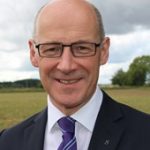
    John Swinney – 2001 Speech for Election as First Minister

    The speech made by John Swinney in the Scottish Parliament on 22 November 2001.

    We meet this afternoon to elect a new first Minister, for the third time in the short life of this Parliament.

    The first occasion was a credit to Scotland – an exchange of ideas that resulted, perhaps in the expected – but which also enhanced our fledgling democracy.

    The second occasion was a result of a tragedy – the untimely death of Donald Dewar – who, with others from his party, from ours, from the Liberal Democrats and from wider Scottish life, had worked to establish this Parliament and give our nation a fresh start.

    This third occasion is the result of a farce – a farce inflicted upon Scotland and its Parliament by the Labour party and by nobody else – the party that now, without any democratic process, seeks to foist its unelected leader upon our country. The party that promotes its own, by making cronyism a way of life, and which always lets Scotland down.

    This afternoon that farce may be carried to its illogical conclusion. The Liberal Democrats, in their usual Pavlovian response to their Labour masters, apparently intend to dutifully bring into office a Labour machine politician who represents everything the Liberals claim not to represent.

    Labour has failed the democratic test. The Scottish Parliament must now do what Labour has failed to do.

    This Parliament must exercise democratic scrutiny – and I am proud to set out my candidacy on behalf of a party committed to a democratic, fair and prosperous Scotland.

    A party that always puts the interests of the Scottish people first.

    A party that can comfortably shelter those who are disgusted by the institutional cronyism of the Labour Party and ashamed at what it has become.

    And I am proud to represent a party that recognises that if we want to create that democratic, fair and prosperous Scotland we must have the normal powers of a normal Independent Parliament.

    Presiding Officer, this Parliament is a stepping stone to freedom. And this party will help our nation cross over the murky swamp of Labour Scotland, into the bright and clear air of an independent Scotland.

    There is a job of work to be done to start that process. Let me tell this chamber how I will go about doing that job.

    Scotland needs reform of its public services as well as reform of its public servants.

    Those two reforms are clearly linked. We must reform the whole system of public appointments, and the bill brought forward by my colleague Alex Neil is the key that will unlock the door to openness and accountability. I challenge each candidate for the post of First Minister to echo my support for that bill. Whilst reducing the power of Labour’s quango state we will also improve the calibre of those that serve the public. These appointments should be made on behalf of the public by a Scottish government – not appointments made on behalf of Labour, by Labour.

    And I also challenge each candidate to echo my party’s support for root and branch reform of local government.

    The present state of local government in Scotland is a monument to Labour institutional cronyism. Any system that rewards a party with less than half the vote with 90% of the seats – and all of the power – is a system whose time has passed in this democratic age. To defend it is to defend the indefensible, but Labour members here and at Westminster are lining up to defend it.

    We could change that system today. My election as First Minster would usher in immediate legislation to ensure that the local elections in 2003 were held under a new system. That legislation is already being drafted in the name of my colleague Tricia Marwick. All it needs now is the votes of this chamber.

    That promise should attract Liberal votes – but of course the Liberals have deserted the principle of fair votes in favour of the patronage exercised by means of unfair elections. No wonder they do not even have the courage to put up a candidate today.

    They are no longer a party in this parliament – they are a wholly owned subsidiary of whoever can give them the most jobs and the best promises.

    But I warn the Liberals today – you need a long spoon to sup with New Labour. You are in for a disappointing journey to PR in local government: a long, tortuous journey in which meetings to arrange timetables to arrange meetings will be the order of the day!

    We need reform of our public servants. And with it we need reform of our public services.

    Delivering public services and building public trust: those are my priorities.

    A society shorn of cronyism will be a society that can focus on the real needs of Scotland.

    It will be a society in which we can prioritise public investment in our struggling health and education services. We will do so by using not for profit trusts. We reject the discredited and expensive Tory-inspired Private Finance Initiative that puts money from our classrooms and hospitals into the pockets of private financiers.

    We shall do so by a radical programme of reform in Education, reducing class sizes and freeing up teachers to teach.

    We shall do so by investing in health so that our cancer services are the best in the world, not the worst in Europe.

    We shall do so by protecting our environment by never, ever allowing a London government to foist nuclear power stations on Scotland.

    And we shall do so by giving this Parliament the financial independence it needs to deliver the quality public services the people of Scotland rightfully expect.

    We cannot allow free personal care for Scotland’s elderly people to be held-up because of a backroom rammy over cash between Labour ministers in London and Labour ministers in Edinburgh.

    Presiding Officer,

    If the Chamber today selects the Labour nominee for this post, then those who vote in that way will be condoning massive abuses of power over generations. They will be wiping from their memories the images of Monklands, of Glasgow City Council, of Govan, of Paisley and Renfrew, of scandal after scandal and deceit after deceit. They will be accepting that the leadership of our nation is something to be traded behind closed doors within a party bloated with arrogance and power and forgetful of where it has come from.

    It is time for this Parliament to assert itself.

    It is time for Scotland to assert itself. To look to its future – a future that demands a government and a First Minister standing up for Scotland, not fighting for themselves.

    I ask the Chamber today to support my nomination.

    But more importantly, Presiding Officer, I ask Scotland to support a vision of bright dreams for the future, not the old nightmares of the past.

  • Nicola Sturgeon – 2020 Statement on Covid-19

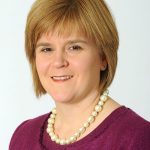
    Nicola Sturgeon – 2020 Statement on Covid-19

    The statement made by Nicola Sturgeon, the Scottish First Minister, in the Scottish Parliament on 7 October 2020.

    Presiding Officer,

    I want to update the chamber today on the current position in relation to Covid.

    In doing so, I will give an assessment of the current course of the pandemic; propose important temporary measures to stem the increase in cases; set out how we will support businesses affected by them; and update the chamber on the longer term work we are doing to further improve our ability to live with Covid.

    And in all of this, I will be very frank about the challenges we face and the difficult balances we must try to strike.

    First, though, I will provide a summary of the daily statistics that were published a short time ago.

    Since yesterday, an additional 1054 cases of Covid-19 have been confirmed.

    That represents 13% of the people newly tested, and takes the total number of cases to 34,760.

    A total of 319 patients are currently in hospital with confirmed Covid-19, which is an increase of 57 since yesterday.

    And 28 people are in intensive care with confirmed or suspected Covid-19, which is an increase of 3 since yesterday.

    And in the past 24 hours, I regret to report that 1 further death has been registered of a patient who had been confirmed as having the virus.

    The total number of deaths in Scotland under that measurement is therefore now 2,533.

    National Records of Scotland has also just published its weekly update, which includes cases where COVID is a suspected or contributory cause of death.

    Today’s update shows that by last Sunday, the total number of registered deaths linked to Covid, under that wider definition, was 4,276.

    20 of those deaths were registered last week. That is the highest weekly number of deaths since late June.

    Every single one of these deaths represents the loss of a unique and irreplaceable individual.

    So once again, I want to send my deepest condolences to all those who are currently grieving.

    These figures illustrate the rising challenge we again face from Covid.

    That challenge is also set out – starkly – in an evidence paper published today by the Scottish Government’s senior clinical advisors – the Chief Medical Officer, the Chief Nursing Officer and the National Clinical Director.

    It assesses our current situation in relation to the virus.

    And it explains – as I will try to do in this statement – why we need to introduce additional measures to control the virus; why it is urgent that we act now; and why we have decided upon the specific actions that I am setting out today.

    Before I come onto that explanation, however, I want to emphasise some of the more positive elements of our current position.

    It is important – for the morale of all of us – that we don’t forget that progress has been made. It might not feel this way, but the situation now is better than it was in March.

    We are benefiting from the sacrifices we made over the summer. By driving the virus to very low levels then, we have helped to ensure that – even after several weeks of increases – the estimated total number of cases in Scotland is currently just 13% of the peak level back in March.

    Cases are rising, but they are not rising as quickly as they were then.

    In addition, we now have Test & Protect teams across the country, who are doing exceptional work. Test & Protect is now bearing a lot of the strain of controlling the virus.

    And we understand more now about how to reduce the risk of transmission – for example, by meeting outdoors rather than indoors if possible, wearing face coverings, cleaning hands thoroughly, and keeping our distance from people in other households.

    So while there are significant restrictions still in place – and they are hard and painful – we are living much more freely now than in the spring and early summer.

    We are determined – if at all possible – that this will continue to be the case.

    So let me be clear. We are not going back into lockdown today. We are not closing schools, colleges or universities. We are not halting the remobilisation of the NHS for non-Covid care. And we are not asking people to stay at home.

    So while the measures I announce today will feel like a backward step, they are in the interests of protecting our progress overall.

    It is by taking the tough but necessary action now, that we hope to avoid even tougher action in future.

    Let me turn now to specifics.

    The need for action is highlighted by the daily figures I reported earlier and, more fundamentally, in the evidence paper published today.

    It’s worth remembering that when I updated Parliament just over two weeks ago, the average number of new cases being reported each day was 285. That was up from 102 three weeks previously.

    Now, we are reporting an average of 788 new cases each day.

    In addition, I can report that in the 7 days up to Monday, the number of people in hospital with Covid increased by almost 80%.

    And the number of people who died with Covid last week was the highest for 14 weeks.

    In fact, there was the same number of deaths in the last week alone as in the whole of the previous month.

    The increase in the numbers of people in hospital with, and sadly dying from Covid reflect the rise we are now seeing in new cases among older age groups. In the second half of September, cases were rising most rapidly in the younger age groups.

    However, in the past week, cases in people over 80 years old increased by 60%, and cases in the 60 to 79 year old age group more than doubled.

    And we are seeing geographic as well as demographic spread.

    Without a doubt – and by some distance – the highest levels of infection are across the central belt.

    We are particularly concerned about Greater Glasgow & Clyde, Lanarkshire, Ayrshire & Arran, Lothian and Forth Valley – and that will be reflected in some of what I say later.

    However, that should not obscure the fact that numbers are rising across Scotland.

    The majority of our health board areas are now recording more than 50 new cases per 100,000 of their population each week.

    And virtually every health board area has a rising number of cases. The only exceptions are Orkney and Shetland, and even they have had cases in recent weeks.

    There is also, as we speak, a significant outbreak in the Western Isles.

    So the need to act – and to act across the country – is clear.

    What is also clear is the need to take additional action now.

    I mentioned earlier that prevalence of the virus is currently around 13% of its March peak.

    However, we estimate that the number of new Covid cases is currently growing by 7% each day.

    So without action – and this is perhaps the starkest warning in today’s evidence paper – we are likely to return to the peak level of infections we had in the Spring by the end of this month.

    It’s also instructive to consider the experience of other countries. Our modelling suggests that we are approximately four weeks behind France and six weeks behind Spain in the resurgence of the virus.

    Their resurgence, like ours, was initially concentrated among younger people. However it spread to other age groups and they are now seeing significantly more hospital admissions, more people in intensive care, and more deaths.

    It is to interrupt that trajectory that we must act now.

    Of course, we have already taken perhaps the most important – and painful – step we can to reduce transmission.

    For the last 12 days, apart from certain limited exceptions, we have not been able to meet up in each other’s homes.

    That should already be making a difference to infection rates even if, because there is always a time lag between introducing new measures and the impact they have, we are not yet seeing it reflected in our figures.

    And let me take the opportunity to emphasise again today how vitally important it is that we all stick to that rule. It’s incredibly hard for all of us not to visit friends and family, or have them visit us. But it is the single most effective measure we can take to stop Covid passing from one household to another.

    So please stick with it.

    That measure is vital, but the clinical advice I have received now is that it is not sufficient. We need to do more and we need to do it now.

    And to those who may wonder if the measures I set out today go too far, let me be clear about this.

    If this was a purely one-dimensional decision – if the immediate harm from Covid was all we had to consider – it is quite likely that we would go further.

    But, 7 months into this pandemic, I am acutely aware that this is not and cannot be a one-dimensional decision.

    We have a duty to balance all of the different harms caused by the pandemic.

    We have to consider the direct harm to health from the virus – which must be reduced – alongside the harm being done to jobs and the economy, which in turn has an impact on people’s health and wellbeing.

    And we have to consider the wider harms to health and wellbeing that the virus – and the restrictions deployed to control it – are now having on all of us.

    For all of these reasons, we are applying a far more targeted approach than we did in March – one which reduces opportunities for the virus to spread, while keeping businesses and other activities as open as possible.

    And we are not recommending that people who shielded over the summer, should return to staying completely indoors. We know how damaging that is to your wellbeing. But we do recommend that you take extra care – especially if you live in the central belt. You can now access information about infection levels in your local neighbourhood on the Public Health Scotland website.

    Presiding officer, let me now set out the additional measures that we are proposing.

    The measures are intended to be in force for 16 days, from Friday at 6pm to Sunday 25 October inclusive – in other words across the next two weeks and three weekends.

    So, firstly, with the exception of the five health board areas I will talk about shortly – pubs, bars, restaurants and cafes will be able to operate indoors on the following very restricted basis only:

    During the day, from 6am to 6pm, for the service of food and non-alcoholic drinks only.

    Hotel restaurants will be able to operate beyond 6pm, but only for residents and without alcohol.

    The reason we are not closing indoor hospitality completely is that we know the benefits, in terms of reducing loneliness and isolation, of giving people – particularly those who live alone – somewhere they can meet a friend for a coffee and a chat.

    But the restrictions will be strictly applied. And all the current regulations and the limits on meeting a maximum of 6 people from 2 households will still apply.

    Again with the exception of the central belt areas I will mention shortly, bars, pubs, restaurants and cafes can continue to serve alcohol outdoors up to the existing curfew time of 10pm, and subject to the 6/2 rule on group size.

    There will be an exemption to these rules – in all parts of Scotland – for celebrations associated with specific life events such as weddings that are already booked and funerals. The current rules for those will continue to apply.

    Presiding Officer,

    These are the new measures that will take effect nationwide.

    However, because of higher levels of infection in the central belt, we are introducing stricter restrictions in the following five health board areas – Greater Glasgow & Clyde, Lanarkshire, Ayrshire & Arran, Lothian and Forth Valley.

    In these areas, all licensed premises – with the exception of hotels for residents – will be required to close indoors and outdoors, though takeaways will be permitted.

    Cafes which don’t have an alcohol license will be able to stay open until 6pm to support social isolation.

    In addition, snooker and pool halls, indoor bowling alleys, casinos and bingo halls will close in these areas for two weeks from 10 October.

    Contact sports for people aged 18 and over will be suspended for the next two weeks – with an exception for professional sports.

    And indoor group exercise activities will not be allowed – although the current rules will remain in place for under 18s. Gyms can remain open for individual exercise.

    Outdoor live events will not be permitted in these five regions for the next two weeks.

    And finally, we are asking people living in these 5 health board areas to avoid public transport unless it is absolutely necessary – for example for going to school or to work, if home working is not an option.

    We are not imposing mandatory travel restrictions at this stage, and specifically, we are not insisting that people cancel any half term breaks they have planned.

    However, in general, we are advising people living in Greater Glasgow & Clyde, Lanarkshire, Ayrshire & Arran, Lothian and Forth Valley not to travel outside the health board area they live in, if you don’t need to – and likewise people in other parts of Scotland should not travel to these areas if they don’t need to.

    More detail of all that I have just set out will be available on the Scottish Government website.

    I now want to set out some of the reasoning behind these decisions, and the focus on hospitality.

    I know that the vast majority of pubs, bars and restaurants have worked exceptionally hard over the last few months to ensure the safety of their staff and customers. I am grateful to them for that.

    However the evidence paper published today sets out why these settings present a particular risk. The R number seems to have risen above 1 approximately three weeks after the hospitality sector opened up. We know that more than 1/5 of people contacted by test and trace, report having visited a hospitality setting.

    That makes sense from what we know about how the virus is spread.

    Indoor environments, where different households from different age groups can mix, inevitably present a risk of transmission. That risk can be increased, in some hospitality premises, if good ventilation is difficult, and if it is hard to control the movement of people. And the presence of alcohol can of course affect people’s willingness to physically distance.

    For all of these reasons, significantly restricting licensed premises for sixteen days temporarily removes one of the key opportunities the virus has to jump from household to household. It is an essential part of our efforts to get the R number significantly below 1.

    It is also worth noting that many other countries are also introducing restrictions on hospitality – Ireland, France, Germany and Belgium have announced a variety of different measures over the past few days.

    I mentioned earlier that one of the things we are trying to do is to balance the public health harm caused by Covid, with wider economic and social harms.

    I know that the measures we are proposing today will have a significant impact on many businesses. And since the Government is placing an obligation on businesses, we also have an obligation to help businesses.

    I can announce that we are making available an additional £40 million to support businesses that will be affected by these measures over the next two weeks. We will work with the affected sectors – especially hospitality – in the coming days to ensure that this money provides the most help, to those who most need it.

    For the rest of this month, businesses can also use the UK Government’s job retention scheme. However, that now requires a significant contribution from employers – so one of the things we will discuss with businesses, in relation to our own support package, is how we can mitigate some or all of that contribution.

    As I have indicated, our intention is that these additional measures will be in place for just over two weeks, incorporating three weekends – from 6pm on Friday to Sunday, 25 October. However, we will keep the situation under review between now and then, and keep Parliament updated.

    We hope that the restrictions already in place and those I have announced today will stem the increase in new cases. However, that is down to all of us.

    The more we comply, the more effective they will be.

    It is also important that we use the next two weeks to prepare, protect and prevent – to further strengthen our resilience and our ability to live alongside this virus. So we will also take the following steps.

    Firstly, we will introduce regulations to extend the mandatory use of face coverings in indoor communal settings – this will include, for example, staff canteens and corridors in workplaces.

    We will take action to strengthen compliance with the different strands of the FACTS advice – focusing on areas where we know from research that compliance is not yet high enough, for example, the need to self isolate.

    I can also confirm that, from this weekend and across Scotland, we are asking shops to return to 2 metre physical distancing and reintroduce the mitigations they put in place earlier in the pandemic – for example, one way systems.

    We will also work across all other sectors to review – and where necessary tighten – the guidance and regulation on their operating practices.

    In addition, we will conduct a further review of our testing strategy – setting out the steps we will take to further expand capacity and build resilience and extend testing to more people without symptoms.

    And, lastly, we will finalise a strategic framework, setting out the different levels of intervention which can be adopted in future – either locally or across Scotland – depending on how the virus is spreading. We hope to align the broad framework with those adopted by other UK nations – although each nation will take its own decisions on implementation.

    We will put this strategic framework to a vote in Parliament after the recess.

    Presiding officer,

    I am well aware that the measures I have outlined today are disruptive to many businesses – especially hospitality businesses – and will be unwelcome to many people.

    However although they are significant – as they need to be, to make an impact – they do not represent a lockdown. In fact, they are designed to reduce the likelihood of a future lockdown.

    We are not requiring people to stay inside all day.

    Schools will stay open. Learning will continue in our universities and colleges.

    Shops will continue to trade, and businesses such as manufacturing and construction will continue.

    And these new restrictions will last for 16 days. They are intended to be short, sharp action to arrest a worrying increase in infection.

    However although they are temporary, they are needed.

    Without them, there is a risk the virus will be out of control by the end of this month.

    But with them, we hope to slow its spread. That will help to keep schools and businesses open over the winter. And it will save lives.

    So please follow these new rules. And continue to take the other basic steps that will protect you and each other.

    Do not visit other people’s homes.

    Work from home if you can.

    Download the Protect Scotland app, if you can.

    And remember FACTS.

    Face coverings; avoid crowded places; clean hands and hard surfaces; 2 metre distancing; and self isolate, and book a test if you have symptoms.

    Sticking to all of this isn’t easy, after seven long months. But it is essential. It’s the best way to look out for each other, and now more than ever, we all need that spirit of love and solidarity that has served us so well.

    And hard though it is to believe it right now, all the hard sacrifices we are making will hasten the brighter days that do lie ahead.

    So, let’s all stick with it – and above all, let’s stick together.

    Thank you, again, for all you are doing.
  • Ian Murray – 2020 Comments on New Restrictions in Scotland

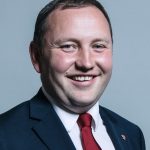
    Ian Murray – 2020 Comments on New Restrictions in Scotland

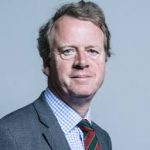
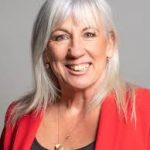
    The comments made by Ian Murray, the Shadow Secretary of State for Scotland, on 7 October 2020.

    It should never have come to this. Under the SNP Government’s watch, Scotland now has the highest R rate in the UK following a complete failure to tackle the spread of the virus.

    The SNP took too long to set up Test and Protect and ignored warnings about the return of students to university. Businesses and livelihoods are now at risk as a result of the SNP’s incompetence.

    While public health is the priority, people’s jobs must now be protected and there is an urgent need for both the UK and Scottish governments to put their differences aside and work together on the economic impact.

  • Ian Murray – 2020 Comments on Margaret Ferrier’s Statement

    Ian Murray – 2020 Comments on Margaret Ferrier’s Statement

    The comments made by Ian Murray, the Shadow Secretary of State for Scotland, on 1 October 2020.

    This is astonishing recklessness from an SNP MP, which has put people’s health at risk.

    Through her irresponsible actions, she very possibly has passed on the virus to a vulnerable person, who may now have COVID-19 and be in danger. She has put passengers, rail staff, fellow MPs, Commons staff and many others at unacceptable risk.

    To breach the rules twice is simply unforgivable, and has undermined all the sacrifices made by her constituents.

    Nicola Sturgeon must come out and condemn her MP’s actions and tell the Scottish people what disciplinary action she will be taking. There cannot be one rule for Margaret Ferrier, another for everybody else.

  • Alister Jack – 2020 Comments on Scottish July GDP Figures

    Alister Jack – 2020 Comments on Scottish July GDP Figures

    The comments made by Alister Jack, the Secretary of State for Scotland, on 23 September 2020.

    As the Prime Minister said last night, the struggle against covid is the single biggest crisis the world has faced in our lifetimes.

    The UK Government is focussed on stopping the spread of coronavirus and keeping people safe, while doing everything we can to protect the economy.

    Through the furlough and self-employed schemes, we directly supported more than 930,000 jobs in Scotland, a third of the workforce. Now, the Chancellor’s comprehensive Plan for Jobs is bringing in the Job Retention Bonus, creating new jobs for young people through the kick start scheme, doubling the number of work coaches, and are supporting jobs in the tourism and hospitality sectors through a VAT cut.

  • Steve Barclay – 2020 Comments on the Block Grant Transparency Report

    Steve Barclay – 2020 Comments on the Block Grant Transparency Report

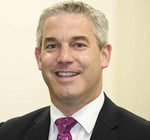
    The comments made by Steve Barclay, the Chief Secretary to the Treasury, on 30 July 2020.

    Last week I announced an unprecedented funding guarantee to give the devolved administrations certainty to plan ahead and deliver their own support schemes to tackle coronavirus.

    Today’s publication shows that this guarantee builds on the financial support that we have already provided, showcasing the strength and value of the Union.

  • Nicola Sturgeon – 2020 Statement on Lockdown in Scotland

    Nicola Sturgeon – 2020 Statement on Lockdown in Scotland

    The text of the statement made by Nicola Sturgeon, the Scottish First Minister, in the Scottish Parliament on 9 July 2020.

    In Scotland, Covid has now been suppressed to a low level. Indeed, even in the three weeks since I last updated Parliament, there has been significant progress.

    At that time, we were reporting approximately 20 new cases of Covid a day. The daily average now is around 7. Three weeks ago there were more than 540 people in hospital with confirmed Covid. The figure today is 342.

    And there are now just three patients with confirmed Covid in our intensive care units. The number of people dying has also fallen week-on-week, as is shown in our daily statistics and in the weekly reports of National Records of Scotland.

    In addition, our latest modelling suggests the R number remains below 1. It has been between 0.6 and 0.8 for most of the past month and the number of people in Scotland with the virus continues to fall.

    Three weeks ago we estimated that around 2,900 people were infectious. Our estimate for last week is that around 1,000 people in Scotland were infectious.

    That confirms, as I explained yesterday when setting out our decision on air bridges, that prevalence of the virus in Scotland at this stage is several times lower than it is across the UK as a whole.

    Finally, in determining whether we can move from Phase 2 to Phase 3 of exiting lockdown we have assessed our progress in tackling Covid against the six criteria for this stage set out by the WHO and we have concluded that we would meet each of them.

    However, I need to advise Parliament that the fifth of these criteria, which relates to the risk of managing imports of the virus from outside Scotland, did give us some pause for thought.

    The balanced decision we announced yesterday on air bridges was essential for us to conclude at this stage that we are managing that risk in an effective and proportionate manner.

    However, it is essential that we keep this risk under close review. To be clear, this must cover the possibility of importation from other parts of the UK as well as from overseas.

    Taking all of these various factors into account I can confirm it is the judgement of the Government that we can now move from Phase 2 to Phase 3 of the routemap.

    I can also confirm we will allow, in a limited number of sectors, an exception to be made to the requirement for 2-metre physical distancing, however this will be subject to strict conditions tailored to the circumstances of each sector.

    Let me stress the term ‘exception’. The general rule remains 2m. For public transport and the retail sector this exception will be permissible from tomorrow, however it is essential that the required mitigations are in place and appropriate discussions have taken place with trade unions before it becomes operational in any particular setting.

    Given some of what I’ll cover later, it’s also worth being clear at this point that the retail sector includes personal services such as hairdressing.

    I also want to remind everyone that face coverings, already mandatory on public transport, will, from tomorrow, be mandatory in shops as well.

    There will be some exemptions for young children under 5, people with certain health conditions, and for staff in some circumstances. For the vast majority of us, however, it will be the law that we wear face coverings in shops.

    Wearing a face covering on a bus, train, or in a shop, should, for the foreseeable future, become as automatic as putting on a seatbelt in a car. It should not need to be enforced but the police can issue fines for anyone not complying.

    However, I am asking everyone to comply, not from fear of enforcement, but because it is the right thing to do. It helps us protect each other from the virus.

    That leads me to a general point that it is important to stress before I outline the further restrictions we intend to lift.

    The virus hasn’t gone away. It’s still out there and is still just as infectious and just as dangerous as it ever was.

    Lockdown has suppressed it but as lockdown eases there’s a very real risk it will start to spread again – and that is not conjecture. It is already happening in many parts of the world.

    With every restriction we lift the risk increases, especially as we start to permit more indoor activity. So all of us must do everything we can to mitigate it.

    Wearing face coverings is part of that, but so too are the other measures summarised in our FACTS campaign.

    Face coverings.

    Avoid crowded places.

    Cleaning hands and hard surfaces.

    Two-metre distancing.

    Self-isolation and booking a test if you have symptoms.

    I simply cannot stress enough that as we move out of lockdown these basic measures become much more important – not less. Please follow them to the letter.

    Let me now confirm the steps for Phase 3, for which we are now able to set specific dates. You’ll find more detail on gov.scot later today.

    As will be obvious from what I’m about to say, we intend to take the same staggered approach to Phase 3 as we did to Phase 2. Not all changes will happen immediately or at the same time. That means we are not bearing all of the risk at once.

    However, the first change relating to the ability of different households to meet up together will take effect tomorrow. The Health Secretary yesterday announced important changes for people who are shielding.

    For example, from today you will no longer be asked to physically distance from people you live with and will be abld to form an extended household if you live on your own or with children under 18.

    Today’s routemap includes a link to the additional changes we hope to make to the shielding advice up to the end of July.

    The other changes I’m about to announce do not apply to people who are shielding, unfortunately, but do apply to everyone else.

    Before I set out what these are let me make a general point. Last week we said children under 12 no longer have to physically distance when outdoors. From tomorrow, that will apply indoors too.

    However, for adults and, for the time being, older children, the advice to keep a 2m physical distance from people in other households will remain.

    But the general rules on household gatherings will be, from tomorrow, as follows.

    A maximum of 15 people from up to 5 different households can meet together outdoors.

    The advice is to remain 2m distant to people from other households to your own. From tomorrow, limited indoor gatherings will also be permitted. A maximum of 8 people from 3 different households can meet indoors.

    To be clear, that is the household whose gathering it is in, and people from up to 2 additional households. As long as physical distancing from different households is maintained, this can include overnight stays.

    I must stress though, this is one of, if not the highest risk change we have made so far. We know the risk of transmitting the virus indoors is significantly higher than it is outdoors…

    ..so it is essential that we all take the utmost care and strictly follow all of the public health advice.

    That means keeping 2m distant from people in other households, being very careful to clean surfaces after you touch them, and washing your hands regularly – especially when you first enter someone’s house.

    At all times try to avoid creating bridges that allow the virus to spread from one household to another.

    We’re also advising that, between indoors and outdoors activity, adults don’t meet with people from any more than 4 different households in any single day.

    Finally, from tomorrow we will change the guidance so people who are part of a non-cohabiting couple, regardless of their living arrangements, no longer need to stay physically distant from each other, indoors or outdoors.

    The next set of changes will take effect from Monday 13th July. From Monday, organised outdoor contact sports and physical activity can resume for children and young people subject to guidance being followed, and so too can other forms of organised outdoor play.

    Non-essential shops inside shopping centres can reopen, provided of course they follow all relevant health and safety guidance. That will mean that the vast majority of retail from Monday will be open.

    There will also from Monday be an important further resumption of public services, community optometry practices will further increase their services, especially for emergency and essential eyecare.

    Dental practices will be able to see registered patients for non-aerosol procedures. To explain that a bit more, aerosol procedures are those that create a fine mist – for example through use of a high-speed drill – and we cannot yet allow these.

    Unfortunately this means many forms of dental care will still not be possible, however procedures such as check-ups and the fitting of dentures and dental braces can resume.

    From Monday, a woman can have a designated person accompany her to ante and post-natal appointments, and in addition to her birth partner, can designate one other person to attend the birth and also make ante and post-natal ward visits.

    Further changes will then come into force from Wednesday next week – 15th July. From that date indoor restaurants, cafes and pubs will be able to reopen.

    However, just as with indoor household meetings, opening up indoor hospitality poses significantly increased risks of transmission, so it is absolutely essential that the guidance on health and safety is followed rigorously.

    By businesses, by staff, and by customers. That includes guidance on physical distancing and also taking customer contact details for use if necessary by Test and Protect.

    Like public transport and retail, indoor and outdoor hospitality venues will be granted an exemption from the 2m rule from the 15th July – this is dependent on the implementation of all relevant mitigating measures and appropriate discussions taking place with trade unions.

    Mitigating measures in this sector include, for example, clear information for customers that they’re entering a 1m zone, revised seating plans, and improved ventilation.

    The tourism sector can also open from 15th July. That means all holiday accommodation, including hotels, can reopen as long as the appropriate guidance is followed.

    Museums, galleries, other visitor attractions, libraries and cinemas – including drive-ins and other venues screening films – can also reopen on the 15th, although physical distancing and other safety measures will be required. And for many, if not most of these facilities, tickets must be secured in advance.

    The childcare sector can also fully reopen from next Wednesday – something I know is important to families across Scotland.

    I can also confirm that from 15th July hairdressers can reopen, subject to enhanced hygiene measures being in place, and the finalised guidance for hairdressers will be published this week.

    Finally, I’m pleased that we are able to bring forward two changes we were previously keeping under review for later in Phase 3 but that we now judge can be undertaken safely next week – provided necessary mitigations are in place.

    After careful consideration we have decided from 15th July, places of worship can reopen for communal player, congregational services and contemplation.

    However, numbers will be strictly limited, 2-metre physical distancing will be required, and there will also be a requirement to collect the contact details and time of attendance of those entering a place of worship.

    And, unfortunately, given what we know of transmission risks, singing and chanting will also be restricted.

    Detailed guidance is currently being finalised in consultation with our faith communities but I hope today’s announcement will be welcomed by all those for whom faith and worship is important and a source of comfort.

    In addition to that and linked to that change we will also ease restrictions on attendance at services and ceremonies for funerals, weddings and civil partnerships. However, numbers will be even more limited than for worship generally and physical distancing required.

    And I must stress this change applies only to services. Associated gatherings such as wakes or receptions must continue to follow the limits on household gatherings and hospitality.

    I am acutely aware that the restrictions we’ve had to place on attendance at funerals in these past few months have been particularly hard to bear and I’m very grateful to everyone who has complied in what will, I know, have been heartbreaking circumstances.

    While the changes which come into effect next week will not allow full-scale gatherings just yet, I hope they will allow more people to find solace at a time of grief as well as allowing more people to celebrate happier occasions such as weddings and civil partnerships.

    The next set of changes will take effect from 22nd July. At that time personal retail services, which have not yet been able to reopen, for example beauticians and nail salons, will be able to reopen with enhanced hygiene measures in place.

    Universities and colleges can implement a phased return to campus learning as part of a blended model with remote teaching. Motorcycle instruction and theory and hazard tests can also resume from that date.

    But driving lessons in cars unfortunately will have to wait a bit longer. Unfortunately there are other activities which are included in Phase 3 of the routemap that we are not yet able to attach a firm and specific date to.

    However, while we will keep all of this under review, and as we have done with communal worship, bring dates forward whenever possible, it should be assumed at this stage that these other activities will not restart before 31st July.

    These activities include the reopening of nonessential offices and call centres, the resumption of outdoor live events, and the reopening of indoor entertainment venues such as theatres, music venues and bingo halls.

    They also include the reopening of indoor gyms and the resumption of nonprofessional adult outdoor contact sports.

    We will continue to work closely with relevant sectors on the reopening as soon as possible of all these activities.

    For example, we’ll work with the outdoor events sector to review the range of events that could take place as we recognise a one-size-fits-all approach may not be appropriate. However, I hope it will be appreciated, however difficult I know this is, that a number of these activities present particular challenges.

    And while I do know it is difficult, it will take a bit more time to work through how these can be safely addressed. I also want to indicate at this stage that our current expectation is Phase 3 may well last longer than three weeks.

    Given the scale of the changes we are making in Phase 3, it may be wise not to rush that or go into Phase 4 too quickly. But we will keep that under close review.

    Let me reiterate that it is our ambition and our intention that schools will return full-time in August.

    Indeed, this is dependent on the virus continuing to be suppressed to very low levels and therefore it is one of the reasons we are being so careful and cautious in everything else we do right now.

    There’s no doubt today’s statement marks the most significant milestone yet in Scotland’s emergence from lockdown, and I hope the measures we have announced or confirmed today are welcome.

    All of them of course depend on us keeping the virus under control – eliminating it as far as we possibly can now, ahead of the – I’m afraid to say – almost inevitable challenges we will face come winter, remains our objective.

    And we will not hesitate to reimpose restrictions if we consider it necessary to halt the spread of the virus and save lives.

    I will make a further statement to Parliament on 30th July, and between now and then will deliver updates through the regular media briefings.

    However I want to end by stressing the point I made at the outset. It is perhaps the most important point of all.

    This is undoubtedly a time for cautious hope and optimism. There is no doubt Scotland, through our collective efforts, has made great progress in tackling Covid.

    We should all savour our first indoor meetings and meals with friends, our first pint in a pub or catch-up over coffee.

    Many of us, I know, are looking forward to our first non-amateur haircut in many months. And there will be other milestones and reunions that we will enjoy over the next few weeks. They have all been hard-earned by each and every one of us.

    But I have a duty to be crystal clear with the country that this is also a time of real danger. Next week represents the most substantial easing of lockdown so far, and we know that meeting people indoors poses far greater risk than going to a park or someone’s garden.

    As I said earlier on, we see signs of resurgence in many countries across the world right now.

    We must all be aware of that in everything we do. We must remember that Covid, although currently at very low levels in Scotland, is still out there.

    And everything we learn about this still-new virus, about its infectiousness, its ability to kill, and its potential to do long-term damage to health, should warn us that we mess with it at our peril.

    Perhaps more than ever, now is a time of great caution.

    Remember that life should still not feel entirely normal and at all times, especially when we’re meeting indoors with people from other households, we must be constantly alert to the steps we need to take to deny it the chance to spread.

    That’s why the most important thing that everyone should remember and abide by is FACTS.

    Face coverings must be worn in enclosed spaces – public transport, shops, and indeed anywhere else physically distancing is more difficult.

    Avoid – literally, like the plague – crowded places, indoors or outdoors.

    Clean your hands regularly and thoroughly and clean hard surfaces after touching them.

    Two-metre distancing remains the clear and important advice.

    And self-isolate and book a test immediately if you have symptoms of Covid.

    The symptoms to be aware of are a cough, a fever, or a loss of or change in your sense of taste or smell. You can book a test at NHS Inform or by phoning 0800 028 2816.

    And, please, act immediately. Err on the side of caution. If you have any reason at all to worry you might have Covid symptoms get tested straight away.

    It is only because of our collective action, our love for and solidarity with each other that we have made so much progress. Now is not the time to drop our guard, so let’s all keep doing the right things to keep ourselves safe, to protect others, and to save lives.

  • Jeane Freeman – 2020 Letter to NHS Staff in Scotland

    Jeane Freeman – 2020 Letter to NHS Staff in Scotland

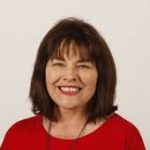
    Below is the text of the letter to NHS staff in Scotland from Jeane Freeman, the Cabinet Secretary for Health and Sport in the Scottish Parliament, on 5 July 2020.

    There can be very few if any of us who do not have cause to be grateful for our NHS. In big ways and small, it touches all our lives. But on this anniversary, I want to thank each one of you.

    In this 72nd year, our NHS Scotland has had to respond in ways it has never had to at any point in its history. The NHS – and that really means every single member of NHS staff, has had to respond very quickly to the demands of a pandemic on a new virus about which we are continually learning.

    And all at the same time as continuing to deliver essential and urgent health care to the people of Scotland.

    So while the NHS has always had to adapt and respond to the health needs of the people of Scotland and both lead and respond to emerging clinical practice and scientific developments over its 72 years, the response in recent times from NHS staff and staff across health and social care, has been phenomenal.

    This has truly been a system wide effort, spanning health and social care but reaching across our public, independent, third and private sectors.

    Our colleagues who work in health and social care services across Scotland have demonstrated incredible resilience and capability – by quickly adapting and delivering in the most extraordinary of circumstances – and I am very grateful to each and every one for your tireless work, your compassion and your care.

    You’ve worked so hard to make sure that our health and care services have coped and continue to manage with the added pressures we face.

    I know that many of you will be working in unfamiliar settings, are being asked to learn new skills and are working in new roles. I also know that all of you will be doing that at the same time as you have your own worries and anxieties about family or friends.

    Some will have been very directly affected by the loss of loved ones and it is important that we take time to recognise that, to recognise that grief never follows the same path for any of us and that we need to reflect and remember those we’ve lost.

    None of this is going unnoticed and it is important to me that you take time to look after your own health and wellbeing. At different times in the last few months every one of us has felt overwhelmed or unsure or anxious. And that really is OK. It is part of being human. So please make use of the National Wellbeing Hub (www.promis.scot) to help you do so.

    Of course, Covid-19 is still with us.

    The virus hasn’t gone away. And while we have, together, achieved a very great deal in driving down the level of the virus in Scotland, you know probably better than many just how easily it could rise again. So you know that we need to remain ready to flex our response and our services to cope should that happen just at the same time as we are safely and steadily restarting important health care that we had to pause in the early stages of the pandemic.

    We ask a very great deal of you in normal times. In recent months and for the months ahead we will be asking for even more. But in your response – in your professionalism, your dedication and your care you have been exemplary. So please take a moment to be proud of everything you have done – as an individual and as a team.

    The future is always with us. And our future as an NHS is even more firmly grounded in all you have achieved and because of that, no matter how hard it will feel at times or how complex – that future is a bright one. So please accept my heartfelt thanks today – and every day.

  • Alyn Smith – 2020 Article on China’s Human Rights Violations

    Alyn Smith – 2020 Article on China’s Human Rights Violations

    Below is the text of the article by Alyn Smith, the SNP MP for Stirling, on 5 July 2020.

    Hong Kong has long been a special place. Its unique constitutional set-up – known as ‘one country, two systems’ – recognises that Hong Kong is a Special Administrative Region of China, but still allows it to retain its own legal and legislative systems, as well as enjoy a high degree of freedom.

    This week that principle was torn up by the imposition of the new National Security Law on the people of Hong Kong by the Chinese Government.

    While the details of the law were kept secret until it was passed, we know now that it has created several vague new criminal offences, including ‘subversion’ and ‘collusion with external forces’, which are punishable with a maximum sentence of life in prison.

    This law puts an end to freedom of speech, freedom of assembly and freedom of expression. It puts an end to the free society that we have watched Hong Kongers take in their hundreds of thousands to the streets to defend.

    The ‘one country, two systems’ principle was enshrined in the Sino-British Joint Declaration in 1984, when the UK committed – along with China – to protect Hong Kong’s unique status for the next fifty years.

    For this system to be dismantled before our eyes like this is more than a challenge to the international rules-based order: it is a direct challenge to the UK Government, and no amount of shiny new planes or Royal Yachts can disguise the fact that this is a humiliating affront to the United Kingdom on the international stage.

    These recent actions by the Chinese state are just the latest in a long pattern of aggression, disregard for human rights and disrespect for international agreements. They are a direct assault on our values and our interests and cannot be tolerated.

    The imposition of this law matters to us all.

    It matters to us as defenders of human rights that people everywhere are allowed to live freely and without fear, and that international human rights organisations like Amnesty International are able to carry out their vital work without fear of reprisal.

    It matters to us as internationalists that we can speak openly with people in other countries, and that the brave Hong Kongers I have spoken with in recent weeks can continue to share their stories without the threat of life in prison just for speaking to a foreign politician.

    It matters to us that as campaigners for an independent Scotland that international law is respected and strengthened, and that small states the world over know that the world order is based on mutually agreed rules, not mere economic and military might.

    This law matters to Scotland and it matters to the world.

    Time and time again, the SNP has made the case for safe and legal routes to this country for those fleeing political oppression and I welcome that – in this instance – the UK Government has listened and created a new path to citizenship for BNO passport holders. But we have to do more than that.

    When the people of West Berlin were threatened by the USSR, the international community they recognised that it wasn’t enough to simply open the door to those who were fleeing repression: they had to face the threat head-on. While Hong Kong may be a little further away than Berlin, the values that we share are universal.

    The UK Government must take a stand against China, if their much-touted idea of ‘Global Britain’ is to mean anything.

    They must join with our allies in the European Union and commit to lodging an action against China in the International Court of Justice to hold it to account for its breach of international law, they must open active consideration of targeted sanctions against China and Chinese companies active within the UK and – most fundamentally – the UK Government must show that breaking the law has consequences.

    I believe that China’s violations of international agreements and of the rights of its own citizens matters to us all. It’s about time the UK Government showed that it thinks so too.