Category: Scotland

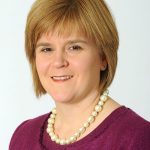
  • Nicola Sturgeon – 2021 Statement to the Holyrood Inquiry

    Nicola Sturgeon – 2021 Statement to the Holyrood Inquiry

    The statement made by Nicola Sturgeon, the Scottish First Minister, on 3 March 2021.

    The spotlight shone on historic workplace harassment in late 2017 was long overdue.

    It was right at that time for my government to review its processes, consider any weaknesses and gaps in them, and put in place a Procedure that would allow complaints, including those of a historic nature, to be investigated.

    When complaints were made about Alex Salmond it was also right that the government took them seriously and subjected them to investigation.

    An individual’s profile, status or connections should not result in complaints of this nature being ignored or swept under the carpet.

    That in this case it was a former First Minister does not change that.

    The Procedure that was adopted in late 2017, in the wake of the MeToo concerns, was drafted by civil servants, largely independently of me.

    However, I was kept abreast of its development and I signed it off.

    As a result of a mistake that was made, a very serious mistake, in the investigation of the complaints against Alex Salmond, two women were failed and taxpayers’ money was lost.

    I deeply regret that.

    Although I was not aware of the error at the time, I am the head of the Scottish Government, and so I want to take the opportunity to say sorry to the two women involved and to the wider public.

    I also accept – without reservation – that my actions deserve to be scrutinised.

    Two years ago, I volunteered for such scrutiny by referring matters relating to my contact with Alex Salmond to the Independent Adviser on the Ministerial Code, Mr James Hamilton.

    Mr Hamilton is conducting an independent investigation and I await his findings.

    His investigation is not being conducted in public – though of course his conclusions will be published.

    As a result of that, he is able to hear and consider material that, because of a contempt of court order, this committee cannot – including, as I understand it, from people who were actually party to discussions that others, who were not, are seeking to attest to.

    Mr Hamilton has offered no commentary on his investigation and nor will I.

    However, this committee – and the public – are entitled to hear from me directly on the matters under consideration.

    So today, I will do my best to answer every question asked of me directly and in as much as detail as I can.

    Firstly, on the 8 January 2019 I volunteered to Parliament my contact with Alex Salmond. I stated as follows:

    ‘On 2 April [2018], he informed me about the complaints against him…’

    I will explain why I stand by that statement.

    Second, I will set out why I did not immediately record the April 2 meeting within the Scottish Government – a decision based entirely on my desire to protect the independence and the confidentiality of the process.

    Thirdly, I will outline why I believe it was right that I did not intervene in the investigation when I became aware of it, even though Alex Salmond asked me to do so.

    And, finally, although the mistake made in the conduct of the investigation meant, ultimately, that the action for Judicial Review could not be defended, I will demonstrate that the decisions taken at each stage of it were legally sound.

    I am sure we will return to all of these matters in detail.

    However, I want to focus, in these opening remarks, on the issues around my contact with Alex Salmond on 2 April – and my contact 3 days earlier with his former Chief of Staff.

    Alex has claimed in his testimony to the Committee that the meeting in my home on the 2 April took place with a shared understanding, on the part of all the participants, of the issues for discussion.

    In other words, that he turned up to the meeting believing I already knew everything.

    In fact, this represents a change in his position.

    On 14 January 2019, after the conclusion of the Judicial Review, a spokesperson issued this comment on his behalf –

    ‘Alex has no certainty as to the state of knowledge of the first minister before then’ – by which he meant 2 April.

    A brief account of what happened on 2 April suggests – as per his comment in January 2019 – that he did not assume full knowledge on my part in advance.

    When he arrived at my house he was insistent that he speak to me entirely privately – away from his former Chief of Staff, Geoff Aberdein and another former colleague, Duncan Hamilton, who had accompanied him, and my Chief of Staff who was with me.

    That would hardly have been necessary had there already been a shared understanding on the part of all of us.

    He then asked me to read a letter he had received from the Permanent Secretary.

    This letter set out the fact that complaints of sexual harassment had been made against him by two individuals, made clear that these complaints were being investigated under the Procedure adopted at the end of 2017, and set out the details of what he was alleged to have done.

    Reading this letter is a moment in my life I will never forget.

    And although he denied the allegations, he gave me his account of one of the incidents complained of, which he said he had apologised for at the time.

    What he described constituted, in my view, deeply inappropriate behaviour on his part – another reason why that moment is embedded so strongly in my mind.

    At the time he was showing me the letter and outlining his account, Geoff and Duncan were doing the same with my Chief of Staff.

    Again, this would seem unnecessary had she and I known everything in advance.

    Questions have been raised about a conversation I had three days earlier – on 29 March 2018 – with Geoff Aberdein and another individual.

    I have not seen Mr Aberdein’s account of that conversation.

    However, I know the account Mr Salmond has given of the meeting – though he also said on Friday that he had not been given a read-out of it.

    Let me say upfront that I have no wish to question the sincerity of Geoff’s recollection, but it is clear that my recollection is different and that I did not and do not attach the same significance to the discussion that he has.

    The purpose of the conversation seemed to be to persuade me to meet with Alex as soon as possible – which I agreed to do.

    Geoff indicated that a harassment-type issue had arisen, but my recollection is that he did so in general terms. Since an approach from Sky News in November 2017, I had harboured a lingering suspicion that such issues in relation to Mr Salmond might rear their head – so hearing of a potential issue would not have been, in itself, a massive shock.

    What I recall most strongly about the conversation is how worried Geoff seemed to be about Alex’ welfare and state of mind – which, as a friend, concerned me.

    He also said he thought Alex might be considering resigning his party membership.

    It was these factors that led me to meet him, and it was these factors that placed the meeting on 2 April firmly in the personal and party space.

    Not unreasonably, some people have asked how I could have forgotten the conversation on 29 March. I certainly wish my memory of it was more vivid.

    But as I have stated, it was the detail of the complaints under the Procedure that I was given on 2 April that was significant and shocking.

    That was the moment at which any suspicions I had or general awareness that there was a problem became actual knowledge.

    It is also worth saying that even if I had known on 29 March everything I learned on 2 April, my actions wouldn’t necessarily have been any different.

    Given what I was told about the distress Alex was in and how it was suggested to me he might be intending to handle matters, it is likely that I would still have agreed to meet him – as a friend and as his party leader.

    And, as I set out in written evidence, my decision not to record the meeting on 2 April wasn’t about the classification I gave it – it was because I did not want to compromise the independence or the confidentiality of the process that was underway.

    All of which begs the question of why I would have gone to great lengths to conceal a conversation that had taken place a mere 3 days earlier.

    Let me turn now to my decision not to immediately report the contact.

    Sections 4.22 and 4.23 of the Ministerial Code seek to guard against undisclosed outside influence on decisions that Ministers are involved in and likely to have an influence on, such as changes in policy or the awarding of contracts.

    This situation was the opposite of that.

    The terms of the Procedure excluded me from any investigation into a former minister. I had no role in the process and should not have known that an investigation was underway.

    So, in my judgment, the undue influence that section 4 is designed to avoid would have been more likely to arise had those conducting the investigation been informed that I knew about it.

    I didn’t want to take the risk that they might be influenced, even subconsciously, by any assumption of how I might want the matter handled.

    Their ability to do the job independently would be best protected by me saying nothing.

    It is also my reading of the Code that had I reported it, the fact of my meeting with Alex Salmond would have had to be made public, potentially breaching the confidentiality of the process.

    It was for those reasons that I did not immediately record the 2 April meeting or the subsequent phone call on 23 April in which Mr Salmond wanted me to tell the Permanent Secretary that I knew about the investigation and persuade her to agree to mediation.

    It is worth noting that respect for the impartiality of civil servants and the confidentiality of government business are also obligations imposed on me by the Code.

    My judgement changed when Alex Salmond made it clear to me that he was seriously considering legal action.

    I felt I had no choice at that stage but to inform the Permanent Secretary, which I did on 6 June 2018.

    I also confirmed to her that I had no intention of intervening in the process. And I did not intervene in the process.

    Mr Salmond’s anger at me for this is evident.

    But intervening in a process that I was expressly excluded from – and trying on behalf of a close associate to change the course it might take – would have been an abuse of my role.

    The committee is also rightly interested in the Judicial Review and the government has now published legal advice that informed the decisions we took.

    It is clear from that advice that whilst the government had very strong prospects of defending Mr Salmond’s initial challenge, that changed over a two month period from late October to late December.

    The concerns raised by counsel, caused by emerging evidence regarding the role of the Investigating Officer undoubtedly caused me and others to pause, and to check if we should continue to defend the case. However, as late as December 11 the view of the Law Officers following consultation with counsel was as follows:

    “very clear that no question or need to drop the case. LA clear that even if prospects are not certain it is important that our case is heard.

    “Senior Counsel made clear that his note was not intended to convey that he didn’t think we have a statable case.

    They concluded that “…we have credible arguments to make across the petition.”

    It was when that changed, that the decision was taken to concede.

    In any legal challenge a government faces, there is a balance of risk. That risk cannot be eliminated, but the task of ministers is to consider carefully all the advice we receive and consider the broader public interest.

    And the test in the Ministerial Code is not the view of external lawyers but of the Law Officers.

    Finally and briefly – though I hope to say more as we get into questions – I feel I must rebut the absurd suggestion that anyone acted with malice or as part of a plot against Alex Salmond.

    That claim is not based in fact.

    What happened is this and it is simple.

    A number of women made serious complaints about Alex Salmond’s behaviour.

    The government – despite the mistake it undoubtedly made – tried to do the right thing.

    As First Minister, I refused to follow the age old pattern of allowing a powerful man to use his status and connections to get what he wants.

    The police conducted an independent criminal investigation.

    The Crown Office as it does in prosecutions every single day of the week, considered the evidence and decided that there was a case to answer.

    A court and a jury did their jobs.

    And this committee and an independent investigation are now considering what happened and why.

    For my part, I am relieved to be finally facing the Committee, though given all that has brought us to this moment, being here also makes me sad.

    Alex spoke on Friday about what a nightmare the last couple of years have been for him and I don’t doubt that.

    I have thought often about the impact on him. He was someone I cared about for a long time.

    And maybe that’s why, on Friday, I found myself searching for any sign that he recognised how difficult this has been for others too.

    First and foremost, for women who believed his behaviour towards them was inappropriate.

    But also for those of us who have campaigned with him, worked with him, cared for him and considered him a friend, and who now stand accused of plotting against him.

    That he was acquitted by a jury of criminal conduct is beyond question.

    But I know, just from what he told me, that his behaviour was not always appropriate.

    And yet, across six hours of testimony, there was not a single word of regret, reflection or even simple acknowledgment of that.

    I can only hope that in private, the reality might be different.

    Today, though, is about my actions.

    I have never claimed to be infallible. I have searched my soul on all of this many times over.

    It may very well be that I didn’t get everything right. That’s for others to judge.

    But, in one of the most invidious political and personal situations I have ever faced, I believe I acted properly and appropriately and that overall I made the best judgments I could.

    For anyone willing to listen with an open mind, that is what I will seek to demonstrate today.

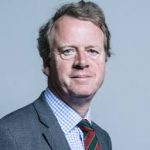
  • Alister Jack – 2021 Comments on Scottish Economic Figures

    Alister Jack – 2021 Comments on Scottish Economic Figures

    The comments made by Alister Jack, the Secretary of State for Scotland, on 24 February 2021.

    Today’s figures reflect the challenges we continue to face as a result of this global pandemic.

    The UK Government has taken quick and decisive action to support jobs and businesses across all parts of the UK. Our £280 billion support package which includes furlough, business loans and self employed schemes have so far protected nearly one million jobs and 100,000 businesses in Scotland.

    This direct support is on top of £9.7 billion additional funding provided to the Scottish Government.

    We are also taking action to create new jobs and support economic recovery in Scotland. Investing billions as part of our Plan for Jobs, City and Region Deals, a new Shared Prosperity Fund and in the supply of vaccines which are important in lifting restrictions and reopening the economy.

    At the budget next week, the Chancellor will set out the next stage of our plan to support and create jobs in all corners of the UK.

  • Maurice Corry – 2021 Comments on Scotland Men’s Sheds Movement

    Maurice Corry – 2021 Comments on Scotland Men’s Sheds Movement

    The speech made by Maurice Corry, the Conservative MSP for West Scotland, on 22 February 2021.

    I am delighted to bring the motion for debate today. Scotland’s men’s sheds movement has become an ever-important fixture across our local communities. Each shed is living proof that every person is of value and has something to contribute.

    The movement could not have developed as it has without the work of the Scottish Men’s Shed Association. The SMSA has over 180 registered men’s sheds that are either up and running or in development, spread across all 32 council areas. The association, along with Age Scotland and other partners, has long raised awareness of why those groups deserve our full attention. Run completely by volunteers, men’s sheds are open, welcoming places for men to put their capabilities to practical use by learning and sharing new skills, which can be as wide ranging as woodworking, furniture repair, gardening and cookery. More than that, these spaces provide those who attend, who are known as shedders, the opportunity for shoulder-to-shoulder friendship and camaraderie.

    My region of West Scotland is privileged to have such sheds at the heart of its communities. There is the amazing work of the Clydebank men’s shed and the Saltcoats men’s shed, which I have visited in recent months. Both have done well in a recent competition. There is also the Garnock valley men’s shed in Kilbirnie. I was particularly impressed with some veterans who had joined the one in Kilbirnie, one of whom said that, with the help of his colleagues, he had managed to turn his life around.

    Free from any obligations or expectations, members have a real sense of ownership of their sheds, each of which is shaped by their own interests and accomplishments. That ethos underpins the entire movement and points to why it is so clearly successful. That is especially the case from a health and wellbeing perspective. An Age Scotland study on the so-called “shed effect” showed that many shedders have found renewed purpose in their lives through their involvement, which they feel has had a direct and positive impact on their mental and physical health. For some, their local shed is a way to overcome loneliness or mental ill health in a place where they feel at home. For others, it is a valuable way to use their time in retirement or a welcome distraction from life’s burdens.

    The local, asset-based voluntary model of the men’s sheds movement is key to how it impacts people’s lives. A ground-breaking study by Glasgow Caledonian University recently captured that by highlighting that the key value of men’s sheds—that they are run by men, for men—means that formalising or pigeonholing men’s sheds into a healthcare role is not the answer. Instead of being overburdened, shedders, who already face challenges, deserve to be equipped with greater, long-term financial support to further galvanise them to do what they already do well: engage men in their own health management entirely on an informal and voluntary basis.

    The Scottish Men’s Shed Association is passionate about its aim of attracting groups who can be more hidden or harder to reach. In that regard, its recent work to forge links with veterans—which is beginning to take place in co-operation with the veterans of the unforgotten forces consortium—will, I am sure, be a valuable way for ex-service personnel to reintegrate into their communities. I sincerely look forward to seeing the outcome of that work.

    The role of men’s sheds in improving health and wellbeing means that they have, over time, become an important part of their community fabric. As well as offering a space in which to signpost local services and information, shedders make a tangible difference to community life, whether through local tree planting, fundraisers for local charities or the creation of a community garden. Their warm and vibrant involvement, which emanates inclusivity, is a prime example of grass-roots community empowerment at its best.

    As so many community organisations have, men’s sheds have felt the impact of Covid-19 keenly, and, in keeping with guidance, sheds continue to be closed through the lockdown. On-going pressures on fundraising and the acquisition of suitable premises have grown more prevalent, which has presented challenges for sheds in maintaining sustainability and resourcefulness. Therefore, the Scottish Government’s funding grant of £30,000 in response to those challenges is welcome, and I am sure it will go some way towards assisting groups.

    With advice from the SMSA and Age Scotland, shedders have sought to stay connected, whether through phone calls, social media or buddy systems, and they have helped the more vulnerable in new and innovative ways. Some have collected shopping for those who are shielding, and some have helped with personal protective equipment production. Others have made bird tables and benches for the benefit of local care homes. Moreover, the Inverclyde men’s shed group, who were winners of the SMSA shed of the year 2020—well done to them—helped to organise a soup shed for local families and constructed street food larders for Belville Community Garden. As the chairman said, such small acts of kindness and markers of community resilience show that men’s sheds are certainly worthy of our appreciation.

    The pandemic has emphasised what we already know to be true: men’s sheds are invaluable as a community-based organisation. They are vital in forging connections and enhancing men’s health and wellbeing. At the same time, the movement recasts our idea of ageing and later life, showing that positivity and opportunity know no bounds. Despite the additional stress that Covid-19 has placed on shedders, they have learned that nothing can be taken for granted, especially our connections with those around us.

    Far from taking the movement for granted, it is for policymakers and stakeholders to ensure that men’s sheds are supported in the long term. As they and other community-based organisations come alongside older people as we emerge from the pandemic, I hope that tailored guidance will be forthcoming from the Scottish Government to assist them. They are a clear asset to our communities and a critical way of safeguarding wellbeing, and our response must reflect that.

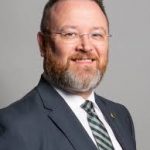
  • David Duguid – 2021 Comments on Support for Fishing Industry

    David Duguid – 2021 Comments on Support for Fishing Industry

    The comments made by David Duguid, the Minister for Scotland, on 21 February 2021.

    Over the last few months, we have been listening to the seafood industry and have continued to monitor the impacts that the pandemic and export disruption has played on prices, exports and the market.

    I am confident in the quality of Scottish fish and seafood but for many fishing businesses the lack of demand in the hospitality trade in the UK and further afield has had a real impact on market prices.

    While we continue to take steps to beat this virus and work with the sector to resolve export issues – this expanded support scheme will help the many small and medium sized fishing businesses that support so many of our coastal communities.

  • Stuart McDonald – 2021 Speech on Covid Security at UK Borders

    Stuart McDonald – 2021 Speech on Covid Security at UK Borders

    The speech made by Stuart McDonald, the SNP MP for Cumbernauld, Kilsyth and Kirkintilloch East, in the House of Commons on 1 February 2021.

    If the Government do not learn from mistakes they make during this pandemic, those mistakes will be repeated, with the same terrible consequences. Let us be clear: this Government have made significant mistakes on covid security at the border. I accept that some of those mistakes are easier to see now with hindsight, but others should have been and were apparent at the time. Indeed, the UK approach to borders stood out like a sore thumb for significant parts of last year, compared with the actions taken by even neighbouring countries. It is not just me saying that, because the Home Affairs Committee has said it. My hon. and learned Friend the Member for Edinburgh South West (Joanna Cherry) has repeatedly pointed out the flaws in the Home Office response over the past year, as one would expect from such a distinguished and knowledgeable home affairs shadow. I pay tribute to her for that work and look forward to maintaining the challenge she posed to the Home Office on this issue and on many, many others.

    Of course, the Home Secretary herself has accepted that the Government got it wrong, saying that she argued for border closures last March. That raises questions about why she stayed in post when she was overruled, rather than arguing for essential border closures from outside the Cabinet. Last week, she accepted that there were

    “still too many people coming in”—[Official Report, 27 January 2021; Vol. 688, c. 406.]

    to the country. That is a stark admission so far into a pandemic. The new measures announced last week by the Home Secretary just about amount to a step in the right direction, but, as is typical of much of the Government’s response to this crisis, it is not a decisive step; it is a hesitant half-measure, when what we needed was bold action.

    The Deputy First Minister, John Swinney, has said that the Scottish Government and the SNP believe that

    “a comprehensive system of supervised quarantine is required”.

    “Comprehensive” is certainly not how we would describe the very limited scheme that the UK Government have drawn up, so we support the Opposition motion. If the Government really want to persuade us that this tentative hotel quarantine policy will genuinely make a difference, Ministers must tell us what estimates they have made of the numbers who will be impacted by these new requirements? How many hotel rooms do they believe will be required? On the other hand, how many thousands of people will continue simply to pass straight through the airports, and out on to public transport and into our towns and cities?

    Put simply, we support a more comprehensive scheme because that is what the evidence points to. Professor John Edmunds of the London School of Hygiene and Tropical Medicine told the Home Affairs Committee:

    “The places that have had very effective quarantine measures do not ask people to quarantine in their homes.”

    So why is the UK not learning more quickly from international best practice? Instead, the UK has offered a half-baked measure that does not bring comfort to the disastrously impacted aviation industry; nor is it decisive enough to appear capable of making any real difference to covid in this country. The Government have tried to operate a timid middle-way compromise, and instead have helped neither public health nor industry. In relation to the South African strain, the stable door was closed half-heartedly, and only after the horse had well and truly bolted.

    Both the Scottish and Welsh Governments have expressed concerns that the measure does not go far enough. Although public health measures can take the devolved Governments so far, with border powers and passenger data in the hands of the Home Office, co-operation is required. The preference would be to have strong and consistent quarantine rules across the UK, so I ask Ministers and the Home Secretary to listen and engage very carefully; as and when the devolved Governments seek to go further than the half-baked UK measures, I hope that they will co-operate and provide support.

    We need a more comprehensive scheme to protect from covid arrivals at the border. At the same time, we need a bespoke and comprehensive package of support for the aviation industry. From the outset of the pandemic, it was clear that one of the sectors that would be most impacted was aviation. The UK Government clearly felt the same and promised sector-specific support, but the one Government who jumped into instant action to support the sector were the Scottish Government, who provided 100% rates relief for a full year, which has now been extended by at least three months, with the aim of extending it longer. It took the UK Government six months to do anything similar.

    With the vast majority of flights grounded, the situation facing the sector is still absolutely dire. Tens of thousands of jobs have gone in the sector, and many that remain have been forced to accept lower terms and conditions. I ask the Government again to support the Employment (Dismissal and Re-employment) Bill of my hon. Friend the Member for Paisley and Renfrewshire North (Gavin Newlands) to outlaw that practice. The sad truth is that, without further support, tens of thousands more jobs will go, so the Chancellor must deliver urgent help, including: action on furlough extension; reversing the decision on tax-free shopping; extending rates relief; and much, much more.

    Finally, it is important to emphasise that all these issues will be of increasing importance in the months ahead. As we look forward, with some guarded optimism, to getting cases back under control and as vaccines are rolled out, declining domestic transmission means that preventing transmission from international arrivals becomes more important, not less—if we really are serious about suppressing this virus. I dearly hope that the Government are serious about that. If so, they should support this motion.

  • Philippa Whitford – 2021 Comments on Victoria Prentis Not Reading Fisheries Deal

    Philippa Whitford – 2021 Comments on Victoria Prentis Not Reading Fisheries Deal

    The comments made by Philippa Whitford, the SNP spokesperson on Brexit, on 13 January 2021.

    Due to Brexit-induced bureaucracy, Scotland’s fishing communities are already experiencing severe disruption and cannot get their produce to their customers in the EU market on time. For the Tory Government’s fisheries minister to then admit that she did not even bother to read the details of the damaging deal because she was too busy is unbelievable and makes her position untenable.

  • Nicola Sturgeon – 2021 Comments on Covid-19

    Nicola Sturgeon – 2021 Comments on Covid-19

    The comments made by Nicola Sturgeon, the Scottish First Minister, on 9 January 2021.

    Covid case numbers still a big concern & putting huge pressure on the NHS, as hospital and ICU cases increase. Also, 93 further deaths remind us just how dangerous the virus can be – my thoughts are with all those grieving.
    To save lives and protect the NHS, please stay home.

  • Ruth Davidson – 2021 Speech on Covid-19

    Ruth Davidson – 2021 Speech on Covid-19

    The speech made by Ruth Davidson, the Conservative MSP for Edinburgh Central, in the Scottish Parliament on 4 January 2021.

    First, I offer my condolences and those of my party on the news of the passing of Kay Ullrich, who was respected by members across the chamber.

    I, too, am grateful to you, Presiding Officer, for recalling Parliament for today’s statement.

    Nobody wants to live under restrictions for a moment longer than is absolutely necessary or wants those restrictions to be any tighter than needed. However, the increase in infection rate and the transmissibility of the new variant give grave cause for concern. We have come too far to throw all our efforts away, and the roll-out of the vaccine means that we can see a time, soon, when all this will begin to be over.

    That said, this is hard news at a hard time, when the resilience of people across the country has already been worn down over the past year. Many will be dismayed by today’s news, not least the parents of school pupils, who now have to rip up their childcare plans, negotiate with their employers and worry about their children’s fractured education.

    The Children and Young People’s Commissioner Scotland has expressed concerns that closing schools poses

    “a serious risk of harm to the wellbeing of children and young people”.

    He has warned that

    “support for online learning is being provided inconsistently”

    across Scotland and that

    “there is not enough national guidance and support for schools”

    from Government ministers, which threatens a further widening of the attainment gap. What further steps is the Scottish Government taking to address those concerns and to ensure that Scottish pupils continue to get equal access to high-quality education?

    The First Minister:

    I agree that it will be very hard for everybody across Scotland to hear this news today and to contemplate the reality of it over the next few weeks. I reiterate to people that we do not take these decisions lightly. We agonise over them, and we announce such restrictions only if we really feel that there is no alternative. Right now, the only alternative is greater loss of life and the potential for our national health service to be overwhelmed. At this point in time, speed of action is the most important factor of all.

    The decision over which we agonised most was that on the further closure of schools for the majority of pupils. The issue of schools, closed or open, has been contentious in recent weeks, and teachers and others have understandably raised concerns. However, I hope that people see from the responses and actions of the Government that we have striven, and will continue to strive, to keep schools open as normally, as often and for as long as possible. We deem today’s decision to be necessary, for the reasons that I have set out.

    I will ensure that the Cabinet Secretary for Education and Skills sets out for MSPs over the next couple of days the steps that are being taken to ensure that the provision of online education is as parents want it to be and that local authorities are working to ensure that it is of a consistent quality across the country. As I indicated in my opening remarks, we have already taken steps to ensure that more young people have access to digital devices, in order to make online learning more accessible to them.

    Schools and local authorities already have contingency plans in place. Advice for parents is available via the Parent Club website. Parents can also speak direct to schools for more advice. Glow, which is the national online learning platform, has seen a huge increase in users and usage since earlier last year, and we are working actively with local and national partners to enhance the online and remote learning options for pupils. That work will continue over the course of next week and for as long as is necessary.

    I end my answer by reiterating that we want the measures to be in place for as short a period as necessary, for all the reasons that I think everybody understands and agrees with.

    Ruth Davidson:

    Today’s announcement underscores the need to have a comprehensive test and trace system in place. In August, the First Minister promised that, between the UK Government Lighthouse laboratories and NHS Scotland facilities, we would have the capacity for 65,000 tests per day. However, the highest number of tests that were carried out in a single day was 30,619, on Christmas day. Currently, one third of tests are carried out by NHS Scotland, and the majority by the Lighthouse labs. She also promised that the three regional hubs for testing would have opened by the end of December but, so far, only two have done so.

    The test positivity rate over the past seven days is now the highest that it has ever been since the Scottish Government started publishing that data in August. Is there capacity in Scotland to carry out 65,000 tests per day? If there is, why is the number of tests that are carried out on any day well below half of that capacity? When will the Edinburgh regional hub be open for testing?

    The First Minister:

    Yes, there is capacity for 65,000 tests per day. That target, which we set earlier in the year, was met by Christmas. However, the number of tests that are actually carried out on any given day is largely demand driven, because it depends on the number of people with symptoms who come forward for testing. We have seen, and I think that we will continue to see, that number rise as, unfortunately, the faster-spreading strain of the virus infects more people. However, the numbers for capacity and the demand for testing will often not be exactly the same, for obvious reasons.

    Although some aspects of testing of asymptomatic people are not done through the PCR testing that goes through the laboratory network—they are now increasingly done through lateral flow testing, the results of which do not appear in these numbers—other aspects of it are done in that way. For example, we are well through the process of transferring testing of care home staff from the Lighthouse lab network to the NHS Scotland lab network.

    We have a well-functioning test and protect system, which continues to be a really important part of our response to the virus. However, because the virus is now spreading faster, we must have a range of different responses in order to complement that system. As far as interventions are concerned, just as the test and protect system has been important, the vaccine programme will become increasingly important over the next period.

    I understand that there has been a last-minute—or, I should say, late-stage—issue with a sprinkler system in the Edinburgh regional lab. That is in the process of being rectified, and the lab is due to open shortly.

    Ruth Davidson:

    Today’s announcement of further restrictions is particularly difficult to take when in recent weeks we have had such positive news of vaccines being approved and being bought in such large quantities by the UK Government. In her statement, the First Minister said that we are in a race between the vaccine and the virus. It will be impossible to know whether we are winning that race at any given time if we show only the daily infection figures without the daily vaccination figures. Members of the public need more information on precisely how the roll-out is going, both nationally and in their areas, as well as on when they will receive their doses. Also, last week, the health secretary said that those aged over 80 will be invited by letter to attend for vaccination.

    Will the First Minister commit today to publishing not just the national vaccination figures but the numbers of people who have been vaccinated, broken down by health board, so that people can see the progress that has been made in their communities? Can she tell us now when everyone in the over-80 cohort will receive letters with details of their vaccination appointments?

    The First Minister:

    When Parliament was recalled last week, I said—I think in response to a question from a Labour member—that we intend to break down into categories the numbers of people who have been vaccinated, which we currently publish weekly. I hope that we could also do so by region and by health board. I will consider whether there is potential to have greater frequency of publication. I am simply mindful of not putting too many burdens of data collection and publication on the people whom we are expecting to undertake that huge logistical challenge, so it might be that weekly publication will remain the best balance, together with a greater breakdown of statistics.

    It is not that long since the vaccines were approved. In particular, the Oxford-AstraZeneca one is still at an early stage. However, we have already vaccinated more than 100,000 people. At this stage, a small percentage of our population has been vaccinated; the level in Scotland is slightly higher than those in the other UK nations. However, we must continue to focus on accelerating the process as much as possible. As I said earlier, at the moment that is largely constrained by supply. We know what we expect to receive for January, which I hope is a conservative estimate. We are not yet clear on what supplies we can expect beyond that.

    As for the call for priority for the over-80 population, vaccination of those people will start shortly and will be an on-going process. We have been recalculating our modelling for the speed and timescale of vaccination as a result of the change in the chief medical officer’s advice on giving the second dose of the vaccine up to 12 weeks after the first dose, rather than three weeks after it. That will allow us to get the first dose of vaccine to more people much more quickly. We are ensuring that we take full advantage of that, just as we are taking full advantage of the supplies of the vaccine as we get them.

    Ruth Davidson:

    Today’s announcement raises immediate practical questions, and one of the primary ones concerns the legal requirement for people to work from home where they can. That raises all sorts of issues, including who is a key worker and what constitutes essential labour in a workplace outside the home. Who should make such decisions, and what is the process for arbitration in the event of a dispute between a workplace and a local authority or between a boss and an employee? In the first lockdown, we saw different interpretations being used by different local authorities, and different services being provided depending on category. People need to know what the new rules are, how they will apply to them and what recourse will exist where there is conflict. Will the First Minister therefore provide clarity on those important points?

    The First Minister:

    We will set out more guidance on those points. On the issue of key workers in the education context, local authorities have specifically asked for some flexibility in that regard, which I think it is important to afford them.

    There is a balance to be struck. In terms of business, we are not, as of now, in quite as restrictive a position as we were back in March—when non-essential work in construction and manufacturing, for example, was closed—but we need to keep that under review. We need to look at not only the spread of the virus but the really important relationship, which I understand, between people’s ability to work—or rather, the requirement on them to work—and their ability to look after their children and take part in online learning for those children at home.

    The Cabinet Secretary for Economy, Fair Work and Culture will have discussions as early as this afternoon with business organisations, and discussions with trade unions, to ensure that we help people—just as we did back in March—to navigate their way through what I recognise is a difficult situation. However, the message to businesses is that we are again asking them to scrutinise their operations rigorously, as they did in March, and assure themselves that the people whom they are requiring to be at work are genuinely only those who cannot do their job at home. There is a need to ensure that as many people as possible who can work from home are supported to do so.

  • Nicola Sturgeon – 2021 Statement on New Lockdown in Scotland

    Nicola Sturgeon – 2021 Statement on New Lockdown in Scotland

    The statement made by Nicola Sturgeon, the Scottish First Minister, on 4 January 2021.

    I’m grateful to you, Presiding Office for this recall of Parliament today.

    And I want to wish you, members, and everyone watching, all the best for a new year that we hope – despite a very difficult start – will bring better times.

    The Cabinet met this morning to assess the up to date Covid situation – which is extremely serious – and discuss what further action is necessary to minimise further spread of the virus. I will set out our decisions shortly.

    However, I can confirm now, in summary, that we decided to introduce from midnight tonight for the duration of January, a legal requirement to stay at home except for essential purposes. This is similar to the lockdown of March last year.

    However, before I set out Cabinet’s decisions in more detail, I want to explain in some detail why they are so necessary.

    In the last few weeks, there have been two significant game changers in our fight against this virus.

    One, the approval of vaccines, is hugely positive and offers us the way out of this pandemic.

    But the other – the new faster spreading variant of the virus – is a massive blow.

    Possibly the most simple way of explaining the challenge we face right now is to compare it to a race.

    In one lane we have vaccines – our job is to make sure they can run as fast as possible.

    That’s why the government will be doing everything we can to vaccinate people as quickly as possible. I will say more about that later.

    But in the other lane is the virus which – as a result of this new variant – has just learned to run much faster and has most definitely picked up pace in the last couple of weeks.

    To ensure that the vaccine wins the race, it is essential to speed up vaccination as far as possible.

    But to give it the time it needs to get ahead, we must also slow the virus down.

    And because it is now spreading faster, that means even tougher restrictions are necessary.

    The evidence is now compelling that the new variant is up to 70% more transmissible than previously circulating strains, and that it may add as much as 0.7 to the R number.

    And according to recent analysis of PCR test samples, it appears that the new variant already accounts for almost half of all new cases in Scotland.

    That increased and faster spread is undoubtedly driving the very serious situation we now face.

    Today’s case numbers – 1,905 new cases, with 15% of tests being positive – illustrate the severity and urgency of the situation.

    No new deaths were reported today – because yesterday was a Sunday and registration offices were largely closed – but since I updated Parliament before Christmas, 289 deaths have been recorded in the daily figures. That again reminds us of the continuing grief this pandemic is causing.

    But this is not just about one day’s numbers.

    We are now seeing a steeply rising trend of infections.

    Indeed, it is no exaggeration to say that I am more concerned about the situation we face now than I have been at any time since March last year.

    In the week from 23 to 30 December, the seven day incidence of cases per 100,000 of the population increased by 65% – from 136 per 100,000 to 225 per 100,000.

    Test positivity has risen sharply too.

    The next update on the numbers of Covid patients in hospital and intensive care will be published tomorrow.

    I would expect these to show that, nationally, the total number of Covid patients in hospital is close to its April peak. And in some boards, the pressure is already very real.

    For example, in terms of hospital beds, NHS Ayrshire and Arran is currently at 96% of its Covid capacity, and three other health boards – Borders, Greater Glasgow & Clyde and Lanarkshire – are above 60% of their capacity.

    The number of people in intensive care is still significantly lower than the April peak – which partly reflects the fact that treatment of Covid has improved significantly since last spring.

    But even so, the total number of patients in intensive care in Scotland is already above normal winter levels. Indeed, all mainland health boards have now exceeded their normal intensive care unit capacity.

    And it is important to be clear that people who are in hospital and ICU now are likely to have been infected 10 days to 2 weeks ago.

    That means that these numbers reflect what the level of new cases was around 2 weeks ago.

    Given that the number of cases has increased significantly since then, we can expect to see significantly increased pressure on the NHS over the course of this month.

    Contingency plans remain in place to double and then treble ICU capacity if necessary.

    And the NHS Louisa Jordan continues to be available to help meet demand – as indeed it has been doing in recent months. 12,000 patients have attended there for scans and outpatient appointments; nearly 5,000 NHS staff and students have been trained there; and it is currently being used for Covid vaccinations.

    In short, NHS services are coping at present – although the pressure on frontline staff is considerable – but already in some areas the position is fragile, and getting more challenging.

    And if the rate of increase in case numbers that we have seen in past two weeks was to continue unchecked, there would be a real risk of our NHS being overwhelmed – even with contingency plans in place.

    In fact, our modelling suggests that without further intervention, we could breach inpatient Covid capacity within 3 or 4 weeks.

    And, of course, a sharply increasing number of cases, in human terms, means many more people becoming ill and dying.

    All of that explains why we have to act quickly and decisively.

    The situation in some other parts of the UK – where case numbers are already much higher than here, and where the contribution of the new variant is already greater – shows what may lie ahead if we don’t.

    As things stand, we estimate that we are possibly about four weeks behind the position in London and the south east.

    The rapid acceleration in London began when it was at about 160 new cases a week, for every hundred thousand people. That’s the level Scotland was at a week ago.

    London is now seeing 900 new cases a week per 100,000. Test positivity is around 27%. And pressure on NHS services is acute.

    We have an opportunity in Scotland to avert the situation here deteriorating to that extent.

    But we must act quickly.

    The advice of our clinical advisers is clear that the increased transmissibility of the new variant means that the current level 4 measures may not be sufficient to bring the R number back below 1.

    It is essential that we further limit interaction between different households to stem the spread and bring the situation back under control, while we vaccinate more people.

    In short, we must return for a period to a situation much closer to the lockdown of last March.

    Let me therefore set out in more detail the decisions Cabinet has reached.

    It is important to stress that these are not decisions taken lightly. I am acutely aware of the impact they will have and I know they will not be welcome.

    But they are in our judgment essential.

    As government, our clear and overriding duty right now is to act quickly to save lives and protect the NHS.

    We know that delay or prevarication in the face of this virus almost always makes things worse not better – even if it stems from an understandable desire that we all share to wait for more data or evidence.

    To turn to the decisions in detail. The decisions I will speak about a bit later on schools, let me be clear at this stage, they will apply to all parts of Scotland. However other decisions that I will outline will apply to those parts of Scotland currently at level 4, which of course is all of mainland Scotland, and they are effectively an enhancement to level 4.

    The island areas currently in level 3 will remain there for now, although we will continue to monitor them very carefully.

    These additional level 4 restrictions – essentially returning us to a position similar to the lockdown of last March – will be in place for the whole of January. We will keep them closely under review.

    However, I cannot at this stage rule out keeping them in place longer, nor making further changes. Nothing about this is easy.

    The first measure is that our fundamental advice, for everyone, is to stay at home.

    That is the single best way of staying safe.

    We consider that this stay at home message and advice is now so important that, from tomorrow, it will become law, just as it was in the lockdown last year.

    This means it will only be permissible to leave home for an essential purpose.

    This will include, for example, caring responsibilities, essential shopping, exercise and being part of an extended household.

    In addition, anyone who is able to work from home, must do so. It will only be a reasonable excuse to leave your home to go to work, if that work cannot be done from home.

    We are asking people and businesses to take this really seriously – as we all did in March, during the first lockdown, – because the situation is at least as serious now as it was then.

    The law already requires many businesses in certain sectors to close in Level 4. We now need every business to look again at their operations, and to make sure that every single function that can be done by people working at home, is being done in that way.

    Businesses have already shown a tremendous capacity to adapt during this pandemic and I’m very grateful to them for that – and we need them to consider their operations again, as we all work together to reduce transmissions.

    The Economy Secretary will be speaking to business organisations about this, including this afternoon. We will also engage with unions on these issues. And we will continue to consider if more regulatory action is required.

    We are also providing new guidance for people who are in the shielding category.

    If you were shielding and you cannot work from home, our clear advice now is that you should not go into work at all.

    The Chief Medical Officer is writing to everyone who falls into this category, and his letter will count as a Fit Note for those who need it.

    Unlike the lockdown last year, the frequency of outdoor exercise is not being limited.

    It is important for physical and mental health that we can get outdoors for fresh air and exercise as much as possible.

    However, from tomorrow, the rule on outdoor gatherings will change.

    As of now, up to six people from two households are able to meet outdoors. Given the greater transmissibility of this new variant, we consider it necessary to restrict that further.

    From tomorrow, a maximum of two people from up to two households will be able to meet outdoors.

    Children aged 11 and under will not be counted in that limit, and they will also be able to play outdoors in larger groups, including in organized gatherings.

    However, for everyone else – including 12 to 17 year olds – outdoor exercise should only take place in a way which is consistent with the 2 people from 2 households rule.

    In addition, strict travel restrictions remain in place across Scotland. From tomorrow, if you live in a level 4 area – as the majority of us do – you cannot leave your home except for an essential purpose. When you do go out, stay as close to home as possible and stay away from crowded places.

    And it remains the case – and let me stress this point – that no-one is allowed to travel into or out of Scotland unless it is for an essential purpose.

    Presiding Officer,

    A number of other measures will come into effect on Friday of this week.

    It is with real regret that we consider it necessary for places of worship to close during this period for all purposes except broadcasting a service, or conducting a funeral, wedding or civil partnership.

    I am well aware of how important communal worship is to people.

    But we believe that this restriction is necessary to reduce the risk of transmission.

    While up to 20 people will still be able to attend funeral services, wakes will not be possible during January. And a maximum of 5 people will be able to attend wedding and civil partnership services.

    Presiding Officer,

    I know how devastating restrictions like these are and I give an assurance that we will not keep them in place for longer than is absolutely necessary.

    There will also be additional measures in relation to businesses, in addition to the tightening of the essential retail definition that took effect from Boxing Day.

    The current 1 metre exemption for workplace canteens will end – so canteens will have to ensure that employees sit 2 metres or more apart, rather than 1 metre.

    The number of non-essential services which remain open will be further restricted.

    Premises which will need to close as a result of these changes will include, for example ski centres, showrooms of larger retailers, and clinics offering cosmetic and aesthetic procedures.

    I know that many businesses have already been hit by the restrictions which were put in place on Boxing Day.

    And of course I know that the vast majority of businesses have taken their responsibilities seriously, and have invested in Covid safety measures.

    In addition, the move to home working has brought challenges for workers and employers. I am hugely grateful for the way in which businesses and their staff have responded to those challenges.

    Grants are of course available for businesses required to close as a result of restrictions. That support is in addition to support through the UK wide furlough scheme.

    The Scottish Government’s financial support for businesses during the pandemic currently totals more than £2.3 billion.

    However, we will continue to assess what more the Scottish government can do – either in closure grants or other forms of support – to help businesses and those who work for them.

    We will also work with councils to ensure community and social support for those who need it, including for parents balancing work and online learning.

    We will confirm additional resources later this week.

    Presiding Officer,

    The final substantive issue I want to address – before giving an update on vaccination – relates to schools.

    We announced before Christmas that most school pupils would learn remotely – rather than in school – until Monday 18 January.

    I can confirm that we have now decided to extend that date and keep schools closed to the majority of pupils until 1 February. We will review this again in mid-January.

    The change will apply to all pupils – except vulnerable children, and children of key workers. And it includes nursery schools, as well as primary and secondary schools.

    There is no doubt that of all the difficult decisions we have had to take today, this was the most difficult of all and its impact is of course the most severe.

    The evidence to date makes clear that thanks to the hard work of school staff and pupils, schools in Scotland have been low-risk environments for Covid. We will work with our partners to ensure that remains the case.

    That will include ongoing work on testing in schools and discussions about when, in the context of the overall programme, it will be possible to vaccinate school staff.

    And I want to be clear that it remains our priority to get school buildings open again for all pupils as quickly as possible and then keep them open.

    However, right now, two factors mean that it is not consistent with a safety-first approach for all children to attend school in person.

    First, the overall level of community transmission is simply too high. We need to get transmission down before schools can safely reopen. A period of online learning will also, in turn, help us do that.

    The second reason is that there is still significant uncertainty about the impact of the new variant on transmission amongst young people.

    We therefore have to adopt a cautious approach at this stage.

    So most pupils will be learning online for at least the rest of the month.

    We will review on 18 January whether they can – as we hope – return to school on the 1 February.

    I know that remote learning presents significant challenges for teachers, schools, parents and young people, and we will work to support children and parents throughout this.

    The Scottish Government, Education Scotland and local authorities are working together to further improve the remote learning options which are available for schools.

    And it is also worth highlighting that since schools returned after the summer, more than 50,000 devices – such as laptops – have been distributed to children and young people to help with remote learning. More devices are being distributed by councils on a weekly basis, and in total we expect our investment –which builds on existing local authority action – to benefit around 70,000 disadvantaged children and young people across Scotland.

    I also want to stress one final point.

    Just as the last places we ever want to close are schools and nurseries – so it is the case that schools and nurseries will be the first places we want to reopen as we re-emerge from this latest lockdown.

    They remain our priority.

    That is why we are considering whether and to what extent – consistent with our overall duty to vaccinate the most vulnerable first in line with JCVI recommendations – we can achieve vaccination of school and childcare staff as a priority. Many teachers will of course be vaccinated over coming weeks as part of the JCVI priority list.

    The fortnightly review will not simply be a choice between opening and closing schools – we will always seek to maximise the number of pupils we can safely get back to classrooms and nurseries.

    So if the evidence tells us we can get some pupils back safely, we will do that.

    However ultimately, the best way of enabling more pupils to return more quickly is by reducing community transmission of the virus as much as possible.

    And all of us – by accepting and abiding by the wider restrictions I have set out today – have a part to play in achieving that.

    Before I leave the issue of education, let me remind the chamber that we already had plans in place for the staggered return of universities and colleges. We will be considering this week whether any further change is necessary.

    Presiding Officer,

    Before I close today, I want to give a brief update on our current expectations around vaccine supply.

    The Health Secretary will give a more detailed update on vaccination in a statement the chamber next week.

    However, I can confirm today that well over 100,000 people have now received their first dose of the vaccine.

    The first doses of the Astra Zeneca vaccine are being administered today.

    In total, over the period to the end of January – including the more than 100,000 already administered – we expect to have access to just over 900,000 doses of vaccine. Obviously, we hope that increases.

    These will be split roughly equally between the Pfizer and Astra Zeneca vaccines.

    However, we anticipate that some of the Astra Zeneca portion will be available only in the last week of January.

    We do not yet have certainty on supply schedules beyond January but will keep Parliament updated as these become firmer.

    However, our current expectation, based on assumptions about supply and the new advice on doses being administered up to 12 weeks apart, rather than 3, is that by early May everyone over 50, and people under 50 with specific underlying conditions, will have received at least the first dose of vaccine.

    That is everyone who is on the JCVI priority list, and comprises more than 2.5 million people.

    Once everyone on the priority list has been vaccinated, we will start vaccinating the rest of the population, and will do this in parallel with completing second doses for those on the priority list.

    Those timetables are of course heavily dependent on vaccine supply. And for that reason, they are at this stage cautious.

    However, I have tasked our vaccination team with exploring and keeping under ongoing review all options to speed up the rate of vaccination and bring these timescales forward as far as possible.

    I am grateful for the many offers of assistance we have received and while many of them may not prove possible or practical to take up, they will be considered

    The Health Secretary will say more about all of this in her statement next week.

    Presiding Officer,

    To conclude, this is most certainly not the new year statement I wanted to give.

    And I know it is a statement no one wanted to hear.

    But as I said at the beginning, we are now in a race between the vaccine and the virus.

    The Scottish government will do everything we can to speed up distribution of the vaccine.

    But all of us must do everything we can to slow down the spread of the virus.

    We can already see – by looking at infection rates elsewhere – some of what could happen here in Scotland if we don’t act.

    To prevent that, we need to act immediately and firmly.

    For government, that means introducing tough measures – as we have done so today.

    And for all of us, it means sticking to the rules

    It means continuing to follow the FACTS guidance

    And it means – above all – staying at home.

    That is again our central message.

    Stay Home. Save lives. Protect the NHS.

    If we do this, we give the vaccine the time it needs to get ahead and ultimately win the race.

    I know that the next few weeks will be incredibly difficult.

    I’m sorry to ask for further sacrifices, after nine long months of them. But these sacrifices are necessary.

    And the difference between now and last March is that with the help of vaccines, we now have confidence that these sacrifices will pave the way to brighter days ahead.

    So – for everyone’s sake and safety – please stick with it and stay at home.
  • Nicola Sturgeon – 2021 Comments on Ireland’s Seat on the UN Security Council

    Nicola Sturgeon – 2021 Comments on Ireland’s Seat on the UN Security Council

    The comments made by Nicola Sturgeon, the Scottish First Minister, on 1 January 2021.

    As independent Ireland takes up her seat on the UN Security Council today, not (yet) independent Scotland is taken out of the EU against our will. Time to put ourselves in the driving seat of our own future, Scotland #indyref2