The comments made by Jacob Rees-Mogg, the Leader of the House of Commons, on Newsnight on 12 January 2022.
Douglas Ross has always been quite a lightweight figure. I think the Scottish Secretary is a much more substantial figure in this.
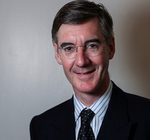
The comments made by Jacob Rees-Mogg, the Leader of the House of Commons, on Newsnight on 12 January 2022.
Douglas Ross has always been quite a lightweight figure. I think the Scottish Secretary is a much more substantial figure in this.
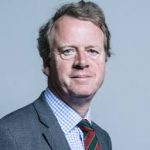
The comments made by Alister Jack, the Secretary of State for Scotland, on 22 December 2021.
Our focus is on a strong, sustainable recovery, particularly as we face new challenges from the Omicron variant. That’s why this week we doubled the amount of additional funding available to the Scottish Government to tackle Omicron to £440m – and that’s in addition to the record £41 billion per year funding settlement set out in October for the next three years.
The hugely successful UK Government-funded vaccine and booster programme has never been more important and I’d urge everyone to get their jabs when eligible.
Helping people back to work is crucial and our Plan for Jobs is working. We’re also investing £191million in projects at the heart of communities across Scotland from three major Levelling Up funds and £1.5billion is going into Growth Deals from Shetland to Selkirk. Building back better and stronger is our priority.
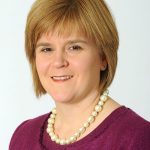
The speech made by Nicola Sturgeon, the Scottish First Minister, on 14 December 2021.
The last two years have been the toughest most of us can remember.
I can never thank you enough for the sacrifices you have made.
This winter, just as we thought we had turned a corner in the pandemic, the emergence of Omicron struck us a cruel blow.
Omicron is much more transmissible than previous strains, and it is now spreading very quickly.
We anticipate a steep and rapid rise in cases.
We don’t know yet if Omicron’s impact on individual health is milder than variants like Delta.
Some have suggested it might be, and let’s hope so. But there is not yet strong or consistent evidence of that.
And even if it is the case, the challenge Omicron poses is real.
When we are facing, as we may be, thousands upon thousands of cases per day – perhaps as high as 15,000 or more – even if just one in every hundred of those cases needs hospital care, the burden on the health service quickly becomes impossible.
Omicron can do this through sheer weight of numbers. More people infected will lead to more people with serious illness and, tragically, more people will die.
We are also already seeing an impact across the economy, and on public services.
Staff absence caused by COVID means trains without drivers, classrooms without teachers, wards without nurses and businesses without workers.
That’s why this is not a choice between protecting health and protecting the economy.
If we don’t act now to protect health, Omicron will inflict untold damage on businesses and critical services across Scotland.
That’s why we must act to slow it down, as we speed up vaccination.
Getting boosters into arms as quickly as possible is our top priority.
Vaccination is our best defence. And boosters give us much more protection against Omicron than just one or two doses.
So our plan is, before New Year, to offer every eligible adult the chance to book an appointment.
If you are over 30, you can already book online.
From tomorrow over 18s can do so too.
Our mission is to get the overwhelming majority of people boosted before the bells.
In January, we will catch up with anyone who couldn’t be done before Hogmanay.
My thanks to everyone doing truly heroic work to get jags in arms as fast as possible – and to everyone rolling up their sleeve to protect themselves and others.
Boosters are how we will beat this.
But in this race between the virus and vaccines, as we speed up their delivery, we also need to slow down the virus.
Put simply, that means all of us having fewer contacts with fewer people – and making sure those we do have are safer.
To help workers and customers to do that, we are putting a legal requirement on businesses to take reasonable steps to reduce transmission on their premises.
So in supermarkets, for example, you will see the return of some of the measures that were in place at the start of the pandemic.
And we are asking employers to do even more to support working from home.
We know this is worrying news for business – especially in the hospitality trade which is being hard hit as people rightly follow advice to defer Christmas parties.
So today, we have put in place a package of financial support to help them.
And we are making more money available to ensure eligible people can claim isolation payments. No one should find themselves unable to afford to do the right thing, to protect themselves and others from COVID.
The reality, however, is that our resources are limited. The UK government holds the purse strings, and only they can put in place critical support such as furlough.
Alongside the Welsh and Northern Irish governments, we are hoping they will do more.
My biggest request today is to all of you.
Please believe me when I say I would not be asking you to sacrifice more, if I did not think it essential for the health and well-being of all of us.
We are not banning household mixing in law, as we had to do before. We know the impact of this on mental health.
And I am not asking you to cancel or change your plans for Christmas Day, Boxing Day, or whenever you have your main festive celebration.
But in the run up to, and in the aftermath of Christmas, I am asking – I am appealing – to everyone to cut down as far as possible our contacts with people in other households.
My key request to all of you today is – as far as you can, please minimise your indoor social interactions with other households at this time.
And, if you do plan on socialising – either at home or in indoor public places – please limit the number of households represented in your group to a maximum of three. And test before you go.
We are asking this because Omicron is so infectious. Our experience says if it gets into a group of people, it will infect many of them. So limiting numbers helps us restrict its spread.
Speaking to you in these terms is the last thing I wanted to be doing a few days before Christmas.
We’ve all had enough of this.
But the threat from Omicron is severe. And we must respond seriously.
This is another difficult juncture in the course of the pandemic – but vaccines and home testing do put us in a better position than last year.
And wearying though all this is, we are not powerless.
So let’s pull together and look after each other again.
We know what we need to do.
Keep windows open.
Wash our hands.
Wear face coverings.
Limit our contacts.
Test before we go anywhere.
And get vaccinated.
Thank you – for everything.
And in sending you my Christmas wishes, let me more than anything wish for all of us a happier and brighter new year.

The comments made by Rishi Sunak, the Chancellor of the Exchequer, on 20 December 2021.
Following discussions with the Devolved Administrations, we are now doubling the additional funding available.
We will continue to listen to and work with the Devolved Administrations in the face of this serious health crisis to ensure we’re getting the booster to people all over the UK and that people in Scotland, Wales and Northern Ireland are supported.
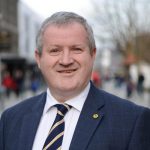
The comments made by Ian Blackford, the SNP Leader at Westminster, on 7 December 2021.
Here we have Number 10, a government in London, breaking its own Covid rules and then joking about it on a video. It really isn’t acceptable and I have to say, unfortunately, that on the basis of this behaviour, because it’s not just about this, it fits a pattern of a Prime Minister that repeatedly lies, a Prime Minister that can’t be trusted. He should go and he should go now.
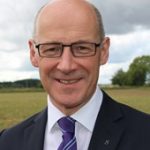
The speech made by John Swinney on 27 November 2021.
Friends,
It is a great privilege to once again address you once again – albeit in the comfort of your own homes.
I am very much looking forward to being back in a hall with all of you at our next conference.
But I am also thankful that we live in a world where technology has allowed us all to stay in touch with each other even during a global pandemic.
We gather for our annual conference in a rapidly changing world – and to adapt a well-known phrase, the last few weeks have certainly been a very, very long time in politics.
Since we last met, the eyes of the world have been on Scotland, as Glasgow hosted the COP26 climate summit.
This may go down as the most important gathering of world leaders this century.
It was a huge privilege to host this event – but also a huge responsibility.
We are indebted to the thousands of people involved in organising the event, who worked tirelessly to keep the tens of thousands visitors safe during a global pandemic.
And the people of Glasgow were welcoming hosts. They once again proved that the magnificent City of Glasgow is a world-class city – with world-class leadership.
Although we were not meant to be at the top table of these negotiations, the SNP Government did everything we could to positively influence the talks.
And delegates, Scotland may not yet be a member of the United Nations in our own right – but our First Minister has demonstrated that when that day comes, Scotland can – and will – have a powerful and positive role to play on the world stage.
Tackling the climate emergency is not going to be easy – but we have no choice.
We need to act now for the sake of our children and grandchildren.
But I know that we can do this – we can all pull together and play our part.
We all know what it is like to have our resolve tested to the limit – because we have been living through a global pandemic.
COVID-19 has taken many, many lives. It has upended our society and thrown up unprecedented challenges in our economy.
People have seen their financial security taken away, their education disrupted or their job prospects diminished.
The pandemic has made us all think hard about what really matters most.
And it has also been a painful reminder of how unequal our society is.
We all know the impacts of this pandemic have not been felt evenly.
This is true in Scotland as much as it is in any other country.
We have done everything we could to support people during the worst of the pandemic – from introducing free school meals during the school holidays, significant payments to low-income families with school children, as well as a one off £130 pandemic payment to around half a million people, and major financial boosts to our Scottish Welfare Fund and Discretionary Housing Payments.
But despite our best efforts, those who were already the most disadvantaged in our communities have also suffered disproportionately during the pandemic.
We have a moral duty – using all of the limited powers that the Scottish Parliament currently has – to do everything we can to ensure that the people who have lost the most during the pandemic are now supported the most.
And going forward, that is exactly what the SNP Government intends to do.
We have recently published a detailed COVID recovery strategy, which places fairness front and centre of our plans.
We have worked extensively across civic society in Scotland to devise these plans – with organisations like the Citizen’s Assembly, the Social Renewal Advisory Board, and many more.
Just as we have all learned a lot about ourselves during the pandemic, we have seen what can be achieved in government when we look past traditional barriers.
When we can strain every sinew to get the right service or support to people exactly when they need it.
And just as confronting the pandemic head-on was a collective endeavour, our recovery must be a genuine ‘Team Scotland‘ effort – not just of national government, but also local government, the third sector and businesses large and small.
We are not interested in rebuilding the world as it was in 2019.
We are building Scotland for future generations – and we must do so with ambition and with resolve.
I know that if we can capture the same energy, imagination and urgency we have seen in the last couple of years, we will deliver a spring board to a fairer, greener Scotland for future generations.
Conference, the lesson we should all learn from our First Minister’s outstanding leadership over the last couple of years is that if you take decisions honestly and openly, then the people of Scotland will trust you and they will support you.
We will always strive to show respect to the people who have elected us.
Meanwhile the Tory government at Westminster show them little but contempt.
Contempt for Scottish democratic wishes.
Contempt for Scotland’s democratic parliament.
And led by a Prime Minister who seems to have contempt for everyone who isn’t called Boris Johnson.
A Prime Minister who seems to have spent almost as much time recently at Peppa Pig World as he did at COP26.
But you know, if it’s snouts in the trough that Boris Johnson wants to see, he doesn’t need to go all the way to Peppa Pig World.
He just needs to look along the Commons benches to those sitting around him.
What has been revealed about the behaviour of Tory MPs in recent weeks has been going on for years – and the charge sheet is long and shameful.
The Tories have rewritten the definitions of cronyism and corruption.
And when they are caught bang to rights by an independent investigation – they just rewrite the rule-book as well.
While the world’s eyes were on Glasgow looking for leadership on the climate emergency, what they saw instead was a Prime Minister repeatedly forced to deny that the UK is a corrupt country.
Conference, let’s not kid ourselves – Westminster is rotten to the core.
The Tories have no democratic mandate to govern Scotland
And they have lost all moral authority to hold the highest offices in the land.
The people of Scotland deserve so much better than the Tories.
Delegates, the never-ending circus of the Tory government would be almost funny if it were not so serious.
But there is one issue on which they are working – almost under the radar – with a very clear political objective.
While the SNP Government has been using every power at our disposal over the last couple of years to tackle the pandemic, the Tories have been quietly working to undermine devolution.
This goes completely against what the people of Scotland voted for in 1997.
I am immensely proud of the achievements of devolution – all of us should be.
The Scottish Parliament helped revitalise Scottish democracy and civic engagement.
It has enabled us to make different – and better – policy choices from Westminster.
And even with its limited powers, devolution has helped us mitigate some of the very worst Tory policies – such as the Bedroom Tax.
Very few people in Scotland would now want to roll the clock back to the way things were before.
But we are now seeing a concerted attack on our parliament, from the very people who fought tooth and nail against it being established in the first place.
In a grotesque irony, the Tories are using something that the people of Scotland voted overwhelmingly against – Brexit – to undermine something they voted overwhelmingly for – the Scottish Parliament.
There have been many threats to Scotland’s social and economic wellbeing as a result of Brexit – and many of them are only just beginning to be felt.
Take the new Internal Market Act – which was the Tories’ smoke-and-mirror replacement of the European Single Market.
It certainly has an innocuous sounding name – and I am pretty sure that was intentional.
But nothing could be further from the truth.
Through this Act, The Tories have given themselves unfettered power to decide the rules of the internal market – and to completely ignore the devolution settlement if they want to.
This is not some abstract constitutional debate.
The Act gives them powers to spend public funds in devolved areas like education, culture and sport – all to fit their own priorities and giving us no say.
It means they can ride roughshod over the ban on some single-use plastics that we recently announced as part of Scotland’s efforts to tackle the climate emergency.
Does anyone seriously think that an innovation like Minimum Unit Pricing for Alcohol—which, let’s remind ourselves, after hearing all the evidence and argument the courts held to be compatible with EU law—would have been possible if this insidious Act had been in place at that time?
If all of this seems far-fetched to you – just remember that this is the government which took us to court to have parts of the legislation to ensure the UN Charter on the Rights of the Child was embedded in Scots law struck down.
This was a Bill passed unanimously by the Scottish Parliament, trying to enact a policy commitment which the UK themselves made in 1991 but haven’t fulfilled.
It didn’t matter that the bill would have enormously benefitted children’s rights.
What Westminster couldn’t handle was any suggestion that Scotland could be getting too big for its boots.
Even the noble cause of advancing child welfare should not be allowed to get in the way of Westminster control.
Friends,
Self-government has been an immense success story for Scotland – as we always knew it would be.
For my entire adult life, I have been committed to empowering the people of Scotland to have an ever greater say in how their country is run.
When I joined the SNP as a teenager, the people of Scotland had recently voted for a Scottish Assembly.
But they had seen their democratic wishes denied by a tawdry coalition of Tory and Labour unionists who decided that they knew better than the people of Scotland what was best.
Some things never change, I guess!
But those who believed in Scottish self-government never gave up.
I was proud to campaign in the devolution referendum in 1997.
I was privileged to be able to vote as an MP for the legislation that established the Scottish Parliament after almost 300 years.
And in the wake of the independence referendum, I represented the SNP on the cross-party Smith Commission which took our Parliament on the next steps with greater tax and social security powers.
The direction of travel was clear – more decisions being taken in Scotland led to better decisions being taken for Scotland.
And despite the boasts from Labour that devolution would kill nationalism stone dead – it has in fact proved conclusively that the people of Scotland are more than capable of governing themselves.
So it’s no wonder that the Westminster control-freaks are so determined to undermine it.
In public the Tories say they are committed to making devolution work – but behind the scenes they are plotting to make it unworkable.
There will be no sudden Big Bang moment.
Boris Johnson is not going to stand up and announce to the cheering Tory faithful that he is dismantling the devolution settlement – much as I am sure he would like to.
But make no mistake – piece by piece, devolution is quietly being filleted – hollowed out from the inside, by a Tory party which has always opposed the idea of anything other than unfettered Westminster control on Scotland.
Much like the climate emergency, which is slowly creeping up on us every single day – we need to issue a Code Red for Devolution.
All of us who care so deeply about the Scottish Parliament and its role in Scottish public life need to stand up and be counted – before it is too late.
Sadly though, it looks like we can’t count on Labour and the Liberal Democrats to be part of this fight.
Just last week, in the Scottish Parliament, they voted with the Tories to endorse the disgraceful attack on the devolution funding settlement.
Never in my life would I have imagined that those parties who campaigned for the Scottish Parliament would now be shrugging their shoulders as the Tories undermine it.
The truth is that they care more about preserving the union than preserving the Scottish parliament.
They tolerated devolution while they were in charge – but as soon as they lost power they gave up on it.
Well, the SNP will certainly not give up.
We will fight this Tory power grab for as long as it takes.
Because to give in on this most pressing of issues would be to give up on the people of Scotland.
And that is not what the Scottish National Party is about.
But Conference, there is a bigger question here that we must consider.
If devolution is no longer safe under Westminster control….
…if everyday decisions taken by our elected Scottish Parliament can be routinely undermined at a whim by the Tories
…and if even Labour and the Liberal Democrats are more interested in preserving the union than protecting devolution….
Then how can the Scottish Parliament ever be protected as long as we remain under Westminster control?
The answer is that it cannot.
There is no status quo. The only way to stop Scotland going backwards on the constitutional journey is by moving forwards.
The only way to keep the gains of devolution is by becoming independent.
You know, the case for independence is stronger than it has ever been.
Never has Scotland’s extraordinary potential as an independent nation been clearer.
And never has Westminster control seemed so damaging to Scotland’s interests.
For those of you who are impatient for independence – I know how you feel.
So am I.
But I also take heart from just how far we have come as a movement.
House by house, street by street, day by day and year by year – we have made the case for self-government in Scotland.
We must continue to demonstrate to people in every corner of this nation that no one can make better decisions about their country’s future than they can.
And remind them that despite what they have been told for decades by Westminster – they live in an extraordinarily wealthy country, blessed with enormous natural resources and human talent.
The Westminster establishment may think that they can just wish away Scotland’s independence movement.
But they should be absolutely clear that they won’t be able to do that.
Our movement is growing.
And the case for independence grows ever stronger by the day.
We are here to stay – and in the end, if we stay the course, we will win.
The speech made by Ian Blackford, the SNP Leader at Westminster, to the SNP Conference held on 28 November 2021.
Conference,
As always, it is a pleasure to address you as our party’s Westminster leader.
And given that we are gathering in late November – let me take the chance to wish each and every one of you a very happy St Andrew’s Day on Tuesday.
But just as I think of Saint Andrew – who history tells us made his way right across Europe on small boats – my thoughts naturally turn to the truly heart-breaking events in the Channel.
Because Andrew may well be Sainted today, but in his own time, I have little doubt that he too may have been de-humanised and branded a ‘travelling migrant’.
If the horror of these deaths is to stop – we must see these desperate people for who they truly are.
They are human beings – exploited by smugglers and too often abandoned by the powers that be.
Human beings need humane solutions – they need our help.
All of us – whether nationally or locally – must urgently work together and provide safe and legal humanitarian routes so that these horrors, just off our coast, finally end – once and for all.
Friends, before I get any further on, I should probably admit that I began preparing for this speech about an hour or so before Boris Johnson stood up at the CBI conference.
For those few who don’t know by now, that was the speech where the Prime Minister of the United Kingdom compared himself to Moses, impersonated a car, completely lost his way halfway through and ended it with a rant on Peppa Pig.
Now – I hate to disappoint – but I can’t promise that this speech will reach anywhere near those levels of strangeness.
But Conference, as much as it might be tempting to keep poking fun at a Prime Minister who is forever producing an omnibus of omnishambles – there is also something deeply worrying about what is happening.
I think all of us have a sense of just how damaging and dangerous it is that chaotic governance now defines Downing Street.
That would be bad enough in normal times, but it is unforgivable in the middle of a pandemic.
Because let’s be clear, what we are all now witness to is a Prime Minister who is – day by day – deeper and deeper out of his depth.
It was previously said that the Prime Minister’s office was no place for a novice.
Well, it is no place for a negligent either.
And I know the Labour leader is fond of repeating these days that “the joke isn’t funny anymore”.
But he clearly doesn’t get that Scotland never found the joke funny in the first place.
All this time, we’ve always known – our country can do so much better than this.
And conference, in the absence of actions from others in holding this Prime Minister to account, it is once again our job to act as the real opposition.
On Tuesday, the SNP will use our opposition day to put down a motion of censure against this Prime Minister.
Because unless this Prime Minister is censured, unless he faces consequences for his disastrous actions, he won’t just think he’s gotten away with the mess he has made of the last few months, he will think he can do it all over again.
But Friends, not alone have the last number of weeks exposed a Prime Minister and a Westminster government collapsing in their own chaos – the lid has also been lifted on the scale of their sleaze.
Because while chaos and confusion is one thing – deliberate corruption is quite another.
And I’m afraid corruption is the only proper word – the only honest word – for what has been going on.
It is sometimes worth reminding ourselves that Boris Johnson has now headed up this Tory government for little over 2 years.
In that time there has been, a Cash for Honours scandal, a Cash for Contracts scandal, a Texts for Tax Breaks scandal – there’s even been a Cash for Curtains scandal.
Month after month, scandal after scandal – and still no independent investigation to hold those responsible to account.
No wonder people have come to the conclusion that the Tories think it’s one rule for them and one rule for everybody else.
I’m proud to say that our own Pete Wishart has spoken truth to power and brilliantly uncovered corruption that has – far too often – been hidden in plain sight.
The most blatant example is in the House of Lords – a relic of an institution stuffed so full that it’s now second only in size to the Chinese People’s Congress.
So not alone a communist sized parliament but communist levels of corruption to go with it.
Since 2010, the Tory party has made 9 of its former party treasurers’ members of the House of Lords.
They all – very curiously – happen to have one thing in common.
Every one of them has handed over at least £3 million to the Conservative Party.
So – in fairness – the system seems fairly simple.
Pay £3 million pounds – get your ermine robe.
It’s as blatant and as brazen as that.
And it is just one more example of a system that is broken beyond repair.
That is why our country must have the chance to escape that crippling corruption.
Because with independence – we can do so much better than this.
Friends,
All of these recent scandals might hurt the Prime Minister in the polls – but putting politics aside for a second –
I genuinely worry that, ultimately, it also distracts from the very real issues that are beginning to bite.
In the real world – away from the political circus at Westminster – people are suffering a Tory cost of living crisis.
Inflation is running at 5% and the threat of mortgage interest rate hikes is a real worry on the horizon.
Rising day to day costs and rising household bills are the main focus for most families.
And as usual – it is those who can least afford it who are paying the biggest price.
That is especially true for 2 million pensioners in poverty – who have been let down by another broken Tory manifesto promise with the scrapping of the triple lock.
And while all of these political stories on sleaze have been going on – the political decision to cut Universal Credit is hitting homes hardest.
This week, the Joseph Rowntree Foundation confirmed that the £20 a week cut means 3.6 million families will be worse off this winter.
Because not alone was the cut to universal credit the wrong policy, it came at the worst possible time.
It was decision made months before the rapid rise in inflation kicked in.
David Linden has passionately led our campaign to save the Universal Credit uplift and week in, week out he has held the UK government’s feet to the fire.
So – if it is even possible that the Tories are feeling any sense of pressure or remorse for the political mess they have been making for months, they should take this chance to make some amends.
They should do the right thing, reverse the cut to universal credit and put £1000 back into the pockets of those who desperately depend on it.
I fear though, that instead of changing course, the Tories will double down on their decisions.
Maybe it is little wonder then that the phrase “winter of discontent” is once again part of the political parlance.
But as we all know, Scotland has been discontent with Westminster control for many more winters than this one.
In fact, it is 66 winters ago – 1955 – since our country last voted for a Tory government.
Because – to put it simply -Westminster’s choices are not our choices.
We know though that democracy is the only solution to that deep discontent and disconnect from Westminster decisions –
And we are confident too that democracy will soon have its day.
And Conference,
There is an important point to be made about the perfect storm of economic vulnerability that I’m describing – because we should be very clear that it isn’t all a consequence of Covid.
Even though the B word – Brexit – seems to have mysteriously disappeared from mainstream media across the UK
– in Scotland we know that the consequences of Brexit are very much here and they are hurting.
The Covid crisis can no longer camouflage the deep damage that Brexit is doing.
Only this week, Philippa Whitford drew our attention to £2 billion in investments which has fled to the Belgian region of Flanders as a direct result of UK-based businesses shifting their bases there because of Brexit.
That is one region in Europe – just think of the scale of damage when you multiply that loss elsewhere.
And yet despite that damage, Scotland has yet to receive a single penny in compensation from Westminster and they are even failing to fully replace EU funding.
In contrast, the EU is giving Ireland 1 billion euros to mitigate the damage of Brexit – showing the solidarity of the European Union to smaller countries and showing, once again, that independence works.
And we know all too well that the pattern of Brexit is exactly the same pattern of broken promises that seems to be official Tory party policy.
Judging by the recent newspaper headlines in the North of England, they’ve become wise to their game too.
From HS2, to Carbon Capture, Social Care, the Triple Lock on pensions – one promise after another has been broken.
I could add Boris’ bridge to Ireland onto that list but I don’t think anyone – least of all the Chancellor – ever took it seriously enough in the first place.
But after that litany of broken promises, the Tories will have to forgive the public’s cynicism about their so-called Union Connectivity review.
The only thing they believe it will achieve is to make their list of broken promises that little be longer.
People know its only real purpose is a blatant attempt to bypass Scottish democracy.
Conference,
This is the political place we now find ourselves and it is this context that needs to bring clarity to our future choices.
Now we all know there were plenty of – to put it mildly – mistruths told, sold and spread during the 2014 referendum.
But it’s become clear that the biggest lie of all was the unionist claim that staying in the United Kingdom would be the safer choice.
Because that idea – the stability of the status quo, the stability of the United Kingdom, has systematically fallen apart.
For years now, what we are experiencing is a United Kingdom in constant crisis.
And it’s a crisis that comes with a real cost.
The cost of living, the cost of Brexit, the cost of Tory cronyism and corruption.
The cost of having a man like Boris Johnson as Prime Minister.
Those are now the crises of the United Kingdom – and they are the costs we all pay for being part of this union.
Friends,
Independence is now the pathway to safety and stability – it offers an escape from the constant crisis of Westminster control.
Built on the solid foundations of our own democratic decisions, independence offers the opportunity to build the post-pandemic future we all wish to see.
The chance to build a new Scotland, that finally takes its natural place amongst the nations of the world.
We got a brief glimpse of that when the representatives of those nations visited Glasgow earlier this month.
Because we all know it was our First Minister who led the way at Cop 26.
From passionately promoting a just transition to championing climate justice – she worked tirelessly for a green future at home and abroad.
Mature, measured, and thoughtful leadership – the leadership we need now and exactly the kind of leadership that will win our future.
Just imagine what she will do as our first democratically elected leader in an independent Scotland.
Conference, that is the future now in front of us.
That is the opportunity now in front of us.
A nation in waiting – and a future that is fair, green and European.
In our landslide victory in May – only 7 months ago – the people of Scotland gave us the democratic right to choose our own future.
If Boris Johnson tries to deny democracy – he is destined to fail.
The democratic right to a referendum is secure and our First Minister will lead us through that campaign.
Our independence movement has faced a long road, but journey’s end is now in sight.
A new Scotland, an independent Scotland is within our grasp.
Let us deliver it.
Thank you, Conference.
The speech made by Nicola Sturgeon, the Scottish First Minister, on 29 November 2021.
Good afternoon everyone.
Welcome to the SNP’s annual conference – an occasion much enjoyed by party members across the country.
Sadly, we are meeting online again.
Given current circumstances, this is sensible – but I hope, in spring, we’ll be together in person.
Our debates and discussion – if not always the conference karaoke – are much better when we meet up, and I can’t wait to see you all again.
Of course being forced to take a political conference online is a mere inconvenience compared to the sacrifices made by so many over these past two years.
Life today is much more normal than it was when I spoke to you a year ago.
We have come so far and – while it has not been easy – a spirit of solidarity with, and compassion for, each other has helped us through.
Now, as the emergence of the new Omicron variant has reminded us, we must harness that spirit again as we prepare for a winter that might be tougher than most of us have ever experienced.
In recent weeks, we have had much in Scotland to feel thankful for.
Compared to many countries across Europe, Covid cases here have been stable – indeed they have been declining slightly.
To be frank, that’s a much better position that I had dared hope for a couple of months ago.
But there are big and very real challenges ahead over the winter months.
Cases are rising in countries all around us.
We know that colder weather, forcing us indoors, coupled with festive socialising will create increased opportunities for the virus to spread.
And, most seriously of all, the Omicron variant is causing profound concern here and across the world
So we must not drop our guard. This is a time to be more vigilant, not less.
In the past few days, the new variant has led the Scottish Government to impose tighter restrictions again at our borders.
A number of countries have been added to the travel red list.
Travellers from these countries must go into managed quarantine.
And we are asking all travellers – no matter where they are travelling from – to isolate until they get a negative result from a PCR test that they must do on day 2 after their arrival.
We are also asking close contacts of any confirmed cases of Omicron to isolate.
That none of this was even contemplated just a few days ago, is a reminder of how fast this virus can move and change.
We must, all of us, therefore redouble our efforts to stop it in its tracks.
The good news is that we know how to do that. We’ve done it before.
So today, before I talk to you about politics, I want to ask again for your help.
Over these next weeks of winter, we need to pull together and look after each other.
I promise that the government will do our job.
That means getting all of you who are eligible vaccinated with boosters as fast as possible.
Thanks to teams across the country, Scotland is already the most vaccinated part of the UK – but we will not let up. Instead we are working to speed up.
And while I still hope it will not be necessary, if difficult decisions need to be made to keep us safe, we will not shy away from them.
Steering the country through this winter is my priority. It is my duty.
But no government can fight a virus alone.
We all need to play our part.
That was true before the detection of Omicron, and it is even more so now.
If all of us increase our compliance with the protections already in place, we will help slow transmission.
So I am asking everyone to please, take the time now to think afresh about the basic steps you can take to keep yourself, your loved ones and the country safe.
Wear a face covering in indoor public places.
Keep following hygiene advice – wash your hands and surfaces.
Open windows if you have people round – ventilation really helps.
Work from home if possible.
And please, please – if you haven’t done so already – get every dose of vaccine you are eligible for, including flu.
I know there is a concern that the vaccines might be less effective against Omicron than against other variants.
We don’t know yet if that’s the case.
But even if it is, getting vaccinated will still matter.
Less effective does not mean ineffective.
You will still be much more protected with vaccines than you will be without.
So if you could be fully vaccinated right now and you have chosen not to be, you are putting your own life at risk.
You may say that’s your choice – though it is one I really struggle to understand.
But it’s not just your own life you are risking.
You could be risking the life of everyone you come into contact with.
Vaccines save lives.
And don’t just take my word for that.
A World Health Organisation study published last week demonstrates that life saving power.
Hundreds of thousands of people across the world who would otherwise be dead from Covid, are alive today only because of vaccines.
Here’s what the WHO said about us:
“In countries like Scotland, where vaccination rollout was early and uptake was high, a larger share of lives were saved”.
It found that in Scotland, without vaccines, around 32,000 people over the age of 60 would have died from Covid this year.
86% of these deaths were prevented by vaccines.
That’s 27,000 people alive today who would not be if we had no vaccines.
For all I know that might include my mum and dad, or yours. Or indeed many of you.
So, for goodness sake, get vaccinated – with your 1st, 2nd and, if eligible, your 3rd and booster doses as soon as you can.
If you don’t do it for your own sake – though you really should – do it for those you love.
Being vaccinated is the most precious gift we can give this Christmas.
But there is one more, really important festive effort I am asking everyone to make.
And, once again, the emergence of Omicron makes this even more vital.
Lots of people with Covid don’t have symptoms – they might never know they have the virus and so spread it inadvertently.
That’s why we’ve been asking everyone to test with lateral flow devices twice a week.
But from now, through the festive period, we are asking you to test much more.
Please – even if you are feeling fine – test yourself on each and every occasion you intend to mix with people from outside your household.
That means before you go to the pub, or to a restaurant, or to someone’s house, or even to a shopping centre.
And if the test shows up positive do not go.
Instead, get a confirmatory PCR test and self isolate until you get the result of that.
If you don’t have a supply of tests, order them now through NHS Inform or pick them up from a local pharmacy or test centre.
They are free so get as many as you need and keep your supply topped up.
If we all do this, we will slow the spread.
And we will maximise our chances, not just of a more normal Christmas but a safer Christmas too and, let’s all hope, a much brighter new year.
Friends,
I talked earlier about the government’s responsibility in leading the fight against this virus. It is a solemn duty.
But I am all too aware that the heaviest burden in tackling the virus has been carried by those working in our NHS and in social care.
If we all follow the advice on fighting Covid we will be helping them, as well as ourselves.
That really matters. Health and care services are under more pressure now than ever before.
The staff who care for us in our times of need are exhausted – physically and in many cases emotionally.
Words will never adequately express my gratitude to them.
But words are not enough.
I am proud that NHS staff in Scotland have been awarded the highest pay rise in the UK.
And that we have promised to increase investment in the NHS – already at record levels – by a further 20 per cent over this term of Parliament.
I can confirm today that our budget on 9 December will deliver a significant down payment on that commitment.
In the years ahead, this extra funding will help build new capacity in the NHS and improve the way care is delivered through, for example, a network of elective treatment centres.
And at the heart of our plans for reform is the establishment of a National Care Service.
Just as the National Health Service became in the aftermath of the Second World War, this new National Care Service, if we get it right – as we must – will be a fitting legacy from the trauma of Covid.
So our plans to build and secure a sustainable future for our health and care services are bold, and rightly so.
And to help right now, we have committed an additional £300 million for winter support.
This money is supporting the immediate recruitment of 1,000 extra NHS workers.
It is helping increase the pay of social care staff – giving those earning the living wage a rise of over five per cent.
And it is funding more care home places and care at home packages to ensure that older people don’t languish in hospital when they would be better cared for elsewhere – and in the process free up hospital beds for those who do need them.
Friends,
The frontline of the NHS is so often primary care and general practice.
Good access to GPs and other primary care services is essential for patients – but it also helps reduce unnecessary pressure on hospitals.
I know how hard GPs and practice staff are working just now.
Face-to-face appointments are resuming – although phone and video consultations will continue to play an important part in any modern healthcare system.
And we know demand is increasing due to the direct impact of the pandemic and the backlogs caused by lockdown.
So GPs and those who support them are working overtime to meet patient needs.
I want to thank them for all they do.
Of course, we must do more than say thank you, and we will.
That’s why I can announce today funding of £30 million to help GPs further increase primary care services in their communities
GPs will be able to use this funding – which will be delivered in December and April, in two equal instalments – in ways they judge will deliver the greatest impact for patients.
That might be through extra GP sessions or additional practice nurse time.
In short, it will allow practices to target investment where it is most needed to improve access to primary care and help ensure patients get the care they need as close to home as possible.
Friends,
Tackling the pandemic, supporting and protecting the NHS and social care – these duties will be the focus of the Scottish Government each and every day as we navigate this winter and beyond.
That is what people across Scotland expect, having placed their trust in us – once again – to govern and lead our country.
However, as we emerge from the darkness of winter into what we all hope will be a brighter spring, with Covid more firmly in the rearview mirror, it will be time to look ahead with optimism and consider the kind of country we want to rebuild.
We should embrace that opportunity with relish. I certainly do.
As you know, I’ve just marked seven years as First Minister.
In some ways, I find it impossible to believe that so much time has passed – but then, of course, I look in the mirror and see the evidence of what I am sorry to say seems more much than seven years!
Being elected to lead this country is a privilege and it is a serious responsibility.
Seven months ago, the people of Scotland gave me and all of us in the SNP a job to do when they re-elected us so emphatically.
They voted for us in historically high numbers, and told us to get on with the job.
I intend to repay that trust – to lead Scotland not just through Covid, but into and through the process of recovery and renewal.
The duty and responsibility of being First Minister weighs heavily on me every single day – as it should.
But it is not a job I do out of duty alone.
I do it because I relish the opportunities that lie ahead for Scotland.
And I know that to harness these, Scotland needs a government – like ours – with ambition, aspiration and real confidence in this country.
We already have a track record of delivery.
We are laying the foundations for a stronger future.
When people ask me what I’m proudest of so far in my time as First Minister, I always point to our transformational – and I use that word deliberately – our transformational support for children.
Today, for example, we’ve announced that the 200,000th baby box has been delivered in Scotland.
A practical, tangible and powerful manifestation of our commitment to every child – no matter their family circumstances – having an equal start in life.
And then there’s the doubling – yes, doubling – of state funded early years education and childcare.
Every 3 and 4 year old – and 2 year olds from the most vulnerable backgrounds – are now entitled to the same number of hours in early years settings as older children get in school.
This policy saves parents thousands of pounds a year. But much more importantly, it gives children the best start in education.
In my first conference speech as SNP leader, I said this would the most important infrastructure investment of my first full term as First Minister – and in August this year, we marked its delivery.
We have also created, from scratch, a new social security system.
It has measures to tackle child poverty – the root cause of the poverty-related attainment gap in education – at its heart.
All of this is underpinned by a new income tax system – just like Social Security Scotland, built entirely from scratch, and with the progressive principle embedded from the outset.
And – also with an eye to the future – we have set up the new Scottish National Investment Bank.
This is the first development bank of its kind anywhere in the UK, and it is already making investments to drive our journey to net zero and build a more sustainable future for this and future generations.
We don’t see the full benefits of transformational policies like these overnight.
But they and many like them are already changing the future of tens of thousands of children, and of the country as a whole.
So we have much to be proud of. But we have so much more still to do.
It is that combination of delivery and ambition that drives the SNP’s success.
The fact is governments don’t get re-elected – and certainly not with the level of support we won in May – unless we have improved people’s lives and offer a clear and credible vision of what’s possible for the future.
Most of our opponents seem incapable of accepting the basic point that our success is hard earned – it is not an accident or a fluke.
So they end up dismissing as irrelevant the choices voters have made.
Or even worse – as with the current assault on devolution – they seek to over-turn those choices.
They act like they think the ambitions of people across Scotland have got out of hand and need to be reined in by those who know better.
The SNP will not let that happen.
We’re not here to see the aspirations of people in Scotland reined in or diminished.
We want to raise those ambitions ever higher.
We dedicate ourselves to that every day.
And we recognise that working with others who also want to move Scotland forward will help us all achieve more.
That’s why we struck a Co-operation Agreement with the Scottish Green Party.
Putting our differences aside to co-operate where we agree won’t always be comfortable, for either us or the Greens – but it is not meant to be.
Forcing each other out of our comfort zones so we can raise the bar of achievement higher is the whole point.
In my view this kind of collaborative working is exactly what most people want.
But given the challenges all countries face, it is also what we need.
Scotland is about to enter a new world.
A world of possibility but also of urgency.
I hope soon, a post-pandemic world.
And, certainly, a world we must adapt to ensure that our planet remains habitable in the years, decades and centuries to come.
We can’t escape these challenges, and nor should we want to.
Inherent in them are massive opportunities waiting to be grasped.
The big question for Scotland is how we best equip ourselves to do this, and ensure that the ambitions of all those who live here can be realised in this new world.
These ambitions are not unreasonable or out of reach.
A higher standard of living.
Good jobs for the future.
A clean environment.
Better health.
Sustainable public services.
And for Scotland as a whole – the ability to harness our vast resources in line with our own priorities and values, and contribute as an equal partner to building a better world.
To meet those ambitions in this new world we must lay secure foundations on which a better country can be built.
That’s what the SNP is endeavouring to do.
In this task we are working in partnership as far we can.
But this current Westminster government is not a willing partner.
Instead of helping to lay those foundations, it is undermining them.
And let us be clear about this – this UK government is not just seeking to block Scottish democracy and deny Scotland the choice of moving forward to independence.
That would be bad enough.
But worse than just standing in the way of progress, it is trying to force Scottish democracy into reverse.
Make no mistake about it:
Boris Johnson’s government is actively eroding the power of our democratically elected Scottish Parliament.
It has already transferred funding from the Scottish Parliament to Westminster.
It has torn up the convention that the UK Parliament should not pass laws in devolved policy areas without Holyrood consent.
And it has passed a law – the Internal Market Act – that the Labour First Minister of Wales has called, and I quote, ‘a smash and grab’ on the devolution settlement.
This crystallises the choice Scotland faces.
If we don’t choose to move our Parliament forward and make it stronger with independence – the Tories will drag it backwards and make it weaker.
This assault on the Scottish Parliament is of course reflected in the Tories’ wider disdain for democracy.
Whether it is threatening to rip up anti-lobbying rules when one its own was found guilty, or restricting the right to judicial review, or undermining the independence of the Electoral Commission, the message is clear.
Whenever the checks and balances of democracy get in its way, this UK government will try to overturn them.
That is dangerous.
But don’t just take my word for it.
Ken Clarke – a former, very senior Tory Cabinet minister – has warned, quite extraordinarily, that the UK is ‘dangerously close’ to being an ‘elected dictatorship’.
Friends,
During the run-up to the independence referendum in 2014 the head of the No campaign dismissed the idea of Boris Johnson becoming Prime Minister as a ‘scare story’.
We’ve been reminded over these past few weeks – and in many different ways – just why anti-independence leaders were so keen to rubbish the prospect of Boris Johnson entering Downing Street.
The reality of it has been everything many people back then feared.
But it’s not just about him as an individual.
The much bigger problem is a Westminster system that enables someone like him to become Prime Minister in the first place.
That is not a secure foundation on which Scotland can build a better future.
Our future must be built on a platform of democracy, fairness and economic prosperity.
That’s what we are seeking to build now.
And it is why we want Scotland to become independent.
In the here and now, as well as working in partnership with the Greens inside the Holyrood chamber, we are seeking to extend participation in democratic decision-making outside it too.
We are pioneering Citizens’ Assemblies and will soon establish one for under 16s – so that the generation who will live with the impact of decisions we take now are more involved in making them.
This cooperative, inclusive approach to politics offers a more secure basis from which to move a country forward.
Just as our foundation must be democratic, so too must fairness permeate every stone.
A fairer, more equal society isn’t just morally right – though it is.
Evidence shows that the most successful independent countries of Scotland’s size are also more equal.
A sense of social cohesion and solidarity provides the basis for long-term prosperity.
The Tory government’s decision last month to cut Universal Credit by £20 a week could not be further removed from that ideal.
That decision – especially at a time of price inflation and tax rises – was cruel and shocking.
It was condemned by each of the UK children’s commissioners; by the social security committees of all four UK parliaments; by all three devolved governments; by countless campaigners; and even by former Conservative Cabinet Ministers.
But the cut went ahead regardless and in Scotland it will push 60,000 families and 20,000 children into poverty.
The Scottish Government is taking a different approach.
We are determined to lift children out of poverty.
Of the £2 billion a year that the Scottish Government invests to support people on low incomes, over £670 million is already targeted at children.
Through the range of new payments delivered by Social Security Scotland, low income families receive, in the early years of each child’s life, £5,000 of additional financial support.
At the heart of this is the Scottish Child Payment – the only payment of its kind anywhere in the UK, designed solely to lift children out of poverty and give them better lives.
The Scottish Child Payment currently provides low income families with £10 per week for every child under age 6.
Over 105,000 children are already benefiting.
Next year, it will be extended to all children in low income families under the age of 16.
At the election, we committed to doubling the payment to £20 per child per week within this term of Parliament.
Our co-operation agreement with the Greens committed us to achieving this as quickly as possible.
Friends,
I am very pleased – indeed proud – to announce today that our budget on 9 December will fund the doubling of the Scottish Child Payment immediately from the start of the new financial year.
The Scottish Child Payment will increase to £20 per child per week – four times the amount originally demanded by campaigners – from April.
That means the doubled payments will reach over 100,000 children under age 6 in just four months’ time.
And when we extend the Scottish Child Payment to all under 16s at the end of next year, over 400,000 children and their families will be eligible.
This is, without doubt, the boldest and most ambitious anti-poverty measure anywhere in the UK.
Delivering it isn’t easy. It will involve hard choices elsewhere in our budget.
But it is a choice we in the SNP – in partnership with the Greens – are opting to make.
Poverty scars too many childhoods.
It deprives too many children of the chance to make the most of their education and enjoy life to the full.
And it robs of our country of far too much potential.
Eradicating child poverty is essential if we are to build the strongest foundation for Scotland’s future.
And that is what we are determined to do.
Democracy and fairness are key to building a better Scotland.
So too is a strong, sustainable economy.
Scotland is blessed with natural economic advantages.
We have unrivalled energy resources.
We are at the cutting edge of the industries of the future, and are home to some of the world’s best universities.
Our food and drink industry is an extraordinary international success story.
We are a highly skilled and educated people with a history of enterprise and innovation.
Through the Scottish National Investment Bank, the National Manufacturing Institute and the Young Persons Guarantee, we are building for the future.
But just as on child poverty, a UK Government that Scotland didn’t vote for us is undermining the strong foundations we are seeking to build.
This UK government has taken Scotland out of the EU; out of European Single Market; and out of the Customs Union – all against the wishes of the majority who live here.
The Brexit it has imposed upon us is already damaging our economy and restricting opportunities for our young people.
All of that is bad enough – but there may well be much worse to come.
The Tories appear to have embarked on permanent conflict with the European Union.
Instead of building bridges they are burning them.
They are threatening to rip up the Withdrawal Agreement that Boris Johnson himself hailed as fantastic and ‘oven-ready’.
And in so doing, they risk a trade dispute with the EU that will set back our recovery from the pandemic and do untold damage to our economy.
This may suit a Tory Party that sees EU-bashing as a vote winner.
But it would be a disaster for Scotland.
Years or even decades of arguments with the EU is a recipe for instability and economic weakness.
In the post-pandemic world we will need more co-operation between independent countries, not less.
And the only way for Scotland to build those relationships on a secure basis is through independence.
Nowhere is co-operation more essential than in tackling the climate emergency.
As a rich developed nation, Scotland shares a responsibility for a climate crisis which is already wreaking havoc in some parts of the world.
Just as we have helped cause the problem, Scotland has a moral duty to be part of the solution.
And whether independent or not, Scotland, with an SNP government, will always show leadership on this most pressing of issues.
That means leading by example – which we did, and were recognised as doing, throughout COP26.
It means making the investments needed for our transition to Net Zero – our forthcoming budget will set out the next steps we intend to take.
It demands accelerating our move away from fossil fuels, but doing so in a fair way which protects the livelihoods of those working in oil and gas and secures a low carbon energy supply.
That’s why we are establishing the North East Just Transition fund.
These transitions are not easy but they demand leadership, urgency and rational decision-making.
And here, again, we have a UK government that too often hinders rather than helps our progress.
In the run-up to COP, the Tory government made two inexplicable decisions which passed none of these tests of leadership, urgency and reason – decisions which will undermine efforts to tackle the climate emergency.
Firstly, it cut Air Passenger Duty for short haul flights within the UK.
And, second, it refused to give priority backing to the obvious site in the North-East of Scotland for Carbon Capture and Storage.
This is a decision that will cost Scotland jobs and make our journey to net zero even more difficult.
It should be reversed.
But we should not be reduced to pleading with a UK government to do the right thing.
With independence, we won’t have to.
Friends,
My task as First Minister, above all, is to do whatever I can to keep Scotland safe.
That is my first duty – and during this pandemic it is the heaviest duty imaginable.
I will always seek to discharge my responsibilities as First Minister with energy and commitment and to the very best of my ability.
But keeping a country safe is not just about the short term.
It is also about building the strongest possible foundation on which to build our future.
I defy anyone to look at the broken, corrupt, self-serving Westminster system that we are currently part of and conclude that it provides a secure basis for the future of Scotland.
So I would not be discharging my duty to the people of Scotland if I did not seek to keep the promise on which we were elected – to offer the people of Scotland the choice of a better future through independence.
Friends,
Next year, Covid permitting, as we emerge from winter into spring, the campaign to persuade a majority of people in Scotland that our future will be more secure as an independent nation will resume in earnest.
In the course of next year, I will initiate the process necessary to enable a referendum before the end of 2023.
And just as importantly, our party will set out afresh the positive case for independence.
We will outline the opportunities and advantages that independence will open up.
The opportunity to repair the damage of Covid – including the fiscal challenges it has created for all countries – in a way that aligns with our values and priorities as a nation.
To use our financial and human resources to tackle poverty and give young people a better life.
To use our vast natural resources to help safeguard our planet and secure green jobs for the future.
And to rejoin the European family of nations, so that we can expand not narrow our horizons, and grow our trade across the whole of the continent.
We will also be candid about the challenges the transition to independence will present, and set out clearly how we can and will overcome them.
And then, friends, we will ask the people to decide.
Now, what the UK government’s response to this will be is not up to me, but my message to Prime Minister is this:
If you have any respect at all for democracy – and if you have any confidence whatsoever in your argument against independence – you too will let the people decide.
Friends,
Let us make our case with confidence.
Often in Scotland, we talk about becoming independent as if it’s something unusual, something that no country has ever done.
The reality is very different. In the last 60 years or so, more than 100 countries have become independent.
Very few – if any of them – have the resources and advantages of Scotland.
The fact is independence is the normal state of affairs for countries the world over.
The self government it encapsulates is the building block for the progressive internationalism that we stand for.
And for countries of Scotland’s size, the simple truth is this: independence works.
Our neighbours across north-west Europe are all wealthier than the UK, more equal than the UK and have lower levels of poverty than the UK.
With all the resources and talents we have available to us, I simply do not believe that Scotland can’t match – perhaps even surpass – the success of Denmark, Norway, Ireland, Austria and the many other prosperous independent countries that are all around us.
I do believe, more than ever in this new world we are facing, that the best way to secure a better Scotland is to take our future into our own hands.
An independent Scotland will be an outward looking, welcoming nation.
A country that celebrates diversity and works with others to shape a better world.
We will be a partner with our closest friends in the rest of the UK, and an EU member committed to values of equality, democracy and human dignity.
For people today and for generations to come that is a future worth standing up for.
It is a future worth campaigning for.
And it is a future worth winning.
So let us put our shoulders to the wheel of winning and building that better Scotland.
Thank you.
The statement made by Nicola Sturgeon, the Scottish First Minister, on 16 November 2021.
Presiding Officer, on Saturday, COP26 concluded with 197 countries endorsing the Glasgow Climate Pact.
Today, I will report on the Scottish Government’s activities during COP and offer our preliminary view on the agreement.
Firstly though, I want to record my gratitude to all those who ensured that the hosting of the summit was a success.
COP26 was one of the most important events ever held in Scotland – and also one of the largest.
More than 40,000 people registered to attend – a higher number than for any of the previous 25 COPs.
In addition, tens of thousands of activists visited the city.
Some inconvenience was inevitable and I know the city did experience disruption.
But the warmth and enthusiasm of Glasgow’s welcome was praised by every international visitor I met.
So my first, heartfelt thank you is to the people of Glasgow.
I also want to thank the Scottish Events Campus, Glasgow City Council, all volunteers, and partners across the public and private sector whose hard work made the event possible.
My thanks go also to the United Nations and in particular to the Executive Secretary of UN Climate Change, Patricia Espinosa.
The UK COP president, Alok Sharma, also deserves huge credit. He and his team worked tirelessly to secure the best possible outcome. I am also grateful to them for keeping me well briefed throughout the negotiations.
Finally, peaceful protest is vital at any COP.
It keeps pressure on negotiators and reminds those inside the blue zone of the vital job they are there to do.
Over the course of the two week event, more than 400 protests were staged in Glasgow.
That there were fewer than 100 arrests in total is a real credit to protestors, but also to Police Scotland.
COP 26 has been the biggest policing operation ever undertaken in the UK and I pay tribute to the Chief Constable and to all officers, from forces across the UK, who worked under his command, for the highly professional manner in which it was conducted.
Over these past two weeks, the eyes of the world have been on Scotland and we have shown the best of our country to the world.
Amongst the almost 500 meetings, events and other engagements undertaken by Ministers – including almost 100 that I undertook personally – many were with businesses and potential investors in green innovation.
We also took the opportunity to strengthen our bilateral relationships with a number of countries and regions across the world.
As well as showcasing the country, the Scottish Government also set clear objectives for our participation in COP itself.
Firstly, we aimed to amplify voices too rarely heard in these discussions – for example, of young people, women and those from the global south – and be a bridge between these groups and decision makers.
To that end, we funded the Conference of Youth when the UK government opted not to.
We supported the Glasgow Climate Dialogues to give a platform to voices from developing and vulnerable countries.
And, in partnership with UN Women, we launched the Glasgow Women’s Leadership Statement on gender equality and climate change.
I was joined for the launch by the leaders of Bangladesh, Tanzania and Estonia, and the statement has now been signed by more than 20 countries.
We also endorsed the UNICEF declaration on children, youth and climate action.
Second, we worked hard to ensure that cities, states, regions and devolved governments played our part in securing progress.
Scotland is currently co-chair of the Under2 Coalition, which held its General Assembly during COP.
More than 200 state, regional and devolved governments are now members of the Coalition.
Collectively, we represent almost 2 billion people and account for half of global GDP.
In the run up to COP, the Coalition launched a new memorandum of understanding, committing members to reach net zero by 2050 at the latest. 28 governments have already signed up and we are encouraging others to do so.
Finally, more than 200 cities and states have now signed up to the Edinburgh declaration on biodiversity. That represents welcome progress as we look ahead to the biodiversity COP next year.
Our third objective was to use COP to challenge ourselves to go further and faster in our own journey to net zero.
That is why I chose – as my first engagement at COP – to meet with climate activists Vanessa Nakate and Greta Thunberg.
It is also why we moved away from our previous commitment to maximum economic recovery of oil and gas and embarked on discussions with the new Beyond Oil and Gas Alliance.
We also published additional detail on our policy ambitions for onshore and offshore wind, and launched a new Hydrogen strategy, and a £55 million Nature Restoration Fund.
We published a new planning framework with climate action at its heart.
And we promoted our Green Investment portfolio to a range of businesses and investors.
We also launched the Blue Carbon International Policy Challenge; supported international agreements on low carbon transportation and reducing agricultural emissions; and signed new Memorandums of Understanding on heat with Denmark, and on peatlands with Chile. A full list of these initiatives will be placed in SPICE later this week.
Of course, our most important objective was to use our engagement, influence and interaction to push for an international agreement that would live up to the urgency of the climate emergency.
We wanted to see action to limit global warning to 1.5°C – and, as a minimum, a tangible mechanism to keep 1.5 alive.
We wanted the $100 billion of finance, promised by the global north to developing nations 12 years ago, to be delivered.
And we wanted to see the developed world recognise its obligation to help developing countries pay for loss and damage they are already suffering as a result of the climate change they have done so little to cause.
The Glasgow Climate Pact represents progress on many of these issues – but it must be built on quickly if climate catastrophe is to be avoided.
It is important that the necessity of capping temperature increases at 1.5 degrees is no longer questioned.
However, the world is still on a path to temperature increases of well over 2 degrees – a death sentence for many parts of the world. To keep 1.5 degrees in reach, global emissions must be almost halved by the end of this decade.
So the requirement for countries to come back next year with substantially increased nationally determined contributions is vital.
Finance is crucial to faster progress.
I welcome the aim of doubling finance for adaptation by 2025, and the commitment to a longer term finance goal.
But it is shameful that the developed world could not deliver the $100bn of funding promised in 2009, by the 2020 deadline – or even by 2021.
This COP also delivered significant commitments on methane and deforestation. And for the first time – albeit in language watered down in the final moments – a COP cover text has agreed the need to move away from fossil fuels.
In the run up to COP – and as a result of what we heard during the Glasgow Climate Dialogues – the Scottish Government decided to champion the issue of loss and damage.
Two weeks ago we became the first developed country in the world to make a commitment to support countries experiencing loss and damage. I’m delighted that our commitment has since been supplemented by Wallonia, and by a contribution from the Children’s Investment Fund Foundation.
The final position agreed at Glasgow represents progress in recognising the loss and damage that the climate crisis created by developed nations, is already causing in developing nations – but it does not go nearly far enough.
I particularly regret the decision by some developed nations to block the establishment of a Glasgow Financial Facility on Loss and Damage.
Over the weekend I met with Dr Saleemul Huq, one of the leading campaigners on this issue. I have pledged that the Scottish Government will continue to work with him and others to build the case on loss and damage ahead of COP27 in Egypt.
Loss and damage was an example of Scotland’s leadership during this COP.
But ultimately Scotland can only lead and speak with credibility, if we deliver our own net zero targets.
As I reflect on the past two weeks, I feel pride in the leadership that Scotland has shown and been recognised for.
However, I also feel a renewed sense of responsibility to go further and faster, to face up to tough challenges as well as the relatively easy options, and to help raise the bar of world leadership more generally.
And so our focus in the months and years ahead will be firmly on delivery.
This decade will be the most important in human history.
The actions we take between now and 2030 will determine whether or not we bequeath a sustainable and habitable planet to those who come after us.
The stakes could not be higher – and so I understand why many are angry and frustrated that more progress was not made in Glasgow.
However the Glasgow Climate Pact does provide a basis for further action. The key test will be whether it is implemented fully and with urgency.
That is what all of us must focus our efforts on between now and COP27.
Scotland will continue to play our full part.
While we can be proud of the part we played at COP26, our responsibility now is to ensure that future generations will look back and be proud of the actions we take in the months and years ahead.
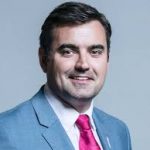
The comments made by Gavin Newlands, the SNP MP for Paisley and Renfrewshire North, in the House of Commons on 18 November 2021.
I thank the Secretary of State for advance sight of his statement, although I did read most of it in a newspaper beforehand.
I do admire the Secretary of State’s chutzpah for the most bullish U-turn I have yet seen in this place. He talks of Beeching reversal; this is nothing but an HS2 reversal. Bit by bit, HS2 and its grand vision for a rail network that might actually belong in the 21st century rather than in the 19th century is being salami-sliced until all that is left is a Birmingham to London shuttle with a few token services to Manchester, benefiting few, but costing us all.
Perhaps the Secretary of State should ask for some tips from the French Government, whose high-speed rail network is now 2,800 km long, or from the Germans, who have over 3,000 km. Denmark is building high-speed rail to link with Germany’s network, including an 11-mile tunnel under the Baltic sea. Meanwhile, the UK cannot even manage linking itself.
On electrification, the 2015 manifesto promised electrification to Windermere, south Wales and the midlands, and they were ditched, so forgive me if we are sceptical about today’s promises not meeting the same fate. For a country that started the railway age and produced Brunel, Stephenson and Joseph Locke, England is now badly served by its transport leadership—a leadership that no number of glossy reports and reviews can paper over.
Can I ask the Secretary of State what implications this will have for Barnett consequentials for both Wales and Scotland? Will Wales now receive its fair share of funding if HS2 money is being redeployed elsewhere? Can he confirm that Barnett will also apply to Scotland’s funding? Given that the Scottish Government are miles ahead of the UK on decarbonisation, electrification and active travel, at least we know something useful will be done with that cash.
Perhaps it is time that levelling up applied to the DFT. Move the Department up to Newcastle, Carlisle or Doncaster, and quickly find out at what level the rest of England operates when given a shoestring to run a public transport network that is in the 21st century in theory only. Experiencing the third class network the north of England is expected to endure every day as compared with that in Greater London might sharpen a few minds in the DFT as to where their priorities lie in the future.