Category: Pensions

  • Andy Burnham – 2026 Speech to Labour Party Conference

    Andy Burnham – 2026 Speech to Labour Party Conference

    The speech made by Andy Burnham, the Prime Minister, in Liverpool on 29 September 2026.

    Thank you so much, Conference. Thank you.

    And Nadia, I love you Nadia. I am so proud of you, so proud of you up on the stage. Thank you.

    All Together Now. That’s my rallying call to the country today. When we pull as one, there is nothing we can’t do.

    Today we draw a line on a decade of division. We stop doomscrolling on posts running Britain down. And we put the country on a new path.

    Britain with belief again. People with hope again. 

    It’s very hard to put into words the emotion I feel standing here before you all.

    For me, life truly has come full circle because this is where my story began. My grandad drove a lorry along these docks for Tate & Lyle. 

    My gran Kitty inherited the drive of her Irish ancestors. She walked three miles out of the bombed-out city after the war to put a deposit down on a house, without Jimmy’s knowledge actually. I wouldn’t do that to you John, wherever you are Chancellor!

    She put a deposit down on a house. The house where I was born. It changed the fortunes of my family.

    It was where my mum and dad started off, built a partnership and went on to create our own family home and filled it with life, love and laughter.

    Eileen and Roy gave me a care for people. Forged by her faith, his politics and the values of this great city we are in again for our conference.

    They guided me to the point where I stand before you today.

    Ours is the same story of so many families, British families of my generation. A story of working-class aspiration. A desire to get on and give back, never pulling up the ladder. And a post-war Britain that backed them to do it. 

    It’s still there, as I saw in Stourbridge this summer. I watched a whole community getting stuck in to support those whose homes had been burnt down. Proof the British people haven’t changed. Still as great as they ever were. 

    But something is different these days. That sense of the powers-that-be pulling against the people not with them. If there’s one thing I want to put right, it’s that.

    Imagine living in a Britain where people feel the country has their got back again. A Britain for everyone, no matter who we are or where we’re born. We would be unstoppable. And we will be.

    Conference, I am 10 weeks into this job. And not all of my recent predecessors have been able to say that.

    I’ve been thinking very carefully about what to say to you today. Of course I am here to speak to you, our Labour family. The other family that love so much. 

    For the historic victory he achieved for us, I am here to say thank you Keir. And to thank you to the whole of this conference and all of you for the backing that you have given me.

    The politician in me wants to give the usual tub-thumping conference speech today. But the patriot in me tells me something very different is needed.

    This country isn’t where any of us would want it to be. Politics-as-usual has taken it backwards. More of the same isn’t good enough. That’s why I feel I have to break the mould today.

    I am going to give you a real speech. 

    I left Westminster a decade ago because of my frustration at its failure to face up to what happened at Hillsborough. Its refusal to treat all parts of the country equally and fairly. Its capitulation in the face of the social care crisis.

    So I became an outsider from the Westminster club. When I asked the people Makerfield to support my return, it was not because I missed Westminster so much. It was to come back to change it. To make politics work for you.

    Everyone can see the position Britain is in. Everyone knows things are not working as they should. Everyone is talking about how life is too expensive. Everyone wants less drift and more direction.

    Today I answer that call.

    Hope comes from honesty and we will have hope again. But first, honesty. It comes from saying the things politicians usually avoid.

    I will say it straight. Britain has been on the wrong path for a long time. Deindustrialisation. Deregulation. Privatisation. Austerity. Brexit.

    And what has it given us? A country run for vested interests. Not in the public interest. With power held in too few hands. And too many places left to drift. 

    I am ready to do things my predecessors wouldn’t. I will make a break with the direction of the past 40 years and put Britain on a new path.

    Build a new economy and a new politics. That is the case I make to you today. 

    Conference, change will be difficult. It always is. But I know we can do it. Because we have done it before.

    In 1945, we had the vision to win the peace. We had the bravery to make change. We built good homes, secure jobs, health and education for everyone. We gave Britain hope again.

    We made working-class aspiration feel real for families like mine. We built the common good. Or at least we did until the 1980s.

    Suddenly, the common wealth we had created, this party, the wealth we had created for the many was seen as an opportunity for the few.

    Homes. Water. Energy. Transport. Care. Broken up and sold off.

    The British Right talk about ‘taking back control’. Never let them forget, they are the ones that gave it away in the first place.

    Economic control diminished by selling off essentials. Political control corroded by the hollowing out of councils. Immigration control weakened by Brexit.

    Later this year, we will publish our plan for Britain and set out how, over 10 years, we will make this country work for you again.

    More control of the basics so that we can make it more functional. More power in the hands of people and places to set their own ambitions. And from there, good growth in every postcode, hope in every heart.

    Our journey starts where I started, in the Old Roan, not far from here. With housing. A home. 

    That home on Keeble Drive unlocked the aspiration in my mum and dad for a better life for us all and has taken us to places we could never have imagined.

    With a good home, everything is possible. Without one, it feels like nothing is.

    Kids can’t have a good start in life. Families can’t have good health, physical and mental health. Over a million people are in that position on housing waiting lists – almost exactly the same number as the homes we lost through Right-to-Buy in the 1980s.

    I will not rest until we live in a Britain where everyone has a roof over their head every night and no one is forced to sleep rough on our streets.

    On my first day in this job, on the steps of Downing Street, I set an immediate mission to end the need for rough sleeping. Everyone In. Our new permanent national policy.

    Putting the right principles and standards back at the heart of this country. The care for people I got from my mum and dad at the heart of the running of the British state. 

    From there, the biggest council house building programme since the post-war era, led by Angela Rayner.

    And I am specific about council homes because we need to restore stronger democratic control over our housing stock.

    We will help councils build again and make it affordable by building on unused public land. We will reform Right-to-Buy. Not taking the right away from anyone in an existing home. But removing it from the new homes we build so they are there for generations to come.

    Rebuilding our common wealth. Restoring the public housing stock to what it once was, not just by building new but acting on the private rented stock too. 

    Go to almost any town across Britain and you will see plenty of empty homes. We will give councils the power to take control of them and bring them back into the public housing stock. 

    You will see rented homes in a poor state of repair too on so many British streets. Homes which harm the health of the people inside and drag down the streets around them.

    The worst of it? Often owned by absent landlords who are paid through the benefits system but refuse to reinvest anything in the upkeep of the property.

    It is time to call an end to this. Landlords who rent out the worst quality homes will be given warnings to improve them. If they refuse, we will make it much easier for councils to acquire those homes and we will legislate if necessary.

    We don’t let people sell food which damages health. So why allow it with homes? From now on, we won’t.

    This is what I mean about taking back control with our communities.

    But I also want to get back to a Britain where young people starting out are able to buy a home like my mum and dad did. Like I did.

    They have had it tougher than us. Working hard, paying bills, trying to save but looking at a student loan which never gets any smaller.

    Today I say to them we are bringing back the hope you can have a home of your own. 

    Your First Home will reduce the size of the deposit you need. It will open up home ownership to those not backed by the bank of mum and dad.

    And we promise we will not forget our promises to leaseholders. We will introduce a Bill before Christmas for long overdue Leasehold Reform.

    To the millions of leaseholders across the country, you have my word. The days of you being squeezed for every penny are coming to an end.

    Conference, this is the break we are making with the flawed thinking of the last 40 years. 

    Not seeing housing only as a market with winners and losers, but as an essential everyone needs for a good life.

    And the next stage of our journey is to apply that same philosophy to the most basic thing of all. 

    Water is a symbol of what has gone wrong with Britain. A service where the shareholders never lose and the public never win. From which some have syphoned out easy money while the public picked up the bill for the sewage in our seas.

    It stinks. I will not allow it to continue like this.

    Today I can confirm Angela Eagle will present a strengthened Water Bill to Parliament. The centrepiece of that Bill will be this – the repeal of Margaret Thatcher’s ideological ban on public ownership of water companies.

    It will start a 10-year journey to a very different water system. 

    It will strengthen public control. Mayors will have new powers to hold water companies to account, with tougher consequences for those which repeatedly fail. It will close the loopholes used to pay excessive bonuses.

    Where private companies serve the public interest, we will support them. But the consequences will be clear for those who do not, including taking back control or public ownership.

    Conference, when people hear the phrase public control, I am sure some think it’s anti-business. It’s the opposite.

    Businesses need the basics to be functional and affordable too, as does the wider economy. As someone said to me recently, there’s a reason why you can’t build all over the Water Works and the Electric Company on the Monopoly board. 

    One of the biggest barriers to growth in the UK is the cost of energy. British businesses and billpayers pay some of the highest energy costs in Europe. 

    Within 10 years, I want those costs to be in line with our neighbours. 

    This means reforming a broken energy market so it better serves the public interest. 

    We are already taking more control of our electricity prices with a massive expansion of home-grown renewables and nuclear. I have asked Miatta to speed up the breaking of the link between what we pay for power at home and the international gas market, to get bills down. 

    And we will be pragmatic in relation to the North Sea as we build a bridge to a clean energy future and face the climate crisis. 

    But it’s not just the price. The system needs to work better too. You would not believe how many businesses complain to me they can’t get going because they can’t get connected to the grid.  

    It pushes costs up. It drags growth down. And it holds Britain back. We won’t get the growth and inward investment we need if we don’t fix it.

    So, for the first time, we will have a national energy plan and we will bring back local democratic control through a stronger role for mayors and local leaders. 

    But we must go further. Today I can announce our plan for Great British Grid. A new branch of Great British Energy. A publicly-owned company that will challenge the private sector operators. 

    It will increase competition, drive down costs and speed up connections so businesses can expand and grow more quickly.   

    Energy, water, housing. Back under stronger public control. We rely on them, we pay for them and once again we will have power over them.

    I realise people can’t wait forever for change though. They need breathing space now. And I am determined to provide it.

    I can say to everyone watching, you will see VAT disappear off your electricity bill this Thursday. I didn’t expect a standing ovation for that but I’ll take it. Thank you, Conference!

    From January, you will be able to travel for the whole of 2027 anywhere in England paying no more than £2 for a single bus journey. You knew I wouldn’t get through a conference speech without mentioning buses, didn’t you?

    These things are not everything but I hope you will see it as a sign, a strong one, of our intent to get your bills and fares down as you wait for the bigger changes to come.

    I would love to go quicker. But I have to be honest about what the country can afford. I will stick to our fiscal rules to get borrowing and debt down. 

    The approach I am outlining today is the responsible one. If we build a generation of council homes, we will save billions from the housing benefit budget over the decade.

    If we get energy bills down, we will better control inflation and support the economy. 

    If we change the way we support people, we will get more people into work and the welfare bill down. 

    Not through crude cuts. That should never be the Labour way. 

    But by investing in people in their success, supporting them to get where they want to be, rather than paying for failure as the country does now. 

    Our plan for public control is a plan for growth, growth of people, places and businesses.

    The truth is this. When we gave up public control, we left people exposed. Just when it was getting harder to grow up and harder to grow old.

    Support has been cut away from young and old. And that leaves the country paying for failure on a grand scale.

    Almost a million young people not working or learning. Thousands of older people stuck in hospital because of the lack of good home care. 

    We can’t afford to carry on like this.

    In 1945 we had the Beveridge Report. We need something similar now. A new social contract for the 21st century.

    You know of my long-held ambitions to reform social care. When I was a new MP in the early 2000s, I despaired at what I saw when my gran Kitty went through the system. 

    I winced at the pain it caused my mum. My gran’s engagement ring ripped from her finger and stolen in a care home. Care not worthy of the name.

    And the modest savings she had built up through her life, starting from the house where I was born? All taken to pay for it.

    I vowed then to fight for something better for my parents’ generation. And here we are 25 years later. If anything, it’s worse today than it was then.

    What an indictment of my generation of politicians, myself included. Too cowardly to fix something as basic as the care we give to each other.

    Is it any wonder people are giving up on politics?

    I watched closely the people who looked after my dad. Caring for other people’s parents on poverty pay, but doing it with huge skill, humour and humanity.

    Holding a threadbare system somehow together.

    Yet invisible to the political class of this country.

    I want to speak directly today to our care workers.

    You are not invisible to me.

    I see you.

    I thank you.

    And I am sorry that my profession has let down yours for so long.

    I promise you: I won’t leave this job without doing everything I can to change things for you.

    And I say the same to our wonderful NHS staff.

    We have let you down too.

    Left you under intolerable pressure.

    At risk of burn-out.

    Dealing with 999 calls from a failing care system.

    Corridor care your daily reality.

    If we carry on like this, Conference, broken social care will break the NHS too.

    And we can’t let that happen, we must never let that happen, this party that founded the National Health Service.

    There is only one real answer.

    A person-centred, high-quality care service that starts in the home.

    A system in the best traditions of this party, where everyone contributes and everyone is covered.

    Free at the point of use and no care charges paid out of your basic state pension.

    Care that is about people not profit. 

    Which gives peace of mind over care needs in later life.

    Which protects people’s homes and their savings.

    And gives proper recognition to the care workers we will all need to rely on at some point in our lives.

    Conference, this is the National Care Service we will build.

    We will, we will. Thank you, Conference. 

    We’re going to do it. We are going to do it.

    A landmark policy as significant as the creation of the NHS itself.

    And utterly essential to securing its future.

    NHS savings from fewer ambulance call-outs, A&E admissions and vulnerable people being stuck unnecessarily in hospital.

    We will start laying the ground now for the National Care Service and introduce it in the next Parliament. 

    Louise Casey’s review will advise us on exactly how and Yvette and I will seek to build the maximum national consensus around her recommendations.   

    It will be fully funded, and not through borrowing.

    Conference, I won’t pretend some of this won’t be difficult.

    I accept I may pay a political price.

    But someone has to go through the pain barrier and rip the plaster off.

    It’s the leadership I promised you when I asked to be your leader and I will do it.

    But I’ll be honest as well.

    We promised in our manifesto to keep the Triple Lock unchanged throughout this Parliament. 

    I will honour that promise.

    I will honour that promise, and I will do more.

    That promise will take the state pension to a record high.

    From there, in April 2030, we will adjust it.

    The state pension will continue to rise every year at least by prices or 2.5%.

    And it will hold its value relative to earnings over time so that pensioners will always share in the rising prosperity of the nation.

    But this change will generate significant savings which we will use to build up our National Care Service.

    Some may not realise it but older people with nothing more than the state pension, or only a little more, can find themselves paying care charges today from that small income.

    Under my plan, this will no longer happen.

    I can also confirm today our commitment to ensure that the low-income pensioners won’t be dragged into paying income tax in this Parliament.

    So this is the deal.

    A state pension that rises every year.

    No care charges.

    And a high-quality National Care Service to give peace of mind in later life. 

    Conference, I am going to go out and argue for that.

    A good deal for our pensioners and for older people in the 21st century.

    And I will do it in memory of my dad and out of complete respect for everyone who cared for him.

    Conference, we will need to show the same boldness for our young people too.

    Just when growing up got harder in the social media age, their support was stripped away.

    Youth services practically abolished in the 2010s.

    Children’s mental health services cut.

    Families left to battle for support for kids with special educational needs and disabilities.

    So many young people cast adrift by a school system built for some, not all, overly focused on the university route and not enough on technical education.

    Should we be really surprised that the numbers of late teens and early 20s on benefits has grown?

    Conference, it’s not their fault. It’s ours.

    Politicians fail to give people, young people, the support they need as they grow up in a tougher world and then threaten them in their 20s that they will strip away what they’re left with.

    How is that fair? How does that build a strong society?

    We have a choice, Conference.

    Either we invest in our young people.

    Or we pay for failure through the benefits system.

    Truthfully, we can’t afford to do both.

    My choice is to invest in them.

    We can’t retake control of the country’s future if we leave so many of our young people drifting towards it.

    We await the final report from Alan Milburn’s review.

    But I can say now we will change the education system and the welfare system. 

    We will rebuild a system of comprehensive education in this country with parity between academic and technical, with Lucy Powell leading the way.

    Good quality pathways for all from 14.

    And the right support for our young people when they need it.

    A 45-day work placement between 16 and 18.

    An apprenticeship at 18.

    And no long waits anymore for mental health support growing up.

    We will need a fundamental rethink of the welfare system to find the money for these opportunities upfront.

    And we will require young people to take up the help presented to them – guaranteeing in-work support and not leaving those out of work losing confidence and connection.  

    This is a different approach to welfare. 

    It is based on a philosophy of social security.

    A country which invests in people’s success, rather than abandoning them and paying for failure, will be much more resilient to the shocks we will undoubtedly face in the rest of this century.

    And more able to meet its NATO obligations on defence.

    This leadership we are showing at home will be matched on the international stage. 

    I will be steadfast in my support for Ukraine and stand up to threats wherever they come from. Whether Russia, Iran or anywhere.

    And Conference, we will be principled in our leadership in securing a two-state solution between Israel and Palestine, as Ed Miliband has shown.

    This is the Labour way. A plan for Britain that will enhance our social security and our national security.

    You don’t make Britain safer by leaving a younger generation without hope stuck at home looking at screens. 

    You do it by giving young people hope again. 

    And you do it by getting our economy growing strongly again.

    I know Britain is full of brilliant businesses who want our young people to succeed and want to employ them.

    And we will help them do that and grow together.

    I have a theory of growth.

    It starts by retaking control of the essentials that make a place work or not.

    You’ve got to have that control over the fundamental things that everybody needs.

    And from there you devolve more power to places to put them in charge and decide their own destiny.

    And then in doing those things we optimise the conditions for businesses to grow.


    And make sure we support our people so they are there for our business to employ.

    Conference, I developed this approach over a decade leading the country’s fastest-growing city region.

    And I could not have been more proud to hand over to Bev Craig as the new Mayor of Greater Manchester.

    It’s like the other way round from when Alex Ferguson handed over to David Moyes, I think this is David Moyes handing over to Alex Ferguson.

    We have a theory of growth, and we built it with Steve too when we left Westminster together, and with the other mayors who are with us today.

    And you can see the change, you can feel it in this city, can’t you. 

    Amazing isn’t it, to be here, to see it every year, because we come back every year. 

    We see the change every year, and how good is that to see.

    And we want it everywhere, don’t we, every place represented in this conference hall here today. 

    And that’s what I intend to do.

    I intend to take what I did in Manchester, our plan for good growth, and drive it from the very centre of Government into every postcode in Britain.

    Number 10 North, in lockstep with John and the Treasury, overseeing the rewiring of the British state, the rebuilding of resilience in our communities and the re-industrialisation of our regions. 

    Changing government procurement so that it backs British business, as our trade unions have rightly pushed us to do.

    And that will require culture change in Whitehall.

    The Mayor of the Liverpool City Region should not have had to fight Whitehall as hard as he did to get a new ferry built on the banks of the River Mersey.

    And what a job he is doing.

    Liverpool growing faster than the UK economy.

    How often have we been able to say that in our lifetimes? What a brilliant thing to be able to say.

    Places written off by the powers-that-be in the past now proving them wrong.

    Bringing big names in AI like Kyndryl into the city. 

    I see huge potential for more of this in every part of Britain.

    I see start-ups and scale-ups pouring out of our world-class universities.

    I see businesses up and down the country playing their part and ready to do more.

    As Gordon Brown has said, we can be the world’s innovation nation, and he’s right, we can.

    A nation trusted by others to be a global leader in AI, an honest broker 

    When Britain takes the Presidency of the G20 next year, I will show our new-found confidence as a country, and I will show it to the world by putting AI centre stage and Britain will then work to develop a new global code to capture its benefits whilst being clear-eyed about its risks.

    Just as Gordon did in the financial crisis in 2008, so Britain will do it again, step forward, and bring people together around what’s right for the future.

    Securing our prosperity, but also our safety, and particularly the safety of our young people.

    We led the world first’s industrial revolution from the Midlands and the North of England.

    So why can’t we lead the next?

    We can, Conference.

    And we will.

    We are a country full of working-class aspiration.

    And we will be the Government that unlocks it.

    Conference, there is one final thing we need to change if our plan for Britain is to succeed.

    Our politics.

    Westminster prizes point-scoring over problem-solving.

    And that is why so many things go unfixed for so long.

    If we want to change Britain, we need to change ourselves.

    I will work as hard as I can to get as much cross-party support for our plan for Britain.

    If we can secure that, it will project a message of confidence and stability to markets and the world about Britain’s future direction.

    It is why I decided to make this a very different conference speech.

    We can’t succeed in the eyes of the world if we continue with the levels of political turbulence we have seen in recent times.

    It is always in my mind that I’m the seventh Prime Minister in ten years. 

    It is why I want to underpin our plan for Britain with a new politics.  

    We will all have failed in our public duties if we carry on as we are and open the door of Number 10 to a divisive government on less than 30% of the vote.

    Conference, in past years you have voted twice to support electoral reform. 

    I hear you, I agree with you and today I am announcing a new national commission on electoral reform.

    I invite all the political parties to be part of its work.

    We will contest the next election with a manifesto commitment to change the electoral system so that everyone’s vote counts and everyone’s voice is heard.

    As you can see, what I am outlining is a more serious and thought-through prospectus for the future of Britain than people have been offered in a generation.

    I appreciate some of it is difficult. 

    I accept people, including in this hall, will not agree with every part of it.

    But I believe this is what we need, small things will not get us through what are difficult times.

    We need to be bigger and to have the courage of our convictions.

    I believe we can turn Britain around, but it requires us to think bigger about what we need to do.

    I will try my best to find common ground.

    But let me be clear.

    Where I can’t agree with others, I will fight hard for what I believe to be right and what I believe to be in the best interests of this country.

    On the day my dad died, the Scottish First Minister said I would be the last Prime Minister of the United Kingdom.

    I quote that not to seek sympathy.

    Nor to criticise John Swinney, I don’t think he knew the news at the time.

    And anyway, my dad Roy would have been the first to defend his right to say it.

    I relay it because I want you to know how it made me feel.

    Utterly determined to prove him wrong.

    Whatever its flaws, this country gave my dad a good life.

    And it has given his sons opportunities he didn’t get for himself.

    He recognised that and was grateful for it.

    And so proud of what Nick, John and I did with them.

    If only, if only he had been able to appreciate that moment of the family in Downing Street.

    The son of a man who failed his 11-plus becoming Prime Minister.

    The fact it could even happen in this country would not have been lost on him.

    He could have gone to university himself, but times were different then so it wasn’t an option.

    But he voted every time, religiously for the Labour governments which changed education so his sons could do that.

    The United Kingdom my dad represented is the one I believe in.

    A union of nations that gave trade unions and the cooperative movement to the world.

    The National Health Service.

    A country that stood up to fascism.

    A country of solidarity not separation.

    That’s the Britain my dad represented.

    Britain is not perfect. It can be better and we will make it so.

    But it still stands for something worth saving, worth fighting for.

    And we will always be stronger facing a changing world together, rather than separating.

    So I am going to use this job to build the kind of Britain my dad wanted to see – and fight with everything I’ve got to keep it together.

    Not the last Prime Minister of the United Kingdom.

    Rather the first to rewire it to make it work for all people and places.

    Driving power out of Whitehall and into every postcode of Wales, Scotland, Northern Ireland and England and closing divides between people and places.

    The first Prime Minister to make a break with politics-as-usual. 

    I believe the plan I have outlined today will not just hold us together, it will allow us to rise again.

    Britain to rise again.

    And we will be a Britain again confident of our place in the world.

    It has changed dramatically since 2016.

    And, in the spirit of this speech, we have to be honest.

    Brexit hasn’t given us control.

    We’ve lost some of the control we had over our economy, as a decade of low growth has put us in a weaker position.

    And we’ve lost some of our control over immigration.

    At its most fundamental level, this is a debate about fairness.

    So I understand the anger about what is happening in the Channel.

    Shabana has done a great job in beginning to restore our grip over the system.

    People arriving on small boats down 40% on the last year, 50% from the early 2020s.

    Net migration down more than 80% since the peak of the Boris Johnson era.

    Conference, we make these changes but we will always grateful – always, and we thank them – to those whose who have come here and are contributing to our country.

    Than you, to them.

    But control over immigration was weakened when we lost collaboration with our European partners.

    And we are still having to work hard to bring it back.

    Later this year, there will be a UK-EU summit where one of the issues on the agenda will be how we best work together on immigration.

    And beyond that we will work to secure gains for our industries most harmed by Brexit.

    Conference, these are important concrete steps.

    But they are not enough.

    I say this to you and the country.

    We will not give Britain the clear path we need into the rest of the century until we decide on a long-term relationship with what is still our largest market.

    I cannot say to you truthfully that where we are is good enough.

    Brexit has done more harm than good.

    We need to restore a higher level of growth and prosperity for Britain.  

    So, I will take the opportunity around the summit to lay out to you, to lay out to the country, what I believe the different options are for Britain’s long-term relationship with our European partners.

    And there are different options.


    And I will see if we can find consensus around one which will give us clarity about our position, and the future of the continent we live in.

    Well, Conference, I did warn you this speech would be different, didn’t I?

    But I think this moment in our country’s history requires it.

    1945.

    1964.

    1997.

    Now.

    All moments of Labour governments.

    All moments which saw Britain rediscover a sense of hope.

    When I walked up Downing Street on my first day in the job, I promised to give Britain a circuit breaker.

    To get us out of the rut we’ve been in.

    To get us believing again.

    I say to this to everyone watching at home.

    You may disagree with some or all of what I have said today.

    But I have given you what you often say is missing from politics.  

    Honesty, ideas and a clear direction for the country we all love.

    I now want to make a direct appeal to you.

    If you agree with enough of what I have said, get behind this plan. 

    And get behind each other.

    It’s time to draw a line.

    To move beyond a decade of drift and division.

    To bring a spirit of unity and positivity back to our country.

    To unlock the working-class aspiration that is still there in every postcode in this great land.

    All Together Now.

    We can do it.

    We will believe again.

    We will hope again.

    Thank you, Conference.
  • Andrew Western – 2026 Statement on the Department for Work and Pensions Workplace Transformation

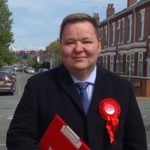
    Andrew Western – 2026 Statement on the Department for Work and Pensions Workplace Transformation

    The statement made by Andrew Western, the Parliamentary Under-Secretary of State for Work and Pensions, on 25 June 2026.

    Today the Department announced plans to consolidate some service and support centres as part of the continued transformation of DWP’s office estate across England, Scotland and Wales. This sits alongside wider activity to modernise how services are delivered in the future, including the future operating model of the job and careers service, but these sites do not see customers face to face.

    As the Department’s estate continues to evolve, it will become smaller, better and greener, thereby supporting the Government’s priorities of delivering long-term savings for the taxpayer and high-quality public services through more affordable, sustainable and inclusive workplaces. This involves investing in existing buildings to improve working environments, as well as acquiring new premises in some areas.

    Since 2021, the number of service and support centres has reduced from 127 to 74, delivering net recurrent cashflow savings of £72.2 million between 2022-23 to 2024-25, with significant further savings expected in future years. Despite this progress, DWP still operates one of the largest leasehold estates in Government. With hybrid working now well established, capacity across the estate exceeds requirements, and the estate is underutilised by around a third. That is why, earlier today, the Department informed colleagues of its plans to make changes at these nine service and support centres, and to relocate colleagues and services to alternative sites nearby, where this is possible:

    Blackpool Peel Park

    Derby Holborn House

    Glasgow Northgate

    Halifax Dean Clough Mills

    Hyde Beech House

    Liverpool Belle Vale

    Motherwell Johnstone House

    Sunderland Wear View House

    Torquay Cotswold House

    DWP remains committed to maintaining a national footprint, including a presence in some of the most deprived areas of the country. Creating fewer but larger offices also supports the Government’s Places for Growth agenda, with the Department continuing to move roles out of London, so that the civil service better reflects the communities it serves.

    These changes are not driven by a plan to reduce headcount. We are committed to treating all affected colleagues with fairness and respect, giving them sufficient notice of any changes to where they work. Most will be offered a move in their current role to a nearby location, where this is reasonable. Where relocation is not possible, redeployment within DWP or across other Government Departments will be the priority.

    These announcements will affect each location differently. I have written to every MP with an affected site in their constituency to explain what this means for their area, and have invited them to meet me to discuss it further. We commit to doing the same for any future announcements.

  • Torsten Bell – 2025 Speech at the Pension and Lifetime Savings Association Conference

    Torsten Bell – 2025 Speech at the Pension and Lifetime Savings Association Conference

    The speech made by Torsten Bell, the Minister for Pensions, in Edinburgh on 11 March 2025.

    Thank you to the PLSA for the invitation to speak…

    …and for bringing us all to Edinburgh…

    …the city my first boss in politics, Alistair Darling, represented and loved.

    It is always a pleasure to come…

    …well almost always.

    Because it can trigger traumatic flashbacks.

    One stands out.

    Of a pre-dawn drive across from Glasgow back in 2014…

    …to accompany Alistair to the Andrew Marr show on the Sunday just days before the referendum.

    It’s not a great distance, nor is the traffic bad at 5am…

    ….but it felt like an eternity given the weight of events.

    Events that could have had seismic repercussions for the whole UK…

    …and for this city’s pensions, and financial services, industry.

    Whenever I hear partisans of Manchester and Birmingham compete over which is the UK’s second city…

    …I gently remind them that, when it comes to productivity, there’s no contest: it’s Edinburgh.

    I was also here last August for a rather more light-hearted kind of trauma.

    I was due to speak at the brilliant book festival…

    …and had plenty of time spare ahead of a 7pm event.

    Or at least I would have done, if it actually had a 7pm start…

    I was ambling under the castle when my team rang.

    There had been a mix-up and the event started at 6.

    It was 5.45.

    This was an event on a big, serious, topic: the UK’s economic stagnation.

    But rather than pondering that I now had a rather more practical question…

    …how fast can a newly elected MP walk, or run, up the hills of this city while retaining a shred of dignity in transit and upon arrival.

    Quite fast it turns out is the answer…

    …although opinions differ on much dignity was retained.

    This is all a long way of saying particularly thank you to the PLSA for organising today…

    …and sparing us any short notice changes to the schedule.

    So we can give pensions the unflustered attention it deserves.

    Today I want to step back to focus on the big picture…

    …of where our priorities must be as our defined contribution saving landscape matures…

    …and defined benefit schemes see their funding positions changed materially.

    On the former my big argument is we have to pay more attention to returns for savers…

    …rather than just to costs, or savings rates – important as both those are.

    Celebrating the success of auto-enrolment can no longer be a substitute for answering the harder question:

    What does the best landscape for those savings to be managed in look like?

    Both to maximise returns for savers…

    …and to ensure those savers live in a country that is investing and growing again after a long decade of economic stagnation

    Now, our view is that scale does matter.

    We want fewer, bigger, better pension schemes.

    That is already the direction of travel – for a whole host of reasons.

    We are merely providing extra wind into the consolidation processes’ sails.

    Of course, some smaller schemes deliver great value for money.

    But for the market as a whole, and savers on average, consolidation is desirable.

    Larger schemes are better placed to invest in more productive asset classes.

    This is a diversification as important as that of geography, which rightly gets so much attention.

    Scale also helps reduce costs – and increases bargaining power.

    That both can help provide the headroom for building investment capability…

    …or just better returns for members.

    Around the world we also see that scale matters for the nature of ownership.

    Only large pension schemes can provide active, engaged ownership…

    … of the kind that presses management not just on short term returns today but on whether they can deliver over the long term.

    Now, scale of course is an enabler of change, and it is very far from a silver bullet.

    One part of interlocking reforms.

    Including reforms to focus more on value, and less narrowly on cost or price.

    I’m grateful for the support there has been for the proposed value for money framework.

    It will help focus minds.

    Employers including any in the room today will have no excuse for ignoring what matters most to their employees.

    But we also need to focus on value in debates and, to be frank, in sales pitches.

    Now why do I focus on enabling productive investment?

    Because we do so little of it.

    DC pension funds allocate 3% to infrastructure and 0.5% to private equity.

    That compares to an 11% infrastructure allocation in Canada, and 5% to private equity in Australia.

    Every percentage point counts, or part of a percentage point matter when this investment can deliver not only returns for savers…

    …but also contribute to economic growth.

    and if you want a simple summary of the government’s economic strategy this is it:

    It’s time for Britain to start investing in its future again.

    Again, this shift to investing in a wider range of assets is again one we are encouraging rather than instigating.

    Many of you have told me about changes you are already delivering…

    …building new capacities or partnering with others.

    I want to acknowledge the work going on across the industry to realise this shift.

    And from learning from parts of the industry that have been doing this for decades.

    I particularly want to welcome the ambition to go further through voluntary commitments.

    This work is ongoing, under the leadership of the PLSA, City of London and the ABI…

    I want to thank them all for it…

    … I look forward to seeing the results in the coming weeks…

    …and will weigh them heavily as we finalise the Investment Review that Zoe talked about.

    Now everyone in this room, given you’ve signed up and I suspect will be here for three days, loves talking about pensions.

    But we all know, higher investment is about far more than pension reform.

    That’s why we encourage you to focus on how the overall strategy, how the pensions reform sit within that wider argument.

    It also requires a supply of investable propositions, not just the existence of capital.

    Across the board we are working to grow that pipeline and to make it more visible.

    In June we will set out our 10-year infrastructure strategy.

    The British Growth Partnership is there to help bring VC investment opportunities to pension funds.

    Our work with local and regional government will highlight investable propositions right across geographies.

    Investment propositions will also need to be visible in another sense…

    …they actually need to get built.

    We have already got back in the habit of swiftly granting permissions for the likes of solar farms and reservoirs.

    Permissions which previously policy makers seem to have decided Britain could do without.

    And today we’ve introduced the Planning Bill to make sure we do get homes and infrastructure built.

    If we’re going to invest once again…

    …we have to make it possible to build it once again.

    Now in many ways, elements of our approach build on the success of the Local Government Pension Scheme.

    At £400bn it is not just one of the world’s largest schemes in the world…

    …but one of the fastest growing, projected to reach £1 trillion by 2040.

    Now given that, we must reflect on what is working well, and what more we can do.

    One clear objective is reducing fragmentation.

    Minimum standards for asset pooling are an important step…

    …and again there is lots of progress underway.

    Thank you to those who have prepared pool transition proposals, all of which we have now received.

    A great deal of time and energy has clearly gone into them.

    We put the onus on the LGPS to come forward with creative and collaborative plans.

    And we are now considering if the proposals have met that ask.

    You have all asked for clarity as quickly as possible and I’m delighted to be meeting each and every pool in the coming weeks.

    And because it is important that concrete progress is made…

    …I am today confirming that we will plan to stick to the timeline of March 2026.

    The pooling project began 10 years ago.

    By this time next year, our world class LGPS will be made up of large pools of professionally managed capital…

    …accountable to Authorities via robust governance structures…

    …and delivering for members and their communities.

    On the Investment Review more generally, it will be finalised in the coming weeks.

    The final report will be all the better for the consultation responses we have received.

    It – and the wider changes promised in the Kings Speech – will form the basis of the Pensions Bill…

    …which I aim to introduce before the summer recess.

    That Bill brings me to the £1.2 trillion in DB schemes and the incredibly important role these schemes have to play.

    We know that the market is already innovating.

    Hence our commitment to legislate for a permanent regime for Superfunds.

    Today’s £160bn of surplus is a good ‘problem’ to have.

    Infinitely preferable to the previous problem: perma-deficits.

    Surplus flexibilities will allow more well-funded DB schemes to release resources back to business and scheme members.

    Where it is safe to do so.

    And where trustees agree.

    They are best placed to determine, in consultation with employers, the appropriate use of any surplus in their scheme.

    As an aside, some may want to examine the position of members with non-indexed pre-1997 accruals when considering the use of any surplus.

    I look forward to sharing more details with you in the response to our Options for DB schemes consultation this Spring.

    And we are considering proposals to allow the Pension Protection Fund greater flexibility to reduce the levy it collects from pension schemes, when it is not required.

    I recognise this can all sound like…. a lot.

    Especially given wider changes – dashboards and the rest.

    There are limits on any organisations ability to deliver.

    I take those constraints very seriously.

    Not everything that could be legislated for will be legislated for in the forthcoming Bill for exactly that reason.

    And we owe it to you to provide a clear roadmap of how these changes fit together.

    Now I want to end on the big picture, before my talk of capacity constraints exhausts your capacity to feign interest.

    It’s helpful to consider how “the pension problem” has changed.

    Not over recent months which is too often the focus but recent decades.

    Now here’s an overly simplistic view, but still a useful one, is as follows.

    The 1990s pension problem was this:

    How do we run pension schemes, and regulate them, to cope with the danger that some employers go bust – leaving employees without the pensions they were promised?

    That is a problem regulation, and more recently a good dose of luck, helped answer.

    The problem of the 2000s was different:

    How do we deal with the disaster that swathes of people no longer build up any pension savings, never mind any firm pension promises?

    Again, policy provided an answer in the form of automatic enrolment.

    In both cases solutions were found and that should give us confidence for our own challenges today.

    But in both cases we took too long to find them.

    Innovation in face of a chronic problem, rather than a crisis is not easy….

    …for policy makers, or anyone else working in this area

    What is today’s problem?

    The consensus is just to say adequacy, due to insufficient savings.

    I agree, the levels of contribution is an issue but I’d put the problem slightly differently.

    Today’s problem is how do we deliver higher returns for savers, so they can have a decent standard of living in retirement without asking any more than is necessary of their standard of living in the here and now.

    Or asking them to become a pensions expert – which is your job.

    Getting absolutely the best value for savers is the priority to any wider debate on savings levels.

    That’s why phase 1 of the pensions review on the landscape, and the pensions Bill that will help reduce costs in the system and put decumulation on a firmer footing, must come before phase 2 on adequacy.

    The damage done by poor returns – including during decumulation – maybe feels less binary and catastrophic than the risk of Maxwell style broken promises…

    …but it’s a mistake to underestimate its impact on savers, which can in some cases be just as great.

    So that is today’s exam question.

    We are making good progress.

    And I look forward to answering it…

    …with all of you over the months and years to come.

    Thank you very much.

  • Neil O’Brien – 2023 Speech on Prescription Charges for People Aged 60 or Over

    Neil O’Brien – 2023 Speech on Prescription Charges for People Aged 60 or Over

    The speech made by Neil O’Brien, the Parliamentary Under-Secretary of State for Health and Social Care, in Westminster Hall, the House of Commons on 6 March 2023.

    I am grateful to the hon. Member for Gower (Tonia Antoniazzi) for opening the debate so effectively on behalf of the Petitions Committee, and I thank all Members for their constructive contributions. I also thank the 46,000 members of the public who signed the petition.

    The Government provided their initial response to the petition in January 2022, and I am pleased to be able to respond again today, having listened to hon. Members’ important and interesting contributions. The context, of course, is the Russian invasion of Ukraine and the high energy prices, inflation and cost of living pressures that it has unleashed. It is worth situating the debate in the context of some of the things we are doing to take action on that, some of which hon. Members have already referred to.

    This winter, we are spending a total of £55 billion to help households and businesses with their energy bills—one of the largest support packages in Europe. A typical household will save about £900 this winter through the energy price guarantee, in addition to £400 through the energy bills support scheme. We are also spending £9.3 billion over the next five years on energy efficiency and clean heat, making homes cheaper to heat. Some of that is being paid for by the windfall tax; at 75%, it is one of the highest in any of the countries around the North sea, and it is enabling us to do more on the cost of living, such as the £900 cost of living payment for 8 million poorer households, and the largest ever increase to the national living wage, which will help 2 million workers. In total, we are spending £26 billion on cost of living support next year.

    Turning specifically to prescription exemptions, I should start by trying to manage expectations about what I can say today, for reasons on which I will elaborate. It is clear that the outcome of the consultation on aligning the upper age exemption for prescription charges with the state pension age is very important to many Members’ constituents. However, I can only say at this point that no decision has been made yet to bring proposals forward.

    We received over 170,000 responses to the consultation —a testament to the strength of feeling on the issue. We want to ensure that everyone across the country, especially those affected by the cost of living pressures caused by the Russian invasion, can afford their prescriptions. That is why we have thought long and hard about how best to balance the needs of those in the affected age group, many of whom will find that they have additional health needs compared with when they were younger, with the pressures facing the public finances. I can, however, assure Members that we will respond to the consultation in due course.

    Hon. Members will be aware that the petition calls on the Government to protect free NHS prescriptions for all over-60s. We value our older members of society, and we recognise their social care and health needs. On the one hand, we recognise that families up and down the country are facing unprecedented pressures with the cost of living; on the other, we have to recognise that in the light of the covid pandemic, which has tested the NHS like never before, and the challenging economic landscape, we must ensure that public sector spending represents the best value for money for the taxpayer. As we look to the future in a post-pandemic world, there is no shortage of challenges ahead of us: an ageing population, an increasing number of people with multiple health conditions, and deep-rooted inequalities in health outcomes, which we are tackling. That is all in addition to the challenges of the pandemic and the elective backlog.

    Charges have been around in the NHS for over 70 years, and prescription charges provide a valuable source of income for the NHS, contributing £652 million in 2021-22. That significant funding helps to maintain vital services for patients, and it is particularly important given the increasing demands on the NHS.

    It is for those reasons that we consulted on aligning the upper age exemption for prescription charges with the state pension age. Historically, the initial exemption for prescriptions was for people aged 65 and over. The exemption was then extended to women aged 60 and over in 1974, and to men aged 60 or over in 1995, based on the state pension age for women at that time. The state pension age has subsequently increased to 66 for both men and women, with legislation already in place to increase it to 67, and then 68, in future years.

    The Government have abolished the default retirement age, meaning that most people can continue to work for as long as they want and are able to. That means that many people in the 60 to 65 age range can remain in employment and be economically active, and therefore more able to meet the cost of their prescriptions. Indeed, more than half of people aged between 60 and 65 are economically active, with a further 20% receiving a private pension or some other income.

    As increasing numbers of people live longer, work longer and so on, there are more people claiming free prescriptions on the basis of their age. It is projected that by 2066 there will be a further 8.6 million UK residents aged 65 and over, and that they will make up about a quarter of the total population.

    It is important to know that over 1.1 billion prescription items are dispensed in the community each year, with nine out of 10 currently dispensed free of charge. The exemptions that allow that may be based on the patient’s age, certain medical conditions, or income. We estimate that if we were to make the proposed change, around 85% of 60 to 65-year-olds would be minimally affected by it. As I have just noted, more than half of them are in employment, with about another 20% retired with a private pension, so they have a higher income, while others would continue to qualify for free prescriptions on the basis of their particular conditions.

    It is also worth noting that there are extensive arrangements in place to help those who are most in need of support with prescription charges. People who are on a low income but do not qualify on the basis of an automatic exemption, such as being on universal credit, can get help through the NHS low income scheme, which provides either full or partial help with health costs on an income-related basis. Anyone can apply for the scheme if they or their partner, or they jointly as a couple, do not have savings, investments or property totalling more than £16,000, not including the place where they live. A person will qualify for full help with their health costs, including free NHS prescriptions, if their income is less than or equal to their requirements.

    To support those who do not qualify for an exemption due to one of the many other reasons, such as their age or their condition, or for the NHS low income scheme, prepayment prescription certificates, which were mentioned earlier in the debate, are available to help those who need frequent prescriptions to reduce the cost. The prescription charge is currently £9.35; a three-month PPC is £30.25; and a 12-month certificate is £180.10, which amounts to just over £2 a week. PPCs can offer significant savings, and an annual PPC can be paid for in 10 direct debit payments, to allow people to spread the cost over the year.

    Andrew Gwynne

    I am a little concerned about the tone of what the Minister is communicating. He seems to be accepting that there will be a change on prescriptions for pensioners, but does he acknowledge the challenge with pension credit, whereby a large number of pensioners who are eligible for it do not apply for it, because they are fearful of the means test? What will he do to ensure that that does not happen when it comes to prescriptions?

    Neil O’Brien

    Perhaps I can set the hon. Member’s mind at ease. I said earlier that no decision had been made, and I reiterate that now. I have talked about the different measures that cause people either to be exempt from charges or to have the cost of their prescriptions cut, and I talked about PPCs as a final step, which can reduce the cost of prescriptions for those who do pay them.

    It has been mentioned several times that prescription charges have been abolished entirely in the devolved Administrations. Health is of course a devolved matter, but it is worth noting that spending is £1.25 in Scotland and £1.20 in Wales for every £1 in England, so there is that additional budget. Those devolved Administrations, with the record increases in their spending settlements, have full discretion about how they choose to spend those budgets.

    Several hon. Members asked me quite specific questions about the outcome of the consultation. I can only reiterate that we continue to consider, long and hard, the many responses that we received, trying to balance the cost of living pressures with the need for increasing funding for the NHS, and we will respond to the petition in due course. I thank hon. Members for their contributions today.

    Tonia Antoniazzi

    I thank Members for participating in the debate and the Minister for his response. I am sure that the people I have met will not be reassured by that response, but it is difficult, with no decision having been made about the reduction in prescription charges. That needs to be done, and the Minister needs to confirm it.

    I feel for the many unpaid carers—mostly women—who look after children or partners, given of the impact of this situation on them. People see that as unfair, and the system is not perfect, so we hope that change will come.

  • Andrew Gwynne – 2023 Speech on Prescription Charges for People Aged 60 or Over

    Andrew Gwynne – 2023 Speech on Prescription Charges for People Aged 60 or Over

    The speech made by Andrew Gwynne, the Labour MP for Denton and Reddish, in Westminster Hall, the House of Commons on 6 March 2023.

    It is a pleasure to serve under your chairmanship, Sir Edward. I want to start by thanking the Petitions Committee for facilitating this debate, and my hon. Friend the Member for Gower (Tonia Antoniazzi) for the passionate way in which she put forward the arguments of Peter, Denise and many others who find themselves in the predicament of having to pay for prescriptions or who worry that they might have to pay for them as pensioners.

    It is a pleasure to respond to the debate on behalf of the shadow Health and Social Care team, but also as the Member of Parliament for Denton and Reddish, and I know that many of my constituents are concerned about this potential policy change. As we have heard, we are in the middle of a cost of living crisis, when many people face unsustainable rises in their energy and household bills. It is little surprise that the Government’s decision to consult on scrapping free NHS prescriptions for the over-60s will be of profound concern to many people already struggling to make ends meet. That anxiety has been compounded by characteristic delay from the Department of Health and Social Care.

    The Government first announced the consultation to scrap free NHS prescriptions for the over-60s in July 2021, meaning that there was little or no time for Members of this House to sufficiently scrutinise the proposals before that year’s summer recess. The consultation closed in September 2021 and, two and a half years on, we are still none the wiser about where the Government are on the issue.

    A quick glance at written parliamentary questions shows that many Members from across the House have asked the Government for clarity, only to receive a boilerplate response that an announcement would be made “in due course”. In his response, will the Minister set out precisely when that announcement will be made and why there has been such a delay in the Government addressing their own consultation?

    That is important, because the Government’s own impact assessment raises several potential problems with the proposals. Notably,

    “some people towards the lower end of the income distribution may struggle to afford all their prescriptions”,

    which can result in

    “future health problems for the individual and a subsequent cost to the NHS.”

    That is precisely the point made in their interventions by my hon. Friends the Members for Gower and for Coventry North West (Taiwo Owatemi) and, indeed, the hon. Member for Rutherglen and Hamilton West (Margaret Ferrier), who is not in her place. Therefore, if the Government do decide to opt for this policy, we need to know what steps they will take to support people—especially those over 60 and with long-term conditions—with their prescription fees.

    Prescription charges have already increased by 30% since 2010 and, given the financial context we are in, there are really valid concerns about people being priced out of accessing vital medicines. The Royal Pharmaceutical Society recently conducted a survey of 269 pharmacies, with half of respondents saying that patients were asking them which medicines they could do without. Half of pharmacies surveyed also said that they have seen a rise in people not collecting their prescriptions at all. That is incredibly concerning.

    Last year, Asthma & Lung UK found that 15% of surveyed people with respiratory conditions were rationing the use of their inhalers to make them last longer. Some 5% of people said they were being forced to borrow medicine from others, which really frightens me, because someone’s prescription is pertinent to them and them alone. I had hoped that we had moved away from a world where we lend medicines to others. Frankly, these statistics should be ringing alarm bells in the Department of Health and Social Care and, for that matter, in the Department for Work and Pensions, but unfortunately we have had radio silence.

    I would like to impress on the Minister the simple fact that if people are not taking vital medication, they could be living in extreme pain, and in some cases they will be at risk of serious medical complications as well. Have the Minister and his officials made any assessment of the number of people in England who are currently unable to afford medicine, and of the knock-on impact on NHS services, which are already at breaking point thanks to this Government’s mismanagement of the NHS?

    Last year, the Government froze prescription charges in a move that was welcome to many in England. The next review is due to take effect in April, and I am sure I do not need to remind the Minister that that will come at the same time as the implementation of Ofgem’s new energy price cap. Will the Minister provide an update on that review? Does he anticipate another rise in the cost of prescription charges, or will the Government do the right thing and freeze them again, for another year?

    While he is at it, perhaps the Minister will also nudge his colleagues in the Treasury to do the decent thing and implement a proper windfall tax on energy and gas giants to extend energy support, so that those on the lowest incomes are protected against astronomical price rises. In the 21st century, here in the United Kingdom, no one should be forced to choose between accessing vital medication, heating their home or feeding their family.

    The final point I wish to make is connected to this issue. The Government seem to have no vision or appetite to prioritise preventive public health. In the context of an ageing population, it is important that we build healthier communities. That is important not only morally, but practically, especially if we want to reduce reliance on prescriptions and primary care. What steps is the Minister taking to prioritise preventive health? On that note, will he set out why the public health grant allocation has still not been announced for local authorities in England? Many local authorities that have already set their budgets still do not know what their public health grant allocations will be in three and a half weeks’ time.

    The next Labour Government will give the NHS the tools, staff and technology it needs to treat patients on time and to put prevention right at the heart of everything it does. Coming back to the issue before the Chamber, I really hope that the Government understand the concern, worry and anxiety of those over 60 in England, who are concerned that their free prescriptions may come to an end.

    I want to mention my right hon. Friend the Member for Wentworth and Dearne (John Healey), who was here at the start of proceedings. As a member of the shadow Cabinet, he cannot take part in these deliberations, but he wanted me to highlight some of the work he has done in his constituency. He and his local team collected signatures against the proposed scrapping of free prescriptions for the over-60s. His story can be told 650 times over to the Minister, because there are elderly people across England who are concerned about this issue and who want answers from Ministers. They want their concerns to be heeded, they want assurances that the Government get the reason why prescriptions are free for the over-60s and they want the Government to understand why it is important that that remains the case. They also want to know that the Government are on their side on this issue, that their free prescriptions are not at risk and that we will not face people who cannot afford their medication with the dilemma of whether to heat their homes, feed their families or get the medication they so desperately need. Britain is better than that, and I hope the Minister has some positive news for us.

  • Marion Fellows – 2023 Speech on Prescription Charges for People Aged 60 or Over

    Marion Fellows – 2023 Speech on Prescription Charges for People Aged 60 or Over

    The speech made by Marion Fellows, the SNP MP for Motherwell and Wishaw, in Westminster Hall, the House of Commons on 6 March 2023.

    It is a pleasure to serve under your chairmanship, Sir Edward. I thank all the previous speakers; some of what I say will be a repetition, but in this case I do not think repetition is unwelcome.

    Under the SNP Scottish Government, prescription charges were abolished in Scotland in 2011. Scotland gets free prescriptions because the Scottish Government believe that mitigating the costs of illness is in the best interests of the population of Scotland. The SNP has led the way in delivering progressive and forward-thinking public health measures, which people across Scotland continue to benefit from. I speak from experience, as I was honoured to be part of the call for the new generation of cystic fibrosis medications to be released in Scotland, which was first place to get them. I declare an interest, because my granddaughter Saoirse will continue to benefit from those new drugs for the rest of her life, and they will extend her life expectancy quite considerably.

    All credit to the Scottish Government: inhalers, antibiotics, life-saving medicines such as insulin for diabetes and many other treatments are provided at no cost at all to the patient at any stage. Scotland receives no extra funding for this decision and does not take money from other areas of the United Kingdom to pay for it. England is out of step with the rest of the UK. For more than a decade, NHS prescriptions have been free in Scotland, Wales and Northern Ireland. Yet the Tories, who have been in power in England for 13 years, have not replicated this approach, instead penalising those wishing to collect medicines; and, as we have already heard, the cost of living crisis has increased the non-collection of prescriptions.

    When the NHS was founded in 1948, there were no prescription charges, but fees were introduced in the early ’50s to help with funding. Labour’s position in 2019 was to roll back charges for England—that appears to have been dropped under the present leadership. Unequivocally, the SNP has used the powers we have to ensure that people in Scotland benefit from the most generous social contract in the UK. The cost of NHS prescriptions can be mitigated in England if people use a prescription season ticket—a prepayment card. However, many people in England are still unaware of the system. Is the Minister prepared to advertise it more than is currently the case?

    I used the example of cystic fibrosis medication, but the hon. Member for Gower has done really good work in the area of hormone replacement therapy over the years. After the arguments she has forcefully put in this place, it is incredible that women going through the menopause still have to pay for their HRT. The most recent announcement committed the Government to reduce the cost from April this year so that women can receive a year’s supply of HRT for the cost of two single NHS prescriptions in England, but in the rest of the UK they get it free. Although cost reductions are welcome, charging menopausal women less seems inadequate—they should get it free because the amount of work they can then do will increase, and that is a benefit to the whole economy.

    People who have asthma are sometimes afraid to collect their prescriptions, as we heard from the hon. Member for Gower (Tonia Antoniazzi). A small survey of pharmacists published by the Royal Pharmaceutical Society last month found that a rising number of patients in England are failing to collect their medicines, because they cannot afford them. Some 51% of the pharmacists surveyed reported an increase in patients not collecting their medication, and 67% saw a rise in patients asking whether there was a cheaper over-the-counter substitute for the medicine they had been prescribed. That is appalling in this day and age, and it leads to more hospital admissions and more expensive care being required in the longer term. It defies common sense to allow that to continue.

    The three devolved Governments have taken a preventive approach to mitigate poorer health outcomes by providing free access to medicines for those who need them. In England, the tax on sickness reduces access to medicines and leads to poorer health, time off work and potential hospital admissions, offsetting any costs gained from prescription charges. The UK Government should scrap prescription charges. To introduce them for people who are working until 67 is absurd. As the hon. Member for Rutherglen and Hamilton West (Margaret Ferrier) said, we are more likely to need medication as we get older.

    The Government’s public consultation document ominously states:

    “Anyone aged 60 and older can get free prescriptions for medicine. We are thinking about changing this.”

    The change would mean that prescriptions would be free only when people get to pension age. Today’s pensioners have no need to worry, but they will worry—people worry even more during a cost of living crisis.

    Is the Minister prepared to heed what is happening in the devolved nations and to equalise access to medicine across the United Kingdom?

  • Taiwo Owatemi – 2023 Speech on Prescription Charges for People Aged 60 or Over

    Taiwo Owatemi – 2023 Speech on Prescription Charges for People Aged 60 or Over

    The speech made by Taiwo Owatemi, the Labour MP for Coventry North West, in Westminster Hall, the House of Commons on 6 March 2023.

    It is a pleasure to serve under your chairmanship, Sir Edward. I thank my hon. Friend the Member for Gower (Tonia Antoniazzi) for securing such an important debate.

    As a cancer pharmacist, chair of the all-party parliamentary pharmacy group and somebody who still volunteers at a local hospital—I was there this morning—I have seen at first hand the difference that free access to medication makes to those over the age of 60. For years, I have treated patients whom the prescription proposals will make worse off. I know just how anxious they are at the prospect of having to fork out another monthly expense that they simply cannot afford. When the choice is between heating and eating, which is a day-to-day reality for thousands of people in my city, we cannot sit idly while health is incorporated into the mix. It should not have to be spelt out that, as people age, they will develop long-term healthcare needs, and those needs will need to be treated by prescription drugs.

    Margaret Ferrier

    Prescription charges have been described by pharmacies as attacks on the sick. As we have heard, pharmacies have reported a significant increase in the number of patients not collecting their prescriptions because they simply cannot afford them. Does the hon. Member agree that that is worrying for all age groups, but especially for over-60s, who are more prone to sickness and to requiring that medical aid?

    Taiwo Owatemi

    I agree. Sadly, we look at the pharmacy shelves and see that many patients are not picking up their prescriptions, or patients come to the pharmacy counter, realise how much a prescription costs and that they cannot afford it because they have not financially planned for it. I will speak about that later in my speech.

    The Government’s impact assessment concluded that 52% of people between the ages of 60 and 64 will have at least one long-term health condition, so by aligning medical exemptions with the state pension age, the Government are hitting the people in my community who have the greatest need for medication but simply cannot afford it. What do the Government expect to happen when people in their 60s decide that they can no longer afford their prescriptions? If saving money is the Government’s aim, I question whether they have considered the reality—that the proposals will simply shift the costs from primary to urgent care. Health conditions will inevitably worsen, and patients will be forced into overcrowded A&E units—adding to the already overwhelmed health service.

    I support some of the points highlighted by my hon. Friend the Member for Gower regarding long-term health conditions, especially unchanging health conditions such as asthma, motor neurone disease and sickle cell anaemia. As she highlighted, the York Health Economics Consortium estimated that £20 million would be saved each year if the NHS scrapped prescription charges for people with Parkinson’s and inflammatory bowel disease. That is because fewer people would be forced into A&E, which would mean fewer hospital admissions and fewer GP visits. If we want to save the NHS money and reduce the burden on the NHS, prevention is key, and medicines play an essential part in preventing patients’ healthcare conditions from worsening and preventing patients from developing other health conditions. It is concerning that the Government can consider the proposals as a way of reducing the burden on the healthcare system. That is a hugely irresponsible decision for the Government even to consider making. It is essential that the Government engage in some form of cumulative impact assessment. People over the age of 60 with long-term conditions will be disproportionately affected.

    My older constituents in Coventry North West are anxious and stressed. They tell me that they simply do not know how they will make ends meet at the end of each month, especially when they have to deal with soaring energy bills and food costs. They ask why the Government continue to attack elderly residents during the most severe cost of living crisis for a generation. I hope that the Government will answer that. I especially worry that making our ageing population pay for medication will leave huge numbers of people unable to afford essentials and force them into further hardship. I add my support for the Prescription Charges Coalition, which is calling for a freeze in prescription charges for 2023 and has said that the Government must scrap the alignment plans. I recognise that the Government are planning to support the proposals.

    Every year, especially on 1 April, I find myself helping patients to fill out prepayment card applications or to navigate the increase in NHS charges, because many do not even realise that those changes are coming. I therefore first ask the Government to notify patients of the increase way before 1 April so that they are able to financially plan; otherwise, the increase may mean that many do not have access to their medication when they need it. Secondly, will the Government review the long-term exemption list for patients with medical conditions that, due to their nature, we know will not change?

    I want to make a final important point. Older people have contributed to our society their whole lives, and they have trusted that if they work hard and pay their taxes, they will be looked after. That is the deal we make with them, and it is what they expect from us when they get older. The Government’s proposal will break that trust. We cannot afford to abandon older people now simply because the Government have decided that this is the best way forward. Doing so will impact trust in the long term.

    Lastly, will the Minister, who is responsible for primary care, come to the all-party parliamentary pharmacy group meeting from 1 pm until 3 pm on 29 March in Room S, Portcullis House, and speak to pharmacists? We would like to continue the debate and to talk about the current pressures facing pharmacy as a whole.

    It has been a pleasure to contribute to the debate. I look forward to hearing from other colleagues.

  • Tonia Antoniazzi – 2023 Speech on Prescription Charges for People Aged 60 or Over

    Tonia Antoniazzi – 2023 Speech on Prescription Charges for People Aged 60 or Over

    The speech made by Tonia Antoniazzi, the Labour MP for Gower, in Westminster Hall, the House of Commons on 6 March 2023.

    I beg to move,

    That this House has considered e-petition 594390, relating to prescription charges for people aged 60 or over.

    It is an honour to serve under your chairship, Sir Edward. The petition I am presenting touches on a number of incredibly important issues in healthcare from access to treatment to public health and preventative care, all within the context of how the NHS adapts to an ageing population. Although the petition focuses on prescription charges, it must be considered in the broader economic context of the cost of living crisis, with months of rising prices and inflation where even the most basic necessities are becoming luxury items for many.

    The steady rise of pensioner poverty since 2015 shows no sign of stopping, continuing a trajectory that will see millions of us face a retirement dominated by debt and hardship. That context means we are duty-bound to look beyond figures on spreadsheets and examine what the proposed scrapping of free prescriptions for that age group would mean for those who would be impacted by it. It is those impacts that the petition creator Peter had in mind when he set it up.

    When I spoke to Peter about why he started the petition, he shared his concern about the impact these changes would have not on him, but on his local community—the men and women who are already struggling with costs and are making difficult choices about what to prioritise. It is people like him who have spent a lifetime working in industry and those who, because of that work, now suffer from a variety of medical conditions, each needing different medications. It is those women, including his wife, who had their lives upended by the callous way the Government implemented the equalising of the state pension age. WASPI—Women Against State Pension Inequality Campaign—women, who were born in the 1950s and live in England, have further issues to deal with compared with those in devolved countries.

    Margaret Ferrier (Rutherglen and Hamilton West) (Ind)

    Uprating the age when prescriptions become free in England to be in line with the state pension age, as the Government consulted on, would be harmful given the cost of living crisis, as the hon. Lady said, and the growing economic activity in those over 50 for various reasons, including their health. Does she share my concern about what this could mean for ease of access to medical treatment for the older generation?

    Tonia Antoniazzi

    I thank the hon. Lady for her contribution. It is, indeed, a huge concern that people with multiple health problems are facing extra difficulties in accessing prescriptions and are having to make those difficult choices about how they spend their money.

    For Peter, it seems that something has gone incredibly wrong to get us to this point—something broader than this planned introduction of charges, but something encapsulated by it. It is the breaking of a promise—the promise between citizen and state and the promise that a lifetime of contribution, whether financial through tax and national insurance or through the unpaid labour of care that enables our economy to function, means support in retirement. Peter kept his part of the bargain. It was great to have a conversation with him. He could not believe that his petition was being debated in this place, and it is so important that his voice and the voices of others are heard in this place. He kept his part of the bargain, first in the shipyards on the Tyne and then working on aircraft. He paid in and did what was expected, as did hundreds of thousands of others, but the Government have not held up their end of the bargain. They have changed the rules, and it looks like they will do so again. That unfairness is the reason why we are discussing the matter today.

    The plan to introduce charges seems particularly unfair when Peter does not even have to look that far from home to see a better way. England is the only nation in the United Kingdom without free prescriptions and, as colleagues may have guessed from my accent, I am Welsh. I have the great pleasure of representing Gower, one of the three Swansea constituencies, which is beautiful. If anyone ever wants to visit, please do.

    Swansea and Newcastle have a lot in common: both are port cities with a proud industrial heritage; both are famous for an excellent night out. It seems the height of unfairness to many in Newcastle and across England that they alone in the United Kingdom pay for prescriptions. I am sure that the Government will tell us that several conditions are exempt and that pre-payment certificates cut costs, but, as I said earlier, we must look beyond the briefings to the reality of the system actually. The exemptions list is not only woefully out of date but, apart from the addition of cancer in 2009, it has not been reviewed since 1968. It also does not cover several life-changing conditions, such as Parkinson’s, arthritis, asthma, Crohn’s disease, cystic fibrosis, lupus or motor neurone disease.

    That is the tip of the iceberg. People with those conditions, and other complex, lifelong conditions, still pay for their prescriptions. For those with multiple, co-existing conditions, the cost is even higher. Evidence from the Prescription Charges Coalition, a group of 50 organisations calling on the Government to scrap prescription charges for people with long-term conditions in England, shows that people with long-term conditions struggle to pay for their medication. A third of respondents in England with long-term conditions reported that they had not collected a prescription item due to the cost. Nearly a third admitted that they are skipping or reducing medication doses, with cost concerns a key factor for more than four out of 10. As a direct result of reducing or skipping medications, nearly three in five—59%—became more ill, and 34% needed to visit their GP or hospital. In fact, the Government’s own impact assessment on the introduction of charges highlighted that issue and noted the potential effect on people’s health.

    In 2018, thousands of over-the-counter medicines were taken off the list of those that GPs are able to prescribe, leaving those with long-term conditions facing additional costs for their conditions and to stay well. Those worrying health outcomes come with a cost to the NHS. Several member organisations of the PCC conducted research last year. They found that, of those surveyed, one in six of those with asthma and lung disease had cut back on using their potentially life-saving inhalers, as they were worried about the cost; 29% of respondents with cystic fibrosis reported that they had skipped their medication due to prescription charges; and one in five people with multiple sclerosis say that they do not have enough money to pay for the medication or treatment they need.

    One lady who lives with kidney disease was hospitalised twice because she had to wait until payday to collect a prescription. In hospital, she had to have a lumbar puncture and an MRI scan, which cost the NHS thousands of pounds more than the prescription would have. As colleagues can see, the impact is vast and, when meeting campaigners prior to this debate, I heard far too many stories like that one. The lived reality of those impacted by this proposed change and the issues caused by the current dysfunctional exemptions system are best understood through that lens.

    I work closely with Parkinson’s UK, which is one of the many organisations deeply concerned by this proposal. Medication is the only way to control the symptoms of Parkinson’s disease; most have to take a cocktail of medications to stay well. Research shows that Parkinson’s cost households over £19,000 a year in 2021, due to loss of work; and additional health and social care costs. As Parkinson’s progresses, it becomes more complex. Among people eligible to pay for prescriptions who are aged 60, in any year 5.5% will die within five years and 23.8% will need support to live independently—that is within only five years of being diagnosed. However, they would still have to pay for their essential medications for Parkinson’s.

    I want to tell the Chamber a little about Denise. She is 59 and was diagnosed with Parkinson’s in April 2019. She has had to reduce her working hours from 37.5 to only 12 per week, due to her symptoms. She uses a prepayment certificate for her prescriptions, because it is cheaper than purchasing them individually. If the exemption age rises to 66, however, she will have to continue paying for them.

    Denise told Parkinson’s UK about the impact that that would have on her:

    “I always thought I would work until I was 67, because I would be able to. However, as my Parkinson’s advances I worry about whether I physically will be able to. My employer is really understanding, allowing flexibility to start later in the mornings until my medication has kicked in, but I have already had to reduce my hours by 60% and I’m already noticing the impact of this reduced earning capacity on our household.

    I have to pay for my prescriptions, and this is eating into the diminishing amount I can contribute towards the household bills. If they were to increase the age at which I become exempt, it would be really tough because we haven’t allowed for more years of these additional charges.

    It feels like the Government is once again penalising those living with a long-term condition like Parkinson’s that anyone could get and for which currently there is no cure.”

    Denise’s story is not an isolated one. Parkinson’s is not the only condition whose sufferers will be further disadvantaged by the change, but this is not a problem that will be solved by changing the exemption list. An exemption list has winners and losers baked into its design, and the complexities of managing chronic conditions mean that any approach that is not universal is not fit for purpose.

    Furthermore, the Government need to answer why the change is being prioritised now. What evidence is there that it will have any kind of positive impact? We cannot see one. Even if the Government make savings in the short term, the long-term impacts could be catastrophic, leading to greater illness and to more GP and hospital visits.

    A poll published in Pulse found that 40% of GPs linked prescription charges to adverse patient outcomes, also indicating that those could lead to far greater costs and more adverse outcomes down the line. Initial results of the 2023 survey by the Prescription Charges Coalition showed that nearly 10% of respondents had not collected medicine due to cost. Of that group—I have more data —30.74% said that they now have other physical health problems, in addition to their original health condition; 30.33% said that they had to go to their GP; 17.32% said that they had to go into hospital for treatment; and 8.32% said that they had to go to A&E.

    Research published in 2018 by York Health Economics Consortium highlighted how ending prescription charges for long-term conditions could save money and reduce pressure on the NHS. That comes from preventing avoidable health complications that occur when people do not take their medication. The research identified net savings of more than £20 million per year if the NHS scrapped prescription charges for people with Parkinson’s and inflammatory bowel disease alone. Instead, the Government are discussing introducing additional charges. That flies in the face of common sense.

    We know that the NHS is under pressure, but that is the case across the United Kingdom, and the devolved nations are not even discussing removing universal free prescriptions. I urge the Government to follow that lead, to look to the future and not to engage in short-termist, quick fixes that will not be a fix for all, and not for the petition creator.

  • Philip Hollobone – 2023 Parliamentary Question on Pensioner Cost of Living Payment

    Philip Hollobone – 2023 Parliamentary Question on Pensioner Cost of Living Payment

    The parliamentary question asked by Philip Hollobone, the Conservative MP for Kettering, in the House of Commons on 6 March 2023.

    Mr Philip Hollobone (Kettering) (Con)

    13. How many people have received the pensioner cost of living payment in (a) Kettering constituency, (b) north Northamptonshire and (c) England. (903880)

    The Parliamentary Under-Secretary of State for Work and Pensions (Laura Trott)

    In 2021-22, almost 18,000 pensioners in Kettering, over 60,000 pensioners in north Northamptonshire and more than 9 million pensioners in England received a winter fuel payment. We estimate that similar numbers will have received the £300 pensioner cost of living payment in 2022-23.

    Mr Hollobone

    Will those 18,000 pensioners in receipt of the pensioner cost of living payment also receive additional support, such as the £400 energy bill discount, the £150 council tax rebate, the £150 disability cost of living payment and the £150 warm home discount? Will they also benefit from the energy price guarantee, saving a typical household £900 a year?

    Laura Trott

    My hon. Friend is right in this, as in so many things.

  • Patrick Grady – 2023 Parliamentary Question on Pensioner Poverty

    Patrick Grady – 2023 Parliamentary Question on Pensioner Poverty

    The parliamentary question asked by Patrick Grady, the SNP MP for Glasgow North, in the House of Commons on 6 March 2023.

    Patrick Grady (Glasgow North) (SNP)

    2. What assessment he has made of the potential impact of increasing the state pension age on trends in the level of pensioner poverty. (903869)

    The Secretary of State for Work and Pensions (Mel Stride)

    My review of the state pension age is under way. The review will consider a wide range of evidence, including two independent reports, to assess whether the rules on pensionable age remain appropriate.

    Patrick Grady

    I hope that the evidence that the Secretary of State examines includes analysis by Age UK that 1.5 million pre-state pension age households have no savings at all. Age UK warns that accelerating the rise of the state pension age

    “will condemn millions to a miserable and impoverished run up to retirement”.

    Instead of risking that increase in pensioner poverty, should he not establish an independent pensions and savings commission to ensure that pension policies are fit for purpose and reflect the demographic needs of different parts of the United Kingdom?

    Mel Stride

    The two reports to which I have just referred are independent—from the Government Actuary’s Department, on matters such as life expectancy; and from Baroness Neville-Rolfe, on the metrics that should be taken into account in determining when the next increase in the state pension age should occur. We certainly take into account issues such as pensioner poverty, on which we have an excellent record. In fact, relative pensioner poverty before housing has halved since 1999, and there are 400,000 fewer pensioners in absolute poverty—that is before or after housing—compared with 2009-10.

    Sir Desmond Swayne (New Forest West) (Con)

    Is it realistic to continue to expect people to spend a third of their lives on a pension?

    Mel Stride

    I have great respect for my right hon. Friend, but I am afraid that although he tempts me to answer that question, I cannot prejudge the decisions that I will take in the review.