Category: Parliament

  • Siobhan Baillie – 2023 Speech on the Loyal Address

    Siobhan Baillie – 2023 Speech on the Loyal Address

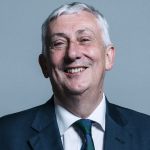
    The speech made by Siobhan Baillie, the Conservative MP for Stroud, in the House of Commons on 7 November 2023.

    It is an honour to second the Loyal Address and I am proud that the Stroud constituency is playing its part in history, given that this is the first state opening by His Majesty the King. The late Queen was an inspiration for everyone across this great nation. For Members of this House, she reminded us that, despite the melodrama of politics, we are all here to serve the public. The King is already following in his mother’s footsteps and making us all proud, although when I told my non-political family that I was going to be talking about the King’s Speech, the response I got was, “Oh, great, that’s a really good film.” [Laughter.]

    Talking about hard acts to follow, my right hon. Friend the Member for Scarborough and Whitby (Sir Robert Goodwill) had me doing a fair few “lols”; I know exactly the areas he is talking about. He has definitely landed that promotion with that speech, in his final furlong. We have many connections, which I will touch on today, but Scarborough Athletic FC will play Stroud’s Forest Green Rovers in the FA cup next week, so we have another rumble to come. I know my right hon. Friend will be missed when he gets his pipe and slippers out to retire next year, but his lovely new grandchildren will keep him very busy.

    I went to school in my right hon. Friend’s constituency. If I could tell the younger me in Scarborough, a young fashionista wearing Spice Girl platforms, Adidas trackie bottoms and a second-hand Umbro jumper—it was a very strong look, although I am grateful that there were no camera phones then—that I would have the privilege of representing the beautiful constituency of Stroud, speaking ahead of the Prime Minister, after being in the same room as the King and the Queen, I think young me would have thought I had lost the plot. What did the Conservative party do for a free school meal kid, who left home at 15 and did not go to university? It gave her a seat at the most famous palace in the world, led by the son of a pharmacist, who is also leading the most diverse Cabinet we have ever known.

    The public service bit of this job motivates me, but that is not what hits the headlines. I am often asked, “How do you survive with everybody backstabbing, doing their own thing and out to get each other?” I just smile and say, “I don’t hang around with the Labour party.” [Interruption.] I love you all really. To be honest, the parliamentary Labour party has absolutely nothing on the Stroud Labour party, whose members have all resigned or fallen out with each other. What I actually say is that to survive in this place you have to find some friends, and then fully expect them to push you into the Thames in the run-up to a reshuffle.

    We also get new friends for very short periods of time, come Select Committee elections. I sort of miss the daily messages from the right hon. Member for Birmingham, Hodge Hill (Liam Byrne). His text messages are less famous than his scary handwritten notes about the economy, but they are still persistent.

    Back to navigating a workplace that is mad as a box of frogs. Early on, I came up with “Operation Green Benches”, whereby I shunned history books and Hansard and researched parliamentary sketches instead, because I love them. Quentin Letts once wrote that the area of the Government Benches where I am now sitting is the “naughty corner”, so that sorted out where I would sit. It sounded fun and he was right.

    I then realised that identifying the loudest colleagues to sit with, and effectively hide behind, could be crucial to avoid the wrath of the Speaker. My right hon. Friend the Member for Elmet and Rothwell (Alec Shelbrooke) seemed to fit that bill. He was described as being “expansively waistcoated” and having “lungs like bagpipes” —perfect. He is not in his place. He is watching at home on the tellybox, but no doubt he is wearing a waistcoat.

    My hon. Friend the Member for North Dorset (Simon Hoare) and my right hon. and learned Friend the Member for South Swindon (Sir Robert Buckland) are often depicted as noisy and boisterous. Those two appeared to come free with “bagpipe lungs”, in a creative BOGOF-style deal that probably should be banned, but this strategy has served me well and given me a slightly dysfunctional, but always hilarious and caring Chamber family whom I love dearly. The other five Gloucestershire MPs are also guiding lights, not least my right hon. Friend the Member for Forest of Dean (Mr Harper), who taught me that consistent rebelling does not hinder one’s career. It’s okay, Chief Whip, I’m not going to follow that lead.

    My kids come to work with me, so they support me in their own chaotic way. Gigi, aged 3, dressed as a witch on Hallowe’en. She merrily skipped up the steps of one house, turned to me and said loudly, “Mummy, this is just like canvassing.” Then the door opened and she went, “Trick or treat!” and I said, “I blame those CCHQ canvassing scripts”—an absolute disaster.

    A myriad of female colleagues naturally support each other, on both sides of the House. I especially congratulate my hon. Friend the Member for Brecon and Radnorshire (Fay Jones) on her wedding at the weekend. She looked absolutely radiant and I wish her and her husband a long, happy life together.

    I am chuffed to be the first MP from Stroud to be asked to second the Loyal Address. Stroud, with its valleys and vale, is gorgeous, so please visit. We have the quirky bit of the Cotswolds with a creative, innovative and industrial spirit throughout. People rightly expect a lot of their public servants in our neck of the woods, so I mainly sit in the House of Commons Library, as others know, dealing with endless amounts of casework and correspondence. I am having some successes: I am steadily chipping away at 20-year-old problems such as Tricorn House and accessibility at Stroud station and at newer challenges, including Rush skatepark and Stroud Maternity’s postnatal beds.

    People take the mick out of me sitting in the Library, but I really like it. It is never dull. My hon. Friend the Member for Totnes (Anthony Mangnall), another denizen of the Library, excitedly texted me one day, saying, “Come see my tortoise.” I have heard about these public schoolboys and how they like to give nicknames to things, so it was not without fear and trepidation that I came into his bit of the Library to see his tortoise. Happily, Mr Speaker, it was actually your tortoise that I got to see; he was eating merrily on the Terrace. May I also say that your decision to add giant cats and other creatures to this already odd place is very welcome?

    I listened carefully to what His Majesty the King had to say earlier. It is customary to be jolly in seconding a speech, but we all know that these are difficult times. To hear that the Government’s focus is on security challenges, both domestic and international, was extremely important. Thereafter, I can get behind all actions to increase economic growth and help our constituents with day-to-day pressures or injustices. By way of an example, Stroud constituents should not be ripped off by rogue property management companies. I commend the campaigning work of local people and my hon. Friends the Members for North East Bedfordshire (Richard Fuller) and for Cities of London and Westminster (Nickie Aiken) to get leasehold reform and protections for homeowners on the agenda.

    The King’s comments about putting people in control of their futures and the focus on town regeneration give me hope for high streets, businesses and fantastic areas such as Berkeley and Stroud towns. With the Prime Minister gripping artificial intelligence and new technology, we are poised and ready to fly with innovation in renewables, hydrogen internal combustion engines, nuclear and many other science, technology, engineering and maths fields.

    The Government’s NHS long-term workforce plan must get lift-off if we are to help Stroud Maternity midwives. I have long campaigned for more apprentices as well, so let us get rid of all barriers in further education. My excellent friend and constituency neighbour, my right hon. and learned Friend the Member for Cheltenham (Alex Chalk), will clearly have a lot to do as Secretary of State for Justice, but I still hope that he will look closely at family law reform to keep cases involving children out of the courts system. Although I was not expecting new childcare announcements, I urge the whole Government to get behind the Chancellor’s investment in families by urgently boosting the early years workforce.

    His Majesty the King said that the Government will lead on action to tackle biodiversity loss. With COP28 approaching, the Prime Minister should get familiar with WWT Slimbridge’s flamingos on our patch. I will take all the help that I can get to have a dedicated domestic wetlands team and strategy in the Department for Environment, Food and Rural Affairs. If he is not persuaded, flamingos are absolutely marvellous for that wonderful Instagram account of his. The King is the WWT president, and wetlands can genuinely help us to reach our net zero targets.

    I said earlier that public service was a privilege and I genuinely meant it. It gives us the chance to change things for everyday families and champion those who deserve and need our support. It also allows the hardest working Prime Minister that I have known—and I have known quite a few recently; even my baby had met three Prime Ministers by the time she was three months old—to show the country, week in, week out, how we can bring long-term change against global headwinds, and I second this Loyal Address.

  • Robert Goodwill – 2023 Speech on the Loyal Address

    Robert Goodwill – 2023 Speech on the Loyal Address

    The speech made by Sir Robert Goodwill, the Conservative MP for Scarborough and Whitby, in the House of Commons on 7 November 2023.

    I beg to move,

    That an humble Address be presented to His Majesty, as follows:

    Most Gracious Sovereign,

    We, Your Majesty’s most dutiful and loyal subjects, the Commons of the United Kingdom of Great Britain and Northern Ireland, in Parliament assembled, beg leave to offer our humble thanks to Your Majesty for the Gracious Speech which Your Majesty has addressed to both Houses of Parliament.

    It is a great honour to move the Humble Address. This is the first time that King Charles has opened a Session as monarch, and today’s pomp and ceremony are tinged with sadness as we remember the late Queen with affection and with gratitude for 70 years of service to our kingdom and Commonwealth. We look forward to another significant reign as the baton is passed to the next generation.

    So, Mr Speaker, it has finally come to this. It is official: I was the future once. The seconder of the Humble Address, my hon. Friend the Member for Stroud (Siobhan Baillie), for whom I am the warm-up act today, is always described as up and coming. I am not really sure what that makes me. I recall the last occasion, when my right hon. Friend the Member for Beverley and Holderness (Graham Stuart) was proposing the Humble Address and we all thought he was on the scrapheap, but less than two months later he was back on the Front Bench attending Cabinet, so you never know—although, the Chief Whip has assured me that there is no danger of that happening to me.

    Scarborough and Whitby has to be the best constituency in the country. Of course, Mr Speaker, it has a head start by being in Yorkshire. They say you should never ask someone if they are from Yorkshire, because if they are, they are bound to mention it in the first five minutes; and if they are not, why humiliate them unnecessarily? I am pleased to see our colleagues in the Scottish National party sporting the white rose of Yorkshire today, although I must point out that Yorkshire Day is 1 August, so not for the first time they have got things wrong.

    The arrival of the railways created Scarborough as our first seaside destination, and we are still Britain’s premier coastal resort and second only to London for the number of visitors. In fact, there could be more if some of the £36 billion recouped from HS2 could be redeployed on dualling the A64. Culturally, we are the home of Sir Alan Ayckbourn and also the birthplace of the McCain oven chip, as well as Plaxton’s coaches and the electric buses that we are increasingly seeing on the streets in places such as Blackpool—that is, if the Labour council there does not order Chinese ones. Whitby is famous for Bram Stoker’s “Dracula”, the Goth weekend and, of course, fish and chips from the famous Magpie restaurant—although I hasten to add that that is not the only place you can get good fish and chips in Whitby.

    Before mass tourism, the area was dotted with ironstone, alum and jet mines. Fast-forward a century or two and we are the biggest mining area in the country, with Anglo American investing £1 million every single day and employing around 1,000 people developing the new polyhalite mine just outside Whitby, with its 23-mile connecting tunnel to Teesside, where Mayor Ben Houchen is delivering so much economic development. The North Yorkshire Moors national park was made famous as the location of Aidensfield in ITV’s “Heartbeat” police drama, and it is home to many important ground-nesting birds on the heather moorland, sustained and managed in traditional ways by generations of farmers and keepers.

    I do not know if you have noticed, Mr Speaker, but we seem to be having a lot of by-elections at the moment—[Hon. Members: “More!”] Not so fast. It was a by-election in Ryedale in 1986 that whetted my appetite for frontline politics. The seat was held with a thumping 16,000 Conservative majority, but it fell to the Liberals with a 19% swing, giving Elizabeth Shields a 5,000-vote margin. While the rest of the Liberal party were going back to their constituencies to prepare for government, I was not going to put up with the situation, so rather naively I put my name forward—along with 200 others—to be the candidate at the subsequent general election.

    I was not selected, but did come second to John Greenway, who, for Members who do not remember or who were not even born—I am looking at the hon. Member for Selby and Ainsty (Keir Mather)—won the seat back only 13 months later with a 10,000 majority. The moral is: don’t count your chickens on the basis of by-election results.

    Not put off, my next move was to try to find a safe Labour seat to fly the flag for Margaret Thatcher. Living in the north-east, there was no shortage of rock-solid Labour citadels—places like Sedgefield, Hartlepool, Bishop Auckland, North West Durham and Redcar—and it was in Redcar that I was selected to challenge the wonderful Mo Mowlam. By then, John Major had taken over from Mrs Thatcher. When that happened, I remember my children asking me, “Daddy, is it really possible that a man can be Prime Minister?” We have now had three women Conservative premiers, assuming the most recent one counts, of course, and we now have the first Prime Minister who represents a Yorkshire seat. Is that a big deal? It certainly is. I must say that my right hon. Friend the Member for Richmond (Yorks) (Rishi Sunak) could not be a better neighbour or better friend to me.

    Labour was well ahead in the polls in the run-up to the 1992 election, and Mo had a car at the count, with the engine running, ready to take her down to sit in Neil Kinnock’s Cabinet as Northern Ireland Secretary, but once again the polls were wrong.

    I stood in North West Leicestershire in the 1997 Blair landslide election, which I will quickly pass over. Suffice it to say that both seats in which I stood, Redcar and North West Leicestershire, eventually returned Conservative Members. I like to think that the Goodwill effect was a slow burn.

    After what I will call a five-year sabbatical in the European Parliament, I was selected to stand for Scarborough and Whitby, a seat that had been consistently blue since 1918 but had been red in both 1997 and 2001. Even though the exit poll said I would lose, we managed to prevail on 5 May 2005 and I entered the House at last. I put our victory down to one deciding factor. On the eve of poll, of all the places that Tony Blair could have chosen for his big election rally, he chose Scarborough. Maybe the Leader of the Opposition could indulge me next time round and come to Scarborough on the eve of the poll to see if he can replicate the Blair effect—or better still, he could have a rally in Sheffield and go the full Kinnock.

    At the following election, I was the victim of a fly-poster campaign. All over town, there were A4 photocopies asking, “What is the difference between Robert Goodwill and a supermarket trolley?” The local newspaper picked up on this and concluded that a supermarket trolley has a mind of its own. I must admit that I have never voted against the Tory Whip, so that might explain it. However, having been here a while, I can now reveal the real answer to the question. The difference between an MP and a supermarket trolley is that there is a physical limit to the amount of food and drink that you can get into a supermarket trolley.

    I certainly welcome the Bills that have been announced. In particular, I would like to see convicted criminals attend their sentencing. Life for some of the most severe crimes must mean life. Fairness is part of what it means to be British, and we must ensure that the dynamic between freeholders and leaseholders is intrinsically fair, in the same way as we should show equal respect for landlords and tenants when they are doing the right thing. I was pleased to see that the ban on live animal exports for slaughter will happen, now we are outside the European Union and have the freedom to do that. Those who are successful in the ballot for private Members’ Bills will not be short of other suggestions, both from the Department for Environment, Food and Rural Affairs and from animal welfare organisations, to carry forward some important measures in that area, which I know is important to the Government. The Bill to tackle unlicensed and uninsured pedicabs, which can rip off unsuspecting tourists, is not before time.

    Today’s focus is on the legislative agenda, but we cannot ignore what is going on outside our borders. The butchery we saw from Hamas on 7 October was evil beyond anything most of us could even imagine—and, yes, BBC, these thugs are terrorists. If those atrocities had been on our soil and against our people, we would have been expected to launch a robust response—Israel has that right, too. Indeed, what else did Hamas expect would happen? The conflict in Ukraine may be off the front pages, but we must not waver in our support for the courageous Ukrainian people.

    Good government is not so much about how many laws we have and how many new laws we announce, but about how we respond to changing and unexpected events such as the pandemic. Hindsight is a wonderful thing, but the Prime Minister’s furlough scheme and help for businesses were the right thing to do. The universal credit system was also robust in the face of unprecedented demand.

    With small boat crossings of the channel down by more than a fifth year on year, we are making progress in curbing the organised criminal gangs engaged in this dangerous, exploitative trade. Furthermore, if we can stand up the Rwanda scheme, it will be a game changer. Our help should be for those most in need, not those most able to pay.

    Finally, I come to a true story from the 2019 winter general election; I heard your strictures about being truthful to the House, Mr Speaker, and this absolutely happened. One of the strongest Labour areas in my patch is a former council estate called Eastfield—we usually go there early in the campaign to get it out of the way—but this time it was different: people were crossing the street to shake my hand. They had voted for Brexit and wanted to get it done, and they were sick of being ignored. When my wife, Maureen, knocked on one door, the lady who answered was effusive in her admiration for Prime Minister Johnson. When I arrived, I asked her why she was so enthusiastic. She said, “Boris is one of us.” When I politely pointed out that he had been to Eton and Oxford, she replied, “You don’t understand. He had a row with his wife and the police came round. That’s what happens on this street all the time.” [Laughter.]

    I commend the Gracious Speech to the House.

  • Lindsay Hoyle – 2023 Statement to MPs at Start of Paliamentary Session

    Lindsay Hoyle – 2023 Statement to MPs at Start of Paliamentary Session

    The statement made by Lindsay Hoyle, the Speaker of the House of Commons, in the House on 7 November 2023.

    The House has directed the Speaker to make a statement at the beginning of each Session about the duties and responsibilities of hon. Members. I begin by reminding hon. Members of their duty to observe the code of conduct agreed by the House and to behave with civility and fairness in all their dealings. The behaviour code applies to Members as it applies to others who visit or work within Parliament, and it provides very clear guidance. Unacceptable behaviour will be dealt with seriously, independently and with effective sanctions.

    The House asserts its privilege of freedom of speech. That privilege is enjoyed by Members of Parliament only in their work in this House; as private individuals, we are equal under the law with those whom we represent. It is there to ensure that our constituents can be represented by us without fear or favour. It is an obligation upon us all to exercise that privilege with responsibility.

    I now come to the accuracy of Members’ contributions, which is more tricky. The Speaker does not have the power to police the accuracy of Members—[Hon. Members: “Shame.”] It may be a shame, but these are the facts. The Speaker does not have the power to police the accuracy of Members’ contributions, including those of Ministers. It is therefore incumbent on Members to be accurate in what they say in this House, but if a Member is inaccurate by mistake, they should correct that mistake as soon as possible.

    Let us now turn to courtesy and temperate language. Members must also be mindful of the impact of what we say, not only on other Members but on those who follow our proceedings, and Members should be heard courteously whatever their views. I draw the House’s attention to the guidance on rules of behaviour and courtesies in the House of Commons. A new version for this Session is now available, clarifying those areas.

    Turning to criticism of Members, in this place we are honourable Members, and the language we use about each other should reflect that. If a Member falls short of the standards expected of us all, there are ways of dealing with that, but not by accusations made as sideswipes during questions or debates. If we fail to treat each other with respect in debate, that diminishes our work, but it also risks raising the temperature of discussions outside this place, particularly on social media, which already too often descend into online abuse against hon. Members.

    It is so important that hon. Members are able to raise matters with me freely. For that reason, I keep such correspondence confidential, including applications for urgent questions. I remind Members that it is equally important that my responses, particularly on matters of privilege, are treated with the same respect. I hope that certain Members are listening.

    I also wish to give some advice about seeking to speak within the Chamber. The Deputy Speakers and I take into account a number of factors when determining whom we call during business that is not balloted, and one factor we consider carefully is how often a Member speaks. In other words, if you have spoken much more than a colleague then, other things being equal, that colleague is more likely to be called—or certainly more likely to be called earlier—especially in the next debate for which you both apply. [Hon. Members: “Poor Jim!”] Don’t worry; I am coming to him. [Laughter.]

    I know that it can be frustrating not to be called in a debate, or to be called very late. That frustration may continue, but putting it on Twitter is not a good way of trying to be called earlier. My response will be that I cannot call you earlier because you have already told the world, so think carefully before using Twitter to try to intimidate the Speaker. Prioritising debates, question times, urgent questions and statements in which you seek to participate is one way of trying to avoid that happening.

    Now that we have started a new Session, the reset button starts everybody’s scores at zero. That even includes Jim Shannon—[Laughter.] I should make it clear that when counting scores, different principles apply to Front Benchers from the three largest parties who are nominated to speak on behalf of their parties. Staff in my office are happy to offer further advice and help.

    Let us come to something very important: security and safety. I want all Members and everyone in the parliamentary community to be able to go about their work safely, both online and here in Westminster. The security of this building and those who work here depends on us all. We have a duty to be vigilant and to assist those whose job it is to maintain this place as a safe place of work. Yes, we are Members of Parliament and we were elected to be here, but remember that those who carry out security duties here are doing so to ensure that we are all safe. Please, try not to abuse them—you should not abuse them—and do not take advantage of your position.

    Before moving to the first business of the new Session, I would like to express my very best wishes to all hon. Members and all those who work in this House. I thank the staff of the House, whether they work in security or elsewhere. They are looking after us, so please realise that they have a job to do. I thank all the catering staff, because without them we could not function properly.

  • Independent Expert Panel – 2023 Findings on the Behaviour and Personal Conduct of Peter Bone

    Independent Expert Panel – 2023 Findings on the Behaviour and Personal Conduct of Peter Bone

    The text of the document issued by the Independent Expert Panel into the behaviour and personal conduct of Peter Bone, published on 16 October 2023.

    Text of report (in .pdf format)

  • Penny Mordaunt – 2023 Statement on the Independent Parliamentary Standards Authority and Laura Cox

    Penny Mordaunt – 2023 Statement on the Independent Parliamentary Standards Authority and Laura Cox

    The statement made by Penny Mordaunt, the Leader of the House of Commons, in the House on 17 July 2023.

    I beg to move,

    That an humble Address be presented to His Majesty, praying that His Majesty will appoint Dame Laura Cox to the office of ordinary member of the Independent Parliamentary Standards Authority with effect from 1 August 2023 for the period ending on 31 July 2028.

    The Speaker’s Committee for the Independent Parliamentary Standards Authority has produced a report—its first report of 2023—in relation to the motion. I have no doubt that Members will have studied that report closely and will know of Dame Laura’s background. I note that the recruitment panel considered Dame Laura an eminently appointable candidate.

    IPSA is quite rightly independent of Parliament and Government, but as all Members will know and understand, it has an incredibly important role in regulating and administering the business costs of hon. Members and deciding their pay and pensions. I hope that the House will support this appointment and wish Dame Laura well in this important role, and I commend the motion to the House.

  • Wendy Chamberlain – 2023 Speech on the Privileges Committee Special Report

    Wendy Chamberlain – 2023 Speech on the Privileges Committee Special Report

    The speech made by Wendy Chamberlain, the Liberal Democrat MP for North East Fife, in the House of Commons on 10 July 2023.

    The initial Privileges Committee investigation into the former Prime Minister, the then Member for Uxbridge and South Ruislip, has set a clear and fundamental precedent. If a Prime Minister deliberately misleads this House and, by extension, the public, there will be consequences. I put on record my thanks to the hon. and right hon. Members who served on the Privileges Committee. Considering the weighty matter of whether a former Prime Minister misled the House was clearly a significant task, and it is regrettable that, as the report outlines, the actions of some hon. and right hon. Members made the task harder for Members serving on the Committee. As we have heard, that was not without personal consequences for those Members.

    As the Leader of the House pointed out in her opening remarks, there are ways and means of raising issues of privilege. We should remember that the investigation had its genesis in a motion that was passed in this House without Division; not a single Member named in the report voted against the motion. Not only is the Committee cross party, but it has a Conservative majority. It is worth pointing out that there is no Liberal Democrat on the Committee, but I accept as an individual MP that the current process involves a cross-party group of MPs, and they are trusted by this House to investigate with impartiality and to make their findings available for consideration by the House. Those recommendations are then to be approved or rejected by this House. Had Boris Johnson been suspended from Parliament for more than 10 days and chosen to remain an MP, it would have been up to the people of Uxbridge to determine whether they wanted to re-elect him as their MP. Members from all parts of the House must make it clear that we will not tolerate attempts to undermine or attack the vitally important work of this Committee.

    We were promised integrity, accountability and professionalism at all levels of government, and I have to note, like the shadow Leader of the House, the hon. Member for Bristol West (Thangam Debbonaire), the current Prime Minister’s steadfast refusal to declare where he stands on this issue, let alone to engage with the substantive content of this report and the previous one. That is an abdication of his duty not only as Prime Minister but as an individual MP. It is unfortunate.

    The hon. Member for Wallasey (Dame Angela Eagle) said she was pleased that the report was not amended, but there is a sign of weakness from the Government, where they have said “no, thank you” to the offer in the Privileges Committee’s report. It stated:

    “It will be for the House to consider what further action, if any, to take in respect of Members of the House referred to in this special report.”

    I would go as far as to suggest that had the Government taken the opportunity to make some process clear following today’s report, they might have seen off some of the accusations of lack of due process that we have heard today from Members named in the report and those supporting them. Today should have served as an opportunity to set another precedent and to make it clear that there are consequences for those who seek to obstruct the important work of a cross-party, independent Committee. It is a shame that the Government have not done so. That is why I tabled my amendment.

    I accept that my amendment has not been selected, but the clear route forward would have been for the Committee to consider whether contempt had been committed and to return a verdict and, if necessary, a sanction. As the right hon. Member for Witham (Priti Patel) said, that could have given her an opportunity to make her case in relation to what has been reported. The same process was used for the Committee’s report into the former Prime Minister, Mr Johnson. I also point out that today’s debate does not shut the window on that opportunity. The Government could bring forward such a motion if they wished at any future point; they could bring it forward tomorrow, and I hope they do so.

    This place is still suffering from the Owen Paterson decision, because that was the point where the convention of this House to accept Privileges Committee and Standards Committee reports on the nod was broken by the Government. Now is the time for a reset.

  • Priti Patel – 2023 Speech on the Privileges Committee Special Report

    Priti Patel – 2023 Speech on the Privileges Committee Special Report

    The speech made by Priti Patel, the Conservative MP for Witham, in the House of Commons on 10 July 2023.

    I have found the debate thus far more than interesting for a number of reasons. A great deal has been said and commented upon in terms of parliamentary procedure and respect for one another, both of which I absolutely support, but also in terms of some of the selective quotes in the report, which have been echoed today, and how they are ascribed to certain Members who have been named in the report. Some of it has been taken out of context, and I will reflect on that point. I do not think that it is healthy for this wonderful Parliament to end up making generalised assumptions and assertions about individuals based on the annex to the report. That is why I wanted to speak today.

    Clearly, I am named in the annex and referenced in paragraph 14. As someone who has had claims made about their actions in the report, and who has been named and had judgments passed on their conduct both by the Committee and so far in the debate—totally inaccurate judgments, if I may say so—I think it is right that I get, at least, a right of reply. I am incredibly respectful of process, not just because I have served in Government, but because being a parliamentarian is the greatest honour we all have, and upholding our traditions, our democracy and parliamentary standards is absolutely right. However, although I appreciate that right hon. and hon. Members may disagree with me, including the Chair of the Committee, who is entitled to do so, I feel that the assertions and claims made in this special report are wrong and cannot be substantiated by the so-called evidence that has been produced and published.

    Sir Desmond Swayne

    Did my right hon. Friend collude in any way with any of the persons listed in the report, or with anyone else, to place pressure on the Committee?

    Priti Patel

    That comes back to the evidence and the point that I was about to make. The answer is: absolutely not. I just do not think it appropriate that, unless the evidence is provided and published, there is an absence of process by the Committee. I do not know if the annex is an exhaustive list of Members of this House—the Chair of the Committee is very welcome to respond to my comments—but it seems quite selective and exclusive. That is why it is important to have this debate and discussion.

    Allan Dorans

    On 16 March 2023, during an interview on GB News, the right hon. Lady said:

    “the lack of accountability…I think there is a culture of collusion quite frankly involved here.”

    Can I have some evidence of that please?

    Priti Patel

    I will come to that particular quote, so the hon. Gentleman will hear what I have to say then.

    I come back to my point on whether the annex is conclusive. Should other individuals in the House have been included in it? On what basis were decisions made? At the outset I put it clearly on the record that it is wrong of Members to seek to place undue and improper pressure on any Members investigating matters at a Committee level. There are processes in place, and it is right that they should be respected. I believe that there is a case for looking at how the processes of this Committee can be clarified, and how the members of that Committee and the persons who are subject to inquiries are protected. From my experience of the handling of all this, I can say that to be named in a report having had no notification—no correspondence or anything of that nature—that I was being investigated for prior conduct—

    Thangam Debbonaire indicated dissent.

    Priti Patel

    The shadow Leader of the House shakes her head, but I just do not think that that is acceptable. We have heard great speeches on having respect for one another, and I agree completely. We must treat each other with civility: if we intend to name another Member in the Chamber, we let them know beforehand. That is an important part of the process.

    We have heard about lobbying and collusion. As one who has served in government, as Home Secretary, I have been involved in all sorts of quasi-judicial policy and decision making on high-profile and complex issues, day in, day out, much of which was the subject of quite active lobbying by Opposition Members. We live in a democracy, and we should be able to have these discussions. All Ministers know that orchestrated campaigns and lobbying are absolutely day-to-day things that go on; that is part of a democracy—the values and safeguards of free speech and freedom of expression. A democracy recognises the value and the importance of challenging and questioning processes and decision making. That is one reason why we are all here as elected Members of Parliament: we do this on behalf of our country and our constituents, and because we have a democratic responsibility to do it.

    In doing that, we raise uncomfortable questions all the time. That is what we do, day in, day out. To silence and cancel out the comments and voices of individuals carries great risk, and I am very worried about that. It causes me grave concern. That is why the decision on the motion must be taken carefully.

    Lloyd Russell-Moyle (Brighton, Kemptown) (Lab/Co-op)

    The right hon. Lady is making a good case that we need to treat each other with respect. Is claiming that a Committee has been involved in collusion, as she did on GB News, part of that respect?

    Priti Patel indicated dissent.

    Lloyd Russell-Moyle

    Well, it is what is written here. Does the right hon. Lady deny that she said it?

    Priti Patel

    I thank the hon. Gentleman for his intervention.

    It is important that there is due process, and it seems to me that the report does not deliver the guidance and the processes that would be helpful to the House when dealing with matters that have been considered by the Privileges Committee. That is because the report is not concerned with establishing or recommending new processes and protections, and we should not sit here pretending that it is. This report has been used by the Committee to criticise and censure individuals. The House should reflect on that in the light of my comments.

    The House will set, in my view, a dangerous precedent if it approves a report that censures and passes judgment on Members of the House without granting due process—fair due process, I should add—to the Members it makes allegations about.

    Andy Carter (Warrington South) (Con)

    My right hon. Friend knows that I was a member of the Committee. Along with every other member of the Committee, I was clear that there is no censure in the report. Will she clarify what she means by censure? That was certainly not what the Committee intended.

    Priti Patel

    By that, I mean cancelling out views and opinions. That is totally different—

    Dame Angela Eagle indicated dissent.

    Priti Patel

    Would the hon. Lady like to intervene? She is very welcome to. She has spoken. With respect, she also asked for civility in the Chamber and in the way in which we engage with one another. Everyone has strong opinions and, with that, it is right and respectful that we listen to each other.

    Andy Carter rose—

    Dame Angela Eagle

    Will the right hon. Lady give way?

    Priti Patel

    I will give way to my hon. Friend first and then I will come to the hon. Lady.

    Andy Carter

    I think every member of the Committee firmly believes that every Member of Parliament has the right to share their opinions in this House, but the 2019 House of Commons code for Members is very clear: Members must not lobby the Committee, or the Commissioner in a manner calculated to influence their consideration of issues related to conduct. The current Members’ code of conduct does not mention that the Privileges Committee should be included in that. This report suggests that that should be amended so that Members serving on the Privileges Committee are also afforded those rights. I do not want any Member of Parliament to be prevented from saying what they believe once a report is published, but not during the process of producing a report.

    Priti Patel

    With respect, I have heard what my hon. Friend has had to say, but if he had listened to what I have had to say, he would know that I am worried that this will set a dangerous precedent.

    Dame Angela Eagle

    I was going to make a very similar point to the one that the hon. Member for Warrington South (Andy Carter) has just made. Does the right hon. Member agree that this is not about criticising a report once it is published? It is about not trying to nobble it while it is going on.

    Priti Patel

    With all respect to the hon. Lady, in her remarks today, she used a range of phrases, which she scatter-gunned around the Chamber, in an accusatory way about what individuals have said or may not have said. She cannot apply that to all of us, so I think she should have been careful in some of the phrases that she used.

    If I may, I will comment further about my concerns with the process. My hon. Friend the Member for Great Grimsby (Lia Nici) touched on an important point, about which Mr Speaker is also very clear—he is a strong proponent of the concept that important matters should come to the House first, before they are published in the media. As she pointed out regarding the publication of Committee reports, paragraphs 15.10 and 38.56 of “Erskine May” refer to the premature publication and disclosure of Committee proceedings as being in contempt. Cakeism is a phrase that has already been used this afternoon by my right hon. Friend the Member for North East Somerset (Sir Jacob Rees-Mogg). We cannot have it both ways.

    I recognise the Committee’s frustrations that the report was leaked, and I know that comments have been made when the Government did not come to the House before announcing things in the media. However, we have to be concerned that details contained in the special report were published by a particular newspaper at 7.20 pm on Wednesday 28 June, some 13 hours and 40 minutes before the special report was published, and before people named in its annex were informed.

    Frankly, given how this has all been conducted—individuals were not contacted in advance and there was no right of reply—is the House not concerned that that newspaper, The Guardian, knew of the report’s contents before the rest of us did? Surely that should be a matter for investigation as well. If the Committee is so concerned with cases of contempt of the House, investigating how the report or its contents were leaked to The Guardian before it was published is something else that should feature in due process.

    Would any members of the Committee or its Chair like to explain why that newspaper knew in advance, before the rest of us? What action is going to be taken? We have already heard talk about restoring parliamentary democracy and integrity to Parliament. Again, that would give confidence to Members that due process was being followed, but it would also give confidence to the public, who also expect standards across the board to be upheld.

    We have a report from the Committee that names Members and peers, but it did not inform us in advance. We have discussed already the House’s rules on behaviour and courtesies. I personally think that Members should be given notice; that is respectful. During my time serving on the Front Bench, or on the Back Benches, as I am now, I hope that I have never offended a Member of this House by being so discourteous as to name them without informing them in advance. That is a good standard that we should all live up to.

    Not only has there been a lack of courtesy shown to Members named in the report, but the absence of due process concerns me a lot. Until this was published, I and colleagues had no idea that we were being investigated, or that there were references to us as individuals in the annex in relation to the inquiry into Mr Johnson.

    Mr Toby Perkins (Chesterfield) (Lab)

    Will the right hon. Lady give way?

    Priti Patel

    I did not see the Member appear at the start, but I will give way.

    Mr Perkins

    I have been here for all of the right hon. Lady’s speech and, over the 14 minutes of it,, I have been desperately hoping she was going to get to the point she really wants to raise. She does not disagree that she said the things that are in the report, but she thinks it is discourteous that she was not told in advance. She thinks other people may have said things that were missed out of the report. What is actually the main point of what, over the last 14 minutes, she has been saying?

    Priti Patel

    If the hon. Gentleman had the courtesy of listening, the point is actually due process. As he would know, if he had listened to my opening remarks, I also said that I was sure not everyone here would agree with what I was about to say, but affording the courtesy of debate in this House was exactly why we were here. If he does not want to hear what I am saying, he might actually want to leave the Chamber, rather than carrying on in this way. It is important in the debate to have a right of reply. Again, I appreciate that he and other Members will disagree with this, but I think it is right that the basics should be put on the public record. The country is watching. Well, some of the country is watching, if they are not watching Wimbledon right now, but this is an insight into how we engage in our business, and what right of reply Members do or do not have. Quite frankly, this will affect all Members; it is not just about supporting those today, because there will be others in the future and that is important.

    Some of the language that has been used is important as well. I personally think that it simply cannot be right or fair for a Committee to make claims or assertions without giving notice in advance, or the chance to at least respond to allegations. I am going to go as far as to say, if I may, that I found some of this deeply secretive and I just do not think that Select Committees operate in this way; they really do not. I have had the great privilege of serving on a number of Select Committees and I think the way in which we conduct ourselves is very important.

    I notice that the Leader of the House said that this is deeply unusual. It is all deeply unusual, and not just because of a lack of process. My office, supported by the House of Commons Library, undertook some research to see if there was any precedent for MPs being named, and effectively or potentially sanctioned or censured in a report by a Committee. [Interruption.] No, I am giving an example. I hear what the hon. Member for Wallasey (Dame Angela Eagle) says, but I am just giving an example—colleagues might learn something from this, too. Even the Library said that it could not think of any Committee on Standards, Privileges Committee, or former Committees on Standards recommending anything of this nature without the opportunity for those named to make their case. Today is a chance at least to give that a bit of an airing and to make the case as well.

    I will conclude my remarks. Again, in the light of what I have said thus far, there are so many issues here that I think will have wide implications for Parliament, if I may say so, and for Members of Parliament. I have touched on process. The evidence issue—the lack of evidence that the Committee has presented—has been touched on as well. Paragraph 14 makes serious allegations that I and other Members were part of a co-ordinated campaign of interfering with the work of the Privileges Committee, so one would expect those claims to be backed up with some serious volumes of evidence, but they are not. While the Committee may obviously disagree with Members, the fact that people can now freely express views about the inquiry is obviously part of living in a healthy democracy, with free speech and freedom of expression. However, the Committee has not explained in this report how the expression of an opinion or a view that some people shared could in itself undermine the work of the Committee or could be co-ordinated.

    The hon. Member for Ayr, Carrick and Cumnock (Allan Dorans), a member of the Committee, touched on my remarks quoted in the annex. Those remarks came from an interview on Budget day that covered a range of issues: the economy, taxation, the Budget, migration—lively issues that I think all Members in the House like to discuss. We also discussed Mr Johnson, and the activities of a Mrs Sue Gray and the Leader of the Opposition. It is not at all clear from the Committee’s report why it believes that a reference, in a lengthy interview covering multiple issues, to questions over transparency and accountability constitutes interference in its work, could be disturbing, or could be part of a co-ordinated campaign. Those are areas on which we should get clarity.

    So far, the suggestions have been one-way; we have been told that we should go to the Committee if there are issues, but the Committee could have raised any issues with us. The Committee could have done that if it had any concern about comments I made. I am not someone who hides behind the sofa in Parliament; many colleagues will recognise that. I would welcome lively engagement, as I am sure other Members referenced in the annex would have done. I certainly would have welcomed the Committee contacting and engaging with me in good time. That is quite important. Frankly, I think the public will still reach their own conclusions about all this.

    I appreciate that I have detained the House for a lengthy period—I thank hon. Members for listening—but given the tone of the accusations made, the contents of the annex, and the lack of a prior opportunity to respond, it is important that we have this discussion and that colleagues listen. I hope that the Committee will reflect on comments made about process. I really do not think that there is evidence to substantiate the claims that have been made and, if the motion is agreed to, there will be the ongoing matter for the House of what that means for MPs.

    I might be boring for Britain right now, but I believe in transparency, accountability and due process, particularly having sat on the Front Bench; today we have also heard about holding Ministers to account. I believe in all that. Woe betide the Minister who misleads Parliament. Sometimes there is not enough scrutiny of the details of what Ministers say, and not enough challenges. That is why it is important that we have this debate about accountability, transparency, due process, and sometimes correcting the record. I believe, as do other hon. and right hon. Members, in transparency, freedom of speech and Members facing fair and due process when allegations are made about their actions. That should be dealt with properly. I urge Members to think about the impact that the report will have on our parliamentary democracy and our freedoms. I fundamentally believe that, without freedom of speech, there can be no democracy; it is something that we have to preserve, stand up for and respect in this House.

  • Angela Eagle – 2023 Speech on the Privileges Committee Special Report

    Angela Eagle – 2023 Speech on the Privileges Committee Special Report

    The speech made by Angela Eagle, the Labour MP for Wallasey, in the House of Commons on 10 July 2023.

    Thank you, Mr Deputy Speaker—Madam Deputy Speaker, sorry. I think I got my pronouns mixed up. I rise to support the motion before us today. I am glad that there are no amendments to it, because it is the motion that the Privileges Committee asked to be put before the House in its special report. It is very important that

    “this House notes with approval the Special Report”.

    For us to do that will give us the best chance as a democratic House to put what has been an unprecedented period behind us. It is not usual, as we all know, for a Prime Minister to agree that a Privileges Committee report into what he said on the Floor of this House be sent to the Privileges Committee, as happened in April 2022, with the unanimous support of the House. It is not usual for a Privileges Committee report to involve such high stakes as the one that the members of the Privileges Committee—many of them are sitting here listening to this debate—had to cope with. We have never in my experience—I am not sure that it is even in the history books—had a Privileges Committee of any Parliament put in quite that position. It is therefore to the credit of this House—

    Craig Mackinlay

    Just while we are discussing semantics —I am referring to the interaction that we had on what “impugn” might mean—the right hon. and learned Member for Camberwell and Peckham (Ms Harman) mentioned the words, “with approval”. My interpretation of “with approval” is that every word in this motion is absolute and correct. I have to say that, having heard the evidence, on the first occasion that my hon. Friend the Member for Workington (Mark Jenkinson) has been able to speak as part of this evidence, he raised doubts about what has been published as supposedly coming from him. Am I getting this wrong? My interpretation of approval is that it is all absolutely correct. If that is the case, I am afraid that I have doubts on that front.

    Dame Angela Eagle

    I am sure the hon. Gentleman will do what he thinks is right—I think we can all guess what that will be—when we vote. I note that the way in which this House has traditionally worked is that there are Standing Orders and there is Erskine May, but there are also unwritten assurances about how this House should behave when these issues are before it. Certainly, the Leader of the House was correct to ask, rather philosophically, at the beginning of this debate what had changed to cause the emergence of behaviour that I would not have expected to see when I first came into this House 31 years ago. I would not have expected to see people’s integrity being impugned in quite the way that it has been while they were doing duties that this House had unanimously asked them to do. But, of course, social media did not exist when I first came into this House, and neither did GB News. Before things get any more heated, we need to stop and think about the consequences of allowing the behaviour that we have seen in the past few months, as the Privileges Committee has done its report, to continue.

    It is to the credit of this House that the Privileges Committee’s original report—its fifth report—was debated and carried by such a majority. That puts a line in the sand. It enables us to begin to rebuild the reputation of this House and to use the Privileges Committee to ensure that this House can police itself on the Floor in the Chamber and bring Ministers to account by insisting that they tell the truth.

    The special report, again as the Leader of the House pointed out, is unprecedented, because people have never behaved this way in the past when a Privileges Committee was attempting to carry out the duty that was given to it by a motion that was passed unanimously by the House. It is important, given that similar rules apply to the Committee on Standards, that, in what I hope will be the rare occasions in the future when the Privileges Committee may have to meet to do its job and be convened, it will be allowed to do so.

    As I said to my right hon. and learned Friend the Member for Camberwell and Peckham (Ms Harman), if we cannot restore the respect that the Privileges Committee must have to do its job in future, we will have to create an outside body to do it. That would be a very profound constitutional change, with far greater implications for the freedom of people to speak in this House than simply abiding by decency, courtesy and proper rules when the Privileges Committee is meeting.

    Justin Madders (Ellesmere Port and Neston) (Lab)

    Why on earth would outside individuals want to serve on such a body, if they are to be subjected to the kinds of public abuse that we have seen in this case?

    Dame Angela Eagle

    That is the problem, and I think the special report has done us a service by bringing it to the attention of this House. It is something we have to think about as we consider the motion.

    We have been living through febrile times. We have seen two Members of this House assassinated in the past few years while doing their jobs. There is a lot of anger and controversy out there, wound up and heated up by the way social media works. I think everybody in this House, especially those who have been subjected to some of those outside pressures—there will be many Members of this House who have—needs to think very carefully about how they conduct themselves and the kinds of words they use.

    If there is no respect in this House for the Privileges Committee and the things that we try to do to maintain good behaviour and decency in this House, there will be even less respect outside, and that will damage our ability to ensure that our democracy works properly, because without truth there is no democracy. Although this looks like quite a small report, it is a very significant one, and it is important that Members on all sides of the House, whatever faction they are in, consider seriously the implications of not voting for the motion tonight.

    I have to say that, now that a little of the heat has gone out of the situation, I would have liked to see the Members mentioned in the report have the good grace to stand up and apologise to the House for some of the language they have used, such as kangaroo courts, marsupials and comments about “calibre, malice and prejudice”. The House voted for the members of the Committee to be tasked with a very difficult job. Nobody in their right mind would want to find themselves in that position. It is not a nice way to spend parliamentary time—much less attending 30 meetings, under enormous stress and with the outside social media pressures coming in at them from all angles.

    As someone who stood against the leader of my party, I can tell hon. Members that I have had some experience of how that works out. I have also had experience of how what one does in here can translate out there into threatening behaviour and difficulties—[Hon. Members: “We all have!”] Yes, and I said that earlier in my speech, if Conservative Members were listening.

    Therefore, no matter how high the stakes, it is extremely important that when Members comment, they do so within the Standing Orders and the rules of this House, and that they save comments about witch-hunts, kangaroo courts, malice and the rest of it for when the Committee has reported. One unique thing about this House is that while a report is being compiled and evidence is being collected, that Committee cannot respond to what is being put to it in a 24-hour news cycle. It must wait and let its report do the talking.

    I suspect that those Members who tried to blacken the names of those compiling the report, and unleash that kind of process against them, knew exactly what they were doing and knew exactly the pressure they were trying to bring to bear. It is absolutely shameful that some Members named in the report indulged in that kind of behaviour, including two ex-Cabinet Ministers, members of the Privy Council and an ex-Leader of the House—the right hon. Member for North East Somerset —who knows better, and who knows that he knows better than to behave in that way.

    When I came to this House, I never thought that I would see such behaviour. It is to the great detriment of Conservative Members that we have seen such behaviour. I ask them, one last time, to have the grace to get up during the debate and apologise to the House for the way in which they behaved prior to the Privileges Committee publishing its report, and give us an assurance that they will not do it again.

  • Harriet Harman – 2023 Speech on the Privileges Committee Special Report

    Harriet Harman – 2023 Speech on the Privileges Committee Special Report

    The speech made by Harriet Harman, the Labour MP for Camberwell and Peckham, in the House of Commons on 10 July 2023.

    I thank the Leader of the House for tabling the motion, which arises out of the special report of the Privileges Committee.

    When it approved with an emphatic majority the report of our inquiry into Boris Johnson, the House made it clear beyond doubt that honesty in our Parliament matters, that Ministers are required to be truthful and that there will be consequences for any Minister who is not. The House was endorsing the outcome of the Committee that it had mandated to undertake that inquiry.

    The present motion asks the House to give its approval to our special report, because we want to make sure, if the House ever again mandates the Privileges Committee to undertake an inquiry into a Member, that there will be Members who are willing to serve on the Committee, and that the Committee and its processes are protected while an inquiry is under way so that the Committee is able to undertake its work in the way that the House wants. The motion makes it clear that when a Privileges Committee inquiry is ongoing, Members should not lobby, intimidate or attack the integrity of the Committee. They should not try to influence the outcome of the inquiry or undermine the standing of the Committee, because that undermines the proceedings of the House.

    No Member needs to feel disempowered by this. On the contrary, Members own the entire process. Any Member can object to a Member being appointed to the Privileges Committee. Any Member can speak and vote against any reference to the Privileges Committee or the terms of any reference. Any Member can give evidence to the Committee. Any Member can debate and vote on the report of any inquiry.

    This is not a process imposed on the House by the Privileges Committee. The opposite is the case: it is the House that imposes this responsibility on the Privileges Committee. It is the House that chooses the members of the Committee; it is the House that decides on an inquiry and its terms of reference; and it is the House, by its Standing Orders and precedents, that lays down the processes that will apply.

    Our special report makes it clear that it is not acceptable for Members, fearing an outcome that they do not want, to level criticisms at the Committee so that in the event that the conclusion is the one that they do not want, they will have undermined the inquiry’s outcome by undermining confidence in the Committee.

    Mark Jenkinson (Workington) (Con)

    As the right hon. and learned Lady knows from our exchange of letters in recent days, I was named in the annex to the report for a tweet that did not refer to the Committee. The context of the Twitter thread is clear. She talks about hon. Members being able to give evidence to the Committee, but we had no prior notification that we might be named. I was alerted to my presence in the report by the press. I just wonder how she considers that Members like me might be able to seek redress in such circumstances.

    Ms Harman

    The hon. Gentleman named himself on Twitter by calling the Committee a “witch hunt”, and that was in the public domain. The thread ahead of his tweet was quite clear, so we simply put it in our report. We took what was in the public domain and put it in our report.

    Our special report makes it clear that it is not acceptable for a Member of this House who does not want a particular outcome to seek, by pressure or lobbying, to influence the Committee’s decision.

    Mark Jenkinson

    On a point of order, Madam Deputy Speaker. I fear that the right hon. and learned Lady may have just inadvertently misled the House by suggesting that I called the Committee a “witch hunt”. There was no reference to the Committee, and the four-part Twitter thread is quite clear that it was not in relation to the Committee or its investigations. I wonder how I might seek redress on this matter.

    Madam Deputy Speaker (Dame Rosie Winterton)

    I thank the hon. Gentleman for that point of order. I do not know whether he was here at the beginning but, if he was and if he wishes to speak later, he can catch my eye. He has already made his point, and I think the right hon. and learned Member is addressing that point.

    Ms Harman

    Thank you, Madam Deputy Speaker. If the hon. Member for Workington (Mark Jenkinson) is saying that he does not believe the Privileges Committee’s inquiry into Boris Johnson was a witch hunt, I warmly welcome the fact that he has said so. I thank him for putting it on the record that he does not believe our inquiry was a witch hunt.

    Michael Fabricant

    Does the right hon. and learned Lady not think it would have been courteous of the Committee to warn those listed in the annex that they were going to be listed? If a mistake had been made, it would have given those people an opportunity to make their point before the Committee’s report was published. Would that not have been fairer?

    Ms Harman

    The points and issues that we included in the annex to our report were put in the public domain on Twitter. Indeed, the hon. Gentleman himself put into the public domain that, in relation to the Committee, there was a question of “malice and prejudice”. He felt it was important to put that on to the public record.

    Michael Fabricant

    Will the right hon. and learned Lady give way?

    Ms Harman

    I think the hon. Gentleman will be making a speech.

    Michael Fabricant

    On a point of order, Madam Deputy Speaker. It is totally—

    Madam Deputy Speaker (Dame Rosie Winterton)

    Order. I have not called the hon. Gentleman to make a point of order. If the right hon. and learned Member does not want to give way, which is her right, it is detrimental to the debate if Members who cannot get their own way then make a point of order.

    Michael Fabricant

    But I am making a point of order.

    Madam Deputy Speaker

    Make your point of order.

    Michael Fabricant

    My point of order is that it is also discourteous to partly quote something, actually. And what it clearly—

    Madam Deputy Speaker

    Order. The hon. Gentleman must resume his seat. That is not a point of order. He is addressing it directly to the right hon. and learned Lady, not to me. No more of that, thank you.

    Ms Harman

    Thank you, Madam Deputy Speaker. If the hon. Member for Lichfield (Michael Fabricant) wants to say that he does not believe the Committee was motivated by malice and prejudice, we would warmly welcome that correction.

    Our special report makes it clear that it is not acceptable for a Member of this House who does not want a particular outcome to seek, by pressure or lobbying, to influence the Committee’s decision. The House, by supporting this motion tonight, will be making it clear that, in such an inquiry, the Committee’s responsibility is to gather the evidence, and that it is the evidence that must prevail. That is the only basis on which a decision should be made. Members must not try to wreck the process by pressing Committee members to resign.

    If members of the Committee are not prepared to undertake such inquiries, the House would have no protection from those who mislead it. I have nothing but admiration for my colleagues on the Privileges Committee, particularly the Conservative Members. Despite the pressure they were subjected to, they were unflinching. They came to each of our more than 30 meetings and persisted to the conclusion of the inquiry with a complete and total focus, which was a credit to the House. They gathered the evidence, analysed it and based their decision on it, exactly in the way that the House requires them to. That was then put to the House.

    By supporting this motion tonight, the House will be making it clear that when it appoints members to the Committee, those members will have the support of the House to carry out their work. They are doing a worthy thing by serving on the Privileges Committee.

    Brendan Clarke-Smith (Bassetlaw) (Con)

    I appreciate what a difficult job the Committee has—I fully respect that—and, of course, the original Chair did recuse himself from the inquiry. When the original report was put before the House, the right hon. and learned Lady stated that she had received assurances from the Government that she would remain in that position, but she did not elaborate on that at the time. Will she therefore use today as an opportunity to inform the House as to what assurances she had been given and by whom?

    Ms Harman

    Is the hon. Gentleman, in what he has said, withdrawing what he said on Twitter, which was that the Committee was a

    “witch-hunt which would put a banana republic to shame”?

    That is what he actually said.

    Committee members are entitled to the support of the House, because it is the House that has asked them to undertake this work.

    Dame Andrea Leadsom (South Northamptonshire) (Con)

    As a former Leader of the House, and having both spoken for and voted for the report by the Privileges Committee, which the House did commission, I am afraid that I do not accept the premise that the right hon. and learned Lady, for whom I have a great deal of time and respect, is putting forward today, which is that the Committee, as a result of being asked by the House to look into the behaviour by one of its Members, should therefore be absolutely immune from any form of free speech whatsoever. I cannot agree with her on that basis and will not be supporting the Committee’s report today.

    Ms Harman

    Perhaps I may reiterate that we are not saying that the Committee is immune. We are saying that it is evident that any Member of the House can challenge the appointment to the Committee of any member of the Committee, which frequently happens; that any Member of the House can challenge a reference to the Privileges Committee, and that, too, does happen; and that Members can challenge the terms of reference to the Committee and raise concerns about the procedure. But what Members cannot do is say that something is a witch hunt and a kangaroo court, and that there is collusion; impugn the integrity of the individual members of the Committee; and also undermine the standing of the Committee, because that is undermining the proceedings of the House. If hon. Members are not sure what “impugn” means, they can look at “Erskine May”, which goes into it in great detail—

    Sir Jeremy Wright (Kenilworth and Southam) (Con)

    I am sorry that the right hon. and learned Lady is being continually interrupted, but may I ask her for some clarity on the point she is making? She has mentioned impugning the integrity of members of the Committee in part of the motion, with which I have considerable sympathy. I just want to understand this point. I do not suggest that this has happened here or at any time in the past, but she will recognise that it is conceivable that it would be right to impugn the integrity of a member of the Committee, or of more than one of its members, if there were evidence to do so. May I just be clear that what this motion should be taken to mean is that someone should not impugn the integrity of members of the Committee while an inquiry is ongoing? If there is evidence to do so later, there are mechanisms by which we can do so. We should be clear, should we not, that what this motion means is that while an inquiry is ongoing, it is wrong to impugn the integrity of any member of the Committee?

    Ms Harman

    That is absolutely right, and that is so that the Committee can do its business properly, as mandated by the House, as is the case with the Standards Committee. We cannot have a situation where Members are reluctant to serve on the Committee because, as soon as they undertake an inquiry, it is open season on them. We cannot have a situation where the outcome is based on pressure and lobbying, rather than the gathering and consideration of the evidence.

    The motion does not create any new categories of contempt, nor does it extend what can be regarded as contempt. It simply makes it explicit that the focused, time-limited protection that the House has already made explicit for standards cases is the same for privilege cases.

    Dame Angela Eagle

    Does my right hon. and learned Friend agree that if the motion were not to go through, and it was to be open season on all future members of the Privileges Committee during inquiries, the only recourse for this House to ensure that it was not lied to in future would be to have an outside system to assess that, which would be constitutionally novel and—I think—highly dangerous?

    Ms Harman

    My hon. Friend makes an extremely important point. If this work of the Privileges Committee is to be done in-house by Members of this House, this House must support them in that work. If the House is not prepared to do that, and it is open season on Members who are put forward for the Committee, we would very quickly find ourselves with an independent, outside process. Most Members of the House want us to keep the process in-house, but to do that we must all respect it.

    Lia Nici

    The right hon. and learned Lady talks about collusion and lobbying. Can she explain how it was that Guardian reporters were briefed before Privileges Committee reports were published for us in this place, and, if she knows who had sight of those reports, who was doing the collusion with those journalists?

    Ms Harman

    Again, this is very unfortunate. I say to the hon. Lady that hon. Members are given a task to do on behalf of the House. They do it to the best of their ability, with integrity, and they should be supported in doing that. Although the hon. Lady was very much against the outcome, which came about on the basis of the evidence, it is not acceptable then to criticise the process, except through the channels and in the ways that I have set out.

    Our special report draws upon “Erskine May”. I invite hon. and right hon. Members to read paragraphs 15.14 and 15.16 of “Erskine May”, which make it crystal clear that it is not acceptable for a Member of this House to seek, by lobbying or arousing public hostility, to influence the decision of members of the Committee, or to undermine the Committee’s credibility and authority. All this is about protecting the House from being misled, by ensuring that there is a strong and fair Committee that will, on behalf of the House, undertake an inquiry, and that there are Members prepared to serve on the Committee and able to do that work without interference.

    Mr Rob Roberts (Delyn) (Ind)

    We heard his name mentioned earlier, in respect of the previous report, but will the right hon. and learned Lady confirm that Sir Ernest Ryder was still in place for the preparation of this special report, that he agreed with the findings of the Committee, and that he found that there was nothing improper about the work of the Committee in this report?

    Ms Harman

    Yes, Sir Ernest Ryder, who provided us with advice for the fifth report, which was the substantive report into Boris Johnson, also provided us with advice for this special report, for which we are grateful. We also had expert advice from the Clerks, including at the most senior level, so that we could be absolutely certain that we were complying with all the rules and processes laid down by the House.

    The objective here is not to protect members of the Privileges Committee. It is even more important and fundamental than that. The objective is to protect this House and thereby to protect our democracy, so I commend this motion to the House.

    Sir Charles Walker (Broxbourne) (Con)

    The motion before the House is proportionate: it seeks only to provide the Privileges Committee, once it is established and sitting, with the same protections enjoyed by the Standards Committee. That is all it does. All colleagues respect the Standards Committee when it is sitting. I hope that we can extend that respect to the Privileges Committee and that the motion is carried.

    I was struck by what the Leader of the House said in her speech. I wrote three or four speeches for this afternoon’s debate—some reflective, some angry and some defensive—but I have put them all aside.

    You will know, Madam Deputy Speaker, that my right hon. Friend the Member for Maidenhead (Mrs May), the former Prime Minister, was a great friend of mine—one of my greatest friends in politics. I fought tooth and nail, with every fibre in my body, to keep her in No. 10. I turned up whenever I was needed, to do whatever needed to be done, but we lost—that battle was lost.

    I see my hon. Friend the Member for Altrincham and Sale West (Sir Graham Brady), the chair of the 1922 committee, in the Chamber. Very quickly, the late Dame Cheryl Gillan and I were thrust into being acting chairs of the 1922 committee, and we oversaw the contest for the new leader of the party. The former Member for Uxbridge and South Ruislip (Boris Johnson) was successful; I was one of five people, including my hon. Friend the Member for Altrincham and Sale West, present when, de facto, he became leader of our party and, de facto, the following day, Prime Minister. That was 24 July 2019.

    That day, or shortly afterwards, I was in the Tea Room having supper with my right hon. Friend the Member for Maidenhead, the former Prime Minister, when in bounced the then Secretary of State for Transport, my constituency neighbour, my right hon. Friend the Member for Welwyn Hatfield (Grant Shapps). He has been my political neighbour for 18 and a half years. Sometimes we are the best of friends; sometimes we are the best of enemies. When we fall out, we normally find an accommodation that allows us to become friends again.

    You may recall, Madam Deputy Speaker, that in 2018, my right hon. Friend the Member for Welwyn Hatfield was the first to call for the then Prime Minister, my right hon. Friend the Member for Maidenhead, to stand down. So when he bounced into the Tea Room, the day she ceased to be Prime Minister, or a few days later, and sat down with his supper, I thought, “Oh my word. This is going to be pretty tasty”—not the supper, the conversation. I thought there would be fireworks, because my right hon. Friend the Member for Maidenhead, unencumbered by the office of Prime Minister, could really have a go at my right hon. Friend the Member for Welwyn Hatfield, my next door neighbour in Hertfordshire. The former Prime Minister fixed him with a steely eye and said, “Now, Mr Shapps, I have a small station in my constituency that needs some investment. What are you going to do for me?”

    In this place, we are judged not by how we handle our successes, but by how we cope with our disappointments. In that Tea Room exchange, I learned so much about character, courage, humility and dignity. To return to the motion, I hope that it is passed tonight. There is a lot of upset and grievance on the Government side of the House, but eventually we have to cast that to one side and move forward.

  • NEWS STORY : Two By-Elections Announced for 20 July 2023

    NEWS STORY : Two By-Elections Announced for 20 July 2023

    STORY

    The date for the by-elections in Uxbridge and South Ruislip as well as in Selby and Ainsty will be held on 20 July 2023. The by-elections have been called after the resignations of Boris Johnson and Nigel Adams.

    RESOURCES

    Uxbridge and South Ruislip Constituency

    Selby and Ainsty Constituency