Category: Parliament

  • Debbie Abrahams – 2023 Speech on a Code of Conduct for Elected Representatives

    Debbie Abrahams – 2023 Speech on a Code of Conduct for Elected Representatives

    The speech made by Debbie Abrahams, the Labour MP for Oldham East and Saddleworth, in the House of Commons on 10 January 2023.

    I beg to move,

    That leave be given to bring in a Bill to provide for a statutory code of conduct for Ministers of the Crown; for a statutory code of conduct for Members of the House of Commons and members of the House of Lords; for a statutory code of conduct for councillors in England; and for connected purposes.

    Many, if not most of us, on all sides of this House became Members of Parliament because we wanted to help improve the lives of our constituents and all citizens across our great country and its nation states. As MPs, we have duties set out in our now updated codes of conduct, which also apply to Ministers and the Prime Minister. In addition to upholding the law and the general law about discrimination, these duties include:

    “to act in the interests of the nation as a whole”,

    with a “special duty” to our constituents; recognising the trust that has been placed on us as elected representatives; and to

    “always behave with probity and integrity,”

    including in our use of public resources. Within these duties we have the “General Principles of Conduct”, often referred to as the Nolan principles, which apply to all aspects of our parliamentary and public life: selflessness, integrity, objectivity, accountability, openness, honesty and leadership. But, as we know, too often over the last few years we have seen a small minority of Members pay scant regard to these duties and principles, even wilfully ignoring them.

    The scandals of the last few years are not the issue of just one Administration. The Parliamentary Commissioner for Standards, who is responsible for regulating the Members’ code, was initially set up in 1995 to investigate the cash-for-questions affair, and there have been other scandals since then. These have usually resulted in changes to the Members and ministerial codes, as well as the business appointment rules which regulate the so-called “revolving door” employment between the public and private sector of former Ministers and senior officials.

    The impact of these abuses cannot be underestimated. It may be a tiny minority who bend or break the rules, but we all become tarred by the same brush, corrupted by association. According to polling by Compassion in Politics, four in five people have no respect for politicians and 40% of parents would be concerned if their child expressed a desire to become a politician. Office for National Statistics data shows that only one in three people trust the Government and two in three think politicians are only out for themselves. Let us pause for a moment to consider what that tells us about the health of our democracy and the prospects for democratic engagement in Britain today and in the future.

    Many hon. Members will have experienced at first hand the extreme effects of the steady disintegration in our social fabric. Too many voters have become apathetic; some have become actively hostile. Hate, intolerance and violence are all products of the escalating distrust and increasing disdain with which the public view the political class. Part of how we restore confidence in politics and politicians is by actively demonstrating that all elected representatives will abide by the rules and principles set out in our codes of conduct.

    I want to acknowledge the role and work of the Parliamentary Commissioner for Standards and their office in regulating the Members’ code. I also recognise the work of right hon., hon. and noble colleagues on the Committee on Standards, the Committee on Privileges, the Public Administration and Constitutional Affairs Committee and the Committee on Standards in Public Life. I also pay tribute to their lay members. Those Committees’ recent reports and recommendations for changes to strengthen the various codes of conduct will, I believe, help in that regard. However, there is a need for much more significant reform in the accountability systems that regulate Parliament’s conduct. The current systems are spider’s webs, built up over the past 400 years or so, which interact and overlap. Inevitably, there are still issues.

    My Bill cannot deal with everything that is needed for a whole-system reform, but it could tackle the most serious and urgent issues, the first and most egregious of which is the Prime Minister’s remaining the arbiter of the ministerial code. The terms of reference for the new so-called independent adviser to the Prime Minister on Ministers’ interests, appointed on 22 December last year, have not changed since the previous adviser under the former Prime Minister, the right hon. Member for Uxbridge and South Ruislip (Boris Johnson). They still fail to give independence and autonomy to initiate new investigations into breaches of the ministerial code or to publish the findings of any investigations. That has to change.

    My Bill proposes that, as in Northern Ireland, the ministerial code, including the seven Nolan principles, are put in statute, and that an independent commissioner on ministerial standards is established as a statutory office. His or her role would be: to advise the Prime Minister on all aspects of the ministerial code; to undertake investigations, both independently and referred, into potential breaches of the code; to appoint a panel of parliamentarians and lay members to take part in such investigations; to publish the findings of such investigations; and to make recommendations regarding sanctions for any breaches. He or she would also have the power to make a statement on ethical matters of general public interest affecting Ministers.

    The second issue is how Members of Parliament are held to account outside of election time. The October 2022 code of conduct procedure set out what the Parliamentary Commissioner for Standards can and cannot do to hold MPs to account on potential breaches of the code. It defines other regulatory systems that hold Members to account—for example, expenses are for the Independent Parliamentary Standards Authority, and conduct in the Chamber is obviously the domain of Mr Speaker—but paragraph 17 expressly prohibits the Commissioner from investigating allegations solely about breaches of the seven principles of public life. Although it has been argued that that is because principles are not judiciable, for me, there is a gap. My Bill proposes that the Parliamentary Commissioner for Standards should also become a statutory office and that, under their purview, in addition to investigating Members for potential breaches of code of conduct rules, Members could be investigated for serious and serial breaches of the seven principles of public life.

    Thirdly, I turn to the important role that our local councillors play in our communities and in our democracy as a whole. Again, the vast majority of councillors work tirelessly at trying to make a difference in their communities, but unfortunately a minority use their positions for their own purposes and threaten our democracy as a result. Although there is a requirement for councillors to have a councillor code of conduct under the Localism Act 2011, such codes vary greatly between different local authorities. My Bill proposes a standardised statutory councillor code of conduct, which includes the Nolan principles and is accompanied by a statutory accountability system.

    Finally, we need to review how our parliamentary system, and the elective representatives within it, are regulated in a way that reflects the modern, inclusive, empowering democracy that we want to become in the 21st century and beyond. Polling by Compassion in Politics found that 76% of people believe that they should have the right to influence our codes of conduct. As such, my Bill proposes that an independent ethics commission of constitutional legal experts is established by Parliament to advise on system reforms. The ethics commission would also work with a citizen’s assembly to come up with final recommendations to Parliament.

    As co-chair of the all-party parliamentary group for compassionate politics, I have argued for the need to reform the culture of our politics. The Prime Minister and other Ministers and Members have talked about the need for compassion in politics. Good policies can come only from good politics. That must start with the conduct of those in high office. As such, I hope that the Government will support my Bill.

    Finally, I extend my thanks to Matt Hawkins from Compassion in Politics, George Hulme in my office and Jolyon Maugham of the Good Law Project. I commend the Bill to the House.

    Question put and agreed to.

    Ordered,

    That Debbie Abrahams, Kim Leadbeater, Caroline Lucas, Layla Moran and Dr Dan Poulter present the Bill.

  • Munira Wilson – 2023 Parliamentary Question on a Bill of Rights

    Munira Wilson – 2023 Parliamentary Question on a Bill of Rights

    The parliamentary question asked by Munira Wilson, the Liberal Democrat MP for Twickenham, in the House of Commons on 10 January 2023.

    Munira Wilson (Twickenham) (LD)

    Whether he plans to replace the Human Rights Act 1998 with a Bill of Rights.

    The Lord Chancellor and Secretary of State for Justice (Dominic Raab)

    The Government were elected with a manifesto to reform human rights. We have published the Bill of Rights, and we will bring it forward for Second Reading as soon as parliamentary time allows.

    Munira Wilson

    The Human Rights Act, which protects so many of our freedoms and basic rights and our access to justice, helped secure an inquiry into patient safety for families at Mid Staffs and empowered victims of the black cab rapist to ensure that the police were held to account when those crimes were not properly investigated. My constituents, the Secretary of State’s constituents and the wider public do not want the Human Rights Act to be ripped up. Is not the truth that, yet again, his shameful pet project to do so and replace it with a Bill of Rights has been shelved by the Prime Minister?

    Dominic Raab

    I thank the hon. Lady for at least giving me the opportunity to rebut some of the myths that are flying around. The truth is that the terrible situation at Mid Staffordshire was not brought to light as a result of a case under the Human Rights Act. It was the result of questions raised, campaigns and issues raised by hon. Members in this House. Of course, nothing in the Bill of Rights would affect any of the important expectations that people such as victims and patients have. What it will do is strengthen free speech and help us to deport more foreign offenders. She should get behind it.

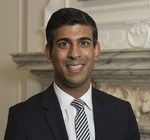
  • Rishi Sunak – 2023 Statement on the Appointment of the Independent Adviser on Ministers’ Interests

    Rishi Sunak – 2023 Statement on the Appointment of the Independent Adviser on Ministers’ Interests

    The statement made by Rishi Sunak, the Prime Minister, in the House of Commons on 9 January 2023.

    I would like to inform the House that, on 22 December 2022, I appointed Sir Laurie Magnus CBE to the role of independent adviser on Ministers’ interests. The office of independent adviser has existed since 2006 and performs a critically important role, rooted in the ministerial code, as a source of trusted, impartial advice to the Prime Minister on the proper management of Ministers’ private interests and on adherence to the code itself.

    Sir Laurie has been appointed for a non-renewable five year term and will discharge the role under existing published terms of reference.

    I am confident that Sir Laurie not only demonstrates the necessary qualities but will serve in the role with distinction, in the best traditions of public service.

    A copy of my exchange of letters with Sir Laurie, together with the terms of reference, has been placed in the Library of the House.

    I am also placing in the Library a copy of the ministerial code, which was re-issued on the same day. As before, the ministerial code sets out my expectations for the way in which Ministers should conduct themselves. As I set out in the foreword to that document, the Government will work day and night to deliver for the British people. And as we go about our tasks, we will uphold the principles of public life, ensuring integrity, professionalism and accountability at every level.

  • John Stonehouse – 1975 Parliamentary Question on the Number of Staff in the Cabinet Office and Downing Street

    John Stonehouse – 1975 Parliamentary Question on the Number of Staff in the Cabinet Office and Downing Street

    The parliamentary question asked by John Stonehouse, the Labour MP for Walsall North, on 24 November 1975.

    Mr. Stonehouse asked the Prime Minister what is the current total number of public servants in the Cabinet Office and his secretariat, respectively; what were the totals in 1964; and what is the percentage increase or decrease between the two dates.

    The Prime Minister The total number of public servants in the Cabinet Office is currently 681 compared with 356 at the same point in 1964. This represents a net increase in staff of 91 per cent., due largely to additional functions and services. The number of staff at 10 Downing Street is currently 68, including three who are employed part-time, compared with 45 in 1964, an increase on a full-time basis of 48 per cent.

  • Selwyn Lloyd – 1975 Comments on the Personal Statement Being Made by John Stonehouse

    Selwyn Lloyd – 1975 Comments on the Personal Statement Being Made by John Stonehouse

    The comments made by Selwyn Lloyd, the then Speaker of the House of Commons, in the House on 20 October 1975 in advance of the personal statement being made by John Stonehouse.

    Before I call upon the right hon. Member for Walsall, North (Mr. Stonehouse) to make a personal statement I want to make one or two matters clear.

    Responsibility for the decision to allow the right hon. Member to make a statement is mine. If the House wishes to introduce a new Standing Order dealing with personal statements I am sure that any occupant of the Chair would be grateful. I certainly have not found this an easy matter to decide. The right hon. Gentleman’s affairs and absence have frequently been referred to in the House. A Select Committee was set up and has reported. I am of the opinion that in those circumstances I should allow the right hon. Member to make a statement about his absence.

    As to the precise contents of the statement, the task of the Chair in this case has been to ensure that nothing should be said in it concerning matters which are sub judice and that it does not involve attacks upon other Members.

    The convention of this House is that a personal statement should be listened to in silence.

  • John Stonehouse – 1975 Personal Statement Made in the House of Commons Following his Disappearance

    John Stonehouse – 1975 Personal Statement Made in the House of Commons Following his Disappearance

    The statement made by John Stonehouse, the then Labour MP for Walsall North, in the House of Commons on 20 October 1975.

    I think I should first explain that the fact that I am speaking from the benches on the Opposition side of the House has no party political significance whatsoever. I am standing here because this is the place that I occupied for most of my time in the House in the last nearly 19 years, and indeed it was from this bench that I made a personal statement when I returned from Rhodesia some 16 years ago on 13th March 1959.

    Mr. Speaker Order. The rules are very, very strict. The right hon. Gentleman must say only what has been passed by me.

    Mr. Stonehouse I simply wanted to say that as there were some inquiries as to why I was at this bench, in particular from some hon. Members who were already sitting here, I felt that I should explain why I chose to speak from this side of the House.

    I am grateful to you, Mr. Speaker, for your agreement to my request to make a statement. It is not easy for me; nor is it easy for the House. The events surrounding my disappearance last November, and since, have created tremendous Press publicity, and everyone’s consideration of my experience has been coloured and influenced by that media treatment. There have been incredible allegations made against me—

    Mr. Speaker Order. The hon. Gentleman must be very careful. He is not now reading from the text which has been agreed with me.

    Mr. Stonehouse I have made a few textual changes.

    Mr. Speaker Let there be no misunderstanding about this. The right hon. Member is entitled to say only what I have passed.

    Mr. Stonehouse In particular—you will see this in the text, Mr. Speaker—I deny the allegation that I was an agent for the CIA. I deny the allegations that I was a spy for the Czechs. I can only regret that the original stories were printed. The purpose of this statement is to explain, as best I can within the traditions of the House, why I was absent from the House for such a lengthy period.

    The explanation for the extraordinary and bizarre conduct in the second half of last year is found in the progressions towards the complete mental breakdown which I suffered. This breakdown was analysed by an eminent psychiatrist in Australia and was described by him as psychiatric suicide. It took the form of the repudiation of the life of Stonehouse because that life had become absolutely intolerable to him. A new parallel personality took over—separate and apart from the original man, who was resented and despised by the parallel personality for the ugly humbug and sham of the recent years of his public life. The parallel personality was uncluttered by the awesome tensions and stresses suffered by the original man, and he felt, as an ordinary person, a tremendous relief in not carrying the load of anguish which had burdened the public figure.

    The collapse and destruction of the original man came about because his idealism in his political life had been utterly frustrated and finally destroyed by the pattern of events, beyond his control, which had finally overwhelmed him. Those events which caused the death of an idealist are too complex to describe in detail here, but in the interests of clarity as well as brevity I refer to them as follows.

    Uganda was a country in which I worked for two years in the development of the co-operative movement. I was active also in developing political progress and became, for instance, a character witness for one of the accused in the Jomo Kenyatta Mau Mau trial in Kenya.

    Later, as a back-bench Member of Parliament, I campaigned vigorously for African independence and became vice-chairman of the Movement for Colonial Freedom. Much of my back-bench activities at that time—conducted, incidentally, from this bench—were concerned with advancing this cause. I believed in it sincerely and passionately. But those ideals were shattered in the late 1960s and the 1970s as Uganda and some other countries I had helped towards independence moved from democracy to military dictatorship and despair.

    The co-operative movement in Britain had been a great ideal for me from an early age. Co-operation was almost a religion for me. It was not only a way to run a business; it was a way of life from which selfishness, greed and exploitation were completely excluded. I became a director and later President of the London Co-operative Society, the largest retail co-operative society in the world, in active pursuit of those ideals. I did not do it for money. The honorarium was £20 per year.

    But I was pursued by the Communists in that position during that period. I was bitterly attacked, and at that time—

    Mr. Speaker Order. The right hon. Gentleman must say only what I have passed.

    Mr. Stonehouse That time was a most traumatic one for me and wounded my soul deeply. It had become cruelly clear that my co-operative ideals were too ambitious, for, in truth, they could not be achieved, given human motivations. I felt as though my religion had been exposed as a pagan rite.

    Bangladesh is a country which I helped to create, and, with my hon. Friend the Member for Mitcham and Morden (Mr. Douglas-Mann), I was one of the first in the House to take up the cause of self-determination for East Pakistan following the terrible events of the military crack-down in March 1971, when 10 million people had to flee for their lives to the safety of India. I became deeply involved as a result of first-hand experience in Bengal during the struggle for freedom. I sponsored several early-day motions concerned with Bangladesh, including one which attracted over 100 signatories, calling for the recognition of an independent and sovereign Bangladesh. That motion, in July 1971, was most significant in the progression of events towards the independence which finally came in December of that year.

    Bangladesh made me a citizen in recognition of my identification with the cause. I was enthused at that time with hope, but the hopes turned to tears as the conditions in that country deteriorated. Another of my ideals had collapsed.

    After the Labour defeat of 1970, I became active in export businesses, a field in which I had been successful as a Minister and one in which I felt I could make a contribution in assisting British exports. I had hoped to establish personal financial security after a few years and then to return to full-time political activity. My enterprises were successful.

    However, early in 1972, I was approached by Bengalis residing in this country who wanted me to assist the establishment of a bank to cement relationships between Britain and Bangladesh. This involved me in very great problems, which could have ruined my career and public standing, and I was left a broken man as a result of the nervous tension I suffered throughout that period. That experience contributed heavily to my breakdown.

    In 1974, with the collapse of many secondary banks and the problems of the British economy, the strains became even worse. There seemed no escape from the awesome pressures which were squeezing the will to live from the original man. Everything he had lived for and worked for seemed to be damned.

    In this House itself, I felt a big weight bearing down on me. It was physically painful for me to be in the Chamber because it was such a reminder of my lost ideals. I was suffocated with the anguish of it all. The original man had become a burden to himself, to his family and to his friends. He could no longer take the strain and had to go. Hence, the emergence of the parallel personality, the disappearance and the long absence during the period of recovery.

    That recovery took time, and in the early stages the psychiatrist in Australia advised that I should not return to England until I had recovered, as a premature return would inevitably do further harm to my health. At the time of the disappearance, no criminal charges were laid or anticipated; they did not come till four months later.

    In view of the facts, I hope that the House will agree that the right hon. Member for Walsall, North had no intention of removing himself from the processes of justice as established by Parliament.

    I am not allowed by your ruling, Mr. Speaker, to refer to what you consider to be controversial subjects, and of course I accept your judgment; but I remind you, Mr. Speaker, that one man’s meat—

    Mr. Speaker Order. The right hon. Gentleman is again departing from the text.

    Mr. Stonehouse Yes, Mr. Speaker. I am simply explaining that I accept your judgment entirely, but a personal statement is a personal statement, and I must advise the House that half of my original statement was deleted by you. However, I fully appreciate your position, and I am deeply indebted to you for your sympathy, understanding and forbearance in the difficult circumstances which I have involuntarily created for you and the House during these past 11 months. I am very grateful to those hon. Members who have extended understanding in my turmoil—especially to my hon. Friends the Members for Mitcham and Morden and for East Kilbride (Dr. Miller), the right hon. Member for Down, South (Mr. Powell), and the hon. Members for Chippenham (Mr. Awdry) and for Horncastle (Mr. Tapsell). I express thanks also to the right hon. Member for Worcester (Mr. Walker) and the then Foreign Secretary who both helped me through a terrible crisis in 1973. I thank the Clerks at the Table and their assistants, who have been exceptionally helpful in recent months.

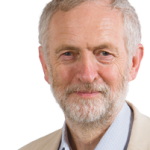
  • Jeremy Corbyn – 2022 Comments on the Death of Alice Mahon

    Jeremy Corbyn – 2022 Comments on the Death of Alice Mahon

    The comments made by Jeremy Corbyn, the Independent MP for Islington North, on 30 December 2022.

    Very sad to hear that Alice Mahon, former MP for Halifax, has passed away.
    Elected to Parliament in 1987, she was incredibly active on behalf of her constituents, fighting for workers’ rights on the picket line, anti-racism on the streets and international solidarity around the world.
    Alice was a great socialist, never a crowd pleaser or career politician, with an acerbic but human wit, and never afraid to take her case into hostile territory.
    Everyone who met Alice learned much from her about life, principles and determination. I found her a brilliant and loyal friend, on the good days and the bad.
    I have this happy memory of her in the 2017 election campaign at a huge election rally in Hebden Bridge, on the front row beaming with hope and happiness.
    An utterly brilliant, dogged and proud working-class campaigner, Alice was one of one of my best comrades and friends in Parliament. I will miss her terribly. My thoughts go to her family and the people of Halifax she served so well.
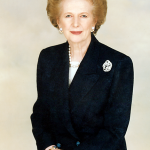
  • Margaret Thatcher – 1983 Statement Following the Death of Michael Roberts

    Margaret Thatcher – 1983 Statement Following the Death of Michael Roberts

    The statement made by Margaret Thatcher, the then Prime Minister, in the House of Commons on 11 February 1983.

    I believe that it would be the wish of the House to pay a spontaneous tribute today to our friend and colleague, Michael Roberts, Under-Secretary of State for Wales, who was taken ill at this Dispatch Box last evening, and who died later. And friend he was to many of us. Michael Roberts had been in the House for less than 13 years, and from the moment he came here he had a natural effortless ability for friendship which extended to all parts of the House. He had served a long apprenticeship in politics, having fought three elections before he became Member for Cardiff, North in 1970. He was for seven years the first headmaster of the Bishop of Llandaff high school. Throughout his service in this House he retained a deep interest in education, for which he held ministerial responsibility in Wales since 1979.

    He was a most assiduous constituency Member, a fine Minister, an enthusiast in all that he undertook, a notable orator in the Welsh tradition, always partisan, but retaining the respect and affection of all sides of the House. We extend our deep sympathy to his widow and family, and to his constituents whom he served so well.

  • Mark Drakeford – 2022 Statement on Senedd Reform

    Mark Drakeford – 2022 Statement on Senedd Reform

    The statement made by Mark Drakeford, the First Minister of Wales, on 16 December 2022.

    Following the Senedd’s endorsement in June of the recommendations made by the Special Purpose Committee on Senedd Reform (SPC), the Welsh Government issued its formal response, committing to prepare and introduce legislation to take those recommendations forward.

    As the Welsh Government response noted: “In some cases, the Senedd’s Business Committee is also asked to consider the recommendations. The Welsh Government will work with the Business Committee on these specific areas”.

    I am grateful to the Business Committee for its recent work in respect of Senedd Reform, and for the conclusions set out in its report published on 9 December. We will take into account these conclusions – which relate to the number of Welsh Ministers, Presiding and Deputy Presiding Officers, and Senedd Commissioners, as well as issues related to Senedd Members seeking to change party between elections – as we develop the relevant legislation and the associated policy and delivery work.

    The Welsh Government continues to progress the overall programme of work required to translate the SPC recommendations into the legislation necessary to implement the reforms, in line with the timescales outlined in the Co-Operation Agreement. In doing so, we will continue to work in partnership with the Senedd Commission and with other partners in developing the overall delivery programme for the reforms. Further engagement with external partners is planned for the new year.

    We will provide a further update to the Senedd on progress with this work by Easter 2023.

  • Lindsay Hoyle – 2022 Speaker’s Statement on 80th Anniversary of Holocaust Announcement

    Lindsay Hoyle – 2022 Speaker’s Statement on 80th Anniversary of Holocaust Announcement

    The statement made by Lindsay Hoyle, the Speaker of the House of Commons, in the House on 15 December 2022. The speech made by Anthony Eden is available here.

    Before we start our business, I wish to invite the House to commemorate a tragic and sombre event. On 17 December 1942—80 years ago, on Saturday—the then Foreign Secretary, Anthony Eden, read to the House a declaration issued by the wartime allies condemning the treatment of Jewish people by the Nazis in occupied Europe. The declaration followed a diplomatic note sent to the allied powers a week earlier, by the Polish Foreign Minister in exile—the first official report that the holocaust was under way. The evil acts described in the declaration were, and remain, difficult to comprehend. It said:

    “From all the occupied countries Jews are being transported, in conditions of appalling horror and brutality, to Eastern Europe…None of those taken away are ever heard of again. The able-bodied are slowly worked to death in labour camps. The infirm are left to die of exposure and starvation, or are deliberately massacred in mass executions.”

    After the Foreign Secretary read the declaration and was questioned on it, the Member for Islington South, William Cluse, asked:

    “Is it possible, in your judgement, Mr. Speaker, for Members of the House to rise in their places and stand in silence in support of this protest against disgusting barbarism?”

    Speaker FitzRoy replied:

    “That should be a spontaneous act by the House as a whole.”

    Hansard records that

    “Members of the House then stood in silence.”—[Official Report, 17 December 1942; Vol. 385, c. 2083-2087.]

    A journalist covering the event said:

    “I have never seen anything like this silence which was like the frown of the conscience of mankind.”

    Today, we are honoured to be joined in the Gallery by seven survivors of the holocaust, representatives of Britain’s Jewish community and the Holocaust Memorial Day Trust. As an exception, and because this is such a poignant moment, I have agreed that the Parliamentary Broadcasting Unit and our House of Commons photographer can capture images of them here today.

    To remember that important moment, and as a tribute to all those who suffered at the hands of the Nazis, I now invite the House to join me for a minute of silent reflection.

    The House observed a one-minute silence.